

Clustering huge protein sequence sets in linear time
Open accessPublished version of a preprint
The DOI matches its Crossref record; 33 of the 33 references it cites were found in a registry or an index.
Abstract
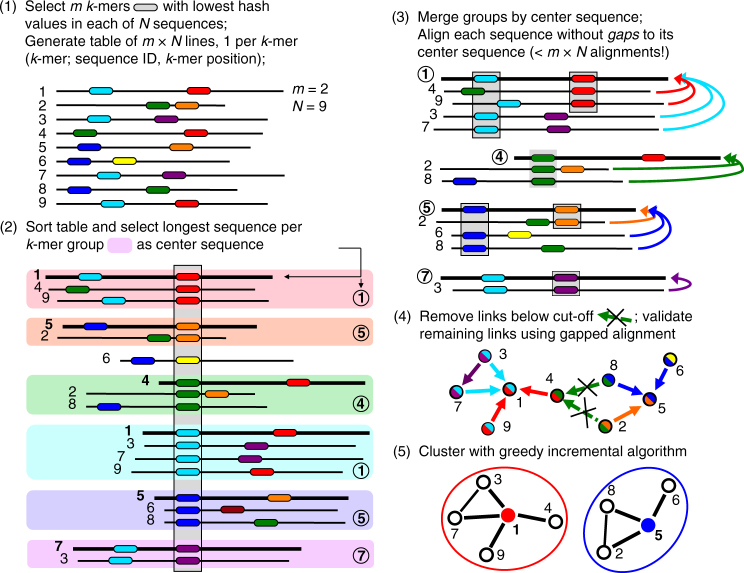
Metagenomic datasets contain billions of protein sequences that could greatly enhance large-scale functional annotation and structure prediction. Utilizing this enormous resource would require reducing its redundancy by similarity clustering. However, clustering hundreds of millions of sequences is impractical using current algorithms because their runtimes scale as the input set size N times the number of clusters K, which is typically of similar order as N, resulting in runtimes that increase almost quadratically with N. We developed Linclust, the first clustering algorithm whose runtime scales as N, independent of K. It can also cluster datasets several times larger than the available main memory. We cluster 1.6 billion metagenomic sequence fragments in 10 h on a single server to 50% sequence identity, >1000 times faster than has been possible before. Linclust will help to unlock the great wealth contained in metagenomic and genomic sequence databases.
Overview
The claims and statistics of this paper haven’t been checked yet.
Free: it reads the open-access text and checks the first 5 claims that cite a source we can check. Create a free account to check every claim.
Integrity signals
Registry
Cites
Statistics
Figures
Verification
Claims the paper makes
The claims and statistics of this paper haven’t been checked yet.
Free: it reads the open-access text and checks the first 5 claims that cite a source we can check. Create a free account to check every claim.
Self-check
Percentages, sums and reported differences re-computed from the paper’s own numbers.
The self-check needs the paper’s full text.
Citations
Cites
Basic local alignment search tool
Altschul, S. F., Gish, W., Miller, W., Myers, E. W., & Lipman, D. J. (1990) · Journal of Molecular Biology · doi:10.1006/jmbi.1990.9999 · Cited by 98,669 · cited 1×
“For each clustering run, we searched with BLAST [15] a random sample of 1 000 representative sequences against all representative sequences of the clustering.”
MethodSearch and clustering orders of magnitude faster than BLAST
Edgar, R. C. (2010) · Bioinformatics · doi:10.1093/bioinformatics/btq461 · Cited by 20,826
Fast and sensitive protein alignment using DIAMOND
Buchfink, B., Xie, C., & Huson, D. H. (2015) · Nature Methods · doi:10.1038/nmeth.3176 · Cited by 14,201 · cited 3×
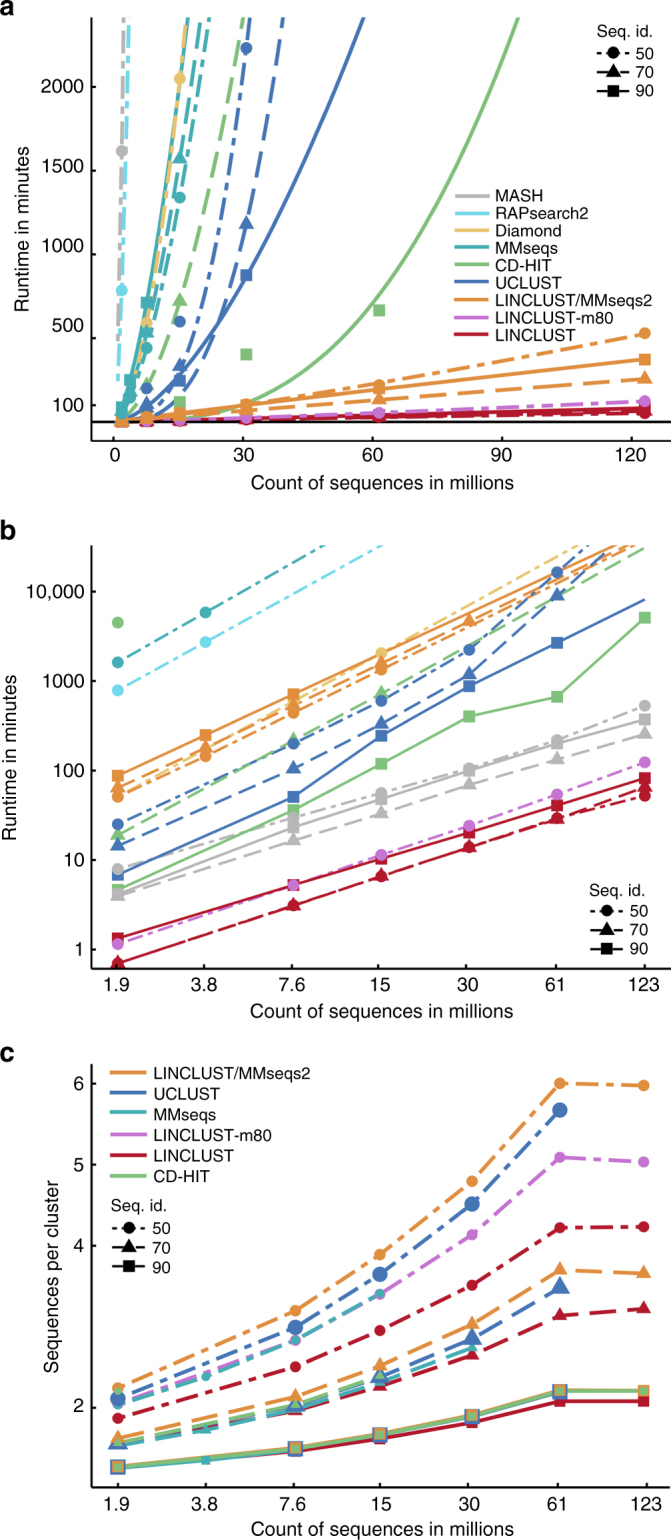
“At 50% identity, Linclust clusters the 123 million sequences 10 times faster than Linclust/MMseqs2 and, by extrapolation, 2300 times faster than UCLUST, 720 times faster than MMseqs, 4600 times faster than CD-HIT, 1600 times faster than DIAMOND [12], 69 000 times faster than MASH [13], and 26 000 times faster than RAP…”
BackgroundInfluentialProdigal: prokaryotic gene recognition and translation initiation site identification
Hyatt, D., Chen, G.-L., LoCascio, P. F., Land, M. L., Larimer, F. W., & Hauser, L. J. (2010) · BMC Bioinformatics · doi:10.1186/1471-2105-11-119 · Cited by 12,587
Cd-hit: a fast program for clustering and comparing large sets of protein or nucleotide sequences
Li, W., & Godzik, A. (2006) · Bioinformatics · doi:10.1093/bioinformatics/btl158 · Cited by 11,410 · cited 1×
“Similar to the k-mer prefilter used in CD-HIT, UCLUST, kclust and MMseqs [8, 11, 26, 27], the preclustering reduces the number of comparisons by a large factor F using the slow, exact measure, but the time complexity of the ex240 act distance calculation O(N(2)/F ) is still quadratic in N .”
MethodCd-hit: Accelerated for clustering the next-generation sequencing data
Fu, L., Niu, B., Zhu, Z., Wu, S., & Li, W. (2012) · Bioinformatics · doi:10.1093/bioinformatics/bts565 · Cited by 11,175 · cited 15×
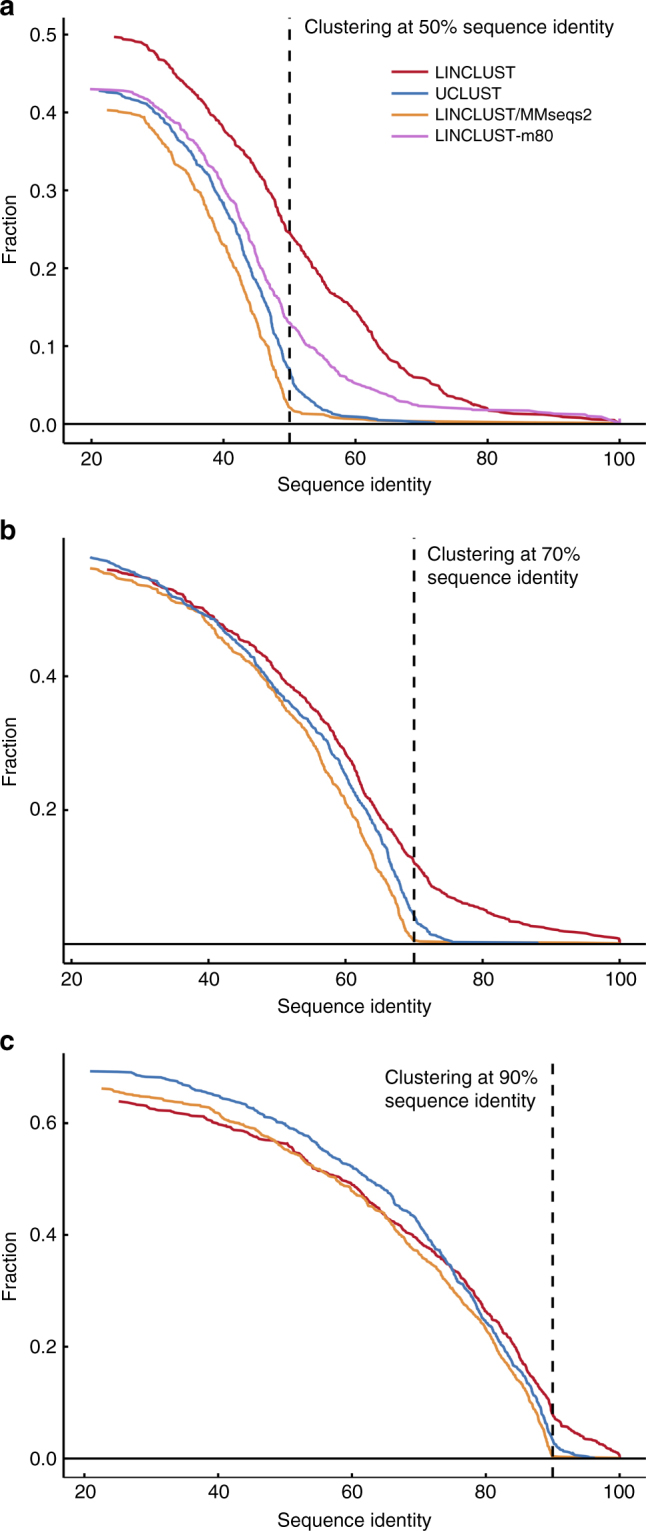
“By increasing m from 20 to 80, Linclust takes only 1.5 to 2 times longer but attains a sensitivity similar to UCLUST (pink in Fig.”
MethodInfluentialThe Pfam protein families database: towards a more sustainable future
Finn, R. D., Coggill, P., Eberhardt, R. Y., Eddy, S. R., Mistry, J., Mitchell, A. L., Potter, S. C., Punta, M., Qureshi, M., Sangrador-Vegas, A., et al. (2016) · Nucleic Acids Research · doi:10.1093/nar/gkv1344 · Cited by 5,975 · cited 1×
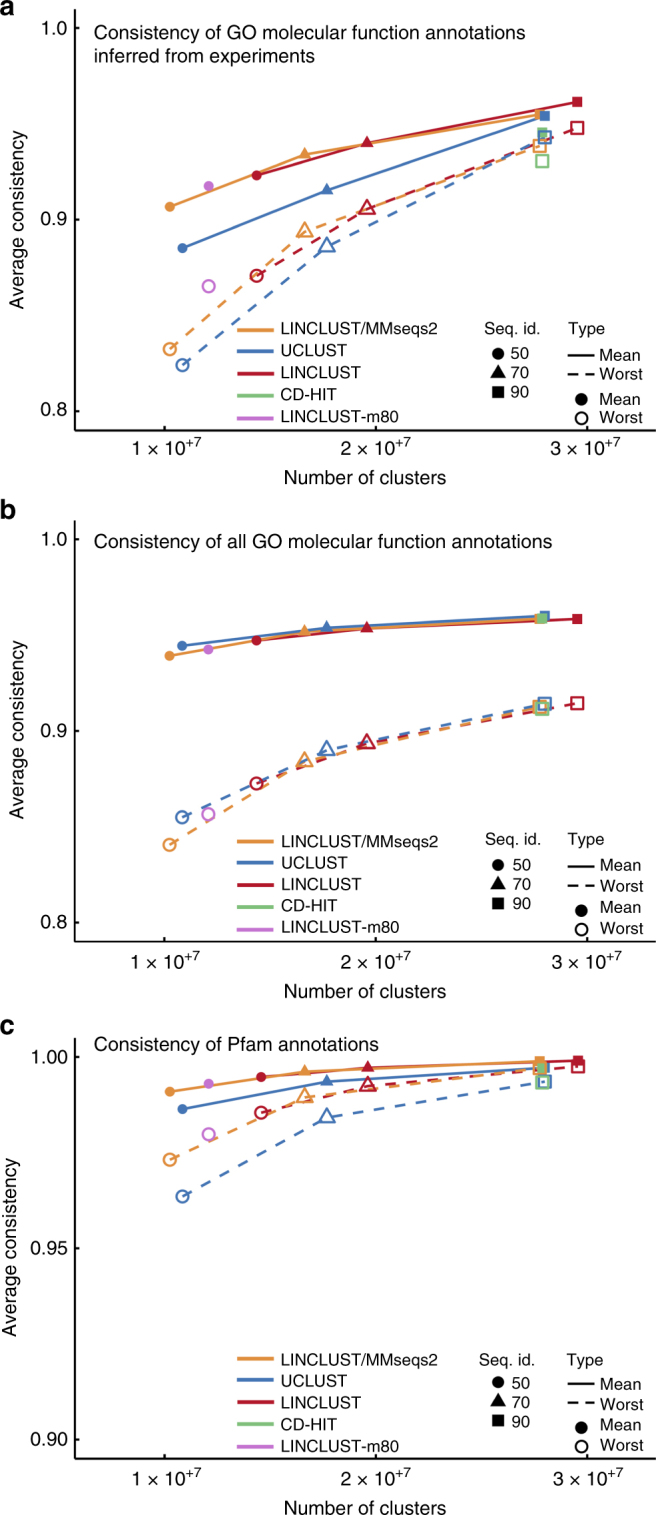
“4a,b) and Pfam domain annotations [18] (Fig.”
MMseqs2 enables sensitive protein sequence searching for the analysis of massive data sets
Steinegger, M., & Söding, J. (2017) · Nature Biotechnology · doi:10.1038/nbt.3988 · Cited by 4,840
Self-citationThe Universal Protein Resource (UniProt)
Bairoch, A. (2004) · Nucleic Acids Research · doi:10.1093/nar/gki070 · Cited by 3,774 · cited 1×
“, 100}, we determined these thresholds empirically on 4 million local alignments sampled from an all-against-all comparison of the UniProt database [31].”
MethodGene Ontology Consortium: going forward
The Gene Ontology Consortium (2015) · Nucleic Acids Research · doi:10.1093/nar/gku1179 · Cited by 3,492 · cited 2×
“We assess Gene Ontology (GO) annotations [17] (Fig.”
BackgroundMethod
Research works printed but not linked: 1
- Wang, J. Shen, H. T., Song, J. & Ji., J. Hashing for similarity search: a survey. Preprint at https://arxiv.org/abs/1408.2927 (2014). · arXiv
Cited by
Items 601–700 of 962
Classification of Protein Sequences by a Novel Alignment-Free Method on Bacterial and Virus Families
Guan, M., Zhao, L., & Yau, S. S. ‐. (2022) · Genes · doi:10.3390/genes13101744 · Cited by 5
“Currently published alignment-free methods include graphical representation [7,8], probabilistic measure [9,10], k-mer [11,12], etc.”
The International Virus Bioinformatics Meeting 2023
Hufsky, F., Abecasis, A. B., Babaian, A., Beck, S., Brierley, L., Dellicour, S., Eggeling, C., Elena, S. F., Gieraths, U., Ha, A. D., et al. (2023) · Viruses · doi:10.3390/v15102031 · Cited by 4
“To prevent over-fitting models to well-sampled lineages, they used MMSeqs2’s Linclust algorithm [112] to collapse these to 3958 non-zoonotic clusters and 88 zoonotic clusters sharing ≥ 90% sequence identity across ≥ 80% mutual genome coverage.”
MethodAssembly of Protein Complexes in and on the Membrane with Predicted Spatial Arrangement Constraints
Christoffer, C., Harini, K., Archit, G., & Kihara, D. (2024) · Journal of Molecular Biology · doi:10.1016/j.jmb.2024.168486 · Cited by 4
Multivariate Chemometrics as a Strategy to Predict the Allergenic Nature of Food Proteins
Nedyalkova, M., & Simeonov, V. (2020) · Symmetry · doi:10.3390/sym12101616 · Cited by 4
“In the study of Guarino and Sciarrillo [12], deals with the proteome variation to different red strawberry species in order to clarify changes in allergen content and proteome variation for the different plant species.”
BackgroundSingh, J., Litfin, T., Singh, J., Paliwal, K. K., & Zhou, Y. (2021) · bioRxiv (Cold Spring Harbor Laboratory) · doi:10.1101/2021.06.19.449089 · Cited by 6
ProSelfLC: Progressive Self Label Correction Towards A Low-Temperature Entropy StatePreprint
Wang, X., Yang, H., Kodirov, E., Mukherjee, S. S., Clifton, D. A., & Robertson, N. M. (2022) · bioRxiv (Cold Spring Harbor Laboratory) · doi:10.1101/2022.07.01.498447 · Cited by 5
“The transformer network is a subnet of ProtBert-BFD [17], a protein language model pretrained on BFD-100 dataset [69, 70].”
MethodContrasting Sequence with Structure: Pre-training Graph Representations with PLMsPreprint
Robinson, L., Atkinson, T. J., Copoiu, L., Bordes, P., Pierrot, T., & Barrett, T. D. (2023) · bioRxiv (Cold Spring Harbor Laboratory) · doi:10.1101/2023.12.01.569611 · Cited by 10
“The second PLM, ProtBert, is a BERT model is trained on the BFD-100 dataset [52], which has 2.1 million protein sequences.”
MethodInfluentialAIPAMPDS: an AI platform for antimicrobial peptide design and screeningPreprint
Li, Y., Gao, L., Wenqian, Z., Wang, Z., Xu, X., Ji, J., Zhang, Y., Liu, Y., Zhang, L., Yang, Y., et al. (2025) · bioRxiv (Cold Spring Harbor Laboratory) · doi:10.1101/2025.03.24.644774 · Cited by 7
Improving AlphaFold3 by Engineering MSA and Template InputsPreprint
Neupane, P., Liu, J., & Cheng, J. (2026) · bioRxiv (Cold Spring Harbor Laboratory) · doi:10.64898/2026.04.22.720119 · Cited by 4
“DeepMSA2 iteratively searches a combination of general and metagenomic resources, including Metaclust [30], TaraDB [36], JG-132 Iclust [37], and MetaSourceDB [38], using both HHblits and JackHMMER, and produces multiple complementary alignment variants (e.g., qMSA, dMSA, hMSA).”
(2023) · doi:10.1002/pro.4850 · Cited by 4
“The human Slp-4 C2A sequence was used to search the Uniref90 database to obtain an initial selection of 500 clustered sets of sequences using the MMseqs2 algo-rithm (Steinegger & Söding, 2018).”
Assembly of Protein Complexes In and On the Membrane with Predicted Spatial Arrangement Constraints
Christoffer, C., Harini, K., Archit, G., & Kihara, D. (2023) · doi:10.1101/2023.10.20.563303 · Cited by 4
aaHash: recursive amino acid sequence hashing
Wong, J., Kazemi, P., Coombe, L., Warren, R. L., & Birol, İ. (2023) · Bioinformatics Advances · doi:10.1093/bioadv/vbad162 · Cited by 3
“Linclust (Steinegger and S € oding 2018), a linear-runtime algorithm designed to efficiently cluster vast metagenomic datasets, clusters sequences by first finding shared amino acid k-mers through hashing.”
Mobility of four structural regions drives isoform-specific properties of photoenzyme LPOR in plants
Gabruk, M., Łuszczyński, M., Szafran, K., Ogrodzińska, W., Rubenstein, B. M., & da Silva, G. M. (2025) · Journal of Biological Chemistry · doi:10.1016/j.jbc.2025.108261 · Cited by 3
High co-occurrence but low heterogeneity of virulence factors and resistance genes in farmland soil
Yu, L., Jiang, L., Liu, C., Wang, S., & Zhu, G. (2025) · Journal of Environmental Sciences · doi:10.1016/j.jes.2025.11.031 · Cited by 3
Zhang, L., Sun, Y., Liu, R., Wang, Y., & Zhao, T. (2025) · IEEE International Conference on Bioinformatics and Biomedicine (BIBM) · doi:10.1109/bibm66473.2025.11356544 · Cited by 3
“ProtT5 is a pre-trained model based on the Text-to-Text Transfer Transformer (T5) [23] architecture, initially trained on the BFD [24] protein sequence corpus and fine-tuned on the UniRef50 [25] dataset.”
Zhou, Q., Liang, H., Huang, J., Klümper, U., Fang, P., Yu, Z., Wang, Y., Berendonk, T. U., Lin, L., Li, X., et al. (2026) · Journal of Hazardous Materials · doi:10.1016/j.jhazmat.2026.141426 · Cited by 3
Mori, H., Fujisawa, T., Higashi, K., Tanizawa, Y., Nakagawa, Z., Nishide, H., Fujiyoshi, M., Nakamura, Y., Uchiyama, I., Matsui, M., et al. (2026) · Microbiome · doi:10.1186/s40168-026-02385-x · Cited by 3
“Clustering at 90% sequence identity using Linclust [26] yielded 717 million clusters for MGnify and 192 million clusters for Microbiome Datahub.”
Meng, J., Cui, Z., Li, Z., Li, J., Hu, M., Xu, J., Yao, Z., Tang, C., Yang, D., Ozunu, A., et al. (2026) · Biochar · doi:10.1007/s42773-026-00598-9 · Cited by 4
Taranenko, D., Kotovskaya, O., Kuznedelov, K. D., Yanovskaya, D., Demkina, A., Fardeeva, S., Mamontov, V., Vierra, K., Burman, N., Li, D., et al. (2026) · Proceedings of the National Academy of Sciences · doi:10.1073/pnas.2529903123 · Cited by 5
Analysis of phylogenetic signal in protein language model embeddings
Stakauskas, B., & Górecki, P. (2026) · Scientific Reports · doi:10.1038/s41598-026-57699-5 · Cited by 3
Efficient Protein Structure Prediction from Desktop to Datacenter with OpenFold-TRT
Didi, K., Sohani, P., Berressem, F., Nesterovskiy, A., Fomitchev, B., Ohannessian, R. J., Elbalkini, M., Cogan, J., Costa, A., Vahdat, A., et al. (2026) · Computational and Structural Biotechnology Journal · doi:10.34133/csbj.0242 · Cited by 3
Self-citationContact-Assisted Threading in Low-Homology Protein Modeling
Bhattacharya, S., Roche, R., Shuvo, M. H., Moussad, B., & Bhattacharya, D. (2023) · Methods in molecular biology · doi:10.1007/978-1-0716-2974-1_3 · Cited by 3
Wang, Y., Peng, Y., Long, R., Shi, P., Zhang, Y., De, K., Zheng, J., & Wang, X. (2023) · Computational and Structural Biotechnology Journal · doi:10.1016/j.csbj.2023.08.014 · Cited by 3
Deep learning structural insights into heterotrimeric alternatively spliced P2X7 receptors
Salis, S. K. F. D., Chen, Z., Skarratt, K. K., Fuller, S. J., & Balle, T. (2023) · Purinergic Signalling · doi:10.1007/s11302-023-09978-3 · Cited by 4
“…The structure generation process was informed by completing three paired and unpaired multiple sequence alignments (MSA) on each of the three entered amino acid sequences, searching the UniRef100 and environmental sequences databases using Many-against-Many sequence searching [42–45].”
Zheng, W. (2024) · PLoS ONE · doi:10.1371/journal.pone.0302504 · Cited by 3
Ataei, S., & Butler, G. (2025) · BIO Web of Conferences · doi:10.1051/bioconf/202516301001 · Cited by 3
“The BFD dataset [29] merges UniProt with proteins translated from multiple metagenomic sequencing projects.”
De novo clustering of large long-read transcriptome datasets with isONclust3
Petri, A. J., & Sahlin, K. (2025) · Bioinformatics · doi:10.1093/bioinformatics/btaf207 · Cited by 3
Okamoto, T., Sarr, P. S., Asai, H., Tsujimoto, Y., Nishigaki, T., Takai, T., Rakotonindrina, T. V., Rakotonindrina, H., Andriamananjara, A., Nishihara, A., et al. (2025) · Plant Biotechnology · doi:10.5511/plantbiotechnology.25.0414b · Cited by 3
“13.45111 (ref1)]) (Steinegger and Söding 2018) using biochemically characterized proteins curated in SwissProtKB (ref2) (Boutet et al. 2007).”
InfluentialPetersen, M., Winter, S., Coimbra, R. T. F., de Jong, M., Kapitonov, V. V., & Nilsson, M. A. (2021) · Mobile DNA · doi:10.1186/s13100-021-00254-y · Cited by 4
“We clustered all selected full-length copies using MMSEQS2 release 13-45111 [63] in the easy-cluster mode with the parameters: min-seq-id = 1.”
MethodAttCON: With better MSAs and attention mechanism for accurate protein contact map prediction
Zhao, C., & Wang, S. (2023) · Computers in Biology and Medicine · doi:10.1016/j.compbiomed.2023.107822 · Cited by 3
Functional prediction of proteins from the human gut archaeome
Novikova, P. V., Busi, S. B., Probst, A. J., May, P., & Wilmes, P. (2024) · ISME Communications · doi:10.1093/ismeco/ycad014 · Cited by 3
Kinateder, T., Mayer, C., Nazet, J., & Sterner, R. (2024) · Protein Science · doi:10.1002/pro.4899 · Cited by 4
“Specifically, pa HisN or nm HisN were used as query sequences to conduct a BLAST (Altschul et al., 1990) search for homologues in the UniRef90 database (Steinegger & Söding, 2018).”
MethodJi, Y., Shang, J., Guan, J., Zou, W. H., Liao, H., Tang, X., & Sun, Y. (2024) · GigaScience · doi:10.1093/gigascience/giae104 · Cited by 3
Helsem, S. A., Alfsnes, K., Frye, S. A., Hesselberg Løvestad, A., & Ambur, O. H. (2025) · PLOS One · doi:10.1371/journal.pone.0315160 · Cited by 3
“These MSAs were generated using HHblits v. 3.0.0 [30] to search the Big Fantastic Data-base (BFD) [31–33] and Uniref30 [34] databases for ComP MSAs, using the same HHblits parameters as in RF2NA.”
InfluentialEdClust: A heuristic sequence clustering method with higher sensitivity
Cao, M., Peng, Q., Wei, Z., Liu, F., & Hou, Y. (2021) · Journal of Bioinformatics and Computational Biology · doi:10.1142/s0219720021500360 · Cited by 4
Parallel and Scalable Precise Clustering for Homologous Protein DiscoveryPreprint
Byma, S., Dhasade, A., Altenhoff, A., Dessimoz, C., & Larus, J. R. (2019) · bioRxiv (Cold Spring Harbor Laboratory) · doi:10.1101/751214 · Cited by 3
Accurate reconstruction of bacterial pan- and core- genomes with PEPPANPreprint
Zhou, Z., Charlesworth, J., & Achtman, M. (2020) · bioRxiv (Cold Spring Harbor Laboratory) · doi:10.1101/2020.01.03.894154 · Cited by 4
OpenProteinSet: Training data for structural biology at scale.Preprint
Ahdritz, G., Bouatta, N., Kadyan, S., Jarosch, L., Berenberg, D., Fisk, I., Watkins, A. M., Ra, S., Bonneau, R., & AlQuraishi, M. (2023) · PubMed Central · Cited by 4
Protein domain embeddings for fast and accurate similarity searchPreprint
Iovino, B. G., Tang, H., & Ye, Y. (2023) · bioRxiv (Cold Spring Harbor Laboratory) · doi:10.1101/2023.11.27.567555 · Cited by 3
Human O-linked Glycosylation Site Prediction Using Pretrained Protein Language ModelPreprint
Pakhrin, S. C., Chauhan, N., Khan, S., Upadhyaya, J., Keller, C., Neuman, L. N., Beck, M. R., & Blanco, E. (2023) · Research Square · doi:10.21203/rs.3.rs-3587524/v1 · Cited by 3
Salazar, S., Delgadillo-Silva, L. F., Carapeto, P., Dakessian, K., Melhem, R., PROVENCHER-GIRARD, A., Ostinelli, G., Turgeon, J., Kaci, I., Migneault, F., et al. (2024) · bioRxiv (Cold Spring Harbor Laboratory) · doi:10.1101/2024.11.09.622781 · Cited by 3
Learning gene interactions and functional landscapes from entire bacterial proteomesPreprint
Sethi, P., Chevrette, M. G., & Zhou, J. (2025) · bioRxiv (Cold Spring Harbor Laboratory) · doi:10.1101/2025.03.19.644232 · Cited by 7
“To ensure minimal similarity between the genomes in the training and test sets, we conducted a clustering analysis, where we first clustered the proteins across all genomes using MMseqs2 [17] to identify protein families at 50% sequence identity.”
Towards Unraveling Biomolecular Conformational Landscapes with a Generative Foundation ModelPreprint
The OpenComplex Team, & Ye, Q. (2025) · bioRxiv (Cold Spring Harbor Laboratory) · doi:10.1101/2025.05.01.651643 · Cited by 6
AbBFN2: A flexible antibody foundation model based on Bayesian Flow NetworksPreprint
Guloglu, B., Bragança, M., Graves, A., Cameron, S., Atkinson, T. J., Copoiu, L., Laterre, A., & Barrett, T. D. (2025) · bioRxiv (Cold Spring Harbor Laboratory) · doi:10.1101/2025.04.29.651170 · Cited by 5
“Within each cluster, the whole chain is clustered using Linclust [57] at a sequence identity threshold of 95% and -cov-mode 1 (where there are overlapping clusters within a CDR-3 cluster, these are handled internally by Linclust).”
WAChRs are excitatory opsins sensitive to indoor lightingPreprint
Tose, A. J., Nava, A. A., McGrath, S. N., Mardinly, A. R., & Naka, A. (2025) · bioRxiv (Cold Spring Harbor Laboratory) · doi:10.1101/2025.09.12.675947 · Cited by 3
Brierley, L., Mould-Quevedo, J. F., & Baylis, M. (2025) · bioRxiv (Cold Spring Harbor Laboratory) · doi:10.1101/2025.09.16.676011 · Cited by 3
“Computation time of this algorithm scales linearly with size of input, benefiting clustering tasks on large sequence sets (Steinegger and Söding 2018).”
Comprehensive genomic atlas of plasma proteome in the Japanese population: the Nagahama studyPreprint
Yang, T., Kawaguchi, T., Kawaguchi, S., Higasa, K., Yoshiji, S., Iwasaki, T., Zhao, T., Takahashi, M., Setoh, K., Horii, K., et al. (2025) · medRxiv · doi:10.1101/2025.11.20.25340712 · Cited by 3
“To identify potential drug targets, we queried protein targets using ChEMBL 35 (https://www.ebi.ac.uk/chembl/, release 35) through two approaches: (i) ID mappings by querying Ensembl gene IDs and (ii) utilizing sequence similarity nearest neighbors based on UNIREF clusters 36,37 .”
A generalizable interface-seeded framework for de novo design of functional oligomersPreprint
Chim, H. Y., Idris, M. O., RIEGER, D. L., Schlegel, P., Goldbach, N. M., Juanatey, M. A., Mallik, B. B., Buckley, S., Basak, S., Georgeon, S., et al. (2026) · bioRxiv (Cold Spring Harbor Laboratory) · doi:10.64898/2026.07.02.736098 · Cited by 4
(2026) · doi:10.1073/pnas.2524201123 · Cited by 2
iPuma: High-Performance Sequence Alignment on the Graphcore IPU
Zhao, M., Burchard, L., Schroeder, D. T., Langguth, J., & Cai, X. (2024) · ISC High Performance (ISC) · doi:10.23919/isc.2024.10528941 · Cited by 2
Davies, J. M., Teh, J. J., Ewais, T., & Begun, J. (2024) · Inflammatory Bowel Diseases · doi:10.1093/ibd/izae121 · Cited by 3
Centimetre scale functional dispersal limitation of freshwater copiotrophs
Dannenmann, M., Moigne, A. L., Hofer, C., & Pernthaler, J. (2024) · Environmental Microbiology · doi:10.1111/1462-2920.16682 · Cited by 2
Virus-bacterium interaction involved in element cycles in biological treatment of coking wastewater
Tan, Z.-J., Chen, W., Wei, X., Qiu, Z., Zhuang, W., Zhang, B., Xie, J., Lin, Y., Ren, Y., Preis, S., et al. (2024) · Bioresource Technology · doi:10.1016/j.biortech.2024.131839 · Cited by 2
Identifying representative sequences of protein families using submodular optimization
Nguyen, H., Nguyen, H. V., Nguyen, P. T. B., Luu, A. N., Cantu, D. C., & Nguyen, T. (2025) · Scientific Reports · doi:10.1038/s41598-025-85165-1 · Cited by 2
“Subsequent algorithms, including CD-HIT 23 , PISCES 24 , MMSEQS 25 and UCLUST 26 , have further developed this concept, typically sorting protein sequences by length and sequentially adding sequences to the representative set if no existing member exceeds a specified similarity threshold.”
Ma, L., Zhou, W., Bai, Y., Fang, M., Xiao, M., & Li, J. (2025) · IEEE Transactions on Computational Biology and Bioinformatics · doi:10.1109/tcbbio.2025.3559571 · Cited by 2
DrugMAP: Deep Multimodal Transformers for Drug-Target Mechanism of Action Prediction
Das, R., Jana, S., Dey, A., Corre, P. L., Cuggia, M., Maulik, U., & Bandyopadhyay, S. (2025) · IEEE Transactions on Artificial Intelligence · doi:10.1109/tai.2025.3565671 · Cited by 2
“It has been pretrained on the BFD dataset [35] and further fine-tuned on the UniRef50 database [36].”
Screening and identification of protein interacting with goose astrovirus
Qian, L., Liu, Y., Wang, X., Yang, S., Ji, L., Sun, X., Wang, J., Shan, T., Zhang, W., & Shen, Q. (2025) · Frontiers in Cellular and Infection Microbiology · doi:10.3389/fcimb.2025.1595736 · Cited by 2
“Moreover, studies suggest that protein sequences from the AlphaFold database, when clustered using the MMseqs2 algorithm (Steinegger and Söding, 2018), are viable for predicting protein tertiary structures.”
Horokhovskyi, Y., Roetschke, H. P., Cormican, J. A., Pašen, M., Garazhian, S., Mishto, M., & Liepe, J. (2025) · Molecular & Cellular Proteomics · doi:10.1016/j.mcpro.2025.101039 · Cited by 2
“…are specified in features. yaml configuration file First, all the proteomes specified in the Master table are indexed using samtools (82) and clustered using mmseqs linclust (83) with the following parameters: “mmseqs easy-linclust -e 1.000E-03 –spaced-kmer-mode 1 –spaced-kmer-pattern 110,101”.”
Alphappimi: a comprehensive deep learning framework for predicting PPI-modulator interactions
Liu, D., Song, T., Wang, S., Li, X., Han, P., Wang, J., & Wang, S. (2025) · Journal of Cheminformatics · doi:10.1186/s13321-025-01077-2 · Cited by 2
“The ProtTrans model (24 layers, 32 heads per layer) was pre-trained on over 45 million protein sequences from BFD [62, 63] and UniRef50 [61], generating 1024-dimen-sional embeddings that capture complementary evolutionary patterns.”
From neuropeptides to toxins: illuminating the origins of venom complexity in cone snails
Koch, T. L., Ferrari, G., Sumanam, S. B., Salcedo, P. F., Watkins, M., Chase, K., Tooming‐Klunderud, A., Lluisma, A. O., Yanagihara, A. A., Young, N. D., et al. (2026) · Molecular Biology and Evolution · doi:10.1093/molbev/msag206 · Cited by 2
“To identify overlapping TE families, we used mmseqs2 (Steinegger and Söding 2018) easy-cluster with settings -min-seq-id 0.5 -c 0.8 – cov-mode 1.”
InfluentialClustering methods for categorical time series and sequences : a scoping review
Khalifa, O., Balendran, A., Tran, V.-T., & Petit, F. (2026) · BMC Medical Research Methodology · doi:10.1186/s12874-026-02857-6 · Cited by 2
Dimonaco, N. J. (2025) · NAR Genomics and Bioinformatics · doi:10.1093/nargab/lqaf198 · Cited by 3
“While some studies have assessed the broad impact of biases introduced by gene clustering and pangenome inference methods [ 9 –11 ], a systematic and detailed evaluation of their effects is lacking.”
PepScorer::RMSD: An Improved Machine Learning Scoring Function for Protein–Peptide Docking
Cavalli, A. G., Vistoli, G., Pedretti, A., Fumagalli, L., & Mazzolari, A. (2026) · International Journal of Molecular Sciences · doi:10.3390/ijms27020870 · Cited by 2
“The full BFD database was used [63,64], and the “--max_template_date” flag was set to 2022-05-14; all other parameters adhered to the default settings of AlphaFold v. 2.3.2.”
InfluentialSu, Y., Qu, S., Liu, Y., Teng, J., Zeng, J., Liu, S., Li, S., & Chen, S. (2026) · Aquaculture · doi:10.1016/j.aquaculture.2026.743676 · Cited by 2
Human radical S-adenosylmethionine domain-containing 1 (RSAD1) is a Heme-binding protein
Zadvornyy, O. A., Drobizhev, M. A., Tokmina‐Lukaszewska, M., Shepard, E. M., Broderick, W. E., & Broderick, J. (2026) · Journal of Inorganic Biochemistry · doi:10.1016/j.jinorgbio.2026.113260 · Cited by 2
Seong, K., Kumar, R., Prigozhin, D. M., Lunde, C. F., Ribeiro, T. H. C., Bélanger, S., Hsieh, J. A., Tang, M., Meyers, B. C., & Krasileva, K. V. (2026) · New Phytologist · doi:10.1111/nph.71006 · Cited by 3
Lopes, M. R., Parisot, N., Peignier, S., Renoz, F., Bâa-Puyoulet, P., Jousselin, E., Charles, H., Callaerts, P., Brochier‐Armanet, C., & Calevro, F. (2026) · Molecular Biology and Evolution · doi:10.1093/molbev/msag078 · Cited by 2
“To limit sequence redundancy, BIR domains with very similar sequences in each dataset were clustered using the mmseq2 software (V 13.45111) (Steinegger and Soding 2018), with the following parameters: 80% identity and 70% coverage, coverage mode 1 (alignment covers at least 70% of target,…”
InfluentialRodrigues, A. F., Ferraz, L., Balbi, L., Cotovio, P. G., & Pesquita, C. (2026) · Scientific Reports · doi:10.1038/s41598-026-45458-5 · Cited by 2
“For ProtBERT embeddings generation, the ProtBERT-BFD (big fat database, 55 ) version was used.”
Carvalho, R., Savva, L., Rodríguez-Algaba, J., Korolev, A. V., Stephens, C., Bryan, A., Justesen, A. F., Hovmøller, M. S., & Saunders, D. G. O. (2026) · Communications Biology · doi:10.1038/s42003-026-10018-0 · Cited by 3
Parkin, K., Christophersen, C. T., Verhasselt, V., Palmer, D. J., Cooper, M. N., Prescott, S. L., Silva, D. T., & Martino, D. J. (2026) · Communications Medicine · doi:10.1038/s43856-026-01626-2 · Cited by 2
Coche-Miranda, J., Arros, P., Canales, N., Berríos-Pastén, C., Azzíz, G., Lagos, R., Orlando, J., Chávez, F. P., & Marcoleta, A. E. (2026) · iMetaOmics. · doi:10.1002/imo2.70118 · Cited by 2
“6f452 [87] in Linclust mode [88] using sequence identity ≥ 0.99 and bidirectional coverage ≥ 0.99 thresholds ( ‐‐ alignment ‐ mode 3 ‐‐ cov ‐ mode 0 ‐‐ cluster ‐ mode 2 ‐‐ realign), only keeping the representative protein sequences for further steps.”
InfluentialAccurate Annotation of Microbial Metagenomic Genes and Identification of Core Sets
Vanni, C. (2021) · Methods in molecular biology · doi:10.1007/978-1-0716-1099-2_8 · Cited by 2
PreHom-PCLM: protein remote homology detection by combing motifs and protein cubic language model
Shao, J., Zhang, Q., Yan, K., & Liu, B. (2023) · Briefings in Bioinformatics · doi:10.1093/bib/bbad347 · Cited by 2
Vasileva, S. S., Yap, C. X., Whitehouse, A., Gratten, J., & Eyles, D. W. (2024) · Brain Behavior & Immunity - Health · doi:10.1016/j.bbih.2024.100814 · Cited by 2
“In stage one, all open reading frames (ORFs) from all genomes in MGDB were clustered against UniRef90 (Suzek et al., 2015) release 2019/09 using 90% identity over 80% of read length with MMSeqs2 Release 10-6d92c (Steinegger and S ¨ oding, 2018).”
MethodThe neglected giants: Uncovering the prevalence and functional groups of huge proteins in proteomes
Amaral, A. S., & Devos, D. P. (2024) · PLoS Computational Biology · doi:10.1371/journal.pcbi.1012459 · Cited by 3
An expandable synthetic library of human paired antibody sequences
Marinov, T. M., Wasdin, P. T., Jordaan, G., Janke, A. K., Abu-Shmais, A. A., & Georgiev, I. S. (2025) · PLoS Computational Biology · doi:10.1371/journal.pcbi.1012932 · Cited by 2
“The non-redundant training data was clustered with Linclust [25] and clusters with combined ~10% of the sequences were set aside for model testing.”
Liu, M., & Zhu, F. (2025) · Artificial Intelligence in Medicine · doi:10.1016/j.artmed.2025.103297 · Cited by 2
Imported, not invented, genes prevail among Escherichia coli ORFans
uz‐Zaman, M. H., & Ochman, H. (2026) · Proceedings of the National Academy of Sciences · doi:10.1073/pnas.2523357123 · Cited by 2
“Gene sequences were clustered into families using the linclust tool from the MMseqs2 package (48, 49).”
Rannon, E., & Burstein, D. (2026) · Bioinformatics · doi:10.1093/bioinformatics/btag226 · Cited by 3
“2) A 12-letter representation based on the alphabet developed for the Linclust algorithm for fast clustering of proteins (Steinegger and S € oding 2018).”
Reducing haystacks to needles—ViralClust: a Nextflow pipeline to cluster viral sequences
Triebel, S., Lamkiewicz, K., Eulenfeld, T., & Marz, M. (2026) · GigaScience · doi:10.1093/gigascience/giag090 · Cited by 2
Dataset Announcement: MS-BioGraphs, Trillion-Scale Public Real-World Sequence Similarity Graphs
Esfahani, M. K., Boldi, P., Vandierendonck, H., Kilpatrick, P., & Vigna, S. (2023) · IEEE International Symposium on Workload Characterization · doi:10.1109/iiswc59245.2023.00029 · Cited by 2
“Inspired by HipMCL [1], we use the Metaclust dataset 2 [7] that contains 1.7 billion protein sequences.”
MethodInfluentialOn Overcoming HPC Challenges of Trillion-Scale Real-World Graph Datasets
Esfahani, M. K., Boldi, P., Vandierendonck, H., Kilpatrick, P., & Vigna, S. (2023) · IEEE International Conference on Big Data (BigData) · doi:10.1109/bigdata59044.2023.10386309 · Cited by 2
“Inspired by HipMCL [35], we use the Metaclust dataset 5 [36] that contains 1.7 billion protein sequences in FASTA format.”
MethodInfluentialDatabase-Driven Identification of Structurally Similar Protein-Protein Interfaces
Graef, J., Ehrt, C., Reim, T., & Rarey, M. (2024) · Journal of Chemical Information and Modeling · doi:10.1021/acs.jcim.3c01462 · Cited by 2
Simpson, J., & Kasson, P. M. (2025) · PLoS Computational Biology · doi:10.1371/journal.pcbi.1012812 · Cited by 2
“Databases passed to AlphaFold modules for generation of multiple sequence alignments were as follows: the Hhblits [58] module used reduced BFD [59], hmmsearch [60] used the PDB SEQRES database [61], and JackHMMer [60] used UniProt [62].”
Liu, X., Jin, L., Gao, S., & Zhao, S. (2021) · bioRxiv (Cold Spring Harbor Laboratory) · doi:10.1101/2021.05.12.443740 · Cited by 3
Diversity, function and evolution of marine microbe genomesPreprint
Chen, J., Guo, Y., Jia, Y., Liu, G., Li, D., Xu, D., Wang, B., Zhou, L., Peng, L., Zhao, F., et al. (2021) · bioRxiv (Cold Spring Harbor Laboratory) · doi:10.1101/2021.10.26.465843 · Cited by 2
Kim, N., Kim, C. Y., Yang, S., Park, D.-J., Ha, S., & Lee, I. (2021) · bioRxiv (Cold Spring Harbor Laboratory) · doi:10.1101/2021.10.24.465599 · Cited by 2
“To avoid redundancy, we performed clustering of protein sequences for 100% similarity using linclust (37) from MMseq2 v.”
MethodChandola, U., Gaudin, M., Trottier, C., Aydat, L. J. L., Manirakiza, E., Menicot, S., Fischer, E. J., Louvet, I., Lacour, T., Chaumier, T., et al. (2022) · bioRxiv (Cold Spring Harbor Laboratory) · doi:10.1101/2022.08.25.505241 · Cited by 2
MsPBRsP: Multi-Scale Protein Binding Residues Prediction Using Language ModelPreprint
Li, Y., Lu, S., Nan, X., Zhang, S., & Zhou, Q. (2023) · SSRN Electronic Journal · doi:10.1101/2023.02.26.528265 · Cited by 2
“The other way is similar to word embedding in natural language processing (NLP) and employing a pre-trained BERT model [61] named ProtTrans [59] which is trained on a super huge datasets Big Fantastic Database (BFD) [62, 63].”
MethodArandia‐Gorostidi, N., Montiel, L., Latorre, F., Balagué, V., Gasol, J. M., Simó, R., Giner, C. R., & Logares, R. (2025) · bioRxiv (Cold Spring Harbor Laboratory) · doi:10.1101/2025.08.08.668683 · Cited by 2
Functional redundancy enables emergent metabolic dynamics in marine microbiomesPreprint
González-Motos, S., Montiel, L., Balagué, V., Bouget, F., Massana, R., Gasol, J. M., González, J. M., Galand, P. E., & Logares, R. (2025) · bioRxiv (Cold Spring Harbor Laboratory) · doi:10.1101/2025.08.12.669827 · Cited by 3
Gardon, H., Tabuteau, S., Irlinger, F., Dugat‐Bony, É., Barbe, V., Callon, C., Gendre, J. C., Cruaud, C., Delbès, C., Gavory, F., et al. (2025) · bioRxiv (Cold Spring Harbor Laboratory) · doi:10.64898/2025.12.15.694182 · Cited by 2
Sethi, P., Pereira, L. A., & Zhou, J. (2026) · bioRxiv (Cold Spring Harbor Laboratory) · doi:10.64898/2026.03.07.710335 · Cited by 2
“We clustered all genomes in our data by applying HDBSCAN [36] on binary vectors representing the presence/absence of 31,096 protein families, which were in turn derived by clustering the amino acid sequences of all proteins in our dataset using MMseqs2 [37] at 50% sequence identity (see Methods).”
Evolutionary selection of proteins with two folds
Schafer, J. W., & Porter, L. L. (2023) · doi:10.1101/2023.01.18.524637 · Cited by 2
Malbranke, C., Zalaffi, G. P., & Bitbol, A.-F. (2025) · doi:10.1101/2025.08.01.668221 · Cited by 2
AbDPP: Target‐oriented antibody design with pretraining and prior biological structure knowledge
Yu, C., Lin, X., Cheng, Y., Xu, J., Wang, H., Yan, Y., Huang, Y., Liu, L., Zhao, W., Zhao, Q., et al. (2024) · Proteins Structure Function and Bioinformatics · doi:10.1002/prot.26676 · Cited by 1
“Subsequently, the remaining sequences with duplicated Complementarity-Determining Region 3 (CDR3) were identified for both heavy and light chains, and LinClust algorithm 30 was employed to cluster them based on a 95% identity threshold across the entire sequence for each part.”
Abbass, J., & Parisi, C. (2024) · Journal of Biomolecular Structure and Dynamics · doi:10.1080/07391102.2024.2328736 · Cited by 3
“…2016; Ondov et al., 2016), quality control of sequencing data (Lo & Chain, 2014), database searches (Harris & Medvedev, 2020), sequence clustering (Steinegger & S € oding, 2018), genotyping variants (Iqbal et al., 2012), chromosome sequence classification (Rangavittal et al., 2019), structural…”
Sujamol, S., Vimina, E. R., & Krishnakumar, U. (2024) · Current Bioinformatics · doi:10.2174/0115748936293219240426051148 · Cited by 1
Runthala, A., Sri, P. S. S., Nair, A. S., Puttagunta, M. K., Rao, T. C. S., Sreya, V., Sowmya, G. R., & Reddy, G. K. (2024) · Gene · doi:10.1016/j.gene.2024.149091 · Cited by 1
Deciphering bacterial protein functions with innovative computational methods
Cheskis, S., Akerman-Arad, A., & Levy, A. (2024) · Trends in Microbiology · doi:10.1016/j.tim.2024.11.013 · Cited by 2
Metadata
- Authors
- Steinegger, M., & Söding, J.
- Affiliations
- Seoul National University (KR)
- Max Planck Institute for Biophysical Chemistry (DE)
- Corresponding author
- Steinegger, Martin
- Söding, Johannes
- Venue
- Nature Communications
- Published
- 2018-06-29
- Volume
- 9
- Issue
- 1
- Pages
- 2542-2542
- ISSN
- 2041-1723 (ISSN-L)
- PMC
- PMC6026198
- OpenAlex
- W2953008890
- Cited by
- 875
- References
- 32
- Citations by year
- 2026: 110 · 2025: 154 · 2024: 168 · 2023: 123 · 2022: 111 · 2021: 129 · 2020: 52 · 2019: 28
- FWCI
- 18.49
- Type
- journal article
- Language
- en
- Open access
- gold
- doi.org
- Licence
- cc-by
- creativecommons.org/licenses/by/4.0 (tdm)
- creativecommons.org/licenses/by/4.0 (vor)
- Locations
- Nature Communications (publishedVersion, cc-by)
- Europe PMC (PubMed Central) (publishedVersion, cc-by)
- PubMed Central (publishedVersion, cc-by)
- PubMed (publishedVersion)
- OSTI OAI (U.S. Department of Energy Office of Scientific and Technical Information) (submittedVersion)
- DOAJ (DOAJ: Directory of Open Access Journals) (submittedVersion, cc-by-sa)
- DOAJ (DOAJ: Directory of Open Access Journals) (submittedVersion)
- mediaTUM (Technical University of Munich) (submittedVersion, other-oa)
- GoeScholar The Publication Server of the Georg-August-Universität Göttingen (Georg-August-Universität Göttingen) (submittedVersion, cc-by)
- Seoul National University Open Repository (Seoul National University) (submittedVersion)
- Funders
- U.S. Department of Energy
- Joint Genome Institute
- Seoul National University
- Horizon 2020 Framework Programme (685778)
- Topics
- Life Sciences › Biochemistry, Genetics and Molecular Biology › Molecular Biology › Genomics and Phylogenetic Studies
- Physical Sciences › Mathematics › Theoretical Computer Science › Algorithms and Data Compression
- Life Sciences › Biochemistry, Genetics and Molecular Biology › Molecular Biology › Fractal and DNA sequence analysis
- Keywords
- protein sequence clustering, metagenomics, functional annotation, memory-efficient clustering, sequence similarity
- MeSH terms
- Algorithms, Animals, DNA, Humans, Prokaryotic Cells, Proteins, Cluster Analysis, Genome, Sequence Analysis, DNA, Computational Biology, Databases, Nucleic Acid, Databases, Protein, Metagenomics, Datasets as Topic
About these checks
Registry, retraction, Cites and statistics results are computed, not judged, with one exception: a printed reference that no index lists is read once by a model before it counts as a citation error. Claims are extracted by a model and kept only when their quote appears verbatim in the text; each cited source is then checked, with a model’s help, for whether it says what the claim relies on. Those verdicts can be wrong — read the claim’s quote and the cited source before relying on one.
Statistics and arithmetic are recomputed, not judged.
Confidence bands are shown only for fields calibrated on our annotated test set. None is calibrated yet, so no band is shown.
What counts as a claim ›How we measure confidence ›How we check this ›
Are you an author, or do you see a problem with this page? Request a review
Data sources
Bibliographic data: Semantic Scholar, OpenAlex, Crossref.
Contains information from the Semantic Scholar Academic Graph Datasets, made available under the ODC Attribution License (ODC-BY 1.0).
Semantic Scholar’s data is described in: Kinney, R., et al. (2023). The Semantic Scholar Open Data Platform. arXiv:2301.10140.
