

Clustering huge protein sequence sets in linear time
Open accessPublished version of a preprint
The DOI matches its Crossref record; 33 of the 33 references it cites were found in a registry or an index.
Abstract
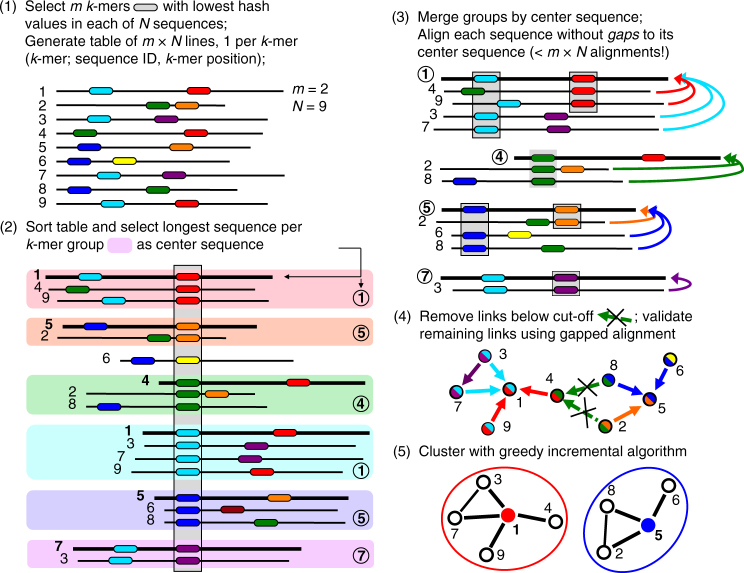
Metagenomic datasets contain billions of protein sequences that could greatly enhance large-scale functional annotation and structure prediction. Utilizing this enormous resource would require reducing its redundancy by similarity clustering. However, clustering hundreds of millions of sequences is impractical using current algorithms because their runtimes scale as the input set size N times the number of clusters K, which is typically of similar order as N, resulting in runtimes that increase almost quadratically with N. We developed Linclust, the first clustering algorithm whose runtime scales as N, independent of K. It can also cluster datasets several times larger than the available main memory. We cluster 1.6 billion metagenomic sequence fragments in 10 h on a single server to 50% sequence identity, >1000 times faster than has been possible before. Linclust will help to unlock the great wealth contained in metagenomic and genomic sequence databases.
Overview
The claims and statistics of this paper haven’t been checked yet.
Free: it reads the open-access text and checks the first 5 claims that cite a source we can check. Create a free account to check every claim.
Integrity signals
Registry
Cites
Statistics
Figures
Verification
Claims the paper makes
The claims and statistics of this paper haven’t been checked yet.
Free: it reads the open-access text and checks the first 5 claims that cite a source we can check. Create a free account to check every claim.
Self-check
Percentages, sums and reported differences re-computed from the paper’s own numbers.
The self-check needs the paper’s full text.
Citations
Cites
Basic local alignment search tool
Altschul, S. F., Gish, W., Miller, W., Myers, E. W., & Lipman, D. J. (1990) · Journal of Molecular Biology · doi:10.1006/jmbi.1990.9999 · Cited by 98,669 · cited 1×
“For each clustering run, we searched with BLAST [15] a random sample of 1 000 representative sequences against all representative sequences of the clustering.”
MethodSearch and clustering orders of magnitude faster than BLAST
Edgar, R. C. (2010) · Bioinformatics · doi:10.1093/bioinformatics/btq461 · Cited by 20,826
Fast and sensitive protein alignment using DIAMOND
Buchfink, B., Xie, C., & Huson, D. H. (2015) · Nature Methods · doi:10.1038/nmeth.3176 · Cited by 14,201 · cited 3×
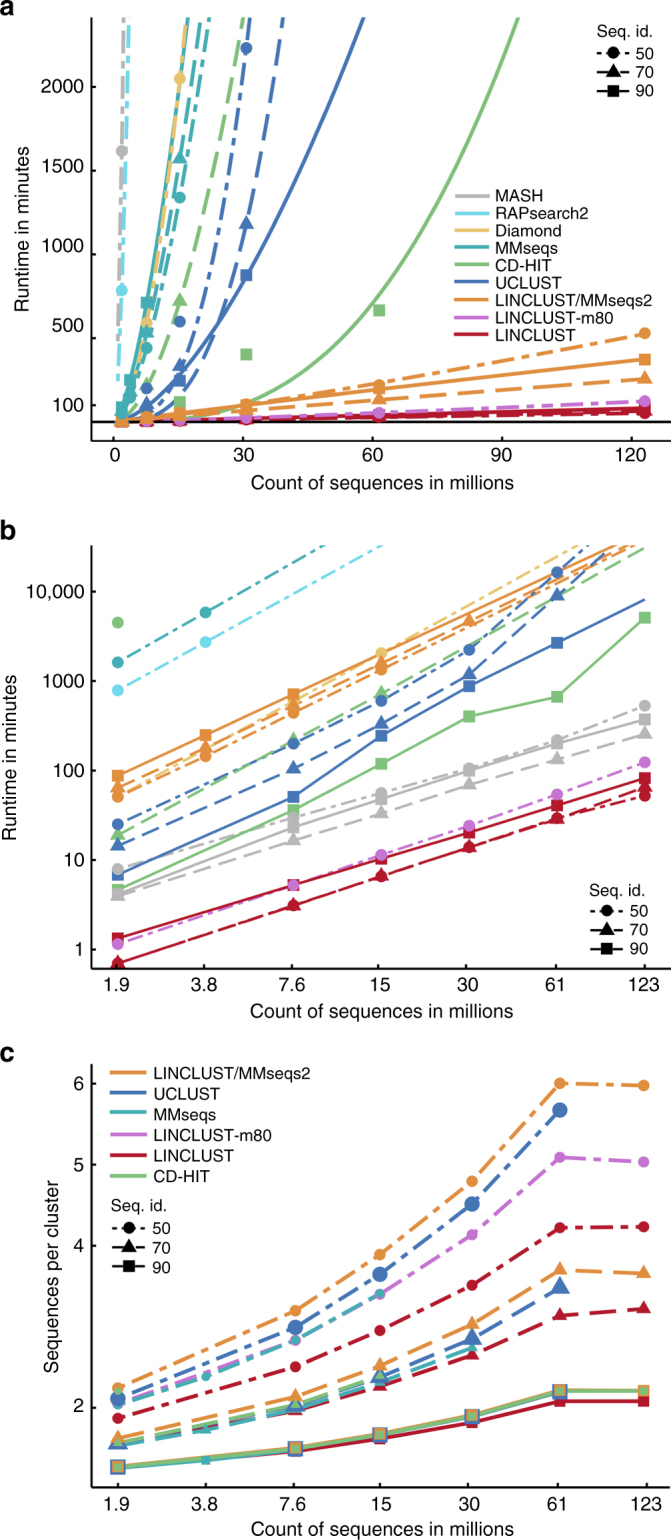
“At 50% identity, Linclust clusters the 123 million sequences 10 times faster than Linclust/MMseqs2 and, by extrapolation, 2300 times faster than UCLUST, 720 times faster than MMseqs, 4600 times faster than CD-HIT, 1600 times faster than DIAMOND [12], 69 000 times faster than MASH [13], and 26 000 times faster than RAP…”
BackgroundInfluentialProdigal: prokaryotic gene recognition and translation initiation site identification
Hyatt, D., Chen, G.-L., LoCascio, P. F., Land, M. L., Larimer, F. W., & Hauser, L. J. (2010) · BMC Bioinformatics · doi:10.1186/1471-2105-11-119 · Cited by 12,587
Cd-hit: a fast program for clustering and comparing large sets of protein or nucleotide sequences
Li, W., & Godzik, A. (2006) · Bioinformatics · doi:10.1093/bioinformatics/btl158 · Cited by 11,410 · cited 1×
“Similar to the k-mer prefilter used in CD-HIT, UCLUST, kclust and MMseqs [8, 11, 26, 27], the preclustering reduces the number of comparisons by a large factor F using the slow, exact measure, but the time complexity of the ex240 act distance calculation O(N(2)/F ) is still quadratic in N .”
MethodCd-hit: Accelerated for clustering the next-generation sequencing data
Fu, L., Niu, B., Zhu, Z., Wu, S., & Li, W. (2012) · Bioinformatics · doi:10.1093/bioinformatics/bts565 · Cited by 11,175 · cited 15×
“By increasing m from 20 to 80, Linclust takes only 1.5 to 2 times longer but attains a sensitivity similar to UCLUST (pink in Fig.”
MethodInfluentialThe Pfam protein families database: towards a more sustainable future
Finn, R. D., Coggill, P., Eberhardt, R. Y., Eddy, S. R., Mistry, J., Mitchell, A. L., Potter, S. C., Punta, M., Qureshi, M., Sangrador-Vegas, A., et al. (2016) · Nucleic Acids Research · doi:10.1093/nar/gkv1344 · Cited by 5,975 · cited 1×
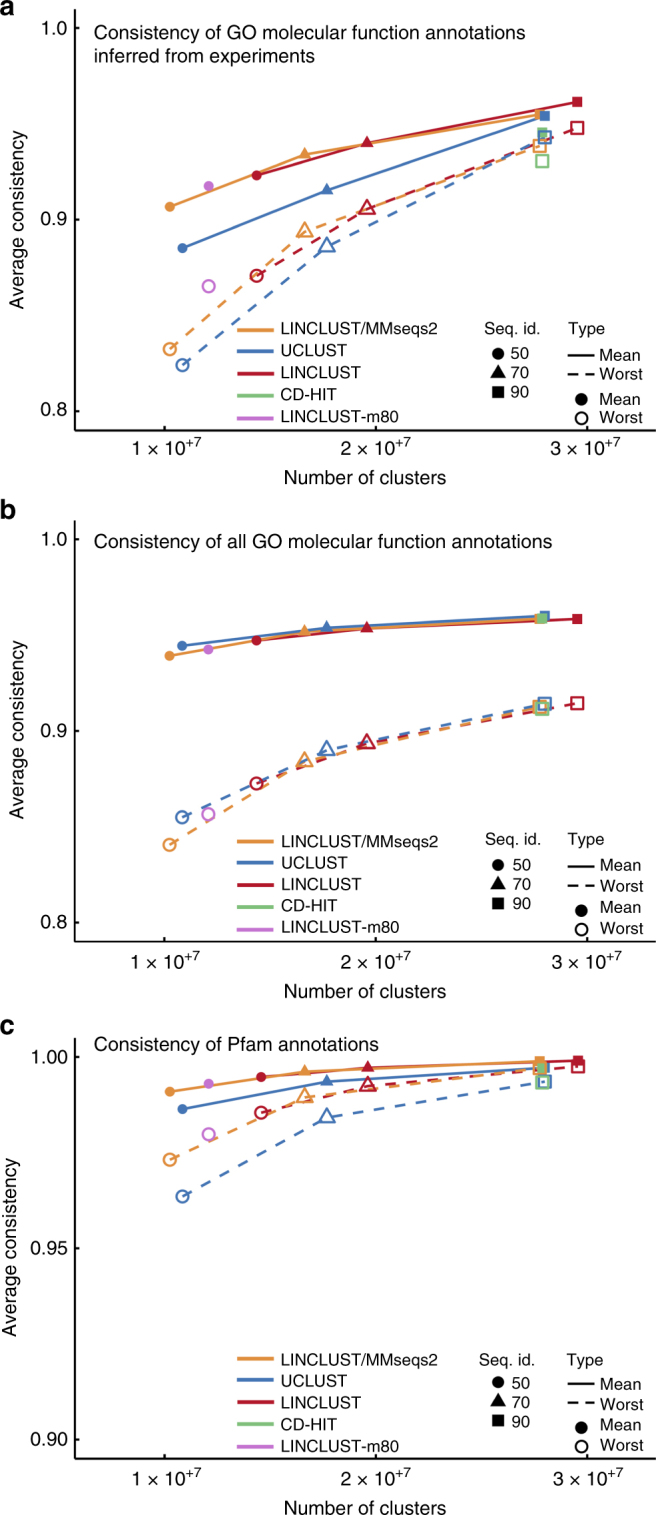
“4a,b) and Pfam domain annotations [18] (Fig.”
MMseqs2 enables sensitive protein sequence searching for the analysis of massive data sets
Steinegger, M., & Söding, J. (2017) · Nature Biotechnology · doi:10.1038/nbt.3988 · Cited by 4,840
Self-citationThe Universal Protein Resource (UniProt)
Bairoch, A. (2004) · Nucleic Acids Research · doi:10.1093/nar/gki070 · Cited by 3,774 · cited 1×
“, 100}, we determined these thresholds empirically on 4 million local alignments sampled from an all-against-all comparison of the UniProt database [31].”
MethodGene Ontology Consortium: going forward
The Gene Ontology Consortium (2015) · Nucleic Acids Research · doi:10.1093/nar/gku1179 · Cited by 3,492 · cited 2×
“We assess Gene Ontology (GO) annotations [17] (Fig.”
BackgroundMethod
Research works printed but not linked: 1
- Wang, J. Shen, H. T., Song, J. & Ji., J. Hashing for similarity search: a survey. Preprint at https://arxiv.org/abs/1408.2927 (2014). · arXiv
Cited by
Items 301–400 of 962
The complexity of protein interactions unravelled from structural disorder
Seoane, B., & Carbone, A. (2021) · PLoS Computational Biology · doi:10.1371/journal.pcbi.1008546 · Cited by 25
“Clusters are created using the MMseqs2 method [47, 48], which is the same method used in the PDB to explore its sequence redundancy, see http://www.”
MAGNETO: An Automated Workflow for Genome-Resolved Metagenomics
Churcheward, B., Millet, M., Bihouée, A., Fertin, G., & Chaffron, S. (2022) · mSystems · doi:10.1128/msystems.00432-22 · Cited by 28
“%) using Linclust (47).”
MethodInfluentialDiscovery of archaeal Fusexins homologous to eukaryotic HAP2/GCS1 gamete fusion proteins
Moi, D., Nishio, S., Li, X., Valansi, C., Langleib, M., Brukman, N. G., Flyak, K., Dessimoz, C., de Sanctis, D., Tunyasuvunakool, K., et al. (2021) · doi:10.1101/2021.10.13.464100 · Cited by 23
Gonzales, M. E. M., Ureta, J. C., & Shrestha, A. M. S. (2024) · doi:10.1101/2024.08.24.609479 · Cited by 23
Deep embeddings to comprehend and visualize microbiome protein space
Odrzywolek, K., Karwowska, Z., Majta, J., Byrski, A., Milanowska-Zabel, K., & Kosciolek, T. (2022) · Scientific Reports · doi:10.1038/s41598-022-14055-7 · Cited by 22
DeepAllo: allosteric site prediction using protein language model (pLM) with multitask learning
Khokhar, M., Keskin, Ö., & Gürsoy, A. (2025) · Bioinformatics · doi:10.1093/bioinformatics/btaf294 · Cited by 27
Fiamenghi, M. B., Camargo, A. P., Chasapi, I. N., Baltoumas, F. A., Roux, S., Egorov, A. A., Aplakidou, E., Ndela, É. O., Vasquez, Y. M., Chen, I.-M. A., et al. (2025) · Nucleic Acids Research · doi:10.1093/nar/gkaf1283 · Cited by 29
“…the multiple sequence alignment (MSA) of each cluster was enriched using MMseqs2 v. 17-b804f [ 35 ] by searching for similar sequences against the following databases: PDB [ 37 ], UniRef90 [ 38 , 39 ], and the MetaVR cluster MSAs (parameters: ‘-e 1e-5 –max-seqs 100000 -s 7 –num-iterations 2’).”
Ma, J., Kim, N., Cha, J. H., Kim, W., Kim, C. Y., Lee, Y., Kim, H. S., Han, Y. D., Yong, D., Han, E., et al. (2025) · Nature Microbiology · doi:10.1038/s41564-025-02206-1 · Cited by 32
Prediction of eukaryotic cellular complexity in Asgard archaea using structural modelling
Köstlbacher, S., van Hooff, J. J. E., Panagiotou, K., Tamarit, D., Anda, V. D., Appler, K. E., Baker, B. J., & Ettema, T. J. G. (2026) · Nature Microbiology · doi:10.1038/s41564-026-02273-y · Cited by 23
“We classified predictions as high quality if they had an average predicted local distance difference test (pLDDT) score of at least 80.”
Evolution of a chordate-specific mechanism for myoblast fusion
Zhang, H., Shang, R., Kim, K., Zheng, W. H., Johnson, C. J., Sun, L., Niu, X., Liu, L., Zhou, J., Liu, L., et al. (2022) · Science Advances · doi:10.1126/sciadv.add2696 · Cited by 23
De Novo Clustering of Long-Read Transcriptome Data Using a Greedy, Quality-Value Based Algorithm
Sahlin, K., & Medvedev, P. (2019) · Lecture notes in computer science · doi:10.1007/978-3-030-17083-7_14 · Cited by 26
Revealing data leakage in protein interaction benchmarksPreprint
Bushuiev, A., Bushuiev, R., Sedlář, J., Pluskal, T., Damborský, J., Mazurenko, S., & Šivic, J. (2024) · arXiv (Cornell University) · doi:10.48550/arxiv.2404.10457 · Cited by 36
Rapid and accurate prediction of protein homo-oligomer symmetry with Seq2Symm
Kshirsagar, M., Meller, A., Humphreys, I., Sledzieski, S., Xu, Y., Dodhia, R., Horvitz, E., Berger, B., Bowman, G., Ferres, J. L., et al. (2024) · doi:10.21203/rs.3.rs-4215086/v1 · Cited by 22
Deep embeddings to comprehend and visualize microbiome protein space
Odrzywolek, K., Karwowska, Z., Majta, J., Byrski, A., Milanowska-Zabel, K., & Kosciolek, T. (2021) · doi:10.1101/2021.07.21.452490 · Cited by 22
Baltoumas, F. A., Karatzas, E., Páez-Espino, D., Venetsianou, N. K., Aplakidou, E., Oulas, A., Finn, R. D., Ovchinnikov, S., Pafilis, E., Kyrpides, N. C., et al. (2023) · Frontiers in Bioinformatics · doi:10.3389/fbinf.2023.1157956 · Cited by 25
“For example, Figure 3C Finally, a great advantage of MMseqs2.”
BackgroundMethodInfluentialDe novo genome assembly of the land snail Candidula unifasciata (Mollusca: Gastropoda)
Chueca, L. J., Schell, T., & Pfenninger, M. (2021) · G3 Genes Genomes Genetics · doi:10.1093/g3journal/jkab180 · Cited by 21
Si, Y., & Yan, C. (2021) · Briefings in Bioinformatics · doi:10.1093/bib/bbab341 · Cited by 22
Deep learning geometrical potential for high-accuracy ab initio protein structure prediction
Li, Y., Zhang, C., Yu, D., & Zhang, Y. (2022) · iScience · doi:10.1016/j.isci.2022.104425 · Cited by 22
“The first three MSAs were collected by searching the query through three genome sequence databases from Uniclust30, Uniref90, and Metaclust (Steinegger and Söding, 2018) sequence databases via HHblits (Remmert et al., 2012), Jackhmmer (Johnson et al., 2010; Eddy, 1998), and HMMsearch (Eddy, 1998), respectively, follo…”
MethodInfluentialComparison of Methods for Biological Sequence Clustering
Wei, Z., Chen, X., Zhang, X.-D., Zhang, H., Fan, X.-G., Gao, H., Liu, F., & Qian, Y. P. (2023) · IEEE Transactions on Computational Biology and Bioinformatics · doi:10.1109/tcbb.2023.3253138 · Cited by 23
Zhu, S., Tan, Z.-J., Guo, Z., Zheng, H., Zhang, B., Qin, Z., Xie, J., Lin, Y., Sheng, B., Qiu, G., et al. (2024) · Water Research · doi:10.1016/j.watres.2024.121741 · Cited by 24
Application of Sequence Embedding in Protein Sequence-Based Predictions
Ibtehaz, N., & Kihara, D. (2022) · WORLD SCIENTIFIC eBooks · doi:10.1142/9789811258589_0002 · Cited by 26
Bağcı, C., Negri, T., Buena‐Atienza, E., Groß, C., Ossowski, S., & Ziemert, N. (2025) · GigaScience · doi:10.1093/gigascience/giaf135 · Cited by 21
GlobDB: a comprehensive species-dereplicated microbial genome resource
Speth, D. R., Pullen, N., Aroney, S. T. N., Coltman, B. L., Osvatic, J., Woodcroft, B. J., Rattei, T., & Wagner, M. (2024) · Bioinformatics Advances · doi:10.1093/bioadv/vbaf280 · Cited by 32
“…protein language model (pLM) embeddings of the GlobDB proteins, we clustered the 838 615 274 GlobDB amino acid sequences using a 40% identity threshold over 80% of the length of both sequences (Steinegger and S € oding 2018), yielding 82 973 016 representatives of clusters larger than one sequence.”
Alam, I. S., Kamau, A. A., Ngugi, D. K., Gojobori, T., Duarte, C. M., & Bajić, V. B. (2021) · Scientific Reports · doi:10.1038/s41598-021-90799-y · Cited by 24
Improving deep learning-based protein distance prediction in CASP14
Guo, Z., Wu, T., Liu, J., Hou, J., & Cheng, J. (2021) · Bioinformatics · doi:10.1093/bioinformatics/btab355 · Cited by 22
Williams, C. J., Richardson, D. C., & Richardson, J. S. (2021) · Protein Science · doi:10.1002/pro.4239 · Cited by 20
“The remaining chains are treated within their PDBdefined sequence-identity clusters, which are calculated weekly with MMseqs2.(14) From each cluster, we select the chain with the best (lowest) average of resolution and MolProbity score as the best-quality representative of that cluster.”
MethodSindi, A. S., Stinson, L. F., Lean, S. S., Chooi, Y., Leghi, G. E., Netting, M., Wlodek, M. E., Mühlhäusler, B. S., Geddes, D. T., & Payne, M. S. (2022) · Frontiers in Microbiology · doi:10.3389/fmicb.2022.900702 · Cited by 21
“, 2015) release 2019/09 using 90% identity over 80% of the read length with MMSeqs2 Release 10-6d92c (Steinegger and Söding, 2018).”
BackgroundEndoparasitoid lifestyle promotes endogenization and domestication of dsDNA viruses
Guinet, B., Lepetit, D., Charlat, S., Buhl, P. N., Notton, D. G., Cruaud, A., Rasplus, J., Stigenberg, J., de Vienne, D. M., Boussau, B., et al. (2023) · eLife · doi:10.7554/elife.85993 · Cited by 21
Interpreting Potts and Transformer Protein Models Through the Lens of Simplified Attention
Bhattacharya, N., Thomas, N., Rao, R., Dauparas, J., Koo, P. K., Baker, D., Song, Y. S., & Ovchinnikov, S. (2021) · Biocomputing 2022 · doi:10.1142/9789811250477_0004 · Cited by 20
“To compare to ProtBERT-BFD, we train our single-layer attention models on unaligned families and found that performance degrades significantly.”
Duchesneau, K., Aldeguer‐Riquelme, B., Petro, C., Makke, G., Green, M., Tfaily, M., Wilson, R. M., Roth, S. W., Johnston, E. R., Kluber, L. A., et al. (2025) · Nature Communications · doi:10.1038/s41467-025-61664-7 · Cited by 25
LambdaPP : Fast and accessible protein‐specific phenotype predictions
(2022) · doi:10.1002/pro.4524 · Cited by 19
“Since the 43 release of PredictProtein, the amount of non44 annotated sequences has been rapidly increasing 45 (58; 67).”
BackgroundMethodInfluentialSelf-citationA novel and diverse family of filamentous DNA viruses associated with parasitic wasps
Guinet, B., Leobold, M., Herniou, E. A., Bloin, P., Burlet, N., Bredlau, J. P., Navratil, V., Ravallec, M., Uzbekov, R. E., Kester, K. M., et al. (2024) · Virus Evolution · doi:10.1093/ve/veae022 · Cited by 19
Liu, J., Neupane, P., & Cheng, J. (2025) · Proteins Structure Function and Bioinformatics · doi:10.1002/prot.26850 · Cited by 22
“Sequence-based MSAs are constructed by searching the sequence of each subunit against a comprehensive set of sequence databases, including UniRef30 [16], UniRef90 [17], Metaclust [18], BFD [18, 19], Mgnify [20], UniProt [17], JGI [21], TaraDB [22], and MetaSourceDB [23].”
Wang, S., Guo, Z., Wang, L., Zhang, Y., Jiang, F., Wang, X., Yin, L., Liu, B., Liu, H., Wang, H., et al. (2021) · Frontiers in Microbiology · doi:10.3389/fmicb.2021.689855 · Cited by 23
PRESCOTT: a population aware, epistatic, and structural model accurately predicts missense effects
Tekpinar, M., David, L., Henry, T., & Carbone, A. (2025) · Genome Biology · doi:10.1186/s13059-025-03581-y · Cited by 18
“Since Alphafold implementation uses several databases such as Uniref90 [68], BFD [69, 70], and Mgnify [71], due to their large sizes, Alphafold computational time becomes prohibitively high for thousands of proteins and, for this reason, we used Colabfold, based on highly clustered databases, to…”
SARITA: a large language model for generating the S1 subunit of the SARS-CoV-2 spike protein
Rancati, S., Nicora, G., Bergomi, L., Buonocore, T. M., Czyż, D. M., Parimbelli, E., Bellazzi, R., Salemi, M., Prosperi, M., & Marini, S. (2025) · Briefings in Bioinformatics · doi:10.1093/bib/bbaf384 · Cited by 21
Using metagenomic data to boost protein structure prediction and discovery
Hou, Q., Pucci, F., Pan, F., Xue, F., Rooman, M. J., & Feng, Q. (2022) · Computational and Structural Biotechnology Journal · doi:10.1016/j.csbj.2021.12.030 · Cited by 20
“It has been constructed by collecting about 2.5 billion protein sequences from UniProt/Trembl [46], SwissProt [47], MetaClust[31], as well as the Soil Reference Catalog and the Marine Eukaryotic Reference Catalog, assembled using the de novo protein-level assembler PLASS [32], which is able to recover more protein seq…”
BackgroundMethodInfluentialMetascan: METabolic Analysis, SCreening and ANnotation of Metagenomes
Cremers, G., Jetten, M. S. M., den Camp, H. J. M. O., & Lücker, S. (2022) · Frontiers in Bioinformatics · doi:10.3389/fbinf.2022.861505 · Cited by 18
Comparative biodegradation analysis of three compostable polyesters by a marine microbial community
Cifuentes, I. E. M., Degenhardt, J., Neumann‐Schaal, M., Jehmlich, N., Ngugi, D. K., & Öztürk, B. (2023) · Applied and Environmental Microbiology · doi:10.1128/aem.01060-23 · Cited by 23
Gclust: A Parallel Clustering Tool for Microbial Genomic Data
Li, R., He, X., Dai, C., Zhu, H., Lang, X., Chen, W., Li, X., Zhao, D., Zhang, Y., Han, X., et al. (2019) · Genomics Proteomics & Bioinformatics · doi:10.1016/j.gpb.2018.10.008 · Cited by 18
“Clustering algorithms are key for redundancy reduction and there have been many of them available including CD-HIT [3], UCLUST [4], DNACLUST [5], canopies [6], Linclust [7], CLOSET [8], and SynerClust [9], among others.”
MethodRecent Advances in Protein Homology Detection Propelled by Inter-Residue Interaction Map Threading
Bhattacharya, S., Roche, R., Shuvo, M. H., & Bhattacharya, D. (2021) · Frontiers in Molecular Biosciences · doi:10.3389/fmolb.2021.643752 · Cited by 18
“In addition to the well-established whole-genome sequence databases such as the nr database from the National Center for Biotechnology Information (NCBI), UniRef (Suzek et al., 2015), UniProt (The UniProt Consortium, 2019), and Uniclust (Mirdita et al., 2017); emerging metagenome sequence databases from the European B…”
BackgroundPRESCOTT: a population aware, epistatic and structural model accurately predicts missense effect
Tekpinar, M., David, L., Henry, T., & Carbone, A. (2024) · doi:10.1101/2024.02.03.24302219 · Cited by 18
LambdaPP: Fast and accessible protein-specific phenotype predictions
Olenyi, T., Marquet, C., Heinzinger, M., Kröger, B., Nikolova, T., Bernhofer, M., Sändig, P., Schütze, K., Littmann, M., Mirdita, M., et al. (2022) · doi:10.1101/2022.08.04.502750 · Cited by 18
Self-citationDesign of Peptide-Based Protein Degraders via Contrastive Deep Learning
Palepu, K., Ponnapati, M., Bhat, S., Tysinger, E., Stan, T., Brixi, G., Koseki, S. R. T., & Chatterjee, P. (2022) · doi:10.1101/2022.05.23.493169 · Cited by 17
Zhou, M., Liu, Z., & Hu, B. (2024) · Environmental Pollution · doi:10.1016/j.envpol.2024.124628 · Cited by 18
Jin, S., Zhu, Z., Li, Y., Zhang, S., Liu, Y., Li, D., Li, Y., Luo, Y., Cheng, Z., Zhao, K. T., et al. (2025) · Cell · doi:10.1016/j.cell.2025.09.004 · Cited by 21
Lu, J.-N., Chao, Y., Tian, L., Zhong, X., Chen, Z., He, H., Huang, B., Li, M., Feng, Z., Feng, H., et al. (2025) · Nature Communications · doi:10.1038/s41467-025-64938-2 · Cited by 18
“6.3 83 was used to predict ORFs for assembled scaffolds over 500 bp inlength, and the unigenes were clustered using Linclust (Default parameters -e 0.001 --min-seq-id 0.95 -c 0.90) 102 .”
InfluentialChen, T.-R., Lo, C.-H., Juan, S.-H., & Lo, W. (2021) · PLoS ONE · doi:10.1371/journal.pone.0254555 · Cited by 17
“In practice, current homology reduction algorithms cannot adequately support or are not recommended for sequence identity cutoffs below 50–30% [45, 47, 48]; therefore, the operating cutoff we recommend is 30%.”
BackgroundMethodStrain-resolved de-novo metagenomic assembly of viral genomes and microbial 16S rRNAs
Jochheim, A., Jochheim, F. A., Kolodyazhnaya, A., Morice, É., Steinegger, M., & Söding, J. (2024) · Microbiome · doi:10.1186/s40168-024-01904-y · Cited by 17
“Similar to Plass [28], our protein-level assembler, PenguiN achieves fast speeds and a linear run time complexity by applying Linclust [45], the first algo-rithm to cluster protein and nucleotide sequences in linear time.”
MethodInfluentialSelf-citationzol and fai: large-scale targeted detection and evolutionary investigation of gene clusters
Salamzade, R., Tran, P. Q., Martin, C., Manson, A. L., Gilmore, M. S., Earl, A. M., Anantharaman, K., & Kalan, L. (2025) · Nucleic Acids Research · doi:10.1093/nar/gkaf045 · Cited by 19
PUNCH2: Explore the strategy for intrinsically disordered protein predictor
Meng, D., & Pollastri, G. (2025) · PLoS ONE · doi:10.1371/journal.pone.0319208 · Cited by 20
Computational Strategies for Eukaryotic Pangenome Analyses
Hu, Z., Wei, C., & Li, Z. (2020) · Springer eBooks · doi:10.1007/978-3-030-38281-0_13 · Cited by 20
geneshot: gene-level metagenomics identifies genome islands associated with immunotherapy response
Minot, S. S., Barry, K. C., Kasman, C., Golob, J. L., & Willis, A. D. (2021) · Genome biology · doi:10.1186/s13059-021-02355-6 · Cited by 19
Lees, J. A., Tonkin‐Hill, G. Q., Yang, Z., & Corander, J. (2022) · Philosophical Transactions of the Royal Society B Biological Sciences · doi:10.1098/rstb.2021.0237 · Cited by 18
“This has been achieved in other packages by assuming that genetic distances generally obey the triangle inequality [14,56].”
BackgroundLin, D., Zhu, L., Yao, Y., Zhu, L., & Wang, M. (2023) · Journal of Hazardous Materials · doi:10.1016/j.jhazmat.2023.131201 · Cited by 17
Coevolutionary Analysis of Protein Subfamilies by Sequence Reweighting
Malinverni, D., & Barducci, A. (2019) · Entropy · doi:10.3390/e21111127 · Cited by 17
Acinetobacter pullorum sp. nov., Isolated from Chicken Meat
Elnar, A. G., Kim, M., Lee, J., Han, R.-H., Yoon, S.-H., Lee, G. Y., Yang, S., & Kim, G. B. (2020) · Journal of Microbiology and Biotechnology · doi:10.4014/jmb.2002.02033 · Cited by 17
“Sequences of the proteins in all genomes were clustered with 50% sequence identity and 80% alignment cutoffs using Linclust software [20].”
MethodA primer and discussion on DNA-based microbiome data and related bioinformatics analyses
Douglas, G. M., & Langille, M. G. I. (2021) · Peer Community Journal · doi:10.24072/pcjournal.2 · Cited by 17
Unifying the known and unknown microbial coding sequence spacePreprint
Vanni, C., Schechter, M. S., Acinas, S. G., Barberán, A., Buttigieg, P. L., Casamayor, E. O., Delmont, T. O., Duarte, C. M., Eren, A. M., Finn, R. D., et al. (2020) · bioRxiv (Cold Spring Harbor Laboratory) · doi:10.1101/2020.06.30.180448 · Cited by 22
Self-citationMetagenomic-Scale Analysis of the Predicted Protein Structure UniversePreprint
Yeo, J., Han, Y., Bordin, N., Lau, A. M., Kandathil, S. M., Kim, H., Karin, E. L., Mirdita, M., Jones, D. T., Orengo, C. A., et al. (2025) · SSRN Electronic Journal · doi:10.1101/2025.04.23.650224 · Cited by 23
Self-citationAttSec: protein secondary structure prediction by capturing local patterns from attention map
(2023) · doi:10.1186/s12859-023-05310-3 · Cited by 16
“ProtT5-XL-U50, which is based on T5 [15], is trained using the BFD dataset [16, 17] and the UniRef50 dataset [18] by performing a denoising task proposed in BERT [19] as a pretext task.”
MethodMetagenome-assembled microbial genomes from Parkinson’s disease fecal samples
Duru, I. C., Lecomte, A., Shishido, T. K., Laine, P., Suppula, J., Paulin, L. G., Scheperjans, F., Pereira, P. A. B., & Auvinen, P. (2024) · Scientific Reports · doi:10.1038/s41598-024-69742-4 · Cited by 16
“From all the 111,099 phage contigs that were identified using the 136 metagenome assemblies, 31,127 (28”
Influentialvan der Loos, L. M., Steinhagen, S., Stock, W., Weinberger, F., D’hondt, S., Willems, A., & Clerck, O. D. (2025) · Science Advances · doi:10.1126/sciadv.adr6070 · Cited by 17
Scalable and cost-efficient custom gene library assembly from oligopools
Freschlin, C. R., Yang, K. K., & Romero, P. A. (2026) · Science Advances · doi:10.1126/sciadv.ady2279 · Cited by 18
“We have unlocked vast sequence diversity with advancements in large-scale metagenomic sequencing ( 1 , 2 ) and generated detailed sequence-function land-scapes with high-throughput data generation ( 3 – 5 ).”
Urhan, A., & Abeel, T. (2021) · Microbial Genomics · doi:10.1099/mgen.0.000690 · Cited by 18
“Several methods have been developed in the literature to construct genebased pangenome graphs, and we can summarize these methods in roughly three steps: (i) identifying homologue genes based on all- vsall pairwise alignments [9–11] and clustering [12, 13], (ii) paralogue splitting and (iii) linking families to preser…”
MethodCahier, K., Piel, D., Barcia‐Cruz, R., Goudenège, D., Wegner, K. M., Monot, M., Romalde, J. L., & Roux, F. L. (2023) · Environmental Microbiology · doi:10.1111/1462-2920.16366 · Cited by 16
Galaz‐Davison, P., Ferreiro, D. U., & Ramírez‐Sarmiento, C. A. (2022) · Protein Science · doi:10.1002/pro.4337 · Cited by 15
“The number of RfaH sequences was further increased by constructing a hidden Markov model (HMM) profile to use as input for a subsequent search of RfaH sequences in the metagenomic database metaclust.(26) Finally, in line with recent works,(27) all sequences were filtered using secondary structure prediction in JPred(2…”
MethodHigh-accuracy protein complex structure modeling based on sequence-derived structure complementarity
Hou, M., Xia, Y., Wang, P., Lv, Z., Hou, D., Zhou, X., Zeng, J., & Zhang, G. (2025) · Nature Communications · doi:10.1038/s41467-025-65090-7 · Cited by 16
“Our method participated in CASP16 under the group name Guijunlab-Complex (Group #148) and Guijunlab-Assembly (Group #312) .”
Machine learning for predicting protein properties: A comprehensive review
Wang, Y., Zhang, Y., Zhan, X., He, Y., Yang, Y., Cheng, L., & Alghazzawi, D. (2024) · Neurocomputing · doi:10.1016/j.neucom.2024.128103 · Cited by 18
Fine-tuning protein embeddings for functional similarity evaluation
Dickson, A. M., & Mofrad, M. R. K. (2024) · Bioinformatics · doi:10.1093/bioinformatics/btae445 · Cited by 16
Hu, J., Chen, K., Rao, B., Ni, J.-Y., Thafar, M. A., Albaradei, S., & Arif, M. (2024) · Analytical Biochemistry · doi:10.1016/j.ab.2024.115637 · Cited by 16
Language models for protein design
Lee, J. S., Abdin, O., & Kim, P. M. (2025) · Current Opinion in Structural Biology · doi:10.1016/j.sbi.2025.103027 · Cited by 19
Zhang, L., Pang, H., Zhang, C., Li, S., Tan, Y., Jiang, F., Li, M., Yu, Y., Zhou, Z., Wu, B., et al. (2025) · Acta Pharmaceutica Sinica B · doi:10.1016/j.apsb.2025.03.028 · Cited by 20
“ProGen2 ProGen2 31 is an autoregressive protein language model trained on a mixture of UniRef90 and BFD30 32 , with models ranging from 151M to 6.4B parameters.”
Unbinned contigs expand known diversity in the global microbiome
K., V., Maistrenko, O. M., Fullam, A., Mende, D. R., Kartal, E., Coelho, L. P., Spang, A., Bork, P., & Schmidt, T. S. B. (2026) · Nature Microbiology · doi:10.1038/s41564-026-02314-6 · Cited by 16
Paul, T., Vainio, S. J., & Röning, J. (2020) · Genomics · doi:10.1016/j.ygeno.2020.10.009 · Cited by 15
“‘Linclust ’ algorithms reduce the time complexity for the large dataset clustering [33].”
BackgroundA generative foundation model for antibody sequence understandingPreprint
Barton, J., Gaspariunas, A., Yadin, D., Dias, J., Nice, F. L., Minns, D., Snudden, O., Povall, C., Valle, S., Dobson, H., et al. (2024) · bioRxiv (Cold Spring Harbor Laboratory) · doi:10.1101/2024.05.22.594943 · Cited by 17
Evaluating variant effect prediction across virusesPreprint
Gurev, S. F., Youssef, N., Jain, N., Mehrotra, A., Leung, S. R. M., Jackson, A., & Marks, D. S. (2025) · bioRxiv (Cold Spring Harbor Laboratory) · doi:10.1101/2025.08.04.668549 · Cited by 18
Soft disorder modulates the assembly path of protein complexes
Seoane, B., & Carbone, A. (2022) · PLOS Computational Biology · doi:10.1371/journal.pcbi.1010713 · Cited by 15
Alignment-based Protein Mutational Landscape Prediction: Doing More with Less
Abakarova, M., Marquet, C., Rera, M., Rost, B., & Laine, E. (2023) · Genome Biology and Evolution · doi:10.1093/gbe/evad201 · Cited by 14
“…achieved tremendous progress by leveraging the wealth of publicly available natural protein sequence data (Nordberg et al. 2014; Suzek et al. 2015; Steinegger and Söding 2018; Levy Karin et al. 2020; Mitchell et al. 2020; Camarillo-Guerrero et al. 2021; Jumper et al. 2021; Nayfach et al. 2021;…”
BackgroundLarge language models transform biological research: from architecture to utilization
Wang, T., & Luo, Z. (2025) · Science China Information Sciences · doi:10.1007/s11432-024-4466-3 · Cited by 14
Nguyen, N. D. H., Pham, N. T., Tran, D. T., Wei, L., Malik, A., & Manavalan, B. (2025) · Journal of Cheminformatics · doi:10.1186/s13321-025-01078-1 · Cited by 16
“ProtTrans: This research focuses on training two auto-regressive models and four auto-encoder models using two key datasets, UniRef [24] and BFD (Big Fantastic Database) [25, 26].”
Jesser, K. J., Trueba, G. A., Konstantinidis, K. T., & Lévy, K. (2023) · Gut Microbes · doi:10.1080/19490976.2023.2281010 · Cited by 17
Generative AI for controllable protein sequence design: A survey
Zhu, Y., Kong, Z., Wu, J., Yin, M., Liu, W., Han, Y., Xu, H., Hsieh, C., Hou, T., & Wu, J. (2026) · npj Drug Discovery. · doi:10.1038/s44386-026-00054-5 · Cited by 18
AI-2 quorum sensing signal disrupts coral symbiotic homeostasis and induces host bleaching
Han, S., Cheng, X., Wang, T., Li, X., Cai, Z., Zheng, H., Xiao, B., & Zhou, J. (2024) · Environment International · doi:10.1016/j.envint.2024.108768 · Cited by 14
Perneel, M., Lagaisse, R., Mortelmans, J., Maere, S., & Hablützel, P. I. (2024) · mBio · doi:10.1128/mbio.00383-24 · Cited by 15
“All assemblies were then combined and clustered at 95% identity using MMseqs2 easy-linclust algorithm (version 13–45111) (46, 57).”
BackgroundMethodA suicidal and extensively disordered luciferase with a bright luminescence
Dijkema, F. M., Escarpizo‐Lorenzana, M. I., Nordentoft, M. K., Rabe, H. C., Sahin, C., Landreh, M., Branca, R. M., Sørensen, E. S., Christensen, B., Prestel, A., et al. (2024) · Protein Science · doi:10.1002/pro.5115 · Cited by 14
“Similar sequences were collected from the UniRef50 database (Steinegger & Söding, 2018; Suzek et al., 2015).”
MethodKim, N., Kim, C. Y., Ma, J., Yang, S., Park, D. J., Ha, S., Belenky, P. A., & Lee, I. (2024) · Gut Microbes · doi:10.1080/19490976.2024.2393791 · Cited by 15
“43 This allowed us to evaluate the functional overlap more comprehensively by comparing the clustered protein families, thereby providing a detailed insight into the distinct and shared functional capabilities within the gut microbiomes of mice and humans.”
BackgroundInfluentialComprehensive Assessment of BERT-Based Methods for Predicting Antimicrobial Peptides
Gao, W. J., Zhao, J. W., Gui, J., Wang, Z., Chen, J., & Yue, Z. (2024) · Journal of Chemical Information and Modeling · doi:10.1021/acs.jcim.4c00507 · Cited by 14
Wu, Z.-L., Shi, W., Zhang, L., Xia, Z., Gou, M., Sun, Z.-Y., & Tang, Y. (2024) · Journal of Environmental Management · doi:10.1016/j.jenvman.2024.123326 · Cited by 15
IDP-Bert: Predicting Properties of Intrinsically Disordered Proteins Using Large Language Models
Mollaei, P., Sadasivam, D., Guntuboina, C., & Farimani, A. B. (2024) · The Journal of Physical Chemistry B · doi:10.1021/acs.jpcb.4c02507 · Cited by 19
“ProtBERT is pre-trained on Big Fantastic Database (BFD), 43–45 a vast protein sequence corpus comprising over 217 million unique sequences.”
Learning a generalized graph transformer for protein function prediction in dissimilar sequences
Fu, Y., Gu, Z., Luo, X., Guo, Q., Lai, L., & Deng, M. (2024) · GigaScience · doi:10.1093/gigascience/giae093 · Cited by 16
Cho, J., Lee, G. M., Ko, S., Kim, Y., & Kim, D. (2025) · Journal of Virology · doi:10.1128/jvi.01901-24 · Cited by 18
Mohamed, A. R., Ochsenkühn, M. A., Haydon, T. D., Abdelrazig, S., Coe, L. S. Y., Mochales‐Riaño, G., Jo, W. S., Healy, A. R., Abrego, D., Raina, J., et al. (2026) · Nature Microbiology · doi:10.1038/s41564-026-02494-1 · Cited by 16
Dohan, D., Gane, A., Bileschi, M. L., Belanger, D., & Colwell, L. J. (2021) · ACM SIGKDD Conference on Knowledge Discovery and Data Mining (KDD) · doi:10.1145/3447548.3467163 · Cited by 15
“Relatedly, Elnaggar et al. [19] compared models trained on UniRef100 and BFD, and found that training on the larger dataset (2.12B sequences in BFD vs. 216M sequences in UniRef100) improved downstream task performance, but not significantly.”
MethodBaniasad, M., Kim, Y.-S., Shaffer, M., Sabag-Daigle, A., Leleiwi, I., Daly, R. A., Ahmer, B. M. M., Wrighton, K. C., & Wysocki, V. H. (2022) · Analytical and Bioanalytical Chemistry · doi:10.1007/s00216-022-03885-z · Cited by 15
“The predicted proteins from the CBA/J metagenomes, iMGMC, and the UniProt mouse proteome were then dereplicated (100% identity and 100% length coverage) using MMseqs2 [28] to form the final protein database.”
MethodMielecki, D., Grzesiuk, E., Bednarska, A., Garbicz, D., Świderska, B., & Grzesiuk, M. (2022) · Ecotoxicology and Environmental Safety · doi:10.1016/j.ecoenv.2022.114372 · Cited by 16
KA-Search, a method for rapid and exhaustive sequence identity search of known antibodies
Olsen, T. H., Abanades, B., Moal, I. H., & Deane, C. M. (2023) · Scientific Reports · doi:10.1038/s41598-023-38108-7 · Cited by 17
“To further increase speed, both CD-HIT-2D and MMseqs2 use fast prefiltering steps to remove target sequences with low identity to the query, thereby reducing the number of pairwise alignments to make, a computational expensive step.”
MethodInfluentialProtein language models meet reduced amino acid alphabets
Ieremie, I., Ewing, R. M., & Niranjan, M. (2024) · Bioinformatics · doi:10.1093/bioinformatics/btae061 · Cited by 17
“SDM12 and HSDM17 were developed from structurally determined substitution matrices and the MMSEQS12 alphabet was developed for fast clustering of protein sequences (Steinegger and S € oding 2018).”
Incorporating Pre-training Paradigm for Antibody Sequence-Structure Co-designPreprint
Gao, K., Wu, L., Zhu, J., Peng, T., Xia, Y., He, L., Xie, S., Qin, T., Liu, H., He, K., et al. (2022) · bioRxiv (Cold Spring Harbor Laboratory) · doi:10.1101/2022.11.14.516404 · Cited by 14
“Those sequences are clustered using MMseqs2 [45, 46] with the minimum sequence identity set to 0.7 to reduce redundancy.”
MethodInfluentialPetascale Homology Search for Structure Prediction
Lee, S., Kim, G., Karin, E. L., Mirdita, M., Park, S., Chikhi, R., Babaian, A., Kryshtafovych, A., & Steinegger, M. (2023) · bioRxiv (Cold Spring Harbor Laboratory) · doi:10.1101/2023.07.10.548308 · Cited by 15
Self-citation
Metadata
- Authors
- Steinegger, M., & Söding, J.
- Affiliations
- Seoul National University (KR)
- Max Planck Institute for Biophysical Chemistry (DE)
- Corresponding author
- Steinegger, Martin
- Söding, Johannes
- Venue
- Nature Communications
- Published
- 2018-06-29
- Volume
- 9
- Issue
- 1
- Pages
- 2542-2542
- ISSN
- 2041-1723 (ISSN-L)
- PMC
- PMC6026198
- OpenAlex
- W2953008890
- Cited by
- 875
- References
- 32
- Citations by year
- 2026: 110 · 2025: 154 · 2024: 168 · 2023: 123 · 2022: 111 · 2021: 129 · 2020: 52 · 2019: 28
- FWCI
- 18.49
- Type
- journal article
- Language
- en
- Open access
- gold
- doi.org
- Licence
- cc-by
- creativecommons.org/licenses/by/4.0 (tdm)
- creativecommons.org/licenses/by/4.0 (vor)
- Locations
- Nature Communications (publishedVersion, cc-by)
- Europe PMC (PubMed Central) (publishedVersion, cc-by)
- PubMed Central (publishedVersion, cc-by)
- PubMed (publishedVersion)
- OSTI OAI (U.S. Department of Energy Office of Scientific and Technical Information) (submittedVersion)
- DOAJ (DOAJ: Directory of Open Access Journals) (submittedVersion, cc-by-sa)
- DOAJ (DOAJ: Directory of Open Access Journals) (submittedVersion)
- mediaTUM (Technical University of Munich) (submittedVersion, other-oa)
- GoeScholar The Publication Server of the Georg-August-Universität Göttingen (Georg-August-Universität Göttingen) (submittedVersion, cc-by)
- Seoul National University Open Repository (Seoul National University) (submittedVersion)
- Funders
- U.S. Department of Energy
- Joint Genome Institute
- Seoul National University
- Horizon 2020 Framework Programme (685778)
- Topics
- Life Sciences › Biochemistry, Genetics and Molecular Biology › Molecular Biology › Genomics and Phylogenetic Studies
- Physical Sciences › Mathematics › Theoretical Computer Science › Algorithms and Data Compression
- Life Sciences › Biochemistry, Genetics and Molecular Biology › Molecular Biology › Fractal and DNA sequence analysis
- Keywords
- protein sequence clustering, metagenomics, functional annotation, memory-efficient clustering, sequence similarity
- MeSH terms
- Algorithms, Animals, DNA, Humans, Prokaryotic Cells, Proteins, Cluster Analysis, Genome, Sequence Analysis, DNA, Computational Biology, Databases, Nucleic Acid, Databases, Protein, Metagenomics, Datasets as Topic
About these checks
Registry, retraction, Cites and statistics results are computed, not judged, with one exception: a printed reference that no index lists is read once by a model before it counts as a citation error. Claims are extracted by a model and kept only when their quote appears verbatim in the text; each cited source is then checked, with a model’s help, for whether it says what the claim relies on. Those verdicts can be wrong — read the claim’s quote and the cited source before relying on one.
Statistics and arithmetic are recomputed, not judged.
Confidence bands are shown only for fields calibrated on our annotated test set. None is calibrated yet, so no band is shown.
What counts as a claim ›How we measure confidence ›How we check this ›
Are you an author, or do you see a problem with this page? Request a review
Data sources
Bibliographic data: Semantic Scholar, OpenAlex, Crossref.
Contains information from the Semantic Scholar Academic Graph Datasets, made available under the ODC Attribution License (ODC-BY 1.0).
Semantic Scholar’s data is described in: Kinney, R., et al. (2023). The Semantic Scholar Open Data Platform. arXiv:2301.10140.
