

Clustering huge protein sequence sets in linear time
Open accessPublished version of a preprint
The DOI matches its Crossref record; 33 of the 33 references it cites were found in a registry or an index.
Abstract
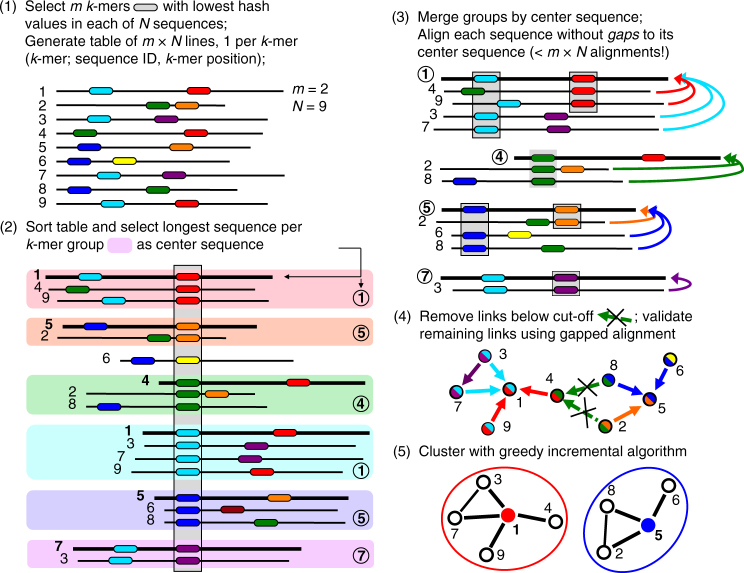
Metagenomic datasets contain billions of protein sequences that could greatly enhance large-scale functional annotation and structure prediction. Utilizing this enormous resource would require reducing its redundancy by similarity clustering. However, clustering hundreds of millions of sequences is impractical using current algorithms because their runtimes scale as the input set size N times the number of clusters K, which is typically of similar order as N, resulting in runtimes that increase almost quadratically with N. We developed Linclust, the first clustering algorithm whose runtime scales as N, independent of K. It can also cluster datasets several times larger than the available main memory. We cluster 1.6 billion metagenomic sequence fragments in 10 h on a single server to 50% sequence identity, >1000 times faster than has been possible before. Linclust will help to unlock the great wealth contained in metagenomic and genomic sequence databases.
Overview
The claims and statistics of this paper haven’t been checked yet.
Free: it reads the open-access text and checks the first 5 claims that cite a source we can check. Create a free account to check every claim.
Integrity signals
Registry
Cites
Statistics
Figures
Verification
Claims the paper makes
The claims and statistics of this paper haven’t been checked yet.
Free: it reads the open-access text and checks the first 5 claims that cite a source we can check. Create a free account to check every claim.
Self-check
Percentages, sums and reported differences re-computed from the paper’s own numbers.
The self-check needs the paper’s full text.
Citations
Cites
Basic local alignment search tool
Altschul, S. F., Gish, W., Miller, W., Myers, E. W., & Lipman, D. J. (1990) · Journal of Molecular Biology · doi:10.1006/jmbi.1990.9999 · Cited by 98,669 · cited 1×
“For each clustering run, we searched with BLAST [15] a random sample of 1 000 representative sequences against all representative sequences of the clustering.”
MethodSearch and clustering orders of magnitude faster than BLAST
Edgar, R. C. (2010) · Bioinformatics · doi:10.1093/bioinformatics/btq461 · Cited by 20,826
Fast and sensitive protein alignment using DIAMOND
Buchfink, B., Xie, C., & Huson, D. H. (2015) · Nature Methods · doi:10.1038/nmeth.3176 · Cited by 14,201 · cited 3×
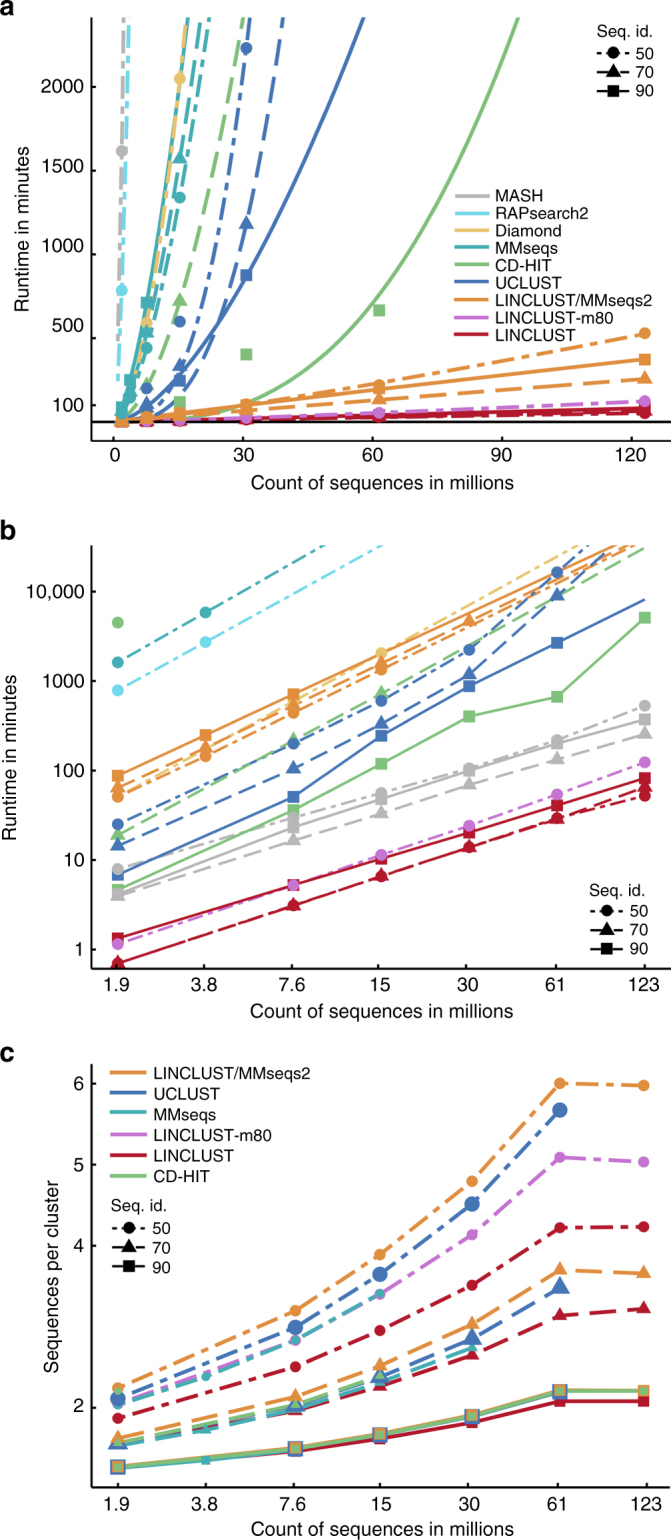
“At 50% identity, Linclust clusters the 123 million sequences 10 times faster than Linclust/MMseqs2 and, by extrapolation, 2300 times faster than UCLUST, 720 times faster than MMseqs, 4600 times faster than CD-HIT, 1600 times faster than DIAMOND [12], 69 000 times faster than MASH [13], and 26 000 times faster than RAP…”
BackgroundInfluentialProdigal: prokaryotic gene recognition and translation initiation site identification
Hyatt, D., Chen, G.-L., LoCascio, P. F., Land, M. L., Larimer, F. W., & Hauser, L. J. (2010) · BMC Bioinformatics · doi:10.1186/1471-2105-11-119 · Cited by 12,587
Cd-hit: a fast program for clustering and comparing large sets of protein or nucleotide sequences
Li, W., & Godzik, A. (2006) · Bioinformatics · doi:10.1093/bioinformatics/btl158 · Cited by 11,410 · cited 1×
“Similar to the k-mer prefilter used in CD-HIT, UCLUST, kclust and MMseqs [8, 11, 26, 27], the preclustering reduces the number of comparisons by a large factor F using the slow, exact measure, but the time complexity of the ex240 act distance calculation O(N(2)/F ) is still quadratic in N .”
MethodCd-hit: Accelerated for clustering the next-generation sequencing data
Fu, L., Niu, B., Zhu, Z., Wu, S., & Li, W. (2012) · Bioinformatics · doi:10.1093/bioinformatics/bts565 · Cited by 11,175 · cited 15×
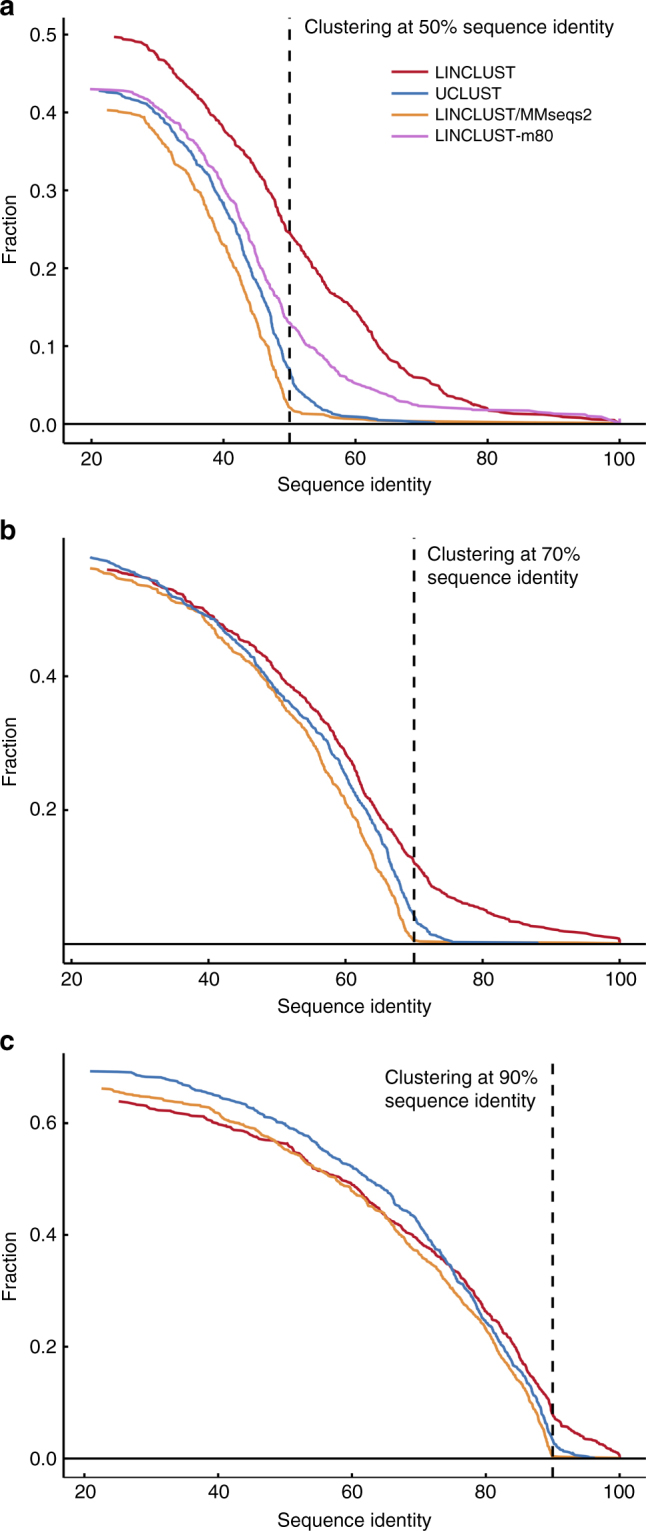
“By increasing m from 20 to 80, Linclust takes only 1.5 to 2 times longer but attains a sensitivity similar to UCLUST (pink in Fig.”
MethodInfluentialThe Pfam protein families database: towards a more sustainable future
Finn, R. D., Coggill, P., Eberhardt, R. Y., Eddy, S. R., Mistry, J., Mitchell, A. L., Potter, S. C., Punta, M., Qureshi, M., Sangrador-Vegas, A., et al. (2016) · Nucleic Acids Research · doi:10.1093/nar/gkv1344 · Cited by 5,975 · cited 1×
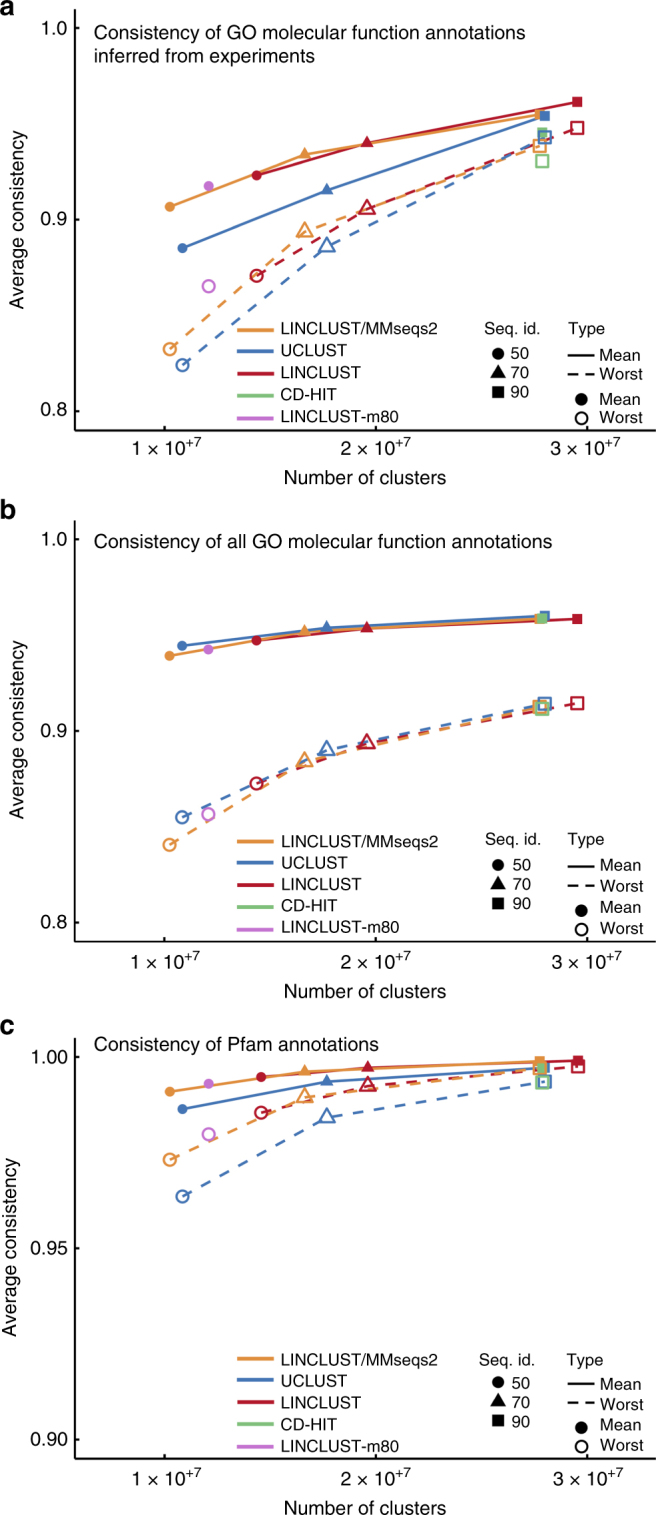
“4a,b) and Pfam domain annotations [18] (Fig.”
MMseqs2 enables sensitive protein sequence searching for the analysis of massive data sets
Steinegger, M., & Söding, J. (2017) · Nature Biotechnology · doi:10.1038/nbt.3988 · Cited by 4,840
Self-citationThe Universal Protein Resource (UniProt)
Bairoch, A. (2004) · Nucleic Acids Research · doi:10.1093/nar/gki070 · Cited by 3,774 · cited 1×
“, 100}, we determined these thresholds empirically on 4 million local alignments sampled from an all-against-all comparison of the UniProt database [31].”
MethodGene Ontology Consortium: going forward
The Gene Ontology Consortium (2015) · Nucleic Acids Research · doi:10.1093/nar/gku1179 · Cited by 3,492 · cited 2×
“We assess Gene Ontology (GO) annotations [17] (Fig.”
BackgroundMethod
Research works printed but not linked: 1
- Wang, J. Shen, H. T., Song, J. & Ji., J. Hashing for similarity search: a survey. Preprint at https://arxiv.org/abs/1408.2927 (2014). · arXiv
Cited by
Items 101–200 of 962
Ranking Peptide Binders by Affinity with AlphaFold**
Chang, L., & Perez, A. (2023) · Angewandte Chemie International Edition · doi:10.1002/anie.202213362 · Cited by 100
Language Modeling Materializes a World Model of Protein BiologyPreprint
Candido, S., Hayes, T., Derry, A., Rao, R., Lin, Z., Verkuil, R., Wu, B. Z., Lee, J. S., Bruguera, E. S., Keval, J. A., et al. (2026) · bioRxiv (Cold Spring Harbor Laboratory) · doi:10.64898/2026.06.03.729735 · Cited by 159
Hierarchical graph transformer with contrastive learning for protein function prediction
Gu, Z., Luo, X., Chen, J., Deng, M., & Lai, L. (2023) · Bioinformatics · doi:10.1093/bioinformatics/btad410 · Cited by 110
“To partition the AFch dataset, we utilized MMseqs (Steinegger and So¨ding 2018) to cluster sequences at a sequence identity of 25%, resulting in an AFch training set with 43 072 sequences and an AFch test set with 567 sequences.”
Mortuza, S. M., Zheng, W., Zhang, C., Li, Y., Pearce, R., & Zhang, Y. (2021) · Nature Communications · doi:10.1038/s41467-021-25316-w · Cited by 93
Li, Y., Zhang, C., Bell, E. W., Yu, D., & Zhang, Y. (2019) · Proteins: Structure, Function, and Bioinformatics · doi:10.1002/prot.25798 · Cited by 94
De Novo Clustering of Long-Read Transcriptome Data Using a Greedy, Quality Value-Based Algorithm
Sahlin, K., & Medvedev, P. (2020) · Journal of Computational Biology · doi:10.1089/cmb.2019.0299 · Cited by 105
Improving protein succinylation sites prediction using embeddings from protein language model
Pokharel, S., Pratyush, P., Heinzinger, M., Newman, R. H., & KC, D. B. (2022) · Scientific Reports · doi:10.1038/s41598-022-21366-2 · Cited by 103
“…are an exciting breakthrough in protein sequence modeling as they were shown to capture complex dependencies between protein residues 23 based solely on training using large, but unlabeled, protein sequence databases 24,25 (rather than sequences belonging to a specific protein family or task).”
BackgroundDesign of highly functional genome editors by modeling the universe of CRISPR-Cas sequences
Ruffolo, J. A., Nayfach, S., Gallagher, J., Bhatnagar, A., Beazer, J., Hussain, R., Russ, J., Yip, J., Hill, E., Pacesa, M., et al. (2024) · doi:10.1101/2024.04.22.590591 · Cited by 90
Seong, K., & Krasileva, K. V. (2021) · Molecular Plant-Microbe Interactions® · doi:10.1094/mpmi-03-21-0071-r · Cited by 82
“DeepMSA iteratively searches the Uniclust30, Uniref90, and Metaclust databases to construct an MSA (Mirdita et al. 2017; Steinegger and Söding 2018; Suzek et al. 2015).”
MethodAddressing the antibody germline bias and its effect on language models for improved antibody design
Olsen, T. H., Moal, I. H., & Deane, C. M. (2024) · Bioinformatics · doi:10.1093/bioinformatics/btae618 · Cited by 67
Effective sequence similarity detection with strobemers
Sahlin, K. (2021) · Genome Research · doi:10.1101/gr.275648.121 · Cited by 108
“ing (Steinegger and Söding 2018), database searches (Solomon and Kingsford 2016; Harris and Medvedev 2020), structural variation detection (Abo et al.”
BackgroundZhou, M., Liu, Z., Wang, J., Zhao, Y., & Hu, B. (2022) · Microorganisms · doi:10.3390/microorganisms10061109 · Cited by 92
“Linclust software [32] was used for gene clustering and de-redundancy.”
MethodBFVD—a large repository of predicted viral protein structures
Kim, R. S., Levy Karin, E., Mirdita, M., Chikhi, R., & Steinegger, M. (2025) · Nucleic Acids Research · doi:10.1093/nar/gkae1119 · Cited by 86
Self-citationEnhancing alphafold-multimer-based protein complex structure prediction with MULTICOM in CASP15
Liu, J., Guo, Z., Wu, T., Roy, R. S., Quadir, F., Chen, C., & Cheng, J. (2023) · Communications Biology · doi:10.1038/s42003-023-05525-3 · Cited by 86
(2021) · doi:10.1371/journal.pcbi.1008865 · Cited by 85
Advancing microbial production through artificial intelligence-aided biology
Gong, X., Zhang, J., Gan, Q., Teng, Y., Hou, J., Lyu, Y., Liu, Z., Wu, Z., Dai, R., Zou, Y., et al. (2024) · Biotechnology Advances · doi:10.1016/j.biotechadv.2024.108399 · Cited by 93
Ju, F., Zhu, J., Shao, B., Kong, L., Liu, T.-Y., Zheng, W.-M., & Bu, D. (2021) · Nature Communications · doi:10.1038/s41467-021-22869-8 · Cited by 84
Contamination detection in genomic data: more is not enough
Cornet, L., & Baurain, D. (2022) · Genome biology · doi:10.1186/s13059-022-02619-9 · Cited by 88
“Conterminator can process large databases thanks to the use of Linclust [52], which minimizes the comparison time by first grouping sequence segments if they share canonical (i.e. independent of the strand) k-mers.”
MethodThe origin and structural evolution of de novo genes in Drosophila
Peng, J., & Zhao, L. (2024) · Nature Communications · doi:10.1038/s41467-024-45028-1 · Cited by 71
“For trRosetta predictions, we followed similar procedures as DeepMSA 83 and iteratively searched through Uniclust30 84 , UniRef90 85 , metaclust 86 and tara 87 protein sequence databases at default E-value cutoff of 1e-3 to collect homologous or distantly related homologous sequences.”
Large scale paired antibody language models
Kenlay, H., Dreyer, F. A., Kovaltsuk, A., Miketa, D., Pires, D., & Deane, C. M. (2024) · PLOS Computational Biology · doi:10.1371/journal.pcbi.1012646 · Cited by 60
“(2022) on unpaired antibody sequences from OAS after clustering them with Linclust.”
Alexander, H., Hu, S. K., Krinos, A. I., Pachiadaki, M., Tully, B. J., Neely, C. J., & Reiter, T. (2023) · mBio · doi:10.1128/mbio.01676-23 · Cited by 65
“The taxonomic affiliation of the high-and low-completion bins was estimated using MMSeqs taxonomy through EukMetaSanity and EUKulele (25), an annotation tool that takes a protein-consensus approach, leveraging a last common ancestor estimation of protein taxonomy, as well as MMSeqs2 taxonomy module (24, 95, 96).”
MethodProtein engineering via Bayesian optimization-guided evolutionary algorithm and robotic experiments
Hu, R., Fu, L., Chen, Y., Chen, J., Qiao, Y., & Si, T. (2022) · Briefings in Bioinformatics · doi:10.1093/bib/bbac570 · Cited by 87
A general temperature-guided language model to design proteins of enhanced stability and activity
Jiang, F., Li, M., Dong, J., Yu, Y., Sun, X., Wu, B., Huang, J., Kang, L., Pei, Y., Zhang, L., et al. (2024) · Science Advances · doi:10.1126/sciadv.adr2641 · Cited by 88
“By integrating publicly accessible data from Uniprot and protein sequences from metagenomic projects ( 79 – 81 ), we have curated ProteomeAtlas, a vast repository of natural protein sequences containing 4.7 billion entries.”
InfluentialFine-tuning of BERT Model to Accurately Predict Drug–Target Interactions
Kang, H., Goo, S., Lee, H., Chae, J.-W., Yun, H.-Y., & Jung, S. (2022) · Pharmaceutics · doi:10.3390/pharmaceutics14081710 · Cited by 68
“Protein information was encoded using ProtBert, which is a pretrained BERT model using datasets from UniRef [20] and BFD [21] containing up to 393 billion amino acids.”
MethodMoffat, L., & Jones, D. T. (2021) · Bioinformatics · doi:10.1093/bioinformatics/btab491 · Cited by 65
“The number of entries in UniProt grows every year (UniProt-Consortium, 2019) and a massive amount of data is available from clustered metagenomic sequences in databases like the BFD (Steinegger et al., 2019; Steinegger and Söding, 2018).”
BackgroundDiverse plasmid systems and their ecology across human gut metagenomes revealed by PlasX and MobMess
Yu, M., Fogarty, E. C., & Eren, A. M. (2024) · Nature Microbiology · doi:10.1038/s41564-024-01610-3 · Cited by 77
Novel machine learning approaches revolutionize protein knowledge
Bordin, N., Dallago, C., Heinzinger, M., Kim, S., Littmann, M., Rauer, C., Steinegger, M., Rost, B., & Orengo, C. (2023) · Trends in Biochemical Sciences · doi:10.1016/j.tibs.2022.11.001 · Cited by 72
“It locally aligns the structure sequences using the fast MMseqs2 xi algo-rithm [84].”
MethodSelf-citationAccurate prediction of inter-protein residue–residue contacts for homo-oligomeric protein complexes
Yan, Y., & Huang, S.-Y. (2021) · Briefings in Bioinformatics · doi:10.1093/bib/bbab038 · Cited by 69
“Next, all the candidate assemblies were clustered using MMseqs2 [58,59] with a sequence identity cutoff of 30% to remove the redundancy.”
MethodBotelho, J., Cazares, A., & Schulenburg, H. (2023) · Nucleic Acids Research · doi:10.1093/nar/gkac1220 · Cited by 72
“45111 package (56), using 90% sequence identity for clustering each MGE type.”
MethodAguilar-Marín, S. B., Betancur-Murillo, C. L., Isaza, G. A., Mesa, H., & Jovel, J. (2020) · BMC Microbiology · doi:10.1186/s12866-020-02037-6 · Cited by 72
“Since the Prokka translated and the PLASS predicted protein sets may be partially redundant, we concatenated them and conducted clustering with Linclust [43] to obtain a non-redundant set of representative sequences.”
MethodMerényi, Z., Krizsán, K., Sahu, N., Liu, X., Bálint, B., Stajich, J., Spatafora, J. W., & Nagy, L. G. (2023) · Nature Ecology & Evolution · doi:10.1038/s41559-023-02095-9 · Cited by 68
“All versus all similarity searches of the 123 proteomes were performed with MMSeqs2 53 using three iterations, with sensitivity set to 6.5, max-seqs set to 15,000, e-profile set to 0.001, a preliminary coverage threshold set to 0.2 and an e value threshold set to 1 × 10 −4 .”
InfluentialZheng, W., Wuyun, Q., Freddolino, L., & Zhang, Y. (2023) · Proteins: Structure, Function, and Bioinformatics · doi:10.1002/prot.26585 · Cited by 58
Alexander, H., Hu, S. K., Krinos, A. I., Pachiadaki, M., Tully, B. J., Neely, C. J., & Reiter, T. (2021) · doi:10.1101/2021.07.25.453713 · Cited by 67
Youngblut, N. D., & Ley, R. E. (2021) · PeerJ · doi:10.7717/peerj.12198 · Cited by 86
Lambert, B., Groussman, R. D., Schatz, M. J., Coesel, S., Durham, B. P., Alverson, A. J., White, A., & Armbrust, E. V. (2022) · Proceedings of the National Academy of Sciences · doi:10.1073/pnas.2100916119 · Cited by 89
Advancing bioinformatics with language models: components, applications, and perspectives
Liu, J., Yang, M., Yu, Y., Xu, H., Wang, T., Li, K., & Zhou, X. (2026) · Briefings in Bioinformatics · doi:10.1093/bib/bbag367 · Cited by 72
Protein structure prediction using deep learning distance and hydrogen‐bonding restraints in CASP14
Zheng, W., Li, Y., Zhang, C., Zhou, X., Pearce, R., Bell, E. W., Huang, X., & Zhang, Y. (2021) · Proteins: Structure, Function, and Bioinformatics · doi:10.1002/prot.26193 · Cited by 60
Boysen, A. K., Carlson, L. T., Durham, B. P., Groussman, R. D., Aylward, F. O., Ribalet, F., Heal, K. R., White, A., DeLong, E. F., Armbrust, E. V., et al. (2021) · mSystems · doi:10.1128/msystems.00896-20 · Cited by 71
“To eliminate redundancy and duplication, the assemblies were merged and clustered at the 99% amino acid identity threshold level with linclust in the MMseqs2 package (97).”
MethodBenler, S., Faure, G., Altae-Tran, H., Shmakov, S., Zhang, F., & Koonin, E. (2021) · mBio · doi:10.1128/mbio.02938-21 · Cited by 58
“The ORFs were predicted using Prodigal in metagenomic mode (v. 2.6.3) (Hyatt et al., 2010) and clustered at 80% amino acid identity across 75% of the length of the shorter ORF using MMseqs2 (v. 12-113e3) (Steinegger and Söding, 2018).”
MethodInfluentialLMPred: predicting antimicrobial peptides using pre-trained language models and deep learning
Dee, W. (2022) · Bioinformatics Advances · doi:10.1093/bioadv/vbac021 · Cited by 68
The OMG dataset: An Open MetaGenomic corpus for mixed-modality genomic language modelingPreprint
Cornman, A., West-Roberts, J. A., Camargo, A. P., Roux, S., Beracochea, M., Mirdita, M., Ovchinnikov, S., & Hwang, Y. (2024) · bioRxiv (Cold Spring Harbor Laboratory) · doi:10.1101/2024.08.14.607850 · Cited by 73
Beuming, T., Martín, H., Díaz-Rovira, A. M., Díaz, L., Guallar, V., & Ray, S. S. (2022) · Journal of Chemical Information and Modeling · doi:10.1021/acs.jcim.2c00796 · Cited by 61
Beuming, T., Martín, H., Díaz-Rovira, A. M., Díaz, L., Guallar, V., & Ray, S. S. (2022) · doi:10.1101/2022.08.16.504122 · Cited by 61
Singh, J., Paliwal, K., Litfin, T., Singh, J., & Zhou, Y. (2022) · Scientific Reports · doi:10.1038/s41598-022-11684-w · Cited by 52
“These methods were trained on extensive protein databases such as Uniref 23 , Uniclust 24 , Pfam 25 , and BFD 26,27 .”
MethodProT-VAE: Protein Transformer Variational AutoEncoder for functional protein design
Sevgen, E., Moller, J., Lange, A., Parker, J., Quigley, S., Mayer, J., Srivastava, P., Gayatri, S., Hosfield, D., Dilks, C., et al. (2025) · Proceedings of the National Academy of Sciences · doi:10.1073/pnas.2408737122 · Cited by 52
Minimal and hybrid hydrogenases are active from archaea
Greening, C., Cabotaje, P. R., Valentin-Alvarado, L. E., Leung, P. M., Land, H., Rodrigues-Oliveira, T., Ponce-Toledo, R. I., Senger, M., Klamke, M. A., Milton, M., et al. (2024) · Cell · doi:10.1016/j.cell.2024.05.032 · Cited by 63
Cheaib, B. A., Yang, P. W., Kazlauskaite, R., Lindsay, E. C., Heys, C., Dwyer, T., Noia, M. D., Schaal, P., Sloan, W. T., Ijaz, U. Z., et al. (2021) · Aquaculture · doi:10.1016/j.aquaculture.2021.736772 · Cited by 60
“Translated gene products were clustered using LinClust (Steinegger and Söding, 2018) to generate non-redundant gene and protein catalogues, which were mapped to the eggNOG catalog (Huerta-Cepas et al.”
MethodZhang, Y., Zhu, G., Li, K., Li, F., Huang, L., Duan, M., & Zhou, F. (2022) · Briefings in Bioinformatics · doi:10.1093/bib/bbac173 · Cited by 62
“Elnaggar et al . introduced a new NLP model called Prot-Bert [17], which is obtained via fine-tuning the original BERT model with the protein sequences from the two databases, UniRef100 [19] and BFD [20].”
DeepDist: real-value inter-residue distance prediction with deep residual convolutional network
Wu, T., Guo, Z., Hou, J., & Cheng, J. (2021) · BMC Bioinformatics · doi:10.1186/s12859-021-03960-9 · Cited by 47
Macroevolutionary dynamics of gene family gain and loss along multicellular eukaryotic lineages
Domazet-Lošo, M., Široki, T., Šimičević, K., & Domazet‐Lošo, T. (2024) · Nature Communications · doi:10.1038/s41467-024-47017-w · Cited by 56
Ortiz, E. M., Höwener, A., Shigita, G., Raza, M., Maurin, O., Zuntini, A. R., Forest, F., Baker, W. J., & Schaefer, H. (2026) · Systematic Biology · doi:10.1093/sysbio/syag046 · Cited by 61
Improved Multimer Prediction using Massive Sampling with AlphaFold in CASP15
Wallner, B. (2023) · doi:10.22541/au.168170986.60158084/v1 · Cited by 53
Deep learning methods for protein function prediction
Boadu, F., Lee, A., & Cheng, J. (2025) · PROTEOMICS · doi:10.1002/pmic.202300471 · Cited by 53
Improved multimer prediction using massive sampling with AlphaFold in CASP15
Wallner, B. (2023) · Proteins: Structure, Function, and Bioinformatics · doi:10.1002/prot.26562 · Cited by 53
Suenaga, T., Ota, T., Oba, K., Usui, K., Sako, T., Hori, T., Riya, S., Hosomi, M., Chandran, K., Lackner, S., et al. (2021) · Environmental Science & Technology · doi:10.1021/acs.est.1c00674 · Cited by 55
SETH predicts nuances of residue disorder from protein embeddings
Ilzhöfer, D., Heinzinger, M., & Rost, B. (2022) · Frontiers in Bioinformatics · doi:10.3389/fbinf.2022.1019597 · Cited by 53
Siderophore production and utilization by marine bacteria in the North Pacific Ocean
Park, J., Durham, B. P., Key, R. S., Groussman, R. D., Bartolek, Z., Pinedo‐González, P., Hawco, N. J., John, S. G., Carlson, M. C. G., Lindell, D., et al. (2023) · Limnology and Oceanography · doi:10.1002/lno.12373 · Cited by 56
“The translated assemblies were merged and clustered for each cruise separately at the 99% identity level using linclust within the MMseqs2 package version 31e25cb081a874f225d443eec307a6 254f06a291 (Steinegger and Söding 2018) with parameters -min_seq_id 0.99.”
MethodInfluentialProtein tertiary structure prediction and refinement using deep learning and Rosetta in CASP14
Anishchenko, I., Baek, M., Park, H., Hiranuma, N., Kim, D. E., Dauparas, J., Mansoor, S., Humphreys, I. R., & Baker, D. (2021) · Proteins: Structure, Function, and Bioinformatics · doi:10.1002/prot.26194 · Cited by 50
LZerD Protein-Protein Docking Webserver Enhanced With de novo Structure Prediction
Christoffer, C. W., Bharadwaj, V., Luu, R., & Kihara, D. (2021) · Frontiers in Molecular Biosciences · doi:10.3389/fmolb.2021.724947 · Cited by 54
“, 2015), andMetaclust (Steinegger and Soding, 2018) protein sequence databases.”
Singh, J., Litfin, T., Singh, J., Paliwal, K., & Zhou, Y. (2022) · Bioinformatics · doi:10.1093/bioinformatics/btac053 · Cited by 52
“These methods are trained on protein reference libraries such as UniRef (Suzek et al. , 2007), Uniclust (Mirdita et al. , 2017), Pfam (Bateman et al. , 2004) and BFD (Steinegger et al. , 2019b; Steinegger and So¨ding, 2018).”
Evaluating metagenomic assembly approaches for biome-specific gene catalogues
Delgado, L. F., & Andersson, A. F. (2022) · Microbiome · doi:10.1186/s40168-022-01259-2 · Cited by 57
“MMseqs2 taxonomy uses an approximate 2bLCA (lowest common ancestor, LCA) approach.”
MethodInfluentialHu, Z., Yang, L., Liu, Z., Han, J., Zhao, Y., Jin, Y., Sheng, Y., Zhu, L., & Hu, B. (2023) · The Science of The Total Environment · doi:10.1016/j.scitotenv.2023.163598 · Cited by 50
“, 2010), open reading frames were clustered to form non-redundant unigenes by Linclust (Steinegger and Söding, 2018).”
BackgroundGenerRNA: A generative pre-trained language model for de novo RNA design
Zhao, Y., Oono, K., Takizawa, H., & Kotera, M. (2024) · PLoS ONE · doi:10.1371/journal.pone.0310814 · Cited by 64
Kosmopoulos, J. C., Klier, K. M., Langwig, M. V., Tran, P. Q., & Anantharaman, K. (2024) · Microbiome · doi:10.1186/s40168-024-01905-x · Cited by 51
“7e284 [70].”
Effect of Tokenization on Transformers for Biological Sequences
Dotan, E., Jaschek, G., Pupko, T., & Belinkov, Y. (2023) · doi:10.1101/2023.08.15.553415 · Cited by 50
Effect of tokenization on transformers for biological sequences
Dotan, E., Jaschek, G., Pupko, T., & Belinkov, Y. (2024) · Bioinformatics · doi:10.1093/bioinformatics/btae196 · Cited by 49
“To this end, we trained BPE, WordPiece, and Unigram tokenizers on samples of proteins from the 2 : 2 billion protein sequences of the BFD dataset (Steinegger and S € oding 2018).”
BackgroundMethodFast, sensitive detection of protein homologs using deep dense retrieval
Hong, L., Hu, Z., Sun, S., Tang, X., Wang, J., Tan, Q., Zheng, L., Wang, S., Xu, S., King, I., et al. (2025) · Nature Biotechnology · doi:10.1038/s41587-024-02353-6 · Cited by 43
Pei, Z., Liu, Y., Chen, Y., Pan, T., Sun, X., Wang, H., Ross, R. P., Lu, W., & Chen, W. (2024) · Gut Microbes · doi:10.1080/19490976.2024.2309684 · Cited by 48
Manfredi, M., Savojardo, C., Martelli, P. L., & Casadio, R. (2022) · Bioinformatics · doi:10.1093/bioinformatics/btac678 · Cited by 56
“ProtT5 (version XL U50) was trained using a two-step procedure: in a first pass, training was performed using the large BFD database (Steinegger et al., 2019; Steinegger and Söding, 2018), comprising the whole UniProt as well as protein sequences translated from multiple metagenomic sequencing projects, and consisting…”
MethodReprogrammable RNA-targeting CRISPR systems evolved from RNA toxin-antitoxins
Zilberzwige‐Tal, S., Altae-Tran, H., Kannan, S., Wilkinson, M. E., Vo, C.-D.-T., Strebinger, D., Edmonds, K. K., Yao, C.-C. J., Mears, K. S., Shmakov, S., et al. (2025) · Cell · doi:10.1016/j.cell.2025.01.034 · Cited by 50
Kandathil, S. M., Greener, J. G., Lau, A. M., & Jones, D. T. (2022) · Proceedings of the National Academy of Sciences · doi:10.1073/pnas.2113348119 · Cited by 38
Nallapareddy, V., Bordin, N., Sillitoe, I., Heinzinger, M., Littmann, M., Waman, V. P., Sen, N., Rost, B., & Orengo, C. (2023) · Bioinformatics · doi:10.1093/bioinformatics/btad029 · Cited by 47
“Although HMM-HMM strategies like HHblits (21) have proven powerful in detecting very remote homologues, even where significant structural divergence exists, methods that improve on HHblits in sensitivity and speed would allow CATH and other related resources to keep pace with the expansion in the protein sequence repo…”
Method(2022) · doi:10.1101/2022.03.10.483805 · Cited by 47
An analysis of protein language model embeddings for fold prediction
Villegas-Morcillo, A., Gomez, A. M., & Sanchez, V. (2022) · Briefings in Bioinformatics · doi:10.1093/bib/bbac142 · Cited by 46
Large-Scale Assessment of Bioinformatics Tools for Lysine Succinylation Sites
Hasan, M. M., Khatun, M. S., & Kurata, H. (2019) · Cells · doi:10.3390/cells8020095 · Cited by 54
Coesel, S., Durham, B. P., Groussman, R. D., Hu, S. K., Caron, D. A., Morales, R. L., Ribalet, F., & Armbrust, E. V. (2021) · Proceedings of the National Academy of Sciences · doi:10.1073/pnas.2011038118 · Cited by 51
Gu, X. S., Huang, D., Chen, J., Li, X., Zhou, Y., Huang, M., Liu, Y., & Yu, P. (2022) · Environmental Science & Technology · doi:10.1021/acs.est.2c01516 · Cited by 48
Discovery of archaeal fusexins homologous to eukaryotic HAP2/GCS1 gamete fusion proteins
(2022) · doi:10.1038/s41467-022-31564-1 · Cited by 45
The mechanism of the phage-encoded protein antibiotic from ΦX174
Orta, A. K., Riera, N., Li, Y. E., Tanaka, S., Yun, H. G., Klaić, L., & Clemons, W. (2023) · Science · doi:10.1126/science.adg9091 · Cited by 49
Chen, C., Wu, T., Guo, Z., & Cheng, J. (2021) · Proteins: Structure, Function, and Bioinformatics · doi:10.1002/prot.26052 · Cited by 44
Protein sequence‐to‐structure learning: Is this the end(‐to‐end revolution)?
Laine, E., Eismann, S., Elofsson, A., & Grudinin, S. (2021) · Proteins: Structure, Function, and Bioinformatics · doi:10.1002/prot.26235 · Cited by 44
“They include databases like NCBI GenBank [66], Metaclust [67], BFD [68], MetaEuk [69], EBI MGnify [70], and IMG/M [71].”
MethodPollenz, R. S., Bland, J., & Pope, W. H. (2022) · PLoS ONE · doi:10.1371/journal.pone.0276603 · Cited by 45
“Individual genes from phages within the PhagesDB are grouped into distinct Phamilies (Phams based on clustering the protein sequences with MMseqS2 [42] utilizing the following commands:”
MethodInfluentialPlant virus movement proteins originated from jelly-roll capsid proteins
Butković, A., Dolja, V. V., Koonin, E. V., & Krupovìč, M. (2023) · PLoS Biology · doi:10.1371/journal.pbio.3002157 · Cited by 46
“The retrieved sequences of MP homologs were clustered to 90% minimum sequence identity using MMseqs2 [37].”
Data‐Driven Protein Engineering for Improving Catalytic Activity and Selectivity
Ao, Y., Dörr, M., Menke, M. J., Born, S., Heuson, E., & Bornscheuer, U. T. (2023) · ChemBioChem · doi:10.1002/cbic.202300754 · Cited by 44
Xing, L., Zhang, W., Gu, M., Yin, Q., & Wu, G. (2019) · Bioresource Technology · doi:10.1016/j.biortech.2019.122317 · Cited by 43
Zhan, T., Hu, C., Kong, Q., Shi, G., Tang, Y., Zhou, Y., Guo, Z., Zhai, H., Xiao, X., & Zhao, X. (2021) · The Science of The Total Environment · doi:10.1016/j.scitotenv.2021.149414 · Cited by 43
Nearest neighbor search on embeddings rapidly identifies distant protein relations
Schütze, K., Heinzinger, M., Steinegger, M., & Rost, B. (2022) · Frontiers in Bioinformatics · doi:10.3389/fbinf.2022.1033775 · Cited by 42
“…and have more free parameters than SeqVec (ProtBert 420 M — with M for million, ProtAlbert 224M, ProtT5 3B — with B for billion, vs. SeqVec 93 M) and were trained on the much larger BFD dataset (UniRef50 50 M) (Steinegger and Söding, 2018; Steinegger et al., 2019; Elnaggar et al., 2020).”
BackgroundMethodInfluentialSelf-citationDomain loss enabled evolution of novel functions in the snake three-finger toxin gene superfamily
Koludarov, I., Senoner, T., Jackson, T. N. W., Dashevsky, D., Heinzinger, M., Aird, S. D., & Rost, B. (2023) · Nature Communications · doi:10.1038/s41467-023-40550-0 · Cited by 36
“ProtT5 was trained solely on unlabeled protein sequences from BFD (Big Fantastic Database; 2.5 billion sequences including meta-genomic sequences) 63 and UniRef50.”
InfluentialShuvo, M. H., Bhattacharya, S., & Bhattacharya, D. (2020) · Bioinformatics · doi:10.1093/bioinformatics/btaa455 · Cited by 39
“We also experiment the inclusion of other whole-genome sequence database UniRef90 (Suzek et al. , 2015) and metagenome database Metaclust (Steinegger and So¨ding, 2018) using the DeepMSA (Zhang et al. , 2020) pipeline to generate more sensitive and diverse MSA with improved coverage and alignment depth.”
ParaFold: Paralleling AlphaFold for Large-Scale Predictions
Zhong, B., Su, X., Wen, M., Zuo, S., Hong, L., & Lin, J. (2022) · International Conference on High Performance Computing in Asia-Pacific Region Workshops · doi:10.1145/3503470.3503471 · Cited by 36
“To build diverse MSAs, large collections of protein sequences from public reference and environmental databases [8, 20, 24, 26] are searched by AlphaFold using the sensitive homology”
MethodEvolutionary selection of proteins with two folds
(2023) · doi:10.1038/s41467-023-41237-2 · Cited by 41
Polonsky, K., Pupko, T., & Freund, N. T. (2023) · The Journal of Immunology · doi:10.4049/jimmunol.2300150 · Cited by 41
mMGE: a database for human metagenomic extrachromosomal mobile genetic elements
Lai, S., Jia, L., Subramanian, B., Pan, S., Zhang, J., Dong, Y., Chen, W.-H., & Zhao, X. (2020) · Nucleic Acids Research · doi:10.1093/nar/gkaa869 · Cited by 45
“All the above identified eMGE contigs were dereplicated at the population level if they shared >95% nucleotide identity across >70% coverage according to Lincluster (42), resulting in 517 251 non-redundant eMGE populations (92 492 plasmids and 424 759 phages).”
BackgroundLin, P., Yan, Y., & Huang, S.-Y. (2023) · Briefings in Bioinformatics · doi:10.1093/bib/bbac499 · Cited by 40
Illuminating the coevolution of photosynthesis and Bacteria
Nishihara, A., Tsukatani, Y., Azai, C., & Nobu, M. K. (2024) · Proceedings of the National Academy of Sciences · doi:10.1073/pnas.2322120121 · Cited by 42
A catalog of small proteins from the global microbiome
Duan, Y., Júnior, C. D. S., Schmidt, T., Fullam, A., de Almeida, B. L. S., Zhu, C., Kuhn, M., Zhao, X., Bork, P., & Coelho, L. P. (2024) · Nature Communications · doi:10.1038/s41467-024-51894-6 · Cited by 44
“To rule out the possibility that this was due to the fact that Linclust is a heuristic method that is not specifically designed for short sequences, we estimated the rate of false negatives (i.e., sequences that were marked as singleton even though they should have been clustered with another one).”
MethodInfluentialReticulate evolution: Detection and utility in the phylogenomics era
Bjornson, S., Verbruggen, H., Upham, N. S., & Steenwyk, J. L. (2024) · Molecular Phylogenetics and Evolution · doi:10.1016/j.ympev.2024.108197 · Cited by 43
Marin, M. G., Quinones‐Olvera, N., Wippel, C., Behruznia, M., Jeffrey, B. M., Harris, M., Mann, B., Rosenthal, A., Jacobson, K. R., Warren, R. M., et al. (2025) · Bioinformatics · doi:10.1093/bioinformatics/btaf219 · Cited by 42
“…unit is selected, comparing sequences involves selecting a comparison method (e.g. alignment or k-mer-based approaches) and setting thresholds for the level of similarity required to consider sequences equivalent (Fu et al. 2012, Hauser et al. 2016, Steinegger and S € oding 2018, Li et al. 2020).”
ValizadehAslani, T., Zhao, Z., Sokhansanj, B. A., & ROSEN, G. L. (2020) · Biology · doi:10.3390/biology9110365 · Cited by 48
“We tested the values of [20, 30, 40, 50, 60, 70, 80] for this hyper parameter on a dataset of C.”
MethodProtein Design and Variant Prediction Using Autoregressive Generative Models
Shin, J.-E., Riesselman, A. J., Kollasch, A. W., McMahon, C., Simon, E., Sander, C., Manglik, A., Kruse, A. C., & Marks, D. S. (2019) · bioRxiv (Cold Spring Harbor Laboratory) · doi:10.1101/757252 · Cited by 32
“Due to the large number of sequences in the llama immune repertoire, sequence weights were approximated using Linclust (Steinegger & S¨oding, 2018) by clustering sequences at both 80% and 90% sequence identity thresholds.”
Method
Metadata
- Authors
- Steinegger, M., & Söding, J.
- Affiliations
- Seoul National University (KR)
- Max Planck Institute for Biophysical Chemistry (DE)
- Corresponding author
- Steinegger, Martin
- Söding, Johannes
- Venue
- Nature Communications
- Published
- 2018-06-29
- Volume
- 9
- Issue
- 1
- Pages
- 2542-2542
- ISSN
- 2041-1723 (ISSN-L)
- PMC
- PMC6026198
- OpenAlex
- W2953008890
- Cited by
- 875
- References
- 32
- Citations by year
- 2026: 110 · 2025: 154 · 2024: 168 · 2023: 123 · 2022: 111 · 2021: 129 · 2020: 52 · 2019: 28
- FWCI
- 18.49
- Type
- journal article
- Language
- en
- Open access
- gold
- doi.org
- Licence
- cc-by
- creativecommons.org/licenses/by/4.0 (tdm)
- creativecommons.org/licenses/by/4.0 (vor)
- Locations
- Nature Communications (publishedVersion, cc-by)
- Europe PMC (PubMed Central) (publishedVersion, cc-by)
- PubMed Central (publishedVersion, cc-by)
- PubMed (publishedVersion)
- OSTI OAI (U.S. Department of Energy Office of Scientific and Technical Information) (submittedVersion)
- DOAJ (DOAJ: Directory of Open Access Journals) (submittedVersion, cc-by-sa)
- DOAJ (DOAJ: Directory of Open Access Journals) (submittedVersion)
- mediaTUM (Technical University of Munich) (submittedVersion, other-oa)
- GoeScholar The Publication Server of the Georg-August-Universität Göttingen (Georg-August-Universität Göttingen) (submittedVersion, cc-by)
- Seoul National University Open Repository (Seoul National University) (submittedVersion)
- Funders
- U.S. Department of Energy
- Joint Genome Institute
- Seoul National University
- Horizon 2020 Framework Programme (685778)
- Topics
- Life Sciences › Biochemistry, Genetics and Molecular Biology › Molecular Biology › Genomics and Phylogenetic Studies
- Physical Sciences › Mathematics › Theoretical Computer Science › Algorithms and Data Compression
- Life Sciences › Biochemistry, Genetics and Molecular Biology › Molecular Biology › Fractal and DNA sequence analysis
- Keywords
- protein sequence clustering, metagenomics, functional annotation, memory-efficient clustering, sequence similarity
- MeSH terms
- Algorithms, Animals, DNA, Humans, Prokaryotic Cells, Proteins, Cluster Analysis, Genome, Sequence Analysis, DNA, Computational Biology, Databases, Nucleic Acid, Databases, Protein, Metagenomics, Datasets as Topic
About these checks
Registry, retraction, Cites and statistics results are computed, not judged, with one exception: a printed reference that no index lists is read once by a model before it counts as a citation error. Claims are extracted by a model and kept only when their quote appears verbatim in the text; each cited source is then checked, with a model’s help, for whether it says what the claim relies on. Those verdicts can be wrong — read the claim’s quote and the cited source before relying on one.
Statistics and arithmetic are recomputed, not judged.
Confidence bands are shown only for fields calibrated on our annotated test set. None is calibrated yet, so no band is shown.
What counts as a claim ›How we measure confidence ›How we check this ›
Are you an author, or do you see a problem with this page? Request a review
Data sources
Bibliographic data: Semantic Scholar, OpenAlex, Crossref.
Contains information from the Semantic Scholar Academic Graph Datasets, made available under the ODC Attribution License (ODC-BY 1.0).
Semantic Scholar’s data is described in: Kinney, R., et al. (2023). The Semantic Scholar Open Data Platform. arXiv:2301.10140.
