

Clustering huge protein sequence sets in linear time
Open accessPublished version of a preprint
The DOI matches its Crossref record; 33 of the 33 references it cites were found in a registry or an index.
Abstract
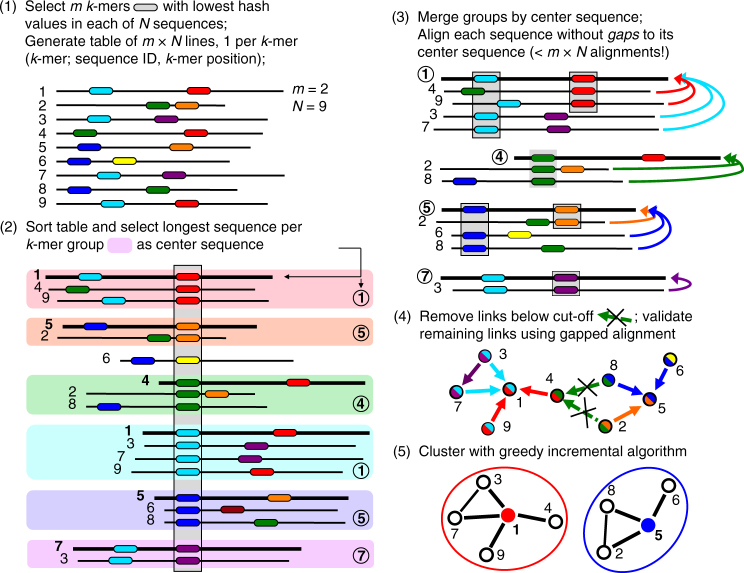
Metagenomic datasets contain billions of protein sequences that could greatly enhance large-scale functional annotation and structure prediction. Utilizing this enormous resource would require reducing its redundancy by similarity clustering. However, clustering hundreds of millions of sequences is impractical using current algorithms because their runtimes scale as the input set size N times the number of clusters K, which is typically of similar order as N, resulting in runtimes that increase almost quadratically with N. We developed Linclust, the first clustering algorithm whose runtime scales as N, independent of K. It can also cluster datasets several times larger than the available main memory. We cluster 1.6 billion metagenomic sequence fragments in 10 h on a single server to 50% sequence identity, >1000 times faster than has been possible before. Linclust will help to unlock the great wealth contained in metagenomic and genomic sequence databases.
Overview
The claims and statistics of this paper haven’t been checked yet.
Free: it reads the open-access text and checks the first 5 claims that cite a source we can check. Create a free account to check every claim.
Integrity signals
Registry
Cites
Statistics
Figures
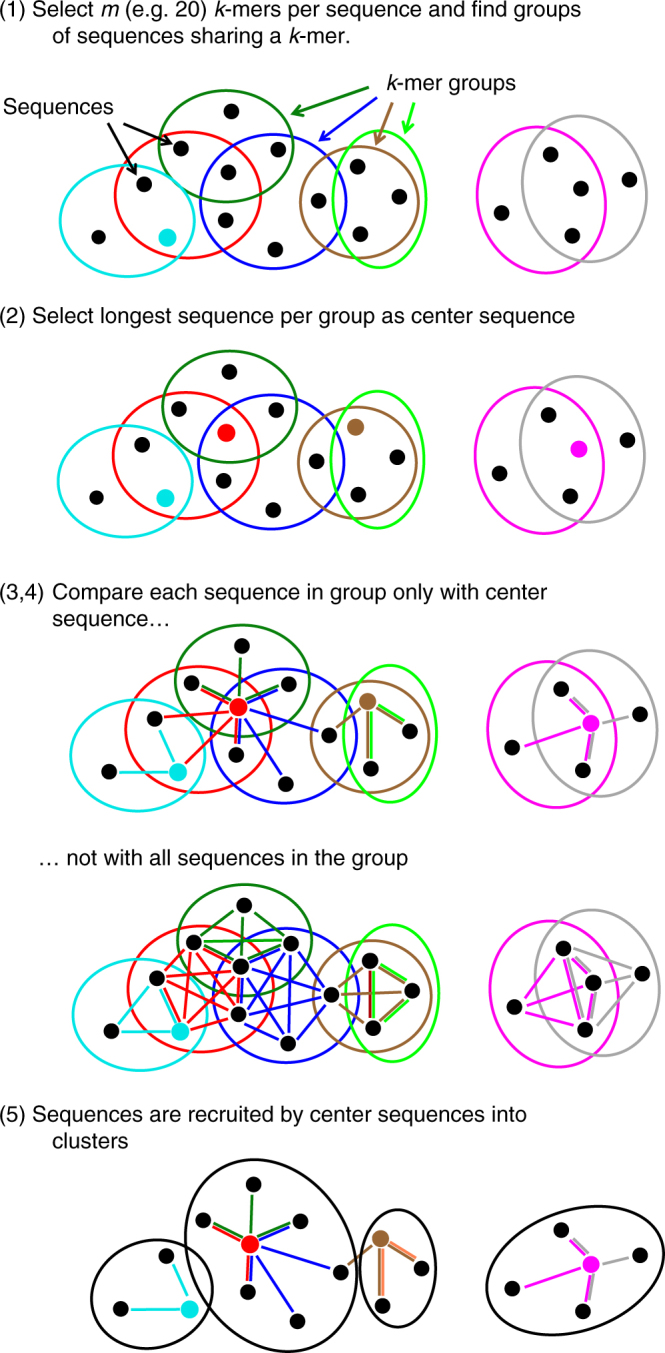
Verification
Claims the paper makes
The claims and statistics of this paper haven’t been checked yet.
Free: it reads the open-access text and checks the first 5 claims that cite a source we can check. Create a free account to check every claim.
Self-check
Percentages, sums and reported differences re-computed from the paper’s own numbers.
The self-check needs the paper’s full text.
Citations
Cites
Basic local alignment search tool
Altschul, S. F., Gish, W., Miller, W., Myers, E. W., & Lipman, D. J. (1990) · Journal of Molecular Biology · doi:10.1006/jmbi.1990.9999 · Cited by 98,669 · cited 1×
“For each clustering run, we searched with BLAST [15] a random sample of 1 000 representative sequences against all representative sequences of the clustering.”
MethodSearch and clustering orders of magnitude faster than BLAST
Edgar, R. C. (2010) · Bioinformatics · doi:10.1093/bioinformatics/btq461 · Cited by 20,826
Fast and sensitive protein alignment using DIAMOND
Buchfink, B., Xie, C., & Huson, D. H. (2015) · Nature Methods · doi:10.1038/nmeth.3176 · Cited by 14,201 · cited 3×
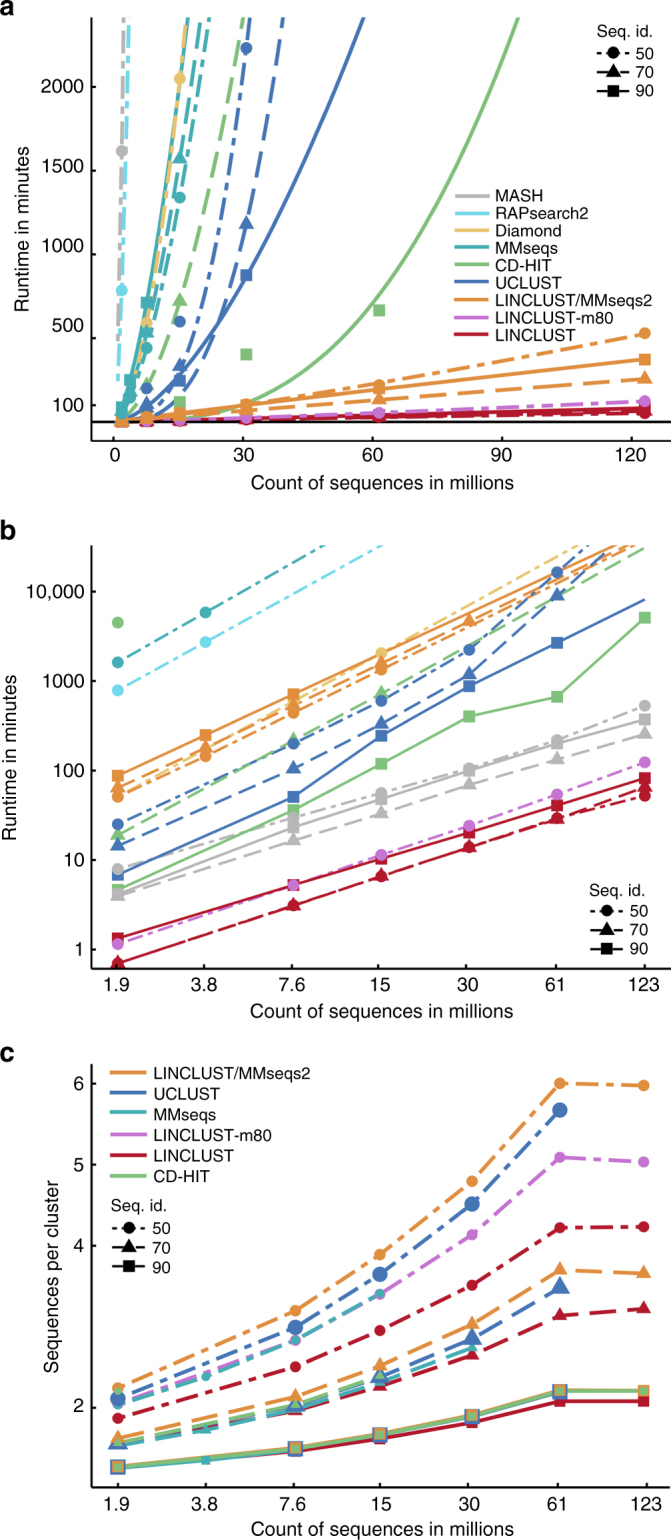
“At 50% identity, Linclust clusters the 123 million sequences 10 times faster than Linclust/MMseqs2 and, by extrapolation, 2300 times faster than UCLUST, 720 times faster than MMseqs, 4600 times faster than CD-HIT, 1600 times faster than DIAMOND [12], 69 000 times faster than MASH [13], and 26 000 times faster than RAP…”
BackgroundInfluentialProdigal: prokaryotic gene recognition and translation initiation site identification
Hyatt, D., Chen, G.-L., LoCascio, P. F., Land, M. L., Larimer, F. W., & Hauser, L. J. (2010) · BMC Bioinformatics · doi:10.1186/1471-2105-11-119 · Cited by 12,587
Cd-hit: a fast program for clustering and comparing large sets of protein or nucleotide sequences
Li, W., & Godzik, A. (2006) · Bioinformatics · doi:10.1093/bioinformatics/btl158 · Cited by 11,410 · cited 1×
“Similar to the k-mer prefilter used in CD-HIT, UCLUST, kclust and MMseqs [8, 11, 26, 27], the preclustering reduces the number of comparisons by a large factor F using the slow, exact measure, but the time complexity of the ex240 act distance calculation O(N(2)/F ) is still quadratic in N .”
MethodCd-hit: Accelerated for clustering the next-generation sequencing data
Fu, L., Niu, B., Zhu, Z., Wu, S., & Li, W. (2012) · Bioinformatics · doi:10.1093/bioinformatics/bts565 · Cited by 11,175 · cited 15×
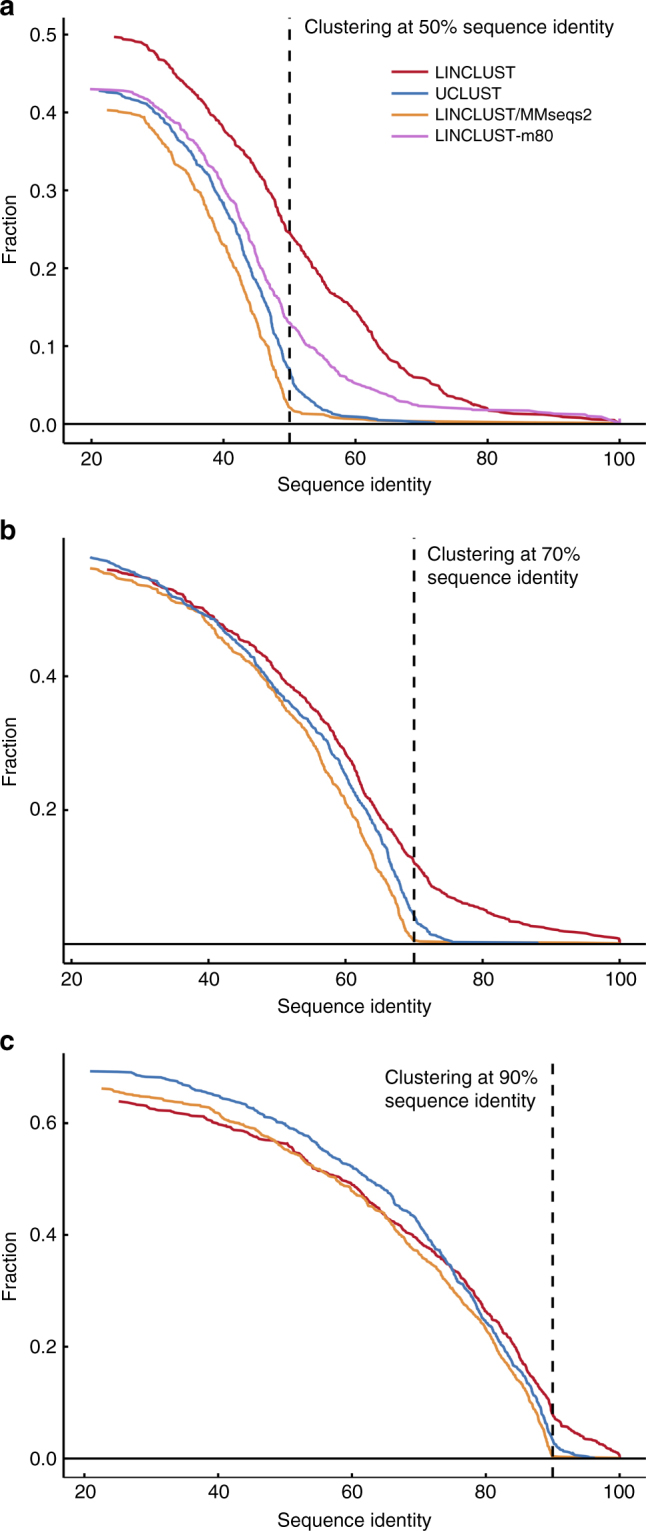
“By increasing m from 20 to 80, Linclust takes only 1.5 to 2 times longer but attains a sensitivity similar to UCLUST (pink in Fig.”
MethodInfluentialThe Pfam protein families database: towards a more sustainable future
Finn, R. D., Coggill, P., Eberhardt, R. Y., Eddy, S. R., Mistry, J., Mitchell, A. L., Potter, S. C., Punta, M., Qureshi, M., Sangrador-Vegas, A., et al. (2016) · Nucleic Acids Research · doi:10.1093/nar/gkv1344 · Cited by 5,975 · cited 1×
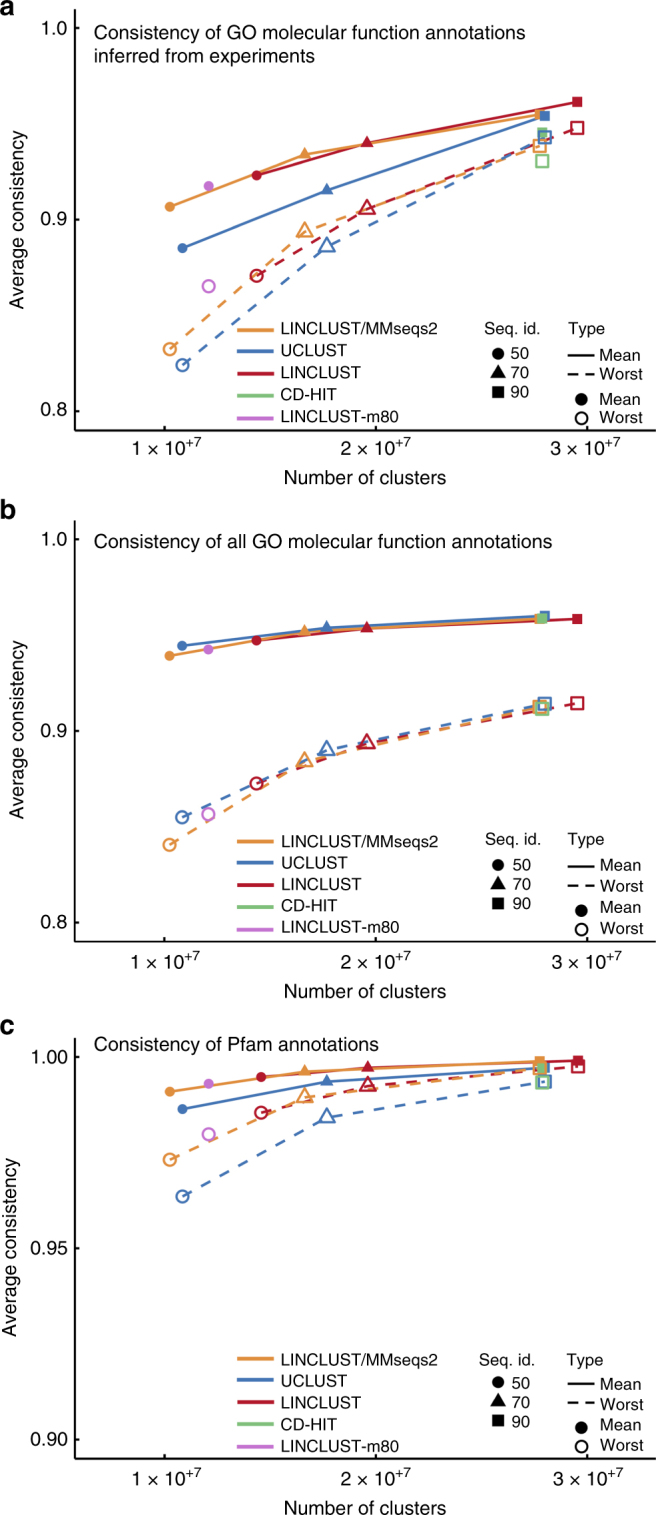
“4a,b) and Pfam domain annotations [18] (Fig.”
MMseqs2 enables sensitive protein sequence searching for the analysis of massive data sets
Steinegger, M., & Söding, J. (2017) · Nature Biotechnology · doi:10.1038/nbt.3988 · Cited by 4,840
Self-citationThe Universal Protein Resource (UniProt)
Bairoch, A. (2004) · Nucleic Acids Research · doi:10.1093/nar/gki070 · Cited by 3,774 · cited 1×
“, 100}, we determined these thresholds empirically on 4 million local alignments sampled from an all-against-all comparison of the UniProt database [31].”
MethodGene Ontology Consortium: going forward
The Gene Ontology Consortium (2015) · Nucleic Acids Research · doi:10.1093/nar/gku1179 · Cited by 3,492 · cited 2×
“We assess Gene Ontology (GO) annotations [17] (Fig.”
BackgroundMethod
Research works printed but not linked: 1
- Wang, J. Shen, H. T., Song, J. & Ji., J. Hashing for similarity search: a survey. Preprint at https://arxiv.org/abs/1408.2927 (2014). · arXiv
Cited by
Items 401–500 of 962
Tariq, D., Maurici, N., Bartholomai, B. M., Chandrasekaran, S., Dunlap, J. C., Bah, A., & Crane, B. R. (2024) · eLife · doi:10.7554/elife.90259 · Cited by 13
Antibacterial microcins are ubiquitous and functionally diverse across bacterial communities
Parker, J. K., Feller, A. L., Gu, R., Sanchez-Paiva, S., Perez, B. C., O’Donnell, A. C., Deng, W., Ousterhout, R. M., Kim, S., Wilke, C. O., et al. (2025) · Nature Communications · doi:10.1038/s41467-025-61151-z · Cited by 14
Xiao-ming, X., Yin, Z., Yan, L., Zhang, H., Xu, B., Wei, Y., Niu, B., Schmidt, B., & Liu, W. (2023) · Genome biology · doi:10.1186/s13059-023-02961-6 · Cited by 14
“Recent tools for large-scale clustering of biological sequences include Linclust [19], Gclust [20], and MeShClust3 [21].”
MethodInfluentialXu, L., Deng, P., Gao, H., & Zhang, W. (2023) · Giant · doi:10.1016/j.giant.2023.100226 · Cited by 13
Kabir, A., Moldwin, A., Bromberg, Y., & Shehu, A. (2024) · Bioinformatics Advances · doi:10.1093/bioadv/vbae119 · Cited by 16
“ESM2 (Lin et (Steinegger et al. 2019, Steinegger and S € oding 2018) merged with UniProt and proteins translated from multiple metagenomic sequencing projects, making it the largest collection of protein sequences available at the time of writing even after removal of duplicates from the original…”
SCARAP: scalable cross-species comparative genomics of prokaryotes
Wittouck, S., Eilers, T., van Noort, V., & Lebeer, S. (2024) · Bioinformatics · doi:10.1093/bioinformatics/btae735 · Cited by 15
Gu, H., Hu, X., Zhang, J., Li, Y., Yu, Z., Liu, J., Sui, Y., Jin, J., Liu, X., & Wang, G. (2024) · Journal of Hazardous Materials · doi:10.1016/j.jhazmat.2024.136909 · Cited by 13
Yin, M., Zhou, H., Wu, J., Zhu, Y., Zhan, Y., Kong, Z., Xu, H., Hsieh, C., Chen, J., Hou, T., et al. (2025) · Research · doi:10.34133/research.0721 · Cited by 16
“Furthermore, to mitigate data leakage, we clustered antibody sequences at 70% sequence identity over the whole sequence using the MMseq2 algorithm [24].”
Transfer learning on protein language models improves antimicrobial peptide classification
Georgoulis, E., Zervou, M. A., & Pantazis, Y. (2025) · Scientific Reports · doi:10.1038/s41598-025-21223-y · Cited by 15
“The BFD100 dataset is a clustered version of the Big Fantastic Database (BFD) 45,46 , where sequences with 100% identity are grouped, effectively removing duplicates.”
Synthetic antibacterial discovery of symbah-1, a macrocyclic β-hairpin peptide antibiotic
Randall, J. R., Davidson, G., Fleeman, R. M., Acosta, S. A., Riddington, I. M., Cole, T. J., DuPai, C. D., & Davies, B. W. (2021) · iScience · doi:10.1016/j.isci.2021.103611 · Cited by 14
“…search the peptide sequences against UniRef (Mirdita et al., 2017) and large environmentally sourced protein sequence databases BFD (Steinegger and Söding, 2018), Mgnify (Mitchell et al., 2020), MetaEuk (Levy Karin et al., 2020), and SMAG (Delmont et al., 2020) all clustered by sequences having…”
MethodSPRoBERTa: protein embedding learning with local fragment modeling
Wu, L., Yin, C., Zhu, J., Wu, Z., He, L., Xia, Y., Xie, S., Qin, T., & Liu, T. (2022) · Briefings in Bioinformatics · doi:10.1093/bib/bbac401 · Cited by 13
“It further constructs a residue graph with a three-layer graph GCN. • ProtBERT-BFD [17] is a BERT-large model trained on 2.1 billion protein sequences from BFD [39].”
MethodInfluentialSikora, M., Klimentova, E., Uchal, D., Sramkova, D., Perlinska, A. P., Nguyen, M. L., Korpacz, M., Malinowska, R., Nowakowski, S., Rubach, P., et al. (2024) · Protein Science · doi:10.1002/pro.4998 · Cited by 13
“Conser-vation of topology in the UCH, sodium/calcium exchanger, DUF4253 and DUF2254 domains was analyzed by performing gradual clustering using the “ lin-clust ” method from the MMseqs2 package (Steinegger & Söding, 2018).”
MethodImprovement of eukaryotic protein predictions from soil metagenomes
Belliardo, C., Koutsovoulos, G., Rancurel, C., Clément, M., Lipuma, J., Bailly‐Bechet, M., & Danchin, É. (2022) · Scientific Data · doi:10.1038/s41597-022-01420-4 · Cited by 14
“Therefore, we clustered Fasta files using the Linclust software of the MMseq2 metagenomic toolkit 44 .”
MethodProtein domain embeddings for fast and accurate similarity searchPreprint
Iovino, B. G., Tang, H., & Ye, Y. (2024) · Genome Research · doi:10.1101/gr.279127.124 · Cited by 15
“This contextual information is learned by pLMs when they are trained on large sequence databases, like UniProt (The UniProt Consortium 2015) and Big Fantastic Database (BFD) (Steinegger and Söding 2018).”
MethodA suicidal and extensively disordered luciferase with a bright luminescence
Dijkema, F. M., Escarpizo-Lorenzana, M. I., Nordentoft, M. K., Rabe, H. C., Sahin, C., Landreh, M., Branca, R. M., Sørensen, E. S., Christensen, B. S., Prestel, A., et al. (2023) · doi:10.1101/2023.12.21.572513 · Cited by 13
Soft disorder modulates the assembly path of protein complexes
Seoane, B., & Carbone, A. (2022) · doi:10.1101/2022.03.05.483089 · Cited by 13
Yang, S., Wu, J., Wang, H., Yang, Q., Zhang, H., Yang, L., Li, D., Deng, Y., Zhong, Y., & Peng, P. (2023) · Environmental Pollution · doi:10.1016/j.envpol.2023.122704 · Cited by 12
Zhu, L., Li, J., Yang, J., Li, X., Lin, D., & Wang, M. (2024) · Environment International · doi:10.1016/j.envint.2024.108753 · Cited by 12
Dong, Y., Chen, W.-H., & Zhao, X. (2024) · Genome biology · doi:10.1186/s13059-024-03320-9 · Cited by 12
“The trimmed viral genomes from different sources were pooled together and then dereplicated using MMseqs2 linclust [49] (version 13–45,111, options “–min-seq-id 0.9 -c 0.8 –cov-mode 1 –cluster-mode 2”).”
MethodInfluentialZhou, M., Liu, Z., Zhang, B., & Hu, B. (2024) · The Science of The Total Environment · doi:10.1016/j.scitotenv.2024.175364 · Cited by 12
Improving viral annotation with artificial intelligence
Flamholz, Z., Li, C., & Kelly, L. (2024) · mBio · doi:10.1128/mbio.03206-23 · Cited by 12
“BFD is used in AlphaFold for protein structure prediction (43), for protein-level assembly of metagenomic sequences (64), and for clustering large protein data sets (65).”
MethodInterpretable sequence clustering
Dong, J., Yang, X., Jiang, M., Hu, L., & He, Z. (2024) · Information Sciences · doi:10.1016/j.ins.2024.121453 · Cited by 12
DisorderUnetLM: Validating ProteinUnet for efficient protein intrinsic disorder prediction
Kotowski, K., Roterman, I., & Stąpor, K. (2024) · Computers in Biology and Medicine · doi:10.1016/j.compbiomed.2024.109586 · Cited by 12
Adaptive genomic plasticity in large-genome, broad-host–range vibrio phages
Bernard, C., Labreuche, Y., Diarra, C., Daszkowski, P., Cahier, K., Goudenège, D., Lamarche, M. G., Whitfield, G. B., Lang, M., Valencia, J., et al. (2025) · The ISME Journal · doi:10.1093/ismejo/wraf063 · Cited by 12
“Each marker set was defined as the CDSs of proteins sharing at least 80% amino-acid identity over at least 80% mutual length coverage, identified using the Linclust clustering algorithm from MMSeqs2 version 15-6f452 [34].”
Sequence-Based Protein–Protein Interaction Prediction and Its Applications in Drug Discovery
Charih, F., Green, J. R., & Biggar, K. K. (2025) · Cells · doi:10.3390/cells14181449 · Cited by 13
“A number of “foundational” pLMs trained at great expense on very large sets of pre-clustered, non-redundant protein sequences such as UniRef [134] or the “Big Fantastic Database” [135], are publicly available (Table 4).”
Predictive and therapeutic applications of protein language models
Furui, K., Sakano, K., & Ohue, M. (2025) · Allergology International · doi:10.1016/j.alit.2025.08.004 · Cited by 12
Advances and applications of clinical proteomics in precision medicine
Alshehri, S., Vitorino, R. M. P., Saleh, O., Al-Harthi, S., Alahmadi, A., Alotibi, R., Rosa, S. C. D. S., Osama, A., Magedeldin, S., Alhattab, D. M., et al. (2025) · Expert Review of Proteomics · doi:10.1080/14789450.2025.2560919 · Cited by 13
“As for the remaining databases, the UniRef uses the UniProtKB and UniParc records, the latter being the most comprehensive and non-redundant database of protein sequences, to provide visualization of clustered sequences [158,160].”
Moksnes, M. R., Coward, E., Nethander, M., Dekkers, K. F., Grahnemo, L., Törnqvist, A. E., Li, L., Lundmark, P., Pertiwi, K., Baldanzi, G., et al. (2026) · Nature Genetics · doi:10.1038/s41588-026-02502-4 · Cited by 14
Improving protein structure prediction using templates and sequence embedding
Wu, F., Jing, X., Luo, X., & Xu, J. (2022) · Bioinformatics · doi:10.1093/bioinformatics/btac723 · Cited by 16
“, 2015) as of March 2018 and Metaclust50 (Steinegger and Söding, 2018) as of January 2018 to build its MSA.”
BackgroundMethodGroussman, R. D., Coesel, S., Durham, B. P., & Armbrust, E. V. (2021) · Frontiers in Microbiology · doi:10.3389/fmicb.2021.682651 · Cited by 13
Neural Potts ModelPreprint
Sercu, T., Verkuil, R., Meier, J., Amos, B., Lin, Z., Chen, C., Liu, J. J., LeCun, Y., & Rives, A. W. (2021) · bioRxiv (Cold Spring Harbor Laboratory) · doi:10.1101/2021.04.08.439084 · Cited by 14
ProteinGLUE multi-task benchmark suite for self-supervised protein modeling
Capel, H., Weiler, R., Dijkstra, M., Vleugels, R., Bloem, P., & Feenstra, K. A. (2022) · Scientific Reports · doi:10.1038/s41598-022-19608-4 · Cited by 11
“…sequences 42 , UniRep is trained on 24 million UniRef50 sequences, ESM-1b is pre-trained on 250 million UniParc sequences, and Elnaggar et al. 11 even train their models on the BFD dataset containing over 2 billion sequences 43,44 , and on the UniRef100 database with 216 million sequences.”
MethodParkin, K., Palmer, D. J., Verhasselt, V., Amenyogbe, N., Cooper, M. N., Christophersen, C. T., Prescott, S. L., Silva, D. T., & Martino, D. (2024) · Microorganisms · doi:10.3390/microorganisms12010228 · Cited by 13
“In step one, all open reading frames (ORFs) from all genomes in the MGDB were clustered against UniRef90 [22] release 2019/04 using 90% identity over 80% of the read length with MMSeqs2 Release 10-6d92c [23].”
MethodChen, H., & Bajorath, J. (2024) · Journal of Cheminformatics · doi:10.1186/s13321-024-00852-x · Cited by 14
“ProtTrans PLMs were originally derived based on ultra-large sequence data sets from UniRef [34] and BFD [35], comprising up to 2122 million proteins and 393 billion amino acids.”
MethodKavanová, K., Kostovová, I., Morávková, M., Kubasová, T., & Crhánová, M. (2025) · BMC Microbiology · doi:10.1186/s12866-024-03711-9 · Cited by 12
“0.4) [39] was employed utilizing three substrate prediction approaches: HMMER3, DIAMOND, and MMSeq2 [40].”
InfluentialJin, Z. H., Yu, Q., Zhao, Z., & Zhang, Y. (2025) · Chemical Engineering Journal · doi:10.1016/j.cej.2025.166500 · Cited by 11
Boosting the predictive power of protein representations with a corpus of text annotations
Duan, H., Skreta, M., Cotta, L., Rajaonson, E. M., Dhawan, N., Aspuru‐Guzik, A., & Maddison, C. J. (2025) · Nature Machine Intelligence · doi:10.1038/s42256-025-01088-6 · Cited by 16
“It would be interesting to adapt this framework to learn representations for other biological entities like small molecules, nucleic acids or even higher-order molecular complexes.”
Rare microbial relict sheds light on an ancient eukaryotic supergroup
Valt, M., Pánek, T., Mirzoyan, S., Tice, A. K., Jones, R. E., Dohnálek, V., Doležal, P., Mikšátko, J., Rotterová, J., Hrubá, P., et al. (2025) · Nature · doi:10.1038/s41586-025-09750-0 · Cited by 14
“This dataset was clustered using mmseqs v.2 109 (easy-cluster algorithm, minimal sequence identity 0.8, coverage 0.8) to reduce overrepresented taxa, which could introduce bias into the HMM profile.”
InfluentialShi, L.-D., Ercoli, M. F., Kim, J., de Araújo, A. T., Estera‐Molina, K., Soni, S., Weitz, T. S., Shigenaga, A. M., Dukovski, I., Sachdeva, R., et al. (2026) · Nature Communications · doi:10.1038/s41467-026-68640-9 · Cited by 12
Pre-training Antibody Language Models for Antigen-Specific Computational Antibody Design
Gao, K., Wu, L., Zhu, J., Peng, T., Xia, Y., He, L., Xie, S., Qin, T., Liu, H., He, K., et al. (2023) · ACM SIGKDD Conference on Knowledge Discovery and Data Mining (KDD) · doi:10.1145/3580305.3599468 · Cited by 29
Woodard, J. C., Zheng, W. H., & Zhang, Y. (2021) · PLoS Computational Biology · doi:10.1371/journal.pcbi.1009370 · Cited by 12
Enhancing protein inter-residue real distance prediction by scrutinising deep learning models
Rahman, J., Newton, M. A. H., Islam, M. K. B., & Sattar, A. (2022) · Scientific Reports · doi:10.1038/s41598-021-04441-y · Cited by 11
Krinos, A. I., Cohen, N. R., Follows, M. J., & Alexander, H. (2023) · BMC Bioinformatics · doi:10.1186/s12859-022-05121-y · Cited by 12
“We chose the LINCLUST algorithm as implemented in mmseqs2 due to its exceeding low false discovery rate in clustering [64, 65].”
MethodThafar, M. A., Albaradei, S., Uludağ, M., Alshahrani, M., Gojobori, T., Essack, M., & Gao, X. (2023) · Frontiers in Genetics · doi:10.3389/fgene.2023.1139626 · Cited by 12
“ProtBert-BFD was trained on the BFD-100 dataset (Steinegger and Söding, 2018; Steinegger et al., 2019) containing up to 2,122 million protein sequences for the protein language model (LM).”
MethodAGNOSTOS-DB: a resource to unlock the uncharted regions of the coding sequence spacePreprint
Vanni, C., Schechter, M. S., Delmont, T. O., Eren, A. M., Steinegger, M., Glöckner, F. O., & Fernàndez-Guerra, A. (2021) · bioRxiv (Cold Spring Harbor Laboratory) · doi:10.1101/2021.06.07.447314 · Cited by 11
Self-citationMSAGPT: Neural Prompting Protein Structure Prediction via MSA Generative Pre-TrainingPreprint
Chen, B., Bei, Z., Cheng, X., Li, P., Tang, J., & Song, L. (2024) · bioRxiv (Cold Spring Harbor Laboratory) · doi:10.1101/2024.06.10.598380 · Cited by 11
“The success of these cutting-edge methods largely rely on the utilization of MSA, which are retrieved through search algorithms [24, 25, 26, 27] against vast databases [13, 14, 15, 16].”
VanGessel, C. J., Felderhoff, T. J., Prigozhin, D. M., Cui, M., Pressoir, G., Healey, A. L., Lovell, J. T., Nalam, V. J., Nishimura, M. T., & Morris, G. P. (2025) · doi:10.1101/2025.04.11.648396 · Cited by 11
VanGessel, C. J., Felderhoff, T. J., Prigozhin, D. M., Cui, M., Pressoir, G., Healey, A. L., Lovell, J. T., Nalam, V. J., Nishimura, M. T., & Morris, G. P. (2025) · Science Advances · doi:10.1126/sciadv.ady1667 · Cited by 10
Liu, J., Neupane, P., & Cheng, J. (2025) · Communications Biology · doi:10.1038/s42003-025-08960-6 · Cited by 10
Cell-free chromatin immunoprecipitation to detect molecular pathways in heart transplantation
Jang, M. K., Markowitz, T. E., Andargie, T. E., Apalara, Z., Kuhn, S. A., & Agbor-Enoh, S. T. (2023) · Life Science Alliance · doi:10.26508/lsa.202302003 · Cited by 10
AbLEF: antibody language ensemble fusion for thermodynamically empowered property predictions
Rollins, Z. A., Widatalla, T., Waight, A. B., Cheng, A. C., & Metwally, E. (2024) · Bioinformatics · doi:10.1093/bioinformatics/btae268 · Cited by 12
“Similarly, ProtBERT and ProtBERT-BFD (Elnaggar et al. 2022) were trained on � 217 million and � 2.1 billion antibody nonexclusive protein sequences from UniRef100 (Suzek et al. 2015) and BFD (Steinegger and S € oding, 2018), respectively, and contain � 420 million parameters.”
MethodInfluentialKavanová, K., Kostovová, I., Morávková, M., Kubasová, T., Babák, V., & Crhánová, M. (2024) · Probiotics and Antimicrobial Proteins · doi:10.1007/s12602-024-10259-7 · Cited by 10
“0.4) [25] was employed for the annotation of carbohydrate active enzyme (CAZymes) gene families, with the use of three substrate prediction approaches: HMMER3, DIAMOND, and MMSeq2 [26].”
InfluentialAI-accelerated therapeutic antibody development: practical insights
Santuari, L., Salvy, M. B., Xénarios, I., & Arpat, A. B. (2024) · Frontiers in Drug Discovery · doi:10.3389/fddsv.2024.1447867 · Cited by 12
Cutting-edge deep-learning based tools for metagenomic research
Karin, E. L., & Steinegger, M. (2025) · National Science Review · doi:10.1093/nsr/nwaf056 · Cited by 12
“[50 ] combined Foldseek with the powerful capabilities of MMseqs2 [49 ] and Linclust [51 ] to create a method which can efficiently cluster many mi l lions of structures.”
Self-citationZhang, B., Zhang, Y., Zhang, X., Qu, J., Ruan, C., Liao, J., Alvarez, P. J. J., & Yu, P. (2025) · Environmental Science & Technology · doi:10.1021/acs.est.4c09851 · Cited by 11
Xie, P., Yao, L., Guan, J., Chung, C., Zhao, Z., Long, F., Sun, Z., Lee, T.-Y., & Chiang, Y. (2025) · Protein Science · doi:10.1002/pro.70087 · Cited by 10
“On the other hand, the BFD data-base comprises approximately 2.1 billion protein sequences sourced from diverse databases, including Uniprot/TrEMBL + Swissprot (UniProt Consortium, 2023), Metaclust (Steinegger & Söding, 2018), and the Soil and Marine Eukaryotic Reference Catalogs (Steinegger et al., 2019).”
InfluentialExtreme-Scale Many-against-Many Protein Similarity Search
Selvitopi, O., Ekanayake, S., Guidi, G., Awan, M. G., Pavlopoulos, G. A., Azad, A., Kyrpides, N. C., Oliker, L., Yelick, K., & Buluç, A. (2022) · International Conference for High Performance Computing, Networking, Storage and Analysis (SC) · doi:10.1109/sc41404.2022.00006 · Cited by 12
“59 billion protein sequence fragments in more than two thousand metagenomic and metatranscriptomic datasets [24].”
BackgroundLiyaqat, T., Ahmad, T., & Saxena, C. (2023) · Journal of Computer-Aided Molecular Design · doi:10.1007/s10822-023-00533-1 · Cited by 11
“The model is pre-trained on BFD (Big Fantastic Database) dataset [44, 45] with over 2, 122 million proteins, 400 billion amino-acids and uses BERT (Bidirectional Encoder Representation from Transformers) NLP model.”
MethodImproved 3-D Protein Structure Predictions using Deep ResNet Model
Geethu, S., & Vimina, E. R. (2021) · The Protein Journal · doi:10.1007/s10930-021-10016-7 · Cited by 10
Quantifying and Cataloguing Unknown Sequences within Human Microbiomes
Modha, S., Robertson, D. L., Hughes, J., & Orton, R. J. (2022) · mSystems · doi:10.1128/msystems.01468-21 · Cited by 12
“All sequences with at least 90% sequence identity and at least 80% overlap were clustered using the MMSeqs2 easy-cluster pipeline (45).”
MethodIntelligent Protein Design and Molecular Characterization Techniques: A Comprehensive Review
Wang, J., Chen, C., Yao, G., Ding, J., Wang, L., & Jiang, H. (2023) · Molecules · doi:10.3390/molecules28237865 · Cited by 11
“The advent of low-cost and efficient sequencing technologies has driven rapid growth in the number of protein sequences [76,77].”
BackgroundGhazikhani, H., & Butler, G. (2024) · Proteins Structure Function and Bioinformatics · doi:10.1002/prot.26694 · Cited by 11
Computational pipeline to probe NaV1.7 gain-of-function variants in neuropathic painful syndromes
Toffano, A., Chiarot, G., Zamuner, S., Marchi, M., Salvi, E., Waxman, S. G., Faber, C. G., Lauria, G., Giacometti, A., & Simeoni, M. (2020) · Scientific Reports · doi:10.1038/s41598-020-74591-y · Cited by 11
“The alignment has been used as a seed for searching homologous sequences in Uniprot and Metaclust[87] databases.”
Sugimoto, R., Nishimura, L., Phuong, N. T., Ito, J., Parrish, N. F., Mori, H., Kurokawa, K., Nakaoka, H., & Inoue, I. (2021) · PLoS Computational Biology · doi:10.1371/journal.pcbi.1009428 · Cited by 10
“Metaclust [61] was downloaded on November 10, 2020.”
Liu, J., Neupane, P., & Cheng, J. (2025) · doi:10.1101/2025.06.06.658338 · Cited by 10
Cold-water coral mortality under ocean warming is associated with pathogenic bacteria
Chemel, M., Péru, E., Binsarhan, M., Logares, R., Lartaud, F., & Galand, P. E. (2024) · Environmental Microbiome · doi:10.1186/s40793-024-00622-0 · Cited by 11
“To build a gene catalog, the predicted genes from the different samples were pooled and dereplicated at 95% similarity and 80% alignment coverage with ’linclust’ [70].”
MethodAleshina, Y. A., & Lukashev, A. N. (2025) · Virus Evolution · doi:10.1093/ve/veaf006 · Cited by 9
“Full ORF2 amino acid sequences available in GenBank ( N =894) were clustered based on sequence identity using USEARCH (Edgar 2010 ) and MMSeqs2 software (Steinegger and Söding 2018b) with 0.75 identity threshold, which corresponds to the species criterion.”
InfluentialExpanding the scope of protein language modeling to protein-protein interactions with MSA Pairformer
Akiyama, Y., Zhang, Z., Tang, O., Kim, S., Mirdita, M., Steinegger, M., & Ovchinnikov, S. (2026) · Cell · doi:10.1016/j.cell.2026.06.029 · Cited by 19
Self-citationBotanical drugs: a new strategy for structure-based target prediction
Wei, X., Wu, X., Cheng, Z., Wu, Q., Cao, C., Xu, X. J., & Shang, H. (2021) · Briefings in Bioinformatics · doi:10.1093/bib/bbab425 · Cited by 9
Perfumo, A., Çabuk, U., Schulte, L., Courtin, J., Harms, L., Stoof‐Leichsenring, K. R., & Herzschuh, U. (2023) · Environmental DNA · doi:10.1002/edn3.446 · Cited by 9
Bacterial cell surface characterization by phage display coupled to high-throughput sequencing
Grun, C. N., Jain, R., Schniederberend, M., Shoemaker, C. B., Nelson, B., & Kazmierczak, B. I. (2024) · Nature Communications · doi:10.1038/s41467-024-51912-7 · Cited by 10
“We will limit our review to these aspects.”
Adachi, A., Dominguez, J. J. A., Utami, Y. D., Fuji, M., Kirita, S., Imai, S., Murakami, T., Hongoh, Y., Shinjo, R., Kamiya, T., et al. (2025) · Plant and Cell Physiology · doi:10.1093/pcp/pcaf045 · Cited by 9
Brown, C., Rumi, M., McDaniel, L. F., Maile-Moskowitz, A., Sein, J., Nguyen, L., Choi, M., Hindi, F., Mullet, J. I., Emon, M., et al. (2026) · Nature Communications · doi:10.1038/s41467-026-78142-3 · Cited by 9
nGIA: A novel Greedy Incremental Alignment based algorithm for gene sequence clustering
Ju, Z., Zhang, H., Meng, J., Zhang, J., Fan, J., Pan, Y., Liu, W., Li, X., & Wei, Y. (2022) · Future Generation Computer Systems · doi:10.1016/j.future.2022.05.024 · Cited by 9
Suviriyapaisal, N., & Wichadakul, D. (2023) · RSC Advances · doi:10.1039/d3ra03796g · Cited by 12
The Phenix‐AlphaFold webservice: Enabling AlphaFold predictions for use in Phenix
Poon, B. K., Terwilliger, T. C., & Adams, P. D. (2024) · Protein Science · doi:10.1002/pro.4992 · Cited by 9
Pre-training with a rational approach for antibody sequence representation
Gao, X., Cao, C., He, C., & Lai, L. (2024) · Frontiers in Immunology · doi:10.3389/fimmu.2024.1468599 · Cited by 9
“Within the unpaired data of the OAS dataset, we first employ Linclust [14] to cluster the heavy and light chain sequences with 80% sequence identity.”
MethodSources of anammox granular sludge and their sustainability in treating low-strength wastewater
Li, Y., Yu, T., Kang, D., Shan, X., Zheng, P., Hu, Z., Ding, A., Wang, R., & Zhang, M. (2019) · Chemosphere · doi:10.1016/j.chemosphere.2019.03.049 · Cited by 9
Esfahani, M. K., Kilpatrick, P., & Vandierendonck, H. (2022) · ACM SIGPLAN Symposium on Principles and Practice of Parallel Programming · doi:10.1145/3503221.3508402 · Cited by 9
“Table 4 shows the datasets and their sources: “Konect” (KN) [15, 46, 55], “NetworkRepository” (NR) [18, 21, 22, 58, 64], “Laboratory for Web Algorithmics” (LWA) [15– 18, 47], “HipMCL” (HM) [9, 65], and “Web Data Commons” (WDC) [49, 52, 53].”
Strobemers: an alternative to k-mers for sequence comparisonPreprint
Sahlin, K. (2021) · bioRxiv (Cold Spring Harbor Laboratory) · doi:10.1101/2021.01.28.428549 · Cited by 9
“minstrobes (3,6,10,20) hybridstrobes (2,9,10,20)”
BackgroundMethodInfluentialPredicting Relative Populations of Protein Conformations without a Physics Engine Using AlphaFold2Preprint
da Silva, G. M., Cui, J. Y., Dalgarno, D. C., Lisi, G. P., & Rubenstein, B. M. (2023) · bioRxiv (Cold Spring Harbor Laboratory) · doi:10.1101/2023.07.25.550545 · Cited by 12
“This algorithm builds the MSA by querying sequences from the UniRef90 [33], Small BFD [34], and MGfny [35] databases.”
Petabase-Scale Homology Search for Structure Prediction
Lee, S., Kim, G., Karin, E. L., Mirdita, M., Park, S., Chikhi, R., Babaian, A., Kryshtafovych, A., & Steinegger, M. (2024) · Cold Spring Harbor Perspectives in Biology · doi:10.1101/cshperspect.a041465 · Cited by 13
Self-citationKandathil, S. M., Greener, J. G., Lau, A. M., & Jones, D. T. (2020) · doi:10.1101/2020.11.27.401232 · Cited by 8
Benchmarking HelixFold3-Predicted Holo Structures for Relative Free Energy Perturbation Calculations
Furui, K., & Ohue, M. (2025) · ACS Omega · doi:10.1021/acsomega.4c11413 · Cited by 8
“During inference, we used the full Big Fantastic Database (BFD) sequence database 1,21,22 instead of HelixFold3’s default reduced BFD database.”
GradHC: highly reliable gradual hash-based clustering for DNA storage systems
Shabat, D. B., Hadad, A., Boruchovsky, A., & Yaakobi, E. (2024) · Bioinformatics · doi:10.1093/bioinformatics/btae274 · Cited by 10
Neumann, C., Mohammadzadeh, R., Woh, P. Y., Kobal, T., Pausan, M.-R., Shinde, T., Haid, V., Mertelj, P., Weiss, E., Kolovetsiou-Kreiner, V., et al. (2024) · mSystems · doi:10.1128/msystems.01071-24 · Cited by 10
Yu, X., Li, J., Zhou, Y., Chen, Y., Zou, L., Luo, C., Shen, C., Liu, F., Xu, J. M., & Tang, X. (2025) · Water Research · doi:10.1016/j.watres.2025.123934 · Cited by 8
Liu, M., Wang, S., Luo, Z., Wang, G., & Zhao, Y. (2025) · Bioinformatics · doi:10.1093/bioinformatics/btaf374 · Cited by 9
Avilov, I., Horokhovskyi, Y., Mehta, P., Welp, L. M., Jakobi, J., Cai, M., Orzechowski, A., Urlaub, H., Liepe, J., & Lénárt, P. (2025) · The Journal of Cell Biology · doi:10.1083/jcb.202312140 · Cited by 8
Chen, L., Xun, X., & Zhou, B. (2026) · Scientific Reports · doi:10.1038/s41598-026-35110-7 · Cited by 8
“ProtT5 is a 24-layer transformer-based language model that was initially pre-trained on a comprehensive protein dataset from the Big Fantastic Database (BFD) 19,20 , and subsequently fine-tuned using the UniRef 50 dataset 21 .”
Protein foundation models: a comprehensive survey
Xu, H., Li, L., Pan, S., Cheng, P., Wang, Y., Rong, Z., Feng, L., Huang, X., Wang, S., & Shu, W. (2026) · Science China Life Sciences · doi:10.1007/s11427-025-3147-2 · Cited by 10
FALCON2: a web server for high-quality prediction of protein tertiary structures
Kong, L., Ju, F., Zhang, H., Sun, S., & Bu, D. (2021) · BMC Bioinformatics · doi:10.1186/s12859-021-04353-8 · Cited by 8
Multi-omics analysis reveals metabolism of okadaic acid in gut lumen of rat
Liu, Y., Lu, Y., Jiao, Y.-H., Li, D., Li, H., & Yang, W. (2022) · Archives of Toxicology · doi:10.1007/s00204-021-03219-5 · Cited by 8
“com/ soedi nglab/ MMseqs) with 95% identity (Steinegger and Soding 2018).”
MethodZhang, X., Zhou, Y., Xu, S., Xu, S., Xiong, Y.-J., Xu, K., Xu, C., Che, J., Huang, L., Liu, Z., et al. (2023) · Microbiology Spectrum · doi:10.1128/spectrum.01906-22 · Cited by 10
Two canonically aerobic foraminifera express distinct peroxisomal and mitochondrial metabolisms
Powers, C., Gomaa, F., Billings, E. B., Utter, D. R., Beaudoin, D., Edgcomb, V. P., Hansel, C. M., Wankel, S. D., Filipsson, H. L., Zhang, Y., et al. (2022) · Frontiers in Marine Science · doi:10.3389/fmars.2022.1010319 · Cited by 10
“Due to the large size of the nucleotide dataset (greater than fifty million contigs), the lin-clust clustering algorithm from MMSEQS2 was used to cluster nucleotide sequences with a minimum sequence identity of 97% using default settings (Steinegger and Söding, 2018).”
MethodData mining powered by the gene ontology
Manda, P. (2020) · Wiley Interdisciplinary Reviews Data Mining and Knowledge Discovery · doi:10.1002/widm.1359 · Cited by 8
“Does not differentiate between annotations with different evidence codes. include a linear time clustering algorithm that is not restricted by the available main memory has made it possible to cluster sequences at scale (Steinegger & Söding, 2018).”
BackgroundRavenburg, C. M., Riney, M. B., Monroe, J. D., & Berndsen, C. (2022) · Acta Crystallographica Section D Structural Biology · doi:10.1107/s2059798322002169 · Cited by 9
EvoNB: A protein language model-based workflow for nanobody mutation prediction and optimization
Xiong, D., Ming, Y., Li, Y., Li, S., Chen, K., Liu, J., Duan, L., Li, H., Li, M., & He, X. D. (2025) · Journal of Pharmaceutical Analysis · doi:10.1016/j.jpha.2025.101260 · Cited by 9
“In order to reduce data redundancy and improve computational ef fi ciency, all the nanobody sequences were clustered and analyzed using the MMseqs2, which is an ef fi cient sequence alignment and clustering algorithm [30,31].”
Chandola, U., Gaudin, M., Trottier, C., Lavier-Aydat, L.-J., Manirakiza, E., Menicot, S., Fischer, E. J., Louvet, I., Lacour, T., Chaumier, T., et al. (2025) · Genome biology · doi:10.1186/s13059-025-03597-4 · Cited by 7
“Linclust [93] was used to cluster the translated gene product obtained to generate gene and protein catalogs common to all samples.”
Wang, X., Dong, Q., Huang, P., Yang, S., Gao, M., Zhang, C., Zhang, C., Deng, Y., Huang, Z., Ma, B., et al. (2025) · Microbiome · doi:10.1186/s40168-025-02185-9 · Cited by 9
“Annotation of these CDSs using UniRef50 [49] indicated a diverse range of encoded functionalities, including biosynthesis pathways for amino acids and short-chain fatty acids, as well as mechanisms related to drug resistance (Additional file 1: Table S13).”
Metadata
- Authors
- Steinegger, M., & Söding, J.
- Affiliations
- Seoul National University (KR)
- Max Planck Institute for Biophysical Chemistry (DE)
- Corresponding author
- Steinegger, Martin
- Söding, Johannes
- Venue
- Nature Communications
- Published
- 2018-06-29
- Volume
- 9
- Issue
- 1
- Pages
- 2542-2542
- ISSN
- 2041-1723 (ISSN-L)
- PMC
- PMC6026198
- OpenAlex
- W2953008890
- Cited by
- 875
- References
- 32
- Citations by year
- 2026: 110 · 2025: 154 · 2024: 168 · 2023: 123 · 2022: 111 · 2021: 129 · 2020: 52 · 2019: 28
- FWCI
- 18.49
- Type
- journal article
- Language
- en
- Open access
- gold
- doi.org
- Licence
- cc-by
- creativecommons.org/licenses/by/4.0 (tdm)
- creativecommons.org/licenses/by/4.0 (vor)
- Locations
- Nature Communications (publishedVersion, cc-by)
- Europe PMC (PubMed Central) (publishedVersion, cc-by)
- PubMed Central (publishedVersion, cc-by)
- PubMed (publishedVersion)
- OSTI OAI (U.S. Department of Energy Office of Scientific and Technical Information) (submittedVersion)
- DOAJ (DOAJ: Directory of Open Access Journals) (submittedVersion, cc-by-sa)
- DOAJ (DOAJ: Directory of Open Access Journals) (submittedVersion)
- mediaTUM (Technical University of Munich) (submittedVersion, other-oa)
- GoeScholar The Publication Server of the Georg-August-Universität Göttingen (Georg-August-Universität Göttingen) (submittedVersion, cc-by)
- Seoul National University Open Repository (Seoul National University) (submittedVersion)
- Funders
- U.S. Department of Energy
- Joint Genome Institute
- Seoul National University
- Horizon 2020 Framework Programme (685778)
- Topics
- Life Sciences › Biochemistry, Genetics and Molecular Biology › Molecular Biology › Genomics and Phylogenetic Studies
- Physical Sciences › Mathematics › Theoretical Computer Science › Algorithms and Data Compression
- Life Sciences › Biochemistry, Genetics and Molecular Biology › Molecular Biology › Fractal and DNA sequence analysis
- Keywords
- protein sequence clustering, metagenomics, functional annotation, memory-efficient clustering, sequence similarity
- MeSH terms
- Algorithms, Animals, DNA, Humans, Prokaryotic Cells, Proteins, Cluster Analysis, Genome, Sequence Analysis, DNA, Computational Biology, Databases, Nucleic Acid, Databases, Protein, Metagenomics, Datasets as Topic
About these checks
Registry, retraction, Cites and statistics results are computed, not judged, with one exception: a printed reference that no index lists is read once by a model before it counts as a citation error. Claims are extracted by a model and kept only when their quote appears verbatim in the text; each cited source is then checked, with a model’s help, for whether it says what the claim relies on. Those verdicts can be wrong — read the claim’s quote and the cited source before relying on one.
Statistics and arithmetic are recomputed, not judged.
Confidence bands are shown only for fields calibrated on our annotated test set. None is calibrated yet, so no band is shown.
What counts as a claim ›How we measure confidence ›How we check this ›
Are you an author, or do you see a problem with this page? Request a review
Data sources
Bibliographic data: Semantic Scholar, OpenAlex, Crossref.
Contains information from the Semantic Scholar Academic Graph Datasets, made available under the ODC Attribution License (ODC-BY 1.0).
Semantic Scholar’s data is described in: Kinney, R., et al. (2023). The Semantic Scholar Open Data Platform. arXiv:2301.10140.
