

The DOI matches its Crossref record; 90 of the 90 references it cites were found in a registry or an index.
Network-based approach to prediction and population-based validation of in silico drug repurposing
Open accessAbstract
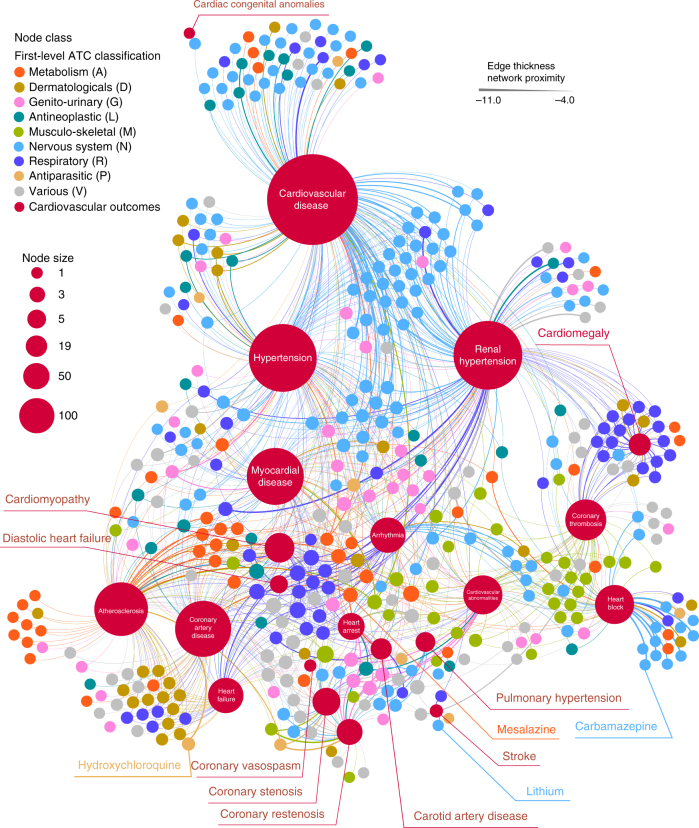
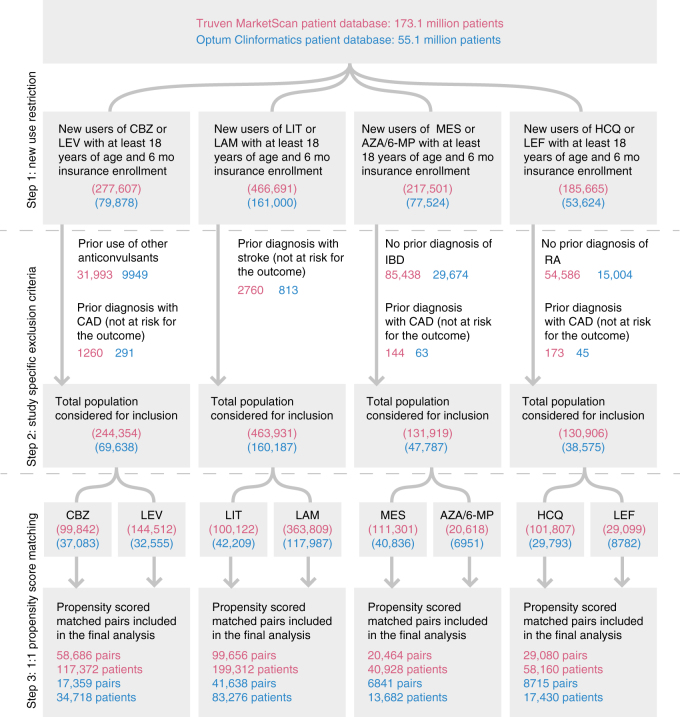
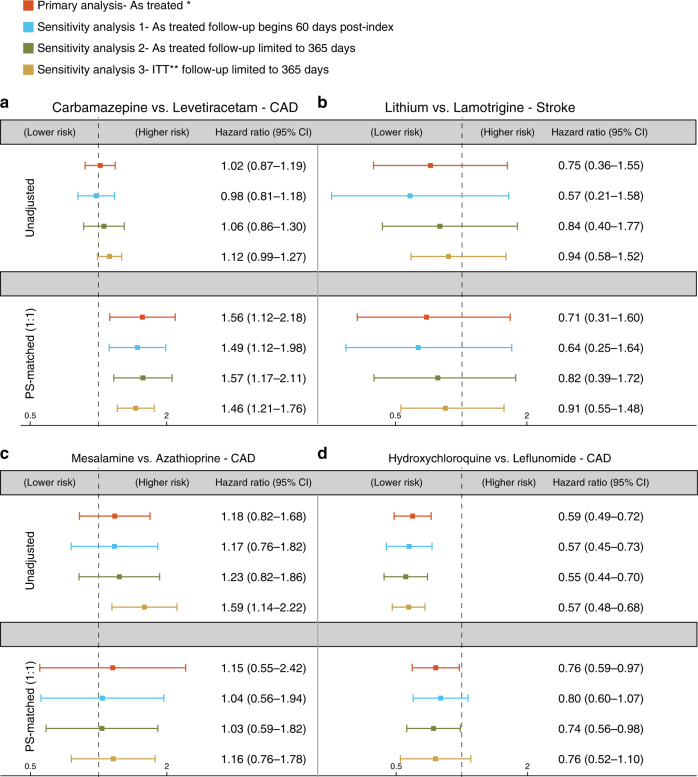
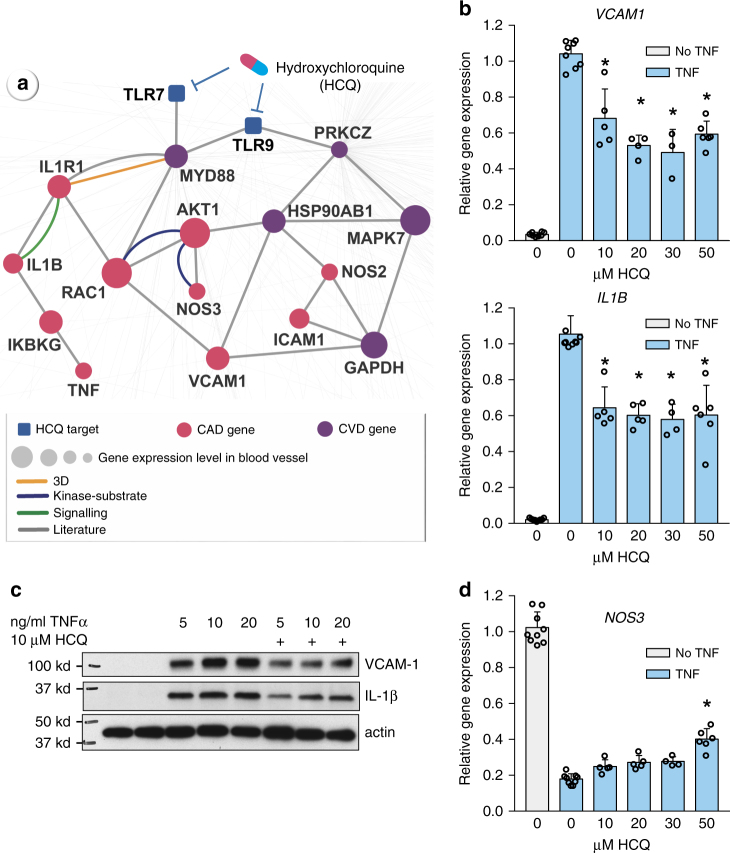
Here we identify hundreds of new drug-disease associations for over 900 FDA-approved drugs by quantifying the network proximity of disease genes and drug targets in the human (protein–protein) interactome. We select four network-predicted associations to test their causal relationship using large healthcare databases with over 220 million patients and state-of-the-art pharmacoepidemiologic analyses. Using propensity score matching, two of four network-based predictions are validated in patient-level data: carbamazepine is associated with an increased risk of coronary artery disease (CAD) [hazard ratio (HR) 1.56, 95% confidence interval (CI) 1.12–2.18], and hydroxychloroquine is associated with a decreased risk of CAD (HR 0.76, 95% CI 0.59–0.97). In vitro experiments show that hydroxychloroquine attenuates pro-inflammatory cytokine-mediated activation in human aortic endothelial cells, supporting mechanistically its potential beneficial effect in CAD. In summary, we demonstrate that a unique integration of protein-protein interaction network proximity and large-scale patient-level longitudinal data complemented by mechanistic in vitro studies can facilitate drug repurposing.
Overview
The claims and statistics of this paper haven’t been checked yet.
Run the check — free, no account needed. It reads the open-access text and checks the sources it cites.
Integrity signals
Registry
Cites
Statistics
Figures
Verification
Claims the paper makes
The claims and statistics of this paper haven’t been checked yet.
Run the check — free, no account needed. It reads the open-access text and checks the sources it cites.
Claims other papers make about this one
Each is checked against this paper’s own text: does it say what the citing paper says it does?
In the citing paper
“Because gene expression data can be noisy and variational, recent advances include fusing the co-expression matrices with existing biomedical networks, such as GO annotations and PPI, and feeding the resulting graph into graph convolution layers (Section 2.2) [150, 151, 152].”
From Graph representation learning in biomedicine and healthcare (2022) · cites this paper as [152]
In the citing paper
“Doing so has enabled more interpretable disease classification models (e.g., weighting gene interactions based on existing biological knowledge).”
From Graph representation learning in biomedicine and healthcare (2022) · cites this paper as [152]
Self-check
Percentages, sums and reported differences re-computed from the paper’s own numbers.
The self-check needs the paper’s full text.
Citations
Cites
Meta-analysis in clinical trials
DerSimonian, R., & Laird, N. (1986) · Controlled Clinical Trials · doi:10.1016/0197-2456(86)90046-2 · Cited by 39,552
The central role of the propensity score in observational studies for causal effects
ROSENBAUM, P. R., & RUBIN, D. B. (1983) · Biometrika · doi:10.1093/biomet/70.1.41 · Cited by 31,241
Database resources of the National Center for Biotechnology Information: update
Wheeler, D. L. (2003) · Nucleic Acids Research · doi:10.1093/nar/gkh073 · Cited by 10,695
Inflammation, Atherosclerosis, and Coronary Artery Disease
Hansson, G. K. (2005) · New England Journal of Medicine · doi:10.1056/nejmra043430 · Cited by 8,773
UniProt: the Universal Protein knowledgebase
Apweiler, R. (2003) · Nucleic Acids Research · doi:10.1093/nar/gkh131 · Cited by 7,593
ChEMBL: a large-scale bioactivity database for drug discovery
Gaulton, A., Bellis, L. J., Bento, A. P., Chambers, J., Davies, M., Hersey, A., Light, Y., McGlinchey, S., Michalovich, D., Al-Lazikani, B., et al. (2012) · Nucleic Acids Research · doi:10.1093/nar/gkr777 · Cited by 4,382
The unified medical language system (UMLS): integrating biomedical terminology
Bodenreider, O. (2004) · Nucleic Acids Research · doi:10.1093/nar/gkh061 · Cited by 4,356
ClinVar: public archive of relationships among sequence variation and human phenotype
Landrum, M. J., Lee, J. M., Riley, G. R., Jang, W., Rubinstein, W. S., Church, D. M., & Maglott, D. R. (2014) · Nucleic Acids Research · doi:10.1093/nar/gkt1113 · Cited by 3,516
PhosphoSitePlus, 2014: mutations, PTMs and recalibrations
Hornbeck, P. V., Zhang, B., Murray, B., Kornhauser, J. M., Latham, V., & Skrzypek, E. (2015) · Nucleic Acids Research · doi:10.1093/nar/gku1267 · Cited by 3,411
Goh, K.-I., Cusick, M. E., Valle, D., Childs, B., Vidal, M., & Barabási, A.-L. (2007) · Proceedings of the National Academy of Sciences · doi:10.1073/pnas.0701361104 · Cited by 3,242
Research works printed but not linked: 1
- Muller-Calleja, N., Manukyan, D., Canisius, A., Strand, D. & Lackner, K. J. Hydroxychloroquine inhibits proinflammatory signalling pathways by targeting endosomal NADPH oxidase. Ann. Rheum. Dis. 76, 891–897 (2016). · DOI
Cited by
Sorted by citations
Items 401–500 of 573
Predicting disease genes for complex diseases using random watcher-walker
Madeddu, L., Stilo, G., & Velardi, P. (2020) · ACM Symposium on Applied Computing · doi:10.1145/3341105.3373979 · Cited by 1
Mozafar, M., Mirmotalebisohi, S. A., Sameni, M., Dehghan, Z., Zohrevand, H., Sepehrizadeh, Z., Faramarzi, M. A., Shahverdi, A. R., & Zali, H. (2025) · Gene Reports · doi:10.1016/j.genrep.2025.102269 · Cited by 1
A network medicine framework for multi-modal data integration in therapeutic target discovery
Baltušytė, G., Toleman, I., Jones, J. O., Welsh, S. J., Stewart, G. D., Mitchell, T. J., Saeb‐Parsy, K., & Han, N. (2026) · Communications Chemistry · doi:10.1038/s42004-026-02049-9 · Cited by 1
“Forinstance,centralitymetricshave beenusedtohighlightkeyhubsindisease-speci fi c protein – protein interaction (PPI) networks 9,10 , while network proximity analyses have demon-stratedstrongpredictivepowerindrugrepurposingandtargetprioritisationtasks 7,8,11,12 .”
Zhang, C., He, Q., Bennett, A. N., Pu, Y., Wang, T., & Chan, K. H. K. (2025) · European Journal of Pharmacology · doi:10.1016/j.ejphar.2025.177963 · Cited by 1
Weckstein, A. R., Wang, S. V., Wyss, R., & Schneeweiß, S. (2025) · Journal of the American Medical Informatics Association · doi:10.1093/jamia/ocaf204 · Cited by 1
DiffFNN-Med: Task-Adaptive Fuzzy Neural Networks for Interpretable Medical Drug Recommendation
Wang, Z., He, M., Liang, Z., He, Y., & Dong, X. (2025) · IEEE International Conference on Bioinformatics and Biomedicine (BIBM) · doi:10.1109/bibm66473.2025.11356704 · Cited by 1
“This ensemble leverages diverse medical signals and consistently performs well across datasets [22].”
Guo, P., Zhao, J., Wang, C., Bai, Y., Zhang, B., & Liu, A. (2026) · European Journal of Pharmacology · doi:10.1016/j.ejphar.2026.178730 · Cited by 1
Modern Computational Methods for Drug Repurposing
Xu, H., & Loscalzo, J. (2026) · Drug repurposing · doi:10.58647/drugrepo.26.1.0001 · Cited by 1
Self-citationPathak, A., Anwer, T., Verma, A., Alhujaily, M. M., Alahmari, M. A., Alshahrani, S., Alam, N., Nomier, Y., & Alam, M. F. (2026) · Precision medication. · doi:10.1016/j.prmedi.2026.100078 · Cited by 1
Yang, X., Xiong, J., Zhang, C., & Wang, H. (2026) · Naunyn-Schmiedeberg s Archives of Pharmacology · doi:10.1007/s00210-026-05285-x · Cited by 1
“Permutation testing (1000 iterations) confirmed the significance (empirical p < 0.001), supporting the biological relevance of these convergence points (Shen 2014; Cheng et al. 2018).”
InfluentialPrecision Medicine Through Network Language: Integrating Clinical Insight and Data Expertise
Palumbo, M. C., Farina, L., & Petti, M. (2026) · Genes · doi:10.3390/genes17040467 · Cited by 2
“Predictions were validated using population-scale clinical datasets, confirming that non-cardiovascular drugs modulate disease risk in ways consistent with their interactome proximity, and mechanistic experiments supported these associations [53].”
Mou, Z., Tian, Z., Jin, J., Yu, H., & Huang, Y. (2026) · Biomolecules · doi:10.3390/biom16060830 · Cited by 1
“We first survey recent drug repurposing reviews [3,4] and examine the primary studies cited therein to establish an initial methodological framework [74,76–82].”
EVATECH H POLYMER-MODIFIED BITUMEN
Nicholls, J. C. (1994) · OpenGrey (Institut de l'Information Scientifique et Technique) · Cited by 1
In Silico Drug Repositioning for COVID-19: Progress and Challenges
Kumar, S. (2022) · Springer eBooks · doi:10.1007/978-3-031-08045-6_24 · Cited by 2
NIEE: Modeling Edge Embeddings for Drug-Disease Association Prediction via Neighborhood Interactions
Jiang, Y., Zhou, J., Zhang, Y., Wu, Y., Wang, X., & Li, J. (2023) · Lecture notes in computer science · doi:10.1007/978-981-99-4749-2_59 · Cited by 1
Taguchi, Y., & Turki, T. (2023) · International Conference on Bioinformatics and Computational Biology (ICBCB) · doi:10.1109/icbcb57893.2023.10246633 · Cited by 1
Modeling Path Importance for Effective Alzheimer’s Disease Drug Repurposing
Xiang, S., Lawrence, P. J., Peng, B., Chiang, C., Kim, D., Shen, L., & Ning, X. (2023) · Pacific Symposium on Biocomputing (PSB) · doi:10.1142/9789811286421_0024 · Cited by 2
“13,15,16 Network-based methods utilize comprehensive protein-protein, drug-target, and AD -protein interactions to effectively reveal potential therapeutic effects of drugs on AD .”
InfluentialNetwork-based analysis to uncover drug-induced adverse side-effects
Funari, A., Paci, P., & Conte, F. (2023) · IEEE International Conference on Bioinformatics and Biomedicine (BIBM) · doi:10.1109/bibm58861.2023.10385955 · Cited by 1
“Human interactome network: The human interactome, including protein-protein interactions (PPI), was obtained from [7] and consists of 15,970 proteins and their 217,160 interactions.”
BackgroundXie, D., Lv, G., Wang, Y., Zhang, W., Li, N., Duan, Y., Huang, Q., Chen, G., Pi, Z., & Yue, H. (2024) · Arabian Journal of Chemistry · doi:10.1016/j.arabjc.2024.105711 · Cited by 1
Artificial Intelligence's Influence on HIV/AIDS Cure Discovery
Beverley, C. (2024) · Journal of Quality in Health Care & Economics · doi:10.23880/jqhe-16000364 · Cited by 1
Ganapathiraju, M. K., Triptish Bhatia, A., Deshpande, S., Wesesky, M. A., Wood, J. A., & Nimgaonkar, V. L. (2024) · Biological Psychiatry · doi:10.1016/j.biopsych.2024.06.022 · Cited by 1
Liu, C., Xue, Q., Zhang, Y., Zhang, D., & Li, Y. (2024) · Journal of Clinical Hypertension · doi:10.1111/jch.14833
“13 Molecular docking is an in silico method that investigates spatial interactions between ligands and receptors (i.e., small molecules and proteins).”
BackgroundJin-fang, W., Zhang, H., Gao, J.-W., Liu, Z., & Jin, L. (2024) · Medicine · doi:10.1097/md.0000000000035529 · Cited by 1
A phenotypic drug discovery approach by latent interaction in deep learning
Yu, B. T. W. (2024) · Royal Society Open Science · doi:10.1098/rsos.240720
“It taps into the network proximity of drug-gene signatures [32].”
ssMutPA: single-sample mutation-based pathway analysis approach for cancer precision medicine
He, Y., Lai, J., Wang, Q., Pan, B., Li, S., Zhao, X., Wang, Z., Zhang, Y., Tang, Y., & Han, J. (2024) · GigaScience · doi:10.1093/gigascience/giae105
Kong, X., Ren, H., Pei, K., Yao, Y., Liang, Z., Xue, Y., Liang, S., Li, T., Zhang, J., Guo, Y. Q., et al. (2025) · Frontiers in Pharmacology · doi:10.3389/fphar.2025.1584766 · Cited by 1
A systems pharmacology framework for developing Ayurveda herbal formulations against COVID-19
Thamanna, L., Saranya, S. V., & Chellapandi, P. (2025) · The Microbe · doi:10.1016/j.microb.2025.100442 · Cited by 1
Cardio-oncology: Network-Based Prediction of Cancer Therapy-Induced Cardiotoxicity
Cheng, F. (2019) · Challenges and advances in computational chemistry and physics · doi:10.1007/978-3-030-16443-0_5 · Cited by 1
Self-citationComputational Methods for Drug Repurposing
Yellaboina, S., & Hasnain, S. E. (2022) · Springer eBooks · doi:10.1007/978-981-16-9232-1_4 · Cited by 1
Pulmonary Hypertension Association's 2022 International Conference Scientific Sessions Overview
Alamri, A. K., Shelburne, N. J., Mayeux, J. D., & Brittain, E. L. (2022) · Pulmonary Circulation · doi:10.1002/pul2.12182
“For example, hydroxychloroquine is used to treat rheumatoid arthritis and this method showed other benefits of this drug, such as preventing coronary artery disease (CAD).(35) In PAH also, there were some predicted interactions between existing drugs and genes that have been linked with disease, although this requires…”
MethodMultimodal Single-Cell Omics Analysis of COVID-19 Sex Differences in Human Immune SystemsPreprint
Hou, Y., Zhou, Y., Gack, M. U., Lathia, J. D., Kallianpur, A. R., Mehra, R., Chan, T. A.-T., Jung, J. U., Jehi, L. E., Eng, C., et al. (2020) · bioRxiv (Cold Spring Harbor Laboratory) · doi:10.1101/2020.12.01.407007 · Cited by 1
Self-citationLal, J. C., Zhou, Y., Gore-Panter, S. R., Rennison, J. H., Barnard, J., Wagoner, D. R. V., Cheng, F., & Chung, M. K. (2021) · bioRxiv (Cold Spring Harbor Laboratory) · doi:10.1101/2021.09.17.460826 · Cited by 1
“001 CABG 1% (1) 4% (5) 2% (6) Valve 0% (0) 14% (18) 7% (18) CABG + valve 1% (1) 11% (14) 6% (15) CABG + other 21% (28) 12% (16) 17% (44) Valve + other 47% (64) 42% (55) 45% (119) CABG + valve + other 4% (5) 2% (3) 3% (8) Other 27% (37) 15% (19) 21% (56) Abbreviations: AFR, atrial fibrillation; SR, sinus rhythm; IQR, i…”
Self-citationGiménez, N., Tripathi, R., Giró, A., Rosich, L., López‐Guerra, M., López‐Oreja, I., Playà-Albinyana, H., Arenas, F., Mas, J. M., Pérez‐Galán, P., et al. (2020) · Research Square · doi:10.21203/rs.3.rs-50232/v1 · Cited by 1
Xiaoqi, W., Xin, B., Xu, Z., Kenli, L. I., Li, F., Zhong, W., Tan, W., & Peng, S. (2020) · ChemRxiv · doi:10.26434/chemrxiv.12531314 · Cited by 1
Wang, X., Xin, B., Xu, Z., Kenli, L. I., Li, F., Zhong, W., Tan, W., & Peng, S. (2020) · ChemRxiv · doi:10.26434/chemrxiv.12531314.v2 · Cited by 1
ACE2 Protein-Protein Interaction Networks Reveal Potential Druggable Targets For SARS-CoV-2Preprint
Xia, Q.-X., Zhou, X. C., Chen, M., Lin, L., Zhao, Y. D., Zheng, X., Peng, Z., Huang, M., Wang, S., & Du, Z. (2021) · Research Square · doi:10.21203/rs.3.rs-54096/v2 · Cited by 1
Wilson, J. M. M., Bowen, E. R., DiGiacomo, P., Fraser, H. P., Guttenplan, K. A., Smith, B. A. H., Heberling, M. L., Vidano, L. M., Shamloo, M., Shah, N. H., et al. (2022) · Research Square · doi:10.21203/rs.3.rs-2086278/v1 · Cited by 1
Transformers Enhance the Predictive Power of Network MedicinePreprint
Spector, J. O., Aldana, A., Sebek, M., Ehlert, J., Frondeville, C. D., Ghiassian, S. D., & Barabási, A.-Ĺ. (2025) · medRxiv · doi:10.1101/2025.01.27.25321204 · Cited by 1
“By conceptualizing biological processes as networks of genes, proteins, and RNAs [8, 9], network medicine offers a series of graph theoretic tools to predict drug repurposing opportunities or drug responses [10, 11, 12, 13].”
Impact of Comorbidity on Severity of Covid-19 Patients: A Network of Target Coding Genes PerspectivePreprint
Sharma, R. (2020) · doi:10.21203/rs.3.rs-106863/v1 · Cited by 1
“Page 3/15 drug e cacy screening [14] and repurposing [8]; therefore, useful to decipher the cell’s functional organization [15].”
BackgroundGenome-wide discovery of hidden genes mediating known drug-disease association using KDDANetPreprint
Yu, H., Lu, L., Chen, M., Li, C., & Zhang, J. (2019) · bioRxiv (Cold Spring Harbor Laboratory) · doi:10.1101/749762
Gauthier, L., Stynen, B., Serohijos, A. W. R., & Michnick, S. W. (2019) · BioEssays · doi:10.1002/bies.201900169
Computational Approaches for Drug Design: A Focus on Drug Repurposing
Kim, S., Thapa, I., Samadi, F., & Ali, H. (2020) · Lecture notes in computer science · doi:10.1007/978-3-030-45385-5_20
Xu, Q., Wang, P., Chen, A., & Lü, J. (2020) · Chinese Control Conference (CCC) · doi:10.23919/ccc50068.2020.9188803
Cheng, F., Zhao, J., Wang, Y., Lü, W., Liu, Z., Zhou, Y., Martin, W., Wang, R., Huang, J. Y., Hao, T., et al. (2020) · bioRxiv (Cold Spring Harbor Laboratory) · doi:10.1101/2020.09.18.302588
Self-citationNetwork Medicine: Methods and Applications
do Valle, Í. F., & Nakaya, H. I. (2020) · Computational biology · doi:10.1007/978-3-030-51862-2_1
Sharma, R. (2020) · Scientific Reports · doi:10.1038/s41598-020-76605-1
Khurana, P., Varshney, R. K., & gupta, A. (2021) · Research Square · doi:10.21203/rs.3.rs-141650/v1
Silva, L. E. C., de Sousa, E. P., & da Conceição, A. O. (2021) · Brazilian Journal of Health Review · doi:10.34119/bjhrv4n2-156
Evolving Schema for Employing Network Biology Approaches to Understand Pulmonary Hypertension
Ghosh-Choudhary, S. K., & Chan, S. Y. (2021) · Advances in experimental medicine and biology · doi:10.1007/978-3-030-63046-1_4
Mozafar, M., Mirmotalebisohi, S. A., Sameni, M., Dehghan, Z., Khazaei‐Poul, Y., Sepehrizadeh, Z., Faramarzi, M. A., Shahverdi, A. R., & Zali, H. (2021) · Research Square · doi:10.21203/rs.3.rs-351801/v1
Systems biology in disease modeling and control, analysis and perspectivesPreprint
Yue, R., & Dutta, A. (2021) · Research Square · doi:10.21203/rs.3.rs-578017/v1
Velardi, P., & Madeddu, L. (2021) · Springer eBooks · doi:10.1007/978-3-030-58080-3_76-1
Jin, H. (2021) · Research Publications (Maastricht University) · doi:10.26481/dis.20210921hj
El docente frente a su sistema de creencias: la visión del docente como escritor
Muñoz, G. G. (2011) · Dipòsit Digital de la Universitat de Barcelona (Universitat de Barcelona)
Khurana, P., Varshney, R. K., & gupta, A. (2021) · SSRN Electronic Journal · doi:10.2139/ssrn.3894299
Hsieh, K., Plascencia‐Villa, G., Lin, K., Perry, G. L., Jiang, X., & Kim, Y. (2022) · Research Square · doi:10.21203/rs.3.rs-1261984/v1
Chakrabarti, S. (2020) · Faculty Opinions – Post-Publication Peer Review of the Biomedical Literature · doi:10.3410/f.736928144.793570010
Salmena, L. (2020) · Faculty Opinions – Post-Publication Peer Review of the Biomedical Literature · doi:10.3410/f.735597380.793580832
Mozafar, M., Mirmotalebisohi, S. A., Sameni, M., Dehghan, Z., Khazaei‐Poul, Y., Sepehrizadeh, Z., Faramarzi, M. A., Shahverdi, A. R., & Zali, H. (2021) · Research Square · doi:10.21203/rs.3.rs-351801/v2
Network medicine approaches to diagnostics and therapeutics
Ameli, A. (2020) · Digital Repository Service (Northeastern University) · doi:10.17760/d20383703
Shinwari, K., Khan, M. A., Ivanovna, D. E., Bolkov, M. A., Тузанкина, И. А., & Черешнев, В. А. (2022) · Research Square · doi:10.21203/rs.3.rs-1783296/v1
A recommendation system for the prediction of drug–target associations
Contini, S., & Rombo, S. E. (2022) · Elsevier eBooks · doi:10.1016/b978-0-323-90585-5.00004-7
Lal, J. C., Mao, C., Zhou, Y., Gore-Panter, S. R., Rennison, J. H., Lovano, B. S., Castel, L., Shin, J., Gillinov, A. M., Smith, J. D., et al. (2022) · SSRN Electronic Journal · doi:10.2139/ssrn.4102637
Self-citationA Collaborative Filtering Approach for Drug Repurposing
Contini, S., & Rombo, S. E. (2022) · Communications in computer and information science · doi:10.1007/978-3-031-15743-1_35
The road towards precision therapy for genetic epilepsies
Stevelink, R. (2022) · Utrecht University Repository (Utrecht University) · doi:10.33540/1102
Ren, A., Wu, T., Wang, Y., Fan, Q., Yang, Z., Zhang, S., & Cui, G. (2022) · Research Square · doi:10.21203/rs.3.rs-2139203/v1
ANALISANDO APLICAÇÕES E MÉTRICAS DE GRAFOS EM DIFERENTES CONTEXTOS
Carnivali, G. S. (2023) · Instituto Scientia eBooks · doi:10.55232/1087004.11
Methods in Drug Repurposing: Emphasis on COVID-19
Maurya, A. K., & Mishra, N. (2023) · BENTHAM SCIENCE PUBLISHERS eBooks · doi:10.2174/9789815165944123010011
Drug Repositioning Using Genome-wide Screening and Systems Biology Approaches and Applications
(2023) · Royal Society of Chemistry eBooks · doi:10.1039/9781839166037-00031
Acharya, D., & Dutta, T. K. (2024) · bioRxiv (Cold Spring Harbor Laboratory) · doi:10.1101/2024.01.12.575398
Manoj, M., Sowmyanarayan, S., Kowshik, A. V., & Chatterjee, J. (2024) · Journal of Molecular Neuroscience · doi:10.1007/s12031-024-02199-2
“This can also be denoted as follows: which denotes the proximity score or average shortest path length between a particular drug target ( t ) in the drug module ( T ) and the nearest disease gene ( s ) in the disease module ( S ) (Cheng et al. 2018).”
InfluentialAzad, A. (2024) · Preprints.org · doi:10.20944/preprints202403.1708.v1
Liu, H., Yuan, M., Mitra, R., Zhou, X., Min, L., Lei, W., Zhou, S., Huang, Y., Hou, F., Eischen, C. M., et al. (2022) · Figshare · doi:10.6084/m9.figshare.21332885
Li, B., Zhang, J., Dong, H., Feng, X., Liang, Y., Zhu, J., & Zhang, J. (2023) · Figshare · doi:10.6084/m9.figshare.24522613
Li, Y., Shen, Y. L., Cai, Y., Gao, J., Huang, L. F., Si, W., Zhou, K., Gao, S., & Luo, Q. (2024) · Research Square · doi:10.21203/rs.3.rs-4446425/v1
Leighton, J., Jones, D. E., Dyson, J. K., & Cordell, H. J. (2024) · BMC Medical Genomics · doi:10.1186/s12920-024-01927-2
“Network Proximity Analysis (NPA) is a virtual method of exploring potential relationships between known drug targets and genes known to be associated with disease [26].”
MethodMethod to link medicines to diseases using multiplex networks
Carnivali, G. S., & Borges, C. C. H. (2024) · Computer Methods in Biomechanics & Biomedical Engineering · doi:10.1080/10255842.2024.2362860
“Other studies use a structure similar to the one shown in Figure 4 (van Laarhoven et al. 2011; Wang and Loscalzo 2016; Cheng et al. 2018).”
Lin, H., & Chu, P. (2024) · International Journal of Molecular Sciences · doi:10.3390/ijms251910579
“This study showcases how multi-omics can not only facilitate precision medicine by accounting for individual omics profiles [24,25] but also bridge the gaps between mitochondrial medicine and clinical oncology [26].”
BackgroundResearch on drug relocation methods based on network pharmacology
Wang, X., Wang, H., & Wang, J. (2025) · International Conference on Optoelectronic Information and Optical Engineering (OIOE) · doi:10.1117/12.3045998
Huang, L., Lu, X., & Chen, D. (2025) · IEEE Journal of Biomedical and Health Informatics · doi:10.1109/jbhi.2025.3552536
Rathi, K. M., Sakle, N. S., Undale, V., Wavhale, R. D., Bhole, R. P., & Karwa, P. N. (2025) · Central Nervous System Agents in Medicinal Chemistry · doi:10.2174/0118715249350698250317041551 · Cited by 1
Siminea, N., Anand, P., Păun, A., Chiosis, G., Freeman, A., & Petre, I. (2025) · Elsevier eBooks · doi:10.1016/b978-0-443-29808-0.00021-2
Systems chemical biology: Integrating medicinal chemistry and systems biology for drug discovery
Wang, R. S., Xu, H., & Loscalzo, J. (2025) · Elsevier eBooks · doi:10.1016/b978-0-443-29808-0.00025-x
Self-citationAdvancing AI Safely: Frameworks and Strategies for the Development of GPT-5 and Beyond
Cherukuri, M. (2024) · International Conference on Electronics and Electrical Engineering Technology (EEET) · doi:10.1109/eeet64351.2024.00023 · Cited by 1
“From improving patient outcomes [1], enabling early disease detection [8], and accelerating drug discovery [9] to reducing road accidents [3], AI is driving progress in many vital areas.”
Network medicine in precision cardio-oncology
Fang, M. Z., Rickards, J., & Cheng, F. (2025) · Elsevier eBooks · doi:10.1016/b978-0-443-29829-5.00031-1
Self-citationOtero-Carrasco, B., Santamaría, L. P., & Rodríguez‐González, A. (2025) · Proceedings - IEEE Symposium on Computer-Based Medical Systems · doi:10.1109/cbms65348.2025.00057 · Cited by 1
Unveiling Novel Gene-Drug-Disease Interactions with GDD-BERT
Ruggeri, L., Viesi, E., Betti, A., & Giugno, R. (2025) · IEEE International Conference on Healthcare Informatics (ICHI) · doi:10.1109/ichi64645.2025.00014
“To compare GDD-BERT with the proximity method in [15] and [23] we used the code available at https://github.com/emreg00/toolbox.”
Literature data-based de novo candidates for drug repurposing
Liang, X., Xin, J., & Ma, Y. (2025) · BMC Bioinformatics · doi:10.1186/s12859-025-06237-7
“Network-based drug repurposing can be performed by quantifying the proximity between disease genes and drug targets within the human interactome [16].”
A Co-essentiality Network of Cancer Driver Genes Better Prioritizes Anticancer Drugs
Lee, K., Kim, D., Kim, I., Lee, J.-H., Ha, D., Lim, S., Kim, E., Im, S., Shin, K., & Kim, S. (2025) · Genomics Proteomics & Bioinformatics · doi:10.1093/gpbjnl/qzaf070 · Cited by 1
“The human interactome used to measure network proximity was downloaded from the original paper [16] (Data S1).”
InfluentialAccelerating early-stage drug discovery with knowledge graphs
Grignard, J., & Dorval, T. (2025) · Elsevier eBooks · doi:10.1016/b978-0-443-29808-0.00044-3
Sculpting the future: harnessing artificial intelligence for revolutionary drug discovery
Lavecchia, A. (2025) · Elsevier eBooks · doi:10.1016/b978-0-443-33885-4.00003-2
Min, L., Liu, H., Yuan, M., Zhou, X., Zhang, T., Wang, Q., & Jiang, W. (2025) · Non-coding RNA Research · doi:10.1016/j.ncrna.2025.09.007
“For PPIs, we retained 83, 062 high-confidence interactions that were consistently reported in at least two independent databases based on previous comprehensive studies [25,26].”
Additional file 4 of SAveRUNNER: an R-based tool for drug repurposing
Fiscon, G., & Paci, P. (2021) · Figshare · doi:10.6084/m9.figshare.14302890
Wang, Y., Zou, Z., Wang, S., Ren, A., Ding, Z., Li, Y., Wang, Y., Qian, Z., Bian, B., Huang, B., et al. (2024) · Figshare · doi:10.6084/m9.figshare.26687843
Wang, Y., Zou, Z., Wang, S., Ren, A., Ding, Z., Li, Y., Wang, Y., Qian, Z., Bian, B., Huang, B., et al. (2024) · Figshare · doi:10.6084/m9.figshare.26687828
Wang, Y., Zou, Z., Wang, S., Ren, A., Ding, Z., Li, Y., Wang, Y., Qian, Z., Bian, B., Huang, B., et al. (2024) · Figshare · doi:10.6084/m9.figshare.26687825
Ren, A., Wu, T., Wang, Y., Fan, Q., Yang, Z., Zhang, S., Cao, Y., & Cui, G. (2024) · Figshare · doi:10.6084/m9.figshare.26610156
Liu, H., Yuan, M., Mitra, R., Zhou, X., Long, M., Lei, W., Zhou, S., Huang, Y., Hou, F., Eischen, C. M., et al. (2022) · Figshare · doi:10.6084/m9.figshare.21332888
Metadata
- Authors
- Cheng, F., Desai, R. J., Handy, D. E., Wang, R., Schneeweiss, S., Barabási, A.-L., & Loscalzo, J.
- Affiliations
- Northeastern University (US)
- Brigham and Women's Hospital (US)
- Corresponding author
- Loscalzo, Joseph
- Venue
- Nature Communications
- Published
- 2018-07-12
- Volume
- 9
- Issue
- 1
- Pages
- 2691-2691
- ISSN
- 2041-1723 (ISSN-L)
- PMC
- PMC6043492
- OpenAlex
- W2826750344
- Cited by
- 552
- References
- 90
- Citations by year
- 2026: 47 · 2025: 66 · 2024: 60 · 2023: 58 · 2022: 88 · 2021: 97 · 2020: 86 · 2019: 43 · 2018: 5
- FWCI
- 43.38
- Type
- journal article
- Language
- en
- Open access
- gold
- doi.org
- Locations
- Nature Communications (publishedVersion, cc-by)
- Europe PMC (PubMed Central) (publishedVersion, other-oa)
- PubMed Central (publishedVersion, cc-by)
- PubMed (publishedVersion)
- RePEc: Research Papers in Economics (submittedVersion)
- DOAJ (DOAJ: Directory of Open Access Journals) (submittedVersion, cc-by-sa)
- DOAJ (DOAJ: Directory of Open Access Journals) (submittedVersion)
- Open Research (Auckland University of Technology) (submittedVersion, cc-by)
- Funders
- U.S. Department of Health & Human Services | National Institutes of Health (HL106373, HG007690, GM 107618, HL016795, HL108630)
- Patient-Centered Outcomes Research Institute (ME-1303-5638)
- Topics
- Life Sciences › Pharmacology, Toxicology and Pharmaceutics › Drug Discovery › Computational Drug Discovery Methods
- Life Sciences › Biochemistry, Genetics and Molecular Biology › Molecular Biology › Bioinformatics and Genomic Networks
- Life Sciences › Biochemistry, Genetics and Molecular Biology › Genetics › Genetic Associations and Epidemiology
- Keywords
- drug repurposing, protein-protein interaction network, network proximity, drug-disease associations, coronary artery disease, carbamazepine, hydroxychloroquine, pharmacoepidemiology, propensity score matching, endothelial inflammation, inflammatory cytokines, FDA-approved drugs
- MeSH terms
- Carbamazepine, Computer Simulation, Coronary Artery Disease, Humans, Hydroxychloroquine, Prognosis, Risk Factors, Reproducibility of Results, Proportional Hazards Models, Databases, Factual, Risk Assessment, Propensity Score, Drug Repositioning, Protein Interaction Maps
About these checks
Registry, retraction, Cites and statistics results are computed, not judged, with one exception: a printed reference that no index lists is read once by a model before it counts as a citation error. Claims are extracted by a model and kept only when their quote appears verbatim in the text; each cited source is then checked, with a model’s help, for whether it says what the claim relies on. Those verdicts can be wrong — read the claim’s quote and the cited source before relying on one.
Statistics and arithmetic are recomputed, not judged.
Confidence bands are shown only for fields calibrated on our annotated test set. None is calibrated yet, so no band is shown.
What counts as a claim ›How we measure confidence ›How we check this ›
Are you an author, or do you see a problem with this page? Request a review
