

Mechanically tunable conductive interpenetrating network hydrogels that mimic the elastic moduli of biological tissue
Open accessThe DOI matches its Crossref record; 47 of the 48 references it cites were found in a registry or an index.
Abstract
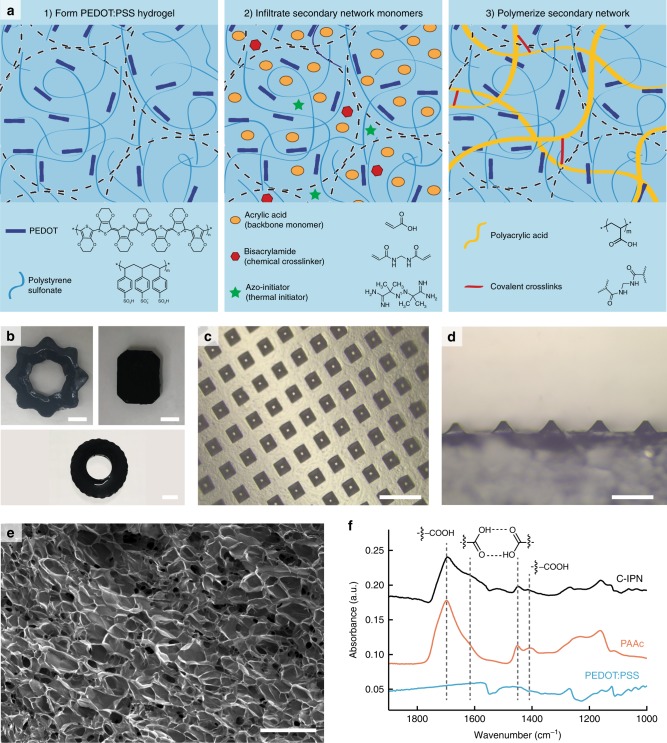
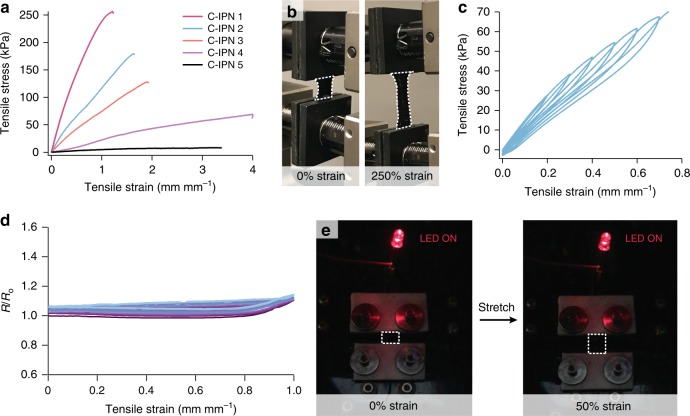
Conductive and stretchable materials that match the elastic moduli of biological tissue (0.5–500 kPa) are desired for enhanced interfacial and mechanical stability. Compared with inorganic and dry polymeric conductors, hydrogels made with conducting polymers are promising soft electrode materials due to their high water content. Nevertheless, most conducting polymer-based hydrogels sacrifice electronic performance to obtain useful mechanical properties. Here we report a method that overcomes this limitation using two interpenetrating hydrogel networks, one of which is formed by the gelation of the conducting polymer PEDOT:PSS. Due to the connectivity of the PEDOT:PSS network, conductivities up to 23 S m −1 are achieved, a record for stretchable PEDOT:PSS-based hydrogels. Meanwhile, the low concentration of PEDOT:PSS enables orthogonal control over the composite mechanical properties using a secondary polymer network. We demonstrate tunability of the elastic modulus over three biologically relevant orders of magnitude without compromising stretchability ( > 100%) or conductivity ( > 10 S m − 1 ).
Overview
The claims and statistics of this paper haven’t been checked yet.
Free: it reads the open-access text and checks the first 5 claims that cite a source we can check. Create a free account to check every claim.
Integrity signals
Registry
Cites
Statistics
Figures
Verification
Claims the paper makes
The claims and statistics of this paper haven’t been checked yet.
Free: it reads the open-access text and checks the first 5 claims that cite a source we can check. Create a free account to check every claim.
Claims other papers make about this one
Each is checked against this paper’s own text: does it say what the citing paper says it does?
The source backs part of the claim, not all of it — or backs it for a different population, condition or comparison.
In the citing paper
“In addition, the combination of hydrogels and conductive polymers is a hot area of research since the former has mechanical properties similar to those of nerves and can provide a hydrophilic interface that reduces the adhesion of non-specific proteins.[58,539–542]”
From Flexible Electronics and Devices as Human–Machine Interfaces for Medical Robotics (2022) · cites this paper as [540]
Experimental — accuracy not yet measured
Self-check
Percentages, sums and reported differences re-computed from the paper’s own numbers.
The self-check needs the paper’s full text.
Citations
Cites
Tissue Cells Feel and Respond to the Stiffness of Their Substrate
Discher, D. E., Janmey, P., & Wang, Y.-L. (2005) · Science · doi:10.1126/science.1116995 · Cited by 6,382
Highly stretchable and tough hydrogels
Sun, J.-Y., Zhao, X., Illeperuma, W. R. K., Chaudhuri, O., Oh, K. H., Mooney, D. J., Vlassak, J. J., & Suo, Z. (2012) · Nature · doi:10.1038/nature11409 · Cited by 5,481
A general relationship between disorder, aggregation and charge transport in conjugated polymers
Noriega, R., Rivnay, J., Vandewal, K., Koch, F. P. V., Stingelin, N., Smith, P., Toney, M. F., & Salleo, A. (2013) · Nature Materials · doi:10.1038/nmat3722 · Cited by 2,206
A highly stretchable, transparent, and conductive polymer
Wang, Y., Zhu, C., Pfattner, R., Yan, H., Jin, L., Chen, S., Molina-Lopez, F., Lissel, F., Liu, J., Rabiah, N. I., et al. (2017) · Science Advances · doi:10.1126/sciadv.1602076 · Cited by 1,442
Self-citationMulti-scale multi-mechanism design of tough hydrogels: building dissipation into stretchy networks
Zhao, X. (2014) · Soft Matter · doi:10.1039/c3sm52272e · Cited by 1,252
The role of matrix stiffness in regulating cell behavior†
Wells, R. G. (2008) · Hepatology · doi:10.1002/hep.22193 · Cited by 1,059
Yang, T., Gregori, G., Pellet, N., Grätzel, M., & Maier, J. (2015) · Angewandte Chemie International Edition · doi:10.1002/anie.201500014 · Cited by 553
Deep-Brain Stimulation for Parkinson's Disease
Okun, M. S. (2012) · New England Journal of Medicine · doi:10.1056/nejmct1208070 · Cited by 541
Chen, Q.-Z., Bismarck, A., Hansen, U., Junaid, S., Tran, M. Q., Harding, S. E., Ali, N. N., & Boccaccini, A. R. (2008) · Biomaterials · doi:10.1016/j.biomaterials.2007.09.010 · Cited by 530
Biomechanical Properties of In Vivo Human Skin From Dynamic Optical Coherence Elastography
Liang, X., & Boppart, S. A. (2010) · IEEE Transactions on Biomedical Engineering · doi:10.1109/tbme.2009.2033464 · Cited by 470
Research works printed but not linked: 1
- Grill, W. M. in Indwelling Neural Implants: Strategies for Contending with the In Vivo Environment (ed. WM, R.) (CRC Press/Taylor & Francis, 2008). 21204399
Cited by
Items 101–200 of 643
Multifunctional Injectable Hydrogel for In Vivo Diagnostic and Therapeutic Applications
Cha, G. D., Lee, W. H., Sunwoo, S., Kang, D., Kang, T., Cho, K. W., Kim, M.-J., Park, O. K., Jung, D., Lee, J., et al. (2022) · ACS Nano · doi:10.1021/acsnano.1c07649 · Cited by 139
Emerging Soft Conductors for Bioelectronic Interfaces
Gao, D., Parida, K., & Lee, P. S. (2019) · Advanced Functional Materials · doi:10.1002/adfm.201907184 · Cited by 136
Mimicking skin cellulose hydrogels for sensor applications
Zhang, D., Jian, J., Xie, Y., Gao, S., Ling, Z., Lai, C., Wang, J., Wang, C., Chu, F., & Dumont, M. (2021) · Chemical Engineering Journal · doi:10.1016/j.cej.2021.130921 · Cited by 134
Fan, L., Xiao, C., Guan, P., Zou, Y., Wen, H., Liu, C., Luo, Y., Tan, G., Wang, Q., Li, Y., et al. (2021) · Advanced Healthcare Materials · doi:10.1002/adhm.202101556 · Cited by 133
Applications of PEDOT in Bioelectronic Medicine
Boehler, C., Aqrawe, Z., & Asplund, M. (2019) · Bioelectronics in Medicine · doi:10.2217/bem-2019-0014 · Cited by 131
Montazerian, H., Davoodi, E., Wang, C., Lorestani, F., Li, J., Haghniaz, R., Sampath, R. R., Mohaghegh, N., Khosravi, S., Zehtabi, F., et al. (2025) · Nature Communications · doi:10.1038/s41467-025-59045-1 · Cited by 131
Advancing models of neural development with biomaterials
Roth, J. G., Huang, M. S., Li, T. L., Feig, V. R., Jiang, Y., Cui, B., Greely, H. T., Bao, Z., Pașca, S. P., & Heilshorn, S. C. (2021) · Nature reviews. Neuroscience · doi:10.1038/s41583-021-00496-y · Cited by 128
Self-citationMaterials design and integration strategies for soft bioelectronics in digital healthcare
Kim, H. J., Koo, J. H., Lee, S., Hyeon, T., & Kim, D. (2025) · Nature Reviews Materials · doi:10.1038/s41578-025-00819-w · Cited by 136
“Among solutionbased processes, spin coating 79,173 , despite being one of the most widely used solution processes, has drawbacks for elas tomer substrates commonly used in stretchable bioelectronics, such as difficulty in achieving uniform coatings.”
Recent advances in bioelectronics chemistry
Fang, Y., Meng, L., Promiński, A., Schaumann, E. N., Seebald, M., & Tian, B. (2020) · Chemical Society Reviews · doi:10.1039/d0cs00333f · Cited by 125
Direct Ink Writing of Conductive Hydrogels
Ho, M., Ramirez, A. B., Akbarnia, N., Croiset, E., Prince, E., Fuller, G. G., & Kamkar, M. (2025) · Advanced Functional Materials · doi:10.1002/adfm.202415507 · Cited by 123
Cao, S., Tong, X., Dai, K., & Xu, Q. J. (2019) · Journal of Materials Chemistry A · doi:10.1039/c9ta00618d · Cited by 122
PEDOT and PEDOT:PSS conducting polymeric hydrogels: A report on their emerging applications
Bhat, M. A., Rather, R. A., & Shalla, A. H. (2021) · Synthetic Metals · doi:10.1016/j.synthmet.2021.116709 · Cited by 124
Du, G., Shao, Y., Luo, B., Liu, T., Zhao, J., Qin, Y., Wang, J., Zhang, S., Chi, M., Gao, C., et al. (2024) · Nano-Micro Letters · doi:10.1007/s40820-024-01387-4 · Cited by 123
Electroactive material-based biosensors for detection and drug delivery
Olvera, D., & Monaghan, M. G. (2020) · Advanced Drug Delivery Reviews · doi:10.1016/j.addr.2020.09.011 · Cited by 121
Soft, stretchable conductive hydrogels for high-performance electronic implants
Rahman, M. S., Shon, A., Joseph, R. M., Pavlov, A., Stefanov, A., Namkoong, M., Guo, H., Bui, D., Master, R., Sharma, A., et al. (2025) · Science Advances · doi:10.1126/sciadv.ads4415 · Cited by 125
“Various additives, including dimethyl sulfoxide (DMSO), ethylene glycol, ionic liquid, and sulfuric acid, have been used to increase the conductivity of PEDOT:PSS by inducing phase separation between the conductive and hydrophobic moiety PEDOT and insulating and hydrophilic PSS ( 7 – 10 ).”
Huang, J., Huang, X., & Wu, P. (2021) · Chemical Engineering Journal · doi:10.1016/j.cej.2021.132515 · Cited by 117
Yang, T., Xu, C., Liu, C., Ye, Y., Sun, Z., Wang, B., & Luo, Z. (2021) · Chemical Engineering Journal · doi:10.1016/j.cej.2021.132430 · Cited by 117
Yu, J., Tian, F., Wang, W., Wan, R., Cao, J., Chen, C., Zhao, D., Liu, J., Zhong, J., Wang, F., et al. (2023) · Chemistry of Materials · doi:10.1021/acs.chemmater.3c00844 · Cited by 116
Xue, C., Zhao, Y., Liao, Y., & Zhang, H. (2025) · Advanced Materials · doi:10.1002/adma.202416275 · Cited by 117
Wu, Y., Chen, E., Weng, X., Unit 96911 of PLA, B. 1., He, Z., Chang, G., Pan, X., Liu, J., Huang, K., Huang, K., et al. (2022) · Engineered Science · doi:10.30919/es8d659 · Cited by 116
Cui, Y., Zhang, F., Chen, G., Yao, L., Zhang, N., Liu, Z., Li, Q., Zhang, F., Cui, Z., Zhang, K., et al. (2021) · Advanced Materials · doi:10.1002/adma.202100221 · Cited by 114
Application of conductive polymer hydrogels in flexible electronics
Guo, X., Li, J., Wang, F., Zhang, J., Zhang, J., Shi, Y., & Pan, L. (2022) · Journal of Polymer Science · doi:10.1002/pol.20210933 · Cited by 113
Bottlebrush Bridge between Soft Gels and Firm Tissues
Keith, A. N., Vatankhah‐Varnosfaderani, M., Clair, C., Fahimipour, F., Dashtimoghadam, E., Lallam, A., Sztucki, M., Ivanov, D. A., Liang, H., Dobrynin, A. V., et al. (2020) · ACS Central Science · doi:10.1021/acscentsci.9b01216 · Cited by 112
Suneetha, M., Moo, O. S., Choi, S. M., Zo, S., Rao, K. M., & Han, S. S. (2021) · Chemical Engineering Journal · doi:10.1016/j.cej.2021.130847 · Cited by 111
Li, P., Wang, H., Ju, Z., Jin, Z.-Z., Ma, J., Yang, L., Zhao, X., Xu, H., & Liu, Y. (2024) · ACS Nano · doi:10.1021/acsnano.3c07233 · Cited by 109
Cheng, T., Wang, F., Zhang, Y., Li, L., Gao, S., Yang, X., Wang, S., Chen, P., & Lai, W. (2022) · Chemical Engineering Journal · doi:10.1016/j.cej.2022.138311 · Cited by 108
PEDOT:PSS and Its Composites for Flexible Supercapacitors
Su, Z., Jin, Y., Wang, H., Li, Z., Huang, L., & Wang, H. (2022) · ACS Applied Energy Materials · doi:10.1021/acsaem.2c01524 · Cited by 109
PEDOT:PSS-based bioelectronics for brain monitoring and modulation
Li, J., Mo, D., Hu, J., Wang, S., Gong, J., Huang, Y., Li, Z., Yuan, Z., & Xu, M. (2025) · Microsystems & Nanoengineering · doi:10.1038/s41378-025-00948-w · Cited by 110
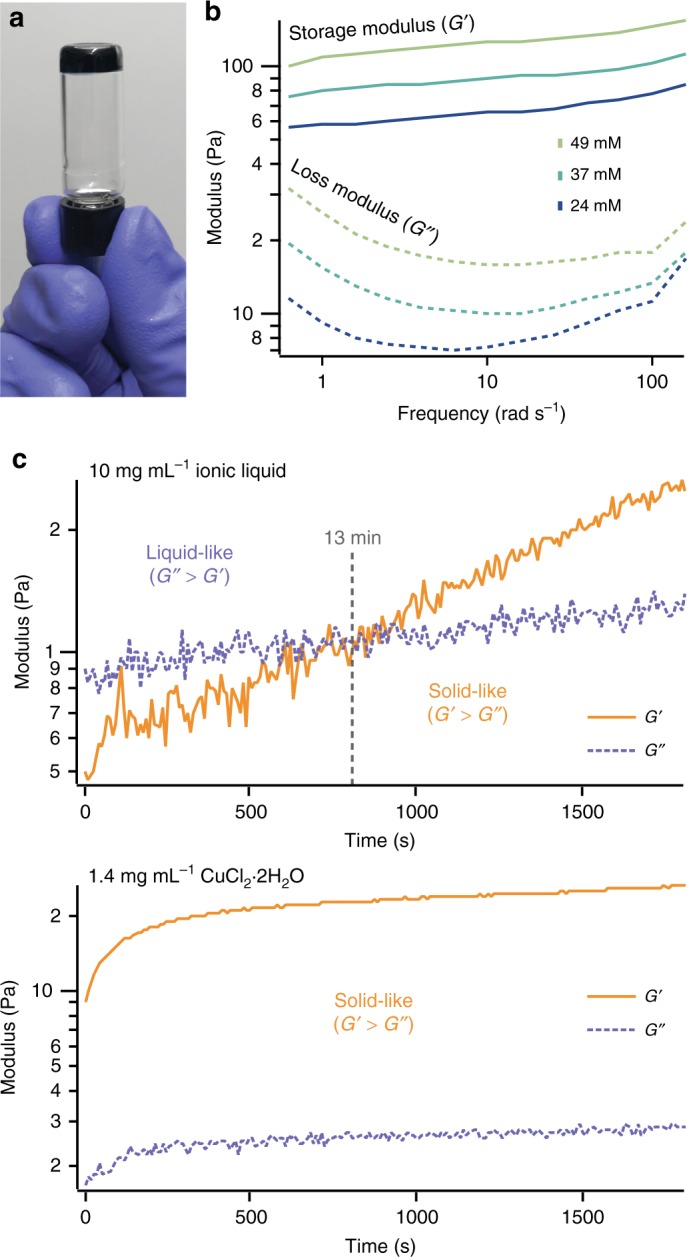
“…acid tri fl ate (BIM-Tf), can screen the electrostatic repulsion between the PEDOT:PSS microgels, promoting the formation of a connected macroscopic network and increasing gel strength, as indicated by the storage modulus (G ’ ), with rising ionic strength 44 .”
Wu, X., Sun, H. C., Qin, Z., Che, P., Yi, X., Yu, Q., Zhang, H., Sun, X., Yao, F., & Li, J. (2020) · International Journal of Biological Macromolecules · doi:10.1016/j.ijbiomac.2020.01.297 · Cited by 107
Tran, V. V., Lee, S., Lee, D., & Le, T. (2022) · Polymers · doi:10.3390/polym14183730 · Cited by 108
“Many techniques have been employed to fabricate flexible CP thin films, but these often involve multistep processes, expensive equipment, low resolution, and risks to health and the environment [6,7,11,12].”
BackgroundMethodConductive polymers: A multipurpose material for protecting coating
Goyal, M., Singh, K., & Bhatnagar, N. (2023) · Progress in Organic Coatings · doi:10.1016/j.porgcoat.2023.108083 · Cited by 109
Smart materials for flexible electronics and devices: hydrogel
Dutta, T., Chaturvedi, P., Llamas‐Garro, I., Velázquez-González, J. S., Dubey, R., & Mishra, S. K. (2024) · RSC Advances · doi:10.1039/d4ra01168f · Cited by 107
PEDOT-based stretchable optoelectronic materials and devices for bioelectronic interfaces
Li, W., Li, Y., Song, Z., Wang, Y., & Hu, W. (2024) · Chemical Society Reviews · doi:10.1039/d4cs00541d · Cited by 107
Yang, M., Chen, P., Qu, X., Zhang, F., Ning, S., Ma, L., YANG, K. Y., Su, Y., Zang, J., Jiang, W., et al. (2023) · ACS Nano · doi:10.1021/acsnano.2c04606 · Cited by 109
Tan, Y., Zhang, Y., Zhang, Y., Zheng, J., Wu, H., Chen, Y., Xu, S., Yang, J., Liu, C., & Zhang, Y. (2020) · Chemistry of Materials · doi:10.1021/acs.chemmater.0c01589 · Cited by 105
Recent Advances in Self-Powered Sensors Based on Ionic Hydrogels
Yin, J., Jia, P., Ren, Z., Zhang, Q., Lü, W., Yao, Q., Deng, M., Zhou, X., Gao, Y., & Liu, N. (2025) · Research · doi:10.34133/research.0571 · Cited by 106
“However, they also face several challenges, one of which is the relatively low mechanical performance and limited stretchability of traditional hydrogels [ 182 , 183 ].”
Park, J., Jeon, N., Lee, S., Choe, G., Lee, E. J., & Lee, J. Y. (2022) · Chemical Engineering Journal · doi:10.1016/j.cej.2022.137344 · Cited by 105
Sun, M., Li, P., Qin, H., Liu, N., Ma, H., Zhang, Z., Li, J., Lu, B., Pan, X., & Wu, L. (2022) · Chemical Engineering Journal · doi:10.1016/j.cej.2022.140459 · Cited by 104
Wang, H., Zhuang, T., Wang, J., Sun, X., Wang, Y., Li, K., Dai, X., Guo, Q., Li, X., Chong, D., et al. (2023) · Advanced Materials · doi:10.1002/adma.202302919 · Cited by 102
Gao, Y., Peng, J., Zhou, M., Yang, Y., Wang, X., Wang, J., Cao, Y., Wang, W., & Wu, D. (2020) · Journal of Materials Chemistry B · doi:10.1039/d0tb02250k · Cited by 101
Bianchi, M., Salvo, A. D., Asplund, M., Carli, S., Lauro, M. D., Schulze‐Bonhage, A., Stieglitz, T., Fadiga, L., & Biscarini, F. (2022) · Advanced Science · doi:10.1002/advs.202104701 · Cited by 100
Mixed Ionic–Electronic Conduction, a Multifunctional Property in Organic Conductors
Tan, S. T. M., Gumyusenge, A., Quill, T. J., LeCroy, G., Bonacchini, G. E., Denti, I., & Salleo, A. (2022) · Advanced Materials · doi:10.1002/adma.202110406 · Cited by 99
Jung, D., Lim, C., Park, C., Kim, Y., Kim, M., Lee, S., Lee, H., Kim, J. H., Hyeon, T., & Kim, D. (2022) · Advanced Materials · doi:10.1002/adma.202200980 · Cited by 99
Shih, C., Lin, Y., Gao, M., Wu, M., Hsieh, H., Wu, N., & Chen, W. (2019) · Journal of Power Sources · doi:10.1016/j.jpowsour.2019.04.030 · Cited by 98
Li, K., Gao, M., Li, Z., Yang, H., Jing, L., Tian, X., Li, Y., Li, S., Li, H., Wang, Q., et al. (2020) · Nano Energy · doi:10.1016/j.nanoen.2020.104875 · Cited by 98
Bettucci, O., Matrone, G. M., & Santoro, F. (2021) · Advanced Materials Technologies · doi:10.1002/admt.202100293 · Cited by 98
Agarwal, G., Kumar, N., & Srivastava, A. (2020) · Materials Science and Engineering C · doi:10.1016/j.msec.2020.111518 · Cited by 97
Park, T. H., Park, S., Yu, S., Park, S. U., Lee, J., Kim, S.-H., Jung, Y., & Yi, H. (2021) · Advanced Healthcare Materials · doi:10.1002/adhm.202100469 · Cited by 96
Multifunctional Conductive Hydrogel Interface for Bioelectronic Recording and Stimulation
Tang, H., Li, Y., Liao, S., Liu, H., Qiao, Y., & Zhou, J. (2024) · Advanced Healthcare Materials · doi:10.1002/adhm.202400562 · Cited by 97
Three-Dimensional Printing and Injectable Conductive Hydrogels for Tissue Engineering Application
Jiang, L., Wang, Y., Liu, Z., Ma, C., Yan, H., Xu, N., Gang, F., Wang, X., Zhao, L., & Sun, X. (2019) · Tissue Engineering Part B: Reviews · doi:10.1089/ten.teb.2019.0100 · Cited by 92
“46 The difference is that conductive polymer chains and hydrogel matrix chains can continuously interpenetrate each other at the molecular level to form interpenetrating network conductive hydrogels (IPNCHs), which can achieve uniform electrical and mechanical properties of conductive hydrogels.”
Highly Conductive, Stretchable, and Cell‐Adhesive Hydrogel by Nanoclay Doping
Tondera, C., Akbar, T. F., Thomas, A. K., Lin, W., Werner, C., Busskamp, V., Zhang, Y., & Minev, I. R. (2019) · Small · doi:10.1002/smll.201901406 · Cited by 92
Conductive hydrogels for bioenergy harvesting and self-powered application
Zhang, C., Nayeem, M. O. G., Wang, Z., Pu, X., Dağdeviren, C., Wang, Z. L., Zhang, X., & Liu, R. (2023) · Progress in Materials Science · doi:10.1016/j.pmatsci.2023.101156 · Cited by 93
“1 MPa) and fracture energy (>100 J/m2) can be considered as tough CHs [213,214].”
BackgroundShin, Y., Lee, H. S., Jeong, H., & Kim, D. (2024) · Wearable electronics. · doi:10.1016/j.wees.2024.10.004 · Cited by 95
Cyber–Physiochemical Interfaces
Wang, T., Wang, M., Yang, L., Li, Z., Loh, X. J., & Chen, X. (2020) · Advanced Materials · doi:10.1002/adma.201905522 · Cited by 89
Thermo-irreversible glycol chitosan/hyaluronic acid blend hydrogel for injectable tissue engineering
Lee, E. J., Kang, E., Kang, S., & Huh, K. M. (2020) · Carbohydrate Polymers · doi:10.1016/j.carbpol.2020.116432 · Cited by 92
Anisotropic Conductive Hydrogels with High Water Content
Qian, C., Higashigaki, T., Asoh, T., & Uyama, H. (2020) · ACS Applied Materials & Interfaces · doi:10.1021/acsami.0c06853 · Cited by 92
Conjugated Polymer for Implantable Electronics toward Clinical Application
Liu, Y., Feig, V. R., & Bao, Z. (2021) · Advanced Healthcare Materials · doi:10.1002/adhm.202001916 · Cited by 95
Self-citationOrganic Neuroelectronics: From Neural Interfaces to Neuroprosthetics
Go, G., Lee, Y., Seo, D., & Lee, T. (2022) · Advanced Materials · doi:10.1002/adma.202201864 · Cited by 90
Rijns, L., Baker, M. B., & Dankers, P. Y. W. (2024) · Journal of the American Chemical Society · doi:10.1021/jacs.4c02980 · Cited by 91
Supramolecular Conductive Hydrogels With Homogeneous Ionic and Electronic Transport
O’Neill, S. J. K., Ashizawa, M., McLean, A. M., Serrano, R. R., Shimura, T., Agetsuma, M., Tsutsumi, M., Nemoto, T., Parmenter, C. D. J., McCune, J. A., et al. (2025) · Advanced Materials · doi:10.1002/adma.202415687 · Cited by 89
Extracellular matrix mimicking dynamic interpenetrating network hydrogel for skin tissue engineering
Wang, W., Dai, J., Huang, Y., Li, X., Yang, J., Zheng, Y., & Shi, X. (2023) · Chemical Engineering Journal · doi:10.1016/j.cej.2023.141362 · Cited by 89
Engineering the Comfort‐of‐Wear for Next Generation Wearables
Shimura, T., Sato, S., Zalar, P., & Matsuhisa, N. (2023) · Advanced Electronic Materials · doi:10.1002/aelm.202200512 · Cited by 86
Zhao, Y., Li, Z., Jiang, Y., Liu, H., Feng, Y., Wang, Z., Liu, H., Wang, J., Yang, B., & Lin, Q. (2020) · Acta Biomaterialia · doi:10.1016/j.actbio.2020.06.024 · Cited by 74
Highly Conductive PEDOT:PSS Aerogels
Feng, J., Zhuang, Z., Zhou, Y., & Li, C. (2024) · Advanced Functional Materials · doi:10.1002/adfm.202315188 · Cited by 86
Xue, Y., Chen, S., Yu, J., Bunes, B. R., Xue, Z., Xu, J., Lu, B., & Zang, L. (2020) · Journal of Materials Chemistry C · doi:10.1039/d0tc02152k · Cited by 85
Jo, Y. J., Kim, S. Y., Hyun, J. H., Park, B., Choy, S., Koirala, G. R., & Kim, T. (2022) · npj Flexible Electronics · doi:10.1038/s41528-022-00167-7 · Cited by 86
Cai, P., Wan, C., Pan, L., Matsuhisa, N., He, K., Cui, Z., Zhang, W., Li, C., Wang, J., Yu, J., et al. (2020) · Nature Communications · doi:10.1038/s41467-020-15990-7 · Cited by 78
Rational design of injectable conducting polymer-based hydrogels for tissue engineering
Yu, C., Yao, F., & Li, J. (2021) · Acta Biomaterialia · doi:10.1016/j.actbio.2021.04.027 · Cited by 83
Yin, J., Xiao, H., Xu, P., Yang, J., Fan, Z., Ke, Y., Ouyang, X., Liu, G. X., Sun, T. L., Tang, L., et al. (2021) · Angewandte Chemie International Edition · doi:10.1002/anie.202108196 · Cited by 84
Conducting Polymers for Tissue Regeneration in Vivo
Petty, A. J., Keate, R. L., Jiang, B., Ameer, G. A., & Rivnay, J. (2020) · Chemistry of Materials · doi:10.1021/acs.chemmater.0c00767 · Cited by 83
Advances in Cell-Conductive Polymer Biointerfaces and Role of the Plasma Membrane
Mariano, A., Lubrano, C., Bruno, U., Ausilio, C., Dinger, N. B., & Santoro, F. (2021) · Chemical Reviews · doi:10.1021/acs.chemrev.1c00363 · Cited by 82
Wang, M., Zhou, H., Du, H., Chen, L., Zhao, G., Liu, H., Jin, X., Chen, W., & Ma, A. (2022) · Chemical Engineering Journal · doi:10.1016/j.cej.2022.137163 · Cited by 82
Zhao, L., Fang, C., Qin, B., Yang, X., & Poechmueller, P. (2024) · Nano Energy · doi:10.1016/j.nanoen.2024.109772 · Cited by 82
Nan, K., Wong, K., Li, D., Ying, B., McRae, J. C., Feig, V. R., Wang, S., Du, N., Liang, Y., Mao, Q., et al. (2024) · Nature Communications · doi:10.1038/s41467-024-51102-5 · Cited by 83
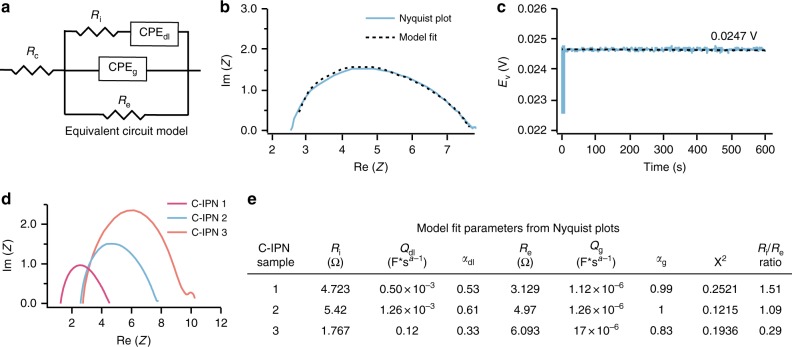
“This is likely due to a combination of mechanical (low modulus and stretchability) and electrical (dual ionic-electronic conductivity) properties of the PEDOT:PSS gel, which helps to lower the overall contact impedance 29,30 .”
BackgroundMethodSelf-citationHydrogel-based composites beyond the porous architectures for electromagnetic interference shielding
Yang, Y., Han, M., Liu, W., Wu, N., & Liu, J. (2022) · Nano Research · doi:10.1007/s12274-022-4817-1 · Cited by 80
“The PEDOT:PSS, one of the most promising conductive polymers, holds great potential for enabling new EMI-shielding applications due to the intrinsic electrical conductivity [73, 74].”
BackgroundMultifunctional hydrogel electronics for closed-loop antiepileptic treatment
Qu, J., Xie, K., Chen, S., He, X., Wang, Y., Chamberlin, M., Zhao, X. J., Zhu, G., Xu, C., & Shi, P. (2024) · Science Advances · doi:10.1126/sciadv.adq9207 · Cited by 83
“Many other conductive hydrogels are formed by multiple steps of polymerization of structural monomers and conductive molecules to balance the conductivity and mechanical stability ( 43 – 46 ).”
Bioadhesive eutectogels supporting drug nanocrystals for long-acting delivery to mucosal tissues
Bianchi, M. B., Zhang, C., Catlin, E. J., Sandri, G., Calderón, M., Larrañeta, E., Donnelly, R. F., Picchio, M. L., & Paredes, A. J. (2022) · Materials Today Bio · doi:10.1016/j.mtbio.2022.100471 · Cited by 80
“3D), which is in the range of the stiffness of biological tissues [34].”
BackgroundA soft magnetoelastic sensor to decode levels of fatigue
Xu, J. H., Duan, C., Wan, X., Che, Z., Zhao, X., Zhou, Y., Song, Y., Yin, J., Tat, T., Li, S., et al. (2025) · Nature Electronics · doi:10.1038/s41928-025-01418-x · Cited by 80
“32 outlines the experimental set-up, which incorporates the wearable on-eyelid sensor, continuous video recording of eye movements and subjective fatigue assessment through self-report questionnaires 41 .”
Polymer-based flexible bioelectronics
Wu, X., & Peng, H. (2019) · Science Bulletin · doi:10.1016/j.scib.2019.04.011 · Cited by 78
“To further enhance the dynamic conformability with the movement of tissues, a lot of efforts have been made to fabricate stretchable hydrogel-based elastic electronic devices with elastic moduli of kilopascals [23,49].”
BackgroundWei, J., Wang, R., Pan, F., & Fu, Z. (2022) · Sensors · doi:10.3390/s22083015 · Cited by 78
PEDOT:PSS hydrogels with high conductivity and biocompatibility for in situ cell sensing
Yang, T., Yang, M., Xu, C., YANG, K. Y., Su, Y., Ye, Y., Dou, L., Yang, Q., Ke, W., Wang, B., et al. (2023) · Journal of Materials Chemistry B · doi:10.1039/d3tb00014a · Cited by 77
Lim, C., Lee, S., Kang, H., Cho, Y. S., Yeom, D., Sunwoo, S., Park, C., Nam, S., Kim, J. H., Lee, S., et al. (2024) · Advanced Materials · doi:10.1002/adma.202407931 · Cited by 79
Materials for Implantable Surface Electrode Arrays: Current Status and Future Directions
Tringides, C. M., & Mooney, D. J. (2022) · Advanced Materials · doi:10.1002/adma.202107207 · Cited by 77
Li, T., Qi, H., Zhao, Y., Kumar, P., Zhao, C., Li, Z., Dong, X., Guo, X. L., Zhao, M., Li, X., et al. (2024) · Science Advances · doi:10.1126/sciadv.adk6643 · Cited by 76
Aggas, J. R., Abasi, S., Phipps, J. F., Podstawczyk, D. A., & Guiseppi‐Elie, A. (2020) · Biosensors and Bioelectronics · doi:10.1016/j.bios.2020.112568 · Cited by 76
Han, W. B., Yang, S. M., Rajaram, K., & Hwang, S. (2021) · Advanced Sustainable Systems · doi:10.1002/adsu.202100075 · Cited by 77
3D Printing of Conductive Hydrogel–Elastomer Hybrids for Stretchable Electronics
Zhu, H., Hu, X., Liu, B., Chen, Z., & Qu, S. (2021) · ACS Applied Materials & Interfaces · doi:10.1021/acsami.1c17526 · Cited by 75
Materials for blood brain barrier modeling in vitro
Ferro, M. P., Heilshorn, S. C., & Owens, R. M. (2020) · Materials Science and Engineering R Reports · doi:10.1016/j.mser.2019.100522 · Cited by 75
Lao, J., Jiao, Y., Zhang, Y., Xu, H., Wang, Y., Ma, Y., Feng, X., & Yu, J. (2025) · ACS Nano · doi:10.1021/acsnano.4c12823 · Cited by 73
Gong, H. Y., Park, J., Kim, W., Kim, J., Lee, J. Y., & Koh, W. (2019) · ACS Applied Materials & Interfaces · doi:10.1021/acsami.9b16005 · Cited by 74
Porous hierarchically ordered hydrogels demonstrating structurally dependent mechanical properties
Lloyd, E. C., Dhakal, S., Amini, S., Alhasan, R., Fratzl, P., Tree, D. R., Morozova, S., & Hickey, R. J. (2025) · Nature Communications · doi:10.1038/s41467-025-59171-w · Cited by 74
Yang, H., Fan, F. R., Xi, Y., & Wu, W. (2021) · EcoMat · doi:10.1002/eom2.12093 · Cited by 73
Zhang, Y., Wu, H., Li, P., Liu, W., Zhang, Y., & Dong, A. (2021) · Advanced Healthcare Materials · doi:10.1002/adhm.202101722 · Cited by 72
Functionalized Elastomers for Intrinsically Soft and Biointegrated Electronics
Shim, H. J., Sunwoo, S., Kim, Y., Koo, J. H., & Kim, D. (2021) · Advanced Healthcare Materials · doi:10.1002/adhm.202002105 · Cited by 72
Bioinspired Freeze‐Tolerant Soft Materials: Design, Properties, and Applications
Wang, Z., Valenzuela, C., Wu, J., Chen, Y., Wang, L., & Feng, W. (2022) · Small · doi:10.1002/smll.202201597 · Cited by 71
Lin, J., Chen, X., Zhang, P., Xue, Y., Feng, Y., Ni, Z., Tao, Y., Wang, Y., & Liu, J. (2024) · Advanced Materials · doi:10.1002/adma.202400181 · Cited by 72
Dynamic Bond Chemistry in Soft Materials: Bridging Adaptability and Mechanical Robustness
Lee, H., Kim, J., Lee, M. W., & Kang, J. (2025) · Chemical Reviews · doi:10.1021/acs.chemrev.5c00566 · Cited by 75
Self-citationSrivastava, S., Levi, A. E., Goldfeld, D. J., & Tirrell, M. (2020) · Macromolecules · doi:10.1021/acs.macromol.0c00847 · Cited by 72
Hydroxypropyl cellulose enhanced ionic conductive double-network hydrogels
Gan, S., Bai, S., Chen, C., Zou, Y., Sun, Y., Zhao, J., & Rong, J. (2021) · International Journal of Biological Macromolecules · doi:10.1016/j.ijbiomac.2021.03.068 · Cited by 70
Kim, D., Ahn, S., & Yoon, J. (2019) · Advanced Materials Technologies · doi:10.1002/admt.201800739 · Cited by 70
Metadata
- Authors
- Feig, V. R., Tran, H., Lee, M., & Bao, Z.
- Affiliations
- Stanford University (US)
- Corresponding author
- Bao, Zhenan
- Venue
- Nature Communications
- Published
- 2018-07-16
- Volume
- 9
- Issue
- 1
- Pages
- 2740-2740
- ISSN
- 2041-1723 (ISSN-L)
- PMC
- PMC6048132
- OpenAlex
- W2816607594
- Semantic Scholar
- a51e52d8a500521cf9b9f2960a9749fdb5fa0dfd
- Cited by
- 585
- References
- 48
- Citations by year
- 2026: 35 · 2025: 98 · 2024: 102 · 2023: 85 · 2022: 86 · 2021: 78 · 2020: 55 · 2019: 41 · 2018: 5
- FWCI
- 22.34
- Type
- journal article
- Language
- en
- Update notices
- correction (2018-11-23)
- Open access
- gold
- doi.org
- Licence
- cc-by
- creativecommons.org/licenses/by/4.0 (tdm)
- creativecommons.org/licenses/by/4.0 (vor)
- Locations
- Nature Communications (publishedVersion, cc-by)
- Europe PMC (PubMed Central) (publishedVersion, other-oa)
- PubMed Central (publishedVersion, cc-by)
- PubMed (publishedVersion)
- RePEc: Research Papers in Economics (submittedVersion)
- DOAJ (DOAJ: Directory of Open Access Journals) (submittedVersion)
- DOAJ (DOAJ: Directory of Open Access Journals) (submittedVersion, cc-by-sa)
- OSTI OAI (U.S. Department of Energy Office of Scientific and Technical Information) (submittedVersion)
- Funders
- National Science Foundation (1542152)
- U.S. Department of Defense
- U.S. Department of Energy (ECCS-1542152)
- Office of the Director of National Intelligence
- National Research Foundation
- Schweizerischer Nationalfonds zur Förderung der Wissenschaftlichen Forschung (ECCS-1542152)
- National Research Foundation of Korea (NRF-2017R1A6A3A03007053)
- Oak Ridge Institute for Science and Education
- Stanford Precourt Institute for Energy
- Intelligence Community Postdoctoral Research Fellowship Program
- National Defense Science and Engineering Graduate
- NIH Office of the Director
- Division of Electrical, Communications and Cyber Systems (ECCS-1542152, 1542152)
- Topics
- Physical Sciences › Materials Science › Polymers and Plastics › Conducting polymers and applications
- Physical Sciences › Materials Science › Biomaterials › Hydrogels: synthesis, properties, applications
- Physical Sciences › Materials Science › Electronic, Optical and Magnetic Materials › Dielectric materials and actuators
- Keywords
- interpenetrating polymer network hydrogels, conductive hydrogels, PEDOT:PSS, stretchable conductors, soft electrodes, electrical conductivity, stretchability
- MeSH terms
- Electric Conductivity, Electrodes, Electrons, Humans, Materials Testing, Polystyrenes, Thiophenes, Hydrogels, Biomimetic Materials, Elastic Modulus
About these checks
Registry, retraction, Cites and statistics results are computed, not judged, with one exception: a printed reference that no index lists is read once by a model before it counts as a citation error. Claims are extracted by a model and kept only when their quote appears verbatim in the text; each cited source is then checked, with a model’s help, for whether it says what the claim relies on. Those verdicts can be wrong — read the claim’s quote and the cited source before relying on one.
Statistics and arithmetic are recomputed, not judged.
Confidence bands are shown only for fields calibrated on our annotated test set. None is calibrated yet, so no band is shown.
What counts as a claim ›How we measure confidence ›How we check this ›
Are you an author, or do you see a problem with this page? Request a review
Data sources
Bibliographic data: Semantic Scholar, OpenAlex, Crossref.
Contains information from the Semantic Scholar Academic Graph Datasets, made available under the ODC Attribution License (ODC-BY 1.0).
Semantic Scholar’s data is described in: Kinney, R., et al. (2023). The Semantic Scholar Open Data Platform. arXiv:2301.10140.
