

Mechanically tunable conductive interpenetrating network hydrogels that mimic the elastic moduli of biological tissue
Open accessThe DOI matches its Crossref record; 47 of the 48 references it cites were found in a registry or an index.
Abstract
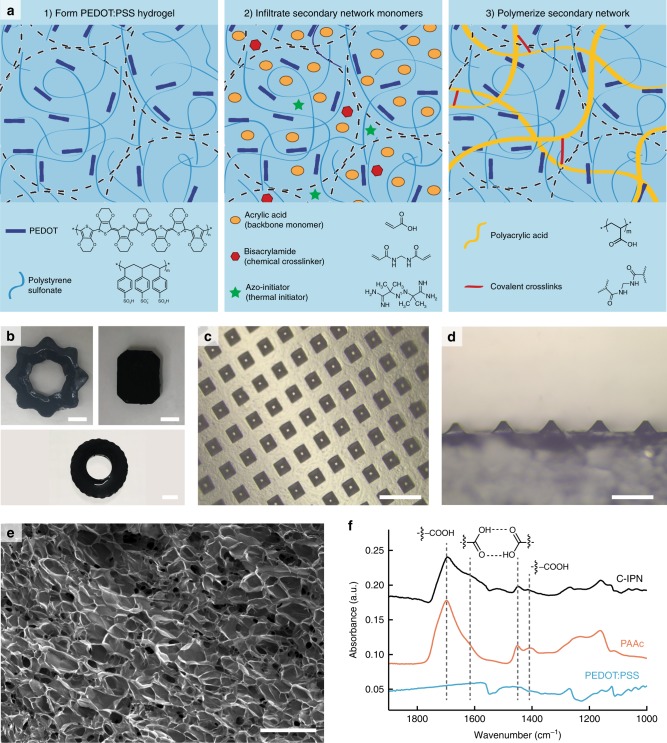
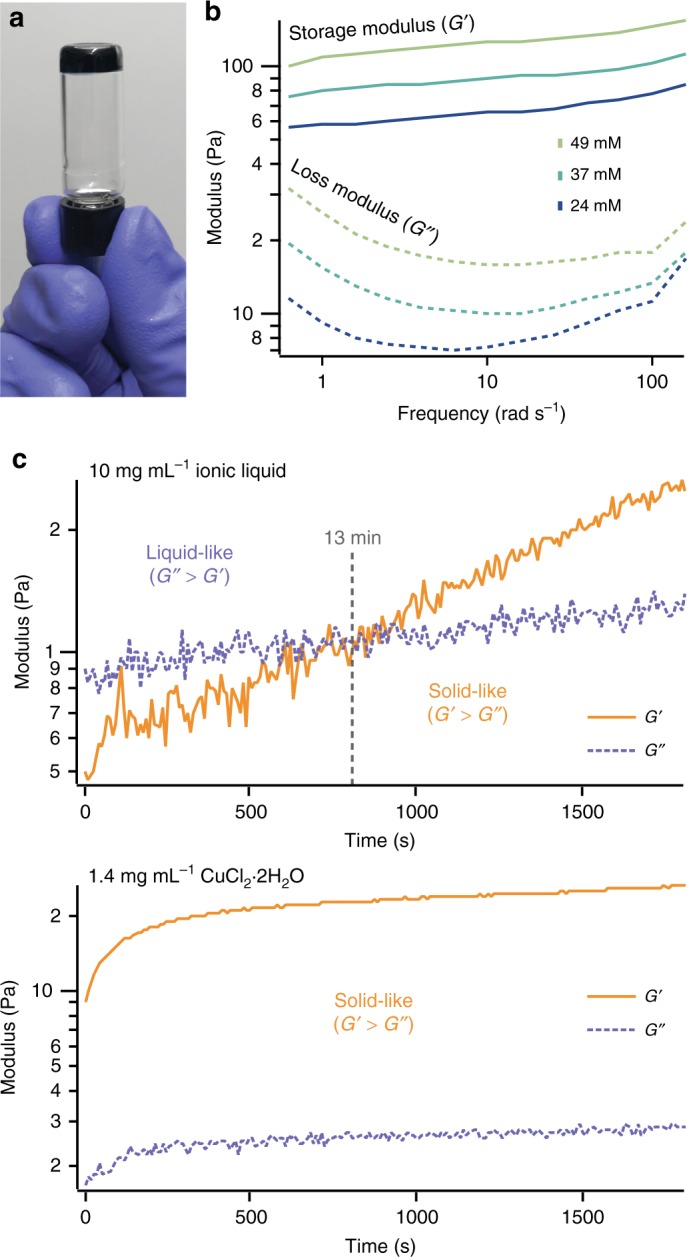
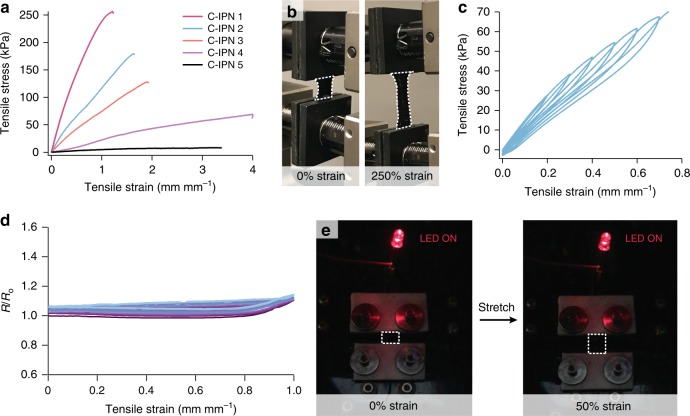
Conductive and stretchable materials that match the elastic moduli of biological tissue (0.5–500 kPa) are desired for enhanced interfacial and mechanical stability. Compared with inorganic and dry polymeric conductors, hydrogels made with conducting polymers are promising soft electrode materials due to their high water content. Nevertheless, most conducting polymer-based hydrogels sacrifice electronic performance to obtain useful mechanical properties. Here we report a method that overcomes this limitation using two interpenetrating hydrogel networks, one of which is formed by the gelation of the conducting polymer PEDOT:PSS. Due to the connectivity of the PEDOT:PSS network, conductivities up to 23 S m −1 are achieved, a record for stretchable PEDOT:PSS-based hydrogels. Meanwhile, the low concentration of PEDOT:PSS enables orthogonal control over the composite mechanical properties using a secondary polymer network. We demonstrate tunability of the elastic modulus over three biologically relevant orders of magnitude without compromising stretchability ( > 100%) or conductivity ( > 10 S m − 1 ).
Overview
The claims and statistics of this paper haven’t been checked yet.
Free: it reads the open-access text and checks the first 5 claims that cite a source we can check. Create a free account to check every claim.
Integrity signals
Registry
Cites
Statistics
Figures
Verification
Claims the paper makes
The claims and statistics of this paper haven’t been checked yet.
Free: it reads the open-access text and checks the first 5 claims that cite a source we can check. Create a free account to check every claim.
Claims other papers make about this one
Each is checked against this paper’s own text: does it say what the citing paper says it does?
The source backs part of the claim, not all of it — or backs it for a different population, condition or comparison.
In the citing paper
“In addition, the combination of hydrogels and conductive polymers is a hot area of research since the former has mechanical properties similar to those of nerves and can provide a hydrophilic interface that reduces the adhesion of non-specific proteins.[58,539–542]”
From Flexible Electronics and Devices as Human–Machine Interfaces for Medical Robotics (2022) · cites this paper as [540]
Experimental — accuracy not yet measured
Self-check
Percentages, sums and reported differences re-computed from the paper’s own numbers.
The self-check needs the paper’s full text.
Citations
Cites
Tissue Cells Feel and Respond to the Stiffness of Their Substrate
Discher, D. E., Janmey, P., & Wang, Y.-L. (2005) · Science · doi:10.1126/science.1116995 · Cited by 6,382
Highly stretchable and tough hydrogels
Sun, J.-Y., Zhao, X., Illeperuma, W. R. K., Chaudhuri, O., Oh, K. H., Mooney, D. J., Vlassak, J. J., & Suo, Z. (2012) · Nature · doi:10.1038/nature11409 · Cited by 5,481
A general relationship between disorder, aggregation and charge transport in conjugated polymers
Noriega, R., Rivnay, J., Vandewal, K., Koch, F. P. V., Stingelin, N., Smith, P., Toney, M. F., & Salleo, A. (2013) · Nature Materials · doi:10.1038/nmat3722 · Cited by 2,206
A highly stretchable, transparent, and conductive polymer
Wang, Y., Zhu, C., Pfattner, R., Yan, H., Jin, L., Chen, S., Molina-Lopez, F., Lissel, F., Liu, J., Rabiah, N. I., et al. (2017) · Science Advances · doi:10.1126/sciadv.1602076 · Cited by 1,442
Self-citationMulti-scale multi-mechanism design of tough hydrogels: building dissipation into stretchy networks
Zhao, X. (2014) · Soft Matter · doi:10.1039/c3sm52272e · Cited by 1,252
The role of matrix stiffness in regulating cell behavior†
Wells, R. G. (2008) · Hepatology · doi:10.1002/hep.22193 · Cited by 1,059
Yang, T., Gregori, G., Pellet, N., Grätzel, M., & Maier, J. (2015) · Angewandte Chemie International Edition · doi:10.1002/anie.201500014 · Cited by 553
Deep-Brain Stimulation for Parkinson's Disease
Okun, M. S. (2012) · New England Journal of Medicine · doi:10.1056/nejmct1208070 · Cited by 541
Chen, Q.-Z., Bismarck, A., Hansen, U., Junaid, S., Tran, M. Q., Harding, S. E., Ali, N. N., & Boccaccini, A. R. (2008) · Biomaterials · doi:10.1016/j.biomaterials.2007.09.010 · Cited by 530
Biomechanical Properties of In Vivo Human Skin From Dynamic Optical Coherence Elastography
Liang, X., & Boppart, S. A. (2010) · IEEE Transactions on Biomedical Engineering · doi:10.1109/tbme.2009.2033464 · Cited by 470
Research works printed but not linked: 1
- Grill, W. M. in Indwelling Neural Implants: Strategies for Contending with the In Vivo Environment (ed. WM, R.) (CRC Press/Taylor & Francis, 2008). 21204399
Cited by
Items 501–600 of 643
Matiur, R. M., Yamamoto, Y., & Kishi, N. (2025) · Materials Today Communications · doi:10.1016/j.mtcomm.2025.111687 · Cited by 7
Conjugated Carbonyl Compound‐Enhanced Hydrogels for Tactile Recognition
Zhan, X., Chen, H., Hong, Z., Leng, Y., Zhu, C., Zhang, C., Tang, Z., Qian, C., Ma, N., & Tsai, F. (2024) · Advanced Electronic Materials · doi:10.1002/aelm.202400214 · Cited by 6
Direct laser writing of electronically conductive microstructures within soft hydrogel substrates
Lucherini, L., Navello, V., Akouissi, O., Lacour, S. P., & Amstad, E. (2025) · Materials Today Bio · doi:10.1016/j.mtbio.2025.102140 · Cited by 6
Le, H., Hassan, K., Alsenaide, M., Purasinhala, K., Tran, A. T. T., Ramezanpour, M., Al-Sarawi, S. F., Tùng, T. T., Vreugde, S., & Lošić, D. (2025) · ACS Biomaterials Science & Engineering · doi:10.1021/acsbiomaterials.5c00920 · Cited by 6
Lin, Y., Zhou, X., Yang, C. C. C.-C., Sun, J., Fang, T., Qiu, W., Huang, W., Zhang, J., Lu, Q., Bai, C., et al. (2026) · Advanced Materials · doi:10.1002/adma.202520928 · Cited by 7
“Although PEDOT:PSS tends to fragment into islands under strain, it remains adhered to the core–shell nanocomposite, preserving low impedance and high capacitance (Figure 5h) [49, 50].”
Zhang, Y., Ke, Y., Liu, S., Wang, Y., Jia, L., Sun, X., Yin, S., Chen, Z., Chen, Z., Ni, Z., et al. (2026) · Advanced Functional Materials · doi:10.1002/adfm.202525976 · Cited by 6
“This addition significantly enhances charge transport within the hydrogel electrode, leveraging both its conjugated molecular structure for efficient electron conduction and mobile ions for ionic conductivity [37].”
Design principles for π-conjugated hydrogel semiconductors
Huang, H., Bai, J., Zhang, S., Cui, B., Chen, X., Dai, S., Meng, X., Wong, N., Malliaras, G. G., & Zhang, S. (2026) · Nature Materials · doi:10.1038/s41563-026-02638-y · Cited by 7
“Recent advances in multi-networked supramolecular hydrogels have led to the development of conducting hydrogels with controllable mechanical properties 9–12 .”
Recent advances in MXene for terahertz applications
Zhang, Y., Jiang, J., Yao, Y., & He, X. (2024) · Optoelectronics Letters · doi:10.1007/s11801-024-3091-8 · Cited by 6
“The higher the content of MXenes, the higher the conductivity of the sample [71] .”
Bioelectronics hydrogels for implantable cardiac and brain disease medical treatment application
Meng, Y., Xu, L., & Cheng, G. (2025) · International Journal of Biological Macromolecules · doi:10.1016/j.ijbiomac.2025.139945 · Cited by 6
Li, P., Song, A., Hao, J., & Wang, X. (2022) · Soft Matter · doi:10.1039/d2sm00325b · Cited by 6
Hung, J.-N., Vo, D. N. K., Ho, H. P. T., & Tsai, M. (2022) · Biomacromolecules · doi:10.1021/acs.biomac.2c00271 · Cited by 6
Pang, J., Sun, Y., Cheng, T., Wang, J., He, X., Xiang, Y., Zhu, W., Cao, Y., Wu, M., Pei, W., et al. (2025) · Analytical Chemistry · doi:10.1021/acs.analchem.5c04799 · Cited by 5
Guan, S., Wang, F., Wen, C., Liu, H., & Sun, C. (2025) · Journal of Biomedical Materials Research Part A · doi:10.1002/jbm.a.37951 · Cited by 5
Liu, Z., Wang, Z., Ma, A., & Wang, Y. (2025) · Acta Biomaterialia · doi:10.1016/j.actbio.2025.10.036 · Cited by 5
Abdur, R. M., Hossain, S., & Kishi, N. (2025) · Journal of Applied Polymer Science · doi:10.1002/app.70152 · Cited by 5
Chen, Y., Ling, X., Gao, R. P., Zhang, X., Chen, X., & Lü, C. (2026) · Advanced Science · doi:10.1002/advs.74757 · Cited by 5
“…circuit model (Figure S11 ), where Rs denotes the ohmic resistance of the electrode, R-BPNA denotes the bulk resistance of the PEO/BPNA layer, R-ionic denotes the bulk resistance of the PEO/IL layer, which is also be regarded as the ionic resistance [ 27, 28 ], and R-EDL denotes the EDL resistance.”
Wong, C. K., Adrus, N., Nasir, N. A. F. M., Jamaluddin, J. B., Hasham, R., & Bohari, S. P. M. (2025) · Industrial Crops and Products · doi:10.1016/j.indcrop.2025.121054 · Cited by 5
Conductive Hydrogel Scaffolds for the 3D Localization and Orientation of Fibroblasts
Tringides, C. M., & Mooney, D. J. (2023) · Macromolecular Bioscience · doi:10.1002/mabi.202300044 · Cited by 5
Tubular Network Formation by Mixing Amphiphilic Polypeptides with Differing Hydrophilic Blocks
Rahman, M. M., Ueda, M., Son, K., Seo, S., Takeoka, S., Hirose, T., & Ito, Y. (2019) · Biomacromolecules · doi:10.1021/acs.biomac.9b00986 · Cited by 5
Lee, D. C., Sellers, D. L., Liu, F., Boydston, A. J., & Pun, S. H. (2020) · Angewandte Chemie International Edition · doi:10.1002/anie.202004098 · Cited by 5
Simulation of mass transfer and kinetics during double‐network formation using a heterogeneous model
Jin, J., Zhou, Y., & Luo, Z. (2023) · AIChE Journal · doi:10.1002/aic.18041 · Cited by 5
Multimodal Platforms for Light‐Mediated Organic Bioelectronics
Gentile, G., Ravandeh, M., Petti, L., D’Elia, F., & Santoro, F. (2025) · Advanced Materials Interfaces · doi:10.1002/admi.202500181 · Cited by 4
Protein-based double-network hydrogels mimicking oral mucosa
Zhang, Y., Dong, L., Wang, K., Cheng, Y., Gao, T., Yang, J., Shen, X., Cao, Y., & Xue, B. (2025) · Frontiers in Chemistry · doi:10.3389/fchem.2025.1618870 · Cited by 4
“…systems, protein hydrogels have gained particular attention owing to their uniquely customizable biochemical and mechanical properties (Feig et al., 2018; Lei et al., 2020; Gu et al., 2022; Han et al., 2022; He et al., 2022; Li et al., 2022; Tian et al., 2022; Wu et al., 2022; Yu et…”
Nitz, P., Rosaz, P., Kreysina, D., Kasprzak, D., Qi, N., Baller, J., & Graeber, G. (2025) · ACS Applied Polymer Materials · doi:10.1021/acsapm.5c03031 · Cited by 4
Ultrathin and ultrastrong hydrogel bioelectronic membranes
Sun, M., Zhang, H., He, X., Wei, X., Cui, B., Huang, H., Li, H. C., Lin, Y., Zhang, S., Li, Z. A., et al. (2026) · National Science Review · doi:10.1093/nsr/nwag105 · Cited by 4
“For practical applications, hydrogel-based bio-electronics should exhibit high flexibility in order to integrate with delicate 3D tissues such as the cortex and peripheral nerves [15 ].”
Bifunctional Phenol‐Enabled Sequential Polymerization Strategy for Printable Tough Hydrogels
Wei, J., Zhang, B., Zhang, P., Wei, H., & Yu, Y. (2022) · Macromolecular Rapid Communications · doi:10.1002/marc.202200419 · Cited by 4
Shi, J., Wu, D., Sarkodie, B., Feng, Q., & Xu, W. (2024) · ACS Applied Polymer Materials · doi:10.1021/acsapm.4c01554 · Cited by 4
Shigenaga, J., Shimamura, K., Kanehashi, S., Saito, H., & Shimomura, T. (2025) · Journal of Materials Chemistry C · doi:10.1039/d5tc00203f · Cited by 4
C-lignin-enabled multifunctional hydrogels for flexible wearable sensors
Shen, Q., Xie, M., Wang, S., Wang, L., & Song, G. (2025) · International Journal of Biological Macromolecules · doi:10.1016/j.ijbiomac.2025.142903 · Cited by 4
Self-Adhesive and Stretchable Conducting Polymer Blends
Zhang, X., Chen, Z., & Ouyang, J. (2025) · ACS Applied Materials & Interfaces · doi:10.1021/acsami.5c08379 · Cited by 4
Structural Regulation of Myocytes in Engineered Healthy and Diseased Cardiac Models
Yu, J., Cai, P., & Chen, X. (2020) · ACS Applied Bio Materials · doi:10.1021/acsabm.0c01270 · Cited by 4
Electrical/Spectroscopic Stability of Conducting and Biodegradable Graft‐Copolymer
Silva, A. C. D., Paschoal, V. H., Ribeiro, M. C. C., & de Torresi, S. I. C. (2022) · Macromolecular Chemistry and Physics · doi:10.1002/macp.202200275 · Cited by 4
Construction of Transparent, Adhesive, and Conductive Ionogels and Use for Strain Sensors
He, X., Shi, W., Sun, N., Hou, M., Tan, Z., Jia, H., & Lu, X. (2022) · ACS Applied Polymer Materials · doi:10.1021/acsapm.2c00820 · Cited by 4
MXenes as a Promising Material for Electromagnetic Interference Shielding
Lü, W., & Guo, H. (2024) · Springer eBooks · doi:10.1007/978-981-97-4064-2_9 · Cited by 4
Conductive Hydrogels for Bioelectronic Interfaces
Akbar, T. F., Tondera, C., & Minev, I. R. (2020) · Springer eBooks · doi:10.1007/978-3-030-41854-0_9 · Cited by 4
Rahman, M. A., Hossain, S., & Kishi, N. (2025) · Journal of Materials Science Materials in Electronics · doi:10.1007/s10854-025-16412-4 · Cited by 3
Entropic elastic ionoelastomer with sea-island structure for ultra-high-frequency sensing
Zheng, K., Bian, C., & Chu, H. (2026) · Chemical Engineering Journal · doi:10.1016/j.cej.2026.172805 · Cited by 3
Lin, Z., Chen, D., Qiao, B., Zhang, X., Cao, Y., Li, N., & Wang, Y. (2026) · ACS Applied Polymer Materials · doi:10.1021/acsapm.5c04127 · Cited by 3
Gokul, G. K., & Parathakkatt, S. (2026) · Journal of Polymers and the Environment · doi:10.1007/s10924-026-03785-8 · Cited by 3
“However, at PAAm-GG-EG75, tan δ decreases substantially, highlighting the formation of a compact and highly crosslinked network that favours energy storage over dissipation [44, 45].”
Printable Conductive Hydrogels for Electrochemical Biosensing and Soft Bioelectronic Interfaces
Hein, L., Colucci, R., Wei, X. F., Ivanov, T., Landfester, K., Kraft, U., & Villiou, M. (2026) · Advanced Science · doi:10.1002/advs.202521216 · Cited by 4
“In order to preserve conductivity, the use of additives like ionic liquids [ 24, 25 ], dimethyl sulfoxide (DMSO) [ 26, 27 ], and ethylene glycol [ 28 ] has been adopted in the past.”
Dutta, A., Biswas, M. A. S., Gerhard, E. M., Das, M., Meng, L., Zhang, W., Li, W. C. W., Calva, A. M., Pathak, S., Yang, J., et al. (2026) · Science Advances · doi:10.1126/sciadv.aee0777 · Cited by 4
Aguirre, G., Marcasuzaa, P., & Billon, L. (2023) · ACS Applied Materials & Interfaces · doi:10.1021/acsami.3c04622 · Cited by 3
He, Y., Wang, C. C., Song, X. J., Zhang, L., Chang, L., Yuan, C., Hu, H., Liu, C., & Zhu, Y. (2024) · Macromolecular Rapid Communications · doi:10.1002/marc.202400429 · Cited by 3
Li, J., Wang, X., Guo, S., Qi, J., Chen, S., Luo, Y., & Zhao, S. (2023) · Journal of Materials Research and Technology · doi:10.1016/j.jmrt.2023.09.260 · Cited by 3
Leveraging Insulator’s Tacticity in Semiconducting Polymer Blends
Cunin, C. E., Meacham, R. F., Lee, E. R., Roh, H., Samal, S., Li, W., Matthews, J. R., Zhao, Y. J., He, M., & Gumyusenge, A. (2024) · ACS Applied Materials & Interfaces · doi:10.1021/acsami.4c06609 · Cited by 3
Polypyrrole-Functionalized MWCNT Heterojunctions for Gas Detection
Jawad, M. K., Noori, F. T. M., Hussein, S. I., Ali, N. A., Muslim, Z. R., & Saleh, M. A. (2024) · Iraqi Journal of Applied Physics · doi:10.2026/7jgj0k35 · Cited by 3
Dayal, P., Misra, N., Khewle, S., & Singh, R. A. (2021) · Macromolecules · doi:10.1021/acs.macromol.1c01608 · Cited by 3
Yetiskin, B., Tavsanli, B., & Okay, O. (2022) · Macromolecular Materials and Engineering · doi:10.1002/mame.202200334 · Cited by 3
Advances and Perspectives on Organic Materials for Neuroelectronic Interface Devices★
Jia, L., Zhan, Z., He, Z., Di, C., & Zhu, D. (2023) · 化学学报 · doi:10.6023/a23050213 · Cited by 3
Bianchi, M., Salvo, A. D., Asplund, M., Carli, S., Lauro, M. D., Schulze‐Bonhage, A., Stieglitz, T., Fadiga, L., & Biscarini, F. (2021) · doi:10.36227/techrxiv.16938844.v1 · Cited by 3
He, X., Wang, H., Wang, J., Xian, X., Wu, J., Zuo, F., Zhou, C., He, S., & Xu, F. (2025) · ACS Applied Polymer Materials · doi:10.1021/acsapm.5c02223 · Cited by 2
Małyszko, G., Cysewska, K., Jasiński, P., & Pawłowska, S. (2025) · International Journal of Hydrogen Energy · doi:10.1016/j.ijhydene.2025.152006 · Cited by 2
Byrne, R., Redmond, J., Rochfort, K. D., Carrico, A., Forster, R. J., Dunne, N., & Cumba, L. R. (2026) · ACS Applied Bio Materials · doi:10.1021/acsabm.5c02097 · Cited by 3
Wang, Y., Yang, X., Li, Y., Liu, K., & Xiang, X. (2026) · Colloids and Surfaces A Physicochemical and Engineering Aspects · doi:10.1016/j.colsurfa.2026.140387 · Cited by 2
Nano-enabled living materials and living electronics: a roadmap for innovation and impact
Tian, B., Sha, B., Jiang, Y., Nandakumar, A., Ezerins, A., Kim, S. S., Cohen‐Karni, T., Jiao, Y., Zhang, A., Wang, Y., et al. (2026) · Nano Futures · doi:10.1088/2399-1984/ae58dc · Cited by 2
Modulation of conductive hydrogel structures via direct ink writing and freezing–thawing
Gu, Y., Zhang, J., Dong, Z., Chi, J., Li, X., He, J., Li, D., Wang, C., & Wang, W. (2026) · Polymer · doi:10.1016/j.polymer.2026.130100 · Cited by 2
Mukherjee, A., Vishakha, V., Sayed, J. E., Brummer, H., Dijkstra, P., Kottapalli, A. G. P., Bose, R. K., & Kamperman, M. (2026) · Advanced Functional Materials · doi:10.1002/adfm.77451 · Cited by 2
“…bioelectronic interfaces to bridge the mechanical gap between rigid electronics and soft biological tissues, making them applicable not only in tissue engineering but also in areas such as pressure-sensitive surgical adhesives, biosensors, soft robotics, and implantable electronics [ 13–15 ].”
Chemistry‑Driven Engineering of PEDOT:PSS Hydrogels for Next‑Generation Bioelectronic Interfaces
Khan, B., Ali, Z., Khalid, R. T., Sajid, A., Fatima, A., Umar, Y., Masrur, M. A., Fatima, K., Mehmood, M., Jan, H., et al. (2026) · Advanced Materials Technologies · doi:10.1002/admt.71182 · Cited by 2
Self‐healing Stretchable Composite Conductors
Park, K., & Son, D. (2024) · Wiley eBooks · doi:10.1002/9783527837021.ch29 · Cited by 2
Multi-channel wearable fiber sensors with high sensitivity for limb motion recognition
Yan, W., Zhang, H., Cai, X., Ma, C., Ma, D., Lu, H., Zhang, G., & Song, W. (2025) · Journal of Materials Chemistry A · doi:10.1039/d4ta08135h · Cited by 2
Multifunctional Hydrogels for Flexible Supercapacitors
D'Souza, G. B., Maraddi, A. S., & Nataraj, S. K. (2024) · Wiley eBooks · doi:10.1002/9783527838851.ch41 · Cited by 2
Multi-layered electrode constructs for neural tissue engineering
Boulingre, M., Chodkowski, M., Lara, R. P., Lee, A., Goding, J. A., & Green, R. A. (2025) · Journal of Materials Chemistry B · doi:10.1039/d4tb02651a · Cited by 2
Initiator‐Free Synthesis of Semi‐Interpenetrating Polymer Networks via Bergman Cyclization
Cai, Y. Q., Lehmann, F., Thümmler, J. F., Hinderberger, D., & Binder, W. H. (2024) · Macromolecular Chemistry and Physics · doi:10.1002/macp.202400177 · Cited by 1
A Hydrogel Culture System Regulates Human Adipocyte Function
Kwon, J. J., Li, J., Liu, J. Y.-C., Patsalis, C., Wu, P., Kawase, Y. H., Ky, A., Pasternak, C., Mason, D. D., Bozadjieva-Kramer, N., et al. (2025) · International Journal of Molecular Sciences · doi:10.3390/ijms262210865 · Cited by 1
Su, J., Wang, H., Han, L., Cheng, R., Hao, R., & Sang, S. (2026) · Journal of Zhejiang University. Science A · doi:10.1631/jzus.a2600114 · Cited by 1
Functionalized Nanomaterial‐Based Polymer Nanocomposites for Flexible Electronics
Kumar, H., Kumar, G., Sharma, R., Yadav, A., Kumari, R., Tundwal, A., Dhayal, A., & Yadav, A. (2025) · Wiley eBooks · doi:10.1002/9781394214105.ch6 · Cited by 1
Electrochromic DNA-based bioink with rapid interfacial gelation for bioprinting applications
Ji, Y., Kim, T., Jang, I., & Lee, J. B. (2025) · Nanoscale Horizons · doi:10.1039/d5nh00488h · Cited by 1
Strategies for enhancing electrical conductivity in graphene hydrogels
Venkatesh, D., Regala, A., & Thotakura, R. (2025) · Elsevier eBooks · doi:10.1016/b978-0-443-31448-3.00003-3 · Cited by 1
Bell, B. E., Wasserman, O., Harris, T. I., Johns, H. B., Oliveira, P. E., & Jones, J. A. (2026) · ACS Omega · doi:10.1021/acsomega.5c13031 · Cited by 1
Coupled Electronic and Ionic Conductivity in Strain‐Stiffening Hydrogels
Raihan, M. A., Mikhail, M. M. A., Hijazi, K. M., Yaghoobi, H., Frampton, J. P., Adibnia, V., & Freund, M. S. (2026) · Advanced Science · doi:10.1002/advs.76247 · Cited by 1
“Conversely, our findings share a conceptual parallel with PEDOT:PSS hydrogel [ 53 ] and stretchable PEDOT:PSS conducting polymer systems [ 54, 55 ], where strain-induced conjugated chain alignment and crystallization enhance electronic charge transport, thereby mitigating the electrical effects of…”
PEDOT:PSS/alginate conductive hydrogel as sustainable plant growth substrate
詹, 季., Du, L., Mao, J., Lau, L. Y. J., Wang, Y., Yang, B. Y., Travaš‐Sejdić, J., & Zhu, B. (2026) · International Journal of Biological Macromolecules · doi:10.1016/j.ijbiomac.2026.153425 · Cited by 1
A Low-Temperature Boost for Stretchable Conductors
Feig, V. R., & Bao, Z. (2020) · Matter · doi:10.1016/j.matt.2020.09.010 · Cited by 1
Self-citationShin, J.-H., Lee, Y. B., & Kim, F. S. (2021) · Polymer(Korea) · doi:10.7317/pk.2021.45.2.246 · Cited by 1
Structure-property-function relationships of sustainable hydrogels
Shawon, Z. B. Z., Khan, M. R., Takia, N. A., Khan, T. H., Rahman, A., & Hoque, M. E. (2023) · Elsevier eBooks · doi:10.1016/b978-0-323-91753-7.00017-x · Cited by 1
Polymers in optoelectronic devices
Ahmad, Z., Abdullah, M. K., Ali, M. Z., & Zawawi, M. A. M. (2023) · Elsevier eBooks · doi:10.1016/b978-0-323-98382-2.00005-3 · Cited by 1
Extreme Mechanics of Hydrogels Toward In Situ Hydrogel Bioelectronics
Wong, T. H., Zhao, X., & Lin, S. (2024) · Wiley eBooks · doi:10.1002/9783527842308.ch1 · Cited by 1
Plant conformable electrode for mimosa soft robotics
Cai, L. (2020) · DR-NTU (Nanyang Technological University) · doi:10.32657/10356/144768 · Cited by 1
Highly conductive and stretchable hydrogel using a percolated network of whiskered gold nanosheetsPreprint
Hyeon, T., Lim, C., Lee, S., Park, C., Kim, J. H., & Kim, D. (2023) · Research Square · doi:10.21203/rs.3.rs-2810700/v1 · Cited by 1
Wai, S., Kang, S., Li, N., Dai, Y., Lavoie, T. L., Strzalka, J. W., Sutyak, S., Weires, M., Fu, T., Wang, J., et al. (2025) · bioRxiv (Cold Spring Harbor Laboratory) · doi:10.1101/2025.10.31.683260 · Cited by 1
Designing pressure sensitive adhesives from brush-like polymer networks
Maw, M. (2023) · Carolina Digital Repository (University of North Carolina at Chapel Hill) · doi:10.17615/yqe3-3r65 · Cited by 1
Conducting Polymer Based Flexible and Conductible Heart Patch
Sauvage, E. (2022) · PolyPublie (École Polytechnique de Montréal) · Cited by 1
The Design of Functional Ion Gels and Hydrogels for Additive Manufacturing of Devices and Composites
Wong, J. (2022) · ResearchWorks at the University of Washington (University of Washington) · Cited by 1
Conducting Polymer Based Flexible Epidermal Patch Electrodes for Human Healthcare
Zhou, X. (2023) · PolyPublie (École Polytechnique de Montréal) · Cited by 1
Dai, S., Chen, X., Cui, B., Lin, W., Tian, X., Zhang, X., Pang, I., Huang, H., Liu, D., Tu, S., et al. (2026) · ChemRxiv · doi:10.26434/chemrxiv.15000539/v1 · Cited by 1
Elaboration et caractérisation de polymères conducteurs poreux : application à la thermoélectricité
Weinbach, Q. (2022) · theses.fr (ABES) · doi:10.70675/6fa571caz6b05z4ba0zaa49zd9a1c9628f5c · Cited by 1
Ghatee, R. (2019) · Digital Commons - URI (University of Rhode Island) · doi:10.23860/diss-ghatee-rosa-2019
Functionalised iron oxide nanoparticles for magnetophoretic transport in the extracellular matrix
Lyons, S. (2020) · Dublin City University Open Access Institutional Repository (Dublin City University)
Morrison, T. X. (2020) · DigitalCommons (California Polytechnic State University)
Synthesis and characterisation of multifunctional hydrogels for biomedical applications
Bolanta, S. (2021) · University of Limerick Institutional Repository (University of Limerick) · doi:10.34961/2634
Wu, X. (2021) · DR-NTU (Nanyang Technological University) · doi:10.32657/10356/156773
Dunky, M. (2023) · Wiley eBooks · doi:10.1002/9781394175406.ch8
Li, J., Wang, X., Guo, S., Chen, S., Luo, Y., & Zhao, S. (2023) · SSRN Electronic Journal · doi:10.2139/ssrn.4529164
Electronic transition of nano blend conducting Polymers(PEDOT: PSS)
Ziadan, K. M., & Rajab, M. Z. (2024) · AIP conference proceedings · doi:10.1063/5.0191817
3D skeletal muscle tissue culture in vitro by using hydrogel interpenetrating network
Wu, P. (2024) · Journal of Physics Conference Series · doi:10.1088/1742-6596/2798/1/012013
Multifunctional Hydrogel Systems for High‐Performance Lithium‐Ion Batteries
Keita, H., Bashir, S., Hasan, K., Goh, Z. L., Hina, M., Ramesh, S., & Kasi, R. (2024) · Wiley eBooks · doi:10.1002/9783527838851.ch17
Conducting Organic Polymers Used in Biosensors for Diagnostic and Pharmaceutical Applications
Dash, R., Das, A., & BHATTACHARYYA, A. S. (2024) · Wiley eBooks · doi:10.1002/9783527842810.ch14
Conductive-Hydrogel-Based Electrodes for Invasive Neural Interfaces
Кириллова, Д. А., Шарикова, Н. А., Romanov, A. O., Vasilov, R. G., Grigoriev, T. Е., & Gotovtsev, P. M. (2024) · Nanobiotechnology Reports · doi:10.1134/s2635167624602535
Wang, Z., Chen, Z., Li, J., Jia, D., Hou, X., Li, Z., & Fan, H. (2026) · Microsystems & Nanoengineering · doi:10.1038/s41378-026-01247-8
DIW Printing of PEDOT:PSS on Living Plants for Biohybrid Systems
Hild, E., Blau, R., Datta, D., Zeru, M., Schara, S., Smith, P. J. O., González‐Gamboa, I., Lipomi, D. J., Steinmetz, N. F., & Pokorski, J. K. (2025) · ACS Omega · doi:10.1021/acsomega.5c08520
BOTTLEBRUSH HYDROGELS WITH TISSUE-MIMETIC MECHANICAL AND SWELLING PROPERTIES
Vashahi, F. (2023) · Carolina Digital Repository (University of North Carolina at Chapel Hill) · doi:10.17615/f0w4-9z95
Metadata
- Authors
- Feig, V. R., Tran, H., Lee, M., & Bao, Z.
- Affiliations
- Stanford University (US)
- Corresponding author
- Bao, Zhenan
- Venue
- Nature Communications
- Published
- 2018-07-16
- Volume
- 9
- Issue
- 1
- Pages
- 2740-2740
- ISSN
- 2041-1723 (ISSN-L)
- PMC
- PMC6048132
- OpenAlex
- W2816607594
- Semantic Scholar
- a51e52d8a500521cf9b9f2960a9749fdb5fa0dfd
- Cited by
- 585
- References
- 48
- Citations by year
- 2026: 35 · 2025: 98 · 2024: 102 · 2023: 85 · 2022: 86 · 2021: 78 · 2020: 55 · 2019: 41 · 2018: 5
- FWCI
- 22.34
- Type
- journal article
- Language
- en
- Update notices
- correction (2018-11-23)
- Open access
- gold
- doi.org
- Licence
- cc-by
- creativecommons.org/licenses/by/4.0 (tdm)
- creativecommons.org/licenses/by/4.0 (vor)
- Locations
- Nature Communications (publishedVersion, cc-by)
- Europe PMC (PubMed Central) (publishedVersion, other-oa)
- PubMed Central (publishedVersion, cc-by)
- PubMed (publishedVersion)
- RePEc: Research Papers in Economics (submittedVersion)
- DOAJ (DOAJ: Directory of Open Access Journals) (submittedVersion)
- DOAJ (DOAJ: Directory of Open Access Journals) (submittedVersion, cc-by-sa)
- OSTI OAI (U.S. Department of Energy Office of Scientific and Technical Information) (submittedVersion)
- Funders
- National Science Foundation (1542152)
- U.S. Department of Defense
- U.S. Department of Energy (ECCS-1542152)
- Office of the Director of National Intelligence
- National Research Foundation
- Schweizerischer Nationalfonds zur Förderung der Wissenschaftlichen Forschung (ECCS-1542152)
- National Research Foundation of Korea (NRF-2017R1A6A3A03007053)
- Oak Ridge Institute for Science and Education
- Stanford Precourt Institute for Energy
- Intelligence Community Postdoctoral Research Fellowship Program
- National Defense Science and Engineering Graduate
- NIH Office of the Director
- Division of Electrical, Communications and Cyber Systems (ECCS-1542152, 1542152)
- Topics
- Physical Sciences › Materials Science › Polymers and Plastics › Conducting polymers and applications
- Physical Sciences › Materials Science › Biomaterials › Hydrogels: synthesis, properties, applications
- Physical Sciences › Materials Science › Electronic, Optical and Magnetic Materials › Dielectric materials and actuators
- Keywords
- interpenetrating polymer network hydrogels, conductive hydrogels, PEDOT:PSS, stretchable conductors, soft electrodes, electrical conductivity, stretchability
- MeSH terms
- Electric Conductivity, Electrodes, Electrons, Humans, Materials Testing, Polystyrenes, Thiophenes, Hydrogels, Biomimetic Materials, Elastic Modulus
About these checks
Registry, retraction, Cites and statistics results are computed, not judged, with one exception: a printed reference that no index lists is read once by a model before it counts as a citation error. Claims are extracted by a model and kept only when their quote appears verbatim in the text; each cited source is then checked, with a model’s help, for whether it says what the claim relies on. Those verdicts can be wrong — read the claim’s quote and the cited source before relying on one.
Statistics and arithmetic are recomputed, not judged.
Confidence bands are shown only for fields calibrated on our annotated test set. None is calibrated yet, so no band is shown.
What counts as a claim ›How we measure confidence ›How we check this ›
Are you an author, or do you see a problem with this page? Request a review
Data sources
Bibliographic data: Semantic Scholar, OpenAlex, Crossref.
Contains information from the Semantic Scholar Academic Graph Datasets, made available under the ODC Attribution License (ODC-BY 1.0).
Semantic Scholar’s data is described in: Kinney, R., et al. (2023). The Semantic Scholar Open Data Platform. arXiv:2301.10140.
