

Mechanically tunable conductive interpenetrating network hydrogels that mimic the elastic moduli of biological tissue
Open accessThe DOI matches its Crossref record; 47 of the 48 references it cites were found in a registry or an index.
Abstract
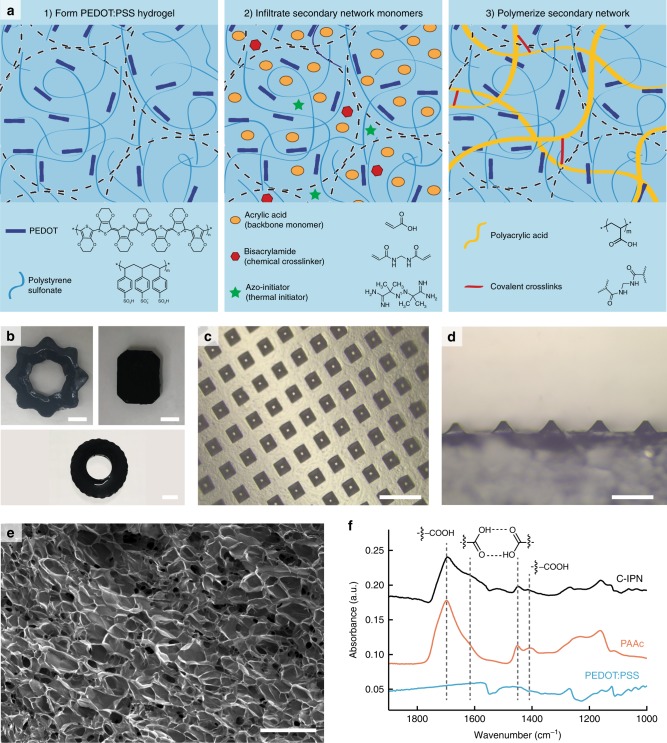
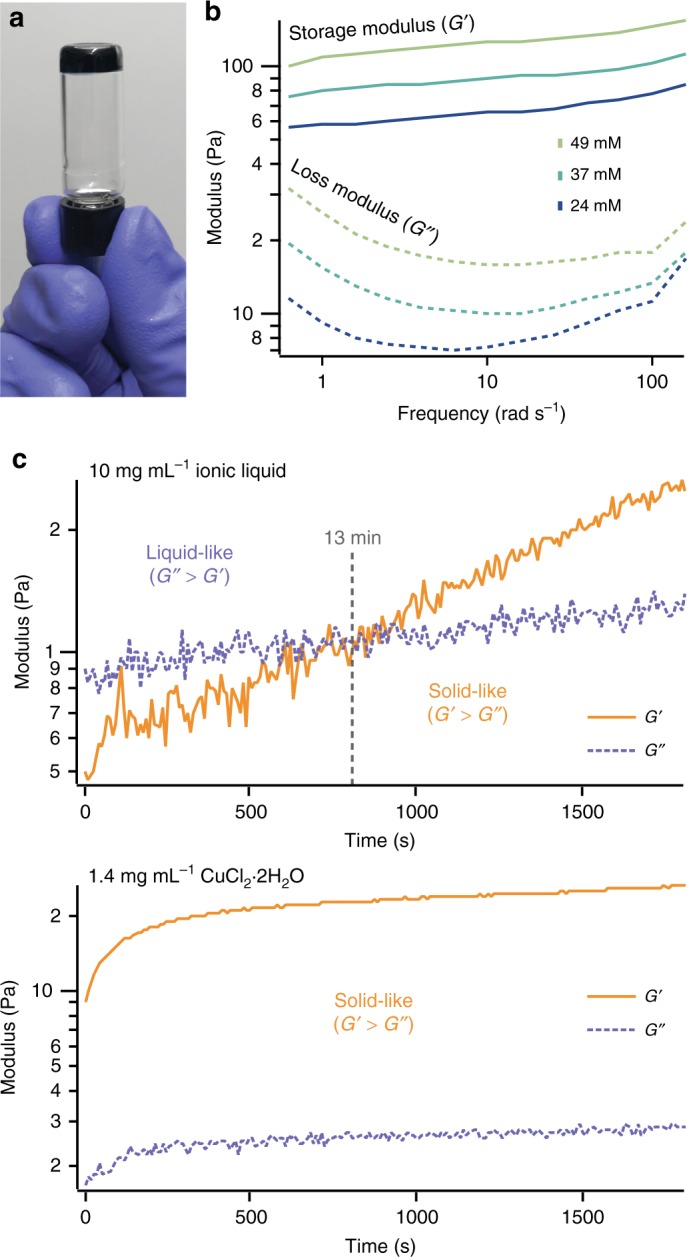
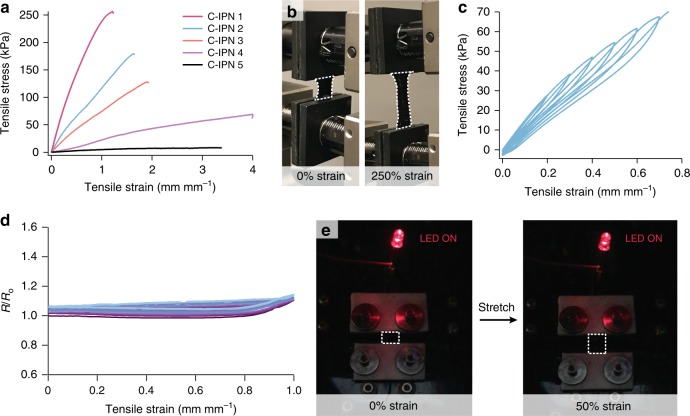
Conductive and stretchable materials that match the elastic moduli of biological tissue (0.5–500 kPa) are desired for enhanced interfacial and mechanical stability. Compared with inorganic and dry polymeric conductors, hydrogels made with conducting polymers are promising soft electrode materials due to their high water content. Nevertheless, most conducting polymer-based hydrogels sacrifice electronic performance to obtain useful mechanical properties. Here we report a method that overcomes this limitation using two interpenetrating hydrogel networks, one of which is formed by the gelation of the conducting polymer PEDOT:PSS. Due to the connectivity of the PEDOT:PSS network, conductivities up to 23 S m −1 are achieved, a record for stretchable PEDOT:PSS-based hydrogels. Meanwhile, the low concentration of PEDOT:PSS enables orthogonal control over the composite mechanical properties using a secondary polymer network. We demonstrate tunability of the elastic modulus over three biologically relevant orders of magnitude without compromising stretchability ( > 100%) or conductivity ( > 10 S m − 1 ).
Overview
The claims and statistics of this paper haven’t been checked yet.
Free: it reads the open-access text and checks the first 5 claims that cite a source we can check. Create a free account to check every claim.
Integrity signals
Registry
Cites
Statistics
Figures
Verification
Claims the paper makes
The claims and statistics of this paper haven’t been checked yet.
Free: it reads the open-access text and checks the first 5 claims that cite a source we can check. Create a free account to check every claim.
Claims other papers make about this one
Each is checked against this paper’s own text: does it say what the citing paper says it does?
The source backs part of the claim, not all of it — or backs it for a different population, condition or comparison.
In the citing paper
“In addition, the combination of hydrogels and conductive polymers is a hot area of research since the former has mechanical properties similar to those of nerves and can provide a hydrophilic interface that reduces the adhesion of non-specific proteins.[58,539–542]”
From Flexible Electronics and Devices as Human–Machine Interfaces for Medical Robotics (2022) · cites this paper as [540]
Experimental — accuracy not yet measured
Self-check
Percentages, sums and reported differences re-computed from the paper’s own numbers.
The self-check needs the paper’s full text.
Citations
Cites
Tissue Cells Feel and Respond to the Stiffness of Their Substrate
Discher, D. E., Janmey, P., & Wang, Y.-L. (2005) · Science · doi:10.1126/science.1116995 · Cited by 6,382
Highly stretchable and tough hydrogels
Sun, J.-Y., Zhao, X., Illeperuma, W. R. K., Chaudhuri, O., Oh, K. H., Mooney, D. J., Vlassak, J. J., & Suo, Z. (2012) · Nature · doi:10.1038/nature11409 · Cited by 5,481
A general relationship between disorder, aggregation and charge transport in conjugated polymers
Noriega, R., Rivnay, J., Vandewal, K., Koch, F. P. V., Stingelin, N., Smith, P., Toney, M. F., & Salleo, A. (2013) · Nature Materials · doi:10.1038/nmat3722 · Cited by 2,206
A highly stretchable, transparent, and conductive polymer
Wang, Y., Zhu, C., Pfattner, R., Yan, H., Jin, L., Chen, S., Molina-Lopez, F., Lissel, F., Liu, J., Rabiah, N. I., et al. (2017) · Science Advances · doi:10.1126/sciadv.1602076 · Cited by 1,442
Self-citationMulti-scale multi-mechanism design of tough hydrogels: building dissipation into stretchy networks
Zhao, X. (2014) · Soft Matter · doi:10.1039/c3sm52272e · Cited by 1,252
The role of matrix stiffness in regulating cell behavior†
Wells, R. G. (2008) · Hepatology · doi:10.1002/hep.22193 · Cited by 1,059
Yang, T., Gregori, G., Pellet, N., Grätzel, M., & Maier, J. (2015) · Angewandte Chemie International Edition · doi:10.1002/anie.201500014 · Cited by 553
Deep-Brain Stimulation for Parkinson's Disease
Okun, M. S. (2012) · New England Journal of Medicine · doi:10.1056/nejmct1208070 · Cited by 541
Chen, Q.-Z., Bismarck, A., Hansen, U., Junaid, S., Tran, M. Q., Harding, S. E., Ali, N. N., & Boccaccini, A. R. (2008) · Biomaterials · doi:10.1016/j.biomaterials.2007.09.010 · Cited by 530
Biomechanical Properties of In Vivo Human Skin From Dynamic Optical Coherence Elastography
Liang, X., & Boppart, S. A. (2010) · IEEE Transactions on Biomedical Engineering · doi:10.1109/tbme.2009.2033464 · Cited by 470
Research works printed but not linked: 1
- Grill, W. M. in Indwelling Neural Implants: Strategies for Contending with the In Vivo Environment (ed. WM, R.) (CRC Press/Taylor & Francis, 2008). 21204399
Cited by
Items 401–500 of 643
Omnidirectional Printing of PEDOT:PSS for High-Conductivity Spanning Structures
Wang, X., Wang, J., Qian, Q., Wang, C., Guo, H., Tan, W. X., Wu, J., Tang, H., Qi, H., & Lin, H. (2023) · ACS Applied Materials & Interfaces · doi:10.1021/acsami.3c14851 · Cited by 16
Oliver-Urrutia, C., Rosales‐Ibáñez, R., García, M. V. D., Flores‐Estrada, J., & Flores‐Merino, M. V. (2019) · Journal of Biomaterials Applications · doi:10.1177/0885328219883482 · Cited by 16
“Finally, the C–O vibration band observed in the PAAc spectrum was also present in IPN-2% at 1156 cm (1).(23,24)”
BackgroundCNT@leather-based electronic bidirectional pressure sensor
Chen, Y., Xie, R., Zou, B., Liu, Y., Zhang, K., Li, S., Zheng, B., Zhang, W., Wu, J., & Huo, F. (2020) · Science China Technological Sciences · doi:10.1007/s11431-019-1502-7 · Cited by 16
Injectable Hybrid-Crosslinked Hydrogels as Fatigue-Resistant and Shape-Stable Skin Depots
Wong, J. H. M., Tan, R. P. T., Chang, J. J., Chan, B. Q. Y., Zhao, X., Cheng, J. J. W., Yu, Y., Boo, Y. J., Lin, Q., Ow, V., et al. (2022) · Biomacromolecules · doi:10.1021/acs.biomac.2c00574 · Cited by 15
Park, K., Kang, K., Kim, J., Kim, S., Jin, S., Shin, M., & Son, D. (2022) · ACS Applied Materials & Interfaces · doi:10.1021/acsami.2c17676 · Cited by 15
Highly deformable bi-continuous conducting polymer hydrogels for electrochemical energy storage
Wang, R., Peng, Y., Liu, C., Zheng, D., & Yu, J. (2024) · Journal of Colloid and Interface Science · doi:10.1016/j.jcis.2024.06.067 · Cited by 15
Antibacterial, Nontoxic, Antifreezing, and Self-Adhesive Conductive Eutectogel for Strain Sensor
Liang, Y., Huang, X., He, Z., Pan, H., Fan, L., Li, X., & Jin, R. (2025) · ACS Applied Polymer Materials · doi:10.1021/acsapm.4c03356 · Cited by 15
Li, W., Liu, H., Mi, Y., Zhang, M., Shi, J., Zhao, M., Ramos, M. A., Hu, T. S., Li, J., Xu, M., et al. (2020) · Friction · doi:10.1007/s40544-020-0416-x · Cited by 15
“Recently, multifunctional hydrogels including interpenetrating network hydrogels [7, 8], double network hydrogels [9–12], and nanocomposite hydrogels [13–15], have been developed.”
BackgroundTeo, M. Y., Lim, K., Aw, K. C., Kee, S., & Stringer, J. (2023) · RSC Advances · doi:10.1039/d3ra04927b · Cited by 15
Materials for flexible and soft brain-computer interfaces, a review
Remy, A., Lin, X., & Liu, J. (2024) · MRS Communications · doi:10.1557/s43579-024-00617-5 · Cited by 15
Słoniewska, A., Kasztelan, M., Berbeć, S., & Pałys, B. (2020) · Synthetic Metals · doi:10.1016/j.synthmet.2020.116363 · Cited by 15
Athanasiadis, M., Afanasenkau, D., Derks, W. J. A., Tondera, C., Murganti, F., Busskamp, V., Bergmann, O., & Minev, I. R. (2020) · npj Flexible Electronics · doi:10.1038/s41528-020-0075-z · Cited by 15
Banerjee, A., Datta, S., Das, A., Chowdhury, A. R., & Datta, P. (2022) · 3D Printing and Additive Manufacturing · doi:10.1089/3dp.2021.0238 · Cited by 15
One Pot Photomediated Formation of Electrically Conductive Hydrogels
Nguyen, D. M., Lo, C., Guo, T., Choi, T., Sundar, S., Swain, Z. R., Wu, Y., Dhong, C., & Kayser, L. V. (2023) · ACS Polymers Au · doi:10.1021/acspolymersau.3c00031 · Cited by 14
Electroconductive cardiac patch based on bioactive PEDOT : PSS hydrogels
Sauvage, E., Matta, J., Dang, C., Fan, J., Cruzado, G., Cicoira, F., & Merle, G. E. (2024) · Journal of Biomedical Materials Research Part A · doi:10.1002/jbm.a.37729 · Cited by 14
Meng, Z., Gu, B., Yao, C., Li, J., Yu, K., Ding, Y. C., He, P., Jiang, N., Li, D., & He, J. (2024) · International Journal of Extreme Manufacturing · doi:10.1088/2631-7990/ad9365 · Cited by 14
“They resemble physiological tissues in terms of water content, electrochemical stability, biocompatibility, and tissue-like mechanical properties [232–235].”
Hydrogels in next-generation energy solutions
Kabir, M. M., Sabur, G. M., Mamun, M. F. K., Arman, A., Tijing, L. D., Choden, Y., Phuntsho, S., & Shon, H. K. (2025) · Desalination · doi:10.1016/j.desal.2025.118639 · Cited by 14
Microfabricated Conductive PEDOT:PSS Hydrogels for Soft Electronics
Yang, M., & Yu, C. (2025) · Korean Journal of Chemical Engineering · doi:10.1007/s11814-025-00434-z · Cited by 14
Stimuli-Responsive Conductive Polymers for Bioelectronics
Damani, V. S., & Kayser, L. V. (2025) · Chemistry of Materials · doi:10.1021/acs.chemmater.5c00495 · Cited by 14
Fully printed multimodal sensing system for continuous health monitoring during exercise
Zhu, B., Zhu, L., Wang, H., Li, X., Zhao, Z., Zhou, L., Gao, Z., Hu, N., & Su, B. (2025) · Biosensors and Bioelectronics · doi:10.1016/j.bios.2025.117840 · Cited by 14
Li, C., Yao, X., Li, D., Zhang, F., Chen, J., Wu, J., Guo, L., Zhang, W., Wu, Y., & Zheng, Q. (2025) · Carbon · doi:10.1016/j.carbon.2025.120712 · Cited by 14
Metal–hydrogel chelation interfaces for ultrasoft and bidirectional bioelectronics
Lu, Y., Jin, Z., Jian, Y., Kong, D., Zhou, H., Xu, Y., Cao, R., Xia, Z., Yang, F., Wu, Q., et al. (2025) · National Science Review · doi:10.1093/nsr/nwaf399 · Cited by 14
Zhao, X., Jiang, X., Li, X., Guo, X., Zhao, Y., Tong, M., Cao, H., & Gu, X. (2025) · Advanced Functional Materials · doi:10.1002/adfm.202523269 · Cited by 14
Zhang, Y., Tang, J., Fang, W. M., Zhao, Q. F., Lei, X., Zhang, J., Chen, J., Li, Y., & Zuo, Y. (2023) · Journal of Functional Biomaterials · doi:10.3390/jfb14040185 · Cited by 14
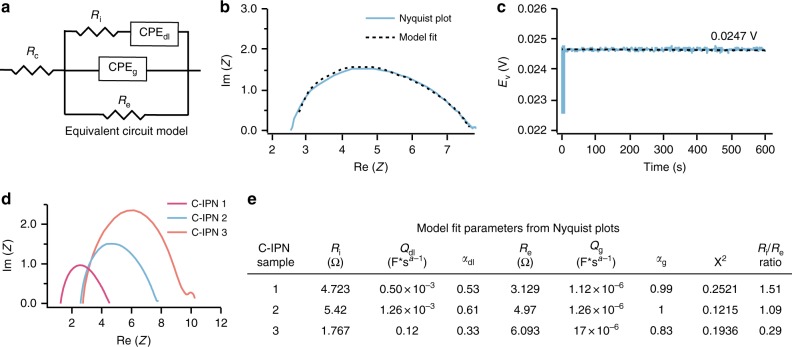
“Re represented the electronic resistance, Ri represented the ionic resistance, Rc represented the total ohmic resistance of the electrochemical cell assembly, and CPEdl and CPEg represented the constant phase elements (CPE) corresponding to the double-layer ionic capacitance and the geometric capacitance, respectively…”
BackgroundKhandagale, P., Breitzman, T., Majidi, C., & Dayal, K. (2023) · Physical review. E · doi:10.1103/physreve.107.064501 · Cited by 14
“[88] Vivian R Feig, Helen Tran, Minah Lee, and Zhenan Bao.”
BackgroundBicontinuous Ionogel Electrolyte with Conductive Nanochannels for Flexible Supercapacitors
Li, T., Feng, L., Chen, Q., Yu, W., & Liu, S. (2024) · ACS Applied Materials & Interfaces · doi:10.1021/acsami.4c00374 · Cited by 13
Electrical percolation network based on nano-cellulose template for flexible hydrogel bioelectrode
Guan, M., Han, Z., Liu, N., Zhou, Z., Qu, X., Zhang, T., Chen, S., & Wang, H. (2025) · Carbohydrate Polymers · doi:10.1016/j.carbpol.2025.123693 · Cited by 13
Ultrasoft, elastic, and ionically conductive polyethylene glycol/ionic liquid bottlebrush ionogels
Xu, P., Challa, S., Zhang, Z., Wu, X., Wang, S., Pan, P., & Liu, X. (2025) · Materials Horizons · doi:10.1039/d5mh00915d · Cited by 13
Constructing High-Efficiency Polyoxometalate-Based Antibacterial Hydrogels for Wearable Sensors
Ma, M., Li, C., Fan, W., Su, Y., Guo, D., Li, M., & Zhou, Y. (2025) · Langmuir · doi:10.1021/acs.langmuir.5c03209 · Cited by 14
Applications of Hydrogels for Next-Generation Batteries
Sutradhar, S. C., Banik, N., Ahmed, M. S., Jang, H., Nam, K., & Islam, M. (2025) · Gels · doi:10.3390/gels11090757 · Cited by 13
Liu, J., Zhao, X., Zhao, K., Goncharov, V. G., Delhommelle, J., Lin, J. P., & Guo, X. (2023) · Scientific Reports · doi:10.1038/s41598-023-33046-w · Cited by 13
Polypeptide-affined interpenetrating hydrogels with tunable physical and mechanical properties
Oveissi, F., Naficy, S., Le, T. Y. L., Fletcher, D. F., & Dehghani, F. (2019) · Biomaterials Science · doi:10.1039/c8bm01182f · Cited by 13
Super-stretchable polymer-AgPdCu superlattice electrodes for high-performance wearable electronics
Sim, H., Oh, Y.-K., Yu, Y., Kim, S., & Kim, H. (2022) · Composites Part B Engineering · doi:10.1016/j.compositesb.2022.109914 · Cited by 13
Organic electronics for neuroprosthetics
Airaghi Leccardi, M. J. I., & Ghezzi, D. (2020) · Healthcare Technology Letters · doi:10.1049/htl.2019.0108 · Cited by 12
Thermosensitive MXene-Based Flexible Wearable Sensors for Multifunctional Human Signals Monitoring
Pan, W., Xu, L., Lamont, S. C., Zhang, Y., Ding, J., & Vernerey, F. J. (2024) · ACS Applied Polymer Materials · doi:10.1021/acsapm.4c01225 · Cited by 12
Wang, Z., Guo, Y., Feng, R., Gao, W., Mao, Z., Zhang, X., & Zhang, B. (2025) · ACS Applied Polymer Materials · doi:10.1021/acsapm.4c03579 · Cited by 12
Wu, J., Xu, J., Liu, S., Ma, Z., Guo, Y., & Wang, X. (2025) · International Journal of Biological Macromolecules · doi:10.1016/j.ijbiomac.2025.141662 · Cited by 12
Zhou, Y., Picchio, M. L., Nie, Y., Wang, L., Sánz, O., Liu, Y., Xu, X., Prantl, L., Felthaus, O., Wang, W., et al. (2025) · Advanced Healthcare Materials · doi:10.1002/adhm.202402882 · Cited by 12
Ren, G., Yang, J., Wang, X., Hu, G., Chen, H., Fang, Q., & Yang, A. (2025) · ACS Applied Polymer Materials · doi:10.1021/acsapm.4c04052 · Cited by 13
Liu, X., Huang, P., Wang, J., Wang, X., He, Y., Song, P., & Wang, R. (2021) · Macromolecular Materials and Engineering · doi:10.1002/mame.202100593 · Cited by 12
Yang, L., & Schaefer, J. L. (2023) · ACS Energy Letters · doi:10.1021/acsenergylett.3c00627 · Cited by 12
“24,25 Here, R c represents the total contact resistance of the coin cell assembly, and CPE dl and CPE g are constant phase elements corresponding to the double-layer capacitive property arising from ionic conduction at the electrode/electrolyte interface and geometric capacitance due to the…”
BackgroundMethodSoft, Conductive, and Anti‐Freezing Conducting Polymer Organohydrogels
Zhou, X., Kateb, P., Miquet‐Westphal, F., Lodygensky, G. A., & Cicoira, F. (2023) · Advanced Sensor Research · doi:10.1002/adsr.202300072 · Cited by 12
Zhu, Y., Zhao, B., Cheng, Z., Yu, T., & Li, Y. (2023) · Chemical Engineering Journal · doi:10.1016/j.cej.2023.145610 · Cited by 12
Non‐Hookean Droplet Spring for Enhancing Hydropower Harvest
Xue, L., Li, H., Li, A., Zhao, Z., Li, K., Li, M., & Song, Y. (2022) · Small · doi:10.1002/smll.202200875 · Cited by 12
Thermo-reversible gelation of self-assembled conducting polymer colloids
Damani, V. S., Xie, X., Daso, R. E., Suman, K., Ghasemi, M., Xie, W., Wu, R., Wu, Y., Chao, C. L., Alberto, J. E., et al. (2025) · Nature Communications · doi:10.1038/s41467-025-66034-x · Cited by 11
“2c), commonly used for PEDOT:PSS-based hydrogels 24 – 26 , was used to extract the electronic resistance ( R e ) and ionic resistance arising from the movement of H + ions in the absence of added electrolyte ( R i ) (Fig.”
Shi, K., Chen, H., Li, J., Han, Y., Sun, H., Liu, H., Dong, L., Liu, H., & Shen, C. (2026) · Chemical Engineering Journal · doi:10.1016/j.cej.2026.173026 · Cited by 11
Advances and Challenges in Wearable Sensors for Health Monitoring
Brazaca, L. C., Lozano, A. M., Mayol, B., Scheidt, D. T., Fazio, D. D., Kim, E., Maroli, G., Rosati, G., Ates, H. C., Wang, H., et al. (2026) · ACS Applied Materials & Interfaces · doi:10.1021/acsami.6c04520 · Cited by 13
Jin, S., Qiu, J., Sun, M., Huang, H., & Sakai, E. (2019) · Macromolecular Rapid Communications · doi:10.1002/marc.201900329 · Cited by 11
Supratough and stretchable hydrogels with time-space controllability for athletic rehabilitation
Sun, T.-C., Ning, X., Ramakrishna, S., Long, Y., & Zhang, J. P. (2022) · Chemical Engineering Journal · doi:10.1016/j.cej.2022.139667 · Cited by 11
Liu, J., Yu, Q., Ke, J., Zhao, Y., Li, X., Yu, Y., Sun, X., & Guo, R. (2024) · Applied Energy · doi:10.1016/j.apenergy.2024.123397 · Cited by 10
Novel conductive PEDOT:DBSA hydrogels with tuneable properties for bioelectronics
Malečková, R., Tumová, Š., Smísitel, P., Smilek, J., Šimůnková, H., Pešková, M., Kubáč, L., Hubálek, J., Víteček, J., Vala, M., et al. (2025) · Materials Advances · doi:10.1039/d4ma00987h · Cited by 10
Qing, M., Hou, Y., Xie, Z., Qu, G., Chen, M., & Guo, D. (2025) · Advanced Functional Materials · doi:10.1002/adfm.202512839 · Cited by 10
Ghorbanizamani, F., Fidan, D. R., Kisin, D. N., & Moulahoum, H. (2025) · Materials Science and Engineering B · doi:10.1016/j.mseb.2025.118685 · Cited by 10
Kim, M. J., Cho, S. H., Oh, S. J., & Kim, S. W. (2025) · Advanced Composites and Hybrid Materials · doi:10.1007/s42114-025-01395-x · Cited by 10
“To overcome these issues, recent studies have focused on designing advanced polymer networks to enhance both mechanical and electromechanical performance [25, 27, 29].”
Liu, X., Yao, Y., Zhang, B., Zhao, L., Yan, Y., Sun, C., Liu, S., Wu, J., Cheng, T., Liu, C., et al. (2025) · Nano Research · doi:10.26599/nr.2025.94908033 · Cited by 10
Recent Progress in Printing Conductive Materials for Stretchable Electronics
Jung, H. S., Lee, W., & Kang, J. (2022) · Journal of Flexible and Printed Electronics · doi:10.56767/jfpe.2022.1.2.137 · Cited by 10
Mutharani, B., Ranganathan, P., Chang, Y., & Chiu, F. (2024) · Carbohydrate Polymers · doi:10.1016/j.carbpol.2024.121800 · Cited by 10
Cui, N., Han, K., Zhou, C., Seong, M., Lu, T., & Jeong, H. E. (2020) · ACS Applied Bio Materials · doi:10.1021/acsabm.0c00554 · Cited by 10
Polymer-based bionanomaterials for biomedical applications
Khan, T. A., & Chauhan, A. (2022) · Elsevier eBooks · doi:10.1016/b978-0-12-823915-5.00006-x · Cited by 10
Recent advances in materials and structural designs for flexible surface electromyography electrodes
Hou, Z., Jin, Y., Qian, C., Zhu, J., Zhang, T., Wu, J., Li, S., Zou, B., & Huo, F. (2025) · Journal of Materials Chemistry C · doi:10.1039/d5tc01312g · Cited by 9
Goestenkors, A. P., Yu, J. S., Park, J., Wu, Y., Espinoza, C. J. V., Friedman, L. C., Okafor, S. S., Liu, T., Chatterjee, S., Debnath, A., et al. (2025) · Small · doi:10.1002/smll.202506438 · Cited by 9
Adnan, N. A., Bakar, N. A., Zahid, N. I., & Nordin, N. (2025) · Polymer · doi:10.1016/j.polymer.2025.129132 · Cited by 9
Chemically Doped Conductive Polymers for Wearable Health Monitoring
Zuo, M., Song, J., Hu, H., Zheng, L., Zhang, L., & Lawrie, C. H. (2026) · Advanced Materials Technologies · doi:10.1002/admt.202502209 · Cited by 9
Yin, J., Xiao, H., Xu, P., Yang, J., Fan, Z., Ke, Y., Ouyang, X., Liu, G. X., Sun, T. L., Tang, L., et al. (2021) · Angewandte Chemie · doi:10.1002/ange.202108196 · Cited by 9
Zanette, R. D. S. S., Fayer, L., Vasconcellos, R., de Oliveira, L. F. C., Maranduba, C. M. D. C., de Alvarenga, É. C., Martins, M. A., Brandão, H. D. M., & Munk, M. (2023) · Biomedical Materials · doi:10.1088/1748-605x/aceac8 · Cited by 9
“Cells respond differently to changes in the rigidity of the ECM, which varies greatly across different tissues, ranging from less than 1 kPa in the brain to over 100 kPa in bone tissue [38].”
Matrix density regulates adipocyte phenotype
Ky, A., McCoy, A. J., Flesher, C. G., Friend, N. E., Li, J., Akinleye, K., Patsalis, C., Lumeng, C. N.-K., Putnam, A. J., & O’Rourke, R. W. (2023) · Adipocyte · doi:10.1080/21623945.2023.2268261 · Cited by 9
“5 to 500 kPa [46], with native adipose tissue having”
BackgroundMulti-objective generative design of three-dimensional material structures
Zhang, Z., Fang, H., Zhao, X., Lv, J., Shen, Y., & Wang, Y. (2023) · APL Machine Learning · doi:10.1063/5.0169432 · Cited by 9
Liquid-based electronic materials for bioelectronics: current trends and challenges
Park, K., Park, S., Jo, Y., Kim, S. A., Kim, T. Y., Kim, S., & Seo, J. (2024) · Industrial Chemistry and Materials · doi:10.1039/d3im00122a · Cited by 9
Zhang, D., Chen, Q., Chen, H., Tang, Y., & Zheng, J. (2024) · Accounts of Materials Research · doi:10.1021/accountsmr.4c00209 · Cited by 9
Biobased nanocomposite hydrogels derived from renewable resources for biomedical applications
Bora, A., & Karak, N. (2024) · Journal of Macromolecular Science Part A · doi:10.1080/10601325.2024.2404101 · Cited by 9
“[120] Recently, the development of hydrogel-based sensors has emerged as one of the most significant advancements in the field of sensors.”
Kwon, Y., Song, J. H., Kim, Y. J., & Kwak, J. (2025) · ACS Applied Electronic Materials · doi:10.1021/acsaelm.5c00176 · Cited by 9
Liu, F., Liang, T., Liu, J., Qu, P., Han, S., Sun, D., Hao, Y., Zhou, Y., Li, X., Ma, C., et al. (2025) · Acta Biomaterialia · doi:10.1016/j.actbio.2025.06.018 · Cited by 9
Han, J., Jang, S., Kim, B., & Park, K. (2023) · Journal of Analytical Science & Technology · doi:10.1186/s40543-023-00375-4 · Cited by 9
Electrically conductive and antimicrobial Pluronic-based hydrogels
Spirito, N. A. D., Liu, W., Lorenzo, M. D., Grizzuti, N., Laabei, M., Leese, H. S., & Pasquino, R. (2024) · Journal of Colloid and Interface Science · doi:10.1016/j.jcis.2024.10.005 · Cited by 11
Boudraa, K. E., Bouchaour, T., & Maschke, U. (2019) · Journal of Thermal Analysis and Calorimetry · doi:10.1007/s10973-019-08898-y · Cited by 9
Bioinspired Strategies for Stretchable Conductors
Zhang, F., & Chen, X. (2022) · Chemical Research in Chinese Universities · doi:10.1007/s40242-022-2236-1 · Cited by 9
Understanding Thermodynamics and Kinetics of PEDOT:PSS Using ATR-FTIR and Density Functional Theory
Rana, D., Biswakarma, J. J. S., & Lustig, S. R. (2024) · ACS Omega · doi:10.1021/acsomega.4c05552 · Cited by 8
Wang, J., Huo, X., Huang, W., Xu, J., Yu, P., Zhang, X., Cong, Z., & Niu, J. (2024) · Journal of Materials Chemistry C · doi:10.1039/d4tc03817g · Cited by 9
Kim, S. E., Kim, K. S., & Koo, J. (2025) · Biomedical Engineering Letters · doi:10.1007/s13534-025-00491-7 · Cited by 8
Xiang, Y., He, X., Cheng, T., Zhu, W., Pang, J., Cao, Y., Wu, M. Y., Pei, R., & Cao, Y. (2025) · Biomacromolecules · doi:10.1021/acs.biomac.5c01412 · Cited by 8
Lee, K. K., Jeong, W., & Chae, M. S. (2025) · Journal of Clinical Medicine · doi:10.3390/jcm14217768 · Cited by 8
“This mechanical versatility enables hydrogels to match properties of diverse biological tissues, ranging from soft tissues (e.g., skin, cartilage) to load-bearing structures (e.g., bone) [68,69].”
The rise of hydrogel transistors
Huang, H., Chen, X., Bai, J., Liu, D., Lüssem, B., Malliaras, G. G., & Zhang, S. (2025) · Nature Reviews Electrical Engineering · doi:10.1038/s44287-025-00231-0 · Cited by 8
“Cell Organ Organoid”
An exceptionally conductive hydrogel for all-organic, ultraflexible, and chronic neural interfaces
Zhu, R., Hu, Z., Lou, Z., Xie, F., Zhao, S., Jiao, X., Wang, J., Fukuda, K., Chen, X., Hu, W., et al. (2026) · Proceedings of the National Academy of Sciences · doi:10.1073/pnas.2532840123 · Cited by 10
“…contextualize the unique architecture of CHIP within the broader field of soft electronic materials, it is essential to distinguish our interfacial percolation mechanism from established “interpen-etration” (34–36), “template - directed assembly” (37–39), and “interlocking” (20, 40, 41) strategies.”
Electrochemically Driven Assembly of Chitosan Hydrogels on PEDOT Surfaces
Silva, A. C. D., Amadou‐Douah, C., Koiliari, S., Du, J., Chauhan, R. K. K., Paterson, T. E., & Minev, I. R. (2023) · Macromolecular Materials and Engineering · doi:10.1002/mame.202300263 · Cited by 8
Bartlett, M., He, M., Ranke, D., Wang, Y., & Cohen‐Karni, T. (2023) · MRS Advances · doi:10.1557/s43580-023-00645-8 · Cited by 8
Yan, K., Chen, D., Guo, X., Wan, Y., Yang, C., Wang, W., Li, X., Lu, Z., & Wang, D. (2024) · Carbohydrate Polymers · doi:10.1016/j.carbpol.2024.122609 · Cited by 8
3D Printed Bioelectronic Scaffolds with Soft Tissue‐Like Stiffness
Okafor, S. S., Park, J., Liu, T., Goestenkors, A. P., Alvarez, R. M., Semar, B. A., Yu, J. S., O'Hare, C. P., Montgomery, S. K., Friedman, L. C., et al. (2025) · Advanced Materials Technologies · doi:10.1002/admt.202401528 · Cited by 8
Xuqing, S., Chen, T., Yufan, S., Lianchao, S., & Xiangning, L. (2025) · Journal of Materials Chemistry C · doi:10.1039/d5tc00267b · Cited by 8
Guo, Z., Guo, Y., Zhang, S., Yu, W., Gao, Q., Chen, J., Xiong, Y., Chen, L., Qiu, J., & Wei, R. (2025) · Macromolecules · doi:10.1021/acs.macromol.5c00150 · Cited by 9
Cycle‐dependent Microstructural Changes of Silicon‐Carbon Composite Anodes for Lithium‐Ion Batteries
Sohn, M., Lee, D. G., Chung, D. J., Kim, A., & Kim, H. (2019) · Bulletin of the Korean Chemical Society · doi:10.1002/bkcs.11660 · Cited by 8
Recent Achievements of Epicardial Patch Electronics Using Adhesive and Conductive Hydrogels
Lee, S. H., Lee, J.-W., Kim, D., Cha, G. D., & Sunwoo, S. (2025) · Gels · doi:10.3390/gels11070530 · Cited by 7
“These stiff back-bones limit the chain mobility and deformability of the hydrogel network, reflecting a fundamental trade-off between electrical performance and mechanical compliance in conductive hydrogel systems [15,74,76].”
Mukherjee, A., Sayed, J. E., Corci, B., Suyanto, J., van der Molen, A., Dolga, A. M., Kottapalli, A. G. P., Kamperman, M., & Bose, R. K. (2025) · Materials Today Chemistry · doi:10.1016/j.mtchem.2025.103085 · Cited by 7
del Río, E. P., Esplugues-Lopez, A., Heyvaert, Y., Jergitsch, M., Colombi, S., Zeidabadi, M. A., García, H. M., Ginebra, M., Alemán, C., Mateos‐Timoneda, M. A., et al. (2025) · Colloids and Surfaces B Biointerfaces · doi:10.1016/j.colsurfb.2025.115206 · Cited by 7
Bioelectronic interfacial matching for superior implant design
Boys, A. J., & Keene, S. T. (2024) · Cell Reports Physical Science · doi:10.1016/j.xcrp.2024.101877 · Cited by 7
Design of PEG ‐Based Hydrogels as Soft Ionic Conductors
Rodriguez‐Rivera, G. J., Xu, F., Laude, M., Shah, V., Nkansah, A., Bashe, D., Lan, Z., Chwatko, M., & Cosgriff‐Hernandez, E. (2024) · Journal of Biomedical Materials Research Part A · doi:10.1002/jbm.a.37840 · Cited by 7
Hydrogel electronic materials and microfabrication processes for soft electronic applications
Won, D., Kim, H., Kim, T., & Ko, S. H. (2025) · Applied Physics Reviews · doi:10.1063/5.0261387 · Cited by 7
Stretchable strain sensors based on conductive nanofibrous mats
Onyilagha, O., Zheng, F., & Zhu, Z. (2023) · Device · doi:10.1016/j.device.2023.100215 · Cited by 7
High capacitance freestanding PEDOT:PSS electrodes for low-frequency electric field delivery
Jenkins, E. P. W., Keene, S. T., Dimov, I. B., Oldroyd, P., & Malliaras, G. G. (2024) · AIP Advances · doi:10.1063/5.0180487 · Cited by 7
Hu, G., Wang, Q., Lin, Y., Shi, J., Xu, X., Jia, R., & Chang, S. (2024) · ACS Applied Polymer Materials · doi:10.1021/acsapm.4c01127 · Cited by 7
Conductive Hydrogel Materials for Flexible Supercapacitor Electrodes
Zhang, K., Chen, Z., Li, J., Feng, G., Xu, C. W., Yang, J., & Li, W. (2024) · Crystals · doi:10.3390/cryst14110971 · Cited by 7
Metadata
- Authors
- Feig, V. R., Tran, H., Lee, M., & Bao, Z.
- Affiliations
- Stanford University (US)
- Corresponding author
- Bao, Zhenan
- Venue
- Nature Communications
- Published
- 2018-07-16
- Volume
- 9
- Issue
- 1
- Pages
- 2740-2740
- ISSN
- 2041-1723 (ISSN-L)
- PMC
- PMC6048132
- OpenAlex
- W2816607594
- Cited by
- 585
- References
- 48
- Citations by year
- 2026: 35 · 2025: 98 · 2024: 102 · 2023: 85 · 2022: 86 · 2021: 78 · 2020: 55 · 2019: 41 · 2018: 5
- FWCI
- 22.34
- Type
- journal article
- Language
- en
- Update notices
- correction (2018-11-23)
- Open access
- gold
- doi.org
- Licence
- cc-by
- creativecommons.org/licenses/by/4.0 (tdm)
- creativecommons.org/licenses/by/4.0 (vor)
- Locations
- Nature Communications (publishedVersion, cc-by)
- Europe PMC (PubMed Central) (publishedVersion, other-oa)
- PubMed Central (publishedVersion, cc-by)
- PubMed (publishedVersion)
- RePEc: Research Papers in Economics (submittedVersion)
- DOAJ (DOAJ: Directory of Open Access Journals) (submittedVersion)
- DOAJ (DOAJ: Directory of Open Access Journals) (submittedVersion, cc-by-sa)
- OSTI OAI (U.S. Department of Energy Office of Scientific and Technical Information) (submittedVersion)
- Funders
- National Science Foundation (1542152)
- U.S. Department of Defense
- U.S. Department of Energy (ECCS-1542152)
- Office of the Director of National Intelligence
- National Research Foundation
- Schweizerischer Nationalfonds zur Förderung der Wissenschaftlichen Forschung (ECCS-1542152)
- National Research Foundation of Korea (NRF-2017R1A6A3A03007053)
- Oak Ridge Institute for Science and Education
- Stanford Precourt Institute for Energy
- Intelligence Community Postdoctoral Research Fellowship Program
- National Defense Science and Engineering Graduate
- NIH Office of the Director
- Division of Electrical, Communications and Cyber Systems (ECCS-1542152, 1542152)
- Topics
- Physical Sciences › Materials Science › Polymers and Plastics › Conducting polymers and applications
- Physical Sciences › Materials Science › Biomaterials › Hydrogels: synthesis, properties, applications
- Physical Sciences › Materials Science › Electronic, Optical and Magnetic Materials › Dielectric materials and actuators
- Keywords
- interpenetrating polymer network hydrogels, conductive hydrogels, PEDOT:PSS, stretchable conductors, soft electrodes, electrical conductivity, stretchability
- MeSH terms
- Electric Conductivity, Electrodes, Electrons, Humans, Materials Testing, Polystyrenes, Thiophenes, Hydrogels, Biomimetic Materials, Elastic Modulus
About these checks
Registry, retraction, Cites and statistics results are computed, not judged, with one exception: a printed reference that no index lists is read once by a model before it counts as a citation error. Claims are extracted by a model and kept only when their quote appears verbatim in the text; each cited source is then checked, with a model’s help, for whether it says what the claim relies on. Those verdicts can be wrong — read the claim’s quote and the cited source before relying on one.
Statistics and arithmetic are recomputed, not judged.
Confidence bands are shown only for fields calibrated on our annotated test set. None is calibrated yet, so no band is shown.
What counts as a claim ›How we measure confidence ›How we check this ›
Are you an author, or do you see a problem with this page? Request a review
Data sources
Bibliographic data: Semantic Scholar, OpenAlex, Crossref.
Contains information from the Semantic Scholar Academic Graph Datasets, made available under the ODC Attribution License (ODC-BY 1.0).
Semantic Scholar’s data is described in: Kinney, R., et al. (2023). The Semantic Scholar Open Data Platform. arXiv:2301.10140.
