

A hexagon in Saturn's northern stratosphere surrounding the emerging summertime polar vortex
Open accessThe DOI matches its Crossref record; 55 of the 57 references it cites were found in a registry or an index, and 1 are not checked yet; 34 of the 94 sources its claims cite were checked for support.
Abstract
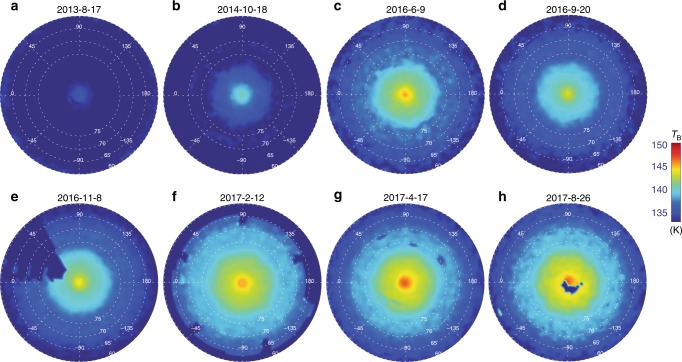
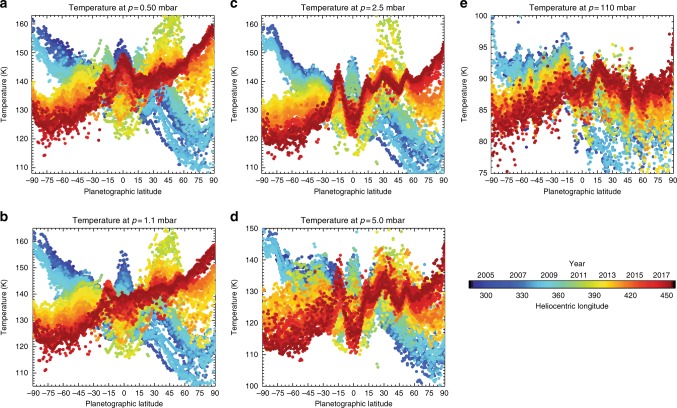
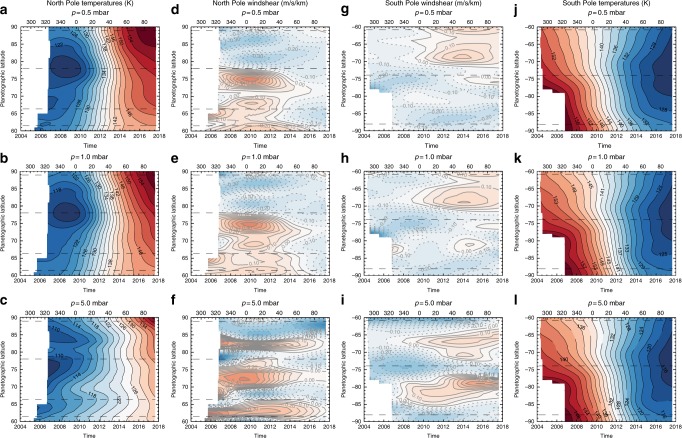
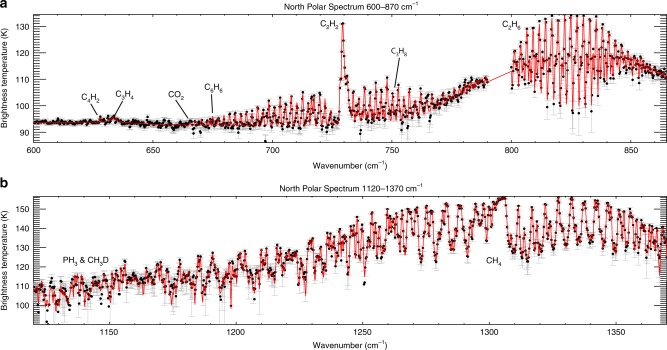
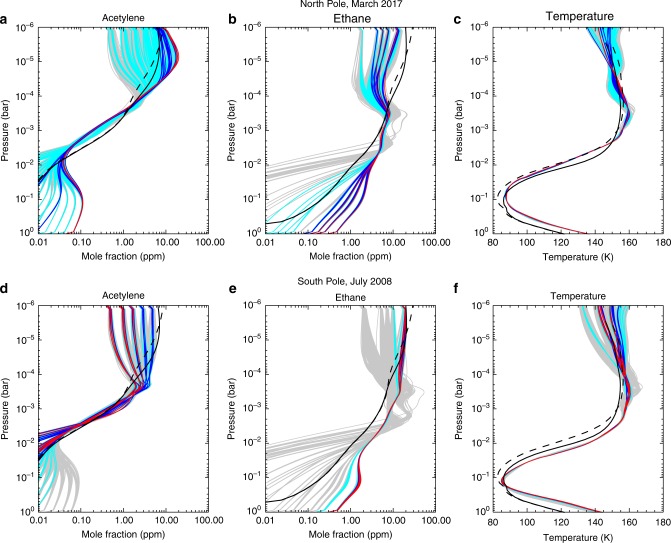
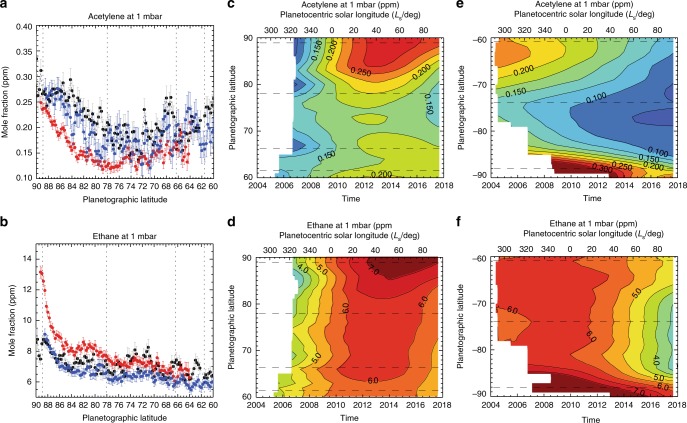
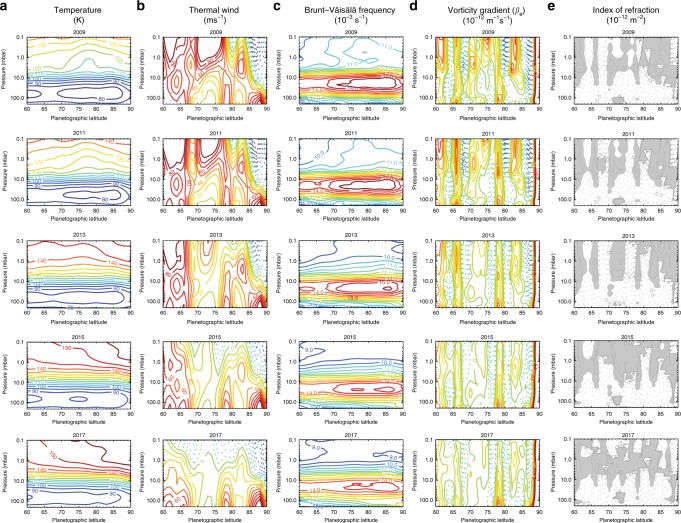
Saturn's polar stratosphere exhibits the seasonal growth and dissipation of broad, warm vortices poleward of ~75° latitude, which are strongest in the summer and absent in winter. The longevity of the exploration of the Saturn system by Cassini allows the use of infrared spectroscopy to trace the formation of the North Polar Stratospheric Vortex (NPSV), a region of enhanced temperatures and elevated hydrocarbon abundances at millibar pressures. We constrain the timescales of stratospheric vortex formation and dissipation in both hemispheres. Although the NPSV formed during late northern spring, by the end of Cassini's reconnaissance (shortly after northern summer solstice), it still did not display the contrasts in temperature and composition that were evident at the south pole during southern summer. The newly formed NPSV was bounded by a strengthening stratospheric thermal gradient near 78°N. The emergent boundary was hexagonal, suggesting that the Rossby wave responsible for Saturn's long-lived polar hexagon-which was previously expected to be trapped in the troposphere-can influence the stratospheric temperatures some 300 km above Saturn's clouds.
Verified 2026-11-22 · 1 reference not checked yet
Overview
CoChat Summary
## TL;DR
Cassini infrared spectroscopy shows Saturn’s north polar stratospheric vortex (NPSV) began forming in late northern spring and was still weaker than the southern vortex by northern summer solstice. The study also finds that Saturn’s famous hexagon extends into the stratosphere, with a wavenumber-6 boundary near 78°N observed around 0.5–5.0 mbar.
## Key findings
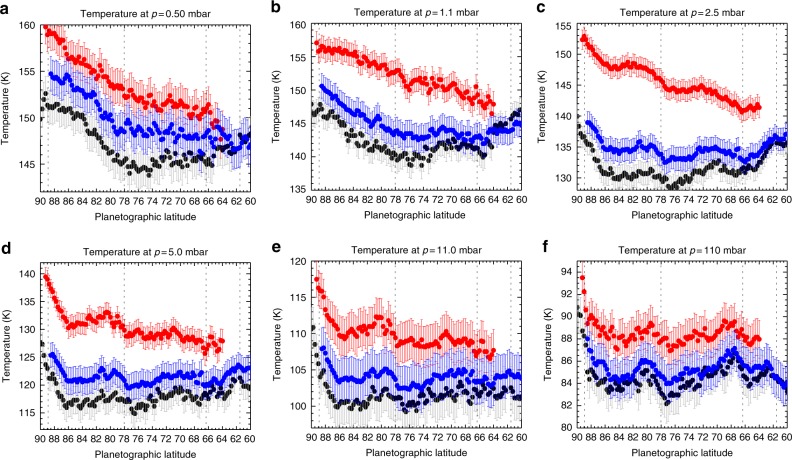
- The NPSV started to develop during late northern spring, with temperature gradients becoming positive poleward of 78°N at 5 mbar in 2017, around northern summer solstice (Ls = 90°).
- By the end of Cassini, the NPSV still did not match the southern vortex: the boundary windshear was less than half that of the SPSV in 2006–2008, and the 5-mbar temperature maximum was about 140 K at 90°N versus about 150 K at 90°S.
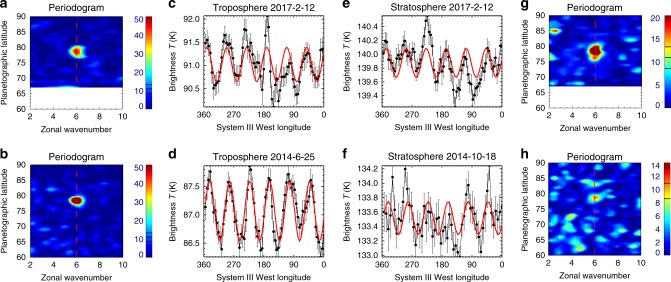
- The NPSV boundary showed a hexagonal shape; a wavenumber-6 pattern was detected in both troposphere and stratosphere, with vertex longitudes differing by no more than 4° between the two altitude ranges.
- The hexagon was present from the deep 2–3 bar troposphere to the stratosphere at 0.5–5.0 mbar, spanning about 300 km in height; the stratospheric hexagon rotated at (7.6 ± 1.9) × 10−3° day−1, similar to the tropospheric estimate ((9.9 ± 1.3) × 10−3)° day−1.
## Methods
- Cassini CIRS nadir-sounding spectroscopy was used for a 2004–2017 time series, binned to a monthly grid and 2° latitude grid; approximately 13,000 spectra were inverted for the long-term temperature analysis.
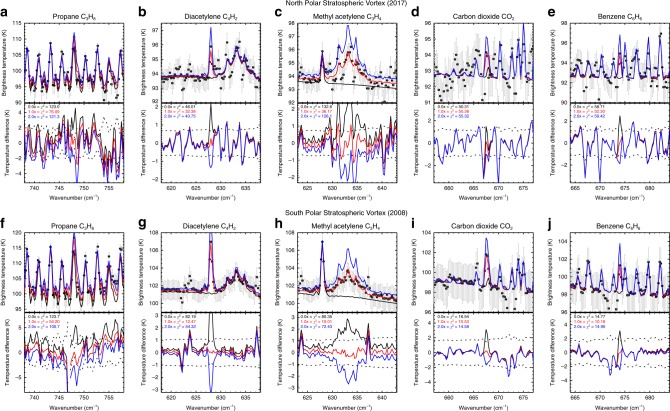
- Temperatures and some hydrocarbon abundances were retrieved with the NEMESIS optimal estimation algorithm; low-resolution data constrained temperature, ethane, and acetylene, while 0.5 cm−1 COMPSIT observations were used for higher-resolution composition retrievals of minor species.
- The main analyses included mapping brightness temperatures, retrieving latitudinal/temporal temperature trends, estimating windshear via thermal wind balance, and testing for hexagonal structure and Rossby-wave diagnostics using periodograms, sinusoidal fits, and quasi-geostrophic potential vorticity/dispersion calculations.
## Limitations
- The paper states that a spatially resolved temperature retrieval of the stratospheric hexagon was unsuccessful because the binned spectra lacked sufficient signal-to-noise to constrain the hexagonal temperature field as a function of altitude.
- The authors say they cannot determine whether the hexagon is present at 5 mbar, 0.5 mbar, or both, and low pre-2014 signal prevents distinguishing whether the hexagon was always present or extended upward seasonally.
- The text also makes evident that nadir spectra poorly constrain winds and composition outside certain pressure ranges; the 5–80 mbar region is poorly constrained, and derived winds have large uncertainties and should be treated only qualitatively.
Model-written summary. Check it against the paper before relying on it.
Integrity signals
Registry
Cites
Statistics
Figures
Verification
Claims the paper makes
26 Valid · 3 Not valid · 22 Not checked · 81 Own results and interpretations
The cited sources that could be checked couldn’t confirm or dispute this claim.
In the paper
“These vortices, which extend ~15° latitude away from the pole, are bounded by a strong latitudinal temperature gradient and are distinct from the compact, seasonally independent polar cyclones present in the troposphere5–10.”
§ A hexagon in Saturn’s northern stratosphere surrounding the emerging summertime polar vortex > Introduction Polar vortices are important features of planet-wide atmospheric circulation systems on terrestrial worlds and giant planets alike, from Jupiter’s turbulent polar environment1 to Uranus’ seasonal polar hood2 and Neptune’s warm south polar vortex3. Saturn’s axial tilt of 26.7° renders its seasonally illuminated poles readily accessible from Earth, providing the paradigm for testing our understanding of the interplay between dynamics, chemistry, cloud formation and auroral processes in shaping giant planet polar environments. Saturn’s stratosphere, some 200–300 km above the clouds, exhibits the growth and dissipation of broad, warm polar vortices over seasonal timescales (Saturn’s orbit spans 30 Earth years), which are strongest in the summer and absent during winter4,5. These vortices, which extend ~15° latitude away from the pole, are bounded by a strong latitudinal temperature gradient and are distinct from the compact, seasonally independent polar cyclones present in the troposphere5–10. It has not been previously possible to constrain the formation timescales of Saturn’s stratospheric vortices. By the time the Keck observatory observed Saturn in February 2004 (a planetocentric solar longitude of Ls = 287°), 16 months after southern summer solstice (October 2002), the warm South Polar Stratospheric Vortex (SPSV) was already well established poleward of 70°S4. Half a Saturnian year earlier, when the NASA Infrared Telescope Facility observed Saturn’s North Pole in March 1989 (Ls = 104.5°), 15 months after the northern summer solstice (December 1987), the warm North Polar Stratospheric Vortex (NPSV) could already be seen11. The longevity of Cassini’s exploration of Saturn (2004–2017) now provides the first complete data set to trace the growth of the NPSV, as Saturn reached northern summer solstice (Ls = 90°) in May 2017. Previous work used 7–16 μm infrared spectroscopy obtained by the Cassini spacecraft12 to trace the dissipation of the SPSV from northern winter (July 2004, Ls = 293°) to northern spring (June 2014, Ls = 56°). However, the seasonal evolution in the northern hemisphere was less dramatic: although the north had been warming, as expected from radiative and dynamical climate models13–15, there was no sign of the sharp latitudinal thermal gradients (and hence vertical windshear) that had been associated with the SPSV at the beginning of Cassini’s mission. This suggested12 that the NPSV might begin to form during the remaining years of the Cassini mission (2014–2017, Ls = 56–93°), during late spring or early summer. Theoretical expectations for the warming and cooling of Saturn’s stratosphere are hampered by an incomplete knowledge of both the distribution of opacity sources contributing to the radiative balance13,14,16 and of contributions from dynamical upwelling and subsidence14,17. In particular, the primary stratospheric coolants (ethane and acetylene) are spatially and temporally variable due to both photochemistry and atmospheric circulation18–24, and the rarity of studies constraining the properties of polar stratospheric aerosols prevents a comprehensive assessment of their contribution to the radiative budget13,25,26. While subsidence within the vortices might be expected to cause heating by adiabatic compression, the increased hydrocarbon and aerosol abundances could balance this by enhanced radiative cooling, rendering this coupled radiative–dynamical–chemical balance extremely complex. Here we provide observational evidence for the development of localised thermal and compositional gradients to understand the formation timescales of the NPSV and present the final status of Saturn’s polar stratosphere at the end of the Cassini mission. Furthermore, the spatial resolution and sensitivity provided by the Composite Infrared Spectrometer (CIRS)27 reveal a significant surprise: the NPSV exhibits a hexagonal boundary that mirrors the well-studied hexagonal wave in Saturn’s troposphere28–30. The meandering of the jet that forms the hexagon is believed to be a Rossby wave31 resulting from an instability of the eastward zonal jet near 78°N29,32–34 and trapped within a waveguide formed by the zonal jets and Saturn’s vertical static stability profile. We show here that Saturn’s famous hexagon is not always restricted to the troposphere but can persist high in the stratosphere in the spring/summer, creating a hexagonal structure that spans more than ~300 km in height from the clouds to the stratospheric polar vortex.
What the sources say
- Not checked — no full text of the sourcecites [5] Fletcher LN Temperature and composition of Saturn’s polar hot spots and hexagon Science 2008 319 79 82 10.1126/science.1149514 18174438 source
- Not checked — no full text of the sourcecites [6] Sánchez-Lavega A Hueso R Pérez-Hoyos S Rojas JF A strong vortex in Saturn’s South Pole Icarus 2006 184 524 531 10.1016/j.icarus.2006.05.020 source
- Not checked — no full text of the sourcecites [7] Dyudina U Dynamics of Saturn’s south polar vortex Science 2008 319 1801 10.1126/science.1153633 18369142 source
- Not checked — no full text of the sourcecites [8] Baines KH Saturn’s north polar cyclone and hexagon at depth revealed by Cassini/VIMS Planet. Space Sci. 2009 57 1671 1681 10.1016/j.pss.2009.06.026 source
- Could not verifycites [9] Antuñano A Ro-Gaztelurrutia T Sánchez-Lavega A Hueso R Dynamics of Saturn’s polar regions J. Geophys. Res. (Planets) 2015 120 155 176 10.1002/2014JE004709 PMC9285433 35860763 sourceExperimental — accuracy not yet measured
The Discussion (section 7) says the paper measures winds at cloud level, not the boundaries of stratospheric vortices. A passage near Figure 9 says the polar cyclones are warmer than their surroundings, but it does not establish a strong latitudinal temperature gradient bounding stratospheric vortices. Searches for stratospheric temperature gradients found no passage addressing that claim. (LLM, conf=0.76)
- Not checked — no full text of the sourcecites [10] Sayanagi KM Blalock JJ Dyudina UA Ewald SP Ingersoll AP Cassini ISS observation of Saturn’s north polar vortex and comparison to the south polar vortex Icarus 2017 285 68 82 10.1016/j.icarus.2016.12.011 source
plainstates an association- Asserted: passes — The authors put it forward as true.
- Checkable: passes — It can be checked against evidence.
- Load-bearing: unclear — It is unclear whether the paper’s conclusions depend on it.
- Based: passes — The paper gives a reason why it holds.
The cited sources support only part of this claim — read each source’s verdict below.
In the paper
“These vortices, which extend ~15° latitude away from the pole, are bounded by a strong latitudinal temperature gradient and are distinct from the compact, seasonally independent polar cyclones present in the troposphere5–10.”
§ A hexagon in Saturn’s northern stratosphere surrounding the emerging summertime polar vortex > Introduction Polar vortices are important features of planet-wide atmospheric circulation systems on terrestrial worlds and giant planets alike, from Jupiter’s turbulent polar environment1 to Uranus’ seasonal polar hood2 and Neptune’s warm south polar vortex3. Saturn’s axial tilt of 26.7° renders its seasonally illuminated poles readily accessible from Earth, providing the paradigm for testing our understanding of the interplay between dynamics, chemistry, cloud formation and auroral processes in shaping giant planet polar environments. Saturn’s stratosphere, some 200–300 km above the clouds, exhibits the growth and dissipation of broad, warm polar vortices over seasonal timescales (Saturn’s orbit spans 30 Earth years), which are strongest in the summer and absent during winter4,5. These vortices, which extend ~15° latitude away from the pole, are bounded by a strong latitudinal temperature gradient and are distinct from the compact, seasonally independent polar cyclones present in the troposphere5–10. It has not been previously possible to constrain the formation timescales of Saturn’s stratospheric vortices. By the time the Keck observatory observed Saturn in February 2004 (a planetocentric solar longitude of Ls = 287°), 16 months after southern summer solstice (October 2002), the warm South Polar Stratospheric Vortex (SPSV) was already well established poleward of 70°S4. Half a Saturnian year earlier, when the NASA Infrared Telescope Facility observed Saturn’s North Pole in March 1989 (Ls = 104.5°), 15 months after the northern summer solstice (December 1987), the warm North Polar Stratospheric Vortex (NPSV) could already be seen11. The longevity of Cassini’s exploration of Saturn (2004–2017) now provides the first complete data set to trace the growth of the NPSV, as Saturn reached northern summer solstice (Ls = 90°) in May 2017. Previous work used 7–16 μm infrared spectroscopy obtained by the Cassini spacecraft12 to trace the dissipation of the SPSV from northern winter (July 2004, Ls = 293°) to northern spring (June 2014, Ls = 56°). However, the seasonal evolution in the northern hemisphere was less dramatic: although the north had been warming, as expected from radiative and dynamical climate models13–15, there was no sign of the sharp latitudinal thermal gradients (and hence vertical windshear) that had been associated with the SPSV at the beginning of Cassini’s mission. This suggested12 that the NPSV might begin to form during the remaining years of the Cassini mission (2014–2017, Ls = 56–93°), during late spring or early summer. Theoretical expectations for the warming and cooling of Saturn’s stratosphere are hampered by an incomplete knowledge of both the distribution of opacity sources contributing to the radiative balance13,14,16 and of contributions from dynamical upwelling and subsidence14,17. In particular, the primary stratospheric coolants (ethane and acetylene) are spatially and temporally variable due to both photochemistry and atmospheric circulation18–24, and the rarity of studies constraining the properties of polar stratospheric aerosols prevents a comprehensive assessment of their contribution to the radiative budget13,25,26. While subsidence within the vortices might be expected to cause heating by adiabatic compression, the increased hydrocarbon and aerosol abundances could balance this by enhanced radiative cooling, rendering this coupled radiative–dynamical–chemical balance extremely complex. Here we provide observational evidence for the development of localised thermal and compositional gradients to understand the formation timescales of the NPSV and present the final status of Saturn’s polar stratosphere at the end of the Cassini mission. Furthermore, the spatial resolution and sensitivity provided by the Composite Infrared Spectrometer (CIRS)27 reveal a significant surprise: the NPSV exhibits a hexagonal boundary that mirrors the well-studied hexagonal wave in Saturn’s troposphere28–30. The meandering of the jet that forms the hexagon is believed to be a Rossby wave31 resulting from an instability of the eastward zonal jet near 78°N29,32–34 and trapped within a waveguide formed by the zonal jets and Saturn’s vertical static stability profile. We show here that Saturn’s famous hexagon is not always restricted to the troposphere but can persist high in the stratosphere in the spring/summer, creating a hexagonal structure that spans more than ~300 km in height from the clouds to the stratospheric polar vortex.
What the sources say
- Not checked — no full text of the sourcecites [5] Fletcher LN Temperature and composition of Saturn’s polar hot spots and hexagon Science 2008 319 79 82 10.1126/science.1149514 18174438 source
- Not checked — no full text of the sourcecites [6] Sánchez-Lavega A Hueso R Pérez-Hoyos S Rojas JF A strong vortex in Saturn’s South Pole Icarus 2006 184 524 531 10.1016/j.icarus.2006.05.020 source
- Not checked — no full text of the sourcecites [7] Dyudina U Dynamics of Saturn’s south polar vortex Science 2008 319 1801 10.1126/science.1153633 18369142 source
- Not checked — no full text of the sourcecites [8] Baines KH Saturn’s north polar cyclone and hexagon at depth revealed by Cassini/VIMS Planet. Space Sci. 2009 57 1671 1681 10.1016/j.pss.2009.06.026 source
- Partly supportedcites [9] Antuñano A Ro-Gaztelurrutia T Sánchez-Lavega A Hueso R Dynamics of Saturn’s polar regions J. Geophys. Res. (Planets) 2015 120 155 176 10.1002/2014JE004709 PMC9285433 35860763 sourceExperimental — accuracy not yet measured
Section 3.1 describes compact polar vortices at cloud level, extending only from 88.5° to 90° in each hemisphere. The Discussion (§7) describes their persistence during polar night, but also notes seasonal effects on polar thermal structure; it does not establish that the cyclones are seasonally independent. The paper does not compare these cloud-level cyclones with stratospheric polar vortices or establish that the two are distinct. Page numbers were not available in our copy. (LLM, conf=0.85)
- Not checked — no full text of the sourcecites [10] Sayanagi KM Blalock JJ Dyudina UA Ewald SP Ingersoll AP Cassini ISS observation of Saturn’s north polar vortex and comparison to the south polar vortex Icarus 2017 285 68 82 10.1016/j.icarus.2016.12.011 source
plain- Asserted: passes — The authors put it forward as true.
- Checkable: passes — It can be checked against evidence.
- Load-bearing: unclear — It is unclear whether the paper’s conclusions depend on it.
- Based: passes — The paper gives a reason why it holds.
Every source the paper cites for this claim was checked and supports it.
In the paper
“However, the seasonal evolution in the northern hemisphere was less dramatic: although the north had been warming, as expected from radiative and dynamical climate models13–15, there was no sign of the sharp latitudinal thermal gradients (and hence vertical windshear) that had been associated with the SPSV at the beginning of Cassini’s mission.”
§ A hexagon in Saturn’s northern stratosphere surrounding the emerging summertime polar vortex > Introduction Polar vortices are important features of planet-wide atmospheric circulation systems on terrestrial worlds and giant planets alike, from Jupiter’s turbulent polar environment1 to Uranus’ seasonal polar hood2 and Neptune’s warm south polar vortex3. Saturn’s axial tilt of 26.7° renders its seasonally illuminated poles readily accessible from Earth, providing the paradigm for testing our understanding of the interplay between dynamics, chemistry, cloud formation and auroral processes in shaping giant planet polar environments. Saturn’s stratosphere, some 200–300 km above the clouds, exhibits the growth and dissipation of broad, warm polar vortices over seasonal timescales (Saturn’s orbit spans 30 Earth years), which are strongest in the summer and absent during winter4,5. These vortices, which extend ~15° latitude away from the pole, are bounded by a strong latitudinal temperature gradient and are distinct from the compact, seasonally independent polar cyclones present in the troposphere5–10. It has not been previously possible to constrain the formation timescales of Saturn’s stratospheric vortices. By the time the Keck observatory observed Saturn in February 2004 (a planetocentric solar longitude of Ls = 287°), 16 months after southern summer solstice (October 2002), the warm South Polar Stratospheric Vortex (SPSV) was already well established poleward of 70°S4. Half a Saturnian year earlier, when the NASA Infrared Telescope Facility observed Saturn’s North Pole in March 1989 (Ls = 104.5°), 15 months after the northern summer solstice (December 1987), the warm North Polar Stratospheric Vortex (NPSV) could already be seen11. The longevity of Cassini’s exploration of Saturn (2004–2017) now provides the first complete data set to trace the growth of the NPSV, as Saturn reached northern summer solstice (Ls = 90°) in May 2017. Previous work used 7–16 μm infrared spectroscopy obtained by the Cassini spacecraft12 to trace the dissipation of the SPSV from northern winter (July 2004, Ls = 293°) to northern spring (June 2014, Ls = 56°). However, the seasonal evolution in the northern hemisphere was less dramatic: although the north had been warming, as expected from radiative and dynamical climate models13–15, there was no sign of the sharp latitudinal thermal gradients (and hence vertical windshear) that had been associated with the SPSV at the beginning of Cassini’s mission. This suggested12 that the NPSV might begin to form during the remaining years of the Cassini mission (2014–2017, Ls = 56–93°), during late spring or early summer. Theoretical expectations for the warming and cooling of Saturn’s stratosphere are hampered by an incomplete knowledge of both the distribution of opacity sources contributing to the radiative balance13,14,16 and of contributions from dynamical upwelling and subsidence14,17. In particular, the primary stratospheric coolants (ethane and acetylene) are spatially and temporally variable due to both photochemistry and atmospheric circulation18–24, and the rarity of studies constraining the properties of polar stratospheric aerosols prevents a comprehensive assessment of their contribution to the radiative budget13,25,26. While subsidence within the vortices might be expected to cause heating by adiabatic compression, the increased hydrocarbon and aerosol abundances could balance this by enhanced radiative cooling, rendering this coupled radiative–dynamical–chemical balance extremely complex. Here we provide observational evidence for the development of localised thermal and compositional gradients to understand the formation timescales of the NPSV and present the final status of Saturn’s polar stratosphere at the end of the Cassini mission. Furthermore, the spatial resolution and sensitivity provided by the Composite Infrared Spectrometer (CIRS)27 reveal a significant surprise: the NPSV exhibits a hexagonal boundary that mirrors the well-studied hexagonal wave in Saturn’s troposphere28–30. The meandering of the jet that forms the hexagon is believed to be a Rossby wave31 resulting from an instability of the eastward zonal jet near 78°N29,32–34 and trapped within a waveguide formed by the zonal jets and Saturn’s vertical static stability profile. We show here that Saturn’s famous hexagon is not always restricted to the troposphere but can persist high in the stratosphere in the spring/summer, creating a hexagonal structure that spans more than ~300 km in height from the clouds to the stratospheric polar vortex.
What the sources say
- Supportedcites [12] Fletcher LN Seasonal evolution of Saturn’s polar temperatures and composition Icarus 2015 250 131 153 10.1016/j.icarus.2014.11.022 source
Section 4.1 (p. 7) says the warming north polar stratosphere did not show a strong latitudinal temperature gradient. It further reports that, despite rapid warming, no boundary like the southern vortex’s was present in the northern stratosphere in 2014 (p. 10). (LLM, conf=0.93)
plain- Asserted: passes — The authors put it forward as true.
- Checkable: passes — It can be checked against evidence.
- Load-bearing: passes — The paper’s conclusions depend on it.
- Based: passes — The paper gives a reason why it holds.
- Supported
The sources with a verdict support this claim; the rest weren’t checked yet, have no full text we could read, or their verdicts aren’t rated yet.
In the paper
“Furthermore, the spatial resolution and sensitivity provided by the Composite Infrared Spectrometer (CIRS)27 reveal a significant surprise: the NPSV exhibits a hexagonal boundary that mirrors the well-studied hexagonal wave in Saturn’s troposphere28–30.”
- Also stated in: § Hexagonal boundary of the NPSV · hedged
“Finally, and most surprising, the boundary appears to have a hexagonal appearance in many of these images.”
§ A hexagon in Saturn’s northern stratosphere surrounding the emerging summertime polar vortex > Introduction Polar vortices are important features of planet-wide atmospheric circulation systems on terrestrial worlds and giant planets alike, from Jupiter’s turbulent polar environment1 to Uranus’ seasonal polar hood2 and Neptune’s warm south polar vortex3. Saturn’s axial tilt of 26.7° renders its seasonally illuminated poles readily accessible from Earth, providing the paradigm for testing our understanding of the interplay between dynamics, chemistry, cloud formation and auroral processes in shaping giant planet polar environments. Saturn’s stratosphere, some 200–300 km above the clouds, exhibits the growth and dissipation of broad, warm polar vortices over seasonal timescales (Saturn’s orbit spans 30 Earth years), which are strongest in the summer and absent during winter4,5. These vortices, which extend ~15° latitude away from the pole, are bounded by a strong latitudinal temperature gradient and are distinct from the compact, seasonally independent polar cyclones present in the troposphere5–10. It has not been previously possible to constrain the formation timescales of Saturn’s stratospheric vortices. By the time the Keck observatory observed Saturn in February 2004 (a planetocentric solar longitude of Ls = 287°), 16 months after southern summer solstice (October 2002), the warm South Polar Stratospheric Vortex (SPSV) was already well established poleward of 70°S4. Half a Saturnian year earlier, when the NASA Infrared Telescope Facility observed Saturn’s North Pole in March 1989 (Ls = 104.5°), 15 months after the northern summer solstice (December 1987), the warm North Polar Stratospheric Vortex (NPSV) could already be seen11. The longevity of Cassini’s exploration of Saturn (2004–2017) now provides the first complete data set to trace the growth of the NPSV, as Saturn reached northern summer solstice (Ls = 90°) in May 2017. Previous work used 7–16 μm infrared spectroscopy obtained by the Cassini spacecraft12 to trace the dissipation of the SPSV from northern winter (July 2004, Ls = 293°) to northern spring (June 2014, Ls = 56°). However, the seasonal evolution in the northern hemisphere was less dramatic: although the north had been warming, as expected from radiative and dynamical climate models13–15, there was no sign of the sharp latitudinal thermal gradients (and hence vertical windshear) that had been associated with the SPSV at the beginning of Cassini’s mission. This suggested12 that the NPSV might begin to form during the remaining years of the Cassini mission (2014–2017, Ls = 56–93°), during late spring or early summer. Theoretical expectations for the warming and cooling of Saturn’s stratosphere are hampered by an incomplete knowledge of both the distribution of opacity sources contributing to the radiative balance13,14,16 and of contributions from dynamical upwelling and subsidence14,17. In particular, the primary stratospheric coolants (ethane and acetylene) are spatially and temporally variable due to both photochemistry and atmospheric circulation18–24, and the rarity of studies constraining the properties of polar stratospheric aerosols prevents a comprehensive assessment of their contribution to the radiative budget13,25,26. While subsidence within the vortices might be expected to cause heating by adiabatic compression, the increased hydrocarbon and aerosol abundances could balance this by enhanced radiative cooling, rendering this coupled radiative–dynamical–chemical balance extremely complex. Here we provide observational evidence for the development of localised thermal and compositional gradients to understand the formation timescales of the NPSV and present the final status of Saturn’s polar stratosphere at the end of the Cassini mission. Furthermore, the spatial resolution and sensitivity provided by the Composite Infrared Spectrometer (CIRS)27 reveal a significant surprise: the NPSV exhibits a hexagonal boundary that mirrors the well-studied hexagonal wave in Saturn’s troposphere28–30. The meandering of the jet that forms the hexagon is believed to be a Rossby wave31 resulting from an instability of the eastward zonal jet near 78°N29,32–34 and trapped within a waveguide formed by the zonal jets and Saturn’s vertical static stability profile. We show here that Saturn’s famous hexagon is not always restricted to the troposphere but can persist high in the stratosphere in the spring/summer, creating a hexagonal structure that spans more than ~300 km in height from the clouds to the stratospheric polar vortex.
What the sources say
- Not checked — no full text of the sourcecites [28] Godfrey DA A hexagonal feature around Saturn’s North Pole Icarus 1988 76 335 356 10.1016/0019-1035(88)90075-9 source
- Supportedcites [29] Sánchez-Lavega A The long-term steady motion of Saturn’s hexagon and the stability of its enclosed jet stream under seasonal changes Geophys. Res. Lett. 2014 41 1425 1431 10.1002/2013GL059078 source
The citation is attached to the comparison with Saturn’s tropospheric hexagonal wave, not to the CIRS finding about the NPSV boundary. The Introduction describes Saturn’s north-polar hexagonal feature and its jet, while §4 interprets the hexagon as a trapped Rossby wave. The paper therefore supports the feature used for the comparison; it does not itself establish the NPSV boundary. (LLM, conf=0.91)
- Supportedcites [30] Sayanagi, K. M. et al. Saturn’s polar atmosphere. Preprint at https://arxiv.org/abs/1609.09626 (2016). source
The citation at the end of the sentence supports the reference to Saturn’s well-studied tropospheric hexagonal wave. Section 12.2.3 identifies the hexagon in upper-tropospheric temperature observations; the NPSV finding is attached to the separate CIRS citation (27). (LLM, conf=0.88)
boostedstates an association- Asserted: passes — The authors put it forward as true.
- Checkable: passes — It can be checked against evidence.
- Load-bearing: passes — The paper’s conclusions depend on it.
- Based: passes — The paper gives a reason why it holds.
- Also stated in: § Hexagonal boundary of the NPSV · hedged
Every source the paper cites for this claim was checked and supports it.
In the paper
“Given that precise identification of the vertex longitudes is limited by the low spatial resolution and noise of the thermal maps, this drift rate is likely consistent with the ((12.8 ± 1.3) × 10−3)° day−1 estimate29 from tracking the hexagon at the cloud tops between 2008 and 2014.”
§ A hexagon in Saturn’s northern stratosphere surrounding the emerging summertime polar vortex > Results > Hexagonal boundary of the NPSV
What the sources say
- Supportedcites [29] Sánchez-Lavega A The long-term steady motion of Saturn’s hexagon and the stability of its enclosed jet stream under seasonal changes Geophys. Res. Lett. 2014 41 1425 1431 10.1002/2013GL059078 source
The Results report a hexagon drift rate of +0.0128 ± 0.0013 degrees per day from fits to the six vertices’ longitudes over 2008–2014. The Image selection and measurement method section describes measuring those vertices in images of the hexagon. Whether the citing authors’ separately measured thermal-map rate is consistent with this estimate is their own comparison, not a finding attributed to this source. (LLM, conf=0.94)
hedged- Asserted: passes — The authors put it forward as true.
- Checkable: passes — It can be checked against evidence.
- Load-bearing: unclear — It is unclear whether the paper’s conclusions depend on it.
- Based: passes — The paper gives a reason why it holds.
- Supported
58 more claims · 6 with their cited sources checked
Create a free account to see all 132 claims and to verify the 3 references still open.
- It may state two separate claims as one. 55
- Probably not a substantial claim. 16
- The quote only partly states this claim. 1
Claims other papers make about this one
Each is checked against this paper’s own text: does it say what the citing paper says it does?
The source backs part of the claim, not all of it — or backs it for a different population, condition or comparison.
In the citing paper
“Certainly, seasonal changes have been observed in the upper troposphere and stratosphere, with temperatures in the tropopause changing from ∼ 78 to 91 K from 2004 to 2017 (Fletcher et al., 2018).”
From Saturn atmospheric dynamics one year after Cassini: Long-lived features and time variations in the drift of the Hexagon (2020) · cites this paper as Fletcher et al., 2018
Experimental — accuracy not yet measuredIn the citing paper
“These numbers are comparable, but slightly different, to measurements in Cassini ISS given by (S´ anchez-Lavega et al., 2014) and in Cassini CIRS images in (Fletcher et al., 2018).”
From Saturn atmospheric dynamics one year after Cassini: Long-lived features and time variations in the drift of the Hexagon (2020) · cites this paper as Fletcher et al., 2018
In the citing paper
“and eventually also manifested in the stratosphere in 2014 (Fletcher et al., 2018).”
From Saturn atmospheric dynamics one year after Cassini: Long-lived features and time variations in the drift of the Hexagon (2020) · cites this paper as Fletcher et al., 2018
Citations
Cites
Inverse Methods for Atmospheric Sounding: Theory and Practice
Rodgers, C. D. (2000) · Series on Atmospheric, Oceanic and Planetary Physics · doi:10.1142/3171 · Cited by 3,057
Propagation of planetary-scale disturbances from the lower into the upper atmosphere
Charney, J. G., & Drazin, P. G. (1961) · Journal of Geophysical Research · doi:10.1029/jz066i001p00083 · Cited by 1,684
On the Stability of Internal Baroclinic Jets in a Rotating Atmosphere
Charney, J. G., & Stern, M. E. (1962) · Journal of the Atmospheric Sciences · doi:10.1175/1520-0469(1962)019<0159:otsoib>2.0.co;2 · Cited by 721
The NEMESIS planetary atmosphere radiative transfer and retrieval tool
Irwin, P. G. J., Teanby, N. A., de Kok, R., Fletcher, L. N., Howett, C. J. A., Tsang, C. C. C., Wilson, C. F., Calcutt, S. B., Nixon, C. A., & Parrish, P. D. (2008) · Journal of Quantitative Spectroscopy and Radiative Transfer · doi:10.1016/j.jqsrt.2007.11.006 · Cited by 536
Self-citationExploring The Saturn System In The Thermal Infrared: The Composite Infrared Spectrometer
Flasar, F. M., Kunde, V. G., Abbas, M. M., Achterberg, R. K., Ade, P., Barucci, A., B’ezard, B., Bjoraker, G. L., Brasunas, J. C., Calcutt, S., et al. (2004) · Space Science Reviews · doi:10.1007/s11214-004-1454-9 · Cited by 313
Self-citationJupiter’s interior and deep atmosphere: The initial pole-to-pole passes with the Juno spacecraft
Bolton, S. J., Adriani, A., Adumitroaie, V., Allison, M., Anderson, J., Atreya, S., Bloxham, J., Brown, S., Connerney, J. E. P., DeJong, E., et al. (2017) · Science · doi:10.1126/science.aal2108 · Cited by 312
Self-citationPhosphine on Jupiter and Saturn from Cassini/CIRS
Fletcher, L. N., Orton, G. S., Teanby, N. A., & Irwin, P. G. J. (2009) · Icarus · doi:10.1016/j.icarus.2009.03.023 · Cited by 189
Self-citationA hexagonal feature around Saturn's north pole
Godfrey, D. A. (1988) · Icarus · doi:10.1016/0019-1035(88)90075-9 · Cited by 156
Temperature and circulation in the stratosphere of the outer planets
Conrath, B. J., Gierasch, P. J., & Leroy, S. S. (1990) · Icarus · doi:10.1016/0019-1035(90)90068-k · Cited by 155
Deep winds beneath Saturn’s upper clouds from a seasonal long-lived planetary-scale storm
Iopw Team, Sánchez-Lavega, A., del Río-Gaztelurrutia, T., Hueso, R., Gómez-Forrellad, J. M., Sanz‐Requena, J. F., Legarreta, J., Garcia‐Melendo, E., Colas, F., Lecacheux, J., et al. (2011) · Nature · doi:10.1038/nature10203 · Cited by 129
Self-citationTemperature and Composition of Saturn's Polar Hot Spots and Hexagon
Fletcher, L. N., Irwin, P. G. J., Orton, G. S., Teanby, N. A., Achterberg, R. K., Bjoraker, G. L., Read, P. L., Simon-Miller, A. A., Howett, C., de Kok, R., et al. (2008) · Science · doi:10.1126/science.1149514 · Cited by 125
Self-citationHydrogen Dimers in Giant-planet Infrared Spectra
Fletcher, L. N., Gustafsson, M., & Orton, G. S. (2018) · The Astrophysical Journal Supplement Series · doi:10.3847/1538-4365/aaa07a · Cited by 125
Self-citationSaturn's north polar cyclone and hexagon at depth revealed by Cassini/VIMS
Baines, K. H., Momary, T. W., Fletcher, L. N., Showman, A. P., Roos-Serote, M., Brown, R. H., Buratti, B. J., Clark, R. N., & Nicholson, P. D. (2009) · Planetary and Space Science · doi:10.1016/j.pss.2009.06.026 · Cited by 102
Self-citationGuerlet, S., Fouchet, T., Bézard, B., Simon-Miller, A. A., & Michael Flasar, F. (2009) · Icarus · doi:10.1016/j.icarus.2009.04.002 · Cited by 98
Self-citationA laboratory model of Saturn's North Polar hexagon
Barbosa Aguiar, A. C., Read, P. L., Wordsworth, R. D., Salter, T., & Hiro Yamazaki, Y. (2010) · Icarus · doi:10.1016/j.icarus.2009.10.022 · Cited by 95
Self-citationA Wave Dynamical Interpretation of Saturn's Polar Hexagon
Allison, M., Godfrey, D. A., & Beebe, R. F. (1990) · Science · doi:10.1126/science.247.4946.1061 · Cited by 92
Characterising Saturn's vertical temperature structure from Cassini/CIRS
FLETCHER, L., IRWIN, P., TEANBY, N., ORTON, G., PARRISH, P., DEKOK, R., HOWETT, C., CALCUTT, S., BOWLES, N., & TAYLOR, F. (2007) · Icarus · doi:10.1016/j.icarus.2007.02.006 · Cited by 89
Self-citationThe origin and evolution of Saturn’s 2011–2012 stratospheric vortex
Fletcher, L. N., Hesman, B. E., Achterberg, R. K., Irwin, P. G. J., Bjoraker, G. L., Gorius, N., Hurley, J., Sinclair, J., Orton, G. S., Legarreta, J., et al. (2012) · Icarus · doi:10.1016/j.icarus.2012.08.024 · Cited by 87
Self-citationMapping potential vorticity dynamics on saturn: Zonal mean circulation from Cassini and Voyager data
Read, P. L., Conrath, B. J., Fletcher, L. N., Gierasch, P. J., Simon-Miller, A. A., & Zuchowski, L. C. (2009) · Planetary and Space Science · doi:10.1016/j.pss.2009.03.004 · Cited by 82
Self-citationSaturn's Temperature Field from High-Resolution Middle-Infrared Imaging
Orton, G. S., & Yanamandra-Fisher, P. A. (2005) · Science · doi:10.1126/science.1105730 · Cited by 77
Self-citationMoses, J. I., & Greathouse, T. K. (2005) · Journal of Geophysical Research: Planets · doi:10.1029/2005je002450 · Cited by 76
Global climate modeling of Saturn’s atmosphere. Part I: Evaluation of the radiative transfer model
Guerlet, S., Spiga, A., Sylvestre, M., Indurain, M., Fouchet, T., Leconte, J., Millour, E., Wordsworth, R., Capderou, M., Bézard, B., et al. (2014) · Icarus · doi:10.1016/j.icarus.2014.05.010 · Cited by 73
Self-citationOrton, G. S., Encrenaz, T., Leyrat, C., Puetter, R., & Friedson, A. J. (2007) · Astronomy & Astrophysics · doi:10.1051/0004-6361:20078277 · Cited by 70
Self-citationComposite infrared spectrometer (CIRS) on Cassini
Jennings, D. E., Flasar, F. M., Kunde, V. G., Nixon, C. A., Segura, M. E., Romani, P. N., Gorius, N., Albright, S. A., Brasunas, J. C., Carlson, R., et al. (2017) · Applied Optics · doi:10.1364/ao.56.005274 · Cited by 61
Self-citationSánchez‐Lavega, A., del Río‐Gaztelurrutia, T., Hueso, R., Pérez‐Hoyos, S., García‐Melendo, E., Antuñano, A., Mendikoa, I., Rojas, J. F., Lillo, J., Barrado‐Navascués, D., et al. (2014) · Geophysical Research Letters · doi:10.1002/2013gl059078 · Cited by 60
Self-citationRecord-breaking storm activity on Uranus in 2014
de Pater, I., Sromovsky, L. A., Fry, P. M., Hammel, H. B., Baranec, C., & Sayanagi, K. M. (2015) · Icarus · doi:10.1016/j.icarus.2014.12.037 · Cited by 59
Dynamics of Saturn's South Polar Vortex
Dyudina, U. A., Ingersoll, A. P., Ewald, S. P., Vasavada, A. R., West, R. A., Del Genio, A. D., Barbara, J. M., Porco, C. C., Achterberg, R. K., Flasar, F. M., et al. (2008) · Science · doi:10.1126/science.1153633 · Cited by 57
Self-citationGeneral circulation and transport in Saturn’s upper troposphere and stratosphere
Friedson, A. J., & Moses, J. I. (2012) · Icarus · doi:10.1016/j.icarus.2012.02.004 · Cited by 54
Saturn’s variable thermosphere from Cassini/UVIS occultations
Koskinen, T. T., Sandel, B. R., Yelle, R. V., Strobel, D. F., Müller-Wodarg, I. C. F., & Erwin, J. T. (2015) · Icarus · doi:10.1016/j.icarus.2015.07.008 · Cited by 53
A strong vortex in Saturn's South Pole
SANCHEZLAVEGA, A., HUESO, R., PEREZHOYOS, S., & ROJAS, J. (2006) · Icarus · doi:10.1016/j.icarus.2006.05.020 · Cited by 52
Dynamics of Saturn's polar regions
Antuñano, A., del Río‐Gaztelurrutia, T., Sánchez‐Lavega, A., & Hueso, R. (2015) · Journal of Geophysical Research: Planets · doi:10.1002/2014je004709 · Cited by 50
Self-citationSinclair, J. A., Irwin, P. G. J., Fletcher, L. N., Moses, J. I., Greathouse, T. K., Friedson, A. J., Hesman, B., Hurley, J., & Merlet, C. (2013) · Icarus · doi:10.1016/j.icarus.2013.03.011 · Cited by 49
Self-citationA seasonal climate model of the atmospheres of the giant planets at the voyager encounter time
Bézard, B., & Gautier, D. (1985) · Icarus · doi:10.1016/0019-1035(85)90110-1 · Cited by 48
Ground-Based Observations of Saturn's North Polar Spot and Hexagon
Sanchez-Lavega, A., Lecacheux, J., Colas, F., & Laques, P. (1993) · Science · doi:10.1126/science.260.5106.329 · Cited by 48
Seasonal evolution of Saturn’s polar temperatures and composition
Fletcher, L. N., Irwin, P. G. J., Sinclair, J. A., Orton, G. S., Giles, R. S., Hurley, J., Gorius, N., Achterberg, R. K., Hesman, B. E., & Bjoraker, G. L. (2015) · Icarus · doi:10.1016/j.icarus.2014.11.022 · Cited by 46
Self-citationGuerlet, S., Fouchet, T., Bézard, B., Moses, J. I., Fletcher, L. N., Simon-Miller, A. A., & Michael Flasar, F. (2010) · Icarus · doi:10.1016/j.icarus.2010.03.033 · Cited by 45
Self-citationDisruption of Saturn’s quasi-periodic equatorial oscillation by the great northern storm
Fletcher, L. N., Guerlet, S., Orton, G. S., Cosentino, R. G., Fouchet, T., Irwin, P. G. J., Li, L., Flasar, F. M., Gorius, N., & Morales-Juberías, R. (2017) · Nature Astronomy · doi:10.1038/s41550-017-0271-5 · Cited by 44
Self-citationFletcher, L. N., Irwin, P. G. J., Achterberg, R. K., Orton, G. S., & Flasar, F. M. (2016) · Icarus · doi:10.1016/j.icarus.2015.09.009 · Cited by 44
Self-citationSayanagi, K. M., Baines, K. H., Dyudina, U. A., Fletcher, L. N., Sánchez-Lavega, A., & West, R. A. (2018) · Cambridge University Press eBooks · doi:10.1017/9781316227220.012 · Cited by 42
Self-citationPlanetary-Scale Thermal Waves in Saturn's Upper Troposphere
Achterberg, R. K., & Flasar, F. M. (1996) · Icarus · doi:10.1006/icar.1996.0024 · Cited by 41
Self-citationThe Drift of Saturn's North Polar Spot Observed by the Hubble Space Telescope
Caldwell, J., Turgeon, B., Hua, X.-M., Barnet, C. D., & Westphal, J. A. (1993) · Science · doi:10.1126/science.260.5106.326 · Cited by 40
The detection of benzene in Saturn's upper atmosphere
Koskinen, T., Moses, J. I., West, R. A., Guerlet, S., & Jouchoux, A. J. (2016) · Geophysical Research Letters · doi:10.1002/2016gl070000 · Cited by 39
Self-citationSinclair, J. A., Orton, G. S., Greathouse, T. K., Fletcher, L. N., Moses, J. I., Hue, V., & Irwin, P. G. J. (2018) · Icarus · doi:10.1016/j.icarus.2017.09.016 · Cited by 38
Self-citationMEANDERING SHALLOW ATMOSPHERIC JET AS A MODEL OF SATURNʼS NORTH-POLAR HEXAGON
Morales-Juberías, R., Sayanagi, K. M., Simon, A. A., Fletcher, L. N., & Cosentino, R. G. (2015) · The Astrophysical Journal · doi:10.1088/2041-8205/806/1/l18 · Cited by 35
Self-citationLocation of Saturn's northern infrared aurora determined from Cassini VIMS images
Badman, S. V., Achilleos, N., Baines, K. H., Brown, R. H., Bunce, E. J., Dougherty, M. K., Melin, H., Nichols, J. D., & Stallard, T. (2011) · Geophysical Research Letters · doi:10.1029/2010gl046193 · Cited by 33
Sayanagi, K. M., Baines, K. H., Dyudina, U. A., Fletcher, L. N., Sánchez-Lavega, A., & West, R. A. (2016) · arXiv · doi:10.48550/arxiv.1609.09626 · Cited by 33
Self-citationNew features in Saturn's atmosphere revealed by high-resolution thermal infrared images
Gezari, D. Y., Mumma, M. J., Espenak, F., Deming, D., Bjoraker, G., Woods, L., & Folz, W. (1989) · Nature · doi:10.1038/342777a0 · Cited by 32
Self-citationStratospheric benzene and hydrocarbon aerosols detected in Saturn’s auroral regions
Guerlet, S., Fouchet, T., Vinatier, S., Simon, A. A., Dartois, E., & Spiga, A. (2015) · Astronomy & Astrophysics · doi:10.1051/0004-6361/201424745 · Cited by 32
Self-citationSeasonal changes in Saturn’s stratosphere inferred from Cassini/CIRS limb observations
Sylvestre, M., Guerlet, S., Fouchet, T., Spiga, A., Flasar, F. M., Hesman, B., & Bjoraker, G. L. (2015) · Icarus · doi:10.1016/j.icarus.2015.05.025 · Cited by 32
Self-citationHue, V., Cavalié, T., Dobrijevic, M., Hersant, F., & Greathouse, T. K. (2015) · Icarus · doi:10.1016/j.icarus.2015.04.001 · Cited by 30
Cloud morphology and dynamics in Saturn's northern polar region
Antuñano, A., del Río-Gaztelurrutia, T., Sánchez-Lavega, A., & Rodríguez-Aseguinolaza, J. (2018) · Icarus · doi:10.1016/j.icarus.2017.07.017 · Cited by 29
Self-citationConstrained Smoothing of Noisy Data Using Splines in Tension
Teanby, N. A. (2007) · Mathematical Geology · doi:10.1007/s11004-007-9104-x · Cited by 28
Cassini ISS observation of Saturn’s north polar vortex and comparison to the south polar vortex
Sayanagi, K. M., Blalock, J. J., Dyudina, U. A., Ewald, S. P., & Ingersoll, A. P. (2017) · Icarus · doi:10.1016/j.icarus.2016.12.011 · Cited by 28
Haze and cloud structure of Saturn's North Pole and Hexagon Wave from Cassini/ISS imaging
Sanz-Requena, J. F., Pérez-Hoyos, S., Sánchez-Lavega, A., Antuñano, A., & Irwin, P. G. J. (2018) · Icarus · doi:10.1016/j.icarus.2017.12.043 · Cited by 25
Self-citationHue, V., Greathouse, T. K., Cavalié, T., Dobrijevic, M., & Hersant, F. (2016) · Icarus · doi:10.1016/j.icarus.2015.12.007 · Cited by 21
(2008) · AGUFM · Cited by 12
Self-citationSaturn's Seasonally Changing Atmosphere: Thermal Structure, Composition and Aerosols
Fletcher, L. N., Greathouse, T. K., Moses, J. I., Guerlet, S., & West, R. A. (2015) · arXiv · doi:10.48550/arxiv.1510.05690 · Cited by 7
Self-citation
Research works printed but not linked: 5
- Moses, J. I., Liang, M.-C., Yung, Y. L. & Shia, R.-L. Two-dimensional photochemical modeling of hydrocarbon abundances on Saturn. In 38thLunar and Planetary Science Conference,LPI contribution no. 1338, 2196 (LPI, 2007).
- Holton, J. An Introduction to Dynamic Meteorology (Academic Press, San Diego, 2004).
- Greathouse, T. K., Roe, H. G. & Richter, M. J. Evidence for a mesosphere on Saturn and the seasonal variation of temperature between 2002 and 2004 in Saturn’s southern hemisphere. In AAS/Division for Planetary Sciences Meeting Abstracts, vol. 37 of Bulletin of the American Astronomical Society, 657 (AAS, 2005).
- Andrews, D. G., Holton, J. R. & Leovy, C. B. Middle Atmosphere Dynamics (Academic Press, New York, 1987).
- West, R. A., Baines, K. H., Karkoschka, E. & Sánchez-Lavega, A. in Saturn from Cassini-Huygens (eds Dougherty, M., Esposito, L. & Krimigis, S.) Ch. 7 (Springer, Dordrecht, 2009).
Cited by
JWST MIRI flight performance: The Medium-Resolution Spectrometer
Argyriou, I., Glasse, A., Law, D. R., Labiano, A., Álvarez-Márquez, J., Patapis, P., Kavanagh, P. J., Gasman, D., Mueller, M., Larson, K., et al. (2023) · Astronomy & Astrophysics · doi:10.1051/0004-6361/202346489 · Cited by 242
“These sources fill the MRS field of view and contain a rich forest of molecular features from 4.9 - 15 µm (Fletcher et al. 2016, 2018).”
BackgroundInfluentialCassini-Huygens’ exploration of the Saturn system: 13 years of discovery
Spilker, L. (2019) · Science · doi:10.1126/science.aat3760 · Cited by 65
Polar Vortices in Planetary Atmospheres
Mitchell, D., SCOTT, R. K., Seviour, W. J. M., Thomson, S. I., Waugh, D. W., Teanby, N. A., & Ball, E. (2021) · Reviews of Geophysics · doi:10.1029/2020rg000723 · Cited by 42
“Polar vortex has also been used in reference to different features on Venus (S´anchez-Lavega et al., 2017) and Sat-103 urn (Fletcher et al., 2018).”
Cassini Exploration of the Planet Saturn: A Comprehensive Review
Ingersoll, A. P. (2020) · Space Science Reviews · doi:10.1007/s11214-020-00751-1 · Cited by 41
Herschel map of Saturn’s stratospheric water, delivered by the plumes of Enceladus
Cavalié, T., Hue, V., Hartogh, P., Moreno, R., Lellouch, E., Feuchtgruber, H., Jarchow, C., Cassidy, T., Fletcher, L. N., Billebaud, F., et al. (2019) · Astronomy and Astrophysics · doi:10.1051/0004-6361/201935954 · Cited by 35
Self-citation
Metadata
- Authors
- Fletcher, L. N., Orton, G. S., Sinclair, J. A., Guerlet, S., Read, P. L., Antuñano, A., Achterberg, R. K., Flasar, F. M., Irwin, P. G. J., Bjoraker, G. L., Hurley, J., Hesman, B. E., Segura, M., Gorius, N., Mamoutkine, A., & Calcutt, S. B.
- Affiliations
- University of Leicester (GB)
- Jet Propulsion Laboratory (US)
- Centre National de la Recherche Scientifique (FR)
- University of Oxford (GB)
- University of Maryland, College Park (US)
- Goddard Space Flight Center (US)
- Rutherford Appleton Laboratory (GB)
- Space Telescope Science Institute (US)
- Catholic University of America (US)
- Corresponding author
- Fletcher, L. N.
- ORCID
- Venue
- Nature Communications
- Published
- 2018-09-03
- Volume
- 9
- Issue
- 1
- Pages
- 3564-3564
- ISSN
- 2041-1723 (ISSN-L)
- PMC
- PMC6120878
- OpenAlex
- W2889376150
- Cited by
- 52
- References
- 54
- Citations by year
- 2026: 6 · 2025: 4 · 2024: 6 · 2023: 13 · 2022: 8 · 2021: 2 · 2020: 6 · 2019: 6 · 2018: 1
- FWCI
- 2.01
- Type
- journal article
- Language
- en
- Open access
- gold
- doi.org
- Licence
- cc-by
- creativecommons.org/licenses/by/4.0 (tdm)
- creativecommons.org/licenses/by/4.0 (vor)
- Locations
- Nature Communications (publishedVersion, cc-by)
- Europe PMC (PubMed Central) (publishedVersion, other-oa)
- PubMed Central (publishedVersion, cc-by)
- PubMed (publishedVersion)
- arXiv (Cornell University) (submittedVersion)
- HAL (submittedVersion, cc-by-nd)
- DOAJ (DOAJ: Directory of Open Access Journals) (submittedVersion, cc-by-sa)
- DOAJ (DOAJ: Directory of Open Access Journals) (submittedVersion)
- Leicester Research Archive (University of Leicester) (submittedVersion, cc-by)
- Science and Technology Facilities Council (submittedVersion)
- arXiv (Cornell University) (cc-by)
- Funders
- Royal Society (UF160670)
- EC | European Research Council (723890)
- Topics
- Physical Sciences › Earth and Planetary Sciences › Space and Planetary Science › Astro and Planetary Science
- Physical Sciences › Earth and Planetary Sciences › Atmospheric Science › Atmospheric Ozone and Climate
- Physical Sciences › Earth and Planetary Sciences › Space and Planetary Science › Ionosphere and magnetosphere dynamics
- Keywords
- Saturn, polar stratosphere, polar vortex, Rossby waves, seasonal evolution, hydrocarbon abundances, stratospheric temperature, Cassini observations
About these checks
Registry, retraction, Cites and statistics results are computed, not judged, with one exception: a printed reference that no index lists is read once by a model before it counts as a citation error. Claims are extracted by a model and kept only when their quote appears verbatim in the text; each cited source is then checked, with a model’s help, for whether it says what the claim relies on. Those verdicts can be wrong — read the claim’s quote and the cited source before relying on one.
The claim verdicts this report counts are experimental: their accuracy is not yet measured.
A language model drew the claims from the paper on 2026-10-09, under version 3 of the claim definition (model deepseek-v4.1-flash, prompt extract-v3).
A second model labelled each claim on 2026-10-09 (model jev-1.13-20260917, definition revision gold-guideline-v0.2).
Cited sources are checked with a language model’s help (gpt-6-sol).
Statistics and arithmetic are recomputed, not judged.
Confidence bands are shown only for fields calibrated on our annotated test set. None is calibrated yet, so no band is shown.
What counts as a claim ›How we measure confidence ›How we check this ›
Are you an author, or do you see a problem with this page? Request a review
Data sources
Bibliographic data: Semantic Scholar, OpenAlex, Crossref.
Contains information from the Semantic Scholar Academic Graph Datasets, made available under the ODC Attribution License (ODC-BY 1.0).
Semantic Scholar’s data is described in: Kinney, R., et al. (2023). The Semantic Scholar Open Data Platform. arXiv:2301.10140.
