

Single cell RNA sequencing of human liver reveals distinct intrahepatic macrophage populations
Open accessThe DOI matches its Crossref record; 89 of the 89 references it cites were found in a registry or an index.
Abstract
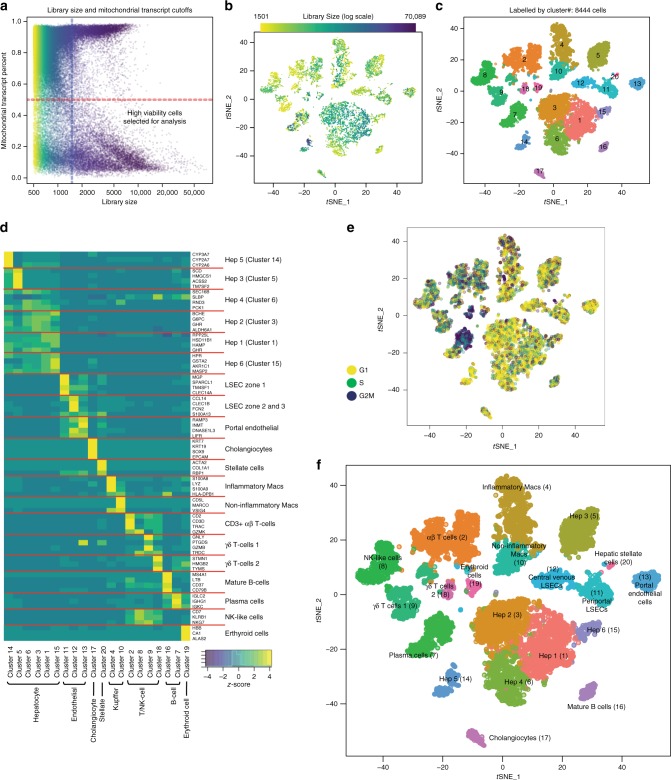
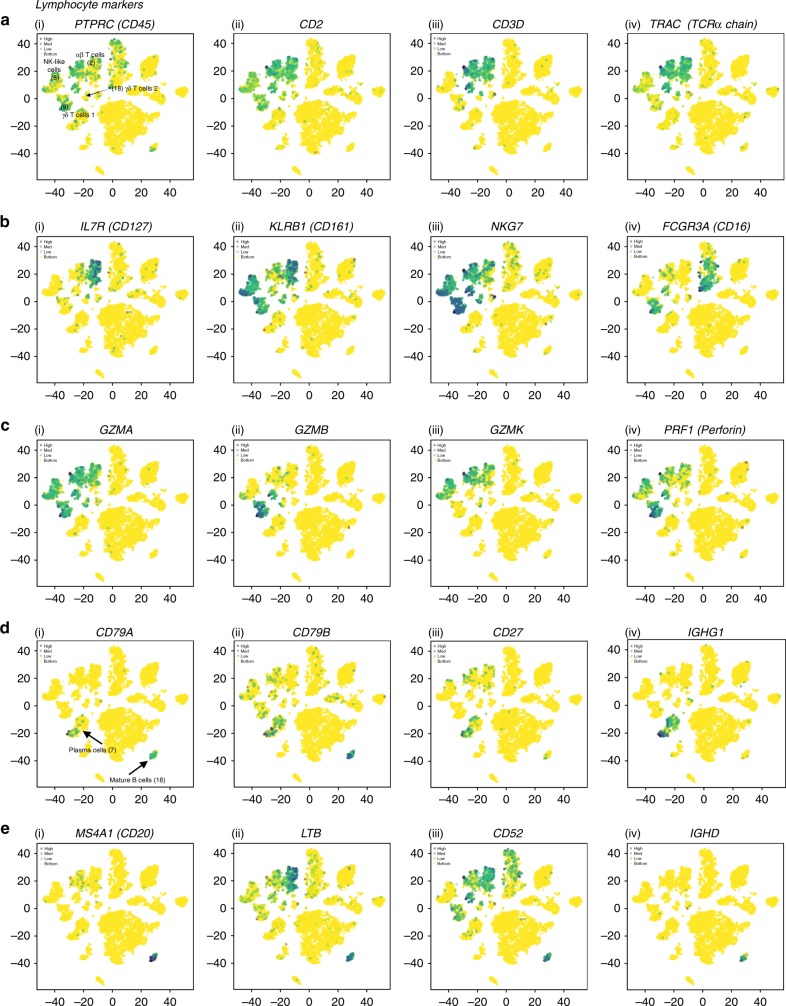
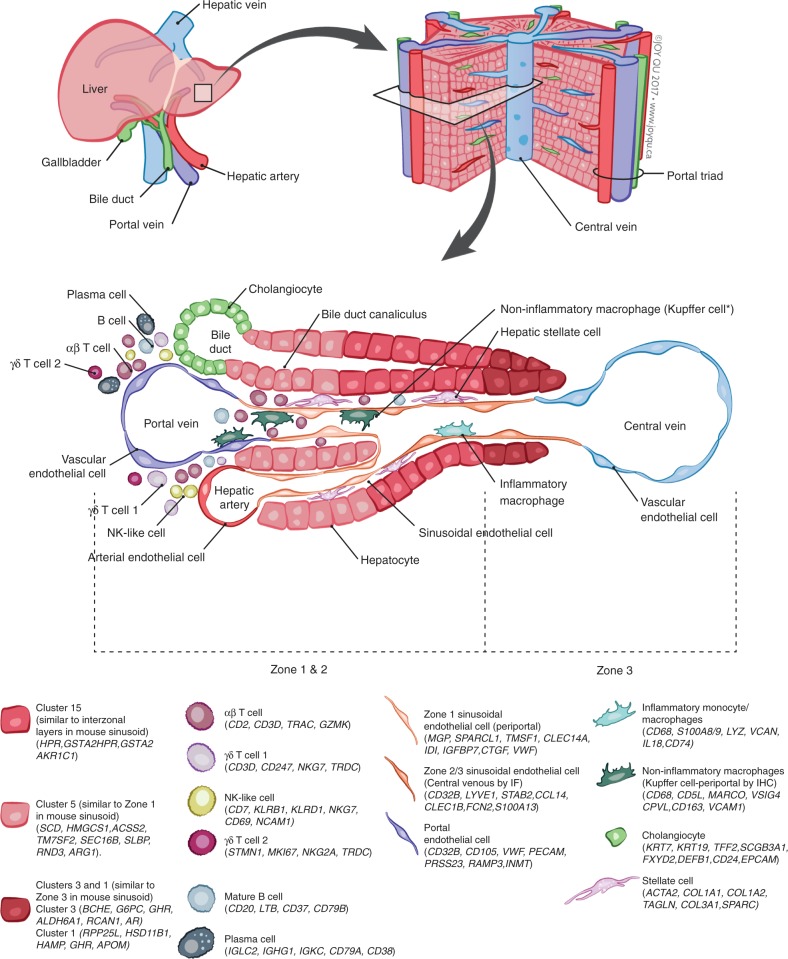
The liver is the largest solid organ in the body and is critical for metabolic and immune functions. However, little is known about the cells that make up the human liver and its immune microenvironment. Here we report a map of the cellular landscape of the human liver using single-cell RNA sequencing. We provide the transcriptional profiles of 8444 parenchymal and non-parenchymal cells obtained from the fractionation of fresh hepatic tissue from five human livers. Using gene expression patterns, flow cytometry, and immunohistochemical examinations, we identify 20 discrete cell populations of hepatocytes, endothelial cells, cholangiocytes, hepatic stellate cells, B cells, conventional and non-conventional T cells, NK-like cells, and distinct intrahepatic monocyte/macrophage populations. Together, our study presents a comprehensive view of the human liver at single-cell resolution that outlines the characteristics of resident cells in the liver, and in particular provides a map of the human hepatic immune microenvironment.
Overview
The claims and statistics of this paper haven’t been checked yet.
Free: it reads the open-access text and checks the first 5 claims that cite a source we can check. Create a free account to check every claim.
Integrity signals
Registry
Cites
Statistics
Figures
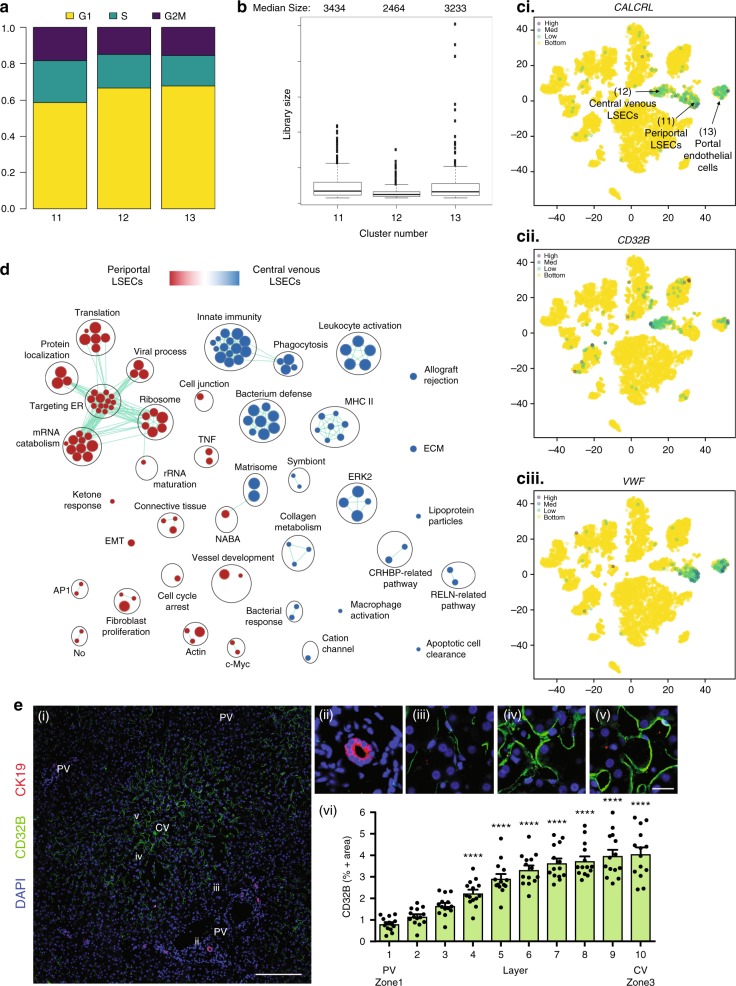
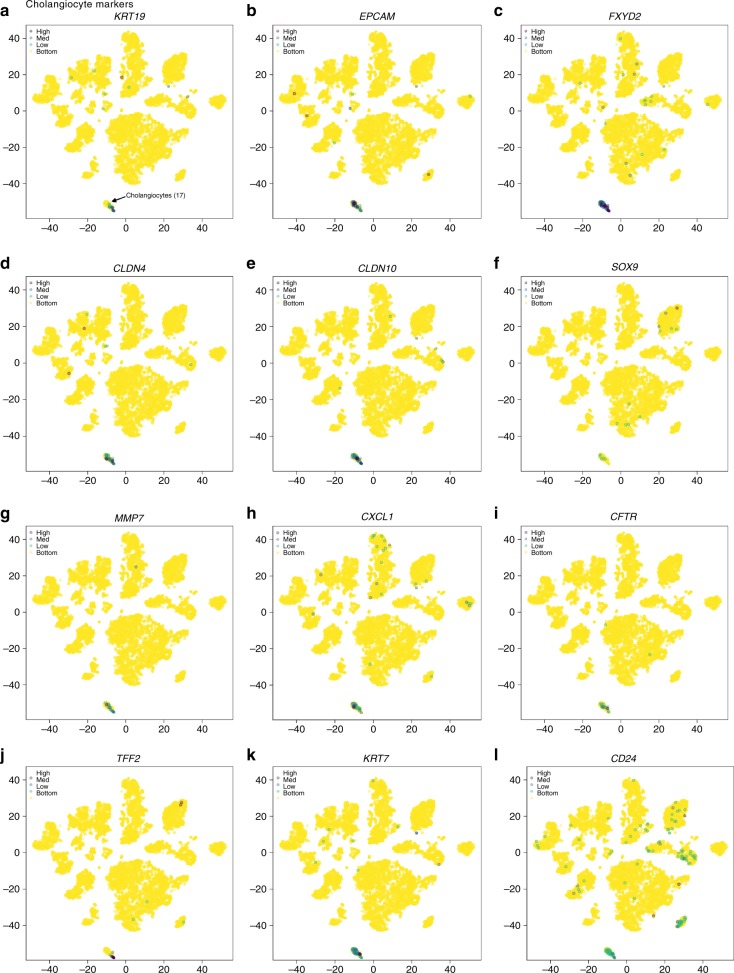
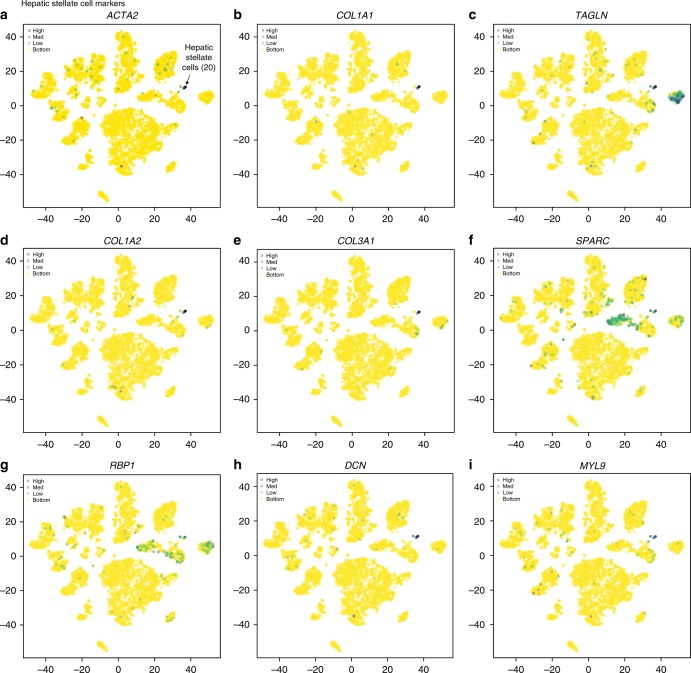
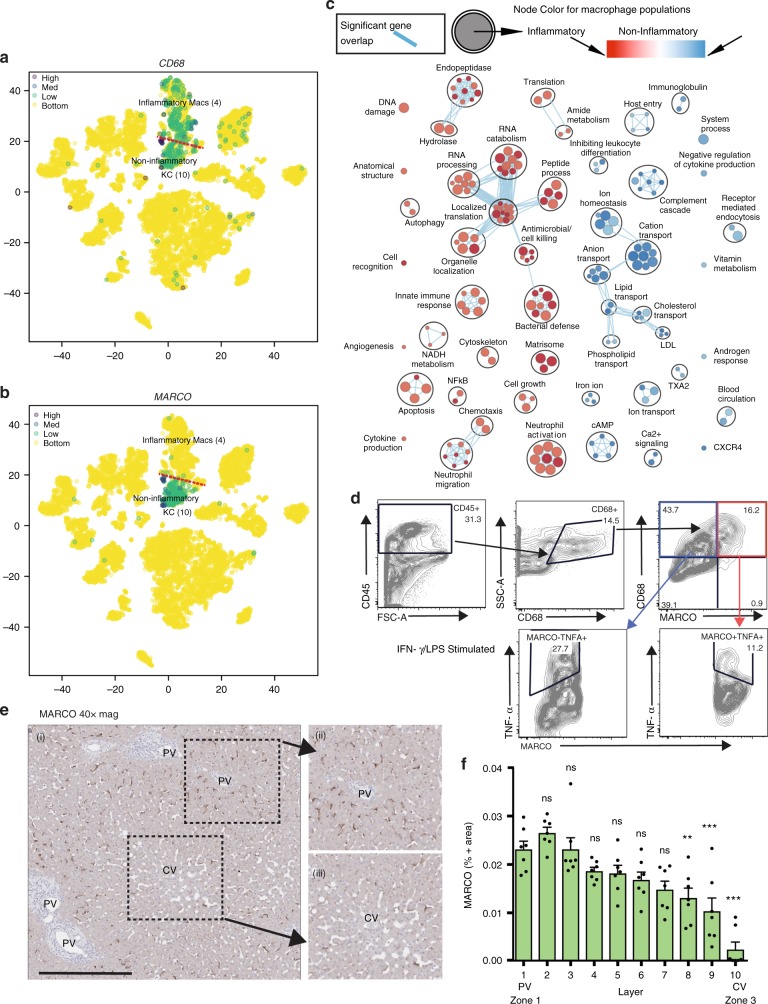
Verification
Claims the paper makes
The claims and statistics of this paper haven’t been checked yet.
Free: it reads the open-access text and checks the first 5 claims that cite a source we can check. Create a free account to check every claim.
Claims other papers make about this one
Each is checked against this paper’s own text: does it say what the citing paper says it does?
The source backs part of the claim, not all of it — or backs it for a different population, condition or comparison.
In the citing paper
“In the adult liver, endothelial cells appear to be zonated. scRNA-seq revealed that periportal LSECs express high levels of CD36 and Adam23, which progressively diminish in the midzonal and pericentral zones. On the other hand, pericentral LSECs and central venous ECs abundantly express Wnt2, Wnt9, Lhx6, and Kit, which decrease toward midzonal and periportal zone ECs. Flt4, Lyve1, Cd32b, and Stab”
From Inflammation and immunity in liver homeostasis and disease: a nexus of hepatocytes, nonparenchymal cells and immune cells (2025) · doi:10.1038/s41423-025-01313-7 · cites this paper as [291]
Experimental — accuracy not yet measuredThe source backs part of the claim, not all of it — or backs it for a different population, condition or comparison.
In the citing paper
“Macrophages consist of a heterogeneous population even in a healthy liver, where they harbor a wide spectrum of expression profiles (19–22). They comprise resident Kupffer cells, which derive from erythromyeloid progenitors (23), and infiltrating monocyte-derived macrophages, which originate preferentially from the bone marrow but also from the peritoneal cavity or the spleen (21, 24).”
From Immunoregulation of Liver Fibrosis: New Opportunities for Antifibrotic Therapy (2024) · doi:10.1146/annurev-pharmtox-020524-012013 · cites this paper as [22]
Experimental — accuracy not yet measuredThe source backs part of the claim, not all of it — or backs it for a different population, condition or comparison.
In the citing paper
“MacParland et al. found that quiescent and activated HSCs were transcriptomically distinct, with activated HSCs downregulating vitamin A storage-related genes, such as LRAT (lecithin retinol acyltransferase) and RBP1 (retinol binding protein 1), and upregulating pro-fibrogenic genes, such as collagen type I α1, TIMP, CTGF, TGFB1 and tenascin C. They also identified a subgroup that may represent”
From Understanding the cellular interactome of non-alcoholic fatty liver disease (2022) · cites this paper as [132]
Experimental — accuracy not yet measuredThe source backs part of the claim, not all of it — or backs it for a different population, condition or comparison.
In the citing paper
“ScRNAseq has uncovered functional zonation of murine HSC, allowing high-resolution identification of the critical pathogenic collagen-producing cells following centrilobular liver injury16.”
From Fibrosis: from mechanisms to medicines (2020) · cites this paper as [16]
Experimental — accuracy not yet measuredThe source backs part of the claim, not all of it — or backs it for a different population, condition or comparison.
In the citing paper
“Pseudotemporal trajectory and RNA velocity, another computational approach that predicts the future state of individual cells on a timescale, demonstrated that central vein-associated HSCs are the dominant source of pathogenic collagen-producing cells following centrilobular liver injury16.”
From Fibrosis: from mechanisms to medicines (2020) · cites this paper as [16]
Experimental — accuracy not yet measured
7 more claims about this paper
Create a free account to see every claim other papers make about this one.
Self-check
Percentages, sums and reported differences re-computed from the paper’s own numbers.
The self-check needs the paper’s full text.
Citations
Cites
GSVA: gene set variation analysis for microarray and RNA-Seq data
Hänzelmann, S., Castelo, R., & Guinney, J. (2013) · BMC Bioinformatics · doi:10.1186/1471-2105-14-7 · Cited by 15,440
Highly parallel genome-wide expression profiling of individual cells using nanoliter droplets.
Macosko, E. Z., Basu, A., Satija, R., Nemesh, J., Shekhar, K., Goldman, M., Tirosh, I., Bialas, A. R., Kamitaki, N., Martersteck, E. M., et al. (2015) · Cell · doi:10.1016/j.cell.2015.05.002 · Cited by 7,110
Mapping identifiers for the integration of genomic datasets with the R/Bioconductor package biomaRt
Durinck, S., Spellman, P. T., Birney, E., & Huber, W. (2009) · Nature Protocols · doi:10.1038/nprot.2009.97 · Cited by 4,197
Simultaneous epitope and transcriptome measurement in single cells
Stoeckius, M., Hafemeister, C., Stephenson, W., Houck-Loomis, B., Chattopadhyay, P. K., Swerdlow, H., Satija, R., & Smibert, P. (2017) · Nature Methods · doi:10.1038/nmeth.4380 · Cited by 3,098
A Lineage of Myeloid Cells Independent of Myb and Hematopoietic Stem Cells
Schulz, C., Perdiguero, E. G., Chorro, L., Szabo-Rogers, H., Cagnard, N., Kierdorf, K., Prinz, M., Wu, B., Jacobsen, S. E. W., Pollard, J. W., et al. (2012) · Science · doi:10.1126/science.1219179 · Cited by 2,578
Single-cell RNA-seq reveals new types of human blood dendritic cells, monocytes, and progenitors
Villani, A.-C., Satija, R., Reynolds, G., Sarkizova, S., Shekhar, K., Fletcher, J., Griesbeck, M., Butler, A., Zheng, S., Lazo, S., et al. (2017) · Science · doi:10.1126/science.aah4573 · Cited by 2,413
Enrichment Map: A Network-Based Method for Gene-Set Enrichment Visualization and Interpretation
Merico, D., Isserlin, R., Stueker, O., Emili, A., & Bader, G. D. (2010) · PLoS ONE · doi:10.1371/journal.pone.0013984 · Cited by 2,235
Self-citationTissue-Resident Macrophage Enhancer Landscapes Are Shaped by the Local Microenvironment
Lavin, Y., Winter, D., Blecher-Gonen, R., David, E., Keren-Shaul, H., Merad, M., Jung, S., & Amit, I. (2014) · Cell · doi:10.1016/j.cell.2014.11.018 · Cited by 2,167
Tissue-Resident Macrophage Ontogeny and Homeostasis
Ginhoux, F., & Guilliams, M. (2016) · Immunity · doi:10.1016/j.immuni.2016.02.024 · Cited by 1,884
Single-cell RNA sequencing to explore immune cell heterogeneity
Papalexi, E., & Satija, R. (2018) · Nature Reviews Immunology · doi:10.1038/nri.2017.76 · Cited by 1,806
Cited by
Items 101–200 of 1,003
Macrophage Phenotype and Function in Liver Disorder
Dou, L., Shi, X., He, X., & Gao, Y. (2020) · Frontiers in Immunology · doi:10.3389/fimmu.2019.03112 · Cited by 178
“This idea is further supported by a recent study which showed that human KCs might exhibit a tolerogenic phenotype (12); they accumulate at the peritumoral stroma expressing high levels of PD-L1 (90, 91) and galectin-9 (92), thereby inhibiting the antitumor response by activating PD-L1/PD-1 and galectin-9/TIM-3 signal…”
BackgroundResultA comprehensive human embryo reference tool using single-cell RNA-sequencing data
Zhao, C., Plaza Reyes, A., Schell, J. P., Weltner, J., Ortega, N. M., Zheng, Y., Björklund, Å. K., Baqué-Vidal, L., Sokka, J., Trokovic, R., et al. (2025) · Nature Methods · doi:10.1038/s41592-024-02493-2 · Cited by 167
“…processed expression files from unrelated datasets, including five scRNA-seq datasets from human pancreas, macrophage, fetal kidney development and liver tissues, were downloaded from https://cblast. gao-lab.org/ to test the correlation coefficient with human embryonic reference cells 89–93 .”
Guan, G., Gao, L., Wang, J., Wen, X., Mao, T., Peng, S., Zhang, T., Chen, X., & Lu, F. (2020) · PubMed · doi:10.3760/cma.j.issn.1007-3418.2020.02.002 · Cited by 173
The inflammatory speech of fibroblasts
Schuster, R., Rockel, J. S., Kapoor, M., & Hinz, B. (2021) · Immunological Reviews · doi:10.1111/imr.12971 · Cited by 172
Metabolism drives macrophage heterogeneity in the tumor microenvironment
Li, S., Yu, J., Huber, A., Kryczek, I., Wang, Z., Jiang, L., Li, X., Du, W., Li, G., Wei, S., et al. (2022) · Cell Reports · doi:10.1016/j.celrep.2022.110609 · Cited by 164
“Hepatic macrophages exhibit different origins, locations, and times of establishing residency in the liver (Blériot and Ginhoux, 2019; MacParland et al., 2018).”
BackgroundSciBet as a portable and fast single cell type identifier
Li, C., Liu, B., Kang, B., Liu, Z., Liu, Y., Chen, C., Ren, X., & Zhang, Z. (2020) · Nature Communications · doi:10.1038/s41467-020-15523-2 · Cited by 176
Tissue-resident immune cells in humans
Gray, J. I., & Farber, D. L. (2022) · Annual Review of Immunology · doi:10.1146/annurev-immunol-093019-112809 · Cited by 181
Hosseini-Kharat, M., Bremmell, K. E., & Prestidge, C. A. (2025) · Molecular Therapy Methods & Clinical Development · doi:10.1016/j.omtm.2025.101436 · Cited by 179
“34 Once in proximity to hepatocytes, LNPs that successfully bind to ApoE can be taken up via LDL receptors, promoting functional delivery.”
InfluentialParis, J., & Henderson, N. C. (2022) · Hepatology · doi:10.1002/hep.32408 · Cited by 168
“published the first human liver scRNA- Seq data set, sequencing a total of 8,444 cells from the livers of five donors who were neurologically deceased.[28] They identified 20 hepatic cell populations, including six hepatocyte clusters.”
BackgroundInfluentialA proteo-transcriptomic map of non-alcoholic fatty liver disease signatures
Govaere, O., Hasoon, M., Alexander, L., Cockell, S., Tiniakos, D., Ekstedt, M., Schattenberg, J. M., Boursier, J., Bugianesi, E., Ratziu, V., et al. (2023) · Nature Metabolism · doi:10.1038/s42255-023-00775-1 · Cited by 178
Slevin, E., Baiocchi, L., Wu, N., Ekser, B., Sato, K., Lin, E., Ceci, L., Chen, L., Lorenzo, S. R., Xu, W., et al. (2020) · The American Journal of Pathology · doi:10.1016/j.ajpath.2020.08.014 · Cited by 159
Single-cell atlases: shared and tissue-specific cell types across human organs
Elmentaite, R., Domínguez Conde, C., Yang, L., & Teichmann, S. A. (2022) · Nature Reviews Genetics · doi:10.1038/s41576-022-00449-w · Cited by 169
A single cell atlas of the human liver tumor microenvironment
Massalha, H., Bahar Halpern, K., Abu‐Gazala, S., Jana, T., Massasa, E. E., Moor, A. E., Buchauer, L., Rozenberg, M., Pikarsky, E., Amit, I., et al. (2020) · Molecular Systems Biology · doi:10.15252/msb.20209682 · Cited by 174
“Single cell atlases have provided important insight into the development (Camp et al, 2017; Segal et al, 2019; Popescu et al, 2019), physiology (MacParland et al, 2018; Aizarani et al, 2019), and pathology (Zhang et al, 2019, 2020; Ramachandran et al, 2019; Sharma et al, 2020) of the human liver.”
BackgroundFriend or foe? The elusive role of hepatic stellate cells in liver cancer
Cogliati, B., Yashaswini, C. N., Wang, S., Sia, D., & Friedman, S. L. (2023) · Nature Reviews Gastroenterology & Hepatology · doi:10.1038/s41575-023-00821-z · Cited by 148
“In a healthy liver, initial scRNA-seq studies found only one HSC population 55,56 , whereas in injury, there are at least two subpopulations of HSCs based on the expression of genes related to retinoid storage and myofibro-blast function, which roughly correspond to quiescent and activated HSCs,…”
BackgroundInterleukin-36γ–producing macrophages drive IL-17–mediated fibrosis
Sommerfeld, S. D., Cherry, C., Schwab, R. M., Chung, L., Maestas, D. R., Laffont, P., Stein, J. E., Tam, A., Ganguly, S., Housseau, F., et al. (2019) · Science Immunology · doi:10.1126/sciimmunol.aax4783 · Cited by 161
“We then compared the results with macrophages computationally extracted from publicly available datasets of healthy human liver (27), a mouse model of idiopathic pulmonary fibrosis (28), and a mouse model of sarcoma with cancer immunotherapy (6).”
MethodResultWu, M.-J., Shi, L., Dubrot, J., Merritt, J., Vijay, V., Wei, T.-Y., Kessler, E., Olander, K. E., Adil, R., Pankaj, A., et al. (2022) · Cancer Discovery · doi:10.1158/2159-8290.cd-21-1077 · Cited by 155
Wei, C., Zhu, M.-X., Zhang, P., Huang, X., Wan, J., Yao, X., Hu, Z.-T., Chai, X., Peng, R., Yang, X., et al. (2022) · Journal of Hepatology · doi:10.1016/j.jhep.2022.02.019 · Cited by 166
Su, Q., Kim, S. Y., Adewale, F., Zhou, Y., Aldler, C., Ni, M., Wei, Y., Burczynski, M. E., Atwal, G. S., Sleeman, M. W., et al. (2021) · iScience · doi:10.1016/j.isci.2021.103233 · Cited by 149
Single-cell RNA sequencing of human liver reveals hepatic stellate cell heterogeneity
Payen, V. L., Lavergne, A., Alevra Sarika, N., Colonval, M., Karim, L., Deckers, M., Najimi, M., Coppieters, W., Charloteaux, B., Sokal, E. M., et al. (2021) · JHEP Reports · doi:10.1016/j.jhepr.2021.100278 · Cited by 160
“Cells of the EC, MP, and LP compartment comprised different subpopulations recently described by scRNA-seq, including macrovascular ECs, as well as periportal (PP) and pericentral (PC) liver sinusoidal ECs (Figure S2D–F), MARCOLILRB5 immunoregulatory MPs, killer lectin-like receptor (KLR)-expressing natural killer cel…”
ResultDe Simone, G., Andreata, F., Bleriot, C., Fumagalli, V., Laura, C., Garcia-Manteiga, J. M., Di Lucia, P., Gilotto, S., Ficht, X., De Ponti, F. F., et al. (2021) · Immunity · doi:10.1016/j.immuni.2021.05.005 · Cited by 154
“Of note, recent publications suggest the existence of a human KC2-like subset that expresses at least some of the human orthologs of the KC2-specific genes identified here (Aizarani et al., 2019; MacParland et al., 2018; Ramachandran et al., 2019; Wu et al., 2020).”
BackgroundHigh-throughput single-сell sequencing in cancer research
Jia, Q., Chu, H., Jin, Z., Long, H., & Zhu, B. (2022) · Signal Transduction and Targeted Therapy · doi:10.1038/s41392-022-00990-4 · Cited by 178
“, MARCO, VSIG4, and CD163).(163) Aizarani et al.”
Püschel, G. P., Klauder, J., & Henkel, J. (2022) · Journal of Clinical Medicine · doi:10.3390/jcm11154358 · Cited by 345
Khaliq, A. M., Rajamohan, M., Saeed, O. A. M., Mansouri, K., Adil, A., Zhang, C., Turk, A. A., Carstens, J. L., House, M. G., Hayat, S., et al. (2024) · Nature Genetics · doi:10.1038/s41588-024-01914-4 · Cited by 161
“Addi tionally, the RCTD deconvoluted various immune cell types, show ing their presence in both the tumor and stromal areas, in line with previous scRNAseq data 8,12–20 (Fig.”
InfluentialHarnessing big ‘omics’ data and AI for drug discovery in hepatocellular carcinoma
Chen, B., Garmire, L., Calvisi, D. F., Chua, M.-S., Kelley, R. K., & Chen, X. (2020) · Nature Reviews Gastroenterology & Hepatology · doi:10.1038/s41575-019-0240-9 · Cited by 154
Recent advances in understanding the role of IL-4 signaling
Keegan, A. D., Leonard, W. J., & Zhu, J. (2021) · Faculty Reviews · doi:10.12703/r/10-71 · Cited by 154
Resolving the immune landscape of human prostate at a single-cell level in health and cancer
Tuong, Z. K., Loudon, K. W., Berry, B., Richoz, N., Jones, J., Tan, X., Nguyen, Q. H., George, A., Hori, S., Field, S., et al. (2021) · Cell Reports · doi:10.1016/j.celrep.2021.110132 · Cited by 160
Role of Macrophages in Wound Healing
Willenborg, S., Injarabian, L., & Eming, S. A. (2022) · Cold Spring Harbor Perspectives in Biology · doi:10.1101/cshperspect.a041216 · Cited by 181
Model-based deep embedding for constrained clustering analysis of single cell RNA-seq data
Tian, T., Zhang, J., Lin, X., Wei, Z., & Hakonarson, H. H. (2021) · Nature Communications · doi:10.1038/s41467-021-22008-3 · Cited by 175
The Scavenger Function of Liver Sinusoidal Endothelial Cells in Health and Disease
Bhandari, S., Larsen, A. K., McCourt, P., Smedsrød, B., & Sørensen, K. K. (2021) · Frontiers in Physiology · doi:10.3389/fphys.2021.757469 · Cited by 136
Acute liver failure is regulated by MYC- and microbiome-dependent programs
Kolodziejczyk, A. A., Federici, S., Zmora, N., Mohapatra, G., Dori-Bachash, M., Hornstein, S., Leshem, A., Reuveni, D., Zigmond, E., Tobar, A., et al. (2020) · Nature Medicine · doi:10.1038/s41591-020-1102-2 · Cited by 153
WebCSEA: web-based cell-type-specific enrichment analysis of genes
Dai, Y., Hu, R., Liu, A., Cho, K. S., Manuel, A. M., Li, X., Dong, X., Jia, P., & Zhao, Z. (2022) · Nucleic Acids Research · doi:10.1093/nar/gkac392 · Cited by 161
Single-cell atlas of human liver development reveals pathways directing hepatic cell fates
Wesley, B. T., Ross, A. D. B., Muraro, D., Miao, Z., Saxton, S., Tomaz, R. A., Morell, C. M., Ridley, K., Zacharis, E. D., Petrus-Reurer, S., et al. (2022) · Nature Cell Biology · doi:10.1038/s41556-022-00989-7 · Cited by 146
“Tissue-resident Kupffer cells could be distinguished from monocyte-derived macrophages by the expression of MARCO, CD163, FCGR3A and CD5L 8 and the absence of LSP1 and CD48 (Fig.”
Self-citationHeterogeneity of HSCs in a Mouse Model of NASH
Rosenthal, S. B., Liu, X., Ganguly, S., Dhar, D., Pasillas, M. P., Ricciardelli, E., Li, R. Z., Troutman, T. D., Kisseleva, T., Glass, C. K., et al. (2021) · Hepatology · doi:10.1002/hep.31743 · Cited by 145
Jin, K., Gao, S., Yang, P., Guo, R., Li, D., Zhang, Y., Lu, X., Fan, G., & Fan, X. (2022) · Small Methods · doi:10.1002/smtd.202100752 · Cited by 153
Acquisition of epithelial plasticity in human chronic liver disease
Gribben, C., Galanakis, V., Calderwood, A., Williams, E. C., Chazarra-Gil, R., Larraz, M., Frau, C., Puengel, T., Guillot, A., Rouhani, F. J., et al. (2024) · Nature · doi:10.1038/s41586-024-07465-2 · Cited by 142
“However, we quickly abandoned using cells isolated from fresh biopsy because many hepatocytes and chol-angiocytes were lost using this method, as shown by previous studies 38,39 .”
MethodThe Roles of Immune Cells in the Pathogenesis of Fibrosis
Huang, E., Peng, N., Xiao, F., Hu, D., Wang, X., & Lu, L. (2020) · International Journal of Molecular Sciences · doi:10.3390/ijms21155203 · Cited by 144
“Macrophages are heterogeneous populations with multiple phenotypes and diverse plasticity under the influence of different microenvironmental factors in various organs [6].”
BackgroundTakeshita, Y., Honda, M., Harada, K., Kita, Y., Takata, N., Tsujiguchi, H., Tanaka, T., Goto, H., Nakano, Y., Iida, N., et al. (2022) · Diabetes Care · doi:10.2337/dc21-2049 · Cited by 146
“Gene set enrichment analysis was done using the single-cell RNA-seq gene signature (42).”
BackgroundMethodPeriportal macrophages protect against commensal-driven liver inflammation
Miyamoto, Y., Kikuta, J., Matsui, T., Hasegawa, T., Fujii, K., Okuzaki, D., Liu, Y.-C., Yoshioka, T., Seno, S., Motooka, D., et al. (2024) · Nature · doi:10.1038/s41586-024-07372-6 · Cited by 135
Longevity and replenishment of human liver-resident memory T cells and mononuclear phagocytes
Pallett, L. J., Burton, A. R., Amin, O. E., Rodriguez-Tajes, S., Patel, A. A., Zakeri, N., Jeffery-Smith, A., Swadling, L., Schmidt, N. M., Baiges, A., et al. (2020) · Journal of Experimental Medicine · doi:10.1084/jem.20200050 · Cited by 134
Esparza-Baquer, A., Labiano, I., Sharif, O., Agirre-Lizaso, A., Oakley, F., Rodrigues, P. M., Zhuravleva, E., O'Rourke, C. J., Hijona, E., Jimenez-Agüero, R., et al. (2021) · Gut · doi:10.1136/gutjnl-2019-319227 · Cited by 125
“27 Furthermore, in line with recent work demonstrating the presence of monocyte derived TREM-2+CD9+ scar-associated macrophages (SAMacs) in human liver cirrhosis, 28 the macrophage cluster was characterised by CD9 presence (figure 1G).”
Functional Roles of Chemokine Receptor CCR2 and Its Ligands in Liver Disease
She, S., Ren, L., Chen, P., Wang, M., Chen, D., Wang, Y., & Chen, H. (2022) · Frontiers in Immunology · doi:10.3389/fimmu.2022.812431 · Cited by 122
“Based on the public database of liver single cell RNA sequencing (ScRNA-seq), we identified 12 liver cell clusters (T cell, NK cell, Endothelial cell, Mononuclear phagocyte 1, Hepatocyte, Mononuclear phagocyte 2, Mesenchyme cell 1, B cell, Mesenchyme cell 2, Innate lymphoid cell, Plasma cell, Mesenchyme cell 3) in the…”
MethodPutative cell type discovery from single-cell gene expression data
Miao, Z., Moreno, P. A., Huang, N., Papatheodorou, I., Brazma, A., & Teichmann, S. A. (2020) · Nature Methods · doi:10.26226/morressier.5ebd45acffea6f735881af34 · Cited by 146
Cheng, M. L., Nakib, D., Perciani, C. T., & MacParland, S. A. (2021) · Clinical Science · doi:10.1042/cs20190654 · Cited by 144
Self-citationWang, X., Yang, L., Wang, Y.-C., Xu, Z.-R., Feng, Y., Zhang, J., Wang, Y., & Xu, C.-R. (2020) · Cell Research · doi:10.1038/s41422-020-0378-6 · Cited by 126
Serine catabolism generates liver NADPH and supports hepatic lipogenesis
Zhang, Z., TeSlaa, T. A., Xu, X., Zeng, X., Yang, L., Xing, G., Tesz, G. J., Clasquin, M. F., & Rabinowitz, J. D. (2021) · Nature Metabolism · doi:10.1038/s42255-021-00487-4 · Cited by 137
Wolf, J., Rasmussen, D. K., Sun, Y. J., Vu, J. T., Wang, E., Espinosa, C. A., Bigini, F., Chang, R. T., Montague, A. A., Tang, P. H., et al. (2023) · Cell · doi:10.1016/j.cell.2023.09.012 · Cited by 140
Molecular signatures of long-term hepatocellular carcinoma risk in nonalcoholic fatty liver disease
Fujiwara, N., Kubota, N., Crouchet, É., Koneru, B., Marquez, C. A., Jajoriya, A. K., Panda, G., Qian, T., Zhu, S., Goossens, N., et al. (2022) · Science Translational Medicine · doi:10.1126/scitranslmed.abo4474 · Cited by 140
Gottschlich, A., Thomas, M., Grünmeier, R., Lesch, S., Rohrbacher, L., Igl, V., Briukhovetska, D., Benmebarek, M.-R., Vick, B., Dede, S., et al. (2023) · Nature Biotechnology · doi:10.1038/s41587-023-01684-0 · Cited by 139
Yao, R.-Q., Zhao, P., Li, Z., Liu, Y., Zheng, L., Duan, Y., Wang, L., Yang, R., Kang, H., Hao, J.-W., et al. (2023) · Military Medical Research · doi:10.1186/s40779-023-00462-y · Cited by 141
“Meanwhile, cells form cluster of C14 closely resembled HLA-DRlowCD163high monocytes, since it displayed enhanced expression of CD163 with reduction in HLA-DR expression, in association with the phenotype of anti-inflammatory macrophage [26, 27].”
BackgroundSegal, J. M., Kent, D., Wesche, D. J., Ng, S. S., Serra, M., Oulès, B., Kar, G., Emerton, G., Blackford, S. J. I., Darmanis, S., et al. (2019) · Nature Communications · doi:10.1038/s41467-019-11266-x · Cited by 125
The Emerging Role of B Cells in the Pathogenesis of NAFLD
Barrow, F., Khan, S., Wang, H., & Revelo, X. S. (2021) · Hepatology · doi:10.1002/hep.31889 · Cited by 126
Hepatic Stellate Cell Regulation of Liver Regeneration and Repair
Kitto, L. J., & Henderson, N. C. (2021) · Hepatology Communications · doi:10.1002/hep4.1628 · Cited by 117
“Single-cell genomics approaches are transforming our understanding of disease pathogenesis across hepatology, allowing interrogation of cell populations in health and disease at unprecedented resolution.(5-10) Recently, single-cell RNA sequencing (scRNA-seq) experiments have enabled deconvolution of the mouse hepatic…”
BackgroundBerthier, A., Johanns, M., Zummo, F. P., Lefebvre, P., & Staels, B. (2021) · Biochimica et Biophysica Acta (BBA) - Molecular Basis of Disease · doi:10.1016/j.bbadis.2021.166097 · Cited by 125
“Even though it was hypothesized that KCs might be spatially heterogeneous, and different subpopulations of cells have indeed been identified, whether this is due to a true zonation process remains to be further investigated [53,78,79].”
BackgroundTyrosine kinase receptor B attenuates liver fibrosis by inhibiting TGF-β/SMAD signaling
Song, Y., Wei, J., Li, R., Fu, R., Han, P., Wang, H., Zhang, G., Li, S., Chen, S., Liu, Z., et al. (2023) · Hepatology · doi:10.1097/hep.0000000000000319 · Cited by 127
“Compared with the differentially expressed genes in human HSCs measured at a single-cell resolution [16] (Figure S1E, http://links.lww.com/HEP/ D445), most genes reported were considered to function as the regulator of fibrosis, except Fmo3 , TrkB , and Celf1 (Figure S1F,…”
BackgroundSpatial transcriptomics of healthy and fibrotic human liver at single-cell resolution
Watson, B. R., Paul, B., Rahman, R. U., Amir-Zilberstein, L., Segerstolpe, Å., Epstein, E. T., Murphy, S., Geistlinger, L., Lee, T., Shih, A., et al. (2025) · Nature Communications · doi:10.1038/s41467-024-55325-4 · Cited by 158
“6b), most consistent with non-in fl ammatory macrophages or Kupffer cells 10,11,21 .”
InfluentialThe tumour microenvironment shapes innate lymphoid cells in patients with hepatocellular carcinoma
Heinrich, B., Gertz, E. M., Schäffer, A. A., Craig, A. J., Ruf, B., Subramanyam, V., McVey, J. C., Diggs, L. P., Heinrich, S., Rosato, U., et al. (2021) · Gut · doi:10.1136/gutjnl-2021-325288 · Cited by 128
Ratziu, V., Scanlan, T. S., & Bruinstroop, E. (2024) · Journal of Hepatology · doi:10.1016/j.jhep.2024.10.018 · Cited by 128
Reich, M., Spomer, L., Klindt, C., Fuchs, K., Stindt, J., Deutschmann, K., Höhne, J., Liaskou, E., Hov, J. R., Karlsen, T. H., et al. (2021) · Journal of Hepatology · doi:10.1016/j.jhep.2021.03.029 · Cited by 121
Super enhancer regulation of cytokine-induced chemokine production in alcoholic hepatitis
Liu, M., Cao, S., He, L., Gao, J., Arab, J. P., Cui, H., Xuan, W., Gao, Y., Sehrawat, T. S., Hamdan, F. H., et al. (2021) · Nature Communications · doi:10.1038/s41467-021-24843-w · Cited by 120
Donovan, M. K. R., D’Antonio-Chronowska, A., D’Antonio, M., & Frazer, K. A. (2020) · Nature Communications · doi:10.1038/s41467-020-14561-0 · Cited by 122
Scalable production of tissue-like vascularized liver organoids from human PSCs
Harrison, S. P., Siller, R., Tanaka, Y., Chollet, M. E., de la Morena-Barrio, M. E., Xiang, Y., Patterson, B., Andersen, E., Bravo-Pérez, C., Kempf, H., et al. (2023) · Experimental & Molecular Medicine · doi:10.1038/s12276-023-01074-1 · Cited by 119
Ng, H. H. M., Lee, R. Y., Goh, S., Tay, I. S. Y., Lim, X., Lee, B., Chew, V., Li, H., Tan, B., Lim, S., et al. (2020) · Journal for ImmunoTherapy of Cancer · doi:10.1136/jitc-2020-000987 · Cited by 116
“Notably, using a publicly available, single cell RNA sequencing human liver dataset, 63 we also found that the CD38 gene is primarily expressed by macrophages and immune cells such as plasma and natural killer (NK) cells, Open access compared with hepatocytes and stromal cells (online supplementary…”
Understanding the cellular interactome of non-alcoholic fatty liver disease
Wallace, S. J., Tacke, F., Schwabe, R. F., & Henderson, N. C. (2022) · JHEP Reports · doi:10.1016/j.jhepr.2022.100524 · Cited by 116
“These subpopulations were identified in healthy human livers, facilitating exploration of the role of HSCs in liver homeostasis.(132) The”
BackgroundA comparison of COVID-19, SARS and MERS
Hu, T., Liu, Y., Zhao, M., Zhuang, Q., Xu, L., & He, Q. (2020) · PeerJ · doi:10.7717/peerj.9725 · Cited by 126
Han, Y., Ling, Q., Wu, L. M., Wang, X., Wang, Z., Chen, J., Zheng, Z., Zhou, Z., Jia, L., Li, L., et al. (2023) · Gut Microbes · doi:10.1080/19490976.2023.2221485 · Cited by 118
Pirola, C. J., & Sookoian, S. C. (2020) · Liver International · doi:10.1111/liv.14500 · Cited by 113
Gage, B. K., Liu, J. C., Innes, B. T., MacParland, S. A., McGilvray, I. D., Bader, G. D., & Keller, G. M. (2020) · Cell Stem Cell · doi:10.1016/j.stem.2020.06.007 · Cited by 104
Self-citationLiver Injury and Regeneration: Current Understanding, New Approaches, and Future Perspectives
Hora, S., & Wüestefeld, T. (2023) · Cells · doi:10.3390/cells12172129 · Cited by 127
“The researchers not only identified 20 distinct cell populations within the liver but also discovered two different populations of the macrophages of the liver along with distinct functions, thereby providing an in-depth view at a cellular level [89].”
BackgroundRegulation and functional roles of chemokines in liver diseases
Cao, S., Liu, M., Sehrawat, T. S., & Shah, V. H. (2021) · Nature Reviews Gastroenterology & Hepatology · doi:10.1038/s41575-021-00444-2 · Cited by 104
Understanding, predicting and achieving liver transplant tolerance: from bench to bedside
Thomson, A. W., Vionnet, J., & Fueyo, A. S. (2020) · Nature Reviews Gastroenterology & Hepatology · doi:10.1038/s41575-020-0334-4 · Cited by 114
Velazquez, J. J., LeGraw, R., Moghadam, F., Tan, Y., Kilbourne, J., Maggiore, J. C., Hislop, J., Liu, S., Cats, D., Chuva de Sousa Lopes, S. M., et al. (2021) · Cell Systems · doi:10.1016/j.cels.2020.11.002 · Cited by 108
“A uthor M anuscript A uthor M anuscript A uthor M anuscript A uthor M anuscript with scRNA-seq data from primary liver stellate and endothelial cells also grouped DesLO ELCs closest to zone 1 liver sinusoidal endothelial cells (LSECs) and SLCs closest to stellate cells (Figure S5G) (MacParland et al., 2018).”
MethodInfluentialInflammatory processes in the liver: divergent roles in homeostasis and pathology
Ahmed, O., Robinson, M. W., & O’Farrelly, C. (2021) · Cellular and Molecular Immunology · doi:10.1038/s41423-021-00639-2 · Cited by 111
Wang, F., Ding, P., Liang, X., Ding, X., Brandt, C. B., Sjöstedt, E., Zhu, J., Bolund, S., Zhang, L., de Rooij, L. P. M. H., et al. (2022) · Nature Communications · doi:10.1038/s41467-022-31388-z · Cited by 110
Understanding the heterogeneity of resident liver macrophages
Blériot, C., & Ginhoux, F. (2019) · Frontiers in Immunology · doi:10.3389/fimmu.2019.02694 · Cited by 107
“Interestingly, there are already few databases publically available such as tabula muris (45) or the mouse cell atlas (46) for mouse studies, but also human liver databases (31, 47).”
BackgroundXiong, L., Tian, K., Li, Y., Ning, W., Gao, X., & Zhang, Q. C. (2022) · Nature Communications · doi:10.1038/s41467-022-33758-z · Cited by 118
Neuregulin 4 suppresses NASH-HCC development by restraining tumor-prone liver microenvironment
Zhang, P., Chen, Z., Kuang, H., Liu, T., Zhu, J., Zhou, L., Wang, Q., Xiong, X., Meng, Z., Qiu, X., et al. (2022) · Cell Metabolism · doi:10.1016/j.cmet.2022.07.010 · Cited by 105
Self-citationSex-biased gene expression across mammalian organ development and evolution
Rodríguez-Montes, L., Ovchinnikova, S., Yuan, X., Studer, T., Sarropoulos, I., Anders, S., Kaessmann, H., & Cardoso-Moreira, M. (2023) · Science · doi:10.1126/science.adf1046 · Cited by 111
Zhang, H., Chen, T., Ren, J., Xia, Y., Onuma, A., Wang, Y., He, J., Wu, J., Wang, H., Hamad, A., et al. (2021) · Nature Metabolism · doi:10.1038/s42255-021-00402-x · Cited by 99
Andersen, M. E., Hagenbuch, B., Apte, U. M., Corton, J. C., Fletcher, T., Lau, C. S., Roth, W. L., Staels, B., Vega, G. L., M.A., H. J. C. I., et al. (2021) · Toxicology · doi:10.1016/j.tox.2021.152845 · Cited by 110
“These technologies could be employed to determine the effects of PFAS on other cell types or, with existing data sets, to determine the distribution of PPARα expression in these other cell types (Halpern et al., 2017; MacParland et al., 2018) and examine differences in PPARα pathway components in not just periportal a…”
MethodMederacke, I., Filliol, A., Affo, S., Nair, A., Hernandez, C., Sun, Q., Hamberger, F., Brundu, F., Chen, Y., Ravichandra, A., et al. (2022) · Science Translational Medicine · doi:10.1126/scitranslmed.abe5795 · Cited by 103
Single-cell and bulk transcriptomics of the liver reveals potential targets of NASH with fibrosis
Wang, Z.-Y., Keogh, A., Waldt, A., Cuttat, R., Neri, M., Zhu, S., Schuierer, S., Ruchti, A., Crochemore, C., Knehr, J., et al. (2021) · Scientific Reports · doi:10.1038/s41598-021-98806-y · Cited by 103
Zhang, J., Wang, Y., Fan, M., Guan, Y., Zhang, W., Huang, F., Zhang, Z., Li, X., Yuan, B., Liu, W., et al. (2024) · Cell Metabolism · doi:10.1016/j.cmet.2024.05.008 · Cited by 108
Heterogeneity and Function of Kupffer Cells in Liver Injury
Li, W., Chang, N., & Li, L. (2022) · Frontiers in Immunology · doi:10.3389/fimmu.2022.940867 · Cited by 102
“PD-L1) under LPS or IFN-gamma stimuli (31).”
BackgroundCellular plasticity balances the metabolic and proliferation dynamics of a regenerating liver
Chembazhi, U. V., Bangru, S., Hernaez, M., & Kalsotra, A. (2021) · Genome Research · doi:10.1101/gr.267013.120 · Cited by 102
Cappuyns, S., Philips, G., Vandecaveye, V., Boeckx, B., Schepers, R., Brussel, T. V., Arijs, I., Mechels, A., Bassez, A., Lodi, F., et al. (2023) · Nature Communications · doi:10.1038/s41467-023-43381-1 · Cited by 108
Jiang, Y., Rosborough, B. R., Chen, J., Das, S., Kitsios, G. D., McVerry, B. J., Mallampalli, R. K., Lee, J. S., Ray, A., Chen, W., et al. (2020) · JCI Insight · doi:10.1172/jci.insight.135678 · Cited by 122
“While the small sample size increases the opportunity for influence of confounding factors due to the clinical characteristics of the patients and treatments that cannot be adequately controlled, prior studies utilizing this technology have drawn biologically relevant conclusions from similar patient numbers (68, 69).”
ResultZhang, Z., Cui, F., Cao, C., Wang, Q., & Zou, Q. (2021) · Computers in Biology and Medicine · doi:10.1016/j.compbiomed.2021.105092 · Cited by 107
Molecular characterization and cell type composition deconvolution of fibrosis in NAFLD
Pantano, L., Agyapong, G., Shen, Y., Zhuo, Z., Fernández-Albert, F., Rust, W., Knebel, D., Hill, J., Boustany, C., Doerner, J. F., et al. (2021) · Scientific Reports · doi:10.1038/s41598-021-96966-5 · Cited by 103
“We noted that the cell composition changes in this study do not fully reflect the heterogenous plethora of additional cell types that drive fibrosis in NAFLD, including liver sinusoidal endothelial cells (LSECs) (13), T and B lymphocytes, and other immune cells.”
BackgroundHumanized mouse liver reveals endothelial control of essential hepatic metabolic functions
Kaffe, E., Roulis, M., Zhao, J., Qu, R., Sefik, E., Mirza, H., Zhou, J., Zheng, Y., Charkoftaki, G., Vasiliou, V., et al. (2023) · Cell · doi:10.1016/j.cell.2023.07.017 · Cited by 99
“H) formed several different clusters, similar to those in a healthy human liver single cell atlas 24 , showing that hepatocyte and LSEC diversity reflects the unique zonated architecture of the liver tissue.”
InfluentialThibaut, R., Gage, M. C., Pineda‐Torra, I., Chabrier, G., Venteclef, N., & Alzaid, F. (2022) · The FEBS Journal · doi:10.1111/febs.15877 · Cited by 95
(2025) · doi:10.1038/s41423-025-01313-7 · Cited by 97
The Multifaceted Roles of Macrophages in NAFLD Pathogenesis
Vonderlin, J., Chavakis, T., Sieweke, M., & Tacke, F. (2023) · Cellular and Molecular Gastroenterology and Hepatology · doi:10.1016/j.jcmgh.2023.03.002 · Cited by 96
Biology-inspired data-driven quality control for scientific discovery in single-cell transcriptomics
Subramanian, A., Alperovich, M., Yang, Y., & Li, B. (2022) · Genome Biology · doi:10.1186/s13059-022-02820-w · Cited by 76
Turrell, F. K., Orha, R., Guppy, N., Gillespie, A., Guelbert, M., Starling, C., Haider, S., & Isacke, C. M. (2023) · Nature Cancer · doi:10.1038/s43018-023-00525-y · Cited by 96
Cellular recovery after prolonged warm ischaemia of the whole body
Andrijević, D., Vrselja, Z., Lysyy, T., Zhang, S., Škarica, M., Spajic, A., Dellal, D., Thorn, S., Duckrow, R. B., Ma, S., et al. (2022) · Nature · doi:10.1038/s41586-022-05016-1 · Cited by 99
Origin and Heterogeneity of Tissue Myeloid Cells: A Focus on GMP-Derived Monocytes and Neutrophils
Ng, L. G., Liu, Z., Kwok, I., & Ginhoux, F. (2023) · Annual Review of Immunology · doi:10.1146/annurev-immunol-081022-113627 · Cited by 103
Spatially restricted and ontogenically distinct hepatic macrophages are required for tissue repair
De Ponti, F. F., Bujko, A., Liu, Z., Collins, P. J., Schuermans, S., Maueroder, C., Amstelveen, S., Thoné, T., Martens, L., McKendrick, J. G., et al. (2025) · Immunity · doi:10.1016/j.immuni.2025.01.002 · Cited by 94
Takeuchi, S., Tsuchiya, A., Iwasawa, T., Nojiri, S., Watanabe, T., Ogawa, M., Yoshida, T., Fujiki, K., Koui, Y., Kido, T., et al. (2021) · npj Regenerative Medicine · doi:10.1038/s41536-021-00132-4 · Cited by 90
Self-citationThe nuclear factor ID3 endows macrophages with a potent anti-tumour activity
Deng, Z., Loyher, P.-L., Lazarov, T., Li, L., Shen, Z., Bhinder, B., Yang, H., Zhong, Y., Alberdi, A., Massagué, J., et al. (2024) · Nature · doi:10.1038/s41586-023-06950-4 · Cited by 97
“Human KCs express higher levels of ID3 and lower levels of SIRPA compared with other monocytes and macrophage subsets 51,52 (https://www. proteinatlas.org) (Extended Data Fig.”
Kim, H., Im, I., Jeon, J. S., Kang, E.-H., Lee, H.-A., Jo, S., Kim, J.-W., Woo, D.-H., Choi, Y. J., Kim, H. J., et al. (2022) · Biomaterials · doi:10.1016/j.biomaterials.2022.121575 · Cited by 81
Metadata
- Authors
- MacParland, S. A., Liu, J. C., Ma, X.-Z., Innes, B. T., Bartczak, A. M., Gage, B. K., Manuel, J., Khuu, N., Echeverri, J., Linares, I., Gupta, R., Cheng, M. L., Liu, L. Y., Camat, D., Chung, S. W., Seliga, R. K., Shao, Z., Lee, E., Ogawa, S., Ogawa, M., Wilson, M. D., Fish, J. E., Selzner, M., Ghanekar, A., Grant, D., Greig, P., Sapisochin, G., Selzner, N., Winegarden, N., Adeyi, O., Keller, G., Bader, G. D., & McGilvray, I. D.
- Affiliations
- University of Toronto (CA)
- Toronto General Hospital Research Institute (CA)
- University Health Network (CA)
- Toronto General Hospital (CA)
- Corresponding author
- MacParland, Sonya A.
- Bader, Gary D.
- McGilvray, Ian D.
- ORCID
- MacParland, Sonya A.
- Liu, Jeff C.
- Ma, Xue-Zhong
- Innes, Brendan T.
- Gage, Blair K.
- Manuel, Justin
- Khuu, Nicholas
- Echeverri, Juan
- Linares, Ivan
- Gupta, Rahul
- Cheng, Michael L.
- Liu, Lewis Y.
- Camat, Damra
- Chung, Sai W.
- Seliga, Rebecca K.
- Lee, Elizabeth
- Ogawa, Shinichiro
- Ogawa, Mina
- Wilson, Michael D.
- Fish, Jason E.
- Selzner, Markus
- Ghanekar, Anand
- Grant, David
- Selzner, Nazia
- Winegarden, Neil
- Adeyi, Oyedele
- Keller, Gordon
- Bader, Gary D.
- McGilvray, Ian D.
- Venue
- Nature Communications
- Published
- 2018-10-22
- Volume
- 9
- Issue
- 1
- Pages
- 4383-4383
- ISSN
- 2041-1723 (ISSN-L)
- PMC
- PMC6197289
- OpenAlex
- W2896518632
- Semantic Scholar
- 7e4f67c856114989d32761e592c8b95e47ce2376
- Cited by
- 1,552
- References
- 89
- Citations by year
- 2026: 177 · 2025: 221 · 2024: 232 · 2023: 230 · 2022: 239 · 2021: 199 · 2020: 174 · 2019: 78 · 2018: 1
- FWCI
- 41.18
- Type
- journal article
- Language
- en
- Open access
- gold
- doi.org
- Licence
- cc-by
- creativecommons.org/licenses/by/4.0 (tdm)
- creativecommons.org/licenses/by/4.0 (vor)
- Locations
- Nature Communications (publishedVersion, cc-by)
- Europe PMC (PubMed Central) (publishedVersion, other-oa)
- PubMed Central (publishedVersion, cc-by)
- PubMed (publishedVersion)
- RePEc: Research Papers in Economics (submittedVersion)
- DOAJ (DOAJ: Directory of Open Access Journals) (submittedVersion, cc-by-sa)
- DOAJ (DOAJ: Directory of Open Access Journals) (submittedVersion)
- Funders
- University of Washington
- University of Toronto
- Universiteit Gent
- Canada First Research Excellence Fund
- National Institutes of Health (GM 103504)
- Japan Society for the Promotion of Science (18K08589)
- National Institute of General Medical Sciences (P41GM103504)
- Topics
- Life Sciences › Biochemistry, Genetics and Molecular Biology › Molecular Biology › Single-cell and spatial transcriptomics
- Health Sciences › Medicine › Hepatology › Liver physiology and pathology
- Life Sciences › Immunology and Microbiology › Immunology › Immune cells in cancer
- Keywords
- human liver, liver immune microenvironment, hepatocytes, hepatic stellate cells, cholangiocytes, endothelial cells, B cells, T cells, NK-like cells, liver transcriptome
- MeSH terms
- B-Lymphocytes, Humans, Liver, Macrophages, Monocytes, Sequence Analysis, RNA, Hepatocytes, Endothelial Cells, Hepatic Stellate Cells
About these checks
Registry, retraction, Cites and statistics results are computed, not judged, with one exception: a printed reference that no index lists is read once by a model before it counts as a citation error. Claims are extracted by a model and kept only when their quote appears verbatim in the text; each cited source is then checked, with a model’s help, for whether it says what the claim relies on. Those verdicts can be wrong — read the claim’s quote and the cited source before relying on one.
Statistics and arithmetic are recomputed, not judged.
Confidence bands are shown only for fields calibrated on our annotated test set. None is calibrated yet, so no band is shown.
What counts as a claim ›How we measure confidence ›How we check this ›
Are you an author, or do you see a problem with this page? Request a review
Data sources
Bibliographic data: Semantic Scholar, OpenAlex, Crossref.
Contains information from the Semantic Scholar Academic Graph Datasets, made available under the ODC Attribution License (ODC-BY 1.0).
Semantic Scholar’s data is described in: Kinney, R., et al. (2023). The Semantic Scholar Open Data Platform. arXiv:2301.10140.
