

Unmasking Clever Hans predictors and assessing what machines really learn
Open accessThe DOI matches its Crossref record; 65 of the 65 references it cites were found in a registry or an index.
Abstract
Current learning machines have successfully solved hard application problems, reaching high accuracy and displaying seemingly intelligent behavior. Here we apply recent techniques for explaining decisions of state-of-the-art learning machines and analyze various tasks from computer vision and arcade games. This showcases a spectrum of problem-solving behaviors ranging from naive and short-sighted, to well-informed and strategic. We observe that standard performance evaluation metrics can be oblivious to distinguishing these diverse problem solving behaviors. Furthermore, we propose our semi-automated Spectral Relevance Analysis that provides a practically effective way of characterizing and validating the behavior of nonlinear learning machines. This helps to assess whether a learned model indeed delivers reliably for the problem that it was conceived for. Furthermore, our work intends to add a voice of caution to the ongoing excitement about machine intelligence and pledges to evaluate and judge some of these recent successes in a more nuanced manner.
Overview
The claims and statistics of this paper haven’t been checked yet.
Free: it reads the open-access text and checks the first 5 claims that cite a source we can check. Create a free account to check every claim.
Integrity signals
Registry
Cites
Statistics
Figures
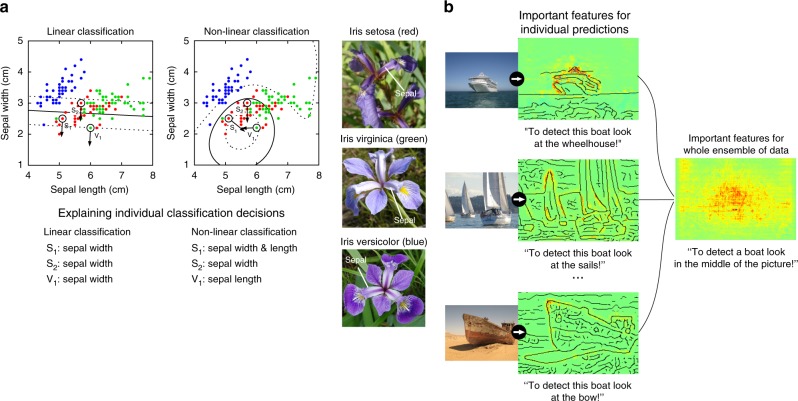
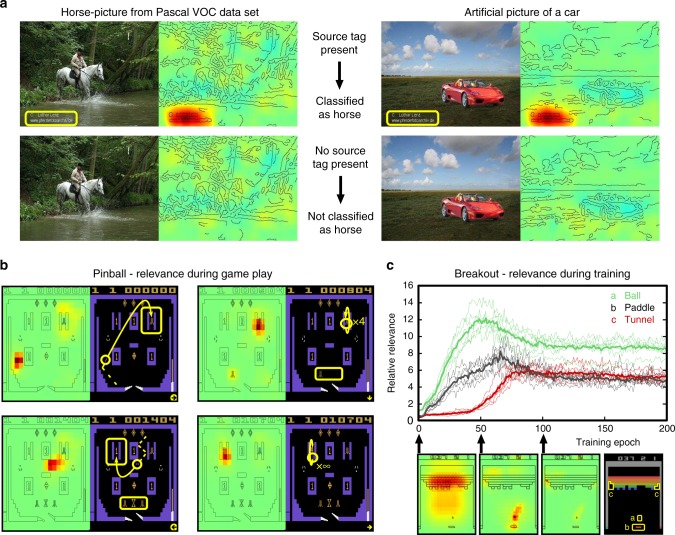
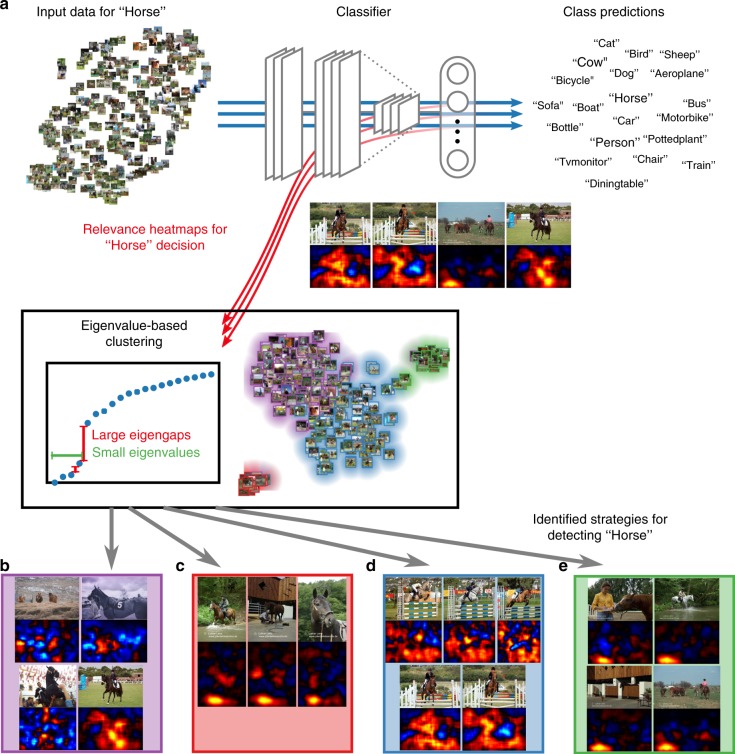
Verification
Claims the paper makes
The claims and statistics of this paper haven’t been checked yet.
Free: it reads the open-access text and checks the first 5 claims that cite a source we can check. Create a free account to check every claim.
Claims other papers make about this one
Each is checked against this paper’s own text: does it say what the citing paper says it does?
The cited source says what the claim attributes to it.
In the citing paper
“Thus, interpretability becomes fundamental to test against ' clever Hans ' models and to ensure that the model has learned relevant processes rather than spurious associations.”
From Artificial intelligence for climate prediction of extremes: State of the art, challenges, and future perspectives (2024) · cites this paper as Lapuschkin et al., 2019
The cited source says what the claim attributes to it.
In the citing paper
“There are examples of AI models predicting correctly for the wrong reasons (known as”
From Artificial intelligence for climate prediction of extremes: State of the art, challenges, and future perspectives (2024) · cites this paper as Lapuschkin et al., 2019
Self-check
Percentages, sums and reported differences re-computed from the paper’s own numbers.
The self-check needs the paper’s full text.
Citations
Cites
Deep Residual Learning for Image Recognition
He, K., Zhang, X., Ren, S., & Sun, J. (2016) · 2016 IEEE Conference on Computer Vision and Pattern Recognition (CVPR) · doi:10.1109/cvpr.2016.90 · Cited by 235,474
Hochreiter, S., & Schmidhuber, J. (1997) · Neural Computation · doi:10.1162/neco.1997.9.8.1735 · Cited by 102,318
LeCun, Y., Bengio, Y., & Hinton, G. (2015) · Nature · doi:10.1038/nature14539 · Cited by 84,126
Cortes, C., & Vapnik, V. (1995) · Machine Learning · doi:10.1007/bf00994018 · Cited by 59,421
Gradient-based learning applied to document recognition
Lecun, Y., Bottou, L., Bengio, Y., & Haffner, P. (1998) · Proceedings of the IEEE · doi:10.1109/5.726791 · Cited by 58,805
Going deeper with convolutions
Szegedy, C., Liu, W., Jia, Y., Sermanet, P., Reed, S., Anguelov, D., Erhan, D., Vanhoucke, V., & Rabinovich, A. (2015) · 2015 IEEE Conference on Computer Vision and Pattern Recognition (CVPR) · doi:10.1109/cvpr.2015.7298594 · Cited by 48,562
Human-level control through deep reinforcement learning
Mnih, V., Kavukcuoglu, K., Silver, D., Rusu, A. A., Veness, J., Bellemare, M. G., Graves, A., Riedmiller, M., Fidjeland, A. K., Ostrovski, G., et al. (2015) · Nature · doi:10.1038/nature14236 · Cited by 30,357
Multilayer feedforward networks are universal approximators
Hornik, K., Stinchcombe, M., & White, H. (1989) · Neural Networks · doi:10.1016/0893-6080(89)90020-8 · Cited by 21,728
The pascal visual object classes (VOC) challenge
Everingham, M., Van Gool, L., Williams, C. K. I., Winn, J., & Zisserman, A. (2010) · International Journal of Computer Vision · doi:10.1007/s11263-009-0275-4 · Cited by 19,599
"Why Should I Trust You?": Explaining the Predictions of Any Classifier
Ribeiro, M. T., Singh, S., & Guestrin, C. (2016) · Proceedings of the 22nd ACM SIGKDD International Conference on Knowledge Discovery and Data Mining · doi:10.1145/2939672.2939778 · Cited by 17,555
Research works printed but not linked: 9
- Pfungst O Clever Hans (the Horse of Mr. Von Osten): contribution to experimental animal and human psychology J. Philos. Psychol. Sci. Method 1911 8 663 666
- Guyon I Elisseeff A An introduction to variable and feature selection J. Mach. Learn. Res. 2003 3 1157 1182
- Nguyen, A., Dosovitskiy, A., Yosinski, J., Brox, T. & Clune, J. Synthesizing the preferred inputs for neurons in neural networks via deep generator networks. (D. D. Lee, M. Sugiyama, U. von Luxburg, I. Guyon, R. Garnett eds.) In Proc. Advances in Neural Information Processing Systems, 3387–3395 (Curran Associates, Inc., Red Hook, NY) (2016).
- Greydanus, S., Koul, A., Dodge, J. & Fern, A. Visualizing and understanding Atari agents. (J. Dy, A. Krause eds.) In Proc. International Conference on Machine Learning, 1787–1796 (JMLR.org, Brookline, MA) (2018).
- Zahavy, T., Ben-Zrihem, N. & Mannor, S. Graying the black box: Understanding DQNs. (M.-F. Balcan, K. Q. Weinberger eds.) In Proc. International Conference on Machine Learning, 1899–1908 (JMLR.org, Brookline, MA) (2016).
- Tsividis, P. A., Pouncy, T., Xu, J. L., Tenenbaum, J. B. & Gershman, S. J. Human learning in Atari. (G. Sukthankar, C. Geib eds.) In Proc. AAAI Spring Symposium Series, 643–646 (AAAI Press, Palo Alto, CA) (2017).
- Winston PH Horn B The Psychology of Computer Vision 1975 New York McGraw-Hill
- The European Parliament and the Council of the European Union.. Regulation (EU) 2016/679 of the European Parliament and of the Council of 27 April 2016 on the protection of natural persons with regard to the processing of personal data and on the free movement of such data, and repealing Directive 95/46/EC (General Data Protection Regulation) Off. J. Eur. Union 2016 L119 1 88
- Thomas, A. W., Heekeren, H. R., Müller, K.-R. & Samek, W. Interpretable LSTMs for whole-brain neuroimaging analyses. Preprint at https://arxiv.org/abs/1810.09945 (2018). · arXiv
Cited by
Items 601–700 of 1,003
Shariaty, F., Pavlov, V. A., & Baranov, M. (2025) · Signal Image and Video Processing · doi:10.1007/s11760-025-04244-y · Cited by 16
Masetti, G., & Giandomenico, F. D. (2020) · Communications in computer and information science · doi:10.1007/978-3-030-65965-3_31 · Cited by 15
Kim, Y. J., Na, J., Han, S. S., Won, C. H., Lee, M. W., Shin, J.-W., Huh, C., & Chang, S. E. (2022) · PLoS ONE · doi:10.1371/journal.pone.0260895 · Cited by 15
Fox, S., McDermott, J., Doherty, E., Cooney, R., & Clifford, E. (2022) · Sustainability · doi:10.3390/su14074098 · Cited by 15
Rieckmann, A., Dworzyński, P., Arras, L., Lapuschkin, S., Samek, W., Arah, O. A., Rod, N. H., & Ekstrøm, C. T. (2022) · International Journal of Epidemiology · doi:10.1093/ije/dyac078 · Cited by 15
Self-citationMulti-granularity visual explanations for CNN
Bao, H., Wang, G., Li, S., & Liu, Q. (2022) · Knowledge-Based Systems · doi:10.1016/j.knosys.2022.109474 · Cited by 15
Backward recursive Class Activation Map refinement for high resolution saliency map
Englebert, A., Cornu, O., & Vleeschouwer, C. D. (2022) · Proceedings - International Conference on Pattern Recognition/Proceedings/International Conference on Pattern Recognition · doi:10.1109/icpr56361.2022.9956711 · Cited by 15
VS-CAM: Vertex Semantic Class Activation Mapping to Interpret Vision Graph Neural Network
Feng, Z., Cui, X., Ji, H., Zhu, M., & Stanković, L. (2023) · Neurocomputing · doi:10.1016/j.neucom.2023.02.057 · Cited by 15
Kierdorf, J., & Roscher, R. (2023) · IEEE Geoscience and Remote Sensing Letters · doi:10.1109/lgrs.2023.3293802 · Cited by 15
Explainable navigation system using fuzzy reinforcement learning
Bautista-Montesano, R., Bustamante-Bello, R., & Ramírez-Mendoza, R. A. (2020) · International Journal on Interactive Design and Manufacturing (IJIDeM) · doi:10.1007/s12008-020-00717-1 · Cited by 15
Explaining Predictions of Deep Neural Classifier via Activation AnalysisPreprint
Stano, M., Benešová, W., & Marták, L. S. (2020) · arXiv (Cornell University) · doi:10.48550/arxiv.2012.02248 · Cited by 15
A Survey on Graph CondensationPreprint
Xu, H., Zhang, L., Ma, Y., Zhou, S. L., Zheng, Z., & Bu, J. (2024) · arXiv (Cornell University) · doi:10.48550/arxiv.2402.02000 · Cited by 15
Singh, A. N., Shrivastava, R., & Srivastava, A. (2024) · Expert Systems · doi:10.1111/exsy.13770 · Cited by 14
Li, Y., Miao, Y., Rawat, A., Stueve, K. M., & Cao, W. (2025) · Computers and Electronics in Agriculture · doi:10.1016/j.compag.2025.110487 · Cited by 14
Mulliqi, N., Blilie, A., Ji, X., Szolnoky, K., Olsson, H., Titus, M., Gonzalez, G. M., Boman, S. E., Valkonen, M., Gudlaugsson, E. G., et al. (2025) · BMJ Open · doi:10.1136/bmjopen-2024-097591 · Cited by 14
Towards desiderata-driven design of visual counterfactual explainers
Bender, S., Herrmann, J., Müller, K. R., & Montavon, G. (2025) · Pattern Recognition · doi:10.1016/j.patcog.2025.112811 · Cited by 14
Self-citationInterpretability of deep neural networks used for the diagnosis of Alzheimer's disease
Pohl, T., Jakab, M., & Benešová, W. (2021) · International Journal of Imaging Systems and Technology · doi:10.1002/ima.22657 · Cited by 14
Explainable AI for Medical Imaging: Knowledge Matters
Bourdon, P., Ahmed, O. B., Urruty, T., Djemal, K., & Fernández-Maloigne, C. (2012) · Springer eBooks · doi:10.1007/978-3-030-74478-6_11 · Cited by 14
Landgrebe, J. (2022) · Applied Sciences · doi:10.3390/app12031050 · Cited by 14
Do Machines Really Understand Meaning? (Again)
Perconti, P., & Plebe, A. (2023) · Journal of Artificial Intelligence and Consciousness · doi:10.1142/s2705078522500205 · Cited by 14
Measures of Information Reflect Memorization Patterns
Bansal, R., Pruthi, D., & Belinkov, Y. (2022) · neural information processing systems · doi:10.52202/068431-1342 · Cited by 14
Generating attentive goals for prioritized hindsight reinforcement learning
Liu, P., Bai, C., Zhao, Y., Bai, C., Zhao, W. Z., & Tang, X. (2020) · Knowledge-Based Systems · doi:10.1016/j.knosys.2020.106140 · Cited by 14
Wöber, W., Curto, M., Tibihika, P. D., Meulenbroek, P., Alemayehu, E., Mehnen, L., Meimberg, H., & Sykacek, P. (2021) · PLoS ONE · doi:10.1371/journal.pone.0249593 · Cited by 14
Deepanshi, D., Budhiraja, I., Garg, D., & Kumar, N. (2023) · Computer Communications · doi:10.1016/j.comcom.2023.09.032 · Cited by 14
Identifying Opportunities for Skillful Weather Prediction with Interpretable Neural NetworksPreprint
Barnes, E. A., Mayer, K. J., Toms, B. A., Martin, Z., & Gordon, E. M. (2020) · arXiv (Cornell University) · doi:10.48550/arxiv.2012.07830 · Cited by 14
Bias in Federated Learning: Factors, Effects, Mitigations, and Open Issues
Benmalek, M., & Seddiki, A. (2024) · Ingénierie des systèmes d information · doi:10.18280/isi.290605 · Cited by 13
Local Concept Embeddings for Analysis of Concept Distributions in Vision DNN Feature Spaces
Mikriukov, G., Schwalbe, G., & Bade, K. (2025) · International Journal of Computer Vision · doi:10.1007/s11263-025-02446-y · Cited by 13
ACES-GNN: can graph neural network learn to explain activity cliffs?
Chen, X., Yu, D., Zhao, L., & Liu, F. (2025) · Digital Discovery · doi:10.1039/d5dd00012b · Cited by 13
Error Discovery By Clustering Influence Embeddings
Wang, F., Adebayo, J., Tan, S., García-Olano, D., & Kokhlikyan, N. (2023) · neural information processing systems · doi:10.52202/075280-1809 · Cited by 13
A primer on applying AI synergistically with domain expertise to oncology
Kim, J., Kusko, R. L., Zeskind, B. J., Zhang, J., & Escalante-Chong, R. (2021) · Biochimica et Biophysica Acta (BBA) - Reviews on Cancer · doi:10.1016/j.bbcan.2021.188548 · Cited by 14
Using Artificial Neural Networks to Predict Intra-Abdominal Abscess Risk Post-Appendectomy
Alramadhan, M. M., Khatib, H. S. A., Murphy, J. R., Tsao, K., & Chang, M. (2022) · Annals of Surgery Open · doi:10.1097/as9.0000000000000168 · Cited by 13
Hülsmeier, D., & Kollmeier, B. (2022) · Hearing Research · doi:10.1016/j.heares.2022.108609 · Cited by 13
Explaining any black box model using real data
Björklund, A., Henelius, A., Oikarinen, E., Kallonen, K. T. S., & Puolamäki, K. (2023) · Frontiers in Computer Science · doi:10.3389/fcomp.2023.1143904 · Cited by 13
Interpretability of deep learning models in analysis of Spanish financial text
Vaca, C., Astorgano, M., Rivero, A. J. L., Gaite, F. T., & Sahelices, B. (2024) · Neural Computing and Applications · doi:10.1007/s00521-024-09474-8 · Cited by 13
Exploring NWS Forecasters’ Assessment of AI Guidance Trustworthiness
Cains, M. G., Wirz, C. D., Demuth, J. L., Bostrom, A., Gagne, D. J., McGovern, A., Sobash, R. A., & Madlambayan, D. (2024) · Weather and Forecasting · doi:10.1175/waf-d-23-0180.1 · Cited by 13
ExMap: Leveraging Explainability Heatmaps for Unsupervised Group Robustness to Spurious Correlations
Chakraborty, R., Sletten, A., & Kampffmeyer, M. (2024) · IEEE Computer Society Conference on Computer Vision and Pattern Recognition/Proceedings - IEEE Computer Society Conference on Computer Vision and Pattern Recognition/Proceedings · doi:10.1109/cvpr52733.2024.01142 · Cited by 13
From scientific theory to duality of predictive artificial intelligence models
Bajorath, J. (2025) · Cell Reports Physical Science · doi:10.1016/j.xcrp.2025.102516 · Cited by 14
Don’t get me wrong: How to apply deep visual interpretations to time series
Löffler, C., Lai, W.-C., Zanca, D., Schmidt, L., Eskofier, B. M., & Mutschler, C. (2025) · Applied Intelligence · doi:10.1007/s10489-025-06798-3 · Cited by 13
Uncovering Semantic Bias in Neural Network Models Using a Knowledge Graph
Nikolov, A., & d’Aquin, M. (2020) · ACM International Conference on Information and Knowledge Management (CIKM) · doi:10.1145/3340531.3412009 · Cited by 13
Defining Explanation in an AI Context
Verma, T., Lingenfelder, C., & Klakow, D. (2020) · BlackboxNLP Workshop on Analyzing and Interpreting Neural Networks for NLP (BlackboxNLP) · doi:10.18653/v1/2020.blackboxnlp-1.29 · Cited by 13
Klein, J., Jaretzki, M., Schwarzenberger, M., Ihlenfeldt, S., & Drossel, W. (2021) · Procedia CIRP · doi:10.1016/j.procir.2021.11.242 · Cited by 13
Gautam, S., Höhne, M., Hansen, S., Jenssen, R., & Kampffmeyer, M. (2022) · IEEE International Symposium on Biomedical Imaging (ISBI) · doi:10.1109/isbi52829.2022.9761651 · Cited by 13
Software and Application Patterns for Explanation Methods
Alber, M. (2019) · Lecture notes in computer science · doi:10.1007/978-3-030-28954-6_22 · Cited by 13
Enhancing Siamese Neural Networks Through Expert Knowledge for Predictive Maintenance
Klein, P., Weingarz, N., & Bergmann, R. (2020) · Communications in computer and information science · doi:10.1007/978-3-030-66770-2_6 · Cited by 13
A survey on bias in machine learning researchPreprint
Mikołajczyk, A., & Grochowski, M. (2024) · Research Square · doi:10.21203/rs.3.rs-5019524/v1 · Cited by 13
Mechanistic understanding and validation of large AI models with SemanticLensPreprint
Dreyer, M., Berend, J., Labarta, T., Vielhaben, J., Wiegand, T., Lapuschkin, S., & Samek, W. (2025) · arXiv (Cornell University) · doi:10.48550/arxiv.2501.05398 · Cited by 13
Self-citationIs There a Role of Artificial Intelligence in Preclinical Imaging?
Küper, A. T., Blanc‐Durand, P., Gafita, A., Kersting, D., Fendler, W. P., Seibold, C., Moraitis, A., Lückerath, K., James, M. L., & Seifert, R. (2023) · Seminars in Nuclear Medicine · doi:10.1053/j.semnuclmed.2023.03.003 · Cited by 12
Morais, S. R. D. L. O. K., Felder, F. N., & Walsh, S. L. F. (2024) · British Journal of Radiology · doi:10.1093/bjr/tqae108 · Cited by 12
Hofmann, S., Goltermann, O., Scherf, N., Müller, K., Loeffler, M., Villringer, A., Gaebler, M., Witte, A. V., & Beyer, F. (2025) · Imaging Neuroscience · doi:10.1162/imag_a_00497 · Cited by 12
Self-citationAn end-to-end explainability framework for spatio-temporal predictive modeling
Altieri, M., Ceci, M., & Corizzo, R. (2025) · Machine Learning · doi:10.1007/s10994-024-06733-6 · Cited by 12
What Do Large Language Models Know? Tacit Knowledge as a Potential Causal-Explanatory Structure
Budding, C. (2025) · Philosophy of Science · doi:10.1017/psa.2025.19 · Cited by 14
Wasserstein Distances Made Explainable: Insights Into Dataset Shifts and Transport Phenomena
Naumann, P., Kauffmann, J., & Montavon, G. (2026) · IEEE Transactions on Pattern Analysis and Machine Intelligence · doi:10.1109/tpami.2026.3656947 · Cited by 12
Self-citationA Survey on Bias in Machine Learning Research
Mikołajczyk, A., & Grochowski, M. (2025) · IEEE Access · doi:10.1109/access.2025.3649998 · Cited by 12
Next2You: Robust Copresence Detection Based on Channel State Information
Fomichev, M., Abanto-Leon, L. F., Stiegler, M., Molina, A., Link, J., & Hollick, M. (2022) · ACM Transactions on Internet of Things · doi:10.1145/3491244 · Cited by 12
Demystifying the black box: an overview of explainability methods in machine learning
Kinger, S., & Kulkarni, V. Y. (2023) · International Journal of Computers and Applications · doi:10.1080/1206212x.2023.2285533 · Cited by 12
On the coherency of quantitative evaluation of visual explanations
Vandersmissen, B., & Jose Oramas, M. (2024) · Computer Vision and Image Understanding · doi:10.1016/j.cviu.2024.103934 · Cited by 12
Exploring dermoscopic structures for melanoma lesions' classification
Malik, F. S., Yousaf, M. H., Sial, H. A., & Viriri, S. (2024) · Frontiers in Big Data · doi:10.3389/fdata.2024.1366312 · Cited by 12
Propagating Transparency: A Deep Dive into the Interpretability of Neural Networks
Somani, A., Horsch, A., Bopardikar, A. S., & Prasad, D. K. (2024) · Nordic Machine Intelligence · doi:10.5617/nmi.10755 · Cited by 12
Efficient Unsupervised Shortcut Learning Detection and Mitigation in Transformers
Kuhn, L. D., Saba-Sadiya, S., Schlötterer, J., Buettner, F., Seifert, C., & Roig, G. (2025) · IEEE/CVF International Conference on Computer Vision (ICCV) · doi:10.1109/iccv51701.2025.00214 · Cited by 12
Polzer, A. K., Fleiß, J., Ebner, T., Kainz, P., Koeth, C., & Thalmann, S. (2022) · Hawaii International Conference on System Sciences (HICSS) · doi:10.24251/hicss.2022.186 · Cited by 12
EID: Facilitating Explainable AI Design Discussions in Team-Based Settings
Zhang, J., & Yu, H. (2023) · International Journal of Crowd Science · doi:10.26599/ijcs.2022.9100034 · Cited by 12
What Should we Reasonably Expect from Artificial Intelligence?
Parentoni, L. (2024) · Актуальные проблемы экономики и права · doi:10.21202/2782-2923.2024.1.217-245 · Cited by 12
A survey on bias in machine learning researchPreprint
Mikołajczyk, A., & Grochowski, M. (2023) · arXiv (Cornell University) · doi:10.48550/arxiv.2308.11254 · Cited by 12
Does Machine Understanding Require Consciousness?
Pepperell, R. (2022) · Frontiers in Systems Neuroscience · doi:10.3389/fnsys.2022.788486 · Cited by 11
An efficient multi-stage ensemble deep learning framework for diagnosing infectious diseases
Bondugula, R. K., Bommi, N. S., & Udgata, S. K. (2024) · Decision Analytics Journal · doi:10.1016/j.dajour.2024.100458 · Cited by 11
Floreale, G., Baraldi, P., Zio, E., & Fink, O. (2025) · Engineering Applications of Artificial Intelligence · doi:10.1016/j.engappai.2025.110518 · Cited by 11
Kasmi, G., Dubus, L., Saint‐Drenan, Y., & Blanc, P. (2025) · Environmental Data Science · doi:10.1017/eds.2025.13 · Cited by 11
A Survey on Interpretability in Visual Recognition
Wan, Q., Gao, C., Wang, R., & Chen, X. (2026) · IEEE Transactions on Pattern Analysis and Machine Intelligence · doi:10.1109/tpami.2026.3672629 · Cited by 11
Philosophy of Science for Machine Learning: Core Issues and New Perspectives
Durán, J. M., & Pozzi, G. (2025) · Synthese Library/Synthese library · doi:10.1007/978-3-032-03083-2 · Cited by 11
Fu, H., Chen, D., Li, X., & Duan, Y. (2026) · Journal of Environmental Management · doi:10.1016/j.jenvman.2026.128602 · Cited by 11
Digitalisierung souverän gestalten II: Handlungsspielräume in digitalen Wertschöpfungsnetzwerken
Hartmann, E. (2021) · Springer eBooks · doi:10.1007/978-3-662-64408-9 · Cited by 11
DORA: Exploring Outlier Representations in Deep Neural Networks
Bykov, K., Deb, M., Grinwald, D., Müller, K., & Höhne, M. (2023) · Transactions on machine learning research · doi:10.48550/arxiv.2206.04530 · Cited by 12
Self-citationPrediction of Turkish Constitutional Court Decisions with Explainable Artificial Intelligence
TURAN, T., Küçüksille, E. U., & Kemaloğlu, N. (2023) · Bilge International Journal of Science and Technology Research · doi:10.30516/bilgesci.1317525 · Cited by 11
Measuring Spurious Correlation in Classification: ”Clever Hans” in Translationese
Borah, A., Pylypenko, D., España-Bonet, C., & van Genabith, J. (2023) · International conference Recent advances in natural language processing · doi:10.26615/978-954-452-092-2_022 · Cited by 11
Activating two-dimensional semiconductors for photocatalysis: a cross-dimensional strategy
Botella, R., Cao, W., Celis, J., Fernández-Catalá, J., Greco, R., Lu, L., Pankratova, V., & Temerov, F. (2023) · Journal of Physics Condensed Matter · doi:10.1088/1361-648x/ad14c8 · Cited by 11
Xu, D., Zhou, H., Quan, W., Ugbolue, U. C., Fekete, G., & Gu, Y. (2024) · Heliyon · doi:10.1016/j.heliyon.2024.e26052 · Cited by 11
Towards International Standards for the Evaluation of Artificial Intelligence for Health
Wenzel, M. A., & Wiegand, T. (2019) · ITU Kaleidoscope Academic Conference (ITU K) · doi:10.23919/ituk48006.2019.8996131 · Cited by 11
Feature Focus: Towards Explainable and Transparent Deep Face Morphing Attack Detectors
Seibold, C., Hilsmann, A., & Eisert, P. (2021) · Computers · doi:10.3390/computers10090117 · Cited by 11
Investigating Explanatory Factors of Machine Learning Models for Plant Classification
Wöber, W., Mehnen, L., Sykacek, P., & Meimberg, H. (2021) · Plants · doi:10.3390/plants10122674 · Cited by 11
Concept splatters: Exploration of latent spaces based on human interpretable concepts
Großmann, N., Groller, E. M., & Waldner, M. (2022) · Computers & Graphics · doi:10.1016/j.cag.2022.04.013 · Cited by 11
Reliability of Deep Neural Networks for an End-to-End Imitation Learning-Based Lane Keeping
Liu, S., & Müller, S. (2023) · IEEE Transactions on Intelligent Transportation Systems · doi:10.1109/tits.2023.3299229 · Cited by 11
Vorndran, M., Schütz, A., Bendix, J., & Thies, B. (2022) · Artificial Intelligence for the Earth Systems · doi:10.1175/aies-d-21-0006.1 · Cited by 11
Mark My Words: Dangers of Watermarked Images in ImageNet
Bykov, K., Müller, K., & Höhne, M. (2024) · Communications in computer and information science · doi:10.1007/978-3-031-50396-2_24 · Cited by 11
Self-citationSTRATEGIC LEARNING AND STRATEGIC AGILITY: THE MEDIATING ROLE OF STRATEGIC THINKING
Sahar Abbas Hussein, A. A. A., Amanah, A. A., & Kazem, S. A. (2023) · International Journal of eBusiness and eGovernment Studies · Cited by 11
Towards Zero-shot Commonsense Reasoning with Self-supervised Refinement of Language Models
Klein, T., & Nabi, M. (2021) · Conference on Empirical Methods in Natural Language Processing (EMNLP) · doi:10.18653/v1/2021.emnlp-main.688 · Cited by 11
Holzinger, A., Saranti, A., & Mueller, H. (2021) · arXiv (Cornell University) · doi:10.48550/arxiv.2103.00519 · Cited by 11
A Turing Test for TransparencyPreprint
Bießmann, F., & Treu, V. (2021) · arXiv (Cornell University) · doi:10.48550/arxiv.2106.11394 · Cited by 11
Schwalbe, G., Wirth, C., & Schmid, U. (2022) · arXiv (Cornell University) · doi:10.48550/arxiv.2201.00572 · Cited by 11
Current validation practice undermines surgical AI developmentPreprint
Reinke, A., Li, Z., Tizabi, M. D., André, P., Knopp, M., Rother, M. M., Machado, I. P., Altieri, M. S., Alapatt, D., Bano, S., et al. (2025) · arXiv (Cornell University) · doi:10.48550/arxiv.2511.03769 · Cited by 11
Quantum lattice learning and explainable artificial intelligence for maternal and child healthcare
Marvin, G. (2022) · BRAC University Institutional Repository (BRAC University) · Cited by 11
Mouakher, A., & Kononov, R. (2024) · International Journal of Machine Learning and Cybernetics · doi:10.1007/s13042-024-02421-y · Cited by 11
Explainable Quantum Neural Networks: Example-Based and Feature-Based Methods
Tian, J., & Yang, W. (2024) · Electronics · doi:10.3390/electronics13204136 · Cited by 10
Canha, D., Kubler, S., Främling, K., & Fagherazzi, G. (2025) · ACM Computing Surveys · doi:10.1145/3737445 · Cited by 10
Network Occlusion Sensitivity Analysis Identifies Regional Contributions to Brain Age Prediction
He, L., Wang, S., Chen, C., Wang, Y., Fan, Q., Chu, C., Fan, L., & Xu, J. (2025) · Human Brain Mapping · doi:10.1002/hbm.70239 · Cited by 10
A Note on Spurious Correlations and Explainable Machine Learning in Digital Soil Mapping
Rentschler, T., & Scholten, T. (2025) · European Journal of Soil Science · doi:10.1111/ejss.70172 · Cited by 10
Han, K., Joung, J. F., Han, M., Sung, W., & Kang, Y.-N. (2022) · Journal of Personalized Medicine · doi:10.3390/jpm12020143 · Cited by 10
The Clever Hans Effect in Voice Spoofing Detection
Chettri, B. (2023) · IEEE Spoken Language Technology Workshop (SLT) · doi:10.1109/slt54892.2023.10022624 · Cited by 10
Smartphone Integration of Artificial Intelligence for Automated Plagiocephaly Diagnosis
Watt, A., Lee, J., Toews, M., & Gilardino, M. S. (2023) · Plastic & Reconstructive Surgery Global Open · doi:10.1097/gox.0000000000004985 · Cited by 10
Pathni, R. K. (2023) · Journal of Healthcare Management Standards · doi:10.4018/jhms.329234 · Cited by 10
Interpretable Imitation Learning with Symbolic Rewards
Bougie, N., Onishi, T., & Tsuruoka, Y. (2023) · ACM Transactions on Intelligent Systems and Technology · doi:10.1145/3627822 · Cited by 10
Metadata
- Authors
- Lapuschkin, S., Wäldchen, S., Binder, A., Montavon, G., Samek, W., & Müller, K.-R.
- Affiliations
- Fraunhofer Institute for Telecommunications, Heinrich Hertz Institute (DE)
- Technische Universität Berlin (DE)
- Singapore University of Technology and Design (SG)
- Korea University (KR)
- Corresponding author
- Samek, Wojciech
- Müller, Klaus-Robert
- Venue
- Nature Communications
- Published
- 2019-03-11
- Volume
- 10
- Issue
- 1
- Pages
- 1096-1096
- ISSN
- 2041-1723 (ISSN-L)
- PMC
- PMC6411769
- OpenAlex
- W2921802966
- Semantic Scholar
- 4f51a64793d3b2a60e9e5846c31dae023cf5c69a
- Cited by
- 1,047
- References
- 41
- Citations by year
- 2026: 129 · 2025: 178 · 2024: 142 · 2023: 178 · 2022: 159 · 2021: 140 · 2020: 86 · 2019: 34
- FWCI
- 47.80
- Type
- journal article
- Language
- en
- Open access
- gold
- doi.org
- Licence
- cc-by
- creativecommons.org/licenses/by/4.0 (tdm)
- creativecommons.org/licenses/by/4.0 (vor)
- Locations
- Nature Communications (publishedVersion, cc-by)
- Europe PMC (PubMed Central) (publishedVersion, cc-by)
- PubMed Central (publishedVersion, cc-by)
- PubMed (publishedVersion)
- arXiv (Cornell University) (submittedVersion)
- DOAJ (DOAJ: Directory of Open Access Journals) (submittedVersion)
- DOAJ (DOAJ: Directory of Open Access Journals) (submittedVersion, cc-by-sa)
- Publikationsdatenbank der Fraunhofer-Gesellschaft (Fraunhofer-Gesellschaft) (submittedVersion, other-oa)
- Fraunhofer-Publica (Fraunhofer-Gesellschaft) (submittedVersion)
- arXiv (Cornell University)
- Funders
- Deutsche Forschungsgemeinschaft (EXC-2046, EXC‐2046/1, 01IS18037I, 390685689)
- Institute for Information and Communications Technology Promotion (2017-0-00451)
- Topics
- Physical Sciences › Computer Science › Artificial Intelligence › Explainable Artificial Intelligence (XAI)
- Physical Sciences › Computer Science › Software › Software Testing and Debugging Techniques
- Physical Sciences › Computer Science › Artificial Intelligence › Adversarial Robustness in Machine Learning
- Keywords
- Clever Hans effect, explainable AI, decision explanation, problem-solving behavior, model evaluation metrics, computer vision, arcade games, model validation, machine intelligence
About these checks
Registry, retraction, Cites and statistics results are computed, not judged, with one exception: a printed reference that no index lists is read once by a model before it counts as a citation error. Claims are extracted by a model and kept only when their quote appears verbatim in the text; each cited source is then checked, with a model’s help, for whether it says what the claim relies on. Those verdicts can be wrong — read the claim’s quote and the cited source before relying on one.
Statistics and arithmetic are recomputed, not judged.
Confidence bands are shown only for fields calibrated on our annotated test set. None is calibrated yet, so no band is shown.
What counts as a claim ›How we measure confidence ›How we check this ›
Are you an author, or do you see a problem with this page? Request a review
Data sources
Bibliographic data: Semantic Scholar, OpenAlex, Crossref.
Contains information from the Semantic Scholar Academic Graph Datasets, made available under the ODC Attribution License (ODC-BY 1.0).
Semantic Scholar’s data is described in: Kinney, R., et al. (2023). The Semantic Scholar Open Data Platform. arXiv:2301.10140.
