

Unmasking Clever Hans predictors and assessing what machines really learn
Open accessThe DOI matches its Crossref record; 65 of the 65 references it cites were found in a registry or an index.
Abstract
Current learning machines have successfully solved hard application problems, reaching high accuracy and displaying seemingly intelligent behavior. Here we apply recent techniques for explaining decisions of state-of-the-art learning machines and analyze various tasks from computer vision and arcade games. This showcases a spectrum of problem-solving behaviors ranging from naive and short-sighted, to well-informed and strategic. We observe that standard performance evaluation metrics can be oblivious to distinguishing these diverse problem solving behaviors. Furthermore, we propose our semi-automated Spectral Relevance Analysis that provides a practically effective way of characterizing and validating the behavior of nonlinear learning machines. This helps to assess whether a learned model indeed delivers reliably for the problem that it was conceived for. Furthermore, our work intends to add a voice of caution to the ongoing excitement about machine intelligence and pledges to evaluate and judge some of these recent successes in a more nuanced manner.
Overview
The claims and statistics of this paper haven’t been checked yet.
Free: it reads the open-access text and checks the first 5 claims that cite a source we can check. Create a free account to check every claim.
Integrity signals
Registry
Cites
Statistics
Figures
Verification
Claims the paper makes
The claims and statistics of this paper haven’t been checked yet.
Free: it reads the open-access text and checks the first 5 claims that cite a source we can check. Create a free account to check every claim.
Claims other papers make about this one
Each is checked against this paper’s own text: does it say what the citing paper says it does?
The cited source says what the claim attributes to it.
In the citing paper
“Thus, interpretability becomes fundamental to test against ' clever Hans ' models and to ensure that the model has learned relevant processes rather than spurious associations.”
From Artificial intelligence for climate prediction of extremes: State of the art, challenges, and future perspectives (2024) · cites this paper as Lapuschkin et al., 2019
The cited source says what the claim attributes to it.
In the citing paper
“There are examples of AI models predicting correctly for the wrong reasons (known as”
From Artificial intelligence for climate prediction of extremes: State of the art, challenges, and future perspectives (2024) · cites this paper as Lapuschkin et al., 2019
Self-check
Percentages, sums and reported differences re-computed from the paper’s own numbers.
The self-check needs the paper’s full text.
Citations
Cites
Deep Residual Learning for Image Recognition
He, K., Zhang, X., Ren, S., & Sun, J. (2016) · 2016 IEEE Conference on Computer Vision and Pattern Recognition (CVPR) · doi:10.1109/cvpr.2016.90 · Cited by 235,474
Hochreiter, S., & Schmidhuber, J. (1997) · Neural Computation · doi:10.1162/neco.1997.9.8.1735 · Cited by 102,318
LeCun, Y., Bengio, Y., & Hinton, G. (2015) · Nature · doi:10.1038/nature14539 · Cited by 84,126
Cortes, C., & Vapnik, V. (1995) · Machine Learning · doi:10.1007/bf00994018 · Cited by 59,421
Gradient-based learning applied to document recognition
Lecun, Y., Bottou, L., Bengio, Y., & Haffner, P. (1998) · Proceedings of the IEEE · doi:10.1109/5.726791 · Cited by 58,805
Going deeper with convolutions
Szegedy, C., Liu, W., Jia, Y., Sermanet, P., Reed, S., Anguelov, D., Erhan, D., Vanhoucke, V., & Rabinovich, A. (2015) · 2015 IEEE Conference on Computer Vision and Pattern Recognition (CVPR) · doi:10.1109/cvpr.2015.7298594 · Cited by 48,562
Human-level control through deep reinforcement learning
Mnih, V., Kavukcuoglu, K., Silver, D., Rusu, A. A., Veness, J., Bellemare, M. G., Graves, A., Riedmiller, M., Fidjeland, A. K., Ostrovski, G., et al. (2015) · Nature · doi:10.1038/nature14236 · Cited by 30,357
Multilayer feedforward networks are universal approximators
Hornik, K., Stinchcombe, M., & White, H. (1989) · Neural Networks · doi:10.1016/0893-6080(89)90020-8 · Cited by 21,728
The pascal visual object classes (VOC) challenge
Everingham, M., Van Gool, L., Williams, C. K. I., Winn, J., & Zisserman, A. (2010) · International Journal of Computer Vision · doi:10.1007/s11263-009-0275-4 · Cited by 19,599
"Why Should I Trust You?": Explaining the Predictions of Any Classifier
Ribeiro, M. T., Singh, S., & Guestrin, C. (2016) · Proceedings of the 22nd ACM SIGKDD International Conference on Knowledge Discovery and Data Mining · doi:10.1145/2939672.2939778 · Cited by 17,555
Research works printed but not linked: 9
- Pfungst O Clever Hans (the Horse of Mr. Von Osten): contribution to experimental animal and human psychology J. Philos. Psychol. Sci. Method 1911 8 663 666
- Guyon I Elisseeff A An introduction to variable and feature selection J. Mach. Learn. Res. 2003 3 1157 1182
- Nguyen, A., Dosovitskiy, A., Yosinski, J., Brox, T. & Clune, J. Synthesizing the preferred inputs for neurons in neural networks via deep generator networks. (D. D. Lee, M. Sugiyama, U. von Luxburg, I. Guyon, R. Garnett eds.) In Proc. Advances in Neural Information Processing Systems, 3387–3395 (Curran Associates, Inc., Red Hook, NY) (2016).
- Greydanus, S., Koul, A., Dodge, J. & Fern, A. Visualizing and understanding Atari agents. (J. Dy, A. Krause eds.) In Proc. International Conference on Machine Learning, 1787–1796 (JMLR.org, Brookline, MA) (2018).
- Zahavy, T., Ben-Zrihem, N. & Mannor, S. Graying the black box: Understanding DQNs. (M.-F. Balcan, K. Q. Weinberger eds.) In Proc. International Conference on Machine Learning, 1899–1908 (JMLR.org, Brookline, MA) (2016).
- Tsividis, P. A., Pouncy, T., Xu, J. L., Tenenbaum, J. B. & Gershman, S. J. Human learning in Atari. (G. Sukthankar, C. Geib eds.) In Proc. AAAI Spring Symposium Series, 643–646 (AAAI Press, Palo Alto, CA) (2017).
- Winston PH Horn B The Psychology of Computer Vision 1975 New York McGraw-Hill
- The European Parliament and the Council of the European Union.. Regulation (EU) 2016/679 of the European Parliament and of the Council of 27 April 2016 on the protection of natural persons with regard to the processing of personal data and on the free movement of such data, and repealing Directive 95/46/EC (General Data Protection Regulation) Off. J. Eur. Union 2016 L119 1 88
- Thomas, A. W., Heekeren, H. R., Müller, K.-R. & Samek, W. Interpretable LSTMs for whole-brain neuroimaging analyses. Preprint at https://arxiv.org/abs/1810.09945 (2018). · arXiv
Cited by
Items 701–800 of 1,003
The Need for the Human-Centred Explanation for ML-based Clinical Decision Support Systems
Jia, Y., McDermid, J. A., Hughes, N. G. J., Sujan, M. A., Lawton, T., & Habli, I. (2023) · IEEE International Conference on Healthcare Informatics (ICHI) · doi:10.1109/ichi57859.2023.00064 · Cited by 10
Krell, E., Kamangir, H., Collins, W. G., King, S. A., & Tissot, P. E. (2023) · Environmental Data Science · doi:10.1017/eds.2023.39 · Cited by 10
Hamam, H. (2024) · Computing and artificial intelligence. · doi:10.59400/cai.v2i1.416 · Cited by 10
Yang, J., Fu, H., Xue, F., Li, M., Wu, Y., Yu, Z., Luo, H., Gong, J., Niu, X., & Zhang, W. (2024) · Briefings in Bioinformatics · doi:10.1093/bib/bbae418 · Cited by 10
Shortcut Detection With Variational Autoencoders
Müller, N. M., Roschmann, S., Khan, S. A., Sperl, P., & Böttinger, K. (2024) · International Joint Conference on Neural Networks (IJCNN) · doi:10.1109/ijcnn60899.2024.10650671 · Cited by 10
Modeling attention and binding in the brain through bidirectional recurrent gating
Salehi, S., Lei, J., Benjamin, A. S., Müller, K., & Kording, K. P. (2026) · Nature Communications · doi:10.1038/s41467-026-72146-9 · Cited by 10
Self-citationMüller, D., Röhr, D., Boon, B. D. C., Wulf, M., Arto, T., Hoozemans, J. J. M., Marcus, K., Rozemüller, A. J. M., Großerueschkamp, F., Mosig, A., et al. (2025) · Heliyon · doi:10.1016/j.heliyon.2025.e42111 · Cited by 10
A conceptual framework for establishing trust in real world intelligent systems
Guckert, M., Gumpfer, N., Hannig, J., Keller, T., & Urquhart, N. (2021) · Cognitive Systems Research · doi:10.1016/j.cogsys.2021.04.001 · Cited by 10
Deep Learning and Computational Chemistry
James, T., & Hristozov, D. (2021) · Methods in molecular biology · doi:10.1007/978-1-0716-1787-8_5 · Cited by 10
Hilburn, K. (2023) · Artificial Intelligence for the Earth Systems · doi:10.1175/aies-d-22-0093.1 · Cited by 12
Domain Transfer for Surface Defect Detection using Few-Shot Learning on Scarce Data
Gerschner, F., Paul, J., Schmid, L., Barthel, N., Gouromichos, V., Schmid, F. T., Atzmueller, M., & Theissler, A. (2023) · IEEE International Conference on Industrial Informatics (INDIN) · doi:10.1109/indin51400.2023.10217859 · Cited by 10
Finzel, B. (2024) · Künstliche Intell. · doi:10.1007/s13218-024-00835-y · Cited by 11
Explainable AI for Inspecting Adversarial Attacks on Deep Neural Networks
Klawikowska, Z., Mikołajczyk, A., & Grochowski, M. (2020) · Lecture notes in computer science · doi:10.1007/978-3-030-61401-0_14 · Cited by 10
Tjoa, E., Heng, G., Lu, Y., & Guan, C. (2019) · arXiv (Cornell University) · doi:10.48550/arxiv.1911.08136 · Cited by 10
Analyzing ImageNet with Spectral Relevance Analysis: Towards ImageNet un-Hans'ed.Preprint
Anders, C. J., Marinč, T., Neumann, D., Samek, W., Müller, K., & Lapuschkin, S. (2019) · arXiv (Cornell University) · Cited by 10
Self-citationXAI Method Properties: A (Meta-)study.Preprint
Schwalbe, G., & Finzel, B. (2021) · arXiv (Cornell University) · Cited by 10
Evaluating saliency methods on artificial data with different background typesPreprint
Budding, C., Eitel, F., Ritter, K., & Haufe, S. (2021) · arXiv (Cornell University) · doi:10.48550/arxiv.2112.04882 · Cited by 10
Benchmarks for interpretation of QSAR modelsPreprint
Matveieva, M., & Полищук, П. Г. (2021) · Research Square · doi:10.21203/rs.3.rs-271027/v1 · Cited by 10
Exploring Wilderness Characteristics Using Explainable Machine Learning in Satellite ImageryPreprint
Stomberg, T. T., Stone, T. C., Leonhardt, J., Weber, I., & Roscher, R. (2022) · arXiv (Cornell University) · doi:10.48550/arxiv.2203.00379 · Cited by 10
Siegel, N. T., Cole, J. H., Habes, M., Haufe, S., Ritter, K., & Schulz, M.-A. (2025) · arXiv (Cornell University) · doi:10.48550/arxiv.2508.02560 · Cited by 10
Atlas 2 -- Foundation models for clinical deploymentPreprint
Alber, M., Milbich, T., Carpen-Amarie, A., Tietz, S., Dippel, J., Muttenthaler, L., Cancer, B. P., Benetti, A., Korfiatis, P., Eulig, E., et al. (2026) · arXiv (Cornell University) · doi:10.48550/arxiv.2601.05148 · Cited by 12
Self-citationTrustworthy AI Inference Systems: An Industry Research View
Cammarota, R., Schunter, M., Rajan, A., Boemer, F., Kiss, Á., Treiber, A., Weinert, C., Schneider, T., Stapf, E., Sadeghi, A.-R., et al. (2020) · arXiv · doi:10.48550/arxiv.2008.04449 · Cited by 9
Do ImageNet-trained models learn shortcuts? The impact of frequency shortcuts on generalization
Wang, S., Veldhuis, R. N. J., & Strisciuglio, N. (2025) · IEEE Computer Society Conference on Computer Vision and Pattern Recognition/Proceedings - IEEE Computer Society Conference on Computer Vision and Pattern Recognition/Proceedings · doi:10.1109/cvpr52734.2025.02346 · Cited by 9
MeDi: Metadata-Guided Diffusion Models for Mitigating Biases in Tumor Classification
Drexlin, D. J., Dippel, J., Hense, J., Prenißl, N., Montavon, G., Klauschen, F., & Müller, K. R. (2025) · Lecture notes in computer science · doi:10.1007/978-3-032-05185-1_37 · Cited by 9
Self-citationPathak, A. K., Gupta, M., & Jain, G. (2026) · Frontiers in Artificial Intelligence · doi:10.3389/frai.2025.1692454 · Cited by 9
On the Importance of Domain Awareness in Classifier Interpretations in Medical Imaging
Major, D., Lenis, D., Wimmer, M., Berg, A., Neubauer, T., & Bühler, K. (2023) · IEEE Transactions on Medical Imaging · doi:10.1109/tmi.2023.3247659 · Cited by 9
Explainable for Trustworthy AI
Giannotti, F., Naretto, F., & Bodria, F. (2023) · Lecture notes in computer science · doi:10.1007/978-3-031-24349-3_10 · Cited by 9
SIGNed explanations: Unveiling relevant features by reducing bias
Gumpfer, N., Prim, J., Keller, T., Seeger, B., Guckert, M., & Hannig, J. (2023) · Information Fusion · doi:10.1016/j.inffus.2023.101883 · Cited by 9
Søgaard, A. (2023) · AI and Ethics · doi:10.1007/s43681-023-00351-z · Cited by 9
Vehicle side-slip angle estimation under snowy conditions using machine learning
Novotny, G., Liu, Y., Morales-Alvarez, W., Wöber, W., & Olaverri-Monreal, C. (2024) · Integrated Computer-Aided Engineering · doi:10.3233/ica-230727 · Cited by 9
Neoaz, N. (2025) · Global Trends in Science and Technology · doi:10.70445/gtst.1.3.2025.144-162 · Cited by 9
Right on Time: Revising Time Series Models by Constraining Their Explanations
Kraus, M., Steinmann, D. B., Wüst, A., Kokozinski, A., & Kersting, K. (2025) · Lecture notes in computer science · doi:10.1007/978-3-032-06109-6_28 · Cited by 9
From mechanism-based to data-driven approaches in materials science
Hiemer, S., & Zapperi, S. (2021) · Materials Theory · doi:10.1186/s41313-021-00027-3 · Cited by 10
Towards a Taxonomy for Explainable AI in Computational Pathology
Müller, H., Kargl, M., Plass, M., Kipperer, B., Brčić, L., Regitnig, P., Geißler, C., Küster, T., Zerbe, N., & Holzinger, A. (2021) · Springer eBooks · doi:10.1007/978-3-030-72188-6_15 · Cited by 9
Interpretable business survival prediction
Vallapuram, A. K., Nanda, N., Kwon, Y. D., & Hui, P. (2021) · IEEE/ACM International Conference on Advances in Social Networks Analysis and Mining (ASONAM) · doi:10.1145/3487351.3488353 · Cited by 9
Developing an Artificial Intelligence based system to Detect Fraud and Corruption in Government
Rashid, A. R., Ali, Z. L., & Alshmeel, G. H. A. (2022) · International Congress on Human-Computer Interaction, Optimization and Robotic Applications (ICHORA) · doi:10.1109/hora55278.2022.9799900 · Cited by 9
Alzheimer’s Disease Prediction Using Attention Mechanism with Dual-Phase 18F-Florbetaben Images
Kang, H. G., & Kang, D. (2022) · Nuclear Medicine and Molecular Imaging · doi:10.1007/s13139-022-00767-1 · Cited by 9
A Model Distillation Approach for Explaining Black-Box Models for Hyperspectral Image Classification
Taşkın, G. (2022) · IEEE International Geoscience and Remote Sensing Symposium (IGARSS) · doi:10.1109/igarss46834.2022.9884727 · Cited by 9
Black-Box Decision based Adversarial Attack with Symmetric α-stable Distribution
Srinivasan, V., Kuruoğlu, E. E., Müller, K., Samek, W., & Nakajima, S. (2019) · European Signal Processing Conference (EUSIPCO) · doi:10.23919/eusipco.2019.8902630 · Cited by 9
Self-citationTowards Understanding and Arguing with Classifiers: Recent Progress
Shao, X., Rienstra, T., Thimm, M., & Kersting, K. (2020) · Datenbank-Spektrum · doi:10.1007/s13222-020-00351-x · Cited by 9
Improving HCI with Brain Input: Review, Trends, and Outlook
Solovey, E., & Putze, F. (2021) · Foundations and Trends® in Human–Computer Interaction · doi:10.1561/1100000078 · Cited by 9
Weber, T., & Wermter, S. (2020) · arXiv (Cornell University) · doi:10.48550/arxiv.2010.04602 · Cited by 9
Statistics and Deep Learning-based Hybrid Model for Interpretable Anomaly DetectionPreprint
Mathonsi, T., & van Zyl, T. L. (2022) · arXiv · doi:10.48550/arxiv.2202.12720 · Cited by 9
Raimondi, D., Orlando, G., Verplaetse, N., Fariselli, P., & Moreau, Y. (2022) · Frontiers in Bioinformatics · doi:10.3389/fbinf.2022.1098941 · Cited by 9
Not All Neuro-Symbolic Concepts Are Created Equal: Analysis and Mitigation of Reasoning ShortcutsPreprint
Marconato, E., Teso, S., Vergari, A., & Passerini, A. (2023) · arXiv (Cornell University) · doi:10.48550/arxiv.2305.19951 · Cited by 9
Beyond Explainable AI (XAI): An Overdue Paradigm Shift and Post-XAI Research DirectionsPreprint
Afroogh, S., Ahmed, S. I., Ahrweiler, P., Alvarez-Melis, D., Arief, M., Barakova, E. I., Bargagli-Stoffi, F. J., Bıyık, E., Chen, H., Chen, X. '., et al. (2026) · arXiv (Cornell University) · doi:10.48550/arxiv.2602.24176 · Cited by 9
Study on the Helpfulness of Explainable Artificial Intelligence
Labarta, T., Kulicheva, E., Froelian, R., Geißler, C., Melman, X., & von Klitzing, J. (2024) · Communications in Computer and Information Science · doi:10.1007/978-3-031-63803-9_16 · Cited by 8
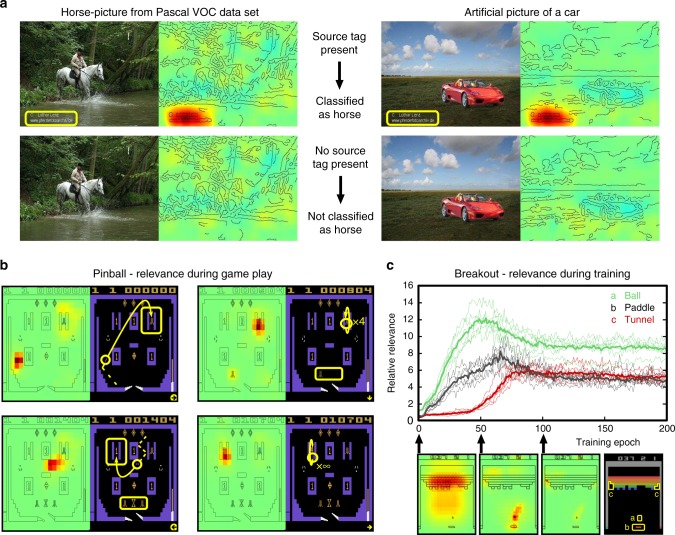
“5 where a horse picture from Pascal VOC data set was classified correctly by Fisher vector classifier [25] because of a photographer tag in the bottom left corner.”
MethodD-LeDe: A Data Leakage Detection Method for Automotive Perception Systems
Babu, M. A. A., Pandey, S., Durisic, D., Koppisetty, A. C., & Staron, M. (2025) · International Conference on Vehicle Technology and Intelligent Transport Systems (VEHITS) · doi:10.5220/0013476700003941 · Cited by 8
Algorithmic Harm: Protecting People in the Age of Artificial Intelligence
Sunstein, C. R., & Bar‐Gill, O. (2025) · doi:10.1093/oso/9780197778197.001.0001 · Cited by 8
Explainability and importance estimate of time series classifier via embedded neural network
Chan, H. T. J., Šimić, I., & Veas, E. E. (2025) · Scientific Reports · doi:10.1038/s41598-025-17703-w · Cited by 8
Unraveling learning characteristics of transformer models for molecular design
Roth, J. P., & Bajorath, J. (2025) · Patterns · doi:10.1016/j.patter.2025.101392 · Cited by 8
Mitigating Clever Hans strategies in image classifiers through generating counterexamples
Bender, S., Delzer, O., Herrmann, J., Marxfeld, H., Müller, K., & Montavon, G. (2026) · Information Fusion · doi:10.1016/j.inffus.2026.104406 · Cited by 8
Self-citationSkull-stripping induces shortcut learning in MRI-based Alzheimer’s disease classification
Tinauer, C., Sackl, M., Stollberger, R., Schmidt, R., Ropele, S., & Langkammer, C. (2025) · Insights into Imaging · doi:10.1186/s13244-025-02158-4 · Cited by 9
Yeh, H.-C., Sun, L., Mahapatra, A., Chandra, S. S., Provost, E. M., & Sisman, B. (2026) · Interspeech (USB) · doi:10.21437/interspeech.2026-1394 · Cited by 8
Wang, H. J., Shi, G., Liu, X., Zhang, J., Chen, S., Shi, J., Li, Y., Yue, G., & Wu, Y. (2026) · Expert Systems · doi:10.1111/exsy.70259 · Cited by 8
Idaji, M. J., Hense, J., Neuhauser, T., Krause, A., Luo, Y., Eberle, O., Schnake, T., Ciernik, L., Jafari, F. R., Vahidimajd, R., et al. (2026) · Medical Image Analysis · doi:10.1016/j.media.2026.104148 · Cited by 10
Self-citationDu, Y., Minasny, B., Ng, W., Zhang, L., Saby, N., Zhou, Y., van Wesemael, B., Ma, Y., Wang, Z., Luo, Z., et al. (2026) · Geoderma · doi:10.1016/j.geoderma.2026.117967 · Cited by 8
Safety and security of large language models in healthcare
Clusmann, J., Freyer, O., Ostermann, M., Ferber, D., Laleh, N. G., Hilgers, L., Kolbinger, F. R., Schneider, C. V., Downing, A., Wekenborg, M., et al. (2026) · Nature · doi:10.1038/s41586-026-10687-1 · Cited by 8
Shen, Q., Teso, S., Giunchiglia, F., & Xu, H. (2023) · Electronics · doi:10.3390/electronics12102275 · Cited by 9
Explainable Spatio-Temporal Graph Modeling
Altieri, M., Ceci, M., & Corizzo, R. (2023) · Lecture notes in computer science · doi:10.1007/978-3-031-45275-8_12 · Cited by 8
Bareeva, D., Dreyer, M., Pahde, F., Samek, W., & Lapuschkin, S. (2024) · IEEE/CVF Conference on Computer Vision and Pattern Recognition Workshops (CVPRW) · doi:10.1109/cvprw63382.2024.00357 · Cited by 8
Self-citationAquatic Animal Nutrition: Plant Preparations—‘Ever Tried. Ever Failed. Try Again.’
Steinberg, C. E. W. (2024) · Springer eBooks · doi:10.1007/978-3-031-70938-8_1 · Cited by 8
Banyong, C., Hantanong, N., Wisutwattanasak, P., Champahom, T., Theerathitichaipa, K., Kasemsri, R., Seefong, M., Ratanavaraha, V., & Jomnonkwao, S. (2025) · Infrastructures · doi:10.3390/infrastructures10030057 · Cited by 8
Automated Trustworthiness Oracle Generation for Machine Learning Text Classifiers
Tung, L. N., Cho, S. B., Du, X., Neelofar, N., Terragni, V., Ruberto, S., & Aleti, A. (2025) · Proceedings of the ACM on software engineering. · doi:10.1145/3729376 · Cited by 8
Acun, C., & Nasraoui, O. (2025) · Applied Sciences · doi:10.3390/app15137544 · Cited by 8
Causality in Process Systems Engineering: Fundamentals, Applications, and Emerging Trends
Paredes, R., & Reis, M. S. (2025) · Computers & Chemical Engineering · doi:10.1016/j.compchemeng.2025.109345 · Cited by 8
Kierdorf, J., Garcke, J., Behley, J., Cheeseman, T., & Roscher, R. (2020) · ISPRS annals of the photogrammetry, remote sensing and spatial information sciences · doi:10.5194/isprs-annals-v-2-2020-1005-2020 · Cited by 8
Variant Approach for Identifying Spurious Relations That Deep Learning Models Learn
Tesch, T., Kollet, S. J., & Garcke, J. (2021) · Frontiers in Water · doi:10.3389/frwa.2021.745563 · Cited by 8
Schieferdecker, S., Eberlein, A., Vock, E., & Beilmann, M. (2022) · Computational Toxicology · doi:10.1016/j.comtox.2022.100226 · Cited by 8
Ventura, F., Greco, S., Apiletti, D., & Cerquitelli, T. (2023) · Data Mining and Knowledge Discovery · doi:10.1007/s10618-023-00915-x · Cited by 8
Data Models for Dataset Drift Controls in Machine Learning With Optical Images
Oala, L., Aversa, M., Nobis, G., Willis, K., Neuenschwander, Y., Buck, M., Matek, C., Extermann, J., Pomarico, E., Samek, W., et al. (2023) · Transactions on machine learning research · doi:10.48550/arxiv.2211.02578 · Cited by 9
Self-citationSpindler, M., & Thiel, C. M. (2021) · Journal of Neuroscience Research · doi:10.1002/jnr.24988 · Cited by 8
Privatsphärefreundliches maschinelles Lernen: Teil 1: Grundlagen und Verfahren
Stock, J., Petersen, T., Behrendt, C., Federrath, H., & Kreutzburg, T. (2022) · Informatik-Spektrum · doi:10.1007/s00287-022-01438-3 · Cited by 8
The Ethics of Going Deep: Challenges in Machine Learning for Sensitive Security Domains
Eusebi, A., Vasek, M., Cockbain, E., & Mariconti, E. (2022) · IEEE European Symposium on Security and Privacy Workshops (EuroS&PW) · doi:10.1109/eurospw55150.2022.00063 · Cited by 8
Explain by Evidence: An Explainable Memory-based Neural Network for Question Answering
Tran, Q. H., Dam, N., Lai, T., Dernoncourt, F., Le, T., Le, N., & Phung, D. (2020) · International Conference on Computational Linguistics · doi:10.18653/v1/2020.coling-main.456 · Cited by 8
Cho, H., Lee, E. K., & Choi, I. S. (2020) · arXiv (Cornell University) · doi:10.48550/arxiv.2005.13438 · Cited by 8
Detecting Backdoor Poisoning Attacks on Deep Neural Networks by Heatmap ClusteringPreprint
Schulth, L., Berghoff, C., & Neu, M. (2022) · arXiv (Cornell University) · doi:10.48550/arxiv.2204.12848 · Cited by 8
Explaining structure-activity relationships using locally faithful surrogate modelsPreprint
Gandhi, H. A., & White, A. D. (2022) · ChemRxiv · doi:10.26434/chemrxiv-2022-v5p6m-v2 · Cited by 8
Artificial Intelligence and Entrepreneurship Research
Obschonka, M., & Fisch, C. O. (2022) · Oxford University Press eBooks · doi:10.1093/acrefore/9780190224851.013.298 · Cited by 8
Where is the Truth? The Risk of Getting Confounded in a Continual WorldPreprint
Busch, F. P., Kamath, R., Mitchell, R., Stammer, W., Kersting, K., & Mundt, M. (2024) · arXiv (Cornell University) · doi:10.48550/arxiv.2402.06434 · Cited by 8
Clever Hans in Chemistry: Chemist Style Signals Confound Activity Prediction on Public BenchmarksPreprint
Blevins, A., & Quigley, I. K. (2025) · arXiv (Cornell University) · doi:10.48550/arxiv.2512.20924 · Cited by 8
Leveraging Sparse Autoencoders to Reveal Interpretable Features in Geophysical Models
King, F., Pettersen, C., Posselt, D. J., Ringerud, S. E., & Xie, Y. (2025) · Journal of Geophysical Research Machine Learning and Computation · doi:10.1029/2025jh000769 · Cited by 7
Explainable AI in Maze Classification and Segmentation: A Systematic Review
HariKrishna, E., & Nandan, D. (2025) · International Conference on Recent Trends in Electrical, Electronics and Computing Technologies (ICRTEECT) · doi:10.1109/icrteect67512.2025.11448613 · Cited by 7
Neural Logic Vision Language Explainer
Yang, X., Liu, F., & Lin, G. (2023) · IEEE Transactions on Multimedia · doi:10.1109/tmm.2023.3310277 · Cited by 7
Beyond Single Path Integrated Gradients for Reliable Input Attribution via Randomized Path Sampling
Jeon, G., Jeong, H., & Choi, J. (2023) · IEEE/CVF International Conference on Computer Vision (ICCV) · doi:10.1109/iccv51070.2023.00196 · Cited by 8
Exploring Explainable AI for Enhanced Depression Prediction in Mental Health
Jo, A. A., Raj, E. D., Vino, A. S., & Menon, P. V. (2024) · International Conference on Innovations in Communications, Electrical and Computer Engineering (ICICEC) · doi:10.1109/icicec62498.2024.10808414 · Cited by 7
Toward trustworthy AI with integrative explainable AI frameworks
Finzel, B. (2025) · it - Information Technology · doi:10.1515/itit-2025-0007 · Cited by 8
PiPViT: Patch-based Visual Interpretable Prototypes for retinal image analysis
Oghbaie, M., Araújo, T., Reiter, G. S., & Bogunović, H. (2026) · Biomedical Signal Processing and Control · doi:10.1016/j.bspc.2026.109545 · Cited by 8
Anwendungen und Lösungsansätze erklärbarer Künstlicher Intelligenz
Kraus, T., & Ganschow, L. (2021) · Springer eBooks · doi:10.1007/978-3-662-64408-9_4 · Cited by 7
Schmiedchen, F., Kratzer, K. P., Link, J. S. A., Stapf-Finé, H., & Berlin, L. V. (2021) · Logos Verlag Berlin eBooks · doi:10.30819/5363 · Cited by 7
Wagner, P., Strodthoff, N., Wurzel, P., Marbán, A., Scharf, S., Schäfer, H., Seegerer, P., Loth, A. G., Hartmann, S., Klauschen, F., et al. (2022) · Scientific Reports · doi:10.1038/s41598-022-18097-9 · Cited by 7
Self-citationAn evolutionary ensemble learning for diagnosing COVID-19 via cough signals
Najaran, M. H. T. (2023) · Intelligent Medicine · doi:10.1016/j.imed.2023.01.001 · Cited by 7
Classification of unexposed potsherd cavities by using deep learning
Mendonça, I., Miyaura, M., Fatyanosa, T. N., Yamaguchi, D., Sakai, H., Obata, H., & Aritsugi, M. (2023) · Journal of Archaeological Science Reports · doi:10.1016/j.jasrep.2023.104003 · Cited by 7
Efficient Approximation of Asymmetric Shapley Values Using Functional Decomposition
Gevaert, A., Saranti, A., Holzinger, A., & Saeys, Y. (2023) · Lecture notes in computer science · doi:10.1007/978-3-031-40837-3_2 · Cited by 7
Bajorath, J. (2023) · Artificial Intelligence in the Life Sciences · doi:10.1016/j.ailsci.2023.100093 · Cited by 7
InceptCurves: curve reconstruction using an inception network
Khalilsaraei, S. B., Komar, A., Zheng, J., & Augsdörfer, U. (2024) · The Visual Computer · doi:10.1007/s00371-024-03477-1 · Cited by 7
Jafari, A., Alesheikh, A. A., Zandi, I., & Lotfata, A. (2024) · Acta Tropica · doi:10.1016/j.actatropica.2024.107483 · Cited by 7
CLUMM: Contrastive Learning for Unobtrusive Motion Monitoring
Gyamenah, P., Iyer, H. N., Jeong, H., & Guo, S. (2025) · Sensors · doi:10.3390/s25041048 · Cited by 7
A Review of Interpretable Deep Learning for Neurological Disease Classification
Katarya, R., Sharma, P., Soni, N., & Rath, P. (2022) · International Conference on Advanced Computing and Communication Systems (ICACCS) · doi:10.1109/icaccs54159.2022.9785321 · Cited by 7
Kavoosi, A., Toth, R. A., Benjaber, M., Zamora, M., Valentín, A., Sharott, A., & Denison, T. (2022) · Annual International Conference of the IEEE Engineering in Medicine and Biology Society (EMBC) · doi:10.1109/embc48229.2022.9871793 · Cited by 7
Metadata
- Authors
- Lapuschkin, S., Wäldchen, S., Binder, A., Montavon, G., Samek, W., & Müller, K.-R.
- Affiliations
- Fraunhofer Institute for Telecommunications, Heinrich Hertz Institute (DE)
- Technische Universität Berlin (DE)
- Singapore University of Technology and Design (SG)
- Korea University (KR)
- Corresponding author
- Samek, Wojciech
- Müller, Klaus-Robert
- Venue
- Nature Communications
- Published
- 2019-03-11
- Volume
- 10
- Issue
- 1
- Pages
- 1096-1096
- ISSN
- 2041-1723 (ISSN-L)
- PMC
- PMC6411769
- OpenAlex
- W2921802966
- Semantic Scholar
- 4f51a64793d3b2a60e9e5846c31dae023cf5c69a
- Cited by
- 1,047
- References
- 41
- Citations by year
- 2026: 129 · 2025: 178 · 2024: 142 · 2023: 178 · 2022: 159 · 2021: 140 · 2020: 86 · 2019: 34
- FWCI
- 47.80
- Type
- journal article
- Language
- en
- Open access
- gold
- doi.org
- Licence
- cc-by
- creativecommons.org/licenses/by/4.0 (tdm)
- creativecommons.org/licenses/by/4.0 (vor)
- Locations
- Nature Communications (publishedVersion, cc-by)
- Europe PMC (PubMed Central) (publishedVersion, cc-by)
- PubMed Central (publishedVersion, cc-by)
- PubMed (publishedVersion)
- arXiv (Cornell University) (submittedVersion)
- DOAJ (DOAJ: Directory of Open Access Journals) (submittedVersion)
- DOAJ (DOAJ: Directory of Open Access Journals) (submittedVersion, cc-by-sa)
- Publikationsdatenbank der Fraunhofer-Gesellschaft (Fraunhofer-Gesellschaft) (submittedVersion, other-oa)
- Fraunhofer-Publica (Fraunhofer-Gesellschaft) (submittedVersion)
- arXiv (Cornell University)
- Funders
- Deutsche Forschungsgemeinschaft (EXC-2046, EXC‐2046/1, 01IS18037I, 390685689)
- Institute for Information and Communications Technology Promotion (2017-0-00451)
- Topics
- Physical Sciences › Computer Science › Artificial Intelligence › Explainable Artificial Intelligence (XAI)
- Physical Sciences › Computer Science › Software › Software Testing and Debugging Techniques
- Physical Sciences › Computer Science › Artificial Intelligence › Adversarial Robustness in Machine Learning
- Keywords
- Clever Hans effect, explainable AI, decision explanation, problem-solving behavior, model evaluation metrics, computer vision, arcade games, model validation, machine intelligence
About these checks
Registry, retraction, Cites and statistics results are computed, not judged, with one exception: a printed reference that no index lists is read once by a model before it counts as a citation error. Claims are extracted by a model and kept only when their quote appears verbatim in the text; each cited source is then checked, with a model’s help, for whether it says what the claim relies on. Those verdicts can be wrong — read the claim’s quote and the cited source before relying on one.
Statistics and arithmetic are recomputed, not judged.
Confidence bands are shown only for fields calibrated on our annotated test set. None is calibrated yet, so no band is shown.
What counts as a claim ›How we measure confidence ›How we check this ›
Are you an author, or do you see a problem with this page? Request a review
Data sources
Bibliographic data: Semantic Scholar, OpenAlex, Crossref.
Contains information from the Semantic Scholar Academic Graph Datasets, made available under the ODC Attribution License (ODC-BY 1.0).
Semantic Scholar’s data is described in: Kinney, R., et al. (2023). The Semantic Scholar Open Data Platform. arXiv:2301.10140.
