

Unmasking Clever Hans predictors and assessing what machines really learn
Open accessThe DOI matches its Crossref record; 65 of the 65 references it cites were found in a registry or an index.
Abstract
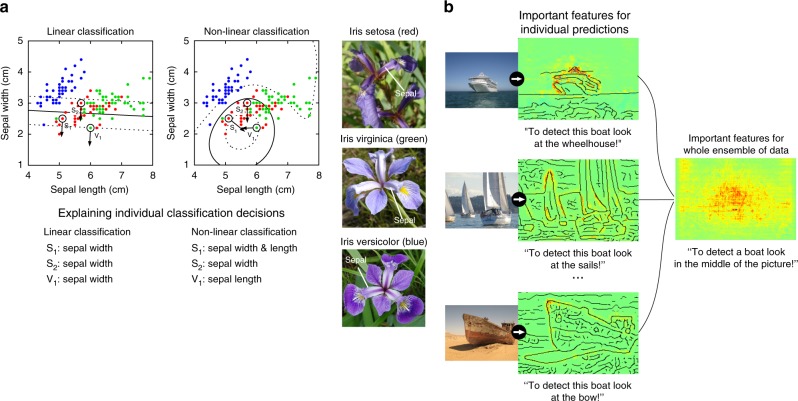
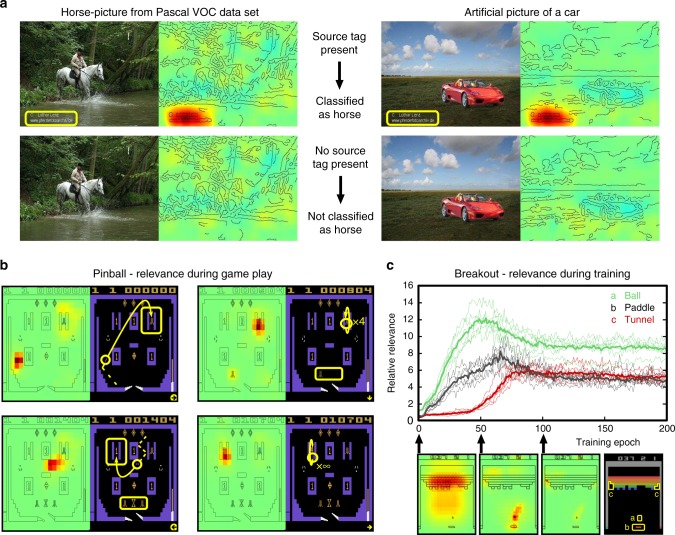
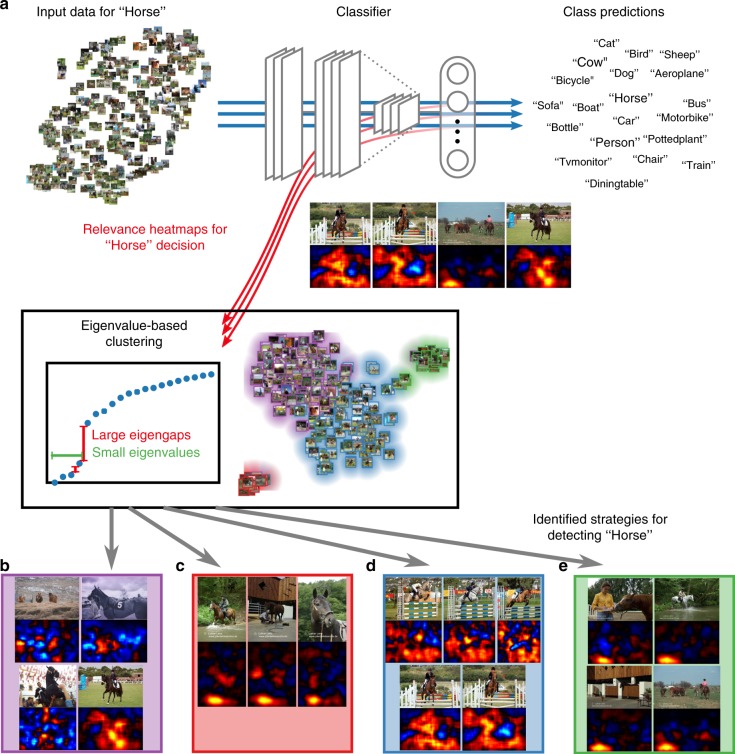
Current learning machines have successfully solved hard application problems, reaching high accuracy and displaying seemingly intelligent behavior. Here we apply recent techniques for explaining decisions of state-of-the-art learning machines and analyze various tasks from computer vision and arcade games. This showcases a spectrum of problem-solving behaviors ranging from naive and short-sighted, to well-informed and strategic. We observe that standard performance evaluation metrics can be oblivious to distinguishing these diverse problem solving behaviors. Furthermore, we propose our semi-automated Spectral Relevance Analysis that provides a practically effective way of characterizing and validating the behavior of nonlinear learning machines. This helps to assess whether a learned model indeed delivers reliably for the problem that it was conceived for. Furthermore, our work intends to add a voice of caution to the ongoing excitement about machine intelligence and pledges to evaluate and judge some of these recent successes in a more nuanced manner.
Overview
The claims and statistics of this paper haven’t been checked yet.
Free: it reads the open-access text and checks the first 5 claims that cite a source we can check. Create a free account to check every claim.
Integrity signals
Registry
Cites
Statistics
Figures
Verification
Claims the paper makes
The claims and statistics of this paper haven’t been checked yet.
Free: it reads the open-access text and checks the first 5 claims that cite a source we can check. Create a free account to check every claim.
Claims other papers make about this one
Each is checked against this paper’s own text: does it say what the citing paper says it does?
The cited source says what the claim attributes to it.
In the citing paper
“Thus, interpretability becomes fundamental to test against ' clever Hans ' models and to ensure that the model has learned relevant processes rather than spurious associations.”
From Artificial intelligence for climate prediction of extremes: State of the art, challenges, and future perspectives (2024) · cites this paper as Lapuschkin et al., 2019
The cited source says what the claim attributes to it.
In the citing paper
“There are examples of AI models predicting correctly for the wrong reasons (known as”
From Artificial intelligence for climate prediction of extremes: State of the art, challenges, and future perspectives (2024) · cites this paper as Lapuschkin et al., 2019
Self-check
Percentages, sums and reported differences re-computed from the paper’s own numbers.
The self-check needs the paper’s full text.
Citations
Cites
Deep Residual Learning for Image Recognition
He, K., Zhang, X., Ren, S., & Sun, J. (2016) · 2016 IEEE Conference on Computer Vision and Pattern Recognition (CVPR) · doi:10.1109/cvpr.2016.90 · Cited by 235,474
Hochreiter, S., & Schmidhuber, J. (1997) · Neural Computation · doi:10.1162/neco.1997.9.8.1735 · Cited by 102,318
LeCun, Y., Bengio, Y., & Hinton, G. (2015) · Nature · doi:10.1038/nature14539 · Cited by 84,126
Cortes, C., & Vapnik, V. (1995) · Machine Learning · doi:10.1007/bf00994018 · Cited by 59,421
Gradient-based learning applied to document recognition
Lecun, Y., Bottou, L., Bengio, Y., & Haffner, P. (1998) · Proceedings of the IEEE · doi:10.1109/5.726791 · Cited by 58,805
Going deeper with convolutions
Szegedy, C., Liu, W., Jia, Y., Sermanet, P., Reed, S., Anguelov, D., Erhan, D., Vanhoucke, V., & Rabinovich, A. (2015) · 2015 IEEE Conference on Computer Vision and Pattern Recognition (CVPR) · doi:10.1109/cvpr.2015.7298594 · Cited by 48,562
Human-level control through deep reinforcement learning
Mnih, V., Kavukcuoglu, K., Silver, D., Rusu, A. A., Veness, J., Bellemare, M. G., Graves, A., Riedmiller, M., Fidjeland, A. K., Ostrovski, G., et al. (2015) · Nature · doi:10.1038/nature14236 · Cited by 30,357
Multilayer feedforward networks are universal approximators
Hornik, K., Stinchcombe, M., & White, H. (1989) · Neural Networks · doi:10.1016/0893-6080(89)90020-8 · Cited by 21,728
The pascal visual object classes (VOC) challenge
Everingham, M., Van Gool, L., Williams, C. K. I., Winn, J., & Zisserman, A. (2010) · International Journal of Computer Vision · doi:10.1007/s11263-009-0275-4 · Cited by 19,599
"Why Should I Trust You?": Explaining the Predictions of Any Classifier
Ribeiro, M. T., Singh, S., & Guestrin, C. (2016) · Proceedings of the 22nd ACM SIGKDD International Conference on Knowledge Discovery and Data Mining · doi:10.1145/2939672.2939778 · Cited by 17,555
Research works printed but not linked: 9
- Pfungst O Clever Hans (the Horse of Mr. Von Osten): contribution to experimental animal and human psychology J. Philos. Psychol. Sci. Method 1911 8 663 666
- Guyon I Elisseeff A An introduction to variable and feature selection J. Mach. Learn. Res. 2003 3 1157 1182
- Nguyen, A., Dosovitskiy, A., Yosinski, J., Brox, T. & Clune, J. Synthesizing the preferred inputs for neurons in neural networks via deep generator networks. (D. D. Lee, M. Sugiyama, U. von Luxburg, I. Guyon, R. Garnett eds.) In Proc. Advances in Neural Information Processing Systems, 3387–3395 (Curran Associates, Inc., Red Hook, NY) (2016).
- Greydanus, S., Koul, A., Dodge, J. & Fern, A. Visualizing and understanding Atari agents. (J. Dy, A. Krause eds.) In Proc. International Conference on Machine Learning, 1787–1796 (JMLR.org, Brookline, MA) (2018).
- Zahavy, T., Ben-Zrihem, N. & Mannor, S. Graying the black box: Understanding DQNs. (M.-F. Balcan, K. Q. Weinberger eds.) In Proc. International Conference on Machine Learning, 1899–1908 (JMLR.org, Brookline, MA) (2016).
- Tsividis, P. A., Pouncy, T., Xu, J. L., Tenenbaum, J. B. & Gershman, S. J. Human learning in Atari. (G. Sukthankar, C. Geib eds.) In Proc. AAAI Spring Symposium Series, 643–646 (AAAI Press, Palo Alto, CA) (2017).
- Winston PH Horn B The Psychology of Computer Vision 1975 New York McGraw-Hill
- The European Parliament and the Council of the European Union.. Regulation (EU) 2016/679 of the European Parliament and of the Council of 27 April 2016 on the protection of natural persons with regard to the processing of personal data and on the free movement of such data, and repealing Directive 95/46/EC (General Data Protection Regulation) Off. J. Eur. Union 2016 L119 1 88
- Thomas, A. W., Heekeren, H. R., Müller, K.-R. & Samek, W. Interpretable LSTMs for whole-brain neuroimaging analyses. Preprint at https://arxiv.org/abs/1810.09945 (2018). · arXiv
Cited by
Items 301–400 of 1,003
Explainable Solvation Free Energy Prediction Combining Graph Neural Networks with Chemical Intuition
Low, K., Coote, M. L., & Izgorodina, E. I. (2022) · Journal of Chemical Information and Modeling · doi:10.1021/acs.jcim.2c01013 · Cited by 52
Serradilla, O., Zugasti, E., Cernuda, C., Aranburu, A., de Okariz, J. R., & Zurutuza, U. (2020) · 2020 IEEE International Conference on Fuzzy Systems (FUZZ-IEEE) · doi:10.1109/fuzz48607.2020.9177537 · Cited by 49
On the Foundations of Shortcut Learning
Hermann, K. L., Mobahi, H., Fel, T., & Mozer, M. C. (2024) · International Conference on Learning Representations · doi:10.48550/arxiv.2310.16228 · Cited by 49
MICA: Towards Explainable Skin Lesion Diagnosis via Multi-Level Image-Concept Alignment
Bie, Y., Luo, L., & Chen, H. (2024) · Proceedings of the AAAI Conference on Artificial Intelligence · doi:10.1609/aaai.v38i2.27842 · Cited by 50
SoK: Explainable Machine Learning in Adversarial Environments
Noppel, M., & Wressnegger, C. (2024) · IEEE Symposium on Security and Privacy (S&P) · doi:10.1109/sp54263.2024.00021 · Cited by 51
Scrutinizing XAI using linear ground-truth data with suppressor variables
Wilming, R., Budding, C., Müller, K., & Haufe, S. (2022) · Machine Learning · doi:10.1007/s10994-022-06167-y · Cited by 49
Self-citationNeuro-Symbolic Continual Learning: Knowledge, Reasoning Shortcuts and Concept RehearsalPreprint
Marconato, E., Bontempo, G., Ficarra, E., Calderara, S., Passerini, A., & Teso, S. (2023) · arXiv (Cornell University) · doi:10.48550/arxiv.2302.01242 · Cited by 49
Machine Learning for Health: Algorithm Auditing & Quality Control
Oala, L., Murchison, A. G., Balachandran, P., Choudhary, S., Fehr, J., Leite, A. W., Goldschmidt, P. G., Johner, C., Schörverth, E. D. M., Nakasi, R., et al. (2021) · Journal of Medical Systems · doi:10.1007/s10916-021-01783-y · Cited by 48
“The decision heuristics a model learns can differ from the heuristics we may expect a human to use [46,39,23, 47], and model predictions may come with ill-calibrated statements of confidence [22, 6,44] or no estimate of uncertainty altogether [37].”
BackgroundSelf-citationExplaining Deep Learning for ECG Analysis: Building Blocks for Auditing and Knowledge Discovery
Wagner, P., Mehari, T., Haverkamp, W., & Strodthoff, N. (2024) · Computers in Biology and Medicine · doi:10.1016/j.compbiomed.2024.108525 · Cited by 48
“However, similar techniques have been used in the literature to identify spatially localized artifacts compromising image classifiers [50].”
MethodExplainable Machine Learning in Human Gait Analysis: A Study on Children With Cerebral Palsy
Slijepčević, D., Zeppelzauer, M., Unglaube, F., Kranzl, A., Breiteneder, C. J., & Horsak, B. (2023) · IEEE Access · doi:10.1109/access.2023.3289986 · Cited by 48
Zhang, K., Wang, D., Lin, F., Xie, J., & Zhou, W. (2026) · iScience · doi:10.1016/j.isci.2026.115026 · Cited by 50
Schulz, A., Hinder, F., & Hammer, B. (2020) · International Joint Conference on Artificial Intelligence · doi:10.24963/ijcai.2020/319 · Cited by 48
General intelligence disentangled via a generality metric for natural and artificial intelligence
Hernández‐Orallo, J., Loe, B. S., Cheke, L. G., Martínez‐Plumed, F., & hÉigeartaigh, S. Ó. (2021) · Scientific Reports · doi:10.1038/s41598-021-01997-7 · Cited by 48
How Much Can I Trust You? -- Quantifying Uncertainties in Explaining Neural NetworksPreprint
Bykov, K., Höhne, M., Müller, K., Nakajima, S., & Kloft, M. (2020) · arXiv (Cornell University) · doi:10.48550/arxiv.2006.09000 · Cited by 49
Self-citationBenchmarking Molecular Feature Attribution Methods with Activity Cliffs
Jiménez-Luna, J., Skalic, M., & Weskamp, N. (2022) · Journal of Chemical Information and Modeling · doi:10.1021/acs.jcim.1c01163 · Cited by 47
Requirements for Explainability and Acceptance of Artificial Intelligence in Collaborative Work
Theis, S., Jentzsch, S. F., Deligiannaki, F., Berro, C., Raulf, A., & Bruder, C. (2023) · Lecture notes in computer science · doi:10.1007/978-3-031-35891-3_22 · Cited by 47
Huber, T., Schiller, D., & André, E. (2019) · Lecture notes in computer science · doi:10.1007/978-3-030-30179-8_16 · Cited by 47
Cho, H., Lee, E. K., & Choi, I. S. (2020) · Scientific Reports · doi:10.1038/s41598-020-78169-6 · Cited by 47
Han, T., Nebelung, S., Pedersoli, F., Zimmermann, M. N., Schulze-Hagen, M. F., Ho, M., Haarburger, C., Kiessling, F. M., Kuhl, C. K., Schulz, V., et al. (2021) · Nature Communications · doi:10.1038/s41467-021-24464-3 · Cited by 46
Machine learning methods for prediction of cancer driver genes: a survey paper
de Andrades, R. S., & Recamonde‐Mendoza, M. (2022) · Briefings in Bioinformatics · doi:10.1093/bib/bbac062 · Cited by 47
Disguising Attacks with Explanation-Aware Backdoors
Noppel, M., Peter, L., & Wressnegger, C. (2023) · IEEE Symposium on Security and Privacy (S&P) · doi:10.1109/sp46215.2023.10179308 · Cited by 47
Daube, C., Tian, X., Zhan, J., Webb, A., Ince, R. A. A., Garrod, O., & Schyns, P. G. (2021) · Patterns · doi:10.1016/j.patter.2021.100348 · Cited by 46
Grote, T., & Berens, P. (2022) · Bioethics · doi:10.1111/bioe.12957 · Cited by 45
Explaining decisions of deep neural networks used for fish age prediction
Ordoñez, A., Eikvil, L., Salberg, A.-B., Harbitz, A., Murray, S., & Kampffmeyer, M. (2020) · PLoS ONE · doi:10.1371/journal.pone.0235013 · Cited by 45
Weber, M., Kersting, D., Umutlu, L., Schäfers, M. A., Rischpler, C., Fendler, W. P., Buvat, I., Herrmann, K., & Seifert, R. (2021) · European Journal of Nuclear Medicine and Molecular Imaging · doi:10.1007/s00259-021-05270-x · Cited by 45
DeepFixCX : Explainable privacy‐preserving image compression for medical image analysis
Gaudio, A., Smailagic, A., Faloutsos, C., Mohan, S., Johnson, E., Liu, Y., Costa, P., & Campilho, A. (2023) · Wiley Interdisciplinary Reviews Data Mining and Knowledge Discovery · doi:10.1002/widm.1495 · Cited by 45
Dreyer, M., Achtibat, R., Wiegand, T., Samek, W., & Lapuschkin, S. (2023) · IEEE/CVF Conference on Computer Vision and Pattern Recognition Workshops (CVPRW) · doi:10.1109/cvprw59228.2023.00397 · Cited by 45
Self-citationDiffeomorphic Counterfactuals With Generative Models
Dombrowski, A.-K., Gerken, J. E., Müller, K., & Kessel, P. (2023) · IEEE Transactions on Pattern Analysis and Machine Intelligence · doi:10.1109/tpami.2023.3339980 · Cited by 44
Self-citationMultiphysical Interpretable Deep Learning Network for Oil Spill Identification Based on SAR Images
Fan, J., Sui, Z., & Wang, X. (2024) · IEEE Transactions on Geoscience and Remote Sensing · doi:10.1109/tgrs.2024.3357800 · Cited by 44
Right for Better Reasons: Training Differentiable Models by Constraining their Influence Functions
Shao, X., Skryagin, A., Stammer, W., Schramowski, P., & Kersting, K. (2021) · Proceedings of the AAAI Conference on Artificial Intelligence · doi:10.1609/aaai.v35i11.17148 · Cited by 44
On Exploring Attention-based Explanation for Transformer Models in Text Classification
Liu, S., Le, F., Chakraborty, S., & Abdelzaher, T. (2021) · IEEE International Conference on Big Data (BigData) · doi:10.1109/bigdata52589.2021.9671639 · Cited by 44
Explainable sequence-to-sequence GRU neural network for pollution forecasting
Borujeni, S. M., Arras, L., Srinivasan, V., & Samek, W. (2023) · Scientific Reports · doi:10.1038/s41598-023-35963-2 · Cited by 44
Self-citationThe Clever Hans Effect in Anomaly DetectionPreprint
Kauffmann, J., Ruff, L., Montavon, G., & Müller, K. (2020) · arXiv (Cornell University) · doi:10.48550/arxiv.2006.10609 · Cited by 44
Self-citationInterpretable Classification of Pneumonia Infection Using eXplainable AI (XAI-ICP)
Sheu, R.-K., Pardeshi, M. S., Pai, K.-C., Chen, L.-C., Wu, C.-L., & Chen, W.-C. (2023) · IEEE Access · doi:10.1109/access.2023.3255403 · Cited by 43
Lu, Z., Liu, G., Song, Z., Sun, K., Li, M. H., Chen, Y., Zhao, X., & Zhang, W. (2024) · Applied Sciences · doi:10.3390/app14219639 · Cited by 43
An explainable Bi-LSTM model for winter wheat yield prediction
Joshi, A., Pradhan, B., Chakraborty, S., Varatharajoo, R., Alamri, A. M., Gite, S., & Lee, C.-W. (2025) · Frontiers in Plant Science · doi:10.3389/fpls.2024.1491493 · Cited by 43
Vulnerabilities of Connectionist AI Applications: Evaluation and Defense
Berghoff, C., Neu, M., & von Twickel, A. (2020) · Frontiers in Big Data · doi:10.3389/fdata.2020.00023 · Cited by 43
Measure Utility, Gain Trust: Practical Advice for XAI Researchers
Davis, B., Glenski, M., Sealy, W. I. N., & Arendt, D. (2020) · IEEE Workshop on TRust and EXpertise in Visual Analytics (TREX) · doi:10.1109/trex51495.2020.00005 · Cited by 44
Uncertainty quantification by ensemble learning for computational optical form measurements
Hoffmann, L., Fortmeier, I., & Elster, C. (2021) · Machine Learning Science and Technology · doi:10.1088/2632-2153/ac0495 · Cited by 43
Solving Bongard Problems With a Visual Language and Pragmatic Constraints
Depeweg, S., Rothkopf, C. A., & Jäkel, F. (2024) · Cognitive Science · doi:10.1111/cogs.13432 · Cited by 43
Dreyer, M., Achtibat, R., Samek, W., & Lapuschkin, S. (2024) · IEEE/CVF Conference on Computer Vision and Pattern Recognition Workshops (CVPRW) · doi:10.1109/cvprw63382.2024.00353 · Cited by 42
Self-citationRoscher, R., Bohn, B., Duarte, M. F., & Garcke, J. (2020) · ISPRS annals of the photogrammetry, remote sensing and spatial information sciences · doi:10.5194/isprs-annals-v-3-2020-817-2020 · Cited by 42
Potentials and caveats of AI in hybrid imaging
Sundar, L. K. S., Muzik, O., Buvat, I., Bidaut, L. M., & Beyer, T. (2020) · Methods · doi:10.1016/j.ymeth.2020.10.004 · Cited by 43
Mikołajczyk, A., Grochowski, M., & Kwasigroch, A. (2020) · Journal of Artificial Intelligence and Soft Computing Research · doi:10.2478/jaiscr-2021-0004 · Cited by 42
Revealing the unique features of each individual's muscle activation signatures
Aeles, J., Horst, F., Lapuschkin, S., Lacourpaille, L., & Hug, F. (2021) · Journal of The Royal Society Interface · doi:10.1098/rsif.2020.0770 · Cited by 42
Self-citationAn explanation space to align user studies with the technical development of Explainable AI
Cabour, G., Morales‐Forero, A., Ledoux, É., & Bassetto, S. (2022) · AI & Society · doi:10.1007/s00146-022-01536-6 · Cited by 43
Applications of interpretable deep learning in neuroimaging: A comprehensive review
Munroe, L., da Silva, M., Heidari, F., Grigorescu, I., Dahan, S., Robinson, E. C., Deprez, M., & So, P. (2024) · Imaging Neuroscience · doi:10.1162/imag_a_00214 · Cited by 42
Predictable artificial intelligence
Zhou, L., Casares, P. A. M., Martínez‐Plumed, F., Burden, J., Burnell, R., Cheke, L. G., Ferri, C. S., Marcoci, A., Mehrbakhsh, B., Moros-Daval, Y., et al. (2026) · Artificial Intelligence · doi:10.1016/j.artint.2026.104491 · Cited by 42
Better Reporting of Studies on Artificial Intelligence: CONSORT-AI and Beyond
Schwendicke, F., & Krois, J. (2021) · Journal of Dental Research · doi:10.1177/0022034521998337 · Cited by 37
Interpretable SincNet-based Deep Learning for Emotion Recognition from EEG brain activity
Torres, J. M. M., Ravanelli, M., Medina-DeVilliers, S., Lerner, M. D., & Riccardi, G. (2021) · Annual International Conference of the IEEE Engineering in Medicine and Biology Society (EMBC) · doi:10.1109/embc46164.2021.9630427 · Cited by 41
Discrete and continuous representations and processing in deep learning: Looking forward
Cartuyvels, R., Spinks, G., & Moens, M. (2021) · AI Open · doi:10.1016/j.aiopen.2021.07.002 · Cited by 42
Ayyar, M. P., Benois‐Pineau, J., & Zemmari, A. (2021) · Journal of Electronic Imaging · doi:10.1117/1.jei.30.5.050901 · Cited by 41
Explaining the Predictions of Unsupervised Learning Models
Montavon, G., Kauffmann, J., Samek, W., & Müller, K. (2022) · Lecture notes in computer science · doi:10.1007/978-3-031-04083-2_7 · Cited by 42
Self-citationA typology for exploring the mitigation of shortcut behaviour
Friedrich, F., Stammer, W., Schramowski, P., & Kersting, K. (2023) · Nature Machine Intelligence · doi:10.1038/s42256-023-00612-w · Cited by 41
Reveal to Revise: An Explainable AI Life Cycle for Iterative Bias Correction of Deep Models
Pahde, F., Dreyer, M., Samek, W., & Lapuschkin, S. (2023) · Lecture notes in computer science · doi:10.1007/978-3-031-43895-0_56 · Cited by 40
Self-citationCastillo‐Gironés, S., Belleghem, R. V., Wouters, N., Munera, S., Blasco, J., & Saeys, W. (2023) · Postharvest Biology and Technology · doi:10.1016/j.postharvbio.2023.112615 · Cited by 40
Mumuni, F., & Mumuni, A. (2023) · Cognitive Systems Research · doi:10.1016/j.cogsys.2023.101188 · Cited by 42
Detecting and Mitigating the Clever Hans Effect in Medical Imaging: A Scoping Review
Vásquez-Venegas, C., Wu, C., Sundar, S., Prôa, R., Beloy, F. J., Medina, J. R., McNichol, M. C., Parvataneni, K., Kurtzman, N., Mirshawka, F., et al. (2024) · Journal of Imaging Informatics in Medicine · doi:10.1007/s10278-024-01335-z · Cited by 42
Confidence in the Reasoning of Large Language Models
Pawitan, Y., & Holmes, C. C. (2025) · Harvard Data Science Review · doi:10.1162/99608f92.b033a087 · Cited by 42
Exemplary Natural Images Explain CNN Activations Better than State-of-the-Art Feature VisualizationPreprint
Borowski, J., Zimmermann, R. S., Schepers, J., Geirhos, R., Wallis, T. S. A., Bethge, M., & Brendel, W. (2020) · arXiv (Cornell University) · doi:10.48550/arxiv.2010.12606 · Cited by 45
A Review of Explainable Artificial Intelligence in ManufacturingPreprint
Sofianidis, G., Rožanec, J. M., Mladenić, D., & Kyriazis, D. (2021) · arXiv (Cornell University) · doi:10.48550/arxiv.2107.02295 · Cited by 40
Understanding Patch-Based Learning of Video Data by Explaining Predictions
Anders, C. J., Montavon, G., Samek, W., & Müller, K. (2019) · Lecture notes in computer science · doi:10.1007/978-3-030-28954-6_16 · Cited by 39
Self-citationMaron, R. C., Hekler, A., Krieghoff‐Henning, E., Schmitt, M., Schlager, J. G., Utikal, J. S., & Brinker, T. J. (2021) · Journal of Medical Internet Research · doi:10.2196/21695 · Cited by 39
What is Missing in XAI So Far? An Interdisciplinary Perspective
Schmid, U., & Wrede, B. (2022) · Künstliche Intell. · doi:10.1007/s13218-022-00786-2 · Cited by 39
Explainable Methods for Image-Based Deep Learning: A Review
Gupta, L. K., Koundal, D., & Mongia, S. (2023) · Archives of Computational Methods in Engineering · doi:10.1007/s11831-023-09881-5 · Cited by 39
Overinterpretation reveals image classification model pathologies
Carter, B., Jain, S., Mueller, J. W., & Gifford, D. K. (2021) · neural information processing systems · doi:10.48550/arxiv.2003.08907 · Cited by 39
Poly-cam: high resolution class activation map for convolutional neural networks
Englebert, A., Cornu, O., & Vleeschouwer, C. D. (2024) · Machine Vision and Applications · doi:10.1007/s00138-024-01567-7 · Cited by 38
Commonsense Reasoning and Explainable Artificial Intelligence Using Large Language Models
Krause, S., & Stolzenburg, F. (2024) · Communications in computer and information science · doi:10.1007/978-3-031-50396-2_17 · Cited by 39
Entropy-Constrained Training of Deep Neural Networks
Wiedemann, S. M., Marbán, A., Müller, K., & Samek, W. (2019) · International Joint Conference on Neural Networks (IJCNN) · doi:10.1109/ijcnn.2019.8852119 · Cited by 37
Self-citationAnalysing deep reinforcement learning agents trained with domain randomisation
Dai, T., Arulkumaran, K., Gerbert, T., Tukra, S., Behbahani, F., & Bharath, A. A. (2022) · Neurocomputing · doi:10.1016/j.neucom.2022.04.005 · Cited by 38
Explaining Bayesian Neural Networks
Bykov, K., Höhne, M., Creosteanu, A., Müller, K., Klauschen, F., Nakajima, S., & Kloft, M. (2025) · Transactions on machine learning research · doi:10.48550/arxiv.2108.10346 · Cited by 37
Self-citationGetting aligned on representational alignment
Sucholutsky, I., Muttenthaler, L., Weller, A., Peng, A., Bobu, A., Kim, B., Love, B. C., Cueva, C. J., Grant, E., Groen, I., et al. (2023) · arXiv · doi:10.48550/arxiv.2310.13018 · Cited by 36
Self-citationRandomised controlled trials in medical AI: ethical considerations
Grote, T. (2021) · Journal of Medical Ethics · doi:10.1136/medethics-2020-107166 · Cited by 36
Hochreiter, S. (2022) · Communications of the ACM · doi:10.1145/3512715 · Cited by 36
Explainable Artificial Intelligence: An Updated Perspective
Krajna, A., Kovač, M., Brčić, M., & Šarčević, A. (2022) · International Convention on Information and Communication Technology, Electronics and Microelectronics · doi:10.23919/mipro55190.2022.9803681 · Cited by 36
Bloch, L., Friedrich, C. M., & Initiative, A. D. N. (2022) · SN Computer Science · doi:10.1007/s42979-022-01371-y · Cited by 36
Explainable Artificial Intelligence (XAI) with IoHT for Smart Healthcare: A Review
Bharati, S., Mondal, M. R. H., Podder, P., & Köse, U. (2023) · Internet of things · doi:10.1007/978-3-031-08637-3_1 · Cited by 38
Visualizing and Understanding Contrastive Learning
Sammani, F., Joukovsky, B., & Deligiannis, N. (2023) · IEEE Transactions on Image Processing · doi:10.1109/tip.2023.3346295 · Cited by 36
Artificial intelligence for neurodegenerative experimental models
Marzi, S. J., Schilder, B. M., Nott, A., Frigerio, C. S., Willaime‐Morawek, S., Bucholc, M., Hanger, D. P., James, C., Lewis, P. A., Lourida, I., et al. (2023) · Alzheimer's & Dementia · doi:10.1002/alz.13479 · Cited by 35
Deep Transfer Learning for Whole-Brain FMRI Analyses
Thomas, A. W., Müller, K., & Samek, W. (2019) · Lecture notes in computer science · doi:10.1007/978-3-030-32695-1_7 · Cited by 35
Self-citationStadtler, S., Betancourt, C., & Roscher, R. (2022) · Machine Learning and Knowledge Extraction · doi:10.3390/make4010008 · Cited by 36
Do Histopathological Foundation Models Eliminate Batch Effects? A Comparative StudyPreprint
Kömen, J., Marienwald, H., Dippel, J., & Hense, J. (2024) · arXiv (Cornell University) · doi:10.48550/arxiv.2411.05489 · Cited by 36
Fairwashing Explanations with Off-Manifold Detergent
Anders, C. J., Pasliev, P., Dombrowski, A.-K., Müller, K., & Kessel, P. (2020) · arXiv (Cornell University) · doi:10.48550/arxiv.2007.09969 · Cited by 34
Self-citationKim, S. H., Park, J. S., Lee, H. S., Yoo, S. H., & Oh, K. J. (2023) · Expert Systems with Applications · doi:10.1016/j.eswa.2023.120086 · Cited by 34
xMIL: Insightful Explanations for Multiple Instance Learning in Histopathology
Hense, J., Idaji, M. J., Eberle, O., Schnake, T., Dippel, J., Ciernik, L., Buchstab, O., Möck, A., Klauschen, F., & Müller, K. (2024) · neural information processing systems · doi:10.52202/079017-0266 · Cited by 35
Self-citationForecasting industrial aging processes with machine learning methods
Bogojeski, M., Sauer, S., Horn, F., & Müller, K. (2020) · Computers & Chemical Engineering · doi:10.1016/j.compchemeng.2020.107123 · Cited by 34
Self-citationCheng, X., Wang, J., Li, H., Zhang, Y., Wu, L., & Liu, Y. (2020) · International Journal of Geographical Information Science · doi:10.1080/13658816.2020.1805116 · Cited by 34
Renouard, A., Maggi, A., Grunberg, M., Doubre, C., & Hibert, C. (2021) · Seismological Research Letters · doi:10.1785/0220200305 · Cited by 34
Ensemble Entropy Metric for Hyperspectral Anomaly Detection
Tu, B., Yang, X., Ou, X., Zhang, G., Li, J., & Plaza, A. (2021) · IEEE Transactions on Geoscience and Remote Sensing · doi:10.1109/tgrs.2021.3116681 · Cited by 34
Trusting our machines: validating machine learning models for single-molecule transport experiments
Bro‐Jørgensen, W., Hamill, J. M., Bro, R., & Solomon, G. C. (2022) · Chemical Society Reviews · doi:10.1039/d1cs00884f · Cited by 35
Zhang, B., Vakanski, A., & Xian, M. (2023) · IEEE Access · doi:10.1109/access.2023.3298569 · Cited by 34
Gazing into Clever Hans machines
Hernández‐Orallo, J. (2019) · Nature Machine Intelligence · doi:10.1038/s42256-019-0032-5 · Cited by 34
Identifying and Categorizing Bias in AI/ML for Earth Sciences
McGovern, A., Bostrom, A., McGraw, M. C., Chase, R. J., Gagne, D. J., Ebert‐Uphoff, I., Musgrave, K. D., & Schumacher, A. (2024) · Bulletin of the American Meteorological Society · doi:10.1175/bams-d-23-0196.1 · Cited by 33
Analyzing Atomic Interactions in Molecules as Learned by Neural Networks
Esders, M., Schnake, T., Lederer, J., Kabylda, A., Montavon, G., Tkatchenko, A., & Müller, K. R. (2025) · Journal of Chemical Theory and Computation · doi:10.1021/acs.jctc.4c01424 · Cited by 33
Self-citationTarget-Specific Prediction of Ligand Affinity with Structure-Based Interaction Fingerprints
Leidner, F., Yılmaz, N. K., & Schiffer, C. A. (2019) · Journal of Chemical Information and Modeling · doi:10.1021/acs.jcim.9b00457 · Cited by 33
Harnessing Prior Knowledge for Explainable Machine Learning: An Overview
Beckh, K., Müller, S., Jakobs, M., Toborek, V., Tan, H., Fischer, R., Welke, P., Houben, S., & von Rueden, L. (2023) · IEEE Conference on Secure and Trustworthy Machine Learning (SaTML) · doi:10.1109/satml54575.2023.00038 · Cited by 33
Validity, Reliability, and Significance: Empirical Methods for NLP and Data Science
Riezler, S., & Hagmann, M. (2021) · Synthesis lectures on human language technologies · doi:10.2200/s01137ed1v01y202110hlt055 · Cited by 32
A multi-sequences MRI deep framework study applied to glioma classfication
Coupet, M., Urruty, T., Leelanupab, T., Naudin, M., Bourdon, P., Fernández-Maloigne, C., & Guillevin, R. (2022) · Multimedia Tools and Applications · doi:10.1007/s11042-022-12316-1 · Cited by 32
Training on the Test Set: Mapping the System-Problem Space in AI
Hernández‐Orallo, J., Schellaert, W., & Martínez‐Plumed, F. (2022) · Proceedings of the AAAI Conference on Artificial Intelligence · doi:10.1609/aaai.v36i11.21487 · Cited by 32
Yoo, J., Yoo, I., Youn, I., Kim, S.-M., Yu, R., Kim, K., Kim, K., & Lee, S.-B. (2022) · Computer Methods and Programs in Biomedicine · doi:10.1016/j.cmpb.2022.107079 · Cited by 32
Metadata
- Authors
- Lapuschkin, S., Wäldchen, S., Binder, A., Montavon, G., Samek, W., & Müller, K.-R.
- Affiliations
- Fraunhofer Institute for Telecommunications, Heinrich Hertz Institute (DE)
- Technische Universität Berlin (DE)
- Singapore University of Technology and Design (SG)
- Korea University (KR)
- Corresponding author
- Samek, Wojciech
- Müller, Klaus-Robert
- Venue
- Nature Communications
- Published
- 2019-03-11
- Volume
- 10
- Issue
- 1
- Pages
- 1096-1096
- ISSN
- 2041-1723 (ISSN-L)
- PMC
- PMC6411769
- OpenAlex
- W2921802966
- Semantic Scholar
- 4f51a64793d3b2a60e9e5846c31dae023cf5c69a
- Cited by
- 1,047
- References
- 41
- Citations by year
- 2026: 129 · 2025: 178 · 2024: 142 · 2023: 178 · 2022: 159 · 2021: 140 · 2020: 86 · 2019: 34
- FWCI
- 47.80
- Type
- journal article
- Language
- en
- Open access
- gold
- doi.org
- Licence
- cc-by
- creativecommons.org/licenses/by/4.0 (tdm)
- creativecommons.org/licenses/by/4.0 (vor)
- Locations
- Nature Communications (publishedVersion, cc-by)
- Europe PMC (PubMed Central) (publishedVersion, cc-by)
- PubMed Central (publishedVersion, cc-by)
- PubMed (publishedVersion)
- arXiv (Cornell University) (submittedVersion)
- DOAJ (DOAJ: Directory of Open Access Journals) (submittedVersion)
- DOAJ (DOAJ: Directory of Open Access Journals) (submittedVersion, cc-by-sa)
- Publikationsdatenbank der Fraunhofer-Gesellschaft (Fraunhofer-Gesellschaft) (submittedVersion, other-oa)
- Fraunhofer-Publica (Fraunhofer-Gesellschaft) (submittedVersion)
- arXiv (Cornell University)
- Funders
- Deutsche Forschungsgemeinschaft (EXC-2046, EXC‐2046/1, 01IS18037I, 390685689)
- Institute for Information and Communications Technology Promotion (2017-0-00451)
- Topics
- Physical Sciences › Computer Science › Artificial Intelligence › Explainable Artificial Intelligence (XAI)
- Physical Sciences › Computer Science › Software › Software Testing and Debugging Techniques
- Physical Sciences › Computer Science › Artificial Intelligence › Adversarial Robustness in Machine Learning
- Keywords
- Clever Hans effect, explainable AI, decision explanation, problem-solving behavior, model evaluation metrics, computer vision, arcade games, model validation, machine intelligence
About these checks
Registry, retraction, Cites and statistics results are computed, not judged, with one exception: a printed reference that no index lists is read once by a model before it counts as a citation error. Claims are extracted by a model and kept only when their quote appears verbatim in the text; each cited source is then checked, with a model’s help, for whether it says what the claim relies on. Those verdicts can be wrong — read the claim’s quote and the cited source before relying on one.
Statistics and arithmetic are recomputed, not judged.
Confidence bands are shown only for fields calibrated on our annotated test set. None is calibrated yet, so no band is shown.
What counts as a claim ›How we measure confidence ›How we check this ›
Are you an author, or do you see a problem with this page? Request a review
Data sources
Bibliographic data: Semantic Scholar, OpenAlex, Crossref.
Contains information from the Semantic Scholar Academic Graph Datasets, made available under the ODC Attribution License (ODC-BY 1.0).
Semantic Scholar’s data is described in: Kinney, R., et al. (2023). The Semantic Scholar Open Data Platform. arXiv:2301.10140.
