

Unmasking Clever Hans predictors and assessing what machines really learn
Open accessThe DOI matches its Crossref record; 65 of the 65 references it cites were found in a registry or an index.
Abstract
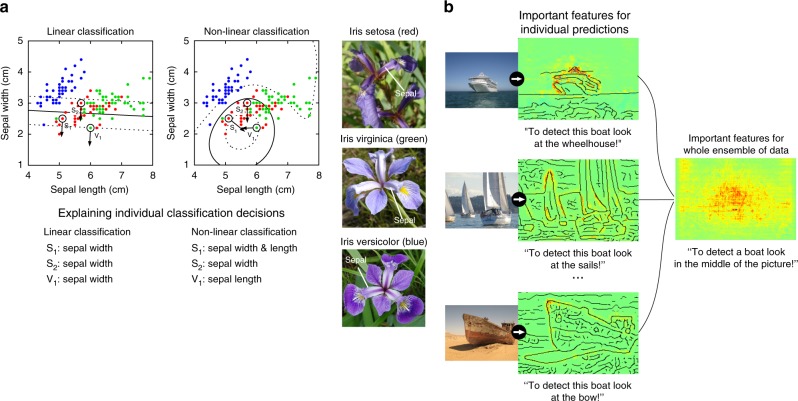
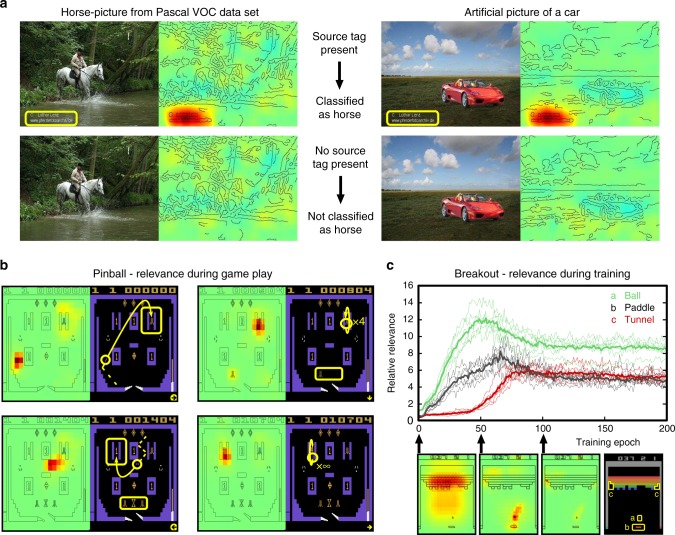
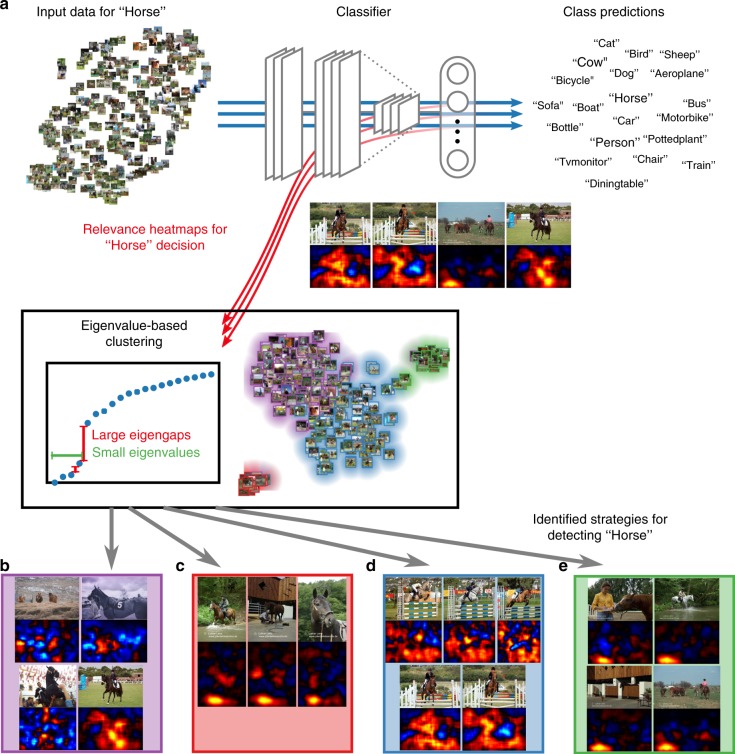
Current learning machines have successfully solved hard application problems, reaching high accuracy and displaying seemingly intelligent behavior. Here we apply recent techniques for explaining decisions of state-of-the-art learning machines and analyze various tasks from computer vision and arcade games. This showcases a spectrum of problem-solving behaviors ranging from naive and short-sighted, to well-informed and strategic. We observe that standard performance evaluation metrics can be oblivious to distinguishing these diverse problem solving behaviors. Furthermore, we propose our semi-automated Spectral Relevance Analysis that provides a practically effective way of characterizing and validating the behavior of nonlinear learning machines. This helps to assess whether a learned model indeed delivers reliably for the problem that it was conceived for. Furthermore, our work intends to add a voice of caution to the ongoing excitement about machine intelligence and pledges to evaluate and judge some of these recent successes in a more nuanced manner.
Overview
The claims and statistics of this paper haven’t been checked yet.
Free: it reads the open-access text and checks the first 5 claims that cite a source we can check. Create a free account to check every claim.
Integrity signals
Registry
Cites
Statistics
Figures
Verification
Claims the paper makes
The claims and statistics of this paper haven’t been checked yet.
Free: it reads the open-access text and checks the first 5 claims that cite a source we can check. Create a free account to check every claim.
Claims other papers make about this one
Each is checked against this paper’s own text: does it say what the citing paper says it does?
The cited source says what the claim attributes to it.
In the citing paper
“Thus, interpretability becomes fundamental to test against ' clever Hans ' models and to ensure that the model has learned relevant processes rather than spurious associations.”
From Artificial intelligence for climate prediction of extremes: State of the art, challenges, and future perspectives (2024) · cites this paper as Lapuschkin et al., 2019
The cited source says what the claim attributes to it.
In the citing paper
“There are examples of AI models predicting correctly for the wrong reasons (known as”
From Artificial intelligence for climate prediction of extremes: State of the art, challenges, and future perspectives (2024) · cites this paper as Lapuschkin et al., 2019
Self-check
Percentages, sums and reported differences re-computed from the paper’s own numbers.
The self-check needs the paper’s full text.
Citations
Cites
Deep Residual Learning for Image Recognition
He, K., Zhang, X., Ren, S., & Sun, J. (2016) · 2016 IEEE Conference on Computer Vision and Pattern Recognition (CVPR) · doi:10.1109/cvpr.2016.90 · Cited by 235,474
Hochreiter, S., & Schmidhuber, J. (1997) · Neural Computation · doi:10.1162/neco.1997.9.8.1735 · Cited by 102,318
LeCun, Y., Bengio, Y., & Hinton, G. (2015) · Nature · doi:10.1038/nature14539 · Cited by 84,126
Cortes, C., & Vapnik, V. (1995) · Machine Learning · doi:10.1007/bf00994018 · Cited by 59,421
Gradient-based learning applied to document recognition
Lecun, Y., Bottou, L., Bengio, Y., & Haffner, P. (1998) · Proceedings of the IEEE · doi:10.1109/5.726791 · Cited by 58,805
Going deeper with convolutions
Szegedy, C., Liu, W., Jia, Y., Sermanet, P., Reed, S., Anguelov, D., Erhan, D., Vanhoucke, V., & Rabinovich, A. (2015) · 2015 IEEE Conference on Computer Vision and Pattern Recognition (CVPR) · doi:10.1109/cvpr.2015.7298594 · Cited by 48,562
Human-level control through deep reinforcement learning
Mnih, V., Kavukcuoglu, K., Silver, D., Rusu, A. A., Veness, J., Bellemare, M. G., Graves, A., Riedmiller, M., Fidjeland, A. K., Ostrovski, G., et al. (2015) · Nature · doi:10.1038/nature14236 · Cited by 30,357
Multilayer feedforward networks are universal approximators
Hornik, K., Stinchcombe, M., & White, H. (1989) · Neural Networks · doi:10.1016/0893-6080(89)90020-8 · Cited by 21,728
The pascal visual object classes (VOC) challenge
Everingham, M., Van Gool, L., Williams, C. K. I., Winn, J., & Zisserman, A. (2010) · International Journal of Computer Vision · doi:10.1007/s11263-009-0275-4 · Cited by 19,599
"Why Should I Trust You?": Explaining the Predictions of Any Classifier
Ribeiro, M. T., Singh, S., & Guestrin, C. (2016) · Proceedings of the 22nd ACM SIGKDD International Conference on Knowledge Discovery and Data Mining · doi:10.1145/2939672.2939778 · Cited by 17,555
Research works printed but not linked: 9
- Pfungst O Clever Hans (the Horse of Mr. Von Osten): contribution to experimental animal and human psychology J. Philos. Psychol. Sci. Method 1911 8 663 666
- Guyon I Elisseeff A An introduction to variable and feature selection J. Mach. Learn. Res. 2003 3 1157 1182
- Nguyen, A., Dosovitskiy, A., Yosinski, J., Brox, T. & Clune, J. Synthesizing the preferred inputs for neurons in neural networks via deep generator networks. (D. D. Lee, M. Sugiyama, U. von Luxburg, I. Guyon, R. Garnett eds.) In Proc. Advances in Neural Information Processing Systems, 3387–3395 (Curran Associates, Inc., Red Hook, NY) (2016).
- Greydanus, S., Koul, A., Dodge, J. & Fern, A. Visualizing and understanding Atari agents. (J. Dy, A. Krause eds.) In Proc. International Conference on Machine Learning, 1787–1796 (JMLR.org, Brookline, MA) (2018).
- Zahavy, T., Ben-Zrihem, N. & Mannor, S. Graying the black box: Understanding DQNs. (M.-F. Balcan, K. Q. Weinberger eds.) In Proc. International Conference on Machine Learning, 1899–1908 (JMLR.org, Brookline, MA) (2016).
- Tsividis, P. A., Pouncy, T., Xu, J. L., Tenenbaum, J. B. & Gershman, S. J. Human learning in Atari. (G. Sukthankar, C. Geib eds.) In Proc. AAAI Spring Symposium Series, 643–646 (AAAI Press, Palo Alto, CA) (2017).
- Winston PH Horn B The Psychology of Computer Vision 1975 New York McGraw-Hill
- The European Parliament and the Council of the European Union.. Regulation (EU) 2016/679 of the European Parliament and of the Council of 27 April 2016 on the protection of natural persons with regard to the processing of personal data and on the free movement of such data, and repealing Directive 95/46/EC (General Data Protection Regulation) Off. J. Eur. Union 2016 L119 1 88
- Thomas, A. W., Heekeren, H. R., Müller, K.-R. & Samek, W. Interpretable LSTMs for whole-brain neuroimaging analyses. Preprint at https://arxiv.org/abs/1810.09945 (2018). · arXiv
Cited by
Items 101–200 of 1,003
Interpreting and Explaining Deep Neural Networks for Classification of Audio SignalsPreprint
Becker, S., Ackermann, M. R., Lapuschkin, S., Müller, K., & Samek, W. (2018) · arXiv (Cornell University) · Cited by 170
Self-citationBorys, K., Schmitt, Y. A., Nauta, M., Seifert, C., Krämer, N., Friedrich, C. M., & Nensa, F. (2023) · European Journal of Radiology · doi:10.1016/j.ejrad.2023.110787 · Cited by 169
Toward Explainable Artificial Intelligence for Regression Models: A methodological perspective
Letzgus, S., Wagner, P., Lederer, J., Samek, W., Müller, K., & Montavon, G. (2022) · IEEE Signal Processing Magazine · doi:10.1109/msp.2022.3153277 · Cited by 167
Self-citationNaser, M. A., Majeed, A. A., Alsabah, M. Q., Al-Shaikhli, T. R., & Kaky, K. M. (2024) · Algorithms · doi:10.3390/a17020078 · Cited by 168
Artificial intelligence in chemistry and drug design
Brown, N., Ertl, P., Lewis, R., Luksch, T., Reker, D., & Schneider, N. (2020) · Journal of Computer-Aided Molecular Design · doi:10.1007/s10822-020-00317-x · Cited by 165
Hägele, M., Seegerer, P., Lapuschkin, S., Bockmayr, M., Samek, W., Klauschen, F., Müller, K.-R., & Binder, A. (2020) · Scientific Reports · doi:10.1038/s41598-020-62724-2 · Cited by 165
“High prediction capabilities without explanation of the prediction process itself is therefore considered suboptimal [9, 10].”
BackgroundSelf-citationHow We Do Things With Words: Analyzing Text as Social and Cultural Data
Nguyen, D., Liakata, M., DeDeo, S., Eisenstein, J., Mimno, D., Tromble, R., & Winters, J. (2020) · Frontiers in Artificial Intelligence · doi:10.3389/frai.2020.00062 · Cited by 168
Explainable Artificial Intelligence by Genetic Programming: A Survey
Mei, Y., Chen, Q., Lensen, A., Xue, B., & Zhang, M. (2023) · IEEE Transactions on Evolutionary Computation · doi:10.1109/tevc.2022.3225509 · Cited by 164
“First, it is important to be able to identify and avoid “Clever Hans” predictors, which exploit tricks and misuse the coincidental patterns that happened to exist in the training data but cannot generalise [16].”
BackgroundEvaluating saliency map explanations for convolutional neural networks: a user study
Alqaraawi, A., Schuessler, M., Weiß, P., Costanza, E., & Berthouze, N. (2020) · Proceedings of the 25th International Conference on Intelligent User Interfaces · doi:10.1145/3377325.3377519 · Cited by 163
From Clustering to Cluster Explanations via Neural Networks
Kauffmann, J., Esders, M., Ruff, L., Montavon, G., Samek, W., & Müller, K. (2022) · IEEE Transactions on Neural Networks and Learning Systems · doi:10.1109/tnnls.2022.3185901 · Cited by 161
Self-citationGibson, P. B., Chapman, W. E., Altinok, A., Delle Monache, L., DeFlorio, M. J., & Waliser, D. E. (2021) · Communications Earth & Environment · doi:10.1038/s43247-021-00225-4 · Cited by 160
“The potential lack of interpretability has implications for the perceived credibility of the model, where machine learning models may achieve promising results for the wrong reasons 33 .”
BackgroundKakogeorgiou, I., & Karantzalos, K. (2021) · International Journal of Applied Earth Observation and Geoinformation · doi:10.1016/j.jag.2021.102520 · Cited by 158
“Moreover, these methods could potentially reveal biases in the trained dataset, classes, multiple labels, and other spurious or artifactual correlations learned by a model (Lapuschkin et al., 2019).”
BackgroundMorphological and molecular breast cancer profiling through explainable machine learning
Binder, A., Bockmayr, M., Hägele, M., Wienert, S., Heim, D., Hellweg, K., Ishii, M., Stenzinger, A., Hocke, A., Denkert, C., et al. (2021) · Nature Machine Intelligence · doi:10.1038/s42256-021-00303-4 · Cited by 156
Self-citationFollow the Trail: Machine Learning for Fraud Detection in Fintech Applications
Stojanović, B., Božić, J., Hofer-Schmitz, K., Nahrgang, K., Weber, A., Badii, A., Sundaram, M., Jordan, E., & Runevic, J. (2021) · Sensors · doi:10.3390/s21051594 · Cited by 100
Right for the Right Concept: Revising Neuro-Symbolic Concepts by Interacting with their Explanations
Stammer, W., Schramowski, P., & Kersting, K. (2021) · IEEE Computer Society Conference on Computer Vision and Pattern Recognition/Proceedings - IEEE Computer Society Conference on Computer Vision and Pattern Recognition/Proceedings · doi:10.1109/cvpr46437.2021.00362 · Cited by 154
Lee, M., Sanz, L. R. D., Barra, A., Wolff, A., Nieminen, J. O., Boly, M., Rosanova, M., Casarotto, S., Bodart, O., Annen, J., et al. (2022) · Nature Communications · doi:10.1038/s41467-022-28451-0 · Cited by 155
Explainable AI and Interpretable Machine Learning: A Case Study in Perspective
Vishwarupe, V., Joshi, P. M., Mathias, N., Maheshwari, S., Mhaisalkar, S., & Pawar, V. (2022) · Procedia Computer Science · doi:10.1016/j.procs.2022.08.105 · Cited by 152
Neural network potentials for chemistry: concepts, applications and prospects
Käser, S., Vazquez-Salazar, L. I., Meuwly, M., & Töpfer, K. (2023) · Digital Discovery · doi:10.1039/d2dd00102k · Cited by 158
Explainability-driven model improvement for SOH estimation of lithium-ion battery
Wang, F., Zhao, Z., Zhai, Z., Shang, Z., Yan, R., & Chen, X. (2022) · Reliability Engineering & System Safety · doi:10.1016/j.ress.2022.109046 · Cited by 149
A Survey on XAI for 5G and Beyond Security: Technical Aspects, Challenges and Research Directions
Senevirathna, T., La, V. H., Marchal, S., Siniarski, B., Liyanage, M., & Wang, S. (2024) · IEEE Communications Surveys & Tutorials · doi:10.1109/comst.2024.3437248 · Cited by 153
Model agnostic generation of counterfactual explanations for molecules
Wellawatte, G. P., Seshadri, A., & White, A. D. (2022) · Chemical Science · doi:10.1039/d1sc05259d · Cited by 143
Explanation-Guided Training for Cross-Domain Few-Shot Classification
Sun, J., Lapuschkin, S., Samek, W., Zhao, Y., Cheung, N. M., & Binder, A. (2021) · Proceedings - International Conference on Pattern Recognition/Proceedings/International Conference on Pattern Recognition · doi:10.1109/icpr48806.2021.9412941 · Cited by 141
Self-citationA Survey on Explainable Anomaly Detection
Li, Z., Zhu, Y., & Van Leeuwen, M. (2024) · ACM Transactions on Knowledge Discovery from Data · doi:10.1145/3609333 · Cited by 139
“, to avoid the Clever Hans Phenomenon [112] thatÐin this contextÐrefers to anomaly detection models utilising spurious correlations and patterns in the data to”
MethodTheranostics and artificial intelligence: new frontiers in personalized medicine
Bilgin, G. B., Bilgin, C., Burkett, B. J., Orme, J. J., Childs, D. S., Thorpe, M. P., Halfdanarson, T. R., Johnson, G. B., Kendi, A. T., & Sartor, O. (2024) · Theranostics · doi:10.7150/thno.94788 · Cited by 139
CLOOB: Modern Hopfield Networks with InfoLOOB Outperform CLIP
Fürst, A., Rumetshofer, E., Lehner, J., Tran, V. T., Tang, F., Ramsauer, H., Kreil, D. P., Kopp, M., Klambauer, G., Bitto, A., et al. (2022) · neural information processing systems · doi:10.52202/068431-1487 · Cited by 141
Bommer, P. L., Kretschmer, M., Hedström, A., Bareeva, D., & Höhne, M. (2024) · Artificial Intelligence for the Earth Systems · doi:10.1175/aies-d-23-0074.1 · Cited by 139
AI applications in functional genomics
Caudai, C., Galizia, A., Geraci, F., Le Pera, L., Morea, V., Salerno, E., Via, A., & Colombo, T. (2021) · Computational and Structural Biotechnology Journal · doi:10.1016/j.csbj.2021.10.009 · Cited by 137
A Perspective on Explanations of Molecular Prediction Models
Wellawatte, G. P., Gandhi, H. A., Seshadri, A., & White, A. D. (2023) · Journal of Chemical Theory and Computation · doi:10.1021/acs.jctc.2c01235 · Cited by 140
Explaining and Interpreting LSTMs
Arras, L., Arjona-Medina, J., Widrich, M., Montavon, G., Gillhofer, M., Müller, K.-R., Hochreiter, S., & Samek, W. (2019) · Lecture notes in computer science · doi:10.1007/978-3-030-28954-6_11 · Cited by 138
Self-citationNICE: an algorithm for nearest instance counterfactual explanations
Brughmans, D., Leyman, P., & Martens, D. (2023) · Data Mining and Knowledge Discovery · doi:10.1007/s10618-023-00930-y · Cited by 143
Review of interpretable machine learning for process industries
Carter, A., Imtiaz, S. A., & Naterer, G. F. (2022) · Process Safety and Environmental Protection · doi:10.1016/j.psep.2022.12.018 · Cited by 137
Mundt, M., Hong, Y., Pliushch, I., & Ramesh, V. (2023) · Neural Networks · doi:10.1016/j.neunet.2023.01.014 · Cited by 132
Explainable image classification with evidence counterfactual
Vermeire, T., Brughmans, D., Goethals, S., Oliveira, R., & Martens, D. (2022) · Pattern Analysis and Applications · doi:10.1007/s10044-021-01055-y · Cited by 135
A Practical Tutorial on Explainable AI Techniques
Bennetot, A., Donadello, I., El-Qadi, A., Dragoni, M., Frossard, T., Wagner, B., Saranti, A., Tulli, S., Trocan, M., Chatila, R., et al. (2024) · ACM Computing Surveys · doi:10.1145/3670685 · Cited by 134
Materia, S., García, L. P., van Straaten, C., O, S., Mamalakis, A., Cavicchia, L., Coumou, D., de Luca, P., Kretschmer, M., & Donat, M. (2024) · WIREs Climate Change · doi:10.1002/wcc.914 · Cited by 130
“There are examples of AI models predicting correctly for the wrong reasons (known as “ clever Hans ” models; see Lapuschkin et al., 2019).”
Sheu, R.-K., & Pardeshi, M. S. (2022) · Sensors · doi:10.3390/s22208068 · Cited by 129
Recommendations and future directions for supervised machine learning in psychiatry
Cearns, M., Hahn, T., & Baune, B. T. (2019) · Translational Psychiatry · doi:10.1038/s41398-019-0607-2 · Cited by 127
EXplainable Artificial Intelligence (XAI)—From Theory to Methods and Applications
Ortigossa, E. S., Gonçalves, T., & Nonato, L. G. (2024) · IEEE Access · doi:10.1109/access.2024.3409843 · Cited by 124
Post hoc Explanations may be Ineffective for Detecting Unknown Spurious CorrelationPreprint
Adebayo, J., Muelly, M., Abelson, H., & Kim, B. (2022) · International Conference on Learning Representations · doi:10.48550/arxiv.2212.04629 · Cited by 118
REVOLUTIONISED TECHNOLOGIES FOR MARKETING: THEORETICAL REVIEW WITH FOCUS ON ARTIFICIAL INTELLIGENCE
Peyravi, B., Nekrošienė, J., & Лобанова, Л. (2020) · Verslas teorija ir praktika · doi:10.3846/btp.2020.12313 · Cited by 120
Mertes, S., Huber, T., Weitz, K., Heimerl, A., & André, E. (2022) · Frontiers in Artificial Intelligence · doi:10.3389/frai.2022.825565 · Cited by 119
Neural network attribution methods for problems in geoscience: A novel synthetic benchmark dataset
Mamalakis, A., Ebert‐Uphoff, I., & Barnes, E. A. (2022) · Environmental Data Science · doi:10.1017/eds.2022.7 · Cited by 120
Explainable artificial intelligence for education and training
Fiok, K., Farahani, F. V., Karwowski, W., & Ahram, T. (2022) · The Journal of Defense Modeling and Simulation: Applications, Methodology, Technology · doi:10.1177/15485129211028651 · Cited by 117
Angrick, M., Luo, S., Rabbani, Q., Candrea, D. N., Shah, S., Milsap, G., Anderson, W. S., Gordon, C. R., Rosenblatt, K. R., Clawson, L., et al. (2024) · Scientific Reports · doi:10.1038/s41598-024-60277-2 · Cited by 120
DeepCABAC: A Universal Compression Algorithm for Deep Neural Networks
Wiedemann, S., Kirchhoffer, H., Matlage, S., Haase, P., Marban, A., Marinc, T., Neumann, D., Nguyen, T., Schwarz, H., Wiegand, T., et al. (2020) · IEEE Journal of Selected Topics in Signal Processing · doi:10.1109/jstsp.2020.2969554 · Cited by 113
Self-citationToward a Collective Agenda on AI for Earth Science Data Analysis
Tuia, D., Roscher, R., Wegner, J. D., Jacobs, N., Zhu, X. X., & Camps‐Valls, G. (2021) · IEEE Geoscience and Remote Sensing Magazine · doi:10.1109/mgrs.2020.3043504 · Cited by 116
Teney, D., Abbasnejad, E., Lucey, S., & van den Hengel, A. (2022) · IEEE Computer Society Conference on Computer Vision and Pattern Recognition/Proceedings - IEEE Computer Society Conference on Computer Vision and Pattern Recognition/Proceedings · doi:10.1109/cvpr52688.2022.01626 · Cited by 116
Petersen, E., Potdevin, Y., Mohammadi, E., Zidowitz, S., Breyer, S., Nowotka, D., Henn, S., Pechmann, L., Leucker, M., Rostalski, P., et al. (2022) · IEEE Access · doi:10.1109/access.2022.3178382 · Cited by 113
Decoding subjective emotional arousal from EEG during an immersive virtual reality experience
Hofmann, S., Klotzsche, F., Mariola, A., Nikulin, V. V., Villringer, A., & Gaebler, M. (2021) · eLife · doi:10.7554/elife.64812 · Cited by 111
Ebert-Uphoff, I., & Hilburn, K. (2020) · Bulletin of the American Meteorological Society · doi:10.1175/bams-d-20-0097.1 · Cited by 109
Unexplainability and Incomprehensibility of AI
Yampolskiy, R. V. (2020) · Journal of Artificial Intelligence and Consciousness · doi:10.1142/s2705078520500150 · Cited by 108
Leveraging explanations in interactive machine learning: An overview
Teso, S., Alkan, Ö., Stammer, W., & Daly, E. (2023) · Frontiers in Artificial Intelligence · doi:10.3389/frai.2023.1066049 · Cited by 106
Evaluating Recurrent Neural Network Explanations
Arras, L., Osman, A., Müller, K.-R., & Samek, W. (2019) · Proceedings of the 2019 ACL Workshop BlackboxNLP: Analyzing and Interpreting Neural Networks for NLP · doi:10.18653/v1/w19-4813 · Cited by 70
Self-citationWon, D.-O., Müller, K., & Lee, S. (2020) · Science Robotics · doi:10.1126/scirobotics.abb9764 · Cited by 106
Self-citationMachine learning for polymeric materials: an introduction
Cencer, M. M., Moore, J. S., & Assary, R. S. (2021) · Polymer International · doi:10.1002/pi.6345 · Cited by 105
Rethink reporting of evaluation results in AI
Burnell, R., Schellaert, W., Burden, J., Ullman, T. D., Martinez-Plumed, F., Tenenbaum, J. B., Rutar, D., Cheke, L. G., Sohl-Dickstein, J., Mitchell, M., et al. (2023) · Science · doi:10.1126/science.adf6369 · Cited by 104
Benchmarks for interpretation of QSAR models
Matveieva, M., & Полищук, П. Г. (2021) · Journal of Cheminformatics · doi:10.1186/s13321-021-00519-x · Cited by 104
Hilburn, K., Ebert‐Uphoff, I., & Miller, S. D. (2020) · Journal of Applied Meteorology and Climatology · doi:10.1175/jamc-d-20-0084.1 · Cited by 103
Stenzinger, A., Alber, M., Allgäuer, M., Jurmeister, P. S., Bockmayr, M. L., Budczies, J., Lennerz, J. K., Eschrich, J., Kazdal, D. N., Schirmacher, P., et al. (2021) · Seminars in Cancer Biology · doi:10.1016/j.semcancer.2021.02.011 · Cited by 102
Self-citationExplainable artificial intelligence (XAI): From inherent explainability to large language models
Mumuni, F., & Mumuni, A. (2026) · Array · doi:10.1016/j.array.2026.101133 · Cited by 102
Towards explaining anomalies: A deep Taylor decomposition of one-class models
Kauffmann, J., Müller, K.-R., & Montavon, G. (2020) · Pattern Recognition · doi:10.1016/j.patcog.2020.107198 · Cited by 101
Self-citationSelf-Attentive, Multi-Context One-Class Classification for Unsupervised Anomaly Detection on Text
Ruff, L., Zemlyanskiy, Y., Vandermeulen, R. A., Schnake, T., & Kloft, M. (2019) · Proceedings of the conference - Association for Computational Linguistics. Meeting · doi:10.18653/v1/p19-1398 · Cited by 101
Accurate and robust neural networks for face morphing attack detection
Seibold, C., Samek, W., Hilsmann, A., & Eisert, P. (2020) · Journal of Information Security and Applications · doi:10.1016/j.jisa.2020.102526 · Cited by 101
Self-citationExplainability and causability in digital pathology
Plass, M., Kargl, M., Kiehl, T., Regitnig, P., Geißler, C., Evans, T., Zerbe, N., Carvalho, R., Holzinger, A., & Müller, H. (2023) · The Journal of Pathology Clinical Research · doi:10.1002/cjp2.322 · Cited by 99
“Furthermore, XAI methods should help to recognise so-called ‘ Clever Hans ’ predictors and detect if the model learned any shortcuts or biases [49,50].”
MethodExplaining Deep Learning Models for Tabular Data Using Layer-Wise Relevance Propagation
Ullah, I., Rios, A., Gala, V., & McKeever, S. (2021) · Applied Sciences · doi:10.3390/app12010136 · Cited by 100
Precision cancer medicine: Concepts, current practice, and future developments
Edsjö, A., Holmquist, L., Geoerger, B., Nowak, F., Gomon, G., Alix‐Panabières, C., Staaf, J., Ploeger, C., Lassen, U., Tourneau, C. L., et al. (2023) · Journal of Internal Medicine · doi:10.1111/joim.13709 · Cited by 100
Nam, W.-J., Gur, S., Choi, J., Wolf, L., & Lee, S.-W. (2020) · Proceedings of the AAAI Conference on Artificial Intelligence · doi:10.1609/aaai.v34i03.5632 · Cited by 98
X-MIR: EXplainable Medical Image Retrieval
Hu, B., Vasu, B., & Hoogs, A. J. (2022) · IEEE Winter Conference on Applications of Computer Vision · doi:10.1109/wacv51458.2022.00161 · Cited by 98
Explainable AI: A review of applications to neuroimaging data
Farahani, F. V., Fiok, K., Lahijanian, B., Karwowski, W., & Douglas, P. K. (2022) · Frontiers in Neuroscience · doi:10.3389/fnins.2022.906290 · Cited by 98
Marchetti, M. A., Cowen, E. A., Kurtansky, N. R., Weber, J., Dauscher, M., DeFazio, J., Deng, L., Dusza, S. W., Haliasos, H., Halpern, A. C., et al. (2023) · npj Digital Medicine · doi:10.1038/s41746-023-00872-1 · Cited by 83
Coloring Molecules with Explainable Artificial Intelligence for Preclinical Relevance Assessment
Jiménez-Luna, J., Skalic, M., Weskamp, N., & Schneider, G. (2021) · Journal of Chemical Information and Modeling · doi:10.1021/acs.jcim.0c01344 · Cited by 96
Angrick, M., Luo, S., Rabbani, Q., Candrea, D. N., Shah, S., Milsap, G. W., Anderson, W. S., Gordon, C. R., Rosenblatt, K. R., Clawson, L., et al. (2023) · doi:10.1101/2023.06.30.23291352 · Cited by 95
Explainable Machine Learning for Property Predictions in Compound Optimization
Rodríguez-Pérez, R., & Bajorath, J. (2021) · Journal of Medicinal Chemistry · doi:10.1021/acs.jmedchem.1c01789 · Cited by 95
Toward Interpretable Machine Learning: Transparent Deep Neural Networks and BeyondPreprint
Samek, W., Montavon, G., Lapuschkin, S., Anders, C. J., & Müller, K. (2020) · arXiv (Cornell University) · Cited by 95
Self-citationAligning machine and human visual representations across abstraction levels
Muttenthaler, L., Greff, K., Born, F., Spitzer, B., Kornblith, S., Mozer, M., Muller, K.-R., Unterthiner, T., & Lampinen, A. K. (2025) · Nature · doi:10.1038/s41586-025-09631-6 · Cited by 77
Self-citationThe ConceptARC Benchmark: Evaluating Understanding and Generalization in the ARC Domain
Moskvichev, A., Odouard, V. V., & Mitchell, M. (2023) · arXiv · doi:10.48550/arxiv.2305.07141 · Cited by 92
Zou, L., Goh, H. L., Liew, C. J. Y., Quah, J. L., Gu, G. T., Chew, J. J., Kumar, M. P., Ang, C. G. L., & Ta, A. W. A. (2023) · IEEE Transactions on Artificial Intelligence · doi:10.1109/tai.2022.3153754 · Cited by 92
Towards robust explanations for deep neural networks
Dombrowski, A.-K., Anders, C. J., Müller, K., & Kessel, P. (2021) · Pattern Recognition · doi:10.1016/j.patcog.2021.108194 · Cited by 96
Self-citationImplementing local-explainability in Gradient Boosting Trees: Feature Contribution
Delgado-Panadero, Á., Hernández-Lorca, B., García-Ordás, M. T., & Benítez‐Andrades, J. A. (2022) · Information Sciences · doi:10.1016/j.ins.2021.12.111 · Cited by 92
Tait, E., & Pierson, C. M. (2022) · Journal of the Australian Library and Information Association · doi:10.1080/24750158.2022.2081111 · Cited by 90
Quantitative evaluation of explainable graph neural networks for molecular property prediction
Rao, J., Zheng, S., Lu, Y., & Yang, Y. (2022) · Patterns · doi:10.1016/j.patter.2022.100628 · Cited by 90
Analyzing Neuroimaging Data Through Recurrent Deep Learning Models
Thomas, A. W., Heekeren, H. R., Müller, K.-R., & Samek, W. (2019) · Frontiers in Neuroscience · doi:10.3389/fnins.2019.01321 · Cited by 90
Self-citationAffective State Recognition in Livestock—Artificial Intelligence Approaches
Neethirajan, S. R. (2022) · Animals · doi:10.3390/ani12060759 · Cited by 90
Explainable reinforcement learning (XRL): a systematic literature review and taxonomy
Bekkemoen, Y. (2023) · Machine Learning · doi:10.1007/s10994-023-06479-7 · Cited by 91
A Taxonomy for Human Subject Evaluation of Black-Box Explanations in XAI.
Chromik, M., & Schuessler, M. (2020) · Cited by 91
Algorithmic Harm in Consumer Markets
Bar‐Gill, O., Sunstein, C. R., & Talgam-Cohen, I. (2023) · The Journal of Legal Analysis · doi:10.1093/jla/laad003 · Cited by 89
Debugging Tests for Model Explanations
Adebayo, J., Muelly, M., Liccardi, I., & Kim, B. (2020) · arXiv · doi:10.48550/arxiv.2011.05429 · Cited by 88
“Correcting bugs can also be achieved by penalizing feature attributions during training [21, 50, 51] or clustering [36].”
BackgroundMüller, H., Holzinger, A., Plass, M., Brcic, L., Stumptner, C., & Zatloukal, K. (2022) · New Biotechnology · doi:10.1016/j.nbt.2022.05.002 · Cited by 87
2020 International brain–computer interface competition: A review
Jeong, J.-H., Cho, J.-H., Lee, Y.-E., Lee, S., Shin, G.-H., Kweon, Y.-S., Millán, J. D. R., Müller, K., & Lee, S.-W. (2022) · Frontiers in Human Neuroscience · doi:10.3389/fnhum.2022.898300 · Cited by 88
Self-citationAndrews, K. (2020) · Cambridge University Press eBooks · doi:10.1017/9781108616522 · Cited by 86
Lavecchia, A. (2025) · Wiley Interdisciplinary Reviews Computational Molecular Science · doi:10.1002/wcms.70049 · Cited by 87
The European Legal Framework for Medical AI
Schneeberger, D., Stöger, K., & Holzinger, A. (2020) · Lecture Notes in Computer Science · doi:10.1007/978-3-030-57321-8_12 · Cited by 85
Wagan, S. A., Koo, J., Siddiqui, I. F., Attique, M., Shin, D. R., & Qureshi, N. M. F. (2022) · Journal of King Saud University - Computer and Information Sciences · doi:10.1016/j.jksuci.2022.09.005 · Cited by 88
Explainable AI reveals Clever Hans effects in unsupervised learning models
Kauffmann, J., Dippel, J., Ruff, L., Samek, W., Müller, K., & Montavon, G. (2025) · Nature Machine Intelligence · doi:10.1038/s42256-025-01000-2 · Cited by 88
Self-citationAncajas, C. M. F., Oyedele, A. S., Butt, C. M., & Walker, A. S. (2024) · Natural Product Reports · doi:10.1039/d4np00009a · Cited by 85
Enhancing transparency in data-driven urban pluvial flood prediction using an explainable CNN model
Gao, W., Liao, Y., Chen, Y., Lai, C., He, S., & Wang, Z. (2024) · Journal of Hydrology · doi:10.1016/j.jhydrol.2024.132228 · Cited by 85
Explaining Machine Learning Models for Clinical Gait Analysis
Slijepcevic, D., Horst, F., Lapuschkin, S., Horsak, B., Raberger, A.-M., Kranzl, A., Samek, W., Breiteneder, C., Schöllhorn, W. I., & Zeppelzauer, M. (2022) · ACM Transactions on Computing for Healthcare · doi:10.1145/3474121 · Cited by 82
“To perform a more detailed analysis that is able to identify different learning strategies of the ML models, we propose the use of SpRAy [35] as described in [5] for clinical gait data.”
BackgroundMethodSelf-citationLearning characteristics of graph neural networks predicting protein–ligand affinities
Mastropietro, A., Pasculli, G., & Bajorath, J. (2023) · Nature Machine Intelligence · doi:10.1038/s42256-023-00756-9 · Cited by 86
Hoffmann, A., Fanconi, C., Rade, R., & Köhler, J. (2021) · arXiv (Cornell University) · doi:10.48550/arxiv.2105.02968 · Cited by 83
A benchmark for neural network robustness in skin cancer classification
Maron, R. C., Schlager, J. G., Haggenmüller, S., Kalle, C. V., Utikal, J. S., Meier, F. E., Gellrich, F. F., Hobelsberger, S., Hauschild, A., French, L. E., et al. (2021) · European Journal of Cancer · doi:10.1016/j.ejca.2021.06.047 · Cited by 82
Metadata
- Authors
- Lapuschkin, S., Wäldchen, S., Binder, A., Montavon, G., Samek, W., & Müller, K.-R.
- Affiliations
- Fraunhofer Institute for Telecommunications, Heinrich Hertz Institute (DE)
- Technische Universität Berlin (DE)
- Singapore University of Technology and Design (SG)
- Korea University (KR)
- Corresponding author
- Samek, Wojciech
- Müller, Klaus-Robert
- Venue
- Nature Communications
- Published
- 2019-03-11
- Volume
- 10
- Issue
- 1
- Pages
- 1096-1096
- ISSN
- 2041-1723 (ISSN-L)
- PMC
- PMC6411769
- OpenAlex
- W2921802966
- Semantic Scholar
- 4f51a64793d3b2a60e9e5846c31dae023cf5c69a
- Cited by
- 1,047
- References
- 41
- Citations by year
- 2026: 129 · 2025: 178 · 2024: 142 · 2023: 178 · 2022: 159 · 2021: 140 · 2020: 86 · 2019: 34
- FWCI
- 47.80
- Type
- journal article
- Language
- en
- Open access
- gold
- doi.org
- Licence
- cc-by
- creativecommons.org/licenses/by/4.0 (tdm)
- creativecommons.org/licenses/by/4.0 (vor)
- Locations
- Nature Communications (publishedVersion, cc-by)
- Europe PMC (PubMed Central) (publishedVersion, cc-by)
- PubMed Central (publishedVersion, cc-by)
- PubMed (publishedVersion)
- arXiv (Cornell University) (submittedVersion)
- DOAJ (DOAJ: Directory of Open Access Journals) (submittedVersion)
- DOAJ (DOAJ: Directory of Open Access Journals) (submittedVersion, cc-by-sa)
- Publikationsdatenbank der Fraunhofer-Gesellschaft (Fraunhofer-Gesellschaft) (submittedVersion, other-oa)
- Fraunhofer-Publica (Fraunhofer-Gesellschaft) (submittedVersion)
- arXiv (Cornell University)
- Funders
- Deutsche Forschungsgemeinschaft (EXC-2046, EXC‐2046/1, 01IS18037I, 390685689)
- Institute for Information and Communications Technology Promotion (2017-0-00451)
- Topics
- Physical Sciences › Computer Science › Artificial Intelligence › Explainable Artificial Intelligence (XAI)
- Physical Sciences › Computer Science › Software › Software Testing and Debugging Techniques
- Physical Sciences › Computer Science › Artificial Intelligence › Adversarial Robustness in Machine Learning
- Keywords
- Clever Hans effect, explainable AI, decision explanation, problem-solving behavior, model evaluation metrics, computer vision, arcade games, model validation, machine intelligence
About these checks
Registry, retraction, Cites and statistics results are computed, not judged, with one exception: a printed reference that no index lists is read once by a model before it counts as a citation error. Claims are extracted by a model and kept only when their quote appears verbatim in the text; each cited source is then checked, with a model’s help, for whether it says what the claim relies on. Those verdicts can be wrong — read the claim’s quote and the cited source before relying on one.
Statistics and arithmetic are recomputed, not judged.
Confidence bands are shown only for fields calibrated on our annotated test set. None is calibrated yet, so no band is shown.
What counts as a claim ›How we measure confidence ›How we check this ›
Are you an author, or do you see a problem with this page? Request a review
Data sources
Bibliographic data: Semantic Scholar, OpenAlex, Crossref.
Contains information from the Semantic Scholar Academic Graph Datasets, made available under the ODC Attribution License (ODC-BY 1.0).
Semantic Scholar’s data is described in: Kinney, R., et al. (2023). The Semantic Scholar Open Data Platform. arXiv:2301.10140.
