

Estimating the success of re-identifications in incomplete datasets using generative models
Open accessThe DOI matches its Crossref record; 59 of the 59 references it cites were found in a registry or an index.
Abstract
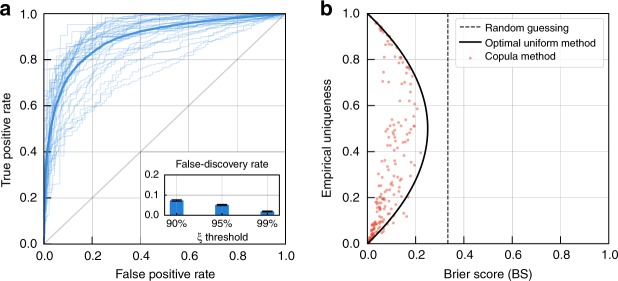
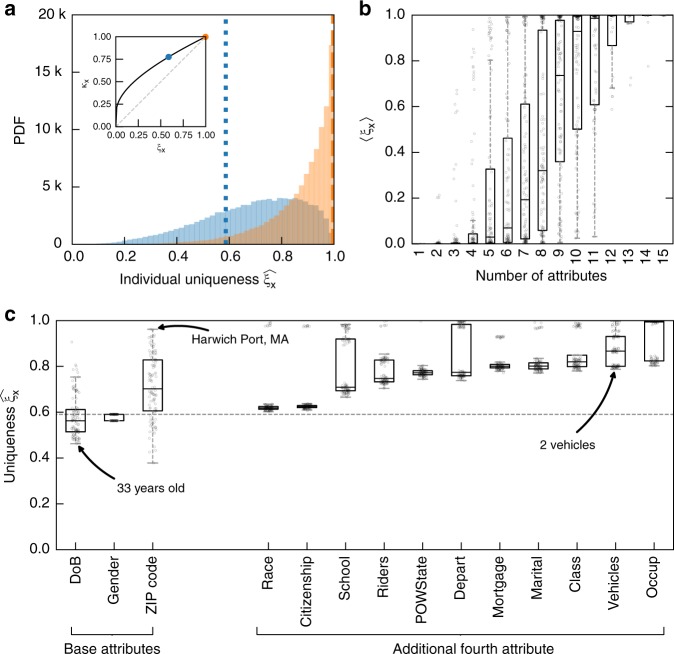
While rich medical, behavioral, and socio-demographic data are key to modern data-driven research, their collection and use raise legitimate privacy concerns. Anonymizing datasets through de-identification and sampling before sharing them has been the main tool used to address those concerns. We here propose a generative copula-based method that can accurately estimate the likelihood of a specific person to be correctly re-identified, even in a heavily incomplete dataset. On 210 populations, our method obtains AUC scores for predicting individual uniqueness ranging from 0.84 to 0.97, with low false-discovery rate. Using our model, we find that 99.98% of Americans would be correctly re-identified in any dataset using 15 demographic attributes. Our results suggest that even heavily sampled anonymized datasets are unlikely to satisfy the modern standards for anonymization set forth by GDPR and seriously challenge the technical and legal adequacy of the de-identification release-and-forget model.
Overview
The claims and statistics of this paper haven’t been checked yet.
Free: it reads the open-access text and checks the first 5 claims that cite a source we can check. Create a free account to check every claim.
Integrity signals
Registry
Cites
Statistics
Figures
Verification
Claims the paper makes
The claims and statistics of this paper haven’t been checked yet.
Free: it reads the open-access text and checks the first 5 claims that cite a source we can check. Create a free account to check every claim.
Claims other papers make about this one
Each is checked against this paper’s own text: does it say what the citing paper says it does?
The source backs part of the claim, not all of it — or backs it for a different population, condition or comparison.
In the citing paper
“Existing medical data is not fully exploited by ML primarily because it sits in data silos and privacy concerns restrict access to this data.”
From The future of digital health with federated learning (2020) · cites this paper as [7]
Experimental — accuracy not yet measuredThe source backs part of the claim, not all of it — or backs it for a different population, condition or comparison.
In the citing paper
“Centralising or releasing data, however, poses not only regulatory, ethical and legal challenges, related to privacy and data protection, but also technical ones.”
From The future of digital health with federated learning (2020) · cites this paper as [7]
Experimental — accuracy not yet measuredThe source backs part of the claim, not all of it — or backs it for a different population, condition or comparison.
In the citing paper
“Beyond these considerations, a required step for multimodal AI is the appropriate linking of all data types available in the datasets, which represents another challenge owing to the increasing risk of identification of individuals and regulatory constraints 146”
From Multimodal biomedical AI (2022) · cites this paper as [146]
Experimental — accuracy not yet measuredThe cited source says what the claim attributes to it.
In the citing paper
“Data anonymization alone does not provide sufficient protection (Rocher et al., 2019) since parts of the training data can be reconstructed by inversion of model parameters (Carlini et al., 2019; Zhang et al., 2020), gradients (Zhu et al., 2019; Geiping et al., 2020), or through adversarial attacks (Wang et al., 2019; Hitaj et al., 2017).”
From Federated learning for computational pathology on gigapixel whole slide images (2022) · cites this paper as Rocher et al., 2019
The cited source says what the claim attributes to it.
In the citing paper
“Even if data anonymisation could bypass these limitations, it is now well understood that removing metadata such as patient name or date of birth is often not enough to preserve privacy7.”
From The future of digital health with federated learning (2020) · cites this paper as [7]
1 more claim about this paper
Create a free account to see every claim other papers make about this one.
Self-check
Percentages, sums and reported differences re-computed from the paper’s own numbers.
The self-check needs the paper’s full text.
Citations
Cites
k-ANONYMITY: A MODEL FOR PROTECTING PRIVACY
SWEENEY, L. (2002) · International Journal of Uncertainty, Fuzziness and Knowledge-Based Systems · doi:10.1142/s0218488502001648 · Cited by 8,571 · cited 1×
“While more advanced guarantees like k -anonymity 57 would give every individual in the dataset some protection, they have been shown to be NP-Hard 58 , hard to achieve in modern high-dimensional datasets 59 , and not always suf fi cient 60 .”
BackgroundBig Data : The Management Revolution
マカフィー, ア., ブリニョルフソン, エ., & 有賀, 裕. (2013) · Harvard business review · Cited by 3,550
t-Closeness: Privacy Beyond k-Anonymity and l-Diversity
Li, N., Li, T., & Venkatasubramanian, S. (2007) · 2007 IEEE 23rd International Conference on Data Engineering · doi:10.1109/icde.2007.367856 · Cited by 3,451
Lazer, D., Pentland, A., Adamic, L., Aral, S., Barabási, A.-L., Brewer, D., Christakis, N., Contractor, N., Fowler, J., Gutmann, M., et al. (2009) · Science · doi:10.1126/science.1167742 · Cited by 3,365
The real-time city? Big data and smart urbanism
Kitchin, R. (2014) · GeoJournal · doi:10.1007/s10708-013-9516-8 · Cited by 2,794 · cited 5×
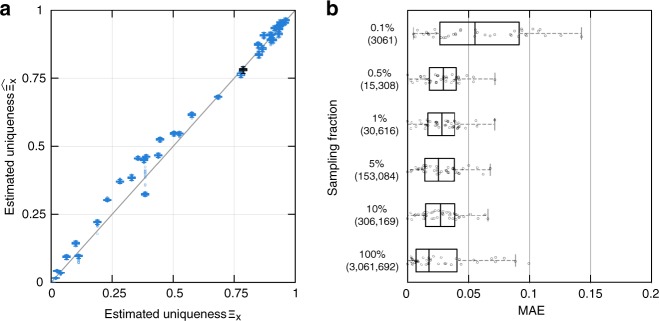
“Table 1 and Supplementary Note 7 show that, at very small sampling fraction (below 0.1%), where the error is the largest, the error is mostly determined by the marginals, and converges after few hundred records when the exact marginals are known.”
BackgroundInfluentialThe Real-Time City? Big Data and Smart Urbanism
Kitchin, R. (2013) · SSRN Electronic Journal · doi:10.2139/ssrn.2289141 · Cited by 2,794
(2012) · PubMed · Cited by 2,326
Cherubini, U., Luciano, E., & Vecchiato, W. (2004) · Wiley eBooks · doi:10.1002/9781118673331 · Cited by 2,009
Vinh, N. X., Epps, J., & Bailey, J. (2010) · Minerva Access (University of Melbourne) · doi:10.5555/1756006.1953024 · Cited by 1,781
The Unreasonable Effectiveness of Data
Halevy, A., Norvig, P., & Pereira, F. (2009) · IEEE Intelligent Systems · doi:10.1109/mis.2009.36 · Cited by 1,767
Research works printed but not linked: 4
- Cadwalladr, C. & Graham-Harrison, E. Revealed: 50 million facebook profiles harvested for Cambridge Analytica in major data breach. The Guardian (17 Mar 2018).
- Polonetsky J Tene O Finch K Shades of gray: seeing the full spectrum of practical data De-Identification St. Clara Law Rev. 2016 56 593 629
- Fienberg SE Sanil AP A Bayesian approach to data disclosure: optimal intruder behavior for continuous data J. Stat. 1997 13 75
- Chen G Keller-McNulty S Estimation of identification disclosure risk in microdata J. Stat. 1998 14 79
Cited by
Items 201–300 of 817
Sei, Y., Onesimu, J. A., & Ohsuga, A. (2022) · IEEE Access · doi:10.1109/access.2022.3208715 · Cited by 22
“ther, we compared the method of creating a decision tree by 573 generating training data using a normal copula [60].”
BackgroundMethodInfluentialLiu, B., & Wei, L. (2022) · Computers in Human Behavior · doi:10.1016/j.chb.2022.107537 · Cited by 30
Kuo, T.-T., & Pham, A. (2022) · International Journal of Medical Informatics · doi:10.1016/j.ijmedinf.2022.104924 · Cited by 26
“[ 4–11] This approach could also attract more institutions to participate in collaborative learning initiatives.”
BackgroundDelivering on NIH data sharing requirements: avoiding Open Data in Appearance Only
Watson, H., Gallifant, J., Lai, Y., Radunsky, A. P., Villanueva, C., Martinez‐Martin, N., Gichoya, J. W., Huynh, U. K., & Celi, L. A. (2023) · BMJ Health & Care Informatics · doi:10.1136/bmjhci-2023-100771 · Cited by 28
Federated Fuzzy Clustering for Decentralized Incomplete Longitudinal Behavioral Data
Ngo, H. T., Fang, H., Rumbut, J., & Wang, H. (2023) · IEEE Internet of Things Journal · doi:10.1109/jiot.2023.3343719 · Cited by 23
“Medical data is sensitive and highly regulated; anonymization is often insufficient to protect a patient’s identity [14], and other technical challenges, such as data security during delivery, create difficulties in preserving privacy as well [15], [16].”
BackgroundPrivacy Risks of Sharing Data from Environmental Health Studies
Boronow, K. E., Perovich, L. J., Sweeney, L., Yoo, J. S., Rudel, R. A., Brown, P., & Brody, J. G. (2020) · Environmental Health Perspectives · doi:10.1289/ehp4817 · Cited by 22
“Most recently, Rocher et al. (2019) estimated that nearly all Americans can be identi fi ed in any data set by using 15 demographic attributes.”
Hidden depths: The effects of extrinsic data collection on consumer insurance contracts
Bednarz, Z., & Manwaring, K. (2022) · Computer law & security review · doi:10.1016/j.clsr.2022.105667 · Cited by 24
Maritsch, F., Cil, I., McKinnon, C., Potash, J., Baumgartner, N., Philippon, V., & Pavlova, B. G. (2022) · BMC Medical Ethics · doi:10.1186/s12910-022-00804-w · Cited by 26
“standards satisfy the urgent need for privacy in the current environment of increased transparency and data accessibility due to open access publishing [21].”
BackgroundMethodRusch, T., Han, Y., Liang, D., Hopkins, A., Lawrence, C., Maoz, U., Paul, L. K., Stanley, D. A., the COVID-Dynamic Team, Adolphs, R., et al. (2023) · Scientific Data · doi:10.1038/s41597-022-01901-6 · Cited by 27
Emerging privacy-enhancing technologies: Current regulatory and policy approaches
OECD (2023) · OECD digital economy papers · doi:10.1787/bf121be4-en · Cited by 54
The Impact of the General Data Protection Regulation (GDPR) on Online TrackingPreprint
Lukic, K., Miller, K. M., & Skiera, B. (2023) · SSRN Electronic Journal · doi:10.2139/ssrn.4399388 · Cited by 19
Girolamo, T. M., Castro, N. M., Hendricks, A. E., Ghali, S., & Eigsti, I. (2022) · Journal of Speech Language and Hearing Research · doi:10.1044/2022_jslhr-22-00272 · Cited by 21
Xia, W., Liu, Y., Wan, Z., Vorobeychik, Y., Kantacioglu, M., Nyemba, S., Clayton, E. W., & Malin, B. (2020) · Journal of the American Medical Informatics Association · doi:10.1093/jamia/ocaa327 · Cited by 21
de Almeida, C., Espin, A. T., Huie, J. R., Sun, D., Noble‐Haeusslein, L. J., Young, W., Beattie, M. S., Bresnahan, J. C., Nielson, J. L., & Ferguson, A. R. (2021) · Neuroinformatics · doi:10.1007/s12021-021-09512-z · Cited by 22
Internet of things issues related to psychiatry
Monteith, S., Glenn, T., Geddes, J. R., Severus, E., Whybrow, P. C., & Bauer, M. (2021) · International Journal of Bipolar Disorders · doi:10.1186/s40345-020-00216-y · Cited by 20
“Another concern is that consumers may not understand that de-identified data are routinely vulnerable to re-identification techniques in the era of big data (Narayanan et al. 2016; Rocher et al. 2019).”
BackgroundWettstein, M., Kornadt, A. E., & Wahl, H. (2022) · Frontiers in Psychiatry · doi:10.3389/fpsyt.2022.902909 · Cited by 21
Data integration and analysis for circadian medicine
Baum, L., Johns, M., Poikela, M. E., Möller, R., Ananthasubramaniam, B., & Praßer, F. (2023) · Acta Physiologica · doi:10.1111/apha.13951 · Cited by 22
Growing synthetic data through differentially-private vine copulas
Gambs, S., Ladouceur, F., Laurent, A., & Roy-Gaumond, A. (2021) · Proceedings on Privacy Enhancing Technologies · doi:10.2478/popets-2021-0040 · Cited by 36
“…in health for diagnostic tests [31], in fi-nances for the study of financial time series [51], in social sciences for modelling the different usages of a technology [35], in genetics for the study of phenotypes [29] and even more recently in privacy for estimating the risk of re-identification [56].”
BackgroundFuzzy-Logic-Based Privacy-Aware Dynamic Release of IoT-Enabled Healthcare Data
Attaullah, H., Kanwal, T., Anjum, A., Ahmed, G., Khan, S., Rawat, D. B., & Khan, R. (2021) · IEEE Internet of Things Journal · doi:10.1109/jiot.2021.3103939 · Cited by 20
Machine Learning for Clinical Decision-Making: Challenges and OpportunitiesPreprint
Sanchez‐Martinez, S., Cámara, Ó., Piella, G., Čikeš, M., Ballester, M. Á. G., Miron, M., Vellido, A., Gómez, E., Fraser, A. G., & Bijnens, B. H. (2019) · Preprints.org · doi:10.20944/preprints201911.0278.v1 · Cited by 17
Federated Split Vision Transformer for COVID-19 CXR Diagnosis using Task-Agnostic Training
Park, S. J., Kim, G., Kim, J., Kim, B., & Ye, J. C. (2021) · neural information processing systems · doi:10.48550/arxiv.2111.01338 · Cited by 42
“impeded by difficulties in data sharing stemming from the privacy issues and limited consent of patients [50, 38, 53].”
BackgroundWaller, L. A. (2022) · Springer eBooks · doi:10.1007/978-3-030-71377-5_2 · Cited by 17
Artificial Intelligence in the Management of Heart Failure
Cheema, B. S., Hourmozdi, J., Kline, A. S., Ahmad, F. S., & Khera, R. (2025) · Journal of Cardiac Failure · doi:10.1016/j.cardfail.2025.02.020 · Cited by 24
Digital Economic Policy: The Economics of Digital Markets from a European Union Perspective
Mariniello, M. (2022) · doi:10.1093/oso/9780198831471.001.0001 · Cited by 24
A Deep Learning-Based Pipeline for the Generation of Synthetic Tabular Data
Panfilo, D., Boudewijn, A., Saccani, S., Coser, A., Svara, B., Chauvenet, C. R., Mami, C. A., & Medvet, E. (2023) · IEEE Access · doi:10.1109/access.2023.3288336 · Cited by 21
“Unfortunately, anonymization techniques have been shown to be susceptible to all three risks [5].”
BackgroundLam, K., Simister, C., Yiu, A. J., & Kinross, J. K. (2024) · Surgical Endoscopy · doi:10.1007/s00464-024-11174-2 · Cited by 20
“Of note, Rocher et al., described an algorithm which identified 99.98% of Americans from deidentified, incomplete databases [27].”
BackgroundInfluentialArshad, R., & Asghar, M. R. (2024) · IEEE Communications Surveys & Tutorials · doi:10.1109/comst.2024.3519861 · Cited by 22
“Nowadays, identity theft is one of the major privacy problems with user data [7], [48].”
Roche, S. (2020) · Journal of Location Based Services · doi:10.1080/17489725.2020.1811409 · Cited by 17
Beyond Privacy Trade-offs with Structured TransparencyPreprint
Trask, A., Bluemke, E., Collins, T., Drexler, B. G. E., Cuervas-Mons, C. G., Gabriel, I., Dafoe, A., & Isaac, W. (2020) · arXiv (Cornell University) · doi:10.48550/arxiv.2012.08347 · Cited by 61
“And even when one can redact information easily (such as removing names and SSNs from a database), the advent of big data has demonstrated that ’data anonymization’ techniques can sometimes be reversed if enough information is available [50].”
BackgroundClunie, D., Flanders, A. E., Taylor, A. J., Erickson, B., Bialecki, B., Brundage, D., Gutman, D. A., Prior, F., Seibert, J. A., Perry, J. H., et al. (2023) · PubMed Central · doi:10.48550/arxiv.2303.10473 · Cited by 38
Jiang, B., Raftery, A. E., Steele, R. J., & Wang, N. (2021) · Journal of the American Statistical Association · doi:10.1080/01621459.2021.1909597 · Cited by 15
“As discussed in a New York Times article by Kolata (2019), simply anonymizing personal data by removing identifiers or sub-sampling is not enough to prevent identity disclosure (Rocher, Hendrickx, and de Montjoye 2019).”
BackgroundDaniels, H., Jones, K. H., Heys, S., & Ford, D. V. (2021) · Journal of Medical Internet Research · doi:10.2196/15739 · Cited by 22
“Given the possibility of identifying individuals from genomic data [60], privacy is of primary concern.”
Mobile Health Technology for the Personalized Therapy of Hemophilia
Dîrzu, N., Hotea, I., Jitaru, C., Brînză, M., Urian, L. G., Peters, M.-C., Gal, K., Popescu, L., Blag, C. L., Marian, M., et al. (2021) · Frontiers in Medicine · doi:10.3389/fmed.2021.711973 · Cited by 15
Privacy-Preserving Synthetic Educational Data Generation
Vie, J.-J., Rigaux, T., & Minn, S. (2022) · Lecture notes in computer science · doi:10.1007/978-3-031-16290-9_29 · Cited by 26
Cobanaj, M., Corti, C., Dee, E. C., McCullum, L. B., Boldrini, L., Schlam, I. M., Tolaney, S. M., Celi, L. A., Curigliano, G., & Criscitiello, C. (2023) · European Journal of Cancer · doi:10.1016/j.ejca.2023.113504 · Cited by 19
“DDL, for instance, allows multiple research groups to cooperatively implement a common DL model without actually sharing local datasets [171].”
BackgroundBandara, P. D., Bandara, H. M. N. D., & Fernando, S. (2020) · International Conference on Information Technology Research (ICITR) · doi:10.1109/icitr51448.2020.9310884 · Cited by 28
“The risk of re-identification analysis is also becoming a popular research topic, and assessing the uniqueness as a risk has been highlighted by several researchers [8], [9], [10], [11], [12].”
BackgroundInfluentialActive Vaccine Safety Surveillance: Global Trends and Challenges in China
Liu, Z., Meng, R., Yang, Y., Li, K., Yin, Z., Ren, J., Shen, C., Feng, Z., & Zhan, S. (2021) · Health Data Science · doi:10.34133/2021/9851067 · Cited by 14
“If the data would be transferred from a local site to the centralized server, it must be transformed into a standardized CDM, guaranteeing data security, anonymization, and the minimal risk of reidentification [66].”
BackgroundFostering openness in open science: An ethical discussion of risks and benefits
Khalil, A. T., Shinwari, Z. K., & Islam, A. (2022) · Frontiers in Political Science · doi:10.3389/fpos.2022.930574 · Cited by 25
Reflections on the Data Governance Act
Ruohonen, J., & Mickelsson, S. (2023) · Digital Society · doi:10.1007/s44206-023-00041-7 · Cited by 54
“As is well‐known, there are efficient algorithms for de‐anonymization and re‐identification of data subjects (Henriksen‐Bulmer & Jeary, 2016; Narayanan & Shmatikov, 2008; Rocher et al., 2019).”
MethodFAIR data sharing: An international perspective on why medical researchers are lagging behind
Rainey, L., Lutomski, J. E., & Broeders, M. J. M. (2023) · Big Data & Society · doi:10.1177/20539517231171052 · Cited by 15
“To illustrate the limitations of GDPR identifiability standards, a recent statistical modeling exercise demonstrated that it could correctly re-identify 99.98% of Americans based on 15 demographic attributes in any de-identified dataset (Rocher et al., 2019).”
MethodInfluentialTrusting the bot: Addressing the ethical challenges of consumer digital mental health therapy
Martinez‐Martin, N. (2020) · Developments in neuroethics and bioethics · doi:10.1016/bs.dnb.2020.03.003 · Cited by 18
A scalable software solution for anonymizing high-dimensional biomedical data
Meurers, T., Bild, R., Do, K.-M., & Praßer, F. (2021) · GigaScience · doi:10.1093/gigascience/giab068 · Cited by 19
Health Technology Assessment for In Silico Medicine: Social, Ethical and Legal Aspects
Leo, C. G., Tumolo, M. R., Sabina, S., Colella, R., Recchia, V., Ponzini, G., Fotiadis, D. I., Bodini, A., & Mincarone, P. (2022) · International Journal of Environmental Research and Public Health · doi:10.3390/ijerph19031510 · Cited by 18
“In this regard, as shown in an interesting way by Rocher and colleagues, de-identification could be insufficient to ensure anonymization [58].”
Transparency and openness in behavioral medicine research
McVay, M. A., & Conroy, D. E. (2019) · Translational Behavioral Medicine · doi:10.1093/tbm/ibz154 · Cited by 11
“Further, there are concerns that even seemingly anonymized data, if shared publicly, can be reidentified [25].”
BackgroundSharing SRP data to reduce environmentally associated disease and promote transdisciplinary research
Heacock, M. L., Amolegbe, S. M., Skalla, L. A., Trottier, B. A., Carlin, D. J., Henry, H. F., Lopez, A. R., Duncan, C. G., Lawler, C. P., Balshaw, D. M., et al. (2020) · Reviews on Environmental Health · doi:10.1515/reveh-2019-0089 · Cited by 15
Privacy-Driven Learning Analytics
Joksimovíc, S., Marshall, R., Rakotoarivelo, T., Ladjal, D., Zhan, C., & Pardo, A. (2021) · Smart innovation, systems and technologies · doi:10.1007/978-3-030-86316-6_1 · Cited by 26
Health Technology for All: An Equity-Based Paradigm Shift Opportunity
MacDonald, J., Demiris, G., Shevin, M., Israni, S. T., Carney, T. J., & Cupito, A. (2022) · NAM Perspectives · doi:10.31478/202212a · Cited by 19
Joo, M., & Kwon, H.-Y. (2023) · Government Information Quarterly · doi:10.1016/j.giq.2023.101805 · Cited by 23
The Heart and Artificial Intelligence—How Can We Improve Medicine Without Causing Harm
Reich, C., & Meder, B. (2023) · Current Heart Failure Reports · doi:10.1007/s11897-023-00606-0 · Cited by 19
An in-depth examination of requirements for disclosure risk assessment
Jarmin, R. S., Abowd, J. M., Ashmead, R., Cumings-Menon, R., Goldschlag, N., Hawes, M. B., Keller‐McNulty, S., Kifer, D., Leclerc, P., Reiter, J. P., et al. (2023) · Proceedings of the National Academy of Sciences · doi:10.1073/pnas.2220558120 · Cited by 21
“Prior work shows particularly strong results without requiring access to the confidential data for verification [78, 31].”
BackgroundFederated Learning for Computer-Aided Diagnosis of Glaucoma Using Retinal Fundus Images
Baptista, T., Soares, C., Oliveira, T., & Soares, F. (2023) · Applied Sciences · doi:10.3390/app132111620 · Cited by 17
Larrain, C. M., Torres-Hernandez, A., & Hewitt, D. B. (2024) · Livers · doi:10.3390/livers4010004 · Cited by 16
“While datasets are de-identified, there remains a significant risk of re-identification [63].”
BackgroundCurrent perspectives and challenges of using artificial intelligence in immunodeficiencies
Riviere, J. G., Cantenys-Saba, R., Carot-Sans, G., Piera-Jiménez, J., Butte, M. J., Soler‐Palacín, P., & Peng, X. P. (2025) · Journal of Allergy and Clinical Immunology · doi:10.1016/j.jaci.2025.06.015 · Cited by 18
“112,113 The potential for patient reidentification poses significant ethical and legal concerns, potentially leading to discrimination in employment and health insurance, as well as emotional distress and diminished trust in the health care system from potential misuse of private medical data.”
Mansfield, K. L., Gallacher, J., Mourby, M. J., & Fazel, M. S. (2020) · Evidence-Based Mental Health · doi:10.1136/ebmental-2019-300140 · Cited by 17
FedQAS: Privacy-Aware Machine Reading Comprehension with Federated Learning
Ait‐Mlouk, A., Alawadi, S., Salman Zubair, T. O. O. R., & Hellander, A. (2022) · Applied Sciences · doi:10.3390/app12063130 · Cited by 13
Mann, S., Balyan, A., Rohilla, V., Gupta, D., Gupta, Z., & Rahmani, A. W. (2022) · Journal of Food Quality · doi:10.1155/2022/3958596 · Cited by 15
RetractedChandrasekhar, R., Utts, J. M., Cohen, A. I., & Hayat, M. J. (2023) · The American Statistician · doi:10.1080/00031305.2022.2156612 · Cited by 21
“…times, locations, fare and tip amounts—provides a practical exercise in understanding how poorly anonymized datasets can be used to correctly identify a person if sufficient attributes are provided (De Montjoye et al. 2013; Metcalf and Crawford 2016; Rocher, Hendrickx, and De Montjoye 2019).”
BackgroundRe-Identification in Differentially Private Incomplete Datasets
Sei, Y., Okumura, H., & Ohsuga, A. (2022) · IEEE Open Journal of the Computer Society · doi:10.1109/ojcs.2022.3175999 · Cited by 14
Big Data and Digital Markets Contestability: Theory of Harm and Data Access RemediesPreprint
Kraemer, J., & Schnurr, D. (2021) · SSRN Electronic Journal · doi:10.2139/ssrn.3789510 · Cited by 13
Zhui, L., Fu, Q., Zhao, Y., & Wei, R. (2025) · Annals of Medicine · doi:10.1080/07853890.2025.2516695 · Cited by 20
“Rocher et al. reported that linkage attacks based on large datasets can reidentify 99.98% of individuals in anonymized datasets by reference to only 15 demographic attributes; this issue thus entails significant challenges regarding privacy protection [54].”
InfluentialArtificial Intelligence in Qualitative Research: Beyond Outsourcing Data Analysis to the Machine
Brailas, A. (2025) · Psychology International · doi:10.3390/psycholint7030078 · Cited by 31
“For example, a recent study (Rocher et al., 2019) estimated that as few as 15 demographic attributes are sufficient to correctly re-identify over 99% of individuals in a given dataset, highlighting that even seemingly anonymized qualitative data, which inherently contains many contextual details…”
From One-hot Encoding to Privacy-preserving Synthetic Electronic Health Records Embedding
Xiang, X., Duan, S., Pan, H., Han, P., Cao, J., & Liu, C. (2020) · International Conference on Cyberspace Innovation of Advanced Technologies (CIAT) · doi:10.1145/3444370.3444605 · Cited by 16
“Considering the case where de-identified and feature embedded dataset still could expose detailed personal information once it has been released [7], the implementation of GAN serves as an effective means to make use of safe data without accessing the original real-world archive.”
BackgroundLargent, E. A., Karlawish, J. H., & Wexler, A. (2024) · BMC Digital Health · doi:10.1186/s44247-024-00098-5 · Cited by 13
“Promises of anonymization or deidentification may be insufficient to protect user privacy, as studies have shown that, even when datasets are anonymized, users can often be reidentified [31, 32].”
BackgroundHow might the GDPR evolve? A question of politics, pace and punishment
Buckley, G., Caulfield, T., & Becker, I. (2024) · Computer law & security review · doi:10.1016/j.clsr.2024.106033 · Cited by 18
Chakraborty, D., Behl, A., Gölgeci, İ., & Nazrul, A. (2025) · IEEE Transactions on Engineering Management · doi:10.1109/tem.2025.3556371 · Cited by 25
“To maintain anonymity, participants’ demographic details were coded with numbers [34].”
Mind Your Data: Privacy and Legal Matters in eHealth
Zegers, C. M. L., Witteveen, A., Schulte, M. H. J., Henrich, J. F., Vermeij, A., Klever, B., & Dekker, A. L. A. J. (2021) · JMIR Formative Research · doi:10.2196/17456 · Cited by 18
“In addition, to determine the likelihood of an individual to be correctly reidentified, Rocher et al [11] proposed and validated a statistical model that was able to reidentify individuals even if the dataset was heavily incomplete.”
BackgroundSCHNEIDER, P. L., & Xhafa, F. (2022) · Elsevier eBooks · doi:10.1016/b978-0-12-823818-9.00019-5 · Cited by 19
Song, L., Liu, H., Brinkman, F. S. L., Gill, E. E., Griffiths, E., Hsiao, W., Kallesøe, S. S., Moreira, S., Domselaar, G. V., Zawati, M. H., et al. (2022) · Frontiers in Genetics · doi:10.3389/fgene.2021.716541 · Cited by 14
Corman, A. B., Canaway, R., Culnane, C., & Teague, V. (2022) · International Journal of Medical Informatics · doi:10.1016/j.ijmedinf.2022.104859 · Cited by 12
MANCHINI, C. E. F., Ospina, R., Leiva, V., & Martín-Barreiro, C. (2022) · Information Sciences · doi:10.1016/j.ins.2022.10.076 · Cited by 16
A pragmatic perspective on AI transparency at workplace
Al-Sulaiti, G., Sadeghi, M. A., Chauhan, L. P. S., Lucas, J., Chawla, S., & Elmagarmid, A. K. (2023) · AI and Ethics · doi:10.1007/s43681-023-00257-w · Cited by 19
“Existing research suggests that individuals can be reidenti-fied in many publicly available anonymized datasets (see [31]).”
SPIN: A Blockchain-Based Framework for Sharing COVID-19 Pandemic Information across Nations
Alabdulkarim, Y., Alameer, A., Almukaynizi, M., & Almaslukh, A. (2021) · Applied Sciences · doi:10.3390/app11188767 · Cited by 13
Privacy Preservation in Social Network Data using Evolutionary Model
Srivatsan, S., & Maheswari, N. (2022) · Materials Today Proceedings · doi:10.1016/j.matpr.2022.03.251 · Cited by 12
Assessment of COVID-19 Response in the Republic of Korea
Bank, A. D. (2021) · doi:10.22617/tcs210133-2 · Cited by 17
Geenen, C., Raymenants, J., Gorissen, S., Thibaut, J., McVernon, J., Lorent, N., & André, E. (2023) · Nature Communications · doi:10.1038/s41467-023-42518-6 · Cited by 18
Piciocchi, A., Cipriani, M., Messina, M., Marconi, G., Arena, V., Soddu, S., Crea, E., Feraco, M. V., Ferrante, M., Sala, E. L., et al. (2024) · eJHaem · doi:10.1002/jha2.873 · Cited by 11
Privacy-Enhancing Person Re-identification Framework – A Dual-Stage Approach
Kansal, K., Wong, Y., & Kankanhalli, M. (2024) · IEEE Winter Conference on Applications of Computer Vision · doi:10.1109/wacv57701.2024.00835 · Cited by 23
“One way to comply with strict data privacy regulations is data anonymization [33] which can allow data to be used/analyzed without compromising the identities of individuals.”
BackgroundMorita, K., Mizuno, T., & Kusuhara, H. (2020) · Scientific Reports · doi:10.1038/s41598-020-70140-9 · Cited by 12
On the Convergence and Calibration of Deep Learning with Differential Privacy
Bu, Z., Wang, H., Dai, Z., & Long, Q. (2023) · Transactions on machine learning research · doi:10.48550/arxiv.2106.07830 · Cited by 57
“However, using such sensitive data raises severe privacy concerns on a range of image recognition, natural language processing and other tasks [12, 53, 48, 20, 21].”
BackgroundPrivacy-Preserved In-Cabin Monitoring System for Autonomous Vehicles
Mishra, A., Cha, J., & Kim, S. (2022) · Computational Intelligence and Neuroscience · doi:10.1155/2022/5389359 · Cited by 15
“demonstrated the likelihood of correctly reidentifying a specific individual, even with the anonymized dataset [30].”
BackgroundFederating Medical Deep Learning Models from Private Jupyter Notebooks to Distributed Institutions
Launet, L., Wang, Y., Colomer, A., Igual, J., Pulgarín-Ospina, C. C., Koulouzis, S., Bianchi, R., Mosquera‐Zamudio, A., Monteagudo, C. C., Naranjo, V., et al. (2023) · Applied Sciences · doi:10.3390/app13020919 · Cited by 13
The application of data altruism in clinical research through empirical and legal analysis lenses
Lalova-Spinks, T., Mészáros, J., & Huys, I. (2023) · Frontiers in Medicine · doi:10.3389/fmed.2023.1141685 · Cited by 22
“23 Technological advancements and the high threshold for data to be considered anonymized make the effectiveness of anonymization questionable (35).”
BackgroundRapid Re-Identification Risk Assessment for Anonymous Data Set in Mobile Multimedia Scene
Yang, Z., Wang, R., Luo, D., & Xiong, Y. (2020) · IEEE Access · doi:10.1109/access.2020.2977404 · Cited by 12
“98% of Americans would be correctly re-identified by 15 demographic attributes [10].”
BackgroundReview on Data Sharing in Smart City Planning Based on Mobile Phone Signaling Big Data
Lin, Y., Shen, Z., & Teng, X. (2021) · International Review for Spatial Planning and Sustainable Development · doi:10.14246/irspsd.9.2_76 · Cited by 11
Mukhametov, D. R., & Simonov, K. V. (2022) · The world of new economy · doi:10.26794/2220-6469-2021-15-3-17-27 · Cited by 19
“[9] Second, there is a need to introduce tools to enable citizens to track the data they have agreed to handle and to be able to withdraw their data.”
BackgroundBogdanova, A., Nakai, A., Okada, Y., Imakura, A., & Sakurai, T. (2020) · arXiv (Cornell University) · doi:10.48550/arxiv.2011.06803 · Cited by 22
Protecting patient privacy in tabular synthetic health data: a regulatory perspective
Pilgram, L., Ko, H., Tung, A., & Emam, K. E. (2025) · npj Digital Medicine · doi:10.1038/s41746-025-02112-0 · Cited by 21
Patel, D., Kantamneni, R., John, J. D., Patel, T., Shukla, A., Salma, A., & Anand, N. (2025) · Annals of Medicine and Surgery · doi:10.1097/ms9.0000000000004607 · Cited by 15
“The ethical acquisition, storage, and usage of this data are essential to preserve patient autonomy, privacy, and trust in health care systems [ 20 ] .”
Migration networks: applications of network analysis to macroscale migration patterns
Danchev, V., & Porter, M. A. (2021) · Edward Elgar Publishing eBooks · doi:10.4337/9781839100611.00014 · Cited by 11
Is Entropy enough for measuring Privacy?
Arca, S., & Hewett, R. (2020) · International Conference on Computational Science and Computational Intelligence (CSCI) · doi:10.1109/csci51800.2020.00249 · Cited by 10
Substantively smart cities – Participation, fundamental rights and temporality
Hacker, P., & Neyer, J. (2023) · Internet Policy Review · doi:10.14763/2023.1.1696 · Cited by 14
The best defence is a good offence: Ensuring equitable access to primary care in Canada
Hedden, L., & McGrail, K. M. (2023) · Healthcare Management Forum · doi:10.1177/08404704231182260 · Cited by 14
Spatial-temporal simulation for hospital infection spread and outbreaks of Clostridioides difficile
Kim, D., Cánovas-Segura, B., Jimeno‐Almazán, A., Campos, M., & Juárez, J. M. (2023) · Scientific Reports · doi:10.1038/s41598-023-47296-1 · Cited by 11
Nine quick tips for open meta-analyses
Moreau, D., & Wiebels, K. (2024) · PLoS Computational Biology · doi:10.1371/journal.pcbi.1012252 · Cited by 13
Investigating User Perceptions Towards Wearable Mobile Electromyography
Prange, S., Mayer, S., Bittl, M.-L., Hassib, M. E., & Alt, F. (2021) · Lecture notes in computer science · doi:10.1007/978-3-030-85610-6_20 · Cited by 13
Chen, X., Li, J., & Chakrabarti, C. (2022) · Journal of Signal Processing Systems · doi:10.1007/s11265-022-01781-4 · Cited by 13
“Sensitive information has been known to be used for blackmailing, mass surveillance, social engineering, or identity theft [6].”
BackgroundTournier, A. J., & de Montjoye, Y.-A. (2022) · Science Advances · doi:10.1126/sciadv.abl6464 · Cited by 19
“New techniques have also been developed to identify individuals from imperfect matches ( 41 , 45 ), evaluate the correctness of matches ( 46 ), and assess the robustness of matching in large datasets ( 47 ).”
BackgroundBobeth, C., Tol, K. K.-V., Rößler, M., Bierbaum, V., Gerken, M., Günster, C., Dröge, P., Ruhnke, T., Klinkhammer‐Schalke, M., Schmitt, J. M., et al. (2023) · Das Gesundheitswesen · doi:10.1055/a-1984-0085 · Cited by 10
Schneider, I. (2023) · MPI studies on intellectual property and competition law · doi:10.1007/978-3-662-65974-8_15 · Cited by 12
UTM: A trajectory privacy evaluating model for online health monitoring
Yang, Z., Wang, R., Wu, D., & Luo, D. (2020) · Digital Communications and Networks · doi:10.1016/j.dcan.2020.10.001 · Cited by 10
Metadata
- Authors
- Rocher, L., Hendrickx, J. M., & de Montjoye, Y.-A.
- Affiliations
- Imperial College London (GB)
- UCLouvain (BE)
- Venue
- Nature Communications
- Published
- 2019-07-23
- Volume
- 10
- Issue
- 1
- Pages
- 3069-3069
- ISSN
- 2041-1723 (ISSN-L)
- PMC
- PMC6650473
- OpenAlex
- W2963693643
- Semantic Scholar
- f34b6423878090c7422c078a3dd6a3db80fb7532
- Cited by
- 816
- References
- 57
- Citations by year
- 2026: 86 · 2025: 99 · 2024: 111 · 2023: 105 · 2022: 154 · 2021: 120 · 2020: 124 · 2019: 16
- FWCI
- 47.23
- Type
- journal article
- Language
- en
- Open access
- gold
- doi.org
- Licence
- cc-by
- creativecommons.org/licenses/by/4.0 (tdm)
- creativecommons.org/licenses/by/4.0 (vor)
- Locations
- Nature Communications (publishedVersion, cc-by)
- PubMed Central (publishedVersion, cc-by)
- PubMed (publishedVersion)
- RePEc: Research Papers in Economics (submittedVersion)
- Digital Access to Libraries (Université catholique de Louvain (UCL), l'Université de Namur (UNamur) and the Université Saint-Louis (USL-B)) (submittedVersion, other-oa)
- DOAJ (DOAJ: Directory of Open Access Journals) (submittedVersion)
- DOAJ (DOAJ: Directory of Open Access Journals) (submittedVersion, cc-by-sa)
- Spiral (Imperial College London) (submittedVersion, cc-by)
- Funders
- Fonds De La Recherche Scientifique - FNRS
- Wallonie-Bruxelles International
- Imperial College London
- Topics
- Physical Sciences › Computer Science › Artificial Intelligence › Privacy-Preserving Technologies in Data
- Physical Sciences › Computer Science › Information Systems › Data Quality and Management
- Physical Sciences › Computer Science › Artificial Intelligence › Internet Traffic Analysis and Secure E-voting
- Keywords
- re-identification risk, data anonymization, de-identification, missing data, privacy, demographic factors, data sharing
- MeSH terms
- Data Anonymization, Personally Identifiable Information, Data Analysis, Normal Distribution, Likelihood Functions, Datasets as Topic
About these checks
Registry, retraction, Cites and statistics results are computed, not judged, with one exception: a printed reference that no index lists is read once by a model before it counts as a citation error. Claims are extracted by a model and kept only when their quote appears verbatim in the text; each cited source is then checked, with a model’s help, for whether it says what the claim relies on. Those verdicts can be wrong — read the claim’s quote and the cited source before relying on one.
Statistics and arithmetic are recomputed, not judged.
Confidence bands are shown only for fields calibrated on our annotated test set. None is calibrated yet, so no band is shown.
What counts as a claim ›How we measure confidence ›How we check this ›
Are you an author, or do you see a problem with this page? Request a review
Data sources
Bibliographic data: Semantic Scholar, OpenAlex, Crossref.
Contains information from the Semantic Scholar Academic Graph Datasets, made available under the ODC Attribution License (ODC-BY 1.0).
Semantic Scholar’s data is described in: Kinney, R., et al. (2023). The Semantic Scholar Open Data Platform. arXiv:2301.10140.
