

Estimating the success of re-identifications in incomplete datasets using generative models
Open accessThe DOI matches its Crossref record; 59 of the 59 references it cites were found in a registry or an index.
Abstract
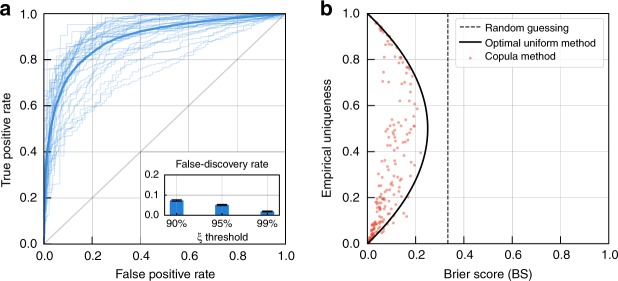
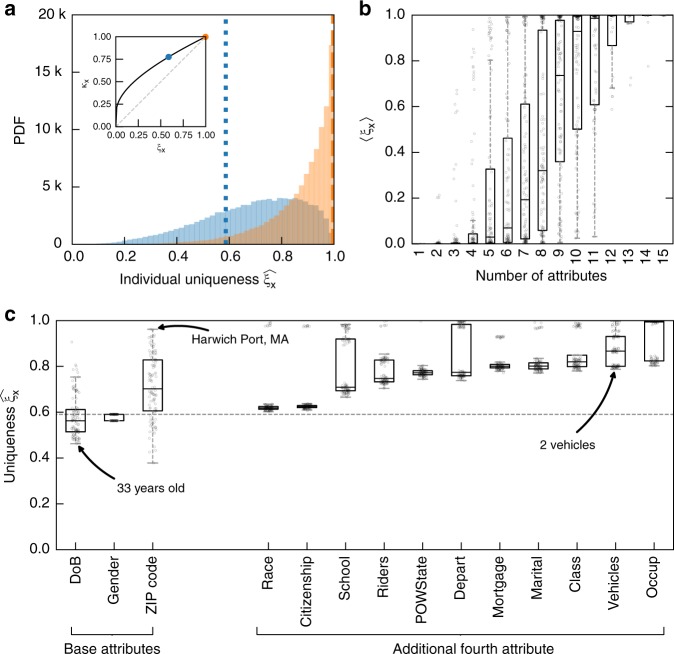
While rich medical, behavioral, and socio-demographic data are key to modern data-driven research, their collection and use raise legitimate privacy concerns. Anonymizing datasets through de-identification and sampling before sharing them has been the main tool used to address those concerns. We here propose a generative copula-based method that can accurately estimate the likelihood of a specific person to be correctly re-identified, even in a heavily incomplete dataset. On 210 populations, our method obtains AUC scores for predicting individual uniqueness ranging from 0.84 to 0.97, with low false-discovery rate. Using our model, we find that 99.98% of Americans would be correctly re-identified in any dataset using 15 demographic attributes. Our results suggest that even heavily sampled anonymized datasets are unlikely to satisfy the modern standards for anonymization set forth by GDPR and seriously challenge the technical and legal adequacy of the de-identification release-and-forget model.
Overview
The claims and statistics of this paper haven’t been checked yet.
Free: it reads the open-access text and checks the first 5 claims that cite a source we can check. Create a free account to check every claim.
Integrity signals
Registry
Cites
Statistics
Figures
Verification
Claims the paper makes
The claims and statistics of this paper haven’t been checked yet.
Free: it reads the open-access text and checks the first 5 claims that cite a source we can check. Create a free account to check every claim.
Claims other papers make about this one
Each is checked against this paper’s own text: does it say what the citing paper says it does?
The source backs part of the claim, not all of it — or backs it for a different population, condition or comparison.
In the citing paper
“Existing medical data is not fully exploited by ML primarily because it sits in data silos and privacy concerns restrict access to this data.”
From The future of digital health with federated learning (2020) · cites this paper as [7]
Experimental — accuracy not yet measuredThe source backs part of the claim, not all of it — or backs it for a different population, condition or comparison.
In the citing paper
“Centralising or releasing data, however, poses not only regulatory, ethical and legal challenges, related to privacy and data protection, but also technical ones.”
From The future of digital health with federated learning (2020) · cites this paper as [7]
Experimental — accuracy not yet measuredThe source backs part of the claim, not all of it — or backs it for a different population, condition or comparison.
In the citing paper
“Beyond these considerations, a required step for multimodal AI is the appropriate linking of all data types available in the datasets, which represents another challenge owing to the increasing risk of identification of individuals and regulatory constraints 146”
From Multimodal biomedical AI (2022) · cites this paper as [146]
Experimental — accuracy not yet measuredThe cited source says what the claim attributes to it.
In the citing paper
“Data anonymization alone does not provide sufficient protection (Rocher et al., 2019) since parts of the training data can be reconstructed by inversion of model parameters (Carlini et al., 2019; Zhang et al., 2020), gradients (Zhu et al., 2019; Geiping et al., 2020), or through adversarial attacks (Wang et al., 2019; Hitaj et al., 2017).”
From Federated learning for computational pathology on gigapixel whole slide images (2022) · cites this paper as Rocher et al., 2019
The cited source says what the claim attributes to it.
In the citing paper
“Even if data anonymisation could bypass these limitations, it is now well understood that removing metadata such as patient name or date of birth is often not enough to preserve privacy7.”
From The future of digital health with federated learning (2020) · cites this paper as [7]
1 more claim about this paper
Create a free account to see every claim other papers make about this one.
Self-check
Percentages, sums and reported differences re-computed from the paper’s own numbers.
The self-check needs the paper’s full text.
Citations
Cites
k-ANONYMITY: A MODEL FOR PROTECTING PRIVACY
SWEENEY, L. (2002) · International Journal of Uncertainty, Fuzziness and Knowledge-Based Systems · doi:10.1142/s0218488502001648 · Cited by 8,571 · cited 1×
“While more advanced guarantees like k -anonymity 57 would give every individual in the dataset some protection, they have been shown to be NP-Hard 58 , hard to achieve in modern high-dimensional datasets 59 , and not always suf fi cient 60 .”
BackgroundBig Data : The Management Revolution
マカフィー, ア., ブリニョルフソン, エ., & 有賀, 裕. (2013) · Harvard business review · Cited by 3,550
t-Closeness: Privacy Beyond k-Anonymity and l-Diversity
Li, N., Li, T., & Venkatasubramanian, S. (2007) · 2007 IEEE 23rd International Conference on Data Engineering · doi:10.1109/icde.2007.367856 · Cited by 3,451
Lazer, D., Pentland, A., Adamic, L., Aral, S., Barabási, A.-L., Brewer, D., Christakis, N., Contractor, N., Fowler, J., Gutmann, M., et al. (2009) · Science · doi:10.1126/science.1167742 · Cited by 3,365
The real-time city? Big data and smart urbanism
Kitchin, R. (2014) · GeoJournal · doi:10.1007/s10708-013-9516-8 · Cited by 2,794 · cited 5×
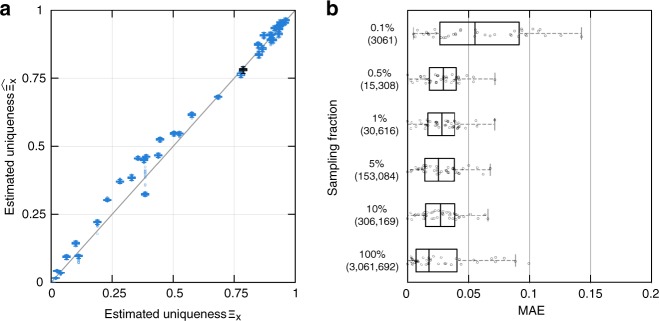
“Table 1 and Supplementary Note 7 show that, at very small sampling fraction (below 0.1%), where the error is the largest, the error is mostly determined by the marginals, and converges after few hundred records when the exact marginals are known.”
BackgroundInfluentialThe Real-Time City? Big Data and Smart Urbanism
Kitchin, R. (2013) · SSRN Electronic Journal · doi:10.2139/ssrn.2289141 · Cited by 2,794
(2012) · PubMed · Cited by 2,326
Cherubini, U., Luciano, E., & Vecchiato, W. (2004) · Wiley eBooks · doi:10.1002/9781118673331 · Cited by 2,009
Vinh, N. X., Epps, J., & Bailey, J. (2010) · Minerva Access (University of Melbourne) · doi:10.5555/1756006.1953024 · Cited by 1,781
The Unreasonable Effectiveness of Data
Halevy, A., Norvig, P., & Pereira, F. (2009) · IEEE Intelligent Systems · doi:10.1109/mis.2009.36 · Cited by 1,767
Research works printed but not linked: 4
- Cadwalladr, C. & Graham-Harrison, E. Revealed: 50 million facebook profiles harvested for Cambridge Analytica in major data breach. The Guardian (17 Mar 2018).
- Polonetsky J Tene O Finch K Shades of gray: seeing the full spectrum of practical data De-Identification St. Clara Law Rev. 2016 56 593 629
- Fienberg SE Sanil AP A Bayesian approach to data disclosure: optimal intruder behavior for continuous data J. Stat. 1997 13 75
- Chen G Keller-McNulty S Estimation of identification disclosure risk in microdata J. Stat. 1998 14 79
Cited by
Items 101–200 of 817
Just data? Solidarity and justice in data-driven medicine
Hummel, P., & Braun, M. (2020) · Life Sciences Society and Policy · doi:10.1186/s40504-020-00101-7 · Cited by 64
Causal effect of low-income areas on shared dockless e-scooter use
Frías-Martínez, V., Sloate, E., Manglunia, H., & Wu, J. (2021) · Transportation Research Part D Transport and Environment · doi:10.1016/j.trd.2021.103038 · Cited by 50
Recent evolutions of machine learning applications in clinical laboratory medicine
Bruyne, S. D., Speeckaert, M. M., Biesen, W. V., & Delanghe, J. (2020) · Critical Reviews in Clinical Laboratory Sciences · doi:10.1080/10408363.2020.1828811 · Cited by 60
“Nevertheless, recent research [137] has challenged the legal and technical adequacy of the de-identification-and-forget model.”
BackgroundUpdates in deep learning research in ophthalmology
Ng, W. Y., Zhang, S., Wang, Z., Ong, C., Gunasekeran, D. V., Lim, G. Y. S., Zheng, F., Tan, S. C. Y., Tan, G. S. W., Rim, T. H., et al. (2021) · Clinical Science · doi:10.1042/cs20210207 · Cited by 56
Bloemraad, I., & Menjívar, C. (2021) · International Migration Review · doi:10.1177/01979183211014455 · Cited by 67
Arbaoui, M., Brahmia, M., Rahmoun, A., & Zghal, M. (2024) · ACM Transactions on Intelligent Systems and Technology · doi:10.1145/3678182 · Cited by 68
Multi-Person Brain-To-Brain Interfaces: Ethical Issues
Hildt, E. (2019) · Frontiers in Neuroscience · doi:10.3389/fnins.2019.01177 · Cited by 55
Drechsler, J., & Haensch, A. (2024) · Statistical Science · doi:10.1214/24-sts927 · Cited by 76
Evaluation Methods for the Impacts of Shared Mobility: Classification and Critical Review
Roukouni, A., & Correia, G. H. D. A. (2020) · Sustainability · doi:10.3390/su122410504 · Cited by 59
Eke, D., Aasebø, I. E. J., Akintoye, S., Knight, W., Karakasidis, A., Mikulan, E., Ochang, P. A., Ogoh, G., Oostenveld, R., Pigorini, A., et al. (2021) · Neuroimage Reports · doi:10.1016/j.ynirp.2021.100053 · Cited by 62
“Considering the recent concerns about the potential exploitations that can be achieved by third parties from sharing of such personal data, e.g. as summarized by Rocher et al. (2019), the GDPR aims to ensure a stronger degree of protection.”
InfluentialBIG DATA AND DIGITAL MARKETS CONTESTABILITY: THEORY OF HARM AND DATA ACCESS REMEDIES
Krämer, J., & Schnurr, D. (2021) · Journal of Competition Law & Economics · doi:10.1093/joclec/nhab015 · Cited by 81
Schroeder, K., Bertelsen, N., Scott, J., Deane, K. H., Dormer, L., Nair, D., Elliott, J., Krug, S., Sargeant, I., Chapman, H., et al. (2022) · Therapeutic Innovation & Regulatory Science · doi:10.1007/s43441-022-00432-x · Cited by 69
“Despite anonymization or pseudonymization, there have been high-profile breaches of health data security [60] or use of algorithms to re-identify individuals [61]; incidents like these make people wary of who might have access to PXD (e.”
BackgroundSynthetic Data for Deep Learning in Computer Vision & Medical Imaging: A Means to Reduce Data Bias
Paproki, A., Salvado, O., & Fookes, C. (2024) · ACM Computing Surveys · doi:10.1145/3663759 · Cited by 78
“Rocher et al. showed that using 15 demographic attributes, 99.98% of a subset population could be re-identified from anonymised data [85].”
InfluentialData-driven research and healthcare: public trust, data governance and the NHS
Kerasidou, A., & Kerasidou, C. (2023) · BMC Medical Ethics · doi:10.1186/s12910-023-00922-z · Cited by 65
“3 The National Data Opt-out Operational Policy Guidance offers a more comprehensive explanation: ‘The opt-out does not apply when the individual increasingly understood, removing identifiable information does not necessarily render data anonymous [55].”
BackgroundHIPAA and the Leak of “Deidentified” EHR Data
Mandl, K. D., & Perakslis, E. D. (2021) · New England Journal of Medicine · doi:10.1056/nejmp2102616 · Cited by 41
Privacy Enhancing Techniques in the Internet of Things Using Data Anonymisation
Wang, R., Tong, X., Du, J., Wang, N., Li, S., Min, G., & Zhao, Z. (2021) · Information Systems Frontiers · doi:10.1007/s10796-021-10116-w · Cited by 49
Soltan, A. A. S., Thakur, A., Yang, J., Chauhan, A., D'Cruz, L. G., Dickson, P., Soltan, M., THICKETT, D. R., Eyre, D. W., Zhu, T., et al. (2024) · The Lancet Digital Health · doi:10.1016/s2589-7500(23)00226-1 · Cited by 67
Balancing Personal Privacy and Public Safety During COVID-19: The Case of South Korea
Ahn, N. Y., Park, J. E., Lee, D. H., & Hong, P. C. (2020) · IEEE Access · doi:10.1109/access.2020.3025971 · Cited by 43
“Researchers at the Imperial College London, UK, conducted experiments with published data from the United States, Turkey, and other countries, and found certain attributes accurately even by using de-identified data [54].”
BackgroundImpact of Large Language Models on Medical Education and Teaching Adaptations
Zhui, L., Yhap, N., Liping, L., Wang, Z., Zhonghao, X., Xiaoshu, Y., Hong, C., Liu, X., & Wei, R. (2024) · JMIR Medical Informatics · doi:10.2196/55933 · Cited by 63
“Studies have demonstrated that with only 15 demographic characteristics, 99.98% of personal information can be reidentified [58].”
BackgroundInfluentialInformed consent within a learning health system: A scoping review
Cumyn, A., Barton, A., Dault, R., Cloutier, A., Jalbert, R., & Éthier, J. (2019) · Learning Health Systems · doi:10.1002/lrh2.10206 · Cited by 46
“for incomplete datasets can reach nearly 100% in the presence of 15 demographic attributes.(69) Critical attention should therefore be given to which data are present in the dataset.”
BackgroundHow important are faces for person re-identification?
Dietlmeier, J., Antony, J., McGuinness, K., & O'Connor, N. E. (2021) · 2020 25th International Conference on Pattern Recognition (ICPR) · doi:10.1109/icpr48806.2021.9412340 · Cited by 38
“Data protection laws such as GDPR do not apply to personal data that have been anonymized [6], [8].”
BackgroundSurgical data recording in the operating room: a systematic review of modalities and metrics
Levin, M., McKechnie, T., Kruse, C. C., Aldrich, K. M., Grantcharov, T., & Langerman, A. J. (2021) · British journal of surgery · doi:10.1093/bjs/znab016 · Cited by 50
Blockchain for Genomics: A Systematic Literature Review
Alghazwi, M., Türkmen, F., van der Velde, K. J., & Karastoyanova, D. (2022) · Distributed Ledger Technologies Research and Practice · doi:10.1145/3563044 · Cited by 53
“Moreover, risks of re-identification associated with open data sharing are still present even after the full de-identification process as has been shown in [94].”
Incentivizing the Sharing of Healthcare Data in the AI Era
Panagopoulos, A., Minssen, T., Sideri, K., Yu, H., & Compagnucci, M. C. (2022) · Computer Law & Security Review · doi:10.1016/j.clsr.2022.105670 · Cited by 39
Bowman, N. D., & Spence, P. R. (2020) · Communication Studies · doi:10.1080/10510974.2020.1799488 · Cited by 41
“As demonstrated by Rocher et al. (2019), it is possible to re-identify a majority of individuals in a dataset with a combination of demographics (such as date of birth, geographic location, marital status, and gender).”
BackgroundLysaght, T., Ballantyne, A., Xafis, V., Ong, S. A. K., Schaefer, G. O., Ling, J., Newson, A. J., Khor, I. W., & Tai, E. S. (2020) · BMC Medical Ethics · doi:10.1186/s12910-020-00561-8 · Cited by 38
Ploug, T. (2020) · BMC Medical Ethics · doi:10.1186/s12910-020-00519-w · Cited by 40
“In any case, health record research will in many cases involve the use of identifiable health information (pseudonymised), and recent research suggests that in a number of cases the amount of personal information/attributes may be extensive to a level that will make an allegedly anonymous individual identifiable [48].”
BackgroundGeneralized contact matrices allow integrating socioeconomic variables into epidemic models
Manna, A., Dall’Amico, L., Tizzoni, M., Karsai, M., & Perra, N. (2024) · Science Advances · doi:10.1126/sciadv.adk4606 · Cited by 47
“Risks of reidentification are real and of particular concern, especially for minorities and underrepresented groups ( 66 ).”
EU Regulation of Artificial Intelligence: Challenges for Patients’ Rights
van Kolfschooten, H. (2022) · Common Market Law Review · doi:10.2139/ssrn.3997366 · Cited by 44
Evidential classification of incomplete instance based on K-nearest centroid neighbor
Ma, Z., Liu, Z., Luo, C., & Song, L. (2021) · Journal of Intelligent & Fuzzy Systems · doi:10.3233/jifs-210991 · Cited by 38
“Unfortunately, incomplete instance, also called missing data, which is a common phenomenon in many real-world domains [3].”
Federico, C. A., & Trotsyuk, A. A. (2024) · Annual Review of Biomedical Data Science · doi:10.1146/annurev-biodatasci-102623-104553 · Cited by 43
Genomic data sharing in Europe is stumbling—Could a code of conduct prevent its fall?
Molnár‐Gábor, F., & Korbel, J. O. (2020) · EMBO Molecular Medicine · doi:10.15252/emmm.201911421 · Cited by 46
“Pseudonymization has its limitations (Gym-rek et al , 2013; cf. Glossary ), and developments in machine learning and artificial intelligence already allow re-identification of even small samples from anonymized data sets (Rocher et al , 2019).”
Challenges in translational machine learning
Couckuyt, A., Seurinck, R., Emmaneel, A., Quintelier, K. L. A., Novák, D., Gassen, S. V., & Saeys, Y. (2022) · Human Genetics · doi:10.1007/s00439-022-02439-8 · Cited by 42
“Nevertheless, research by Rocher et al. (2019) re-identified up to 99.98% of Americans using their Gaussian copula-based method based on 15 demographic attributes, which proves that pseudonymization of datasets is not as trivial as it might seem.”
MethodInfluentialValidating a membership disclosure metric for synthetic health data
Emam, K. E., Mosquera, L., & Fang, X. (2022) · JAMIA Open · doi:10.1093/jamiaopen/ooac083 · Cited by 47
Survey on Privacy-Preserving Techniques for Microdata Publication
Carvalho, T., Moniz, N., Faria, P., & Antunes, L. F. (2023) · ACM Computing Surveys · doi:10.1145/3588765 · Cited by 70
“Several studies show how feasible and/or easy it is to link back private information to a data subject [23, 172, 179, 198].”
BackgroundMethodLiu, T., Krentz, A. J., Huo, Z., & Ćurčin, V. (2025) · Reviews in Cardiovascular Medicine · doi:10.31083/rcm37443 · Cited by 55
“Moreover, even anonymous data can potentially be traced back to individuals, creating potential risks to patient privacy [54].”
Bowen, C. M., & Snoke, J. (2021) · Journal of Privacy and Confidentiality · doi:10.29012/jpc.748 · Cited by 83
Applications of Generative AI in Healthcare: algorithmic, ethical, legal and societal considerationsPreprint
Okonji, O. R., Yunusov, K., & Gordon, B. (2024) · doi:10.36227/techrxiv.171527587.75649430/v1 · Cited by 58
“Furthermore, the evaluation of medical imaging data by AI might risk patient re-identification, notwithstanding the confidentiality measures in place [137].”
BackgroundArtificial Intelligence in Medicine: Text Mining of Health Care Workers’ Opinions
Nitiéma, P. (2023) · Journal of Medical Internet Research · doi:10.2196/41138 · Cited by 47
“It is often possible to accurately infer personal information from deidentified data [40] or medical images [41].”
Source Free Semi-Supervised Transfer Learning for Diagnosis of Mental Disorders on fMRI Scans
Hu, Y. F., Huang, Z.-A., Liu, R., Xue, X., Sun, X., Song, L., & Tan, K. C. (2023) · IEEE Transactions on Pattern Analysis and Machine Intelligence · doi:10.1109/tpami.2023.3298332 · Cited by 54
“Although data owners can specify protocols to manage data application and access control, once the requested data is released, data owners would not be able to recall them any more [8].”
BackgroundJanowicz, K. (2023) · CRC Press eBooks · doi:10.1201/9781003308423-3 · Cited by 51
Large language models and medical education: a paradigm shift in educator roles
Zhui, L., Li, F., Fu, Q., Wang, X., Liu, H., Zhao, Y., & Wei, R. (2024) · Smart Learning Environments · doi:10.1186/s40561-024-00313-w · Cited by 51
“Even anonymised information can be combined with other data on the internet to achieve re-identification, posing significant challenges to protecting patient privacy and data security (Jegorova et al., 2023; Rocher et al., 2019).”
BackgroundBig Data and Artificial Intelligence: Opportunities and Threats in Electrophysiology
van de Leur, R. R., Boonstra, M., Bagheri, A., Roudijk, R. W., Sammani, A., Taha, K., Doevendans, P. A., van der Harst, P., van Dam, P. M., Hassink, R. J., et al. (2020) · Arrhythmia & Electrophysiology Review · doi:10.15420/aer.2020.26 · Cited by 37
“However, by increasing the size of the data set, anonymisation techniques used nowadays might be inadequate and eventually result in the identification of patients.(105,106) As large data sets are required for DNNs, collaboration between institutions becomes inevitable.”
BackgroundHuman Rights in the Digital Age
Bellasio, J., Slapakova, L., Quimbre, F., Stockwell, S., & Silfversten, E. (2021) · RAND Corporation eBooks · doi:10.7249/rra1152-1 · Cited by 41
Privacy- and Utility-Preserving NLP with Anonymized data: A case study of Pseudonymization
Yermilov, O., Raheja, V., & Chernodub, A. (2023) · Workshop on Trustworthy Natural Language Processing (TrustNLP) · doi:10.18653/v1/2023.trustnlp-1.20 · Cited by 70
Generative AI cybersecurity and resilience
Radanliev, P., Santos, O., & Ani, U. (2025) · Frontiers in Artificial Intelligence · doi:10.3389/frai.2025.1568360 · Cited by 48
“The issue of Consent and Anonymization is critical, as demonstrated by Rocher et al. (2019).”
Frontiers: The Identity Fragmentation Bias
Lin, T., & Misra, S. (2022) · Marketing Science · doi:10.1287/mksc.2022.1360 · Cited by 33
SoK: Privacy-Preserving Data Synthesis
Hu, Y., Wu, F., Li, Q., Long, Y., Garrido, G. M., Ge, C., Ding, B., Forsyth, D. A., Li, B., & Song, D. X. (2024) · IEEE Symposium on Security and Privacy (S&P) · doi:10.1109/sp54263.2024.00002 · Cited by 100
The ethics of data mining in healthcare: challenges, frameworks, and future directions
Ahmed, M. M., Okesanya, O. J., Oweidat, M. H., Othman, Z. K., Musa, S. S., & Lucero‐Prisno, D. E. (2025) · BioData Mining · doi:10.1186/s13040-025-00461-w · Cited by 55
“A study showed that 15 demographic variables uniquely identified 99.98% of U. residents in a de-identified census dataset [34].”
InfluentialKjærgaard, M. B., Ardakanian, O., Carlucci, S., Dong, B., Firth, S. K., Gao, N., Huebner, G. M., Mahdavi, A., Rahaman, M. S., Salim, F. D., et al. (2020) · Building and Environment · doi:10.1016/j.buildenv.2020.106848 · Cited by 36
“Recent research (66; 67) has identified that state-of-the-practice methods for anonymization can be insufficient to protect the released data against de-identification.”
BackgroundWu, Z., & Liang, C. (2024) · Machines · doi:10.3390/machines12060416 · Cited by 48
COVID-19 infection: Disease detection and mobile technology
Verma, J., & Mishra, A. S. (2020) · PeerJ · doi:10.7717/peerj.10345 · Cited by 31
The Aphasia Recovery Cohort, an open-source chronic stroke repository
Gibson, M., Newman‐Norlund, R., Bonilha, L., Fridriksson, J., Hickok, G. S., Hillis, A. E., den Ouden, D., & Rorden, C. (2024) · Scientific Data · doi:10.1038/s41597-024-03819-7 · Cited by 45
“Sharing neuroimaging data enables reproducibility and reuse, and modern machine learning methods can aggregate across diverse datasets to disentangle correlated factors 1,2 .”
Collecting, Processing and Secondary Using Personal and (Pseudo)Anonymized Data in Smart Cities
Sampaio, S., Sousa, P. R., Martins, C., Ferreira, A., Antunes, L. F., & Cruz-Correia, R. J. (2023) · Applied Sciences · doi:10.3390/app13063830 · Cited by 51
Quantifying the Re-identification Risk of Event Logs for Process Mining: Empiricial Evaluation Paper
von Voigt, S. N., Fahrenkrog-Petersen, S. A., Janssen, D., Koschmider, A., Tschorsch, F., Mannhardt, F., Landsiedel, O., & Weidlich, M. (2020) · Lecture notes in computer science · doi:10.1007/978-3-030-49435-3_16 · Cited by 28
The challenges and opportunities of mental health data sharing in the UK
Ford, T. J., Mansfield, K. L., Markham, S., McManus, S., John, A. M., O’Reilly, D., Newlove‐Delgado, T., Iveson, M. H., Fazel, M. S., Das‐Munshi, J., et al. (2021) · The Lancet Digital Health · doi:10.1016/s2589-7500(21)00078-9 · Cited by 29
Application of Federated Learning Techniques for Arrhythmia Classification Using 12-Lead ECG Signals
Jimenez-Gutierrez, D. M., Hassan, H. M., Landi, L., Vitaletti, A., & Chatzigiannakis, I. (2023) · Lecture notes in computer science · doi:10.1007/978-3-031-49361-4_3 · Cited by 54
Protecting privacy in tourism – a perspective article
Hall, C. M., & Ram, Y. (2019) · Tourism Review · doi:10.1108/tr-09-2019-0398 · Cited by 34
A global perspective on data powering responsible AI solutions in health applications
Rudd, J., & Igbrude, C. (2023) · AI and Ethics · doi:10.1007/s43681-023-00302-8 · Cited by 34
“It has been repeatedly demonstrated that so-called anonymous datasets can be re-identified and that relatively few attributes are often sufficient to re-identify with high confidence individuals in heavily incomplete datasets [27].”
BackgroundBhattacharjee, K., Chen, M., & Dasgupta, A. (2020) · Computer Graphics Forum · doi:10.1111/cgf.14032 · Cited by 41
Quantifying representativeness in randomized clinical trials using machine learning fairness metrics
Qi, M., Cahan, O., Foreman, M. A., Gruen, D. M., Das, A. K., & Bennett, K. P. (2021) · JAMIA Open · doi:10.1093/jamiaopen/ooab077 · Cited by 27
Multiple modes of data sharing can facilitate secondary use of sensitive health data for research
Tamuhla, T., Lulamba, T. E., Mutemaringa, T., & Tiffin, N. (2023) · BMJ Global Health · doi:10.1136/bmjgh-2023-013092 · Cited by 39
“13 The epidemiological and health systems value of mining these data is undisputed, but the risks posed to unwitting participants should be absolutely minimised given the circum-stances under which the data are generated and used.”
Confidence-ranked reconstruction of census microdata from published statistics
Dick, T., Dwork, C., Kearns, M. J., Liu, T., Roth, A., Vietri, G., & Wu, Z. S. (2023) · Proceedings of the National Academy of Sciences · doi:10.1073/pnas.2218605120 · Cited by 27
Implementing Responsible AI: Tensions and Trade-Offs Between Ethics Aspects
Sanderson, C., Douglas, D., & Lu, Q. (2023) · International Joint Conference on Neural Networks (IJCNN) · doi:10.1109/ijcnn54540.2023.10191274 · Cited by 59
Federated learning for generating synthetic data: a scoping review
Little, C. L., Elliot, M. J., & Allmendinger, R. (2023) · International Journal for Population Data Science · doi:10.23889/ijpds.v8i1.2158 · Cited by 49
“Even with SDC applied there is still residual risk and if naively carried out it is possible to identify individuals in supposedly anonymous data [4, 5].”
Paprica, P. A., Sutherland, E., Smith, A., Brudno, M., Cartagena, R. G., Crichlow, M., Courtney, B. K., Loken, C., McGrail, K. M., Ryan, A., et al. (2020) · International Journal for Population Data Science · doi:10.23889/ijpds.v5i1.1353 · Cited by 35
“particularly important given growing concern that the processes for de-identification are not foolproof [46,47].”
BackgroundPetit-Jean, T., Gérardin, C., Berthelot, E., Châtellier, G., Frank, M., Tannier, X., Kempf, E., & Bey, R. (2024) · Journal of the American Medical Informatics Association · doi:10.1093/jamia/ocae069 · Cited by 29
“41,42 To address this issue, many call for a switch from an anonymize-and-release to a privacy-through-security paradigm.”
BackgroundSystematic Review of Generative Modelling Tools and Utility Metrics for Fully Synthetic Tabular Data
Lautrup, A. D., Hyrup, T., Zimek, A., & Schneider–Kamp, P. (2024) · ACM Computing Surveys · doi:10.1145/3704437 · Cited by 50
“These include ϵ -identifiability [ 120 ], re-identification risk [ 35 , 99 ], and adversarial accuracy using precision, recall, and F1-scores [ 66 , 88 ].”
Promoting Open Science Through Research Data Management
Borghi, J., & Gulick, A. E. V. (2022) · Harvard Data Science Review · doi:10.1162/99608f92.9497f68e · Cited by 41
A synthetic data set to benchmark anti-money laundering methods
Jensen, R. I. T., Ferwerda, J., Jørgensen, K. S., Jensen, E. R., Borg, M., Krogh, M. P., Jensen, J. B., & Iosifidis, A. (2023) · Scientific Data · doi:10.1038/s41597-023-02569-2 · Cited by 48
“Unfortunately, the broader scientific literature contains multiple examples of successful de-anonymization attacks 3–7 .”
BackgroundDigital Representation of Patients as Medical Digital Twins: Data-Centric Viewpoint
Demuth, S., Seze, J. D., Edan, G., Ziemssen, T., Simon, F., & Gourraud, P. (2025) · JMIR Medical Informatics · doi:10.2196/53542 · Cited by 34
“Data sharing is still under-developed in health care because of the loss of usage control and because pseudonymized data only prevents direct reidentification [35].”
What neurological and psychiatric effects does COVID-19 have on its survivors?
Mentis, A. A. (2021) · BMC Medicine · doi:10.1186/s12916-021-01986-7 · Cited by 25
Federated learning as a smart tool for research on infectious diseases
Zwiers, L. C., Grobbee, D. E., Uijl, A., & Ong, D. S. Y. (2024) · BMC Infectious Diseases · doi:10.1186/s12879-024-10230-5 · Cited by 24
“For instance, models have been developed that can re-identify individuals based on a small set of demographic attributes [3] and face recognition software was found to have the ability to identify anonymous individuals from magnetic resonance imaging scans of the face [4].”
The impact of the General Data Protection Regulation (GDPR) on online tracking
Miller, K. M., Lukic, K., & Skiera, B. (2025) · International Journal of Research in Marketing · doi:10.1016/j.ijresmar.2025.03.002 · Cited by 81
Artificial Intelligence Use in Medical Education: Best Practices and Future Directions
Thompson, R. A. M., Shah, Y., Aguirre, F., Stewart, C., Lallas, C. D., & Shah, M. S. (2025) · Current Urology Reports · doi:10.1007/s11934-025-01277-1 · Cited by 46
“AI's reliance on large datasets for learning and executing its desired functions raises concerns for data privacy and protection [35, 39].”
A consensus privacy metrics framework for synthetic data
Pilgram, L., Dankar, F. K., Drechsler, J., Elliot, M. J., Domingo‐Ferrer, J., Francis, P., Kantarcıoğlu, M., Kong, L., Malin, B., Muralidhar, K., et al. (2025) · Patterns · doi:10.1016/j.patter.2025.101320 · Cited by 48
“45,68,70 This is relevant in situations where the training data are drawn from a larger population.”
Bringing Code to Data: Do Not Forget Governance
Suver, C., Thorogood, A., Doerr, M. J., Wilbanks, J., & Knoppers, B. M. (2020) · Journal of Medical Internet Research · doi:10.2196/18087 · Cited by 34
“However, the residual reidentification risk of even limited genetic or demographic data sets has been clearly demonstrated [40].”
BackgroundImplications of Data Anonymization on the Statistical Evidence of Disparity
Xu, H., & Zhang, N. (2022) · Management Science · doi:10.1287/mnsc.2021.4028 · Cited by 28
Wu, B., Luo, P., Li, M., & Hu, X. (2022) · Frontiers in Psychology · doi:10.3389/fpsyg.2022.861903 · Cited by 33
“…on online platforms (Pour et al., 2019) fuels privacy concerns, as users’ private information may become exposed (Malm, 2018) and their anonymity could become compromised—only 15 demographic features are needed to correctly identify an individual based on online data (Rocher et al., 2019).”
Backgroundvan Genderen, M. E., Cecconi, M., & Jung, C. (2024) · Intensive Care Medicine · doi:10.1007/s00134-024-07408-5 · Cited by 33
“Thus, traditional anonymization techniques may fall short in fully protecting patient privacy [8].”
BackgroundKnow Your Clients' Behaviours: A Cluster Analysis of Financial Transactions
Thompson, J. R. J., Feng, L., Reesor, R. M., & Grace, C. (2020) · Journal of risk and financial management · doi:10.2139/ssrn.3595433 · Cited by 36
Privacy preserving distributed learning classifiers – Sequential learning with small sets of data
Zerka, F., Urovi, V., Bottari, F., Leijenaar, R. T. H., Walsh, S., Gabrani-Juma, H., Gueuning, M., Vaidyanathan, A., Vos, W. G., Occhipinti, M., et al. (2021) · Computers in Biology and Medicine · doi:10.1016/j.compbiomed.2021.104716 · Cited by 25
“…prior to sharing, does not necessarily guarantee preservation of privacy [21] as patient personal information can potentially be re-identified from the de-identified features (e.g., up to 99.98% of the American population in any dataset can be identified using only 15 demographic features) [22].”
BackgroundInfluentialTowards Open Science for the Qualitative Researcher: From a Positivist to an Open Interpretation
Class, B., de Bruyne, M., Wuillemin, C., Donzé, D., & Claivaz, J.-B. (2021) · International Journal of Qualitative Methods · doi:10.1177/16094069211034641 · Cited by 18
“On the one hand, they may be fallible, as participants may be re-identi fi ed by linking data together and using deductive reasoning (Koot, 2012; Rocher et al., 2019; Tsai et al., 2016).”
BackgroundKuo, T.-T., Gabriel, R. A., Koola, J., Schooley, R. T., & Ohno-Machado, L. (2025) · Nature Communications · doi:10.1038/s41467-025-56510-9 · Cited by 37
Bailo, P., Nittari, G., Pesel, G., Basello, E., Spasari, T., & Ricci, G. (2026) · Sci · doi:10.3390/sci8020036 · Cited by 22
“…have re-identified participants from Magnetic Resonance Imaging/Computed Tomography (MRI/CT) even after defacing pipelines, and population-uniqueness analyses show that “de-identified” data can often be re-linked with few attributes, challenging legal adequacy under modern standards [108,109].”
The multidimensional legal nature of personal genomic sequence data: A South African perspective
Thaldar, D. W., Townsend, B., Donnelly, D., Botes, M., Gooden, A., Harmelen, J. H. V., & Shozi, B. (2022) · Frontiers in Genetics · doi:10.3389/fgene.2022.997595 · Cited by 30
“The privacy concerns about genomic data are well documented (see, e.g., Han, 2018; Gitschier, 2009; Naveed et al., 2015; Rocher et al., 2019; Wang et al., 2017), and are receiving the attention of researchers looking into permissioned versus public blockchain platforms (Kuo et al.”
BackgroundFederated Split Learning via Mutual Knowledge Distillation
Luo, L., & Zhang, X. (2024) · IEEE Transactions on Network Science and Engineering · doi:10.1109/tnse.2023.3348461 · Cited by 33
“However, the increasing difficulty of data sharing stemming from the issues such as privacy leakage and communication cost has restrained data collection in a central server, which has further hindered the broader application of deep learning [7], [8] [9].”
BackgroundPrinciples of intensive human neuroimaging
Kupers, E. R., Knapen, T. H. J., Merriam, E. P., & Kay, K. (2024) · Trends in Neurosciences · doi:10.1016/j.tins.2024.09.011 · Cited by 29
The commercialization of patient data in Canada: ethics, privacy and policy
Spithoff, S. M., Stockdale, J., Rowe, R., McPhail, B. M., & Persaud, N. (2022) · Canadian Medical Association Journal · doi:10.1503/cmaj.210455 · Cited by 33
Beyond Data: Reclaiming Human Rights at the Dawn of the Metaverse
Renieris, E. M. (2023) · The MIT Press eBooks · doi:10.7551/mitpress/14119.001.0001 · Cited by 59
Langnickel, L., Schneider, J., Perrar, I., Adams, T., Moazemi, S., Praßer, F., Nöthlings, U., Fröhlich, H., & Fluck, J. (2024) · Scientific Reports · doi:10.1038/s41598-024-62102-2 · Cited by 29
“But anonymisation can severely limit the utility of medium to high-dimensional data for statistical analyses 4 , and there are still recent results proclaiming to be able to re-identify individuals from anonymised data 35,36 .”
Ethics in the COVID-19 pandemic: myths, false dilemmas, and moral overload
Ishmaev, G., Dennis, M., & van den Hoven, M. J. (2021) · Ethics and Information Technology · doi:10.1007/s10676-020-09568-6 · Cited by 28
Artificial Intelligence in Breast Imaging: Challenges of Integration Into Clinical Practice
Ozcan, B. B., Patel, B., Banerjee, I., & Doğan, B. E. (2023) · Journal of Breast Imaging · doi:10.1093/jbi/wbad007 · Cited by 26
Najjar, R. (2024) · Biomedical engineering · doi:10.5772/intechopen.114142 · Cited by 37
International Data Sharing and Rare Disease: The Importance of Ethics and Patient Involvement
Thorogood, A. (2020) · IntechOpen eBooks · doi:10.5772/intechopen.91237 · Cited by 22
Bernard, R., Bowsher, G. M., & Sullivan, R. J. (2020) · American Journal of Public Health · doi:10.2105/ajph.2020.305912 · Cited by 26
Valli Buttow, C., & Weerts, S. (2022) · Big Data & Society · doi:10.1177/20539517221124587 · Cited by 19
Natural Language Processing for Radiation Oncology: Personalizing Treatment Pathways
Lin, H., Ni, L., Phuong, C., & Hong, J. C. (2024) · Pharmacogenomics and Personalized Medicine · doi:10.2147/pgpm.s396971 · Cited by 26
“65 Therefore, ongoing research into more robust de-identification and anonymization methods is crucial.”
BackgroundPrivacy-Preserving Collaborative Data Collection and Analysis with Many Missing Values
Sei, Y., Andrew, J., Okumura, H., & Ohsuga, A. (2022) · IEEE Transactions on Dependable and Secure Computing · doi:10.1109/tdsc.2022.3174887 · Cited by 28
“Next, the generative model of the patient personal data is calculated from the mutual information using a Gaussian copula [46], [47].”
BackgroundMethodReasons for qualitative psychologists to share human data
Karhulahti, V. (2022) · British Journal of Social Psychology · doi:10.1111/bjso.12573 · Cited by 28
Metadata
- Authors
- Rocher, L., Hendrickx, J. M., & de Montjoye, Y.-A.
- Affiliations
- Imperial College London (GB)
- UCLouvain (BE)
- Venue
- Nature Communications
- Published
- 2019-07-23
- Volume
- 10
- Issue
- 1
- Pages
- 3069-3069
- ISSN
- 2041-1723 (ISSN-L)
- PMC
- PMC6650473
- OpenAlex
- W2963693643
- Semantic Scholar
- f34b6423878090c7422c078a3dd6a3db80fb7532
- Cited by
- 816
- References
- 57
- Citations by year
- 2026: 86 · 2025: 99 · 2024: 111 · 2023: 105 · 2022: 154 · 2021: 120 · 2020: 124 · 2019: 16
- FWCI
- 47.23
- Type
- journal article
- Language
- en
- Open access
- gold
- doi.org
- Licence
- cc-by
- creativecommons.org/licenses/by/4.0 (tdm)
- creativecommons.org/licenses/by/4.0 (vor)
- Locations
- Nature Communications (publishedVersion, cc-by)
- PubMed Central (publishedVersion, cc-by)
- PubMed (publishedVersion)
- RePEc: Research Papers in Economics (submittedVersion)
- Digital Access to Libraries (Université catholique de Louvain (UCL), l'Université de Namur (UNamur) and the Université Saint-Louis (USL-B)) (submittedVersion, other-oa)
- DOAJ (DOAJ: Directory of Open Access Journals) (submittedVersion)
- DOAJ (DOAJ: Directory of Open Access Journals) (submittedVersion, cc-by-sa)
- Spiral (Imperial College London) (submittedVersion, cc-by)
- Funders
- Fonds De La Recherche Scientifique - FNRS
- Wallonie-Bruxelles International
- Imperial College London
- Topics
- Physical Sciences › Computer Science › Artificial Intelligence › Privacy-Preserving Technologies in Data
- Physical Sciences › Computer Science › Information Systems › Data Quality and Management
- Physical Sciences › Computer Science › Artificial Intelligence › Internet Traffic Analysis and Secure E-voting
- Keywords
- re-identification risk, data anonymization, de-identification, missing data, privacy, demographic factors, data sharing
- MeSH terms
- Data Anonymization, Personally Identifiable Information, Data Analysis, Normal Distribution, Likelihood Functions, Datasets as Topic
About these checks
Registry, retraction, Cites and statistics results are computed, not judged, with one exception: a printed reference that no index lists is read once by a model before it counts as a citation error. Claims are extracted by a model and kept only when their quote appears verbatim in the text; each cited source is then checked, with a model’s help, for whether it says what the claim relies on. Those verdicts can be wrong — read the claim’s quote and the cited source before relying on one.
Statistics and arithmetic are recomputed, not judged.
Confidence bands are shown only for fields calibrated on our annotated test set. None is calibrated yet, so no band is shown.
What counts as a claim ›How we measure confidence ›How we check this ›
Are you an author, or do you see a problem with this page? Request a review
Data sources
Bibliographic data: Semantic Scholar, OpenAlex, Crossref.
Contains information from the Semantic Scholar Academic Graph Datasets, made available under the ODC Attribution License (ODC-BY 1.0).
Semantic Scholar’s data is described in: Kinney, R., et al. (2023). The Semantic Scholar Open Data Platform. arXiv:2301.10140.
