

Brain-targeted drug delivery by manipulating protein corona functions
Open accessThe DOI matches its Crossref record; 62 of the 62 references it cites were found in a registry or an index; 13 of the 38 sources its claims cite were checked for support.
Abstract
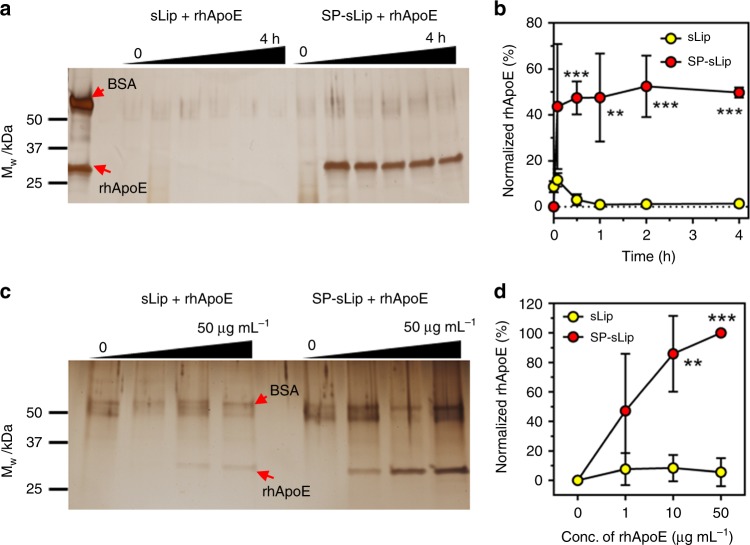
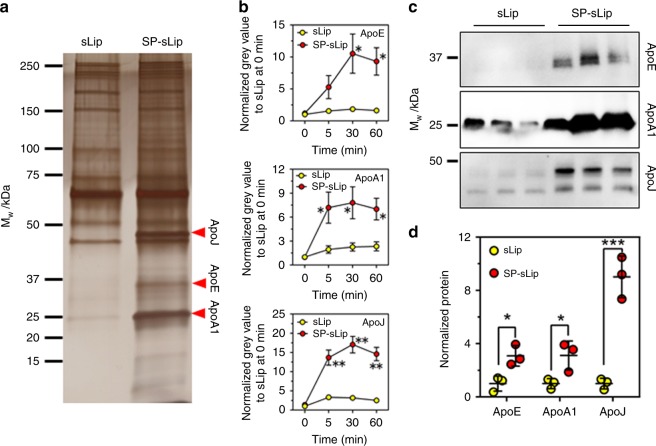
Abstract Protein corona presents a major obstacle to bench-to-bedside translation of targeted drug delivery systems, severely affecting targeting yields and directing unfavorable biodistribution. Corona-mediated targeting provides a new impetus for specific drug delivery by precisely manipulating interaction modes of functional plasma proteins on nano-surface. Here bio-inspired liposomes (SP-sLip) were developed by modifying liposomal surface with a short nontoxic peptide derived from Aβ 1-42 that specifically interacts with the lipid-binding domain of exchangeable apolipoproteins. SP-sLip absorb plasma apolipoproteins A1, E and J, consequently exposing receptor-binding domain of apolipoproteins to achieve brain-targeted delivery. Doxorubicin loaded SP-sLip (SP-sLip/DOX) show significant enhancement of brain distribution and anti-brain cancer effect in comparison to doxorubicin loaded plain liposomes. SP-sLip preserve functions of the absorbed human plasma ApoE, and the corona-mediated targeting strategy works in SP modified PLGA nanoparticles. The present study may pave a new avenue to facilitate clinical translation of targeted drug delivery systems.
Overview
CoChat Summary
TL;DR
The paper reports a corona-mediated brain-targeting strategy in which a short Aβ-derived peptide on liposomes recruits exchangeable apolipoproteins and exposes their receptor-binding domains for BBB transport. In mouse models, the resulting SP-sLip improved brain accumulation and strengthened doxorubicin’s anti-glioma/anti-medulloblastoma efficacy compared with plain liposomes.
Key findings
- SP-sLip rapidly absorbed apolipoproteins ApoA1, ApoE, and ApoJ; in mouse plasma, the corona showed plateaued binding within 5–30 min, with ApoE binding measured at 2.8 μg ApoE per mg lipid for SP-sLip versus 1.6 μg ApoE per mg lipid for sLip.
- In vivo, SP-sLip showed higher apolipoprotein content in its protein corona than sLip for all three proteins after intravenous injection, indicating specific absorption occurred in circulation.
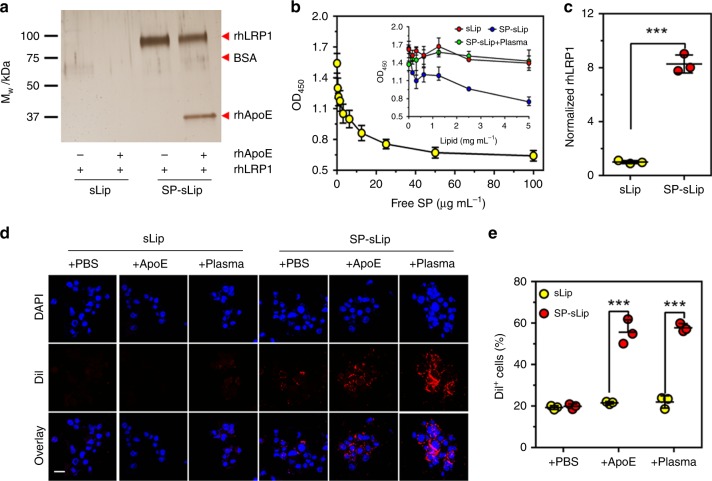
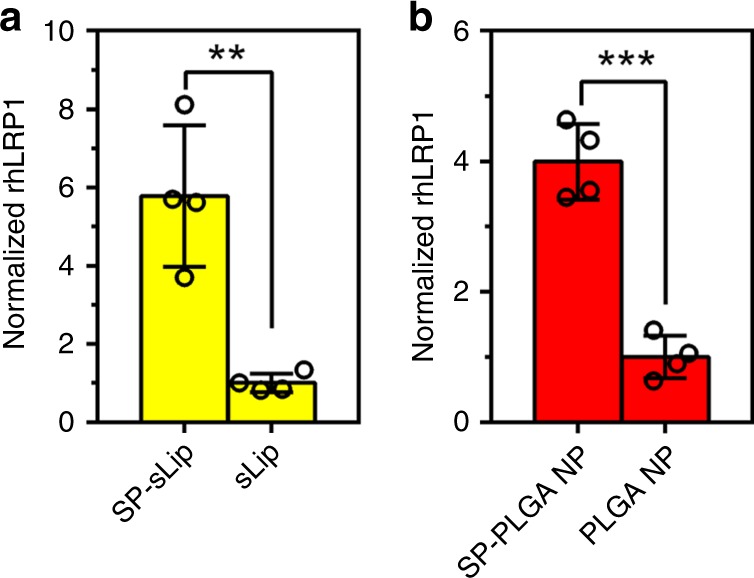
- After plasma preincubation, SP-sLip retained ApoE functionality: it bound 8.4-fold more radiolabeled rhLRP1 than sLip, and SP-sLip enhanced uptake by bEnd.3 cells only when ApoE or mouse plasma was present.
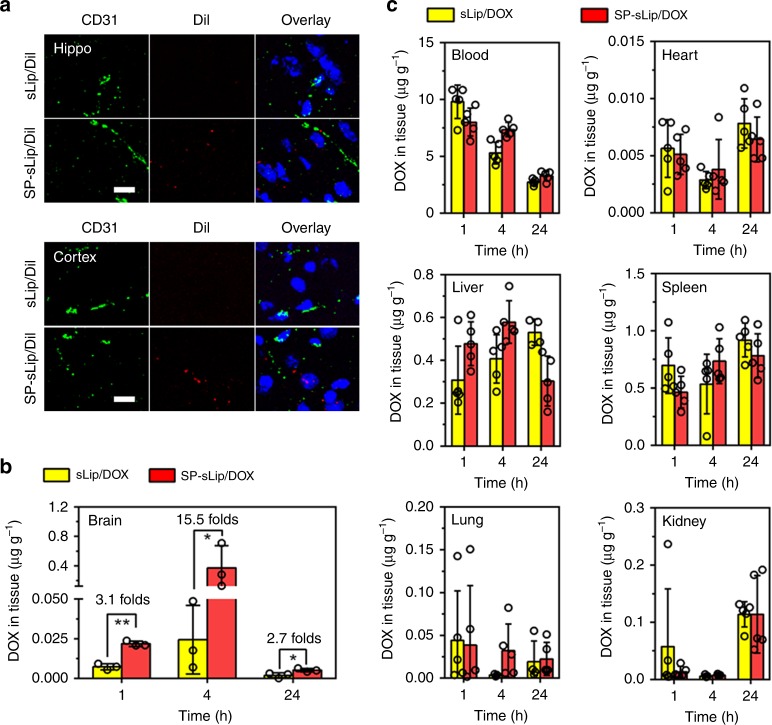
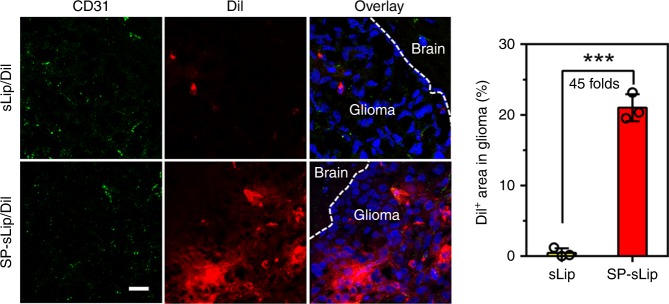
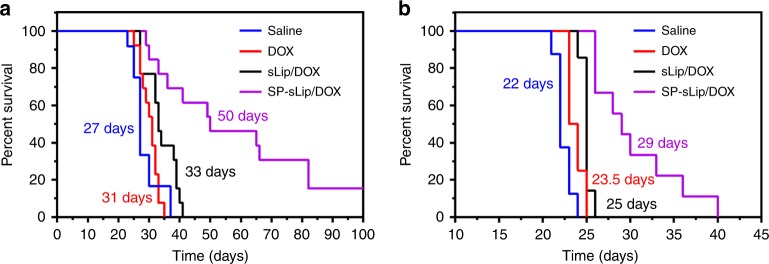
- Brain delivery and therapy improved substantially: SP-sLip/DOX produced 14.5-fold higher brain doxorubicin distribution than sLip/DOX in healthy BALB/c mice at 4 h (0.93% ID/g vs 0.061% ID/g), increased glioma-region distribution by 45-fold, prolonged median survival in intracranial U87-bearing mice to 50 days versus 33 days with sLip/DOX, and in D425-bearing mice to 29 days versus 25 days with sLip/DOX.
Methods
- Bio-inspired PEGylated liposomes were prepared with or without a short Aβ-derived peptide (SP), and doxorubicin-loaded formulations were made by ammonium sulfate gradient loading; SP was also tested on PLGA nanoparticles.
- The study used in vitro ApoE binding assays, plasma protein corona isolation, SDS-PAGE/nano-LC-MS/MS, ELISA, Western blotting, cellular uptake in bEnd.3 cells, and in vivo biodistribution/pharmacodynamics in BALB/c mice, SD rats, and nude mice bearing intracranial U87 or D425 tumors.
- Main analysis compared corona composition, receptor binding to rhLRP1, brain distribution, survival, and toxicity between SP-sLip, sLip, free DOX, and saline controls using t-tests and log-rank tests.
Limitations
- The paper does not report a full mechanistic proof that the enhanced brain targeting is exclusively due to ApoE/LRP1, and it notes that intracranial tumor accumulation may be at least partially attributed to LRP1 mediation.
- It does not state long-term safety, full pharmacology, or clinical outcomes; the evidence is preclinical in mice and rats.
- The text makes evident that the survival studies use small animal groups (for example, n = 12–13 for U87 and n = 7–9 for D425), which limits precision; this is not stated as a limitation by the paper.
Model-written summary. Check it against the paper before relying on it.
Integrity signals
Registry
Cites
Statistics
Figures
Verification
Claims the paper makes
7 Valid · 1 Not valid · 8 Not checked · 53 Own results and interpretations
Every source the paper cites for this claim was checked and supports it.
In the paper
“Aβ peptides have been reported to directly bind LRP1 for clearance37,38.”
§ Brain-targeted drug delivery by manipulating protein corona functions > Results > SP-sLip preserve functions of absorbed apolipoproteins
What the sources say
- Supportedcites [37] Deane R LRP/amyloid beta-peptide interaction mediates differential brain efflux of Abeta isoforms Neuron 2004 43 333 344 10.1016/j.neuron.2004.07.017 15294142 source
The Abstract reports direct binding of Aβ40 to LRP (LRP1) and LRP-mediated transport across the blood–brain barrier. The Results report LRP-dependent binding and clearance of Aβ isoforms by brain capillaries, with differing affinities across isoforms. (LLM, conf=0.94)
- Supportedcites [38] Storck SE Endothelial LRP1 transports amyloid-beta(1-42) across the blood-brain barrier J. Clin. Investig. 2016 126 123 136 10.1172/JCI81108 26619118 PMC4701557 source
The Discussion states that LRP1 has binding affinity for Aβ1-40 and Aβ1-42 and that both variants are cleared by LRP1. The section on differential binding affinity likewise describes LRP1 binding to these peptides. The supplied passages do not include page numbers. (LLM, conf=0.90)
hedgedstates a cause- Asserted: passes — The authors put it forward as true.
- Checkable: passes — It can be checked against evidence.
- Load-bearing: passes — The paper’s conclusions depend on it.
- Based: passes — The paper gives a reason why it holds.
- Supported
The cited sources support only part of this claim — read each source’s verdict below.
In the paper
“Protein corona presents a major obstacle to bench-to-bedside translation of targeted drug delivery systems, severely affecting targeting yields and directing unfavorable biodistribution.”
- Also stated in: § Introduction · hedged
“After entry into blood stream, the formed protein corona on the surface of TDDS determines what is seen by living organisms, may severely affecting the targeting yields and inducing unfavorable biodistribution8–12. Protein corona presents a major obstacle to the bench-to-bedside translation of TDDS.”
§ Brain-targeted drug delivery by manipulating protein corona functions > Abstract
What the sources say
- Not checked — no full text of the sourcecites [8] Caracciolo G Farokhzad OC Mahmoudi M Biological identity of nanoparticles in vivo: clinical implications of the protein corona Trends Biotechnol. 2017 35 257 264 10.1016/j.tibtech.2016.08.011 27663778 source
- Partly supportedcites [9] Barbero F Formation of the protein corona: the interface between nanoparticles and the immune system Semin. Immunol. 2017 34 52 60 10.1016/j.smim.2017.10.001 29066063 sourceExperimental — accuracy not yet measured
Our copy supports only the general level: the Abstract states the protein corona 'provides the biological identity to the nanoparticle that the immune system will detect' and that this 'has important implications on immune safety, biocompatibility and the use of nanoparticles in medicine', and the section 'The interactions of nanoparticles and the innate immune system' says corona formation gives NPs 'a new biological identity ... ultimately determining their physiological response and toxicity', with NP-protein interactions influencing 'reactivity, bioavailability and pharmacokinetics'. What the source does not state is the specific attribution in the claim: that the corona is a major obstacle to bench-to-bedside translation of targeted drug delivery, that it severely reduces targeting yields, or that it directs unfavourable biodistribution — no passage in our copy (searched: clinical translation, targeting ligands/efficiency, biodistribution, drug delivery challenges) makes that argument, and the same section also reports favourable corona effects (serum proteins stabilising NPs against aggregation, crowding helping maintain native protein structure). So the direction-of-effect framing and the targeting-yield/biodistribution specifics are not supported by this source. (LLM, conf=0.65)
- Partly supportedcites [10] Chen F Complement proteins bind to nanoparticle protein corona and undergo dynamic exchange in vivo Nat. Nanotechnol. 2017 12 387 393 10.1038/nnano.2016.269 27992410 PMC5617637 sourceExperimental — accuracy not yet measured
The introductory passage labeled Abstract (page unavailable) says the protein coat may affect nanoparticle targeting, pharmacokinetics and biodistribution; the paper also reports complement-mediated immune uptake. It does not establish that the corona severely reduces targeting yields, causes unfavorable biodistribution, or is a major obstacle to clinical translation. (LLM, conf=0.86)
- Partly supportedcites [11] Salvati A Transferrin-functionalized nanoparticles lose their targeting capabilities when a biomolecule corona adsorbs on the surface Nat. Nanotechnol. 2013 8 137 143 10.1038/nnano.2012.237 23334168 sourceExperimental — accuracy not yet measured
The paper reports that a protein corona can shield transferrin on nanoparticles and eliminate targeting specificity in a biological environment (main text; page not supplied). Its conclusion says this failure may allow accumulation in unintended cells, but it does not demonstrate unfavorable biodistribution or establish the extent of an obstacle to clinical translation. (LLM, conf=0.86)
- Not checked yetcites [12] Shen Limei Tenzer Stefan Storck Wiebke Hobernik Dominika Raker Verena Katherina Fischer Karl Decker Sandra Dzionek Andrzej Krauthäuser Susanne Diken Mustafa Nikolaev Alexej Maxeiner Joachim Schuster Petra Kappel Cinja Verschoor Admar Schild Hansjörg Grabbe Stephan Bros Matthias Protein corona–mediated targeting of nanocarriers to B cells allows redirection of allergic immune responses Journal of Allergy and Clinical Immunology 2018 142 5 1558 1570 10.1016/j.jaci.2017.08.049 29382591 source
Checked before — its earlier verdict is held back until a new check runs.
plainstates a cause- Asserted: passes — The authors put it forward as true.
- Checkable: passes — It can be checked against evidence.
- Load-bearing: passes — The paper’s conclusions depend on it.
- Based: passes — The paper gives a reason why it holds.
- Also stated in: § Introduction · hedged
The cited sources support only part of this claim — read each source’s verdict below.
In the paper
“Exchangeable apolipoproteins (such as ApoA, C, and E) that can direct the transport of lipids through lymphatic and circulatory systems have been found in protein coronas formed on the surface of a variety of drug delivery systems15–17.”
§ Brain-targeted drug delivery by manipulating protein corona functions > Introduction
What the sources say
- Partly supportedcites [15] Cedervall T Understanding the nanoparticle-protein corona using methods to quantify exchange rates and affinities of proteins for nanoparticles Proc. Natl Acad. Sci. USA 2007 104 2050 2055 10.1073/pnas.0608582104 17267609 PMC1892985 sourceExperimental — accuracy not yet measured
Our copy supports apolipoproteins in nanoparticle coronas only in general and for ApoA-I specifically: the Introduction states that 'other proteins observed with several particle types in these centrifugation assays are immunoglobulins, apolipoproteins and alpha-1-antitrypsin', and the centrifugation/gel-filtration sections identify the 28-kDa band as apolipoprotein A-I, preferentially bound to the copolymer particles. No passage in our copy names apolipoprotein C or apolipoprotein E (searched: 'apolipoprotein C/apoE', 'apoA apoE corona'), so the 'such as ApoA, C, and E' enumeration is not attributable to this source. The particles this paper actually characterises are NIPAM/BAM copolymer (and thiol-linked gold) model nanoparticles in plasma, not 'a variety of drug delivery systems' — that breadth comes only from its cited centrifugation literature (refs 5-18). Finally, describing these apolipoproteins as 'exchangeable' runs against the paper's emphasis: it reports ApoA-I coelutes with particles over ~2 h, i.e. a much slower exchange rate than albumin and fibrinogen, and displaces them at longer times. (LLM, conf=0.75)
- Not checked — no full text of the sourcecites [16] Casals E Pfaller T Duschl A Oostingh GJ Puntes V Time evolution of the nanoparticle protein corona ACS Nano 2010 4 3623 3632 10.1021/nn901372t 20553005 source
- Partly supportedcites [17] Bertrand N Mechanistic understanding of in vivo protein corona formation on polymeric nanoparticles and impact on pharmacokinetics Nat. Commun. 2017 8 777 10.1038/s41467-017-00600-w 28974673 PMC5626760 sourceExperimental — accuracy not yet measured
The Results (‘In vivo protein corona’; page unavailable) report apolipoproteins in coronas on metal, lipid, and polymer nanoparticles, and the study identifies ApoE on its polymeric nanoparticles. The passages do not specifically identify ApoA or ApoC in those coronas, so those examples are not established by this source. (LLM, conf=0.84)
plainstates an association- Asserted: passes — The authors put it forward as true.
- Checkable: passes — It can be checked against evidence.
- Load-bearing: passes — The paper’s conclusions depend on it.
- Based: passes — The paper gives a reason why it holds.
- Partly supported
The cited sources support only part of this claim — read each source’s verdict below.
In the paper
“Unfortunately, plasma protein absorption on liposomal surface is inevitable even in the presence of PEG8,48,49.”
§ Brain-targeted drug delivery by manipulating protein corona functions > Discussion
What the sources say
- Not checked — no full text of the sourcecites [8] Caracciolo G Farokhzad OC Mahmoudi M Biological identity of nanoparticles in vivo: clinical implications of the protein corona Trends Biotechnol. 2017 35 257 264 10.1016/j.tibtech.2016.08.011 27663778 source
- Partly supportedcites [48] Al-Ahmady ZS Hadjidemetriou M Gubbins J Kostarelos K Formation of protein corona in vivo affects drug release from temperature-sensitive liposomes J. Control. Release. 2018 276 157 167 10.1016/j.jconrel.2018.02.038 29522832 sourceExperimental — accuracy not yet measured
Our copy of Al-Ahmady et al. (2018) is the institutional repository record: title/metadata plus the Abstract only — searches for 'PEG', 'PEGylated', 'stealth coating' and introduction-level discussion returned no body-text passages. The Abstract does support the general point that plasma proteins adsorb onto the liposome surface in vivo ('the actual adsorption of proteins onto the surface of TSL after their in vivo administration, also known as "protein corona"', and recovery of 'protein corona coated TSL' from the blood circulation of CD-1 mice). However, nothing in our copy addresses the qualifier 'even in the presence of PEG' — no PEGylated formulation or PEG-resistance claim appears — so that part of the citing sentence is unsupported by this source. (LLM, conf=0.65)
- Partly supportedcites [49] Bigdeli A Exploring cellular interactions of liposomes using protein corona fingerprints and physicochemical properties ACS Nano 2016 10 3723 3737 10.1021/acsnano.6b00261 26882007 sourceExperimental — accuracy not yet measured
The Abstract of our copy states the general half of the claim: liposomes 'upon entering the biological media... are also immediately surrounded by high levels of proteins... forming a rich protein corona', and Results/Table 1 show measurable protein bound (4-11 µg/µL) for all 17 formulations after 1 h with human plasma. However, the PEG qualifier is not made anywhere in our copy: PEG appears only as a lipid reagent (DOPE-PEG-1K/2K/5K, Samples Preparation) and via a cited reference on PEG chain length (ref. 9, Pozzi et al., Nanoscale 2014), and the paper's own discussion attributes lower adsorption to neutral rather than PEGylated surfaces ('liposomes with charged surfaces tend to adsorb more proteins than those with neutral surfaces'). So 'even in the presence of PEG' is not supported by this source. (LLM, conf=0.72)
plain- Asserted: passes — The authors put it forward as true.
- Checkable: passes — It can be checked against evidence.
- Load-bearing: passes — The paper’s conclusions depend on it.
- Based: passes — The paper gives a reason why it holds.
The cited sources support only part of this claim — read each source’s verdict below.
In the paper
“Some of those exchangeable apolipoproteins (ApoA1 and ApoE) can cross the blood-brain barrier (BBB) via receptor-mediated transcytosis18–21”
§ Brain-targeted drug delivery by manipulating protein corona functions > Introduction
What the sources say
- Not checked — no full text of the sourcecites [18] Rip J Schenk GJ de Boer AG Differential receptor-mediated drug targeting to the diseased brain Expert Opin. Drug Deliv. 2009 6 227 237 10.1517/17425240902806383 19327042 source
- Partly supportedcites [19] Wang D Engineering a lysosomal enzyme with a derivative of receptor-binding domain of apoE enables delivery across the blood-brain barrier Proc. Natl Acad. Sci. USA 2013 110 2999 3004 10.1073/pnas.1222742110 23382178 PMC3581871 sourceExperimental — accuracy not yet measured
The Intro (p.1) states that LDLR-superfamily proteins (LRP1, VLDLR) 'are abundantly expressed on BBB and can bind apolipoproteins to facilitate their transcytosis across the BBB', and the Discussion frames 'endogenous receptor-mediated transcytosis for the entrance of proteins such as transferrin, insulin, or apolipoproteins' as a route for selective BBB transport; the apoE arm of the claim is further carried by the paper's own demonstration that an apoE receptor-binding domain fused to IDUA is transcytosed (in vitro BBB model, LRP1-mediated via RAP inhibition). However, our copy says nothing about apolipoprotein A-I crossing the BBB — apoA-I appears only inside the title of cited ref. 15 (Kreuter et al., apolipoprotein A-I/B-100-conjugated albumin nanoparticles), which the body text describes as an apoE-nanoparticle/LDLRf transcytosis study — and the category 'exchangeable apolipoproteins' is never used. So the ApoA1 and 'exchangeable' qualifiers attributed here are not supported by this source. (LLM, conf=0.78)
- Not checked — no full text of the sourcecites [20] Pflanzner T LRP1 mediates bidirectional transcytosis of amyloid-beta across the blood-brain barrier Neurobiol. Aging 2011 32 2323 e2321 2311 10.1016/j.neurobiolaging.2010.05.025 20630619 source
- Not checked — no full text of the sourcecites [21] Demeule M Involvement of the low-density lipoprotein receptor-related protein in the transcytosis of the brain delivery vector angiopep-2 J. Neurochem. 2008 106 1534 1544 10.1111/j.1471-4159.2008.05492.x 18489712 source
plainstates a cause- Asserted: passes — The authors put it forward as true.
- Checkable: passes — It can be checked against evidence.
- Load-bearing: passes — The paper’s conclusions depend on it.
- Based: passes — The paper gives a reason why it holds.
39 more claims
Create a free account to see all 69 claims and to verify the 5 references still open.
- It may state two separate claims as one. 15
- Probably not a substantial claim. 10
Claims other papers make about this one
Each is checked against this paper’s own text: does it say what the citing paper says it does?
The cited source says what the claim attributes to it.
In the citing paper
“Significant enhancement of the brain distribution of DOX-loaded liposomes as well as higher anti-tumor efficacy were found.”
From The blood–brain barrier: Structure, regulation and drug delivery (2023) · cites this paper as [253]
Self-check
Percentages, sums and reported differences re-computed from the paper’s own numbers.
Rated major: it would touch a result — a value a result rests on, reported and recomputed p-values on opposite sides of the significance level, two passages that conflict with no sign which is right, or a cited work retracted before this paper was published.
In the paper
“SP-sLip/DOX (ID% g−1 = 0.93%) treated mice had 14.5-fold higher brain doxorubicin distribution than sLip/Dox (ID% g−1 = 0.061%) treated mice.”
§ Brain-targeted drug delivery by manipulating protein corona functions > Results > SP-sLip can penetrate BBB and target brain cancers
Reported 14.5 · recomputed 15.245902
Citations
Cites
The Amyloid Hypothesis of Alzheimer’s Disease: Progress and Problems on the Road to Therapeutics
Hardy, J., & Selkoe, D. J. (2002) · Science · doi:10.1126/science.1072994 · Cited by 13,864
Cedervall, T., Lynch, I., Lindman, S., Berggård, T., Thulin, E., Nilsson, H., Dawson, K. A., & Linse, S. (2007) · Proceedings of the National Academy of Sciences · doi:10.1073/pnas.0608582104 · Cited by 3,281
Lundqvist, M., Stigler, J., Elia, G., Lynch, I., Cedervall, T., & Dawson, K. A. (2008) · Proceedings of the National Academy of Sciences · doi:10.1073/pnas.0805135105 · Cited by 2,823
Nanoparticle-Based Medicines: A Review of FDA-Approved Materials and Clinical Trials to Date
Bobo, D., Robinson, K. J., Islam, J., Thurecht, K. J., & Corrie, S. R. (2016) · Pharmaceutical Research · doi:10.1007/s11095-016-1958-5 · Cited by 2,586
Rapid formation of plasma protein corona critically affects nanoparticle pathophysiology
Tenzer, S., Docter, D., Kuharev, J., Musyanovych, A., Fetz, V., Hecht, R., Schlenk, F., Fischer, D., Kiouptsi, K., Reinhardt, C., et al. (2013) · Nature Nanotechnology · doi:10.1038/nnano.2013.181 · Cited by 2,283
Decreased Clearance of CNS β-Amyloid in Alzheimer’s Disease
Mawuenyega, K. G., Sigurdson, W., Ovod, V., Munsell, L., Kasten, T., Morris, J. C., Yarasheski, K. E., & Bateman, R. J. (2010) · Science · doi:10.1126/science.1197623 · Cited by 2,078
(2016) · CRC Press eBooks · doi:10.1201/b12801 · Cited by 2,031
Targeted drug delivery to tumors: Myths, reality and possibility
Bae, Y. H., & Park, K. (2011) · Journal of Controlled Release · doi:10.1016/j.jconrel.2011.06.001 · Cited by 1,935
Salvati, A., Pitek, A. S., Monopoli, M. P., Prapainop, K., Bombelli, F. B., Hristov, D. R., Kelly, P. M., Åberg, C., Mahon, E., & Dawson, K. A. (2013) · Nature Nanotechnology · doi:10.1038/nnano.2012.237 · Cited by 1,912
Apolipoprotein E: Far More Than a Lipid Transport Protein
Mahley, R. W., & Rall, S. C. (2000) · Annual Review of Genomics and Human Genetics · doi:10.1146/annurev.genom.1.1.507 · Cited by 1,836
Cited by
Items 101–200 of 326
Selective organ targeting nanoparticles: from design to clinical translation
Li, J., & Wang, H. (2023) · Nanoscale Horizons · doi:10.1039/d3nh00145h · Cited by 44
Receptor–mediated transcytosis of macromolecules across the blood–brain barrier
Baghirov, H. (2023) · Expert Opinion on Drug Delivery · doi:10.1080/17425247.2023.2255138 · Cited by 46
“On the one hand, it can incorporate proteins that will subsequently interact with target receptors in hepatic or extrahepatic delivery [89–91], and precise modulation of corona formation has been suggested to improve brain delivery of liposomes in [92].”
BackgroundInterplay between nanomedicine and protein corona
Yang, M., Wu, E., Tang, W., Qian, J., & Zhan, C. (2021) · Journal of Materials Chemistry B · doi:10.1039/d1tb01063h · Cited by 40
Self-citationBernardes, B. G., Veiga, A., Barros, J., García‐González, C. A., & Oliveira, A. L. (2024) · International Journal of Molecular Sciences · doi:10.3390/ijms25063133 · Cited by 41
“Without characterizing the protein corona, the translation of targeted drug delivery using NPs from bench-to-bedside becomes challenging [144].”
BackgroundMicroneedle-mediated nanomedicine to enhance therapeutic and diagnostic efficacy
Zuo, Y., Sun, R., Piccolo, N. D., & Stevens, M. M. (2024) · Nano Convergence · doi:10.1186/s40580-024-00421-w · Cited by 46
Protein corona on brain targeted nanocarriers: Challenges and prospects
Jiang, K., Yu, Y., Qiu, W., Tian, K., Guo, Z., Qian, J., Lu, H., & Zhan, C. (2023) · Advanced Drug Delivery Reviews · doi:10.1016/j.addr.2023.115114 · Cited by 48
Self-citationSalvati, A. L. (2024) · Current Opinion in Biotechnology · doi:10.1016/j.copbio.2024.103101 · Cited by 39
Nanomaterials as novel agents for amelioration of Parkinson’s disease
Wu, J., Cui, X., Ke, P. C., Mortimer, M., Wang, X., Bao, L., & Chen, C. (2021) · Nano Today · doi:10.1016/j.nantod.2021.101328 · Cited by 38
Zhang, Y., Xiao, W., He, S., Xia, X., Yang, W., Yang, Z., Hu, H., Wang, Y., Wang, X., Li, H., et al. (2024) · Journal of Controlled Release · doi:10.1016/j.jconrel.2024.02.020 · Cited by 37
Rafati, N., Zarepour, A., Bigham, A., Khosravi, A., Naderi‐Manesh, H., Iravani, S., & Zarrabi, A. (2024) · International Journal of Pharmaceutics · doi:10.1016/j.ijpharm.2024.124800 · Cited by 48
Luo, G., Zhang, J., Sun, Y., Wang, Y., Wang, H., Cheng, B., Shu, Q., & Fang, X. (2021) · Nano-Micro Letters · doi:10.1007/s40820-021-00598-3 · Cited by 47
Regulation of in vivo delivery of nanomedicines by herbal medicines
Guan, J., Chen, W., Yang, M., Wu, E., Qian, J., & Zhan, C. (2021) · Advanced Drug Delivery Reviews · doi:10.1016/j.addr.2021.04.015 · Cited by 37
Self-citationKachanov, A., Kostyusheva, A. P., Brezgin, S. A., Karandashov, I. V., Ponomareva, N. I., Tikhonov, A., Lukashev, A. N., Pokrovsky, V. S., Zamyatnin, A. A., Parodi, A., et al. (2024) · Medicinal Research Reviews · doi:10.1002/med.22036 · Cited by 49
A decade of the liposome-protein corona: Lessons learned and future breakthroughs in theranostics
Quagliarini, E., Digiacomo, L., Renzi, S., Pozzi, D., & Caracciolo, G. (2022) · Nano Today · doi:10.1016/j.nantod.2022.101657 · Cited by 39
Shastri, D., Raj, V., & Lee, S.-K. (2024) · Ageing Research Reviews · doi:10.1016/j.arr.2024.102379 · Cited by 36
Dar, A. I., Randhawa, S., Verma, M., Saini, T. C., & Acharya, A. (2025) · Advances in Colloid and Interface Science · doi:10.1016/j.cis.2025.103535 · Cited by 42
Changes in target ability of nanoparticles due to protein corona composition and disease state
Xu, W., Xu, M., Xiao, Y., Yu, L., Xie, H., Jiang, X., Chen, M., Gao, H., & Wang, L. (2022) · Asian Journal of Pharmaceutical Sciences · doi:10.1016/j.ajps.2022.03.002 · Cited by 49
cRGD enables rapid phagocytosis of liposomal vancomycin for intracellular bacterial clearance
Li, G., Wang, M., Ding, T., Wang, J., Chen, T., Shao, Q., Jiang, K., Wang, L., Yu, Y., Pan, F., et al. (2022) · Journal of Controlled Release · doi:10.1016/j.jconrel.2022.02.030 · Cited by 37
Self-citationIn vivo self-assembled drug nanocrystals for metastatic breast cancer all-stage targeted therapy
Luo, Z., Lu, L., Xu, W., Meng, N., Wu, S., Zhou, J., Xu, Q., Xie, C., Liu, Y., & Lu, W. (2022) · Journal of Controlled Release · doi:10.1016/j.jconrel.2022.03.058 · Cited by 32
Self-citationAntibody-Targeted Liposomes for Enhanced Targeting of the Blood-Brain Barrier
Zhou, Y., Gastfriend, B. D., Umlauf, B. J., Lynn, D. M., & Shusta, E. V. (2022) · Pharmaceutical Research · doi:10.1007/s11095-022-03186-1 · Cited by 35
“5-fold higher brain doxorubicin distribution than non-modified liposomes (37).”
BackgroundResultLi, Z., Huang, Y., Zhong, Y., Liang, B., Yang, X., Wang, Q., Sui, H., & Huang, Z. (2023) · Food and Chemical Toxicology · doi:10.1016/j.fct.2023.113984 · Cited by 32
Umar, M., Rehman, Y., Ambreen, S., Mumtaz, S. M., Shaququzzaman, M., Alam, M. M., & Ali, R. (2024) · Ageing Research Reviews · doi:10.1016/j.arr.2024.102298 · Cited by 35
Song, B., Wang, X., Qin, L., Hussain, S., & Liang, W. (2024) · Pharmacological Research · doi:10.1016/j.phrs.2024.107308 · Cited by 35
Wang, J., Zhang, Z., Zhang, Z., Zou, Z., Zhuo, Y., Liu, C. X., Nie, D., Gan, Y., & Yu, M. (2024) · ACS Nano · doi:10.1021/acsnano.4c11453 · Cited by 30
Self-citationSi, J., Liu, Z., Gu, F., Jin, X., & Ma, Y. (2025) · International Journal of Oncology · doi:10.3892/ijo.2025.5789 · Cited by 38
“…approach to precise drug delivery by accurately controlling the interaction modes of functional plasma proteins on the surface of NPs. Zhang et al (141) developed bioinspired liposomes (SP‑sLips) by modifying the liposomal surface with a short non‑toxic peptide derived from amyloid β ‑protein (A…”
Nanocarriers for effective nutraceutical delivery to the brain
Meenambal, R., & Bharath, M. M. S. (2020) · Neurochemistry International · doi:10.1016/j.neuint.2020.104851 · Cited by 29
Morphology-driven protein corona manipulation for preferential delivery of lipid nanodiscs
Chen, T., Pan, F., Luo, G., Jiang, K., Wang, H., Ding, T., Li, W., Zhan, C., & Wei, X. (2022) · Nano Today · doi:10.1016/j.nantod.2022.101609 · Cited by 30
Self-citationInterplay between Liposomes and IgM: Principles, Challenges, and Opportunities
Wang, H., Lin, S., Wu, X., Jiang, K., Lu, H., & Zhan, C. (2023) · Advanced Science · doi:10.1002/advs.202301777 · Cited by 39
Self-citationNanodiscs: Game changer nano-therapeutics and structural biology tools
Elzoghby, A. O., Samir, O., Soliman, A., Solomevich, S. O., Yu, M., Schwendeman, A. A., & Nasr, M. L. (2023) · Nano Today · doi:10.1016/j.nantod.2023.102026 · Cited by 31
Interactions between nanoparticle corona proteins and the immune system
Tran, T. T., & Roffler, S. R. (2023) · Current Opinion in Biotechnology · doi:10.1016/j.copbio.2023.103010 · Cited by 29
Tao, Y., Chen, Y., Wang, S., Chen, W., Zhou, D., Chen, D., Zhang, C., Wu, Z., Yan, J., Zhang, H., et al. (2022) · Composites Part B Engineering · doi:10.1016/j.compositesb.2022.110288 · Cited by 33
Ruan, H., Yao, S.-Y., Wang, S., Wang, R., Xie, C., Guo, H., & Lu, W. (2020) · Chemical Engineering Journal · doi:10.1016/j.cej.2020.126296 · Cited by 30
Self-citationRen, Y., Yuan, B., Hou, S., Sui, Y., Yang, T., Lv, M., Zhou, Y., Yu, H., Li, S., Peng, H., et al. (2021) · Journal of drug targeting · doi:10.1080/1061186x.2021.1882469 · Cited by 28
Han, M., Li, Y., Lu, S., Yuan, B., Cheng, S., & Cao, C. (2022) · ACS Applied Materials & Interfaces · doi:10.1021/acsami.2c00716 · Cited by 26
Nanocarriers Call the Last Shot in the Treatment of Brain Cancers
Mehrabian, A., Mashreghi, M., Dadpour, S., Badiee, A., Arabi, L., Alavizadeh, S. H., Moosavian, S. A., & Jaafari, M. R. (2022) · Technology in Cancer Research & Treatment · doi:10.1177/15330338221080974 · Cited by 32
Taha, E., Nour, S. A. E.-K., Mamdouh, W., Selim, A. A., Swidan, M. M., Ibrahim, A. B., & Naguib, M. J. (2023) · International Journal of Pharmaceutics X · doi:10.1016/j.ijpx.2023.100160 · Cited by 49
Improving Tumor Targeting and Penetration for Nanoparticle‐Mediated Cancer Therapy
Luo, Z., Chen, C., & Li, S. (2025) · Small Methods · doi:10.1002/smtd.202401860 · Cited by 31
New Therapeutics for Extracellular Vesicles: Delivering CRISPR for Cancer Treatment
Yan, B., & Liang, Y. (2022) · International Journal of Molecular Sciences · doi:10.3390/ijms232415758 · Cited by 30
“LNP-mediated gene editing via the CRISPR/Cas9 system has been widely reported in the brain [45], lungs [46], liver [47], and tumor tissues [48].”
BackgroundQiu, Z., Cao, G., Lv, S., Yu, D., Fu, J., Yan, H., Li, Y., Zhou, P., Wu, X., Liu, Z., et al. (2023) · Chemical Engineering Journal · doi:10.1016/j.cej.2023.143882 · Cited by 25
Unveiling the challenges of engineered protein corona from the proteins’ perspective
Marques, C., Borchard, G., & Jordan, O. (2024) · International Journal of Pharmaceutics · doi:10.1016/j.ijpharm.2024.123987 · Cited by 27
Zhang, X., Fu, M., Wang, Y., & Wu, T. S. (2025) · Frontiers in Drug Delivery · doi:10.3389/fddev.2025.1644633 · Cited by 46
“Through speci fi c changes and modi fi cations, liposomes can be engineered to cross the BBB and reach target areas in the brain with precision, facilitating ef fi cient drug delivery (Zhang et al., 2019; Erel-Akbaba et al., 2025).”
Brain metastasis models: What should we aim to achieve better treatments?
Masmudi‐Martín, M., Zhu, L., Sánchez‐Navarro, M., Priego, N., Casanova-Acebes, M., Ruiz‐Rodado, V., Giralt, E., & Valiente, M. (2020) · Advanced Drug Delivery Reviews · doi:10.1016/j.addr.2020.12.002 · Cited by 27
Advanced Noninvasive Strategies for the Brain Delivery of Therapeutic Proteins and Peptides
Lin, J., Yu, Z., & Gao, X. (2024) · ACS Nano · doi:10.1021/acsnano.4c06851 · Cited by 32
Luo, W., Chen, C., Guo, X., Guo, X., Zheng, J., Liu, J., Fan, X., Luo, M., Yu, Z., Li, H., et al. (2024) · Advanced Functional Materials · doi:10.1002/adfm.202409522 · Cited by 31
Self-citationBresinskya, M., & Göpferich, A. M. (2025) · European Journal of Pharmaceutics and Biopharmaceutics · doi:10.1016/j.ejpb.2025.114634 · Cited by 33
Md, S., Alhakamy, N. A., Alfaleh, M. A., Afzal, O., Altamimi, A. S. A., Iqubal, A., & Shaik, R. A. (2021) · Journal of Personalized Medicine · doi:10.3390/jpm11111116 · Cited by 27
Zhao, M., Lin, Y., Zeng, Y., Lv, Z., Liang, J., Tang, P., Zhen, X., & Han, L. (2024) · Journal of Controlled Release · doi:10.1016/j.jconrel.2024.12.066 · Cited by 26
Engineering advanced nanomedicines against central nervous system diseases
Shi, S., Ren, H., Xie, Y., Yu, M., Chen, Y., & Yang, L. (2023) · Materials Today · doi:10.1016/j.mattod.2023.08.005 · Cited by 26
Advanced nanoparticle engineering for precision therapeutics of brain diseases
Ismail, M., Liu, J., Wang, N., Zhang, D., Qin, C., Shi, B., & Zheng, M. (2025) · Biomaterials · doi:10.1016/j.biomaterials.2025.123138 · Cited by 30
Self-citationEngineered protein nanodrug as an emerging therapeutic tool
Li, Y., Sun, J., Li, J., Liu, K., & Zhang, H. (2022) · Nano Research · doi:10.1007/s12274-022-4103-2 · Cited by 21
A proposed mathematical description of in vivo nanoparticle delivery
Wu, J. L. Y., Stordy, B. P., Nguyen, L. N. M., Deutschman, C. P., & Chan, W. C. W. (2022) · Advanced Drug Delivery Reviews · doi:10.1016/j.addr.2022.114520 · Cited by 25
Zheng, C., Zhang, W., Gong, X., Xiong, F., Jiang, L., Zhou, L., Zhang, Y. E., Zhu, H. H., Wang, H., Li, Y., et al. (2024) · Science Advances · doi:10.1126/sciadv.adk9996 · Cited by 22
Zhang, W., Refaat, A., Li, H., Zhu, D., Tong, Z., Nicolazzo, J. A., Peng, B., Bai, H., Esser, L., & Voelcker, N. H. (2025) · Advanced Functional Materials · doi:10.1002/adfm.202425165 · Cited by 30
Canales, C. S. C., Cazorla, J. I. M., Cazorla, R. M. M., Sábio, R. M., Santos, H. A., & Pavan, F. R. (2025) · Materials Today Bio · doi:10.1016/j.mtbio.2025.102381 · Cited by 40
“The specific proteins recruited can expose functional motifs that facilitate receptor-mediated uptake, as shown for apolipoproteins binding to peptide-decorated liposomes [120].”
Dembélé, J., Liao, J.-H., Liu, T., & Chen, Y. (2022) · ACS Applied Materials & Interfaces · doi:10.1021/acsami.2c17544 · Cited by 21
Cell type-targeting nanoparticles in treating central nervous system diseases: Challenges and hopes
Guo, S., & Yi, C. (2023) · Nanotechnology Reviews · doi:10.1515/ntrev-2023-0158 · Cited by 25
Liu, Y., Yu, S., Jiang, X., et al. (2024) · Materials & Design · doi:10.1016/j.matdes.2024.112715 · Cited by 20
der Sanden, N. V., Paun, R. A., Yitayew, M. Y., Boyadjian, O., & Tabrizian, M. (2024) · Nanoscale Advances · doi:10.1039/d4na00783b · Cited by 30
Younis, M. A., Sato, Y., Kimura, S., & Harashima, H. (2025) · RSC Pharmaceutics · doi:10.1039/d5pm00079c · Cited by 26
Protein adsorption onto nanomaterials engineered for theranostic applications
Nienhaus, K., Xue, Y., Shang, L., & Nienhaus, G. U. (2022) · Nanotechnology · doi:10.1088/1361-6528/ac5e6c · Cited by 24
“Zhang et al [ 186 ] functionalized liposomes ( sLips ) with the short A β 25 – 35 peptide ( termed SP ) , which selectively interacts with the lipid-binding domain of the exchangeable apolipoproteins.”
Rademacker, S., Carneiro, S. P., Molbay, M., Catapano, F., Forné, I., Imhof, A., Wibel, R., Heidecke, C., Hölig, P., & Merkel, O. M. (2025) · European Journal of Pharmaceutical Sciences · doi:10.1016/j.ejps.2025.107182 · Cited by 27
Khan, S. M., Gull, A., Akhtar, M., Gull, B., Najmi, A. K., Parveen, R., Ali, J., & Khan, S. I. (2025) · Expert Opinion on Drug Delivery · doi:10.1080/17425247.2025.2556979 · Cited by 23
“Thus modifying target potential and biodistribution profiles [18].”
Bhattacharjee, S., & Brayden, D. J. (2020) · Expert Opinion on Drug Discovery · doi:10.1080/17460441.2021.1826434 · Cited by 23
Nanoparticle‐Based Activatable Probes for Bioimaging
Ma, T., & Xia, T. (2021) · Advanced Biology · doi:10.1002/adbi.202000193 · Cited by 20
Ning, D., Wang, Z., Wang, L., Tian, Y., Fang, J. Z., Jiang, L., Zhang, M., Liu, Y., Pang, D., Cho, W., et al. (2023) · Advanced Materials · doi:10.1002/adma.202306808 · Cited by 24
Radiolabeled Tracing Techniques Illuminating Blood Pharmacokinetics in Nanomedicine
Zhou, W., Zhang, J., Wang, X., & Yang, M. (2023) · Nano Biomedicine and Engineering · doi:10.26599/nbe.2024.9290048 · Cited by 20
Inhibiting the Growth of 3D Brain Cancer Models with Bio-Coronated Liposomal Temozolomide
Perini, G., Giulimondi, F., Palmieri, V., Augello, A., Digiacomo, L., Quagliarini, E., Pozzi, D., Papi, M., & Caracciolo, G. (2021) · Pharmaceutics · doi:10.3390/pharmaceutics13030378 · Cited by 19
“Thus, it is maturing the idea that BC-based nano-delivery systems could be suitable for innovative treatments of brain-related diseases [39,40].”
BackgroundPineiro‐Alonso, L., Rubio-Prego, I., Lobyntseva, A., González‐Freire, E., Langer, R., & Alonso, M. J. (2025) · Advanced Drug Delivery Reviews · doi:10.1016/j.addr.2025.115606 · Cited by 24
Wang, X., Meng, N., Wang, S., Lu, L., Wang, H., Zhan, C., Burgess, D. J., & Lu, W. (2020) · Molecular Pharmaceutics · doi:10.1021/acs.molpharmaceut.0c00394 · Cited by 20
Self-citationTiwari, P., & Tiwari, S. (2022) · Advances in Colloid and Interface Science · doi:10.1016/j.cis.2022.102824 · Cited by 20
Silva, R. O., Haddad, M., Counil, H., Zaouter, C., Patten, S. A., Fülöp, T., & Ramassamy, C. (2024) · Journal of Controlled Release · doi:10.1016/j.jconrel.2024.11.060 · Cited by 22
Protein corona: Dr. Jekyll and Mr. Hyde of nanomedicine
Fasoli, E. (2020) · Biotechnology and Applied Biochemistry · doi:10.1002/bab.2035 · Cited by 22
Paun, R. A., Dumut, D. C., Centorame, A., Thuraisingam, T., Hajdúch, M., Mistrík, M., Džubák, P., Sanctis, J. B. D., Radzioch, D., & Tabrizian, M. (2022) · Pharmaceutics · doi:10.3390/pharmaceutics14030640 · Cited by 19
“, aptamer or antibody-tagged liposomes) [16].”
Wu, B., Liu, Y., Li, H., Zhu, L., Zeng, L., Zhang, Z., & Peng, W. (2023) · Neural Regeneration Research · doi:10.4103/1673-5374.391305 · Cited by 24
“In a murine model, Aβ was shown to be primarily stored in the liver, and peripheral clearance of Aβ was influenced by APOE (Hone et al., 2003), as APOE also functions as a carrier protein of plasma Aβ (Zhang et al., 2019).”
BackgroundSelf-citationWang, J., Xu, Y., Zhou, Y., Zhang, J., Jia, J., Jiao, P., Yin, L., & Su, G. (2023) · The Science of The Total Environment · doi:10.1016/j.scitotenv.2023.169590 · Cited by 22
Small Scale, Big Impact: Nanotechnology-Enhanced Drug Delivery for Brain Diseases
Miao, K., Xia, X., Zou, Y., & Shi, B. (2024) · Molecular Pharmaceutics · doi:10.1021/acs.molpharmaceut.4c00387 · Cited by 24
Longobardi, G., Moore, T. L., Conte, C., Ungaro, F., Satchi‐Fainaro, R., & Quaglia, F. (2024) · Wiley Interdisciplinary Reviews Nanomedicine and Nanobiotechnology · doi:10.1002/wnan.1990 · Cited by 22
Zou, Y., Zhang, J., Chen, L., Xu, Q., Yao, S., & Chen, H. (2025) · Pharmaceutics · doi:10.3390/pharmaceutics17030388 · Cited by 24
“Compared to aqueous solutions, apomorphine delivered via SLNs showed preferential targeting to the cerebellum, brainstem, and striatum with relatively elevated concentrations, resulting in a marked improvement in the learning ability of mice [166].”
Gas Vesicle–Blood Interactions Enhance Ultrasound Imaging Contrast
Ling, B., Ko, J. H., Stordy, B. P., Zhang, Y., Didden, T. F., Malounda, D., Swift, M., Chan, W. C. W., & Shapiro, M. G. (2023) · Nano Letters · doi:10.1021/acs.nanolett.3c02780 · Cited by 17
Recent progress on nanotechnologies for enhancing blood‐brain barrier permeability
Liu, Q., Chen, Z., Guiseppi‐Elie, A., Meng, F., & Luo, L. (2025) · Smart Molecules · doi:10.1002/smo.20240052 · Cited by 28
Active Targeting Towards and Inside the Brain based on Nanoparticles: A Review
Rabiei, M., Kashanian, S., Samavati, S. S., Jamasb, S., & McInnes, S. J. P. (2019) · Current Pharmaceutical Biotechnology · doi:10.2174/1389201020666191203094057 · Cited by 17
Nanotherapeutic approach to tackle chemotherapeutic resistance of cancer stem cells
de Oliveira, B. S. A., de Assis, A. C. C., Souza, N. M., Ferreira, L. F. R., Soriano, R. N., Bilal, M., & Iqbal, H. M. N. (2021) · Life Sciences · doi:10.1016/j.lfs.2021.119667 · Cited by 20
The influence of protein corona on liposomal delivery systems: A comprehensive review
Mojarad-Jabali, S., Fatahi, Y., & Dinarvand, R. (2025) · European Journal of Pharmaceutical Sciences · doi:10.1016/j.ejps.2025.107166 · Cited by 20
Transformable nanoparticles to bypass biological barriers in cancer treatment
Ramachandran, M., Ma, Z., Lin, K. F., Souza, C. D., & Li, Y. (2022) · Nanoscale Advances · doi:10.1039/d2na00485b · Cited by 15
Unravelling the role of lipid composition on liposome-protein interactions
Nele, V., D’Aria, F., Campani, V., Silvestri, T., Biondi, M., Giancola, C., & Rosa, G. D. (2023) · Journal of Liposome Research · doi:10.1080/08982104.2023.2224449 · Cited by 16
“This observation has paved the way to the development of novel approaches aimed at tailoring nanoparticle composition to induce the preferential adsorption of specific serum proteins, which confer nanoparticles endogenous targeting properties (Chen et al. 2019, Zhang et al. 2019).”
BackgroundMethodNovorolsky, R. J., Kasheke, G. D. S., Hakim, A. M., Földvári, M., Dorighello, G. G., Sekler, I., Vuligonda, V., Sanders, M. E., Renden, R., Wilson, J. J., et al. (2023) · Frontiers in Cellular Neuroscience · doi:10.3389/fncel.2023.1226630 · Cited by 20
“Using liposomes, this was achieved by modifying their surface with a short non-toxic peptide derived from Amyloid β1−45 (Amyloid β25−35) that specifically interacts with the lipid-binding domain of apolipoproteins (Zhang et al., 2019).”
BackgroundInfluentialEffects of cholesterol on biomolecular corona
Mahmoudi, N., & Mahmoudi, M. (2023) · Nature Nanotechnology · doi:10.1038/s41565-023-01423-1 · Cited by 15
Intelligent nanomaterials for cancer therapy: recent progresses and future possibilities
Wang, J., Zhao, Y., & Nie, G. (2023) · Medical Review · doi:10.1515/mr-2023-0028 · Cited by 20
“For example, it has been reported that the composition of adsorbed serum proteins could be manipulated through nanomaterial surface properties and be exploited for tissue-targeted delivery [29, 53, 140].”
BackgroundBrain-targeted drug delivery by in vivo functionalized liposome with stable D-peptide ligand
Yang, Y., Chu, Y., Li, C., Fan, L., Lu, H., Zhan, C., & Zhang, Z. (2024) · Journal of Controlled Release · doi:10.1016/j.jconrel.2024.07.014 · Cited by 18
Self-citationLin, Z., Li, S., Wu, Q., Qu, H., Shi, X., Wang, K., Tang, C., & Yin, C. (2024) · Biomaterials · doi:10.1016/j.biomaterials.2024.122704 · Cited by 16
Liu, S., Li, H., Xi, S., Zhang, Y., & Sun, T. (2025) · International Journal of Nanomedicine · doi:10.2147/ijn.s457393 · Cited by 20
“67”
Profiling and Regulating Proteins That Adsorb to DNA Materials in Human Serum
Xu, F., Dong, B., Li, X., Gao, F., Yang, D., Xue, W., & Wang, P. (2021) · Analytical Chemistry · doi:10.1021/acs.analchem.1c02075 · Cited by 16
Interrogating preclinical study of liposomes: The effect of mouse strain reexamined
Guan, J., Wu, E., Jin, P., Hou, S., Qian, J., Lu, W., Yu, B., & Zhan, C. (2021) · Journal of Controlled Release · doi:10.1016/j.jconrel.2021.04.025 · Cited by 15
Self-citationLan, X., Qin, S., Liu, H., Guo, M., Zhang, Y., Jin, X., Duan, X., Sun, M., Liu, Z., Wang, W., et al. (2024) · Journal of Nanobiotechnology · doi:10.1186/s12951-024-02373-z · Cited by 19
Xiong, X., Zhang, Y., Huang, X., Zhang, S., & Li, Q. (2024) · Small · doi:10.1002/smll.202407038 · Cited by 15
Characterization and Biomedical Application Opportunities of the Nanoparticle's Protein Corona
Li, L., Jiang, X., & Gao, J. (2022) · Advanced Materials Interfaces · doi:10.1002/admi.202201442 · Cited by 13
Mohamad, M. E., Han, Q., Clulow, A. J., et al. (2023) · Journal of Colloid and Interface Science · doi:10.1016/j.jcis.2023.12.005 · Cited by 13
In Situ Analysis for Protein Corona: from Morphology, Composition, Structure to Dynamic Process
Yu, S., Baimanov, D., Guo, Z., Gao, Q. H., Chen, C., Cardoso, M. B., & Wang, L. (2025) · Small Methods · doi:10.1002/smtd.202500348 · Cited by 16
Ghouri, M. D., Saleem, J., Ren, J., Liu, J., Umer, A., Cai, R., & Chen, C. (2021) · Advanced Materials Interfaces · doi:10.1002/admi.202101391 · Cited by 16
Self-citationTime Course of Changes in the Neurovascular Unit after Hypoxic-Ischemic Injury in Neonatal Rats
Hatayama, K., Riddick, S., Awa, F., Chen, X. F., Virgintino, D., & Stonestreet, B. S. (2022) · International Journal of Molecular Sciences · doi:10.3390/ijms23084180 · Cited by 16
“It has been extensively used as an excellent marker for the microvasculature network in rodents [10,11].”
Background
Metadata
- Authors
- Zhang, Z., Guan, J., Jiang, Z., Yang, Y., Liu, J., Hua, W., Mao, Y., Li, C., Lu, W., Qian, J., & Zhan, C.
- Affiliations
- Fudan University (CN)
- Corresponding author
- Zhan, Changyou
- Venue
- Nature Communications
- Published
- 2019-08-08
- Volume
- 10
- Issue
- 1
- Pages
- 3561-3561
- ISSN
- 2041-1723 (ISSN-L)
- PMC
- PMC6687821
- OpenAlex
- W2968488780
- Semantic Scholar
- ca6a0d29f65c19084564adca4b690cc77562caad
- Cited by
- 334
- References
- 62
- Citations by year
- 2026: 30 · 2025: 59 · 2024: 61 · 2023: 56 · 2022: 49 · 2021: 38 · 2020: 36 · 2019: 4
- FWCI
- 8.99
- Type
- journal article
- Language
- en
- Open access
- gold
- doi.org
- Licence
- cc-by
- creativecommons.org/licenses/by/4.0 (tdm)
- creativecommons.org/licenses/by/4.0 (vor)
- Locations
- Nature Communications (publishedVersion, cc-by)
- Europe PMC (PubMed Central) (publishedVersion, cc-by)
- PubMed Central (publishedVersion, cc-by)
- PubMed (publishedVersion)
- RePEc: Research Papers in Economics (submittedVersion)
- DOAJ (DOAJ: Directory of Open Access Journals) (submittedVersion, cc-by-sa)
- DOAJ (DOAJ: Directory of Open Access Journals) (submittedVersion)
- Funders
- China Postdoctoral Science Foundation (2017M610229)
- Shanghai Education Development Foundation (2017-01-07-00-07-E00052)
- Shanghai Municipal Health Bureau (2018BR04)
- Natural Science Foundation of Shanghai (18ZR1404800)
- Topics
- Physical Sciences › Materials Science › Biomaterials › Nanoparticle-Based Drug Delivery
- Life Sciences › Neuroscience › Neurology › Barrier Structure and Function Studies
- Life Sciences › Biochemistry, Genetics and Molecular Biology › Molecular Biology › Extracellular vesicles in disease
- Keywords
- protein corona, brain drug delivery, amyloid-beta, apolipoprotein E, apolipoprotein A-I, clusterin, plasma protein binding, doxorubicin, PLGA nanoparticles, brain cancer, tissue distribution
- MeSH terms
- Protein Corona, Animals, Apolipoproteins E, Brain, Brain Neoplasms, Doxorubicin, Humans, Liposomes, Male, Peptide Fragments, Tissue Distribution, Amyloid beta-Peptides, Xenograft Model Antitumor Assays, Cell Line, Tumor, Mice, Rats, Nanoparticles, Protein Interaction Domains and Motifs
About these checks
Registry, retraction, Cites and statistics results are computed, not judged, with one exception: a printed reference that no index lists is read once by a model before it counts as a citation error. Claims are extracted by a model and kept only when their quote appears verbatim in the text; each cited source is then checked, with a model’s help, for whether it says what the claim relies on. Those verdicts can be wrong — read the claim’s quote and the cited source before relying on one.
The claim verdicts this report counts are experimental: their accuracy is not yet measured.
A language model drew the claims from the paper on 2026-10-10, under version 3 of the claim definition (model deepseek-v4.1-flash, prompt extract-v3).
A second model labelled each claim on 2026-10-10 (model jev-1.13-20260917, definition revision gold-guideline-v0.2).
Cited sources are checked with a language model’s help (gpt-6-sol and qwen3.8-omni-flash).
Statistics and arithmetic are recomputed, not judged.
Confidence bands are shown only for fields calibrated on our annotated test set. None is calibrated yet, so no band is shown.
What counts as a claim ›How we measure confidence ›How we check this ›
Are you an author, or do you see a problem with this page? Request a review
Data sources
Bibliographic data: Semantic Scholar, OpenAlex, Crossref.
Contains information from the Semantic Scholar Academic Graph Datasets, made available under the ODC Attribution License (ODC-BY 1.0).
Semantic Scholar’s data is described in: Kinney, R., et al. (2023). The Semantic Scholar Open Data Platform. arXiv:2301.10140.
