

Brain-targeted drug delivery by manipulating protein corona functions
Open accessThe DOI matches its Crossref record; 62 of the 62 references it cites were found in a registry or an index; 13 of the 38 sources its claims cite were checked for support.
Abstract
Abstract Protein corona presents a major obstacle to bench-to-bedside translation of targeted drug delivery systems, severely affecting targeting yields and directing unfavorable biodistribution. Corona-mediated targeting provides a new impetus for specific drug delivery by precisely manipulating interaction modes of functional plasma proteins on nano-surface. Here bio-inspired liposomes (SP-sLip) were developed by modifying liposomal surface with a short nontoxic peptide derived from Aβ 1-42 that specifically interacts with the lipid-binding domain of exchangeable apolipoproteins. SP-sLip absorb plasma apolipoproteins A1, E and J, consequently exposing receptor-binding domain of apolipoproteins to achieve brain-targeted delivery. Doxorubicin loaded SP-sLip (SP-sLip/DOX) show significant enhancement of brain distribution and anti-brain cancer effect in comparison to doxorubicin loaded plain liposomes. SP-sLip preserve functions of the absorbed human plasma ApoE, and the corona-mediated targeting strategy works in SP modified PLGA nanoparticles. The present study may pave a new avenue to facilitate clinical translation of targeted drug delivery systems.
Overview
CoChat Summary
TL;DR
The paper reports a corona-mediated brain-targeting strategy in which a short Aβ-derived peptide on liposomes recruits exchangeable apolipoproteins and exposes their receptor-binding domains for BBB transport. In mouse models, the resulting SP-sLip improved brain accumulation and strengthened doxorubicin’s anti-glioma/anti-medulloblastoma efficacy compared with plain liposomes.
Key findings
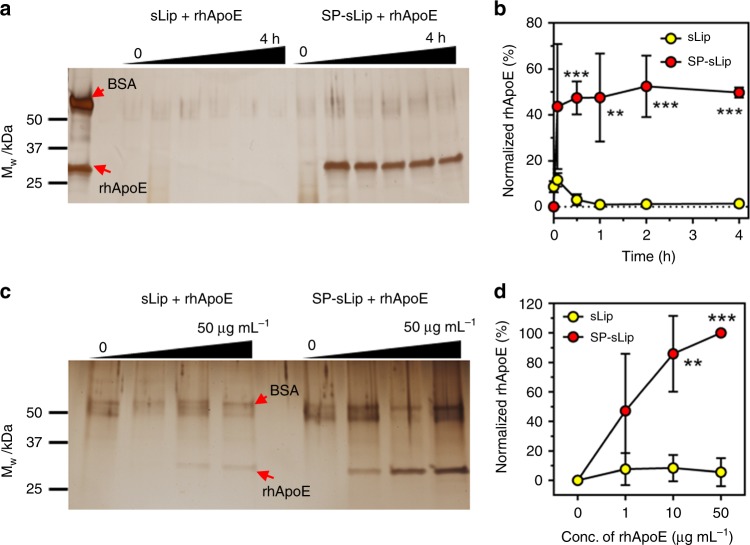
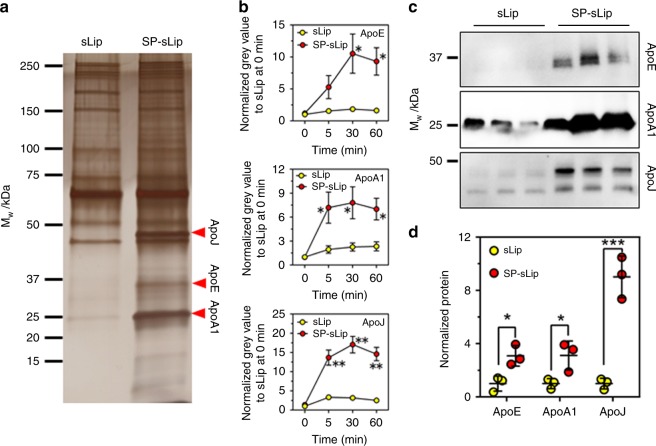
- SP-sLip rapidly absorbed apolipoproteins ApoA1, ApoE, and ApoJ; in mouse plasma, the corona showed plateaued binding within 5–30 min, with ApoE binding measured at 2.8 μg ApoE per mg lipid for SP-sLip versus 1.6 μg ApoE per mg lipid for sLip.
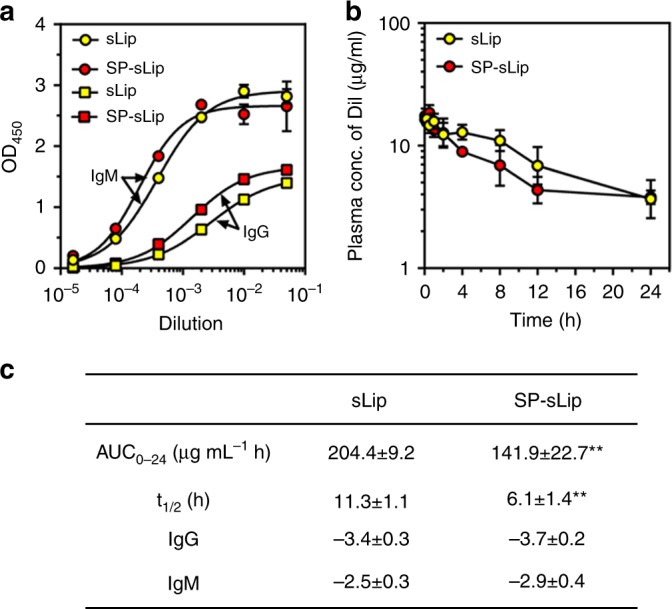
- In vivo, SP-sLip showed higher apolipoprotein content in its protein corona than sLip for all three proteins after intravenous injection, indicating specific absorption occurred in circulation.
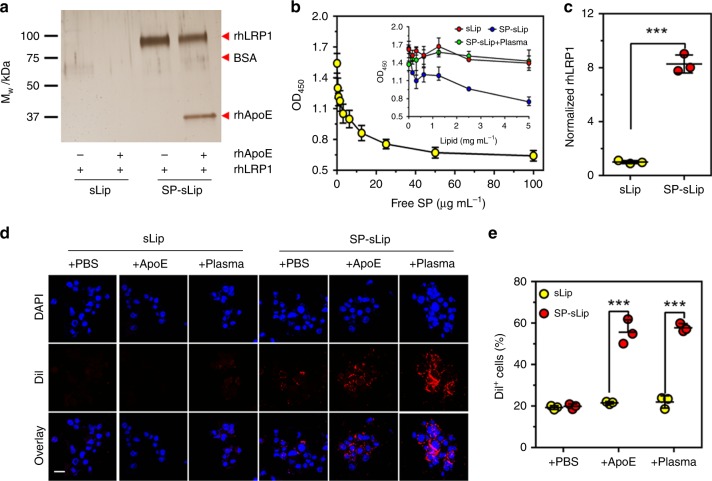
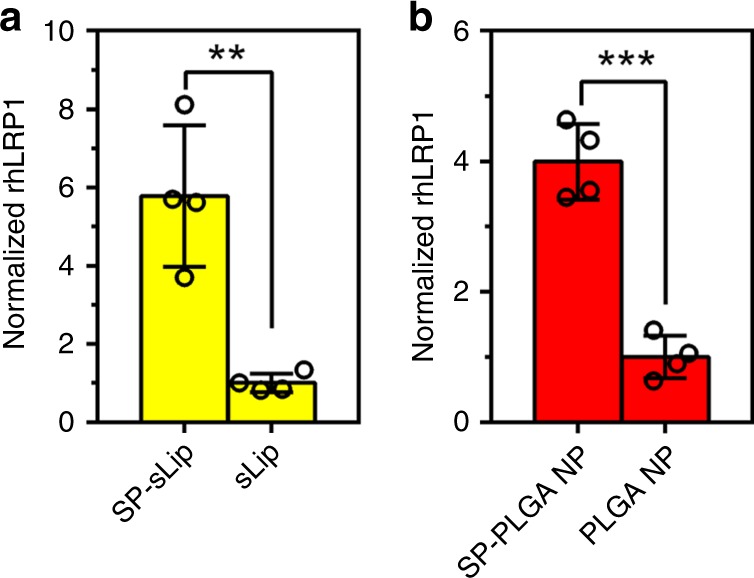
- After plasma preincubation, SP-sLip retained ApoE functionality: it bound 8.4-fold more radiolabeled rhLRP1 than sLip, and SP-sLip enhanced uptake by bEnd.3 cells only when ApoE or mouse plasma was present.
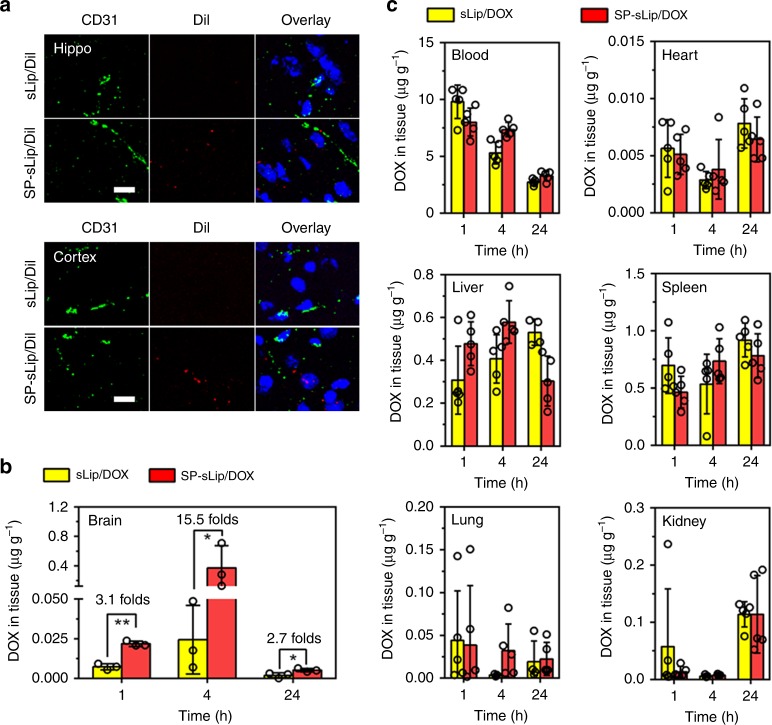
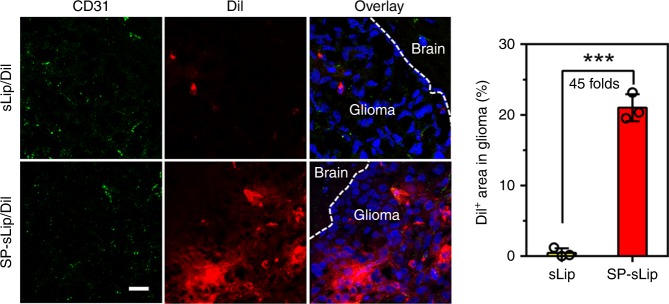
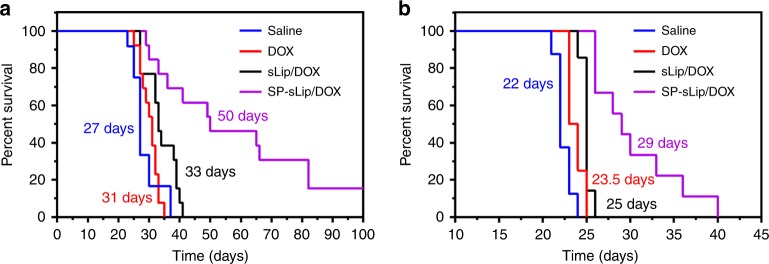
- Brain delivery and therapy improved substantially: SP-sLip/DOX produced 14.5-fold higher brain doxorubicin distribution than sLip/DOX in healthy BALB/c mice at 4 h (0.93% ID/g vs 0.061% ID/g), increased glioma-region distribution by 45-fold, prolonged median survival in intracranial U87-bearing mice to 50 days versus 33 days with sLip/DOX, and in D425-bearing mice to 29 days versus 25 days with sLip/DOX.
Methods
- Bio-inspired PEGylated liposomes were prepared with or without a short Aβ-derived peptide (SP), and doxorubicin-loaded formulations were made by ammonium sulfate gradient loading; SP was also tested on PLGA nanoparticles.
- The study used in vitro ApoE binding assays, plasma protein corona isolation, SDS-PAGE/nano-LC-MS/MS, ELISA, Western blotting, cellular uptake in bEnd.3 cells, and in vivo biodistribution/pharmacodynamics in BALB/c mice, SD rats, and nude mice bearing intracranial U87 or D425 tumors.
- Main analysis compared corona composition, receptor binding to rhLRP1, brain distribution, survival, and toxicity between SP-sLip, sLip, free DOX, and saline controls using t-tests and log-rank tests.
Limitations
- The paper does not report a full mechanistic proof that the enhanced brain targeting is exclusively due to ApoE/LRP1, and it notes that intracranial tumor accumulation may be at least partially attributed to LRP1 mediation.
- It does not state long-term safety, full pharmacology, or clinical outcomes; the evidence is preclinical in mice and rats.
- The text makes evident that the survival studies use small animal groups (for example, n = 12–13 for U87 and n = 7–9 for D425), which limits precision; this is not stated as a limitation by the paper.
Model-written summary. Check it against the paper before relying on it.
Integrity signals
Registry
Cites
Statistics
Figures
Verification
Claims the paper makes
7 Valid · 1 Not valid · 8 Not checked · 53 Own results and interpretations
Every source the paper cites for this claim was checked and supports it.
In the paper
“Aβ peptides have been reported to directly bind LRP1 for clearance37,38.”
§ Brain-targeted drug delivery by manipulating protein corona functions > Results > SP-sLip preserve functions of absorbed apolipoproteins
What the sources say
- Supportedcites [37] Deane R LRP/amyloid beta-peptide interaction mediates differential brain efflux of Abeta isoforms Neuron 2004 43 333 344 10.1016/j.neuron.2004.07.017 15294142 source
The Abstract reports direct binding of Aβ40 to LRP (LRP1) and LRP-mediated transport across the blood–brain barrier. The Results report LRP-dependent binding and clearance of Aβ isoforms by brain capillaries, with differing affinities across isoforms. (LLM, conf=0.94)
- Supportedcites [38] Storck SE Endothelial LRP1 transports amyloid-beta(1-42) across the blood-brain barrier J. Clin. Investig. 2016 126 123 136 10.1172/JCI81108 26619118 PMC4701557 source
The Discussion states that LRP1 has binding affinity for Aβ1-40 and Aβ1-42 and that both variants are cleared by LRP1. The section on differential binding affinity likewise describes LRP1 binding to these peptides. The supplied passages do not include page numbers. (LLM, conf=0.90)
hedgedstates a cause- Asserted: passes — The authors put it forward as true.
- Checkable: passes — It can be checked against evidence.
- Load-bearing: passes — The paper’s conclusions depend on it.
- Based: passes — The paper gives a reason why it holds.
- Supported
The cited sources support only part of this claim — read each source’s verdict below.
In the paper
“Protein corona presents a major obstacle to bench-to-bedside translation of targeted drug delivery systems, severely affecting targeting yields and directing unfavorable biodistribution.”
- Also stated in: § Introduction · hedged
“After entry into blood stream, the formed protein corona on the surface of TDDS determines what is seen by living organisms, may severely affecting the targeting yields and inducing unfavorable biodistribution8–12. Protein corona presents a major obstacle to the bench-to-bedside translation of TDDS.”
§ Brain-targeted drug delivery by manipulating protein corona functions > Abstract
What the sources say
- Not checked — no full text of the sourcecites [8] Caracciolo G Farokhzad OC Mahmoudi M Biological identity of nanoparticles in vivo: clinical implications of the protein corona Trends Biotechnol. 2017 35 257 264 10.1016/j.tibtech.2016.08.011 27663778 source
- Partly supportedcites [9] Barbero F Formation of the protein corona: the interface between nanoparticles and the immune system Semin. Immunol. 2017 34 52 60 10.1016/j.smim.2017.10.001 29066063 sourceExperimental — accuracy not yet measured
Our copy supports only the general level: the Abstract states the protein corona 'provides the biological identity to the nanoparticle that the immune system will detect' and that this 'has important implications on immune safety, biocompatibility and the use of nanoparticles in medicine', and the section 'The interactions of nanoparticles and the innate immune system' says corona formation gives NPs 'a new biological identity ... ultimately determining their physiological response and toxicity', with NP-protein interactions influencing 'reactivity, bioavailability and pharmacokinetics'. What the source does not state is the specific attribution in the claim: that the corona is a major obstacle to bench-to-bedside translation of targeted drug delivery, that it severely reduces targeting yields, or that it directs unfavourable biodistribution — no passage in our copy (searched: clinical translation, targeting ligands/efficiency, biodistribution, drug delivery challenges) makes that argument, and the same section also reports favourable corona effects (serum proteins stabilising NPs against aggregation, crowding helping maintain native protein structure). So the direction-of-effect framing and the targeting-yield/biodistribution specifics are not supported by this source. (LLM, conf=0.65)
- Partly supportedcites [10] Chen F Complement proteins bind to nanoparticle protein corona and undergo dynamic exchange in vivo Nat. Nanotechnol. 2017 12 387 393 10.1038/nnano.2016.269 27992410 PMC5617637 sourceExperimental — accuracy not yet measured
The introductory passage labeled Abstract (page unavailable) says the protein coat may affect nanoparticle targeting, pharmacokinetics and biodistribution; the paper also reports complement-mediated immune uptake. It does not establish that the corona severely reduces targeting yields, causes unfavorable biodistribution, or is a major obstacle to clinical translation. (LLM, conf=0.86)
- Partly supportedcites [11] Salvati A Transferrin-functionalized nanoparticles lose their targeting capabilities when a biomolecule corona adsorbs on the surface Nat. Nanotechnol. 2013 8 137 143 10.1038/nnano.2012.237 23334168 sourceExperimental — accuracy not yet measured
The paper reports that a protein corona can shield transferrin on nanoparticles and eliminate targeting specificity in a biological environment (main text; page not supplied). Its conclusion says this failure may allow accumulation in unintended cells, but it does not demonstrate unfavorable biodistribution or establish the extent of an obstacle to clinical translation. (LLM, conf=0.86)
- Not checked yetcites [12] Shen Limei Tenzer Stefan Storck Wiebke Hobernik Dominika Raker Verena Katherina Fischer Karl Decker Sandra Dzionek Andrzej Krauthäuser Susanne Diken Mustafa Nikolaev Alexej Maxeiner Joachim Schuster Petra Kappel Cinja Verschoor Admar Schild Hansjörg Grabbe Stephan Bros Matthias Protein corona–mediated targeting of nanocarriers to B cells allows redirection of allergic immune responses Journal of Allergy and Clinical Immunology 2018 142 5 1558 1570 10.1016/j.jaci.2017.08.049 29382591 source
Checked before — its earlier verdict is held back until a new check runs.
plainstates a cause- Asserted: passes — The authors put it forward as true.
- Checkable: passes — It can be checked against evidence.
- Load-bearing: passes — The paper’s conclusions depend on it.
- Based: passes — The paper gives a reason why it holds.
- Also stated in: § Introduction · hedged
The cited sources support only part of this claim — read each source’s verdict below.
In the paper
“Exchangeable apolipoproteins (such as ApoA, C, and E) that can direct the transport of lipids through lymphatic and circulatory systems have been found in protein coronas formed on the surface of a variety of drug delivery systems15–17.”
§ Brain-targeted drug delivery by manipulating protein corona functions > Introduction
What the sources say
- Partly supportedcites [15] Cedervall T Understanding the nanoparticle-protein corona using methods to quantify exchange rates and affinities of proteins for nanoparticles Proc. Natl Acad. Sci. USA 2007 104 2050 2055 10.1073/pnas.0608582104 17267609 PMC1892985 sourceExperimental — accuracy not yet measured
Our copy supports apolipoproteins in nanoparticle coronas only in general and for ApoA-I specifically: the Introduction states that 'other proteins observed with several particle types in these centrifugation assays are immunoglobulins, apolipoproteins and alpha-1-antitrypsin', and the centrifugation/gel-filtration sections identify the 28-kDa band as apolipoprotein A-I, preferentially bound to the copolymer particles. No passage in our copy names apolipoprotein C or apolipoprotein E (searched: 'apolipoprotein C/apoE', 'apoA apoE corona'), so the 'such as ApoA, C, and E' enumeration is not attributable to this source. The particles this paper actually characterises are NIPAM/BAM copolymer (and thiol-linked gold) model nanoparticles in plasma, not 'a variety of drug delivery systems' — that breadth comes only from its cited centrifugation literature (refs 5-18). Finally, describing these apolipoproteins as 'exchangeable' runs against the paper's emphasis: it reports ApoA-I coelutes with particles over ~2 h, i.e. a much slower exchange rate than albumin and fibrinogen, and displaces them at longer times. (LLM, conf=0.75)
- Not checked — no full text of the sourcecites [16] Casals E Pfaller T Duschl A Oostingh GJ Puntes V Time evolution of the nanoparticle protein corona ACS Nano 2010 4 3623 3632 10.1021/nn901372t 20553005 source
- Partly supportedcites [17] Bertrand N Mechanistic understanding of in vivo protein corona formation on polymeric nanoparticles and impact on pharmacokinetics Nat. Commun. 2017 8 777 10.1038/s41467-017-00600-w 28974673 PMC5626760 sourceExperimental — accuracy not yet measured
The Results (‘In vivo protein corona’; page unavailable) report apolipoproteins in coronas on metal, lipid, and polymer nanoparticles, and the study identifies ApoE on its polymeric nanoparticles. The passages do not specifically identify ApoA or ApoC in those coronas, so those examples are not established by this source. (LLM, conf=0.84)
plainstates an association- Asserted: passes — The authors put it forward as true.
- Checkable: passes — It can be checked against evidence.
- Load-bearing: passes — The paper’s conclusions depend on it.
- Based: passes — The paper gives a reason why it holds.
- Partly supported
The cited sources support only part of this claim — read each source’s verdict below.
In the paper
“Unfortunately, plasma protein absorption on liposomal surface is inevitable even in the presence of PEG8,48,49.”
§ Brain-targeted drug delivery by manipulating protein corona functions > Discussion
What the sources say
- Not checked — no full text of the sourcecites [8] Caracciolo G Farokhzad OC Mahmoudi M Biological identity of nanoparticles in vivo: clinical implications of the protein corona Trends Biotechnol. 2017 35 257 264 10.1016/j.tibtech.2016.08.011 27663778 source
- Partly supportedcites [48] Al-Ahmady ZS Hadjidemetriou M Gubbins J Kostarelos K Formation of protein corona in vivo affects drug release from temperature-sensitive liposomes J. Control. Release. 2018 276 157 167 10.1016/j.jconrel.2018.02.038 29522832 sourceExperimental — accuracy not yet measured
Our copy of Al-Ahmady et al. (2018) is the institutional repository record: title/metadata plus the Abstract only — searches for 'PEG', 'PEGylated', 'stealth coating' and introduction-level discussion returned no body-text passages. The Abstract does support the general point that plasma proteins adsorb onto the liposome surface in vivo ('the actual adsorption of proteins onto the surface of TSL after their in vivo administration, also known as "protein corona"', and recovery of 'protein corona coated TSL' from the blood circulation of CD-1 mice). However, nothing in our copy addresses the qualifier 'even in the presence of PEG' — no PEGylated formulation or PEG-resistance claim appears — so that part of the citing sentence is unsupported by this source. (LLM, conf=0.65)
- Partly supportedcites [49] Bigdeli A Exploring cellular interactions of liposomes using protein corona fingerprints and physicochemical properties ACS Nano 2016 10 3723 3737 10.1021/acsnano.6b00261 26882007 sourceExperimental — accuracy not yet measured
The Abstract of our copy states the general half of the claim: liposomes 'upon entering the biological media... are also immediately surrounded by high levels of proteins... forming a rich protein corona', and Results/Table 1 show measurable protein bound (4-11 µg/µL) for all 17 formulations after 1 h with human plasma. However, the PEG qualifier is not made anywhere in our copy: PEG appears only as a lipid reagent (DOPE-PEG-1K/2K/5K, Samples Preparation) and via a cited reference on PEG chain length (ref. 9, Pozzi et al., Nanoscale 2014), and the paper's own discussion attributes lower adsorption to neutral rather than PEGylated surfaces ('liposomes with charged surfaces tend to adsorb more proteins than those with neutral surfaces'). So 'even in the presence of PEG' is not supported by this source. (LLM, conf=0.72)
plain- Asserted: passes — The authors put it forward as true.
- Checkable: passes — It can be checked against evidence.
- Load-bearing: passes — The paper’s conclusions depend on it.
- Based: passes — The paper gives a reason why it holds.
The cited sources support only part of this claim — read each source’s verdict below.
In the paper
“Some of those exchangeable apolipoproteins (ApoA1 and ApoE) can cross the blood-brain barrier (BBB) via receptor-mediated transcytosis18–21”
§ Brain-targeted drug delivery by manipulating protein corona functions > Introduction
What the sources say
- Not checked — no full text of the sourcecites [18] Rip J Schenk GJ de Boer AG Differential receptor-mediated drug targeting to the diseased brain Expert Opin. Drug Deliv. 2009 6 227 237 10.1517/17425240902806383 19327042 source
- Partly supportedcites [19] Wang D Engineering a lysosomal enzyme with a derivative of receptor-binding domain of apoE enables delivery across the blood-brain barrier Proc. Natl Acad. Sci. USA 2013 110 2999 3004 10.1073/pnas.1222742110 23382178 PMC3581871 sourceExperimental — accuracy not yet measured
The Intro (p.1) states that LDLR-superfamily proteins (LRP1, VLDLR) 'are abundantly expressed on BBB and can bind apolipoproteins to facilitate their transcytosis across the BBB', and the Discussion frames 'endogenous receptor-mediated transcytosis for the entrance of proteins such as transferrin, insulin, or apolipoproteins' as a route for selective BBB transport; the apoE arm of the claim is further carried by the paper's own demonstration that an apoE receptor-binding domain fused to IDUA is transcytosed (in vitro BBB model, LRP1-mediated via RAP inhibition). However, our copy says nothing about apolipoprotein A-I crossing the BBB — apoA-I appears only inside the title of cited ref. 15 (Kreuter et al., apolipoprotein A-I/B-100-conjugated albumin nanoparticles), which the body text describes as an apoE-nanoparticle/LDLRf transcytosis study — and the category 'exchangeable apolipoproteins' is never used. So the ApoA1 and 'exchangeable' qualifiers attributed here are not supported by this source. (LLM, conf=0.78)
- Not checked — no full text of the sourcecites [20] Pflanzner T LRP1 mediates bidirectional transcytosis of amyloid-beta across the blood-brain barrier Neurobiol. Aging 2011 32 2323 e2321 2311 10.1016/j.neurobiolaging.2010.05.025 20630619 source
- Not checked — no full text of the sourcecites [21] Demeule M Involvement of the low-density lipoprotein receptor-related protein in the transcytosis of the brain delivery vector angiopep-2 J. Neurochem. 2008 106 1534 1544 10.1111/j.1471-4159.2008.05492.x 18489712 source
plainstates a cause- Asserted: passes — The authors put it forward as true.
- Checkable: passes — It can be checked against evidence.
- Load-bearing: passes — The paper’s conclusions depend on it.
- Based: passes — The paper gives a reason why it holds.
39 more claims
Create a free account to see all 69 claims and to verify the 5 references still open.
- It may state two separate claims as one. 15
- Probably not a substantial claim. 10
Claims other papers make about this one
Each is checked against this paper’s own text: does it say what the citing paper says it does?
The cited source says what the claim attributes to it.
In the citing paper
“Significant enhancement of the brain distribution of DOX-loaded liposomes as well as higher anti-tumor efficacy were found.”
From The blood–brain barrier: Structure, regulation and drug delivery (2023) · cites this paper as [253]
Self-check
Percentages, sums and reported differences re-computed from the paper’s own numbers.
Rated major: it would touch a result — a value a result rests on, reported and recomputed p-values on opposite sides of the significance level, two passages that conflict with no sign which is right, or a cited work retracted before this paper was published.
In the paper
“SP-sLip/DOX (ID% g−1 = 0.93%) treated mice had 14.5-fold higher brain doxorubicin distribution than sLip/Dox (ID% g−1 = 0.061%) treated mice.”
§ Brain-targeted drug delivery by manipulating protein corona functions > Results > SP-sLip can penetrate BBB and target brain cancers
Reported 14.5 · recomputed 15.245902
Citations
Cites
The Amyloid Hypothesis of Alzheimer’s Disease: Progress and Problems on the Road to Therapeutics
Hardy, J., & Selkoe, D. J. (2002) · Science · doi:10.1126/science.1072994 · Cited by 13,864
Cedervall, T., Lynch, I., Lindman, S., Berggård, T., Thulin, E., Nilsson, H., Dawson, K. A., & Linse, S. (2007) · Proceedings of the National Academy of Sciences · doi:10.1073/pnas.0608582104 · Cited by 3,281
Lundqvist, M., Stigler, J., Elia, G., Lynch, I., Cedervall, T., & Dawson, K. A. (2008) · Proceedings of the National Academy of Sciences · doi:10.1073/pnas.0805135105 · Cited by 2,823
Nanoparticle-Based Medicines: A Review of FDA-Approved Materials and Clinical Trials to Date
Bobo, D., Robinson, K. J., Islam, J., Thurecht, K. J., & Corrie, S. R. (2016) · Pharmaceutical Research · doi:10.1007/s11095-016-1958-5 · Cited by 2,586
Rapid formation of plasma protein corona critically affects nanoparticle pathophysiology
Tenzer, S., Docter, D., Kuharev, J., Musyanovych, A., Fetz, V., Hecht, R., Schlenk, F., Fischer, D., Kiouptsi, K., Reinhardt, C., et al. (2013) · Nature Nanotechnology · doi:10.1038/nnano.2013.181 · Cited by 2,283
Decreased Clearance of CNS β-Amyloid in Alzheimer’s Disease
Mawuenyega, K. G., Sigurdson, W., Ovod, V., Munsell, L., Kasten, T., Morris, J. C., Yarasheski, K. E., & Bateman, R. J. (2010) · Science · doi:10.1126/science.1197623 · Cited by 2,078
(2016) · CRC Press eBooks · doi:10.1201/b12801 · Cited by 2,031
Targeted drug delivery to tumors: Myths, reality and possibility
Bae, Y. H., & Park, K. (2011) · Journal of Controlled Release · doi:10.1016/j.jconrel.2011.06.001 · Cited by 1,935
Salvati, A., Pitek, A. S., Monopoli, M. P., Prapainop, K., Bombelli, F. B., Hristov, D. R., Kelly, P. M., Åberg, C., Mahon, E., & Dawson, K. A. (2013) · Nature Nanotechnology · doi:10.1038/nnano.2012.237 · Cited by 1,912
Apolipoprotein E: Far More Than a Lipid Transport Protein
Mahley, R. W., & Rall, S. C. (2000) · Annual Review of Genomics and Human Genetics · doi:10.1146/annurev.genom.1.1.507 · Cited by 1,836
Cited by
Items 201–300 of 326
In Silico Methods, Simulations, and Design of Drug‐Delivery Nanocarriers
Song, X., Liu, P., Zhang, X., Zhou, Y., Qian, H., Yang, K., Zhang, X., Gao, X., Zheng, J., Shi, X., et al. (2025) · Advanced Functional Materials · doi:10.1002/adfm.202523068 · Cited by 17
Basety, S., Gudepu, R., & Velidandi, A. (2026) · Pharmaceutics · doi:10.3390/pharmaceutics18020196 · Cited by 17
Yang, L., Wang, S., Deng, C., Chen, J., Zhao, J. L., Yan, B., & Yue, T. (2025) · ACS Nano · doi:10.1021/acsnano.5c01696 · Cited by 15
Ban, Y., Chu, Y., Pan, F., Guo, Z., Yang, Y., Wei, X., Li, G., Qian, J., Zhan, C., Zhang, J., et al. (2023) · Advanced Healthcare Materials · doi:10.1002/adhm.202300639 · Cited by 11
Self-citationHartl, N., Jürgens, D. C., Carneiro, S. P., König, A., Xiao, X., Liu, R., Hauck, S. M., & Merkel, O. M. (2023) · International Journal of Pharmaceutics · doi:10.1016/j.ijpharm.2023.123257 · Cited by 14
Therapeutic Implications of Biomolecular Corona on Lipid Nanoparticle‐Based Gene Delivery Systems
Greco, A., & Corbo, C. (2025) · Small Science · doi:10.1002/smsc.202500206 · Cited by 13
Patel, T., Clipstone, C., Girija, U. V., Ahmad, Z., & Singh, N. (2025) · Nanomaterials · doi:10.3390/nano15231766 · Cited by 14
“Opsonisation by immunoglobulin adsorption has been shown to promote enhanced phagocytosis, while apolipoproteins modulate NP transport across biological barriers, including the BBB [265–267].”
Mihailova, L., Shalabalija, D., Zimmer, A., Geškovski, N., Makreski, P., Petrushevska, M., Crcarevska, M. S., & Dodov, M. G. (2023) · Pharmaceutics · doi:10.3390/pharmaceutics15082082 · Cited by 14
“Protein Adsorption Studies In the past few decades, it has been well shown that the protein corona formation on nanoparticles’ surfaces influences their in vivo fate and may significantly interfere with the targeting yields, biodistribution, and cell internalization of nano-delivery systems [33,34].”
BackgroundLi, Y., Zhang, L., Yang, P., Zhang, K., Gong, X.-F., Hou, D., Cao, H., Wu, X., Liu, R., Lam, K. S., et al. (2022) · Nano Letters · doi:10.1021/acs.nanolett.2c02243 · Cited by 11
Peptide-Guided Nanoparticle Drug Delivery for Cardiomyocytes
Li, D., Taylor, A., Shi, H., Zhou, F. J., Li, P., Joshi, J., Zhu, W., & Wang, S. F. (2024) · Biology · doi:10.3390/biology13010047 · Cited by 12
“Previous investigations have documented that short peptides could facilitate the accumulation of drug-loaded lipid NPs at precise sites [12,13].”
BackgroundEnhanced Cellular Transduction of Nanoparticles Resistant to Rapidly Forming Plasma Protein Coronas
Ferreras, L. A. B., Scott, D., Reina, S. V., Roach, P., Torres, T. E., Goya, G. F., Shakesheff, K. M., & Dixon, J. E. (2020) · Advanced Biosystems · doi:10.1002/adbi.202000162 · Cited by 14
Virus‐mimetic systems for cancer diagnosis and therapy
Gao, X., Ding, J., Long, Q., & Zhan, C. (2020) · Wiley Interdisciplinary Reviews Nanomedicine and Nanobiotechnology · doi:10.1002/wnan.1692 · Cited by 11
Self-citationBeitzinger, B., Draphoen, B., Hald, J., Krämer, M., Rudolf, T., Schmitt, F., Schwarz, P., & Lindén, M. (2025) · Expert Opinion on Drug Delivery · doi:10.1080/17425247.2025.2522245 · Cited by 12
“For example, the conjugation of a specific short-chained peptide onto the particle surface can induce apolipoprotein adsorption through the lipid-binding site and be used for enhanced brain-targeting [98].”
Lu, Y., Sun, Y., Zhang, D., He, Z., Sun, B., & Sun, J. (2025) · Journal of Controlled Release · doi:10.1016/j.jconrel.2025.114154 · Cited by 17
Khalid, W., Golshany, H., Batool, U., Fan, M., Li, Y., Qian, H., & Wang, L. (2025) · Food Research International · doi:10.1016/j.foodres.2025.117444 · Cited by 13
Xie, M., Zheng, J., Yao, Y., Yang, Q., Zhou, Z., Xue, J., Wang, B., Qiu, Y., Zhu, Z., Sun, Q., et al. (2025) · Cell Reports Medicine · doi:10.1016/j.xcrm.2025.102373 · Cited by 18
Enhancing lipid nanoparticles-mediated RNA delivery to glioblastoma via targeted strategies
Wang, N., Qing, Q., Xue, Y., Cai, S., Zheng, M., Zhang, D., & Ismail, M. (2025) · Journal of Controlled Release · doi:10.1016/j.jconrel.2025.114472 · Cited by 16
Sierri, G., Patrucco, M., Ferrario, D. L., Renda, A., Comi, S., Ciprandi, M., Fontanini, V., Sica, F. S., Sesana, S., Verdugo, M. C., et al. (2024) · Wiley Interdisciplinary Reviews Nanomedicine and Nanobiotechnology · doi:10.1002/wnan.1991 · Cited by 14
Effect of an NGR Peptide on the Efficacy of the Doxorubicin Phospholipid Delivery System
Kostryukova, L. V., Tereshkina, Y. A., Tikhonova, E. G., Khudoklinova, Y. Y., Bobrova, D. V., Gisina, A. M., Morozevich, G. E., Pronina, V. V., Bulko, T. V., & Shumyantseva, V. V. (2023) · Nanomaterials · doi:10.3390/nano13152229 · Cited by 11
Wang, J., Yu, L., Zhou, A., Liu, J., Wang, K., Luo, Y., & Wang, F. (2021) · Pharmaceutics · doi:10.3390/pharmaceutics13091520 · Cited by 11
Self-citationEngineering a Nano/Biointerface for Cell and Organ-Selective Drug Delivery
Song, D., & Xu, Q. (2022) · Langmuir · doi:10.1021/acs.langmuir.2c01609 · Cited by 10
Saini, A., Li, S., Wang, Z., Plebanski, M., & Ju, Y. (2026) · ACS Nano · doi:10.1021/acsnano.6c00334 · Cited by 17
Wei, W., Sun, H., Yang, B. V., Song, E., & Song, Y. (2024) · ACS Chemical Neuroscience · doi:10.1021/acschemneuro.3c00728 · Cited by 10
Wang, K., Zheng, J., Li, R., Chen, T., Ma, Y., Wu, P., Luo, J., Zhu, J., Lin, W., Zhao, M., et al. (2025) · Advanced Science · doi:10.1002/advs.202412526 · Cited by 14
Liu, H., Li, S., Yu, X., Xu, Q., Tang, C., & Yin, C. (2025) · ACS Nano · doi:10.1021/acsnano.4c18033 · Cited by 12
Girolamo, F., Lim, Y., Virgintino, D., Stonestreet, B. S., & Chen, X. F. (2023) · International Journal of Molecular Sciences · doi:10.3390/ijms24076743 · Cited by 10
“Laminin has been extensively used as an important marker of microvasculature in rodents [41,42] and other species, including humans [41,43,44].”
BackgroundMultifunctional Nanomaterials: Recent Advancements in Cancer Therapeutics and Vaccines
Gupta, S. K., Kaur, R., Bhardwaj, A., & Parashar, D. (2024) · Indian Journal of Microbiology · doi:10.1007/s12088-024-01274-x · Cited by 11
“To improve distribution across the blood–brain barrier, small peptides have been employed to alter the binding pattern of blood apolipoproteins on the nanoparticle surface [21].”
Evaluation of CTB-sLip for Targeting Lung Metastasis of Colorectal Cancer
Zhang, X., Tang, W., Wen, H., Wu, E., Ding, T., Gu, J., Lv, Z., & Zhan, C. (2022) · Pharmaceutics · doi:10.3390/pharmaceutics14040868 · Cited by 9
“We [12,13] and other groups [14,15] previously reported that ligand modification could”
BackgroundSelf-citationNovel peptide-directed liposomes for targeted combination therapy of breast tumors
Zhang, K., Fang, X., You, Q., Lin, Y.-C., Ma, L., Xu, S., Ge, Y., Xu, H., Yang, Y., & Wang, C. (2020) · Materials Advances · doi:10.1039/d0ma00536c · Cited by 10
Self-citationPhospholipid Type Regulates Protein Corona Composition and In Vivo Performance of Lipid Nanodiscs
Pan, F., Liu, M., Li, G., Chen, B., Chu, Y., Yang, Y., Wu, E., Yu, Y., Lin, S., Ding, T., et al. (2024) · Molecular Pharmaceutics · doi:10.1021/acs.molpharmaceut.3c01084 · Cited by 9
Self-citationBreaking Barriers in Glioblastoma Targeting through Advanced Nanoparticle Cell Membrane Coating
Jiménez-Boland, D., Robles-Fernández, A., Martín-Rodríguez, A., Cuadros, M. Á., Traverso, J. A., Sánchez-Moreno, P., & Bramini, M. (2025) · ACS Applied Materials & Interfaces · doi:10.1021/acsami.5c07306 · Cited by 10
A novel dual-targeting strategy of nanobody-driven protein corona modulation for glioma therapy
Zhang, Y., Qin, S., Song, T., Huang, Z., Lv, Z., Zhao, Y. C., Jiao, X., Sun, M., Zhang, Y., Xie, G., et al. (2025) · Acta Pharmaceutica Sinica B · doi:10.1016/j.apsb.2025.07.014 · Cited by 11
“However, corona-mediated targeting introduces a novel approach by carefully controlling interactions be-tween functional plasma proteins and the nanoparticle surface 30 .”
The Role of Biological Rhythms in New Drug Formulations to Cross the Brain Barriers
Mineiro, R., Albuquerque, T., Neves, A. R., Santos, C. R. A., Costa, D. R. B., & Quintela, T. (2023) · International Journal of Molecular Sciences · doi:10.3390/ijms241612541 · Cited by 12
Kinetics and Timescales in Bio–Nano Interactions
Lima, A. F., & Sousa, A. A. (2023) · Physchem · doi:10.3390/physchem3040026 · Cited by 11
Rodríguez-Castejón, J., Beraza-Millor, M., Solinís, M. Á., Rodríguez‐Gascón, A., & del Pozo‐Rodríguez, A. (2024) · Drug Delivery and Translational Research · doi:10.1007/s13346-024-01583-0 · Cited by 9
“The first attempts consisted on endog - enous targeting mediated by modifications of nanoparticles surface (e.g. with polysorbate 80) to favor adsorption of ApoE once in the blood stream [ 76 , 77 ].”
MethodYeo, S., Lee, H., Lee, J., Lee, H., & Mok, H. (2024) · International Journal of Pharmaceutics · doi:10.1016/j.ijpharm.2024.124540 · Cited by 11
Ren, J., Zhang, S., & Liu, S. (2023) · Nanoscale · doi:10.1039/d3nr01768k · Cited by 9
Forgham, H., Zhu, J., Zhang, T., Huang, X., Li, X., Shen, A., Biggs, H., Talbo, G. H., Xu, C., Davis, T. P., et al. (2024) · Nanomedicine · doi:10.2217/nnm-2023-0357 · Cited by 9
“…corona formation in vivo by purposefully using chemical building blocks that minimize the buildup of proimmune activating proteins, instead luring proteins to adsorb that improve nanoparticle biodistribution, and priming for increased cellular uptake of nanoparticle-led theranostics [16 , 18–20] .”
BackgroundChen, S., Zhou, P., Yang, W., Hu, D., Chen, P., Sun, P., Ling, J., & Fan, Q. (2023) · Biomaterials Science · doi:10.1039/d3bm00200d · Cited by 8
Functional nanomaterial strategies for targeted CNS drug delivery
Ye, R., Zhang, Y., Jiao, X., Xu, W. X., Chen, Y., Nai, L., Guo, Q., Wang, J., Zhao, Z., Liu, S., et al. (2025) · Nano Research · doi:10.26599/nr.2025.94907836 · Cited by 11
Zhao, H., Gao, Y., Qi, Y., An, Z., Li, M., Chen, J., Ma, S., Song, W., & Chen, X. (2025) · ACS Nano · doi:10.1021/acsnano.5c12386 · Cited by 12
Bor, G., & Hosta‐Rigau, L. (2023) · Advanced Therapeutics · doi:10.1002/adtp.202300161 · Cited by 11
Xiao, Q., Wang, H., Wang, L., et al. (2024) · Separation and Purification Technology · doi:10.1016/j.seppur.2024.126438 · Cited by 7
Debnath, S. K., & Srivastava, R. (2022) · Frontiers in Nanotechnology · doi:10.3389/fnano.2021.813847 · Cited by 8
“The concentration and tagged surfactants charged on NPs determine the PC characters (Zhang et al., 2019).”
BackgroundEffects of Surface IR783 Density on the In Vivo Behavior and Imaging Performance of Liposomes
Long, Q., Zhao, X., Gao, L., Liu, M., Pan, F., Gao, X., Zhan, C., Chen, Y., Wang, J., & Qian, J. (2024) · Pharmaceutics · doi:10.3390/pharmaceutics16060744 · Cited by 6
“The tumor growth was monitored every 3 days [37] post-injection.”
BackgroundMethodInfluentialSelf-citationHarnessing nanoparticles for reshaping tumor immune microenvironment of hepatocellular carcinoma
Li, J., Zhang, G., Li, G., Zhang, J., Yang, Z., Yang, L., Jiang, S., & Wang, J. (2025) · Discover Oncology · doi:10.1007/s12672-025-01897-6 · Cited by 7
Guo, H., Wei, Z., Zhou, H., Liu, Z., Yuan, T., Wang, T., & Feng, Z. (2025) · ACS Materials Letters · doi:10.1021/acsmaterialslett.5c00698 · Cited by 7
Ge, J., Zhou, K., Li, Y., Li, H., Chen, F., Li, H., & Xu, W. (2024) · Journal of Drug Delivery Science and Technology · doi:10.1016/j.jddst.2024.105343 · Cited by 6
Brain Drug Delivery: Overcoming the Blood-brain Barrier to Treat Tauopathies
Hanes, J., Dobáková, E., & Majerová, P. (2020) · Current Pharmaceutical Design · doi:10.2174/1381612826666200316130128 · Cited by 6
Onishchenko, N. R., Московцев, А. А., Kobanenko, M. K., Tretiakova, D. S., Alekseeva, A. S., Kolesov, D. V., Микрюкова, А. А., Boldyrev, I. A., Рафаилевна, К. М., Щегловитова, О. Н., et al. (2023) · Pharmaceutics · doi:10.3390/pharmaceutics15061754 · Cited by 10
“Researchers attempt to utilize ApoA1 and ApoE recognition by brain cells as a way for targeted delivery across BBB [95].”
BackgroundSanzana, D. S., Faúndez, E. F., Meléndez, J., & Soto‐Arriaza, M. (2023) · Colloids and Surfaces B Biointerfaces · doi:10.1016/j.colsurfb.2023.113420 · Cited by 7
Ge, T., Niu, A., Lv, Y., Chen, Y., Liu, Y., Lei, X., Li, Y., Ye, L., Liu, L., Li, Y., et al. (2025) · Journal of Controlled Release · doi:10.1016/j.jconrel.2025.114255 · Cited by 7
Chen, Y., Sun, X., Xi, Y., Luo, Z., Lai, H., Zhu, D., Zhang, Y., Xu, F., Li, J., Zhou, J., et al. (2025) · Acta Pharmaceutica Sinica B · doi:10.1016/j.apsb.2025.10.016 · Cited by 10
Shen, X., Fan, S., He, J., Luo, L., Li, J., Wu, C., Yang, K. S., Xia, X., & Kuai, R. (2025) · Advanced Science · doi:10.1002/advs.202512139 · Cited by 7
Biodistribution and Biotoxicity Assessment of Fluorescent Conjugated Polymer Dots
Ren, P., Li, J., & Xiong, L. (2024) · Advanced Healthcare Materials · doi:10.1002/adhm.202401737 · Cited by 5
Greco, A., & Corbo, C. (2025) · Nanomedicine · doi:10.1080/17435889.2025.2480048 · Cited by 8
Binding memory of liquid molecules
Qin, S., Yang, Z., Liu, H., Wang, X., Miao, B., Hou, S., & Huang, K. (2025) · Nature Communications · doi:10.1038/s41467-025-61630-3 · Cited by 8
“On the other hand, engineering molecularand nanoparticle binding is key to optimizing material properties with applications in catalysis 1,2 , self-assembly 3,4 , stimuli-responsiveness 5,6 , and drug delivery 7 .”
Zhang, W., Hu, M., Cai, R., & Chen, C. (2023) · Chinese Science Bulletin (Chinese Version) · doi:10.1360/tb-2023-0580 · Cited by 5
“Zhang 等人 [97] 和 Mirsha-fiee 等人 [117] 的研究均强调了依靠内源性蛋白冠进行靶 图 5 蛋白冠的主动调控策略 .”
Yu, Y., Wang, M., Li, M., Zhang, L., Zhao, J., Cao, J., & Wang, W. (2022) · Analytical Chemistry · doi:10.1021/acs.analchem.2c02501 · Cited by 5
Antifouling Surface Coatings for the Next Generation of Nanomedicine: Toward in Vivo Immune Evasion
Forgham, H., Liu, L., Davis, T. P., & Qiao, R. (2023) · Nanomedicine · doi:10.2217/nnm-2023-0316 · Cited by 5
Advancing nanomedicine with machine learning: predicting protein corona and nano-bio interactions
Canchola, A., Li, K., Chen, K., Ukbamichael, A., Wang, X., & Chou, W. (2026) · Nanomedicine · doi:10.1080/17435889.2026.2661385 · Cited by 12
“NP-PC interactions can ultimately pharmacokinetics [4,5], cellular targeting and uptake efficiency [6–9], and off-target or toxic interactions [7,10–12].”
Porro, G., Lorandi, I., Liu, X., Kataoka, K., Battaglia, G., & Carter, D. A. G. (2023) · Fluids and Barriers of the CNS · doi:10.1186/s12987-023-00493-6 · Cited by 6
“…have shown the transporter proteins transferrin receptor-1 (TfR1) and low-density lipoprotein receptor (LDLR), two of the principal protein targets employed by brain-delivery systems (e.g., [25, 26, 31, 38]), have the highest rate of endocytic internalization in human brain endothelial cells [15].”
Exploring the Effect of Drug Loading on the Biological Fate of Polymer-Coated Solid Nanoparticles
Zhang, L., Cao, C., Tay, S. S., Chen, C., Macmillan, A., Wen, S., Jin, D., McCarroll, J. A., & Stenzel, M. H. (2023) · Chemistry of Materials · doi:10.1021/acs.chemmater.3c00644 · Cited by 4
Rennie, C., Morshed, N., Faria, M., Collins‐Praino, L. E., & Care, A. (2024) · Molecular Pharmaceutics · doi:10.1088/1361-6528/ad7b40 · Cited by 14
Casanova, M., Vanelle, P., Azas, N., & Broggi, J. (2024) · Next Materials · doi:10.1016/j.nxmate.2024.100394 · Cited by 7
Deng, S., Nie, D., Huang, Y., Yang, Y., Liu, Q., Sun, Z., Jiang, Q., Ling, Y., Wen, Y., Qu, J., et al. (2024) · Biomaterials Research · doi:10.34133/bmr.0123 · Cited by 4
“…the immune escape, homologous targeting, and blood–brain barrier (BBB) penetration abilities shown by tumor cells; because of these properties of cell membranes, this FDPM nanoparticle can effectively carry DOX across the BBB and reach the tumor area to exert therapeutic effects [ 31 – 34 ].”
Self-citationIntegrating Nanorobotics with Biophysics for Cancer Treatment
Malviya, R., Yadav, D., Sundram, S., Kadry, S., & VIRK, G. S. (2024) · Institute of Physics eBooks · doi:10.1088/978-0-7503-6019-7 · Cited by 4
Nanomedicines for Brain Diseases: Where we are and where we are Going
Tosi, G., Duskey, J. T., Vandelli, M. A., & Ruozi, B. (2021) · Therapeutic Delivery · doi:10.4155/tde-2021-0051 · Cited by 4
Research advances of liposomes and exosomes in drug delivery and biomarker screening
Su, Y., Qian, X., & Qin, W. (2025) · Chinese Journal of Chromatography · doi:10.3724/sp.j.1123.2024.08012 · Cited by 4
Chitosan conjugates in precision medicine: from synthesis to their role in advanced drug delivery
Khan, O., Bhawale, R., Vasave, R., & Mehra, N. K. (2026) · International Journal of Biological Macromolecules · doi:10.1016/j.ijbiomac.2026.151010 · Cited by 4
Targeted drug delivery: concepts, approaches, and applications
Russi, M., Marson, D., Laurini, E., & Pricl, S. (2024) · Elsevier eBooks · doi:10.1016/b978-0-323-91816-9.00003-5 · Cited by 10
In Vivo Delivery Processes and Development Strategies of Lipid Nanoparticles
Cheng, J., Jian, L., Chen, Z., Li, Z., Yu, Y., & Wu, Y. (2024) · ChemBioChem · doi:10.1002/cbic.202400481 · Cited by 7
Li, L., Zhang, Q., Chen, B., Guo, M., Yang, Q., Zhang, Y., & Zhang, M. (2022) · ACS Applied Bio Materials · doi:10.1021/acsabm.1c01231 · Cited by 3
Pho, T., Janecka, M. A., Pustulka, S. M., & Champion, J. A. (2024) · ACS Applied Materials & Interfaces · doi:10.1021/acsami.4c14492 · Cited by 3
“27 Using the “hard corona” strategy on inorganic nanotextured surfaces is a promising technique for intracellular drug delivery.”
BackgroundA review on brain-targeting nano-based drug delivery
Li, P., Chen, Y., Gao, X., & Jiang, G. (2025) · Chinese Science Bulletin (Chinese Version) · doi:10.1360/tb-2024-1147 · Cited by 3
Londhe, V., Maitz, M. F., Chavakis, T., Werner, C., Weiss, A. C. G., & Besford, Q. A. (2025) · Advanced Healthcare Materials · doi:10.1002/adhm.202501431 · Cited by 4
Morshed, N., Rennie, C., Faria, M., Collins‐Praino, L. E., & Care, A. (2024) · bioRxiv (Cold Spring Harbor Laboratory) · doi:10.1101/2024.05.31.596763 · Cited by 3
Research progress on mRNA drug delivery strategies in the nervous system
Yang, B., Liu, A., Li, X., & Miao, Z. (2025) · Nanomedicine · doi:10.1080/17435889.2025.2530242 · Cited by 6
He, J.-Y., Siahaan, T., & Kuczera, K. (2025) · Journal of Chemical Information and Modeling · doi:10.1021/acs.jcim.5c01227 · Cited by 2
Tang, W., Ma, X., Marlowe, C., Liu, S. S., Park, K., Chen, P., Shu, H., & Yang, R. (2026) · Science Translational Medicine · doi:10.1126/scitranslmed.adu9186 · Cited by 5
Zhang, L., Zhang, H. H., Zhu, M., Huang, Y., Wen, X., Lyu, J., Mo, W., Shi, J., Lu, Q., Sun, P., et al. (2026) · Nano Today · doi:10.1016/j.nantod.2026.103035 · Cited by 2
Qi, T., Fu, J., Wang, Y., Zhao, M., Zhang, Z. D., Peng, W., Liu, Q., Liu, M. R., Li, S., Duan, Q., et al. (2026) · Nature Nanotechnology · doi:10.1038/s41565-026-02225-x · Cited by 3
“Upon being introduced into the body, nanomaterials readily adsorb a variety of serum proteins, forming a ‘protein corona’ that masks their active surfaces and substantially hinders their ability to selectively bind Aβ peptides 15,16 .”
Self-citationNanomaterials at the Biological Interphase: Protein Corona Formation and Infusion Reactions
Dar, A. I., Abidi, S. M. S., & Acharya, A. (2020) · Springer eBooks · doi:10.1007/978-981-15-4280-0_8 · Cited by 3
Hybrid nanomaterials-based biomedical phototheranostic platforms
Ye, J., Dong, X., Jiang, H., Chen, Y., Wu, C., & Wang, X. (2021) · Progress in Biomedical Engineering · doi:10.1088/2516-1091/abf821 · Cited by 3
“In order to reduce the negative effects of protein corona, researchers tried to change the composition, shape, surface charge and other factors of hybrid nanoparticles to avoid the formation of protein corona [234–236].”
Lalchandani, D. S., Chenkual, L., Pate, S., Kulhari, U., Sahu, B. D., Chella, N., & Porwal, P. K. (2024) · Analytical Methods · doi:10.1039/d4ay00821a · Cited by 3
Ryabukhina, E. V., Kobanenko, M. K., Tretiakova, D. S., Shchegravina, E. S., Khaidukov, S. V., Alekseeva, A. S., Boldyrev, I. A., Zgoda, V., Tikhonova, O. V., Fedorov, A. Y., et al. (2025) · Colloids and Surfaces B Biointerfaces · doi:10.1016/j.colsurfb.2025.114746 · Cited by 2
Facilitating DNAzyme transport across the blood-brain barrier with nanoliposome technology
Hoseinifar, M. J., Aghaz, F., Asadi, Z., Asadi, P., Nedaei, S. E., Arkan, E., Pourmotabbed, A., Bahrami, G., & Pourmotabbed, T. (2025) · Scientific Reports · doi:10.1038/s41598-025-04433-2 · Cited by 5
Parameters and Strategies to Overcome Barriers to Systemic Delivery
Narayanaswamy, R., Attia, S. A., & Torchilin, V. P. (2020) · Healthy ageing and longevity · doi:10.1007/978-3-030-54490-4_19 · Cited by 3
Xie, J., Zhong, C., Wang, T., He, D., Lu, L., Yang, J., Yuan, Z., & Zhang, J. (2022) · Frontiers in Pharmacology · doi:10.3389/fphar.2022.937075 · Cited by 2
Chen, T., Zhang, Y., Fang, Z., Liu, A., Dong, Y., Wu, X., Yang, F., & Wang, H. (2025) · Chinese Chemical Letters · doi:10.1016/j.cclet.2025.111254 · Cited by 1
Yang, X., Li, S., Liu, J., Hou, L., Liu, R., Sun, X., Yao, R., Wang, M., Wu, F., Yu, P., et al. (2025) · Angewandte Chemie International Edition · doi:10.1002/anie.202506692 · Cited by 2
Self-citationKonig, S., Shen, X., Mantovani, G., Winkler, G. S., Zhu, Z., & Moeendarbary, E. (2025) · International Journal of Molecular Sciences · doi:10.3390/ijms262311347 · Cited by 3
“In addition, formulation strategies such as adjusting PEG architecture or incorporating surface chemistries that mitigate ligand masking will be explored to better preserve the specificity of transferrin–receptor interactions after systemic administration [53].”
Xu, S., Bie, N., Liu, H., Li, X., Li, J., Liu, J., Yong, T., Liu, Y., Yang, X., & Gan, L. (2025) · Molecular Pharmaceutics · doi:10.1021/acs.molpharmaceut.5c00794 · Cited by 1
Self-citationDong, S., Li, Z., Yang, L., Sun, Y., Ye, X., Chen, C., Wang, Y., 刘玉苹, Qin, X., Ma, B., et al. (2026) · International Journal of Pharmaceutics · doi:10.1016/j.ijpharm.2026.126736 · Cited by 1
PRMT3-Mediated Arginine Methylation Stabilizes PCSK9 to Promote Aortic Valve Calcification
Zhang, X., Hao, Y., Han, D., Jin, X., Shang, X., Zhang, L., Gan, Z., Ye, W., Wang, S., Li, X., et al. (2026) · Circulation · doi:10.1161/circulationaha.125.078830 · Cited by 4
Winkeljann, B., Lapuhs, P., Alonso, M. J., & Kımna, C. (2026) · Journal of Controlled Release · doi:10.1016/j.jconrel.2026.114911 · Cited by 3
Shitaye, G., Dragone, M., Mekonnen, Z., Tewelde, A. G., della Valle, M., Caputo, G., Mosalaeizadehyazd, M., D’Abrosca, G., Russo, L., Fattorusso, R., et al. (2026) · RSC Advances · doi:10.1039/d6ra01255h · Cited by 3
From LNPs to hybrid nanocarriers: development, challenges and redesign of non-viral gene delivery
Wu, W., Wei, Z., & Peng, X. (2026) · Journal of Nanobiotechnology · doi:10.1186/s12951-026-04622-9 · Cited by 3
“By designing surfaces that intentionally recruit specific plasma proteins, such as Apolipo-protein E, we can turn the body’s natural response into a targeting advantage, using the recruited “protein corona” as a guide to reach specific organs or cross the BBB [245, 253, 254].”
Baker, B., Emerson, S., Tran, T., Mohapatra, N., Wang, D., Zaw, T., Doshi, A. A., Lopez, J.-M., Hassan, D., Kumar, P., et al. (2026) · Nanomedicine · doi:10.1080/17435889.2026.2698782 · Cited by 1
“In brain endothelium, LRP1 participates in handling of Aβ species and apolipoprotein-bound complexes, and LDL receptor family members provide a mechanistic link between corona composition (e.g., ApoE/clusterin enrichment) and routing behavior [20,21].”
Protein Corona of Nanoparticles and Its Application in Drug Delivery
Zhang, W. (2020) · Springer eBooks · doi:10.1007/978-981-15-5386-8_9 · Cited by 3
Metadata
- Authors
- Zhang, Z., Guan, J., Jiang, Z., Yang, Y., Liu, J., Hua, W., Mao, Y., Li, C., Lu, W., Qian, J., & Zhan, C.
- Affiliations
- Fudan University (CN)
- Corresponding author
- Zhan, Changyou
- Venue
- Nature Communications
- Published
- 2019-08-08
- Volume
- 10
- Issue
- 1
- Pages
- 3561-3561
- ISSN
- 2041-1723 (ISSN-L)
- PMC
- PMC6687821
- OpenAlex
- W2968488780
- Semantic Scholar
- ca6a0d29f65c19084564adca4b690cc77562caad
- Cited by
- 334
- References
- 62
- Citations by year
- 2026: 30 · 2025: 59 · 2024: 61 · 2023: 56 · 2022: 49 · 2021: 38 · 2020: 36 · 2019: 4
- FWCI
- 8.99
- Type
- journal article
- Language
- en
- Open access
- gold
- doi.org
- Licence
- cc-by
- creativecommons.org/licenses/by/4.0 (tdm)
- creativecommons.org/licenses/by/4.0 (vor)
- Locations
- Nature Communications (publishedVersion, cc-by)
- Europe PMC (PubMed Central) (publishedVersion, cc-by)
- PubMed Central (publishedVersion, cc-by)
- PubMed (publishedVersion)
- RePEc: Research Papers in Economics (submittedVersion)
- DOAJ (DOAJ: Directory of Open Access Journals) (submittedVersion, cc-by-sa)
- DOAJ (DOAJ: Directory of Open Access Journals) (submittedVersion)
- Funders
- China Postdoctoral Science Foundation (2017M610229)
- Shanghai Education Development Foundation (2017-01-07-00-07-E00052)
- Shanghai Municipal Health Bureau (2018BR04)
- Natural Science Foundation of Shanghai (18ZR1404800)
- Topics
- Physical Sciences › Materials Science › Biomaterials › Nanoparticle-Based Drug Delivery
- Life Sciences › Neuroscience › Neurology › Barrier Structure and Function Studies
- Life Sciences › Biochemistry, Genetics and Molecular Biology › Molecular Biology › Extracellular vesicles in disease
- Keywords
- protein corona, brain drug delivery, amyloid-beta, apolipoprotein E, apolipoprotein A-I, clusterin, plasma protein binding, doxorubicin, PLGA nanoparticles, brain cancer, tissue distribution
- MeSH terms
- Protein Corona, Animals, Apolipoproteins E, Brain, Brain Neoplasms, Doxorubicin, Humans, Liposomes, Male, Peptide Fragments, Tissue Distribution, Amyloid beta-Peptides, Xenograft Model Antitumor Assays, Cell Line, Tumor, Mice, Rats, Nanoparticles, Protein Interaction Domains and Motifs
About these checks
Registry, retraction, Cites and statistics results are computed, not judged, with one exception: a printed reference that no index lists is read once by a model before it counts as a citation error. Claims are extracted by a model and kept only when their quote appears verbatim in the text; each cited source is then checked, with a model’s help, for whether it says what the claim relies on. Those verdicts can be wrong — read the claim’s quote and the cited source before relying on one.
The claim verdicts this report counts are experimental: their accuracy is not yet measured.
A language model drew the claims from the paper on 2026-10-10, under version 3 of the claim definition (model deepseek-v4.1-flash, prompt extract-v3).
A second model labelled each claim on 2026-10-10 (model jev-1.13-20260917, definition revision gold-guideline-v0.2).
Cited sources are checked with a language model’s help (gpt-6-sol and qwen3.8-omni-flash).
Statistics and arithmetic are recomputed, not judged.
Confidence bands are shown only for fields calibrated on our annotated test set. None is calibrated yet, so no band is shown.
What counts as a claim ›How we measure confidence ›How we check this ›
Are you an author, or do you see a problem with this page? Request a review
Data sources
Bibliographic data: Semantic Scholar, OpenAlex, Crossref.
Contains information from the Semantic Scholar Academic Graph Datasets, made available under the ODC Attribution License (ODC-BY 1.0).
Semantic Scholar’s data is described in: Kinney, R., et al. (2023). The Semantic Scholar Open Data Platform. arXiv:2301.10140.
