

The DOI matches its Crossref record; 72 of the 72 references it cites were found in a registry or an index.
HDAC1 modulates OGG1-initiated oxidative DNA damage repair in the aging brain and Alzheimer’s disease
Open accessAbstract
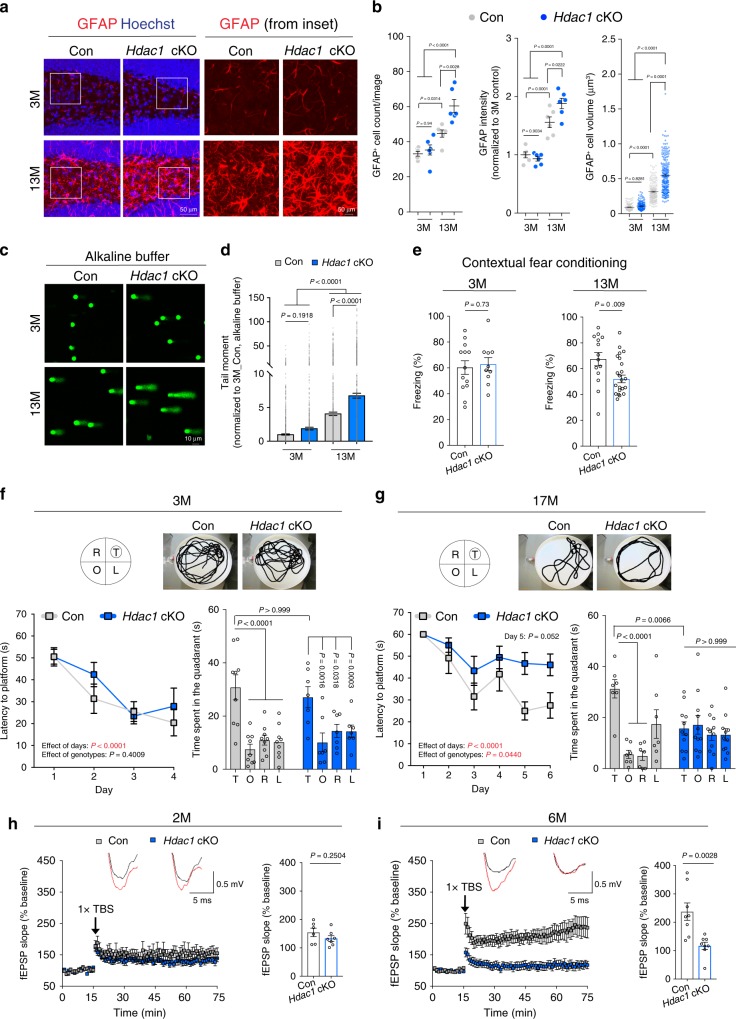
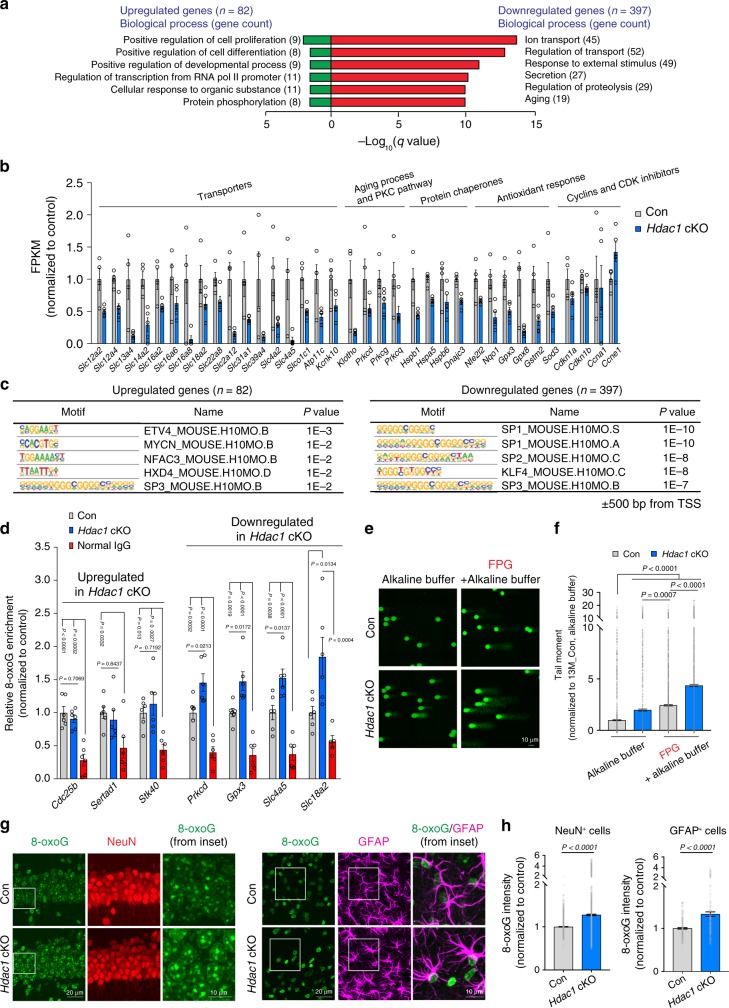
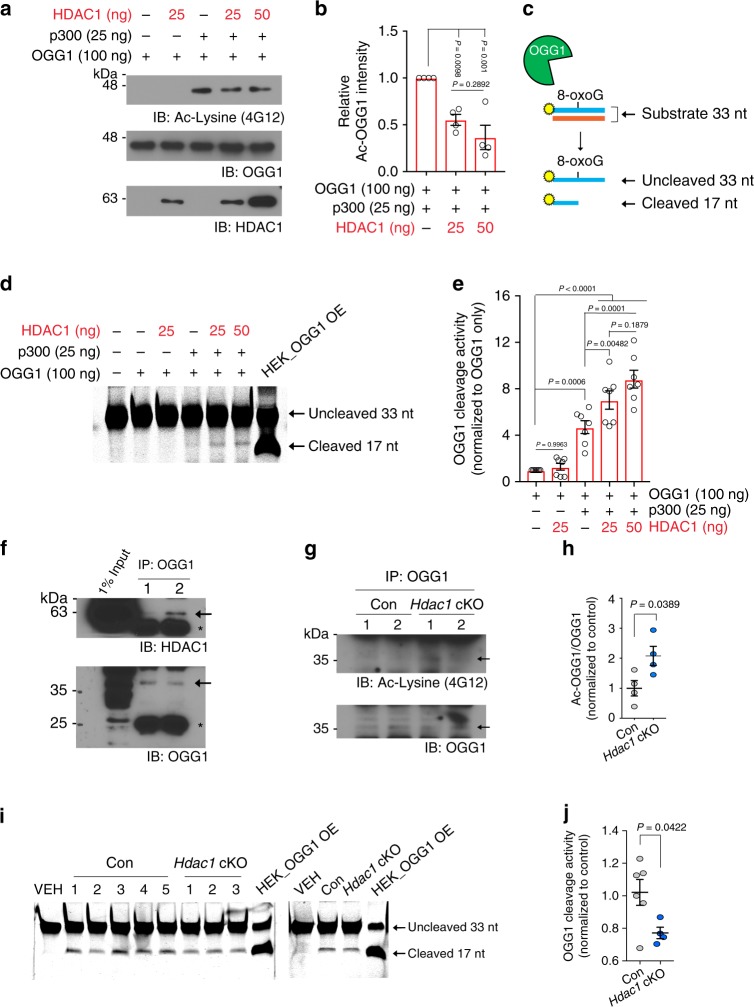
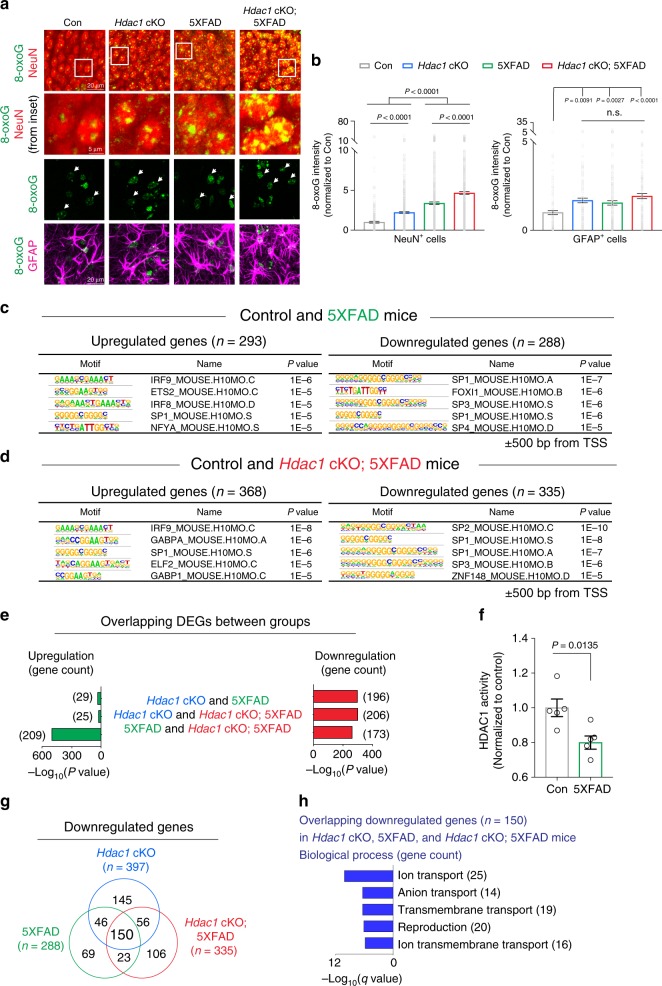
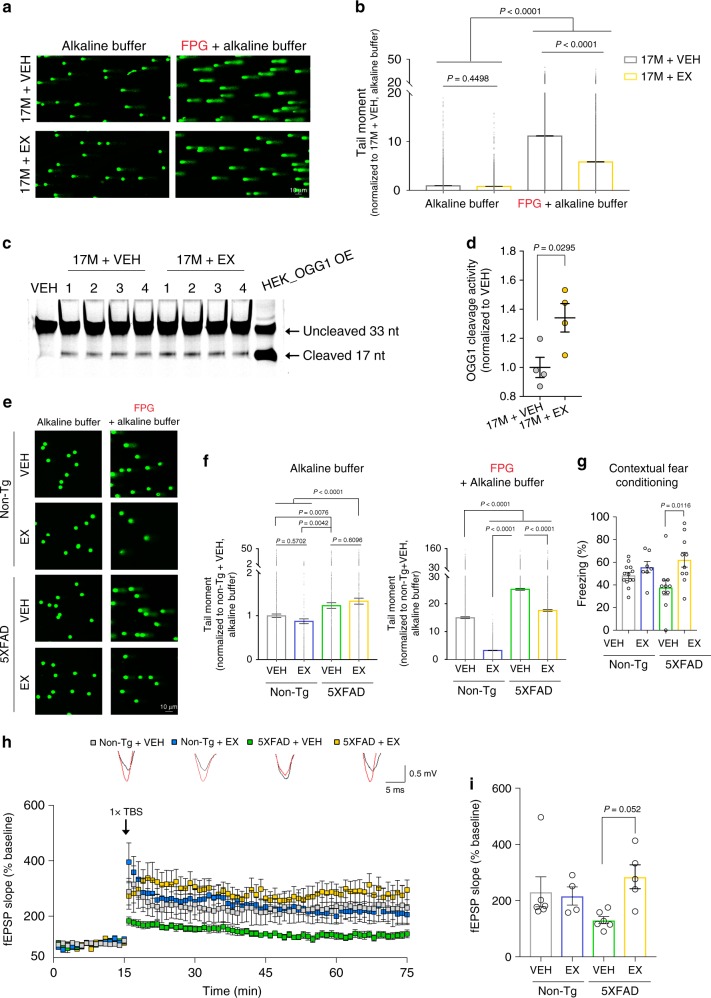
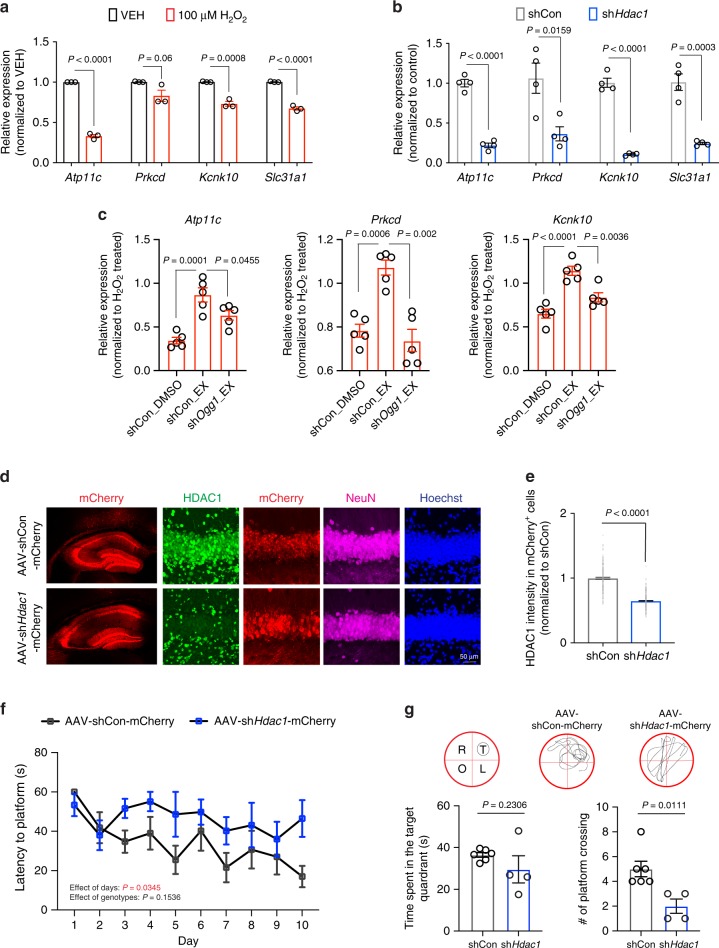
DNA damage contributes to brain aging and neurodegenerative diseases. However, the factors stimulating DNA repair to stave off functional decline remain obscure. We show that HDAC1 modulates OGG1-initated 8-oxoguanine (8-oxoG) repair in the brain. HDAC1-deficient mice display age-associated DNA damage accumulation and cognitive impairment. HDAC1 stimulates OGG1, a DNA glycosylase known to remove 8-oxoG lesions that are associated with transcriptional repression. HDAC1 deficiency causes impaired OGG1 activity, 8-oxoG accumulation at the promoters of genes critical for brain function, and transcriptional repression. Moreover, we observe elevated 8-oxoG along with reduced HDAC1 activity and downregulation of a similar gene set in the 5XFAD mouse model of Alzheimer's disease. Notably, pharmacological activation of HDAC1 alleviates the deleterious effects of 8-oxoG in aged wild-type and 5XFAD mice. Our work uncovers important roles for HDAC1 in 8-oxoG repair and highlights the therapeutic potential of HDAC1 activation to counter functional decline in brain aging and neurodegeneration.
Overview
The claims and statistics of this paper haven’t been checked yet.
Run the check — free, no account needed. It reads the open-access text and checks the sources it cites.
Integrity signals
Registry
Cites
Statistics
Figures
Verification
Claims the paper makes
The claims and statistics of this paper haven’t been checked yet.
Run the check — free, no account needed. It reads the open-access text and checks the sources it cites.
Claims other papers make about this one
Each is checked against this paper’s own text: does it say what the citing paper says it does?
The cited source says what the claim attributes to it.
In the citing paper
“uncovering important roles for HDAC1 in 8-oxoG repair and highlights the therapeutic potential of HDAC1 activation to counteract the functional decline in brain aging and neurodegeneration [126].”
From Role of Oxidative Damage in Alzheimer’s Disease and Neurodegeneration: From Pathogenic Mechanisms to Biomarker Discovery (2021) · cites this paper as [126]
In the citing paper
“HDAC1-deficient mice show DNA damage accumulation and cognitive impairment during aging [126].”
From Role of Oxidative Damage in Alzheimer’s Disease and Neurodegeneration: From Pathogenic Mechanisms to Biomarker Discovery (2021) · cites this paper as [126]
In the citing paper
“the report of Pao et al. 2021 shows that histone deacetylase (HDAC)1 modulates OGG1-initated 8-oxoguanine (8-oxoG) repair in the brain [126].”
From Role of Oxidative Damage in Alzheimer’s Disease and Neurodegeneration: From Pathogenic Mechanisms to Biomarker Discovery (2021) · cites this paper as [126]
In the citing paper
“this work showed elevated 8-oxoG along with reduced HDAC1 activity and downregulation of a gene set critical for brain function in the 5XFAD mouse model of AD”
From Role of Oxidative Damage in Alzheimer’s Disease and Neurodegeneration: From Pathogenic Mechanisms to Biomarker Discovery (2021) · cites this paper as [126]
Self-check
Percentages, sums and reported differences re-computed from the paper’s own numbers.
The self-check needs the paper’s full text.
Citations
Cites
Subramanian, A., Tamayo, P., Mootha, V. K., Mukherjee, S., Ebert, B. L., Gillette, M. A., Paulovich, A., Pomeroy, S. L., Golub, T. R., Lander, E. S., et al. (2005) · Proceedings of the National Academy of Sciences · doi:10.1073/pnas.0506580102 · Cited by 53,625
López-Otín, C., Blasco, M. A., Partridge, L., Serrano, M., & Kroemer, G. (2013) · Cell · doi:10.1016/j.cell.2013.05.039 · Cited by 14,982
Heinz, S., Benner, C., Spann, N., Bertolino, E., Lin, Y. C., Laslo, P., Cheng, J. X., Murre, C., Singh, H., & Glass, C. K. (2010) · Molecular Cell · doi:10.1016/j.molcel.2010.05.004 · Cited by 13,382
Mootha, V. K., Lindgren, C. M., Eriksson, K.-F., Subramanian, A., Sihag, S., Lehar, J., Puigserver, P., Carlsson, E., Ridderstråle, M., Laurila, E., et al. (2003) · Nature Genetics · doi:10.1038/ng1180 · Cited by 10,197
Morris water maze: procedures for assessing spatial and related forms of learning and memory
Vorhees, C. V., & Williams, M. T. (2006) · Nature Protocols · doi:10.1038/nprot.2006.116 · Cited by 4,629
Mutation of the mouse klotho gene leads to a syndrome resembling ageing
Kuro-o, M., Matsumura, Y., Aizawa, H., Kawaguchi, H., Suga, T., Utsugi, T., Ohyama, Y., Kurabayashi, M., Kaname, T., Kume, E., et al. (1997) · Nature · doi:10.1038/36285 · Cited by 3,837
Oakley, H., Cole, S. L., Logan, S., Maus, E., Shao, P., Craft, J., Guillozet-Bongaarts, A., Ohno, M., Disterhoft, J., Van Eldik, L., et al. (2006) · The Journal of Neuroscience · doi:10.1523/jneurosci.1202-06.2006 · Cited by 3,530
Uttara, B., Singh, A., Zamboni, P., & Mahajan, R. (2009) · Current Neuropharmacology · doi:10.2174/157015909787602823 · Cited by 3,378
The Comet Assay for DNA Damage and Repair: Principles, Applications, and Limitations
Collins, A. R. (2004) · Molecular Biotechnology · doi:10.1385/mb:26:3:249 · Cited by 2,892
Hoeijmakers, J. H. J. (2009) · New England Journal of Medicine · doi:10.1056/nejmra0804615 · Cited by 2,239
Erasers of Histone Acetylation: The Histone Deacetylase EnzymesPreprint
Seto, E., & Yoshida, M. (2014) · Cold Spring Harbor Perspectives in Biology · doi:10.1101/cshperspect.a018713 · Cited by 2,105
Suppression of Aging in Mice by the Hormone Klotho
Kurosu, H., Yamamoto, M., Clark, J. D., Pastor, J. V., Nandi, A., Gurnani, P., McGuinness, O. P., Chikuda, H., Yamaguchi, M., Kawaguchi, H., et al. (2005) · Science · doi:10.1126/science.1112766 · Cited by 1,935
Gene regulation and DNA damage in the ageing human brain
Lu, T., Pan, Y., Kao, S.-Y., Li, C., Kohane, I., Chan, J., & Yankner, B. A. (2004) · Nature · doi:10.1038/nature02661 · Cited by 1,874
Disruption of the glucocorticoid receptor gene in the nervous system results in reduced anxiety
Tronche, F., Kellendonk, C., Kretz, O., Gass, P., Anlag, K., Orban, P. C., Bock, R., Klein, R., & Schütz, G. (1999) · Nature Genetics · doi:10.1038/12703 · Cited by 1,841
Chan, K. Y., Jang, M. J., Yoo, B. B., Greenbaum, A., Ravi, N., Wu, W.-L., Sánchez-Guardado, L., Lois, C., Mazmanian, S. K., Deverman, B. E., et al. (2017) · Nature Neuroscience · doi:10.1038/nn.4593 · Cited by 1,578
Endogenous DNA damage as a source of genomic instability in cancer
Tubbs, A., & Nussenzweig, A. (2017) · Cell · doi:10.1016/j.cell.2017.01.002 · Cited by 1,452
Krokan, H. E., & Bjoras, M. (2013) · Cold Spring Harbor Perspectives in Biology · doi:10.1101/cshperspect.a012583 · Cited by 1,322
Base-excision repair of oxidative DNA damage
David, S. S., O'Shea, V. L., & Kundu, S. (2007) · Nature · doi:10.1038/nature05978 · Cited by 1,238
DNA Base Damage by Reactive Oxygen Species, Oxidizing Agents, and UV Radiation
Cadet, J., & Wagner, J. R. (2013) · Cold Spring Harbor Perspectives in Biology · doi:10.1101/cshperspect.a012559 · Cited by 903
Does oxidative damage to DNA increase with age?
Hamilton, M. L., Van Remmen, H., Drake, J. A., Yang, H., Guo, Z. M., Kewitt, K., Walter, C. A., & Richardson, A. (2001) · Proceedings of the National Academy of Sciences · doi:10.1073/pnas.171202698 · Cited by 768
Essential function of histone deacetylase 1 in proliferation control and CDK inhibitor repression
Lagger, G., O'Carroll, D., Rembold, M., Khier, H., Tischler, J., Weitzer, G., Schuettengruber, B., Hauser, C., Brunmeir, R., Jenuwein, T., et al. (2002) · The EMBO Journal · doi:10.1093/emboj/21.11.2672 · Cited by 760
Astrocyte function from information processing to cognition and cognitive impairment
Santello, M., Toni, N., & Volterra, A. (2019) · Nature Neuroscience · doi:10.1038/s41593-018-0325-8 · Cited by 737
Histone deacetylases 1 and 2 redundantly regulate cardiac morphogenesis, growth, and contractilityPreprint
Montgomery, R. L., Davis, C. A., Potthoff, M. J., Haberland, M., Fielitz, J., Qi, X., Hill, J. A., Richardson, J. A., & Olson, E. N. (2007) · Genes & Development · doi:10.1101/gad.1563807 · Cited by 716
The aging astrocyte transcriptome from multiple regions of the mouse brain.
Boisvert, M. M., Erikson, G. A., Shokhirev, M. N., & Allen, N. J. (2018) · Cell Reports · doi:10.1016/j.celrep.2017.12.039 · Cited by 702
DNA damage and its links to neurodegeneration
Madabhushi, R., Pan, L., & Tsai, L.-H. (2014) · Neuron · doi:10.1016/j.neuron.2014.06.034 · Cited by 654
Aging and neurodegeneration are associated with increased mutations in single human neurons
Lodato, M. A., Rodin, R. E., Bohrson, C. L., Coulter, M. E., Barton, A. R., Kwon, M., Sherman, M. A., Vitzthum, C. M., Luquette, L. J., Yandava, C. N., et al. (2018) · Science · doi:10.1126/science.aao4426 · Cited by 635
Human HDAC1 and HDAC2 function in the DNA-damage response to promote DNA nonhomologous end-joining
Miller, K. M., Tjeertes, J. V., Coates, J., Legube, G., Polo, S. E., Britton, S., & Jackson, S. P. (2010) · Nature Structural & Molecular Biology · doi:10.1038/nsmb.1899 · Cited by 629
A chaperome subnetwork safeguards proteostasis in aging and neurodegenerative disease
Brehme, M., Voisine, C., Rolland, T., Wachi, S., Soper, J. H., Zhu, Y., Orton, K., Villella, A., Garza, D., Vidal, M., et al. (2014) · Cell Reports · doi:10.1016/j.celrep.2014.09.042 · Cited by 584
Fang, E. F., Kassahun, H., Croteau, D. L., Scheibye-Knudsen, M., Marosi, K., Lu, H., Shamanna, R. A., Kalyanasundaram, S., Bollineni, R. C., Wilson, M. A., et al. (2016) · Cell Metabolism · doi:10.1016/j.cmet.2016.09.004 · Cited by 575
The road to restoring neural circuits for the treatment of Alzheimer's disease
Canter, R. G., Penney, J., & Tsai, L.-H. (2016) · Nature · doi:10.1038/nature20412 · Cited by 565
Self-citationPremature Aging in Mice Deficient in DNA Repair and Transcription
de Boer, J., Andressoo, J. O., de Wit, J., Huijmans, J., Beems, R. B., van Steeg, H., Weeda, G., van der Horst, G. T. J., van Leeuwen, W., Themmen, A. P. N., et al. (2002) · Science · doi:10.1126/science.1070174 · Cited by 545
Increased Nuclear DNA Oxidation in the Brain in Alzheimer's Disease
Gabbita, S. P., Lovell, M. A., & Markesbery, W. R. (1998) · Journal of Neurochemistry · doi:10.1046/j.1471-4159.1998.71052034.x · Cited by 479
Hou, Y., Lautrup, S., Cordonnier, S., Wang, Y., Croteau, D. L., Zavala, E., Zhang, Y., Moritoh, K., O’Connell, J. F., Baptiste, B. A., et al. (2018) · Proceedings of the National Academy of Sciences · doi:10.1073/pnas.1718819115 · Cited by 472
Interaction of FUS and HDAC1 regulates DNA damage response and repair in neurons
Wang, W., Pan, L., Su, S. C., Quinn, E. J., Sasaki, M., Jimenez, J., Mackenzie, I. R., Huang, E. J., & Tsai, L. (2013) · Nature Neuroscience · doi:10.1038/nn.3514 · Cited by 467
Astrocytes in Neurodegenerative Disease: Table 1.
Phatnani, H., & Maniatis, T. (2015) · Cold Spring Harbor Perspectives in Biology · doi:10.1101/cshperspect.a020628 · Cited by 420
Hill, J. W. (2001) · Nucleic Acids Research · doi:10.1093/nar/29.2.430 · Cited by 416
DNA glycosylases: In DNA repair and beyond
Jacobs, A. L., & Schär, P. (2012) · Chromosoma · doi:10.1007/s00412-011-0347-4 · Cited by 407
Analysis and update of the human solute carrier (SLC) gene superfamily
He, L., Vasiliou, K., & Nebert, D. W. (2009) · Human Genomics · doi:10.1186/1479-7364-3-2-195 · Cited by 348
Aasland, R., Stewart, A. F., & Gibson, T. J. (1996) · Trends in Biochemical Sciences · doi:10.1016/s0968-0004(96)30009-1 · Cited by 334
Biological roles and mechanistic actions of co-repressor complexes
Jepsen, K., & Rosenfeld, M. G. (2002) · Journal of Cell Science · doi:10.1242/jcs.115.4.689 · Cited by 322
Nagai, T., Yamada, K., Kim, H., Kim, Y., Noda, Y., Imura, A., Nabeshima, Y., & Nabeshima, T. (2002) · The FASEB Journal · doi:10.1096/fj.02-0448fje · Cited by 318
Deregulation of HDAC1 by p25/Cdk5 in Neurotoxicity
Kim, D., Frank, C. L., Dobbin, M. M., Tsunemoto, R. K., Tu, W., Peng, P. L., Guan, J.-S., Lee, B.-H., Moy, L. Y., Giusti, P., et al. (2008) · Neuron · doi:10.1016/j.neuron.2008.10.015 · Cited by 286
Cued and Contextual Fear Conditioning for Rodents
Rustay, N. R., Browman, K. E., & Curzon, P. (2008) · Frontiers in neuroscience · doi:10.1201/noe1420052343.ch2 · Cited by 254
SIRT1 collaborates with ATM and HDAC1 to maintain genomic stability in neurons
Dobbin, M. M., Madabhushi, R., Pan, L., Chen, Y., Kim, D., Gao, J., Ahanonu, B., Pao, P.-C., Qiu, Y., Zhao, Y., et al. (2013) · Nature Neuroscience · doi:10.1038/nn.3460 · Cited by 250
The roles of protein kinases in learning and memoryPreprint
Giese, K.-P., & Mizuno, K. (2013) · Learning & Memory · doi:10.1101/lm.028449.112 · Cited by 238
A Back-up Glycosylase in Nth1 Knock-out Mice Is a Functional Nei (Endonuclease VIII) Homologue
Takao, M., Kanno, S., Kobayashi, K., Zhang, Q.-M., Yonei, S., van der Horst, G. T. J., & Yasui, A. (2002) · Journal of Biological Chemistry · doi:10.1074/jbc.m206884200 · Cited by 226
Cheng, Y., Ren, X., Gowda, A. S., Shan, Y., Zhang, L., Yuan, Y.-S., Patel, R., Wu, H., Huber-Keener, K., Yang, J. W., et al. (2013) · Cell Death & Disease · doi:10.1038/cddis.2013.254 · Cited by 205
Astrocyte lipid metabolism is critical for synapse development and function in vivo
van Deijk, A. F., Camargo, N., Timmerman, J., Heistek, T., Brouwers, J. F., Mogavero, F., Mansvelder, H. D., Smit, A. B., & Verheijen, M. H. G. (2017) · Glia · doi:10.1002/glia.23120 · Cited by 201
DNA repair in species with extreme lifespan differences
MacRae, S. L., Croken, M. M., Calder, R. B., Aliper, A. M., Milholland, B., White, R. R., Zhavoronkov, A. A., Gladyshev, V. N., Seluanov, A., Gorbunova, V. A., et al. (2015) · Aging · doi:10.18632/aging.100866 · Cited by 198
Bhakat, K. K., Mokkapati, S. K., Boldogh, I. R., Hazra, T. K., & MITRA, S. P. (2006) · Molecular and Cellular Biology · doi:10.1128/mcb.26.5.1654-1665.2006 · Cited by 182
Na+ and K+ ion imbalances in Alzheimer's disease
Vitvitsky, V., Garg, S. K., Keep, R. F., Albin, R. L., & Banerjee, R. V. (2012) · Biochimica et Biophysica Acta (BBA) - Molecular Basis of Disease · doi:10.1016/j.bbadis.2012.07.004 · Cited by 170
DNA strand breaks in Alzheimer’s disease
Adamec, E., Vonsattel, J. P., & Nixon, R. A. (1999) · Brain Research · doi:10.1016/s0006-8993(99)02004-1 · Cited by 167
Zhang, Q., Ma, C., Gearing, M., Wang, P. G., Chin, L.-S., & Li, L. (2018) · Acta Neuropathologica Communications · doi:10.1186/s40478-018-0524-2 · Cited by 165
Effect of oxidative DNA damage in promoter elements on transcription factor binding
Ghosh, R., & Mitchell, D. L. (1999) · Nucleic Acids Research · doi:10.1093/nar/27.15.3213 · Cited by 152
DNA polymerase β deficiency leads to neurodegeneration and exacerbates Alzheimer disease phenotypes
Sýkora, P., Misiak, M., Wang, Y., Ghosh, S., Leandro, G. D. S., Liu, D., Tian, J. Y., Baptiste, B. A., Cong, W., Brenerman, B. M., et al. (2014) · Nucleic Acids Research · doi:10.1093/nar/gku1356 · Cited by 140
Accelerated Age-Related Cognitive Decline and Neurodegeneration, Caused by Deficient DNA Repair
Borgesius, N. Z., de Waard, M. C., van der Pluijm, I., Omrani, A., Zondag, G. C. M., van der Horst, G. T. J., Melton, D. W., Hoeijmakers, J. H. J., Jaarsma, D., & Elgersma, Y. (2011) · Journal of Neuroscience · doi:10.1523/jneurosci.1589-11.2011 · Cited by 134
VanGuilder, H. D., Bixler, G. V., Brucklacher, R. M., Farley, J. A., Yan, H., Warrington, J. P., Sonntag, W. E., & Freeman, W. M. (2011) · Journal of Neuroinflammation · doi:10.1186/1742-2094-8-138 · Cited by 132
DNA end joining activity is reduced in Alzheimer's disease
Shackelford, D. A. (2005) · Neurobiology of Aging · doi:10.1016/j.neurobiolaging.2005.03.009 · Cited by 124
Shah, A., Gray, K., Figg, N., Finigan, A., Starks, L., & Bennett, M. (2018) · Circulation · doi:10.1161/circulationaha.117.033249 · Cited by 121
Deficiency of the Mre11 DNA repair complex in Alzheimer's disease brains
Jacobsen, E. A., Beach, T. G., Shen, Y., Li, R., & Chang, Y. (2004) · Molecular Brain Research · doi:10.1016/j.molbrainres.2004.05.023 · Cited by 105
Aasland, R. (1996) · Trends in Biochemical Sciences · doi:10.1016/0968-0004(96)30009-1 · Cited by 95
Du, W., Rani, R., Sipple, J., Schick, J. S., Myers, K. C., Mehta, P. A., Andreassen, P. R., Davies, S. M., & Pang, Q. (2012) · Blood · doi:10.1182/blood-2011-09-381970 · Cited by 68
Lonstein, J. S., & Vries, G. J. D. (2001) · Journal of comparative psychology · doi:10.1037/0735-7036.115.1.53 · Cited by 55
Aging and Synaptic Plasticity: A Review
Bergado, J. A., & Almaguer, W. (2002) · Neural Plasticity · doi:10.1155/np.2002.217 · Cited by 55
French, L., Ma, T., Oh, H., Tseng, G. C., & Sibille, E. L. (2017) · Frontiers in Aging Neuroscience · doi:10.3389/fnagi.2017.00162 · Cited by 46
Porsolt, R. D., Len�gre, A., Avril, I., & Doumont, G. (1988) · Psychopharmacology · doi:10.1007/bf00181936 · Cited by 35
Patnaik, D., Pao, P., Zhao, W., Silva, M. C., Hylton, N. K., Chindavong, P. S., Pan, L., Tsai, L., & Haggarty, S. J. (2021) · ACS Chemical Neuroscience · doi:10.1021/acschemneuro.0c00308 · Cited by 35
Transcription Factors and DNA Repair Enzymes Compete for Damaged Promoter Sites
Moore, S. P. G., Kruchten, J., Toomire, K. J., & Strauss, P. R. (2016) · Journal of Biological Chemistry · doi:10.1074/jbc.m115.672733 · Cited by 28
The effects of exifone, a new agent for senile memory disorder, on two models of memory in the mouse
Porsolt, R. D., Lenègre, A., Avril, I., Stéru, L., & Doumont, G. (1987) · Pharmacology Biochemistry and Behavior · doi:10.1016/0091-3057(87)90567-3 · Cited by 19
RANDOMIZED, DOUBLE‐BLIND TRIAL OF EXIFONE VERSUS COGNITIVE PROBLEMS IN PARKINSON'S DISEASE
Allain, H., DENMAT, J., Bentué‐Ferrer, D., Milon, D., PIGNOL, P., Reymann, J., PAPE, D., Sabouraud, O., & DRIESSCHE, J. V. D. (1988) · Fundamental and Clinical Pharmacology · doi:10.1111/j.1472-8206.1988.tb00615.x · Cited by 17
Fluorescent oligonucleotides can serve as suitable alternatives to radiolabeled oligonucleotides.
Ballal, R. D., Cheema, A. K., Ahmad, W., Rosen, E. M., & Saha, T. (2009) · PubMed Central · Cited by 13
Examining the Role of HDACs in DNA Double-Strand Break Repair in Neurons
Pao, P., Penney, J., & Tsai, L. (2019) · Methods in molecular biology · doi:10.1007/978-1-4939-9434-2_13 · Cited by 4
Research works printed but not linked: 1
- Piette, F. et al. Effets de I'exifone sur les troubles mnesiques, le comportement et al dépendance de malades atteints de démence sénile de type Alzheimer. Rev. Gériatr 11, 375–378 (1986).
Cited by
Sorted by citations
Redox regulation: mechanisms, biology and therapeutic targets in diseases
Li, B., Ming, H., Qin, S., Nice, E. C., Dong, J., Du, Z., & Huang, C. (2025) · Signal Transduction and Targeted Therapy · doi:10.1038/s41392-024-02095-6 · Cited by 389
Wang, Y., Cheng, H., Wang, T., Zhang, K., Zhang, Y., & Kang, X. (2023) · Cell Proliferation · doi:10.1111/cpr.13448 · Cited by 243
Somatic genomic changes in single Alzheimer’s disease neurons
Miller, M. B., Huang, A. Y., Kim, J., Zhou, Z., Kirkham, S. L., Maury, E. A., Ziegenfuss, J. S., Reed, H. C., Neil, J. E., Rento, L., et al. (2022) · Nature · doi:10.1038/s41586-022-04640-1 · Cited by 223
Spaas, J., van Veggel, L., Schepers, M., Tiane, A., van Horssen, J., Wilson, D. M., Moya, P. R., Piccart, E., Hellings, N., Eijnde, B. O., et al. (2021) · Cellular and Molecular Life Sciences · doi:10.1007/s00018-021-03802-0 · Cited by 224
Jenke, R., Reßing, N., Hansen, F. K., Aigner, A. M., & Büch, T. (2021) · Cancers · doi:10.3390/cancers13040634 · Cited by 198
Metadata
- Authors
- Pao, P.-C., Patnaik, D., Watson, L. A., Gao, F., Pan, L., Wang, J., Adaikkan, C., Penney, J., Cam, H. P., Huang, W.-C., Pantano, L., Lee, A., Nott, A., Phan, T. X., Gjoneska, E., Elmsaouri, S., Haggarty, S. J., & Tsai, L.-H.
- Affiliations
- Massachusetts Institute of Technology (US)
- Harvard University (US)
- California Institute of Technology (US)
- University of California San Diego (US)
- National Institutes of Health (US)
- Corresponding author
- Tsai, Li-Huei
- ORCID
- Venue
- Nature Communications
- Published
- 2020-05-18
- Volume
- 11
- Issue
- 1
- Pages
- 2484-2484
- ISSN
- 2041-1723 (ISSN-L)
- PMC
- PMC7235043
- OpenAlex
- W3025772309
- Cited by
- 216
- References
- 72
- Citations by year
- 2026: 25 · 2025: 45 · 2024: 38 · 2023: 37 · 2022: 41 · 2021: 23 · 2020: 7
- FWCI
- 8.92
- Type
- journal article
- Language
- en
- Open access
- gold
- doi.org
- Locations
- Nature Communications (publishedVersion, cc-by)
- PubMed Central (publishedVersion, cc-by)
- PubMed (publishedVersion)
- CaltechAUTHORS (California Institute of Technology) (submittedVersion, cc-by)
- RePEc: Research Papers in Economics (submittedVersion)
- DOAJ (DOAJ: Directory of Open Access Journals) (submittedVersion, cc-by-sa)
- DSpace@MIT (Massachusetts Institute of Technology) (submittedVersion, cc-by-nc)
- IslandScholar (University of Prince Edward Island) (submittedVersion, cc-by)
- Funders
- U.S. Department of Health & Human Services | NIH | National Institute on Aging (AG046174)
- U.S. Department of Health & Human Services | NIH | National Institute of Neurological Disorders and Stroke (NS102730)
- Glenn Foundation for Medical Research
- Topics
- Life Sciences › Biochemistry, Genetics and Molecular Biology › Molecular Biology › DNA Repair Mechanisms
- Life Sciences › Biochemistry, Genetics and Molecular Biology › Molecular Biology › Epigenetics and DNA Methylation
- Life Sciences › Biochemistry, Genetics and Molecular Biology › Molecular Biology › Histone Deacetylase Inhibitors Research
- Keywords
- HDAC1, OGG1, 8-oxoguanine, oxidative DNA damage repair, brain aging, Alzheimer's disease, DNA glycosylase, transcriptional repression, cognitive impairment, 5xFAD mice, neurodegeneration, DNA damage accumulation
- MeSH terms
- Acetylation, Aging, Alzheimer Disease, Animals, Astrocytes, Base Sequence, Benzophenones, Brain, Cognition, Cognition Disorders, DNA Damage, Guanine, Memory, Mice, Inbred C57BL, Neurons, Promoter Regions, Genetic, Down-Regulation, Mice, Knockout, Oxidative Stress, DNA Glycosylases, Histone Deacetylase 1, Gene Ontology
About these checks
Registry, retraction, Cites and statistics results are computed, not judged, with one exception: a printed reference that no index lists is read once by a model before it counts as a citation error. Claims are extracted by a model and kept only when their quote appears verbatim in the text; each cited source is then checked, with a model’s help, for whether it says what the claim relies on. Those verdicts can be wrong — read the claim’s quote and the cited source before relying on one.
Statistics and arithmetic are recomputed, not judged.
Confidence bands are shown only for fields calibrated on our annotated test set. None is calibrated yet, so no band is shown.
What counts as a claim ›How we measure confidence ›How we check this ›
Are you an author, or do you see a problem with this page? Request a review
