

Comparison of methods and resources for cell-cell communication inference from single-cell RNA-Seq data
Open accessPublished version of a preprint
The DOI matches its Crossref record; 105 of the 105 references it cites were found in a registry or an index.
Abstract
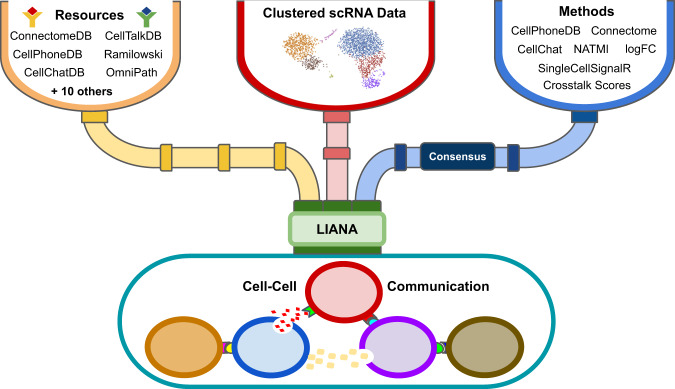
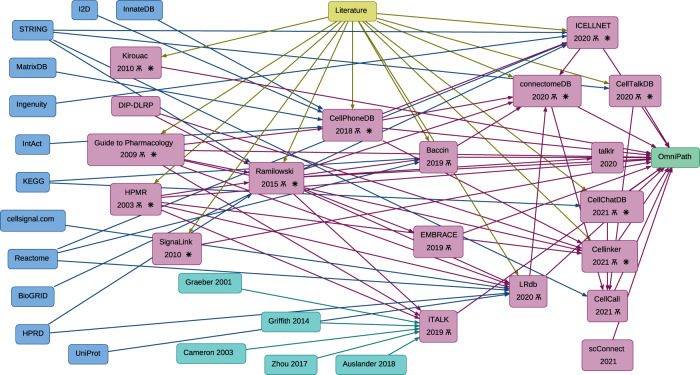
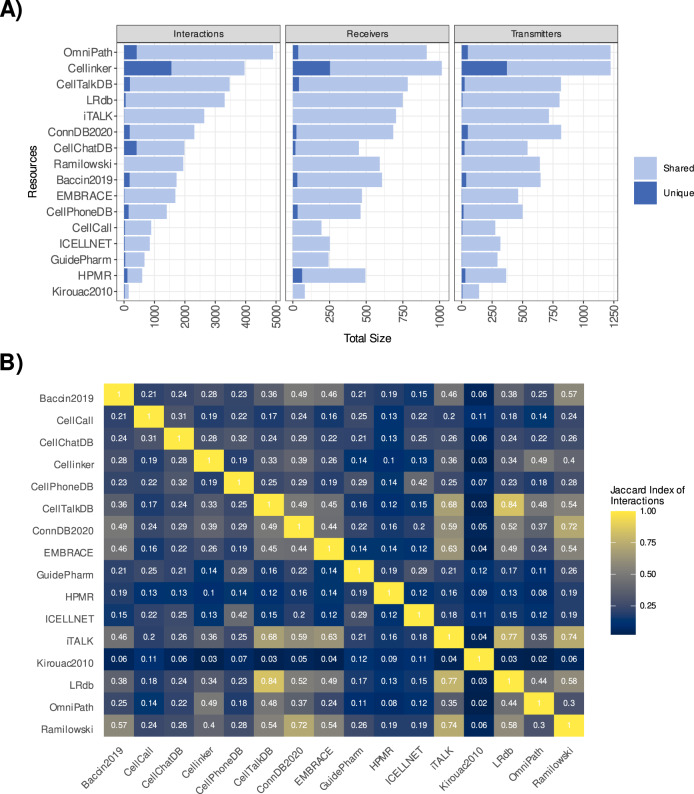
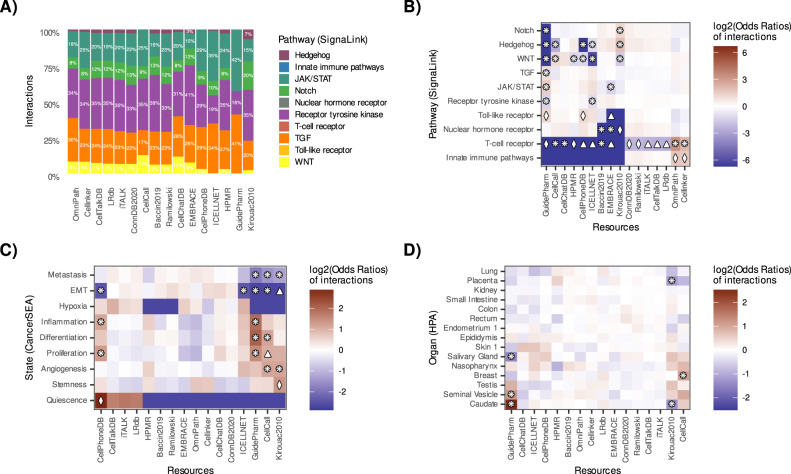
The growing availability of single-cell data, especially transcriptomics, has sparked an increased interest in the inference of cell-cell communication. Many computational tools were developed for this purpose. Each of them consists of a resource of intercellular interactions prior knowledge and a method to predict potential cell-cell communication events. Yet the impact of the choice of resource and method on the resulting predictions is largely unknown. To shed light on this, we systematically compare 16 cell-cell communication inference resources and 7 methods, plus the consensus between the methods’ predictions. Among the resources, we find few unique interactions, a varying degree of overlap, and an uneven coverage of specific pathways and tissue-enriched proteins. We then examine all possible combinations of methods and resources and show that both strongly influence the predicted intercellular interactions. Finally, we assess the agreement of cell-cell communication methods with spatial colocalisation, cytokine activities, and receptor protein abundance and find that predictions are generally coherent with those data modalities. To facilitate the use of the methods and resources described in this work, we provide LIANA, a LIgand-receptor ANalysis frAmework as an open-source interface to all the resources and methods.
Overview
The claims and statistics of this paper haven’t been checked yet.
Free: it reads the open-access text and checks the first 5 claims that cite a source we can check. Create a free account to check every claim.
Integrity signals
Registry
Cites
Statistics
Figures
Verification
Claims the paper makes
The claims and statistics of this paper haven’t been checked yet.
Free: it reads the open-access text and checks the first 5 claims that cite a source we can check. Create a free account to check every claim.
Claims other papers make about this one
Each is checked against this paper’s own text: does it say what the citing paper says it does?
The source backs part of the claim, not all of it — or backs it for a different population, condition or comparison.
In the citing paper
“Among these, LIgand-receptor ANalysis framework (LIANA) consolidates outputs from several inference algorithms to provide a consensus, high-confidence readout of CCC interactions [14].”
From Quantitative profiling of lifespan-dependent cell-cell communication potential reveals dynamic ligand-receptor network shifts across mouse tissues (2026) · cites this paper as [14]
Experimental — accuracy not yet measuredThe source backs part of the claim, not all of it — or backs it for a different population, condition or comparison.
In the citing paper
“The ‘lr_mean’ metric, obtained from the LIANA framework [14], quantifies the average expression level of ligand and receptor genes across interacting cell types and is derived directly from single-cell RNA sequencing data.”
From Quantitative profiling of lifespan-dependent cell-cell communication potential reveals dynamic ligand-receptor network shifts across mouse tissues (2026) · cites this paper as [14]
Experimental — accuracy not yet measuredThe cited source says what the claim attributes to it.
In the citing paper
“CellChat127 and CellPhoneDB128, which also consider heteromeric interaction complexes, and SingleCellSignalR129 were found to be robust to both data and resource noise126.”
From Best practices for single-cell analysis across modalities (2023) · cites this paper as [126]
The cited source says what the claim attributes to it.
In the citing paper
“These databases were found to be biased towards specific pathways, functional categories and tissue-enriched proteins126.”
From Best practices for single-cell analysis across modalities (2023) · cites this paper as [126]
The cited source says what the claim attributes to it.
In the citing paper
“While LIANA systematically scores LR interactions present in a given dataset, it does not explicitly quantify directional changes or network-level expansions and contractions across states or stages.”
From Quantitative profiling of lifespan-dependent cell-cell communication potential reveals dynamic ligand-receptor network shifts across mouse tissues (2026) · cites this paper as [14]
5 more claims about this paper
Create a free account to see every claim other papers make about this one.
Self-check
Percentages, sums and reported differences re-computed from the paper’s own numbers.
The self-check needs the paper’s full text.
Citations
Cites
KEGG: Kyoto Encyclopedia of Genes and Genomes
Kanehisa, M. (2000) · Nucleic Acids Research · doi:10.1093/nar/28.1.27 · Cited by 37,077
KEGG: Kyoto Encyclopedia of Genes and Genomes
Ogata, H., Goto, S., Sato, K., Fujibuchi, W., Bono, H., & Kanehisa, M. (1999) · Nucleic Acids Research · doi:10.1093/nar/27.1.29 · Cited by 31,232
Tissue-based map of the human proteome
Uhlén, M., Fagerberg, L., Hallström, B. M., Lindskog, C., Oksvold, P., Mardinoglu, A., Sivertsson, Å., Kampf, C., Sjöstedt, E., Asplund, A., et al. (2015) · Science · doi:10.1126/science.1260419 · Cited by 15,286
Integrating single-cell transcriptomic data across different conditions, technologies, and species
Butler, A., Hoffman, P., Smibert, P., Papalexi, E., & Satija, R. (2018) · Nature Biotechnology · doi:10.1038/nbt.4096 · Cited by 13,174
Complex heatmaps reveal patterns and correlations in multidimensional genomic data
Gu, Z., Eils, R., & Schlesner, M. (2016) · Bioinformatics · doi:10.1093/bioinformatics/btw313 · Cited by 10,034
SCANPY: large-scale single-cell gene expression data analysis
Wolf, F. A., Angerer, P., & Theis, F. J. (2018) · Genome Biology · doi:10.1186/s13059-017-1382-0 · Cited by 8,881
Inference and analysis of cell-cell communication using CellChat
Jin, S., Guerrero-Juarez, C. F., Zhang, L., Chang, I., Ramos, R., Kuan, C.-H., Myung, P., Plikus, M. V., & Nie, Q. (2021) · Nature Communications · doi:10.1038/s41467-021-21246-9 · Cited by 8,409
Spatial reconstruction of single-cell gene expression data
Satija, R., Farrell, J. A., Gennert, D., Schier, A. F., & Regev, A. (2015) · Nature Biotechnology · doi:10.1038/nbt.3192 · Cited by 7,055
Szklarczyk, D., Morris, J. H., Cook, H., Kuhn, M., Wyder, S., Simonovic, M., Santos, A., Doncheva, N. T., Roth, A., Bork, P., et al. (2017) · Nucleic Acids Research · doi:10.1093/nar/gkw937 · Cited by 6,980
UniProt: the universal protein knowledgebase in 2021
The UniProt Consortium, Bateman, A., Martin, M.-J., Orchard, S., Magrane, M., Agivetova, R., Ahmad, S., Alpi, E., Bowler-Barnett, E. H., Britto, R., et al. (2021) · Nucleic Acids Research · doi:10.1093/nar/gkaa1100 · Cited by 6,372
Cited by
Items 201–300 of 775
Hough, R. F., Alvira, C. M., Bastarache, J. A., ERZURUM, S. C., Kuebler, W. M., Schmidt, E. P., Shimoda, L. A., Abman, S. H., Alvarez, D. F., Belvitch, P. G., et al. (2024) · American Journal of Respiratory Cell and Molecular Biology · doi:10.1165/rcmb.2024-0330st · Cited by 14
“The transcriptomic response to the binding of ligand-receptor pairs aids in the understanding of endothelial cell – cell communication (92).”
BackgroundscHyper: reconstructing cell–cell communication through hypergraph neural networks
Li, W., Wang, H., Zhao, J., Xia, J., & Sun, X. (2024) · Briefings in Bioinformatics · doi:10.1093/bib/bbae436 · Cited by 16
Matsuda, T., Kono, T., Taki, Y., Sakuma, I., Fujimoto, M., Hashimoto, N., Kawakami, E., Fukuhara, N., Nishioka, H., Inoshita, N., et al. (2024) · iScience · doi:10.1016/j.isci.2024.111068 · Cited by 14
Next‐generation spatial transcriptomics: unleashing the power to gear up translational oncology
Wang, N., Hong, W., Wu, Y., Chen, Z., Bai, M., Wang, W., & Zhu, J. Y. (2024) · MedComm · doi:10.1002/mco2.765 · Cited by 14
“79,80,111,120 intracellular gene–gene interaction-based methods: Nich-eNet and CytoTalk 121,122 and more recently developed COMMOT using collective optimal transport.”
MethodMultiple Sclerosis: Glial Cell Diversity in Time and Space
Kooistra, S. M., & Schirmer, L. (2024) · Glia · doi:10.1002/glia.24655 · Cited by 14
Single-nucleus and spatial landscape of the sub-ventricular zone in human glioblastoma
Licón-Muñoz, Y., Avalos, V., Subramanian, S., Granger, B., Martinez, F. J., García‐Montaño, L. A., Varela, S., Moore, D., Perkins, E., Kogan, M., et al. (2025) · Cell Reports · doi:10.1016/j.celrep.2024.115149 · Cited by 14
Falvo, P., Gruener, S., Orecchioni, S., Pisati, F., Talarico, G., Mitola, G., Lombardi, D., Bravetti, G., Winkler, J., Barozzi, I., et al. (2025) · Cell Death and Differentiation · doi:10.1038/s41418-025-01447-1 · Cited by 14
“We therefore applied ligand-receptor analysis, using a combination of computational methods and their consensus results, implemented in the LIANA framework [34], separately on young and adult cell populations.”
Targeting the disrupted Hippo signaling to prevent neoplastic renal epithelial cell immune evasion
Lv, X., Liu, J., Ruan, J., Chen, P., He, C., Zhao, X., Huang, C., Chen, L., Wang, H., Hua, G., et al. (2025) · Nature Communications · doi:10.1038/s41467-025-57697-7 · Cited by 14
“Overall, the work is a good improvement over the prior manuscript and would be a significant contribution to a field that appears to be underappreciated.”
Petry, P., Oschwald, A., Merkt, S., Dinh, T. J., Andrieux, G., Crisand, C., Botterer, H., Nent, E., Paterson, N., Havermans, M., et al. (2025) · Developmental Cell · doi:10.1016/j.devcel.2025.08.012 · Cited by 14
Liu, P., Maezono, S. E. B., Lin, W., Yeow, Y. L., Liu, Y.-Y., Hisham, Y., Hou, R., Ramilowski, J. A., & Forrest, A. R. R. (2025) · Nucleic Acids Research · doi:10.1093/nar/gkaf1108 · Cited by 14
“The quality and completeness of these underlying databases ultimately determine the accuracy and utility of the inferred cell–cell communication networks [ 23 , 24 ].”
Shanmugam, V., Tokcan, N., Chafamo, D., Sullivan, S., Borji, M., Martin, H. K., Newton, G. A., Nadaf, N. M., Hanbury, S., Barrera, I., et al. (2025) · Nature Communications · doi:10.1038/s41467-025-67539-1 · Cited by 14
Single-cell and spatial profiling highlights TB-induced myofibroblasts as drivers of lung pathology
Mbano, I., Liu, N., Wadsworth, M. H., Chambers, M. J., Mpotje, T., Asowata, O. E., Nyquist, S. K., Nargan, K., Ramsuran, D., Karim, F., et al. (2026) · The Journal of Experimental Medicine · doi:10.1084/jem.20251067 · Cited by 16
A pan-cancer single-cell transcriptomic atlas of human bone metastases
Wang, S., Ma, F., Wang, D., Yu, Q., Zheng, H., Chen, Z., Zhao, S., Xu, L., Ye, Q., Tan, Y., et al. (2026) · Cell Reports Medicine · doi:10.1016/j.xcrm.2025.102583 · Cited by 14
Angiogenesis goes computational – The future way forward to discover new angiogenic targets?
Subramanian, A., Zakeri, P., Mousa, M., Alnaqbi, H., Alshamsi, F. Y., Bettoni, L., Damiani, E., AlSafar, H. S., Saeys, Y., & Carmeliet, P. (2022) · Computational and Structural Biotechnology Journal · doi:10.1016/j.csbj.2022.09.019 · Cited by 14
Systems immunology spanning tumors, lymph nodes, and periphery
Sidiropoulos, D. N., Ho, W. J., Jaffee, E. M., Kagohara, L. T., & Fertig, E. J. (2023) · Cell Reports Methods · doi:10.1016/j.crmeth.2023.100670 · Cited by 13
Mavuluri, J., Dhungana, Y., Jones, L. L., Bhatara, S., Shi, H., Yang, X., Lim, S.-E., Reyes, N., Chi, H., Yu, J., et al. (2025) · Cancer Discovery · doi:10.1158/2159-8290.cd-24-0841 · Cited by 13
“…GPR65 KO tumors modify the host macrophage pool, we performed cell–cell communication analysis using the LIANA ensemble ligand– receptor database (48) and CellChat (49). scRNA-seq data from CAR T cell–treated splenocytes were interrogated for ligand–receptor pairs in tumors, macrophages, and…”
Gameiro, J. G., Hintschich, C. A., Dekeyser, A., Hox, V., Schwob, J. E., Holbrook, E. H., Fornazieri, M. A., & Lin, B. (2025) · Cell Reports Methods · doi:10.1016/j.crmeth.2025.101055 · Cited by 13
Design specifications for biomedical virtual twins in engineered adoptive cellular immunotherapies
Weirauch, U., Kreuz, M., Birkenbihl, C., Alb, M., Quaranta, M., Calzone, L., Orozco-Ruiz, S., Binder, S., Fischer, L., Clavreul, S., et al. (2025) · npj Digital Medicine · doi:10.1038/s41746-025-01809-6 · Cited by 14
Charting spatial ligand-target activity using Renoir
Rao, N., Kumar, T., Kazemi, D., Hou, S., Khakpoor, A., Eapen, M. M., Pai, R., Qiao, L., Mishra, A., Ginhoux, F., et al. (2026) · Nature Communications · doi:10.1038/s41467-026-72388-7 · Cited by 13
“Beyond ligand-receptor interactions, methods such as NicheNet 12 , Cytotalk 13 , SoptSC 14 and CCCExplorer 15 focused on inferring the effects of ligand-receptor interactions on possible downstream target gene expression in the receiving cells.”
Pong, A., Mah, C. K., Yeo, G. W.-M., & Lewis, N. E. (2023) · Current Opinion in Biotechnology · doi:10.1016/j.copbio.2023.103048 · Cited by 13
Serrano, G., Berastegui, N., Díaz-Mazkiaran, A., García‐Olloqui, P., Rodriguez-Res, C., Huerga-Domínguez, S., Ainciburu, M., Vilas‐Zornoza, A., Martín‐Úriz, P. S., Aguirre‐Ruiz, P., et al. (2024) · Nature Communications · doi:10.1038/s41467-024-49529-x · Cited by 12
“To investigate whether the 5q deletion has a detrimental effect on cell-cell interactions between CD34 + progenitors, thus contributing to disease development, we performed a cell-to-cell communication analysis using Liana 41 inboth del(5q) and healthy controls datasets.”
Detecting global and local hierarchical structures in cell-cell communication using CrossChat
Wang, X., Almet, A. A., & Nie, Q. H. (2024) · Nature Communications · doi:10.1038/s41467-024-54821-x · Cited by 12
Tumor evolution and immune microenvironment dynamics in primary and relapsed mantle cell lymphoma
Wan, H., Ren, W., Yang, M., Nie, M., Wasik, A. M., Du, L., de Campos‐Mata, L., Sun, R., Bai, Z., Enninful, A., et al. (2025) · Cell Reports Medicine · doi:10.1016/j.xcrm.2025.102318 · Cited by 12
Luo, Y. E., Abe-Teh, Z., Alsaghir, T. Y., Kuo, L.-Y., Yu, F., Stoker, B. E., Zhou, Y., Appu, A. B., Dy, E. M., Yue, F., et al. (2026) · Stem Cell Reports · doi:10.1016/j.stemcr.2026.102973 · Cited by 12
Tertiary lymphoid structures harbour stem-like tumour-specific T cells
Afeyan, A. B., Nagler, A., Tu, C. R., Oliveira, G. R. D., Şímșek, B., Seager, M. D., Ahmar, N. E., Sax, H. E., Lin, E. S., Sud, A., et al. (2026) · Nature · doi:10.1038/s41586-026-10808-w · Cited by 14
“Distinct immune networks associated with TLS + tumours were inferred by ligand-receptor analysis 28 (LIANA aggregate rank 0.05, Fig.”
InfluentialAppearance of tuft cells during prostate cancer progression
Vlajic, K., Kluger, H. P., Bie, W., Merrill, B. J., Nonn, L., Kajdacsy‐Balla, A., & Tyner, A. L. (2023) · Oncogene · doi:10.1038/s41388-023-02743-1 · Cited by 12
“Since LIANA does not discriminate between cell-specific gene expression or genes expressed in majority of cell types, we first extracted significant interactions between tuft cells and other populations, and from these data we extracted ligands and receptors that are enriched and specifically expressed in tuft cells (…”
MethodInfluentialThe genomic physics of tumor–microenvironment crosstalk
Sang, M., Li, F., Dong, A., Gragnoli, C., Griffin, C. H., & Wu, R. (2023) · Physics Reports · doi:10.1016/j.physrep.2023.07.006 · Cited by 12
Single-Cell Informatics for Tumor Microenvironment and Immunotherapy
Tian, J., Bai, X., & Quek, C. Y. J. (2024) · International Journal of Molecular Sciences · doi:10.3390/ijms25084485 · Cited by 13
“For instance, the T cell receptor pathway was observed to be under-represented in most of the tools but was overrepresented in OmniPath and Celllinker [113].”
MethodGill, J. S., Bansal, B., Poojary, R., Singh, H., Huang, F., Weis, J., Herman, K., Schultz, B., Coban, E., Guo, K., et al. (2024) · Cancers · doi:10.3390/cancers16132399 · Cited by 12
“Additionally, ligand–receptor interactions were studied using the LIANA package, applying a co-regulation assumption to the bulk RNA dataset [45].”
MethodJi, B., Wang, X., Wang, X., Xu, L., & Peng, S. (2024) · Briefings in Bioinformatics · doi:10.1093/bib/bbae663 · Cited by 13
“Previously, systematic assessment and comparison analyses showed that there is a dynamics of results among different L-R interactions inference methods [20, 21].”
O’Hern, C., Caywood, S., Aminova, S., Kiselev, A. M., Volmert, B. D., Wang, F., Sewavi, M.-L., Cao, W., Dionise, M., Muniyandi, P., et al. (2024) · bioRxiv (Cold Spring Harbor Laboratory) · doi:10.1101/2024.11.13.623051 · Cited by 12
Pereira, M. F., Finazzi, V., Rizzuti, L., Aprile, D., Aiello, V., Mollica, L., Riva, M., Soriani, C., Dossena, F., Shyti, R., et al. (2025) · Molecular Psychiatry · doi:10.1038/s41380-025-02929-x · Cited by 11
Zhang, Z., Lee, D., Liu, L., Xiong, Y., Lee, C. M., Kim, J., Chusilp, S., Lau, E., Tian, Y., Feizi, M., et al. (2025) · Science Translational Medicine · doi:10.1126/scitranslmed.adp4679 · Cited by 11
“Prediction of cell–cell interactions across all cell types was performed utilizing known ligand–receptor pairs with the help of LIANA (82).”
Exploring the heterogeneous transcriptional response of the CNS to systemic LPS and Poly(I:C)
Bormann, D., Copic, D., Klas, K., Direder, M., Riedl, C. J., Testa, G., Kühtreiber, H., Poreba, E., Hametner, S., Golabi, B., et al. (2023) · Neurobiology of Disease · doi:10.1016/j.nbd.2023.106339 · Cited by 11
SRT-Server: powering the analysis of spatial transcriptomic data
Yang, S., & Zhou, X. (2024) · Genome Medicine · doi:10.1186/s13073-024-01288-6 · Cited by 11
“…cell type deconvolution for spot resolution SRT [26], characterizing spatial domains within tissues [22, 27], inferring cell–cell communication [13, 28, 29], identifying differentially expressed genes (DEGs) in specific cell types or spatial domains [30, 31], carrying out pathway enrichment…”
BackgroundGeneration of Mammalian Astrocyte Functional Heterogeneity
Bartels, T., Rowitch, D. H., & Bayraktar, O. A. (2024) · Cold Spring Harbor Perspectives in Biology · doi:10.1101/cshperspect.a041351 · Cited by 11
Trisomy 8 Defines a Distinct Subtype of Myeloproliferative Neoplasms Driven by the MYC–Alarmin Axis
Vincelette, N. D., Yu, X., Kuykendall, A. T., Moon, J., Su, S., Cheng, C., Sammut, R., Razabdouski, T. N., Nguyen, H. V., Eksioglu, E. A., et al. (2024) · Blood Cancer Discovery · doi:10.1158/2643-3230.bcd-23-0210 · Cited by 12
Commonly used software tools produce conflicting and overly-optimistic AUPRC values
Chen, W., Chen, M., Zhang, Z., Fung, C. S., Wang, R., Chen, Y., Yan, Q., Cheng, L., Yip, K. Y.-L., Tsui, S. K., et al. (2024) · Genome biology · doi:10.1186/s13059-024-03266-y · Cited by 11
“…has also been extensively used as a performance measure in benchmarking studies, such as the ones for comparing methods for analyzing differential gene expression [11], identifying gene regulatory interactions [12], and inferring cell-cell communications [13] from single-cell RNA sequencing data.”
Protocol for high-resolution 3D spatial transcriptomics using Open-ST
Schott, M., León-Periñán, D., Splendiani, E., Ferretti, E., Macino, G., Karaiskos, N., & Rajewsky, N. (2024) · STAR Protocols · doi:10.1016/j.xpro.2024.103521 · Cited by 11
PlateletBase: A Comprehensive Knowledgebase for Platelet Research and Disease Insights
Luo, H., Wu, C., Yu, S., Ren, H., Yin, X., Zu, R., Rao, L., Zhang, P., Zhang, X. X., Wu, R., et al. (2025) · Genomics Proteomics & Bioinformatics · doi:10.1093/gpbjnl/qzaf031 · Cited by 11
“…ligand– receptor pairs, we initially employed the LIgand-receptor ANalysis frAmework (LIANA) R package to extract and amalgamate ligand–receptor pairs from 77 databases such as CellTalkDB, CellChatDB, CellPhoneDB, and CellCall, supported by experimental evidence and manual curation [25–27].”
SIGNAL-seq: Multimodal Single-cell Inter- and Intra-cellular Signalling AnalysisPreprint
Opzoomer, J. W., O’Sullivan, R., Sufi, J., Madsen, R. R., Qin, X., Basiarz, E., & Tape, C. J. (2024) · bioRxiv (Cold Spring Harbor Laboratory) · doi:10.1101/2024.02.23.581433 · Cited by 11
“Predicted ligand-receptor (LR) interactions between cell types were computed using the liana-py implementation of the LIANA+ framework [43] using the Omnipath ligand-receptor database [44] to generate a candidate list of LR interactions across the dataset.”
MethodInfluentialSchumacher, S., Fernkorn, M., Marten, M., Chen, R., Kim, Y. S., Bedzhov, I., & Schröter, C. (2024) · Nature Communications · doi:10.1038/s41467-024-49380-0 · Cited by 10
Mathematically mapping the network of cells in the tumor microenvironment
van Santvoort, M., Lapuente-Santana, Ó., Zopoglou, M., Zackl, C., Finotello, F., van der Hoorn, P., & Eduati, F. (2025) · Cell Reports Methods · doi:10.1016/j.crmeth.2025.100985 · Cited by 11
Rodov, A., Baniadam, H., Zeiser, R., Amit, I., Yosef, N., Wertheimer, T., & Ingelfinger, F. (2025) · European Journal of Immunology · doi:10.1002/eji.202451234 · Cited by 10
Sithara, A. A., Kapustová, V., Žihala, D., Venglár, O., Bilek, D., Helal, M., John, M., Radova, E., Broskevičová, L., Vrana, J., et al. (2025) · Blood Cancer Discovery · doi:10.1158/2643-3230.bcd-25-0170 · Cited by 11
Wu, W. H., Huang, J., Jiang, Y., Nie, L., & Peng, L. (2025) · Briefings in Bioinformatics · doi:10.1093/bib/bbaf693 · Cited by 10
“However, a global scoring facilitates capture broader, biologically relevant signaling processes that are shared across multiple cell types, which might be neglected by cluster-specific-pathway-based methods [12].”
SpaceBF: spatial coexpression analysis using Bayesian fused approaches in spatial omics datasets
Seal, S., & Neelon, B. (2026) · GigaScience · doi:10.1093/gigascience/giag006 · Cited by 10
Naydenov, D. D., Vashukova, E. S., Barbitoff, Y. A., Nasykhova, Y. A., & Glotov, A. S. (2023) · Genes · doi:10.3390/genes14030756 · Cited by 10
“Methods for cell-to-cell communication analysis are also numerous [59].”
BackgroundLiu, S., Zhang, Y., Peng, J., & Shang, X. (2023) · Briefings in Functional Genomics · doi:10.1093/bfgp/elac056 · Cited by 11
Astrocyte Regional Specialization is Shaped by Postnatal DevelopmentPreprint
Schroeder, M. E., McCormack, D. M., Metzner, L. R., Kang, J., Li, K. X., Yu, E., Melamed, L., Levandowski, K. M., Zaniewski, H., Zhang, Q., et al. (2024) · SSRN Electronic Journal · doi:10.1101/2024.10.11.617802 · Cited by 10
Berg, M., Krabbendam, L., van der Ploeg, E. K., van Nimwegen, M., van der Veer, T., Banchero, M., Carpaij, O. A., Hoogenboezem, R. M., van den Berge, M., Bindels, E. M., et al. (2025) · Journal of Cystic Fibrosis · doi:10.1016/j.jcf.2025.01.016 · Cited by 10
Alexandre, Y. O., Potemkin, N., Schienstock, D., Duchamp, B., Poch, A., Christo, S. N., Li, S., Qin, L., Beattie, L., Utzschneider, D. T., et al. (2025) · Science Advances · doi:10.1126/sciadv.adt5939 · Cited by 9
Dynamic Synthesis of Multi‐Modal Representations for CITE‐seq Data Integration and Analysis
Shi, Y., Su, Y., Cheng, Y., Wong, K., Wang, Y., & Li, X. (2025) · Advanced Science · doi:10.1002/advs.202509247 · Cited by 9
Scheper, M., Anink, J. J., Jansen, F. E., Hecke, W. V., Mühlebner, A., Mills, J. D., & Aronica, E. (2025) · Acta Neuropathologica Communications · doi:10.1186/s40478-025-02113-w · Cited by 9
“Cell–cell communication plays a pivotal role in maintaining the functional integrity of neural networks [23].”
Hao, Q., Zhou, T. Y., Yan, H., Ren, Z., Mao, W., Huang, L., Chen, Y.-Y., Wang, Y., Xiao, M., He, Y., et al. (2026) · Molecular Cancer · doi:10.1186/s12943-025-02548-8 · Cited by 10
“More-over, by incorporating the broader TME cell repertoire, we conducted robust intercellular interaction analyses with well-established bioinformatic analysis [93, 94] and subsequent experimental validation, gaining valuable insights into how DNT subsets interact with other immune compartments.”
Deciphering plant cell–cell communications using single-cell omics data
Jin, J., Yu, S., Lü, P., & Cao, P. (2023) · Computational and Structural Biotechnology Journal · doi:10.1016/j.csbj.2023.06.016 · Cited by 9
“Two recent open-source tools, LIANA [48] and PlantPhoneDB [42], were developed to facilitate the incorporation of different methods and resources.”
MethodRobustCCC: a robustness evaluation tool for cell-cell communication methods
Zhang, C., Gao, L., Hu, Y., & Huang, Z. (2023) · Frontiers in Genetics · doi:10.3389/fgene.2023.1236956 · Cited by 10
“The noise in ligand-receptor data may come from errors in ligand-receptor interaction predictions (Browaeys et al., 2020; Dimitrov et al., 2022).”
BackgroundMapping the Human Cell Surface Interactome: A Key to Decode Cell-to-Cell Communication
Shilts, J., & Wright, G. J. (2024) · Annual Review of Biomedical Data Science · doi:10.1146/annurev-biodatasci-102523-103821 · Cited by 9
Jiang, J., Li, J., Huang, S., Jiang, F., Liang, Y., Xu, X., & Wang, J. (2024) · Briefings in Bioinformatics · doi:10.1093/bib/bbae283 · Cited by 10
Characterizing efficient feature selection for single-cell expression analysis
Cho, J., Baik, B., Hai, N. C. T., Park, D., & Nam, D. (2024) · Briefings in Bioinformatics · doi:10.1093/bib/bbae317 · Cited by 9
“We note that feature selection should be primarily aimed at accurate cell-level analysis such as cell clustering, as it subsequently enables the accurate analysis of genes (e.g. marker gene identification [10, 11] or ligand–receptor interaction between cell types [12, 13]).”
MethodLarionova, I., Iamshchikov, P. S., Казакова, А., Rakina, M. A., Menyalo, M., Enikeeva, K., Альбертовна, Р. Г., Вакилевна, Ш. Ю., Павлов, В. Н., Виллерт, А. Б., et al. (2024) · Frontiers in Immunology · doi:10.3389/fimmu.2024.1414716 · Cited by 9
New Insights and Implications of Cell–Cell Interactions in Developmental Biology
Wu, G., Liang, Y., Xi, Q., & Zuo, Y. (2025) · International Journal of Molecular Sciences · doi:10.3390/ijms26093997 · Cited by 9
“…BulkSignalR [171], PyMINEr [172], CrossTalkeR [173], stMLnet [174] Comparative evaluation of cell communication tools ESICCC/CCCbank [92], LIANA [91], LIANA+ [93] Analysis platform InterCellar [175], TALKIEN [176] Analyze cell communication under various conditions MOFAcell [177], DIALOGUE [178]”
Navigating Healthcare Insights: A Bird’s Eye View of Explainability with Knowledge Graphs
Garg, S., Parikh, S. B., & Garg, S. (2023) · IEEE International Conference on Artificial Intelligence and Knowledge Engineering (AIKE) · doi:10.1109/aike59827.2023.00016 · Cited by 9
“These comprehensive graphs empower researchers to look at critical insights into complex biological processes and identify potential targets for further investigation [23], [27].”
BackgroundHe, F., Fei, R., Gao, M., Su, L., Zhang, X., & Xu, D. H. (2024) · bioRxiv (Cold Spring Harbor Laboratory) · doi:10.1101/2024.01.27.577455 · Cited by 9
Yang, C., Zhang, X., & Chen, J. (2026) · bioRxiv (Cold Spring Harbor Laboratory) · doi:10.64898/2026.02.26.708361 · Cited by 9
The immune checkpoint TIM-3/HMGB-1 axis in myocardial infarction
Yousif, L. I. E., Sijtema, A. G., Appels, Y., Screever, E. M., van Blokland, I. V., Oelen, R., Groot, H. E., Gergely, T. G., Kocsis, M., Leszek, P., et al. (2025) · npj Cardiovascular Health · doi:10.1038/s44325-025-00061-x · Cited by 8
“Ligand-receptorAnalysisfrAmework,LIANA, wasusedpersamplingregionandoncontroldatatoinferligand-receptor communication 42 .”
Microglial fructose metabolism is essential for glioblastoma growth
Billingham, L. K., DeLay, S. L., Eshac, Y., Chia, T.-Y., Tripathi, S., Olson, I. E., Zilinger, K., Subbiah, J., Wang, Z., Sadagopan, N. S., et al. (2026) · Proceedings of the National Academy of Sciences · doi:10.1073/pnas.2521256123 · Cited by 8
“Furthermore, network interactome analysis (52) revealed increased interactions between microglia and effector T cell populations (Fig.”
The critical role of the endogenous immune compartment after CAR T cell therapy in recurrent GBM
Freeburg, N. F., Chafamo, D., Gopikrishna, G. K., Murphy, R. M., Peng, J. J., Parthasarathy, S., Dumont, S. D., Estrada, E. G., Logun, M. T., Sun, Y., et al. (2026) · Cell · doi:10.1016/j.cell.2026.05.026 · Cited by 8
Complementing Cell Taxonomies with a Multicellular Analysis of Tissues
Flores, R. O. R., Schäfer, P. S. L., Küchenhoff, L., & Sáez-Rodríguez, J. (2024) · Physiology · doi:10.1152/physiol.00001.2024 · Cited by 8
Targeting cellular senescence as a therapeutic vulnerability in gastric cancer
Geng, H., Huang, C., Xu, L., Zhou, Y., Dong, Z., Zhong, Y., Li, Q., Yang, C. G., Huang, S., Liao, W., et al. (2024) · Life Sciences · doi:10.1016/j.lfs.2024.122631 · Cited by 8
Erythropoietin restrains the inhibitory potential of interneurons in the mouse hippocampus
Curto, Y., Carceller, H., Klimczak, P., Pérez-Rando, M., Wang, Q., Grewe, K., Kawaguchi, R., Rizzoli, S. O., Geschwind, D. H., Nave, K., et al. (2024) · Molecular Psychiatry · doi:10.1038/s41380-024-02528-2 · Cited by 10
“Probability values lower than 0.05 ( p < 0.05) were considered as statically signi fi cant.”
BackgroundInfluentialCerapio, J., Gravelle, P., Quillet‐Mary, A., Valle, C., Martins, F., Franchini, D., Syrykh, C., Brousset, P., Traverse‐Glehen, A., Ysebaert, L., et al. (2024) · The Journal of Pathology · doi:10.1002/path.6296 · Cited by 8
“To investigate the gene expression-based ligand – receptor interactions, we used the Ligand-receptor Analysis Framework (LIANA) [27].”
MethodCellMsg: graph convolutional networks for ligand–receptor-mediated cell-cell communication analysis
Xia, H., Ji, B., Qiao, D., & Peng, S. (2024) · Briefings in Bioinformatics · doi:10.1093/bib/bbae716 · Cited by 9
Zeng, P. Y., Lin, R. J., Fung, K., Khan, H., Cecchini, M. J., Woo, E., Hu, A. C., Anderson, J. C., MacInnis, P., Jarycki, L., et al. (2025) · EBioMedicine · doi:10.1016/j.ebiom.2025.105631 · Cited by 8
“26 For cellular subsets within each disease tissue (iSGS subglottic, control subglottis, etc.), we scored ligand-receptor pairs using eight different methods including CellPhoneDB, Connectome, log2FC, NATMI, SingleCellSignalR, CellChat, and GeoMetric Mean.”
van den Broek, T. J. M., Hoogendijk, R., Kranendonk, M. E. G., Lammers, J. A. S., Krishnamoorthy, A. L., van Ineveld, R. L., Molleson, M., Tsvetkov, V. O., Ringnalda, F. C. A. S., van de Wetering, M., et al. (2025) · Neuro-Oncology Pediatrics · doi:10.1093/neuped/wuaf002 · Cited by 8
Cenzano, I., Cócera, M., Larráyoz, M., Campos‐Dopazo, L., Sanz, S., Bantan, A., Vilas‐Zornoza, A., Martín‐Úriz, P. S., Aguirre‐Ruiz, P., Alignani, D., et al. (2026) · Nature Communications · doi:10.1038/s41467-026-74389-y · Cited by 8
“To further understand the mechanisms underlying BME-PC communication and how they may change upon disease progression, we analyzed cellular communication using LIANA ligand-receptor (L-R) analysis 28 (SupplementaryFig.11,SupplementaryData6).”
InfluentialMapping the epithelial–immune cell interactome upon infection in the gut and the upper airways
Poletti, M., Treveil, A., Csabai, L., Gul, L., Módos, D., Madgwick, M., Olbei, M. L., Bohár, B., Valdeolivas, A., Türei, D., et al. (2022) · npj Systems Biology and Applications · doi:10.1038/s41540-022-00224-x · Cited by 8
Self-citationFriedrich, V. D., Pennitz, P., Wyler, E., Adler, J. M., Postmus, D., Müller, K., Alves, L. G. T., Prigann, J., Pott, F., Vladimirova, D., et al. (2024) · EBioMedicine · doi:10.1016/j.ebiom.2024.105312 · Cited by 8
Adult tissue-specific stem cell interaction: novel technologies and research advances
Luo, X., Liu, Z., & Xu, R. (2023) · Frontiers in Cell and Developmental Biology · doi:10.3389/fcell.2023.1220694 · Cited by 8
“There are concerns that distant endocrine signals are difficult to capture owing to the technical limitations of scRNA-seq (Liu et al., 2022b; Dimitrov et al., 2022).”
Moreno, J., Gluud, L. L., Galsgaard, E. D., Hvid, H., Mazzoni, G., & Das, V. (2024) · PLoS ONE · doi:10.1371/journal.pone.0302853 · Cited by 9
Transcriptional signatures of cell-cell interactions are dependent on cellular contextPreprint
Innes, B. T., & Bader, G. D. (2021) · bioRxiv (Cold Spring Harbor Laboratory) · doi:10.1101/2021.09.06.459134 · Cited by 8
An integrated single cell and spatial omics atlas of human prenatal developmentPreprint
Webb, S., Rose, A., Xu, C., Steele, L., Ando‐Kuri, M., Stephenson, E., İnecik, K., Jafree, D. J., Foster, A. R., Basurto-Lozada, D., et al. (2026) · bioRxiv (Cold Spring Harbor Laboratory) · doi:10.64898/2026.03.30.714220 · Cited by 8
Molecular signature of human endometrial stem/progenitor cells at the single-cell level
Fitzgerald, H. C., Mortlock, S., Filby, C. E., Cousins, F. L., Marquez-Garcia, E., Wyatt, K. A., McKinnon, B. D., Rombauts, L. J. F., Tsaltas, J., Montgomery, G. W., et al. (2026) · Stem Cell Reports · doi:10.1016/j.stemcr.2026.102952 · Cited by 7
Ravichandran, P., Bach, S. V., Phillips, R. A., Valentine, M. R., Eagles, N. J., Du, Y., Rosario, I. D., AlGrain, H. A., Maguire, S. E., Miller, R. A., et al. (2026) · Neuron · doi:10.1016/j.neuron.2026.06.002 · Cited by 7
Efthymiou, V., Ghosh, A., Kodani, S. D., Muallem, H., Caubit, X., Ali, W., Poulos, L., Camara, H., Gupta, A., Belaïdouni, Y., et al. (2026) · Nature Communications · doi:10.1038/s41467-026-75426-6 · Cited by 7
Cell–cell interactions as predictive and prognostic markers for drug responses in cancer
Lu, X., Tan, X., Kim, E. J., Jin, X., Donovan, M. L., Cruz, J. L. G., Xiong, Z., Perez, M. R. B. D. L. R. B., Gong, J., Monkman, J. H., et al. (2025) · Genome Medicine · doi:10.1186/s13073-025-01518-5 · Cited by 7
“One of the main advantages of this technique is that the technologies and tools needed for conducting scRNA-seq studies have become more accessible and efficient, making it a reliable source for the analysis of data [12].”
Zhou, H., McCarthy, F., Kim, T. H., Warren, W. C., & Zhang, G. (2025) · Poultry Science · doi:10.1016/j.psj.2025.106240 · Cited by 7
Nishioka, M., Sakashita-Kubota, M., Iijima, K., Hasegawa, Y., Ishiwata, M., Takase, K., Ichikawa, R., Mechawar, N., Turecki, G., & Kato, T. (2026) · Nature Communications · doi:10.1038/s41467-025-68094-5 · Cited by 9
“Although we did not identify trans-regional cortico-thalamic meta-gene programs, we extended the LIANA analysis to explore potential interactions between the cortex and thalamus, focusing speci fi cally on connections between cortical deep-layer excitatory neurons (ExN_FrC_DL) and thalamic excitatory neurons (ExN_Tha)…”
InfluentialCOPD reshapes the tumor microenvironment of NSCLC and enhances anti-PD-1 therapy response
Chen, X., Ye, F., Liu, S., Li, L., Sun, H., Rui, J., Tang, L., Tang, J., Fang, X., Shao, M., et al. (2026) · Med · doi:10.1016/j.medj.2025.100996 · Cited by 7
Integrins play a role in stress relaxation of perivascular adipose tissue
Watts, S. W., Thompson, J., Bhattacharya, S., Panda, V., Terrian, L., Contreras, A. G., & Nault, R. (2024) · Pharmacological Research · doi:10.1016/j.phrs.2024.107269 · Cited by 7
Koelsch, N. J., Mirshahi, F., Aqbi, H. F., Seneshaw, M., Idowu, M. O., Olex, A. L., Sanyal, A. J., & Manjili, M. H. (2025) · Liver International · doi:10.1111/liv.70110 · Cited by 8
“These consensus metrics are generated in LIANA across all methods using Robust Rank Aggregation [23], which can be interpreted as probabilistic distributions for interactions that are more highly ranked [21, 22].”
Cardiac regeneration: Unraveling the complex network of intercellular crosstalk
Wu, B., Constanty, F., & Beisaw, A. (2025) · Seminars in Cell and Developmental Biology · doi:10.1016/j.semcdb.2025.103619 · Cited by 7
“Computational tools have advanced the use of single-cell and spatial OMICS data to predict and identify ligand – receptor interactions based on different mathematical models that are actively undergoing iteration to improve prediction ability [80,86,87].”
Wu, W. H., Wang, Z., Liu, L., Huang, J., Qiu, H., Peng, L., & Nie, L. (2025) · Journal of Chemical Information and Modeling · doi:10.1021/acs.jcim.5c00726 · Cited by 7
Cesaro, G., Baruzzo, G., Tussardi, G., & Camillo, B. D. (2025) · NAR Genomics and Bioinformatics · doi:10.1093/nargab/lqaf084 · Cited by 7
Pareja-Lorente, E., & Aloy, P. (2025) · Genome biology · doi:10.1186/s13059-025-03677-5 · Cited by 7
“S12) and LIANA [25] (Additional file 1: Fig.”
Ruwisch, J., Cazes, A., Leiber, L. M., Borie, R., Neubert, L., Leonard, C., de Montpréville, V., Szmul, A., Moussa, F., Verleden, S. E., et al. (2026) · Science Advances · doi:10.1126/sciadv.aeb5967 · Cited by 7
Du, Y., Xu, K., Zhang, S., Chen, M., Liu, Z., & Xie, L. (2025) · Genes · doi:10.3390/genes16070821 · Cited by 7
Lopez, D. E. R., Tyson, D. R., & Hong, T. (2025) · Cell Communication and Signaling · doi:10.1186/s12964-025-02405-7 · Cited by 8
“CellChat mitigates this by incorporating multimeric L-R complexes and cofactors to improve specificity and reduce false positives [33] but validation remains essential.”
Ma, R., Kang, M., Kim, G. H., Kang, H., Lee, S., Yang, Y., Lee, H. J., Choi, S., Kim, S., Kim, S., et al. (2025) · PLoS Biology · doi:10.1371/journal.pbio.3003192 · Cited by 7
“The results from these methods were aggregated and ranked [107] using the liana R package (version 0.1.14) [108], enabling comprehensive prioritization of ligand-receptor interactions.”
InfluentialSelf-citationSingle cell RNA-seq: a novel tool to unravel virus-host interplay
Jogi, H. R., Smaraki, N., Nayak, S. S., Rajawat, D., Kamothi, D. J., & Panigrahi, M. (2024) · VirusDisease · doi:10.1007/s13337-024-00859-w · Cited by 7
“This can only be possible with the help of average ligand-receptor expression value that can provide information about the cells having greater role in communication [25] (Fig.”
Metadata
- Authors
- Dimitrov, D., Türei, D., Garrido-Rodriguez, M., Burmedi, P. L., Nagai, J. S., Boys, C., Ramirez Flores, R. O., Kim, H., Szalai, B., Costa, I. G., Valdeolivas, A., Dugourd, A., & Saez-Rodriguez, J.
- Affiliations
- Heidelberg University (DE)
- Universitätsklinikum Aachen (DE)
- Semmelweis University (HU)
- F. Hoffmann-La Roche AG (CH)
- ORCID
- Venue
- Nature Communications
- Published
- 2022-06-09
- Volume
- 13
- Issue
- 1
- Pages
- 3224-3224
- ISSN
- 2041-1723 (ISSN-L)
- PMC
- PMC9184522
- OpenAlex
- W4281716326
- Semantic Scholar
- abb7218aa6062dc1fa5f83e6f9210c63270cb0fa
- Cited by
- 664
- References
- 101
- Citations by year
- 2026: 215 · 2025: 189 · 2024: 144 · 2023: 72 · 2022: 40
- FWCI
- 37.13
- Type
- journal article
- Language
- en
- Open access
- gold
- doi.org
- Licence
- cc-by
- creativecommons.org/licenses/by/4.0 (tdm)
- creativecommons.org/licenses/by/4.0 (vor)
- Locations
- Nature Communications (publishedVersion, cc-by)
- bioRxiv (Cold Spring Harbor Laboratory) (acceptedVersion, cc-by-nd)
- Research Square (acceptedVersion, cc-by)
- PubMed Central (publishedVersion, cc-by)
- PubMed (publishedVersion)
- RePEc: Research Papers in Economics (submittedVersion)
- DOAJ (DOAJ: Directory of Open Access Journals) (submittedVersion)
- RWTH Publications (RWTH Aachen) (submittedVersion, other-oa)
- RWTH Publications (RWTH Aachen)
- Funders
- European Commission (HORIZON2020, 860329)
- Deutsche Forschungsgemeinschaft (CRU344)
- Bundesministerium für Bildung und Forschung (031L0181B, 860329)
- Topics
- Life Sciences › Biochemistry, Genetics and Molecular Biology › Molecular Biology › Single-cell and spatial transcriptomics
- Life Sciences › Biochemistry, Genetics and Molecular Biology › Molecular Biology › Bioinformatics and Genomic Networks
- Life Sciences › Biochemistry, Genetics and Molecular Biology › Molecular Biology › Gene Regulatory Network Analysis
- Keywords
- intercellular communication, cell-cell interactions, single-cell RNA sequencing, ligand-receptor interactions, method comparison, lianas, cytokines
- MeSH terms
- RNA-Seq, Cell Communication, Ligands, Signal Transduction, Single-Cell Analysis, Transcriptome
About these checks
Registry, retraction, Cites and statistics results are computed, not judged, with one exception: a printed reference that no index lists is read once by a model before it counts as a citation error. Claims are extracted by a model and kept only when their quote appears verbatim in the text; each cited source is then checked, with a model’s help, for whether it says what the claim relies on. Those verdicts can be wrong — read the claim’s quote and the cited source before relying on one.
Statistics and arithmetic are recomputed, not judged.
Confidence bands are shown only for fields calibrated on our annotated test set. None is calibrated yet, so no band is shown.
What counts as a claim ›How we measure confidence ›How we check this ›
Are you an author, or do you see a problem with this page? Request a review
Data sources
Bibliographic data: Semantic Scholar, OpenAlex, Crossref.
Contains information from the Semantic Scholar Academic Graph Datasets, made available under the ODC Attribution License (ODC-BY 1.0).
Semantic Scholar’s data is described in: Kinney, R., et al. (2023). The Semantic Scholar Open Data Platform. arXiv:2301.10140.
