

Comparison of methods and resources for cell-cell communication inference from single-cell RNA-Seq data
Open accessPublished version of a preprint
The DOI matches its Crossref record; 105 of the 105 references it cites were found in a registry or an index.
Abstract
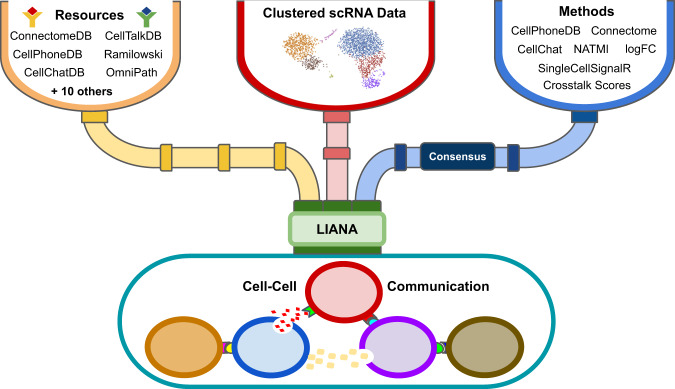
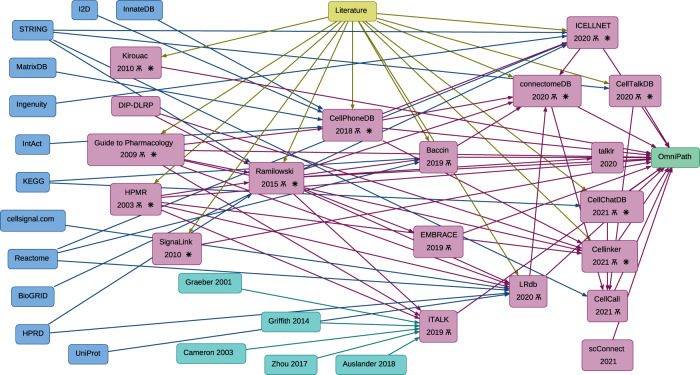
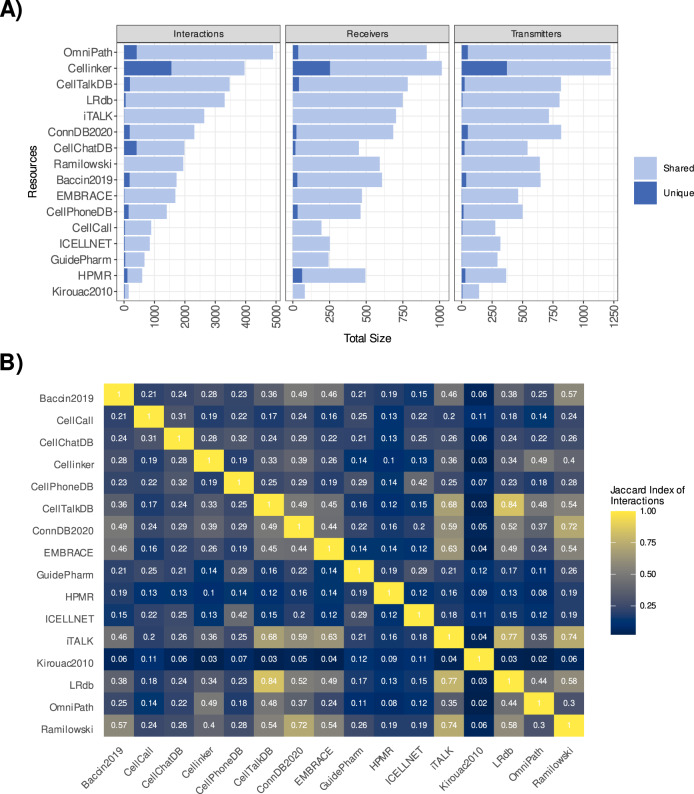
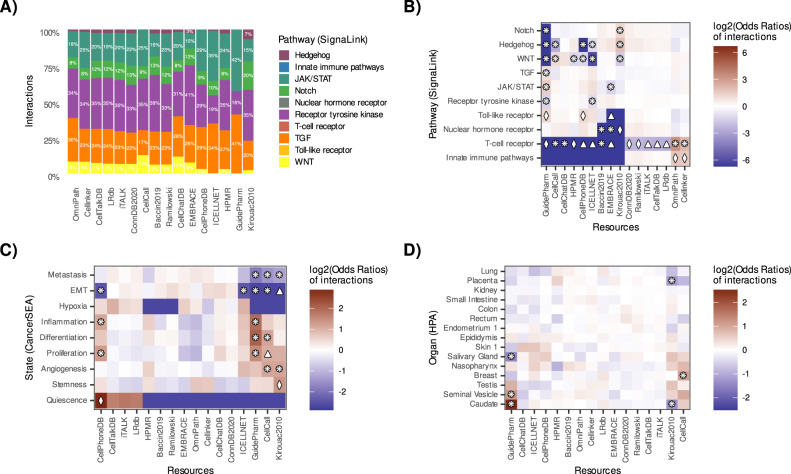
The growing availability of single-cell data, especially transcriptomics, has sparked an increased interest in the inference of cell-cell communication. Many computational tools were developed for this purpose. Each of them consists of a resource of intercellular interactions prior knowledge and a method to predict potential cell-cell communication events. Yet the impact of the choice of resource and method on the resulting predictions is largely unknown. To shed light on this, we systematically compare 16 cell-cell communication inference resources and 7 methods, plus the consensus between the methods’ predictions. Among the resources, we find few unique interactions, a varying degree of overlap, and an uneven coverage of specific pathways and tissue-enriched proteins. We then examine all possible combinations of methods and resources and show that both strongly influence the predicted intercellular interactions. Finally, we assess the agreement of cell-cell communication methods with spatial colocalisation, cytokine activities, and receptor protein abundance and find that predictions are generally coherent with those data modalities. To facilitate the use of the methods and resources described in this work, we provide LIANA, a LIgand-receptor ANalysis frAmework as an open-source interface to all the resources and methods.
Overview
The claims and statistics of this paper haven’t been checked yet.
Free: it reads the open-access text and checks the first 5 claims that cite a source we can check. Create a free account to check every claim.
Integrity signals
Registry
Cites
Statistics
Figures
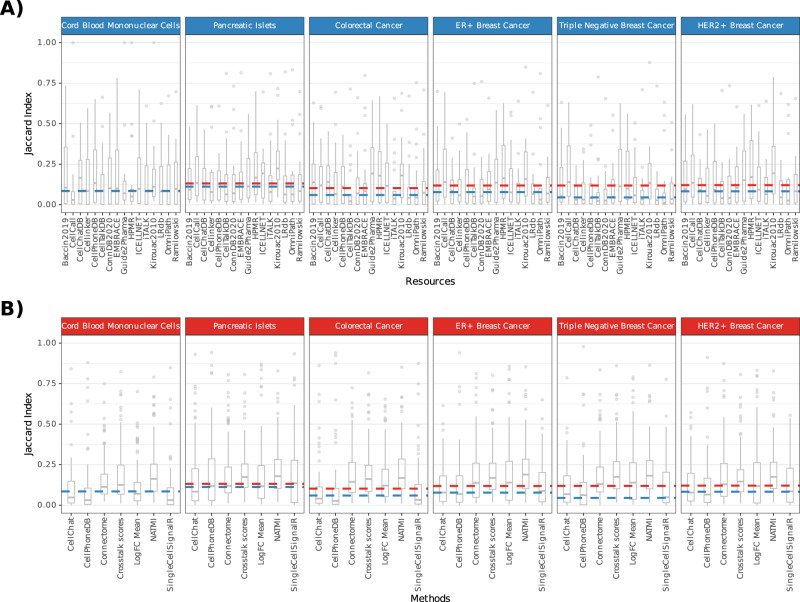
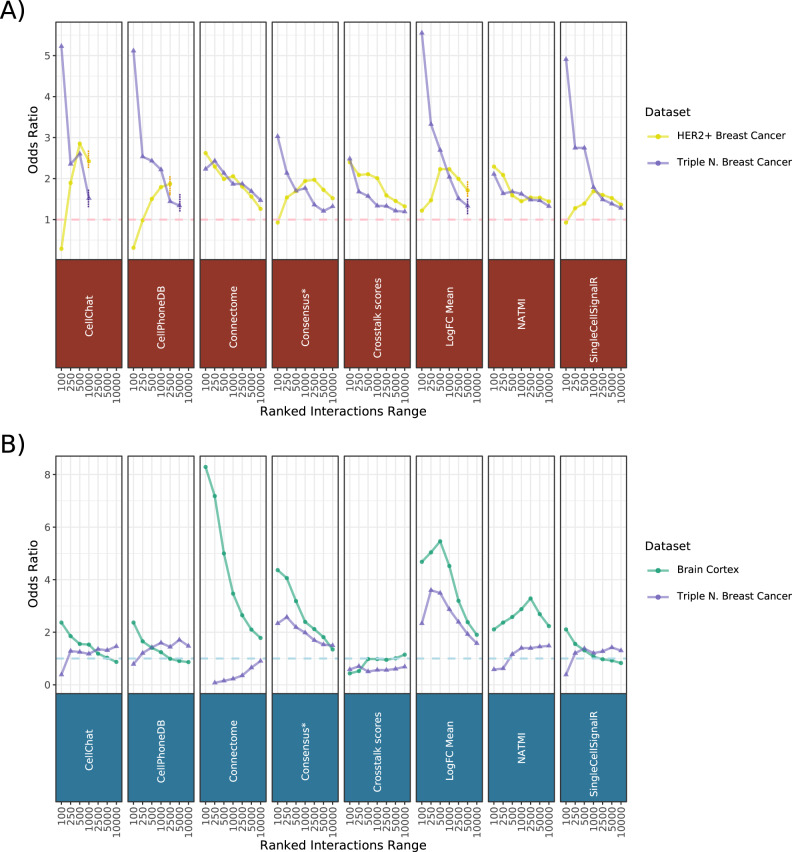
Verification
Claims the paper makes
The claims and statistics of this paper haven’t been checked yet.
Free: it reads the open-access text and checks the first 5 claims that cite a source we can check. Create a free account to check every claim.
Claims other papers make about this one
Each is checked against this paper’s own text: does it say what the citing paper says it does?
The source backs part of the claim, not all of it — or backs it for a different population, condition or comparison.
In the citing paper
“Among these, LIgand-receptor ANalysis framework (LIANA) consolidates outputs from several inference algorithms to provide a consensus, high-confidence readout of CCC interactions [14].”
From Quantitative profiling of lifespan-dependent cell-cell communication potential reveals dynamic ligand-receptor network shifts across mouse tissues (2026) · cites this paper as [14]
Experimental — accuracy not yet measuredThe source backs part of the claim, not all of it — or backs it for a different population, condition or comparison.
In the citing paper
“The ‘lr_mean’ metric, obtained from the LIANA framework [14], quantifies the average expression level of ligand and receptor genes across interacting cell types and is derived directly from single-cell RNA sequencing data.”
From Quantitative profiling of lifespan-dependent cell-cell communication potential reveals dynamic ligand-receptor network shifts across mouse tissues (2026) · cites this paper as [14]
Experimental — accuracy not yet measuredThe cited source says what the claim attributes to it.
In the citing paper
“CellChat127 and CellPhoneDB128, which also consider heteromeric interaction complexes, and SingleCellSignalR129 were found to be robust to both data and resource noise126.”
From Best practices for single-cell analysis across modalities (2023) · cites this paper as [126]
The cited source says what the claim attributes to it.
In the citing paper
“These databases were found to be biased towards specific pathways, functional categories and tissue-enriched proteins126.”
From Best practices for single-cell analysis across modalities (2023) · cites this paper as [126]
The cited source says what the claim attributes to it.
In the citing paper
“While LIANA systematically scores LR interactions present in a given dataset, it does not explicitly quantify directional changes or network-level expansions and contractions across states or stages.”
From Quantitative profiling of lifespan-dependent cell-cell communication potential reveals dynamic ligand-receptor network shifts across mouse tissues (2026) · cites this paper as [14]
5 more claims about this paper
Create a free account to see every claim other papers make about this one.
Self-check
Percentages, sums and reported differences re-computed from the paper’s own numbers.
The self-check needs the paper’s full text.
Citations
Cites
KEGG: Kyoto Encyclopedia of Genes and Genomes
Kanehisa, M. (2000) · Nucleic Acids Research · doi:10.1093/nar/28.1.27 · Cited by 37,077
KEGG: Kyoto Encyclopedia of Genes and Genomes
Ogata, H., Goto, S., Sato, K., Fujibuchi, W., Bono, H., & Kanehisa, M. (1999) · Nucleic Acids Research · doi:10.1093/nar/27.1.29 · Cited by 31,232
Tissue-based map of the human proteome
Uhlén, M., Fagerberg, L., Hallström, B. M., Lindskog, C., Oksvold, P., Mardinoglu, A., Sivertsson, Å., Kampf, C., Sjöstedt, E., Asplund, A., et al. (2015) · Science · doi:10.1126/science.1260419 · Cited by 15,286
Integrating single-cell transcriptomic data across different conditions, technologies, and species
Butler, A., Hoffman, P., Smibert, P., Papalexi, E., & Satija, R. (2018) · Nature Biotechnology · doi:10.1038/nbt.4096 · Cited by 13,174
Complex heatmaps reveal patterns and correlations in multidimensional genomic data
Gu, Z., Eils, R., & Schlesner, M. (2016) · Bioinformatics · doi:10.1093/bioinformatics/btw313 · Cited by 10,034
SCANPY: large-scale single-cell gene expression data analysis
Wolf, F. A., Angerer, P., & Theis, F. J. (2018) · Genome Biology · doi:10.1186/s13059-017-1382-0 · Cited by 8,881
Inference and analysis of cell-cell communication using CellChat
Jin, S., Guerrero-Juarez, C. F., Zhang, L., Chang, I., Ramos, R., Kuan, C.-H., Myung, P., Plikus, M. V., & Nie, Q. (2021) · Nature Communications · doi:10.1038/s41467-021-21246-9 · Cited by 8,409
Spatial reconstruction of single-cell gene expression data
Satija, R., Farrell, J. A., Gennert, D., Schier, A. F., & Regev, A. (2015) · Nature Biotechnology · doi:10.1038/nbt.3192 · Cited by 7,055
Szklarczyk, D., Morris, J. H., Cook, H., Kuhn, M., Wyder, S., Simonovic, M., Santos, A., Doncheva, N. T., Roth, A., Bork, P., et al. (2017) · Nucleic Acids Research · doi:10.1093/nar/gkw937 · Cited by 6,980
UniProt: the universal protein knowledgebase in 2021
The UniProt Consortium, Bateman, A., Martin, M.-J., Orchard, S., Magrane, M., Agivetova, R., Ahmad, S., Alpi, E., Bowler-Barnett, E. H., Britto, R., et al. (2021) · Nucleic Acids Research · doi:10.1093/nar/gkaa1100 · Cited by 6,372
Cited by
Items 601–700 of 775
Si, Y., Li, C., & Shi, M. (2026) · Computational Biology and Chemistry · doi:10.1016/j.compbiolchem.2026.109064
IMAS resolves perturbation-sensitive regulatory architectures from matched tumour multiomicsPreprint
Deyang, W., Yamashiro, T., & Inubushi, T. (2026) · bioRxiv (Cold Spring Harbor Laboratory) · doi:10.64898/2026.04.09.717444
Zhang, Z., Chowdhury, N., Dong, J., Wu, L., & Cheng, C. (2026) · Journal of Alzheimer s Disease · doi:10.1177/13872877261441603
“4.13).”
InfluentialTracing cell communication programs across conditions at single cell resolution with CCC-RISEPreprint
Ramirez, A., Thomas, N., Calabrese, D. R., Greenland, J. R., & Meyer, A. S. (2026) · bioRxiv (Cold Spring Harbor Laboratory) · doi:10.64898/2026.04.14.718551
Wu, S., Niu, J., Chen, X., Li, J., Tang, Q., Yang, Z., & Gao, S. (2026) · Clinical and Translational Medicine · doi:10.1002/ctm2.70670
“Cell–cell interactions among subsets were inferred using the LIANA + framework, 19 employing the CellPhoneDB ligand–receptor method.”
Proximity-Aware Graph Attention Networks for Spatially Resolved Cell-Cell InferencePreprint
Dubois, L., Petrov, A., & Jack, J. (2026) · bioRxiv (Cold Spring Harbor Laboratory) · doi:10.64898/2026.04.20.719753
“LIANA [5], [15] provides a unified framework that aggregates scores from multiple CCC methods into a consensus ranking.”
Tsang, A. P., Elhossiny, A. M., di Magliano, M. P., & Rao, A. (2026) · Methods in molecular biology · doi:10.1007/978-1-0716-5027-1_8
Huang, Z., Yang, D., Zhang, R., Chen, Q., Zhao, H., & Xu, H. (2026) · bioRxiv (Cold Spring Harbor Laboratory) · doi:10.64898/2026.04.27.721026
Bandiera, S., Bogetofte, H., Jensen, P., Hussain, R., Nischal, S. A., Říhová, L., Clowry, G. J., Larsen, M., Molnár, Z., & Carlyle, B. C. (2026) · Journal of Anatomy · doi:10.1111/joa.70170
Glial multicellular programs reveal distinct patient stratification in Parkinson's diseasePreprint
Muñoz‐Manchado, A. B., Barba-Reyes, J. M., Salas, S. M., Ulloa, G. G., Harder, L., Rafati, N., Chatzinikolaou, M. P., Theis, F. J., Hyman, B. T., Serrano‐Pozo, A., et al. (2026) · Research Square · doi:10.21203/rs.3.rs-9520754/v1
Evolution of songbird vocal imitation involved multiple cellular innovationsPreprint
Orozco, C. G., Zhao, Z., Kulkarni, A., James, J., Merullo, D. P., Konopka, G., & Roberts, T. F. (2026) · bioRxiv (Cold Spring Harbor Laboratory) · doi:10.64898/2026.04.28.721177
Mapping the Cell-Cell Interactions in Cardiovascular Diseases: A Single-Cell Atlas Perspective
Song, S., Lee, C., Hun-Jun, P., & Kim, J. (2027) · Korean Circulation Journal · doi:10.4070/kcj.2026.0007
Astrocyte immunosuppressive activity in glioblastoma depends on ZEB1 and is counteracted by CXCL14Preprint
Clement, M., Gibbs, A., Begum, A., Siebzehnrubl, D., Kaushik, S., Singh, N., Gupta, B., Eftychidis, V., & Siebzehnrübl, F. A. (2026) · bioRxiv (Cold Spring Harbor Laboratory) · doi:10.64898/2026.05.10.724074
“We used LIANA [28] to evaluate ligand-receptor interactions, specifically focusing on astrocyte_2 as a source (Fig.”
InfluentialIdentification of a CD44-dependent control of astrocytic autophagic activity in Alzheimer’s disease
Wang, H., Long, Y., Tang, Y., Duan, L., Wang, Z., Zhang, S., Yin, Y., Zhou, J., Wu, W., & Zhong, C. (2026) · The Journal of Prevention of Alzheimer s Disease · doi:10.1016/j.tjpad.2026.100601
“1.14) [30].”
InfluentialTian, Y., Liang, Y., & Zheng, H. (2026) · Chemical Engineering Journal · doi:10.1016/j.cej.2026.177599
Chen, Z., Zhang, Y., Hao, L., Feng, C., Wang, C., Ai, T., Hu, P., Ji, J., Fu, S., Chen, T., et al. (2026) · MedComm · doi:10.1002/mco2.70759
Glycolysis: The Bridge Between Cellular Interaction and Alzheimer’s Disease
Lei, Q., He, Y., & Fang, B. (2026) · Biomolecules · doi:10.3390/biom16060796
“Different cell types make up organisms, and cellular interactions are essential to preserving organismal behavior and function [8], impacting both development and maintaining homeostasis [9,10].”
Computational workflows and data infrastructures for spatial omics analysis
Alexander, M., Liu, Y., Dezem, F. S., Chasteen, H., & Plummer, J. (2026) · doi:10.70401/exo.2026.0010
Nicolaidou, E., Georgiou, G., Oulas, A., & Spyrou, G. M. (2026) · International Journal of Molecular Sciences · doi:10.3390/ijms27114986
“This integrative strategy is inspired by emerging efforts such as LIANA and the work of Liu et al., which highlights the value of integrating methods to enhance robustness and interpretability, without highlighting a gold standard approach for CCC [15,16].”
Das, D., Pandele, A., Jariwala, V. D., Ghariwala, N. S., Mohammed, A. O., Das, T., Krolla, C., Arosh, S. M., Hossain, N., Shhab, M. A., et al. (2026) · bioRxiv (Cold Spring Harbor Laboratory) · doi:10.64898/2026.05.31.729105
“We utilized ‘CellChat’ 20 and ‘LIANA’ 21 to infer and analyze cell-cell communication (CCC) networks between glioma and immune cell populations.”
Charting the human-specific properties of gene expression networks in the infant prefrontal cortex
Klavert, J., Radjabzadeh, D., Sanchez, E. G., Castelijns, B., Timpanaro, I. S., Boers, J., Fabro, F., de Wei, G. V. I., Bindels, E., Kondova, I. I., et al. (2026) · Science Advances · doi:10.1126/sciadv.aea3316
“This analysis creates a ranked consensus score be-tween several tools to predict high-confidence ligand-receptor (LR) interactions ( 35 ).”
Bertassoni, L. E., Helms, H. R., Oyama, K. A., Langer, E. M., & Davies, A. (2026) · Research Square · doi:10.21203/rs.3.rs-9310069/v1
Bae, S., Ohn, J., Choi, H., Lee, H. K., Kim, B., Kang, C. H., Kim, H. J., Na, K. J., & Kim, B. H. (2026) · bioRxiv (Cold Spring Harbor Laboratory) · doi:10.64898/2026.06.01.729308
Self-citationEl‐Ghazawi, K., Aberra, Y. T., Veeramasu, Y., Fares, W. A., Isakson, B. E., Sontheimer, H. W., Eyo, U. B., & PEIRCE, S. M. (2026) · Communications Biology · doi:10.1038/s42003-026-10446-y
“Log-normalizedexpressionwasusedasinputforLIANA,followed byformattingofinteractionscoresintoa4Dtensor(samples×ligand-receptorpairs×sender×receiver).”
InfluentialWang, C., Zhang, F., Hao, L., Zhang, Y., Feng, C., Weng, N., Hu, P., Lin, W., Chen, T., Wang, T., et al. (2026) · Journal of Translational Medicine · doi:10.1186/s12967-026-08397-3
“To explore intercellular communication networks, we utilized the LIANA R package, which is specifically designed to decipher complex intercellular communication patterns [27].”
Zhang, L., Fu, C., Gao, T., Yang, K., Ouyang, G., & Chen, W. (2026) · Frontiers in Medicine · doi:10.3389/fmed.2026.1853077
“…based on one computational tool and curated ligand-receptor databases; benchmark studies suggest that different tools—such as CellPhoneDB and NicheNet—may return partially distinct interaction sets and that combining complementary methods can improve confidence in inferred interactions (23, 24).”
Cell-Cell-Seq resolves contact-associated NK cell activation in defined tumor cell dyadsPreprint
Liang, J., Shao, D., Carlo, D. D., & de Rutte, J. M. (2026) · bioRxiv (Cold Spring Harbor Laboratory) · doi:10.64898/2026.06.04.730259
“…many ligand/receptor-class responders, while a substantial fraction of the contact-induced program consisted of non-ligand-receptor genes, including intracellular transcriptional, stress-response, feedback, and effector-response programs outside ligand-receptor catalog scope 9 (Figure 4B,C).”
InfluentialSun, S., Hu, S., Sun, M., Tang, Z., Wang, Y., Xu, L., Cao, P., Liu, L., Wang, R., Yuan, J., et al. (2026) · CNS Neuroscience & Therapeutics · doi:10.1002/cns.70981
“Single-cell RNA sequencing (scRNA-seq) can delineate the cellular composition, heterogeneity, and gene expression profiles of tissues at single-cell resolution [21], thereby revealing acupuncture's regulatory effects on specific cell types and the underlying molecular pathways.”
Baek, I., Park, K., & Kim, K. (2026) · Clinical and Translational Discovery · doi:10.1002/ctd2.70160
Kang, J., An, J., & Choi, J. K. (2026) · Journal for ImmunoTherapy of Cancer · doi:10.1136/jitc-2026-015632
“The statistical significance of enrichment or depletion for each cell type was determined using a two-sided Wilcoxon rank-sum test, with p values adjusted using the Benjamini-Hochberg method.”
Killer-cell dominance dichotomy governs tumor immune networks and stratifies inflamed cancersPreprint
Li, A., Yu, Z., Zhang, W., Chang, H. J., Feng, S., Yang, X., Xiong, K., He, L., Zhao, Z., Shen, L., et al. (2026) · bioRxiv (Cold Spring Harbor Laboratory) · doi:10.64898/2026.06.15.732326
Ma, H., Zhang, X., Chen, H., & Li, Y. (2026) · BMC Bioinformatics · doi:10.1186/s12859-026-06534-9
“Although these methods provide strong interpretability, they heavily rely on prior knowledge and are limited in capturing higher-order structural patterns [22].”
Sitinjak, W. S. M., & Simanjuntak, H. T. A. (2026) · arXiv (Cornell University) · doi:10.48550/arxiv.2606.27657
“CellChat analysis of ligand-receptor pairs (e.g., IGF, FGF) in progenitor niches [32].”
Genomic sequence evolution underlying human neocortical interareal diversification
He, W., Hou, W., Jiang, C., Zhang, X., Wang, Y., Zhou, Y., Gobeske, K. T., Ma, S., Fan, J., Wang, H., et al. (2026) · Genome biology · doi:10.1186/s13059-026-04177-w
“1.7) [81], which is a curated resource integrated multiple CCC tools.”
InfluentialAge-dependent disease tolerance to SARS-CoV-2 infectionPreprint
Rastogi, S., Mesquita, M., Fonseca, D. M., Salazar, S. B., Cardoso, S., Faísca, P., Drotleff, B., Alenquer, M., Lone, J., Miguel, V., et al. (2026) · bioRxiv (Cold Spring Harbor Laboratory) · doi:10.64898/2026.06.27.734955
Liu, K.-J., Tan, Z., Tang, Y., Lv, Y., & Bu, Y. (2026) · Journal of Translational Medicine · doi:10.1186/s12967-026-08572-6
“R interactions in the TME [12–15].”
Eiring, P., Doose, S., Bauer, N., & Sauer, M. (2026) · BIO-PROTOCOL · doi:10.21769/bioprotoc.5767
“Membrane receptors are of special interest in such studies, as they mediate essential cellular processes such as signal transduction, adhesion, and metabolic regulation [3,4].”
Liu, J., Sun, S., Chen, Z., Lv, Z., Jiang, S., Li, G., & Liu, B. (2026) · bioRxiv (Cold Spring Harbor Laboratory) · doi:10.64898/2026.06.28.735031
Yokoyama, M., Nakayama, A., Taki, Y., Chen, M., Gong, Y., Shiina, M., Kono, T., Fujimoto, M., Ito, K., Ikeda, J., et al. (2026) · bioRxiv (Cold Spring Harbor Laboratory) · doi:10.64898/2026.07.02.736039
Single-cell analysis of an adult IBD INCEPTION cohort reveals Galectin-linked disease mechanismsPreprint
Leipner, M., Rimmer, P. J., Tull, S. P., Paun, A., Sandrin, V., Begum, J., Mansour, A. A., Saviano, A., Sharma, N., Cheesbrough, J., et al. (2026) · bioRxiv (Cold Spring Harbor Laboratory) · doi:10.64898/2026.06.30.735473
Tan, Y., Xiang, J., Wang, Z., Wang, Y., Chen, A., & Wu, Q. (2026) · Cancer Informatics · doi:10.1177/11769351261466300
“45,46 Future studies are warranted to validate the robustness of the model using independent clinical cohorts via qRT-PCR, immunohistochemistry, and other experimental methods.”
Ostwal, R., & Natarajan, E. (2026) · bioRxiv (Cold Spring Harbor Laboratory) · doi:10.64898/2026.07.01.735754
“Intercellular signalling dynamics were mapped using the LIANA framework paired with the CellPhoneDB algorithm applied directly to the unscaled raw count layer (Efremova et al., 2020; Dimitrov et al., 2022), tracking ligand-receptor pairs filtered at a strict empirical threshold (p < 0.05).”
InfluentialSingle-cell multiome profiling reveals neuronal bias of modulatory role of MeCP2 phosphorylation
Zhang, Z., Huang, X., Arachchilage, K. H., Chandrashekar, P. B., Dong, Q., Wang, R., Wang, D., & Chang, Q. (2026) · Neurobiology of Disease · doi:10.1016/j.nbd.2026.107521
“A LIANA (Dimitrov et al., 2022) based framework supplemented with NeuronChat (Zhao et al., 2023) for neuronal signaling specialization pipeline was employed on a fraction of dataset.”
Influentialwang, H., Yang, X., Wang, S., Yang, Z., Yang, X., Yang, Y., Li, Z., Ren, Y., Zhang, Q., Zhao, B., et al. (2026) · iMeta · doi:10.1002/imt2.70146
Synthetic developmental engineering of human liver organogenesis
Taheri, M. N., Xiang, Y., & Ebrahimkhani, M. R. (2026) · Development · doi:10.1242/dev.205040
Zheng, C., Zhai, T., Zhang, F., & Shen, L. (2026) · bioRxiv (Cold Spring Harbor Laboratory) · doi:10.64898/2026.07.10.737805
Single-cell technologies in mRNA cancer vaccines
Ovcharenko, E. V., Patysheva, M. R., Kirilenko, K. M., Ibragimova, A. A., & Denisov, E. V. (2026) · npj Vaccines · doi:10.1038/s41541-026-01529-2
Tumor-intrinsic Ist1 restricts IFNγ responsiveness to drive immune evasion in pancreatic cancerPreprint
Liao, W., Huang, S., Mishra, G., Camps, M. G. M., OSSENDORP, F. A., Wu, Y., Wijdeven, R. H. M., & ten Dijke, P. (2026) · Research Square · doi:10.21203/rs.3.rs-10348019/v1
Wang, Y., Lam, T. T., Ochiai, S., Larson, A. R., Matthews, D. B., McWilliam, H. E. G., Kaisho, T., Lahoud, M. H., Villadangos, J. A., Diehl, G. E., et al. (2026) · European Journal of Immunology · doi:10.1002/eji.70243
曾昭轰 (2026) · Advances in Clinical Medicine · doi:10.12677/acm.2026.1672742
Cao, Y., Cai, J., Dai, D., Wang, J., Zhang, Y., Xiong, J., Huang, H., Gao, Y., Xia, Y., Liu, F., et al. (2026) · Nature Communications · doi:10.1038/s41467-026-76152-9
“Cell-cell communication analysis was analyzed using the LIANA R package 86 , which integrates multiple computational methods to infer ligand-receptor interactions at the single-cell level.”
Bennett, K. R., Vanrobaeys, Y. S., Teboh, T., Smith, Z., Scott, A., Hajal, C., Hammond, P. T., & Straehla, J. P. (2026) · Advanced Healthcare Materials · doi:10.1002/adhm.71474
“To elucidate mechanisms of vascular influence by tumor cells, we performed in silico predictions of ligand-receptor interactions of tumor cells and vasculature using the LIANA (LIgand–receptor ANalysis) platform [35].”
Datta, A., Bridges, K., Wessel, R. E., Baghdassarian, H., Bahlmann, L. C., Gong, D. N., Tevonian, E. N., Joughin, B. A., & Lauffenburger, D. A. (2026) · Cellular and Molecular Bioengineering · doi:10.1007/s12195-026-00930-0
“To infer potential crosstalk between dendritic cells, macrophages, and tumor cells, we employed LIANA, which generates consensus cell-cell communication inference results across existing, commonly-used methods [33].”
Influential连渊娥, Zhang, Z., Xia, D., Weng, Z., Ye, J., Zhang, S., Huang, X., Li, L., Lin, J., 周松强, et al. (2026) · Journal of Translational Medicine · doi:10.1186/s12967-026-08686-x
“Communication probabilities were computed, and significance was assessed using permutation-based testing to construct empirical null distributions [29].”
Tfh dysfunction is associated with poor responses to HBV vaccinationPreprint
Chen, H. M., Severa, E., Yao, X., Williams, T., Sinha, R., Monteiro, C., Tuen, M., Dubensky, T. B., Koralov, S. B., Nowosad, C. R., et al. (2026) · bioRxiv (Cold Spring Harbor Laboratory) · doi:10.64898/2026.07.30.741822
Holton, E. (2026) · UNSWorks (University of New South Wales, Sydney, Australia) · doi:10.26190/unsworks/32578
Meng, F., He, S., Shen, J., & Li, H. (2026) · Research Square · doi:10.21203/rs.3.rs-10122771/v1
Demirdizen, M. (2024) · Bilkent University Institutional Repository (Bilkent University)
Nalbandian, M., Kim, I., Monti, E., Li, Y. K., Moal, E. L., Kraft, P. E., Jeuris, K., To, M., Alexandrova, L. А., Lone, J. B., et al. (2026) · bioRxiv (Cold Spring Harbor Laboratory) · doi:10.64898/2026.08.06.743387
“Following the standard Liana workflow, we identified enriched ligand-receptor (L-R) interactions for every sender-receiver cell pair within each of the groups and recorded the corresponding total count of L-R interactions per sender-receiver pair in each group.”
Zhang, M., Xue, S., Xu, M., Liu, C., & Hong, G. (2026) · Journal of Hazardous Materials Advances · doi:10.1016/j.hazadv.2026.101476
Jia, B., Liu, G., Lim, D., Li, Q., Xie, S., & Feng, Z. (2026) · Frontiers in Immunology · doi:10.3389/fimmu.2026.1839063
“Furthermore, cell-cell communication (CCC) plays a vital role in the stability of the internal environment of organisms and disease progression (72).”
Chen, L. (2026) · Research Square · doi:10.21203/rs.3.rs-10605560/v1
Thomas, J. P., Kottoor, S. H., Lo, J. W., Wooldridge, T., Ibraheim, H., Digby-Bell, J. L., Lambie, N., Olbei, M. L., Bohár, B., Wong, C., et al. (2026) · bioRxiv (Cold Spring Harbor Laboratory) · doi:10.64898/2026.08.10.743953
Wang, S., Zhu, B., Li, S., & Wei, X. (2026) · bioRxiv (Cold Spring Harbor Laboratory) · doi:10.64898/2026.08.12.744394
“Cell annotation, spatial-variation analysis and cell-cell communication inference often depend on low-abundance markers, so even modest contamination may change qualitative conclusions [7-9 , 13 Existing methods address related forms of contamination but make different assumptions.”
Pfeil, J. Q., Hui, S., Stueckmann, D., Zhang, X., Martin, L., Komisarenko, M., Meens, J., Gorman, J. L., Murphy, J. M., Mak, M. L., et al. (2026) · bioRxiv (Cold Spring Harbor Laboratory) · doi:10.64898/2026.08.17.744644
Yang, J., Shyr, Y., & Liu, Q. (2026) · Briefings in Bioinformatics · doi:10.1093/bib/bbag446
“Although some scRNA-seq-based CCC benchmarking studies include early spatial CCC tools or adapted versions of scRNA-seq CCC methods [ 3, 54], no systematic evaluation has been conducted specifically for spatial CCC tools.”
PRENATAL DEVELOPMENT OF THE HUMAN LIVER THROUGH THE LENS OF SINGLE-CELL TECHNOLOGIES
Chernikova, H. (2026) · World Journal of Biology Pharmacy and Health Sciences · doi:10.30574/wjbphs.2026.27.2.0431
Alqarni, A., Hosmani, J., Arem, S. A., Almubarak, H. M., Assiri, H. A., Meer, R. M., & Patil, S. (2026) · Cells · doi:10.3390/cells15171538
He, Y., Lu, W., Ju, G., & Chen, L. (2026) · Frontiers in Cell and Developmental Biology · doi:10.3389/fcell.2026.1889050
“These analyses are exploratory because the local single-cell data contain one biological specimen per condition and no spatial validation (Yu et al., 2012; Dimitrov et al., 2022).”
Wang, Y., He, H., & Xin, Q. (2026) · Next research. · doi:10.1016/j.nexres.2026.102372
Dao, W., Zhang, S., Zhang, T., Fan, X., & Miao, Y. (2026) · Animals · doi:10.3390/ani16172700
“Studies using an unmodified mammalian database should report its version and the proportion of pairs mappable to avian orthologues [117,122].”
Liu, C., Wang, W., Wang, F., Xing, H., Cao, W., & Jiang, Z. (2026) · Chinese Medical Journal · doi:10.1097/cm9.0000000000004239
Hu, W., Wang, F., Niu, Z., Liu, P., Tian, Z., Luo, C., & Xie, R. (2026) · Brain Sciences · doi:10.3390/brainsci16090921
“…were compared descriptively between the control and SNI 14d in SGCs and IFN SGCs. Transcription-factor regulatory-network activity was inferred using an SCENIC-like workflow [18], in which GENIE3 was used to construct candidate regulatory networks and AUCell was used to evaluate regulon activity.”
Kawamura, Y., Sato, Y., Tsumura, Y., Wakamatsu, M., Endo, S., Suzuki, T., Kondo, Y., Itano, M., Miura, H., Higashimoto, Y., et al. (2026) · The Journal of Infectious Diseases · doi:10.1093/infdis/jiag453
liao, X.-R., Zheng, H., Luo, J.-Y., & Zheng, B. (2026) · Journal of Translational Medicine · doi:10.1186/s12967-026-08732-8
“Likewise, ligand–receptor inference methods predict potential cell–cell communication based on transcript co-expression and curated interaction databases; however, these predictions do not establish spatial proximity, receptor activation, or functional signaling [112].”
Guan, R., Wan, L., & Feng, C. (2026) · Frontiers in Immunology · doi:10.3389/fimmu.2026.1894244
“However, predicted communication networks can vary according to the analytical method and interaction database used (26), and transcriptomic co-expression does not demonstrate ligand secretion, receptor binding, downstream pathway activation, or functional effects on recipient cells.”
Dong, X., Hu, X., Liu, Q., Dong, Y., Xuan, Y., Wang, M., Chang, S., Lu, T., & Han, Z. (2026) · Journal of Cell Communication and Signaling · doi:10.1002/ccs3.70106
Park, N., Lee, H., & Kim, J. (2026) · Biomolecules · doi:10.3390/biom16091288
“…and increasing statistical power [16–18], while functional interpretation, transcriptional regulatory analysis, and cell–cell communication are typically performed using dedicated tools such as g:Profiler [19], GSEA [20], clusterProfiler [21], SCENIC [22], and LIANA [23] or CellChat [24].”
InfluentialscGSI: Graph-guided self-supervised integration of paired single-cell multi-omics
Chen, X., Yang, Z., Liu, X., Xie, Z., & Guo, W. (2026) · PLoS Computational Biology · doi:10.1371/journal.pcbi.1014773
“As shown by cell-type-pair interaction rankings derived from LIANA [46] (Fig R in S1 Appendix), both approaches identify cDC as one of the core communication hubs.”
Faisal, S., Ejaz, M. A., Kambey, P. A., Malik, A., & Li, Y.-X. (2026) · International Journal of Molecular Sciences · doi:10.3390/ijms27188023
Koshboresh, A., Roy, V. L., Abdelmageed, M., Manjila, S. B., Parmaksiz, D., Kim, Y., Gillis, J., & Paul, A. (2026) · bioRxiv (Cold Spring Harbor Laboratory) · doi:10.64898/2026.09.07.749801
Cao, X., Lu, W., & Huang, H. (2026) · Frontiers in Oncology · doi:10.3389/fonc.2026.1844537
“Cell-cell communication inference from single-cell transcriptomes remains probabilistic and depends on the analytical method and the ligand-receptor resource (12, 13).”
InfluentialHai, C., Hou, Y., Yu, S., Pan, X., Nicolas, G. M., Li, P., Gungor, C., Yuan, T., Wang, Z., Wang, Z., et al. (2026) · Gut · doi:10.1136/gutjnl-2026-338471
Moreno, D. F., Nadeu, F., Casado-Peláez, M., Mata, C., Márquez-López, I., Fernández, M. A., Vaqué-Salsench, S., Medina, E., Llobregat, H., Garrote, M., et al. (2026) · HemaSphere · doi:10.1002/hem3.70456
Du, K., Gao, S., Wang, H., Hu, W., Liu, Z., Gao, C., Chen, L., Che, T., Li, L., & Zhang, S. (2026) · Journal of Proteome Research · doi:10.1021/acs.jproteome.6c00601
Mapping Uterine Remodeling from Pregnancy to a New Homeostatic StatePreprint
Teves, J. M., Wienskowska, O., Mularoni, L., Arozamena, B., & Guiu, J. (2026) · bioRxiv (Cold Spring Harbor Laboratory) · doi:10.64898/2026.09.07.749876
“8.1 using the mouse consensus ligand-receptor resource and CellPhoneDB scoring (49, 52,53, 76-78), including all cell types represented by at least 10 cells.”
InfluentialAccurate and scalable decontamination of imaging-based spatial transcriptomics via optimal transportPreprint
Chen, Y., Liu, Y., Chao, Z., Han, S., Zeng, Y., Yu, B., Zhang, F., Wu, A. R., Wang, J., Chen, H., et al. (2026) · bioRxiv (Cold Spring Harbor Laboratory) · doi:10.64898/2026.09.09.750350
“We therefore applied CellPhoneDB, CellChat and LIANA[34–36] to the raw and corrected counts and compared the inferred interactions with those obtained from the matched single-cell reference, requiring agreement in the ligand-receptor pair as well as in the sender and receiver cell types (Fig.”
A transcription factor regulatory atlas for activity inference and perturbation prediction
Sugimoto, H., Tsuyuzaki, K., Zou, Z., Oki, S., Ohta, T., & Kawakami, E. (2026) · Nucleic Acids Research · doi:10.1093/nar/gkag897
“Prior-knowledge LR resources were obtained via LIANA [ 64 , 65 ], including HPMR [ 66 ], Guide to Pharmacology [ 67 ], ICELLNET [ 68 ], CellCall [ 61 ], CellPhoneDB [ 69 ], EM-BRACE [ 70 ], CellChatDB [ 71 ], ConnectomeDB [ 72 ], iTALK [ 73 ], LRdB [ 74 ], CellTalkDB [ 75 ], Cellinker [ 76 ], and a…”
Ten quick tips for spatial transcriptomics analysis
Kurogi, N., Shimbara, K., Koreeda, T., & Tsuyuzaki, K. (2026) · PLoS Computational Biology · doi:10.1371/journal.pcbi.1014757 · Cited by 1
Huo, W., Yu, S., & Zhang, Q. (2026) · International Joint Conference on Artificial Intelligence · doi:10.24963/ijcai.2026/488
Lin, Y. (2026) · VTechWorks (Virginia Tech)
Zhou, Y.-L., Zhang, L., Meng, T., Yu, C., Dai, L., Wang, J., Yang, M., Ge, R., Liu, S., Xu, N., et al. (2026) · npj Precision Oncology · doi:10.1038/s41698-026-01707-4
Cross-species spatial profiling links progranulin to an immune suppressive niche in brain metastasisPreprint
Eskow, N. M., Prutisto-Chang, K., Gómez-Muñoz, M. A., Kang, M., Bochaca, I. I., Ibrahim, M., Shadaloey, S. A. A., Yanke, A. F., Geraldo, L. H., Barisano, G., et al. (2026) · bioRxiv (Cold Spring Harbor Laboratory) · doi:10.64898/2026.09.13.751277
A single-cell atlas and Shiny-based framework for murine lung injury and remodeling
Wang, Q., Li, J., Moos, P. J., & Venosa, A. (2026) · Frontiers in Bioinformatics · doi:10.3389/fbinf.2026.1886929
“The App features both CellChat v2, the primary visualization and analysis tool, alongside the LIANA framework, which incorporates eight computational methods and 18 interaction resources (Dimitrov et al., 2022; Jin et al., 2025).”
InfluentialProtein expression derived from scRNA-seq reveals lupus-induced acceleration of immune aging
Leung, H. Y., & Qiu, P. (2026) · npj Systems Biology and Applications · doi:10.1038/s41540-026-00832-x
Chojak, R., Faisal, U. H., Kumthekar, P., Drewes, N. B., Koutah, L., Jia, J., Turunen, J. R., O’Shea, M. C., Falkowski, V., Akhtar, A., et al. (2026) · bioRxiv (Cold Spring Harbor Laboratory) · doi:10.64898/2026.09.20.752931
Metadata
- Authors
- Dimitrov, D., Türei, D., Garrido-Rodriguez, M., Burmedi, P. L., Nagai, J. S., Boys, C., Ramirez Flores, R. O., Kim, H., Szalai, B., Costa, I. G., Valdeolivas, A., Dugourd, A., & Saez-Rodriguez, J.
- Affiliations
- Heidelberg University (DE)
- Universitätsklinikum Aachen (DE)
- Semmelweis University (HU)
- F. Hoffmann-La Roche AG (CH)
- ORCID
- Venue
- Nature Communications
- Published
- 2022-06-09
- Volume
- 13
- Issue
- 1
- Pages
- 3224-3224
- ISSN
- 2041-1723 (ISSN-L)
- PMC
- PMC9184522
- OpenAlex
- W4281716326
- Semantic Scholar
- abb7218aa6062dc1fa5f83e6f9210c63270cb0fa
- Cited by
- 664
- References
- 101
- Citations by year
- 2026: 215 · 2025: 189 · 2024: 144 · 2023: 72 · 2022: 40
- FWCI
- 37.13
- Type
- journal article
- Language
- en
- Open access
- gold
- doi.org
- Licence
- cc-by
- creativecommons.org/licenses/by/4.0 (tdm)
- creativecommons.org/licenses/by/4.0 (vor)
- Locations
- Nature Communications (publishedVersion, cc-by)
- bioRxiv (Cold Spring Harbor Laboratory) (acceptedVersion, cc-by-nd)
- Research Square (acceptedVersion, cc-by)
- PubMed Central (publishedVersion, cc-by)
- PubMed (publishedVersion)
- RePEc: Research Papers in Economics (submittedVersion)
- DOAJ (DOAJ: Directory of Open Access Journals) (submittedVersion)
- RWTH Publications (RWTH Aachen) (submittedVersion, other-oa)
- RWTH Publications (RWTH Aachen)
- Funders
- European Commission (HORIZON2020, 860329)
- Deutsche Forschungsgemeinschaft (CRU344)
- Bundesministerium für Bildung und Forschung (031L0181B, 860329)
- Topics
- Life Sciences › Biochemistry, Genetics and Molecular Biology › Molecular Biology › Single-cell and spatial transcriptomics
- Life Sciences › Biochemistry, Genetics and Molecular Biology › Molecular Biology › Bioinformatics and Genomic Networks
- Life Sciences › Biochemistry, Genetics and Molecular Biology › Molecular Biology › Gene Regulatory Network Analysis
- Keywords
- intercellular communication, cell-cell interactions, single-cell RNA sequencing, ligand-receptor interactions, method comparison, lianas, cytokines
- MeSH terms
- RNA-Seq, Cell Communication, Ligands, Signal Transduction, Single-Cell Analysis, Transcriptome
About these checks
Registry, retraction, Cites and statistics results are computed, not judged, with one exception: a printed reference that no index lists is read once by a model before it counts as a citation error. Claims are extracted by a model and kept only when their quote appears verbatim in the text; each cited source is then checked, with a model’s help, for whether it says what the claim relies on. Those verdicts can be wrong — read the claim’s quote and the cited source before relying on one.
Statistics and arithmetic are recomputed, not judged.
Confidence bands are shown only for fields calibrated on our annotated test set. None is calibrated yet, so no band is shown.
What counts as a claim ›How we measure confidence ›How we check this ›
Are you an author, or do you see a problem with this page? Request a review
Data sources
Bibliographic data: Semantic Scholar, OpenAlex, Crossref.
Contains information from the Semantic Scholar Academic Graph Datasets, made available under the ODC Attribution License (ODC-BY 1.0).
Semantic Scholar’s data is described in: Kinney, R., et al. (2023). The Semantic Scholar Open Data Platform. arXiv:2301.10140.
