

Comparison of methods and resources for cell-cell communication inference from single-cell RNA-Seq data
Open accessPublished version of a preprint
The DOI matches its Crossref record; 105 of the 105 references it cites were found in a registry or an index.
Abstract
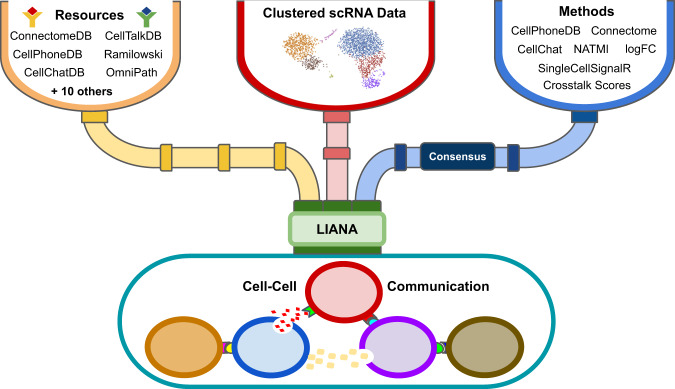
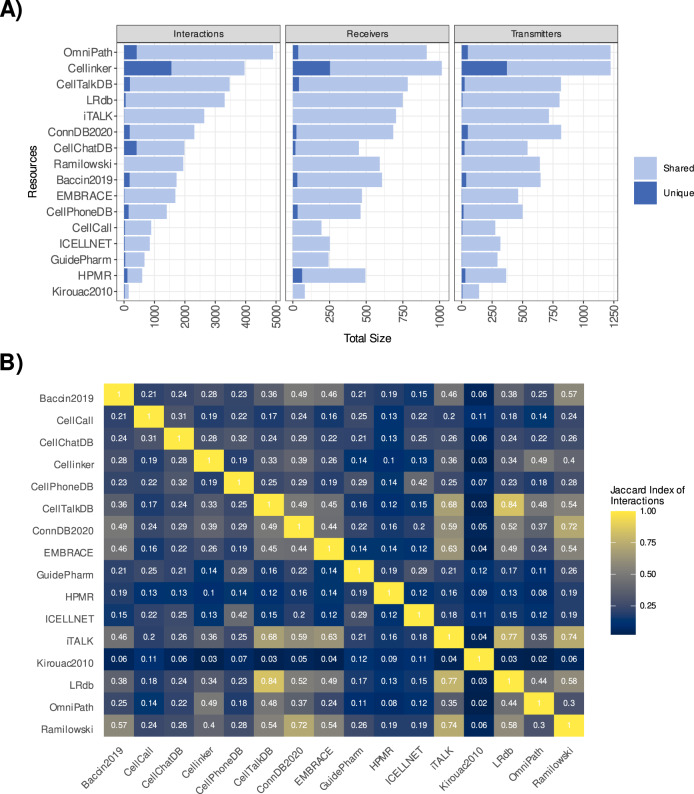
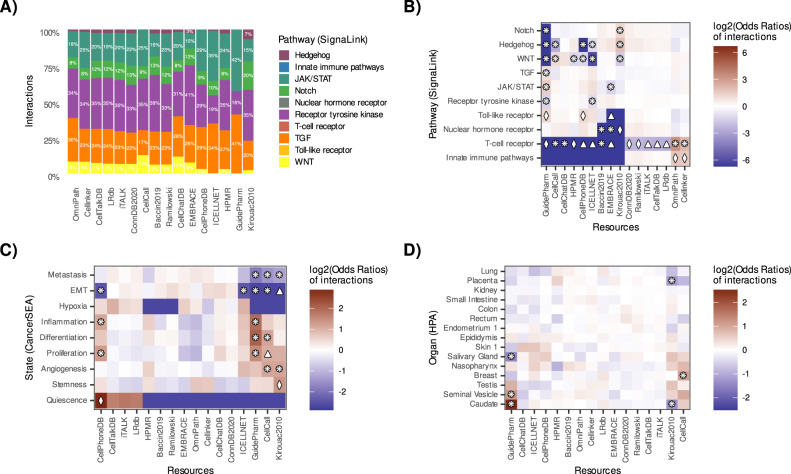
The growing availability of single-cell data, especially transcriptomics, has sparked an increased interest in the inference of cell-cell communication. Many computational tools were developed for this purpose. Each of them consists of a resource of intercellular interactions prior knowledge and a method to predict potential cell-cell communication events. Yet the impact of the choice of resource and method on the resulting predictions is largely unknown. To shed light on this, we systematically compare 16 cell-cell communication inference resources and 7 methods, plus the consensus between the methods’ predictions. Among the resources, we find few unique interactions, a varying degree of overlap, and an uneven coverage of specific pathways and tissue-enriched proteins. We then examine all possible combinations of methods and resources and show that both strongly influence the predicted intercellular interactions. Finally, we assess the agreement of cell-cell communication methods with spatial colocalisation, cytokine activities, and receptor protein abundance and find that predictions are generally coherent with those data modalities. To facilitate the use of the methods and resources described in this work, we provide LIANA, a LIgand-receptor ANalysis frAmework as an open-source interface to all the resources and methods.
Overview
The claims and statistics of this paper haven’t been checked yet.
Free: it reads the open-access text and checks the first 5 claims that cite a source we can check. Create a free account to check every claim.
Integrity signals
Registry
Cites
Statistics
Figures
Verification
Claims the paper makes
The claims and statistics of this paper haven’t been checked yet.
Free: it reads the open-access text and checks the first 5 claims that cite a source we can check. Create a free account to check every claim.
Claims other papers make about this one
Each is checked against this paper’s own text: does it say what the citing paper says it does?
The source backs part of the claim, not all of it — or backs it for a different population, condition or comparison.
In the citing paper
“Among these, LIgand-receptor ANalysis framework (LIANA) consolidates outputs from several inference algorithms to provide a consensus, high-confidence readout of CCC interactions [14].”
From Quantitative profiling of lifespan-dependent cell-cell communication potential reveals dynamic ligand-receptor network shifts across mouse tissues (2026) · cites this paper as [14]
Experimental — accuracy not yet measuredThe source backs part of the claim, not all of it — or backs it for a different population, condition or comparison.
In the citing paper
“The ‘lr_mean’ metric, obtained from the LIANA framework [14], quantifies the average expression level of ligand and receptor genes across interacting cell types and is derived directly from single-cell RNA sequencing data.”
From Quantitative profiling of lifespan-dependent cell-cell communication potential reveals dynamic ligand-receptor network shifts across mouse tissues (2026) · cites this paper as [14]
Experimental — accuracy not yet measuredThe cited source says what the claim attributes to it.
In the citing paper
“CellChat127 and CellPhoneDB128, which also consider heteromeric interaction complexes, and SingleCellSignalR129 were found to be robust to both data and resource noise126.”
From Best practices for single-cell analysis across modalities (2023) · cites this paper as [126]
The cited source says what the claim attributes to it.
In the citing paper
“These databases were found to be biased towards specific pathways, functional categories and tissue-enriched proteins126.”
From Best practices for single-cell analysis across modalities (2023) · cites this paper as [126]
The cited source says what the claim attributes to it.
In the citing paper
“While LIANA systematically scores LR interactions present in a given dataset, it does not explicitly quantify directional changes or network-level expansions and contractions across states or stages.”
From Quantitative profiling of lifespan-dependent cell-cell communication potential reveals dynamic ligand-receptor network shifts across mouse tissues (2026) · cites this paper as [14]
5 more claims about this paper
Create a free account to see every claim other papers make about this one.
Self-check
Percentages, sums and reported differences re-computed from the paper’s own numbers.
The self-check needs the paper’s full text.
Citations
Cites
KEGG: Kyoto Encyclopedia of Genes and Genomes
Kanehisa, M. (2000) · Nucleic Acids Research · doi:10.1093/nar/28.1.27 · Cited by 37,077
KEGG: Kyoto Encyclopedia of Genes and Genomes
Ogata, H., Goto, S., Sato, K., Fujibuchi, W., Bono, H., & Kanehisa, M. (1999) · Nucleic Acids Research · doi:10.1093/nar/27.1.29 · Cited by 31,232
Tissue-based map of the human proteome
Uhlén, M., Fagerberg, L., Hallström, B. M., Lindskog, C., Oksvold, P., Mardinoglu, A., Sivertsson, Å., Kampf, C., Sjöstedt, E., Asplund, A., et al. (2015) · Science · doi:10.1126/science.1260419 · Cited by 15,286
Integrating single-cell transcriptomic data across different conditions, technologies, and species
Butler, A., Hoffman, P., Smibert, P., Papalexi, E., & Satija, R. (2018) · Nature Biotechnology · doi:10.1038/nbt.4096 · Cited by 13,174
Complex heatmaps reveal patterns and correlations in multidimensional genomic data
Gu, Z., Eils, R., & Schlesner, M. (2016) · Bioinformatics · doi:10.1093/bioinformatics/btw313 · Cited by 10,034
SCANPY: large-scale single-cell gene expression data analysis
Wolf, F. A., Angerer, P., & Theis, F. J. (2018) · Genome Biology · doi:10.1186/s13059-017-1382-0 · Cited by 8,881
Inference and analysis of cell-cell communication using CellChat
Jin, S., Guerrero-Juarez, C. F., Zhang, L., Chang, I., Ramos, R., Kuan, C.-H., Myung, P., Plikus, M. V., & Nie, Q. (2021) · Nature Communications · doi:10.1038/s41467-021-21246-9 · Cited by 8,409
Spatial reconstruction of single-cell gene expression data
Satija, R., Farrell, J. A., Gennert, D., Schier, A. F., & Regev, A. (2015) · Nature Biotechnology · doi:10.1038/nbt.3192 · Cited by 7,055
Szklarczyk, D., Morris, J. H., Cook, H., Kuhn, M., Wyder, S., Simonovic, M., Santos, A., Doncheva, N. T., Roth, A., Bork, P., et al. (2017) · Nucleic Acids Research · doi:10.1093/nar/gkw937 · Cited by 6,980
UniProt: the universal protein knowledgebase in 2021
The UniProt Consortium, Bateman, A., Martin, M.-J., Orchard, S., Magrane, M., Agivetova, R., Ahmad, S., Alpi, E., Bowler-Barnett, E. H., Britto, R., et al. (2021) · Nucleic Acids Research · doi:10.1093/nar/gkaa1100 · Cited by 6,372
Cited by
Items 101–200 of 775
Understanding glioblastoma at the single-cell level: Recent advances and future challenges
Yabo, Y. A., & Heiland, D. H. (2024) · PLoS Biology · doi:10.1371/journal.pbio.3002640 · Cited by 38
Lan, W., Chen, J., Liu, M., Chen, Q., Liu, J., Wang, J., & Chen, Y. P. (2024) · IEEE Transactions on Computational Biology and Bioinformatics · doi:10.1109/tcbb.2024.3387911 · Cited by 37
“First, the noise may degrade the performance of many existing methods [1].”
Plasticity of human microglia and brain perivascular macrophages in aging and Alzheimer’s disease
Lee, D., Vicari, J. M., Porras, C., Spencer, C., Pjanic, M., Wang, X., Kinrot, S., Weiler, P., Kosoy, R., Bendl, J. M., et al. (2026) · Nature Genetics · doi:10.1038/s41588-026-02716-6 · Cited by 40
Crosstalk of T cells within the ovarian cancer microenvironment
Chap, B. S., Rayroux, N., Grimm, A. J., Ghisoni, E., & Laniti, D. D. (2024) · Trends in cancer · doi:10.1016/j.trecan.2024.09.001 · Cited by 37
Senescent Syncytiotrophoblast Secretion During Early Onset Preeclampsia
Nonn, O., Debnath, O., Valdes, D. S., Sallinger, K., Secener, K., Fischer, C., Tiesmeyer, S., Nimo, J., Kuenzer, T., Ulrich, J., et al. (2024) · Hypertension · doi:10.1161/hypertensionaha.124.23362 · Cited by 38
HTCA: a database with an in-depth characterization of the single-cell human transcriptome
Pan, L., Shan, S., Tremmel, R., Li, W., Liao, Z., Shi, H., Chen, Q., Zhang, X., & Li, X. (2022) · Nucleic Acids Research · doi:10.1093/nar/gkac791 · Cited by 36
“For cell–cell communication analysis, LIANA was used to run the analysis using different methods and data repositories (65,66).”
MethodLin, J.-P., Brake, A., Donadieu, M., Lee, A., Smith, G., Hu, K., Nair, G., Kawaguchi, R., Sati, P., Geschwind, D. H., et al. (2025) · Science · doi:10.1126/science.adp6325 · Cited by 35
Single-Cell Multi-Omics Map of Cell Type–Specific Mechanistic Drivers of Multiple Sclerosis Lesions
Elkjaer, M. L., Hartebrodt, A., Oubounyt, M., Weber, A., Vitved, L., Reynolds, R., Thomassen, M., Röttger, R., Baumbach, J., & Illés, Z. (2024) · Neurology Neuroimmunology & Neuroinflammation · doi:10.1212/nxi.0000000000200213 · Cited by 36
Axonal injury is a targetable driver of glioblastoma progression
Clements, M., Tang, W., Baronik, Z. F., Ragdale, H. S., Oria, R., Volteras, D., White, I. J., Beattie, G., Uddin, I., Lenn, T., et al. (2025) · Nature · doi:10.1038/s41586-025-09411-2 · Cited by 35
“The cellphoneDB method 76 from the LIANA package 77 was used to identify significant ligand–receptor pairs in each genotype (Extended Data Fig.”
LRLoop: a method to predict feedback loops in cell–cell communication
Xin, Y., Lyu, P., Jiang, J., Zhou, F., Wang, J., Blackshaw, S., & Qian, J. X. (2022) · Bioinformatics · doi:10.1093/bioinformatics/btac447 · Cited by 36
Adapting systems biology to address the complexity of human disease in the single-cell era
Fischer, D. S., Villanueva, M. A., Winter, P. S., & Shalek, A. K. (2025) · Nature Reviews Genetics · doi:10.1038/s41576-025-00821-6 · Cited by 35
“Similarly, at the niche scale, cell type and state labels can be used as static sender and receiver groups when inferring relevant cell–cell communication, which can be further supported by incorporating spatial molecular profiles 94 .”
Spatial perturb-seq: single-cell functional genomics within intact tissue architecture
Shen, K., Seow, W. Y., Keng, C. T., Lim, M. G. L., Lim, D. S., Guo, K., Meliani, A., Hajis, M. I. B., Wang, B., Prabhakar, S., et al. (2026) · Nature Communications · doi:10.1038/s41467-026-69677-6 · Cited by 35
“We used the LIANA receptor-ligand framework 37 to interrogate the dataset and prioritize biologically important ligand-receptor pairs (Fig.”
Sahoo, S., Ramu, S., Nair, M. G., Pillai, M., Juan, B. P. S., Milioli, H. H., Mandal, S., Naidu, C. M., Mavatkar, A. D., Subramaniam, H., et al. (2024) · iScience · doi:10.1016/j.isci.2024.110116 · Cited by 34
Hallmarks of aging: A user’s guide for comparative biologists
Biga, P. R., Duan, J. E., Young, T. E., Marks, J. R., Bronikowski, A. M., Decena-Segarra, L. P., Randolph, E. C., Pavuluri, A., Li, G., Fang, Y., et al. (2024) · Ageing Research Reviews · doi:10.1016/j.arr.2024.102616 · Cited by 33
Cid, L. L., Wong, J., Botana, I. F., Paul, Y., Wierz, M., Pilger, L.-M., Floerchinger, A., Tan, C. L., Gonder, S., Pagano, G., et al. (2025) · Nature Communications · doi:10.1038/s41467-025-61822-x · Cited by 33
“CellChat analysis was fi rst performed independently on the two data-sets using LIANA 102 .”
A transcriptomic atlas of astrocyte heterogeneity across space and time in mouse and marmoset
Schroeder, M. E., McCormack, D. M., Metzner, L. R., Kang, J., Li, K. X., Yu, E., Melamed, L., Levandowski, K. M., Zaniewski, H., Zhang, Q., et al. (2025) · Neuron · doi:10.1016/j.neuron.2025.09.011 · Cited by 33
Single-cell spatial transcriptomic analysis of human skin anatomy
Restrepo, P., Wilder, A., Houser, A. E., Sandhu, H. S., Jimenez, A. V. R., Hren, M. G., Gill, R., Kazmi, A., Chen, L., Nigro, A. R., et al. (2026) · Nature Genetics · doi:10.1038/s41588-026-02552-8 · Cited by 34
Yang, Y., Li, G., Zhong, Y., Xu, Q., Lin, Y.-T., Roman-Vicharra, C., Chapkin, R. S., & Cai, J. J. (2023) · Cell Systems · doi:10.1016/j.cels.2023.01.004 · Cited by 36
Feeling the force from within – new tools and insights into nuclear mechanotransduction
Morival, J. L. P., Hazelwood, A., & Lammerding, J. (2025) · Journal of Cell Science · doi:10.1242/jcs.263615 · Cited by 32
Jin, S., & Ramos, R. (2022) · Biochemical Society Transactions · doi:10.1042/bst20210863 · Cited by 31
MetalinksDB: a flexible and contextualizable resource of metabolite-protein interactions
Farr, E., Dimitrov, D., Schmidt, C., Türei, D., Lobentanzer, S., Dugourd, A. J. F., & Sáez-Rodríguez, J. (2024) · Briefings in Bioinformatics · doi:10.1093/bib/bbae347 · Cited by 32
“The most common approach relies on the co-expression between protein-coding genes, contextualized to CCC using prior knowledge [5].”
Self-citationPuniya, B. L. (2025) · Journal of Molecular Biology · doi:10.1016/j.jmb.2025.169181 · Cited by 31
Cell-cell interactome of the hematopoietic niche and its changes in acute myeloid leukemia
Ennis, S., Conforte, A. J., O’Reilly, E., Takanlu, J. S., Cichocka, T., Dhami, S. P. S., Nicholson, P., Krebs, P., Broin, P. Ó., & Szegezdi, É. (2023) · iScience · doi:10.1016/j.isci.2023.106943 · Cited by 32
“MPP and all other BM-resident cell types by looking at the expression of genes that code for ligands and their interacting receptors using the liana R package.(31) A combination of interaction prediction methods was run using the OmniPath database of known ligand-receptor interactions,(32) which generated a list of hi…”
MethodMa, Q., Li, Q., Xiao, Z., & Pan, J. (2023) · Nucleic Acids Research · doi:10.1093/nar/gkad906 · Cited by 30
Single-cell and spatial transcriptomics analysis of human adrenal aging
Iwahashi, N., Umakoshi, H., Fujita, M., Fukumoto, T., Ogasawara, T., Yokomoto‐Umakoshi, M., Kaneko, H., Nakao, H., Kawamura, N., Uchida, N., et al. (2024) · Molecular Metabolism · doi:10.1016/j.molmet.2024.101954 · Cited by 29
“Cell e cell interaction analysis was performed using the R package LIANA (version 0.1.12) [30].”
InfluentialGou, H., Liu, S., Liu, L., Luo, M., Qin, S., He, K., & Yang, X. (2022) · Frontiers in Immunology · doi:10.3389/fimmu.2022.1095915 · Cited by 29
“By forming ligand–receptor complexes, cell–cell communication plays a crucial role in coordinating diverse biological processes in the tumor immune microenvironment (29, 30).”
BackgroundInterlandi, M., Kerl, K., & Dugas, M. (2022) · Communications Biology · doi:10.1038/s42003-021-02986-2 · Cited by 28
Khafizov, R., Piazza, E., Cui, Y., Patrick, M. J., Metzger, E., McGuire, D., Dunaway, D. L., Danaher, P. J., Hoang, M. L., Grootsky, A., et al. (2024) · bioRxiv (Cold Spring Harbor Laboratory) · doi:10.1101/2024.11.27.625536 · Cited by 28
Multiomic Spatial Mapping of Myocardial Infarction and Implications for Personalized Therapy
Schumacher, D., & Kramann, R. (2022) · Arteriosclerosis Thrombosis and Vascular Biology · doi:10.1161/atvbaha.122.318333 · Cited by 27
Profiling immune cell tissue niches in the spatial -omics era
Lee, C. Y. C., McCaffrey, J., McGovern, D., & Clatworthy, M. R. (2024) · Journal of Allergy and Clinical Immunology · doi:10.1016/j.jaci.2024.11.001 · Cited by 26
“Cell–cell communication tools specific to ST data have been developed 95,118-121 and are reviewed elsewhere, 122,123 and several implement complex statistical frameworksto model the physical distance between L-R pairs.”
Combining LIANA and Tensor-cell2cell to decipher cell-cell communication across multiple samples
Baghdassarian, H., Dimitrov, D., Armingol, E., Sáez-Rodríguez, J., & Lewis, N. E. (2024) · Cell Reports Methods · doi:10.1016/j.crmeth.2024.100758 · Cited by 26
Self-citationDhirachaikulpanich, D., Lagger, C., Chatsirisupachai, K., de Magalhães, J. P., & Paraoan, L. (2022) · Frontiers in Aging Neuroscience · doi:10.3389/fnagi.2022.1016293 · Cited by 25
Hachey, S. J., Hatch, C. J., Gaebler, D., Mocherla, A., Nee, K., Kessenbrock, K., & Hughes, C. C. W. (2024) · Breast Cancer Research · doi:10.1186/s13058-023-01760-y · Cited by 24
“In order to identify dysregulated cell– cell communication that might be impacting the vascular niche, we employed LIANA [32] on the individual datasets.”
MethodInfluentialLi, X., Pan, L., Li, W., Liu, B., Xiao, C., Chew, V., Zhang, X., Wang, L., Ginhoux, F., Loscalzo, J., et al. (2025) · Cell Reports Medicine · doi:10.1016/j.xcrm.2025.101992 · Cited by 24
Yang, Y., Zhang, Y., Wu, J., Liu, Y., & Lei, X. (2025) · Frontiers in Immunology · doi:10.3389/fimmu.2025.1696914 · Cited by 24
Dissecting CD8+ T cell pathology of severe SARS-CoV-2 infection by single-cell immunoprofiling
Schreibing, F., Hannani, M. T., Kim, H., Nagai, J. S., Ticconi, F., Fewings, E., Bleckwehl, T., Begemann, M., Torow, N., Kuppe, C., et al. (2022) · Frontiers in Immunology · doi:10.3389/fimmu.2022.1066176 · Cited by 24
“6) (39) was used per disease condition with the statistical_analysis method.”
MethodSelf-citationEstimating the impact of single-cell RNA sequencing of human tissues on drug target validationPreprint
Dann, E., Teeple, E. A., Elmentaite, R., Meyer, K. B., Gaglia, G., Nestle, F. O., Savova, V., de Rinaldis, E., & Teichmann, S. A. (2024) · medRxiv · doi:10.1101/2024.04.04.24305313 · Cited by 24
“Methods to infer differentiation trajectories [59,60], cell-cell interactions [61,62], regulatory networks [63], and immune repertoires [64] provide additional unexplored space for novel targets.”
BackgroundMoos, P. J., Cheminant, J. R., Cowman, S. J., Noll, J., Wang, Q.-M., Musci, T. S., & Venosa, A. (2024) · Frontiers in Immunology · doi:10.3389/fimmu.2024.1425466 · Cited by 23
CD206+ macrophages facilitate wound healing through interactions with Gpnmbhi fibroblasts
Honda, A., Koike, H., Dohi, T., Toyohara, E., Hayakawa, S., Tobe, K., Manabe, I., Ogawa, R., & Oishi, Y. (2025) · EMBO Reports · doi:10.1038/s44319-025-00496-4 · Cited by 23
“Then potential interactions between the fi broblast and macrophage populations were analyzed using LIANA + (Dimitrov et al, 2024; Dimitrov et al, 2022) (Fig.”
Krix, S., Wilczynski, E., Falgàs, N., Sánchez‐Valle, R., Yoles, E., Nevo, U., Baruch, K., & Fröhlich, H. (2024) · Frontiers in Immunology · doi:10.3389/fimmu.2024.1343900 · Cited by 23
Implementation and validation of single-cell genomics experiments in neuroscience
Colonna, M., Konopka, G., Liddelow, S. A., Nowakowski, T. J., Awatramani, R. B., Bateup, H. S., Cadwell, C. R., Caglayan, E., Chen, J. L., Gillis, J., et al. (2024) · Nature Neuroscience · doi:10.1038/s41593-024-01814-0 · Cited by 23
CD4+ T cell dysfunction in cancer
Venkatesh, H., & Fong, L. H. (2025) · The Journal of Experimental Medicine · doi:10.1084/jem.20241417 · Cited by 23
Heming, M., Börsch, A., Wolbert, J., Thomas, C., Mausberg, A. K., Szepanowski, F., Eggert, B., Lu, I., Tietz, J., Dienhart, F. S. V., et al. (2025) · Nature Communications · doi:10.1038/s41467-025-62964-8 · Cited by 22
Sarkar, H., Lee, E.-M., Lopez-Darwin, S. L., & Kang, Y. (2024) · Genes & Development · doi:10.1101/gad.351956.124 · Cited by 23
Korst, C. L. B. M., Tahri, S., Duetz, C., Bruins, W. S. C., de Jonge, A. V., de Jong, M. M. E., Fokkema, C., Smits, F., Groen, K., Verkleij, C. P. M., et al. (2025) · Blood · doi:10.1182/blood.2024026455 · Cited by 22
Establishing dorsal-ventral patterning in human neural tube organoids with synthetic organizers
Luo, T., Liu, C., Cheng, T., Zhao, G.-Q., Huang, Y., Luan, J.-Y., Guo, J., Liu, X., Wang, Y.-F., Dong, Y., et al. (2025) · Cell stem cell · doi:10.1016/j.stem.2025.04.011 · Cited by 22
Expanding the cytokine receptor alphabet reprograms T cells into diverse states
Zhao, Y., Ogishi, M., Pal, A., Su, L., Tao, P., Jiang, H., Rodriguez, G. E., Chen, X. T., Sun, Q., Rysavy, L. W., et al. (2025) · Nature · doi:10.1038/s41586-025-09393-1 · Cited by 21
“Intercellular communication prediction was performed using LIANA (v.1.5.1) 59 .”
InfluentialA Comparison of Cell-Cell Interaction Prediction Tools Based on scRNA-seq Data
Xie, Z., Li, X., & Mora, A. (2023) · Biomolecules · doi:10.3390/biom13081211 · Cited by 23
“In the future, proteins involved in juxtacrine interactions, such as cell adhesion proteins and gap junctions, extracellular matrix proteins, endocrine signals, and other proteins involved in cell communication, should also be included [13].”
BackgroundMethodInfluentialPeng, L., Gao, P., Xiong, W., Li, Z., & Chen, X. (2024) · Computers in Biology and Medicine · doi:10.1016/j.compbiomed.2024.108110 · Cited by 21
Coffey, D. G., Atilla, P. A., Atilla, E., Landgren, O., Cowan, A. J., Simon, S., Pont, M. J., Comstock, M., Hill, G. R., Riddell, S. R., et al. (2024) · Blood · doi:10.1182/blood.2024025231 · Cited by 22
Ewoldt, J. K., Wang, M. C., McLellan, M. A., Cloonan, P. E., Chopra, A., Gorham, J., Li, L., DeLaughter, D. M., Gao, X., Lee, J., et al. (2024) · Science Advances · doi:10.1126/sciadv.adi6927 · Cited by 21
“The results were then used to generate an aggregate rank to build a consensus of abundant paracrine interactions ( 74 ).”
Li, Y., Liu, X., Guo, L., Han, K., Fang, S., Wan, X., Wang, D., Xu, X., Jiang, L., Fan, G., et al. (2025) · Cell Systems · doi:10.1016/j.cels.2025.101243 · Cited by 21
Characterization of cell-cell communication in autistic brains with single-cell transcriptomes
Astorkia, M., Lachman, H. M., & Zheng, D. (2022) · Journal of Neurodevelopmental Disorders · doi:10.1186/s11689-022-09441-1 · Cited by 21
The Interplay Between Innate Immunity and Nonimmune Cells in Lung Damage, Inflammation, and Repair
Iliakis, C. S., Crotta, S., & Wack, A. (2025) · Annual Review of Immunology · doi:10.1146/annurev-immunol-082323-031852 · Cited by 21
Cheng, J., Yan, L., Nie, Q. H., & Sun, X. (2025) · Genome Research · doi:10.1101/gr.279857.124 · Cited by 35
Rondeau, V., Bansal, S., Buttigieg, M. M., Zeng, A. G. X., Chan, D. Y., Chan‐Seng‐Yue, M., Liqing, J., McLeod, J. L., Kates, M., Donato, E., et al. (2025) · Cancer Research · doi:10.1158/0008-5472.can-24-3329 · Cited by 20
Sahu, S., Sahoo, S., Sullivan, T. L., O’Sullivan, T. N., Turan, S., Albaugh, M. E., Burkett, S. S., Tran, B. Q., Salomon, D. S., Козлов, С. В., et al. (2023) · Developmental Cell · doi:10.1016/j.devcel.2023.12.003 · Cited by 20
Ghasemi, D. R., Okonechnikov, K., Rademacher, A., Tirier, S. M., Maaß, K. K., Schumacher, H., Joshi, P. K., Gold, M. P., Sundheimer, J. K., Statz, B., et al. (2024) · Nature Communications · doi:10.1038/s41467-023-44117-x · Cited by 21
“The tool was used with default settings as described in the tutorial at https://saezlab.github.io/liana/ articles/liana_tutorial.html 58 .”
Smith, D. G., Eichinger, A., Fennell, É., Xu-Monette, Z. Y., Rech, A. J., Wang, J., Esteva, E., Seyedian, A., Yang, X., Zhang, M., et al. (2025) · Nature Communications · doi:10.1038/s41467-025-61214-1 · Cited by 20
“Ligand-receptor interactions between cell-cell pairings were investigated using LIANA 24 (v0.”
So, E., Hayat, S., Nair, S. K., Wang, B., & Haibe‐Kains, B. (2025) · Scientific Reports · doi:10.1038/s41598-025-20812-1 · Cited by 20
“For the other two datasets, we focus on intercellular communications to reflect the definition of cell–cell communication used in previous studies 11,17 and focus on more diverse patterns that are occurring between different cell types/groups.”
InfluentialMapping the Retina onto the Brain
Kerschensteiner, D., & Feller, M. B. (2023) · Cold Spring Harbor Perspectives in Biology · doi:10.1101/cshperspect.a041512 · Cited by 20
Application of spatial-omics to the classification of kidney biopsy samples in transplantation
Tasca, P., van den Berg, B. M., Rabelink, T. J., Wang, G., Heijs, B., van Kooten, C., de Vries, A. P. J., & Kers, J. (2024) · Nature Reviews Nephrology · doi:10.1038/s41581-024-00861-x · Cited by 19
“Although scRNA-seq has been used to infer cell–cell interactions 56–58 , spatial transcriptomics offers considerable advantages over both scRNA-seq and bulk transcriptomics.”
Breast cancer prevention by short-term inhibition of TGFβ signaling
Alečković, M., Cristea, S., del Alcazar, C. R. G., Yan, P., Ding, L., Krop, E. D., Harper, N. W., Rojas-Jiménez, E. A., Lu, D., Gulvady, A. C., et al. (2022) · Nature Communications · doi:10.1038/s41467-022-35043-5 · Cited by 19
A ligand-receptor interactome atlas of the zebrafish
(2023) · doi:10.1016/j.isci.2023.107309 · Cited by 18
“With the extensive single-cell RNA sequencing (RNA-seq) datasets of zebrafish, cellular communication in zebrafish can be explored at a holistic level even for rare and transient cells.(22,23) Several tools built on mammalian interactome records have been applied to map the zebrafish ligand-receptor interactions.”
BackgroundPlatelet life cycle during aging: function, production and clearance
Reusswig, F., An, O. I., & Deppermann, C. (2024) · Platelets · doi:10.1080/09537104.2024.2433750 · Cited by 18
“66 However, upon aging the trafficking of different immune cell types such as monocytes neutrophils and lymphocytes is dysregulated, 67 in part probably due to decreased perfusion and altered mechanical forces within the hepatic vasculature.”
Chang, M., Feng, M., Lei, Y., Wang, Y., Bai, L., & Wang, Y. (2026) · Journal of Translational Medicine · doi:10.1186/s12967-026-07978-6 · Cited by 19
“…explicitly linking CAF-and TAM-driven communication pathways with T-cell stress–exhaustion programs across anatomical sites remain limited, highlighting the need for a cross-scale stromal–immune circuit map to identify key steps in T-cell reprogramming and potential intervention points [4, 8, 18].”
Rose, K. P., Manilla, G., Milon, B. C., Zalzman, O., Song, Y., Coate, T. M., & Hertzano, R. P. (2023) · iScience · doi:10.1016/j.isci.2023.107769 · Cited by 18
“CellChat was chosen for this analysis as it has been shown to have better performance than other cellcell communication tools, due to integration of regulatory information, such as multimeric ligand receptor complexes.(55) As our datasets were”
MethodCCPlotR: an R package for the visualization of cell–cell interactions
Ennis, S., Broin, P. Ó., & Szegezdi, É. (2023) · Bioinformatics Advances · doi:10.1093/bioadv/vbad130 · Cited by 19
SiFT: uncovering hidden biological processes by probabilistic filtering of single-cell data
Piran, Z., & Nitzan, M. (2024) · Nature Communications · doi:10.1038/s41467-024-44757-7 · Cited by 18
“While deciphering the communication mechanisms and emergent local spatial structure is crucial 28,29 , understanding global cellular states is often the primary focus of interest.”
ICELLNET v2: a versatile method for cell–cell communication analysis from human transcriptomic data
Massenet-Regad, L., & Soumelis, V. (2024) · Bioinformatics · doi:10.1093/bioinformatics/btae089 · Cited by 18
Liu, Z., Yang, Y., Fang, H., Cen, B., Fan, Y., Li, J., Wang, L., & He, S. (2025) · International Journal of Biological Macromolecules · doi:10.1016/j.ijbiomac.2025.142415 · Cited by 18
Studying ovarian aging and its health impacts: modern tools and approaches
Benayoun, B. A., Kochersberger, A., & Garrison, J. L. (2025) · Genes & Development · doi:10.1101/gad.352732.125 · Cited by 18
Biomaterial-mediated Cell Atlas: an insight from single-cell and spatial transcriptomics
Yang, X., Huang, M., Chen, H., Dai, J., Chen, J., Chen, K., Zhou, J., Li, A., & Li, P. (2025) · Bioactive Materials · doi:10.1016/j.bioactmat.2025.07.047 · Cited by 18
“Such advancements not only address the mechanistic ambiguities inherent to bulk sequencing but also empower researchers to engineer precision biomaterials tailored to cellular microenvironments, thereby bridging the gap be-tween molecular insights and translational applications [54,55].”
A ligand-receptor interactome atlas of the zebrafish
Chodkowski, M., Zieleziński, A., & Anbalagan, S. (2022) · doi:10.1101/2022.12.15.520415 · Cited by 18
Dissecting crosstalk induced by cell-cell communication using single-cell transcriptomic data
Hou, J., Zhao, W., & Nie, Q. H. (2025) · Nature Communications · doi:10.1038/s41467-025-61149-7 · Cited by 18
“The potential receptors are collected from the LIANA 10 and are used as the seed for the PPR algorithm.”
Kwon, S. H., Parthiban, S., Tippani, M., Divecha, H. R., Eagles, N. J., Lobana, J. S., Williams, S. R., Mak, M., Bharadwaj, R. A., Kleinman, J. E., et al. (2023) · GEN Biotechnology · doi:10.1089/genbio.2023.0019 · Cited by 17
“The application of emerging computational analyses for large-scale SRT studies, including spot-level deconvolution and cell-to-cell communication, 31,55,56 could help to better characterize the multicellular composition and crosstalk within the A b plaque microenvironments in AD.”
Waas, M., Karamboulas, C., Wu, B. Z., Khan, S., Poon, S., Meens, J., Govindarajan, M., Khoo, A., Mejia‐Guerrero, S., Ha, A., et al. (2024) · Nature Communications · doi:10.1038/s41467-024-55203-z · Cited by 17
p57Kip2 regulates embryonic blood stem cells by controlling sympathoadrenal progenitor expansion
Kapeni, C., Nitsche, L., Kilpatrick, A. M., Wilson, N. K., Xia, K., Mirshekar-Syahkal, B., Chandrakanthan, V., Malouf, C., Pimanda, J. E., Göttgens, B., et al. (2022) · Blood · doi:10.1182/blood.2021014853 · Cited by 17
CITEdb: a manually curated database of cell–cell interactions in human
Shan, N., Lü, Y., Guo, H., Li, D., Jiang, J., Yan, L., Gao, J., Ren, Y., Zhao, X., & Hou, L. (2022) · Bioinformatics · doi:10.1093/bioinformatics/btac654 · Cited by 17
Big Data in Gastroenterology Research
Alizadeh, M. A., Moura, N. S., Schledwitz, A., Patil, S. A., Ravel, J., & Raufman, J. (2023) · International Journal of Molecular Sciences · doi:10.3390/ijms24032458 · Cited by 17
Single-Cell Analysis of ADSC Interactions with Fibroblasts and Endothelial Cells in Scleroderma Skin
Frommer, M. L., Langridge, B., Awad, L., Jasionowska, S., Denton, C. P., Abraham, D., Abu‐Hanna, J., & Butler, P. E. M. (2023) · Cells · doi:10.3390/cells12131784 · Cited by 17
“LIANA enables the analysis and integration of the results across multiple tools for analysing cell interactions and provides a meta-analysis of the co-expression of ligand–receptor pairs.”
MethodInfluentialTissue niches and immunopathology through the lens of spatial tissue profiling techniques
Reguant, A. P., Kroh, S., & Hauser, A. E. (2023) · European Journal of Immunology · doi:10.1002/eji.202350484 · Cited by 16
“The previous development and explosion of NGS techniques has brought an expansion of biocomputational tools for data analysis [64, 65], and importantly, several benchmarking studies that have set best practice standards [66–70].”
MethodNavigating the landscapes of spatial transcriptomics: How computational methods guide the way
Li, R., Chen, X., & Yang, X. (2024) · Wiley Interdisciplinary Reviews - RNA · doi:10.1002/wrna.1839 · Cited by 16
“A series of benchmark evaluations has also indicated that the results of cell interactions obtained from different tools are highly dynamic, leading to entirely different biological interpretations (Dimitrov et al., 2022; Liu, Sun, & Wang, 2022; Wang, Zheng, et al., 2022).”
BackgroundEndothelial LATS2 is a suppressor of bone marrow fibrosis
Sivaraj, K. K., Majev, P.-G., Dharmalingam, B., Schröder, S., Banjanin, B., Stehling, M., Zeuschner, D., Nordheim, A., Schneider, R. K., & Adams, R. H. (2024) · Nature Cardiovascular Research · doi:10.1038/s44161-024-00508-x · Cited by 16
A systematic review of single-cell RNA sequencing applications and innovations
Rafi, F. R., Heya, N. R., Hafiz, M. S., Jim, J. R., Kabir, M. M., & Mridha, M. F. (2025) · Computational Biology and Chemistry · doi:10.1016/j.compbiolchem.2025.108362 · Cited by 18
Spatial-Omics Methods and Applications
Kulasinghe, A., Berrell, N., Donovan, M. L., & Nilges, B. S. (2025) · Methods in molecular biology · doi:10.1007/978-1-0716-4276-4_5 · Cited by 16
Feng, B., Zhao, D., Zhang, Z., Jia, R., Schuler, P. J., & Heß, J. (2025) · npj Precision Oncology · doi:10.1038/s41698-025-00844-6 · Cited by 16
“This creates an intricate network that supports tumor development 12,13 .”
Exploring cellular changes in ruptured human quadriceps tendons at single‐cell resolution
Mimpen, J. Y., Baldwin, M. J., Paul, C., Ramos‐Mucci, L., Kurjan, A., Cohen, C., Sharma, S., Florquin, M. S. N. C., Hulley, P. A., McMaster, J., et al. (2025) · The Journal of Physiology · doi:10.1113/jp287812 · Cited by 16
“Liana was used for ligand–receptor analysis, using the CellPhoneDB database and selecting interactions with a P -value of at least 0.05 (Dimitrov et al., 2022).”
InfluentialStaeger, R., Tastanova, A., Ghosh, A., Winkelbeiner, N., Shukla, P., Kolm, I., Turko, P., Benlahrech, A., Harper, J. V., Broomfield, A., et al. (2025) · Journal of Clinical Investigation · doi:10.1172/jci181464 · Cited by 16
“The ligand-receptor database CellChatDB was updated with LAG3 receptor-ligand interactions (103).”
Emerging Technologies and Future Directions in Interorgan Crosstalk Cardiometabolic Research
Bae, H., Nguyen, C. M., Ruiz‐Orera, J., Mills, N. L., Snyder, M. P., Jang, C., Shah, S. H., Hübner, N., & Seldin, M. M. (2025) · Circulation Research · doi:10.1161/circresaha.125.325515 · Cited by 16
Technological and computational advances driving high-throughput oncology
Kolmar, L., Autour, A., Ma, X., Vergier, B., Eduati, F., & Merten, C. A. (2022) · Trends in Cell Biology · doi:10.1016/j.tcb.2022.04.008 · Cited by 16
Blood-brain barrier disruption, traumatic encephalopathy, and cognitive decline in retired athletes
Greene, C., Brennan, D., Mirloo, S., Connolly, R., O’Callaghan, J., Reddy, A., Henderson, J., Porkoláb, G., McGlinchey, A. S., Hanley, N., et al. (2026) · Science Translational Medicine · doi:10.1126/scitranslmed.adu6037 · Cited by 15
A longitudinal single-cell and spatial multiomic atlas of pediatric high-grade glioma
Sussman, J., Oldridge, D. A., Yu, W., Chen, C., Zellmer, A. M., Rong, J., Parvaresh-Rizi, A., Thadi, A., Yang, A., Tumulty, J. S., et al. (2026) · Cell Reports Medicine · doi:10.1016/j.xcrm.2026.102766 · Cited by 17
Charting the cellular landscape of pulmonary arterial hypertension through single-cell omics
Tang, B., Vadgama, A., Redmann, B., & Hong, J. S. (2024) · Respiratory Research · doi:10.1186/s12931-024-02823-0 · Cited by 16
“Cell-cell communication inference methods often depend on databases of ligands and receptors, which may be biased toward certain biological pathways and tissues [52].”
BackgroundConvergent evolution of monocyte differentiation in adult skin instructs Langerhans cell identity
Appios, A., Davies, J., Sirvent, S., Henderson, S. R., Trzebanski, S., Schroth, J., Law, M. L., Boal‐Carvalho, I., Pinto, M. M., Carvalho, C., et al. (2024) · Science Immunology · doi:10.1126/sciimmunol.adp0344 · Cited by 15
Noncanonical T cell responses are associated with protection from tuberculosis in mice and humans
Proulx, M. K., Wiggins, C. D., Reames, C. J., Wu, C., Kiritsy, M. C., Xu, P., Gallant, J., Grace, P. S., Fenderson, B. A., Smith, C. M., et al. (2025) · The Journal of Experimental Medicine · doi:10.1084/jem.20241760 · Cited by 15
Chen, M., Cheng, R., He, J., Chen, J., & Zhang, J. (2025) · Genome biology · doi:10.1186/s13059-025-03576-9 · Cited by 15
“In addition, the microenvironment [1] and neighboring cells could also modulate functional states of a cell through cell interactions [3, 6], cell signaling, and other microenvironmental factors.”
Behrens, J., Wang, T., Kilian, C., Worthmann, A., Herman, M. A., Heeren, J., Adlung, L., & Scheja, L. (2025) · Molecular Metabolism · doi:10.1016/j.molmet.2025.102252 · Cited by 16
“1.14 [73]), which is a consensus resource for ligand — receptor interactions.”
InfluentialWhich single-cell analysis tool is best? Scientists offer advice
Dance, A. (2022) · Nature · doi:10.1038/d41586-022-04426-5 · Cited by 14
Dufour, A., Kurylo, C., Stöckl, J. B., Laloë, D., Bailly, Y., Manceau, P., Martins, F., Turhan, A. G., Ferchaud, S., Pain, B., et al. (2024) · Genomics · doi:10.1016/j.ygeno.2023.110780 · Cited by 14
Metadata
- Authors
- Dimitrov, D., Türei, D., Garrido-Rodriguez, M., Burmedi, P. L., Nagai, J. S., Boys, C., Ramirez Flores, R. O., Kim, H., Szalai, B., Costa, I. G., Valdeolivas, A., Dugourd, A., & Saez-Rodriguez, J.
- Affiliations
- Heidelberg University (DE)
- Universitätsklinikum Aachen (DE)
- Semmelweis University (HU)
- F. Hoffmann-La Roche AG (CH)
- ORCID
- Venue
- Nature Communications
- Published
- 2022-06-09
- Volume
- 13
- Issue
- 1
- Pages
- 3224-3224
- ISSN
- 2041-1723 (ISSN-L)
- PMC
- PMC9184522
- OpenAlex
- W4281716326
- Semantic Scholar
- abb7218aa6062dc1fa5f83e6f9210c63270cb0fa
- Cited by
- 664
- References
- 101
- Citations by year
- 2026: 215 · 2025: 189 · 2024: 144 · 2023: 72 · 2022: 40
- FWCI
- 37.13
- Type
- journal article
- Language
- en
- Open access
- gold
- doi.org
- Licence
- cc-by
- creativecommons.org/licenses/by/4.0 (tdm)
- creativecommons.org/licenses/by/4.0 (vor)
- Locations
- Nature Communications (publishedVersion, cc-by)
- bioRxiv (Cold Spring Harbor Laboratory) (acceptedVersion, cc-by-nd)
- Research Square (acceptedVersion, cc-by)
- PubMed Central (publishedVersion, cc-by)
- PubMed (publishedVersion)
- RePEc: Research Papers in Economics (submittedVersion)
- DOAJ (DOAJ: Directory of Open Access Journals) (submittedVersion)
- RWTH Publications (RWTH Aachen) (submittedVersion, other-oa)
- RWTH Publications (RWTH Aachen)
- Funders
- European Commission (HORIZON2020, 860329)
- Deutsche Forschungsgemeinschaft (CRU344)
- Bundesministerium für Bildung und Forschung (031L0181B, 860329)
- Topics
- Life Sciences › Biochemistry, Genetics and Molecular Biology › Molecular Biology › Single-cell and spatial transcriptomics
- Life Sciences › Biochemistry, Genetics and Molecular Biology › Molecular Biology › Bioinformatics and Genomic Networks
- Life Sciences › Biochemistry, Genetics and Molecular Biology › Molecular Biology › Gene Regulatory Network Analysis
- Keywords
- intercellular communication, cell-cell interactions, single-cell RNA sequencing, ligand-receptor interactions, method comparison, lianas, cytokines
- MeSH terms
- RNA-Seq, Cell Communication, Ligands, Signal Transduction, Single-Cell Analysis, Transcriptome
About these checks
Registry, retraction, Cites and statistics results are computed, not judged, with one exception: a printed reference that no index lists is read once by a model before it counts as a citation error. Claims are extracted by a model and kept only when their quote appears verbatim in the text; each cited source is then checked, with a model’s help, for whether it says what the claim relies on. Those verdicts can be wrong — read the claim’s quote and the cited source before relying on one.
Statistics and arithmetic are recomputed, not judged.
Confidence bands are shown only for fields calibrated on our annotated test set. None is calibrated yet, so no band is shown.
What counts as a claim ›How we measure confidence ›How we check this ›
Are you an author, or do you see a problem with this page? Request a review
Data sources
Bibliographic data: Semantic Scholar, OpenAlex, Crossref.
Contains information from the Semantic Scholar Academic Graph Datasets, made available under the ODC Attribution License (ODC-BY 1.0).
Semantic Scholar’s data is described in: Kinney, R., et al. (2023). The Semantic Scholar Open Data Platform. arXiv:2301.10140.
