

Comparison of methods and resources for cell-cell communication inference from single-cell RNA-Seq data
Open accessPublished version of a preprint
The DOI matches its Crossref record; 105 of the 105 references it cites were found in a registry or an index.
Abstract
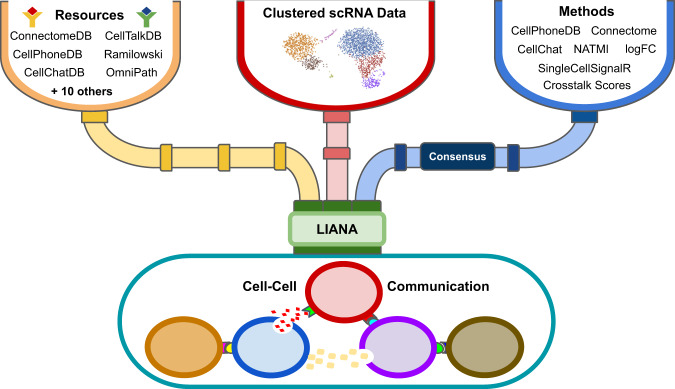
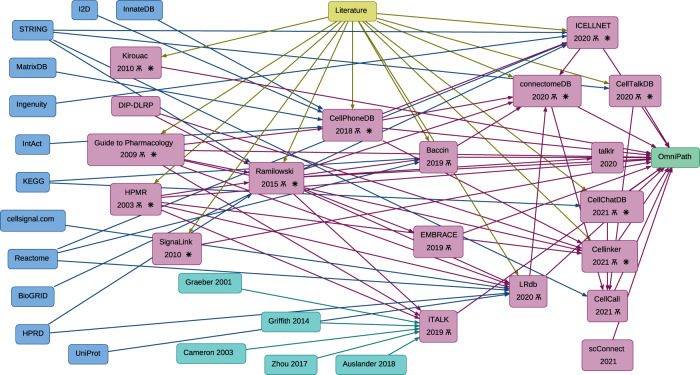
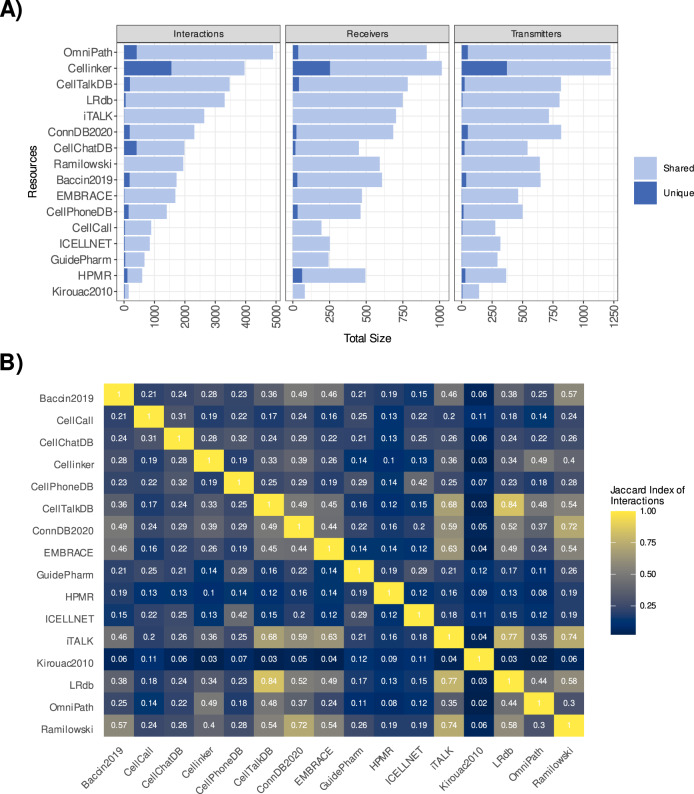
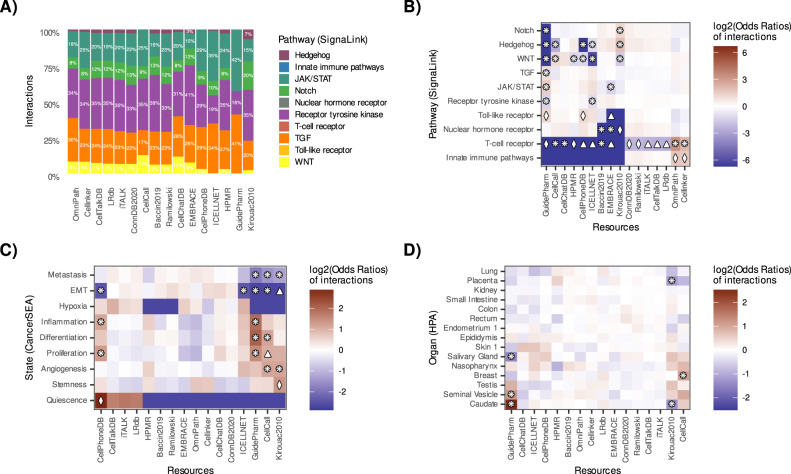
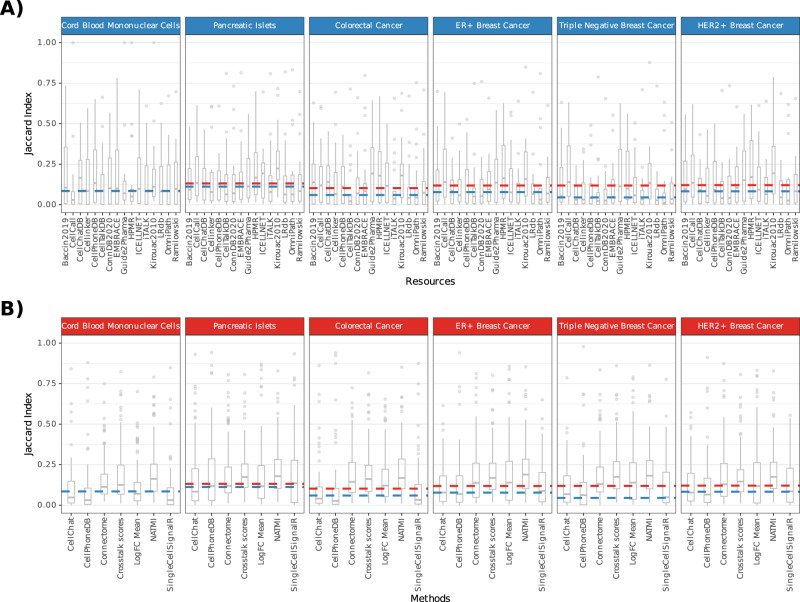
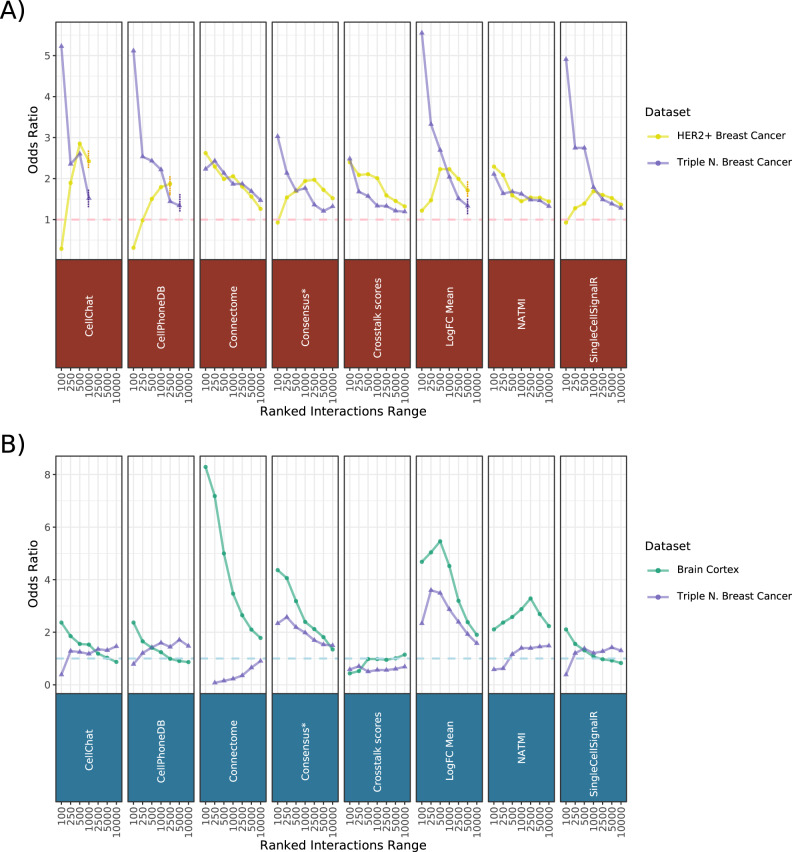
The growing availability of single-cell data, especially transcriptomics, has sparked an increased interest in the inference of cell-cell communication. Many computational tools were developed for this purpose. Each of them consists of a resource of intercellular interactions prior knowledge and a method to predict potential cell-cell communication events. Yet the impact of the choice of resource and method on the resulting predictions is largely unknown. To shed light on this, we systematically compare 16 cell-cell communication inference resources and 7 methods, plus the consensus between the methods’ predictions. Among the resources, we find few unique interactions, a varying degree of overlap, and an uneven coverage of specific pathways and tissue-enriched proteins. We then examine all possible combinations of methods and resources and show that both strongly influence the predicted intercellular interactions. Finally, we assess the agreement of cell-cell communication methods with spatial colocalisation, cytokine activities, and receptor protein abundance and find that predictions are generally coherent with those data modalities. To facilitate the use of the methods and resources described in this work, we provide LIANA, a LIgand-receptor ANalysis frAmework as an open-source interface to all the resources and methods.
Overview
The claims and statistics of this paper haven’t been checked yet.
Free: it reads the open-access text and checks the first 5 claims that cite a source we can check. Create a free account to check every claim.
Integrity signals
Registry
Cites
Statistics
Figures
Verification
Claims the paper makes
The claims and statistics of this paper haven’t been checked yet.
Free: it reads the open-access text and checks the first 5 claims that cite a source we can check. Create a free account to check every claim.
Claims other papers make about this one
Each is checked against this paper’s own text: does it say what the citing paper says it does?
The source backs part of the claim, not all of it — or backs it for a different population, condition or comparison.
In the citing paper
“Among these, LIgand-receptor ANalysis framework (LIANA) consolidates outputs from several inference algorithms to provide a consensus, high-confidence readout of CCC interactions [14].”
From Quantitative profiling of lifespan-dependent cell-cell communication potential reveals dynamic ligand-receptor network shifts across mouse tissues (2026) · cites this paper as [14]
Experimental — accuracy not yet measuredThe source backs part of the claim, not all of it — or backs it for a different population, condition or comparison.
In the citing paper
“The ‘lr_mean’ metric, obtained from the LIANA framework [14], quantifies the average expression level of ligand and receptor genes across interacting cell types and is derived directly from single-cell RNA sequencing data.”
From Quantitative profiling of lifespan-dependent cell-cell communication potential reveals dynamic ligand-receptor network shifts across mouse tissues (2026) · cites this paper as [14]
Experimental — accuracy not yet measuredThe cited source says what the claim attributes to it.
In the citing paper
“CellChat127 and CellPhoneDB128, which also consider heteromeric interaction complexes, and SingleCellSignalR129 were found to be robust to both data and resource noise126.”
From Best practices for single-cell analysis across modalities (2023) · cites this paper as [126]
The cited source says what the claim attributes to it.
In the citing paper
“These databases were found to be biased towards specific pathways, functional categories and tissue-enriched proteins126.”
From Best practices for single-cell analysis across modalities (2023) · cites this paper as [126]
The cited source says what the claim attributes to it.
In the citing paper
“While LIANA systematically scores LR interactions present in a given dataset, it does not explicitly quantify directional changes or network-level expansions and contractions across states or stages.”
From Quantitative profiling of lifespan-dependent cell-cell communication potential reveals dynamic ligand-receptor network shifts across mouse tissues (2026) · cites this paper as [14]
5 more claims about this paper
Create a free account to see every claim other papers make about this one.
Self-check
Percentages, sums and reported differences re-computed from the paper’s own numbers.
The self-check needs the paper’s full text.
Citations
Cites
KEGG: Kyoto Encyclopedia of Genes and Genomes
Kanehisa, M. (2000) · Nucleic Acids Research · doi:10.1093/nar/28.1.27 · Cited by 37,077
KEGG: Kyoto Encyclopedia of Genes and Genomes
Ogata, H., Goto, S., Sato, K., Fujibuchi, W., Bono, H., & Kanehisa, M. (1999) · Nucleic Acids Research · doi:10.1093/nar/27.1.29 · Cited by 31,232
Tissue-based map of the human proteome
Uhlén, M., Fagerberg, L., Hallström, B. M., Lindskog, C., Oksvold, P., Mardinoglu, A., Sivertsson, Å., Kampf, C., Sjöstedt, E., Asplund, A., et al. (2015) · Science · doi:10.1126/science.1260419 · Cited by 15,286
Integrating single-cell transcriptomic data across different conditions, technologies, and species
Butler, A., Hoffman, P., Smibert, P., Papalexi, E., & Satija, R. (2018) · Nature Biotechnology · doi:10.1038/nbt.4096 · Cited by 13,174
Complex heatmaps reveal patterns and correlations in multidimensional genomic data
Gu, Z., Eils, R., & Schlesner, M. (2016) · Bioinformatics · doi:10.1093/bioinformatics/btw313 · Cited by 10,034
SCANPY: large-scale single-cell gene expression data analysis
Wolf, F. A., Angerer, P., & Theis, F. J. (2018) · Genome Biology · doi:10.1186/s13059-017-1382-0 · Cited by 8,881
Inference and analysis of cell-cell communication using CellChat
Jin, S., Guerrero-Juarez, C. F., Zhang, L., Chang, I., Ramos, R., Kuan, C.-H., Myung, P., Plikus, M. V., & Nie, Q. (2021) · Nature Communications · doi:10.1038/s41467-021-21246-9 · Cited by 8,409
Spatial reconstruction of single-cell gene expression data
Satija, R., Farrell, J. A., Gennert, D., Schier, A. F., & Regev, A. (2015) · Nature Biotechnology · doi:10.1038/nbt.3192 · Cited by 7,055
Szklarczyk, D., Morris, J. H., Cook, H., Kuhn, M., Wyder, S., Simonovic, M., Santos, A., Doncheva, N. T., Roth, A., Bork, P., et al. (2017) · Nucleic Acids Research · doi:10.1093/nar/gkw937 · Cited by 6,980
UniProt: the universal protein knowledgebase in 2021
The UniProt Consortium, Bateman, A., Martin, M.-J., Orchard, S., Magrane, M., Agivetova, R., Ahmad, S., Alpi, E., Bowler-Barnett, E. H., Britto, R., et al. (2021) · Nucleic Acids Research · doi:10.1093/nar/gkaa1100 · Cited by 6,372
Cited by
Items 301–400 of 775
Computational single cell oncology: state of the art
Paas-Oliveros, E., Lemus, E. H., & de Anda‐Jáuregui, G. (2023) · Frontiers in Genetics · doi:10.3389/fgene.2023.1256991 · Cited by 7
Wu, J., Liu, X., Huang, S., & Liu, W. (2025) · International Journal of Molecular Sciences · doi:10.3390/ijms26072933 · Cited by 6
“We analyzed the single-cell data set using Python (version 3.12.7) and LIANA [53] (version 0.1.9, https://saezlab.github.io/liana/, accessed on 12 September 2024) to explore ligand–receptor interactions among cells.”
InfluentialZhang, Y., Zhu, J., Hu, K., Qiu, J., & Zhang, F. (2025) · Frontiers in Immunology · doi:10.3389/fimmu.2025.1563593 · Cited by 6
Multi-physiology modeling of the immune system in the era of precision immunotherapy
Hong, S.-H., & Park, K. (2025) · Frontiers in Immunology · doi:10.3389/fimmu.2025.1548768 · Cited by 6
Convergent flow-mediated mesenchymal force drives embryonic foregut constriction and splitting
Yan, R., Hoffmann, L. A., Oikonomou, P., Li, D., Lee, C., Gill, H. K., Mongera, A., Nerurkar, N. L., Mahadevan, L., & Tabin, C. J. (2025) · Nature Communications · doi:10.1038/s41467-025-65644-9 · Cited by 6
“LIANA framework (https://github. com/saezlab/liana-py) 62,63 was used to analyze potential ligand-receptor communication pathways between the dorsal epithelium and the dorsal mesenchymal cell types.”
Hou, S., Ma, W., & Zhou, X. (2025) · Nature Communications · doi:10.1038/s41467-025-66272-z · Cited by 6
“Notably, among the other methods, methods employing p -values, such as CellChat and CPDB, generally outperformed others, which aligns with previous benchmarking studies 16,17 , highlighting the value of rigorous statistical approaches in CCC analysis.”
Fibroblast specialization across microanatomy in a single-cell atlas of human Achilles tendon
Cohen, C., Mimpen, J. Y., Kurjan, A., Paul, C., Sharma, S., Ramos‐Mucci, L., Ikwuanusi, C. T., Aksu, A. C., Serebour, T. B., Nikolic, M., et al. (2026) · American Journal of Physiology-Cell Physiology · doi:10.1152/ajpcell.00838.2025 · Cited by 6
PD-1/PD-L1 Signaling in Non-ICI Myocarditis
Yousif, L. I. E., Sijtema, A. G., Appels, Y., van den Berg, P. F., Aboumsallem, J. P., Manintveld, O. C., Duncker, D. J., de Boer, R. A., & Meijers, W. C. (2026) · JACC Basic to Translational Science · doi:10.1016/j.jacbts.2026.101539 · Cited by 6
Nonn, O., Debnath, O., Valdes, D. S., Sallinger, K., Secener, K., Haider, S., Fischer, C., Tiesmeyer, S., Nimo, J., Kuenzer, T., et al. (2022) · bioRxiv (Cold Spring Harbor Laboratory) · doi:10.1101/2022.10.10.511539 · Cited by 6
Cid, L. L., Wong, J., Botana, I. F., Paul, Y., Wierz, M., Floerchinger, A., Gonder, S., Pagano, G., Chazotte, M., Bestak, K., et al. (2022) · bioRxiv (Cold Spring Harbor Laboratory) · doi:10.1101/2022.12.15.519719 · Cited by 6
Dai, M., Torok, T., Sun, D., Shende, V., Wang, G., Lin, Y., Wu, S. J., Rukshin, A., Fishell, G., & Chen, F. (2025) · bioRxiv (Cold Spring Harbor Laboratory) · doi:10.1101/2025.11.26.690796 · Cited by 7
“These discrepancies stem from divergent LR databases, the inclusion of interactions lacking experimental validation, and distinct model architectures 1,9 .”
Spns1-dependent endocardial lysosomal function drives valve morphogenesis through Notch1-signaling
Chávez, M. N., Arora, P., Meer, M., Marques, I. J., Ernst, A., Castro, R. A. M., & Mercader, N. (2024) · iScience · doi:10.1016/j.isci.2024.111406 · Cited by 5
Griffiths, E. A., Srivastava, P., Gomez, E. C., Matsuzaki, J., Odunsi, K. O., Dillon, L. W., Mukherjee, D., Hourigan, C. S., Peng, J. J., Bandyopadhyay, S., et al. (2025) · Blood Neoplasia · doi:10.1016/j.bneo.2025.100106 · Cited by 5
“40 To identify potential interactions which were speci fi c to DVN therapy, we compared patients on this study vs patients receiving decita-bine monotherapy.”
Yang, H., Dungan, M. E., Madhu, B., Beyries, K. A., Wang, X., Kilpatrick, R., Chen, B., Oh, S., Berkowitz, M., Smith, D. G., et al. (2026) · Gut · doi:10.1136/gutjnl-2025-337343 · Cited by 5
Microglia Display Heterogeneous Initial Responses to Disseminated Tumor Cells
Tsuji, T., Hirose, H., Sugiyama, D., Shindo, M., Hartantyo, R. Y., Saito, Y., Tatematsu, T., Sugio, S., Sanbo, M., Hirabayashi, M., et al. (2025) · Cancer Research · doi:10.1158/0008-5472.can-25-3425 · Cited by 6
“Likewise, an exploratory LIANA-based cell-to-cell communication analysis (23) suggested that neutrophils provide the strongest putative input to microglia, whereas microglia deliver the strongest putative output to T cells, with the underlying LR composition heterogeneity across microglial…”
A human pathophysiological 3D-bone marrow model reveals immune and stromal cell heterogeneity
Giannini, M., Campione, G., Torcq, L., Donadelli, S., Bencheikh, M., Bounaud, S., Jeanpierre, S., Geistlich, K., Maguer‐Satta, V., Lefort, S., et al. (2026) · Communications Biology · doi:10.1038/s42003-025-09433-6 · Cited by 5
“Cellular interactions between the different fractions of the 3D-BOM model were analyzed using the consensus LIANA package 33 , which integrates multiple expert-curated ligand – receptor resources, including cytokines, extracellular matrix components, secreted enzymes, and transporters.”
Pan, Y., Yan, H., Han, J., Wu, R., Xu, C., Lei, G., Ma, X., Guan, Y., Li, Z., Deng, J., et al. (2026) · Cell Discovery · doi:10.1038/s41421-025-00861-6 · Cited by 6
Acinar Metaplastic Cells Generate Semi-Homogeneous Niches and Interact With Immune Cells
Arcila-Barrera, S., Yosefov-Levi, O., Shovman, Y., Sun, Y., Chen, C.-Y., He, J., Lubek, L., Gläser, B., Tornovsky-Babeay, S., Atlan, K., et al. (2026) · Gastroenterology · doi:10.1053/j.gastro.2025.12.014 · Cited by 5
Single-cell T-cell landscape in atherosclerosis: implications for targeted therapy and beyond
Luo, R., Liu, S., Ouyang, X., Zhou, E., & Jiang, L. (2026) · Journal of Translational Medicine · doi:10.1186/s12967-026-08334-4 · Cited by 5
“Furthermore, differences in the results of cellular communication analyses in scRNA-seq studies at different AS stages may be due in part to differences in the methods and resources used to make communication predictions [62].”
Zhou, L., Wang, X., Peng, L., Chen, M., & Wen, H. (2024) · Journal of Cellular and Molecular Medicine · doi:10.1111/jcmm.18372 · Cited by 6
“9 Thus, many computational methods have been used to find potential PPIs.”
MethodZhu, S., Jaworski, A., & Meijers, R. (2025) · Current Opinion in Neurobiology · doi:10.1016/j.conb.2025.102999 · Cited by 5
“Various computational tools leverage information about extracellular PPIs to predict “sender” and “receiver” cells, with respect to known signaling pathways, from gene expression data [58].”
Duan, L., Hashemi, M., Ngom, A., & Rueda, L. G. (2025) · Frontiers in Molecular Biosciences · doi:10.3389/fmolb.2025.1547231 · Cited by 5
Abedini‐Nassab, R., & Emamgholizadeh, A. (2022) · Micromachines · doi:10.3390/mi13122177 · Cited by 5
Transcriptomic-based roadmap to the healthy and ozone-exposed lung
Moos, P. J., Cheminant, J. R., Adhikari, U., & Venosa, A. (2023) · Current Opinion in Toxicology · doi:10.1016/j.cotox.2023.100445 · Cited by 5
Application of Mass Cytometry Platforms to Solid Organ Transplantation
Zhang, W., Sen, A., Peña, J. K., Reitsma, A. J., Alexander, O. C., Tajima, T., Martinez, O. M., & Krams, S. M. (2024) · Transplantation · doi:10.1097/tp.0000000000004925 · Cited by 5
Single-Cell RNA Sequencing and Its Applications in Pituitary Research
Yang, S., Deng, C., Pu, C., Bai, X., Tian, C., Chang, M., & Feng, M. (2024) · Neuroendocrinology · doi:10.1159/000540352 · Cited by 5
“Furthermore, these methods are constrained to single species and do not encompass interspecies communication [75].”
Tsuruda, M., Morino‐Koga, S., Zhao, X., Usuki, S., Yasunaga, K.-I., Yokomizo, T., Nishinakamura, R., Suda, T., & Ogawa, M. (2024) · Stem Cell Reports · doi:10.1016/j.stemcr.2024.10.005 · Cited by 5
Abedini‐Nassab, R., Ahmadiasl, S., & Dan, Y. (2023) · Journal of Magnetism and Magnetic Materials · doi:10.1016/j.jmmm.2023.170481 · Cited by 5
Helms, H. R., Oyama, K. A., Davies, A. E., Langer, E. M., & Bertassoni, L. E. (2024) · bioRxiv (Cold Spring Harbor Laboratory) · doi:10.1101/2024.02.01.578499 · Cited by 5
Zhang, M., Zhang, B., Tao, Q.-Q., Wang, X.-Y., Guan, X.-X., Dong, Z., Guo, X., Qi, W., Cheng, W.-Z., Zhang, X., et al. (2025) · European Journal of Pharmacology · doi:10.1016/j.ejphar.2025.177867 · Cited by 4
ParTIpy: a scalable framework for archetypal analysis and Pareto task inference
Schäfer, P. S. L., Zimmermann, L., Burmedi, P. L., Walfisch, A., Goldenberg, N., Yonassi, S., Tamar, E. S., Adler, M., Tanevski, J., Flores, R. O. R., et al. (2026) · Molecular Systems Biology · doi:10.1038/s44320-026-00209-6 · Cited by 4
“In practice, the kernel-based aggregation of z-scores described above yields highly similar gene rankings (see Appendix Fig.”
InfluentialSelf-citationA dynamic model for Waddington’s landscape accounting for cell-to-cell communication
Merkt, S., Fuhrmann, L., Dudkin, E., Schlitzer, A., Niethammer, B., & Hasenauer, J. (2025) · Mathematical Biosciences · doi:10.1016/j.mbs.2025.109537 · Cited by 4
Romero, S., Kumar, V., Chapkin, R. S., & Cai, J. J. (2026) · APL Quantum · doi:10.1063/5.0317792 · Cited by 5
Dai, Y., Lin, S., Wu, J., Yang, S., Yang, L., Wang, X., Li, J., Zhao, L., Chen, D., Zhang, B., et al. (2025) · Signal Transduction and Targeted Therapy · doi:10.1038/s41392-025-02489-0 · Cited by 4
de Deckersberg, E. C., Lei, Y., Krivec, N., Huyghebaert, A., Duong, M. C., Janssens, C., Regin, M., Tšuiko, O., Movahedi, K., Verhulst, S., et al. (2025) · Nature Communications · doi:10.1038/s41467-025-66766-w · Cited by 4
“Regulon analysis was carried out using Scenic 56 , and the cell-to-cell communication analysis was done using Liana 57 .”
Cheng, X., Huang, H., Su, Y., Nie, Q. H., Zou, X., & Jin, S. (2026) · CSIAM transactions on life sciences. · doi:10.4208/csiam-ls.so-2025-0022 · Cited by 5
“Systematic comparisons reveal that choices of resources and methods substantially impact inference results, thereby influencing downstream biological interpretations [168].”
Functional Nucleic Acids for Cell–Cell Interactions
Zhang, Z., Liu, Y., Chen, Q., Liu, Y., Tan, Y., Man, Y., Cheng, Z., Shao, K., Wang, Q., Du, S., et al. (2025) · Small · doi:10.1002/smll.202512348 · Cited by 4
Arrieta, V. A., Benotmane, J. K., Du, R. Y., Habashy, K. J., Zhao, J., Najem, H., Wang, S., Hou, D., Katz, J. L., Vazquez-Cervantes, G. I., et al. (2025) · Neuro-Oncology · doi:10.1093/neuonc/noaf213 · Cited by 4
Ma, H., Hugues, N., Voice, K., Peter, J., Таранов, А., Thapa, C., Roskin, K. M., & Luo, Y. (2026) · Genome Medicine · doi:10.1186/s13073-026-01687-x · Cited by 4
“Ligand–receptor interaction analysis was performed using ligand–receptor interactions analysis (LIANA) to infer intercellular communication between identified cell populations [34].”
InfluentialHincapie, R., Mantovani, O. M., McFaline‐Figueroa, J. L., & Correa, S. (2026) · Med-X · doi:10.1007/s44258-026-00087-5 · Cited by 4
“Readers are referred to the following reviews for more information regarding computational tools for cell-cell communications [134] and for detailed comparisons between similar methods, including NicheNet or CellPhoneDB [135].”
Mapping and engineering the human cell–cell interactome
Carlo, D. D., Morsut, L., McCain, M. L., Wright, H. J., Abedi, M. H., Yamada‐Hunter, S. A., Zhang, J. Z., Backus, K. M., Chung, E., Wang, Y., et al. (2026) · Nature Biotechnology · doi:10.1038/s41587-026-03177-2 · Cited by 4
“…that ligand–receptor inference from transcriptomics is hypothesis generating and can yield false positives and inconsistent calls across resources/methods and because expression does not guarantee properly processed, localized or engaged proteins with associated co-receptors 42,43 .”
Fifteen challenges for generative AI applications to cell biology
Dupire, L., Khan, A. A., Karaletsos, T., Kelley, S., Lundberg, E. K., Ma, J., Paull, E., Quake, S. R., Rabadán, R., Cassius, R., et al. (2026) · Cell · doi:10.1016/j.cell.2026.07.004 · Cited by 4
SEGCECO: Subgraph Embedding of Gene expression matrix for prediction of CEll-cell COmmunication
Vasighizaker, A., Hora, S., Zeng, R., & Rueda, L. G. (2024) · Briefings in Bioinformatics · doi:10.1093/bib/bbae160 · Cited by 4
collectNET: a web server for integrated inference of cell–cell communication network
Pan, Y., Gao, Z., Cui, X., Li, Z., & Jiang, R. (2024) · Database · doi:10.1093/database/baae098 · Cited by 4
“Nonetheless, previous benchmarking studies have observed significant differences among the inference results of these methods [14, 15].”
BackgroundResultXue, Z., Xuan, H., Lau, K. H., Su, Y., Wegener, M., Li, K., Turner, L., Adams, M., Shi, X., & Wen, H. (2025) · Nature Communications · doi:10.1038/s41467-025-57926-z · Cited by 4
“4.0 69,70 .”
InfluentialNagai, J. S., Maié, T., Schaub, M. T., & Costa, I. G. (2025) · Bioinformatics · doi:10.1093/bioinformatics/btaf288 · Cited by 4
“Specifically, it allows the study of cell–cell communication (CCC) via the expression patterns of cognate ligand–receptor (LR) pairs across cells detected via scRNA-seq (Armingol et al. 2021, Dimitrov et al. 2022).”
Self-citationLakshmipathi, M., Dartée, N., Puchkina, A., Santos, M. D. L., de Bruin, I. J., Hamer, G., van Pelt, A. M. M., Lopes, S. M. C. D. S., Mulder, C. L., & Baarends, W. M. (2025) · Human Reproduction Update · doi:10.1093/humupd/dmaf012 · Cited by 4
Matsui, H., Nagamachi, A., Koizumi, M., Kudo, R., Ajiro, M., Harada, H., Harada, Y., Shichino, S., & Yoshimi, A. (2025) · Scientific Reports · doi:10.1038/s41598-025-06477-w · Cited by 4
“We analyzed scRNA-seq data using LIANA 35 to investigate ligand-receptor interactions within normal HSPCs, within GL cells, and between R525H and GL cells.”
Dual-consistency graph-spectral embedding joint learning for multi-view single-cell clustering
Li, A., Ji, T., Wang, C., Gu, F., Gao, T., & Zhou, L. (2025) · Knowledge-Based Systems · doi:10.1016/j.knosys.2025.114149 · Cited by 4
Yu, S., Kong, H., Luo, H., Zhao, X., Zhu, G., Feng, X., Yang, J., Wu, X., Dai, Y., Wu, C.-W. G., et al. (2025) · Chinese Medical Journal · doi:10.1097/cm9.0000000000003826 · Cited by 4
IGHA1 and IGHG1 Expression Panel Predicts Anti‐PD‐L1 Response in Muscle‐Invasive Bladder Cancer
Zhou, L., Yu, G., Zhu, J., Li, M., & Xu, B. (2025) · Molecular Carcinogenesis · doi:10.1002/mc.70033 · Cited by 4
“Using CellphoneDB [12] and LIANA [13], we investigated the cell – cell interaction network among the cell types identified in our present work.”
Molecularly stratified hypothalamic astrocytes are cellular foci for obesityPreprint
Harkany, T., Tretiakov, E. O., Varela, L., Jarc, J., Rebernik, P., Newbold, S. A., Keimpema, E., Verkhratsky, A., Horváth, T. L., & Romanov, R. A. (2024) · Research Square · doi:10.21203/rs.3.rs-3748581/v1 · Cited by 4
Hong, Y., Susanti, S., Mills, M. L., Gilroy, K. L., Hu, Z., Velez-Bravo, F. D., Ostapiuk, A., Lannagan, T. R. M., White, M., Ridgway, R. A., et al. (2025) · Research Square · doi:10.21203/rs.3.rs-6812365/v1 · Cited by 4
Choroid plexus sex differences in secretory signalling and immune compartmentsPreprint
Kaiser, K., Silva-Vargas, V., von Allmen, L., Sakoparnig, T., & Doetsch, F. K. (2025) · bioRxiv (Cold Spring Harbor Laboratory) · doi:10.1101/2025.08.15.670566 · Cited by 5
Feng, S., Wang, Z., Jin, Y., & Xu, S. (2024) · PLoS ONE · doi:10.1371/journal.pone.0305857 · Cited by 3
NOTCH Signaling Networks in Perivascular Adipose Tissue
Potts, C. M., Yang, C., & Liaw, L. (2025) · Arteriosclerosis Thrombosis and Vascular Biology · doi:10.1161/atvbaha.124.321690 · Cited by 3
Kim, H., Choi, E., Shim, Y., & Kwon, J. (2025) · International Journal of Molecular Sciences · doi:10.3390/ijms26157110 · Cited by 3
“A wide range of computational tools has been developed to infer and analyze cell–cell communication using single-cell transcriptomic data [6].”
Self-citationWaede, M., Kingo, C., Damsbo, K., Joergensen, M., Oubounyt, M., Gjerstorff, M. F., Thomassen, M., Baumbach, J., Moeller, J. B., Elkjaer, M. L., et al. (2025) · Annals of Neurology · doi:10.1002/ana.78004 · Cited by 3
Du, Z., Chu, C., Shi, W., Luo, N., Lu, Y., Wang, H., Zhao, B., Xiong, H., Yang, Z., & Jiang, T. (2025) · Nature Communications · doi:10.1038/s41467-025-63204-9 · Cited by 3
“GeoMean is short for geometric mean, which is commonly used to calculate a communication score for each LR pair between different cell types.”
Ecdysone signaling-induced dumpless1 expression controls nurse cell dumping in Drosophila oogenesis
Li, J., Pan, Z., Peng, X., Feng, Y., Wu, J., Liang, F., Feng, Q., Yu, X., & Deng, H. (2025) · Nature Communications · doi:10.1038/s41467-025-63973-3 · Cited by 3
“This intricate communication network is crucial for maintaining homeostasis, guiding development and in fl uencing disease processes 4 .”
Cai, M., Adam, M., Duan, X., Guo, F., & Zheng, Y. (2025) · Science Advances · doi:10.1126/sciadv.aea1212 · Cited by 3
“Cell–cell interactions were determined using CellChat and Liana ( 76 , 77 ).”
Single-cell, multi-region profiling of the macaque brain across the lifespan
Yang, W., Watkins, K., DeCasien, A. R., O’Neill, M. B., Bohlen, M. O., O’Day, D. R., Smith, E. A., Duran, M., 邱, 承., Meleshko, A., et al. (2026) · Cell · doi:10.1101/2025.10.31.685880 · Cited by 3
Sirc, N., Smolander, J., Kumari, A. N., Liu, J., Lee, M. H., Lahdensuo, K., Järvinen, R., Tornberg, S., Lin, L., Laitinen, H. K., et al. (2026) · Cancer Research Communications · doi:10.1158/2767-9764.crc-25-0447 · Cited by 3
“We then examined putatively deregulated ligand–receptor pairs in response to the treatments across CD4 + and CD8 + T, NK, B, and myeloid cell populations using LIANA+ (23, 24).”
MIF-CD74 signaling drives immune modulation in medulloblastoma
Draper, B., You, Z., Thompson, D., Guo, X., Morcavallo, A., Pino, D. C., Nery, C. L. G., Shrestha, S., Bowers, C., Himsworth, C., et al. (2026) · Neuro-Oncology · doi:10.1093/neuonc/noag020 · Cited by 3
Wang, J., Xia, J., Su, Y., & Zheng, C.-H. (2026) · Briefings in Bioinformatics · doi:10.1093/bib/bbag094 · Cited by 3
“Mining the potential information in single-cell transcriptome data has become an important approach for cell type recognition [12], marker gene identification [13, 14], gene regulatory networks inference [15, 16] and analysis of cell–cell interactions [17–19].”
Decoding the immune–tumor synapse for data-driven design of next-generation immunotherapies
van Rossum, I., van Spriel, A. B., & van Mierlo, G. (2026) · Trends in Immunology · doi:10.1016/j.it.2025.12.009 · Cited by 3
Aguiari, P., Villani, V., Liu, Y.-Y., Carraro, G., Brent, G. A., Perin, L., & Milanesi, A. (2026) · JCI Insight · doi:10.1172/jci.insight.197761 · Cited by 3
Identifying condition-related cell-cell communication events using supervised tensor analysis
Dai, Q., Yang, J., & Epstein, M. P. (2026) · The American Journal of Human Genetics · doi:10.1016/j.ajhg.2026.05.005 · Cited by 3
Lin, C., Huang, S., Yang, L., Wang, Z. P., Zhou, H., Zhang, Q., & Zhang, X. (2026) · Frontiers in Immunology · doi:10.3389/fimmu.2026.1855906 · Cited by 3
Wilson, C. G., Acharya, M. P., Karsch, L., Duck, L. W., Twumasi-Ankrah, N., Wang, Y., Shen, H., Frey, B. F., McKee, A. R., Oza, V. H., et al. (2026) · Nature Immunology · doi:10.1038/s41590-026-02656-7 · Cited by 3
Marchand, V., Laplane, L., Valensi, L., Plo, I., Aglave, M., Silvin, A., Pasquier, F., Porteu, F., Vainchenker, W., Selimoglu‐Buet, D., et al. (2024) · iScience · doi:10.1016/j.isci.2024.111522 · Cited by 3
Zhang, T., Wu, Z., Li, L., Ren, J., Zhang, Z., Zhang, J., & Wang, G. (2025) · Biomolecules · doi:10.3390/biom15030342 · Cited by 3
“These pieces of information have been successfully applied in previous methods such as LIANA [13] and CellChat to predict known and unknown cell–cell interactions.”
Cardone, M., Baghdassarian, H., Khalaj, M., Sivakumar, K. K., Hwang, S., Gebreyohannes, S., Takeda, K., Jang, Y., Lewis, N. E., Norcross, M. A., et al. (2025) · Frontiers in Immunology · doi:10.3389/fimmu.2025.1612451 · Cited by 3
RIDDEN: Data-driven inference of receptor activity from transcriptomic data
Barsi, S., Varga, E., Dimitrov, D., Sáez-Rodríguez, J., Hunyady, L., & Szalai, B. (2025) · PLoS Computational Biology · doi:10.1371/journal.pcbi.1013188 · Cited by 4
Self-citationWang, Y. (2025) · Wiley Interdisciplinary Reviews Computational Statistics · doi:10.1002/wics.70045 · Cited by 3
“These cells exist within complex environments and interact through cell–cell communication networks, introducing further intricacies to the analysis (Dimitrov et al. 2022; Kumar et al. 2018).”
Identification of ephrin-A1–EphA2 signalling as a potential target for fracture prevention
Movérare‐Skrtic, S., Nethander, M., Li, L., Chu, N. T. L., Dregval, O. A., Tian, X., Nilsson, K. H., Henning, P., Lerner, U. H., Chagin, A. S., et al. (2026) · Nature Communications · doi:10.1038/s41467-026-69863-6 · Cited by 3
“For this analysis, we utilised the Rank Aggregate method from the LIANA package, which integrates and cross-validates predictions from multiple tools, including Cell-Chat, CellPhoneDB, CellSignalIR, Connectome, and NATMI 32 .”
Wang, J., Qiao, T.-J., Zheng, C.-H., Liu, J., & Shang, J. (2024) · IEEE Transactions on Computational Biology and Bioinformatics · doi:10.1109/tcbb.2024.3459960 · Cited by 3
Single-cell analysis in endometrial research
Cao, D., Wang, J., Yao, Y., & Yeung, W. S. B. (2022) · Reproductive and Developmental Medicine · doi:10.1097/rd9.0000000000000037 · Cited by 3
Decoding spatial transcriptomics: Current trends and future prospects in data analysis methodologies
Li, R., Chen, X., & Yang, X. (2024) · Chinese Science Bulletin (Chinese Version) · doi:10.1360/tb-2024-0332 · Cited by 3
Delgado, A. P., Nemajerová, A., Nelson, B. J., Rao, M., Li, J., Marchenko, N. D., Preall, J. B., Moll, U. M., Egeblad, M., & Powers, S. (2022) · bioRxiv (Cold Spring Harbor Laboratory) · doi:10.1101/2022.05.05.490693 · Cited by 3
Hockey, L., Mulay, O., Xiong, Z., Tan, S. X., Khosrotehrani, K., Nefzger, C. M., & Nguyen, Q. H. (2024) · bioRxiv (Cold Spring Harbor Laboratory) · doi:10.1101/2024.02.28.582639 · Cited by 3
“LIANA is a different tool that runs multiple CCI methods on a single sample and calculates a consensus rank for interactions [44].”
MethodWang, N., Song, Y., Hong, W., Mo, H., Song, Z., Dai, W., Wang, L., Zhang, H., Zhang, Y., Zhang, Q., et al. (2024) · Research Square · doi:10.21203/rs.3.rs-4376986/v1 · Cited by 3
Wang, N., Song, Y., Hong, W., Mo, H., Song, Z., Dai, W., Wang, L., Zhang, H., Zhang, Y., Zhang, Q., et al. (2024) · Research Square · doi:10.21203/rs.3.rs-4376986/v2 · Cited by 3
Sallese, M. R., Aiello, V., Villa, C. E., Riso, P. L., & Testa, G. (2025) · bioRxiv (Cold Spring Harbor Laboratory) · doi:10.1101/2025.02.11.637633 · Cited by 3
DCHS1 Modulates Forebrain Proportions in Modern Humans via a Glycosylation ChangePreprint
Pravatà, V. M., Forero, A., Martin, A. C. A., Berto, G., Heymann, T., Fast, L., Mann, M., Riesenberg, S., & Cappello, S. (2025) · bioRxiv (Cold Spring Harbor Laboratory) · doi:10.1101/2025.05.14.654031 · Cited by 3
mcBERT: Patient-Level Single-cell Transcriptomics Data RepresentationPreprint
von Querfurth, B., Lohmöller, J., Pennekamp, J., Bleckwehl, T., Kramann, R., Wehrle, K., & Hayat, S. (2024) · bioRxiv (Cold Spring Harbor Laboratory) · doi:10.1101/2024.11.04.621897 · Cited by 3
Liñares-Blanco, J., Schäfer, P. S. L., Zimmermann, L., Ferreira, R. M., Toro‐Domínguez, D., Carmona‐Sáez, P., Tanevski, J., Alarcón-Riquelme, M. E., Eadon, M. T., Flores, R. O. R., et al. (2026) · bioRxiv (Cold Spring Harbor Laboratory) · doi:10.64898/2026.04.28.721379 · Cited by 3
ContextFlow: Context-Aware Flow Matching For Trajectory Inference From Spatial Omics DataPreprint
Rathod, S., Ceccarelli, F., Holden, S. B., Lió, P., Zhang, X., & Tanveski, J. (2025) · arXiv (Cornell University) · doi:10.48550/arxiv.2510.02952 · Cited by 3
“The dynamics of complex cellular processes is affected by the tissue microenvironment, where cells engage in reciprocal communication with their neighbors (Dimitrov et al., 2022; Tanevski et al., 2025).”
Fattori, S., Gorvel, L., Rouviére, M.-S., Granjeaud, S., Amara, A. B., Richaud, M., Boucherit, N., Tarpin, C., Pakradouni, J., Hedou, J. J., et al. (2025) · Cancer Immunology Research · doi:10.1158/2326-6066.cir-24-1285 · Cited by 2
Fusion-driven oncogenic programs shape the immune landscape in translocation renal cell carcinoma
Konda, P., Wakolbinger, A. J., Cui, Y., Oliveira, G. R. D., Laimon, Y. N., Weiss, C. N., Seager, M. D., Deodhar, R., Li, J., Matar, S., et al. (2026) · Nature Communications · doi:10.1038/s41467-026-76858-w · Cited by 2
Unraveling cellular dynamic changes in tumor evolution induced by long-term low dose-rate radiation
Li, W., Pei, W., Wang, Y., Nie, J., Hu, G., Zhang, Y., Cao, Z., Chen, Z., Miao, K., Chen, Y., et al. (2025) · British Journal of Cancer · doi:10.1038/s41416-025-03128-9 · Cited by 2
“To ensure the robustness of the result, we validated the ANGPTL4-SDC4 interaction using fi ve other intercellular communication prediction methods listed in Table S5 with the LIANA package [45].”
Ladd, S., Talkington, A., O’Sullivan, M., Barnes, R. W., Wessel, R. E., Hanson, G. F., & Dolatshahi, S. (2025) · Cellular and Molecular Bioengineering · doi:10.1007/s12195-025-00857-y · Cited by 2
“To infer these edges, we used the LIgand-receptor ANalysis frAme-work (LIANA), a wrapper which implements multiple LR databases and inference methods to infer and prioritize interactions which appear in a consensus of method outputs [31].”
InfluentialFibrinogen triggers perivascular fibroblast activation in a mouse model of cortical ischemic stroke
Santamaría, J. C. M., Fehlberg, C., Conforti, P., Ness, J. N., Justiniano, F. G., Manzitti, P., Bucher, F., Lee, J. K., & Schachtrup, C. (2025) · iScience · doi:10.1016/j.isci.2025.113834 · Cited by 2
Wu, J., Yin, T., Zhang, Z., Yin, R., Metwally, E., Li, K., Xu, Y., Zhao, H., Zheng, S., Wei, L., et al. (2025) · Gene · doi:10.1016/j.gene.2025.149858 · Cited by 2
Targeting the HMGB1-IL32 pathway to alleviate T cell exhaustion in epithelial ovarian cancer
Murmu, A., & Győrffy, B. (2025) · GeroScience · doi:10.1007/s11357-025-01963-5 · Cited by 2
“To assess the consistency of our CellChat results, we used LIANA version 0.1.14 [22] for ligand-receptor analysis.”
InfluentialCui, J. Z., Zhao, X., Hao, J., Liu, X., Wang, W., He, L., Wang, Y., Rong, J., Qiu, C., Chen, D., et al. (2025) · Antioxidants · doi:10.3390/antiox14121499 · Cited by 2
“0, CellTalkDB, and CellCall, which systematically quantify putative signaling events by integrating ligand and cognate receptor expression with structural interaction data [28–31].”
Spatially Resolved Profiling of Compartmentalized Muscle and Brain Inflammation
Dobbertin, T., & Schirmer, L. (2025) · European Journal of Immunology · doi:10.1002/eji.70119 · Cited by 2
“Several computational frameworks, like LIANA, which aggregates multiple CCC tools [ 36 ], CellChat, focusing on pathway-level activity [ 37 ], and NicheNet, linking ligands to downstream targets [ 38 ], offer robust solutions to predict CCC events.”
Unveiling critical signaling pathways in the murine salivary gland and the role of midkine
Wrynn, T., Osinski, J. M., Sinha, S., & Romano, R.-A. (2026) · iScience · doi:10.1016/j.isci.2026.114852 · Cited by 2
Tang, C., Zhou, Y., Xiao, X., Dong, L., Yu, L., Li, Q. Y., Xiao, G., & Xu, L. (2026) · Briefings in Bioinformatics · doi:10.1093/bib/bbag060 · Cited by 3
“For cell–cell communication analysis, we used two distinct frameworks, LIANA [33] and SpaTalk [14], for independent analysis.”
Jin, Z., Tang, Z., Li, X., Zhang, K., Xie, Z., & Zhang, N. (2026) · Genome biology · doi:10.1186/s13059-026-04043-9 · Cited by 2
“As highlighted by Dimitrov et al., CCC inference heavily depends on these prior-knowledge resources, yet existing databases differ substantially in their content [20].”
Metadata
- Authors
- Dimitrov, D., Türei, D., Garrido-Rodriguez, M., Burmedi, P. L., Nagai, J. S., Boys, C., Ramirez Flores, R. O., Kim, H., Szalai, B., Costa, I. G., Valdeolivas, A., Dugourd, A., & Saez-Rodriguez, J.
- Affiliations
- Heidelberg University (DE)
- Universitätsklinikum Aachen (DE)
- Semmelweis University (HU)
- F. Hoffmann-La Roche AG (CH)
- ORCID
- Venue
- Nature Communications
- Published
- 2022-06-09
- Volume
- 13
- Issue
- 1
- Pages
- 3224-3224
- ISSN
- 2041-1723 (ISSN-L)
- PMC
- PMC9184522
- OpenAlex
- W4281716326
- Semantic Scholar
- abb7218aa6062dc1fa5f83e6f9210c63270cb0fa
- Cited by
- 664
- References
- 101
- Citations by year
- 2026: 215 · 2025: 189 · 2024: 144 · 2023: 72 · 2022: 40
- FWCI
- 37.13
- Type
- journal article
- Language
- en
- Open access
- gold
- doi.org
- Licence
- cc-by
- creativecommons.org/licenses/by/4.0 (tdm)
- creativecommons.org/licenses/by/4.0 (vor)
- Locations
- Nature Communications (publishedVersion, cc-by)
- bioRxiv (Cold Spring Harbor Laboratory) (acceptedVersion, cc-by-nd)
- Research Square (acceptedVersion, cc-by)
- PubMed Central (publishedVersion, cc-by)
- PubMed (publishedVersion)
- RePEc: Research Papers in Economics (submittedVersion)
- DOAJ (DOAJ: Directory of Open Access Journals) (submittedVersion)
- RWTH Publications (RWTH Aachen) (submittedVersion, other-oa)
- RWTH Publications (RWTH Aachen)
- Funders
- European Commission (HORIZON2020, 860329)
- Deutsche Forschungsgemeinschaft (CRU344)
- Bundesministerium für Bildung und Forschung (031L0181B, 860329)
- Topics
- Life Sciences › Biochemistry, Genetics and Molecular Biology › Molecular Biology › Single-cell and spatial transcriptomics
- Life Sciences › Biochemistry, Genetics and Molecular Biology › Molecular Biology › Bioinformatics and Genomic Networks
- Life Sciences › Biochemistry, Genetics and Molecular Biology › Molecular Biology › Gene Regulatory Network Analysis
- Keywords
- intercellular communication, cell-cell interactions, single-cell RNA sequencing, ligand-receptor interactions, method comparison, lianas, cytokines
- MeSH terms
- RNA-Seq, Cell Communication, Ligands, Signal Transduction, Single-Cell Analysis, Transcriptome
About these checks
Registry, retraction, Cites and statistics results are computed, not judged, with one exception: a printed reference that no index lists is read once by a model before it counts as a citation error. Claims are extracted by a model and kept only when their quote appears verbatim in the text; each cited source is then checked, with a model’s help, for whether it says what the claim relies on. Those verdicts can be wrong — read the claim’s quote and the cited source before relying on one.
Statistics and arithmetic are recomputed, not judged.
Confidence bands are shown only for fields calibrated on our annotated test set. None is calibrated yet, so no band is shown.
What counts as a claim ›How we measure confidence ›How we check this ›
Are you an author, or do you see a problem with this page? Request a review
Data sources
Bibliographic data: Semantic Scholar, OpenAlex, Crossref.
Contains information from the Semantic Scholar Academic Graph Datasets, made available under the ODC Attribution License (ODC-BY 1.0).
Semantic Scholar’s data is described in: Kinney, R., et al. (2023). The Semantic Scholar Open Data Platform. arXiv:2301.10140.
