

Comparison of methods and resources for cell-cell communication inference from single-cell RNA-Seq data
Open accessPublished version of a preprint
The DOI matches its Crossref record; 105 of the 105 references it cites were found in a registry or an index.
Abstract
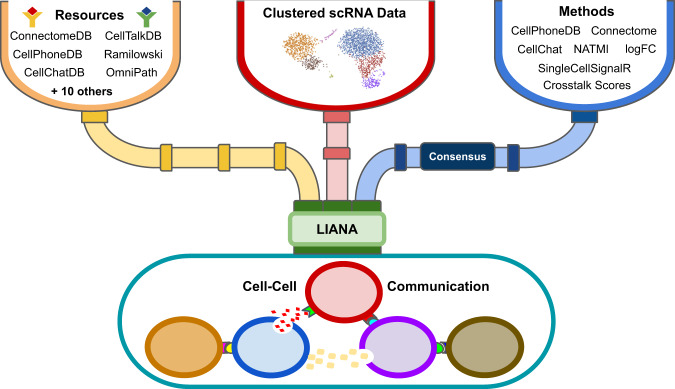
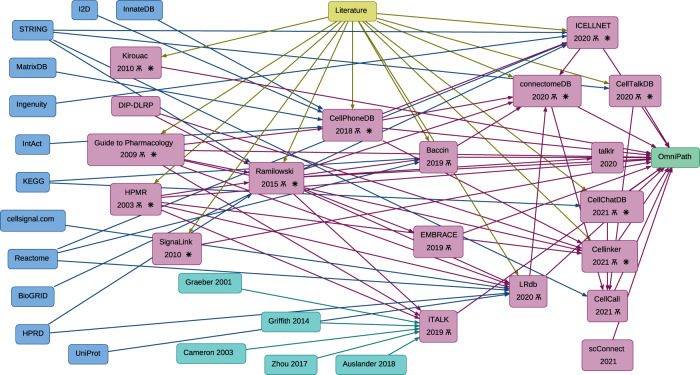
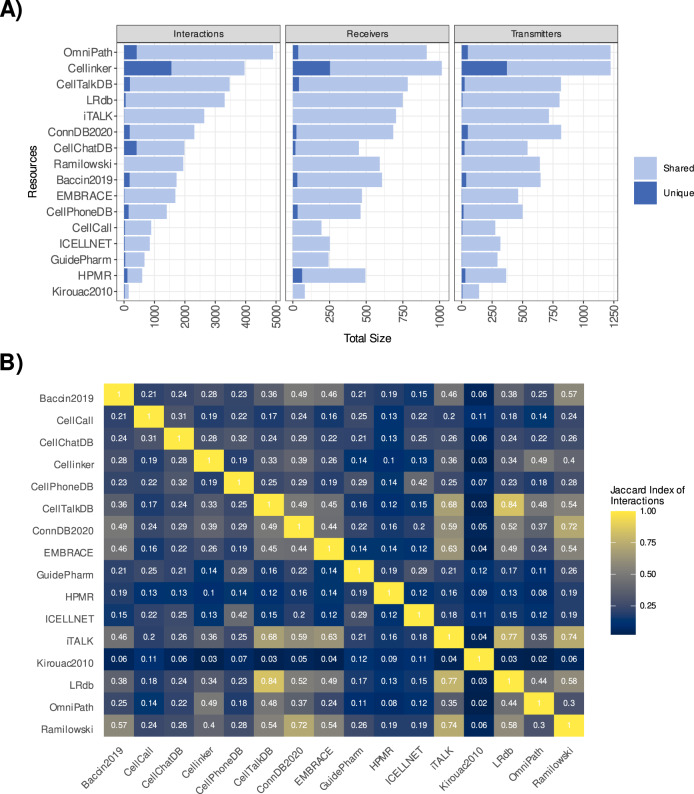
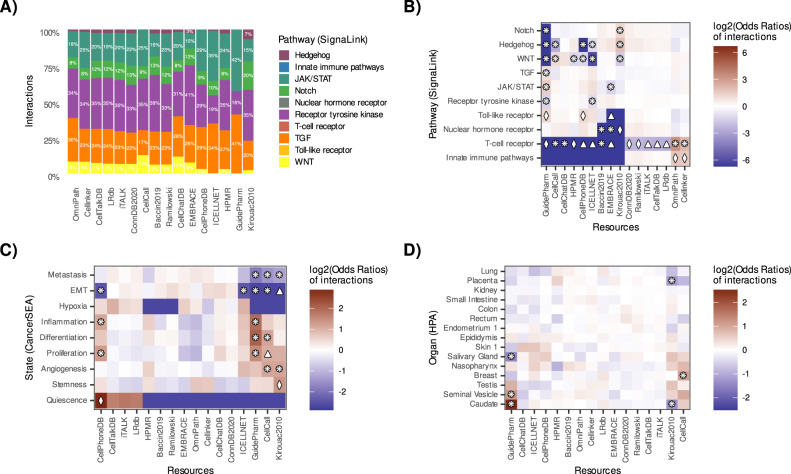
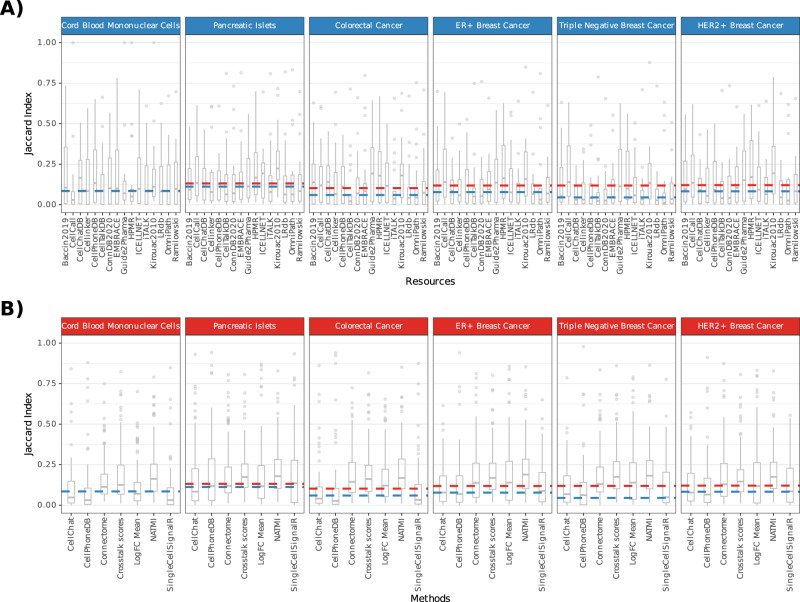
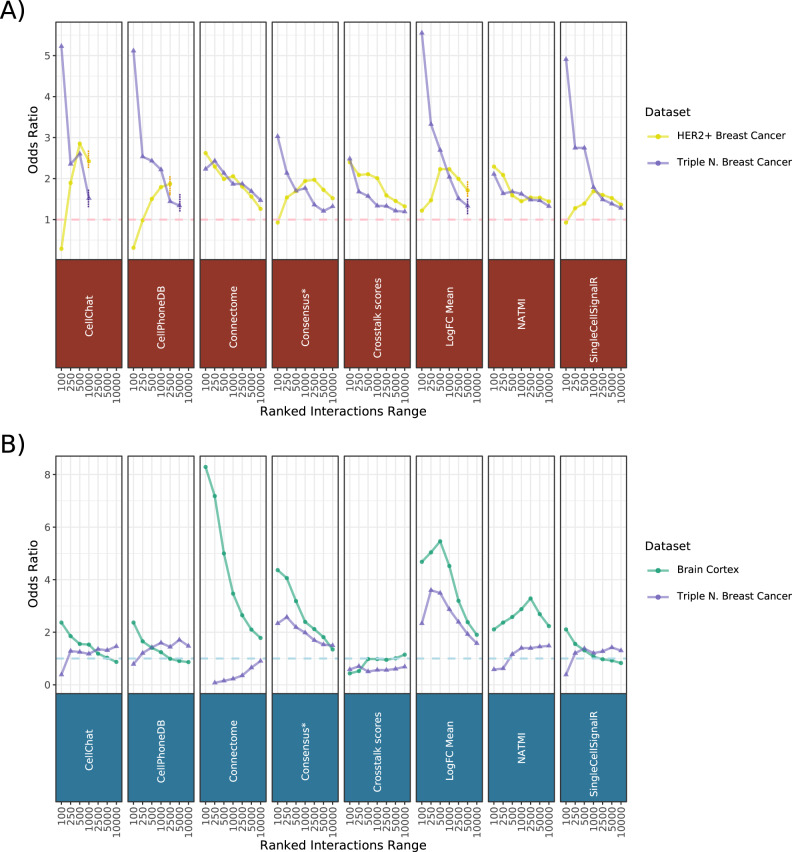
The growing availability of single-cell data, especially transcriptomics, has sparked an increased interest in the inference of cell-cell communication. Many computational tools were developed for this purpose. Each of them consists of a resource of intercellular interactions prior knowledge and a method to predict potential cell-cell communication events. Yet the impact of the choice of resource and method on the resulting predictions is largely unknown. To shed light on this, we systematically compare 16 cell-cell communication inference resources and 7 methods, plus the consensus between the methods’ predictions. Among the resources, we find few unique interactions, a varying degree of overlap, and an uneven coverage of specific pathways and tissue-enriched proteins. We then examine all possible combinations of methods and resources and show that both strongly influence the predicted intercellular interactions. Finally, we assess the agreement of cell-cell communication methods with spatial colocalisation, cytokine activities, and receptor protein abundance and find that predictions are generally coherent with those data modalities. To facilitate the use of the methods and resources described in this work, we provide LIANA, a LIgand-receptor ANalysis frAmework as an open-source interface to all the resources and methods.
Overview
The claims and statistics of this paper haven’t been checked yet.
Free: it reads the open-access text and checks the first 5 claims that cite a source we can check. Create a free account to check every claim.
Integrity signals
Registry
Cites
Statistics
Figures
Verification
Claims the paper makes
The claims and statistics of this paper haven’t been checked yet.
Free: it reads the open-access text and checks the first 5 claims that cite a source we can check. Create a free account to check every claim.
Claims other papers make about this one
Each is checked against this paper’s own text: does it say what the citing paper says it does?
The source backs part of the claim, not all of it — or backs it for a different population, condition or comparison.
In the citing paper
“Among these, LIgand-receptor ANalysis framework (LIANA) consolidates outputs from several inference algorithms to provide a consensus, high-confidence readout of CCC interactions [14].”
From Quantitative profiling of lifespan-dependent cell-cell communication potential reveals dynamic ligand-receptor network shifts across mouse tissues (2026) · cites this paper as [14]
Experimental — accuracy not yet measuredThe source backs part of the claim, not all of it — or backs it for a different population, condition or comparison.
In the citing paper
“The ‘lr_mean’ metric, obtained from the LIANA framework [14], quantifies the average expression level of ligand and receptor genes across interacting cell types and is derived directly from single-cell RNA sequencing data.”
From Quantitative profiling of lifespan-dependent cell-cell communication potential reveals dynamic ligand-receptor network shifts across mouse tissues (2026) · cites this paper as [14]
Experimental — accuracy not yet measuredThe cited source says what the claim attributes to it.
In the citing paper
“CellChat127 and CellPhoneDB128, which also consider heteromeric interaction complexes, and SingleCellSignalR129 were found to be robust to both data and resource noise126.”
From Best practices for single-cell analysis across modalities (2023) · cites this paper as [126]
The cited source says what the claim attributes to it.
In the citing paper
“These databases were found to be biased towards specific pathways, functional categories and tissue-enriched proteins126.”
From Best practices for single-cell analysis across modalities (2023) · cites this paper as [126]
The cited source says what the claim attributes to it.
In the citing paper
“While LIANA systematically scores LR interactions present in a given dataset, it does not explicitly quantify directional changes or network-level expansions and contractions across states or stages.”
From Quantitative profiling of lifespan-dependent cell-cell communication potential reveals dynamic ligand-receptor network shifts across mouse tissues (2026) · cites this paper as [14]
5 more claims about this paper
Create a free account to see every claim other papers make about this one.
Self-check
Percentages, sums and reported differences re-computed from the paper’s own numbers.
The self-check needs the paper’s full text.
Citations
Cites
KEGG: Kyoto Encyclopedia of Genes and Genomes
Kanehisa, M. (2000) · Nucleic Acids Research · doi:10.1093/nar/28.1.27 · Cited by 37,077
KEGG: Kyoto Encyclopedia of Genes and Genomes
Ogata, H., Goto, S., Sato, K., Fujibuchi, W., Bono, H., & Kanehisa, M. (1999) · Nucleic Acids Research · doi:10.1093/nar/27.1.29 · Cited by 31,232
Tissue-based map of the human proteome
Uhlén, M., Fagerberg, L., Hallström, B. M., Lindskog, C., Oksvold, P., Mardinoglu, A., Sivertsson, Å., Kampf, C., Sjöstedt, E., Asplund, A., et al. (2015) · Science · doi:10.1126/science.1260419 · Cited by 15,286
Integrating single-cell transcriptomic data across different conditions, technologies, and species
Butler, A., Hoffman, P., Smibert, P., Papalexi, E., & Satija, R. (2018) · Nature Biotechnology · doi:10.1038/nbt.4096 · Cited by 13,174
Complex heatmaps reveal patterns and correlations in multidimensional genomic data
Gu, Z., Eils, R., & Schlesner, M. (2016) · Bioinformatics · doi:10.1093/bioinformatics/btw313 · Cited by 10,034
SCANPY: large-scale single-cell gene expression data analysis
Wolf, F. A., Angerer, P., & Theis, F. J. (2018) · Genome Biology · doi:10.1186/s13059-017-1382-0 · Cited by 8,881
Inference and analysis of cell-cell communication using CellChat
Jin, S., Guerrero-Juarez, C. F., Zhang, L., Chang, I., Ramos, R., Kuan, C.-H., Myung, P., Plikus, M. V., & Nie, Q. (2021) · Nature Communications · doi:10.1038/s41467-021-21246-9 · Cited by 8,409
Spatial reconstruction of single-cell gene expression data
Satija, R., Farrell, J. A., Gennert, D., Schier, A. F., & Regev, A. (2015) · Nature Biotechnology · doi:10.1038/nbt.3192 · Cited by 7,055
Szklarczyk, D., Morris, J. H., Cook, H., Kuhn, M., Wyder, S., Simonovic, M., Santos, A., Doncheva, N. T., Roth, A., Bork, P., et al. (2017) · Nucleic Acids Research · doi:10.1093/nar/gkw937 · Cited by 6,980
UniProt: the universal protein knowledgebase in 2021
The UniProt Consortium, Bateman, A., Martin, M.-J., Orchard, S., Magrane, M., Agivetova, R., Ahmad, S., Alpi, E., Bowler-Barnett, E. H., Britto, R., et al. (2021) · Nucleic Acids Research · doi:10.1093/nar/gkaa1100 · Cited by 6,372
Cited by
CellChat for systematic analysis of cell–cell communication from single-cell transcriptomics
Jin, S., Plikus, M. V., & Nie, Q. (2025) · Nature Protocols · doi:10.1038/s41596-024-01045-4 · Cited by 1,448
“With limited benchmarking studies 10,11,18 , the question of how to better validate the inferred signaling networks and their downstream gene outputs remains to be answered.”
Squidpy: a scalable framework for spatial omics analysis
Palla, G., Spitzer, H., Klein, M., Fischer, D., Schaar, A. C., Kuemmerle, L. B., Rybakov, S., Ibarra, I. L., Holmberg, O., Virshup, I., et al. (2022) · Nature Methods · doi:10.1038/s41592-021-01358-2 · Cited by 1,114
Best practices for single-cell analysis across modalities
Heumos, L., Schaar, A. C., Lance, C., Litinetskaya, A., Drost, F., Zappia, L., Lücken, M. D., Strobl, D. C., Henao, J., Curion, F., et al. (2023) · Nature Reviews Genetics · doi:10.1038/s41576-023-00586-w · Cited by 1,051
“3).”
Self-citationSpatial multi-omic map of human myocardial infarction
Kuppe, C., Ramirez Flores, R. O., Li, Z., Hayat, S., Levinson, R. T., Liao, X., Hannani, M. T., Tanevski, J., Wünnemann, F., Nagai, J. S., et al. (2022) · Nature · doi:10.1038/s41586-022-05060-x · Cited by 772
Self-citationGene regulatory network inference in the era of single-cell multi-omics
Badia-i-Mompel, P., Wessels, L., Müller-Dott, S., Trimbour, R., Ramirez Flores, R. O., Argelaguet, R., & Saez-Rodriguez, J. (2023) · Nature Reviews Genetics · doi:10.1038/s41576-023-00618-5 · Cited by 469
“In particular, we envision the integration of GRNs with intracellular and intercellular communication processes 195–197 into spatially aware models 198,199 .”
MethodApplications of single-cell RNA sequencing in drug discovery and development
Van de Sande, B., Lee, J. S., Mutasa-Gottgens, E., Naughton, B., Bacon, W., Manning, J., Wang, Y., Pollard, J., Mendez, M., Hill, J., et al. (2023) · Nature Reviews Drug Discovery · doi:10.1038/s41573-023-00688-4 · Cited by 437
Cell-cell communication: New insights and clinical implications
Su, J., Song, Y., Zhu, Z., Huang, X., Fan, J., Qiao, J., & Mao, F. (2024) · Signal Transduction and Targeted Therapy · doi:10.1038/s41392-024-01888-z · Cited by 433
Single-cell multiregion dissection of Alzheimer’s disease
Mathys, H., Boix, C. A., Akay, L. A., Xia, Z., Davila-Velderrain, J., Ng, A. P., Jiang, X., Abdelhady, G., Galani, K., Mantero, J., et al. (2024) · Nature · doi:10.1038/s41586-024-07606-7 · Cited by 343
“Cell–cell communication events were predicted using the LIgand-receptor ANalysis frAmework (LIANA) 107 in R. Specifically, the ligand– receptor analysis was performed using liana_wrap().”
Spatial components of molecular tissue biology
Palla, G., Fischer, D. S., Regev, A., & Theis, F. J. (2022) · Nature Biotechnology · doi:10.1038/s41587-021-01182-1 · Cited by 327
Non-cell-autonomous cancer progression from chromosomal instability
Li, J., Hubisz, M. J., Earlie, E. M., Duran, M. A., Hong, C., Varela, A. A., Lettera, E., Deyell, M., Tavora, B., Havel, J. J., et al. (2023) · Nature · doi:10.1038/s41586-023-06464-z · Cited by 307
Gao, Y., Li, J., Cheng, W., Diao, T., Liu, H., Bo, Y., Liu, C., Zhou, W., Chen, M., Zhang, Y., et al. (2024) · Cancer Cell · doi:10.1016/j.ccell.2024.08.020 · Cited by 285
LIANA+ Provides an All-in-One Framework for Cell–Cell Communication Inference
Dimitrov, D., Schäfer, P. S. L., Farr, E., Rodriguez-Mier, P., Lobentanzer, S., Badia-i-Mompel, P., Dugourd, A., Tanevski, J., Ramirez Flores, R. O., & Saez-Rodriguez, J. (2024) · Nature Cell Biology · doi:10.1038/s41556-024-01469-w · Cited by 263
“First, while each of its methods can flexibly infer interactions between any set of variables, they typically use prior knowledge, which is limited, often exhibiting biases and a trade-off between coverage and quality 3,24,67 .”
InfluentialSelf-citationHarmonized cross-species cell atlases of trigeminal and dorsal root ganglia
Bhuiyan, S. A., Xu, M., Yang, L., Semizoglou, E., Bhatia, P., Pantaleo, K. I., Tochitsky, I., Jain, A., Erdogan, B., Blair, S., et al. (2024) · Science Advances · doi:10.1126/sciadv.adj9173 · Cited by 235
“LR pair analysis was performed using LR analysis framework [LIANA; ( 78 )].”
Open-ST: High-resolution spatial transcriptomics in 3D
Schott, M., León-Periñán, D., Splendiani, E., Strenger, L., Licha, J. R., Pentimalli, T. M., Schallenberg, S., Alles, J., Samut Tagliaferro, S., Boltengagen, A., et al. (2024) · Cell · doi:10.1016/j.cell.2024.05.055 · Cited by 232
Slide-tags enables single-nucleus barcoding for multimodal spatial genomics
Russell, A. J. C., Weir, J. A., Nadaf, N. M., Shabet, M., Kumar, V., Kambhampati, S., Raichur, R., Marrero, G. J., Liu, S., Balderrama, K. S., et al. (2024) · Nature · doi:10.1038/s41586-023-06837-4 · Cited by 225
“We first ran LIANA 33 (v.0.1.12) to generate a putative list of receptor–ligand interactions between cell type pairs in a spatial agnostic manner, filtering to receptor–ligand interactions that are expressed in at least 50 cells of sender and receiver cell types (log[CPM] > 0), or in 30% of sender and receiver cells.”
InfluentialA Review of Single-Cell RNA-Seq Annotation, Integration, and Cell–Cell Communication
Cheng, C., Chen, W., Jin, H., & Chen, X. (2023) · Cells · doi:10.3390/cells12151970 · Cited by 224
“However, it is important to note that transcript abundance does not always directly correlate with translated protein abundance [216,217], and the mere expression of ligand–receptor pairs does not guarantee functional cell–cell communication [171,189].”
BackgroundMethodInfluentialThe molecular evolution of spermatogenesis across mammals
Murat, F., Mbengue, N., Winge, S. B., Trefzer, T., Leushkin, E., Sepp, M., Cardoso-Moreira, M., Schmidt, J., Schneider, C., Mößinger, K., et al. (2023) · Nature · doi:10.1038/s41586-022-05547-7 · Cited by 210
The diversification of methods for studying cell–cell interactions and communication
Armingol, E., Baghdassarian, H. M., & Lewis, N. E. (2024) · Nature Reviews Genetics · doi:10.1038/s41576-023-00685-8 · Cited by 201
CellPhoneDB v5: inferring cell–cell communication from single-cell multiomics data
Troulé, K., Petryszak, R., Cakir, B., Cranley, J., Harasty, A., Prete, M., Tuong, Z. K., Teichmann, S. A., Garcia-Alonso, L., & Vento-Tormo, R. (2025) · Nature Protocols · doi:10.1038/s41596-024-01137-1 · Cited by 167
“Consequently, predictions from different tools show varying levels of overlap, with the classic CellPhoneDB (method 2) performing well across different experimental setups in recent systematic comparisons 67,75 .”
InfluentialComparative analysis of cell–cell communication at single-cell resolution
Wilk, A. J., Shalek, A. K., Holmes, S., & Blish, C. A. (2023) · Nature Biotechnology · doi:10.1038/s41587-023-01782-z · Cited by 166
“Multiple ligand–receptor resources compiled by LIANA 39 were used to compare results returned by published CCC analysis meth-ods and Scriabin.”
Liu, Z., Sun, D., & Wang, C. (2022) · Genome Biology · doi:10.1186/s13059-022-02783-y · Cited by 159
Koncina, E., Nurmik, M., Pozdeev, V. I., Gilson, C., Tsenkova, M., Begaj, R., Stang, S., Gaigneaux, A., Weindorfer, C., Rodriguez, F., et al. (2023) · Nature Communications · doi:10.1038/s41467-023-39953-w · Cited by 161
“In addition, LIANA highlighted potential LR communications between IL1R1 + iCAFs and macrophages and identi fi ed the IL-1 β -IL1R1 interaction to be among the top candidates (Fig.”
InfluentialLi, Z., Wang, T., Liu, P., & Huang, Y. (2023) · Nature Communications · doi:10.1038/s41467-023-39608-w · Cited by 150
“A recent study further evaluated 16 LRI resources and 7 methods on their impact and consistency in CCC analysis from scRNA-seq data 13 , while the direct assessment is generally challenging due to the lack of gold-standard data.”
Raredon, M. S. B., Yang, J., Kothapalli, N., Lewis, W., Kaminski, N., Niklason, L. E., & Kluger, Y. (2023) · Bioinformatics · doi:10.1093/bioinformatics/btac775 · Cited by 127
Data analysis guidelines for single-cell RNA-seq in biomedical studies and clinical applications
Su, M., Pan, T., Chen, Q.-Z., Zhou, W., Gong, Y., Xu, G., Yan, H.-Y., Li, S., Shi, Q.-Z., Zhang, Y., et al. (2022) · Military Medical Research · doi:10.1186/s40779-022-00434-8 · Cited by 145
An oncogenic phenoscape of colonic stem cell polarization
Qin, X., Cardoso Rodriguez, F., Sufi, J., Vlckova, P., Claus, J., & Tape, C. J. (2023) · Cell · doi:10.1016/j.cell.2023.11.004 · Cited by 112
Browaeys, R., Gilis, J., Sang-Aram, C., De Bleser, P., Hoste, L., Tavernier, S., Lambrechts, D., Seurinck, R., & Saeys, Y. (2023) · bioRxiv (Cold Spring Harbor Laboratory) · doi:10.1101/2023.06.13.544751 · Cited by 133
Valdeolivas, A., Amberg, B., Giroud, N., Richardson, M., Gálvez, E. J. C., Badillo, S., Julien-Laferrière, A., Túrós, D., Voith von Voithenberg, L., Wells, I., et al. (2024) · npj Precision Oncology · doi:10.1038/s41698-023-00488-4 · Cited by 130
“We used LIANA 68 to estimate the most likely ligand-receptor interactions between the different spatial clusters de fi ned by their TF activity pro fi les.”
InfluentialSelf-citationVolmert, B. D., Kiselev, A. M., Juhong, A., Wang, F., Riggs, A., Kostina, A. S., O’Hern, C., Muniyandi, P., Wasserman, A. H., Huang, A., et al. (2023) · Nature Communications · doi:10.1038/s41467-023-43999-1 · Cited by 129
“Cell-cell communication analysis and visualization was performed using Liana 67 , SCpubr 68 , and CellTalker (https:// github.com/arc85/celltalker).”
Blanco-Carmona, E., & Kool, M. (2026) · Bioinformatics Advances · doi:10.1093/bioadv/vbag151 · Cited by 122
“S3F, available at supplementary material Bioinformatics Advances online), visualizing ligand-receptor interaction scores across groups from liana (Dimitrov et al .”
A data-driven single-cell and spatial transcriptomic map of the human prefrontal cortex
Huuki-Myers, L. A., Spangler, A., Eagles, N. J., Montgomery, K. D., Kwon, S. H., Guo, B., Grant‐Peters, M., Divecha, H. R., Tippani, M., Sriworarat, C., et al. (2024) · Science · doi:10.1126/science.adh1938 · Cited by 118
“…gene expression with this approach, recent computational tools for unsupervised clustering ( 13 – 17 ) and cell-to-cell communication (CCC) ( 18 ) combined with the ability to expand the generation of molecular neuro-anatomical maps across a larger donor pool…”
InfluentialMiyoshi, E., Morabito, S., Henningfield, C. M., Das, S., Rahimzadeh, N., Shabestari, S. K., Michael, N., Emerson, N., Reese, F., Shi, Z., et al. (2024) · Nature Genetics · doi:10.1038/s41588-024-01961-x · Cited by 115
Context-aware deconvolution of cell–cell communication with Tensor-cell2cell
Armingol, E., Baghdassarian, H. M., Martino, C., Perez-Lopez, A., Aamodt, C., Knight, R., & Lewis, N. E. (2022) · Nature Communications · doi:10.1038/s41467-022-31369-2 · Cited by 111
Shiau, C., Cao, J., Gong, D. H., Gregory, M., Caldwell, N. J., Yin, X., Cho, J.-W., Wang, P. L., Su, J., Wang, S., et al. (2024) · Nature Genetics · doi:10.1038/s41588-024-01890-9 · Cited by 110
“Combined with the SCOTIA results that show a post-treatment enrichment in IL-6 family signaling between CAFs and cancer cells (Fig.”
InfluentialSingle-cell multi-stage spatial evolutional map of esophageal carcinogenesis
Chang, J., Lu, J., Liu, Q., Xiang, T., Zhang, S., Yi, Y., Li, D., Liu, T., Liu, Z., Chen, X., et al. (2025) · Cancer Cell · doi:10.1016/j.ccell.2025.02.009 · Cited by 108
Ge, S., Sun, S., Xu, H., Cheng, Q. S., & Ren, Z. (2025) · Briefings in Bioinformatics · doi:10.1093/bib/bbaf136 · Cited by 108
“Furthermore,we have collected 10 methods,includingCellChat [205], CellPhoneDB [206], iTALK [207], LIANA [208], NATMI [209], scMLnet [210], SingleCellSignalR [211], Connectome [212], CytoTalk[213],andCellCall[214].”
Defining and benchmarking open problems in single-cell analysis
Luecken, M. D., Gigante, S., Burkhardt, D. B., Cannoodt, R., Strobl, D. C., Markov, N. S., Zappia, L., Palla, G., Lewis, W., Dimitrov, D., et al. (2025) · Nature Biotechnology · doi:10.1038/s41587-025-02694-w · Cited by 106
Self-citationPeng, L., Wang, F., Wang, Z., Tan, J., Li, H., Tian, X., Liu, G., & Zhou, L. (2022) · Briefings in Bioinformatics · doi:10.1093/bib/bbac234 · Cited by 103
Single-cell omics: experimental workflow, data analyses and applications
Sun, F., Li, H., Sun, D., Fu, S., Gu, L., Shao, X., Wang, Q., Dong, X., Duan, B., Xing, F., et al. (2024) · Science China Life Sciences · doi:10.1007/s11427-023-2561-0 · Cited by 102
A pan-cancer single-cell RNA-seq atlas of intratumoral B cells
Fitzsimons, E., Qian, D., Enica, A., Thakkar, K., Augustine, M., Gamble, S., Reading, J. L., & Litchfield, K. (2024) · Cancer Cell · doi:10.1016/j.ccell.2024.09.011 · Cited by 97
McEvoy, C. M., Murphy, J. M., Zhang, L., Clotet‐Freixas, S., Mathews, J. A., An, J., Karimzadeh, M., Pouyabahar, D., Su, S., Zaslaver, O., et al. (2022) · Nature Communications · doi:10.1038/s41467-022-35297-z · Cited by 95
Bleckwehl, T., Babler, A., Tebbens, M., Maryam, S., Nyberg, M., Bosteen, M. H., Halder, M., Shaw, I., Fleig, S. V., Pyke, C., et al. (2024) · Nature Cardiovascular Research · doi:10.1038/s44161-024-00582-1 · Cited by 91
“For the spatial cell–cell communication analysis, the slides were filtered for receptors and ligands from the LIANA database 69 with an adequate expression of at least 250 counts per slide.”
Luo, J., Deng, M., Zhang, X., & Sun, X. (2023) · Genome Research · doi:10.1101/gr.278001.123 · Cited by 92
Mapping cellular interactions from spatially resolved transcriptomics data
Zhu, J. J., Wang, Y., Chang, W. Y., Malewska, A., Napolitano, F., Gahan, J. C., Unni, N. G., Zhao, M., Yuan, R., Wu, F., et al. (2024) · Nature Methods · doi:10.1038/s41592-024-02408-1 · Cited by 87
Wang, X., Almet, A. A., & Nie, Q. (2023) · Seminars in Cancer Biology · doi:10.1016/j.semcancer.2023.07.001 · Cited by 76
“For example, one study compares seven CCI methods with respect to: agreement of inferred CCIs with spatial colocalization, cytokine activities, and receptor protein abundance, concluding that the predicted CCI are coherent with these modalities in general [64].”
spaCI: deciphering spatial cellular communications through adaptive graph model
Tang, Z., Zhang, T., Yang, B., Su, J., & Song, Q. (2023) · Briefings in Bioinformatics · doi:10.1093/bib/bbac563 · Cited by 77
“Moreover, the LIANA CCC Consensus Resource [47], the L–”
MethodEpithelial Yap/Taz are required for functional alveolar regeneration following acute lung injury
DiGiovanni, G. T., Han, W., Sherrill, T. P., Taylor, C. J., Nichols, D. S., Geis, N. M., Singha, U. K., Calvi, C. L., McCall, A. S., Dixon, M. M., et al. (2023) · JCI Insight · doi:10.1172/jci.insight.173374 · Cited by 83
“To assess how deletion of Yap/Taz in the AT2 cell population may be leading to activation of the fibroblast, we performed ligand-receptor based cellular communication analysis using Tensor-cell2cell (22) implemented with LIANA (Figure 3, J and K) (23).”
MethodFang, S., Xu, M., Cao, L., Liu, X., Bezulj, M., Tan, L., Yuan, Z., Li, Y., Xia, T., Guo, L., et al. (2025) · Nature Communications · doi:10.1038/s41467-025-58079-9 · Cited by 81
“In brief, we collectpotentialL-RpairsandconstructacustomizedLianaconsensus database 43 (https://github.com/saezlab/liana-py/tree/main/liana/ resource/omni_resource.csv) It is converted to the CellPhoneDB format using the command cellphonedb database generate, where input fi les of protein, gene,…”
Sctensor detects many-to-many cell–cell interactions from single cell RNA-sequencing data
Tsuyuzaki, K., Ishii, M., & Nikaido, I. (2023) · BMC Bioinformatics · doi:10.1186/s12859-023-05490-y · Cited by 80
“R tools are highly duplicated, even slight differences can influence the detection of CCIs [72].”
BackgroundMethodSchäfer, P. S. L., Dimitrov, D., Villablanca, E. J., & Sáez-Rodríguez, J. (2024) · Nature Immunology · doi:10.1038/s41590-024-01768-2 · Cited by 80
“These benchmarks have shown that most ligand– receptor methods seem to perform better than random 54,69 , and that the inferred predictions are very sensitive to the choice of ligand– receptor resource and statistical model, resulting in discordant predictions across methods 54 .”
InfluentialSelf-citationYu, W., Biyik‐Sit, R., Uzun, Y., Chen, C.-H., Thadi, A., Sussman, J., Pang, M., Wu, C.-Y., Grossmann, L. D., Gao, P., et al. (2025) · Nature Genetics · doi:10.1038/s41588-025-02158-6 · Cited by 79
“For CellChat default parameters were applied, whereas for LIANA we set the parameter resource = all.”
InfluentialCell type mapping reveals tissue niches and interactions in subcortical multiple sclerosis lesions
Lerma-Martin, C., Badia-i-Mompel, P., Ramirez Flores, R. O., Sekol, P., Schäfer, P. S. L., Riedl, C. J., Hofmann, A., Thäwel, T., Wünnemann, F., Ibarra-Arellano, M. A., et al. (2024) · Nature Neuroscience · doi:10.1038/s41593-024-01796-z · Cited by 76
“Differential ligand–receptor interactions between the three lesion type contrasts across cell type pairs were inferred using the consensus ligand–receptor database from LIANA+ (v.1.0.1) 42,82 .”
InfluentialRade, M., Grieb, N., Weiss, R., Sia, J., Fischer, L., Born, P., Boldt, A., Fricke, S., Franz, P., Scolnick, J. A., et al. (2024) · Nature Cancer · doi:10.1038/s43018-024-00763-8 · Cited by 79
“54) was used as a reference database consisting of manually curated resources in the context of cell–cell communication.”
Li, H., Zhang, Z., Squires, M., Chen, X. X., & Zhang, X. (2025) · Nature Methods · doi:10.1038/s41592-025-02651-0 · Cited by 78
Xu, Y., Kuppe, C., Perales-Patón, J., Hayat, S., Kranz, J., Abdallah, A. T., Nagai, J. S., Li, Z., Peisker, F., Saritas, T., et al. (2022) · Nature Genetics · doi:10.1038/s41588-022-01202-z · Cited by 73
Self-citationMoerkens, R., Mooiweer, J., Ramírez-Sánchez, A. D., Oelen, R., Franke, L., Wijmenga, C., Barrett, R. J., Jonkers, I. H., & Withoff, S. (2024) · Cell Reports · doi:10.1016/j.celrep.2024.114247 · Cited by 75
Bormann, D., Knoflach, M., Poreba, E., Riedl, C. J., Testa, G., Orset, C., Levilly, A., Cottereau, A., Jauk, P., Hametner, S., et al. (2024) · Nature Communications · doi:10.1038/s41467-024-50465-z · Cited by 73
“To infer potential cell-cell communication (CCC) events between cell types we used the LIgand-receptor ANalysis frAmework (LIANA) v.0.1.12, following developer ’ s vignettes 95,96 .”
InfluentialCircadian rhythms in cardiovascular (dys)function: approaches for future therapeutics
Lecacheur, M., Ammerlaan, D. J. M., & Dierickx, P. (2024) · npj Cardiovascular Health · doi:10.1038/s44325-024-00024-8 · Cited by 70
Schütz, S., Solé‐Boldo, L., Lucena-Porcel, C., Hoffmann, J. H. O., Brobeil, A., Lonsdorf, A. S., Rodríguez‐Paredes, M., & Lyko, F. (2023) · Nature Communications · doi:10.1038/s41467-023-41141-9 · Cited by 60
(2024) · doi:10.1007/s00395-024-01074-w · Cited by 59
Cesaro, G., Nagai, J. S., Nicolò, G., Chiodi, A., Tussardi, G., Klöker, V., Musumarra, C. V., Mosca, E., Costa, I. G., Camillo, B. D., et al. (2025) · Briefings in Bioinformatics · doi:10.1093/bib/bbaf280 · Cited by 60
Self-citationSingle-cell RNA-seq methods to interrogate virus-host interactions
Ratnasiri, K., Wilk, A. J., Lee, M. J., Khatri, P., & Blish, C. A. (2022) · Seminars in Immunopathology · doi:10.1007/s00281-022-00972-2 · Cited by 57
Single-cell and spatially resolved transcriptomics for liver biology
Lin, P., Yan, X., Jing, S., Wu, Y., Shan, Y., Guo, W., Gu, J., Li, Y., Zhang, H., & Li, H. (2024) · Hepatology · doi:10.1097/hep.0000000000000387 · Cited by 46
de Jong, M. M. E., Fokkema, C., Papazian, N., Czeti, Á., Appelman, M. K., Vermeulen, M., van Heusden, T., Hoogenboezem, R. M., van Beek, G., Tahri, S., et al. (2024) · Nature Immunology · doi:10.1038/s41590-024-01808-x · Cited by 56
“Ligand–receptor interactions were determined using the LIANA package (v 0.1.12) 22 and OmniPath 70 as the resource.”
InfluentialSpatiotemporal gene expression and cellular dynamics of the developing human heart
Lázár, E., Mauron, R., Andrusivová, Ž., Foyer, J., He, M., Larsson, L., Shakari, N., Salas, S. M., Avenel, C., Sarıyar, S., et al. (2025) · Nature Genetics · doi:10.1038/s41588-025-02352-6 · Cited by 57
Villemin, J.-P., Bassaganyas, L., Pourquier, D., Boissière‐Michot, F., Cabello‐Aguilar, S., Lopez‐Crapez, E., Tanos, R., Cornillot, E., Turtoï, A., & Colinge, J. (2023) · Nucleic Acids Research · doi:10.1093/nar/gkad352 · Cited by 56
“Despite the popularity of LRI inference in the single-cell bioinformatics community with many existing tools (8), its equivalent in bulk data has not attracted much attention.”
Lu, Y., Chen, Y., Wang, Z., Shen, H., Xu, L., Huang, C., Tong, Y., Shao, Y., Zhang, H., & Fu, Z. (2025) · Journal of Translational Medicine · doi:10.1186/s12967-025-06236-5 · Cited by 56
“1.13) [23] and nichenetr (v2.”
InfluentialCellDialog: A Computational Framework for Ligand-Receptor-Mediated Cell-Cell Communication Analysis
Peng, L., Xiong, W., Han, C., Li, Z., & Chen, X. (2023) · IEEE Journal of Biomedical and Health Informatics · doi:10.1109/jbhi.2023.3333828 · Cited by 54
“Theincreasingavailabilityofsingle-cellRNAsequencing (scRNA-seq)datahassparkedagreatinterestinCCCinference andanalysis[8],[9],[10],[11],[12],[13].”
BackgroundMethodInfluentialDardano, M., Kleemiß, F., Kosanke, M., Lang, D., Wilson, L., Franke, A., Teske, J., Shivaraj, A., de la Roche, J., Fischer, M., et al. (2024) · Nature Cell Biology · doi:10.1038/s41556-024-01526-4 · Cited by 52
“For insights into cell–cell communication (CCC), which is pivotal in tissue development, a ligand–receptor analysis framework (LIANA) was used to infer ligand–receptor interactions 47 .”
InfluentialSang-aram, C., Browaeys, R., Seurinck, R., & Saeys, Y. (2025) · Nature Protocols · doi:10.1038/s41596-024-01121-9 · Cited by 54
Multicellular factor analysis of single-cell data for a tissue-centric understanding of disease
Ramirez Flores, R. O., Lanzer, J. D., Dimitrov, D., Velten, B., & Saez-Rodriguez, J. (2023) · eLife · doi:10.7554/elife.93161 · Cited by 44
Self-citationPeng, L., Tan, J., Xiong, W., Zhang, L., Wang, Z., Yuan, R., Li, Z., & Chen, X. (2023) · Computers in Biology and Medicine · doi:10.1016/j.compbiomed.2023.107137 · Cited by 50
Bafna, M., Li, H., & Zhang, X. (2023) · Bioinformatics · doi:10.1093/bioinformatics/btad269 · Cited by 50
“Thus, methods have been developed to elucidate these cell–cell interactions (Almet et al. 2021; Armingol et al. 2021; Dimitrov et al. 2022).”
MethodCamargo, S., Moskowitz, O., Giladi, A., Levinson, M., Balaban, R., Gola, S., Raizman, A., Lipczyc, K., Richter, A., Keren‐Khadmy, N., et al. (2025) · Nature Cancer · doi:10.1038/s43018-025-00924-3 · Cited by 49
DNA nanostructures for exploring cell–cell communication
Wang, Y., Xiong, Y., Shi, K., Effah, C. Y., Song, L., He, L., & Liu, J. (2024) · Chemical Society Reviews · doi:10.1039/d3cs00944k · Cited by 50
Gibson, A., Ram, R., Gangula, R., Li, Y., Mukherjee, E. M., Palubinsky, A. M., Campbell, C. N., Thorne, M., Konvinse, K. C., Choshi, P., et al. (2024) · Nature Communications · doi:10.1038/s41467-024-52990-3 · Cited by 48
Advances in single-cell omics: Transformative applications in basic and clinical research
Inayatullah, M., Dwivedi, A. K., & Tiwari, V. K. (2025) · Current Opinion in Cell Biology · doi:10.1016/j.ceb.2025.102548 · Cited by 48
He, Z., Glass, M. C., Venkatesan, P., Feser, M. L., Lazaro, L., Okada, L. Y., Tran, N. T. T., He, Y. D., Zaim, S. R., Bennett, C., et al. (2025) · Science Translational Medicine · doi:10.1126/scitranslmed.adt7214 · Cited by 49
Worssam, M. D., & Jørgensen, H. F. (2021) · Biochemical Society Transactions · doi:10.1042/bst20210138 · Cited by 49
Making human immune systems more interpretable through systems immunology
Forlin, R., James, A. J., & Brodin, P. (2023) · Trends in Immunology · doi:10.1016/j.it.2023.06.005 · Cited by 49
Li, W., Pan, L., Hong, W., Ginhoux, F., Zhang, X., Xiao, C., & Li, X. (2024) · Nature Communications · doi:10.1038/s41467-024-50478-8 · Cited by 48
“Cell-cell interactions were analyzed using the Liana R package 56,57 , which allows the identi fi cation of ligand-receptor interactions between different cell types, and is a useful resource for understanding the cellular communication networks that underlie the biology of different diseases.”
You, R., Shen, Q., Lin, C., Dong, K., Liu, X., Xu, H., Hu, W., Xie, Y., Xie, R.-Q., Song, X., et al. (2025) · Nature Genetics · doi:10.1038/s41588-025-02253-8 · Cited by 47
Cellular profiling of a recently-evolved social behavior in cichlid fishes
Johnson, Z. V., Hegarty, B. E., Gruenhagen, G. W., Lancaster, T. J., McGrath, P. T., & Streelman, J. T. (2023) · Nature Communications · doi:10.1038/s41467-023-40331-9 · Cited by 37
“Unlike most other tools, CellChat increases robustness by additionally accounting for heteromeric complexes and interaction mediator proteins 47 .”
MethodA Reference Atlas of the Human Dorsal Root GanglionPreprint
Bhuiyan, S. A., Nagi, S. S., Sankaranarayanan, I., Semizoglou, E., Usoskin, D., Yang, L., Yu, H., Arendt-Tranholm, A., Bertels, Z., Bhatia, P., et al. (2025) · bioRxiv (Cold Spring Harbor Laboratory) · doi:10.1101/2025.11.05.686654 · Cited by 48
Peng, L., Yuan, R., Han, C., Han, G., Tan, J., Wang, Z., Chen, M., & Chen, X. (2023) · IEEE Transactions on NanoBioscience · doi:10.1109/tnb.2023.3278685 · Cited by 45
O’Hern, C., Caywood, S., Aminova, S., Kiselev, A. M., Volmert, B. D., Cao, W., Wang, F., Dionise, M., Sewavi, M.-L., Skoric, M., et al. (2025) · Cell stem cell · doi:10.1016/j.stem.2025.09.011 · Cited by 45
Tumor heterogeneity and tumor-microglia interactions in primary and recurrent IDH1-mutant gliomas
Blanco-Carmona, E., Narayanan, A., Hernandez, I., Nieto, J. C., Elosua-Bayés, M., Sun, X., Schmidt, C., Pamir, M. N., Özduman, K., Herold‐Mende, C. C., et al. (2023) · Cell Reports Medicine · doi:10.1016/j.xcrm.2023.101249 · Cited by 45
Inferring pattern-driving intercellular flows from single-cell and spatial transcriptomics
Almet, A. A., Tsai, Y., Watanabe, M., & Nie, Q. H. (2024) · Nature Methods · doi:10.1038/s41592-024-02380-w · Cited by 46
“Applying MOFATalk to the ligand–receptor interaction scores inferred from LIANA 32 yielded four factors (Supplementary Fig.”
InfluentialBromley, J. D., Ganchua, S. K. C., Nyquist, S. K., Maiello, P. A., Chao, M. C., Borish, H. J., Rodgers, M., Tomko, J. A., Kracinovsky, K. B., Mugahid, D., et al. (2024) · Immunity · doi:10.1016/j.immuni.2024.08.002 · Cited by 45
Mesenchymal ovarian cancer cells promote CD8+ T cell exhaustion through the LGALS3-LAG3 axis
Yakubovich, E., Cook, D. P., Rodriguez, G. M., & Vanderhyden, B. C. (2023) · npj Systems Biology and Applications · doi:10.1038/s41540-023-00322-4 · Cited by 43
“For cell-cell communication analysis, we used LIANA 111 , a tool that integrates multiple methods for cell-cell communication inference in single-cell data.”
InfluentialComparative Analysis of Single-Cell RNA Sequencing Methods with and without Sample Multiplexing
Xie, Y., Chen, H., Chellamuthu, V. R., Lajam, A. B. M., Albani, S., Low, A. H. L., Petretto, E. G., & Behmoaras, J. V. (2024) · International Journal of Molecular Sciences · doi:10.3390/ijms25073828 · Cited by 42
“Furthermore, recent advances in computational tools have facilitated the extraction of valuable insights from scRNA-seq data, including the exploration of cell differentiation trajectories and cell–cell communication events [2,3].”
BackgroundMouse liver assembloids model periportal architecture and biliary fibrosis
Dowbaj, A. M., Sljukic, A., Niksic, A., Landerer, C., Delpierre, J., Yang, H., Lahree, A., Kühn, A. C., Beers, D., Byrne, H. M., et al. (2025) · Nature · doi:10.1038/s41586-025-09183-9 · Cited by 40
Cross-regional homeostatic and reactive glial signatures in multiple sclerosis
Trobisch, T., Zulji, A., Stevens, N. A., Schwarz, S., Wischnewski, S., Öztürk, M., Perales-Patón, J., Haeussler, M., Saez-Rodriguez, J., Velmeshev, D., et al. (2022) · Acta Neuropathologica · doi:10.1007/s00401-022-02497-2 · Cited by 40
Pan-cancer drivers of metastasis
Lusby, R., Demirdizen, E., Inayatullah, M., Kundu, P., Maiques, Ó., Zhang, Z., Terp, M. G., Sanz‐Moreno, V., & Tiwari, V. K. (2025) · Molecular Cancer · doi:10.1186/s12943-024-02182-w · Cited by 42
Cai, Y., Pinheiro‐de‐Sousa, I., Slobodyanyuk, M., Chen, F., Huynh, T., Kanyo, J. E., Tang, P., Fuentes, L. A., Braker, A., Welch, R., et al. (2025) · Nature Neuroscience · doi:10.1038/s41593-025-01973-8 · Cited by 41
“56), Cell-Chat 57 and LIANA 58 .”
Xiao, M., Deng, Y., Guo, H., Ren, Z., He, Y., Ren, X., Huang, L., Zhang, W., Chen, H., Yang, S., et al. (2025) · Translational Lung Cancer Research · doi:10.21037/tlcr-2025-244 · Cited by 40
“We applied the cellphoneDB function within the LIANA package (version 1.0.4) to infer ligand-receptor interactions, using the “consensus” resource to integrate multiple methods and enhance robustness (47).”
InfluentialRade, M., Fandrei, D., Kreuz, M., Seiffert, S., Grahnert, A., Friedrich, M., Wiemers, T. C., Born, P., Fischer, L., Weidner, H., et al. (2025) · Cancer Cell · doi:10.1016/j.ccell.2025.10.014 · Cited by 39
Zhang, C., Tan, G., Zhang, Y., Zhong, X., Zhao, Z., Peng, Y., Cheng, Q., Xue, K., Xu, Y., Li, X., et al. (2023) · CNS Neuroscience & Therapeutics · doi:10.1111/cns.14280 · Cited by 39
Liu, A., Fernandes, B. S., Citu, C., & Zhao, Z. (2024) · Alzheimer s Research & Therapy · doi:10.1186/s13195-023-01372-w · Cited by 40
“Our analysis was based on a consensus ligand-receptor (LR) dataset by Dimitrov et al. [13].”
BackgroundMethodInfluentialThe landscape of cancer-rewired GPCR signaling axes
Arora, C., Matic, M., Bisceglia, L., Chiaro, P. D., Rosa, N. D. O., Carli, F., Clubb, L. M., Fard, L. A. N., Kargas, G., Diaferia, G. R., et al. (2024) · Cell Genomics · doi:10.1016/j.xgen.2024.100557 · Cited by 38
Metadata
- Authors
- Dimitrov, D., Türei, D., Garrido-Rodriguez, M., Burmedi, P. L., Nagai, J. S., Boys, C., Ramirez Flores, R. O., Kim, H., Szalai, B., Costa, I. G., Valdeolivas, A., Dugourd, A., & Saez-Rodriguez, J.
- Affiliations
- Heidelberg University (DE)
- Universitätsklinikum Aachen (DE)
- Semmelweis University (HU)
- F. Hoffmann-La Roche AG (CH)
- ORCID
- Venue
- Nature Communications
- Published
- 2022-06-09
- Volume
- 13
- Issue
- 1
- Pages
- 3224-3224
- ISSN
- 2041-1723 (ISSN-L)
- PMC
- PMC9184522
- OpenAlex
- W4281716326
- Semantic Scholar
- abb7218aa6062dc1fa5f83e6f9210c63270cb0fa
- Cited by
- 664
- References
- 101
- Citations by year
- 2026: 215 · 2025: 189 · 2024: 144 · 2023: 72 · 2022: 40
- FWCI
- 37.13
- Type
- journal article
- Language
- en
- Open access
- gold
- doi.org
- Licence
- cc-by
- creativecommons.org/licenses/by/4.0 (tdm)
- creativecommons.org/licenses/by/4.0 (vor)
- Locations
- Nature Communications (publishedVersion, cc-by)
- bioRxiv (Cold Spring Harbor Laboratory) (acceptedVersion, cc-by-nd)
- Research Square (acceptedVersion, cc-by)
- PubMed Central (publishedVersion, cc-by)
- PubMed (publishedVersion)
- RePEc: Research Papers in Economics (submittedVersion)
- DOAJ (DOAJ: Directory of Open Access Journals) (submittedVersion)
- RWTH Publications (RWTH Aachen) (submittedVersion, other-oa)
- RWTH Publications (RWTH Aachen)
- Funders
- European Commission (HORIZON2020, 860329)
- Deutsche Forschungsgemeinschaft (CRU344)
- Bundesministerium für Bildung und Forschung (031L0181B, 860329)
- Topics
- Life Sciences › Biochemistry, Genetics and Molecular Biology › Molecular Biology › Single-cell and spatial transcriptomics
- Life Sciences › Biochemistry, Genetics and Molecular Biology › Molecular Biology › Bioinformatics and Genomic Networks
- Life Sciences › Biochemistry, Genetics and Molecular Biology › Molecular Biology › Gene Regulatory Network Analysis
- Keywords
- intercellular communication, cell-cell interactions, single-cell RNA sequencing, ligand-receptor interactions, method comparison, lianas, cytokines
- MeSH terms
- RNA-Seq, Cell Communication, Ligands, Signal Transduction, Single-Cell Analysis, Transcriptome
About these checks
Registry, retraction, Cites and statistics results are computed, not judged, with one exception: a printed reference that no index lists is read once by a model before it counts as a citation error. Claims are extracted by a model and kept only when their quote appears verbatim in the text; each cited source is then checked, with a model’s help, for whether it says what the claim relies on. Those verdicts can be wrong — read the claim’s quote and the cited source before relying on one.
Statistics and arithmetic are recomputed, not judged.
Confidence bands are shown only for fields calibrated on our annotated test set. None is calibrated yet, so no band is shown.
What counts as a claim ›How we measure confidence ›How we check this ›
Are you an author, or do you see a problem with this page? Request a review
Data sources
Bibliographic data: Semantic Scholar, OpenAlex, Crossref.
Contains information from the Semantic Scholar Academic Graph Datasets, made available under the ODC Attribution License (ODC-BY 1.0).
Semantic Scholar’s data is described in: Kinney, R., et al. (2023). The Semantic Scholar Open Data Platform. arXiv:2301.10140.
