

Comparison of methods and resources for cell-cell communication inference from single-cell RNA-Seq data
Open accessPublished version of a preprint
The DOI matches its Crossref record; 105 of the 105 references it cites were found in a registry or an index.
Abstract
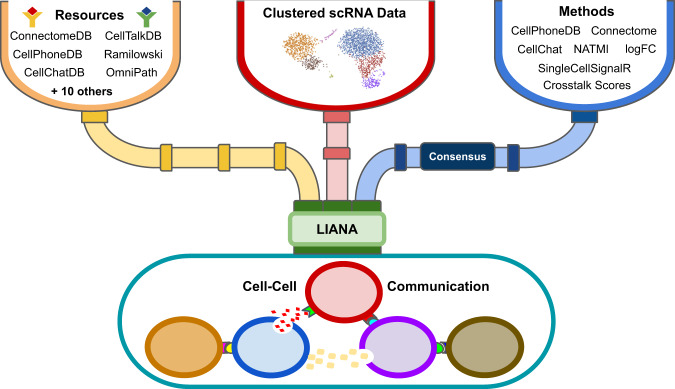
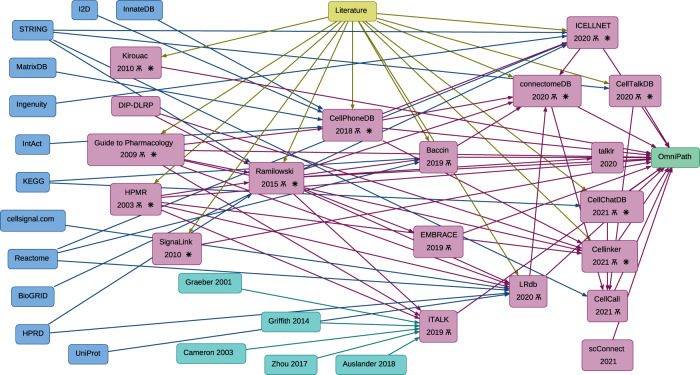
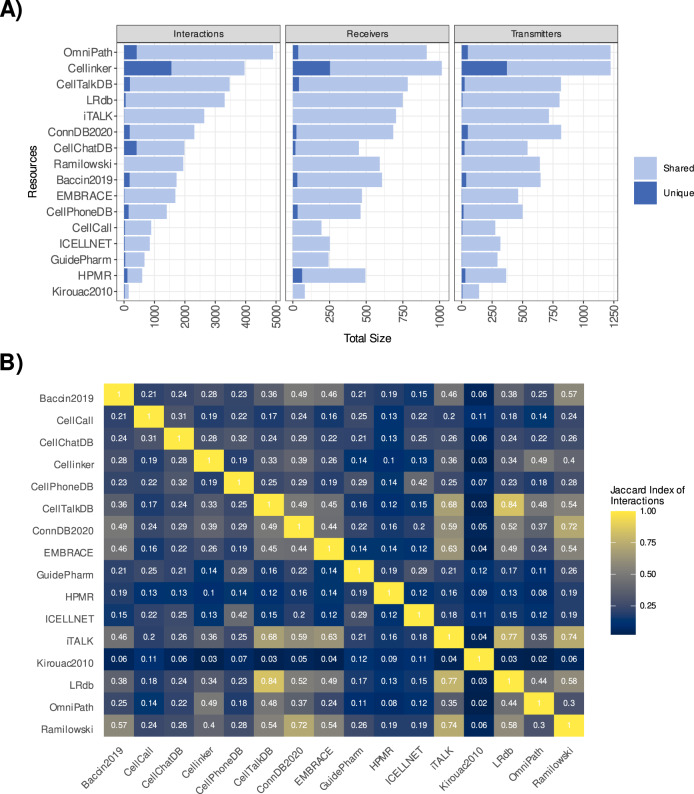
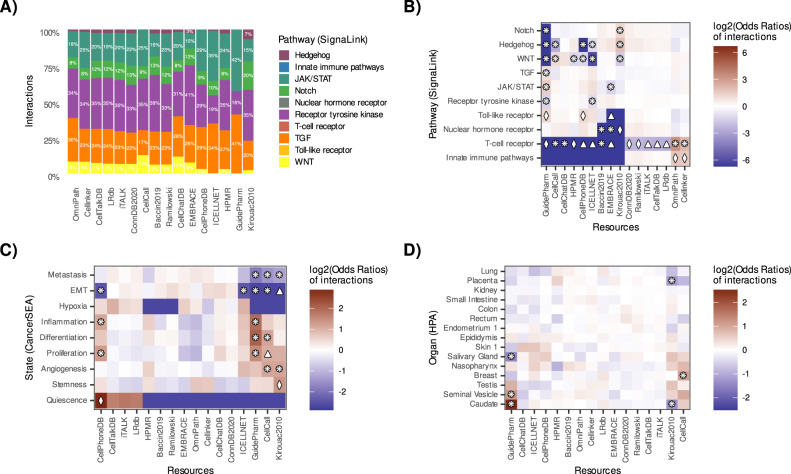
The growing availability of single-cell data, especially transcriptomics, has sparked an increased interest in the inference of cell-cell communication. Many computational tools were developed for this purpose. Each of them consists of a resource of intercellular interactions prior knowledge and a method to predict potential cell-cell communication events. Yet the impact of the choice of resource and method on the resulting predictions is largely unknown. To shed light on this, we systematically compare 16 cell-cell communication inference resources and 7 methods, plus the consensus between the methods’ predictions. Among the resources, we find few unique interactions, a varying degree of overlap, and an uneven coverage of specific pathways and tissue-enriched proteins. We then examine all possible combinations of methods and resources and show that both strongly influence the predicted intercellular interactions. Finally, we assess the agreement of cell-cell communication methods with spatial colocalisation, cytokine activities, and receptor protein abundance and find that predictions are generally coherent with those data modalities. To facilitate the use of the methods and resources described in this work, we provide LIANA, a LIgand-receptor ANalysis frAmework as an open-source interface to all the resources and methods.
Overview
The claims and statistics of this paper haven’t been checked yet.
Free: it reads the open-access text and checks the first 5 claims that cite a source we can check. Create a free account to check every claim.
Integrity signals
Registry
Cites
Statistics
Figures
Verification
Claims the paper makes
The claims and statistics of this paper haven’t been checked yet.
Free: it reads the open-access text and checks the first 5 claims that cite a source we can check. Create a free account to check every claim.
Claims other papers make about this one
Each is checked against this paper’s own text: does it say what the citing paper says it does?
The source backs part of the claim, not all of it — or backs it for a different population, condition or comparison.
In the citing paper
“Among these, LIgand-receptor ANalysis framework (LIANA) consolidates outputs from several inference algorithms to provide a consensus, high-confidence readout of CCC interactions [14].”
From Quantitative profiling of lifespan-dependent cell-cell communication potential reveals dynamic ligand-receptor network shifts across mouse tissues (2026) · cites this paper as [14]
Experimental — accuracy not yet measuredThe source backs part of the claim, not all of it — or backs it for a different population, condition or comparison.
In the citing paper
“The ‘lr_mean’ metric, obtained from the LIANA framework [14], quantifies the average expression level of ligand and receptor genes across interacting cell types and is derived directly from single-cell RNA sequencing data.”
From Quantitative profiling of lifespan-dependent cell-cell communication potential reveals dynamic ligand-receptor network shifts across mouse tissues (2026) · cites this paper as [14]
Experimental — accuracy not yet measuredThe cited source says what the claim attributes to it.
In the citing paper
“CellChat127 and CellPhoneDB128, which also consider heteromeric interaction complexes, and SingleCellSignalR129 were found to be robust to both data and resource noise126.”
From Best practices for single-cell analysis across modalities (2023) · cites this paper as [126]
The cited source says what the claim attributes to it.
In the citing paper
“These databases were found to be biased towards specific pathways, functional categories and tissue-enriched proteins126.”
From Best practices for single-cell analysis across modalities (2023) · cites this paper as [126]
The cited source says what the claim attributes to it.
In the citing paper
“While LIANA systematically scores LR interactions present in a given dataset, it does not explicitly quantify directional changes or network-level expansions and contractions across states or stages.”
From Quantitative profiling of lifespan-dependent cell-cell communication potential reveals dynamic ligand-receptor network shifts across mouse tissues (2026) · cites this paper as [14]
5 more claims about this paper
Create a free account to see every claim other papers make about this one.
Self-check
Percentages, sums and reported differences re-computed from the paper’s own numbers.
The self-check needs the paper’s full text.
Citations
Cites
KEGG: Kyoto Encyclopedia of Genes and Genomes
Kanehisa, M. (2000) · Nucleic Acids Research · doi:10.1093/nar/28.1.27 · Cited by 37,077
KEGG: Kyoto Encyclopedia of Genes and Genomes
Ogata, H., Goto, S., Sato, K., Fujibuchi, W., Bono, H., & Kanehisa, M. (1999) · Nucleic Acids Research · doi:10.1093/nar/27.1.29 · Cited by 31,232
Tissue-based map of the human proteome
Uhlén, M., Fagerberg, L., Hallström, B. M., Lindskog, C., Oksvold, P., Mardinoglu, A., Sivertsson, Å., Kampf, C., Sjöstedt, E., Asplund, A., et al. (2015) · Science · doi:10.1126/science.1260419 · Cited by 15,286
Integrating single-cell transcriptomic data across different conditions, technologies, and species
Butler, A., Hoffman, P., Smibert, P., Papalexi, E., & Satija, R. (2018) · Nature Biotechnology · doi:10.1038/nbt.4096 · Cited by 13,174
Complex heatmaps reveal patterns and correlations in multidimensional genomic data
Gu, Z., Eils, R., & Schlesner, M. (2016) · Bioinformatics · doi:10.1093/bioinformatics/btw313 · Cited by 10,034
SCANPY: large-scale single-cell gene expression data analysis
Wolf, F. A., Angerer, P., & Theis, F. J. (2018) · Genome Biology · doi:10.1186/s13059-017-1382-0 · Cited by 8,881
Inference and analysis of cell-cell communication using CellChat
Jin, S., Guerrero-Juarez, C. F., Zhang, L., Chang, I., Ramos, R., Kuan, C.-H., Myung, P., Plikus, M. V., & Nie, Q. (2021) · Nature Communications · doi:10.1038/s41467-021-21246-9 · Cited by 8,409
Spatial reconstruction of single-cell gene expression data
Satija, R., Farrell, J. A., Gennert, D., Schier, A. F., & Regev, A. (2015) · Nature Biotechnology · doi:10.1038/nbt.3192 · Cited by 7,055
Szklarczyk, D., Morris, J. H., Cook, H., Kuhn, M., Wyder, S., Simonovic, M., Santos, A., Doncheva, N. T., Roth, A., Bork, P., et al. (2017) · Nucleic Acids Research · doi:10.1093/nar/gkw937 · Cited by 6,980
UniProt: the universal protein knowledgebase in 2021
The UniProt Consortium, Bateman, A., Martin, M.-J., Orchard, S., Magrane, M., Agivetova, R., Ahmad, S., Alpi, E., Bowler-Barnett, E. H., Britto, R., et al. (2021) · Nucleic Acids Research · doi:10.1093/nar/gkaa1100 · Cited by 6,372
Cited by
Items 401–500 of 775
Benchmarking tools for deciphering cellular crosstalk in spatially-resolved transcriptomics
Ku, L.-T., Bernard, V., Min, J., Yuan, Y., Koay, E. J., Maitra, A., Li, L., & Li, Z. Y. (2026) · Genome biology · doi:10.1186/s13059-026-04063-5 · Cited by 2
“…al. compared different L-R resources and evaluated the robustness of early computational frameworks for CCI inference in single-cell RNA-seq data [26], while more recent work by Cesaro et al. provided a comprehensive review summarizing methodological advances, databases, and open challenges in…”
Shu, J., Yu, W., Shen, Y., & Liu, X. (2026) · Frontiers in Immunology · doi:10.3389/fimmu.2026.1790174 · Cited by 2
Zhang, H., Jiang, S., Zhu, T., Liu, Y., Li, J., Fang, S., Li, Y., Sun, J., He, X., Tong, C., et al. (2026) · BMC Medicine · doi:10.1186/s12916-026-04957-y · Cited by 2
“Intercellular signaling was inferred using CellChat (v1·5·0) and LIANA (v0·1·13), integrating multiple ligand-receptor inference frameworks [43, 44].”
A signal-responsive cooperative transcription factor network determines alveolar macrophage identity
Mínguez-Martínez, J., Porcuna, J., Casablanca, L., Gómez, M. J., Aghelpasand, H., Höjer, P., García-Fojeda, B., Nuñez, V., Torroja, C., Mühleder, S., et al. (2026) · The Journal of Experimental Medicine · doi:10.1084/jem.20242085 · Cited by 2
Therapeutic bacteria-trained NK cells confer long-term protection against cancer metastasis
Li, R., Hu, J., Jin, W., Li, R., Wu, Y., Zhou, N., Zhao, X., Zhou, Z., Shakhawat, H. M., Wang, X., et al. (2026) · Molecular Therapy · doi:10.1016/j.ymthe.2026.05.023 · Cited by 2
From stasis to systematics: deciphering the pathophysiology of secondary lymphedema through omics
Stull-Lane, A. R., Chen, X., Book, A. J., Kratchmarov, R., Pal, S., Shin, J. Y., Ashokan, G., Hespe, G. E., Mehrara, B. J., & Kataru, R. P. (2026) · Frontiers in Immunology · doi:10.3389/fimmu.2026.1850725 · Cited by 2
A categorization of spatial transcriptomics methods for cell–cell communication analysis
Fischer, Z., Imkeller, K., Schulz, M. H., & Baumgarten, N. (2026) · Trends in Genetics · doi:10.1016/j.tig.2026.07.004 · Cited by 2
Dugué, B., Wanner, P., Segura, M. L. R. T., Saad, M., Greven, L., Götz, K., Schalla, C., Fuchs, S. N. R., de Wei, G. V. I., Gleitz, H. F. E., et al. (2026) · Cell stem cell · doi:10.1016/j.stem.2026.07.012 · Cited by 2
Self-citationWu, Y., Su, H., & Cui, Y. (2026) · Briefings in Bioinformatics · doi:10.1093/bib/bbag477 · Cited by 3
“[ 89] used 43 cytokine expression signatures from CytoSig [ 90] to infer cytokine activity for each cell type.”
InfluentialFernandes, M., Andersson-Li, L., Correia, E., Vieira, A., Alves-Afonso, D., Álvarez‐López, A. I., Campos, J., Mahmud, N., Meijer, M., Agirre, E., et al. (2026) · Cell Reports · doi:10.1016/j.celrep.2026.118173 · Cited by 2
Detection of reproducible liver cancer specific ligand-receptor signaling in blood
Safrastyan, A., & Wollny, D. (2025) · Frontiers in Bioinformatics · doi:10.3389/fbinf.2024.1332782 · Cited by 2
“5 for the correlations between ligands and receptors (Dimitrov et al., 2022; Villemin et al., 2023).”
Kassuhn, W. N., Cutillas, P. R., Kessler, M., Sehouli, J., Braicu, E. I., Blüthgen, N., & Kulbe, H. (2023) · Cancers · doi:10.3390/cancers15123155 · Cited by 2
“To further investigate cell–cell communication in the distinct TME of mesenchymal HGSOC, we applied the ligand–receptor analysis framework LIANA [23].”
MethodDing, L., Li, Q., Yang, W., Liu, T., Tian, T., Liu, J., Zhang, C., Pan, B., Wang, B., Wu, F., et al. (2025) · View · doi:10.1002/viw.20240105 · Cited by 2
Leveraging multiple labeled datasets for the automated annotation of single-cell RNA and ATAC data
Sancho-Zamora, J., Kanhirodan, A., Garrote, X., Rojas, J. M. S., Gevaert, O., Hernáez, M., Serrano, G., & Ochoa, I. (2025) · Computational and Structural Biotechnology Journal · doi:10.1016/j.csbj.2025.06.043 · Cited by 2
“In this study, we considered three scRNA-Seq datasets: Pancreas [20], [21], [22], non-small cell lung cancer ( NSCLC Lung ) [23], and Brain Neurips [24]; along with three scATAC-Seq datasets: human bone marrow mononuclear cells ( BMMC ) [25], Fetal Heart , and Fetal Kidney [26].”
From inhomogeneous random digraphs to random graphs with fixed arc counts
van Santvoort, M., & van der Hoorn, P. (2026) · Stochastic Processes and their Applications · doi:10.1016/j.spa.2026.104875 · Cited by 2
“(2) A colour-distribution C = ( C out , C in ) for the arcs supported on some discrete set In [26, 8] it turns out that these four pieces of input are relatively easy to extract from patients in practice.”
Regenerative cell turnover coupled to a tumor-hostile niche protects naked mole-rats from cancerPreprint
Behm, M., Baeza-Centurión, P., Weser, S., Busa, V. F., Zafferani, P., Penso-Dolfin, L., Botey-Bataller, J., Delaunay, S., Hirschmüller, N., Berthet, B., et al. (2023) · bioRxiv (Cold Spring Harbor Laboratory) · doi:10.1101/2023.10.10.561212 · Cited by 2
Lusby, R., Chowdhury, D., Carl, S. H., & Tiwari, V. K. (2024) · bioRxiv (Cold Spring Harbor Laboratory) · doi:10.1101/2024.03.08.584083 · Cited by 2
Network nature of ligand-receptor interactions underlies disease comorbidity in the brainPreprint
Grant‐Peters, M., Fairbrother-Browne, A., Hicks, A. R., Guo, B., Reynolds, R. H., Huuki-Myers, L. A., Eagles, N., Brenton, J., García-Ruiz, S., Wood, N., et al. (2024) · bioRxiv (Cold Spring Harbor Laboratory) · doi:10.1101/2024.06.15.599140 · Cited by 2
“To address these questions we used public spatial transcriptomic data derived from human dorsolateral prefrontal cortex and generated on the 10x Visium platform, together with paired snRNAseq DLPFC data from the same samples.”
MethodInfluentialCheng, T., Liu, X., Dong, Y., Tian, Y.-M., Xing, Y.-Y., Chen, C.-Y., Liu, C., Li, Y.-F., Huang, Y., Zhuo, D., et al. (2024) · eLife · doi:10.7554/elife.100200.1 · Cited by 2
SCAPE: An AI-Driven Platform for Comprehensive Single-Cell Data AnalysisPreprint
Wu, M., Wu, H., Zhou, Y., & Cheng, S. (2025) · bioRxiv (Cold Spring Harbor Laboratory) · doi:10.1101/2025.11.15.688526 · Cited by 2
Lévy-Lambert, D., Ramirez, J. L., Shaikh, S., Diaz, C. D. J., Huang, A. G., Combes, A. J., Fragiadakis, G. K., Fidler, T. P., & Oskowitz, A. (2025) · bioRxiv (Cold Spring Harbor Laboratory) · doi:10.1101/2025.11.24.690328 · Cited by 2
Deciphering Patterns of Cell–Cell Interactions and Communication in Multicellular Organizations
Armingol Gonzalez, E. A. (2023) · eScholarship (California Digital Library) · Cited by 2
CellWHISPER Disentangles Direct Cell–Cell Communication from Structural ProximityPreprint
Kumar, A., Rivera, F., Aggarwal, B., Zhang, N. Y., Coskun, A. F., & Sinha, S. (2026) · SSRN Electronic Journal · doi:10.2139/ssrn.6815051 · Cited by 2
Goldhammer, N., Bont, M., Warhadpande, S., Choi, M. Y., Cedano, J., Greenwood, H. I., Ye, J., Schwartz, C. J., Alvarado, M., Ewing, C. A., et al. (2026) · bioRxiv (Cold Spring Harbor Laboratory) · doi:10.64898/2026.03.02.709108 · Cited by 2
Brunn, N., Guitart, L. C., Farhadyar, K., Fullio, C. L., Kailer, J., Vogel, T., Hackenberg, M., & Binder, H. (2026) · bioRxiv (Cold Spring Harbor Laboratory) · doi:10.64898/2026.03.18.712664 · Cited by 2
Муртазина, А. Р., Fatieieva, Y., Waern, F., Maunsell, H. R., Thawani, A., Semsch, B., Boström, J., Reagor, C. C., Kameneva, P., Araslanova, K. R., et al. (2026) · bioRxiv (Cold Spring Harbor Laboratory) · doi:10.64898/2026.04.01.715621 · Cited by 2
“1.9 80 .”
InfluentialTranslational insights into canine dorsal root ganglia cell types using cross-species comparisonsPreprint
Jankelunas, L., Bhuiyan, S. A., MacMillan, H. J., Cecere, T., Bertke, A. S., Rossmeisl, J. H., Renthal, W. R., & Parker, R. L. (2026) · bioRxiv (Cold Spring Harbor Laboratory) · doi:10.64898/2026.04.14.718477 · Cited by 2
“We performed LR, or cell-cell communication, analyses using LIANA to guide prioritization of therapeutic targets [11].”
Communication Analysis between Human Hair-Follicles and Immune Cells with Single-cell RNA-seq
Mori-Ichioka, A., Shigeta, H., Seno, S., & Matsuda, H. (2024) · International Conference on Biomedical and Bioinformatics Engineering (ICBBE) · doi:10.1145/3707127.3707168 · Cited by 1
High resolution tissue and cell type identification via single cell transcriptomic profiling
Liu, M., Zheng, S., Li, H., Budowle, B., Wang, L., Lou, Z., & Ge, J. (2025) · PLoS ONE · doi:10.1371/journal.pone.0318151 · Cited by 1
Genetic and genomic insights into male reproductive tract development
Held, M., Castillo-Madeen, H., Vigh‐Conrad, K. A., Aston, K. I., & Conrad, D. F. (2025) · Fertility and Sterility · doi:10.1016/j.fertnstert.2025.03.024 · Cited by 1
Zhu, X., Zhang, Y., Liao, H., Hu, J., & Xiao, X. (2025) · Journal of Cellular and Molecular Medicine · doi:10.1111/jcmm.70547 · Cited by 1
“Notable benchmarking research reveals CellChat's exceptional resilience against data perturbations and remarkable concordance with empirically confirmed cytokine activities, with the implementation of its sophisticated false-positive filtering algorithms [21].”
Ridano, M. E., Hanke‐Gogokhia, C., Lehmann, G. L., Caceres, P. S., Vaglienti, M. V., Ceschin, D. G., Schreiner, R. P., Croci, D. O., Torroja, C., Rodriguez-Boulan, E. J., et al. (2025) · The FASEB Journal · doi:10.1096/fj.202403181r · Cited by 1
Lan, K., Su, W.-H., Zhong, Y., Wu, Y., Ye, S., He, D., Lai, Y., Wang, C. C. N., & Mo, A. (2025) · Scientific Reports · doi:10.1038/s41598-025-05861-w · Cited by 1
“The researchers used LIANA-a framework to predict cell-cell communication 27 .”
Keiser, S., Botello, N., Cruz, E., & Wietecha, M. S. (2025) · Journal of Visualized Experiments · doi:10.3791/67266 · Cited by 1
Ke, S., Yan, J., Li, B., & Feng, X. (2025) · Brain and Behavior · doi:10.1002/brb3.70632 · Cited by 1
“Interactions were considered significant if their aggregated p ≤ 0.05 (Dimitrov et al. 2022).”
InfluentialHuang, H., Daniele, E., Lam, W. C. J., Tockovska, T., Casasbuenas, D. L., Chanphao, H., Treanor, B., Faiz, M., & Yuzwa, S. A. (2026) · Stem Cell Reports · doi:10.1016/j.stemcr.2026.102922 · Cited by 1
Tumour Single‐Cell Bioinformatics: From Immune Profiling to Molecular Dynamics
Li, J. S., Ji, Z. Z., Zhang, A. Q., Ng, C. S. H., Qiao, G., Zhang, D., Li, C., Zhang, Q., To, K., & Tang, P. M. (2025) · Journal of Cellular and Molecular Medicine · doi:10.1111/jcmm.70783 · Cited by 1
The DLX/Notch axis is necessary for spatiotemporal regulation of neural cell fate
Leung, R. F., See, M., George, A. M., Barry, P. L., France, K., Charitakis, N., Ramialison, M., Faux, M. C., & Eisenstat, D. D. (2026) · Nature Communications · doi:10.1038/s41467-026-76838-0 · Cited by 1
Tong, Y., Hong, R., Li, M., Yang, N., Deng, W., Tang, H., Zeng, T., & Liu, R. (2025) · Briefings in Bioinformatics · doi:10.1093/bib/bbaf568 · Cited by 1
“…is now possible to analyze ligand–receptor expression at single-cell resolution, enabling the reconstruction of complex cell–cell interaction networks and providing an unprecedented opportunity to investigate intercellular communication dynamics across developmental and disease contexts [3, 12–15].”
Nguyen, Q. A., Wang, H., Verghese, E., Iscaro, J., Steinfort, D., McQualter, J. L., & Bozinovski, S. (2025) · Clinical and Experimental Medicine · doi:10.1007/s10238-025-01881-y · Cited by 1
“LIANA (version 0.1.13) [39], a tool integrating multiple methods for Cell–cell communication (CCC) inference in single-cell data, was used to explore cell–cell ligand–receptor (L-R) interactions of different cells with neutrophil sub-types from early-stage LUAD datasets (https:// cellx gene. czisc…”
InfluentialHameed, S. A., Iglesias-Martinez, L. F., Kölch, W., & Zhernovkov, V. (2026) · Frontiers in Immunology · doi:10.3389/fimmu.2025.1722504 · Cited by 1
Divergent CD45+ immune landscapes shape the lung tumor microenvironment
Dizdarević, S., Wiegandt, R., Weigert, A., Stiewe, T., Eul, B. G., Guenther, S., Grimminger, F., Seeger, W., Pullamsetti, S. S., Looso, M., et al. (2026) · Frontiers in Immunology · doi:10.3389/fimmu.2026.1765833 · Cited by 1
“The interaction score was de fi ned as the sum of valid receptor-ligand pairings, based on the “ mouseconsensus ” database from the LIANA package (20).”
Pan, D., Wei, X., Kuang, X. Y., & Yang, D. (2026) · Frontiers in Neurology · doi:10.3389/fneur.2026.1739231 · Cited by 1
The complement system contributes to the immunosuppressive microenvironment of uveal melanoma
Zherka, I., Kalirai, H., Majorova, D., Coupland, S. E., & Olcina, M. M. (2026) · Journal of Translational Medicine · doi:10.1186/s12967-026-07910-y · Cited by 1
“Subsequently, a more granular analysis was conducted using CellPhoneDB [29], implemented through the LIANA (LIgand–receptor ANalysis framework) platform [30].”
Osteopontin from monocyte-derived dendritic cells mediates ozone-induced pulmonary responses in mice
Tashiro, H., Kuwahara, Y., Kurihara, Y., Konomi, Y., Takamori, A., Kimura, S. H., & Takahashi, K. (2026) · Frontiers in Immunology · doi:10.3389/fimmu.2026.1748667 · Cited by 1
Human Single-cell Atlas Analysis Reveals Heterogeneous Endothelial Signaling
Zhu, Z., Zheng, R., Yu, Y., Zhang, L., & Chen, K. (2026) · Genomics Proteomics & Bioinformatics · doi:10.1093/gpbjnl/qzag025 · Cited by 1
Cenzano, I., Cócera, M., López-Pérez, A. R., Campos‐Dopazo, L., Ruiz, J., Sancho, I., Martín‐Úriz, P. S., Aguirre‐Ruiz, P., Sarvide, S., Vilas‐Zornoza, A., et al. (2026) · Aging Cell · doi:10.1111/acel.70475 · Cited by 1
He, C., Wang, X., Huang, P., 蒋建新, & Wang, X. (2026) · Frontiers in Immunology · doi:10.3389/fimmu.2026.1774722 · Cited by 1
Friend or foe? Glial–vascular interactions in health and neurodegenerative disease
McQuaid, C., Sewell, M. D. E., & Montagne, A. (2026) · Pharmacological Reviews · doi:10.1016/j.pharmr.2026.100143 · Cited by 1
“181 Future efforts to dissect glial-vascular crosstalk may benefit from complementary experimental approaches.”
Immune landscape of the affected brain in Rasmussen encephalitis
Quinones-Valdez, G., Chang, J. W., Magaki, S., Vinters, H. V., Salamon, N., Wang, A. H., Fallah, A., & Owens, G. C. (2026) · Scientific Reports · doi:10.1038/s41598-026-51295-3 · Cited by 1
“LIANA’s built-in rank aggregation framework was applied alongside multiple individual CCC inference methods, including CellChat 50 , CellPhoneDB 51 , Connectome 52 , NATMI 53 and SingleCellSignalR 54 as well as summary metrics such as geometric mean and log₂ fold change (log₂FC) 55 .”
TREM2 restrains myeloid inflammasome activation to protect against photoreceptor degeneration
wang, T., Su, L., Szczepan, M., Wang, X., Gregg, A. T., Guo, J., Smith, L. E. H., & Sun, Y. (2026) · Journal of Neuroinflammation · doi:10.1186/s12974-026-03903-2 · Cited by 1
“Intercellular communication was inferred using LIANA+ [72, 73] to identify robust ligand-receptor interactions.”
Huang, R., & Goods, B. A. (2026) · Reproduction · doi:10.1093/reprod/xaag079 · Cited by 2
Lu, D., Osgood, T., Ma, S., Zhang, H., Kanke, M., Tan, J. A., Paudel, S. N., Zhou, H., Estrada, J., Yamawaki, T., et al. (2026) · Cancer Immunology Research · doi:10.1158/2326-6066.cir-25-0794 · Cited by 1
“Prioritized ligand–receptor (L-R) interactions for relevant cell types were identified using LIANA (RRID: SCR_027830; ref.”
InfluentialWang, X., Tao, D., Xu, J., Liu, W. Y., Ji, Z., Zhou, H., & Wang, Z. (2026) · Frontiers in Immunology · doi:10.3389/fimmu.2026.1904196 · Cited by 1
“Comparative and method-development studies also show that co-expression of a ligand and receptor does not by itself establish active signaling, directionality or therapeutic dependency (101 – 103).”
Miyai, Y., Shiraki, Y., Ando, R., Sugiyama, D., Sato, Y., Kato, K., Asai, N., Cao, F., Nagao, N., Tanabe, K., et al. (2026) · Nature Communications · doi:10.1038/s41467-026-75542-3 · Cited by 1
“Cell-cell interaction analysis was performed using CellPhoneDB implemented in liana (version 1.2.1) 82 to identify signi fi cant receptor-ligand interactions ( P 0.05), followed by network analysis using NetworkX (version 3.1) 83 .”
InfluentialMu, C., Ding, Y., Weiss, A., Rosenfeld, S., Li, F., & Geng, X. (2026) · Biomolecules · doi:10.3390/biom16071054 · Cited by 1
“However, CCC inference depends on curated ligand-receptor databases and method-specific algorithms, which may yield inconsistent results [92,93].”
Liu, Y.-X., Zhang, J., Li, X., Chen, X., Xu, K., & Cao, Y. (2026) · Genes · doi:10.3390/genes17070817 · Cited by 1
“…solely from scRNA-seq data, which primarily calculates theoretical communication probabilities based on the average expression levels of ligands and receptors across different cell populations, whilst overlooking the spatial barriers present in the real-world tissue microenvironment [56,57].”
Zhang, X., Chen, X., & Leng, Y. (2026) · Frontiers in Oncology · doi:10.3389/fonc.2026.1895422 · Cited by 1
Alqarni, A., Hosmani, J., Al-Qahtani, A. S., Assiri, H. A., Meer, R. M., & Patil, S. (2026) · International Journal of Molecular Sciences · doi:10.3390/ijms27146480 · Cited by 1
“Hs Hallmark [45], KEGG_2021_Human, Reactome_Pathways_2024, GO_Biological_Process_2023, all accessed via the Enrichr API endpoint [57].”
InfluentialErythroblast-derived lipid mediators program neutrophil development and function
Koenis, D. S., Matteis, R. D., Gómez, E. A., Gorur, V., Telfer, P. T., Rot, A., & Dalli, J. (2026) · Blood · doi:10.1182/blood.2026033170 · Cited by 1
Kirchmair, A., Galassi, C., Torralba, E. G., Trajanoski, Z., Buqué, A., & Galluzzi, L. (2026) · Genes and Immunity · doi:10.1038/s41435-026-00409-y · Cited by 1
“To infer intercellular communication from the expression of ligand-receptor pairs, LIANA 0.1.14 [30] was used with a consensus ranking of the cellphonedb, connectome, natmi, logfc and sca methods.”
InfluentialStoker, K., Laddach, R., Booth, L., Crescioli, S., Maiques, Ó., Adams, R., Chauhan, J., Stewart, A., Patel, D., Fitzpatrick, A., et al. (2026) · Journal of Experimental & Clinical Cancer Research · doi:10.1186/s13046-026-03797-1 · Cited by 1
“Cell–cell communication analysis (GSE120575) [33] in the scRNA-seq datasets (R package Liana) [13] to infer ligand–receptor interactions was performed separately in responders and non-responders, and top-ranked interactions identified B cell communication networks (Supplementary Fig.”
InfluentialSpatially Patterned Podocyte State Transitions Coordinate Aging of the Glomerulus
Chaney, C. P., Pippin, J. W., Tran, U., Eng, D. G., Kaverina, N. V., Wang, Y., Carroll, T. J., Shankland, S. J., & Wessely, O. (2026) · Journal of the American Society of Nephrology · doi:10.1681/asn.0000001255 · Cited by 1
Hayakawa, Y., & Ozaki, H. (2026) · Bioinformatics Advances · doi:10.1093/bioadv/vbag301 · Cited by 1
Gleitz, H. F. E., Segura, M. L. R. T., Nagai, J. S., Fuchs, S. N. R., de Wei, G. V. I., Schmidt, L., Benabid, A., Schalla, C., Snoeren, I., Cesaro, G., et al. (2026) · Cell Press Blue · doi:10.1016/j.cpblue.2026.100146 · Cited by 2
Self-citationGarcía-Prieto, C. A., Musulén, E., Grases, D., Dávalos, V., Ferrer, G., Perez‐Mies, B., Caniego-Casas, T., Palacios, J., Saenz-Sardà, X., Englund, E., et al. (2026) · Nature Communications · doi:10.1038/s41467-026-78188-3 · Cited by 1
“To analyze intercellular communication events, we looked for potential ligand-receptor interactions (LRI) on our Visium ST slides using LIANA+ 30,31 .”
InfluentialStrokeTime: A comprehensive longitudinal scRNA-seq atlas of the ischemic mouse brain
Anrather, J., & García‐Bonilla, L. (2026) · iScience · doi:10.1016/j.isci.2026.117938 · Cited by 2
Prematurity insults remodel cerebellar development and behaviour
Sanidas, G., Simonti, G., Ghaemmaghami, J., Woyshner, K., Vidva, R., Bittel, D., Wolff, N., Triantafyllou, M., Polyviou, A., Byrd, C. E., et al. (2026) · Brain · doi:10.1093/brain/awag363 · Cited by 1
Las grandes reformas al derecho de familia en el proyecto de Código Civil y Comercial argentino 2012
Medina, G. (2013) · Anuario Uruguayo Crítico de Derecho de Familia y Sucesiones · Cited by 1
Osborn, R. M., Anderson, C., Leach, J. R., Chu, C., Dewhurst, S., Mariani, T. J., & Thakar, J. (2025) · Clinical & Experimental Immunology · doi:10.1093/cei/uxae118 · Cited by 1
Kim, K., Han, M., & Lee, D. (2025) · Computational and Structural Biotechnology Journal · doi:10.1016/j.csbj.2025.01.003 · Cited by 1
Antiviral CD4+ T and myeloid cell responses to influenza vaccines are attenuated in older adults
Oakes, J. M., Simmons, J., Nochowicz, C. H., Kirk, L. A., Eason, J., Halasa, N., Talbot, H. K., Bailin, S. S., Castilho, J. L., & Kalams, S. A. (2026) · Communications Medicine · doi:10.1038/s43856-026-01586-7 · Cited by 1
“We used two different analyses: an intercellular communication method (Liana) 50 to investigate ligand-receptor interaction events, where interactions were measured by the speci fi city and magnitude of the interaction across speci fi c cells, and an intracellular method (NicheNet) 51 to investigate…”
Capicua Refines Mossy Fiber–CA3 Axon Targeting in the Late Postnatal Hippocampus
van Bruggen, R., Freyre, K. M., Wang, M., & Tan, Q. (2025) · The FASEB Journal · doi:10.1096/fj.202403229r · Cited by 1
Kholod, O., Bui, H. M., Frost, H. R., & Goods, B. A. (2026) · Journal of Advanced Research · doi:10.1016/j.jare.2026.03.046 · Cited by 1
CellHeap: A scRNA-seq workflow for large-scale bioinformatics data analysisPreprint
Castro, M. C., Silva, V. S., Costa, M. D. O. C. E., Silva, H. S. I. L., Walter, M. E. M. T., de Melo, A. C. M. A., Ocaña, K., dos Santos, M. T., Nicolás, M., Carvalho, A. C. C., et al. (2023) · bioRxiv (Cold Spring Harbor Laboratory) · doi:10.1101/2023.04.19.537508 · Cited by 1
“cell-cell communication (CCC): several tools are available to infer CCC using scRNA-seq data [43].”
BackgroundCharacterization of inflammatory response in PBMCs using single-cell RNA sequencing
de Cevins, C. (2022) · theses.fr (ABES) · doi:10.70675/fbb352f1z61fdz46f8za8acz13b48482932f · Cited by 1
Cheng, T., Liu, X., Dong, Y., Tian, Y.-M., Xing, Y.-Y., Chen, C.-Y., Liu, C., Li, Y.-F., Huang, Y., Zhuo, D., et al. (2026) · eLife · doi:10.7554/elife.100200 · Cited by 2
Bridges, K., Pizzurro, G. A., Baysoy, A., Baskaran, J. P., Xu, Z. Z., Mathew, V., Tripple, V., LaPorte, M., Park, K., Damsky, W., et al. (2024) · bioRxiv (Cold Spring Harbor Laboratory) · doi:10.1101/2024.10.28.620093 · Cited by 1
“To consider this for Clusters 5 and 8, we explored how the abundance of cell subsets changed upon increasing ICB dose by applying Milo directly to the scRNA-seq data (Fig.”
InfluentialArnoux, G., Legouis, D., Tihy, M., Yvon, R., Liaudet, N., Moser, S. O., Poinot, H., Sassi, A., Lempke, O. M., Fernandez, M., et al. (2025) · bioRxiv (Cold Spring Harbor Laboratory) · doi:10.1101/2025.01.09.631985 · Cited by 1
Terrian, L., Thompson, J., Bowman, D. E., Panda, V., Contreras, G. A., Rockwell, C. E., Sather, L., Fink, G. D., Lauver, A. A., Nault, R., et al. (2025) · bioRxiv (Cold Spring Harbor Laboratory) · doi:10.1101/2025.02.13.636878 · Cited by 1
Chu, C. M. J., Kamal, S., Huang, H., Bayly, C. L., Beletsky, M. J., Mar, S., Chen, S.-Y., Omur, M. E., Wasserman, W. W., Lynn, F. C., et al. (2025) · bioRxiv (Cold Spring Harbor Laboratory) · doi:10.1101/2025.02.12.637990 · Cited by 1
Nakayama, T., Yamaguchi, T., Maruyama, M., Ansai, S., Kashima, M., Fontaine, R., Henkel, C. V., Naruse, K., & Yoshimura, T. (2025) · bioRxiv (Cold Spring Harbor Laboratory) · doi:10.1101/2025.02.19.638565 · Cited by 1
Zuo, Y., Libster, A. M., Gurha, A., Formoli, N., Liaw, L., Sun, D., Turner, A. V., Iemolo, A., & Telese, F. (2025) · bioRxiv (Cold Spring Harbor Laboratory) · doi:10.1101/2025.04.03.646846 · Cited by 1
Cilta-cel salvages ide-cel failure in relapsed multiple myeloma by driving distinct immune responsesPreprint
Pan, T., Tang, E., Hu, Y., Asby, N. W., Schubat, M., Althaus, T., Riedell, P. A., Derman, B. A., & Huang, J. (2025) · medRxiv · doi:10.1101/2025.07.10.25331322 · Cited by 1
scRetinaDB: A Comprehensive Database of Single-Cell and Spatial Omics from Cross-Species RetinasPreprint
Tang, M., Jiang, F., Stoica, A.-F., Chen, J., Wang, J., Yao, K., Chen, Z., Xu, X., & Wang, J. (2025) · bioRxiv (Cold Spring Harbor Laboratory) · doi:10.1101/2025.10.11.681556 · Cited by 1
“0), which integrates multiple cell-cell interaction resources from CellPhoneDB, CellChat, and Connectome [19] .”
Wei, B., Stitt, A. W., & Little, K. (2025) · bioRxiv (Cold Spring Harbor Laboratory) · doi:10.1101/2025.10.24.684393 · Cited by 1
Deep immune profiling pinpoints cellular and molecular drivers of lupus immunopathologyPreprint
Nakano, M., Kono, M., Asahara, K., Katsuyama, T., Kubo, S., Katsuyama, E., Fujita, Y., Nishino, T., Inokuchi, H., Arakawa, T., et al. (2025) · bioRxiv (Cold Spring Harbor Laboratory) · doi:10.64898/2025.12.08.693110 · Cited by 1
Schütz, S. (2023) · heiDOK (Heidelberg University) · doi:10.11588/heidok.00033872 · Cited by 1
Yang, Y. (2024) · arXiv (Cornell University) · doi:10.13140/rg.2.2.11004.55686 · Cited by 1
Wang, X., Que, N., Liu, H., Tao, C., Jiang, Y., Jiang, Y., Zhu, P., Xu, J., Yan, H., Ye, B., et al. (2025) · bioRxiv (Cold Spring Harbor Laboratory) · doi:10.64898/2025.12.23.696267 · Cited by 1
Traeuble, K., Träuble, J., Schierle, G. S. K., & Heinig, M. (2026) · bioRxiv (Cold Spring Harbor Laboratory) · doi:10.64898/2026.02.26.708154 · Cited by 1
“To systematically map the intercellular signaling networks driving tumor progression, we performed ligand-receptor (L-R) interaction analysis using the LIANA (Ligand-Receptor Analysis) framework 62,63 .”
Riddell, M. R., Wilson, B., Wiredu, E., Rivas, J. F. G., & Gnecco, J. S. (2026) · Research Square · doi:10.21203/rs.3.rs-8971723/v1 · Cited by 1
Cheng, T., Liu, X., Dong, Y., Tian, Y.-M., Xing, Y.-Y., Chen, C.-Y., Liu, C., Li, Y.-F., Huang, Y., Zhuo, D., et al. (2026) · eLife · doi:10.7554/elife.100200.2 · Cited by 1
de Campos‐Mata, L., Yong, S., Du, L., Wan, H., Marani, E., Nilsén, V., Sekine, T., Marchalot, A., Tibbitt, C. A., Kammann, T., et al. (2026) · bioRxiv (Cold Spring Harbor Laboratory) · doi:10.64898/2026.05.05.722858 · Cited by 1
Canny, S., DeBerg, H. A., Kuan, E. L., Moss, N., Gessay, G. M., Lu, A., Huang, A., O’Rourke, A. R., Layton, E. D., Bouvatte, P. L., et al. (2026) · bioRxiv (Cold Spring Harbor Laboratory) · doi:10.64898/2026.05.23.727321 · Cited by 1
Li, Y. (2026) · Research Square · doi:10.21203/rs.3.rs-9937210/v1 · Cited by 1
Minimal essential requirements for neural tube self-organisationPreprint
Stuart, H. T., Costantini, E., Wang, J., Krammer, T., Delàs, M. J., Melchionda, M., Cornwall-Scoones, J., Schmauss, G., Lendl, T., Ishihara, K., et al. (2026) · bioRxiv (Cold Spring Harbor Laboratory) · doi:10.64898/2026.06.06.730555 · Cited by 1
“1.13) (Dimitrov et al., 2022), in which ligand-receptor database from CellPhoneDB and scoring methods, "natmi", "connectome", "logfc", "sca", were selected.”
InfluentialRobust integration of weakly anchored spatial multi-omicsPreprint
Wang, C., Liu, Y., Wang, Z., Sun, P., Li, Z., Li, J., Wang, X., Chen, K. C., Zou, Q., Zhang, D., et al. (2026) · bioRxiv (Cold Spring Harbor Laboratory) · doi:10.64898/2026.06.10.731246 · Cited by 1
Zhao, J., Shan, X., Wang, G., Chu, T., Lin, C., Chang, R., & Zhao, H. (2026) · bioRxiv (Cold Spring Harbor Laboratory) · doi:10.64898/2026.06.22.733860 · Cited by 1
“As a more accessible alternative, transcriptomic measurements of ligands and receptors from bulk and single-cell RNA sequencing (scRNA-seq) have been widely used to study CCC across biological contexts [7, 8, 9, 10, 11].”
A single-cell atlas of cancer-educated ecotypes across high-risk pediatric sarcomasPreprint
Seitz, C. M., Catacora, K., Scheuermann, S., Fischer, T. T., Engelmann, F., King, A., Imle, R., Nuernbergk, A., Kristmann, B., Mallm, J., et al. (2026) · Research Square · doi:10.21203/rs.3.rs-10374394/v1 · Cited by 1
Metadata
- Authors
- Dimitrov, D., Türei, D., Garrido-Rodriguez, M., Burmedi, P. L., Nagai, J. S., Boys, C., Ramirez Flores, R. O., Kim, H., Szalai, B., Costa, I. G., Valdeolivas, A., Dugourd, A., & Saez-Rodriguez, J.
- Affiliations
- Heidelberg University (DE)
- Universitätsklinikum Aachen (DE)
- Semmelweis University (HU)
- F. Hoffmann-La Roche AG (CH)
- ORCID
- Venue
- Nature Communications
- Published
- 2022-06-09
- Volume
- 13
- Issue
- 1
- Pages
- 3224-3224
- ISSN
- 2041-1723 (ISSN-L)
- PMC
- PMC9184522
- OpenAlex
- W4281716326
- Semantic Scholar
- abb7218aa6062dc1fa5f83e6f9210c63270cb0fa
- Cited by
- 664
- References
- 101
- Citations by year
- 2026: 215 · 2025: 189 · 2024: 144 · 2023: 72 · 2022: 40
- FWCI
- 37.13
- Type
- journal article
- Language
- en
- Open access
- gold
- doi.org
- Licence
- cc-by
- creativecommons.org/licenses/by/4.0 (tdm)
- creativecommons.org/licenses/by/4.0 (vor)
- Locations
- Nature Communications (publishedVersion, cc-by)
- bioRxiv (Cold Spring Harbor Laboratory) (acceptedVersion, cc-by-nd)
- Research Square (acceptedVersion, cc-by)
- PubMed Central (publishedVersion, cc-by)
- PubMed (publishedVersion)
- RePEc: Research Papers in Economics (submittedVersion)
- DOAJ (DOAJ: Directory of Open Access Journals) (submittedVersion)
- RWTH Publications (RWTH Aachen) (submittedVersion, other-oa)
- RWTH Publications (RWTH Aachen)
- Funders
- European Commission (HORIZON2020, 860329)
- Deutsche Forschungsgemeinschaft (CRU344)
- Bundesministerium für Bildung und Forschung (031L0181B, 860329)
- Topics
- Life Sciences › Biochemistry, Genetics and Molecular Biology › Molecular Biology › Single-cell and spatial transcriptomics
- Life Sciences › Biochemistry, Genetics and Molecular Biology › Molecular Biology › Bioinformatics and Genomic Networks
- Life Sciences › Biochemistry, Genetics and Molecular Biology › Molecular Biology › Gene Regulatory Network Analysis
- Keywords
- intercellular communication, cell-cell interactions, single-cell RNA sequencing, ligand-receptor interactions, method comparison, lianas, cytokines
- MeSH terms
- RNA-Seq, Cell Communication, Ligands, Signal Transduction, Single-Cell Analysis, Transcriptome
About these checks
Registry, retraction, Cites and statistics results are computed, not judged, with one exception: a printed reference that no index lists is read once by a model before it counts as a citation error. Claims are extracted by a model and kept only when their quote appears verbatim in the text; each cited source is then checked, with a model’s help, for whether it says what the claim relies on. Those verdicts can be wrong — read the claim’s quote and the cited source before relying on one.
Statistics and arithmetic are recomputed, not judged.
Confidence bands are shown only for fields calibrated on our annotated test set. None is calibrated yet, so no band is shown.
What counts as a claim ›How we measure confidence ›How we check this ›
Are you an author, or do you see a problem with this page? Request a review
Data sources
Bibliographic data: Semantic Scholar, OpenAlex, Crossref.
Contains information from the Semantic Scholar Academic Graph Datasets, made available under the ODC Attribution License (ODC-BY 1.0).
Semantic Scholar’s data is described in: Kinney, R., et al. (2023). The Semantic Scholar Open Data Platform. arXiv:2301.10140.
