

Comparison of methods and resources for cell-cell communication inference from single-cell RNA-Seq data
Open accessPublished version of a preprint
The DOI matches its Crossref record; 105 of the 105 references it cites were found in a registry or an index.
Abstract
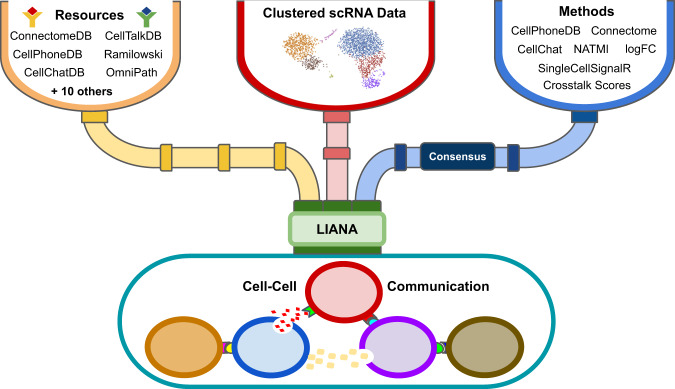
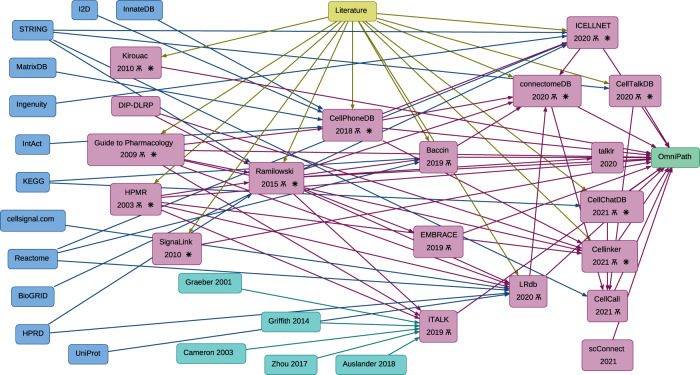
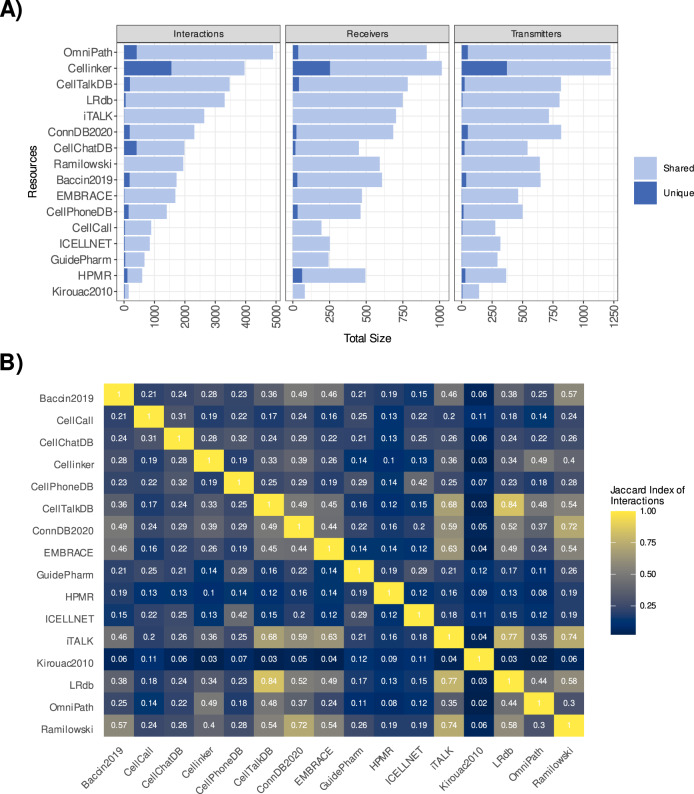
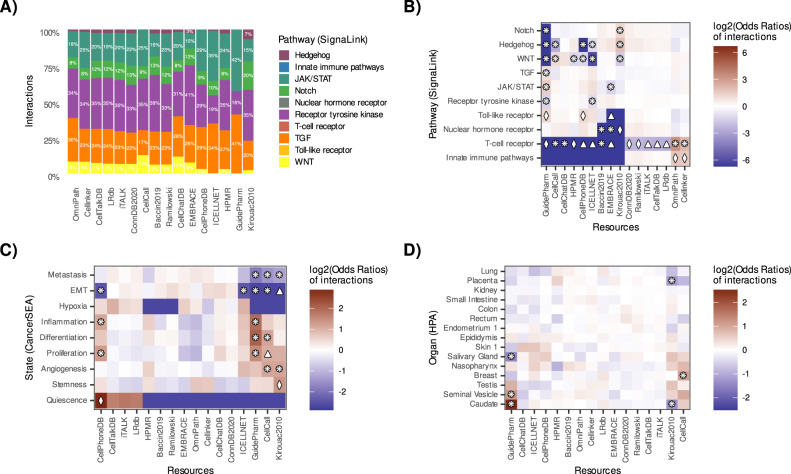
The growing availability of single-cell data, especially transcriptomics, has sparked an increased interest in the inference of cell-cell communication. Many computational tools were developed for this purpose. Each of them consists of a resource of intercellular interactions prior knowledge and a method to predict potential cell-cell communication events. Yet the impact of the choice of resource and method on the resulting predictions is largely unknown. To shed light on this, we systematically compare 16 cell-cell communication inference resources and 7 methods, plus the consensus between the methods’ predictions. Among the resources, we find few unique interactions, a varying degree of overlap, and an uneven coverage of specific pathways and tissue-enriched proteins. We then examine all possible combinations of methods and resources and show that both strongly influence the predicted intercellular interactions. Finally, we assess the agreement of cell-cell communication methods with spatial colocalisation, cytokine activities, and receptor protein abundance and find that predictions are generally coherent with those data modalities. To facilitate the use of the methods and resources described in this work, we provide LIANA, a LIgand-receptor ANalysis frAmework as an open-source interface to all the resources and methods.
Overview
The claims and statistics of this paper haven’t been checked yet.
Free: it reads the open-access text and checks the first 5 claims that cite a source we can check. Create a free account to check every claim.
Integrity signals
Registry
Cites
Statistics
Figures
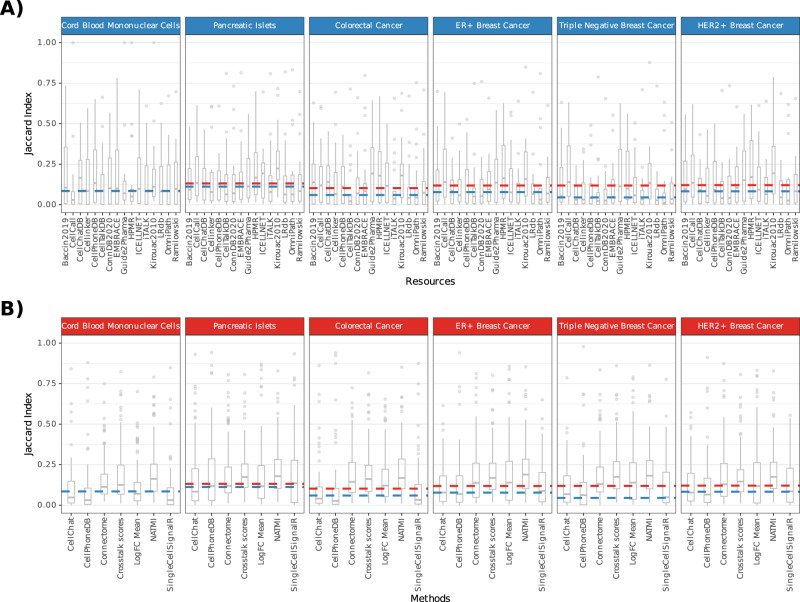
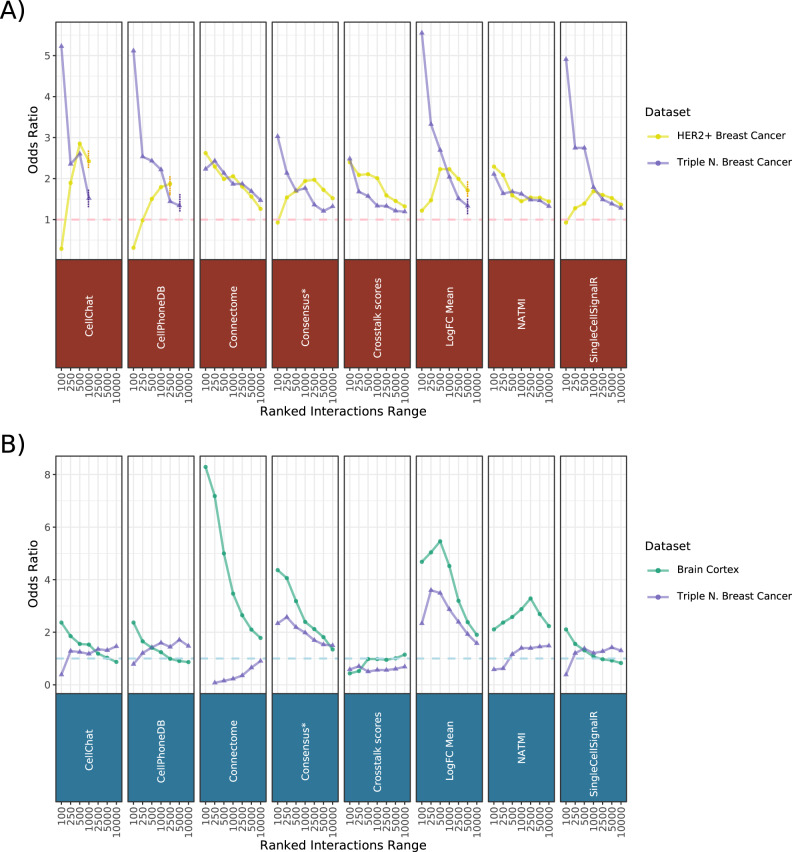
Verification
Claims the paper makes
The claims and statistics of this paper haven’t been checked yet.
Free: it reads the open-access text and checks the first 5 claims that cite a source we can check. Create a free account to check every claim.
Claims other papers make about this one
Each is checked against this paper’s own text: does it say what the citing paper says it does?
The source backs part of the claim, not all of it — or backs it for a different population, condition or comparison.
In the citing paper
“Among these, LIgand-receptor ANalysis framework (LIANA) consolidates outputs from several inference algorithms to provide a consensus, high-confidence readout of CCC interactions [14].”
From Quantitative profiling of lifespan-dependent cell-cell communication potential reveals dynamic ligand-receptor network shifts across mouse tissues (2026) · cites this paper as [14]
Experimental — accuracy not yet measuredThe source backs part of the claim, not all of it — or backs it for a different population, condition or comparison.
In the citing paper
“The ‘lr_mean’ metric, obtained from the LIANA framework [14], quantifies the average expression level of ligand and receptor genes across interacting cell types and is derived directly from single-cell RNA sequencing data.”
From Quantitative profiling of lifespan-dependent cell-cell communication potential reveals dynamic ligand-receptor network shifts across mouse tissues (2026) · cites this paper as [14]
Experimental — accuracy not yet measuredThe cited source says what the claim attributes to it.
In the citing paper
“CellChat127 and CellPhoneDB128, which also consider heteromeric interaction complexes, and SingleCellSignalR129 were found to be robust to both data and resource noise126.”
From Best practices for single-cell analysis across modalities (2023) · cites this paper as [126]
The cited source says what the claim attributes to it.
In the citing paper
“These databases were found to be biased towards specific pathways, functional categories and tissue-enriched proteins126.”
From Best practices for single-cell analysis across modalities (2023) · cites this paper as [126]
The cited source says what the claim attributes to it.
In the citing paper
“While LIANA systematically scores LR interactions present in a given dataset, it does not explicitly quantify directional changes or network-level expansions and contractions across states or stages.”
From Quantitative profiling of lifespan-dependent cell-cell communication potential reveals dynamic ligand-receptor network shifts across mouse tissues (2026) · cites this paper as [14]
5 more claims about this paper
Create a free account to see every claim other papers make about this one.
Self-check
Percentages, sums and reported differences re-computed from the paper’s own numbers.
The self-check needs the paper’s full text.
Citations
Cites
KEGG: Kyoto Encyclopedia of Genes and Genomes
Kanehisa, M. (2000) · Nucleic Acids Research · doi:10.1093/nar/28.1.27 · Cited by 37,077
KEGG: Kyoto Encyclopedia of Genes and Genomes
Ogata, H., Goto, S., Sato, K., Fujibuchi, W., Bono, H., & Kanehisa, M. (1999) · Nucleic Acids Research · doi:10.1093/nar/27.1.29 · Cited by 31,232
Tissue-based map of the human proteome
Uhlén, M., Fagerberg, L., Hallström, B. M., Lindskog, C., Oksvold, P., Mardinoglu, A., Sivertsson, Å., Kampf, C., Sjöstedt, E., Asplund, A., et al. (2015) · Science · doi:10.1126/science.1260419 · Cited by 15,286
Integrating single-cell transcriptomic data across different conditions, technologies, and species
Butler, A., Hoffman, P., Smibert, P., Papalexi, E., & Satija, R. (2018) · Nature Biotechnology · doi:10.1038/nbt.4096 · Cited by 13,174
Complex heatmaps reveal patterns and correlations in multidimensional genomic data
Gu, Z., Eils, R., & Schlesner, M. (2016) · Bioinformatics · doi:10.1093/bioinformatics/btw313 · Cited by 10,034
SCANPY: large-scale single-cell gene expression data analysis
Wolf, F. A., Angerer, P., & Theis, F. J. (2018) · Genome Biology · doi:10.1186/s13059-017-1382-0 · Cited by 8,881
Inference and analysis of cell-cell communication using CellChat
Jin, S., Guerrero-Juarez, C. F., Zhang, L., Chang, I., Ramos, R., Kuan, C.-H., Myung, P., Plikus, M. V., & Nie, Q. (2021) · Nature Communications · doi:10.1038/s41467-021-21246-9 · Cited by 8,409
Spatial reconstruction of single-cell gene expression data
Satija, R., Farrell, J. A., Gennert, D., Schier, A. F., & Regev, A. (2015) · Nature Biotechnology · doi:10.1038/nbt.3192 · Cited by 7,055
Szklarczyk, D., Morris, J. H., Cook, H., Kuhn, M., Wyder, S., Simonovic, M., Santos, A., Doncheva, N. T., Roth, A., Bork, P., et al. (2017) · Nucleic Acids Research · doi:10.1093/nar/gkw937 · Cited by 6,980
UniProt: the universal protein knowledgebase in 2021
The UniProt Consortium, Bateman, A., Martin, M.-J., Orchard, S., Magrane, M., Agivetova, R., Ahmad, S., Alpi, E., Bowler-Barnett, E. H., Britto, R., et al. (2021) · Nucleic Acids Research · doi:10.1093/nar/gkaa1100 · Cited by 6,372
Cited by
Items 701–775 of 775
Cancer-immunity interface: coevolving genomic instability and cell states
Koplev, S., Muyas, F., & Miller, M. L. (2026) · Trends Open · doi:10.1016/j.treopn.2026.09.010
Zheng, X., Xie, Y., Wang, Q., Yao, T., He, Y., Wang, Y., Lin, X., & Li, M. (2026) · Drug Design Development and Therapy · doi:10.2147/dddt.s631484
“147,148 Integrative frameworks such as LIANA+ and FlowSig further support communication inference and link extracellular signals to downstream cellular programs.”
Matveeva, K. S., & Shevyrev, D. (2026) · International Journal of Molecular Sciences · doi:10.3390/ijms27188416
“Because senescent cell clearance relies heavily on NK cells and apparently cytotoxic lymphocytes, the simultaneous upregulation of these inhibitory checkpoints represents a coordinated mechanism of immune evasion, mirroring strategies extensively characterized in tumor immune escape [71–80].”
InfluentialSingle-cell and spatial transcriptomics inform mechanistic physiology in non-model animals
Amin, A., & Zaman, W. (2026) · Functional & Integrative Genomics · doi:10.1007/s10142-026-02054-0
“Different algorithms and resources can produce different networks from the same data (Dimitrov et al. 2022).”
Gan, X., Wang, K., Lu, D., Tang, H., Xie, J., Tan, L., & Pang, J. (2026) · Journal of Pain Research · doi:10.2147/jpr.s637845
Woraharn, W. (2026) · Enlighten: Theses (The University of Glasgow) · doi:10.5525/gla.thesis.86245
Semeraro, R., & Magi, A. (2026) · World Congress on Medical Physics and Biomedical Engineering, September 7 - 12, 2009, Munich, Germany · doi:10.1007/978-3-032-37739-5_56
The tumor microenvironment landscape in lung adenocarcinoma with spatial transcriptomic mappingPreprint
Nie¹, J., Song¹, W., Yang, B., Li¹, X., Li¹, W., Duan, P., Lv, X., & Hou, S. (2026) · Research Square · doi:10.21203/rs.3.rs-10946821/v1
Basto, E., Wajid, B., Read, J., Armitage, J. D., Waithman, J. C., Small, M., & Bosco, A. (2026) · Cell Communication and Signaling · doi:10.1186/s12964-026-03241-z
Spatial cell-cell communication inference based on cell-spot-ligand-receptor heterogeneous graphs
Li, X., Wu, D., Zhang, Y., Chen, M., & Liu, C. (2026) · PLoS Computational Biology · doi:10.1371/journal.pcbi.1014835
“Within this framework, SpaHCC integrates spatial context with pathway activity, transcription factor activity, and receptor-side response information to support spatially informed prioritization and biological contextualization of candidate communication events [2,7,37].”
Sex-stratified adipose-liver circuits in human MASLDPreprint
Koning, M., Hu, I. M., Kovynev, A., Landgraaf, R. G., Bahmani, A. H. A., Baars, D., Milutinović, D. V., Veličković, N. A., Franken, R. J., Acherman, Y. I. Z., et al. (2026) · bioRxiv (Cold Spring Harbor Laboratory) · doi:10.64898/2026.09.24.754015
“20,54 For the liver, route-family panels were restricted to prespecified hepatocyte, LSEC, myeloid and lymphoid source-target routes representing the principal parenchymal, endothelial and immune interactions.”
ProxiNet transfers spatially learned cellular proximity to dissociated single-cell transcriptomesPreprint
Zhan, Y., Yan, B., Zhang, A., Kellis, M., & Sun, N. (2026) · bioRxiv (Cold Spring Harbor Laboratory) · doi:10.64898/2026.09.25.754372
Gu, Y., Li, L., Zhang, Y., Tang, J., Wang, Z., & Luo, X. (2026) · Frontiers in Immunology · doi:10.3389/fimmu.2026.1961075
“CellChat ranks transcript-compatible ligand – receptor relationships but cannot establish ligand engagement or causal signaling (31 – 33).”
Chen, C., Xing, R., Wen, Y., Li, M., & Hu, M. (2026) · Frontiers in Oncology · doi:10.3389/fonc.2026.1963032
“Expression-based ligand – receptor analyses have important inferential distinctions from experimentally demonstrated physical signaling and were interpreted accordingly (55).”
Habel, J. R., Nguyen, T. H. O., Allen, L. F., Skinner, M. J., Kedzierski, Ł., Allen, E. K., Li, S., de Alwis, N., Hagen, R. R., Doggett, K., et al. (2026) · EBioMedicine · doi:10.1016/j.ebiom.2026.106495
“Ligand–receptor interactions were inferred separately for each timepoint using LIANA (v.1.14), 45 with the harmonised broad-lineage/NK-subtype labels as the grouping variable.”
InfluentialGuo, H., & Sun, C. (2026) · Cancer Treatment and Research Communications · doi:10.1016/j.ctarc.2026.101469
Shin, G.-J., Kang, H., Jo, A., Kim, N., Ku, B. M., Ahn, M., & Lee, H. (2026) · Communications Biology · doi:10.1038/s42003-026-11040-y
Escobosa, M. (2024) · Rovira & Virgili repository
Chong, J., Ding, H., Ma, J., Li, Y., Pan, J., Li, Y., & Chen, Y. (2026) · Frontiers in Immunology · doi:10.3389/fimmu.2026.1913904
Ren, Z., Ren, Y., Li, Z., Ge, S., Xu, Y., & Xu, H. (2026) · bioRxiv (Cold Spring Harbor Laboratory) · doi:10.64898/2026.10.01.756124
“4.0) (78, 79).”
InfluentialTian, Y., & Tian, Z. (2026) · Frontiers in Immunology · doi:10.3389/fimmu.2026.1978654
“Available inference methods differ substantially in databases, scoring functions, and assumptions (41).”
Belean, A., Kuramoto, S., Risch, I., Hassman, L. M., Takeda, A., Sonoda, K., Yawata, N., Borcherding, N. C., & Paley, M. (2026) · Frontiers in Immunology · doi:10.3389/fimmu.2026.1916535
Han, Y., Liu, Q., Ao, F., Huang, J., & Lin, H. (2026) · Frontiers in Immunology · doi:10.3389/fimmu.2026.1879293
“…and ligand – receptor resources for cell – cell communication inference and developed LIANA as a framework to separate method-speci fi c scoring from prior interaction resources, highlighting that both algorithm choice and database choice can in fl uence the inferred communication landscape (176).”
Rahman, A., Rahman, A., Mostafa, S., & Islam, M. T. (2026) · Proceedings - IEEE Symposium on Computer-Based Medical Systems · doi:10.1109/cbms69103.2026.00204
“This targeted analysis was interpreted in the context of current CCC benchmarking and inference frameworks [20]–[23].”
Wang, X., Mei, J., Li, R., Zhang, Y., Zhao, G., Hu, Y., Yan, G., Sun, H., & Lv, H. (2026) · Human Reproduction · doi:10.1093/humrep/deag160
Malignant and stromal partial EMT programmes and cetuximab outcome in head and neck cancerPreprint
Alkhatib, D. Z. R., Lunetto, S., Chakraborty, P., Jolly, M. K., Philpott, M. P., Biddle, A., Youssef, G., & Han, N. (2026) · bioRxiv (Cold Spring Harbor Laboratory) · doi:10.64898/2026.10.09.757840
Zhong, S., Xie, G., & Zhang, Z. (2026) · Genes · doi:10.3390/genes17101261
“Curated ligand–receptor scoring https://doi.org/10.3390/genes17101261 was not included because expression-based communication scores largely reflect baseline expression and the number of edges per gene, and depend strongly on the method and resource chosen [34,35].”
InfluentialTranscriptomic rejuvenation during intestinal and liver regeneration in micePreprint
Iqbal, S., & Gladyshev, V. N. (2026) · bioRxiv (Cold Spring Harbor Laboratory) · doi:10.64898/2026.10.11.758291
Chen, Y.-J., Chen, Y., Liu, S., Wu, C.-J., & Chiu, Y.-L. (2026) · Free Radical Biology and Medicine · doi:10.1016/j.freeradbiomed.2026.10.031
Pan, B., Zheng, J., Luo, Z., Hou, S., 袁彩君, Wang, Y., Cao, X., Huang, L., Li, M., Wang, H., et al. (2026) · Translational Oncology · doi:10.1016/j.tranon.2026.103067
“Cell – cell communication analysis was performed using LIANA [45].”
Design foresight and model humility for omics inference
Yu, G. (2026) · Trends in Genetics · doi:10.1016/j.tig.2026.09.005
Song, C., Sha, T.-M., Zhang, X., Tang, S., Liu, C., & Li, J. (2026) · Computational Biology and Chemistry · doi:10.1016/j.compbiolchem.2026.109492
Lindgren, D., Rosberg, R., Smoląg, K. I., Johansson, E., Braun, S., Sjölund, J., Manou, D., Pracucci, E., Phung, B., Harbst, K., et al. (2026) · Cell Reports · doi:10.1016/j.celrep.2026.118119
+A CAR T cell-amplified suppressive B cell circuit in AMLPreprint
Gottschlich, A., Kavaka, V., Janert, T. A., Igl, V., Carlini, E., Rohrbacher, L., den Hartog, W., Harwood, J., Trefny, M. P., Sogukcelik, S., et al. (2026) · bioRxiv (Cold Spring Harbor Laboratory) · doi:10.64898/2026.10.12.758644
scOmnom: scalable end-to-end single-cell RNA-seq analysis with auditable resolution selectionPreprint
Hu, I. M., Kovynev, A., Meijnikman, A. S., Nieuwdorp, M., & Prange, K. H. M. (2026) · bioRxiv (Cold Spring Harbor Laboratory) · doi:10.64898/2026.10.13.758797
Yan, Y., Teng, T., Luo, X., Liu, J., & Wang, J. (2026) · Frontiers in Immunology · doi:10.3389/fimmu.2026.1918458
Wolabaugh, A., Agashe, V. V., Wang, Z., Danzl, N. M., Parks, C. A., Maharlooei, M. K., Ding, X., Li, H. W., Castagna, C., Zanetti, G., et al. (2026) · Frontiers in Immunology · doi:10.3389/fimmu.2026.1951246
Tang, S., Chen, Y., & Zhao, Z. (2026) · Biology · doi:10.3390/biology15211918
Qiao, S., Li, L., He, C., & Li, W. (2026) · bioRxiv (Cold Spring Harbor Laboratory) · doi:10.64898/2026.10.20.760578
Cui¹, L., & Qi², W. (2026) · Research Square · doi:10.21203/rs.3.rs-11273549/v1
Decoding & manipulating human intercellular signaling via scalable cell-free protein synthesisPreprint
Tzouanas, C. N., Shan, F., Guzman, M., Chen, T. L., Pan, J. B., Rubin, A. J., Sobieszczyk, E. G., Rivera, K. D., Toniappa, A., Lamson, D. T., et al. (2026) · bioRxiv (Cold Spring Harbor Laboratory) · doi:10.64898/2026.10.24.761585
Lin, D., Duan, L., Wang, B., Chen, X., Cao, Y., Xu, Y., Zhao, S., & 王连召 (2026) · Frontiers in Immunology · doi:10.3389/fimmu.2026.1992388
Alshahrani, M. (2026) · The Journal of Contemporary Dental Practice · doi:10.5005/jp-journals-10024-4070
Single-cell and spatial multi-omics for studying cell competition in the tumor microenvironment
Balu, P., Sureshkumar, A., Sundaramurthy, G. D., Subramaniam, G., & Wong, L. S. (2026) · Frontiers in Oncology · doi:10.3389/fonc.2026.1971798
Liu, R., Zhu, Z., Li, Y., Xing, X., Wang, X., & Huang, C. (2026) · Frontiers in Immunology · doi:10.3389/fimmu.2026.1976649
Kontext: Kernel-based method bridging spatial domain identification and cell-cell communicationPreprint
Ozier‐Lafontaine, A., Dray, N., Villoutreix, P., & Cantini, L. (2026) · bioRxiv (Cold Spring Harbor Laboratory) · doi:10.64898/2026.10.26.761813
Zhao, H., Wang, Y., Wang, Q., Ma, X., Zhao, K., Zhai, X., Wang, R., Han, M., Cui, L., & Sun, Y. (2026) · Hearing Research · doi:10.1016/j.heares.2026.109851
Tsai, K.-Y., & Gang, L. (2026) · Journal of Respiratory Biology and Translational Medicine · doi:10.70322/jrbtm.2026.10009
Almeida‐Silva, F. (2026) · bioRxiv (Cold Spring Harbor Laboratory) · doi:10.64898/2026.10.28.762566
Li, J., Ma, S., Ye, K., & Zhang, B. (2026) · Frontiers in Immunology · doi:10.3389/fimmu.2026.1981038
Integration and annotation of spatial multi-omic data with DIRAC
Xu, C., Liu, S., Yang, H., Yang, C., Cao, Y., Gao, J., Wei, S., Jia, D., Liang, D., Ma, Y., et al. (2026) · Nature Methods · doi:10.1038/s41592-026-03282-9
Kui, L., Zhou, S., Jiao, Y.-M., Zhang, R., Liu, L., Xiong, K.-X., Wang, G.-Y., & Zhou, Y. (2026) · bioRxiv (Cold Spring Harbor Laboratory) · doi:10.64898/2026.11.04.764144
Xu, Y., Yang, M., Ma, Y., Wang, Y., Liu, J., Liang, T., & Guo, L. (2026) · Critical Reviews in Oncology/Hematology · doi:10.1016/j.critrevonc.2026.105690
Obuekwe, C., Ogunoye, B. T., Adelaja, A. T., Ossai, J., Adegbesan, A. C., & Akingbola, A. (2026) · bioRxiv (Cold Spring Harbor Laboratory) · doi:10.64898/2026.11.04.764269
Zhang, Z., Zhang, Y., Lin, J., & Cheng, B. (2026) · Frontiers in Immunology · doi:10.3389/fimmu.2026.2023316
Preserving malignant provenance in single-cell cancer atlases: lessons from Ewing sarcoma plasticity
Zhao, G., Hu, Z., Yang, B., & Shi, W. (2026) · Neoplasia · doi:10.1016/j.neo.2026.101392
Spatial Cell-Cell Communication
Pennsieve (University of Pennsylvania) (2026) · Pennsieve Discover · doi:10.26275/jf2v-crfi
Pennsieve (University of Pennsylvania) (2026) · Pennsieve Discover · doi:10.26275/avxm-sjmc
A stroma-sensing TGF-β blockade reprograms CAF-myeloid niches to induce durable tumor immunity
Kang, D.-W., Bae, J. B., Yoo, S., Kim, H., Kim, P., Mo, J., Kim, J., Kim, J. S., Yoon, K., Kim, Y. S., et al. (2026) · Cancer Cell · doi:10.1016/j.ccell.2026.10.007
Self-citationLi, Y., Wu, S., Mai, L., & Lu, C. (2026) · Frontiers in Cell and Developmental Biology · doi:10.3389/fcell.2026.1998983
Zhang, L., Zheng, Y., Shi, X., Li, N., Tian, J., & Duan, S. (2026) · Toxicology · doi:10.1016/j.tox.2026.154623
Zhao, M., Shao, F., Liang, X., Wenbin, L., & 刘宝利 (2026) · Frontiers in Pharmacology · doi:10.3389/fphar.2026.2011354
Pei, Y., Li, P., Pu, Z., Xu, D., & Yang, W. (2026) · Frontiers in Oncology · doi:10.3389/fonc.2026.1989759
Monaco, D., Dioguardi, M., Dipalma, M., Mattioli, E., Zito, F. A., Giovannelli, F., Ricco, A., Brunetti, O., Argentiero, A., & Summa, S. D. (2026) · bioRxiv (Cold Spring Harbor Laboratory) · doi:10.64898/2026.11.09.765280
A cellular atlas of the preinvasive breast cancer microenvironment
He, S., Thennavan, A., Wei, R., Bai, S., Li, J., Bethell, C. J., Sei, E., Rao, M., Kumar, T., Tang, C., et al. (2026) · Science · doi:10.1126/science.aef4622
Shi, X., Cao, X., Guan, B., Wu¹, W., 朱海轸, Fu, Y., Guo, X., & Wang, T. (2026) · Neoplasia · doi:10.1016/j.neo.2026.101401
Zhang, H., Gu, J., Feng, J., Feng, J., Zhi, J., Gong, Y., & Jiang, H. (2026) · Cytokine & Growth Factor Reviews · doi:10.1016/j.cytogfr.2026.101539
Isgandarov, I., Abilbayeva, A., Tarabayeva, A., Шамекова, М., Bitanova, E., Yessenkulova, S., Kulmanbetov, R., Zhubanturliyeva, A., Nurmukhanbetova, A., Tulepbergenova, A., et al. (2026) · International Journal of Molecular Sciences · doi:10.3390/ijms272210189
Schreibing, F., Hannani, M. T., Kim, H., Nagai, J. S., Ticconi, F., Fewings, E., Bleckwehl, T., Begemann, M., Torow, N., Kuppe, C., et al. (2022) · doi:10.3389/fimmu.2022.1066176.s005
Self-citationLiu, T., & Chen, X. (2026) · Journal of Molecular Neuroscience · doi:10.1007/s12031-026-02623-9
Gou, H., Liu, S., Liu, L., Luo, M., Qin, S., He, K., & Yang, X. (2022) · doi:10.3389/fimmu.2022.1095915.s001
Safrastyan, A., & Wollny, D. (2025) · doi:10.3389/fbinf.2024.1332782.s004
Dhirachaikulpanich, D., Lagger, C., Chatsirisupachai, K., de Magalhães, J. P., & Paraoan, L. (2022) · doi:10.3389/fnagi.2022.1016293.s001
Li, Z., Yang, B., Liu, S., Yu, S., Zhao, Z., & Wang, H. (2026) · View · doi:10.1002/viw2.70225
Ya, C., Chunhua, D., Liu, Z., Xu, H., Liu, Z., & Kong, J. (2026) · The FASEB Journal · doi:10.1096/fj.202603862rr
Metadata
- Authors
- Dimitrov, D., Türei, D., Garrido-Rodriguez, M., Burmedi, P. L., Nagai, J. S., Boys, C., Ramirez Flores, R. O., Kim, H., Szalai, B., Costa, I. G., Valdeolivas, A., Dugourd, A., & Saez-Rodriguez, J.
- Affiliations
- Heidelberg University (DE)
- Universitätsklinikum Aachen (DE)
- Semmelweis University (HU)
- F. Hoffmann-La Roche AG (CH)
- ORCID
- Venue
- Nature Communications
- Published
- 2022-06-09
- Volume
- 13
- Issue
- 1
- Pages
- 3224-3224
- ISSN
- 2041-1723 (ISSN-L)
- PMC
- PMC9184522
- OpenAlex
- W4281716326
- Semantic Scholar
- abb7218aa6062dc1fa5f83e6f9210c63270cb0fa
- Cited by
- 664
- References
- 101
- Citations by year
- 2026: 215 · 2025: 189 · 2024: 144 · 2023: 72 · 2022: 40
- FWCI
- 37.13
- Type
- journal article
- Language
- en
- Open access
- gold
- doi.org
- Licence
- cc-by
- creativecommons.org/licenses/by/4.0 (tdm)
- creativecommons.org/licenses/by/4.0 (vor)
- Locations
- Nature Communications (publishedVersion, cc-by)
- bioRxiv (Cold Spring Harbor Laboratory) (acceptedVersion, cc-by-nd)
- Research Square (acceptedVersion, cc-by)
- PubMed Central (publishedVersion, cc-by)
- PubMed (publishedVersion)
- RePEc: Research Papers in Economics (submittedVersion)
- DOAJ (DOAJ: Directory of Open Access Journals) (submittedVersion)
- RWTH Publications (RWTH Aachen) (submittedVersion, other-oa)
- RWTH Publications (RWTH Aachen)
- Funders
- European Commission (HORIZON2020, 860329)
- Deutsche Forschungsgemeinschaft (CRU344)
- Bundesministerium für Bildung und Forschung (031L0181B, 860329)
- Topics
- Life Sciences › Biochemistry, Genetics and Molecular Biology › Molecular Biology › Single-cell and spatial transcriptomics
- Life Sciences › Biochemistry, Genetics and Molecular Biology › Molecular Biology › Bioinformatics and Genomic Networks
- Life Sciences › Biochemistry, Genetics and Molecular Biology › Molecular Biology › Gene Regulatory Network Analysis
- Keywords
- intercellular communication, cell-cell interactions, single-cell RNA sequencing, ligand-receptor interactions, method comparison, lianas, cytokines
- MeSH terms
- RNA-Seq, Cell Communication, Ligands, Signal Transduction, Single-Cell Analysis, Transcriptome
About these checks
Registry, retraction, Cites and statistics results are computed, not judged, with one exception: a printed reference that no index lists is read once by a model before it counts as a citation error. Claims are extracted by a model and kept only when their quote appears verbatim in the text; each cited source is then checked, with a model’s help, for whether it says what the claim relies on. Those verdicts can be wrong — read the claim’s quote and the cited source before relying on one.
Statistics and arithmetic are recomputed, not judged.
Confidence bands are shown only for fields calibrated on our annotated test set. None is calibrated yet, so no band is shown.
What counts as a claim ›How we measure confidence ›How we check this ›
Are you an author, or do you see a problem with this page? Request a review
Data sources
Bibliographic data: Semantic Scholar, OpenAlex, Crossref.
Contains information from the Semantic Scholar Academic Graph Datasets, made available under the ODC Attribution License (ODC-BY 1.0).
Semantic Scholar’s data is described in: Kinney, R., et al. (2023). The Semantic Scholar Open Data Platform. arXiv:2301.10140.
