

ATP synthase evolution on a cross-braced dated tree of life
Open accessPublished version of a preprint
The DOI matches its Crossref record; 144 of the 146 references it cites were found in a registry or an index; 41 of the 83 sources its claims cite were checked for support.
Abstract
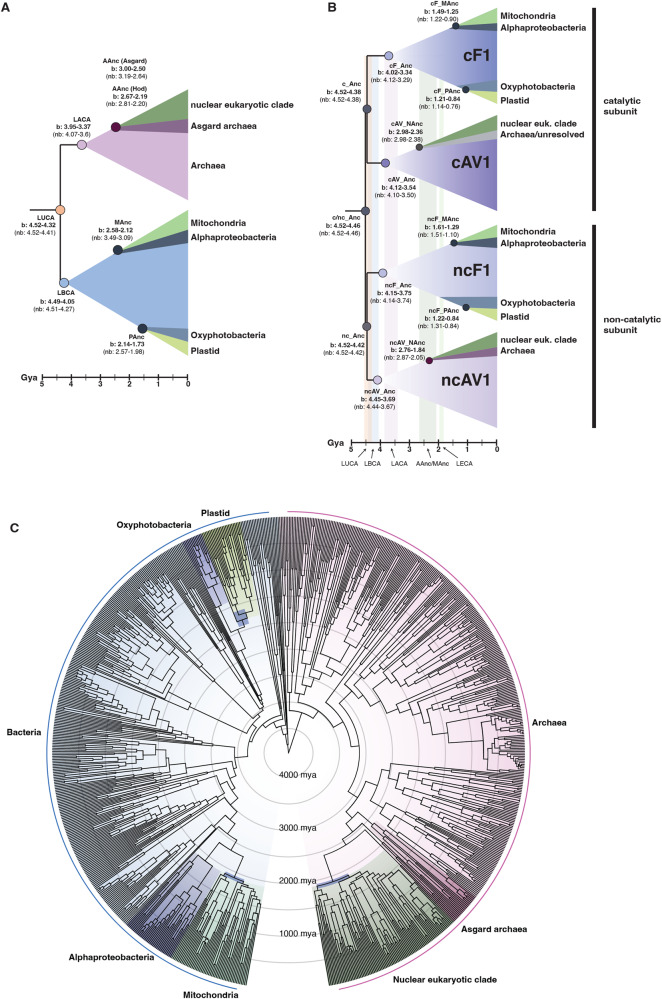
The timing of early cellular evolution, from the divergence of Archaea and Bacteria to the origin of eukaryotes, is poorly constrained. The ATP synthase complex is thought to have originated prior to the Last Universal Common Ancestor (LUCA) and analyses of ATP synthase genes, together with ribosomes, have played a key role in inferring and rooting the tree of life. We reconstruct the evolutionary history of ATP synthases using an expanded taxon sampling set and develop a phylogenetic cross-bracing approach, constraining equivalent speciation nodes to be contemporaneous, based on the phylogenetic imprint of endosymbioses and ancient gene duplications. This approach results in a highly resolved, dated species tree and establishes an absolute timeline for ATP synthase evolution. Our analyses show that the divergence of ATP synthase into F- and A/V-type lineages was a very early event in cellular evolution dating back to more than 4 Ga, potentially predating the diversification of Archaea and Bacteria. Our cross-braced, dated tree of life also provides insight into more recent evolutionary transitions including eukaryogenesis, showing that the eukaryotic nuclear and mitochondrial lineages diverged from their closest archaeal (2.67-2.19 Ga) and bacterial (2.58-2.12 Ga) relatives at approximately the same time, with a slightly longer nuclear stem-lineage.
Overview
CoChat Summary
## TL;DR
This paper reconstructs ATP synthase evolution using expanded taxon sampling and a new phylogenetic cross-bracing dating approach. It concludes that the catalytic/non-catalytic ATP synthase split and the F- versus A/V-type divergence likely occurred very early, potentially before or around LUCA, with eukaryotic origins dated in a broader cellular timeline.
## Key findings
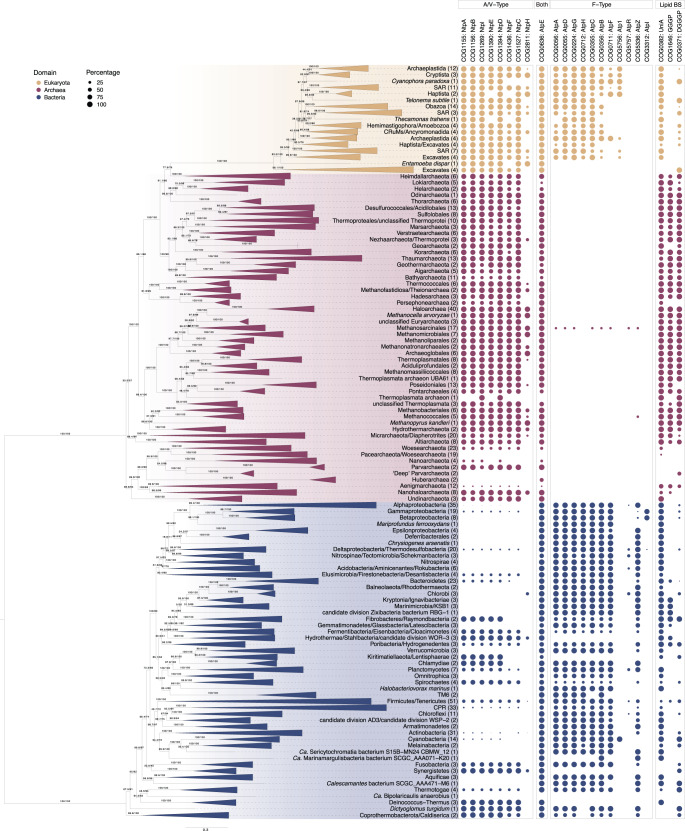
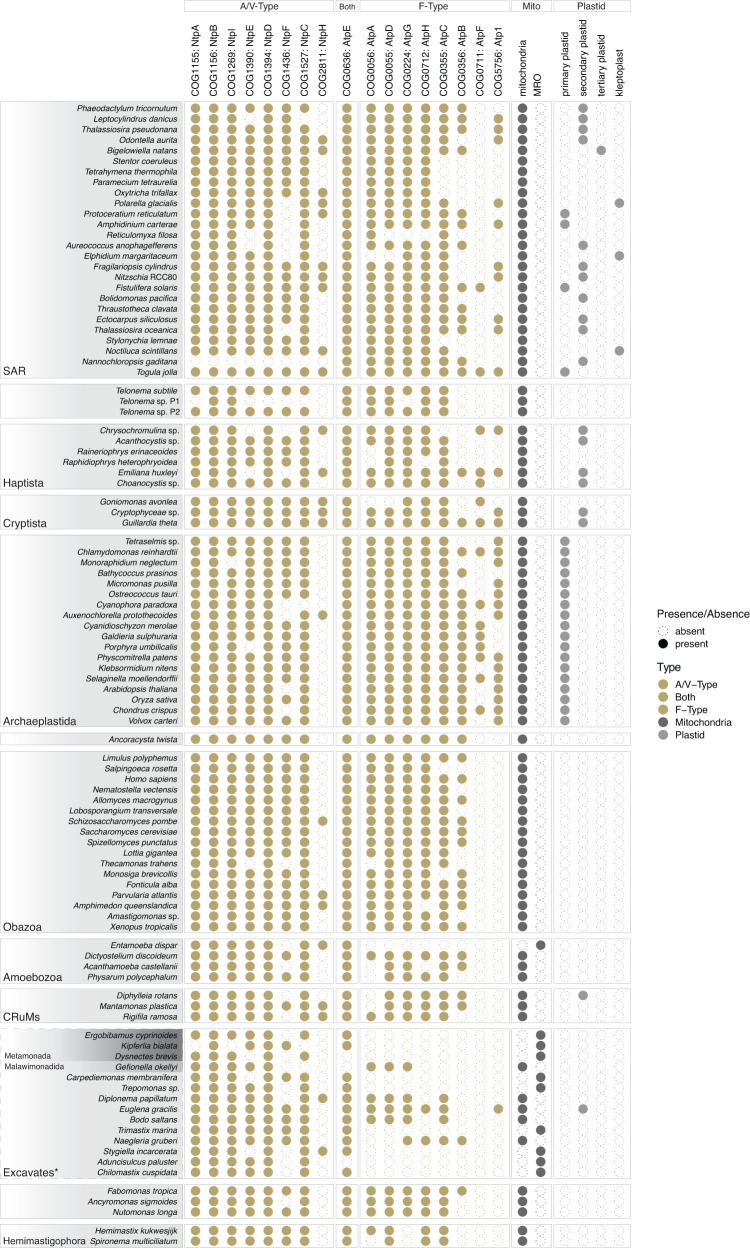
- Across a reference dataset of 800 archaeal, bacterial, and eukaryotic genomes, ATP synthases showed a domain-level pattern: Archaea were primarily A/V-type, Bacteria primarily F-type, and eukaryotes carried both; however, 46% (23/50) of bacterial phylum-level lineages encoded A/V-type genes, and only 3 archaeal genomes (all Methanosarcina) also had F-type ATP synthases.
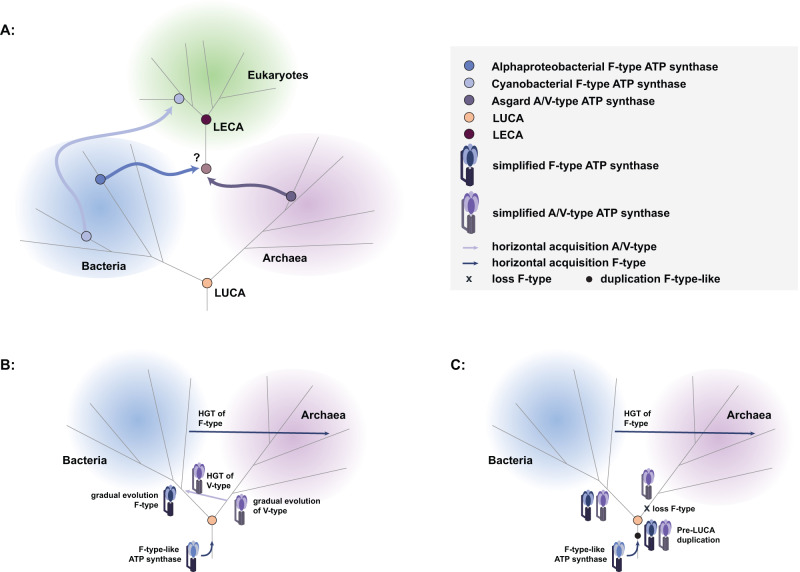
- Gene-tree reconciliation and phylogenetic analyses supported very ancient ATP synthase diversification: the split between catalytic and non-catalytic subunits was estimated at 4.52–4.46 Ga, and the divergence into F- and A/V-type lineages at 4.52–4.38 Ga (catalytic) and 4.52–4.42 Ga (non-catalytic), overlapping with or predating LUCA (4.52–4.32 Ga).
- The dated species tree estimated LBCA at 4.49–4.05 Ga, LACA at 3.95–3.37 Ga, eukaryotes diverging from their closest asgardarchaeal relatives at 2.67–2.19 Ga and from Alphaproteobacteria at 2.58–2.12 Ga, plastids diverging from Cyanobacteria at 2.14–1.73 Ga, and LECA at 1.93–1.84 Ga.
- In eukaryotes, the authors report a slightly longer nuclear stem-lineage than the mitochondrial one: nuclear mean 520.3 Ma (95% HPD 291–789 Ma) versus mitochondrial mean 438.8 Ma (95% HPD 233–682 Ma).
## Methods
- The study combined comparative genomics, phylogenetics, ancestral sequence reconstruction, and molecular dating on an expanded dataset of 800 taxa, including 350 archaeal, 349 bacterial, and 100 eukaryotic reference genomes/transcriptomes.
- ATP synthase subunits were identified using KEGG/COG/Pfam annotations; phylogenies were inferred with maximum-likelihood methods in IQ-TREE/IQTREE2, with additional Bayesian analyses for some eukaryotic F-type subsets.
- A new dating framework, McmcDate, implemented cross-bracing (equating equivalent speciation nodes) and relative age constraints; the authors also used ALE gene tree–species tree reconciliation to infer gene origination, duplication, transfer, and loss.
## Limitations
- The paper states that deep branches are susceptible to systematic error, and that distinguishing ancestral presence from early horizontal acquisition is difficult for the deepest ATP synthase nodes.
- It also notes that fossil evidence for early microbial evolution is limited, so dating relies on cross-bracing and geochemical/fossil calibrations that are less direct than for animals and plants.
- Evident from the text: some eukaryotic placements and ATP synthase subunit positions are partly unresolved or model-sensitive (for example, different support under LG+C20+R+F versus LG+C60+R+F), so some conclusions depend on topology and model choice.
Model-written summary. Check it against the paper before relying on it.
Integrity signals
Registry
Cites
Statistics
Figures
Verification
Claims the paper makes
15 Valid · 4 Not valid · 7 Not checked · 58 Own results and interpretations
The cited sources support only part of this claim — read each source’s verdict below.
In the paper
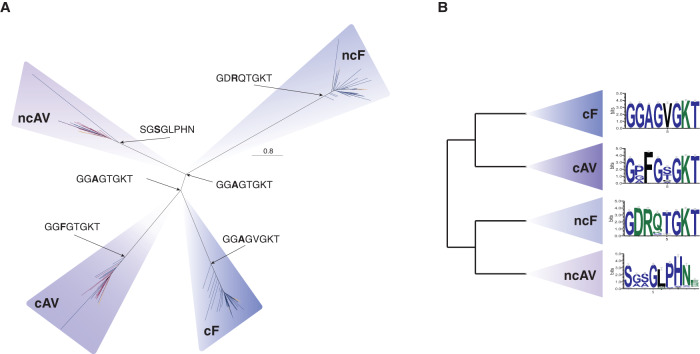
“The catalytic and non-catalytic subunits comprising the soluble hetero-hexameric R1 component, are paralogs to each other. They arose prior to LUCA through an ancient duplication of a RecA family protein (P-loop NTPase) followed by the loss of the catalytic function in one subunit”
§ ATP synthase evolution on a cross-braced dated tree of life > Introduction The phylogeny and timeline of early cellular evolution, including the age of the last universal common ancestor (LUCA), the radiations of the archaeal and bacterial domains, and the origin of eukaryotes and their progenitor prokaryote lineages, is poorly constrained1. Recent genomics approaches have greatly improved our sampling of natural diversity and uncovered previously unknown microbial lineages that are key to understanding early cellular evolution2. For instance, the Asgard archaea3–5 (also referred to as Asgardarchaeota6, Supplementary Data 1), include the closest known sister lineage of the Eukaryota (i.e. eukaryotes)3,4,7,8 and have provided support for the evolution of the eukaryotic cell through a symbiosis between at least one asgardarchaeal and one alphaproteobacterial partner9–15. The discovery of the symbiotic and genome-reduced members of the bacterial Candidate Phyla Radiation (CPR) and the DPANN archaea (named after the first member lineages of this group, the Diapherotrites, Parvarchaeota, Aenigmarchaeota, Nanoarchaeaota, and Nanohaloarchaeota)16–18, that were originally interpreted as early diverging branches on each side of the root of the tree of life2, might be important for our understanding of the deep split separating Archaea and Bacteria19. However, more recent phylogenomic analyses suggest that CPR are instead sister to Chloroflexota within Terrabacteria19–23. Time scaling molecular evolution is challenging because the rate of molecular evolution has varied substantially through time19,24–27 and, with few fossil calibrations (e.g. maximum age constraints and lack of Precambrian maximum age calibrations), clock models struggle to capture this rate variation. This has led to estimates of divergence time that in some cases are uncertain (as in the case of the age of LUCA – 4.52–4.48 Ga19,27,28). Additional sources of temporal information beyond fossil and geochemical calibrations are crucial to improve these estimates of divergence time. The ATP synthase is a protein complex central to energy conservation through the synthesis and hydrolysis of ATP29,30. It is a useful marker to address key evolutionary transitions due to the presence of this enzyme across all domains of life24,29,31–37. The ATP synthase family is classified into the F-, A-, and V-type ATP synthases30,33,34 based on taxonomic affiliation, function, and cellular localization30,34,38. F-type ATP synthases are ubiquitous across bacteria and eukaryotes and localize to cellular, mitochondrial, and plastid membranes39. In line with this, eukaryotic F-type ATP synthases are hypothesized to be derived from the bacterial ancestors of these organelles33,35,40. The A-type ATP synthase34,38,41, found primarily in Archaea, belongs to a larger family of A/V-type ATP synthases38 that also include eukaryotic complexes found in vacuoles32–34,38,40–42. The F- and A/V-type ATP synthases share a common foundational architecture consisting of a soluble cytoplasmic component (R1) connected to an insoluble membrane component (R0) (Supplementary Fig. 1). The hexameric headpiece of the R1 complex contains three copies each of a catalytic (c) and non-catalytic (nc) subunit and is the site of ATP synthesis and hydrolysis. The catalytic and non-catalytic subunits comprising the soluble hetero-hexameric R1 component, are paralogs to each other. They arose prior to LUCA through an ancient duplication of a RecA family protein (P-loop NTPase) followed by the loss of the catalytic function in one subunit29,32–35,38,40,43. Due to this ancient gene duplication, each paralog can act as an outgroup to the other, providing a way to root the tree of life44. Since the duplication occurred before the divergence between Archaea and Bacteria, speciation events during the subsequent history of life appear at least twice in the ATP synthase gene tree. This circumstance has been used to improve date estimates for eukaryotic evolution by “cross-bracing” (constraining to the same unknown age) equivalent speciation nodes in the gene tree24, which propagates limited fossil evidence across the tree. Cross-bracing improves clock estimates in two ways. First, the information that two distant nodes in the tree must have the same age provides a useful constraint on the rates of evolution and ages of the intervening branches. Second, it enables the fossil record of eukaryotes to inform divergence times within both the archaeal and bacterial domains, because eukaryotes obtained ATP synthase paralogs from both sources. In principle, this approach might be expanded beyond ATP synthase to the core set of ribosomal proteins that are conserved between the nucleus, mitochondrion, and chloroplast of eukaryotes as a result of the mitochondrial and plastid endosymbioses. Cross-bracing a ribosomal species tree could help to avoid difficulties arising from HGT events during ATP synthase evolution32,33,40,45, and the limited resolving power of single gene trees. To improve our understanding of the evolutionary history of ATP synthases and cellular evolution, we perform phylogenetic analyses using an updated taxon sampling set, ancestral sequence reconstruction46,47, and novel molecular dating approaches including cross-bracing24,48,49. We also use probabilistic gene- and species-tree reconciliation methods (implemented in Amalgamated Likelihood Estimation (ALE))50–52 to determine the origin and evolution of the ATP synthase and each of its subfamilies. ALE allows us to compare the ATP synthase gene family tree to the tree of life and to infer the history of gene duplication, transfer, and loss during ATP synthase evolution. We assemble a set of ribosomal marker proteins that includes three distinct clades of eukaryotic homologs derived from archaeal, alphaproteobacterial, and cyanobacterial ancestors. Due to gene duplications (ATP synthase) and endosymbiosis events (ribosomal marker genes and ATP synthase), cross-bracing can be applied to both datasets. Our analyses confirm the split of the catalytic and non-catalytic ATP synthase subunits prior to LUCA and reveal the prevalence and early evolution of A/V-type ATP synthases in Bacteria. Our dating analyses establish absolute age estimates for LUCA, the Last Bacterial Common Ancestor (LBCA), and the Last Archaeal Common Ancestor (LACA). We link early cellular evolution with the origin of the head component of ATP synthases, which has diversified earlier than previously assumed. Finally, our analyses improve time estimates for the origin of eukaryotes from its prokaryotic ancestors and thereby inform on eukaryogenesis.
What the sources say
- Not checked — no full text of the sourcecites [29] Mulkidjanian AY Makarova KS Galperin MY Koonin EV Inventing the dynamo machine: the evolution of the F-type and V-type ATPases Nat. Rev. Microbiol. 2007 5 892 899 10.1038/nrmicro1767 17938630 source
- Not checked — no full text of the sourcecites [32] Gogarten JP Evolution of the vacuolar H+-ATPase: implications for the origin of eukaryotes Proc. Natl Acad. Sci. USA 1989 86 6661 6665 10.1073/pnas.86.17.6661 2528146 PMC297905 source
- Not checked — no full text of the sourcecites [33] Hilario, E. & Gogarten, J. P. Horizontal transfer of ATPase genes — the tree of life becomes a net of life. Biosystems31, 111–119 (1993). 8155843 source
- Not checked — no full text of the sourcecites [34] Cross, R. L. & Müller, V. The evolution of A-, F-, and V-type ATP synthases and ATPases: reversals in function and changes in the H /ATP coupling ratio. FEBS Lett.576, 1–4 (2004). 15473999 source
- Partly supportedcites [35] Mulkidjanian AY Galperin MY Makarova KS Wolf YI Koonin EV Evolutionary primacy of sodium bioenergetics Biol. Direct 2008 3 13 10.1186/1745-6150-3-13 18380897 PMC2359735 sourceExperimental — accuracy not yet measured
The Background (page unavailable) describes the F1 head as a hexamer of three α and three β subunits and identifies β as carrying catalytic sites. The Results and discussion section on evolutionary relationships (page unavailable) discusses homology among ATPase subunits, but the passages do not establish that α and β are paralogs or that a pre-LUCA duplication of a RecA-family P-loop NTPase caused one to lose catalytic function. The duplication and loss discussed elsewhere concern membrane c/K subunits and Na+-binding ligands, not the F1 head. (LLM, conf=0.82)
- Not checked — no full text of the sourcecites [38] Müller V Grüber G ATP synthases: structure, function and evolution of unique energy converters Cell. Mol. Life Sci. 2003 60 474 494 10.1007/s000180300040 12737308 PMC11138706 source
- Not checked — no full text of the sourcecites [40] Gogarten JP Taiz L Evolution of proton pumping ATPases: rooting the tree of life Photosynth. Res. 1992 33 137 146 10.1007/BF00039176 24408574 source
- Partly supportedcites [43] Walker, J. E., Saraste, M., Runswick, M. J. & Gay, N. J. Distantly related sequences in the alpha- and beta-subunits of ATP synthase, myosin, kinases and other ATP-requiring enzymes and a common nucleotide binding fold. EMBO J.1, 945–951 (1982). PMC553140 6329717 sourceExperimental — accuracy not yet measured
Our copy supports the paralogy and antiquity core of the claim: the Abstract states β contributes to catalytic sites while α 'may be involved in regulation', and the 'Conservation of α- and β-subunits' section concludes that 'the gene duplication that gave rise to α and β occurred before the emergence of mitochondria, i.e., >1.2 x 10^9 years ago'. However, the paper dates the duplication only to before mitochondria (>1.2 Ga), not to before LUCA, so that deeper timing is an extension. It also never identifies a RecA-family protein as the duplicated ancestor: RecA appears only as one entry (sequence segment A, residues 52-84, after Sancar et al. 1980) in Table II among proteins sharing the common adenine nucleotide binding fold with myosin, adenylate kinase and phosphofructokinase (Discussion, 'Significance of homologies'), and the paper instead argues the α/β homology reflects retained common functions such as nucleotide binding. (LLM, conf=0.78)
plainstates a cause- Asserted: passes — The authors put it forward as true.
- Checkable: passes — It can be checked against evidence.
- Load-bearing: passes — The paper’s conclusions depend on it.
- Based: passes — The paper gives a reason why it holds.
The cited sources support only part of this claim — read each source’s verdict below.
In the paper
“Conversely, only three members of a single archaeal lineage, Methanosarcinales, contain F-type ATP synthases in addition to their A/V-type complex”
§ ATP synthase evolution on a cross-braced dated tree of life > Results > Distribution of ATP synthases across Bacteria, Archaea and Eukaryotes
What the sources say
- Not checked — no full text of the sourcecites [54] Sumi M Yohda M Koga Y Yoshida M F0F1-ATPase genes from an archaebacterium, Methanosarcina barkeri Biochem. Biophys. Res. Commun. 1997 241 427 433 10.1006/bbrc.1997.7809 9425287 source
- Not checked — no full text of the sourcecites [55] Saum R Schlegel K Meyer B Müller V The F1FO ATP synthase genes in Methanosarcina acetivorans are dispensable for growth and ATP synthesis FEMS Microbiol. Lett. 2009 300 230 236 10.1111/j.1574-6968.2009.01785.x 19796137 source
- Partly supportedcites [56] Dibrova DV Galperin MY Mulkidjanian AY Characterization of the N-ATPase, a distinct, laterally transferred Na+-translocating form of the bacterial F-type membrane ATPase Bioinformatics 2010 26 1473 1476 10.1093/bioinformatics/btq234 20472544 PMC2881411 sourceExperimental — accuracy not yet measured
Results §3.1 identifies F-type N-ATPase operons alongside A-type ATPases in two archaea, Methanosarcina barkeri and M. acetivorans. Results §3.2 says the operon was not found in the sequenced genome of the third, M. mazei, although it discusses earlier functional evidence for a second ATPase there. The Discussion also predicts that N-ATPases do not synthesize ATP, so the claim overstates both the count and their designation as ATP synthases. (LLM, conf=0.90)
plain- Asserted: passes — The authors put it forward as true.
- Checkable: passes — It can be checked against evidence.
- Load-bearing: unclear — It is unclear whether the paper’s conclusions depend on it.
- Based: passes — The paper gives a reason why it holds.
The cited sources support only part of this claim — read each source’s verdict below.
In the paper
“The LECA estimate (1.93–1.84 Ga, 95% highest posterior density) from our species tree analysis falls within published molecular clock estimates, placing LECA within a broad interval ~1–2.4 Ga25–27,97–99 (Fig. 5A, C, Supplementary Fig. 16, Supplementary Data 10).”
§ ATP synthase evolution on a cross-braced dated tree of life > Discussion
What the sources say
- Partly supportedcites [25] Parfrey LW Lahr DJG Knoll AH Katz LA Estimating the timing of early eukaryotic diversification with multigene molecular clocks Proc. Natl Acad. Sci. USA 2011 108 13624 13629 10.1073/pnas.1110633108 21810989 PMC3158185 sourceExperimental — accuracy not yet measured
The Results and Discussion report this paper’s estimate for the last common ancestor of extant eukaryotes as 1.679–1.866 Ga, which falls within the citing paper’s stated interval. But the Discussion describes previous molecular-clock estimates as spanning 1.1–3.97 Ga; it does not establish approximately 1–2.4 Ga as their overall range. The 1.93–1.84 Ga species-tree estimate is the citing authors’ own result, not a result attributed to this source. (LLM, conf=0.86)
- Supportedcites [26] Eme, L., Sharpe, S. C., Brown, M. W. & Roger, A. J. On the age of eukaryotes: evaluating evidence from fossils and molecular clocks. Cold Spring Harb. Perspect. Biol. 007, 1-16 (2014). PMC4107988 25085908 source
Eme et al. (2014), in 'RECENT ATTEMPTS TO DATE LECA AND MAJOR EUKARYOTIC GROUPS', surveys exactly the published molecular-clock estimates the citing sentence invokes: Hedges et al. 2004 at 2309 (2115–2503) Ma at the old end and Douzery et al. 2004 at 1085 (950–1259) Ma, plus Berney & Pawlowski 2006 at 1126 (948–1357) Ma and Parfrey et al. 2011 at 1679–1866 Ma — i.e. a spread of roughly ~1 to ~2.3–2.4 Ga, and their own analysis (Abstract/Conclusion) ranges 1007 (943–1102) to 1898 (1655–2094) Ma. The Conclusion ('wide ranges of estimated ages of LECA ... in the range of 1000–1900 Ma depending on the methods used') supports the characterisation as a broad interval, and a species-tree estimate of 1.93–1.84 Ga indeed falls inside the published span the paper documents. The only softness is the upper bound: the paper's oldest cited point estimate is 2309 Ma (rounding to ~2.3 rather than 2.4 Ga), though its 95% interval reaches 2503 Ma, so 'approximately 1–2.4 Ga' is a fair paraphrase. (LLM, conf=0.80)
- Supportedcites [27] Betts HC Integrated genomic and fossil evidence illuminates life’s early evolution and eukaryote origin Nat. Ecol. Evol. 2018 2 1556 1562 10.1038/s41559-018-0644-x 30127539 PMC6152910 source
The Discussion (page unavailable) places LECA at approximately 1.866–1.679 Ga and says this agrees with other studies dating LECA to the Proterozoic. That estimate falls within the citing sentence’s broad 1–2.4 Ga interval; the cited paper is one of several sources offered for that interval. (LLM, conf=0.88)
- Supportedcites [97] Berney C Pawlowski J A molecular time-scale for eukaryote evolution recalibrated with the continuous microfossil record Proc. Biol. Sci. 2006 273 1867 1872 16822745 PMC1634798 source
Berney & Pawlowski (2006) is exactly one of the published molecular-clock estimates of the eukaryote root that the citing sentence pools: the Results and discussion (node 1, fig. 1) give the basal radiation of extant eukaryotes at ~1126 Myr ago with a 95% range of 948–1357 Myr ago, and the Abstract and Conclusions restate ~1100 Myr ago under a Bayesian relaxed molecular clock. Their Introduction also frames the range of competing molecular estimates (>2000 Myr in Hedges et al. 2001, 2004 vs 950–1259 Myr in Douzery et al. 2004), consistent with a broad ~1–2.4 Ga interval. The only slight mismatch is that this paper's lower credibility bound (948 Myr) sits marginally below the stated ~1 Ga floor, and the paper speaks of the 'basal radiation of extant eukaryotes' rather than using the term LECA. (LLM, conf=0.82)
- Partly supportedcites [98] Chernikova D Motamedi S Csürös M Koonin EV Rogozin IB A late origin of the extant eukaryotic diversity: divergence time estimates using rare genomic changes Biol. Direct 2011 6 26 10.1186/1745-6150-6-26 21595937 PMC3125394 sourceExperimental — accuracy not yet measured
The Discussion (page unavailable) says the paper's LECA estimate of about 1.1–1.2 Ga agrees with previous relaxed molecular-clock estimates. It does not establish a published interval of approximately 1–2.4 Ga; instead, it says its estimate is clearly inconsistent with an older molecular-clock estimate of about 2.5 Ga. The citing authors' 1.93–1.84 Ga species-tree estimate is their own result, not this paper's. (LLM, conf=0.84)
- Partly supportedcites [99] Strassert JFH Irisarri I Williams TA Burki F A molecular timescale for eukaryote evolution with implications for the origin of red algal-derived plastids Nat. Commun. 2021 12 1879 10.1038/s41467-021-22044-z 33767194 PMC7994803 sourceExperimental — accuracy not yet measured
The Discussion (‘Timing the early evolution of eukaryotes’; page unavailable) estimates LECA at 2.386–1.958 Ga and says this is generally older than estimates from other phylogenomic molecular-clock analyses. That supports the upper end of the cited broad interval, but the passage does not establish its lower bound of approximately 1 Ga. (LLM, conf=0.84)
plain- Asserted: passes — The authors put it forward as true.
- Checkable: passes — It can be checked against evidence.
- Load-bearing: unclear — It is unclear whether the paper’s conclusions depend on it.
- Based: passes — The paper gives a reason why it holds.
- Rests on an assumption not shown here.
- Partly supported
The cited sources that could be checked couldn’t confirm or dispute this claim.
In the paper
“our analysis agrees with the consensus view31,32,35,40, that the deepest split lies between those families”
§ ATP synthase evolution on a cross-braced dated tree of life > Results > Evolutionary history of soluble ATP synthase subunits
What the sources say
- Not checked — no full text of the sourcecites [31] Iwabe N Kuma K Hasegawa M Osawa S Miyata T Evolutionary relationship of archaebacteria, eubacteria, and eukaryotes inferred from phylogenetic trees of duplicated genes Proc. Natl Acad. Sci. USA 1989 86 9355 9359 10.1073/pnas.86.23.9355 2531898 PMC298494 source
- Not checked — no full text of the sourcecites [32] Gogarten JP Evolution of the vacuolar H+-ATPase: implications for the origin of eukaryotes Proc. Natl Acad. Sci. USA 1989 86 6661 6665 10.1073/pnas.86.17.6661 2528146 PMC297905 source
- Could not verifycites [35] Mulkidjanian AY Galperin MY Makarova KS Wolf YI Koonin EV Evolutionary primacy of sodium bioenergetics Biol. Direct 2008 3 13 10.1186/1745-6150-3-13 18380897 PMC2359735 sourceExperimental — accuracy not yet measured
In Results and discussion, the paper describes a primary split between F-type and V-type ATPases, but that is not a claim about the deepest split in a tree containing both catalytic and non-catalytic subunit families. Its phylogenetic analysis uses catalytic subunits; the passages found do not establish how the two subunit families branch relative to each other. (LLM, conf=0.76)
- Not checked — no full text of the sourcecites [40] Gogarten JP Taiz L Evolution of proton pumping ATPases: rooting the tree of life Photosynth. Res. 1992 33 137 146 10.1007/BF00039176 24408574 source
plain- Asserted: passes — The authors put it forward as true.
- Checkable: passes — It can be checked against evidence.
- Load-bearing: passes — The paper’s conclusions depend on it.
- Based: passes — The paper gives a reason why it holds.
The cited sources support only part of this claim — read each source’s verdict below.
In the paper
“This is consistent with previous work suggesting that the age of LUCA is sensitive to the root calibration used19,21,27,95,96.”
§ ATP synthase evolution on a cross-braced dated tree of life > Discussion
What the sources say
- Supportedcites [19] Moody, E. R. R. et al. An estimate of the deepest branches of the tree of life from ancient vertically evolving genes. Elife11, (2022). PMC8890751 35190025 source
In ‘Difficulties in estimating the age of the last universal common ancestor,’ the authors state that, under their analysis conditions, the inferred root age is strongly influenced by the assumed maximum root age. They also say posterior estimates of LUCA’s age are driven by that prior assumption. The claim’s wording is consistent with this finding. (LLM, conf=0.94)
- Not checked — no full text of the sourcecites [21] Coleman, G. A. et al. A rooted phylogeny resolves early bacterial evolution. Science372, (2021). 33958449 source
- Partly supportedcites [27] Betts HC Integrated genomic and fossil evidence illuminates life’s early evolution and eukaryote origin Nat. Ecol. Evol. 2018 2 1556 1562 10.1038/s41559-018-0644-x 30127539 PMC6152910 sourceExperimental — accuracy not yet measured
The Results state that a 4.52 Ga maximum was applied to the root, and the Abstract says calibrations are necessary for an absolute timescale. But the paper does not show how LUCA’s estimated age changes under different root calibrations; the calibration strategies it did compare produced robust results (Results). (LLM, conf=0.78)
- Partly supportedcites [95] Mateos K The evolution and spread of sulfur cycling enzymes reflect the redox state of the early Earth Sci. Adv. 2023 9 eade4847 10.1126/sciadv.ade4847 37418533 PMC10328410 sourceExperimental — accuracy not yet measured
In Results (Construction of species tree and time-calibrated chronogram), LUCA age estimates differ substantially between the liberal and conservative calibration sets, and Table 1 shows that the LUCA root prior differs between those sets. However, the paper also changed several other calibration points at the same time, so it does not establish sensitivity to the root calibration alone. (LLM, conf=0.82)
- Supportedcites [96] Parsons C Stüeken EE Rosen CJ Mateos K Anderson RE Radiation of nitrogen-metabolizing enzymes across the tree of life tracks environmental transitions in Earth history Geobiology 2021 19 18 34 10.1111/gbi.12419 33108025 PMC7894544 source
The Results section (page not supplied) reports that liberal calibration points produced a root age greater than 4.5 Ga, whereas the retained conservative calibrations produced root ages of about 4.0 Ga. This supports the claim that the estimated age of LUCA, the tree’s root, is sensitive to calibration choice. (LLM, conf=0.93)
hedgedstates an association- Asserted: passes — The authors put it forward as true.
- Checkable: passes — It can be checked against evidence.
- Load-bearing: passes — The paper’s conclusions depend on it.
- Based: passes — The paper gives a reason why it holds.
- Supported
34 more claims · 2 with their cited sources checked
Create a free account to see all 84 claims and to verify the 6 references still open.
- It may state two separate claims as one. 38
- Probably not a substantial claim. 10
Claims other papers make about this one
Each is checked against this paper’s own text: does it say what the citing paper says it does?
The cited source says what the claim attributes to it.
In the citing paper
“numerous studies support possibility 3 [47, 147, 148]”
From Evidence for corrin biosynthesis in the last universal common ancestor (2025) · cites this paper as [148]
Citations
Cites
IQ-TREE: A Fast and Effective Stochastic Algorithm for Estimating Maximum-Likelihood Phylogenies
Nguyen, L.-T., Schmidt, H. A., von Haeseler, A., & Minh, B. Q. (2015) · Molecular Biology and Evolution · doi:10.1093/molbev/msu300 · Cited by 26,046
ModelFinder: fast model selection for accurate phylogenetic estimates
Kalyaanamoorthy, S., Minh, B. Q., Wong, T. K. F., von Haeseler, A., & Jermiin, L. S. (2017) · Nature Methods · doi:10.1038/nmeth.4285 · Cited by 18,449
MAFFT: a novel method for rapid multiple sequence alignment based on fast Fourier transform
Katoh, K. (2002) · Nucleic Acids Research · doi:10.1093/nar/gkf436 · Cited by 17,027
IQ-TREE 2: New Models and Efficient Methods for Phylogenetic Inference in the Genomic Era
Minh, B. Q., Schmidt, H. A., Chernomor, O., Schrempf, D., Woodhams, M. D., von Haeseler, A., & Lanfear, R. (2020) · Molecular Biology and Evolution · doi:10.1093/molbev/msaa015 · Cited by 16,873 · cited 9×
“1.2 (settings: -m LG+G -wbtl -bb 1000 -bnni) 111,122,123 .”
BackgroundMethodInfluentialSelf-citationFastTree 2 – Approximately Maximum-Likelihood Trees for Large Alignments
Price, M. N., Dehal, P. S., & Arkin, A. P. (2010) · PLoS ONE · doi:10.1371/journal.pone.0009490 · Cited by 14,894
Fast and sensitive protein alignment using DIAMOND
Buchfink, B., Xie, C., & Huson, D. H. (2015) · Nature Methods · doi:10.1038/nmeth.3176 · Cited by 14,201 · cited 2×
“9.22.123 (settings: blastp -p 4 -f 6 qseqid stitle pident length mismatch gapopen qstart qend sstart send e-value bitscore) 130 .”
BackgroundInfluentialThe Pfam Protein Families Database
Bateman, A. (2002) · Nucleic Acids Research · doi:10.1093/nar/30.1.276 · Cited by 14,000
trimAl: a tool for automated alignment trimming in large-scale phylogenetic analyses
Capella-Gutiérrez, S., Silla-Martínez, J. M., & Gabaldón, T. (2009) · Bioinformatics · doi:10.1093/bioinformatics/btp348 · Cited by 12,751
WebLogo: A Sequence Logo Generator: Figure 1
Crooks, G. E., Hon, G., Chandonia, J.-M., & Brenner, S. E. (2004) · Genome Research · doi:10.1101/gr.849004 · Cited by 12,386 · cited 1×
“7.4 135 (http://weblogo.threeplusone.com/).”
InfluentialCd-hit: a fast program for clustering and comparing large sets of protein or nucleotide sequences
Li, W., & Godzik, A. (2006) · Bioinformatics · doi:10.1093/bioinformatics/btl158 · Cited by 11,410
Cited by
The nature of the last universal common ancestor and its impact on the early Earth system
Moody, E. R. R., Álvarez-Carretero, S., Mahendrarajah, T. A., Clark, J. W., Betts, H. C., Dombrowski, N., Szánthó, L. L., Boyle, R. A., Daines, S., Chen, X., et al. (2024) · Nature Ecology & Evolution · doi:10.1038/s41559-024-02461-1 · Cited by 360
“After duplication, the same species divergences are represented on both sides of the gene tree 17,18 and thus can be assumed to have the same age.”
InfluentialSelf-citationThe emerging view on the origin and early evolution of eukaryotic cells
Vosseberg, J., van Hooff, J. J. E., Köstlbacher, S., Panagiotou, K., Tamarit, D., & Ettema, T. J. G. (2024) · Nature · doi:10.1038/s41586-024-07677-6 · Cited by 161
“Recent estimates from molecular dating analyses suggest that this transition took hundreds of millions of years between 2.7 and 1.8 billion years ago 10,11 , although such estimates are under debate 12 .”
InfluentialBaker, B. A., Gutiérrez‐Preciado, A., del Río, Á. R., McCarthy, C. G. P., López‐García, P., Huerta‐Cepas, J., Susko, E., Roger, A. J., Eme, L., & Moreira, D. (2024) · Nature Microbiology · doi:10.1038/s41564-024-01647-4 · Cited by 82
“A phylogeny based on the concatenation of both subunits supported the Nanohaloarchaeota sister to Haloarchaea 9,45 .”
A geological timescale for bacterial evolution and oxygen adaptation
Davín, A., Woodcroft, B. J., Soo, R. M., Morel, B., Murali, R., Schrempf, D., Clark, J., Álvarez-Carretero, S., Boussau, B., Moody, E. R. R., et al. (2025) · Science · doi:10.1126/science.adp1853 · Cited by 83
Self-citationOn the potential roles of phosphorus in the early evolution of energy metabolism
Nicholls, J., Chin, J. P., Williams, T. A., Lenton, T. M., O’Flaherty, V., & McGrath, J. W. (2023) · Frontiers in Microbiology · doi:10.3389/fmicb.2023.1239189 · Cited by 74
“Given that all organisms use ATP as the major cellular energy currency, the centrality of phosphorylated nucleotides to energy metabolism must have been established before the divergence of the major domains of life at least 4 billion years ago (Cornish-Bowden and Cárdenas, 2017; Betts et al., 2018; Mahendrarajah et a…”
BackgroundSelf-citationDeep origin of eukaryotes outside Heimdallarchaeia within Asgardarchaeota
Zhang, J., Feng, X., Li, M., Liu, Y., Liu, M., Hou, L., & Dong, H. (2025) · Nature · doi:10.1038/s41586-025-08955-7 · Cited by 80
“Recently, based on the evolutionary history of ATP synthases, it was suggested that eukaryotes diverged from Hodarchaeales within Heimdallarchaeia 2.67–2.19 Ga 37 .”
InfluentialTimmis, K. N., Hallsworth, J. E., McGenity, T. J., Armstrong, R., Colom, M. F., Karahan, Z. C., Chavarría, M., Bernal, P., Boyd, E. S., Ramos, J. L., et al. (2024) · Microbial Biotechnology · doi:10.1111/1751-7915.14456 · Cited by 60
Oxygen metabolism in descendants of the archaeal-eukaryotic ancestor
Appler, K. E., Lingford, J. P., Gong, X., Panagiotou, K., Leão, P., Langwig, M. V., Greening, C., Ettema, T. J. G., De Anda, V., & Baker, B. J. (2026) · Nature · doi:10.1038/s41586-026-10128-z · Cited by 36
Oxygen metabolism in descendants of the archaeal-eukaryotic ancestor
Appler, K. E., Lingford, J. P., Gong, X., Panagiotou, K., Leão, P., Langwig, M., Greening, C., Ettema, T. J. G., De Anda, V., & Baker, B. J. (2024) · doi:10.1101/2024.07.04.601786 · Cited by 36
Williams, T. A., Davín, A., Szánthó, L. L., Stamatakis, A., Wahl, N. A., Woodcroft, B. J., Soo, R. M., Eme, L., Sheridan, P. O., Gubry‐Rangin, C., et al. (2024) · The ISME Journal · doi:10.1093/ismejo/wrae129 · Cited by 38
“The schematic tree shown in A is based on a recent timetree, [121] whereas ancestral gene sets were inferred in separate studies [56, 64] and are based on distinct approaches.”
Self-citationA General Substitution Matrix for Structural Phylogenetics
Garg, S. G., & Hochberg, G. K. A. (2025) · Molecular Biology and Evolution · doi:10.1093/molbev/msaf124 · Cited by 29
“This is because the AF matrix is much less affected by the misprediction issues than the LLM (which we discuss further below).”
A general substitution matrix for structural phylogenetics
Garg, S. G., & Hochberg, G. K. (2024) · doi:10.1101/2024.09.19.613819 · Cited by 29
GTP before ATP: The energy currency at the origin of genes
Mrnjavac, N., & Martin, W. F. (2024) · Biochimica et Biophysica Acta (BBA) - Bioenergetics · doi:10.1016/j.bbabio.2024.149514 · Cited by 35
“The ATPases of bacteria and archaea are, like the ribosome, clearly homologous [6,7], hence the harnessing of ion gradients goes back to the common ancestor of bacteria and archaea [8], which by modern accounts was the last universal common ancestor LUCA [9].”
On the origin of the nucleus: a hypothesis
Baum, B., & Spang, A. (2023) · Microbiology and Molecular Biology Reviews · doi:10.1128/mmbr.00186-21 · Cited by 31
“These NPCs sit at sites of high membrane curvature where the inner and outer nuclear membranes meet, and function as gated channels through which material can move between the nucleoplasm and cytoplasm.”
BackgroundSelf-citationThe Last Universal Common Ancestor of Ribosome-Encoding Organisms: Portrait of LUCA
Forterre, P. (2024) · Journal of Molecular Evolution · doi:10.1007/s00239-024-10186-9 · Cited by 35
“It is often claimed in the literature that LUCA contained an ATP synthase, because archaeal A-type ATP synthase and bacterial F-type ATP synthase are homologous (Lane et al. 2010, Ducluzeau et al. 2014, see recent examples in Goldman et al. 2023, Mahendrarajah et al. 2023).”
InfluentialAncient nitrogenases are ATP dependent
Harris, D. F., Rucker, H. R., Garcia, A. K., Yang, Z., Chang, S. D., Feinsilber, H., Kaçar, B., & Seefeldt, L. C. (2024) · mBio · doi:10.1128/mbio.01271-24 · Cited by 23
Dated gene duplications elucidate the evolutionary assembly of eukaryotes
Kay, C., Spang, A., Szöllősi, G. J., Pisani, D., Williams, T. A., & Donoghue, P. C. J. (2025) · Nature · doi:10.1038/s41586-025-09808-z · Cited by 41
“Our estimates are closest to time-scales that are based, as here, on analyses that used topology-based calibrations 19,38,40 .”
Self-citationDating Ammonia-Oxidizing Bacteria with Abundant Eukaryotic Fossils
Liao, T., Wang, S., Zhang, H., Stüeken, E. E., & Luo, H. (2024) · Molecular Biology and Evolution · doi:10.1093/molbev/msae096 · Cited by 18
Evidence for corrin biosynthesis in the last universal common ancestor
Modjewski, L. D., Karavaeva, V., Mrnjavac, N., Knopp, M., Martin, W. F., & Sousa, F. L. (2025) · The FEBS Journal · doi:10.1111/febs.17367 · Cited by 15
“Though debates exist about LUCA’s organizational state [145,146], very few studies directly address the physiology of LUCA [47] and numerous studies support possibility 3 [47,147,148], which, given the homologies (Fig.”
In silico evolution of globular protein folds from random sequences
Sahakyan, H., Babajanyan, S. G., Wolf, Y. I., & Koonin, E. V. (2025) · Proceedings of the National Academy of Sciences · doi:10.1073/pnas.2509015122 · Cited by 15
“The time available for the emergence of protein folds at the early stage of life evolution was several hundred million years at best, under the latest robust estimates which suggest that well defined protein folds already existed earlier than 4 billion years ago ( 54 ).”
Chimeric origins and dynamic evolution of central carbon metabolism in eukaryotes
Santana‐Molina, C., Williams, T. A., Snel, B., & Spang, A. (2025) · Nature Ecology & Evolution · doi:10.1038/s41559-025-02648-0 · Cited by 21
“S3,5,18,24,28 ).”
InfluentialSelf-citationKop, L. F. M., Koch, H., Speth, D. R., Lüke, C., Spieck, E., Jetten, M. S. M., Daims, H., & Lücker, S. (2025) · The ISME Journal · doi:10.1093/ismejo/wraf151 · Cited by 16
“Although a recent study on the evolutionary history of ATPases concluded that the V/A-type ATPase evolved early in bacterial evolution and was lost in many bacterial lineages,there is evidence for horizontal gene transfer of this ATPase type in some lineages [95].”
Siebieszuk, A., Sejbuk, M., & Witkowska, A. M. (2023) · International Journal of Molecular Sciences · doi:10.3390/ijms242216169 · Cited by 12
Plastid genomic features and phylogenetic placement in Rosa (Rosaceae) through comparative analysis
Hui, J., He, S., He, J., Zuo, Y., Guan, W., Zhao, Y., Li, X., & Meng, J. (2025) · BMC Plant Biology · doi:10.1186/s12870-025-06734-0 · Cited by 11
“The atpB and atpF encode subunits of the ATP synthase complex, integral to energy conversion [114].”
A diverse Palaeoproterozoic microbial ecosystem implies early eukaryogenesis
Javaux, E. (2025) · Philosophical Transactions of the Royal Society B Biological Sciences · doi:10.1098/rstb.2024.0092 · Cited by 15
The Unfinished Reconstructed Nature of the Last Universal Common Ancestor
Delaye, L. (2024) · Journal of Molecular Evolution · doi:10.1007/s00239-024-10187-8 · Cited by 13
“Recent analyses sug‑ gest that the divergence between F‑ and A/V‑type ATPases occurred very early in life's history, possibly even coinciding with the existence of LUCA (Mahendrarajah et al. 2023).”
BackgroundThe mitochondria chronicles of melatonin and ATP: Guardians of phase separation
Loh, D., & Reiter, R. J. (2024) · Mitochondrial Communications · doi:10.1016/j.mitoco.2024.07.002 · Cited by 11
Chemiosmotic ATP synthesis by minimal protocells
Yu, F., Fei, J., Jia, Y., Wang, T., Martin, W. F., & Li, J. (2025) · Cell Reports Physical Science · doi:10.1016/j.xcrp.2025.102461 · Cited by 15
The molecular mechanism of ATP synthase constrains the evolutionary landscape of chemiosmosis
Macdonald, J. E., & Ashby, P. D. (2025) · Biophysical Journal · doi:10.1016/j.bpj.2025.05.017 · Cited by 15
“If traits shared by archaea and bacteria are inherited from a common ancestor, then ATP synthase, in common with the ribosome, is likely to predate the last universal common ancestor (LUCA), whereas fermentation is likely to have appeared later (17,18).”
An evolutionary timescale for Bacteria calibrated using the Great Oxidation EventPreprint
Davín, A., Woodcroft, B. J., Soo, R. M., Morel, B., Murali, R., Schrempf, D., Clark, J., Boussau, B., Moody, E. R. R., Szánthó, L. L., et al. (2023) · bioRxiv (Cold Spring Harbor Laboratory) · doi:10.1101/2023.08.08.552427 · Cited by 9
Self-citationPrediction of eukaryotic cellular complexity in Asgard archaea using structural modelling
Köstlbacher, S., van Hooff, J. J. E., Panagiotou, K., Tamarit, D., Anda, V. D., Appler, K. E., Baker, B. J., & Ettema, T. J. G. (2026) · Nature Microbiology · doi:10.1038/s41564-026-02273-y · Cited by 23
“Yet, many key details regarding eukaryogenesis, the series of evolutionary events that led to the emergence of the eukaryotic cell from prokaryotic ancestors some 2 billion years ago 3,4 , remain elusive.”
The emergence of metabolisms through Earth history and implications for biospheric evolution
Moody, E. R. R., Williams, T. A., Álvarez-Carretero, S., Szöllősi, G. J., Pisani, D., Lenton, T. M., & Donoghue, P. C. J. (2025) · Philosophical Transactions of the Royal Society B Biological Sciences · doi:10.1098/rstb.2024.0097 · Cited by 18
Self-citationStructure-based inference of eukaryotic complexity in Asgard archaeaPreprint
Köstlbacher, S., van Hooff, J. J. E., Panagiotou, K., Tamarit, D., Anda, V. D., Appler, K. E., Baker, B. J., & Ettema, T. J. G. (2024) · bioRxiv (Cold Spring Harbor Laboratory) · doi:10.1101/2024.07.03.601958 · Cited by 8
Comparative analysis of mitochondrial proteomes across the tree of life
Chen, M. Z., Stefely, J. A., Bardon, E. G., Aphasizhev, R., Aphasizheva, I., Betsinger, C. N., Carr, S. A., Chao, L. H., Deng, F. G., Duraisingh, M. T., et al. (2026) · Cell · doi:10.1016/j.cell.2026.08.029 · Cited by 10
Microbial Diversity and Open Questions about the Deep Tree of Life
Eme, L., & Tamarit, D. (2024) · Genome Biology and Evolution · doi:10.1093/gbe/evae053 · Cited by 9
Several independent adaptations of archaea to hypersaline environments
Baker, B. A., Gutiérrez-Preciado, A., Rodríguez del Río, Á., McCarthy, C. G. P., López-García, P., Huerta-Cepas, J., Susko, E., Roger, A. J., Eme, L., & Moreira, D. (2023) · doi:10.1101/2023.07.03.547478 · Cited by 7
DPANN Archaea and CPR Bacteria: insights into early cellular evolution?
Mahendrarajah, T., & Spang, A. (2025) · Philosophical Transactions of the Royal Society B Biological Sciences · doi:10.1098/rstb.2024.0096 · Cited by 9
Self-citationIon-driven rotary membrane motors: From structure to function
Martin, F. J. O., Santiveri, M., Hu, H., & Taylor, N. M. I. (2024) · Current Opinion in Structural Biology · doi:10.1016/j.sbi.2024.102884 · Cited by 6
Hidden but discoverable diversity in the global microbiomePreprint
K., V., Maistrenko, O. M., Fullam, A., Mende, D. R., Kartal, E., Coelho, L. P., Spang, A., Peer Bork, B., & Schmidt, T. (2025) · bioRxiv (Cold Spring Harbor Laboratory) · doi:10.1101/2025.06.26.661807 · Cited by 5
Self-citationUniversal paralogs provide a window into evolution before the last universal common ancestor
Goldman, A. D., Fournier, G. P., & Kaçar, B. (2026) · Cell Genomics · doi:10.1016/j.xgen.2026.101140 · Cited by 5
“More recently generated universal paralog trees containing proteins from bacteria, archaea, and eukaryotes 2,30,70 minimize the effects of long branch attraction through greater taxon sampling 71 and the more sophisticated evolutionary models used by current phylogenetic software.”
Marine microfossils: Tiny archives of ocean changes through deep time
Sremac, J., Bošnjak, M., Firi, K. F., Šimičević, A., & Aščić, Š. (2024) · AIMS Microbiology · doi:10.3934/microbiol.2024030 · Cited by 6
“Bacteria are the oldest known fossils, whose ancestors may date back to between 4.05 and 4.49 billion years ago, much older than the oldest known rocks at a little over 4 billion years; the estimated age of the ancestral archaea is younger, sometime between 3.37 to 3.95 billion years [11].”
BackgroundInfluentialBioenergetics evolution: the link between Earth’s and Life’s history
Padalko, A., Karavaeva, V., Beas, J. Z., Neukirchen, S., & Sousa, F. L. (2025) · Philosophical Transactions of the Royal Society B Biological Sciences · doi:10.1098/rstb.2024.0102 · Cited by 7
A Bayesian Analysis of the Probability of the Origin of Life Per Site Conducive to Abiogenesis
Lingam, M., Nichols, R., & Balbi, A. (2024) · Astrobiology · doi:10.1089/ast.2024.0037 · Cited by 7
“…may have manifested on Earth during (cid:1) 10 14 cycles in the interval after the planet was rendered habitable and before the fi rst traces of life (Tuck, 2002, p. 397), that is, a likely timescale of Oð 100 Þ Myr (Benner et al., 2020; Javaux, 2019; Knoll et al., 2016; Mahendrarajah et al., 2023).”
Hamm, J. N., Dombrowski, N., Valentin-Alvarado, L. E., Greening, C., Williams, T. A., & Spang, A. (2026) · Molecular Biology and Evolution · doi:10.1093/molbev/msag091 · Cited by 3
Self-citationSubotic, T. (2025) · Cosmological and Astrobiological Review Journal for the Study of the Universe Life and the Natural Sciences · doi:10.65932/car-2025-1-1 · Cited by 3
Chen, T., Guo, B., Gao, K., et al. (2024) · Industrial Crops and Products · doi:10.1016/j.indcrop.2024.119382 · Cited by 3
On the Origin of Information Dynamics in Early Life
Gatenby, R. A., Gallaher, J. A., Subramanian, H., Hammarlund, E. U., & Whelan, C. J. (2025) · Life · doi:10.3390/life15020234 · Cited by 5
“8 of 13 Indeed, various lines of evidence suggest that components of ATP-synthase predate LUCA [65,66], lending credence to the hypothesis that primordial protocells had the ability to control internal osmolarity via primitive pump mechanisms. protocell to LUCA (Last Universal Common Ancestor), but…”
The evolution of the tree of life
Chen, M., Kholodov, A. I., & Hug, L. A. (2025) · Philosophical Transactions of the Royal Society B Biological Sciences · doi:10.1098/rstb.2024.0091 · Cited by 4
The origins of ATP synthases, the identity of LUCA, and the progenote
Giulio, M. D. (2025) · Biosystems · doi:10.1016/j.biosystems.2025.105528 · Cited by 2
Oxygen reductase origin followed the great oxidation event and terminated the Lomagundi excursion
Trost, K., Gennis, R. B., Allen, J. F., Mills, D. B., & Martin, W. F. (2025) · Biochimica et Biophysica Acta (BBA) - Bioenergetics · doi:10.1016/j.bbabio.2025.149575 · Cited by 2
“Here we investigate the timing of oxygen reductase origin and their spread across prokaryotic lineages by mapping their distributions across time-calibrated phylogenetic trees [81].”
InfluentialEarly fossil eukaryotes were benthic aerobes
Lechte, M. A., Riedman, L. A., Porter, S. M., Halverson, G. P., & Whelan, M. (2026) · Nature · doi:10.1038/s41586-026-10533-4 · Cited by 4
“…stem eukaryotes or possibly crown eukaryotes 26 , implying that eukaryogenesis, which probably took place over hundreds of millions of years 28–30 , may have broadly coincided with the Great Oxidation Event around 2.4–2.1 Ga. Restriction of early eukaryotes to at least intermittently oxic,…”
InfluentialDouglas, J., Bouckaert, R., Carter, C. W., & Wills, P. R. (2025) · Molecular Biology and Evolution · doi:10.1093/molbev/msaf197 · Cited by 6
Ecological resource competition as a driver of metallome evolutionPreprint
Sobol, M. S., Rucker, H. R., Libby, E., Kaçar, B., & Anbar, A. D. (2024) · bioRxiv (Cold Spring Harbor Laboratory) · doi:10.1101/2024.12.11.627971 · Cited by 2
“The time range for eukaryotes is based on molecular clock analyses and fossil evidence (51, 52, 54, 55).”
Challenges in Assembling the Dated Tree of Life
Schrago, C. G., & Mello, B. (2024) · Genome Biology and Evolution · doi:10.1093/gbe/evae229 · Cited by 2
Evolution of drug-binding residues in eukaryotic ribosomes
Chan, L. I., Ekemezie, C. L., Brown, C. R., Helena-Bueno, K., Williams, T. A., & Melnikov, S. V. (2025) · Cell Reports · doi:10.1016/j.celrep.2025.116244 · Cited by 1
Self-citationSuzuki, A. K., Furukawa, R., Sobti, M., Brown, S. H. J., Stewart, A. G., Akanuma, S., Ueno, H., & Noji, H. (2025) · Protein Science · doi:10.1002/pro.70345 · Cited by 2
Sandín, M. M., COHEN, P. A., Morlon, H., & Burki, F. (2026) · Proceedings of the National Academy of Sciences · doi:10.1073/pnas.2600283123 · Cited by 1
“Here, we take a significant step toward resolving these challenges by integrating environmental diversity data with richer phylogenetic signals into a diversification framework spanning all major eukaryotic supergroups.”
Revisiting the Bio-Inorganic Bridge 25 Years Later
Robbins, L. J., Mughal, S., Mahmoudi, N., Mills, D. B., Rucker, H. R., Stüeken, E. E., Anbar, A. D., Knoll, A. H., Kaçar, B., & Konhauser, K. O. (2026) · Annual Review of Earth and Planetary Sciences · doi:10.1146/annurev-earth-040523-125151 · Cited by 3
Toward a genomic understanding of the tree of life
Spang, A., & Pisani, D. (2026) · Molecular Biology and Evolution · doi:10.1093/molbev/msag043 · Cited by 4
Self-citationPrebiotic Peptides Spontaneously Assemble into Primordial Enzymes
Duran-Meza, E., Carrillo, D., Castillo-Caceres, C., Romero-Hasler, P., Soto‐Bustamante, E., Monasterio, O., & Díaz‐Espinoza, R. (2026) · Biomacromolecules · doi:10.1021/acs.biomac.5c02795 · Cited by 2
Molecular clock dating using complex mixture models: applied to ancient symbionts
Wang, S., & Meade, A. (2026) · Molecular Biology and Evolution · doi:10.1093/molbev/msag039 · Cited by 3
Tracing ancient life through the genomic record
Sobol, M. S., & Martínez-Gutiérrez, C. A. (2026) · Journal of Applied Microbiology · doi:10.1093/jambio/lxag056 · Cited by 1
Zheng, X.-W., & Huang, L. (2024) · mSystems · doi:10.1128/msystems.00999-24 · Cited by 2
ProAD – A database of rotary ion-translocating ATPases in prokaryotic genomes
Litvin, A. V., Lapashina, A. S., Ermidis, A.-P., Gelfand, M. S., & Feniouk, B. A. (2025) · Frontiers in Molecular Biosciences · doi:10.3389/fmolb.2024.1471556 · Cited by 3
High‐Throughput Evaluation of Natural Diversity of F‐Type ATP Synthase Rotor Ring Stoichiometries
Osipov, S. D., Zinovev, E. V., Anuchina, A. A., Kuzmin, A., Minaeva, A. V., Ryzhykau, Y. L., Vlasov, A. V., & Gushchin, I. (2025) · Proteins Structure Function and Bioinformatics · doi:10.1002/prot.26790 · Cited by 3
ATP synthesis of Enterococcus hirae V-ATPase driven by sodium motive force
Otomo, A., Zhu, L. G. H., Okuni, Y., Yamamoto, M., & Iino, R. (2025) · Journal of Biological Chemistry · doi:10.1016/j.jbc.2025.108422 · Cited by 2
“The conserved properties of kinetic parameters may re fl ect a common evolutionary origin of these rotary ATPases (44, 45).”
Tindall, B. J. (2025) · Biosystems · doi:10.1016/j.biosystems.2025.105607 · Cited by 1
The Origins of ATP Dependence in Biological Nitrogen FixationPreprint
Harris, D. F., Rucker, H. R., Garcia, A. K., Yang, Z., Chang, S. D., Feinsilber, H., Kaçar, B., & Seefeldt, L. C. (2024) · bioRxiv (Cold Spring Harbor Laboratory) · doi:10.1101/2024.02.22.581614 · Cited by 1
Chimeric Origins and Dynamic Evolution of Central Carbon Metabolism in EukaryotesPreprint
Santana‐Molina, C., Williams, T. A., Snel, ., & Spang, A. (2024) · bioRxiv (Cold Spring Harbor Laboratory) · doi:10.1101/2024.05.29.596406 · Cited by 1
Self-citationDouglas, J., Bouckaert, R., Carter, C. W., et al. (2025) · bioRxiv (Cold Spring Harbor Laboratory) · doi:10.1101/2025.02.19.639152 · Cited by 1
Vallstrom, D. (2024) · arXiv (Cornell University) · doi:10.31219/osf.io/bq438 · Cited by 1
Re-Evaluating the Probability of the Emergence of Intelligence Using Suitable Terrestrial DataPreprint
Stevenson, D. S., & Barrs, C. (2024) · Qeios · doi:10.32388/tk8e8x
Mitogenomic Insights into Adaptive Evolution of African Ground Squirrels in Arid Environments
Xing, Y., Wang, X., Chen, Y., Shang, Y., Cai, H., Wang, L., & Wu, X. (2025) · Diversity · doi:10.3390/d17080538
Tellatin, D., Cornet, L., Snauwaert, V., Compère, P., Ongena, M., Quinton, L., Stulanovic, N., Monteiro, S. R., Rigolet, A., Burguet, P., et al. (2025) · INTERNATIONAL JOURNAL OF SYSTEMATIC AND EVOLUTIONARY MICROBIOLOGY · doi:10.1099/ijsem.0.006868
“While F-type ATP synthases are primarily found in bacteria, A/V-type ATP synthases are typically associated with archaea [47].”
Extreme environments are coded into the genomes of the organisms that live there
Hill, K. A., & Lila Kari, A. (2024) · doi:10.64628/aam.amsr6trs5
Bernabeu, M., Manzano-Morales, S., & Gabaldón, T. (2025) · Genome Biology and Evolution · doi:10.1093/gbe/evaf190
Wang, D., Wang, N., Song, H., & Xu, C. (2025) · Biotechnology Advances · doi:10.1016/j.biotechadv.2025.108748
Biophysical and biochemical principles behind the creation of life’s early building blocks
Ashrafuzzaman, M. (2025) · Elsevier eBooks · doi:10.1016/b978-0-443-36368-9.00001-9
Avoiding Catastrophic Mutations Accurately Predicts Amino Acid to Codon Pairing
Nonacs, P., & Nonacs, T. (2025) · Journal of Molecular Evolution · doi:10.1007/s00239-025-10294-0
Boulesteix, D. (2024) · theses.fr (ABES) · doi:10.70675/4221346cz9dc8z4f1fzb1ebzb4fd805b8ea7
Deep archaeal phylogeny and evolutionary dynamics of DPANNs
Baker, B. A. (2024) · theses.fr (ABES) · doi:10.70675/d2a702bfzb170z4a5fz9317z2d27179942d0 · Cited by 1
Higher-order structural organization of mitochondrial metabolism
Kafetzopoulos, G., Döbler, J., & Kastritis, P. L. (2026) · Journal of Biological Chemistry · doi:10.1016/j.jbc.2026.113174
“Across taxa, cryo-EM comparisons of mitochondrial complexes, e.g. , OXPHOS stoichiometry, ATP synthase organization, and cristae-shaping modules, are revealing deep evolutionary adaptations linked to energetic demands (78, 148, 298, 299).”
Assessing the Earliest Evidence for Life in the Geologic and Genomic Records
Bell, E. A., & Fournier, G. P. (2026) · Astrobiology · doi:10.1177/15311074261454242 · Cited by 1
Wang, S., Ling, L., & Luo, H. (2026) · bioRxiv (Cold Spring Harbor Laboratory) · doi:10.64898/2026.05.28.728399
“…as sister to Alphaproteobacteria, uses eukaryotic fossils as time calibrations to date Alphaproteobacteria evolution (Wang and Luo 2021), and has been applied to more distantly related bacteria (Mahendrarajah et al. 2023; Liao et al. 2024; Davín et al. 2025; Wang and Luo 2025; Kay et al. 2026).”
Nebert, D. W., Liu, Z., & Vasiliou, V. (2026) · Human Genomics · doi:10.1186/s40246-026-01005-x
“…authors obtained under the autocorrelated rates and independent-rates log-normal relaxed-clock models with the authors’ partitioned data-set) fell within their composite age estimate for LUCA — ranging from 3347 Ma to 4520 Ma (Table 1) — and are comparable to three previous studies [12, 17, 18].”
On the timing of eukaryotic origin
Song, N., Pang, K., Feng, X., & Li, M. (2026) · Biological reviews/Biological reviews of the Cambridge Philosophical Society · doi:10.1002/brv.70201
Metagenomics deciphers diagenetic processes of ferruginous mineralization in the deep biosphere
Vuillemin, A., Ruiz-Blas, F., Yang, S., Bartholomäus, A., Wagner, D., Henny, C., Russell, J. M., & Kallmeyer, J. (2026) · Communications Earth & Environment · doi:10.1038/s43247-026-03898-x · Cited by 1
“Because ATP synthase was shown to be systematically absent in MAGs assigned to Baizomonadales, it was suggested that ATP is produced via the ADP-forming acetyl-CoA synthase ( acss2 ) combined with SLP 87,88 .”
Huang, W.-C., Dombrowski, N., Mahendrarajah, T., Wahl, N. A., Stamatakis, A., Szöllősi, G. J., Williams, T. A., & Spang, A. (2026) · Nature Communications · doi:10.1038/s41467-026-76386-7 · Cited by 8
“For example, the placement of DPANN with Euryarchaeota in some analyses has been suggested to result from unmodelled horizontal gene transfer (HGT) betweenDPANN symbiontsandtheireuryarchaeotalhosts 46,47 ,orfrom systematic phylogenetic error 48 .”
Self-citation
Metadata
- Authors
- Mahendrarajah, T. A., Moody, E. R. R., Schrempf, D., Szánthó, L. L., Dombrowski, N., Davín, A. A., Pisani, D., Donoghue, P. C. J., Szöllősi, G. J., Williams, T. A., & Spang, A.
- Affiliations
- Royal Netherlands Institute for Sea Research (NL)
- University of Bristol (GB)
- Eötvös Loránd University (HU)
- The University of Tokyo (JP)
- Corresponding author
- Williams, Tom A.
- Spang, Anja
- ORCID
- Venue
- Nature Communications
- Published
- 2023-11-17
- Volume
- 14
- Issue
- 1
- Pages
- 7456-7456
- ISSN
- 2041-1723 (ISSN-L)
- PMC
- PMC10656485
- OpenAlex
- W4388759190
- Cited by
- 86
- References
- 146
- Citations by year
- 2026: 19 · 2025: 33 · 2024: 27 · 2023: 6
- FWCI
- 7.54
- Type
- journal article
- Language
- en
- Open access
- gold
- doi.org
- Licence
- cc-by
- creativecommons.org/licenses/by/4.0 (tdm)
- creativecommons.org/licenses/by/4.0 (vor)
- Locations
- Nature Communications (publishedVersion, cc-by)
- bioRxiv (Cold Spring Harbor Laboratory) (acceptedVersion, cc-by-nc-nd)
- PubMed Central (publishedVersion, cc-by)
- PubMed (publishedVersion)
- Institutional Repositories DataBase (IRDB) (publishedVersion, cc-by)
- Okinawa Institute of Science and Technology Graduate University (Okinawa Institute of Science and Technology Graduate University) (submittedVersion, cc-by-nc-nd)
- RePEc: Research Papers in Economics (submittedVersion)
- DOAJ (DOAJ: Directory of Open Access Journals) (submittedVersion, cc-by-sa)
- Bristol Research (University of Bristol) (submittedVersion, cc-by)
- Explore Bristol Research (submittedVersion, cc-by)
- Funders
- John Templeton Foundation (62220)
- Gordon and Betty Moore Foundation (GBMF9346, GBMF9741, 62220)
- Leverhulme Trust (RF‐2022‐167)
- European Commission (947317, HORIZON2020, 714774)
- University of Bristol
- Nederlandse Organisatie voor Wetenschappelijk Onderzoek
- Vetenskapsrådet (2016-03559)
- Directorate for Biological Sciences
- Biotechnology and Biological Sciences Research Council (BB/N000919/1, BB/T012773/1)
- Topics
- Life Sciences › Agricultural and Biological Sciences › Ecology, Evolution, Behavior and Systematics › Protist diversity and phylogeny
- Life Sciences › Biochemistry, Genetics and Molecular Biology › Molecular Biology › ATP Synthase and ATPases Research
- Life Sciences › Biochemistry, Genetics and Molecular Biology › Molecular Biology › Genomics and Phylogenetic Studies
- Keywords
- tree of life, divergence time estimation, last universal common ancestor, eukaryotic origin, F-type ATP synthase, endosymbiosis, gene duplication, mitochondrial origin, ribosome evolution
- MeSH terms
- Adenosine Triphosphate, Archaea, Bacteria, Biological Evolution, Mitochondria, Phylogeny, Evolution, Molecular, Eukaryota
About these checks
Registry, retraction, Cites and statistics results are computed, not judged, with one exception: a printed reference that no index lists is read once by a model before it counts as a citation error. Claims are extracted by a model and kept only when their quote appears verbatim in the text; each cited source is then checked, with a model’s help, for whether it says what the claim relies on. Those verdicts can be wrong — read the claim’s quote and the cited source before relying on one.
The claim verdicts this report counts are experimental: their accuracy is not yet measured.
A language model drew the claims from the paper on 2026-10-10, under version 3 of the claim definition (model deepseek-v4.1-flash, prompt extract-v3).
A second model labelled each claim on 2026-10-10 (model jev-1.13-20260917, definition revision gold-guideline-v0.2).
Cited sources are checked with a language model’s help (gpt-6-sol and qwen3.8-omni-flash).
Statistics and arithmetic are recomputed, not judged.
Confidence bands are shown only for fields calibrated on our annotated test set. None is calibrated yet, so no band is shown.
What counts as a claim ›How we measure confidence ›How we check this ›
Are you an author, or do you see a problem with this page? Request a review
Data sources
Bibliographic data: Semantic Scholar, OpenAlex, Crossref.
Contains information from the Semantic Scholar Academic Graph Datasets, made available under the ODC Attribution License (ODC-BY 1.0).
Semantic Scholar’s data is described in: Kinney, R., et al. (2023). The Semantic Scholar Open Data Platform. arXiv:2301.10140.
