

ATP synthase evolution on a cross-braced dated tree of life
Open accessPublished version of a preprint
The DOI matches its Crossref record; 144 of the 146 references it cites were found in a registry or an index; 41 of the 83 sources its claims cite were checked for support.
Abstract
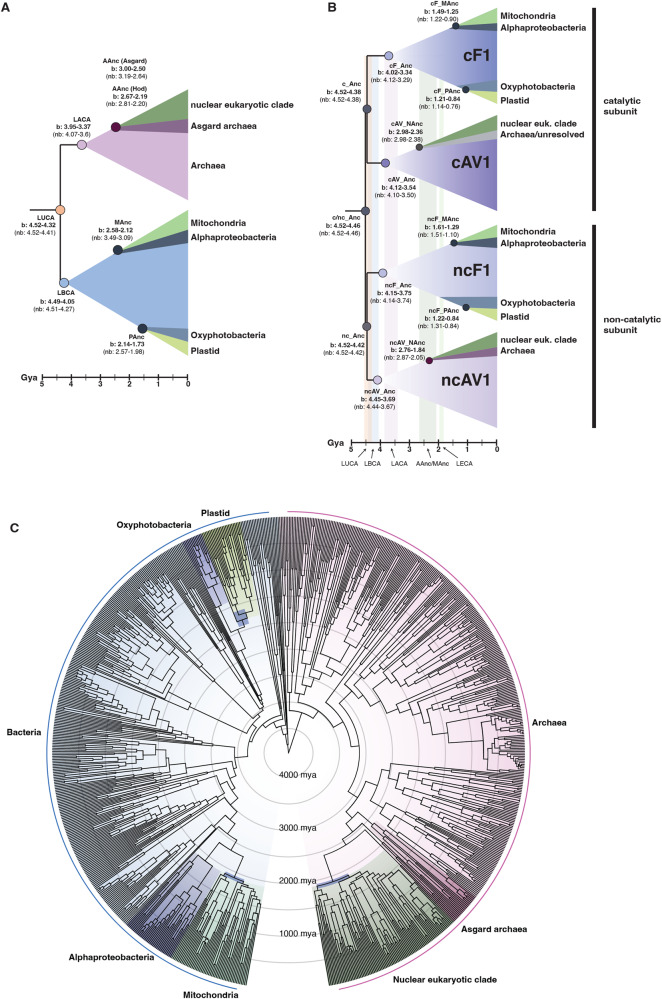
The timing of early cellular evolution, from the divergence of Archaea and Bacteria to the origin of eukaryotes, is poorly constrained. The ATP synthase complex is thought to have originated prior to the Last Universal Common Ancestor (LUCA) and analyses of ATP synthase genes, together with ribosomes, have played a key role in inferring and rooting the tree of life. We reconstruct the evolutionary history of ATP synthases using an expanded taxon sampling set and develop a phylogenetic cross-bracing approach, constraining equivalent speciation nodes to be contemporaneous, based on the phylogenetic imprint of endosymbioses and ancient gene duplications. This approach results in a highly resolved, dated species tree and establishes an absolute timeline for ATP synthase evolution. Our analyses show that the divergence of ATP synthase into F- and A/V-type lineages was a very early event in cellular evolution dating back to more than 4 Ga, potentially predating the diversification of Archaea and Bacteria. Our cross-braced, dated tree of life also provides insight into more recent evolutionary transitions including eukaryogenesis, showing that the eukaryotic nuclear and mitochondrial lineages diverged from their closest archaeal (2.67-2.19 Ga) and bacterial (2.58-2.12 Ga) relatives at approximately the same time, with a slightly longer nuclear stem-lineage.
Overview
CoChat Summary
## TL;DR
This paper reconstructs ATP synthase evolution using expanded taxon sampling and a new phylogenetic cross-bracing dating approach. It concludes that the catalytic/non-catalytic ATP synthase split and the F- versus A/V-type divergence likely occurred very early, potentially before or around LUCA, with eukaryotic origins dated in a broader cellular timeline.
## Key findings
- Across a reference dataset of 800 archaeal, bacterial, and eukaryotic genomes, ATP synthases showed a domain-level pattern: Archaea were primarily A/V-type, Bacteria primarily F-type, and eukaryotes carried both; however, 46% (23/50) of bacterial phylum-level lineages encoded A/V-type genes, and only 3 archaeal genomes (all Methanosarcina) also had F-type ATP synthases.
- Gene-tree reconciliation and phylogenetic analyses supported very ancient ATP synthase diversification: the split between catalytic and non-catalytic subunits was estimated at 4.52–4.46 Ga, and the divergence into F- and A/V-type lineages at 4.52–4.38 Ga (catalytic) and 4.52–4.42 Ga (non-catalytic), overlapping with or predating LUCA (4.52–4.32 Ga).
- The dated species tree estimated LBCA at 4.49–4.05 Ga, LACA at 3.95–3.37 Ga, eukaryotes diverging from their closest asgardarchaeal relatives at 2.67–2.19 Ga and from Alphaproteobacteria at 2.58–2.12 Ga, plastids diverging from Cyanobacteria at 2.14–1.73 Ga, and LECA at 1.93–1.84 Ga.
- In eukaryotes, the authors report a slightly longer nuclear stem-lineage than the mitochondrial one: nuclear mean 520.3 Ma (95% HPD 291–789 Ma) versus mitochondrial mean 438.8 Ma (95% HPD 233–682 Ma).
## Methods
- The study combined comparative genomics, phylogenetics, ancestral sequence reconstruction, and molecular dating on an expanded dataset of 800 taxa, including 350 archaeal, 349 bacterial, and 100 eukaryotic reference genomes/transcriptomes.
- ATP synthase subunits were identified using KEGG/COG/Pfam annotations; phylogenies were inferred with maximum-likelihood methods in IQ-TREE/IQTREE2, with additional Bayesian analyses for some eukaryotic F-type subsets.
- A new dating framework, McmcDate, implemented cross-bracing (equating equivalent speciation nodes) and relative age constraints; the authors also used ALE gene tree–species tree reconciliation to infer gene origination, duplication, transfer, and loss.
## Limitations
- The paper states that deep branches are susceptible to systematic error, and that distinguishing ancestral presence from early horizontal acquisition is difficult for the deepest ATP synthase nodes.
- It also notes that fossil evidence for early microbial evolution is limited, so dating relies on cross-bracing and geochemical/fossil calibrations that are less direct than for animals and plants.
- Evident from the text: some eukaryotic placements and ATP synthase subunit positions are partly unresolved or model-sensitive (for example, different support under LG+C20+R+F versus LG+C60+R+F), so some conclusions depend on topology and model choice.
Model-written summary. Check it against the paper before relying on it.
Integrity signals
Registry
Cites
Statistics
Figures
Verification
Claims the paper makes
15 Valid · 4 Not valid · 7 Not checked · 58 Own results and interpretations
The cited sources support only part of this claim — read each source’s verdict below.
In the paper
“The catalytic and non-catalytic subunits comprising the soluble hetero-hexameric R1 component, are paralogs to each other. They arose prior to LUCA through an ancient duplication of a RecA family protein (P-loop NTPase) followed by the loss of the catalytic function in one subunit”
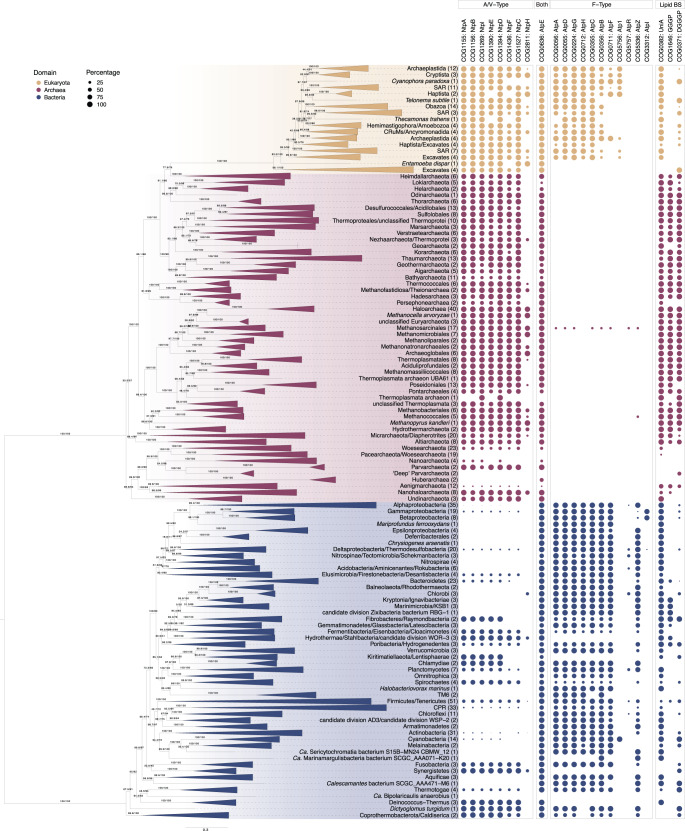
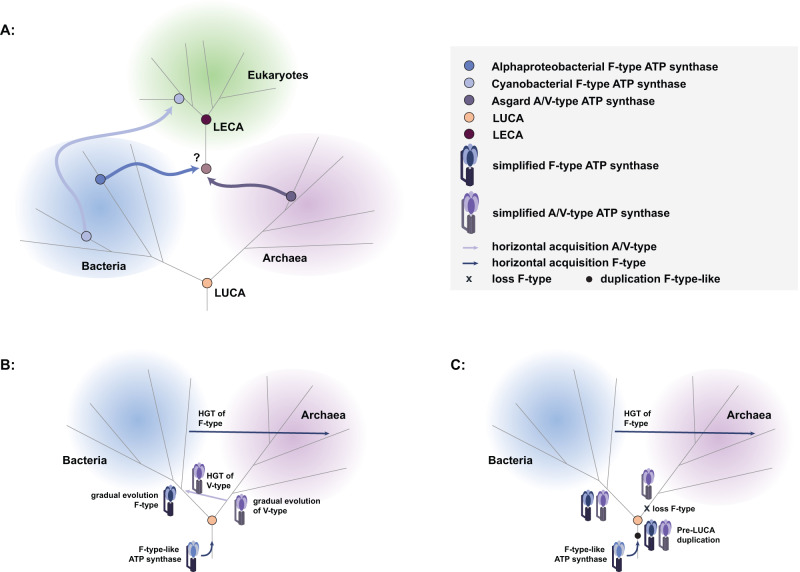
§ ATP synthase evolution on a cross-braced dated tree of life > Introduction The phylogeny and timeline of early cellular evolution, including the age of the last universal common ancestor (LUCA), the radiations of the archaeal and bacterial domains, and the origin of eukaryotes and their progenitor prokaryote lineages, is poorly constrained1. Recent genomics approaches have greatly improved our sampling of natural diversity and uncovered previously unknown microbial lineages that are key to understanding early cellular evolution2. For instance, the Asgard archaea3–5 (also referred to as Asgardarchaeota6, Supplementary Data 1), include the closest known sister lineage of the Eukaryota (i.e. eukaryotes)3,4,7,8 and have provided support for the evolution of the eukaryotic cell through a symbiosis between at least one asgardarchaeal and one alphaproteobacterial partner9–15. The discovery of the symbiotic and genome-reduced members of the bacterial Candidate Phyla Radiation (CPR) and the DPANN archaea (named after the first member lineages of this group, the Diapherotrites, Parvarchaeota, Aenigmarchaeota, Nanoarchaeaota, and Nanohaloarchaeota)16–18, that were originally interpreted as early diverging branches on each side of the root of the tree of life2, might be important for our understanding of the deep split separating Archaea and Bacteria19. However, more recent phylogenomic analyses suggest that CPR are instead sister to Chloroflexota within Terrabacteria19–23. Time scaling molecular evolution is challenging because the rate of molecular evolution has varied substantially through time19,24–27 and, with few fossil calibrations (e.g. maximum age constraints and lack of Precambrian maximum age calibrations), clock models struggle to capture this rate variation. This has led to estimates of divergence time that in some cases are uncertain (as in the case of the age of LUCA – 4.52–4.48 Ga19,27,28). Additional sources of temporal information beyond fossil and geochemical calibrations are crucial to improve these estimates of divergence time. The ATP synthase is a protein complex central to energy conservation through the synthesis and hydrolysis of ATP29,30. It is a useful marker to address key evolutionary transitions due to the presence of this enzyme across all domains of life24,29,31–37. The ATP synthase family is classified into the F-, A-, and V-type ATP synthases30,33,34 based on taxonomic affiliation, function, and cellular localization30,34,38. F-type ATP synthases are ubiquitous across bacteria and eukaryotes and localize to cellular, mitochondrial, and plastid membranes39. In line with this, eukaryotic F-type ATP synthases are hypothesized to be derived from the bacterial ancestors of these organelles33,35,40. The A-type ATP synthase34,38,41, found primarily in Archaea, belongs to a larger family of A/V-type ATP synthases38 that also include eukaryotic complexes found in vacuoles32–34,38,40–42. The F- and A/V-type ATP synthases share a common foundational architecture consisting of a soluble cytoplasmic component (R1) connected to an insoluble membrane component (R0) (Supplementary Fig. 1). The hexameric headpiece of the R1 complex contains three copies each of a catalytic (c) and non-catalytic (nc) subunit and is the site of ATP synthesis and hydrolysis. The catalytic and non-catalytic subunits comprising the soluble hetero-hexameric R1 component, are paralogs to each other. They arose prior to LUCA through an ancient duplication of a RecA family protein (P-loop NTPase) followed by the loss of the catalytic function in one subunit29,32–35,38,40,43. Due to this ancient gene duplication, each paralog can act as an outgroup to the other, providing a way to root the tree of life44. Since the duplication occurred before the divergence between Archaea and Bacteria, speciation events during the subsequent history of life appear at least twice in the ATP synthase gene tree. This circumstance has been used to improve date estimates for eukaryotic evolution by “cross-bracing” (constraining to the same unknown age) equivalent speciation nodes in the gene tree24, which propagates limited fossil evidence across the tree. Cross-bracing improves clock estimates in two ways. First, the information that two distant nodes in the tree must have the same age provides a useful constraint on the rates of evolution and ages of the intervening branches. Second, it enables the fossil record of eukaryotes to inform divergence times within both the archaeal and bacterial domains, because eukaryotes obtained ATP synthase paralogs from both sources. In principle, this approach might be expanded beyond ATP synthase to the core set of ribosomal proteins that are conserved between the nucleus, mitochondrion, and chloroplast of eukaryotes as a result of the mitochondrial and plastid endosymbioses. Cross-bracing a ribosomal species tree could help to avoid difficulties arising from HGT events during ATP synthase evolution32,33,40,45, and the limited resolving power of single gene trees. To improve our understanding of the evolutionary history of ATP synthases and cellular evolution, we perform phylogenetic analyses using an updated taxon sampling set, ancestral sequence reconstruction46,47, and novel molecular dating approaches including cross-bracing24,48,49. We also use probabilistic gene- and species-tree reconciliation methods (implemented in Amalgamated Likelihood Estimation (ALE))50–52 to determine the origin and evolution of the ATP synthase and each of its subfamilies. ALE allows us to compare the ATP synthase gene family tree to the tree of life and to infer the history of gene duplication, transfer, and loss during ATP synthase evolution. We assemble a set of ribosomal marker proteins that includes three distinct clades of eukaryotic homologs derived from archaeal, alphaproteobacterial, and cyanobacterial ancestors. Due to gene duplications (ATP synthase) and endosymbiosis events (ribosomal marker genes and ATP synthase), cross-bracing can be applied to both datasets. Our analyses confirm the split of the catalytic and non-catalytic ATP synthase subunits prior to LUCA and reveal the prevalence and early evolution of A/V-type ATP synthases in Bacteria. Our dating analyses establish absolute age estimates for LUCA, the Last Bacterial Common Ancestor (LBCA), and the Last Archaeal Common Ancestor (LACA). We link early cellular evolution with the origin of the head component of ATP synthases, which has diversified earlier than previously assumed. Finally, our analyses improve time estimates for the origin of eukaryotes from its prokaryotic ancestors and thereby inform on eukaryogenesis.
What the sources say
- Not checked — no full text of the sourcecites [29] Mulkidjanian AY Makarova KS Galperin MY Koonin EV Inventing the dynamo machine: the evolution of the F-type and V-type ATPases Nat. Rev. Microbiol. 2007 5 892 899 10.1038/nrmicro1767 17938630 source
- Not checked — no full text of the sourcecites [32] Gogarten JP Evolution of the vacuolar H+-ATPase: implications for the origin of eukaryotes Proc. Natl Acad. Sci. USA 1989 86 6661 6665 10.1073/pnas.86.17.6661 2528146 PMC297905 source
- Not checked — no full text of the sourcecites [33] Hilario, E. & Gogarten, J. P. Horizontal transfer of ATPase genes — the tree of life becomes a net of life. Biosystems31, 111–119 (1993). 8155843 source
- Not checked — no full text of the sourcecites [34] Cross, R. L. & Müller, V. The evolution of A-, F-, and V-type ATP synthases and ATPases: reversals in function and changes in the H /ATP coupling ratio. FEBS Lett.576, 1–4 (2004). 15473999 source
- Partly supportedcites [35] Mulkidjanian AY Galperin MY Makarova KS Wolf YI Koonin EV Evolutionary primacy of sodium bioenergetics Biol. Direct 2008 3 13 10.1186/1745-6150-3-13 18380897 PMC2359735 sourceExperimental — accuracy not yet measured
The Background (page unavailable) describes the F1 head as a hexamer of three α and three β subunits and identifies β as carrying catalytic sites. The Results and discussion section on evolutionary relationships (page unavailable) discusses homology among ATPase subunits, but the passages do not establish that α and β are paralogs or that a pre-LUCA duplication of a RecA-family P-loop NTPase caused one to lose catalytic function. The duplication and loss discussed elsewhere concern membrane c/K subunits and Na+-binding ligands, not the F1 head. (LLM, conf=0.82)
- Not checked — no full text of the sourcecites [38] Müller V Grüber G ATP synthases: structure, function and evolution of unique energy converters Cell. Mol. Life Sci. 2003 60 474 494 10.1007/s000180300040 12737308 PMC11138706 source
- Not checked — no full text of the sourcecites [40] Gogarten JP Taiz L Evolution of proton pumping ATPases: rooting the tree of life Photosynth. Res. 1992 33 137 146 10.1007/BF00039176 24408574 source
- Partly supportedcites [43] Walker, J. E., Saraste, M., Runswick, M. J. & Gay, N. J. Distantly related sequences in the alpha- and beta-subunits of ATP synthase, myosin, kinases and other ATP-requiring enzymes and a common nucleotide binding fold. EMBO J.1, 945–951 (1982). PMC553140 6329717 sourceExperimental — accuracy not yet measured
Our copy supports the paralogy and antiquity core of the claim: the Abstract states β contributes to catalytic sites while α 'may be involved in regulation', and the 'Conservation of α- and β-subunits' section concludes that 'the gene duplication that gave rise to α and β occurred before the emergence of mitochondria, i.e., >1.2 x 10^9 years ago'. However, the paper dates the duplication only to before mitochondria (>1.2 Ga), not to before LUCA, so that deeper timing is an extension. It also never identifies a RecA-family protein as the duplicated ancestor: RecA appears only as one entry (sequence segment A, residues 52-84, after Sancar et al. 1980) in Table II among proteins sharing the common adenine nucleotide binding fold with myosin, adenylate kinase and phosphofructokinase (Discussion, 'Significance of homologies'), and the paper instead argues the α/β homology reflects retained common functions such as nucleotide binding. (LLM, conf=0.78)
plainstates a cause- Asserted: passes — The authors put it forward as true.
- Checkable: passes — It can be checked against evidence.
- Load-bearing: passes — The paper’s conclusions depend on it.
- Based: passes — The paper gives a reason why it holds.
The cited sources support only part of this claim — read each source’s verdict below.
In the paper
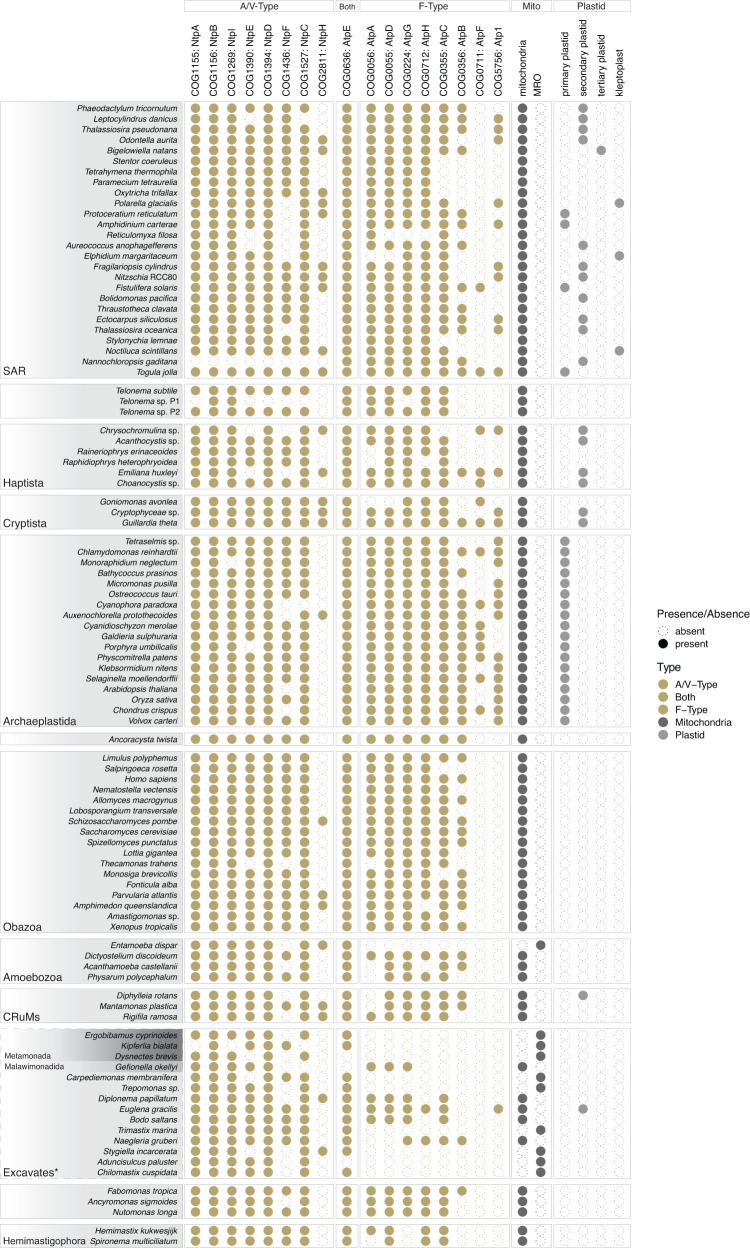
“Conversely, only three members of a single archaeal lineage, Methanosarcinales, contain F-type ATP synthases in addition to their A/V-type complex”
§ ATP synthase evolution on a cross-braced dated tree of life > Results > Distribution of ATP synthases across Bacteria, Archaea and Eukaryotes
What the sources say
- Not checked — no full text of the sourcecites [54] Sumi M Yohda M Koga Y Yoshida M F0F1-ATPase genes from an archaebacterium, Methanosarcina barkeri Biochem. Biophys. Res. Commun. 1997 241 427 433 10.1006/bbrc.1997.7809 9425287 source
- Not checked — no full text of the sourcecites [55] Saum R Schlegel K Meyer B Müller V The F1FO ATP synthase genes in Methanosarcina acetivorans are dispensable for growth and ATP synthesis FEMS Microbiol. Lett. 2009 300 230 236 10.1111/j.1574-6968.2009.01785.x 19796137 source
- Partly supportedcites [56] Dibrova DV Galperin MY Mulkidjanian AY Characterization of the N-ATPase, a distinct, laterally transferred Na+-translocating form of the bacterial F-type membrane ATPase Bioinformatics 2010 26 1473 1476 10.1093/bioinformatics/btq234 20472544 PMC2881411 sourceExperimental — accuracy not yet measured
Results §3.1 identifies F-type N-ATPase operons alongside A-type ATPases in two archaea, Methanosarcina barkeri and M. acetivorans. Results §3.2 says the operon was not found in the sequenced genome of the third, M. mazei, although it discusses earlier functional evidence for a second ATPase there. The Discussion also predicts that N-ATPases do not synthesize ATP, so the claim overstates both the count and their designation as ATP synthases. (LLM, conf=0.90)
plain- Asserted: passes — The authors put it forward as true.
- Checkable: passes — It can be checked against evidence.
- Load-bearing: unclear — It is unclear whether the paper’s conclusions depend on it.
- Based: passes — The paper gives a reason why it holds.
The cited sources support only part of this claim — read each source’s verdict below.
In the paper
“The LECA estimate (1.93–1.84 Ga, 95% highest posterior density) from our species tree analysis falls within published molecular clock estimates, placing LECA within a broad interval ~1–2.4 Ga25–27,97–99 (Fig. 5A, C, Supplementary Fig. 16, Supplementary Data 10).”
§ ATP synthase evolution on a cross-braced dated tree of life > Discussion
What the sources say
- Partly supportedcites [25] Parfrey LW Lahr DJG Knoll AH Katz LA Estimating the timing of early eukaryotic diversification with multigene molecular clocks Proc. Natl Acad. Sci. USA 2011 108 13624 13629 10.1073/pnas.1110633108 21810989 PMC3158185 sourceExperimental — accuracy not yet measured
The Results and Discussion report this paper’s estimate for the last common ancestor of extant eukaryotes as 1.679–1.866 Ga, which falls within the citing paper’s stated interval. But the Discussion describes previous molecular-clock estimates as spanning 1.1–3.97 Ga; it does not establish approximately 1–2.4 Ga as their overall range. The 1.93–1.84 Ga species-tree estimate is the citing authors’ own result, not a result attributed to this source. (LLM, conf=0.86)
- Supportedcites [26] Eme, L., Sharpe, S. C., Brown, M. W. & Roger, A. J. On the age of eukaryotes: evaluating evidence from fossils and molecular clocks. Cold Spring Harb. Perspect. Biol. 007, 1-16 (2014). PMC4107988 25085908 source
Eme et al. (2014), in 'RECENT ATTEMPTS TO DATE LECA AND MAJOR EUKARYOTIC GROUPS', surveys exactly the published molecular-clock estimates the citing sentence invokes: Hedges et al. 2004 at 2309 (2115–2503) Ma at the old end and Douzery et al. 2004 at 1085 (950–1259) Ma, plus Berney & Pawlowski 2006 at 1126 (948–1357) Ma and Parfrey et al. 2011 at 1679–1866 Ma — i.e. a spread of roughly ~1 to ~2.3–2.4 Ga, and their own analysis (Abstract/Conclusion) ranges 1007 (943–1102) to 1898 (1655–2094) Ma. The Conclusion ('wide ranges of estimated ages of LECA ... in the range of 1000–1900 Ma depending on the methods used') supports the characterisation as a broad interval, and a species-tree estimate of 1.93–1.84 Ga indeed falls inside the published span the paper documents. The only softness is the upper bound: the paper's oldest cited point estimate is 2309 Ma (rounding to ~2.3 rather than 2.4 Ga), though its 95% interval reaches 2503 Ma, so 'approximately 1–2.4 Ga' is a fair paraphrase. (LLM, conf=0.80)
- Supportedcites [27] Betts HC Integrated genomic and fossil evidence illuminates life’s early evolution and eukaryote origin Nat. Ecol. Evol. 2018 2 1556 1562 10.1038/s41559-018-0644-x 30127539 PMC6152910 source
The Discussion (page unavailable) places LECA at approximately 1.866–1.679 Ga and says this agrees with other studies dating LECA to the Proterozoic. That estimate falls within the citing sentence’s broad 1–2.4 Ga interval; the cited paper is one of several sources offered for that interval. (LLM, conf=0.88)
- Supportedcites [97] Berney C Pawlowski J A molecular time-scale for eukaryote evolution recalibrated with the continuous microfossil record Proc. Biol. Sci. 2006 273 1867 1872 16822745 PMC1634798 source
Berney & Pawlowski (2006) is exactly one of the published molecular-clock estimates of the eukaryote root that the citing sentence pools: the Results and discussion (node 1, fig. 1) give the basal radiation of extant eukaryotes at ~1126 Myr ago with a 95% range of 948–1357 Myr ago, and the Abstract and Conclusions restate ~1100 Myr ago under a Bayesian relaxed molecular clock. Their Introduction also frames the range of competing molecular estimates (>2000 Myr in Hedges et al. 2001, 2004 vs 950–1259 Myr in Douzery et al. 2004), consistent with a broad ~1–2.4 Ga interval. The only slight mismatch is that this paper's lower credibility bound (948 Myr) sits marginally below the stated ~1 Ga floor, and the paper speaks of the 'basal radiation of extant eukaryotes' rather than using the term LECA. (LLM, conf=0.82)
- Partly supportedcites [98] Chernikova D Motamedi S Csürös M Koonin EV Rogozin IB A late origin of the extant eukaryotic diversity: divergence time estimates using rare genomic changes Biol. Direct 2011 6 26 10.1186/1745-6150-6-26 21595937 PMC3125394 sourceExperimental — accuracy not yet measured
The Discussion (page unavailable) says the paper's LECA estimate of about 1.1–1.2 Ga agrees with previous relaxed molecular-clock estimates. It does not establish a published interval of approximately 1–2.4 Ga; instead, it says its estimate is clearly inconsistent with an older molecular-clock estimate of about 2.5 Ga. The citing authors' 1.93–1.84 Ga species-tree estimate is their own result, not this paper's. (LLM, conf=0.84)
- Partly supportedcites [99] Strassert JFH Irisarri I Williams TA Burki F A molecular timescale for eukaryote evolution with implications for the origin of red algal-derived plastids Nat. Commun. 2021 12 1879 10.1038/s41467-021-22044-z 33767194 PMC7994803 sourceExperimental — accuracy not yet measured
The Discussion (‘Timing the early evolution of eukaryotes’; page unavailable) estimates LECA at 2.386–1.958 Ga and says this is generally older than estimates from other phylogenomic molecular-clock analyses. That supports the upper end of the cited broad interval, but the passage does not establish its lower bound of approximately 1 Ga. (LLM, conf=0.84)
plain- Asserted: passes — The authors put it forward as true.
- Checkable: passes — It can be checked against evidence.
- Load-bearing: unclear — It is unclear whether the paper’s conclusions depend on it.
- Based: passes — The paper gives a reason why it holds.
- Rests on an assumption not shown here.
- Partly supported
The cited sources that could be checked couldn’t confirm or dispute this claim.
In the paper
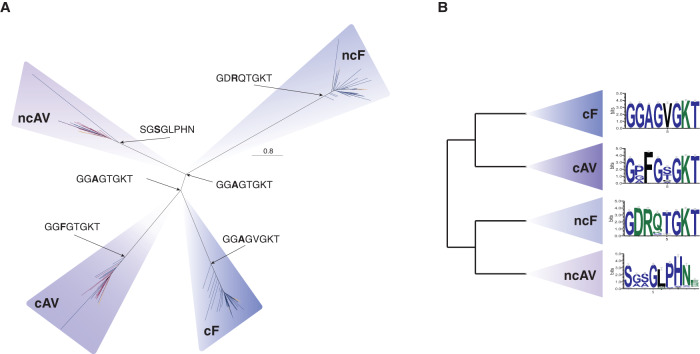
“our analysis agrees with the consensus view31,32,35,40, that the deepest split lies between those families”
§ ATP synthase evolution on a cross-braced dated tree of life > Results > Evolutionary history of soluble ATP synthase subunits
What the sources say
- Not checked — no full text of the sourcecites [31] Iwabe N Kuma K Hasegawa M Osawa S Miyata T Evolutionary relationship of archaebacteria, eubacteria, and eukaryotes inferred from phylogenetic trees of duplicated genes Proc. Natl Acad. Sci. USA 1989 86 9355 9359 10.1073/pnas.86.23.9355 2531898 PMC298494 source
- Not checked — no full text of the sourcecites [32] Gogarten JP Evolution of the vacuolar H+-ATPase: implications for the origin of eukaryotes Proc. Natl Acad. Sci. USA 1989 86 6661 6665 10.1073/pnas.86.17.6661 2528146 PMC297905 source
- Could not verifycites [35] Mulkidjanian AY Galperin MY Makarova KS Wolf YI Koonin EV Evolutionary primacy of sodium bioenergetics Biol. Direct 2008 3 13 10.1186/1745-6150-3-13 18380897 PMC2359735 sourceExperimental — accuracy not yet measured
In Results and discussion, the paper describes a primary split between F-type and V-type ATPases, but that is not a claim about the deepest split in a tree containing both catalytic and non-catalytic subunit families. Its phylogenetic analysis uses catalytic subunits; the passages found do not establish how the two subunit families branch relative to each other. (LLM, conf=0.76)
- Not checked — no full text of the sourcecites [40] Gogarten JP Taiz L Evolution of proton pumping ATPases: rooting the tree of life Photosynth. Res. 1992 33 137 146 10.1007/BF00039176 24408574 source
plain- Asserted: passes — The authors put it forward as true.
- Checkable: passes — It can be checked against evidence.
- Load-bearing: passes — The paper’s conclusions depend on it.
- Based: passes — The paper gives a reason why it holds.
The cited sources support only part of this claim — read each source’s verdict below.
In the paper
“This is consistent with previous work suggesting that the age of LUCA is sensitive to the root calibration used19,21,27,95,96.”
§ ATP synthase evolution on a cross-braced dated tree of life > Discussion
What the sources say
- Supportedcites [19] Moody, E. R. R. et al. An estimate of the deepest branches of the tree of life from ancient vertically evolving genes. Elife11, (2022). PMC8890751 35190025 source
In ‘Difficulties in estimating the age of the last universal common ancestor,’ the authors state that, under their analysis conditions, the inferred root age is strongly influenced by the assumed maximum root age. They also say posterior estimates of LUCA’s age are driven by that prior assumption. The claim’s wording is consistent with this finding. (LLM, conf=0.94)
- Not checked — no full text of the sourcecites [21] Coleman, G. A. et al. A rooted phylogeny resolves early bacterial evolution. Science372, (2021). 33958449 source
- Partly supportedcites [27] Betts HC Integrated genomic and fossil evidence illuminates life’s early evolution and eukaryote origin Nat. Ecol. Evol. 2018 2 1556 1562 10.1038/s41559-018-0644-x 30127539 PMC6152910 sourceExperimental — accuracy not yet measured
The Results state that a 4.52 Ga maximum was applied to the root, and the Abstract says calibrations are necessary for an absolute timescale. But the paper does not show how LUCA’s estimated age changes under different root calibrations; the calibration strategies it did compare produced robust results (Results). (LLM, conf=0.78)
- Partly supportedcites [95] Mateos K The evolution and spread of sulfur cycling enzymes reflect the redox state of the early Earth Sci. Adv. 2023 9 eade4847 10.1126/sciadv.ade4847 37418533 PMC10328410 sourceExperimental — accuracy not yet measured
In Results (Construction of species tree and time-calibrated chronogram), LUCA age estimates differ substantially between the liberal and conservative calibration sets, and Table 1 shows that the LUCA root prior differs between those sets. However, the paper also changed several other calibration points at the same time, so it does not establish sensitivity to the root calibration alone. (LLM, conf=0.82)
- Supportedcites [96] Parsons C Stüeken EE Rosen CJ Mateos K Anderson RE Radiation of nitrogen-metabolizing enzymes across the tree of life tracks environmental transitions in Earth history Geobiology 2021 19 18 34 10.1111/gbi.12419 33108025 PMC7894544 source
The Results section (page not supplied) reports that liberal calibration points produced a root age greater than 4.5 Ga, whereas the retained conservative calibrations produced root ages of about 4.0 Ga. This supports the claim that the estimated age of LUCA, the tree’s root, is sensitive to calibration choice. (LLM, conf=0.93)
hedgedstates an association- Asserted: passes — The authors put it forward as true.
- Checkable: passes — It can be checked against evidence.
- Load-bearing: passes — The paper’s conclusions depend on it.
- Based: passes — The paper gives a reason why it holds.
- Supported
34 more claims · 2 with their cited sources checked
Create a free account to see all 84 claims and to verify the 6 references still open.
- It may state two separate claims as one. 38
- Probably not a substantial claim. 10
Claims other papers make about this one
Each is checked against this paper’s own text: does it say what the citing paper says it does?
The cited source says what the claim attributes to it.
In the citing paper
“numerous studies support possibility 3 [47, 147, 148]”
From Evidence for corrin biosynthesis in the last universal common ancestor (2025) · cites this paper as [148]
Citations
Cites
IQ-TREE: A Fast and Effective Stochastic Algorithm for Estimating Maximum-Likelihood Phylogenies
Nguyen, L.-T., Schmidt, H. A., von Haeseler, A., & Minh, B. Q. (2015) · Molecular Biology and Evolution · doi:10.1093/molbev/msu300 · Cited by 26,046
ModelFinder: fast model selection for accurate phylogenetic estimates
Kalyaanamoorthy, S., Minh, B. Q., Wong, T. K. F., von Haeseler, A., & Jermiin, L. S. (2017) · Nature Methods · doi:10.1038/nmeth.4285 · Cited by 18,449
MAFFT: a novel method for rapid multiple sequence alignment based on fast Fourier transform
Katoh, K. (2002) · Nucleic Acids Research · doi:10.1093/nar/gkf436 · Cited by 17,027
IQ-TREE 2: New Models and Efficient Methods for Phylogenetic Inference in the Genomic Era
Minh, B. Q., Schmidt, H. A., Chernomor, O., Schrempf, D., Woodhams, M. D., von Haeseler, A., & Lanfear, R. (2020) · Molecular Biology and Evolution · doi:10.1093/molbev/msaa015 · Cited by 16,873 · cited 9×
“1.2 (settings: -m LG+G -wbtl -bb 1000 -bnni) 111,122,123 .”
BackgroundMethodInfluentialSelf-citationFastTree 2 – Approximately Maximum-Likelihood Trees for Large Alignments
Price, M. N., Dehal, P. S., & Arkin, A. P. (2010) · PLoS ONE · doi:10.1371/journal.pone.0009490 · Cited by 14,894
Fast and sensitive protein alignment using DIAMOND
Buchfink, B., Xie, C., & Huson, D. H. (2015) · Nature Methods · doi:10.1038/nmeth.3176 · Cited by 14,201 · cited 2×
“9.22.123 (settings: blastp -p 4 -f 6 qseqid stitle pident length mismatch gapopen qstart qend sstart send e-value bitscore) 130 .”
BackgroundInfluentialThe Pfam Protein Families Database
Bateman, A. (2002) · Nucleic Acids Research · doi:10.1093/nar/30.1.276 · Cited by 14,000
trimAl: a tool for automated alignment trimming in large-scale phylogenetic analyses
Capella-Gutiérrez, S., Silla-Martínez, J. M., & Gabaldón, T. (2009) · Bioinformatics · doi:10.1093/bioinformatics/btp348 · Cited by 12,751
WebLogo: A Sequence Logo Generator: Figure 1
Crooks, G. E., Hon, G., Chandonia, J.-M., & Brenner, S. E. (2004) · Genome Research · doi:10.1101/gr.849004 · Cited by 12,386 · cited 1×
“7.4 135 (http://weblogo.threeplusone.com/).”
InfluentialCd-hit: a fast program for clustering and comparing large sets of protein or nucleotide sequences
Li, W., & Godzik, A. (2006) · Bioinformatics · doi:10.1093/bioinformatics/btl158 · Cited by 11,410
Jalview Version 2—a multiple sequence alignment editor and analysis workbench
Waterhouse, A. M., Procter, J. B., Martin, D. M. A., Clamp, M., & Barton, G. J. (2009) · Bioinformatics · doi:10.1093/bioinformatics/btp033 · Cited by 11,399
Cd-hit: Accelerated for clustering the next-generation sequencing data
Fu, L., Niu, B., Zhu, Z., Wu, S., & Li, W. (2012) · Bioinformatics · doi:10.1093/bioinformatics/bts565 · Cited by 11,175
UFBoot2: Improving the Ultrafast Bootstrap Approximation
Hoang, D. T., Chernomor, O., von Haeseler, A., Minh, B. Q., & Vinh, L. S. (2018) · Molecular Biology and Evolution · doi:10.1093/molbev/msx281 · Cited by 10,881 · cited 7×
“1.2 (settings: -m LG+G -wbtl -bb 1000 -bnni) 111,122,123 .”
BackgroundMethodInfluentialUniProt: a worldwide hub of protein knowledge
The UniProt Consortium (2019) · Nucleic Acids Research · doi:10.1093/nar/gky1049 · Cited by 7,698
Accelerated Profile HMM Searches
Eddy, S. R. (2011) · PLoS Computational Biology · doi:10.1371/journal.pcbi.1002195 · Cited by 6,975
HMMER web server: interactive sequence similarity searching
Finn, R. D., Clements, J., & Eddy, S. R. (2011) · Nucleic Acids Research · doi:10.1093/nar/gkr367 · Cited by 5,952 · cited 2×
“E 1e-5) 119 .”
Walker, J. E., Saraste, M., Runswick, M. J., & Gay, N. J. (1982) · The EMBO Journal · doi:10.1002/j.1460-2075.1982.tb01276.x · Cited by 5,312
A Genomic Perspective on Protein Families
Tatusov, R. L., Koonin, E. V., & Lipman, D. J. (1997) · Science · doi:10.1126/science.278.5338.631 · Cited by 3,590 · cited 1×
“Sequences were compared to KO pro fi les within the KEGG Automatic AnnotationServer(KAAS,downloadedApril2019)(KAAS;downloaded April 2019) 114 , to COG pro fi les within the NCBI COG database (down-loaded May 2020) 115 – 117 , and to Pfam pro fi les in the Pfam database (Release 34.0) 118 .”
MethodInfluentialThe Pfam protein families database
Bateman, A. (2004) · Nucleic Acids Research · doi:10.1093/nar/gkh121 · Cited by 3,127 · cited 1×
“Sequences were compared to KO pro fi les within the KEGG Automatic AnnotationServer(KAAS,downloadedApril2019)(KAAS;downloaded April 2019) 114 , to COG pro fi les within the NCBI COG database (down-loaded May 2020) 115 – 117 , and to Pfam pro fi les in the Pfam database (Release 34.0) 118 .”
MethodInfluentialAn approximately unbiased test of phylogenetic tree selection
Shimodaira, H. (2002) · Systematic Biology · doi:10.1080/10635150290069913 · Cited by 2,791 · cited 2×
“The AU test was implemented in IQ-TREE2 v.2.1.2 123,127 (settings: iqtree2 -s 12Ribo-somal_eLife_ArcBacEuk_gappyout_v1b.faa -m -m LG+C60+R+F -z Ribo_C60_trees.alltrees.tree fi le -n -n 0 -zb 10000 -au).”
InfluentialInsights into the phylogeny and coding potential of microbial dark matter
Rinke, C., Schwientek, P., Sczyrba, A., Ivanova, N. N., Anderson, I. J., Cheng, J.-F., Darling, A., Malfatti, S., Swan, B. K., Gies, E. A., et al. (2013) · Nature · doi:10.1038/nature12352 · Cited by 2,394 · cited 16×
“Despite the wide distribution of ATP synthases across cellular life, ouranalysesrevealedthatmanyDPANNArchaeaandCPRBacteriamay have minimal complexes, as is the case in the DPANN Nanoarchaeum equitans 86 , or even lack all genes for an ATP synthase complex (Fig.”
BackgroundInfluentialThe P-loop — a common motif in ATP- and GTP-binding proteins
Saraste, M., Sibbald, P. R., & Wittinghofer, A. (1990) · Trends in Biochemical Sciences · doi:10.1016/0968-0004(90)90281-f · Cited by 2,056
KofamKOALA: KEGG ortholog assignment based on profile HMM and adaptive score threshold
Aramaki, T., Blanc-Mathieu, R., Endo, H., Ohkubo, K., Kanehisa, M., Goto, S., & Ogata, H. (2019) · doi:10.1101/602110 · Cited by 2,054
CONSEL: for assessing the confidence of phylogenetic tree selection
Shimodaira, H., & Hasegawa, M. (2001) · Bioinformatics · doi:10.1093/bioinformatics/17.12.1246 · Cited by 2,041
A new view of the tree of life
Hug, L. A., Baker, B. J., Anantharaman, K., Brown, C. T., Probst, A. J., Castelle, C. J., Butterfield, C. N., Hernsdorf, A. W., Amano, Y., Ise, K., et al. (2016) · Nature Microbiology · doi:10.1038/nmicrobiol.2016.48 · Cited by 2,039 · cited 2×
“…the Diaphero-trites, Parvarchaeota, Aenigmarchaeota, Nanoarchaeaota, and Nanohaloarchaeota) 16 – 18 , that were originally interpreted as early divergingbranchesoneachsideoftherootofthetreeoflife 2 ,mightbe important for our understanding of the deep split separating Archaea and Bacteria 19 .”
BackgroundMethodCriscuolo, A., & Gribaldo, S. (2010) · BMC Evolutionary Biology · doi:10.1186/1471-2148-10-210 · Cited by 1,633
Vacuolar ATPases: rotary proton pumps in physiology and pathophysiology
Forgac, M. (2007) · Nature Reviews Molecular Cell Biology · doi:10.1038/nrm2272 · Cited by 1,619 · cited 1×
“The A-type ATP synthase 34,38,41 , found primarily in Archaea, belongs to a larger family of A/V-type ATP synthases 38 that also include eukaryotic complexes found in vacuoles 32 – 34, 38 , 40 – 42 .”
BackgroundInterPro in 2019: improving coverage, classification and access to protein sequence annotations
Mitchell, A. L., Attwood, T. K., Babbitt, P. C., Blum, M., Bork, P., Bridge, A., Brown, S. D., Chang, H.-Y., El-Gebali, S., Fraser, M. I., et al. (2019) · Nucleic Acids Research · doi:10.1093/nar/gky1100 · Cited by 1,426 · cited 1×
“…corresponding to the subunits present in the catalytic (R1) domain of the F-Type and A/V-Type ATP synthases were selected at the family-level 131 and include: ipr005294 (F-Type alpha, hereafter nc F1), ipr005722 (F-Type beta, hereafter c F1), ipr022878 (A/V-Type A, hereafter c A1/V1), and…”
MethodComplex archaea that bridge the gap between prokaryotes and eukaryotes
Spang, A., Saw, J. H., Jørgensen, S. L., Zaremba-Niedzwiedzka, K., Martijn, J., Lind, A. E., van Eijk, R., Schleper, C., Guy, L., & Ettema, T. J. G. (2015) · Nature · doi:10.1038/nature14447 · Cited by 1,324 · cited 3×
“We conducted an additional step of quality control to curate eukaryotic protein sequences potentially corresponding to the key ATP synthase subunits highlighted in Supplementary Data 3.”
BackgroundMethodSelf-citationA NEW GENERATION OF HOMOLOGY SEARCH TOOLS BASED ON PROBABILISTIC INFERENCE
EDDY, S. R. (2009) · Genome Informatics 2009 · doi:10.1142/9781848165632_0019 · Cited by 1,285 · cited 1×
“Tocollectthe corresponding homologs, the 800 reference genomes were queried against all COG HMM pro fi les with a custom script built on the hmmsearch [options] <reference genomes> <hmm fi le> algorithm 120 : hmmsearchTable Whole_ArcBacEuk_800_vs2_clean.faa NCBI_- COGs_Oct2020.hmm -”
MethodAsgard archaea illuminate the origin of eukaryotic cellular complexity
Zaremba-Niedzwiedzka, K., Caceres, E. F., Saw, J. H., Bäckström, D., Juzokaite, L., Vancaester, E., Seitz, K. W., Anantharaman, K., Starnawski, P., Kjeldsen, K. U., et al. (2017) · Nature · doi:10.1038/nature21031 · Cited by 1,226 · cited 10×
“In total, 326 accessions were removed and not considered for the presence-absence analysis of the ATP synthase subunits (Supplementary Data 4).”
BackgroundMethodInfluentialSelf-citationUnusual biology across a group comprising more than 15% of domain Bacteria
Brown, C. T., Hug, L. A., Thomas, B. C., Sharon, I., Castelle, C. J., Singh, A., Wilkins, M. J., Wrighton, K. C., Williams, K. H., & Banfield, J. F. (2015) · Nature · doi:10.1038/nature14486 · Cited by 1,216 · cited 7×
“We developed a new molecular dating software (McmcDate) that implements both cross-bracing (two nodes constrained to the same age) as well as relative age constraints (one node is constrained to always be younger than another node, as informed, for instance, based on horizontal gene transfer between donor and recipien…”
BackgroundMethodInfluentialA review of long-branch attraction
Bergsten, J. (2005) · Cladistics · doi:10.1111/j.1096-0031.2005.00059.x · Cited by 1,162 · cited 3×
“Marker genes, where domain-level lineages were paraphyletic were excluded and sequences with indications of LBA, HGT, and paralogy were manually removed using a custom script: remove_seq_with_speci fi c_header3.py.”
BackgroundInfluentialClassification and evolution of P-loop GTPases and related ATPases
Leipe, D. D., Wolf, Y. I., Koonin, E. V., & Aravind, L. (2002) · Journal of Molecular Biology · doi:10.1006/jmbi.2001.5378 · Cited by 1,148 · cited 1×
“This region comprises the primary “ P-loop ” domain responsible for binding phosphate during ATP synthesis/hydrolysis and is highly conserved across phosphate-binding proteins and fundamental to the activity of the ATP synthase 71,72 .”
BackgroundCOG database update: focus on microbial diversity, model organisms, and widespread pathogens
Galperin, M. Y., Wolf, Y. I., Makarova, K. S., Vera Alvarez, R., Landsman, D., & Koonin, E. V. (2021) · Nucleic Acids Research · doi:10.1093/nar/gkaa1018 · Cited by 932
Burki, F., Roger, A. J., Brown, M. W., & Simpson, A. G. B. (2020) · Trends in Ecology & Evolution · doi:10.1016/j.tree.2019.08.008 · Cited by 913
Iwabe, N., Kuma, K., Hasegawa, M., Osawa, S., & Miyata, T. (1989) · Proceedings of the National Academy of Sciences · doi:10.1073/pnas.86.23.9355 · Cited by 902
Estimating the timing of early eukaryotic diversification with multigene molecular clocks
Parfrey, L. W., Lahr, D. J. G., Knoll, A. H., & Katz, L. A. (2011) · Proceedings of the National Academy of Sciences · doi:10.1073/pnas.1110633108 · Cited by 899
Methane metabolism in the archaeal phylum Bathyarchaeota revealed by genome-centric metagenomics
Evans, P. N., Parks, D. H., Chadwick, G. L., Robbins, S. J., Orphan, V. J., Golding, S. D., & Tyson, G. W. (2015) · Science · doi:10.1126/science.aac7745 · Cited by 799
Evolution of the vacuolar H+-ATPase: implications for the origin of eukaryotes.
Gogarten, J. P., Kibak, H., Dittrich, P., Taiz, L., Bowman, E. J., Bowman, B. J., Manolson, M. F., Poole, R. J., Date, T., Oshima, T., et al. (1989) · Proceedings of the National Academy of Sciences · doi:10.1073/pnas.86.17.6661 · Cited by 781
Best Practices for Justifying Fossil Calibrations
Parham, J. F., Donoghue, P. C. J., Bell, C. J., Calway, T. D., Head, J. J., Holroyd, P. A., Inoue, J. G., Irmis, R. B., Joyce, W. G., Ksepka, D. T., et al. (2012) · Systematic Biology · doi:10.1093/sysbio/syr107 · Cited by 780 · cited 1×
“In formulating the calibrations (Supplementary Discussion), we followed the best practice principles set out in Parham et al. (2012) 138 .”
MethodSelf-citationIsolation of an archaeon at the prokaryote–eukaryote interface
Imachi, H., Nobu, M. K., Nakahara, N., Morono, Y., Ogawara, M., Takaki, Y., Takano, Y., Uematsu, K., Ikuta, T., Ito, M., et al. (2020) · Nature · doi:10.1038/s41586-019-1916-6 · Cited by 624 · cited 2×
“…for topologies of the two concatenated species trees inferred under different models of evolution (LG+C60+R+F and LG+C20+R+F, see above, Supplementary Data 14, Zenodo data repository: https://doi.org/10.5281/zenodo.10012837 74 ) using the approximately unbiased (AU) test implemented in IQ-TREE2 v2.”
BackgroundMethodInfluentialAn evolving view of methane metabolism in the Archaea
Evans, P. N., Boyd, J. A., Leu, A. O., Woodcroft, B. J., Parks, D. H., Hugenholtz, P., & Tyson, G. W. (2019) · Nature Reviews Microbiology · doi:10.1038/s41579-018-0136-7 · Cited by 606 · cited 2×
“2, Supplementary Data 4), consistent with the previously noted absence of ATP synthases in the Bathyarchaeote BA1 and BA2 61,62 .”
BackgroundMajor New Microbial Groups Expand Diversity and Alter our Understanding of the Tree of Life
Castelle, C. J., & Banfield, J. F. (2018) · Cell · doi:10.1016/j.cell.2018.02.016 · Cited by 595
Schwartz, R. M., & Dayhoff, M. O. (1978) · Science · doi:10.1126/science.202030 · Cited by 585
Endosymbiotic theories for eukaryote origin
Martin, W. F., Garg, S., & Zimorski, V. (2015) · Philosophical Transactions of the Royal Society B: Biological Sciences · doi:10.1098/rstb.2014.0330 · Cited by 583 · cited 10×
“18 – 19, Supplementary Data 10) were inferred to have occurred very early in the history of cellularlife,priorto,oroverlappingwith,LUCA(4.52 – 4.”
BackgroundResultInfluentialHe, X., McLean, J. S., Edlund, A., Yooseph, S., Hall, A. P., Liu, S.-Y., Dorrestein, P. C., Esquenazi, E., Hunter, R. C., Cheng, G., et al. (2015) · Proceedings of the National Academy of Sciences · doi:10.1073/pnas.1419038112 · Cited by 548
Castelle, C. J., Wrighton, K. C., Thomas, B. C., Hug, L. A., Brown, C. T., Wilkins, M. J., Frischkorn, K. R., Tringe, S. G., Singh, A., Markillie, L. M., et al. (2015) · Current Biology · doi:10.1016/j.cub.2015.01.014 · Cited by 536 · cited 6×
“8.6) by the respective phylogenetic clustering methods: (1) species-level according to order of individual species in the inferred concatenated phylogeny (BinID and Tip_Order, Supplementary Data 17), and (2) class-and phylum-level for Archaea and phylum-level for Bacteria corresponding to clade clustering in the conca…”
BackgroundMethodResultInfluentialA standardized archaeal taxonomy for the Genome Taxonomy Database
Rinke, C., Chuvochina, M., Mussig, A. J., Chaumeil, P.-A., Davín, A. A., Waite, D. W., Whitman, W. B., Parks, D. H., & Hugenholtz, P. (2021) · Nature Microbiology · doi:10.1038/s41564-021-00918-8 · Cited by 485 · cited 8×
“6 – 10).”
BackgroundMethodInfluentialSelf-citationBiosynthetic capacity, metabolic variety and unusual biology in the CPR and DPANN radiations
Castelle, C. J., Brown, C. T., Anantharaman, K., Probst, A. J., Huang, R. H., & Banfield, J. F. (2018) · Nature Reviews Microbiology · doi:10.1038/s41579-018-0076-2 · Cited by 454
Structure and Mechanisms of F-Type ATP Synthases
Kühlbrandt, W. (2019) · Annual Review of Biochemistry · doi:10.1146/annurev-biochem-013118-110903 · Cited by 444 · cited 1×
“F-type ATP synthases are ubiquitous across bacteria and eukaryotes and localize to cellular, mitochondrial, and plastid membranes 39 .”
BackgroundIntegrated genomic and fossil evidence illuminates life’s early evolution and eukaryote origin
Betts, H. C., Puttick, M. N., Clark, J. W., Williams, T. A., Donoghue, P. C. J., & Pisani, D. (2018) · Nature Ecology & Evolution · doi:10.1038/s41559-018-0644-x · Cited by 437 · cited 4×
“Time scaling molecular evolution is challenging because the rate of molecular evolution has varied substantially through time 19,24 – 27 and, with few fossil calibrations (e.g. maximum age constraints and lack of Precambrian maximum age calibrations), clock models struggle to capturethisrate…”
BackgroundResultInfluentialSelf-citationMinh, B. Q., Schmidt, H. A., Chernomor, O., Schrempf, D., Woodhams, M. D., von Haeseler, A., & Lanfear, R. (2020) · Molecular Biology and Evolution · doi:10.1093/molbev/msaa131 · Cited by 408
Self-citationDeep mitochondrial origin outside the sampled alphaproteobacteria
Martijn, J., Vosseberg, J., Guy, L., Offre, P., & Ettema, T. J. G. (2018) · Nature · doi:10.1038/s41586-018-0059-5 · Cited by 378
How did LUCA make a living? Chemiosmosis in the origin of life
Lane, N., Allen, J. F., & Martin, W. (2010) · BioEssays · doi:10.1002/bies.200900131 · Cited by 377 · cited 1×
“This may seem at odds with previous inferences 10,29,32,78 and suggestions of deep divergences between Archaea and Bacteria coinciding with distinct informational processing machinery 19 , ATP synthases, and membrane lipids 36,79 .”
ResultLombard, J., & Moreira, D. (2011) · Molecular Biology and Evolution · doi:10.1093/molbev/msq177 · Cited by 375
Narasingarao, P., Podell, S., Ugalde, J. A., Brochier-Armanet, C., Emerson, J. B., Brocks, J. J., Heidelberg, K. B., Banfield, J. F., & Allen, E. E. (2012) · The ISME Journal · doi:10.1038/ismej.2011.78 · Cited by 357
Phylogenomics of 10,575 genomes reveals evolutionary proximity between domains Bacteria and Archaea
Zhu, Q., Mai, U., Pfeiffer, W., Janssen, S., Asnicar, F., Sanders, J. G., Belda-Ferre, P., Al-Ghalith, G. A., Kopylova, E., McDonald, D., et al. (2019) · Nature Communications · doi:10.1038/s41467-019-13443-4 · Cited by 355
Expanded diversity of Asgard archaea and their relationships with eukaryotes
Liu, Y., Makarova, K. S., Huang, W.-C., Wolf, Y. I., Nikolskaya, A. N., Zhang, X., Cai, M., Zhang, C.-J., Xu, W., Luo, Z., et al. (2021) · Nature · doi:10.1038/s41586-021-03494-3 · Cited by 324 · cited 3×
“6.10 using the best-fi t model based on the BIC 111 (Supplementary Data 8).”
MethodInfluentialThe early evolution of lipid membranes and the three domains of life
Lombard, J., López-García, P., & Moreira, D. (2012) · Nature Reviews Microbiology · doi:10.1038/nrmicro2815 · Cited by 320
An Early-Branching Freshwater Cyanobacterium at the Origin of Plastids
Ponce-Toledo, R. I., Deschamps, P., López-García, P., Zivanovic, Y., Benzerara, K., & Moreira, D. (2017) · Current Biology · doi:10.1016/j.cub.2016.11.056 · Cited by 311
Strassert, J. F. H., Irisarri, I., Williams, T. A., & Burki, F. (2021) · Nature Communications · doi:10.1038/s41467-021-22044-z · Cited by 298
Self-citationOn the Age of Eukaryotes: Evaluating Evidence from Fossils and Molecular Clocks
Eme, L., Sharpe, S. C., Brown, M. W., & Roger, A. J. (2014) · Cold Spring Harbor Perspectives in Biology · doi:10.1101/cshperspect.a016139 · Cited by 287
Microbial genome analysis: the COG approach
Galperin, M. Y., Kristensen, D. M., Makarova, K. S., Wolf, Y. I., & Koonin, E. V. (2019) · Briefings in Bioinformatics · doi:10.1093/bib/bbx117 · Cited by 287
A rooted phylogeny resolves early bacterial evolution
Coleman, G. A., Davín, A. A., Mahendrarajah, T. A., Szánthó, L. L., Spang, A., Hugenholtz, P., Szöllősi, G. J., & Williams, T. A. (2021) · Science · doi:10.1126/science.abe0511 · Cited by 285 · cited 21×
“These analyses agreed with our manual inspection of the gene trees, suggesting that the c A1V1 and nc A1V1 subunits were present in LACA (presence probability, PPs =0.99 – 1) 67 and the c F1 and nc F1 subunits were present in LBCA (PPs=0.99 – 1) 21 .”
BackgroundMethodResultInfluentialSelf-citationThe Rooting of the Universal Tree of Life Is Not Reliable
Philippe, H., & Forterre, P. (1999) · Journal of Molecular Evolution · doi:10.1007/pl00006573 · Cited by 267
Late acquisition of mitochondria by a host with chimaeric prokaryotic ancestry
Pittis, A. A., & Gabaldón, T. (2016) · Nature · doi:10.1038/nature16941 · Cited by 259
Origins of major archaeal clades correspond to gene acquisitions from bacteria
Nelson-Sathi, S., Sousa, F. L., Roettger, M., Lozada-Chávez, N., Thiergart, T., Janssen, A., Bryant, D., Landan, G., Schönheit, P., Siebers, B., et al. (2015) · Nature · doi:10.1038/nature13805 · Cited by 254 · cited 1×
“The latter possibility is in line with a scenario in which transfers from Bacteria to Archaea have been more common during evolution 77 , but requires a loss of the F-type ATP synthase along the branch leading to Archaea (Fig.”
BackgroundRooting the tree of life by transition analyses.
Cavalier‐Smith, T. (2006) · Biology Direct · doi:10.1186/1745-6150-1-19 · Cited by 249 · cited 1×
“The presence of all four subunits in Bacteria is consistent with ideasfor a root of the universaltree within Bacteria 68 – 70 .”
BackgroundHorizontal transfer of ATPase genes — the tree of life becomes a net of life
Hilario, E., & Gogarten, J. P. (1993) · Biosystems · doi:10.1016/0303-2647(93)90038-e · Cited by 241 · cited 4×
“In line with this, eukaryotic F-type ATP synthases are hypothesized to be derived from the bacterial ancestors of these organelles 33,35,40 .”
BackgroundMethodResultInfluentialInference and reconstruction of the heimdallarchaeial ancestry of eukaryotes
Eme, L., Tamarit, D., Caceres, E. F., Stairs, C. W., De Anda, V., Schön, M. E., Seitz, K. W., Dombrowski, N., Lewis, W. H., Homa, F., et al. (2023) · Nature · doi:10.1038/s41586-023-06186-2 · Cited by 240
Self-citationEfficient Exploration of the Space of Reconciled Gene Trees
Szöllősi, G. J., Rosikiewicz, W., Boussau, B., Tannier, E., & Daubin, V. (2013) · Systematic Biology · doi:10.1093/sysbio/syt054 · Cited by 234 · cited 2×
“To evaluate these hypotheses within a statistical framework, we used the ALE probabilistic approach 51 to reconcile gene trees for each of the ATP synthase subunits with the species tree as a whole, using distinct data treatments (Methods, Supplementary Data 6).”
MethodSelf-citationIntegrative modeling of gene and genome evolution roots the archaeal tree of life
Williams, T. A., Szöllősi, G. J., Spang, A., Foster, P. G., Heaps, S. E., Boussau, B., Ettema, T. J. G., & Embley, T. M. (2017) · Proceedings of the National Academy of Sciences · doi:10.1073/pnas.1618463114 · Cited by 233
Self-citationGenomic diversity, lifestyles and evolutionary origins of DPANN archaea
Dombrowski, N., Lee, J.-H., Williams, T. A., Offre, P., & Spang, A. (2019) · FEMS Microbiology Letters · doi:10.1093/femsle/fnz008 · Cited by 230
Self-citationPrecise age of Bangiomorpha pubescens dates the origin of eukaryotic photosynthesis
Gibson, T. M., Shih, P. M., Cumming, V. M., Fischer, W. W., Crockford, P. W., Hodgskiss, M. S. W., Wörndle, S., Creaser, R. A., Rainbird, R. H., Skulski, T. M., et al. (2018) · Geology · doi:10.1130/g39829.1 · Cited by 217
A molecular time-scale for eukaryote evolution recalibrated with the continuous microfossil record
Berney, C., & Pawlowski, J. (2006) · Proceedings of the Royal Society B: Biological Sciences · doi:10.1098/rspb.2006.3537 · Cited by 212
Inventing the dynamo machine: the evolution of the F-type and V-type ATPases
Mulkidjanian, A. Y., Makarova, K. S., Galperin, M. Y., & Koonin, E. V. (2007) · Nature Reviews Microbiology · doi:10.1038/nrmicro1767 · Cited by 210
The Syntrophy hypothesis for the origin of eukaryotes revisited
López-García, P., & Moreira, D. (2020) · Nature Microbiology · doi:10.1038/s41564-020-0710-4 · Cited by 201 · cited 3×
“20, Supplementary Data 15).”
BackgroundSpang, A., Stairs, C. W., Dombrowski, N., Eme, L., Lombard, J., Caceres, E. F., Greening, C., Baker, B. J., & Ettema, T. J. G. (2019) · Nature Microbiology · doi:10.1038/s41564-019-0406-9 · Cited by 200 · cited 3×
“Any representatives with fewer than 65% of the marker genes (20 taxa removed, 80 eukaryotes in total) were removed from this analysis (Supplementary Data 13).”
BackgroundMethodSelf-citationSzöllősi, G. J., Boussau, B., Abby, S. S., Tannier, E., & Daubin, V. (2012) · Proceedings of the National Academy of Sciences · doi:10.1073/pnas.1202997109 · Cited by 194
Self-citationReconstructing Ancient Proteins to Understand the Causes of Structure and Function
Hochberg, G. K. A., & Thornton, J. W. (2017) · Annual Review of Biophysics · doi:10.1146/annurev-biophys-070816-033631 · Cited by 189
Harris, B. J., Clark, J. W., Schrempf, D., Szöllősi, G. J., Donoghue, P. C. J., Hetherington, A. M., & Williams, T. A. (2022) · Nature Ecology & Evolution · doi:10.1038/s41559-022-01885-x · Cited by 187
Self-citationA one-billion-year-old multicellular chlorophyte
Tang, Q., Pang, K., Yuan, X., & Xiao, S. (2020) · Nature Ecology & Evolution · doi:10.1038/s41559-020-1122-9 · Cited by 186
Diversity and origins of anaerobic metabolism in mitochondria and related organelles
Stairs, C. W., Leger, M. M., & Roger, A. J. (2015) · Philosophical Transactions of the Royal Society B: Biological Sciences · doi:10.1098/rstb.2014.0326 · Cited by 182
ATP synthases: structure, function and evolution of unique energy converters
M�ller, V., & Gr�ber, G. (2003) · Cellular and Molecular Life Sciences (CMLS) · doi:10.1007/s000180300040 · Cited by 174 · cited 3×
“In agreement with previous work 29,32 – 36, 38, 40 , our results Despite the core role of ATP synthases in energy conservation, some prokaryotes (including members of the DPANN archaea 57 – 59 ) lack functional homologs (Fig.”
BackgroundMethodResultCo-evolution of primordial membranes and membrane proteins
Mulkidjanian, A. Y., Galperin, M. Y., & Koonin, E. V. (2009) · Trends in Biochemical Sciences · doi:10.1016/j.tibs.2009.01.005 · Cited by 169
Cross, R. L., & Müller, V. (2004) · FEBS Letters · doi:10.1016/j.febslet.2004.08.065 · Cited by 168 · cited 5×
“The ATP synthase family is classi fi ed into the F, A, and V-type ATP synthases 30,33,34 based on taxonomic af fi liation, function, and cellular localization 30,34,38 .”
BackgroundMethodResultInfluentialHf-W Chronometry of Lunar Metals and the Age and Early Differentiation of the Moon
Kleine, T., Palme, H., Mezger, K., & Halliday, A. N. (2005) · Science · doi:10.1126/science.1118842 · Cited by 163 · cited 1×
“This hasledto estimatesofdivergence time that in some cases are uncertain (as in the case of the age of LUCA – 4.52 – 4.48 Ga 19,27,28 ).”
BackgroundInfluentialEvolutionary primacy of sodium bioenergetics
Mulkidjanian, A. Y., Galperin, M. Y., Makarova, K. S., Wolf, Y. I., & Koonin, E. V. (2008) · Biology Direct · doi:10.1186/1745-6150-3-13 · Cited by 163 · cited 4×
“In line with this, eukaryotic F-type ATP synthases are hypothesized to be derived from the bacterial ancestors of these organelles 33,35,40 .”
BackgroundResultInfluentialThe Archean origin of oxygenic photosynthesis and extant cyanobacterial lineages
Fournier, G. P., Moore, K. R., Rangel, L. T., Payette, J. G., Momper, L., & Bosak, T. (2021) · Proceedings of the Royal Society B: Biological Sciences · doi:10.1098/rspb.2021.0675 · Cited by 156 · cited 1×
“In turn, also in those studies 94,95 , the credibility interval for the age of LUCA clashes against the maximum used to calibrate the root node.”
MethodA Bioenergetic Basis for Membrane Divergence in Archaea and Bacteria
Sojo, V., Pomiankowski, A., & Lane, N. (2014) · PLoS Biology · doi:10.1371/journal.pbio.1001926 · Cited by 154
Symbiosis in eukaryotic evolution
López-García, P., Eme, L., & Moreira, D. (2017) · Journal of Theoretical Biology · doi:10.1016/j.jtbi.2017.02.031 · Cited by 154 · cited 2×
“12 – 17, Supplementary Data 10).”
BackgroundShih, P. M., & Matzke, N. J. (2013) · Proceedings of the National Academy of Sciences · doi:10.1073/pnas.1305813110 · Cited by 151 · cited 1×
“ToestablishatimeframefortheevolutionoftheATPsynthase,webuilt on the approach of Shih and Matzke (2013) 24 by bracing equivalent speciation nodes in both the ATP synthase phylogeny and a universal species tree.”
MethodKoonin, E. V. (2015) · Philosophical Transactions of the Royal Society B: Biological Sciences · doi:10.1098/rstb.2014.0333 · Cited by 145 · cited 1×
“4 – 10) 11,32 – 34 , 40 .”
ATP synthases from archaea: The beauty of a molecular motor
Grüber, G., Manimekalai, M. S. S., Mayer, F., & Müller, V. (2014) · Biochimica et Biophysica Acta (BBA) - Bioenergetics · doi:10.1016/j.bbabio.2014.03.004 · Cited by 140
Asgard archaea are the closest prokaryotic relatives of eukaryotes
Spang, A., Eme, L., Saw, J. H., Caceres, E. F., Zaremba-Niedzwiedzka, K., Lombard, J., Guy, L., & Ettema, T. J. G. (2018) · PLOS Genetics · doi:10.1371/journal.pgen.1007080 · Cited by 129 · cited 2×
“4 – 5, Zenodo data repository: https://doi.org/10.5281/zenodo.10012837 74 ).”
BackgroundInfluentialSelf-citationUndinarchaeota illuminate DPANN phylogeny and the impact of gene transfer on archaeal evolution
Dombrowski, N., Williams, T. A., Sun, J., Woodcroft, B. J., Lee, J.-H., Minh, B. Q., Rinke, C., & Spang, A. (2020) · Nature Communications · doi:10.1038/s41467-020-17408-w · Cited by 124
Self-citationEarly Evolution of Membrane Lipids: How did the Lipid Divide Occur?
Koga, Y. (2011) · Journal of Molecular Evolution · doi:10.1007/s00239-011-9428-5 · Cited by 117
On the Origin of Isoprenoid Biosynthesis
Hoshino, Y., & Gaucher, E. A. (2018) · Molecular Biology and Evolution · doi:10.1093/molbev/msy120 · Cited by 113
Muñoz-Gómez, S. A., Susko, E., Williamson, K., Eme, L., Slamovits, C. H., Moreira, D., López-García, P., & Roger, A. J. (2022) · Nature Ecology & Evolution · doi:10.1038/s41559-021-01638-2 · Cited by 111
Villanueva, L., Bastiaan von Meijenfeldt, F. A., Westbye, A. B., Yadav, S., Hopmans, E. C., Dutilh, B. E., & Sinninghe Damsté, J. S. (2021) · The ISME Journal · doi:10.1038/s41396-020-00772-2 · Cited by 110 · cited 1×
“However, the ‘ lipid divide ’ 80 appears less pronounced than assumed previously 81,82 and LUCA may have had the mevalonate pathway 83,84 and been able to synthesize bacterial and archaeal-type lipids 21,85 .”
BackgroundTiming the origin of eukaryotic cellular complexity with ancient duplications
Vosseberg, J., van Hooff, J. J. E., Marcet-Houben, M., van Vlimmeren, A., van Wijk, L. M., Gabaldón, T., & Snel, B. (2020) · Nature Ecology & Evolution · doi:10.1038/s41559-020-01320-z · Cited by 110
Phylogenomic analysis of lipid biosynthetic genes of Archaea shed light on the ‘lipid divide’
Villanueva, L., Schouten, S., & Damsté, J. S. S. (2017) · Environmental Microbiology · doi:10.1111/1462-2920.13361 · Cited by 100
Rooting the tree of life: the phylogenetic jury is still out
Gouy, R., Baurain, D., & Philippe, H. (2015) · Philosophical Transactions of the Royal Society B: Biological Sciences · doi:10.1098/rstb.2014.0329 · Cited by 96 · cited 1×
“The presence of all four subunits in Bacteria is consistent with ideasfor a root of the universaltree within Bacteria 68 – 70 .”
BackgroundPhylogenetic Signal, Congruence, and Uncertainty across Bacteria and Archaea
Martinez-Gutierrez, C. A., & Aylward, F. O. (2021) · Molecular Biology and Evolution · doi:10.1093/molbev/msab254 · Cited by 95 · cited 2×
“Despite statistical exclusion of the LG+C20+R+F topology, we chose to use this tree for phylogenetic interpretation because the placement of key lineages such as the Asgard archaea and CPR, is most consistent with recent evidence 4,19,21,22 (Supplementary Fig.”
MethodAn estimate of the deepest branches of the tree of life from ancient vertically evolving genes
Moody, E. R., Mahendrarajah, T. A., Dombrowski, N., Clark, J. W., Petitjean, C., Offre, P., Szöllősi, G. J., Spang, A., & Williams, T. A. (2022) · eLife · doi:10.7554/elife.66695 · Cited by 95
Self-citationParsons, C., Stüeken, E. E., Rosen, C. J., Mateos, K., & Anderson, R. E. (2021) · Geobiology · doi:10.1111/gbi.12419 · Cited by 91
Evolution of proton pumping ATPases: Rooting the tree of life
Gogarten, J. P., & Taiz, L. (1992) · Photosynthesis Research · doi:10.1007/bf00039176 · Cited by 90 · cited 6×
“10) 31,32,35,40 .”
BackgroundResultInfluentialRotary ATPases—dynamic molecular machines
Stewart, A. G., Laming, E. M., Sobti, M., & Stock, D. (2014) · Current Opinion in Structural Biology · doi:10.1016/j.sbi.2013.11.013 · Cited by 87 · cited 2×
“The ATP synthase is a protein complex central to energy conservation through the synthesis and hydrolysis of ATP 29,30 .”
BackgroundMethodExpansion of Thaumarchaeota habitat range is correlated with horizontal transfer of ATPase operons
Wang, B., Qin, W., Ren, Y., Zhou, X., Jung, M.-Y., Han, P., Eloe-Fadrosh, E. A., Li, M., Zheng, Y., Lu, L., et al. (2019) · The ISME Journal · doi:10.1038/s41396-019-0493-x · Cited by 86
Hilario, E., & Gogarten, J. P. (1998) · Journal of Molecular Evolution · doi:10.1007/pl00006351 · Cited by 84 · cited 2×
“The deep splits observed within each of the catalytic and non-catalytic subunits of the F-and A/V-type complexes have been hypothesized to coincide with the speciation of Archaea and Bacteria 31,32,65 (Fig.”
BackgroundResultGenome-wide analysis of the Firmicutes illuminates the diderm/monoderm transition
Taib, N., Megrian, D., Witwinowski, J., Adam, P., Poppleton, D., Borrel, G., Beloin, C., & Gribaldo, S. (2020) · Nature Ecology & Evolution · doi:10.1038/s41559-020-01299-7 · Cited by 82 · cited 14×
“The summed gene family likelihoods of each ATP synthase subunit were compared using an AU test 127 as implemented in CONSEL 139 under a range of conditions: species trees inferred under the LG+C20+R+F and LG+C60+R+F models; samples including and excluding eukaryotes, and two different root positions,one with the tradi…”
BackgroundMethodInfluentialSystematic errors in phylogenetic trees
Kapli, P., Flouri, T., & Telford, M. J. (2021) · Current Biology · doi:10.1016/j.cub.2020.11.043 · Cited by 77 · cited 1×
“However, more recent phylogenomic analyses suggest that CPR are instead sister to Chloro fl exota within Terrabacteria 19 – 23 .”
BackgroundGenome beginnings: rooting the tree of life
Lake, J. A., Skophammer, R. G., Herbold, C. W., & Servin, J. A. (2009) · Philosophical Transactions of the Royal Society B: Biological Sciences · doi:10.1098/rstb.2009.0035 · Cited by 74
Schäfer, I. B., Bailer, S. M., Düser, M. G., Börsch, M., Bernal, R. A., Stock, D., & Grüber, G. (2006) · Journal of Molecular Biology · doi:10.1016/j.jmb.2006.02.057 · Cited by 73
Chernikova, D., Motamedi, S., Csürös, M., Koonin, E. V., & Rogozin, I. B. (2011) · Biology Direct · doi:10.1186/1745-6150-6-26 · Cited by 72
Dibrova, D. V., Galperin, M. Y., & Mulkidjanian, A. Y. (2010) · Bioinformatics · doi:10.1093/bioinformatics/btq234 · Cited by 70 · cited 3×
“In this scenario, the evolution of the membrane components could have occurred later, potentially in conjunction with the speciation of Bacteria and Archaea and the ‘ lipid divide ’ 36,79 .”
BackgroundMorel, B., Schade, P., Lutteropp, S., Williams, T. A., Szöllősi, G. J., & Stamatakis, A. (2022) · Molecular Biology and Evolution · doi:10.1093/molbev/msab365 · Cited by 68
Self-citationAouad, M., Flandrois, J.-P., Jauffrit, F., Gouy, M., Gribaldo, S., & Brochier-Armanet, C. (2022) · BMC Ecology and Evolution · doi:10.1186/s12862-021-01952-0 · Cited by 67
The Archaeal Legacy of Eukaryotes: A Phylogenomic Perspective
Guy, L., Saw, J. H., & Ettema, T. J. G. (2014) · Cold Spring Harbor Perspectives in Biology · doi:10.1101/cshperspect.a016022 · Cited by 65 · cited 6×
“We developed a new molecular dating software (McmcDate) that implements both cross-bracing (two nodes constrained to the same age) as well as relative age constraints (one node is constrained to always be younger than another node, as informed, for instance, based on horizontal gene transfer between donor and recipien…”
BackgroundMethodInfluentialCharacterisation of a stable laboratory co-culture of acidophilic nanoorganisms
Krause, S., Bremges, A., Münch, P. C., McHardy, A. C., & Gescher, J. (2017) · Scientific Reports · doi:10.1038/s41598-017-03315-6 · Cited by 61
The saccharibacterium TM7x elicits differential responses across its host range
Utter, D. R., He, X., Cavanaugh, C. M., McLean, J. S., & Bor, B. (2020) · The ISME Journal · doi:10.1038/s41396-020-00736-6 · Cited by 49
Defining eukaryotes to dissect eukaryogenesis
Donoghue, P. C. J., Kay, C., Spang, A., Szöllősi, G. J., Nenarokova, A., Moody, E. R. R., Pisani, D., & Williams, T. A. (2023) · Current Biology · doi:10.1016/j.cub.2023.07.048 · Cited by 49
Self-citationThe Estimation of Tree Posterior Probabilities Using Conditional Clade Probability Distributions
Larget, B. (2013) · Systematic Biology · doi:10.1093/sysbio/syt014 · Cited by 48 · cited 1×
“It maps branches of the gene tree to the species tree, usingconditionalcladeprobabilities 66 toaccountforuncertaintyinthe gene family tree analyses 51 .”
MethodDiversity of electron transport chains in anaerobic protists
Gawryluk, R. M. R., & Stairs, C. W. (2020) · Biochimica et Biophysica Acta (BBA) - Bioenergetics · doi:10.1016/j.bbabio.2020.148334 · Cited by 46 · cited 1×
“This is consistent with the energy metabolism of these anaerobes whose mitochondrion-related organelles have lost components of the aerobic electron transport chain 63,64 (Fig.”
BackgroundMetagenomic and lipid analyses reveal a diel cycle in a hypersaline microbial ecosystem
Andrade, K., Logemann, J., Heidelberg, K. B., Emerson, J. B., Comolli, L. R., Hug, L. A., Probst, A. J., Keillar, A., Thomas, B. C., Miller, C. S., et al. (2015) · The ISME Journal · doi:10.1038/ismej.2015.66 · Cited by 45
The evolution and spread of sulfur cycling enzymes reflect the redox state of the early Earth
Mateos, K., Chappell, G., Klos, A., Le, B., Boden, J., Stüeken, E., & Anderson, R. (2023) · Science Advances · doi:10.1126/sciadv.ade4847 · Cited by 43 · cited 3×
“This is consistent with previous work suggesting that the age of LUCA is sensitive to the root calibration used 19,21,27,95,96 .”
BackgroundMethodResultInfluentialLate Mitochondrial Origin Is an Artifact
Martin, W. F., Roettger, M., Ku, C., Garg, S. G., Nelson-Sathi, S., & Landan, G. (2017) · Genome Biology and Evolution · doi:10.1093/gbe/evx027 · Cited by 42
The Evolutionary Origins of Extreme Halophilic Archaeal Lineages
Feng, Y., Neri, U., Gosselin, S., Louyakis, A. S., Papke, R. T., Gophna, U., & Gogarten, J. P. (2021) · Genome Biology and Evolution · doi:10.1093/gbe/evab166 · Cited by 37 · cited 14×
“Despite the wide distribution of ATP synthases across cellular life, ouranalysesrevealedthatmanyDPANNArchaeaandCPRBacteriamay have minimal complexes, as is the case in the DPANN Nanoarchaeum equitans 86 , or even lack all genes for an ATP synthase complex (Fig.”
BackgroundResultInfluentialResurrecting Enzymes by Ancestral Sequence Reconstruction
Mascotti, M. L. (2021) · Methods in molecular biology · doi:10.1007/978-1-0716-1826-4_7 · Cited by 35 · cited 2×
“…share a To improve our understanding of the evolutionary history of ATP synthases and cellular evolution, we perform phylogenetic analyses using an updated taxon sampling set, ancestral sequence reconstruction 46,47 , and novel molecular dating approaches including cross-bracing 24,48,49 .”
MethodDistribution of F- and A/V-type ATPases in Thermus scotoductus and other closely related species
Lapierre, P., Shial, R., & Gogarten, J. P. (2005) · Systematic and Applied Microbiology · doi:10.1016/j.syapm.2005.06.004 · Cited by 23 · cited 1×
“Previous analyses suggested that the acquisition of A/V-type ATP synthases in Bacteria occurred via HGT from hyperthermophilic Archaea 33,35,53 , despite the observation that many mesophilic Bacteria also contain A/V-type ATP synthases (Figs.”
BackgroundRelative Time Constraints Improve Molecular Dating
Szöllõsi, G. J., Höhna, S., Williams, T. A., Schrempf, D., Daubin, V., & Boussau, B. (2022) · Systematic Biology · doi:10.1093/sysbio/syab084 · Cited by 23 · cited 3×
“…share a To improve our understanding of the evolutionary history of ATP synthases and cellular evolution, we perform phylogenetic analyses using an updated taxon sampling set, ancestral sequence reconstruction 46,47 , and novel molecular dating approaches including cross-bracing 24,48,49 .”
BackgroundMethodSelf-citationEvolving Perspective on the Origin and Diversification of Cellular Life and the Virosphere
Spang, A., Mahendrarajah, T., Offre, P., & Stairs, C. W. (2022) · Genome Biology and Evolution · doi:10.1093/gbe/evac034 · Cited by 22
Self-citationF0F1-ATPase Genes from an Archaebacterium,Methanosarcina barkeri
Sumi, M., Yohda, M., Koga, Y., & Yoshida, M. (1997) · Biochemical and Biophysical Research Communications · doi:10.1006/bbrc.1997.7809 · Cited by 21
Sharma, P. P., & Wheeler, W. C. (2014) · Frontiers in Zoology · doi:10.1186/s12983-014-0057-x · Cited by 20
Inference and reconstruction of the heimdallarchaeial ancestry of eukaryotesPreprint
Eme, L., Tamarit, D., Caceres, E., Stairs, C. W., Anda, V. D., Schön, M. E., Seitz, K. W., Dombrowski, N., Lewis, W. H., Homa, F., et al. (2023) · bioRxiv (Cold Spring Harbor Laboratory) · doi:10.1101/2023.03.07.531504 · Cited by 17
Self-citationSaum, R., Schlegel, K., Meyer, B., & Müller, V. (2009) · FEMS Microbiology Letters · doi:10.1111/j.1574-6968.2009.01785.x · Cited by 15 · cited 1×
“Experimental studies revealed that the N-ATPase of M. acetivorans is not required for growth 55,56 and the function is debated.”
BackgroundStructural Basis for a Unique ATP Synthase Core Complex from Nanoarcheaum equitans
Mohanty, S., Jobichen, C., Chichili, V. P. R., Velázquez-Campoy, A., Low, B. C., Hogue, C. W. V., & Sivaraman, J. (2015) · Journal of Biological Chemistry · doi:10.1074/jbc.m115.677492 · Cited by 15 · cited 1×
“Despite the wide distribution of ATP synthases across cellular life, ouranalysesrevealedthatmanyDPANNArchaeaandCPRBacteriamay have minimal complexes, as is the case in the DPANN Nanoarchaeum equitans 86 , or even lack all genes for an ATP synthase complex (Fig.”
BackgroundMatzke, N. J., Lin, A., Stone, M., & Baker, M. A. B. (2021) · BioEssays · doi:10.1002/bies.202100004 · Cited by 9
Author Correction: Phylogenomics provides robust support for a two-domains tree of life
Williams, T. A., Cox, C. J., Foster, P. G., Szöllősi, G. J., & Embley, T. M. (2020) · Nature Ecology & Evolution · doi:10.1038/s41559-020-01347-2 · Cited by 7 · cited 2×
“3A, Supplementary Data 7) to determine the ancestral sequence at the root of each of the four subunits ( nc F1: Node123; c F1: Node126; c A1V1: Node516; and nc A1V1: Node883) as well as the root of the catalytic versus non-catalytic subunits (Fig.”
BackgroundSelf-citationSeveral independent adaptations of archaea to hypersaline environments
Baker, B. A., Gutiérrez-Preciado, A., Rodríguez del Río, Á., McCarthy, C. G. P., López-García, P., Huerta-Cepas, J., Susko, E., Roger, A. J., Eme, L., & Moreira, D. (2023) · doi:10.1101/2023.07.03.547478 · Cited by 7 · cited 2×
“Furthermore, our trees indicate HGT and/or compositional attraction 88 of the c A1V1 subunit between the symbiotic Nanohaloarchaeota and their halobacterial hosts (Supplementary Fig.6).”
BackgroundRelative time constraints improve molecular datingPreprint
Szöllősi, G. J., Höhna, S., Williams, T. A., Schrempf, D., Daubin, V., & Boussau, B. (2020) · bioRxiv (Cold Spring Harbor Laboratory) · doi:10.1101/2020.10.17.343889 · Cited by 7
Self-citationATP synthase evolution on a cross-braced dated tree of life
Mahendrarajah, T., Moody, E. R. R., Schrempf, D., et al. (2023) · Zenodo (CERN European Organization for Nuclear Research) · doi:10.5281/zenodo.10012837 · Cited by 1
Self-citationATP synthase evolution on a cross-braced dated tree of life
Mahendrarajah, T., Moody, E. R. R., Schrempf, D., Szánthó, L. L., Dombrowski, N., Davín, A., Pisani, D., Donoghue, P. C. J., Szöllősi, G. J., Williams, T. A., et al. (2023) · Zenodo (CERN European Organization for Nuclear Research) · doi:10.5281/zenodo.7807738 · Cited by 1
Self-citation
Cited by
The nature of the last universal common ancestor and its impact on the early Earth system
Moody, E. R. R., Álvarez-Carretero, S., Mahendrarajah, T. A., Clark, J. W., Betts, H. C., Dombrowski, N., Szánthó, L. L., Boyle, R. A., Daines, S., Chen, X., et al. (2024) · Nature Ecology & Evolution · doi:10.1038/s41559-024-02461-1 · Cited by 360
“After duplication, the same species divergences are represented on both sides of the gene tree 17,18 and thus can be assumed to have the same age.”
InfluentialSelf-citationThe emerging view on the origin and early evolution of eukaryotic cells
Vosseberg, J., van Hooff, J. J. E., Köstlbacher, S., Panagiotou, K., Tamarit, D., & Ettema, T. J. G. (2024) · Nature · doi:10.1038/s41586-024-07677-6 · Cited by 161
“Recent estimates from molecular dating analyses suggest that this transition took hundreds of millions of years between 2.7 and 1.8 billion years ago 10,11 , although such estimates are under debate 12 .”
InfluentialBaker, B. A., Gutiérrez‐Preciado, A., del Río, Á. R., McCarthy, C. G. P., López‐García, P., Huerta‐Cepas, J., Susko, E., Roger, A. J., Eme, L., & Moreira, D. (2024) · Nature Microbiology · doi:10.1038/s41564-024-01647-4 · Cited by 82
“A phylogeny based on the concatenation of both subunits supported the Nanohaloarchaeota sister to Haloarchaea 9,45 .”
A geological timescale for bacterial evolution and oxygen adaptation
Davín, A., Woodcroft, B. J., Soo, R. M., Morel, B., Murali, R., Schrempf, D., Clark, J., Álvarez-Carretero, S., Boussau, B., Moody, E. R. R., et al. (2025) · Science · doi:10.1126/science.adp1853 · Cited by 84
Self-citationOn the potential roles of phosphorus in the early evolution of energy metabolism
Nicholls, J., Chin, J. P., Williams, T. A., Lenton, T. M., O’Flaherty, V., & McGrath, J. W. (2023) · Frontiers in Microbiology · doi:10.3389/fmicb.2023.1239189 · Cited by 74
“Given that all organisms use ATP as the major cellular energy currency, the centrality of phosphorylated nucleotides to energy metabolism must have been established before the divergence of the major domains of life at least 4 billion years ago (Cornish-Bowden and Cárdenas, 2017; Betts et al., 2018; Mahendrarajah et a…”
BackgroundSelf-citation
Metadata
- Authors
- Mahendrarajah, T. A., Moody, E. R. R., Schrempf, D., Szánthó, L. L., Dombrowski, N., Davín, A. A., Pisani, D., Donoghue, P. C. J., Szöllősi, G. J., Williams, T. A., & Spang, A.
- Affiliations
- Royal Netherlands Institute for Sea Research (NL)
- University of Bristol (GB)
- Eötvös Loránd University (HU)
- The University of Tokyo (JP)
- Corresponding author
- Williams, Tom A.
- Spang, Anja
- ORCID
- Venue
- Nature Communications
- Published
- 2023-11-17
- Volume
- 14
- Issue
- 1
- Pages
- 7456-7456
- ISSN
- 2041-1723 (ISSN-L)
- PMC
- PMC10656485
- OpenAlex
- W4388759190
- Semantic Scholar
- c5dba53255678d6f49152182446b2e3114ce7911
- Cited by
- 86
- References
- 146
- Citations by year
- 2026: 19 · 2025: 33 · 2024: 27 · 2023: 6
- FWCI
- 7.54
- Type
- journal article
- Language
- en
- Open access
- gold
- doi.org
- Licence
- cc-by
- creativecommons.org/licenses/by/4.0 (tdm)
- creativecommons.org/licenses/by/4.0 (vor)
- Locations
- Nature Communications (publishedVersion, cc-by)
- bioRxiv (Cold Spring Harbor Laboratory) (acceptedVersion, cc-by-nc-nd)
- PubMed Central (publishedVersion, cc-by)
- PubMed (publishedVersion)
- Institutional Repositories DataBase (IRDB) (publishedVersion, cc-by)
- Okinawa Institute of Science and Technology Graduate University (Okinawa Institute of Science and Technology Graduate University) (submittedVersion, cc-by-nc-nd)
- RePEc: Research Papers in Economics (submittedVersion)
- DOAJ (DOAJ: Directory of Open Access Journals) (submittedVersion, cc-by-sa)
- Bristol Research (University of Bristol) (submittedVersion, cc-by)
- Explore Bristol Research (submittedVersion, cc-by)
- Funders
- John Templeton Foundation (62220)
- Gordon and Betty Moore Foundation (GBMF9346, GBMF9741, 62220)
- Leverhulme Trust (RF‐2022‐167)
- European Commission (947317, HORIZON2020, 714774)
- University of Bristol
- Nederlandse Organisatie voor Wetenschappelijk Onderzoek
- Vetenskapsrådet (2016-03559)
- Directorate for Biological Sciences
- Biotechnology and Biological Sciences Research Council (BB/N000919/1, BB/T012773/1)
- Topics
- Life Sciences › Agricultural and Biological Sciences › Ecology, Evolution, Behavior and Systematics › Protist diversity and phylogeny
- Life Sciences › Biochemistry, Genetics and Molecular Biology › Molecular Biology › ATP Synthase and ATPases Research
- Life Sciences › Biochemistry, Genetics and Molecular Biology › Molecular Biology › Genomics and Phylogenetic Studies
- Keywords
- tree of life, divergence time estimation, last universal common ancestor, eukaryotic origin, F-type ATP synthase, endosymbiosis, gene duplication, mitochondrial origin, ribosome evolution
- MeSH terms
- Adenosine Triphosphate, Archaea, Bacteria, Biological Evolution, Mitochondria, Phylogeny, Evolution, Molecular, Eukaryota
About these checks
Registry, retraction, Cites and statistics results are computed, not judged, with one exception: a printed reference that no index lists is read once by a model before it counts as a citation error. Claims are extracted by a model and kept only when their quote appears verbatim in the text; each cited source is then checked, with a model’s help, for whether it says what the claim relies on. Those verdicts can be wrong — read the claim’s quote and the cited source before relying on one.
The claim verdicts this report counts are experimental: their accuracy is not yet measured.
A language model drew the claims from the paper on 2026-10-10, under version 3 of the claim definition (model deepseek-v4.1-flash, prompt extract-v3).
A second model labelled each claim on 2026-10-10 (model jev-1.13-20260917, definition revision gold-guideline-v0.2).
Cited sources are checked with a language model’s help (gpt-6-sol and qwen3.8-omni-flash).
Statistics and arithmetic are recomputed, not judged.
Confidence bands are shown only for fields calibrated on our annotated test set. None is calibrated yet, so no band is shown.
What counts as a claim ›How we measure confidence ›How we check this ›
Are you an author, or do you see a problem with this page? Request a review
Data sources
Bibliographic data: Semantic Scholar, OpenAlex, Crossref.
Contains information from the Semantic Scholar Academic Graph Datasets, made available under the ODC Attribution License (ODC-BY 1.0).
Semantic Scholar’s data is described in: Kinney, R., et al. (2023). The Semantic Scholar Open Data Platform. arXiv:2301.10140.
