

Extracting accurate materials data from research papers with conversational language models and prompt engineering
Open accessThe DOI matches its Crossref record; 46 of the 46 references it cites were found in a registry or an index.
Abstract
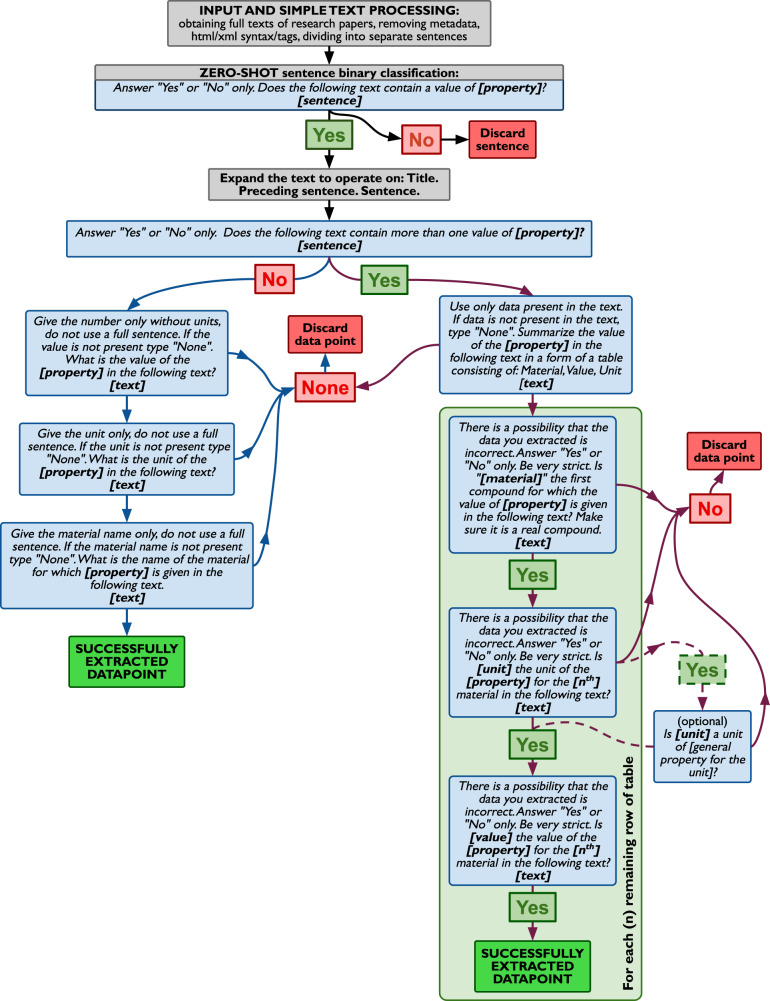
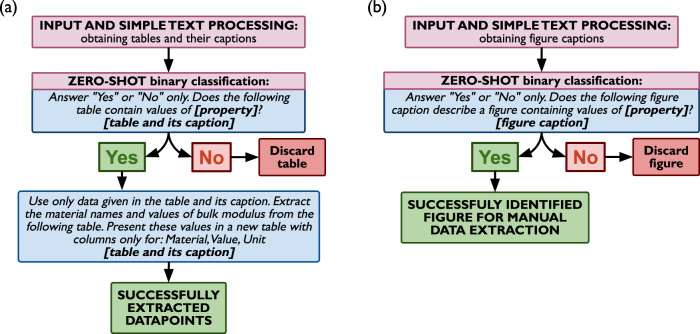
There has been a growing effort to replace manual extraction of data from research papers with automated data extraction based on natural language processing, language models, and recently, large language models (LLMs). Although these methods enable efficient extraction of data from large sets of research papers, they require a significant amount of up-front effort, expertise, and coding. In this work, we propose the method that can fully automate very accurate data extraction with minimal initial effort and background, using an advanced conversational LLM. consists of a set of engineered prompts applied to a conversational LLM that both identify sentences with data, extract that data, and assure the data’s correctness through a series of follow-up questions. These follow-up questions largely overcome known issues with LLMs providing factually inaccurate responses. can be applied with any conversational LLMs and yields very high quality data extraction. In tests on materials data, we find precision and recall both close to 90% from the best conversational LLMs, like GPT-4. We demonstrate that the exceptional performance is enabled by the information retention in a conversational model combined with purposeful redundancy and introducing uncertainty through follow-up prompts. These results suggest that approaches similar to , due to their simplicity, transferability, and accuracy are likely to become powerful tools for data extraction in the near future. Finally, databases for critical cooling rates of metallic glasses and yield strengths of high entropy alloys are developed using .
Overview
The claims and statistics of this paper haven’t been checked yet.
Free: it reads the open-access text and checks the first 5 claims that cite a source we can check. Create a free account to check every claim.
Integrity signals
Registry
Cites
Statistics
Figures

Verification
Claims the paper makes
The claims and statistics of this paper haven’t been checked yet.
Free: it reads the open-access text and checks the first 5 claims that cite a source we can check. Create a free account to check every claim.
Claims other papers make about this one
Each is checked against this paper’s own text: does it say what the citing paper says it does?
The source backs part of the claim, not all of it — or backs it for a different population, condition or comparison.
In the citing paper
“Although these proof-of-concept studies have reported encouraging results and the potential to substantially reduce manual workload and human error, most evaluations have been limited to single models, small or restricted datasets, or single extraction runs (15–20).”
From Performance of large language models and prompt engineering strategies for data extraction in systematic reviews (2026) · cites this paper as [18]
Experimental — accuracy not yet measuredThe cited source says what the claim attributes to it.
In the citing paper
“one study demonstrated that GPT-4 achieved precision and recall approaching 90% for automated extraction of structured scientific data using prompt-engineered workflows (18).”
From Performance of large language models and prompt engineering strategies for data extraction in systematic reviews (2026) · cites this paper as [18]
Self-check
Percentages, sums and reported differences re-computed from the paper’s own numbers.
The self-check needs the paper’s full text.
Citations
Cites
Language Models are Few-Shot Learners
Brown, T. B., Mann, B., Ryder, N., Subbiah, M., Kaplan, J., Dhariwal, P., Neelakantan, A., Shyam, P., Sastry, G., Askell, A., et al. (2020) · arXiv · doi:10.48550/arxiv.2005.14165 · Cited by 23,372
High-Resolution Image Synthesis with Latent Diffusion Models
Rombach, R., Blattmann, A., Lorenz, D., Esser, P., & Ommer, B. (2022) · 2022 IEEE/CVF Conference on Computer Vision and Pattern Recognition (CVPR) · doi:10.1109/cvpr52688.2022.01042 · Cited by 20,302 · cited 2×
“Prompt engineering has now become a standard practice in the field of image generation [32–34] to ensure high quality results.”
BackgroundKaugeranna, R., Kaugeranna, E., & Aion, (. S. 4. 6. (2023) · DROPS (Schloss Dagstuhl – Leibniz Center for Informatics) · doi:10.4230/lipics.giscience.2023.43 · Cited by 13,690
LLaMA: Open and Efficient Foundation Language Models
Touvron, H., Lavril, T., Izacard, G., Martinet, X., Lachaux, M.-A., Lacroix, T., Rozière, B., Goyal, N., Hambro, E., Azhar, F., et al. (2023) · arXiv · doi:10.48550/arxiv.2302.13971 · Cited by 4,602
Python Materials Genomics (pymatgen): A robust, open-source python library for materials analysis
Ong, S. P., Richards, W. D., Jain, A., Hautier, G., Kocher, M., Cholia, S., Gunter, D., Chevrier, V. L., Persson, K. A., & Ceder, G. (2013) · Computational Materials Science · doi:10.1016/j.commatsci.2012.10.028 · Cited by 4,534
Training language models to follow instructions with human feedback
Ouyang, L., Wu, J., Jiang, X., Almeida, D., Wainwright, C. L., Mishkin, P., Zhang, C., Agarwal, S., Slama, K., Ray, A., et al. (2022) · arXiv · doi:10.48550/arxiv.2203.02155 · Cited by 4,208
Llama 2: Open Foundation and Fine-Tuned Chat Models
Touvron, H., Martin, L., Stone, K., Albert, P., Almahairi, A., Babaei, Y., Bashlykov, N., Batra, S., Bhargava, P., Bhosale, S., et al. (2023) · arXiv · doi:10.48550/arxiv.2307.09288 · Cited by 2,604 · cited 1×
“As an alternative model to assess, we chose LLaMA2-chat (70B) [39], a model developed by GenAI (Meta), which has extensive documentation [40], and is available to download for free and use locally without limits.”
MethodHierarchical Text-Conditional Image Generation with CLIP Latents
Ramesh, A., Dhariwal, P., Nichol, A., Chu, C., & Chen, M. (2022) · arXiv · doi:10.48550/arxiv.2204.06125 · Cited by 2,511
Large language models are zero-shot reasoners
Kojima, T., Gu, S. (., Reid, M., Matsuo, Y., & Iwasawa, Y. (2022) · Advances in Neural Information Processing Systems 35 · doi:10.52202/068431-1613 · Cited by 2,013
Large Language Models are Zero-Shot Reasoners
Kojima, T., Gu, S. S., Reid, M., Matsuo, Y., & Iwasawa, Y. (2022) · arXiv · doi:10.48550/arxiv.2205.11916 · Cited by 2,013
Research works printed but not linked: 1
- Polak, M. P. & Morgan, D. Datasets and Supporting Information to the paper entitled ‘Extracting accurate materials data from research papers with conversational language models and prompt engineering’ (2023). PMC10882009 38383556
Cited by
Items 101–200 of 478
Wei, C., Shi, Y., Mu, W., Zhang, H., Qin, R., Yin, Y., Yu, G., & Mu, T. (2025) · ACS Sustainable Chemistry & Engineering · doi:10.1021/acssuschemeng.5c00798 · Cited by 20
Wang, X., Huang, L., Xu, S., & Lü, K. (2024) · Journal of Chemical Information and Modeling · doi:10.1021/acs.jcim.4c00882 · Cited by 26
“15 Their approach demonstrates near 90% precision and recall.”
Song, Z., Hwang, G.-Y., Zhang, X., Huang, S., & Park, B.-K. (2025) · Scientific Reports · doi:10.1038/s41598-025-85715-7 · Cited by 25
Fei, Y., Fan, J., & Zhou, G. (2025) · Applied Sciences · doi:10.3390/app15020628 · Cited by 18
MaTableGPT: GPT‐Based Table Data Extractor from Materials Science Literature
Yi, G. H., Choi, J., Song, H., Miano, O., Choi, J., Bang, K., Lee, B., Sohn, S. S., Buttler, D. J., Hiszpanski, A. M., et al. (2025) · Advanced Science · doi:10.1002/advs.202408221 · Cited by 26
“Notably, Sr is frequently used alongside Ir; these re-sults reflect the research involving IrO x /SrIrO 3 catalysts, which have been reported to exhibit high OER performance, [41,42] and subsequent studies in which SrIrO 3 perovskite was doped with various elements, such as Co and Ti.”
Lee, Y., Oh, J. H., Lee, D., Kang, M., & Lee, S. (2025) · Scientific Reports · doi:10.1038/s41598-025-99423-9 · Cited by 20
Chained LLM-human interactive framework for electrolyte design in four-electron Zn-I2 batteries
Chen, Z., Zhang, J., Zhao, G., Wang, Q., Yang, C., & Guo, Y. (2025) · Science China Chemistry · doi:10.1007/s11426-025-2789-5 · Cited by 17
Advanced high-entropy materials for fuel cells and water electrolysis
Liu, M., Luo, X., Wang, G., Gebreslassie, G., Desta, H. G., Zhang, J., Lin, B., Yan, W., & Zhang, J. (2026) · Chemical Society Reviews · doi:10.1039/d5cs01274k · Cited by 23
Investigating translation for Indic languages with BLOOMZ-3b through prompting and LoRA fine-tuning
Nair, A. R., Gupta, D., & Premjith, B. (2024) · Scientific Reports · doi:10.1038/s41598-024-74617-9 · Cited by 23
Knowledge-guided large language model for material science
Wang, G., Hu, J., Zhou, J., Liu, S., Li, Q., & Sun, Z. (2025) · Review of Materials Research · doi:10.1016/j.revmat.2025.100007 · Cited by 16
LLM-based AI agents for automated extraction of material properties and structural features
Ghosh, S. S., & Tewari, A. (2026) · Computational Materials Science · doi:10.1016/j.commatsci.2026.114521 · Cited by 25
“…parameters from 228 MOF papers [5]; Polak and Morgan used prompt-chaining with GPT-4 to reduce hallucinations for metallic glasses and HEAs [6] , but their approach only operated on targeted sentences at a time, limiting the ability to capture cross-sentence relationships; Yang et al.…”
Dual engine-driven strategy for advanced copper alloy design employing large language models
Tan, F., Zhao, Z., Jiang, Y., Zhang, W., Xie, T., Chen, W., Ma, M., Liu, Y., Ye, Y., Xiao, Z. Q., et al. (2026) · Acta Materialia · doi:10.1016/j.actamat.2025.121886 · Cited by 17
Extracting and reconstructing knowledge in materials science literature using large language models
Li, S., Wei, S., Huang, C., Zhang, Y., Zhang, G., & Sun, S. (2026) · Communications Materials · doi:10.1038/s43246-025-01043-3 · Cited by 24
“Polak et al. 34 used conversational ChatGPT to extract materials properties such as the critical cooling rates of metallic glasses and yield strength of high entropy alloys in the form of the triplet material, value, unit.”
Vindigni, G. (2024) · European Journal of Contemporary Education and E-Learning · doi:10.59324/ejceel.2024.2(4).10 · Cited by 17
“Moreover, they help to consider media psychological aspects to boost engagement and acceptance rates while simultaneously minimizing redundancies through heuristic complexity reduction (Polak & Morgan, 2024; Zhao et al., 2024).”
BackgroundKatzer, B., Klinder, S., & Schulz, K. (2025) · Materials Today Communications · doi:10.1016/j.mtcomm.2025.112186 · Cited by 19
“To incorporate the increasing amount of data, workflows have been developed to au-tomatize database generations from scientific literature [27] and LLMs have been used to extract accurate information from documents [28].”
Zheng, X., Yang, J., Zhou, L., Qin, L., Lu, C., Alonso‐Vante, N., Huang, Z., Zhang, P., Zhou, Y., Luo, Z.-H., et al. (2025) · Chemical Engineering Science · doi:10.1016/j.ces.2025.121740 · Cited by 16
Yao, T., Huang, J., Yan, Y., Yang, Y., Wang, Z., Shao, X., Gao, Z., & Yang, W. (2025) · AI Agent · doi:10.20517/aiagent.2025.03 · Cited by 16
Liu, Y., Gu, F., & Guo, J. (2024) · Journal of Manufacturing Systems · doi:10.1016/j.jmsy.2024.08.014 · Cited by 16
Artificial Intelligence Quotient (AIQ)Preprint
Qin, X., Lu, J. G., Chen, C., Zhou, X., Gan, Y., Li, W., & Song, L. L. (2024) · SSRN Electronic Journal · doi:10.2139/ssrn.4787320 · Cited by 18
Machine learning approach to the assessment and prediction of solid particle erosion of metals
Brown, S., Khomh, F., Cavarroc, M., Mendez, M., Martinu, L., & Klemberg-Sapieha, J. E. (2025) · Tribology International · doi:10.1016/j.triboint.2025.110903 · Cited by 14
Annan, A., Eiden, A. L., Wang, D., Du, J., Rastegar-Mojarad, M., Nomula, V. K., & Wang, X. (2025) · JMIR Formative Research · doi:10.2196/64723 · Cited by 21
“Prompts also included requests for the models to provide explanations for their classifications, which enhanced interpretability and supported iterative refinement during the development phase [32].”
Kevlishvili, I., Michel, R. G. S., Garrison, A. G., Toney, J., Adamji, H., Jia, H., Román‐Leshkov, Y., & Kulik, H. J. (2025) · Faraday Discussions · doi:10.1039/d4fd00087k · Cited by 21
Peng, X., Tew, Y. S., Zhao, K., Wang, C., Li, R., Hu, S., & Wang, X. (2025) · Green Chemical Engineering · doi:10.1016/j.gce.2025.05.006 · Cited by 16
Automating the data extraction process for systematic reviews using GPT-4o and o3
Kataoka, Y., Takayama, T., Yoshimura, K., So, R., Tsujimoto, Y., Yamagishi, Y., Takagi, S., Furukawa, Y., Sakata, M., Basic, D., et al. (2025) · Research Synthesis Methods · doi:10.1017/rsm.2025.10030 · Cited by 14
“13 Second, previous models extracted only a small number of variables, 9–11 and whether the reported performance can be extended to the full set of data commonly extracted in an SR is unclear.”
Zhao, Y., Hansen, A., Dahlhaus, A., Brandt, N., Selzer, M. A., Koeppe, A., Nestler, B., Knapp, M., & Ehrenberg, H. (2025) · Materials Today Communications · doi:10.1016/j.mtcomm.2025.112380 · Cited by 16
Retrieval augmented generation for building datasets from scientific literature
Maharana, P. R., Verma, A., & Joshi, K. (2025) · Journal of Physics Materials · doi:10.1088/2515-7639/ade1fa · Cited by 16
Yuan, J., Yang, R., Patra, L., & Liao, B. (2024) · AIP Advances · doi:10.1063/5.0206855 · Cited by 14
“The emergence of LLMs enables efficient extraction of material properties from a large amount of published literature [32, 33].”
BackgroundNguyen, T. B., Dang, V.-H., & Pham, T.-T. (2024) · Frontiers of Structural and Civil Engineering · doi:10.1007/s11709-024-1118-7 · Cited by 13
Chakraborty, C., Bhattacharya, M., Pal, S., & Lee, S. (2024) · International Journal of Biological Macromolecules · doi:10.1016/j.ijbiomac.2024.138547 · Cited by 12
Na, Y., Kim, J. J., Park, C., Hwang, J., Kim, C., Lee, H., & Lee, J. (2025) · Materials Advances · doi:10.1039/d5ma00004a · Cited by 15
Embracing large language model (LLM) technologies in hydrology research
Ma, Z., Peng, B., Yue, Z., Zeng, H., Pan, M., Wu, X., Yang, J., Mai, L., & Guan, K. (2025) · Environmental Research Water · doi:10.1088/3033-4942/addd43 · Cited by 18
Kang, L., Shi, X., & Ke, Z. (2025) · Education and Information Technologies · doi:10.1007/s10639-025-13657-8 · Cited by 13
“Polak and Morgan (2023) indicate that using prompt engineering to extract data from articles can enhance interdisciplinary skills.”
Li, S., Wang, Y., Liu, C.-M., Huang, Y., Lam, T., & Luo, R. (2025) · Bioinformatics · doi:10.1093/bioinformatics/btaf382 · Cited by 15
“Large language models (LLM) have demonstrated remarkable capabilities and become a promising option for understanding and extracting structured knowledge from publications (Dagdelen et al. 2024, Huang et al. 2024, Polak and Morgan 2024).”
Li, X. Y., Huang, Z., Quan, S., Peng, C., & Ma, X. (2025) · npj Computational Materials · doi:10.1038/s41524-025-01719-x · Cited by 18
“The BulkModulus Dataset 9 contains 179 material – property – unit triples related to bulk modulus values.”
InfluentialHu, R., Yang, Y., Liu, S., Li, Z., Liu, J., Ding, X., Sun, H., & Ren, L. (2025) · Scientific Reports · doi:10.1038/s41598-025-15627-z · Cited by 17
Large language model-generated clinical practice guideline for appendicitis
Boyle, A., Huo, B., Sylla, P. A., Calabrese, E., Kumar, S. S., Slater, B. J., Walsh, D. S., & Vosburg, R. W. (2025) · Surgical Endoscopy · doi:10.1007/s00464-025-11723-3 · Cited by 12
“Another advantage of using LLMs for data extraction is their ability to perform zero-shot learning; LLMs can extract and summarize data without additional model training, fine-tuning, or code development, which contributes to their efficiency and broad applicability [33].”
Qin, S., Wang, Y., Cui, T., Ma, J., Zhou, X., Guo, X., Zhang, C., Zhou, C., Guo, R., & Li, H. (2025) · Pharmacological Research · doi:10.1016/j.phrs.2025.107883 · Cited by 12
Mastrianni, A., Twede, H., Sarcevic, A., Wander, J. D., Austin-Tse, C. A., Saponas, S., Rehm, H. L., Conard, A. M., & Hall, A. K. (2025) · ACM Transactions on Interactive Intelligent Systems · doi:10.1145/3756326 · Cited by 14
“This extracted content can then be fed into an LLM-based chat (e.g., AI assistant chat), leveraging chain-of-thought reasoning to enable users to engage in a question-and-answer dialogue about the table content [69, 70].”
Cole, C. H., Hajikhani, A., Hylkilä, E., Paronen, E., & Pihkola, H. (2025) · The International Journal of Life Cycle Assessment · doi:10.1007/s11367-025-02508-w · Cited by 15
“However, recent research suggests that contemporary LLMs are also capable of contextualized interpretation, even outperforming human annotators in some cases (Törnberg 2024; Polak and Morgan 2024).”
InfluentialAdvancing battery research through large language models: A review
Chen, J., Wang, Y., Guo, D., Liu, Z., Wang, Y. D., Li, S., Xu, W., Qian, L., Shen, Y., Sun, T., et al. (2025) · The Innovation · doi:10.1016/j.xinn.2025.101091 · Cited by 20
Large language models streamline automated systematic review: A preliminary study
Chen, X., & Xue, Z. (2025) · arXiv (Cornell University) · doi:10.48550/arxiv.2502.15702 · Cited by 14
“LLMs have shown promising performance in a wide range of applications particularly in medicine 2-4 .”
Farris, B. R., & Leonard, K. C. (2025) · JACS Au · doi:10.1021/jacsau.5c01087 · Cited by 11
Automated prompt engineering pipelines: fine-tuning LLMs for enhanced response accuracy
Hendawi, S., Kanan, T. G., Elbes, M. W., Mughaid, A. S., & AlZu’bi, S. M. F. (2025) · Expert Systems with Applications · doi:10.1016/j.eswa.2025.129689 · Cited by 15
HyperPIE: Hyperparameter Information Extraction from Scientific Publications
Saier, T., Ohta, M., Asakura, T., & Färber, M. (2024) · Lecture notes in computer science · doi:10.1007/978-3-031-56060-6_17 · Cited by 15
“Similarly, Polak et al. [20] use Chat-GPT to extract material, value, and unit information from sentences of material science papers.”
BackgroundNguyen, D.-N., Tong, R. K., & Dinh, N. (2025) · Digital Discovery · doi:10.1039/d5dd00306g · Cited by 12
Isazawa, T., & Cole, J. M. (2024) · Journal of Chemical Information and Modeling · doi:10.1021/acs.jcim.4c00063 · Cited by 12
Hamed, A. A., Fandy, T. E., & Wu, X. (2024) · IEEE International Conference on Medical Artificial Intelligence (MedAI) · doi:10.1109/medai62885.2024.00053 · Cited by 11
“The authors claimed that their approach ensured outstanding performance and accurate results [23]. evidence-based guidelines.”
Felizardo, K. R., Steinmacher, I., Lima, M. H. T. D. F., Deizepe, A., Conte, T. U., & Barcellos, M. P. (2024) · Proceedings of the ... ACM-IEEE International Symposium on Empirical Software Engineering and Measurement/International Symposium on Empirical Software Engineering and Measurement · doi:10.1145/3674805.3690743 · Cited by 14
Generative Large Model-Driven Methodology for Color Matching and Shape Design in IP Products
Wu, F., Lu, P., & Hsiao, S. (2025) · Entropy · doi:10.3390/e27030319 · Cited by 11
“In addition, to better guide ChatGPT in generating expected output, users are encouraged to design and optimize input prompts— a process known as prompt engineering [32].”
Towards a sustainable high-quality materials data ecosystem: frameworks and strategies
He, B., Wang, K., Jiang, Z., Zhang, Y., Avdeev, M., & Shi, S. (2026) · National Science Review · doi:10.1093/nsr/nwag108 · Cited by 9
“Commonly, these rules encompass not only the string matching patterns, but also the engineered prompts and instruction sets for guiding language models in target data extraction [79 ].”
Large language models for porous materials: from text mining to autonomous laboratory
Han, S., Bae, T., Kim, J., Kim, Y., & Kim, J. (2026) · Digital Discovery · doi:10.1039/d5dd00578g · Cited by 8
Versatile Deep Learning Pipeline for Transferable Chemical Data Extraction
Alshehri, A. S., Horstmann, K. A., & You, F. (2024) · Journal of Chemical Information and Modeling · doi:10.1021/acs.jcim.4c00816 · Cited by 9
Extraction of User-Defined Information from PDF
Nadeem, R., Iqbal, T., Fatima, N., Altaf, J., Irshad, A., & Farooq, A. (2024) · International Conference on Decision Aid Sciences and Applications (DASA) · doi:10.1109/dasa63652.2024.10836169 · Cited by 9
“Methodologies LLMs for Medical Data Annotation (Goel et al. [1]) In order to make the medical data annotation more efficient Goel, Richard Han, and Zhang suggest the use of large language models in combination with human workers[3][4].”
Liu, H., He, J., Zhang, S., Yan, L., Zhao, Q., Jiang, P., & Zhang, J. (2024) · Journal of Intelligent Construction · doi:10.26599/jic.2024.9180026 · Cited by 9
Mechanical performance dataset for alloy with applications at low temperatures
Tang, H., Chen, Z., Yao, X., & Xu, Z. (2025) · Scientific Data · doi:10.1038/s41597-025-05512-9 · Cited by 10
“Prompt engineering [25] and fine-tuning [26] techniques should be developed to improve efficiency in the future.”
Dai, K., Cheng, C., Li, B., Xie, Y. C., Gómez, J. A., Wang, Z., & Wu, X. (2025) · Scientific Data · doi:10.1038/s41597-025-05723-0 · Cited by 10
“Moreover, the advent of large language models introduces robust tools capable of extracting valuable agricultural insights from vast collections of historical and contemporary inventories 75 .”
Ning, W., Li, M., Reimers, J. R., & Kobayashi, R. (2026) · Digital Discovery · doi:10.1039/d5dd00482a · Cited by 8
Cheng, Y., & Zhang, H. J. (2025) · ACS ES&T Water · doi:10.1021/acsestwater.5c00551 · Cited by 9
AI-driven quantitative review of mobility–stability trade-off in oxide semiconductors
Hong, J. H., Lee, C. H., Kim, H. W., Jeon, D. W., Kang, J. H., Kim, Y., Bae, J., Heo, S., Lee, S. H., Na, J., et al. (2026) · Nano Convergence · doi:10.1186/s40580-026-00535-3 · Cited by 8
“[33 ] Indeed, LLM-based extraction pipelines like ChatExtract for battery/alloy research [34], ChatMOF for metal–organic framework studies [35], and ChemCrow for broader chemical analyses further underscore the feasibility of automatically retrieving complex experimental parameters from scientific…”
Huang, Z., Guo, X., Guo, X., Peng, T., Huang, S., Zhao, W., Zhang, Y., Xue, H., Li, X., & Wang, J. (2026) · Journal of Manufacturing Systems · doi:10.1016/j.jmsy.2026.03.002 · Cited by 9
Semantic Embeddings of Chemical Elements for Enhanced Materials Inference and Discovery
Jia, Y., Xian, Y., Xu, Y., Dang, P., Ding, X., Sun, J., Zhou, Y., & Xue, D. (2026) · Materials Genome Engineering Advances · doi:10.1002/mgea.70059 · Cited by 9
“Since their introduction to materials science in 2019, NLP models have shown great promise in automating data extraction [27–31], predicting material properties [30, 32–36], and uncovering latent scientific knowledge [37, 38].”
Qi, T., & Zhou, J. (2026) · Molecules · doi:10.3390/molecules31142408 · Cited by 9
Shen, Y., Zhao, S., Lv, Y., Chen, F., Fu, L., & Karimi‐Maleh, H. (2025) · Computers, materials & continua/Computers, materials & continua (Print) · doi:10.32604/cmc.2025.067427 · Cited by 11
Jiang, C., Lei, W., Kuang, E., Han, T., & Fan, M. (2023) · International ACM SIGACCESS Conference on Computers and Accessibility (ASSETS) · doi:10.1145/3597638.3608423 · Cited by 9
“The applications include data visualization [40, 43, 45, 54] and information extraction [26, 55, 81].”
BackgroundHuang, Y., & Zhang, L. (2024) · Journal of Chemical Theory and Computation · doi:10.1021/acs.jctc.4c00465 · Cited by 8
Jiang, J., Hu, J., Xie, S., Guo, M.-H., Dong, Y., Fu, S., Jiang, X., Yue, Z., Shi, J., Zhang, X., et al. (2025) · bioRxiv (Cold Spring Harbor Laboratory) · doi:10.1101/2025.03.03.641178 · Cited by 10
Large Language Model for Automating the Analysis of Cryoprotectants
Ashikhmina, M. S., Zenkin, A. M., Ivanova, A. O., Pavlishina, I. R., Orlova, O. Y., Pantiukhin, I. S., & Скорб, Е. В. (2024) · Journal of Chemical Information and Modeling · doi:10.1021/acs.jcim.4c02049 · Cited by 7
Fu, L., Zhou, Q., Jin, M., & Wu, W. (2025) · Environmental chemistry and safety · doi:10.26599/ecs.2025.9600002 · Cited by 7
Sierepeklis, O., & Cole, J. M. (2025) · Journal of Chemical Information and Modeling · doi:10.1021/acs.jcim.5c00840 · Cited by 7
Reason, T., Wu, Y., Jones, C., Benbow, E., Johannesen, K. M., & Malcolm, B. (2025) · Value in Health · doi:10.1016/j.jval.2025.08.001 · Cited by 7
From Corpus to Innovation: Advancing Organic Solar Cell Design with Large Language Models
Sahu, H., Mahmood, A. U., Shafique, L. B., & Ramprasad, R. (2025) · npj Computational Materials · doi:10.1038/s41524-025-01896-9 · Cited by 11
“While LLM-based tools like ChatExtract 48 have shown impressive success for inorganic materials, and our recent work 50 combining NER-based MaterialsBERT and GPT-3.”
POLARIS: perovskite optimization using LLM-assisted refinement and intelligent screening
Marshall, J., Sanchez, S. L., Desai, R., Foadian, E., Pratiush, U., Mannodi‐Kanakkithodi, A., Kalinin, S. V., & Ahmadi, M. (2026) · Digital Discovery · doi:10.1039/d5dd00378d · Cited by 7
DxDirector: an agentic large language model driving the full-process clinical diagnosis
Xu, S., Huang, X., Wei, Z., Pang, L., Shen, H., & Cheng, X. (2026) · Nature Communications · doi:10.1038/s41467-026-71928-5 · Cited by 10
Chinese Text Simplification Based on Large Language Models
Huo, H., Fu, Z., Yu, H., Yang, S., & Tang, G. (2024) · International Conference on Computational Linguistics and Natural Language Processing (CLNLP) · doi:10.1109/clnlp64123.2024.00018 · Cited by 7
“Maciej P. Polak, Dane Morgan[9]'s approach consists of a set of cue engineering applied to conversational LLM, which can both recognize sentences with data and extract that data.”
BackgroundTuczek, M., Degirmenci, K., Song, Y., Desouza, K. C., Breitner, M. H., & Watson, R. T. (2025) · The Journal of Strategic Information Systems · doi:10.1016/j.jsis.2025.101908 · Cited by 7
Extracting Social Connections from Finnish Karelian Refugee Interviews Using LLMs
Laato, J., Kanerva, J., Loehr, J., Lummaa, V., & Ginter, F. (2025) · Helda - University of Helsinki Institutional Repository · doi:10.48550/arxiv.2502.13566 · Cited by 7
Sujau, M., Wada, M., Vallée, É., Hillis, N., & Sušnjak, T. (2025) · Machine Learning and Knowledge Extraction · doi:10.3390/make7020028 · Cited by 9
“These models leverage vast amounts of text data and advanced contextual understanding to handle complex language tasks, including screening citations [25–29], extracting data [29–31], and synthesising information [29,32,33].”
Chun, K., Lim, S., Yeo, C., Park, S.-W., & Mun, D. (2025) · Journal of Computational Design and Engineering · doi:10.1093/jcde/qwaf137 · Cited by 9
Overcoming Roadblocks for Implementing AI/ML Methods for Materials Advancement
Warren, J. A., Tavazza, F., McDannald, A., Kusne, A. G., Joress, H., Hoogerheide, D. P., DeCost, B., Choudhary, K. K., & Audus, D. J. (2026) · Annual Review of Materials Research · doi:10.1146/annurev-matsci-072924-102951 · Cited by 6
“(33, 34) Even if LLMs are not able to complete every step in the data extraction process, such as finding specific values, AI including LLMs, and in particular Retrieval-Augmented Generation (RAG) LLMs that make use of external data or resources, can help identify promising sources and relevant…”
Guo, K., Xu, S., Sun, C., Yan, W., Yan, J., Yu, H., Wang, C. Q., Xu, W., Li, J., Bi, Z., et al. (2026) · Materials Today · doi:10.1016/j.mattod.2026.103371 · Cited by 6
Methods to estimate marine functional connectivity: A primer
Sturrock, A. M., Tanner, S. E., Arnaud‐Haond, S., Aguzzi, J., Barboza, F. R., Beger, M., Blanco, A., Brophy, D., Carretón, M., Childs, A.-R., et al. (2026) · Ecological Applications · doi:10.1002/eap.70273 · Cited by 6
Salvi, R. C., Blake, C. L., & Bahir, M. (2024) · Lecture notes in computer science · doi:10.1007/978-3-031-57850-2_17 · Cited by 8
Unveiling tone manipulation in MD&A: Evidence from ChatGPT experiments
Song, P., Lu, H., & Zhang, Y. (2024) · Finance research letters · doi:10.1016/j.frl.2024.105837 · Cited by 9
Ekuma, C. E. (2025) · APL Machine Learning · doi:10.1063/5.0254406 · Cited by 6
Visual analysis of LLM-based entity resolution from scientific papers
Wu, S., Yang, Y., Wu, W., Li, R., Zhang, Y., Wang, G., Tan, H., Liu, Z., & Shi, L. (2025) · Visual Informatics · doi:10.1016/j.visinf.2025.100236 · Cited by 7
“Polak and Morgan (2024) observed that in zero-shot scenarios, a meticulous combination of prompt engineering significantly enhances single-query accuracy, similar to the “flow prompt" concept (Ridnik et al., 2024), yet dependent on complex querying workflows.”
Automated extraction of materials system charts using a large language model framework
Liu, Q., Polak, M. P., Shuvo, M. A. A., Deodhar, H. S., Han, J., Morgan, D. D., & Oh, H. (2025) · Scripta Materialia · doi:10.1016/j.scriptamat.2025.116815 · Cited by 7
Self-citationMukherjee, A., Giri, D., & Rajan, K. (2025) · Journal of Chemical Information and Modeling · doi:10.1021/acs.jcim.5c00612 · Cited by 6
“Automated Data Extraction using language models has gained popularity as a tool for extracting tailored data in materials science 18–20 .”
Automated physics-based modeling of construction equipment through data fusion
Xu, L.-Q., Veeramani, D., & Zhu, Z. (2024) · Automation in Construction · doi:10.1016/j.autcon.2024.105880 · Cited by 6
Verduzco, J. C., Holbrook, E., & Strachan, A. H. (2023) · arXiv (Cornell University) · doi:10.48550/arxiv.2310.11458 · Cited by 7
Das, A., Bhattacharya, M., Abdelhameed, A. S., Lee, S., & Chakraborty, C. (2025) · Molecular Therapy — Nucleic Acids · doi:10.1016/j.omtn.2025.102546 · Cited by 6
“72,73 Second part of our study: Analysis of significantly expressed gene in AD using integrative bioinformatics In the second part of our study, we analyzed significantly expressed genes in AD using integrative bioinformatics.”
Rompczyk, K. (2025) · Evaluation · doi:10.1177/13563890251331066 · Cited by 7
“The capability of AI systems to augment or support analytical tasks is notable (see chapter 3), especially in data collection, processing, and analysis (Christou, 2023; Has-sani and Silva, 2023; Polak and Morgan, 2023).”
Chen, Z.-Y., Li, T., Yang, Y., Huang, H., Lin, H., Liu, H., Zhong, G., & Li, Z. (2025) · Polymer · doi:10.1016/j.polymer.2025.128875 · Cited by 8
Deng, Z., Fu, X., & Li, C. (2025) · Environment and Planning B Urban Analytics and City Science · doi:10.1177/23998083251382381 · Cited by 6
“LLMs are capable of extracting structured data (Dagdelen et al., 2024; Polak and Morgan, 2024), identifying entities and relationships (Kwak et al., 2023), and parsing detailed clauses (Salvi et al., 2024) from complex texts.”
LLM-driven analysis of micro-pillar experiments for investigating fracture in Al-steel RSW joints
Yu, Z., Geng, P., Pan, B., Rinker, T. J., Carlson, B. E., Pour, M. M., Wang, H., Li, N., Shang, S., Liu, Z., et al. (2025) · Journal of Manufacturing Processes · doi:10.1016/j.jmapro.2025.10.029 · Cited by 5
Yang, Y., Wang, D., Chiclana, F., & Chen, Z. (2025) · Advanced Engineering Informatics · doi:10.1016/j.aei.2025.104135 · Cited by 7
Prediction of COF Synthesis Reaction Conditions Based on Data Mining and Machine Learning
Zhao, J., Yan, M., Shi, Z., Zhao, C., Qi, L., Hao, Q., & Liu, H. (2025) · ACS Applied Polymer Materials · doi:10.1021/acsapm.5c03780 · Cited by 5
Leveraging large language models to address data scarcity in machine learning for graphene synthesis
Biswajeet, D. D., & Kadkhodaei, S. (2026) · Diamond and Related Materials · doi:10.1016/j.diamond.2026.113915 · Cited by 5
The evolution and current landscape of AI in geographical research: A large-scale systematic review
An, C., Wang, J., & Zhou, C. (2025) · Geography and sustainability · doi:10.1016/j.geosus.2025.100392 · Cited by 12
From algorithms to systems: integrating computation into drug discovery
Bradley, A. R., Rossall, A., Pairaudeau, G., & Deane, C. M. (2025) · Expert Opinion on Drug Discovery · doi:10.1080/17460441.2025.2601102 · Cited by 5
“Models, including LLMs, have shown the ability to automate the extraction, structuring and standardization of literature [63,64].”
Enhanced semantic classification of microbiome sample origins using large language models (LLMs)
Gaio, D., Tackmann, J., Perez‐Molphe‐Montoya, E., Näpflin, N. C., Patsch, D., Malfertheiner, L., Peluso, M. E., & von Mering, C. (2026) · GigaScience · doi:10.1093/gigascience/giag015 · Cited by 5
“…models, particularly large language models (LLMs), which excel at extracting information from diverse and complex metadata across many domains [ 6 , 12– 14 ], including the SRA, where LLMs have been shown to robustly extract experimental attributes like cell lines and target genes [ 15 ].”
Metadata
- Authors
- Polak, M. P., & Morgan, D.
- Affiliations
- University of Wisconsin–Madison (US)
- Corresponding author
- Polak, Maciej P.
- Morgan, Dane
- Venue
- Nature Communications
- Published
- 2024-02-21
- Volume
- 15
- Issue
- 1
- Pages
- 1569-1569
- ISSN
- 2041-1723 (ISSN-L)
- PMC
- PMC10882009
- OpenAlex
- W4392002118
- Cited by
- 365
- References
- 40
- Citations by year
- 2026: 136 · 2025: 156 · 2024: 70
- FWCI
- 35.33
- Type
- journal article
- Language
- en
- Open access
- gold
- doi.org
- Licence
- cc-by
- creativecommons.org/licenses/by/4.0 (tdm)
- creativecommons.org/licenses/by/4.0 (vor)
- Locations
- Nature Communications (publishedVersion, cc-by)
- PubMed Central (publishedVersion, cc-by)
- PubMed (publishedVersion)
- DOAJ (DOAJ: Directory of Open Access Journals) (submittedVersion)
- Funders
- National Science Foundation (1931298)
- Topics
- Physical Sciences › Materials Science › Materials Chemistry › Machine Learning in Materials Science
- Physical Sciences › Computer Science › Artificial Intelligence › Topic Modeling
- Social Sciences › General Social Sciences › Computational and Text Analysis Methods
- Keywords
- automated data extraction, research papers, prompt engineering, materials data, factual accuracy, amorphous alloys, critical cooling rate, high-entropy alloys, yield strength, information retention
About these checks
Registry, retraction, Cites and statistics results are computed, not judged, with one exception: a printed reference that no index lists is read once by a model before it counts as a citation error. Claims are extracted by a model and kept only when their quote appears verbatim in the text; each cited source is then checked, with a model’s help, for whether it says what the claim relies on. Those verdicts can be wrong — read the claim’s quote and the cited source before relying on one.
Statistics and arithmetic are recomputed, not judged.
Confidence bands are shown only for fields calibrated on our annotated test set. None is calibrated yet, so no band is shown.
What counts as a claim ›How we measure confidence ›How we check this ›
Are you an author, or do you see a problem with this page? Request a review
Data sources
Bibliographic data: Semantic Scholar, OpenAlex, Crossref.
Contains information from the Semantic Scholar Academic Graph Datasets, made available under the ODC Attribution License (ODC-BY 1.0).
Semantic Scholar’s data is described in: Kinney, R., et al. (2023). The Semantic Scholar Open Data Platform. arXiv:2301.10140.
