

LKB1 regulates JNK-dependent stress signaling and apoptotic dependency of KRAS-mutant lung cancers
Open accessPublished version of a preprint
The DOI matches its Crossref record; 93 of the 93 references it cites were found in a registry or an index; 39 of the 75 sources its claims cite were checked for support.
Abstract
The efficacy of molecularly targeted therapies may be limited by co-occurring mutations within a tumor. Conversely, these alterations may confer collateral vulnerabilities that can be therapeutically leveraged. KRAS -mutant lung cancers are distinguished by recurrent loss of the tumor suppressor STK11/ LKB1. Whether LKB1 modulates cellular responses to therapeutic stress seems unknown. Here we show that in LKB1-deficient KRAS -mutant lung cancer cells, inhibition of KRAS or its downstream effector MEK leads to hyperactivation of JNK due to loss of NUAK-mediated PP1B phosphatase activity. JNK-mediated inhibitory phosphorylation of BCL-XL rewires apoptotic dependencies, rendering LKB1-deficient cells vulnerable to MCL-1 inhibition. These results uncover an unknown role for LKB1 in regulating stress signaling and mitochondrial apoptosis independent of its tumor suppressor activity mediated by AMPK and SIK. Additionally, our study reveals a therapy-induced vulnerability in LKB1-deficient KRAS- mutant lung cancers that could be exploited as a genotype-informed strategy to improve the efficacy of KRAS-targeted therapies.
Overview
CoChat Summary
TL;DR
In LKB1-deficient KRAS-mutant lung cancer cells, KRAS or MEK inhibition hyperactivates JNK because LKB1-NUAK signaling normally maintains PP1B phosphatase activity. JNK-mediated BCL-XL phosphorylation rewires apoptotic dependencies toward MCL-1, creating a genotype-informed vulnerability to combined KRAS/MEK + MCL-1 inhibition.
Key findings
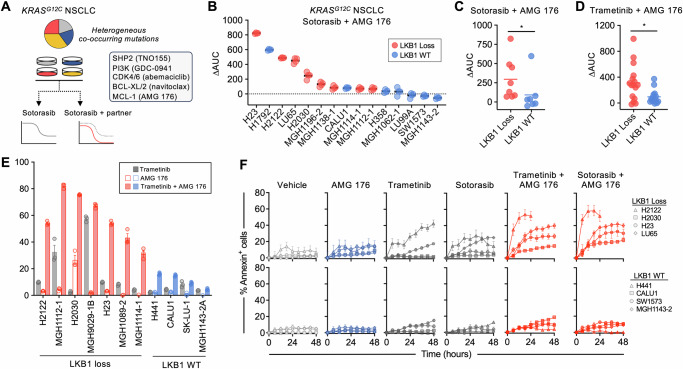
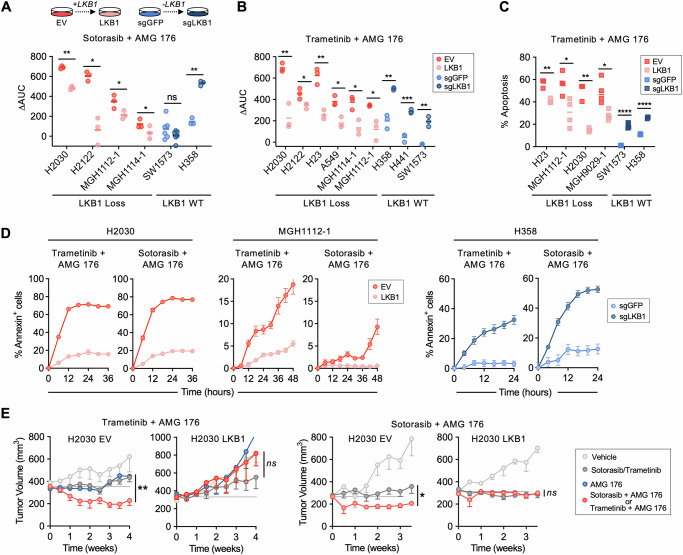
- LKB1 loss sensitized KRAS-mutant NSCLC cells to MAPK + MCL-1 inhibition: LKB1-deficient lines showed greater ΔAUC for sotorasib + AMG 176 (*p* = 0.029) and trametinib + AMG 176 (*p* = 0.032), with robust apoptosis versus minimal apoptosis in LKB1 WT lines.
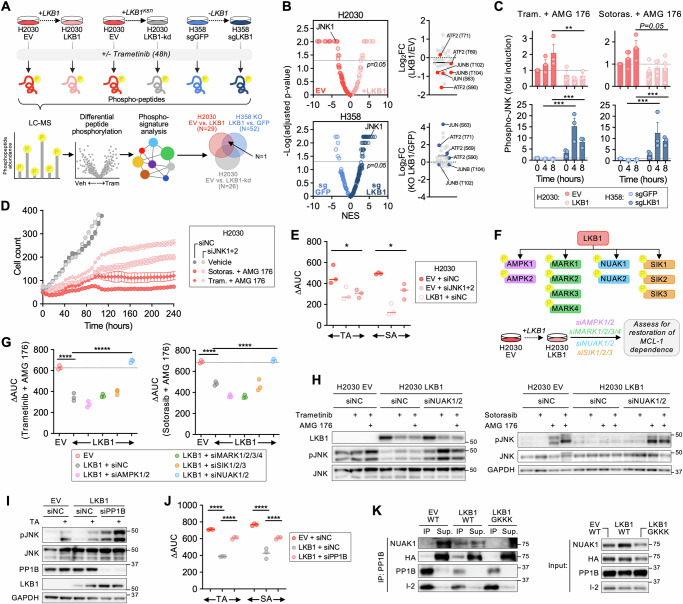
- Phosphoproteomics quantified 27,364 unique phosphosites and identified JNK1 as the only kinase signature enriched in trametinib-treated LKB1-deficient cells relative to WT but not in kinase-dead LKB1K87I cells.
- LKB1 suppresses JNK via NUAK1/2 and PP1B: NUAK1/2 knockdown restored drug-induced JNK phosphorylation and sensitivity, and PP1B knockdown increased pJNK and MAPK + MCL-1 inhibitor sensitivity.
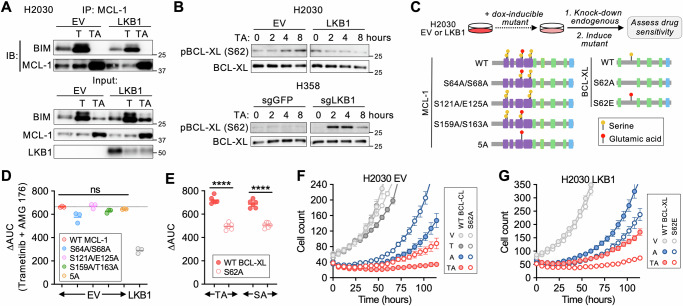
- JNK phosphorylates BCL-XL at S62; BCL-XL S62A reduced sensitivity to sotorasib or trametinib + AMG 176 (*p* = 0.000001), while S62E increased sensitivity in LKB1-restored cells, consistent with reduced BIM sequestration by BCL-XL and increased MCL-1 dependence.
- In patient tumors and PDX models, STK11/LKB1-mutant tumors showed increased MCL-1-dependent priming after sotorasib or trametinib (*p* = 0.0002 for PDX), and sotorasib + AMG 176 improved tumor response and progression-free survival (p* = 0.00001; PFS p* = 0.0001).
Methods
- Preclinical study using KRAS-mutant NSCLC cell lines, isogenic LKB1 re-expression/knockout models, patient tumor explants, and PDX/xenograft mouse models.
- Main assays included CellTiter-Glo viability, annexin/PI apoptosis, western blot, co-immunoprecipitation, immunofluorescence/IHC, BH3 profiling, and mass spectrometry-based phosphoproteomics/proteomics.
- Analyses included ΔAUC for drug combinations, synergy testing by BIGL, phosphosite signature analysis, and statistical testing with t tests, one-way/two-way ANOVA, and mixed-effects models as specified in figure legends.
Limitations
- The paper states that the initial cell line cohort was limited and that heterogeneity was observed across cell lines; it also notes that future studies are needed to determine whether JNK phosphorylation of MCL-1 confers vulnerabilities in other therapeutic contexts.
- The paper states that no statistical method was used to predetermine sample size, no data were excluded, and investigators were not blinded to allocation during experiments and outcome assessment.
- Evident from the text: phosphoproteomic samples were analyzed as single biological replicates, and the clinical validation relies on a small patient sample and preclinical PDX/xenograft models rather than a prospective clinical trial.
Model-written summary. Check it against the paper before relying on it.
Integrity signals
Registry
Cites
Statistics
Figures
Verification
Claims the paper makes
23 Valid · 1 Not valid · 8 Not checked · 116 Own results and interpretations
The cited sources support only part of this claim — read each source’s verdict below.
In the paper
“Preclinical studies have demonstrated that knockdown or suppression of KRAS or downstream signaling in KRAS-mutant cell lines often fails to induce apoptosis11–13.”
§ LKB1 regulates JNK-dependent stress signaling and apoptotic dependency of KRAS-mutant lung cancers > Introduction
What the sources say
- Not checked — no full text of the sourcecites [11] Singh, A. et al. A gene expression signature associated with “K-Ras addiction” reveals regulators of EMT and tumor cell survival. Cancer Cell 15, 489–500 (2009). 19477428 PMC2743093 source
- Partly supportedcites [12] Corcoran, R. B. et al. Synthetic lethal interaction of combined BCL-XL and MEK inhibition promotes tumor regressions in KRAS mutant cancer models. Cancer Cell 23, 121–128 (2013). 23245996 PMC3667614 sourceExperimental — accuracy not yet measured
The Discussion (page unavailable) says MEK inhibition, which suppresses a downstream KRAS pathway, is largely cytostatic and caused less than 25% apoptosis in 90% of KRAS-mutant cell lines tested. This supports the claim about downstream signaling, but the passages do not establish that KRAS knockdown itself often fails to induce apoptosis. (LLM, conf=0.84)
- Not checked yetcites [13] Hata, A. N. et al. Failure to induce apoptosis via BCL-2 family proteins underlies lack of efficacy of combined MEK and PI3K inhibitors for KRAS-mutant lung cancers. Cancer Res. 74, 3146–3156 (2014). 24675361 PMC4046322 source
Checked before — its earlier verdict is held back until a new check runs.
boosted- Asserted: passes — The authors put it forward as true.
- Checkable: passes — It can be checked against evidence.
- Load-bearing: passes — The paper’s conclusions depend on it.
- Based: passes — The paper gives a reason why it holds.
Every source the paper cites for this claim was checked and supports it.
In the paper
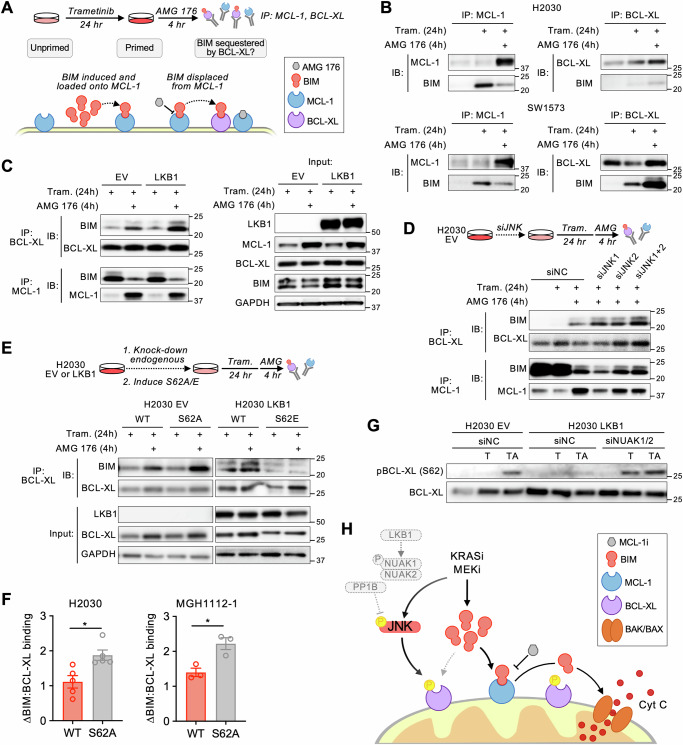
“Co-IP experiments revealed increased BIM bound to MCL-1 and BCL-XL after trametinib treatment (Fig. S10A–C), consistent with prior studies16.”
§ LKB1 regulates JNK-dependent stress signaling and apoptotic dependency of KRAS-mutant lung cancers > Results > JNK phosphorylates BCL-XL to drive an MCL-1 dependent state
What the sources say
- Supportedcites [16] Nangia, V. et al. Exploiting MCL1 dependency with combination MEK + MCL1 inhibitors leads to induction of apoptosis and tumor regression in KRAS-mutant non-small cell lung cancer. Cancer Discov.10.1158/2159-8290.CD-18-0277 (2018). PMC6279543 30254092 source
The Results section reports that trametinib increased BIM binding to MCL-1 in H2030 cells. It also reports BIM accumulation on both BCL-XL and MCL-1 in H1734 cells after trametinib treatment, supporting the citing sentence's reference to prior findings. (LLM, conf=0.92)
plainstates a cause- Asserted: passes — The authors put it forward as true.
- Checkable: passes — It can be checked against evidence.
- Load-bearing: passes — The paper’s conclusions depend on it.
- Based: passes — The paper gives a reason why it holds.
- Supported
The cited sources support only part of this claim — read each source’s verdict below.
In the paper
“Phosphorylation of BCL-XL S62 induces a conformational change in which a dysregulated domain folds into the BCL-XL BH3 binding groove to prevent BIM binding58.”
§ LKB1 regulates JNK-dependent stress signaling and apoptotic dependency of KRAS-mutant lung cancers > Results > JNK phosphorylation alters BIM:BCL-XL interaction
What the sources say
- Partly supportedcites [58] Follis, A. V. et al. Regulation of apoptosis by an intrinsically disordered region of Bcl-xL. Nat. Chem. Biol. 14, 458–465 (2018). 29507390 PMC5899648 sourceExperimental — accuracy not yet measured
The Results sections ‘IDR phosphorylation enhances binding to the folded core’ and ‘IDR modification lowers Bcl-xL’s affinity for BH3 domains’ support a conformational mechanism that reduces BIM BH3 binding. They place the modified intrinsically disordered region at a site adjacent to the BH3 groove, where it hinders groove opening, rather than showing it folding into the groove; BIM binding is reduced, not prevented. (LLM, conf=0.88)
plainstates a cause- Asserted: passes — The authors put it forward as true.
- Checkable: passes — It can be checked against evidence.
- Load-bearing: passes — The paper’s conclusions depend on it.
- Based: passes — The paper gives a reason why it holds.
- Partly supported
The cited sources support only part of this claim — read each source’s verdict below.
In the paper
“Inactivating mutations or loss of STK11/LKB1, which define one of the major genomic sub-groups of KRAS-mutant lung cancers1,19,62, are of particular interest because they are associated with decreased responsiveness to immune checkpoint blockade9,63 and poor overall prognosis64.”
§ LKB1 regulates JNK-dependent stress signaling and apoptotic dependency of KRAS-mutant lung cancers > Discussion
What the sources say
- Partly supportedcites [1] Cancer Genome Atlas Research, N. Comprehensive molecular profiling of lung adenocarcinoma. Nature 511, 543–550 (2014). 25079552 PMC4231481 sourceExperimental — accuracy not yet measured
The Recurrent alterations in key pathways section identifies a major mTOR pattern associated with STK11-inactivating mutations or low STK11 expression. The Molecular subtypes section likewise identifies an LKB1–AMPK-inactive group. These groups are described among lung adenocarcinomas generally, not specifically as major genomic subgroups of KRAS-mutant cancers. (LLM, conf=0.84)
- Supportedcites [19] Skoulidis, F. et al. Co-occurring genomic alterations define major subsets of KRAS-mutant lung adenocarcinoma with distinct biology, immune profiles, and therapeutic vulnerabilities. Cancer Discov. 5, 860–877 (2015). 26069186 PMC4527963 source
The Results section reports that STK11/LKB1 mutations are enriched in the KL subgroup of KRAS-mutant lung adenocarcinoma. It also associates somatic mutations or bi-allelic deletions with subgroup allocation and reports enrichment of LKB1-inactivating events in KL tumors. Page numbers are not provided in our copy. (LLM, conf=0.93)
- Could not verifycites [62] Jordan, E. J. et al. Prospective comprehensive molecular characterization of lung adenocarcinomas for efficient patient matching to approved and emerging therapies. Cancer Discov. 7, 596–609 (2017). 28336552 PMC5482929 sourceExperimental — accuracy not yet measured
The Discussion (page unavailable) identifies STK11 as a tumor suppressor altered in some lung adenocarcinomas, while the Results (page unavailable) discuss KRAS-mutant tumors separately. Searches for STK11/LKB1 co-occurrence with KRAS and KRAS-mutant genomic subgroups found no passage establishing that STK11 inactivation defines a major subgroup. (LLM, conf=0.73)
plainstates an association- Asserted: passes — The authors put it forward as true.
- Checkable: passes — It can be checked against evidence.
- Load-bearing: passes — The paper’s conclusions depend on it.
- Based: passes — The paper gives a reason why it holds.
- Partly supported
Every source the paper cites for this claim was checked and supports it.
In the paper
“we measured the level of several CRTC2/CREB target genes that are repressed by active LBK1-SIK signaling in tumors34, confirming decreased gene expression in isogenic LKB1-expressing xenograft tumors compared to the LKB1-null controls (Fig. S4B).”
§ LKB1 regulates JNK-dependent stress signaling and apoptotic dependency of KRAS-mutant lung cancers > Results > Modulation of LKB1 expression alters apoptotic response
What the sources say
- Supportedcites [34] Gritti, I. et al. DNAJB1-PRKACA fusion drives fibrolamellar liver cancer through impaired SIK signaling and CRTC2/p300-mediated transcriptional reprogramming. Cancer Discov.10.1158/2159-8290.CD-24-0634 (2024). PMC11803398 39326063 source
The Results section on CRTC2/CREB transcriptional reprogramming states that LKB1 activates SIKs, which restrain CRTC2/CREB signaling, and reports reduced CRTC2 target-gene expression when SIK signaling is restored. The isogenic LKB1 xenograft comparison is presented as the citing authors’ own result (Fig. S4B), not as a result attributed to this source. Page numbers are unavailable in our copy. (LLM, conf=0.88)
plainstates a cause- Asserted: passes — The authors put it forward as true.
- Checkable: passes — It can be checked against evidence.
- Load-bearing: unclear — It is unclear whether the paper’s conclusions depend on it.
- Based: passes — The paper gives a reason why it holds.
- Supported
71 more claims · 1 with their cited sources checked
Create a free account to see all 148 claims and to verify the 19 references still open.
- It may state two separate claims as one. 47
- Probably not a substantial claim. 34
- The quote only partly states this claim. 2
Self-check
Percentages, sums and reported differences re-computed from the paper’s own numbers.
Each contradiction between two passages listed here was confirmed by an independent check.
Rated major: it would touch a result — a value a result rests on, reported and recomputed p-values on opposite sides of the significance level, two passages that conflict with no sign which is right, or a cited work retracted before this paper was published.
In the paper
§ LKB1 regulates JNK-dependent stress signaling and apoptotic dependency of KRAS-mutant lung cancers > Results > Modulation of LKB1 expression alters apoptotic response
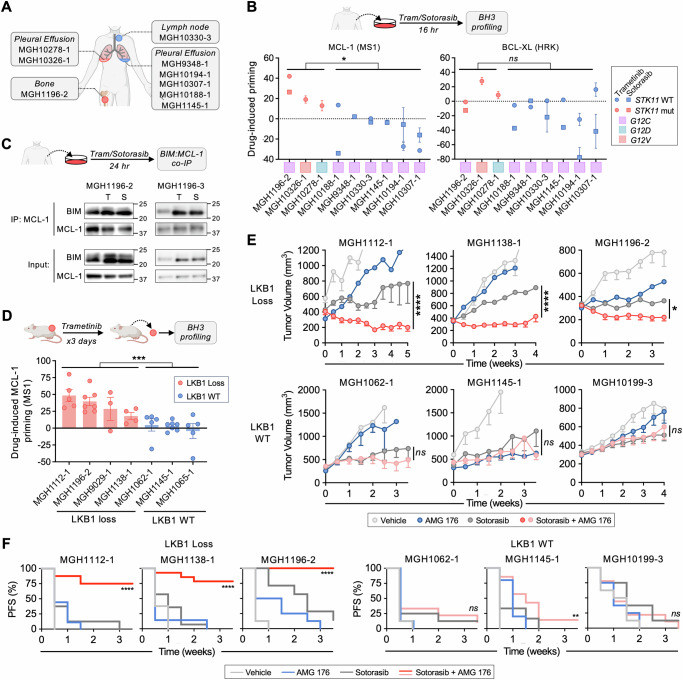
“E Subcutaneous xenograft tumors were established from H2030 EV and H2030 LKB1 cell lines, and mice were treated with vehicle, sotorasib (30 mg/kg daily), trametinib (3 mg/kg daily), AMG 176 (50 mg/kg daily) or combination.”
§ LKB1 regulates JNK-dependent stress signaling and apoptotic dependency of KRAS-mutant lung cancers > Methods > Mouse xenograft studies
“Sotorasib was dissolved in 2% HPMC/0.1% Tween 80 (pH 7) and administered by oral gavage daily at 100 mg/kg, 6 days per week.”
Rated major: it would touch a result — a value a result rests on, reported and recomputed p-values on opposite sides of the significance level, two passages that conflict with no sign which is right, or a cited work retracted before this paper was published.
In the paper
§ LKB1 regulates JNK-dependent stress signaling and apoptotic dependency of KRAS-mutant lung cancers > Results > LKB1-deficient patient and PDX tumors are MCL-1 dependent
“To extend these findings, we performed BH3 profiling on KRAS-mutant (G12C and other) NSCLC patient-derived xenograft (PDX) models with or without co-occurring STK11 loss after short-term treatment with trametinib. Similar to the patient tumors and in vitro cell line models, LKB1-deficient tumors exhibited increased MCL-1-dependent priming compared to WT tumors (Fig. 6D, S12B).”
§ LKB1 regulates JNK-dependent stress signaling and apoptotic dependency of KRAS-mutant lung cancers > Results > LKB1-deficient patient and PDX tumors are MCL-1 dependent
“D Mice bearing KRASG12C-mutant NSCLC patient derived xenograft (PDX) tumors were treated with sotorasib (100 mg/kg) for 3 days and harvested for BH3 profiling.”
Rated minor: it would not touch a result — a value no result rests on, a p-value that stays on the same side of the significance level, or a conflict that is clerical, resolved elsewhere in the paper, or outside its own findings.
In the paper
§ LKB1 regulates JNK-dependent stress signaling and apoptotic dependency of KRAS-mutant lung cancers > Discussion
“Furthermore, we observed that knock-down of LKB1 suppressed drug-induced JNK activation to varying degrees in different cell lines, suggesting that additional context-specific pathways may cooperate to regulate JNK.”
§ LKB1 regulates JNK-dependent stress signaling and apoptotic dependency of KRAS-mutant lung cancers > Results > JNK activation is associated with MCL-1 dependence
“Re-expression of LKB1 suppressed JNK phosphorylation in H2030 cells, and conversely, deletion of LKB1 in H358 cells led to increased phospho-JNK after drug treatment (Fig. 3C, S6A).”
Rated minor: it would not touch a result — a value no result rests on, a p-value that stays on the same side of the significance level, or a conflict that is clerical, resolved elsewhere in the paper, or outside its own findings.
In the paper
§ LKB1 regulates JNK-dependent stress signaling and apoptotic dependency of KRAS-mutant lung cancers > Results > JNK activation is associated with MCL-1 dependence
“expression of a kinase-dead LKB1K781 (kd) mutant25 did not rescue LKB1-deficient cells from combined MEK + MCL-1 inhibition”
§ LKB1 regulates JNK-dependent stress signaling and apoptotic dependency of KRAS-mutant lung cancers > Results > JNK activation is associated with MCL-1 dependence
“but not enriched in H2030 EV versus kinase-dead LKB1K87I cells.”
Rated minor: it would not touch a result — a value no result rests on, a p-value that stays on the same side of the significance level, or a conflict that is clerical, resolved elsewhere in the paper, or outside its own findings.
In the paper
§ LKB1 regulates JNK-dependent stress signaling and apoptotic dependency of KRAS-mutant lung cancers > Results > Modulation of LKB1 expression alters apoptotic response
“H358: **p = 0.007. For Trametinib, H2030: **p = 0.003, H2122: *p = 0.026, H23: **p = 0.002, A549: *p = 0.007”
§ LKB1 regulates JNK-dependent stress signaling and apoptotic dependency of KRAS-mutant lung cancers > Results > Modulation of LKB1 expression alters apoptotic response
“For Sotorasib, H2030: **p = 0.002, H2122: *p = 0.012, MGH1112-1: *p = 0.014, MGH1114-1: *p = 0.037, H358: **p = 0.007.”
1 more finding
Create a free account to see every finding of this check.
Citations
Cites
Eng, J. K., McCormack, A. L., & Yates, J. R. (1994) · Journal of the American Society for Mass Spectrometry · doi:10.1016/1044-0305(94)80016-2 · Cited by 6,484 · cited 1×
“Protein identi fi cation from from MS2 spectra was performed using the SEQUEST algorithm searching across a human data base (uniprot 2014) 92 using a custom analytical pipeline 89 .”
Comprehensive molecular profiling of lung adenocarcinoma
The Cancer Genome Atlas Research Network (2014) · Nature · doi:10.1038/nature13385 · Cited by 5,732
Mutational landscape and significance across 12 major cancer types
Kandoth, C., McLellan, M. D., Vandin, F., Ye, K., Niu, B., Lu, C., Xie, M., Zhang, Q., McMichael, J. F., Wyczalkowski, M. A., et al. (2013) · Nature · doi:10.1038/nature12634 · Cited by 4,419 · cited 1×
“STK11 , which encodes the protein LKB1 (Liver Kinase B1), is inactivated in ~30% of KRAS -mutant lung cancers 18 .”
Elias, J. E., & Gygi, S. P. (2007) · Nature Methods · doi:10.1038/nmeth1019 · Cited by 3,925 · cited 2×
“The search strategy included a target-decoy database-based search to fi lter against a false-discovery rate (FDR) of 1% 91 .”
TSC2 Mediates Cellular Energy Response to Control Cell Growth and Survival
Inoki, K., Zhu, T., & Guan, K.-L. (2003) · Cell · doi:10.1016/s0092-8674(03)00929-2 · Cited by 3,914 · cited 1×
“LKB1 is a master serine/threonine kinase that regulates multiple cellular process including growth 26,35 , cell metabolism 20,21 , and cell polarity 36 – 38 .”
Dérijard, B., Hibi, M., Wu, I.-H., Barrett, T., Su, B., Deng, T., Karin, M., & Davis, R. J. (1994) · Cell · doi:10.1016/0092-8674(94)90380-8 · Cited by 3,188 · cited 1×
“Upon exposure of H2030 EV or LKB1 cells to UV light, a well-established inducer of JNK signaling 43,44 , weobservedanincreaseinphospho-JNKinH2030EVcellsthatpeaked within 60min (Fig.”
Signal integration by JNK and p38 MAPK pathways in cancer development
Wagner, E. F., & Nebreda, Á. R. (2009) · Nature Reviews Cancer · doi:10.1038/nrc2694 · Cited by 2,586 · cited 1×
“As JNKs modulate cell proliferation, differentiation and survival in response a number of different environmental and cellular stressors 42 , we examined whether hyperactivation of JNK signaling in LKB1-de fi cient cells is speci fi c to MAPK inhibition or re fl ects a more general role for regulation…”
The Clinical KRAS(G12C) Inhibitor AMG 510 Drives Anti-Tumour Immunity
Canon, J., Rex, K., Saiki, A. Y., Mohr, C., Cooke, K., Bagal, D., Gaida, K., Holt, T., Knutson, C. G., Koppada, N., et al. (2019) · Nature · doi:10.1038/s41586-019-1694-1 · Cited by 2,277 · cited 1×
“Consistent with prior studies of KRAS G12C inhibitors 2,7,30,31 , we observed varying sensitivity to KRAS G12C inhibition, which in our limited cell line cohort was independent of the most common co-occurring mutations such as TP53 , STK11 /LKB1 and KEAP1 (Fig.”
Self-citationThe LKB1-AMPK pathway: metabolism and growth control in tumour suppression
Shackelford, D. B., & Shaw, R. J. (2009) · Nature Reviews Cancer · doi:10.1038/nrc2676 · Cited by 1,943 · cited 2×
“For instance, LKB1 plays a central role in energy homeostasis by sensing increased intracellular AMP/ATP ratio and phosphorylating AMPK, whichin turn suppresses energy consumptionby inhibiting mTOR and stimulating autophagy 45 .”
Hibi, M., Lin, A., Smeal, T., Minden, A., & Karin, M. (1993) · Genes & Development · doi:10.1101/gad.7.11.2135 · Cited by 1,886 · cited 1×
“Upon exposure of H2030 EV or LKB1 cells to UV light, a well-established inducer of JNK signaling 43,44 , weobservedanincreaseinphospho-JNKinH2030EVcellsthatpeaked within 60min (Fig.”
Sotorasib for Lung Cancers with KRAS p.G12C Mutation
Skoulidis, F., Li, B. T., Dy, G. K., Price, T. J., Falchook, G. S., Wolf, J., Italiano, A., Schuler, M., Borghaei, H., Barlesi, F., et al. (2021) · New England Journal of Medicine · doi:10.1056/nejmoa2103695 · Cited by 1,849 · cited 1×
“For instance, STK11 /LKB1 loss and KEAP1 mutations may contribute to lack of response to different therapies including anti-PD-(L)1 immune checkpoint inhibitors 9,10 and KRAS G12C inhibitors 3,4 .”
Shaw, R. J., Kosmatka, M., Bardeesy, N., Hurley, R. L., Witters, L. A., DePinho, R. A., & Cantley, L. C. (2004) · Proceedings of the National Academy of Sciences · doi:10.1073/pnas.0308061100 · Cited by 1,797
A tissue-specific atlas of mouse protein phosphorylation and expression
Huttlin, E. L., Jedrychowski, M. P., Elias, J. E., Goswami, T., Rad, R., Beausoleil, S. A., Villén, J., Haas, W., Sowa, M. E., & Gygi, S. P. (2010) · Cell · doi:10.1016/j.cell.2010.12.001 · Cited by 1,778 · cited 4×
“Each MS2 spectra was assigned using a SEQUEST-based custom proteomics analytical pipeline 89 allowing phosphorylation of tyrosine, threonine, and serine residues as a variable mod-i fi cation.”
InfluentialSelf-citationSTK11/LKB1 Mutations and PD-1 Inhibitor Resistance in KRAS -Mutant Lung Adenocarcinoma
Skoulidis, F., Goldberg, M. E., Greenawalt, D. M., Hellmann, M. D., Awad, M. M., Gainor, J. F., Schrock, A. B., Hartmaier, R. J., Trabucco, S. E., Gay, L., et al. (2018) · Cancer Discovery · doi:10.1158/2159-8290.cd-18-0099 · Cited by 1,641 · cited 3×
“Inactivating mutations or loss of STK11 / LKB1, which de fi ne one of the major genomic sub-groups of KRAS - mutant lung cancers 1,19,62 , are of particular interest because they are associated with decreased responsiveness to immune checkpoint blockade 9,63 and poor overall prognosis 64 .”
Beausoleil, S. A., Villén, J., Gerber, S. A., Rush, J., & Gygi, S. P. (2006) · Nature Biotechnology · doi:10.1038/nbt1240 · Cited by 1,577 · cited 1×
“Correct assignment of phosphorylation within a peptide sequence was evaluated using the Ascore algorithm 90 .”
Hallin, J., Engstrom, L. D., Hargis, L., Calinisan, A., Aranda, R., Briere, D. M., Sudhakar, N., Bowcut, V., Baer, B. R., Ballard, J. A., et al. (2020) · Cancer Discovery · doi:10.1158/2159-8290.cd-19-1167 · Cited by 1,304 · cited 1×
“Consistent with prior studies of KRAS G12C inhibitors 2,7,30,31 , we observed varying sensitivity to KRAS G12C inhibition, which in our limited cell line cohort was independent of the most common co-occurring mutations such as TP53 , STK11 /LKB1 and KEAP1 (Fig.”
McAlister, G. C., Nusinow, D. P., Jedrychowski, M. P., Wühr, M., Huttlin, E. L., Erickson, B. K., Rad, R., Haas, W., & Gygi, S. P. (2014) · Analytical Chemistry · doi:10.1021/ac502040v · Cited by 1,263 · cited 2×
“MS3 isolation for quanti-fi cation used Simultaneous Precursor Selection (SPS) as described previously 85 – 87 .”
Self-citationTargeting KRAS mutant cancers with a covalent G12C-specific inhibitor
Janes, M. R., Zhang, J., Li, L.-S., Hansen, R., Peters, U., Guo, X., Chen, Y., Babbar, A., Firdaus, S. J., Darjania, L., et al. (2018) · Cell · doi:10.1016/j.cell.2018.01.006 · Cited by 1,172 · cited 1×
“Consistent with prior studies of KRAS G12C inhibitors 2,7,30,31 , we observed varying sensitivity to KRAS G12C inhibition, which in our limited cell line cohort was independent of the most common co-occurring mutations such as TP53 , STK11 /LKB1 and KEAP1 (Fig.”
AMPK regulates NADPH homeostasis to promote tumour cell survival during energy stress
Jeon, S.-M., Chandel, N. S., & Hay, N. (2012) · Nature · doi:10.1038/nature11066 · Cited by 1,132 · cited 2×
“LKB1 is a master serine/threonine kinase that regulates multiple cellular process including growth 26,35 , cell metabolism 20,21 , and cell polarity 36 – 38 .”
The LKB1 tumor suppressor negatively regulates mTOR signaling
Shaw, R. J., Bardeesy, N., Manning, B. D., Lopez, L., Kosmatka, M., DePinho, R. A., & Cantley, L. C. (2004) · Cancer Cell · doi:10.1016/j.ccr.2004.06.007 · Cited by 1,077 · cited 1×
“LKB1 is a master serine/threonine kinase that regulates multiple cellular process including growth 26,35 , cell metabolism 20,21 , and cell polarity 36 – 38 .”
JNK phosphorylation of Bim-related members of the Bcl2 family induces Bax-dependent apoptosis
Lei, K., & Davis, R. J. (2003) · Proceedings of the National Academy of Sciences · doi:10.1073/pnas.0438011100 · Cited by 1,068 · cited 1×
“JNK has been reported to modulate apoptotic signaling by phosphorylating multiple pro-and anti-apoptotic BCL-2 family members, including BIM 73 – 76 , BAX 77 – 79 , BCL-XL 56,57 and MCL-1 53,55,80,81 .”
LKB1 modulates lung cancer differentiation and metastasis
Ji, H., Ramsey, M. R., Hayes, D. N., Fan, C., McNamara, K., Kozlowski, P., Torrice, C., Wu, M. C., Shimamura, T., Perera, S. A., et al. (2007) · Nature · doi:10.1038/nature06030 · Cited by 1,064 · cited 2×
“Beyond its role regulating metabolism via AMPK, LKB1 loss promotes tumorigenesis by reprogramming epigenetic states, facilitating lineage plasticity and promoting metastasis 22,67 – 70 .”
Adagrasib in Non–Small-Cell Lung Cancer Harboring a KRAS G12C Mutation
Jänne, P. A., Riely, G. J., Gadgeel, S. M., Heist, R. S., Ou, S.-H. I., Pacheco, J. M., Johnson, M. L., Sabari, J. K., Leventakos, K., Yau, E., et al. (2022) · New England Journal of Medicine · doi:10.1056/nejmoa2204619 · Cited by 1,061 · cited 1×
“For instance, STK11 /LKB1 loss and KEAP1 mutations may contribute to lack of response to different therapies including anti-PD-(L)1 immune checkpoint inhibitors 9,10 and KRAS G12C inhibitors 3,4 .”
Self-citationThe MCL1 inhibitor S63845 is tolerable and effective in diverse cancer models
Kotschy, A., Szlavik, Z., Murray, J., Davidson, J., Maragno, A. L., Le Toumelin-Braizat, G., Chanrion, M., Kelly, G. L., Gong, J.-N., Moujalled, D. M., et al. (2016) · Nature · doi:10.1038/nature19830 · Cited by 1,047 · cited 1×
“PriorstudieshavedemonstratedthatsensitivityofcancercellstoMCL-1 inhibition is inversely related to BCL-XL expression level and the capacity for BCL-XL to neutralize pro-apoptotic BH3 proteins such as BIM 60,61 .”
MS3 eliminates ratio distortion in isobaric multiplexed quantitative proteomics
Ting, L., Rad, R., Gygi, S. P., & Haas, W. (2011) · Nature Methods · doi:10.1038/nmeth.1714 · Cited by 1,009 · cited 3×
“Only MS3 with a signal-to-noise value of >40 per reporter ion and an isolation speci fi city 86 of >0.75 were considered; normalization using a two-step normalization process was performed as described above.”
InfluentialSelf-citationSkoulidis, F., Byers, L. A., Diao, L., Papadimitrakopoulou, V. A., Tong, P., Izzo, J., Behrens, C., Kadara, H., Parra, E. R., Canales, J. R., et al. (2015) · Cancer Discovery · doi:10.1158/2159-8290.cd-14-1236 · Cited by 936 · cited 2×
“Inactivating mutations or loss of STK11 / LKB1, which de fi ne one of the major genomic sub-groups of KRAS - mutant lung cancers 1,19,62 , are of particular interest because they are associated with decreased responsiveness to immune checkpoint blockade 9,63 and poor overall prognosis 64 .”
Singh, A., Greninger, P., Rhodes, D., Koopman, L., Violette, S., Bardeesy, N., & Settleman, J. (2009) · Cancer Cell · doi:10.1016/j.ccr.2009.03.022 · Cited by 841
Jordan, E. J., Kim, H. R., Arcila, M. E., Barron, D., Chakravarty, D., Gao, J., Chang, M. T., Ni, A., Kundra, R., Jonsson, P., et al. (2017) · Cancer Discovery · doi:10.1158/2159-8290.cd-16-1337 · Cited by 643
The BCL2 Family: Key Mediators of the Apoptotic Response to Targeted Anticancer Therapeutics
Hata, A. N., Engelman, J. A., & Faber, A. C. (2015) · Cancer Discovery · doi:10.1158/2159-8290.cd-15-0011 · Cited by 619 · cited 2×
“Inhibition of MEK/ERK signaling leads to BIM accumulation and increases apoptotic priming in oncogene-driven cancers treated with various targeted therapies, driving cells into an MCL-1 and/or BCL-XL dependent state 15,17 .”
Self-citationPretreatment Mitochondrial Priming Correlates with Clinical Response to Cytotoxic Chemotherapy
Chonghaile, T. N., Sarosiek, K. A., Vo, T.-T., Ryan, J. A., Tammareddi, A., Moore, V. D. G., Deng, J., Anderson, K. C., Richardson, P., Tai, Y.-T., et al. (2011) · Science · doi:10.1126/science.1206727 · Cited by 585
Self-citationJNK promotes Bax translocation to mitochondria through phosphorylation of 14‐3‐3 proteins
Tsuruta, F., Sunayama, J., Mori, Y., Hattori, S., Shimizu, S., Tsujimoto, Y., Yoshioka, K., Masuyama, N., & Gotoh, Y. (2004) · The EMBO Journal · doi:10.1038/sj.emboj.7600194 · Cited by 556
Rapid non-uniform adaptation to conformation-specific KRAS(G12C) inhibition
Xue, J. Y., Zhao, Y., Aronowitz, J., Mai, T. T., Vides, A., Qeriqi, B., Kim, D., Li, C., de Stanchina, E., Mazutis, L., et al. (2020) · Nature · doi:10.1038/s41586-019-1884-x · Cited by 543
Self-citationSvensson, R. U., Parker, S. J., Eichner, L. J., Kolar, M. J., Wallace, M., Brun, S. N., Lombardo, P. S., Van Nostrand, J. L., Hutchins, A., Vera, L., et al. (2016) · Nature Medicine · doi:10.1038/nm.4181 · Cited by 536 · cited 1×
“Here, we demonstrate that LKB1 regulates JNK stress signaling and the apoptotic response of cancer cells independent of its tumor suppressor activity mediated by AMPK 25 – 27 and SIK 28,29 kinases.”
Suppression of STING Associated with LKB1 Loss in KRAS-Driven Lung Cancer
Kitajima, S., Ivanova, E., Guo, S., Yoshida, R., Campisi, M., Sundararaman, S. K., Tange, S., Mitsuishi, Y., Thai, T. C., Masuda, S., et al. (2019) · Cancer Discovery · doi:10.1158/2159-8290.cd-18-0689 · Cited by 526 · cited 1×
“Loss of the tumor suppressor STK11/ LKB1 19 facilitates tumorigenesis by modulating energy balance 20,21 , enhancing metastatic potential 22,23 ,andenablingimmuneevasion 9,24 .”
Lkb1 regulates cell cycle and energy metabolism in haematopoietic stem cells
Nakada, D., Saunders, T. L., & Morrison, S. J. (2010) · Nature · doi:10.1038/nature09571 · Cited by 524
Complete Polarization of Single Intestinal Epithelial Cells upon Activation of LKB1 by STRAD
Baas, A. F., Kuipers, J., van der Wel, N. N., Batlle, E., Koerten, H. K., Peters, P. J., & Clevers, H. C. (2004) · Cell · doi:10.1016/s0092-8674(04)00114-x · Cited by 508 · cited 1×
“LKB1 is a master serine/threonine kinase that regulates multiple cellular process including growth 26,35 , cell metabolism 20,21 , and cell polarity 36 – 38 .”
Vertical Pathway Inhibition Overcomes Adaptive Feedback Resistance to KRASG12C Inhibition
Ryan, M. B., Fece de la Cruz, F., Phat, S., Myers, D. T., Wong, E., Shahzade, H. A., Hong, C. B., & Corcoran, R. B. (2020) · Clinical Cancer Research · doi:10.1158/1078-0432.ccr-19-3523 · Cited by 496
Caenepeel, S., Brown, S. P., Belmontes, B., Moody, G., Keegan, K. S., Chui, D., Whittington, D. A., Huang, X., Poppe, L., Cheng, A. C., et al. (2018) · Cancer Discovery · doi:10.1158/2159-8290.cd-18-0387 · Cited by 432 · cited 2×
“Consistent with the expected effects of on-target MCL-1 inhibition 61 , we observed decreased B cells and monocytes, however no additional effects were observed in combination with sotorasib compared with AMG 176 alone (Fig.”
Self-citationTranslocation of SAPK/JNK to Mitochondria and Interaction with Bcl-xL in Response to DNA Damage
Kharbanda, S., Saxena, S., Yoshida, K., Pandey, P., Kaneki, M., Wang, Q., Cheng, K., Chen, Y.-N., Campbell, A., Sudha, T., et al. (2000) · Journal of Biological Chemistry · doi:10.1074/jbc.275.1.322 · Cited by 429 · cited 1×
“JNK has been reported to modulate apoptotic signaling by phosphorylating multiple pro-and anti-apoptotic BCL-2 family members, including BIM 73 – 76 , BAX 77 – 79 , BCL-XL 56,57 and MCL-1 53,55,80,81 .”
LKB1 and SAD Kinases Define a Pathway Required for the Polarization of Cortical Neurons
Barnes, A. P., Lilley, B. N., Pan, Y. A., Plummer, L. J., Powell, A. W., Raines, A. N., Sanes, J. R., & Polleux, F. (2007) · Cell · doi:10.1016/j.cell.2007.03.025 · Cited by 404 · cited 1×
“LKB1 is a master serine/threonine kinase that regulates multiple cellular process including growth 26,35 , cell metabolism 20,21 , and cell polarity 36 – 38 .”
Ricciuti, B., Arbour, K. C., Lin, J. J., Vajdi, A., Vokes, N., Hong, L., Zhang, J., Tolstorukov, M. Y., Li, Y. Y., Spurr, L. F., et al. (2022) · Journal of Thoracic Oncology · doi:10.1016/j.jtho.2021.10.013 · Cited by 394
Self-citationDrug-Induced Death Signaling Strategy Rapidly Predicts Cancer Response to Chemotherapy
Montero, J., Sarosiek, K. A., DeAngelo, J. D., Maertens, O., Ryan, J., Ercan, D., Piao, H., Horowitz, N. S., Berkowitz, R. S., Matulonis, U., et al. (2015) · Cell · doi:10.1016/j.cell.2015.01.042 · Cited by 378 · cited 1×
“To con fi rm that LKB1 modulates apoptotic priming, we performed BH3 pro fi ling 49 – 51 on isogenic LKB1-de fi cient or WT cell lines before and after treatment with trametinib (Fig.”
Self-citationCorcoran, R. B., Cheng, K. A., Hata, A. N., Faber, A. C., Ebi, H., Coffee, E. M., Greninger, P., Brown, R. D., Godfrey, J. T., Cohoon, T. J., et al. (2013) · Cancer Cell · doi:10.1016/j.ccr.2012.11.007 · Cited by 377 · cited 2×
“Our fi nding that LKB1 regulates the apoptotic dependency of KRAS -mutant lung cancers is unexpected, as genomic features associatedwithsensitivitytoBH3mimeticsinoncogene-addictedsolid tumorshave been elusive 12,16,17 .”
Self-citationCell cycle arrest mediated by the MEK/mitogen-activated protein kinase pathway
Pumiglia, K. M., & Decker, S. J. (1997) · Proceedings of the National Academy of Sciences · doi:10.1073/pnas.94.2.448 · Cited by 356 · cited 1×
“Consistentwiththeknowneffectof MEK inhibition on cell cycle progression 41 , we observed down-regulation of cell cycle associated phospho-signatures including cyclin-dependent kinases, ATM, ATR, Aurora Kinase B, and PLK1 in response to trametinib treatment (Fig.”
LKB1/STRAD Promotes Axon Initiation During Neuronal Polarization
Shelly, M., Cancedda, L., Heilshorn, S., Sumbre, G., & Poo, M.-M. (2007) · Cell · doi:10.1016/j.cell.2007.04.012 · Cited by 354
A Curated Resource for Phosphosite-specific Signature Analysis
Krug, K., Mertins, P., Zhang, B., Hornbeck, P., Raju, R., Ahmad, R., Szucs, M., Mundt, F., Forestier, D., Jane-Valbuena, J., et al. (2019) · Molecular & Cellular Proteomics · doi:10.1074/mcp.tir118.000943 · Cited by 338
Domina, A. M., Vrana, J. A., Gregory, M. A., Hann, S. R., & Craig, R. W. (2004) · Oncogene · doi:10.1038/sj.onc.1207692 · Cited by 327 · cited 1×
“MCL-1 phosphorylation at T163 decreased acutely upon trametinib treatment consistent with a loss of ERK phosphorylation 59 and then rebounded at later time points coinciding with activation of JNK (Fig.”
Differential induction of apoptosis in HER2 and EGFR addicted cancers following PI3K inhibition
Faber, A. C., Li, D., Song, Y., Liang, M.-C., Yeap, B. Y., Bronson, R. T., Lifshits, E., Chen, Z., Maira, S.-M., García-Echeverría, C., et al. (2009) · Proceedings of the National Academy of Sciences · doi:10.1073/pnas.0905056106 · Cited by 319 · cited 1×
“PI3Kinhibitioncaneffectdiversecellularchangesinoncogene-addicted cancers, including mTOR-dependent down-regulation of MCL-1 protein levels 32,33 , which we con fi rmed (Fig.”
Pan, R., Ruvolo, V., Mu, H., Leverson, J. D., Nichols, G., Reed, J. C., Konopleva, M., & Andreeff, M. (2017) · Cancer Cell · doi:10.1016/j.ccell.2017.11.003 · Cited by 300 · cited 1×
“JNK has been reported to modulate apoptotic signaling by phosphorylating multiple pro-and anti-apoptotic BCL-2 family members, including BIM 73 – 76 , BAX 77 – 79 , BCL-XL 56,57 and MCL-1 53,55,80,81 .”
mTORC1 promotes survival through translational control of Mcl-1
Mills, J. R., Hippo, Y., Robert, F., Chen, S. M. H., Malina, A., Lin, C.-J., Trojahn, U., Wendel, H.-G., Charest, A., Bronson, R. T., et al. (2008) · Proceedings of the National Academy of Sciences · doi:10.1073/pnas.0804821105 · Cited by 285 · cited 1×
“To investigate the basis for increased MCL-1 dependent priming in LKB1-de fi cient cells, we examined MCL-1 protein expression levels, as this is highly dependent on cap-dependent translational regulated by mTOR 52 (which is regulated by AMPK).”
KRAS G12C NSCLC Models Are Sensitive to Direct Targeting of KRAS in Combination with PI3K Inhibition
Misale, S., Fatherree, J. P., Cortez, E., Li, C., Bilton, S., Timonina, D., Myers, D. T., Lee, D., Gomez-Caraballo, M., Greenberg, M., et al. (2019) · Clinical Cancer Research · doi:10.1158/1078-0432.ccr-18-0368 · Cited by 259 · cited 1×
“Consistent with prior studies of KRAS G12C inhibitors 2,7,30,31 , we observed varying sensitivity to KRAS G12C inhibition, which in our limited cell line cohort was independent of the most common co-occurring mutations such as TP53 , STK11 /LKB1 and KEAP1 (Fig.”
Self-citationPhosphorylation and Inactivation of Myeloid Cell Leukemia 1 by JNK in Response to Oxidative Stress
Inoshita, S., Takeda, K., Hatai, T., Terada, Y., Sano, M., Hata, J., Umezawa, A., & Ichijo, H. (2002) · Journal of Biological Chemistry · doi:10.1074/jbc.m207951200 · Cited by 233
Multisite Phosphorylation Regulates Bim Stability and Apoptotic Activity
Hübner, A., Barrett, T., Flavell, R. A., & Davis, R. J. (2008) · Molecular Cell · doi:10.1016/j.molcel.2008.03.025 · Cited by 228
Cragg, M. S., Jansen, E. S., Cook, M., Harris, C., Strasser, A., & Scott, C. L. (2008) · Journal of Clinical Investigation · doi:10.1172/jci35437 · Cited by 207 · cited 1×
“Suppression of MEK/ERK signaling leads to the accumulation of the pro-apoptotic BCL-2 family protein BIM, which is critical for inducing apoptosis in response to an array of targeted therapies 14,15 .”
CTLA4 blockade abrogates KEAP1/STK11-related resistance to PD-(L)1 inhibitors
Skoulidis, F., Araujo, H. A., Do, M. T., Qian, Y., Sun, X., Galan-Cobo, A., Le, J. T., Montesion, M., Palmer, R., Jahchan, N., et al. (2024) · Nature · doi:10.1038/s41586-024-07943-7 · Cited by 194 · cited 1×
“For instance, STK11 /LKB1 loss and KEAP1 mutations may contribute to lack of response to different therapies including anti-PD-(L)1 immune checkpoint inhibitors 9,10 and KRAS G12C inhibitors 3,4 .”
New Roles for the LKB1-NUAK Pathway in Controlling Myosin Phosphatase Complexes and Cell Adhesion
Zagórska, A., Deak, M., Campbell, D. G., Banerjee, S., Hirano, M., Aizawa, S., Prescott, A. R., & Alessi, D. R. (2010) · Science Signaling · doi:10.1126/scisignal.2000616 · Cited by 193 · cited 4×
“Figure 3K: The samples derive from the same experiment but different gels for PP1B and I-2.”
InfluentialUnleashing the power of inhibitors of oncogenic kinases through BH3 mimetics
Cragg, M. S., Harris, C., Strasser, A., & Scott, C. L. (2009) · Nature Reviews Cancer · doi:10.1038/nrc2615 · Cited by 185 · cited 3×
“Inhibition of MEK/ERK signaling leads to BIM accumulation and increases apoptotic priming in oncogene-driven cancers treated with various targeted therapies, driving cells into an MCL-1 and/or BCL-XL dependent state 15,17 .”
R2‐P2 rapid‐robotic phosphoproteomics enables multidimensional cell signaling studies
Leutert, M., Rodríguez‐Mias, R. A., Fukuda, N. K., & Villén, J. (2019) · Molecular Systems Biology · doi:10.15252/msb.20199021 · Cited by 184 · cited 1×
“Phopho-peptide enrichment was performed as described previously 39,82,83 .”
KRAS G12C inhibition produces a driver-limited state revealing collateral dependencies
Lou, K., Steri, V., Ge, A. Y., Hwang, Y. C., Yogodzinski, C. H., Shkedi, A. R., Choi, A. L. M., Mitchell, D. C., Swaney, D. L., Hann, B., et al. (2019) · Science Signaling · doi:10.1126/scisignal.aaw9450 · Cited by 175
Li, F., Han, X., Li, F., Wang, R., Wang, H., Gao, Y., Wang, X., Fang, Z., Zhang, W., Yao, S., et al. (2015) · Cancer Cell · doi:10.1016/j.ccell.2015.04.001 · Cited by 169 · cited 1×
“Beyond its role regulating metabolism via AMPK, LKB1 loss promotes tumorigenesis by reprogramming epigenetic states, facilitating lineage plasticity and promoting metastasis 22,67 – 70 .”
The AMPK-Related Kinases SIK1 and SIK3 Mediate Key Tumor-Suppressive Effects of LKB1 in NSCLC
Hollstein, P. E., Eichner, L. J., Brun, S. N., Kamireddy, A., Svensson, R. U., Vera, L. I., Ross, D. S., Rymoff, T. J., Hutchins, A., Galvez, H. M., et al. (2019) · Cancer Discovery · doi:10.1158/2159-8290.cd-18-1261 · Cited by 168 · cited 3×
“Recently, the AMPK-related SIK kinases have beenshowntoplayamajorroleinmediatingthesuppressiveeffectsof LKB1 on tumorigenesis and metastatic potential in models of KRAS - mutant NSCLC 28,29 .”
Erickson, B. K., Jedrychowski, M. P., McAlister, G. C., Everley, R. A., Kunz, R., & Gygi, S. P. (2015) · Analytical Chemistry · doi:10.1021/ac503934f · Cited by 159 · cited 2×
“MS3 isolation for quanti-fi cation used Simultaneous Precursor Selection (SPS) as described previously 85 – 87 .”
Mcl-1 Integrates the Opposing Actions of Signaling Pathways That Mediate Survival and Apoptosis
Morel, C., Carlson, S. M., White, F. M., & Davis, R. J. (2009) · Molecular and Cellular Biology · doi:10.1128/mcb.00279-09 · Cited by 143 · cited 2×
“JNK has been reported to modulate apoptotic signaling by phosphorylating multiple pro-and anti-apoptotic BCL-2 family members, including BIM 73 – 76 , BAX 77 – 79 , BCL-XL 56,57 and MCL-1 53,55,80,81 .”
LKB1/STK11 Inactivation Leads to Expansion of a Prometastatic Tumor Subpopulation in Melanoma
Liu, W., Monahan, K. B., Pfefferle, A. D., Shimamura, T., Sorrentino, J., Chan, K. T., Roadcap, D. W., Ollila, D. W., Thomas, N. E., Castrillon, D. H., et al. (2012) · Cancer Cell · doi:10.1016/j.ccr.2012.03.048 · Cited by 127 · cited 1×
“Loss of the tumor suppressor STK11/ LKB1 19 facilitates tumorigenesis by modulating energy balance 20,21 , enhancing metastatic potential 22,23 ,andenablingimmuneevasion 9,24 .”
Lkb1 inactivation drives lung cancer lineage switching governed by Polycomb Repressive Complex 2
Zhang, H., Fillmore Brainson, C., Koyama, S., Redig, A. J., Chen, T., Li, S., Gupta, M., Garcia-de-Alba, C., Paschini, M., Herter-Sprie, G. S., et al. (2017) · Nature Communications · doi:10.1038/ncomms14922 · Cited by 127
Mazumder, S., Choudhary, G. S., Al-harbi, S., & Almasan, A. (2012) · Cancer Research · doi:10.1158/0008-5472.can-11-4106 · Cited by 126 · cited 1×
“JNK has been reported to modulate apoptotic signaling by phosphorylating multiple pro-and anti-apoptotic BCL-2 family members, including BIM 73 – 76 , BAX 77 – 79 , BCL-XL 56,57 and MCL-1 53,55,80,81 .”
Faber, A. C., Coffee, E. M., Costa, C., Dastur, A., Ebi, H., Hata, A. N., Yeo, A. T., Edelman, E. J., Song, Y., Tam, A. T., et al. (2014) · Cancer Discovery · doi:10.1158/2159-8290.cd-13-0315 · Cited by 124
Self-citationCorazza, N., Jakob, S., Schaer, C., Frese, S., Keogh, A., Stroka, D., Kassahn, D., Torgler, R., Mueller, C., Schneider, P., et al. (2006) · Journal of Clinical Investigation · doi:10.1172/jci27726 · Cited by 123
Characterization of the c-Jun N-Terminal Kinase-BimELSignaling Pathway in Neuronal Apoptosis
Becker, E. B. E., Howell, J., Kodama, Y., Barker, P. A., & Bonni, A. (2004) · The Journal of Neuroscience · doi:10.1523/jneurosci.2953-04.2004 · Cited by 116
Regulation of ploidy and senescence by the AMPK‐related kinase NUAK1
Humbert, N., Navaratnam, N., Augert, A., Da Costa, M., Martien, S., Wang, J., Martinez, D., Abbadie, C., Carling, D., de Launoit, Y., et al. (2010) · The EMBO Journal · doi:10.1038/emboj.2009.342 · Cited by 115 · cited 1×
“NUAKs regulate cell polarity 46 , ploidy 47 , and adhesion 48 through phosphorylation of the myosin phosphatase targeting-1-protein phosphatase-1beta (PP1B) complex.”
An LKB1–SIK Axis Suppresses Lung Tumor Growth and Controls Differentiation
Murray, C. W., Brady, J. J., Tsai, M. K., Li, C., Winters, I. P., Tang, R., Andrejka, L., Ma, R. K., Kunder, C. A., Chu, P., et al. (2019) · Cancer Discovery · doi:10.1158/2159-8290.cd-18-1237 · Cited by 111 · cited 4×
“Recently, the AMPK-related SIK kinases have beenshowntoplayamajorroleinmediatingthesuppressiveeffectsof LKB1 on tumorigenesis and metastatic potential in models of KRAS - mutant NSCLC 28,29 .”
InfluentialSelf-citationVan Nostrand, J. L., Hellberg, K., Luo, E.-C., Van Nostrand, E. L., Dayn, A., Yu, J., Shokhirev, M. N., Dayn, Y., Yeo, G. W., & Shaw, R. J. (2020) · Genes & Development · doi:10.1101/gad.339895.120 · Cited by 111 · cited 1×
“In settings of energy stress (high AMP:ATPratio),AMPKlimitsanabolicprocessesby inhibitingmTORC1 through TSC2 66 .”
PARK, G. B., CHOI, Y., KIM, Y. S., LEE, H.-K., KIM, D., & HUR, D. Y. (2014) · International Journal of Oncology · doi:10.3892/ijo.2014.2252 · Cited by 96
Nangia, V., Siddiqui, F. M., Caenepeel, S., Timonina, D., Bilton, S. J., Phan, N., Gomez-Caraballo, M., Archibald, H. L., Li, C., Fraser, C., et al. (2018) · Cancer Discovery · doi:10.1158/2159-8290.cd-18-0277 · Cited by 94 · cited 4×
“To further investigate the role of MCL-1 in a larger cohort of KRAS -mutant NSCLC cell lines that included KRAS mutations other than G12C, we tested the MEK inhibitor trametinib in combination with AMG 176 (or the related compound AM-8621 16 ).”
InfluentialSelf-citationEdwards, A., & Haas, W. (2015) · Methods in molecular biology · doi:10.1007/978-1-4939-3341-9_1 · Cited by 90 · cited 2×
“Phospho-peptides labeling was performed with TMT10plex reagents (Thermo Fisher Scienti fi c), then samples were pooled and fractionated by basic pH reversed phase chromatography into 24 fractions as previously described 84 .”
Self-citationBH3 Profiling: A Functional Assay to Measure Apoptotic Priming and Dependencies
Fraser, C. S., Ryan, J. A., & Sarosiek, K. A. (2018) · Methods in molecular biology · doi:10.1007/978-1-4939-8861-7_4 · Cited by 88 · cited 1×
“To con fi rm that LKB1 modulates apoptotic priming, we performed BH3 pro fi ling 49 – 51 on isogenic LKB1-de fi cient or WT cell lines before and after treatment with trametinib (Fig.”
Self-citationControlling the master—upstream regulation of the tumor suppressor LKB1
Kullmann, L., & Krahn, M. P. (2018) · Oncogene · doi:10.1038/s41388-018-0145-z · Cited by 75 · cited 1×
“LKB1 is a master kinase that regulates diverse cellular processes via phosphorylation of multiple members of AMPK family kinases 45,65 .”
Hata, A. N., Yeo, A., Faber, A. C., Lifshits, E., Chen, Z., Cheng, K. A., Walton, Z., Sarosiek, K. A., Letai, A., Heist, R. S., et al. (2014) · Cancer Research · doi:10.1158/0008-5472.can-13-3728 · Cited by 74
Self-citationTong, J., Zheng, X., Tan, X., Fletcher, R., Nikolovska‐Coleska, Z., Yu, J., & Zhang, L. (2018) · Cancer Research · doi:10.1158/0008-5472.can-18-0399 · Cited by 68 · cited 1×
“JNK has been reported to modulate apoptotic signaling by phosphorylating multiple pro-and anti-apoptotic BCL-2 family members, including BIM 73 – 76 , BAX 77 – 79 , BCL-XL 56,57 and MCL-1 53,55,80,81 .”
LKB1 regulates polarity remodeling and adherens junction formation in the Drosophila eye
Amin, N., Khan, A., St. Johnston, D., Tomlinson, I., Martin, S., Brenman, J., & McNeill, H. (2009) · Proceedings of the National Academy of Sciences · doi:10.1073/pnas.0812469106 · Cited by 66 · cited 2×
“NUAK kinases have been shown to regulate cellular polarity, adhesion, and cell cycle in normal tissues 46,48,71 and to play a critical role in neurite formation 72 .”
LKB1 inactivation modulates chromatin accessibility to drive metastatic progression
Pierce, S. E., Granja, J. M., Corces, M. R., Brady, J. J., Tsai, M. K., Pierce, A. B., Tang, R., Chu, P., Feldser, D. M., Chang, H. Y., et al. (2021) · Nature Cell Biology · doi:10.1038/s41556-021-00728-4 · Cited by 59
Regulation of apoptosis by an intrinsically disordered region of Bcl-xL
Follis, A. V., Llambi, F., Kalkavan, H., Yao, Y., Phillips, A. H., Park, C.-G., Marassi, F. M., Green, D. R., & Kriwacki, R. W. (2018) · Nature Chemical Biology · doi:10.1038/s41589-018-0011-x · Cited by 47 · cited 2×
“Phosphorylation of BCL-XL S62 induces a conformational change in which a dysregulated domain folds into the BCL-XL BH3 binding groove to prevent BIM binding 58 .”
Robitaille, K., Daviau, A., Lachance, G., Couture, J.-P., & Blouin, R. (2008) · Cell Death & Differentiation · doi:10.1038/cdd.2008.77 · Cited by 47 · cited 1×
“JNK has been reported to modulate apoptotic signaling by phosphorylating multiple pro-and anti-apoptotic BCL-2 family members, including BIM 73 – 76 , BAX 77 – 79 , BCL-XL 56,57 and MCL-1 53,55,80,81 .”
Clinical impact of STK11 mutation in advanced-stage non-small cell lung cancer
Rosellini, P., Amintas, S., Caumont, C., Veillon, R., Galland-Girodet, S., Cuguillière, A., Nguyen, L., Domblides, C., Gouverneur, A., Merlio, J.-P., et al. (2022) · European Journal of Cancer · doi:10.1016/j.ejca.2022.05.026 · Cited by 44
El Fajoui, Z., Toscano, F., Jacquemin, G., Abello, J., Scoazec, J., Micheau, O., & Saurin, J. (2011) · Gastroenterology · doi:10.1053/j.gastro.2011.04.055 · Cited by 37 · cited 1×
“JNK has been reported to modulate apoptotic signaling by phosphorylating multiple pro-and anti-apoptotic BCL-2 family members, including BIM 73 – 76 , BAX 77 – 79 , BCL-XL 56,57 and MCL-1 53,55,80,81 .”
Lyons, J., Brubaker, D. K., Ghazi, P. C., Baldwin, K. R., Edwards, A., Boukhali, M., Strasser, S. D., Suarez-Lopez, L., Lin, Y.-J., Yajnik, V., et al. (2018) · Science Signaling · doi:10.1126/scisignal.aan3580 · Cited by 36 · cited 1×
“For each peptide, two MS2 spectra were acquired using CID and HCD fragmentation 88 .”
Self-citationder Borght, K. V., Tourny, A., Bagdziunas, R., Thas, O., Nazarov, M., Turner, H., Verbist, B. M. P., & Ceulemans, H. (2017) · Scientific Reports · doi:10.1038/s41598-017-18068-5 · Cited by 33
Banerjee, S., Zagórska, A., Deak, M., Campbell, D. G., Prescott, A. R., & Alessi, D. R. (2014) · Biochemical Journal · doi:10.1042/bj20140408 · Cited by 32 · cited 1×
“NUAK kinases have been shown to regulate cellular polarity, adhesion, and cell cycle in normal tissues 46,48,71 and to play a critical role in neurite formation 72 .”
Blazejewski, S. M., Bennison, S. A., Liu, X., & Toyo-oka, K. (2021) · Scientific Reports · doi:10.1038/s41598-021-87521-3 · Cited by 27 · cited 1×
“NUAK kinases have been shown to regulate cellular polarity, adhesion, and cell cycle in normal tissues 46,48,71 and to play a critical role in neurite formation 72 .”
LKB1 drives stasis and C/EBP-mediated reprogramming to an alveolar type II fate in lung cancer
Murray, C. W., Brady, J. J., Han, M., Cai, H., Tsai, M. K., Pierce, S. E., Cheng, R., Demeter, J., Feldser, D. M., Jackson, P. K., et al. (2022) · Nature Communications · doi:10.1038/s41467-022-28619-8 · Cited by 22 · cited 1×
“Beyond its role regulating metabolism via AMPK, LKB1 loss promotes tumorigenesis by reprogramming epigenetic states, facilitating lineage plasticity and promoting metastasis 22,67 – 70 .”
Multiplexed quantitative phosphoproteomics of cell line and tissue samples
Kreuzer, J., Edwards, A., & Haas, W. (2019) · Methods in enzymology on CD-ROM/Methods in enzymology · doi:10.1016/bs.mie.2019.07.027 · Cited by 20 · cited 2×
“To identify differences in kinase signaling in KRAS - mutant NSCLC cells with or without LKB1, we performed mass spectrometry-based global phosphoproteome pro fi ling 39 of isogenic H2030 (EV, LKB1 and LKB1-kd) and H358 (KO GFP, KO LKB1) cells before and after treatment with trametinib (Fig.”
Self-citationGritti, I., Wan, J., Weeresekara, V., Vaz, J. M., Tarantino, G., Bryde, T. H., Vijay, V., Kammula, A. V., Kattel, P., Zhu, S., et al. (2025) · Cancer Discovery · doi:10.1158/2159-8290.cd-24-0634 · Cited by 20 · cited 1×
“Additionally, we measured the level of several CRTC2/CREB target genes that are repressed by active LBK1-SIK signaling in tumors 34 , con fi rming decreased gene expression in isogenic LKB1-expressing xenograft tumors compared to the LKB1-null controls (Fig.”
Fe3+-NTA magnetic beads as an alternative to spin column-based phosphopeptide enrichment
Liu, X., Rossio, V., Thakurta, S. G., Flora, A., Foster, L., Bomgarden, R. D., Gygi, S. P., & Paulo, J. A. (2022) · Journal of Proteomics · doi:10.1016/j.jprot.2022.104561 · Cited by 17 · cited 1×
“Phopho-peptide enrichment was performed as described previously 39,82,83 .”
Cited by
Precision immune regulation in KRAS-mutated cancers: the final piece of the puzzle?
Fu, S., Ma, J., Cai, C., Tan, J., Deng, X., Shen, H., Zeng, S., Chen, Y., & Han, Y. (2025) · Journal of Experimental & Clinical Cancer Research · doi:10.1186/s13046-025-03444-1 · Cited by 14
Deciphering the critical roles of the AMPK/mTOR signaling pathway in cancer cell metabolism (Review)
Alasadi, A., Fadhil, N. M., & Chen, S. (2025) · World Academy of Sciences Journal · doi:10.3892/wasj.2025.391 · Cited by 10
“In addition, lung adenocarcinoma presents a special model for acknowledging the dual roles of AMPK due to the high mutation rate pf LKB1, the main upstream signaling kinase that controls the activation of AMPK (185).”
M1C is a druggable target for NSCLC KRAS G12C mutant tumors resistant to KRAS inhibitors
Takamori, S., Haratake, N., Bhattacharya, A., Ozawa, H., Shigeta, K., Onishi, M., Nonaka, K., Komiya, T., Komatsuda, H., Takenaka, T., et al. (2026) · Oncogene · doi:10.1038/s41388-026-03934-2 · Cited by 1
“In extending these results with patient-derived cells, we found that M1C ADC treatment of MGH1138 cells is effective in suppressing clonogenic survival (Fig.”
Self-citationSmall-molecule activation of the tumor suppressor kinase LKB1 via the pseudokinase STRAD
Song, L., Mitchell, D. C., Liu, J., Leak, L. B., Turnham, R. E., Wang, L., Wang, Z., He, C., Ding, L., Adler, M., et al. (2026) · Cell chemical biology · doi:10.1016/j.chembiol.2026.07.013 · Cited by 5
Parker, K., Ghorbanpoor, S., Malik, W., Highfield, L., Wang, J., Hensley, E., Kelley, G., Clark, S., Ranieri, M., Sahu, S., et al. (2026) · bioRxiv (Cold Spring Harbor Laboratory) · doi:10.64898/2026.04.27.718135 · Cited by 1
“Patient-derived cell lines (MGH1062-1, MGH1088-1, MGH1112-1, MGH1114-1, MGH1138-1, and MGH1143-2) were established in our laboratory from core biopsy or pleural effusion samples as previously described 26,41 .”
Self-citation
Metadata
- Authors
- Li, C., Syed, M. U., Nimbalkar, A., Shen, Y., Vieira, M. D., Fraser, C., Inde, Z., Qin, X., Ouyang, J., Kreuzer, J., Clark, S. E., Kelley, G., Hensley, E. M., Morris, R., Lazaro, R., Belmonte, B., Oh, A., Walcott, M., Nabel, C. S., Caenepeel, S., Saiki, A. Y., Rex, K., Lipford, J. R., Heist, R. S., Lin, J. J., Haas, W., Sarosiek, K., Hughes, P. E., & Hata, A. N.
- Affiliations
- Harvard University (US)
- Massachusetts General Hospital (US)
- Medical University of South Carolina (US)
- Amgen (United States) (US)
- Corresponding author
- Hata, Aaron N.
- ORCID
- Li, Chendi
- Syed, Mohammed Usman
- Shen, Yi
- Fraser, Cameron
- Inde, Zintis
- Qin, Xingping
- Kreuzer, Johannes
- Clark, Sarah E.
- Hensley, Emily M.
- Morris, Robert
- Lazaro, Raul
- Nabel, Christopher S.
- Caenepeel, Sean
- Saiki, Anne Y.
- Rex, Karen
- Heist, Rebecca S.
- Lin, Jessica J.
- Haas, Wilhelm
- Sarosiek, Kristopher
- Hughes, Paul E.
- Hata, Aaron N.
- Venue
- Nature Communications
- Published
- 2025-05-02
- Volume
- 16
- Issue
- 1
- Pages
- 4112-4112
- ISSN
- 2041-1723 (ISSN-L)
- PMC
- PMC12048556
- OpenAlex
- W4410029176
- Semantic Scholar
- bf2c3e6d83c73945c2d989e1de8ebaf7c9161808
- Cited by
- 11
- References
- 93
- Citations by year
- 2026: 8 · 2025: 3
- FWCI
- 3.28
- Type
- journal article
- Language
- en
- Open access
- gold
- doi.org
- Licence
- cc-by
- creativecommons.org/licenses/by/4.0 (tdm)
- creativecommons.org/licenses/by/4.0 (vor)
- Locations
- Nature Communications (publishedVersion, cc-by)
- Research Square (acceptedVersion, cc-by)
- PubMed Central (publishedVersion, cc-by)
- PubMed (publishedVersion)
- RePEc: Research Papers in Economics (submittedVersion)
- DOAJ (DOAJ: Directory of Open Access Journals) (submittedVersion, cc-by-sa)
- Funders
- American Association for Cancer Research (SU2C-AACR-DT17-15)
- Conquer Cancer Foundation
- Amgen
- American Society of Clinical Oncology
- Entertainment Industry Foundation
- Massachusetts Institute of Technology
- National Institutes of Health
- Stand Up To Cancer (SU2CAACR- DT17-15)
- Ludwig Center at Harvard
- National Heart, Lung, and Blood Institute (T32HL007118)
- National Cancer Institute (F32CA250231, P50CA265826)
- Topics
- Life Sciences › Biochemistry, Genetics and Molecular Biology › Molecular Biology › Protein Kinase Regulation and GTPase Signaling
- Health Sciences › Medicine › Pulmonary and Respiratory Medicine › Lung Cancer Treatments and Mutations
- Life Sciences › Biochemistry, Genetics and Molecular Biology › Molecular Biology › Cell death mechanisms and regulation
- Keywords
- LKB1, STK11, KRAS-mutant lung cancer, JNK signaling, stress signaling, apoptosis, Bcl-xL, Mcl-1, MEK inhibition, KRAS-targeted therapy, mitochondrial apoptosis
- MeSH terms
- AMP-Activated Protein Kinase Kinases, Animals, Humans, Lung Neoplasms, Mutation, Phosphorylation, Signal Transduction, Proto-Oncogene Proteins p21(ras), Apoptosis, Protein Serine-Threonine Kinases, MAP Kinase Signaling System, Cell Line, Tumor, bcl-X Protein, Mice, AMP-Activated Protein Kinases, Myeloid Cell Leukemia Sequence 1 Protein
About these checks
Registry, retraction, Cites and statistics results are computed, not judged, with one exception: a printed reference that no index lists is read once by a model before it counts as a citation error. Claims are extracted by a model and kept only when their quote appears verbatim in the text; each cited source is then checked, with a model’s help, for whether it says what the claim relies on. Those verdicts can be wrong — read the claim’s quote and the cited source before relying on one.
The claim verdicts this report counts are experimental: their accuracy is not yet measured.
A language model drew the claims from the paper on 2026-10-10, under version 3 of the claim definition (model deepseek-v4.1-flash, prompt extract-v3).
A second model labelled each claim on 2026-10-10 (model jev-1.13-20260917, definition revision gold-guideline-v0.2).
Cited sources are checked with a language model’s help (gpt-6-sol).
Statistics and arithmetic are recomputed, not judged.
Confidence bands are shown only for fields calibrated on our annotated test set. None is calibrated yet, so no band is shown.
What counts as a claim ›How we measure confidence ›How we check this ›
Are you an author, or do you see a problem with this page? Request a review
Data sources
Bibliographic data: Semantic Scholar, OpenAlex, Crossref.
Contains information from the Semantic Scholar Academic Graph Datasets, made available under the ODC Attribution License (ODC-BY 1.0).
Semantic Scholar’s data is described in: Kinney, R., et al. (2023). The Semantic Scholar Open Data Platform. arXiv:2301.10140.
