

Developmental emergence of sparse and structured synaptic connectivity in the hippocampal CA3 memory circuit
Open accessThe DOI matches its Crossref record; 85 of the 85 references it cites were found in a registry or an index; 1 of the 48 sources its claims cite were checked for support.
Abstract
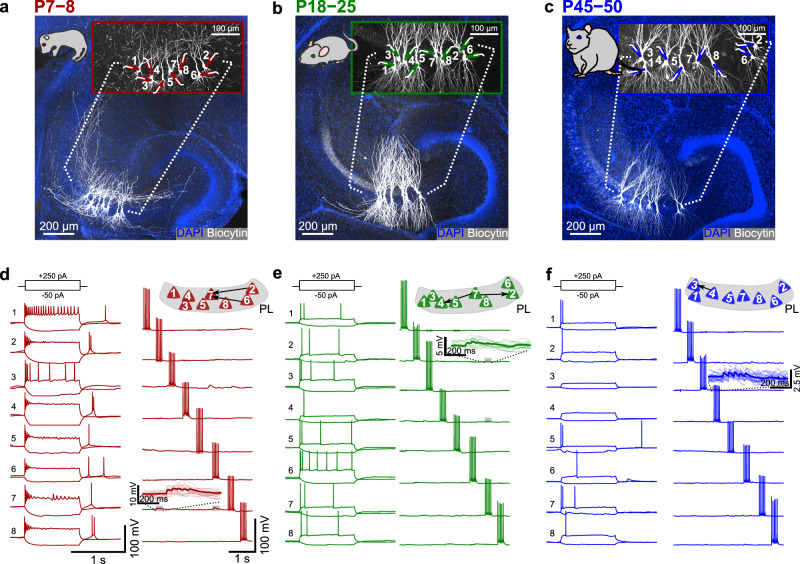
Hippocampal CA3 pyramidal neurons (PNs) form the largest autoassociative network in the mammalian brain. Whether CA3–CA3 recurrent connectivity is genetically preconfigured or environmentally shaped during ongoing memory storage is currently unknown. To address this question, we performed multicellular patch-clamp-based circuit mapping of up to eight CA3 PNs in the mouse hippocampus at multiple postnatal time points (P7–8, P18–25, and P45–50). Here, we show that the hippocampal CA3 network undergoes a developmental transformation from local, dense, and random connectivity to a distributed, sparse, and structured configuration. Thus, sparse and structured connectivity may emerge via experience-dependent mechanisms. In parallel, the strength of single synapses is downregulated; single synaptic events are sufficient to trigger postsynaptic spiking early in development, whereas spatial summation of several inputs is required at later time points. Biologically inspired models of memory storage by Hebbian synaptic plasticity and retrieval via pattern completion suggest that developmental changes improve specific aspects of memory storage and retrieval. Our results imply a developmental transformation of the neuronal code and the memory functions in the hippocampal CA3 network.
Overview
CoChat Summary
## TL;DR
This study tracked mouse hippocampal CA3 pyramidal-cell connectivity from early postnatal life to maturity and found that the recurrent network becomes sparser, more structured, and less locally connected with age. The authors argue that pruning-like axonal remodeling and a shift from near-detonating to integrating synaptic transmission optimize CA3 memory capacity.
## Key findings
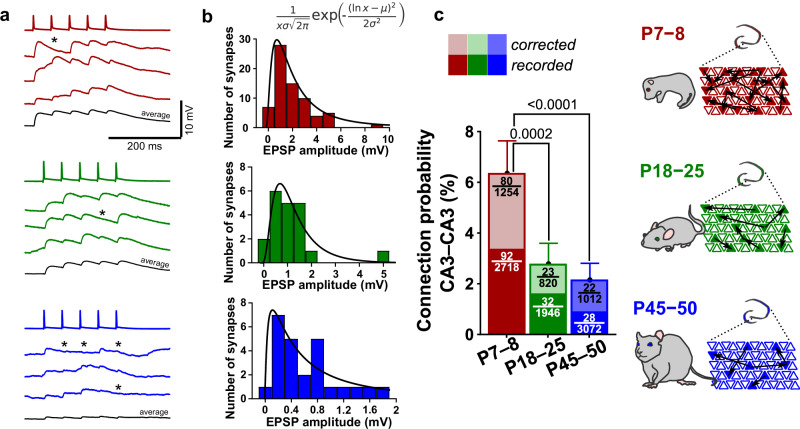
- Measured CA3–CA3 connection probability declined from 3.38 ± 1.12% at P7–8 to 1.64 ± 0.63% at P18–25 and 0.91 ± 0.58% at P45–50; corrected connection probability was 6.37 ± 1.28%, 2.8 ± 0.81%, and 2.17 ± 0.65%, respectively.
- The network shifted from local to more distributed connectivity with development: distance-dependent connectivity was apparent in early postnatal CA3 (within 0–375 µm) but became more constant at later ages.
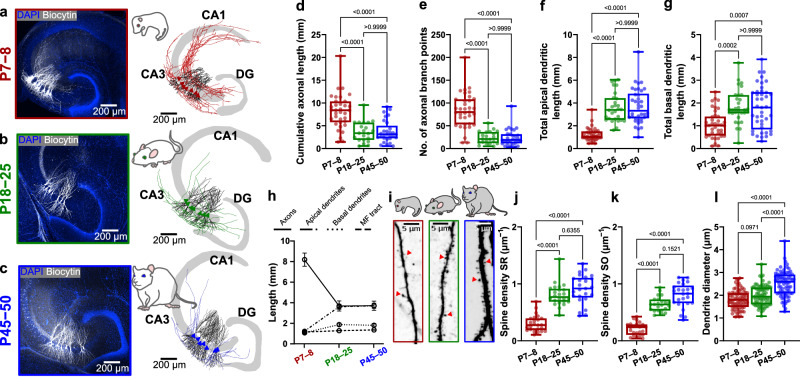
- Axonal morphology showed developmental pruning: cumulative axonal length and branch points decreased with age, while dendritic length increased and spine density rose during postnatal development.
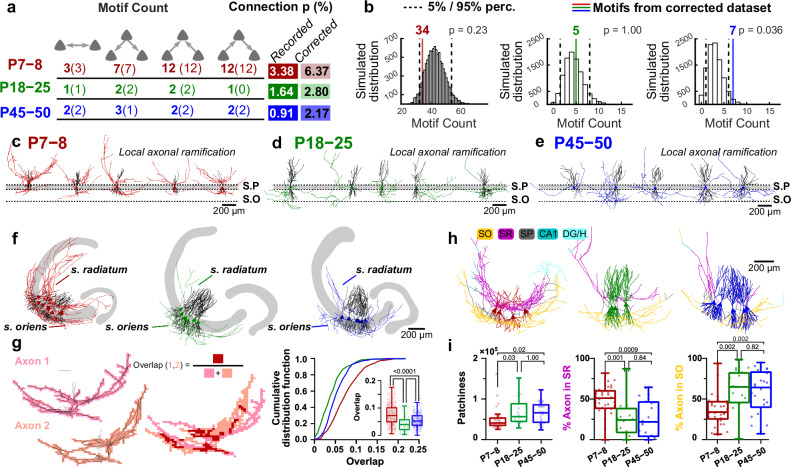
- Non-random disynaptic motifs were not enriched at P7–8 or P18–25, but were overabundant in the mature network (P45–50, p = 0.03 vs chance), indicating emergence of structured connectivity.
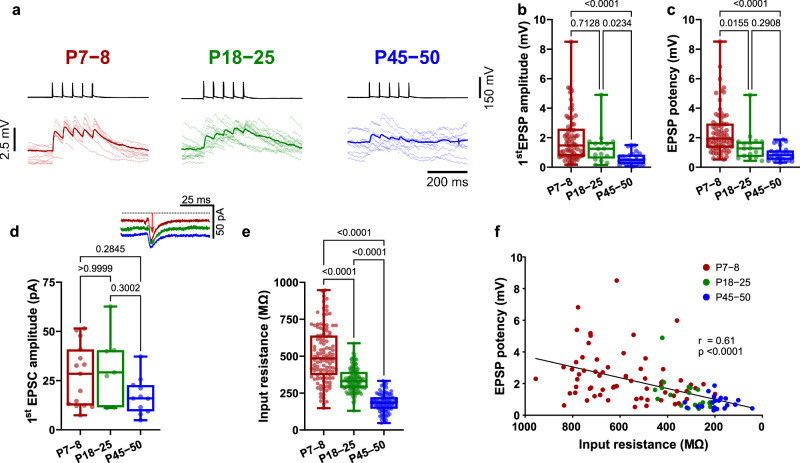
- Unit EPSP peak amplitude and potency were highest at P7–8 and declined with age; input resistance also decreased, with synaptic potency correlating with input resistance (Spearman r = 0.61, p < 0.0001).
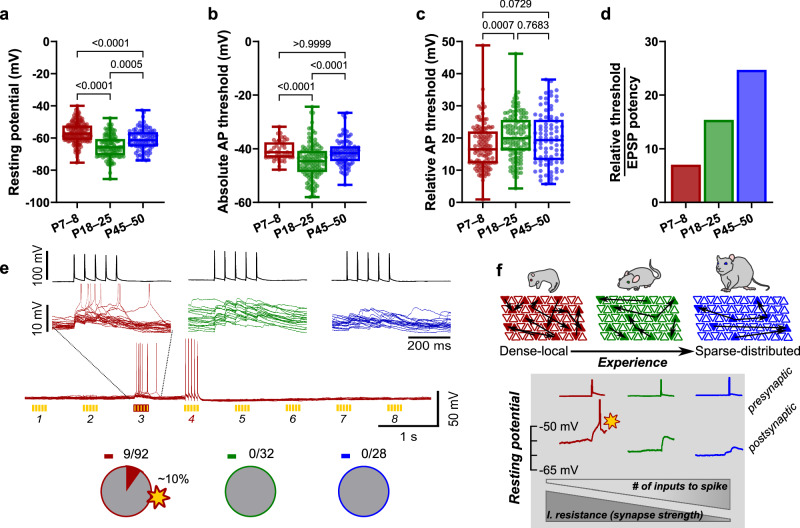
- The estimated number of unitary synaptic events needed to reach AP threshold increased from about 7 to 15 to 25 across development, and in the immature network ~10% of tested pairs showed postsynaptic firing during 5-pulse 20 Hz stimulation, whereas this was 0/32 at P18–25 and 0/28 at P45–50.
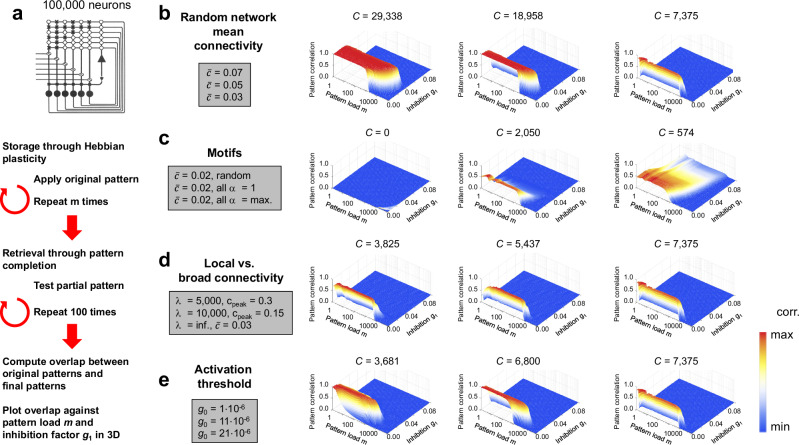
- In the CA3 network model, sparse/broad and motif-enriched connectivity improved memory retrieval; changing synaptic activation threshold from one to two or three synapses required for spiking increased memory capacity by almost a factor of two.
## Methods
- The study used simultaneous octuple patch-clamp recordings from mouse CA3 pyramidal neurons in acute hippocampal slices at P7–8, P18–25, and P45–50.
- Across ages, the authors tested 7736 possible CA3–CA3 connections and combined electrophysiology with biocytin labeling, confocal/widefield reconstruction, and morphological analyses of axons, dendrites, spines, and subregion-specific axonal distribution.
- They analyzed developmental changes with Fisher’s exact test, Kruskal-Wallis/Dunn’s tests, and simulations of random vs motif-enriched connectivity; they also built a 100,000-neuron autoassociative CA3 network model using clipped Hebbian plasticity and iterative pattern completion.
## Limitations
- The paper states that the measurements reflect local connectivity in transverse slices and cannot detect long-range longitudinal or contralateral projections; it also notes possible dorso-ventral connectivity gradients.
- It explicitly says no statistical methods were used to predetermine sample size.
- Evident from the text: the adult structural reconstructions and some morphology analyses were based on subsets of filled/identified neurons rather than all recorded cells, so morphological conclusions rely on partially sampled cells (this is evident from the Methods and Results).
Model-written summary. Check it against the paper before relying on it.
Integrity signals
Registry
Cites
Statistics
Figures
Verification
Claims the paper makes
1 Valid · 0 Not valid · 24 Not checked · 69 Own results and interpretations
A result the paper reports from its own data — it cites no other source for it, so there is none to check. The quote shows it is in the paper.
In the paper
“Introducing nonrandom connectivity features (α values for reciprocal, convergence, divergence, and chain motifs all set to 1) restored retrieval (Fig. 7c , center).”
plainstates a cause- Asserted: passes — The authors put it forward as true.
- Checkable: passes — It can be checked against evidence.
- Load-bearing: passes — The paper’s conclusions depend on it.
- Based: passes — The paper gives a reason why it holds.
A result the paper reports from its own data — it cites no other source for it, so there is none to check. The quote shows it is in the paper.
In the paper
“Altogether, the corrected CA3–CA3 connection probability was 6.37 ± 1.28% at P7–8, 2.8 ± 0.81% at P18–25, and 2.17 ± 0.65% at P45–50 (Fig. 2c ; p = 0.002 for P7–8 vs. P18–25 and p < 0.0001 for P7–8 vs. P45–50; Fisher’s exact test).”
plain- Asserted: passes — The authors put it forward as true.
- Checkable: passes — It can be checked against evidence.
- Load-bearing: passes — The paper’s conclusions depend on it.
- Based: passes — The paper gives a reason why it holds.
A result the paper reports from its own data — it cites no other source for it, so there is none to check. The quote shows it is in the paper.
In the paper
“However, quantitative analysis of the summation ratio (EPSP PN1+PN2 /(EPSP PN1 + EPSP PN2 )) suggested a slight shift from sublinearity to supralinearity during postnatal development ( p = 0.03; two-way ANOVA; Supplementary Fig. 8b ).”
hedgedstates an association- Asserted: passes — The authors put it forward as true.
- Checkable: passes — It can be checked against evidence.
- Load-bearing: passes — The paper’s conclusions depend on it.
- Based: passes — The paper gives a reason why it holds.
A result the paper reports from its own data — it cites no other source for it, so there is none to check. The quote shows it is in the paper.
In the paper
“In all age groups, responses to simultaneous activation of two convergent inputs were comparable to the arithmetic sum of the individual responses (4 convergence motifs in the P18–25 age group, 1 convergence motif at P18–25; 1 convergence motif at P45–50; Supplementary Fig. 8b ).”
plain- Asserted: passes — The authors put it forward as true.
- Checkable: passes — It can be checked against evidence.
- Load-bearing: passes — The paper’s conclusions depend on it.
- Based: passes — The paper gives a reason why it holds.
A result the paper reports from its own data — it cites no other source for it, so there is none to check. The quote shows it is in the paper.
In the paper
“we found that the cumulative axonal length within the transverse slice plane became significantly reduced as the network developed (Fig. 3d ).”
plainstates an association- Asserted: passes — The authors put it forward as true.
- Checkable: passes — It can be checked against evidence.
- Load-bearing: passes — The paper’s conclusions depend on it.
- Based: passes — The paper gives a reason why it holds.
35 more claims
Create a free account to see all 94 claims and to verify the 47 references still open.
- Probably not a substantial claim. 30
- It may state two separate claims as one. 35
Self-check
Percentages, sums and reported differences re-computed from the paper’s own numbers.
Each contradiction between two passages listed here was confirmed by an independent check.
Rated minor: it would not touch a result — a value no result rests on, a p-value that stays on the same side of the significance level, or a conflict that is clerical, resolved elsewhere in the paper, or outside its own findings.
In the paper
“In all age groups, responses to simultaneous activation of two convergent inputs were comparable to the arithmetic sum of the individual responses”
“(4 convergence motifs in the P18–25 age group, 1 convergence motif at P18–25; 1 convergence motif at P45–50; Supplementary Fig. 8b )”
Rated minor: it would not touch a result — a value no result rests on, a p-value that stays on the same side of the significance level, or a conflict that is clerical, resolved elsewhere in the paper, or outside its own findings.
In the paper
“We identified 290 (P7–8), 243 (P18–25), and 310 (P45–50) PNs, corresponding to 63%, 87%, and 59% of the recorded neurons for each age group, respectively.”
“For P18–25: 77 recordings; 13 octuples, 16 septuples, 8 sextuples, 3 quintuples, 19 quadruples, 10 triples, and 8 doubles”
Citations
Cites
Fiji: an open-source platform for biological-image analysis
Schindelin, J., Arganda-Carreras, I., Frise, E., Kaynig, V., Longair, M., Pietzsch, T., Preibisch, S., Rueden, C., Saalfeld, S., Schmid, B., et al. (2012) · Nature Methods · doi:10.1038/nmeth.2019 · Cited by 66,890 · cited 4×
“All imaged neurons were analyzed in Fiji to obtain corrected connection probability values.”
InfluentialNeural networks and physical systems with emergent collective computational abilities.
Hopfield, J. J. (1982) · Proceedings of the National Academy of Sciences · doi:10.1073/pnas.79.8.2554 · Cited by 19,270 · cited 2×
“CA3 – CA3 synapses play a key role in pattern completion and memory retrieval 6,14,15,29 .”
LOSS OF RECENT MEMORY AFTER BILATERAL HIPPOCAMPAL LESIONS
Scoville, W. B., & Milner, B. (1957) · Journal of Neurology, Neurosurgery & Psychiatry · doi:10.1136/jnnp.20.1.11 · Cited by 7,322 · cited 1×
“The hippocampus plays a key role in the encoding, storage, and recall of spatial and nonspatial information 1 – 3 .”
Simple memory: a theory for archicortex
Marr, D. (1971) · Philosophical Transactions of the Royal Society of London. B, Biological Sciences · doi:10.1098/rstb.1971.0078 · Cited by 2,771 · cited 2×
“During memory recall, potentiated synapses mediate the retrieval of original patterns from incomplete or degraded versions through the process of pattern completion 6,14 – 17 .”
Squire, L. R., Stark, C. E. L., & Clark, R. E. (2004) · Annual Review of Neuroscience · doi:10.1146/annurev.neuro.27.070203.144130 · Cited by 2,680 · cited 1×
“The hippocampus plays a key role in the encoding, storage, and recall of spatial and nonspatial information 1 – 3 .”
Evolution of the neocortex: a perspective from developmental biology
Rakic, P. (2009) · Nature reviews. Neuroscience · doi:10.1038/nrn2719 · Cited by 1,565 · cited 2×
“It is often thought that connectivity in circuits is established by a pruning mechanism, as proposed in the neocortex 20,21,50 .”
Pattern separation in the hippocampus
Yassa, M. A., & Stark, C. E. L. (2011) · Trends in Neurosciences · doi:10.1016/j.tins.2011.06.006 · Cited by 1,544 · cited 1×
“Pattern similarity was then assessed from the location of data points in the output – input correlation ( r out – r in ) plots in comparison to the identity line: points above the identity line indicate pattern completion, whereas points below the identity line suggest pattern separation 87,88 .”
Highly nonrandom features of synaptic connectivity in local cortical circuits
Song, S., Sjöström, P. J., Reigl, M., Nelson, S., & Chklovskii, D. B. (2005) · PLoS Biology · doi:10.1371/journal.pbio.0030068 · Cited by 1,512
Hippocampal synaptic enhancement and information storage within a distributed memory system
McNaughton, B. L., & Morris, R. G. M. (1987) · Trends in Neurosciences · doi:10.1016/0166-2236(87)90011-7 · Cited by 1,304 · cited 1×
“CA3 – CA3 synapses play a key role in pattern completion and memory retrieval 6,14,15,29 .”
Fast-spiking, parvalbumin + GABAergic interneurons: From cellular design to microcircuit function
Hu, H., Gan, J., & Jonas, P. (2014) · Science · doi:10.1126/science.1255263 · Cited by 1,197 · cited 1×
“Finally, parvalbumin-positive (PV + ) GABAergic interneurons may play a role 57 .”
Requirement for Hippocampal CA3 NMDA Receptors in Associative Memory Recall
Nakazawa, K., Quirk, M. C., Chitwood, R. A., Watanabe, M., Yeckel, M. F., Sun, L. D., Kato, A., Carr, C. A., Johnston, D., Wilson, M. A., et al. (2002) · Science · doi:10.1126/science.1071795 · Cited by 1,099 · cited 3×
“In this work, we measured functional connectivity in the mouse CA3 network using octuple multicellular patch-clamp recordings in earlypostnatal(P7 – 8),juvenile(P18 – 25),andmature(P45 – 50)animals.”
Memory engrams: Recalling the past and imagining the future
Josselyn, S. A., & Tonegawa, S. (2020) · Science · doi:10.1126/science.aaw4325 · Cited by 1,087 · cited 1×
“Thus, sparse and structured connectivity might be part of the engram, i.e., thecellular, molecular,andstructuralchangesunderlyinglearningand memory 60 .”
The hippocampal CA3 network: An in vivo intracellular labeling study
Li, X. ‐., Somogyi, P., Ylinen, A., & Buzsáki, G. (1994) · Journal of Comparative Neurology · doi:10.1002/cne.903390204 · Cited by 759 · cited 4×
“In the center of the hippocampal trisynaptic circuit, CA3 pyramidal neurons (PNs) connect to one another, forming the largest autoassociative network throughout the brain 4 – 7 .”
InfluentialDendritic integration of excitatory synaptic input
Magee, J. C. (2000) · Nature reviews. Neuroscience · doi:10.1038/35044552 · Cited by 737 · cited 3×
“Thus, several EPSPs have to be integrated by temporal and spatial summation to generate action potentials (APs) in a postsynaptic target cell 31 .”
InfluentialA synaptic organizing principle for cortical neuronal groups
Perin, R., Berger, T. K., & Markram, H. (2011) · Proceedings of the National Academy of Sciences · doi:10.1073/pnas.1016051108 · Cited by 718 · cited 1×
“In several neocortical and hippocampal subcircuits, connectivity appears to be non-random, enrichedinreciprocal,convergence,divergence,andchainmotifs 6,22,23 .”
Treves, A., & Rolls, E. T. (1992) · Hippocampus · doi:10.1002/hipo.450020209 · Cited by 707
Parvalbumin-expressing basket-cell network plasticity induced by experience regulates adult learning
Donato, F., Rompani, S. B., & Caroni, P. (2013) · Nature · doi:10.1038/nature12866 · Cited by 703 · cited 1×
“These neurons undergo signi fi cant maturation during postnatal development 58 and control the consolidation of early memories 59 .”
Development of the Spatial Representation System in the Rat
Langston, R. F., Ainge, J. A., Couey, J. J., Canto, C. B., Bjerknes, T. L., Witter, M. P., Moser, E. I., & Moser, M.-B. (2010) · Science · doi:10.1126/science.1188210 · Cited by 667
Development of the Hippocampal Cognitive Map in Preweanling Rats
Wills, T. J., Cacucci, F., Burgess, N., & O'Keefe, J. (2010) · Science · doi:10.1126/science.1188224 · Cited by 616
Debanne, D., Gähwiler, B. H., & Thompson, S. M. (1998) · The Journal of Physiology · doi:10.1111/j.1469-7793.1998.237bu.x · Cited by 581 · cited 1×
“On the one hand, synaptic strength may increase through spike timing-dependent plasticity 11,12,32 , or behavioral time-scale synaptic plasticity 13 , increasing the impact of individual synapses.”
Whole-Body Imaging with Single-Cell Resolution by Tissue Decolorization
Tainaka, K., Kubota, S. I., Suyama, T. Q., Susaki, E. A., Perrin, D., Ukai-Tadenuma, M., Ukai, H., & Ueda, H. R. (2014) · Cell · doi:10.1016/j.cell.2014.10.034 · Cited by 514
Excitatory synaptic interactions between CA3 neurones in the guinea‐pig hippocampus.
Miles, R., & Wong, R. K. (1986) · The Journal of Physiology · doi:10.1113/jphysiol.1986.sp016055 · Cited by 503 · cited 2×
“However, CA3 – CA3 synapses in the mature circuit are weak, with excitatory postsynaptic potential (EPSP) amplitudes in the submillivolt to millivolt range 6,18,30 .”
Transgenic inhibition of synaptic transmission reveals role of CA3 output in hippocampal learning
Nakashiba, T., Young, J. Z., McHugh, T. J., Buhl, D. L., & Tonegawa, S. (2008) · Science · doi:10.1126/science.1151120 · Cited by 492 · cited 1×
“9 and 10).”
Neunuebel, J. P., & Knierim, J. J. (2014) · Neuron · doi:10.1016/j.neuron.2013.11.017 · Cited by 456 · cited 3×
“9 and 10).”
Yiu, A. P., Mercaldo, V., Yan, C., Richards, B., Rashid, A. J., Hsiang, H.-L. L., Pressey, J., Mahadevan, V., Tran, M. M., Kushner, S. A., et al. (2014) · Neuron · doi:10.1016/j.neuron.2014.07.017 · Cited by 437 · cited 1×
“Consistent with this idea, excitability has been shown to bias engram allocation in several brain circuits 34 – 36 .”
Sculpting Neural Circuits by Axon and Dendrite Pruning
Riccomagno, M. M., & Kolodkin, A. L. (2015) · Annual Review of Cell and Developmental Biology · doi:10.1146/annurev-cellbio-100913-013038 · Cited by 365 · cited 2×
“It is often thought that connectivity in circuits is established by a pruning mechanism, as proposed in the neocortex 20,21,50 .”
Patch-clamp recording from mossy fiber terminals in hippocampal slices
Bischofberger, J., Engel, D., Li, L., Geiger, J. R., & Jonas, P. (2006) · Nature Protocols · doi:10.1038/nprot.2006.312 · Cited by 315
Developmental changes in GABAergic actions and seizure susceptibility in the rat hippocampus
Khazipov, R., Khalilov, I., Tyzio, R., Morozova, E., Ben‐Ari, Y., & Holmes, G. L. (2004) · European Journal of Neuroscience · doi:10.1111/j.0953-816x.2003.03152.x · Cited by 314 · cited 1×
“It is widely thought that the depolarizing action of GABA explains the seizure susceptibility of the young hippocampus 68 .”
Errant gardeners: glial-cell-dependent synaptic pruning and neurodevelopmental disorders
Neniskyte, U., & Gross, C. T. (2017) · Nature Reviews Neuroscience · doi:10.1038/nrn.2017.110 · Cited by 313 · cited 1×
“Microglia are also likely to be involved 56 .”
Specific synapses develop preferentially among sister excitatory neurons in the neocortex
Yu, Y.-C., Bultje, R. S., Wang, X., & Shi, S.-H. (2009) · Nature · doi:10.1038/nature07722 · Cited by 305
neuTube 1.0: A New Design for Efficient Neuron Reconstruction Software Based on the SWC Format
Feng, L., Zhao, T., & Kim, J. (2015) · eneuro · doi:10.1523/eneuro.0049-14.2014 · Cited by 286 · cited 1×
“Images were stitched with Imaris Stitcher software (Oxford Instruments), transformed to TIFF format, and transferred to the Neutube software for semi-automated reconstruction 81 .”
Synaptic mechanisms of pattern completion in the hippocampal CA3 network
Guzman, S. J., Schlögl, A., Frotscher, M., & Jonas, P. (2016) · Science · doi:10.1126/science.aaf1836 · Cited by 285 · cited 10×
“5 and 6).”
InfluentialSelf-citationEngram Cell Excitability State Determines the Efficacy of Memory Retrieval
Pignatelli, M., Ryan, T. J., Roy, D. S., Lovett, C., Smith, L. M., Muralidhar, S., & Tonegawa, S. (2019) · Neuron · doi:10.1016/j.neuron.2018.11.029 · Cited by 245
Intrinsic and extrinsic wiring of CA3: Indications for connectional heterogeneity
Witter, M. P. (2007) · Learning & Memory · doi:10.1101/lm.725207 · Cited by 235 · cited 1×
“5h, i), with a slight preferencefor CA3b, a subregion with extensive recurrent collaterals 4,5 .”
Pattern separation, completion, and categorisation in the hippocampus and neocortex
Rolls, E. T. (2016) · Neurobiology of Learning and Memory · doi:10.1016/j.nlm.2015.07.008 · Cited by 234 · cited 2×
“During memory recall, potentiated synapses mediate the retrieval of original patterns from incomplete or degraded versions through the process of pattern completion 6,14 – 17 .”
Membrane Potential of CA3 Hippocampal Pyramidal Cells During Postnatal Development
Tyzio, R., Ivanov, A., Bernard, C., Holmes, G. L., Ben-Ari, Y., & Khazipov, R. (2003) · Journal of Neurophysiology · doi:10.1152/jn.00172.2003 · Cited by 201 · cited 1×
“7), we further tested the hypothesis that changes in input resistance may underlie the developmental reduction in EPSP amplitude 42 .”
Null models in network neuroscience
Váša, F., & Mišić, B. (2022) · Nature Reviews Neuroscience · doi:10.1038/s41583-022-00601-9 · Cited by 200
The neocortical microcircuit as a tabula rasa
Kalisman, N., Silberberg, G., & Markram, H. (2005) · Proceedings of the National Academy of Sciences · doi:10.1073/pnas.0407088102 · Cited by 199
Structured Synaptic Connectivity between Hippocampal Regions
Druckmann, S., Feng, L., Lee, B., Yook, C., Zhao, T., Magee, J. C., & Kim, J. (2014) · Neuron · doi:10.1016/j.neuron.2013.11.026 · Cited by 186
Mishra, R. K., Kim, S., Guzman, S. J., & Jonas, P. (2016) · Nature Communications · doi:10.1038/ncomms11552 · Cited by 182 · cited 4×
“On the one hand, synaptic strength may increase through spike timing-dependent plasticity 11,12,32 , or behavioral time-scale synaptic plasticity 13 , increasing the impact of individual synapses.”
InfluentialTopography of Place Maps along the CA3-to-CA2 Axis of the Hippocampus
Lu, L., Igarashi, K. M., Witter, M. P., Moser, E. I., & Moser, M. (2015) · Neuron · doi:10.1016/j.neuron.2015.07.007 · Cited by 179 · cited 1×
“It has been demonstrated that CA3c is more prone to pattern separation, whereas CA3a and b are more tailored to pattern completion 72,73 .”
Penicillin-induced epileptogenesis in immature rat CA3 hippocampal pyramidal cells
Swann, J. W., & Brady, R. J. (1984) · Developmental Brain Research · doi:10.1016/0165-3806(84)90046-4 · Cited by 174 · cited 1×
“Conversely, our observations may explain why the young hippocampus is more prone to seizures 67 .”
Hippocampal Maturation Drives Memory from Generalization to Specificity
Keresztes, A., Ngo, C. T., Lindenberger, U., Werkle-Bergner, M., & Newcombe, N. S. (2018) · Trends in Cognitive Sciences · doi:10.1016/j.tics.2018.05.004 · Cited by 169 · cited 1×
“These changes have been interpreted as a transition of hippocampal higher-order computations from pattern completion to pattern separation 76 .”
Lee, H., Wang, C., Deshmukh, S. S., & Knierim, J. J. (2015) · Neuron · doi:10.1016/j.neuron.2015.07.012 · Cited by 166
Is cortical connectivity optimized for storing information?
Brunel, N. (2016) · Nature Neuroscience · doi:10.1038/nn.4286 · Cited by 164
Temporally matched subpopulations of selectively interconnected principal neurons in the hippocampus
Deguchi, Y., Donato, F., Galimberti, I., Cabuy, E., & Caroni, P. (2011) · Nature Neuroscience · doi:10.1038/nn.2768 · Cited by 159 · cited 2×
“For example, clonally related cells 25 or neurons born at the same developmental time 26 – 28 might be preferentially connected.”
Stimfit: quantifying electrophysiological data with Python
Guzman, S. J., Schlögl, A., & Schmidt-Hieber, C. (2014) · Frontiers in Neuroinformatics · doi:10.3389/fninf.2014.00016 · Cited by 159 · cited 1×
“Unitary EPSPs and EPSCs were analyzed using Stim fi t or equivalent Python-basedscripts 83 .”
Self-citationComparison of Hippocampal Dendritic Spines in Culture and in Brain
Boyer, C., Schikorski, T., & Stevens, C. F. (1998) · The Journal of Neuroscience · doi:10.1523/jneurosci.18-14-05294.1998 · Cited by 144 · cited 1×
“Both an increase in the proportion of long-range connections and an increase in the number of spine over shaft synapses may contribute to this asymmetry 54 .”
A shift in the mechanisms controlling hippocampal engram formation during brain maturation
Ramsaran, A. I., Wang, Y., Golbabaei, A., Aleshin, S., de Snoo, M. L., Yeung, B.-R. A., Rashid, A. J., Awasthi, A., Lau, J., Tran, L. M., et al. (2023) · Science · doi:10.1126/science.ade6530 · Cited by 141
Long-term depression triggers the selective elimination of weakly integrated synapses
Wiegert, J. S., & Oertner, T. G. (2013) · Proceedings of the National Academy of Sciences · doi:10.1073/pnas.1315926110 · Cited by 139 · cited 1×
“It is possible that pruning is a temporal extension of synaptic depression from the functional to the structural level 55 .”
Guidance Molecules in Axon Pruning and Cell Death
Vanderhaeghen, P., & Cheng, H.-J. (2010) · Cold Spring Harbor Perspectives in Biology · doi:10.1101/cshperspect.a001859 · Cited by 136 · cited 2×
“It is often thought that connectivity in circuits is established by a pruning mechanism, as proposed in the neocortex 20,21,50 .”
Whole-brain spatial organization of hippocampal single-neuron projectomes
Qiu, S., Hu, Y., Huang, Y., Gao, T., Wang, X., Wang, D., Ren, B., Shi, X., Chen, Y., Wang, X., et al. (2024) · Science · doi:10.1126/science.adj9198 · Cited by 132 · cited 1×
“However, these values will still represent local connectivity in the transverse slice, and cannot detect long-range longitudinal or contralateral projections 4,52 .”
Emergence of preconfigured and plastic time-compressed sequences in early postnatal development
Farooq, U., & Dragoi, G. (2019) · Science · doi:10.1126/science.aav0502 · Cited by 131
Recurrent synapses and circuits in the CA3 region of the hippocampus: an associative network
Le Duigou, C., Simonnet, J., Teleñczuk, M. T., Fricker, D., & Miles, R. (2014) · Frontiers in Cellular Neuroscience · doi:10.3389/fncel.2013.00262 · Cited by 130 · cited 2×
“However, CA3 – CA3 synapses in the mature circuit are weak, with excitatory postsynaptic potential (EPSP) amplitudes in the submillivolt to millivolt range 6,18,30 .”
Hippocampal maturity promotes memory distinctiveness in childhood and adolescence
Keresztes, A., Bender, A. R., Bodammer, N. C., Lindenberger, U., Shing, Y. L., & Werkle-Bergner, M. (2017) · Proceedings of the National Academy of Sciences · doi:10.1073/pnas.1710654114 · Cited by 127 · cited 1×
“Finally, the properties of encoding and processing of information are not constant, but exhibit a switch from generalization to speci fi city as the circuit matures, a feature termed infantile generalization 75 .”
Variable Dendritic Integration in Hippocampal CA3 Pyramidal Neurons
Makara, J. K., & Magee, J. C. (2013) · Neuron · doi:10.1016/j.neuron.2013.10.033 · Cited by 125 · cited 1×
“8c), these results suggest a developmental shift from temporal summation to spatial summation and coincidence detection in CA3 PNs 44,45 .”
Synchronization from Second Order Network Connectivity Statistics
Zhao, L., Beverlin, B., Netoff, T. I., & Nykamp, D. Q. (2011) · Frontiers in Computational Neuroscience · doi:10.3389/fncom.2011.00028 · Cited by 115 · cited 3×
“To achieve this, we used a SONET algorithm 84 , setting α recip , α conv , α div , and α chain to values >0, where α describes the enrichmentof agivenmotifabovetherandomlevel.”
InfluentialA novel pyramidal cell type promotes sharp-wave synchronization in the hippocampus
Hunt, D. L., Linaro, D., Si, B., Romani, S., & Spruston, N. (2018) · Nature Neuroscience · doi:10.1038/s41593-018-0172-7 · Cited by 104 · cited 1×
“Alongtheradialaxis,wefocusedonPNswithsomata located in the super fi cial and central sublayers; cells in deep sublayers were avoided to minimize the probability of recording from deep athorny cells 78,79 .”
Preconfigured dynamics in the hippocampus are guided by embryonic birthdate and rate of neurogenesis
Huszár, R., Zhang, Y., Blockus, H., & Buzsáki, G. (2022) · Nature Neuroscience · doi:10.1038/s41593-022-01138-x · Cited by 104 · cited 1×
“For example, clonally related cells 25 or neurons born at the same developmental time 26 – 28 might be preferentially connected.”
Mocle, A. J., Ramsaran, A. I., Jacob, A. D., Rashid, A. J., Luchetti, A., Tran, L. M., Richards, B. A., Frankland, P. W., & Josselyn, S. A. (2024) · Neuron · doi:10.1016/j.neuron.2024.02.007 · Cited by 101 · cited 1×
“Consistent with this idea, excitability has been shown to bias engram allocation in several brain circuits 34 – 36 .”
Human hippocampal CA3 uses specific functional connectivity rules for efficient associative memory
Watson, J. F., Vargas‐Barroso, V., Morse-Mora, R. J., Navas-Olivé, A., Tavakoli, M. R., Danzl, J. G., Tomschik, M., Rössler, K., & Jónás, P. (2024) · Cell · doi:10.1016/j.cell.2024.11.022 · Cited by 101
Self-citationMitra, A., Mitra, S. S., & Tsien, R. W. (2012) · Nature Neuroscience · doi:10.1038/nn.3004 · Cited by 100 · cited 1×
“On the other hand, synaptic strength may decrease by homeostatic mechanisms 33 .”
Kowalski, J., Gan, J., Jonas, P., & Pernía‐Andrade, A. J. (2016) · Hippocampus · doi:10.1002/hipo.22550 · Cited by 96 · cited 1×
“Several Several mechanisms may promote temporal summation in young animals, including the slow EPSP decay time constant and abundant burst fi ring of CA3 neurons in vivo 61,62 .”
Axonal remodeling during postnatal maturation of CA3 hippocampal pyramidal neurons
Gómez‐Di Cesare, C. M., Smith, K. L., Rice, F. L., & Swann, J. W. (1997) · Journal of Comparative Neurology · doi:10.1002/(sici)1096-9861(19970728)384:2<165::aid-cne1>3.0.co;2-# · Cited by 94
Kim, S., Guzman, S. J., Hu, H., & Jonas, P. (2012) · Nature Neuroscience · doi:10.1038/nn.3060 · Cited by 86
The ontogeny of memory persistence and specificity
Ramsaran, A. I., Schlichting, M. L., & Frankland, P. W. (2019) · Developmental Cognitive Neuroscience · doi:10.1016/j.dcn.2018.09.002 · Cited by 83 · cited 2×
“This idea is supported by research in CA1 showing that large engrams lead to imprecise memory representations in juvenile mice (~P20) and that smaller engrams form more precise memory representations close to adulthood (~P60) 70 .”
Dynamics of the CA3 pyramidial neuron autoassociative memory network in the hippocampus
Bennett, M. R., Gibson, W. G., & Robinson, J. (1994) · Philosophical Transactions of the Royal Society of London. Series B: Biological Sciences · doi:10.1098/rstb.1994.0019 · Cited by 81 · cited 4×
“To test how these developmentalchanges affect higher-order computations in hippocampal CA3, we assembled a biologically inspired autoassociative memory network model 6,7,15,46 (Fig.”
InfluentialMechanisms of memory-supporting neuronal dynamics in hippocampal area CA3
Li, Y., Briguglio, J. J., Romani, S., & Magee, J. C. (2024) · Cell · doi:10.1016/j.cell.2024.09.041 · Cited by 70 · cited 4×
“On the one hand, synaptic strength may increase through spike timing-dependent plasticity 11,12,32 , or behavioral time-scale synaptic plasticity 13 , increasing the impact of individual synapses.”
InfluentialGuzman, S. J., Schlögl, A., Espinoza, C., Zhang, X., Suter, B. A., & Jónás, P. (2021) · Nature Computational Science · doi:10.1038/s43588-021-00157-1 · Cited by 66 · cited 2×
“Pattern similarity was then assessed from the location of data points in the output – input correlation ( r out – r in ) plots in comparison to the identity line: points above the identity line indicate pattern completion, whereas points below the identity line suggest pattern separation 87,88 .”
Self-citationEpisodic memory development: Bridging animal and human research
Bevandić, J., Chareyron, L. J., Bachevalier, J., Cacucci, F., Genzel, L., Newcombe, N. S., Vargha‐Khadem, F., & Ólafsdóttir, H. F. (2024) · Neuron · doi:10.1016/j.neuron.2024.01.020 · Cited by 58 · cited 2×
“As thistimepoint is thought to correspond to the developmental time point of 3 weeks in mice 38,74 , such changes may be related to the developmental phenomena investigated in the present paper.”
Ben‐Simon, Y., Kaefer, K., Velicky, P., Csicsvari, J., Danzl, J. G., & Jónás, P. (2022) · Nature Communications · doi:10.1038/s41467-022-32559-8 · Cited by 54 · cited 1×
“The autoassociative CA3 network plays a key role in encoding, storage, and recall of spatial and nonspatial information 6,8 – 10 , 49 .”
Directed and acyclic synaptic connectivity in the human layer 2-3 cortical microcircuit
Peng, Y., Bjelde, A., Aceituno, P. V., Mittermaier, F. X., Planert, H., Grosser, S., Onken, J., Faust, K., Kalbhenn, T., Simon, M., et al. (2024) · Science · doi:10.1126/science.adg8828 · Cited by 53 · cited 2×
“Recent work also suggests that synaptic connectivity in mature hippocampal and neocortical networks is not random, but enriched in disynaptic and higher-order connectivity motifs 6,22 – 24 .”
Structure, biophysics, and circuit function of a “giant” cortical presynaptic terminal
Vandael, D., & Jonas, P. (2024) · Science · doi:10.1126/science.adg6757 · Cited by 45 · cited 2×
“This may be important for separating different inputs to CA3 pyramidal cells during network maturation 43 .”
Attili, S. M., Silva, M. F. M., Nguyen, T.-V., & Ascoli, G. A. (2019) · Brain Structure and Function · doi:10.1007/s00429-019-01940-7 · Cited by 37 · cited 2×
“The model was implemented in full-size, with 100,000 neurons, consistent with the number of CA3 neurons in one hemisphere of the mouse hippocampus 47 .”
Transcriptomics of critical period of visual cortical plasticity in mice
Benoit, J. D., Ayoub, A. E., & RAKIC, P. T. (2015) · Proceedings of the National Academy of Sciences · doi:10.1073/pnas.1509323112 · Cited by 34 · cited 1×
“These postnatal stages are particularly interesting because they correspond to time points before, during, and after the critical period of plasticity in sensory systems 37 , and cover the sensitive period for episodic memory formation 38 .”
Hippocampal parvalbumin interneurons play a critical role in memory development
Miranda, J. M., Cruz, E., Bessières, B., & Alberini, C. M. (2022) · Cell Reports · doi:10.1016/j.celrep.2022.111643 · Cited by 33 · cited 1×
“These neurons undergo signi fi cant maturation during postnatal development 58 and control the consolidation of early memories 59 .”
Malézieux, M., Kees, A. L., & Mulle, C. (2020) · Cell Reports · doi:10.1016/j.celrep.2020.107868 · Cited by 32 · cited 1×
“The latter might be crucially relevant, given that in vivo, CA3 PNs fi re in synchrony during network oscillations 63 (M. Picher and P.J., unpublished).”
In Vivo Calcium Imaging of CA3 Pyramidal Neuron Populations in Adult Mouse Hippocampus
Schoenfeld, G., Carta, S., Rupprecht, P., Ayaz, A., & Helmchen, F. (2021) · eNeuro · doi:10.1523/eneuro.0023-21.2021 · Cited by 32
Structural Correlates of CA2 and CA3 Pyramidal Cell Activity in Freely-Moving Mice
Ding, L., Chen, H., Diamantaki, M., Coletta, S., Preston‐Ferrer, P., & Burgalossi, A. (2020) · Journal of Neuroscience · doi:10.1523/jneurosci.0099-20.2020 · Cited by 31
A sensitive period for the development of episodic-like memory in mice
Ramsaran, A. I., Ventura, S., Gallucci, J., de Snoo, M. L., Josselyn, S. A., & Frankland, P. W. (2024) · Current Biology · doi:10.1016/j.cub.2025.03.032 · Cited by 24 · cited 2×
“As thistimepoint is thought to correspond to the developmental time point of 3 weeks in mice 38,74 , such changes may be related to the developmental phenomena investigated in the present paper.”
Cell-specific wiring routes information flow through hippocampal CA3
Watson, J. F., Vargas‐Barroso, V., & Jónás, P. (2025) · Cell Reports · doi:10.1016/j.celrep.2025.116080 · Cited by 20
Self-citationDorsoventral Heterogeneity of Synaptic Connectivity in Hippocampal CA3 Pyramidal Neurons
Li, M., Jiang, Y., Lee, D. K., Wang, H., Lu, M. C., & Sun, Q. (2024) · Journal of Neuroscience · doi:10.1523/jneurosci.0370-24.2024 · Cited by 15 · cited 1×
“Furthermore, dorso-ventral connectivity gradients might exist 53 .”
Development and cadherin-mediated control of prefrontal corticostriatal projections in mice
Mesias, R., Zaki, Y., Guevara, C. A., Friedman, L. G., Hussein, A., Therrien, K., Magee, A. R., Tzavaras, N., Valle, P. D., Baxter, M. G., et al. (2023) · iScience · doi:10.1016/j.isci.2023.108002 · Cited by 12 · cited 1×
“However, there are also various examples where targeted growth mechanisms are involved in circuit development 51 .”
Early and late place cells during postnatal development of the hippocampus
Wang, C., Yang, H., Chen, S., Wang, C., & Chen, X. (2024) · Nature Communications · doi:10.1038/s41467-024-54320-z · Cited by 9
Hebbian and non‐Hebbian timing‐dependent plasticity in the hippocampal CA3 region
Jackson, M. B. (2020) · Hippocampus · doi:10.1002/hipo.23252 · Cited by 8
Research works printed but not linked: 3
- O’Keefe, J., Nadel, L. The Hippocampus as a Cognitive Map. Oxford University Press, 1978.
- Jafari-Mamaghani, M., Andersson, M. & Krieger, P. Spatial point pattern analysis of neurons using Ripley’s K-Function in 3D. Front. Neuroinform. 4, 9 (2010).
- Erdös, P. & Renyi, A. On random graphs I. Publ. Math. 6, 290–297 (1959).
Cited by
Tisler, B. (2026) · Zenodo (CERN European Organization for Nuclear Research) · doi:10.5281/zenodo.20357340
Tisler, B. (2026) · Zenodo (CERN European Organization for Nuclear Research) · doi:10.5281/zenodo.20360255
Development sculpts dense neural circuits to enhance memory capacity
Ulmer, T., & Donato, F. (2026) · Trends in Neurosciences · doi:10.1016/j.tins.2026.07.008
Metadata
- Authors
- Vargas-Barroso, V., Watson, J. F., Navas-Olive, A., Schlögl, A., & Jonas, P.
- Affiliations
- Institute of Science and Technology Austria (AT)
- Venue
- Nature Communications
- Published
- 2026-04-21
- Volume
- 17
- Issue
- 1
- ISSN
- 2041-1723 (ISSN-L)
- PMC
- PMC13287488
- OpenAlex
- W7155104329
- Cited by
- 3
- References
- 84
- Citations by year
- 2026: 3
- FWCI
- 12.35
- Type
- journal article
- Language
- en
- Open access
- gold
- doi.org
- Licence
- cc-by
- creativecommons.org/licenses/by/4.0 (tdm)
- creativecommons.org/licenses/by/4.0 (vor, 63 d)
- Locations
- Nature Communications (publishedVersion, cc-by)
- PubMed (publishedVersion)
- PubMed Central (publishedVersion, cc-by)
- DOAJ (DOAJ: Directory of Open Access Journals) (submittedVersion)
- Institute of Science and Technology Austria (submittedVersion, cc-by)
- Topics
- Life Sciences › Neuroscience › Cognitive Neuroscience › Memory and Neural Mechanisms
- Life Sciences › Neuroscience › Cellular and Molecular Neuroscience › Neuroscience and Neuropharmacology Research
- Life Sciences › Neuroscience › Cognitive Neuroscience › Neural dynamics and brain function
- Keywords
- hippocampal CA3, pyramidal neurons, recurrent connectivity, sparse connectivity, autoassociative memory, memory storage, memory retrieval, pattern completion, Hebbian plasticity, synaptic summation, experience-dependent development, postnatal development
- MeSH terms
- Neurodevelopment, Animals, Memory, Mice, Inbred C57BL, Nerve Net, Neuronal Plasticity, Synapses, Pyramidal Cells, Patch-Clamp Techniques, Mice, CA3 Region, Hippocampal
About these checks
Registry, retraction, Cites and statistics results are computed, not judged, with one exception: a printed reference that no index lists is read once by a model before it counts as a citation error. Claims are extracted by a model and kept only when their quote appears verbatim in the text; each cited source is then checked, with a model’s help, for whether it says what the claim relies on. Those verdicts can be wrong — read the claim’s quote and the cited source before relying on one.
The claim verdicts this report counts are experimental: their accuracy is not yet measured.
A language model drew the claims from the paper on 2026-10-11, under version 3 of the claim definition (model deepseek-v4.1-flash, prompt extract-v3).
A second model labelled each claim on 2026-10-11 (model jev-1.13-20260917, definition revision gold-guideline-v0.2).
Statistics and arithmetic are recomputed, not judged.
Confidence bands are shown only for fields calibrated on our annotated test set. None is calibrated yet, so no band is shown.
What counts as a claim ›How we measure confidence ›How we check this ›
Are you an author, or do you see a problem with this page? Request a review
Data sources
Bibliographic data: Semantic Scholar, OpenAlex, Crossref.
Contains information from the Semantic Scholar Academic Graph Datasets, made available under the ODC Attribution License (ODC-BY 1.0).
Semantic Scholar’s data is described in: Kinney, R., et al. (2023). The Semantic Scholar Open Data Platform. arXiv:2301.10140.
