

The promise and challenge of therapeutic genome editing
Open accessThe DOI matches its Crossref record; 162 of the 162 references it cites were found in a registry or an index; 81 of the 118 sources its claims cite were checked for support.
Abstract
Genome editing, which involves the precise manipulation of cellular DNA sequences to alter cell fates and organism traits, has the potential to both improve our understanding of human genetics and cure genetic disease. Here I discuss the scientific, technical and ethical aspects of using CRISPR (clustered regularly interspaced short palindromic repeats) technology for therapeutic applications in humans, focusing on specific examples that highlight both opportunities and challenges. Genome editing is—or will soon be—in the clinic for several diseases, with more applications under development. The rapid pace of the field demands active efforts to ensure that this breakthrough technology is used responsibly to treat, cure and prevent genetic disease. The scientific, technical and ethical aspects of using CRISPR technology for therapeutic applications in humans are discussed, highlighting both opportunities and challenges of this technology to treat, cure and prevent genetic disease.
Overview
CoChat Summary
TL;DR
This review argues that therapeutic genome editing, especially CRISPR-Cas9, is moving toward the clinic for some monogenic diseases but still faces major delivery, precision, safety, cost, and governance challenges. It contrasts somatic editing with heritable germline editing and calls for responsible, regulated use.
Key findings
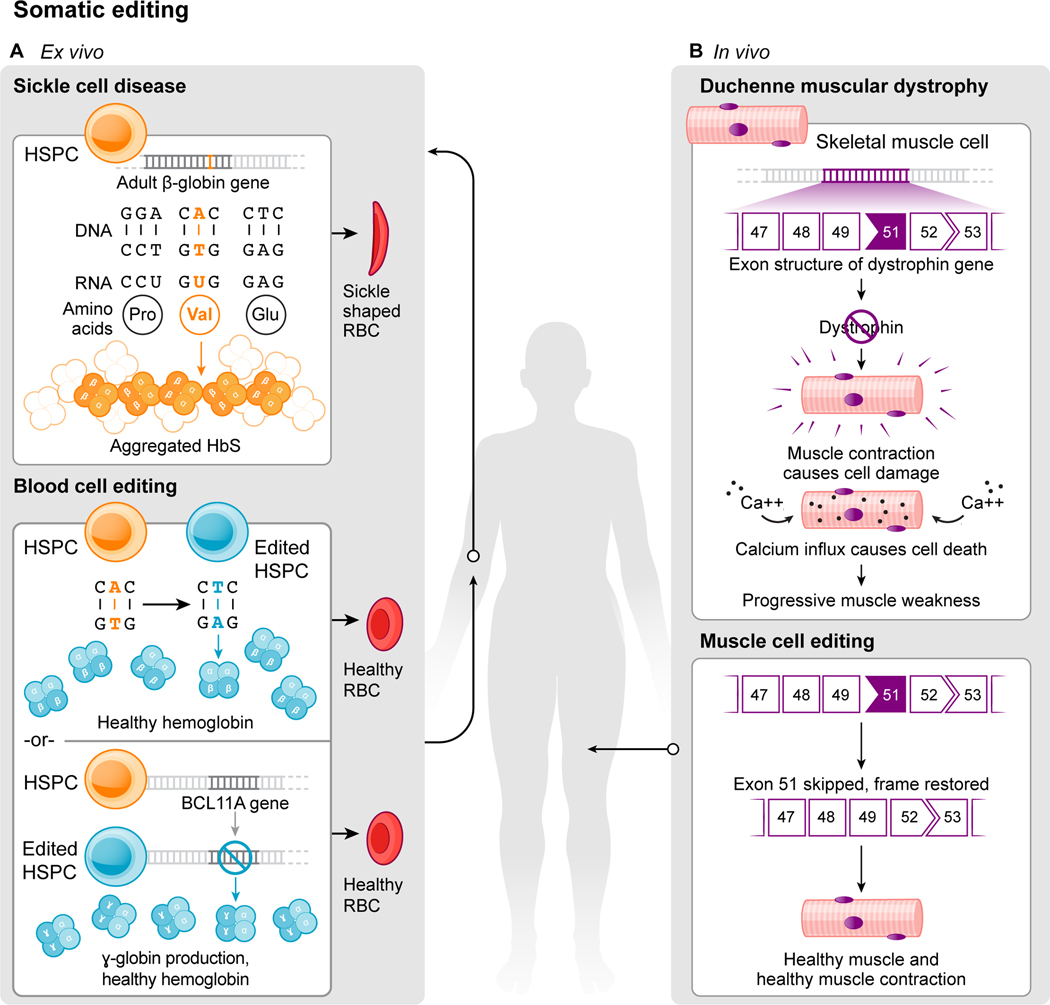
- Monogenic diseases are a major target: ~5,000 are known and affect at least 250 million individuals. Sickle cell disease, caused by a single A-to-T mutation in β-globin, could be treated ex vivo by correcting the mutation in hematopoietic stem/progenitor cells or reactivating γ-globin; ~100,000 US patients and millions more in African and Asian countries are potential candidates.
- Duchenne muscular dystrophy affects one in 5,000 males at birth and can involve >3,000 mutations, mostly at hotspots; restoring ~15% of normal dystrophin expression may provide clinical benefit. In animal studies, systemic AAV CRISPR delivery restored up to 90% dystrophin in ΔEx50 mice, and in dogs dystrophin levels were restored to 3–90% of normal with improved muscle appearance.
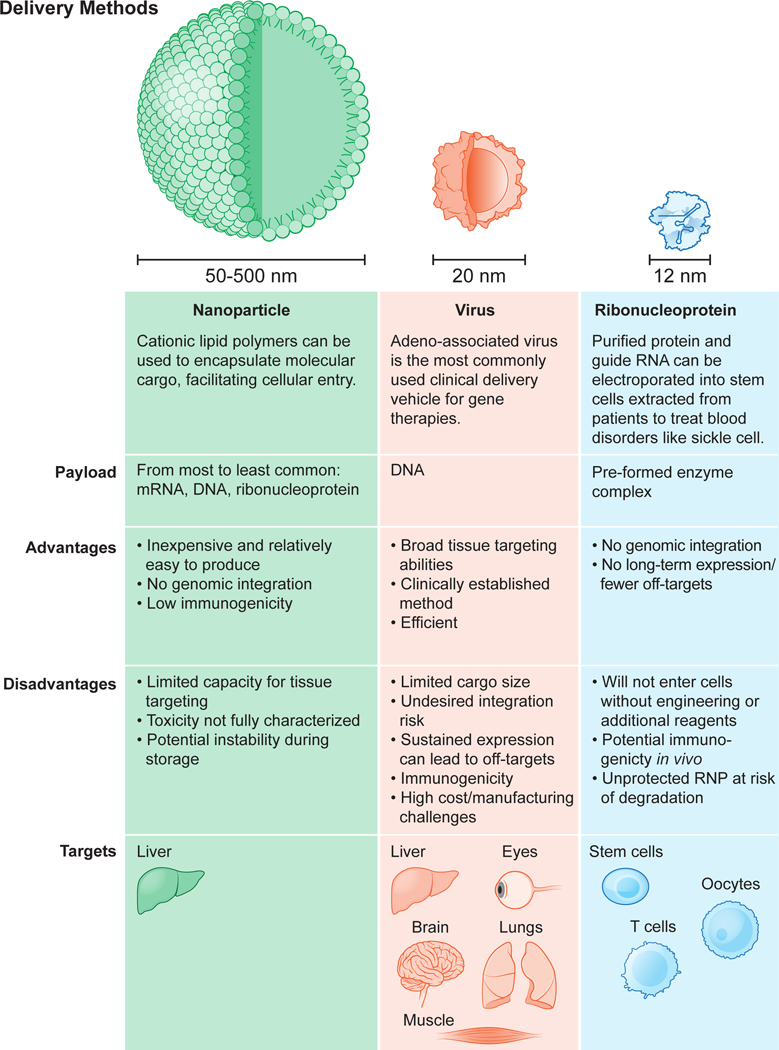
- Delivery is a central bottleneck: ex vivo editing favors electroporation of Cas9 ribonucleoprotein complexes, while in vivo delivery uses viral vectors such as AAV or lipid nanoparticles. AAV can carry only ~4.7 kb, not much larger than the 4.2 kb SpCas9 gene, so corrective insertion often requires two AAV vectors.
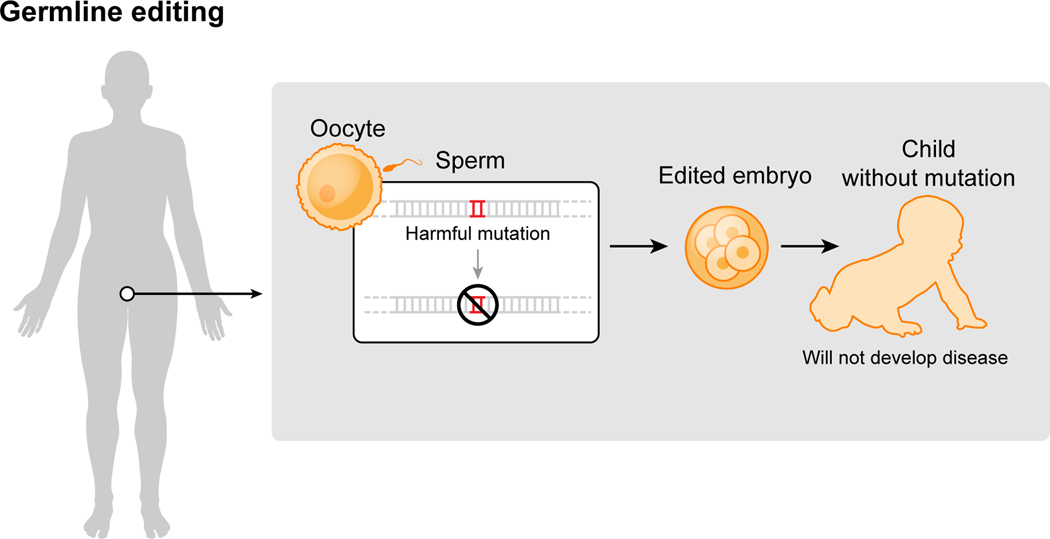
- Safety and governance concerns include off-target and imprecise editing, rare large deletions and complex rearrangements, possible immunogenicity from pre-existing Cas9 antibodies/T cells, and unresolved long-term safety. For germline editing, the paper states it is inappropriate to perform editing that culminates in human pregnancy at this time, while in vitro embryo/gamete research should be allowed with oversight.
Methods
- Narrative review by Jennifer A. Doudna; no systematic search strategy, primary dataset, or new experimental results are reported.
- Synthesizes CRISPR-Cas therapeutic genome editing, including sickle cell disease and DMD examples, delivery modalities, accuracy/safety issues, clinical development, and ethical/regulatory discussion of somatic versus germline editing.
- Draws on cited animal studies, early clinical trials, and international scientific/organizational positions; no sample size or formal analysis is stated in the paper.
Limitations
- Stated: delivery remains perhaps the biggest bottleneck to somatic genome editing; AAV has packaging, immunogenicity, and scalable GMP production/cost challenges, while lipid nanoparticles can be toxic and cell-type selective.
- Stated: off-target and imprecise editing, large deletions, and complex rearrangements occur at low frequency but could be clinically significant; immunogenicity and long-term safety/efficacy of edited cells in vivo remain largely unknown.
- Stated and evident: germline editing raises unresolved scientific questions about DNA repair in early human embryos and ethical/policy questions; as a review, the paper provides no new primary data and relies on cited studies and early-stage clinical information.
Model-written summary. Check it against the paper before relying on it.
Integrity signals
Registry
Cites
Statistics
Figures
Verification
Claims the paper makes
40 Valid · 10 Not valid · 12 Not checked · 36 Own results and interpretations
The cited sources support only part of this claim — read each source’s verdict below.
In the paper
“Engineered DNA-cleaving enzymes including zinc-finger nucleases (ZFNs) and transcription activator-like effector nucleases (TALENs) demonstrated the promise of therapeutic genome editing.”
What the sources say
- Not checked — no full text of the sourcecites [16] 16. Miller JC, Tan S, Qiao G, Barlow KA, Wang J, Xia DF, Meng X, Paschon DE, Leung E, Hinkley SJ, Dulay GP, Hua KL, Ankoudinova I, Cost GJ, Urnov FD, Zhang HS, Holmes MC, Zhang L, Gregory PD & Rebar EJ A TALE nuclease architecture for efficient genome editing. Nat. Biotechnol 29, 143-148 (2011). [PubMed: 21179091] source
- Not checked — no full text of the sourcecites [17] 17. Joglekar AV, Gray D, Kaufman ML, Urbinati F, Senadheera S, Cost G, Reik A, Holmes MC, Gregory PD, Hollis RP & Kohn DB Zinc Finger Nucleases Targeting The β -Globin Locus Drive Efficient Correction Of The Sickle Mutation In CD34+ Cells. Blood 122, 2904-2904 (2013). source
- Partly supportedcites [18] 18. Chang K-H, Smith SE, Sullivan T, Chen K, Zhou Q, West JA, Liu M, Liu Y, Vieira BF, Sun C, Hong VP, Zhang M, Yang X, Reik A, Urnov FD, Rebar EJ, Holmes MC, Danos O, Jiang H. & Tan S. Long-Term Engraftment and Fetal Globin Induction upon BCL11A Gene Editing in Bone-Marrow-Derived CD34+ Hematopoietic Stem and Progenitor Cells. Mol Ther Methods Clin Dev 4, 137-148 (2017). [PubMed: 28344999] sourceExperimental — accuracy not yet measured
The Results and Discussion describe ZFN-mediated BCL11A editing and call it a strong preclinical proof of concept for a potential sickle-cell therapy. The cited paper does not report a comparable demonstration using TALENs, so it supports the claim for ZFNs but not for both named enzyme types. (LLM, conf=0.88)
- Partly supportedcites [19] 19. Qasim W, Zhan H, Samarasinghe S, Adams S, Amrolia P, Stafford S, Butler K, Rivat C, Wright G, Somana K, Ghorashian S, Pinner D, Ahsan G, Gilmour K, Lucchini G, Inglott S, Mifsud W, Chiesa R, Peggs KS, Chan L, Farzeneh F, Thrasher AJ, Vora A, Pule M. & Veys P. Molecular remission of infant B-ALL after infusion of universal TALEN gene-edited CAR T cells. Sci. Transl. Med 9, 1-9 (2017). sourceExperimental — accuracy not yet measured
The Introduction reports first-in-human use of TALEN-edited T cells, and the Discussion says this application demonstrates the potential of gene-editing strategies for engineered cell therapies. The paper supports the claim about TALENs, but the passages do not establish the same point for ZFNs. (LLM, conf=0.88)
boostedstates a cause- Asserted: passes — The authors put it forward as true.
- Checkable: passes — It can be checked against evidence.
- Load-bearing: unclear — It is unclear whether the paper’s conclusions depend on it.
- Based: passes — The paper gives a reason why it holds.
The cited sources support only part of this claim — read each source’s verdict below.
In the paper
“Notably, restoration of a small percentage (~15%) of normal dystrophin expression levels can provide a clinical benefit 15 .”
What the sources say
- Partly supportedcites [15] 15. Long C, McAnally JR, Shelton JM, Mireault AA, Bassel-Duby R. & Olson EN Prevention of muscular dystrophy in mice by CRISPR/Cas9-mediated editing of germline DNA. Science 345, 1184-1188 (2014). [PubMed: 25123483] sourceExperimental — accuracy not yet measured
The supplied passages (labeled Abstract; page unavailable) report that correcting 17% of mutant Dmd alleles in mice restored dystrophin in many muscle fibers and reduced dystrophic features. They do not show that dystrophin expression was restored to ~15% of normal levels: 17% refers to gene correction, not protein expression. The reported benefits are in mice, not a demonstrated clinical benefit in patients. (LLM, conf=0.88)
plainstates a cause- Asserted: passes — The authors put it forward as true.
- Checkable: passes — It can be checked against evidence.
- Load-bearing: unclear — It is unclear whether the paper’s conclusions depend on it.
- Based: passes — The paper gives a reason why it holds.
- Partly supported
The cited sources support only part of this claim — read each source’s verdict below.
In the paper
“Cas9 protein-sgRNA complexes can be incorporated by assembly with DNA-linked particles 78,79 .”
What the sources say
- Partly supportedcites [78] 78. Glass Z, Li Y. & Xu Q. Nanoparticles for CRISPR-Cas9 delivery. Nat Biomed Eng 1, 854-855 (2017). [PubMed: 30147994] sourceExperimental — accuracy not yet measured
The formulation passage (Abstract; page not provided) describes a gold nanoparticle core surrounded by a Cas9–gRNA complex and a DNA repair template. This supports incorporating the complex into a particle, but the copy does not specify assembly with DNA-linked particles. (LLM, conf=0.80)
- Supportedcites [79] 80. Lee K, Conboy M, Park HM, Jiang F, Kim HJ, Dewitt MA, Mackley VA, Chang K, Rao A, Skinner C, Shobha T, Mehdipour M, Liu H, Huang W-C, Lan F, Bray NL, Li S, Corn JE, Kataoka K, Doudna JA, Conboy I. & Murthy N. Nanoparticle delivery of Cas9 ribonucleoprotein and donor DNA in vivo induces homology-directed DNA repair. Nat Biomed Eng 1, 889-901 (2017). [PubMed: 29805845] source
The Results and discussion section (‘Design and synthesis of CRISPR-Gold’; page unavailable) says donor DNA is attached to gold nanoparticles and Cas9 ribonucleoprotein is then adsorbed onto them. The Methods section (‘S5. Synthesis of CRISPR-Gold’; page unavailable) specifies that Cas9 and guide RNA are mixed before being added to the DNA-linked particles. (LLM, conf=0.94)
plainstates a cause- Asserted: passes — The authors put it forward as true.
- Checkable: passes — It can be checked against evidence.
- Load-bearing: unclear — It is unclear whether the paper’s conclusions depend on it.
- Based: passes — The paper gives a reason why it holds.
- Partly supported
The cited sources support only part of this claim — read each source’s verdict below.
In the paper
“In cells of all multicellular organisms, including humans, such double-stranded DNA breaks induce DNA repair by endogenous cellular pathways that can introduce alterations to the DNA sequence, including small sequence changes or genetic insertions 21,22 .”
What the sources say
- Not checked — no full text of the sourcecites [21] 21. Szostak JW, Orr-Weaver TL, Rothstein RJ & Stahl FW The double-strand-break repair model for recombination. Cell 33, 25-35 (1983). [PubMed: 6380756] *The authors proposed what was at the time a surprising mechanism for meiotic recombination, in which double-strand breaks that are enlarged to double-strand gaps initiate genetic recombination. This model has been proven largely correct, forming the basis for DNA repair-mediated genome editing. source
- Partly supportedcites [22] 22. Stark JM, Pierce AJ, Oh J, Pastink A. & Jasin M. Genetic steps of mammalian homologous repair with distinct mutagenic consequences. Mol. Cell. Biol 24, 9305-9316 (2004). [PubMed: 15485900] *This study demonstrated that double-strand DNA breaks in mammalian cells trigger - DNA repair that can introduce altered genomic sequences at the site of the repair. As a result, research focused increasingly on engineered enzymes capable of introducing targeted breaks in genomes, which would in turn produce site-specific genetic changes. sourceExperimental — accuracy not yet measured
The Abstract (page not provided) says that mammalian cells repair double-strand breaks through pathways that can cause deletions or insertions at the break site. It also discusses mutagenic repair associated with human disease. The paper does not establish that this applies to cells of all multicellular organisms, so the claim extends beyond its stated scope. (LLM, conf=0.87)
plainstates a cause- Asserted: passes — The authors put it forward as true.
- Checkable: passes — It can be checked against evidence.
- Load-bearing: passes — The paper’s conclusions depend on it.
- Based: passes — The paper gives a reason why it holds.
The sources with a verdict support this claim; the rest weren’t checked yet, have no full text we could read, or their verdicts aren’t rated yet.
In the paper
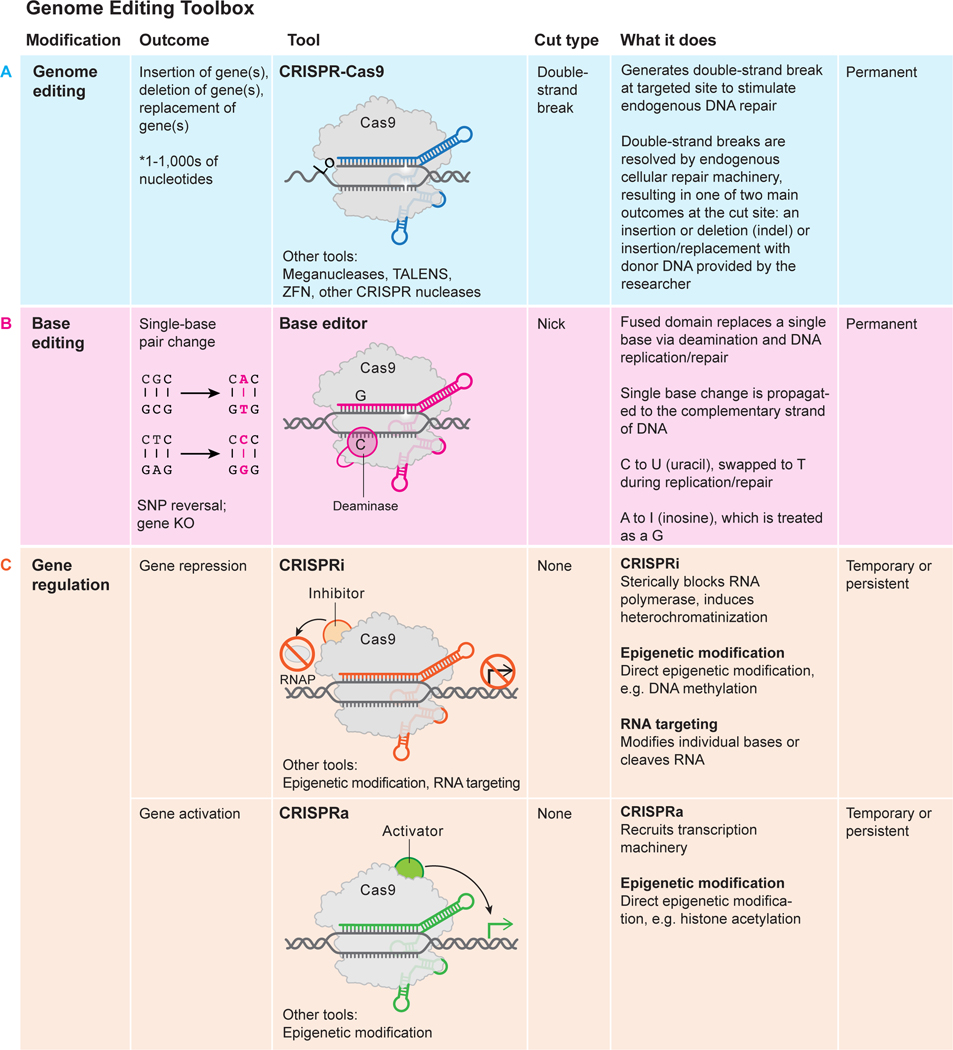
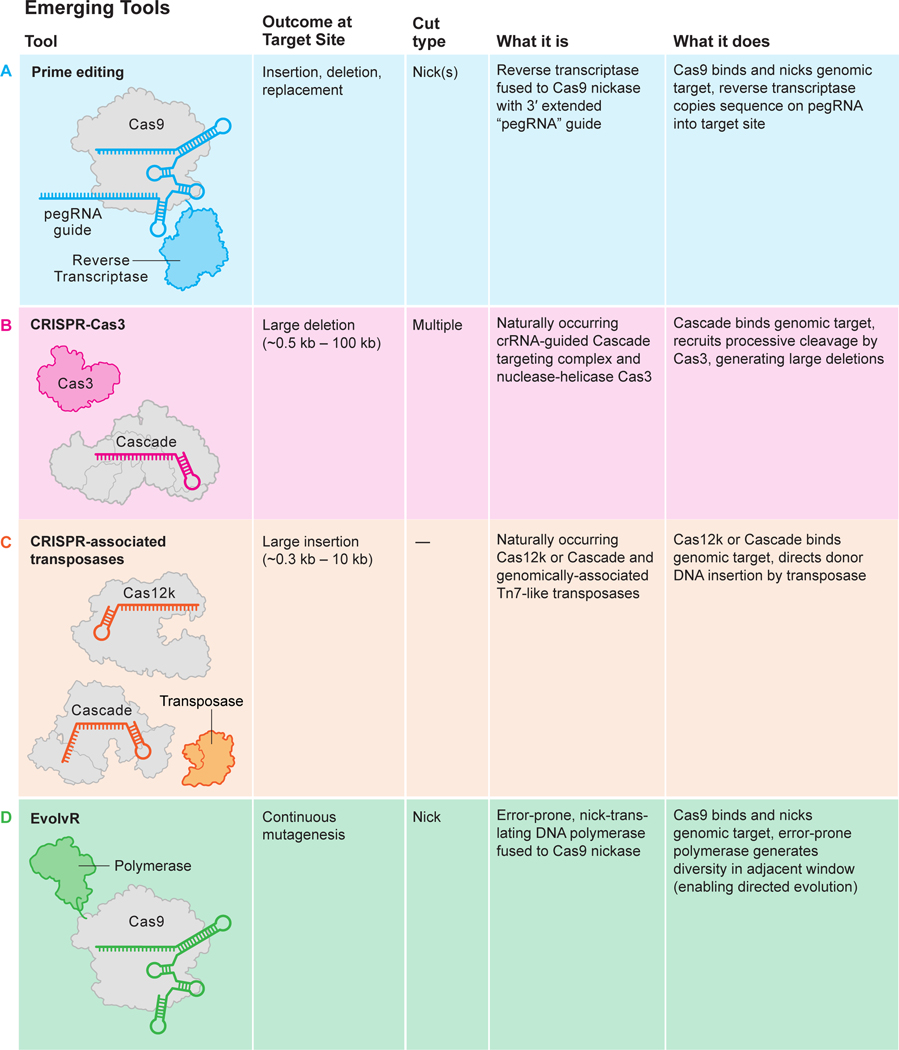
“Alternatives to DNA cleavage-induced editing include using CRISPR-Cas9 for direct chemical sequence alteration (base editing) 25,26 , providing RNA templates for gene alteration (prime editing) 27,28 , and for transcriptional control (CRISPR interference, CRISPRi; CRISPR activation, CRISPRa) 29,30 (Fig. 3).”
What the sources say
- Supportedcites [25] 25. Komor AC, Kim YB, Packer MS, Zuris JA & Liu DR Programmable editing of a target base in genomic DNA without double-stranded DNA cleavage. Nature 533, 420-424 (2016). [PubMed: 27096365] *In this study, CRISPR-Cas9 was fused to a DNA editing enzyme that enables targeted nucleotide editing at genomic locations recognized by Cas9. By avoiding double strand breaks in the DNA, the authors proposed that undesired DNA repair could be avoided. sourceExperimental — accuracy not yet measured
The Abstract describes a CRISPR/Cas9-based editor that directly converts a target DNA base without a double-stranded break or donor template. This supports the base-editing clause to which this citation is attached; the prime-editing and CRISPRi/CRISPRa clauses have separate citations. (LLM, conf=0.94)
- Not checked — no full text of the sourcecites [26] 26. Nishida K, Arazoe T, Yachie N, Banno S, Kakimoto M, Tabata M, Mochizuki M, Miyabe A, Araki M, Hara KY, Shimatani Z. & Kondo A. Targeted nucleotide editing using hybrid prokaryotic and vertebrate adaptive immune systems. Science 353, (2016). *In this study, CRISPR-Cas9 was fused to a DNA editing enzyme that enables targeted nucleotide editing at genomic locations recognized by Cas9. Instead of inducing double strand break repair, this editing form of Cas9 enables individual base pairs to be altered within cells. source
- Could not verifycites [27] 27. Sharon E, Chen S-AA, Khosla NM, Smith JD, Pritchard JK & Fraser HB Functional Genetic Variants Revealed by Massively Parallel Precise Genome Editing. Cell 175, 544-557.e16 (2018). [PubMed: 30245013] *This study was the first to show that an RNA template could be used together with a Cas9-reverse transcriptase fusion protein to introduce small targeted changes in cellular genomes. sourceExperimental — accuracy not yet measured
The citation is attached to the sentence’s claim about CRISPRi/CRISPRa for transcriptional control. The Introduction and Results describe Cas9 cleavage followed by donor-directed repair, not CRISPRi or CRISPRa; searches for those terms and transcriptional control found no passage addressing that claim. The References mention base editing, but do not establish the claim for which this citation is offered. (LLM, conf=0.75)
- Supportedcites [28] 28. Anzalone AV, Randolph PB, Davis JR, Sousa AA, Koblan LW, Levy JM, Chen PJ, Wilson C, Newby GA, Raguram A. & Liu DR Search-and-replace genome editing without double-strand breaks or donor DNA. Nature (2019). doi:10.1038/s41586-019-1711-4 *This study explored the use of a CRISPR-Cas9-reverse transcriptase fusion protein together with extended guide RNA templates to introduce small sequence changes within ~50 base pairs of the location of Cas9 binding. sourceExperimental — accuracy not yet measured
The citation is attached to the prime-editing part of the sentence, not the claims about base editing or CRISPRi/CRISPRa. The Abstract and “Prime editing strategy” section describe an edit-encoding RNA guide whose information is copied into target DNA without a double-strand break or donor DNA template. (LLM, conf=0.93)
- Supportedcites [29] 29. Qi LS, Larson MH, Gilbert LA, Doudna JA, Weissman JS, Arkin AP & Lim WA Repurposing CRISPR as an RNA-guided platform for sequence-specific control of gene expression. Cell 152, 1173-1183 (2013). [PubMed: 23452860] *This study demonstrated the use of a catalyticallydeactivated form of CRISPR-Cas9 for transcriptional control in cells. source
The citation is attached to the transcriptional-control portion of the sentence, not the base- or prime-editing examples. In “CRISPRi as a Platform for Engineering Transcriptional Regulatory Networks” (page not provided), the paper describes CRISPRi as a dCas9-based approach to targeted gene regulation, including transcriptional repression and potential activation, without altering the target sequence. (LLM, conf=0.92)
- Supportedcites [30] 30. Gilbert LA, Horlbeck MA, Adamson B, Villalta JE, Chen Y, Whitehead EH, Guimaraes C, Panning B, Ploegh HL, Bassik MC, Qi LS, Kampmann M. & Weissman JS Genome-Scale CRISPRMediated Control of Gene Repression and Activation. Cell 159, 647-661 (2014). [PubMed: 25307932] sourceExperimental — accuracy not yet measured
The citation is attached to the transcriptional-control part of the sentence, not to base or prime editing. The Introduction (page not supplied) describes the use of CRISPRi to repress and CRISPRa to activate transcription, and reports applying both methods to control gene expression. (LLM, conf=0.94)
plain- Asserted: passes — The authors put it forward as true.
- Checkable: passes — It can be checked against evidence.
- Load-bearing: unclear — It is unclear whether the paper’s conclusions depend on it.
- Based: passes — The paper gives a reason why it holds.
- Supported
45 more claims · 23 with their cited sources checked
Create a free account to see all 98 claims and to verify the 5 references still open.
- It may state two separate claims as one. 33
- Probably not a substantial claim. 23
Claims other papers make about this one
Each is checked against this paper’s own text: does it say what the citing paper says it does?
The source backs part of the claim, not all of it — or backs it for a different population, condition or comparison.
In the citing paper
“CRISPR-Cas dominates the field because of the ease of using guide RNAs directing the CRISPR complex to specific DNA sequences and the increasing ability to target most sites in the genome.121,122”
From Fetal hemoglobin in sickle cell anemia (2020) · cites this paper as [121]
Experimental — accuracy not yet measured
Citations
Cites
A Programmable Dual-RNA–Guided DNA Endonuclease in Adaptive Bacterial Immunity
Jinek, M., Chylinski, K., Fonfara, I., Hauer, M., Doudna, J. A., & Charpentier, E. (2012) · Science · doi:10.1126/science.1225829 · Cited by 17,116
Self-citationMultiplex Genome Engineering Using CRISPR/Cas Systems
Cong, L., Ran, F. A., Cox, D., Lin, S., Barretto, R., Habib, N., Hsu, P. D., Wu, X., Jiang, W., Marraffini, L. A., et al. (2013) · Science · doi:10.1126/science.1231143 · Cited by 15,339
RNA-Guided Human Genome Engineering via Cas9
Mali, P., Yang, L., Esvelt, K. M., Aach, J., Guell, M., DiCarlo, J. E., Norville, J. E., & Church, G. M. (2013) · Science · doi:10.1126/science.1232033 · Cited by 9,210
Programmable editing of a target base in genomic DNA without double-stranded DNA cleavage
Komor, A. C., Kim, Y. B., Packer, M. S., Zuris, J. A., & Liu, D. R. (2016) · Nature · doi:10.1038/nature17946 · Cited by 5,437
Repurposing CRISPR as an RNA-Guided Platform for Sequence-Specific Control of Gene Expression
Qi, L. S., Larson, M. H., Gilbert, L. A., Doudna, J. A., Weissman, J. S., Arkin, A. P., & Lim, W. A. (2013) · Cell · doi:10.1016/j.cell.2013.02.022 · Cited by 5,016
Self-citationSearch-and-replace genome editing without double-strand breaks or donor DNA
Anzalone, A. V., Randolph, P. B., Davis, J. R., Sousa, A. A., Koblan, L. W., Levy, J. M., Chen, P. J., Wilson, C., Newby, G. A., Raguram, A., et al. (2019) · Nature · doi:10.1038/s41586-019-1711-4 · Cited by 4,767
Programmable base editing of A•T to G•C in genomic DNA without DNA cleavage
Gaudelli, N. M., Komor, A. C., Rees, H. A., Packer, M. S., Badran, A. H., Bryson, D. I., & Liu, D. R. (2017) · Nature · doi:10.1038/nature24644 · Cited by 4,184
CRISPR-Mediated Modular RNA-Guided Regulation of Transcription in Eukaryotes
Gilbert, L. A., Larson, M. H., Morsut, L., Liu, Z., Brar, G. A., Torres, S. E., Stern-Ginossar, N., Brandman, O., Whitehead, E. H., Doudna, J. A., et al. (2013) · Cell · doi:10.1016/j.cell.2013.06.044 · Cited by 3,696
Self-citationGasiunas, G., Barrangou, R., Horvath, P., & Siksnys, V. (2012) · Proceedings of the National Academy of Sciences · doi:10.1073/pnas.1208507109 · Cited by 2,769
Genome-Scale CRISPR-Mediated Control of Gene Repression and Activation
Gilbert, L. A., Horlbeck, M. A., Adamson, B., Villalta, J. E., Chen, Y., Whitehead, E. H., Guimaraes, C., Panning, B., Ploegh, H. L., Bassik, M. C., et al. (2014) · Cell · doi:10.1016/j.cell.2014.09.029 · Cited by 2,728
Cited by
Items 1,001–1,100 of 1,131
Belato, H. B., Knight, A. L., D’Ordine, A. M., Fan, Z.-Q., Luo, J., Jogl, G., & Lisi, G. P. (2024) · eLife · doi:10.7554/elife.99275.1
TERAPIAS CRISPR-CAS9 PARA DOENÇAS GENÉTICAS RARAS: AVANÇOS RECENTES E DESAFIOS
Leite, L. D. A., Gunther, C. B. P., de Vasconcelos, J. O., Maciel, R. N. C., da Silva, M. S., Oliveira, F. D. D. A., Bueno, R. D. C. S., de Melo, T. M. V., Júnior, I. J. D. O., Filho, A. M. D. S., et al. (2024) · Revista Contemporânea · doi:10.56083/rcv4n8-040
Cimafonte, M., Esposito, A., Fenza, M. D., Zaccaria, F., D’Alonzo, D., & Guaragna, A. (2024) · International Journal of Molecular Sciences · doi:10.3390/ijms25169030
“On the other hand, oligonucleotides are currently recognized as being among the most promising and versatile tools in modern drug discovery and diagnostics, aimed at the treatment, prevention and detection of various pathological conditions [11,12].”
BackgroundPANDA, A. R., & Das, S. R. (2024) · International Journal of Pharmacy and Pharmaceutical Sciences · doi:10.22159/ijpps.2024v16i9.51048 · Cited by 1
“Concerns related to germline editing raise profound ethical questions about the eventuality of unintended consequences and the implications for future generations [90].”
BackgroundKruglova, N. A., Komkov, D., Mazurov, D. V., & Shepelev, M. V. (2024) · Доклады Российской академии наук Науки о жизни · doi:10.31857/s2686738924020121
Gene therapy under clinical trials for neurodegenerative diseases
Sahu, B., Tyagi, L., Tyagi, P., & Kumar, U. (2024) · Elsevier eBooks · doi:10.1016/b978-0-443-23826-0.00005-2
Gene Therapy for Human Disease
Rose, R. J. (2024) · Springer eBooks · doi:10.1007/978-981-97-8381-6_13
Du, Z. (2024) · Elsevier eBooks · doi:10.1016/b978-0-443-23865-9.00002-2
Implementing CRISPR/Cas9 into the Study of Anticancer Drug Resistance
Terrones, M., de Beeck, K. O., Camp, G. V., & Vandeweyer, G. (2024) · Interdisciplinary cancer research · doi:10.1007/16833_2024_404
Considerations in the development of pluripotent stem cell–based therapies
Cunningham, J. J., Capela, A., Priest, C. A., & Brandon, E. P. (2024) · Elsevier eBooks · doi:10.1016/b978-0-443-13344-2.00004-3
Onat, O. E., & Ustunel, F. (2024) · Elsevier eBooks · doi:10.1016/b978-0-323-95502-7.00239-6
Gustafsson, O., Krishna, S., Borate, S., Ghaeidamini, M., Liang, X., Saher, O., Cuellar, R., Birdsong, B. K., Roudi, S., Estupiñan, H. Y., et al. (2024) · bioRxiv (Cold Spring Harbor Laboratory) · doi:10.1101/2024.11.27.624305
“Cas9-gRNA ribonucleoprotein (RNP) complex delivery confers substantial advantages in gene editing due to its transient bioavailability, which minimizes off-target effects, eliminates the risk of genomic integration, and mitigates immune responses against the bacterially derived Cas9 protein [17,18].”
Shepelev, M. V., Komkov, D., Golubev, D. S., Borovikova, S. E., Mazurov, D. V., & Kruglova, N. A. (2024) · Molecular Biology · doi:10.31857/s0026898424040058 · Cited by 1
Multi‐Specific Binding Strategy
Zhou, Y., Xu, S., Ding, D., Tang, K., Liu, X., Kim, M., & Zhan, P. (2024) · Wiley eBooks · doi:10.1002/9781394182862.ch11
Saxena, S., Kabra, M., Abdeen, A. A., Tabima, D. M., Sinha, D., Rawding, P. A., Zhu, M., Xie, R., Kulkarni, T., Hanstad, G. M., et al. (2026) · Nature Communications · doi:10.1038/s41467-026-76350-5 · Cited by 2
Belato, H. B., Knight, A. L., D’Ordine, A. M., Pindi, C., Fan, Z.-Q., Luo, J., Palermo, G., Jogl, G., & Lisi, G. P. (2025) · eLife · doi:10.7554/elife.99275.2
Targeted gene transfer into developmentally defined cell populations of the primate brainPreprint
Gomes, A. R. R., Hamel, N., Mastwal, S. S., et al. (2025) · bioRxiv (Cold Spring Harbor Laboratory) · doi:10.1101/2025.04.11.648413
Belato, H. B., Knight, A. L., D’Ordine, A. M., Pindi, C., Fan, Z.-Q., Luo, J., Palermo, G., Jogl, G., & Lisi, G. P. (2025) · eLife · doi:10.7554/elife.99275.3
Hope Unlocked: Gene Therapy with Viral Vectors and Gene Editing
Thiaville, J. J., Dias, M. S., Kato, S. E. M., Basak, S., Rengarajan, S., Silva, H. P., Rivas, N., & D’Costa, S. M. (2025) · Springer eBooks · doi:10.1007/978-3-031-81787-8_5
Genetic basis of inherited metabolic disorders
Akash, M. S. H., & Rehman, K. (2025) · Elsevier eBooks · doi:10.1016/b978-0-443-36312-2.00002-4
Sha, R., Qin, H., Yuan, A., Deng, Z., Liao, W., Qu, G., Wen, B., Xie, W., & Peng, H. (2025) · Chemistry - An Asian Journal · doi:10.1002/asia.202401696
Wani, S. N., Zahoor, I., Tantray, J., Venkateshwarlu, G., Tiwari, P., Eqbal, S., Faiyazuddin, M., & Syed, A. A. (2025) · Springer eBooks · doi:10.1007/978-3-031-91790-5_6
Gene editing—a foundational new era for genetic therapies
Friedmann, T. (2025) · Oxford University Press eBooks · doi:10.1093/med/9780197689974.003.0020
CRISPR Therapies for Alzheimer’s Disease
Sun, J., & Roy, S. (2025) · Springer eBooks · doi:10.1007/978-3-031-89307-0_12 · Cited by 1
Raza, H., Riaz, M., Habiba, U. E., et al. (2025) · Innovative Research in Applied Biological and Chemical Sciences · doi:10.62497/irabcs.126
“In recent years, gene-editing technologies have emerged as promising tools for treating genetic disorders at their source [6].”
Koufi, E. A., Alqosaibi, A. I., Alameddin, A. M., Nabil, N., Taha, P. S., Yasser, M., Abbas, S., Abdel-Ghany, S. E., Algosaibi, S., & Elsheikh, E. (2025) · Elsevier eBooks · doi:10.1016/b978-0-443-29890-5.00002-6 · Cited by 1
The Targets Problem for Germline Genetic Interventions
Cwik, B. (2025) · The International Library of Bioethics · doi:10.1007/978-3-031-94690-5_8 · Cited by 1
Genome Editing: Breakthroughs in Double-Strand Break (DSB) Repair and What’s Next
Wang, Z. (2025) · International journal of high school research · doi:10.36838/v7i7.38 · Cited by 1
Wu, N., Sang, X., Zhang, X., & Liu, X. (2025) · Wiley eBooks · doi:10.1002/9783527849857.ch06
Risse, J., Pietrek, L., Cantz, T., Krzemien, M., Schnalke, J., Eggenschwiler, R., Heinemann, T., & Dederer, H. (2025) · Medicine Health Care and Philosophy · doi:10.1007/s11019-025-10284-5
“For example, they distinguish between the conventional approach of gene therapy on the one hand and ‘therapeutic genome editing’ (Doudna 2020 ; Cox et al. 2015) or ‘therapeutic gene writing’ (Pallarès-Masmitjà 2021) on the other hand.”
Optimization of in vivo delivery methods and their applications in seminiferous tubules of mice
Dai, X., Wang, F., & Wang, S. (2025) · BMC Biotechnology · doi:10.1186/s12896-025-01021-0
“Currently, there is a growing body of research on gene editing in eukaryotic cells [2, 5, 34, 35].”
Exploring the deletion landscape of S. aureus Cas9 with SABERPreprint
Plebanek, A. J., Oltrogge, L. M., Terrace, C. I., Lukarska, M., Khoury, M., & Savage, D. F. (2025) · bioRxiv (Cold Spring Harbor Laboratory) · doi:10.1101/2025.08.12.669962
New modalities: Drugging the undruggable GPCR targets
Zawadzki, P., Graczyk, P. P., & Staroń, J. (2025) · Elsevier eBooks · doi:10.1016/b978-0-443-29808-0.00030-3
Amin, F., & Fatima, M. (2025) · INNOVAPATH · doi:10.63501/ephy8993
Review on gene therapy and its application in veterinary medicine
Wogaso, T. (2025) · Letters In Animal Biology · doi:10.62310/liab.v5i2.220
Bhosle, K., Desai, S. A., Patel, V. P., Hurdude, S., Nagare, S. D., Thombare, K. C., & Kate, A. A. (2025) · Cytology and Genetics · doi:10.3103/s0095452725040024
“…point mutations or the rectification of disease-causing mutations, hence it improves the efficiency and accuracy of somatic cell reprogramming (Doudna, 2020; Kantor et al., 2020b) Genome editing techniques are offer a potent means to change the genome of somatic cells within the context of…”
Pharmacogenomics and CRISPR-based therapies
Fatima, M., Tariq, I., Tariq, A., Talib, S., Fatima, M., Shehzadi, M., & Aqib, A. I. (2025) · Progress in brain research · doi:10.1016/bs.pbr.2025.08.009
443Chapter 20 Ethical and regulatory perspectives on food biotechnologyfood biotechnology
Shivute, F. N., Cheikhyoussef, N., & Cheikhyoussef, A. (2025) · De Gruyter eBooks · doi:10.1515/9783111441238-021
Gene editing technologies: Transformative approaches to chronic disease treatment
Balasubramaniam, B., & van der Hoeven, R. (2025) · Elsevier eBooks · doi:10.1016/b978-0-443-33877-9.00010-0
Gene Therapy for Cerebrotendinous Xanthomatosis (CTX)
Hernández-Alcoceba, R., Molina, A., & González‐Aseguinolaza, G. (2025) · Springer eBooks · doi:10.1007/978-3-031-92526-9_22
Exploring Repro‐Timing Harm and Benefit
Battisti, D., & O’Brien, G. D. (2025) · Bioethics · doi:10.1111/bioe.70040 · Cited by 1
“…techniques such as CRISPR/ Cas9, which, in the coming years, could lead to the clinical application of reproductive genome editing, through which it would be possible to modify the genome of embryos in vitro before uterine transfer, to prevent harmful traits or promote beneficial ones [15, 16].”
CRISPR-Cas9 Mediated Knockout of Apoptotic Genes in Human Stem Cells: A Functional Study
Hamza, Z. S., Temimi, T. A., Al-Oudah, G. A., & Shareffi, K. A. A. (2025) · Journal of Biomedicine and Biochemistry · doi:10.57238/jbb.2025.7432.1148
Applications of genome synthesis and editing in synthetic biology
Mondal, H., Mondal, S., Biri, S. K., & Sharma, S. (2025) · Elsevier eBooks · doi:10.1016/b978-0-443-33649-2.00013-7
Swartjes, T., Bouzetos, E., Adiego-Pérez, B., Pool, V. D., Staals, R. H. J., John van der, O. O. S. T., & Wu, W. Y. (2025) · iScience · doi:10.1016/j.isci.2025.114033
“14,15 After introduction of a DSB in the target sequence, the actual outcome of the editing relies on the subsequent DNA repair mechanism, generally by non-homologous end-joining (NHEJ) or by homology directed repair (HDR).”
Rewriting Genetic Destiny: Prime Editing Leads the Future in Fixing Genetic Disorders
GERA, S., Maiti, S., Chakraborty, D., & Agrawal, D. (2025) · The National Medical Journal of India · doi:10.25259/nmji_1907_2025
Ryu, Y. C., Bao, G., & Hwang, B. H. (2025) · Biomedicine & Pharmacotherapy · doi:10.1016/j.biopha.2025.118838
CRISPR/Cas9: the future of human gene editing
Zulkifli, N. D., Sani, S. B. M., Wong, C. H., Mahadzan, M., Suhimi, M. H. A., Zulkifli, N., & Das, K. T. (2025) · Elsevier eBooks · doi:10.1016/b978-0-443-33947-9.00009-8
Engineered cells for cardiovascular diseases
Zhou, N., Chandra, J., Zhu, H., Yu, J., Ye, W., Li, R., & Li, Z. (2025) · Cell Biomaterials · doi:10.1016/j.celbio.2025.100280 · Cited by 1
CRISPR-Cas in Enhancing Secondary Metabolites of Fungi for Use as Bioherbicides
Das, M., Ray, D., Misra, D., & Ray, P. (2025) · Springer eBooks · doi:10.1007/978-3-642-36202-6_247-1
Ramos, F. (2025) · En-claves del pensamiento · doi:10.46530/ecdp.v0i39.787
Bloszyk, J., Stachowiak, M., & Halliday, B. (2006) · INFM-OAR (INFN Catania) · doi:10.5281/zenodo.172508
Mei, H., Zha, Z., Wang, W., Xie, Y., Huang, Y., Li, W., Wei, D., Zhang, X., Qu, J., & Liu, J. (2021) · Figshare · doi:10.6084/m9.figshare.16862812
Duan, Y., Wu, W., Cui, J., Matsubara, J. A., Kazlauskas, A., Ma, G., Li, X., & Lei, H. (2023) · Figshare · doi:10.6084/m9.figshare.23849673
Wang, X., Cai, C., Lv, W., Chen, K., Li, J., Liao, K., Zhang, Y., Huang, H., Lin, Y., Rong, Z., et al. (2024) · Figshare · doi:10.6084/m9.figshare.25902293
Additional file 1 of Eukaryotic-driven directed evolution of Cas9 nucleases
Ruta, G. V., Ciciani, M., Kheir, E., Gentile, M. D., Amistadi, S., Casini, A., & Cereseto, A. (2024) · Figshare · doi:10.6084/m9.figshare.26697428
Jurić, D., Zlatin, M., & Marušić, A. (2022) · Figshare · doi:10.6084/m9.figshare.19695681
Zhao, J.-J., Sun, X.-Y., Tian, S.-N., Zhao, Z.-Z., Yin, M.-D., Zhao, M., Zhang, F., Li, S.-A., Yang, Z.-X., Wen, W., et al. (2024) · Figshare · doi:10.6084/m9.figshare.25239456
Additional file 2 of Eukaryotic-driven directed evolution of Cas9 nucleases
Ruta, G. V., Ciciani, M., Kheir, E., Gentile, M. D., Amistadi, S., Casini, A., & Cereseto, A. (2024) · Figshare · doi:10.6084/m9.figshare.26697431
Additional file 3 of Eukaryotic-driven directed evolution of Cas9 nucleases
Ruta, G. V., Ciciani, M., Kheir, E., Gentile, M. D., Amistadi, S., Casini, A., & Cereseto, A. (2024) · Figshare · doi:10.6084/m9.figshare.26697434
Zhao, J.-J., Sun, X.-Y., Tian, S.-N., Zhao, Z.-Z., Yin, M.-D., Zhao, M., Zhang, F., Li, S.-A., Yang, Z.-X., Wen, W., et al. (2024) · Figshare · doi:10.6084/m9.figshare.25239409
Mei, H., Zha, Z., Wang, W., Xie, Y., Huang, Y., Li, W., Wei, D., Zhang, X., Qu, J., & Liu, J. (2021) · Figshare · doi:10.6084/m9.figshare.16862809
Duan, Y., Wu, W., Cui, J. Z., Matsubara, J. A., Kazlauskas, A., Ma, G., Li, X., & Lei, H. (2023) · Figshare · doi:10.6084/m9.figshare.23849676
Mei, H., Zha, Z., Wang, W., Xie, Y., Huang, Y., Li, W., Wei, D., Zhang, X., Qu, J., & Liu, J. (2021) · Figshare · doi:10.6084/m9.figshare.16862806
Future of Nonobstructive Azoospermia (NOA)
Ragab, A., Gül, M., & Shah, R. S. (2026) · Springer eBooks · doi:10.1007/978-3-031-99431-9_17
Lu, Z., Bukhari, S. T. H., Azeem, M., Tariq, N., & Shabbir, M. A. B. (2026) · Frontiers in Public Health · doi:10.3389/fpubh.2025.1737251 · Cited by 3
“Safety, off-target and immune responses in long-term studies are subject to registries and movements across national borders and countries, and such studies will be a requirement in the first in human applications (105).”
Stamm, C. E., Zhu, J., Davis-Vargas, C., Dirasantha, O., Thankamani, K., & Rao, V. B. (2026) · bioRxiv (Cold Spring Harbor Laboratory) · doi:10.64898/2026.01.28.702426
SETDB1/ATF7IP regulate the precise genome engineering of HUSH-regulated genes
Ruis, B. L., Ward, H. N., Myers, C. L., Bielinsky, A., & Hendrickson, E. A. (2026) · Epigenetics & Chromatin · doi:10.1186/s13072-026-00661-6
“…of DSBs into the genome, as well as a requirement for the target cells to be actively cycling, have to date limited DSBR’s therapeutic use due to the ancillary concerns of unwanted genomic instability [13, 14] and/or the need to perform PGE on non-(or very slowly) cycling cells [8, 15].”
From detection to intervention: nanotechnology-driven precision strategies in obesity management
Tantray, J., Khadam, V. K. R., Patel, A., Nagdev, S., & Prajapati, B. (2026) · Bulletin of the National Research Centre/Bulletin of the National Research Center · doi:10.1186/s42269-026-01397-9 · Cited by 1
“This system is capable of inserting specific mutations or knocking out genes using a predesigned repair template (Nidhi et al. 2021; Doudna et al. 2020).”
Munung, N. S., & Tangwa, G. B. (2026) · Journal of Bioethical Inquiry · doi:10.1007/s11673-025-10509-5
“While these technologies hold significant promise in addressing food insecurity, disease, and environmental degradation across Africa (Doudna 2020; Ndudzo et al. 2024; Matinvafa et al. 2023), their governance is mostly framed through technocratic and liberal-individualist paradigms.”
Gene anschalten statt umbauen: CRISPR aktiviert Zellprogramme ohne DNA-Eingriff
Schmidt, T., Kumar, C. N., & Stricker, S. H. (2026) · BIOspektrum · doi:10.1007/s12268-026-2659-1
“Doch noch bis vor wenigen Jahren fehlten uns die Werkzeuge, um Gene direkt in ihrem natürlichen chromosomalen Umfeld präzise, effi zient und in größerem Maßstab zu akti-vieren [4, 5].”
Dynamic Control of RNA Structure and Function through Bioorthogonal Staudinger Chemistry
Zhu, L., Xiong, W., Yang, S., Qi, Q., Liu, X., Zhou, X., & Tian, T. (2026) · ACS Chemical Biology · doi:10.1021/acschembio.6c00067
Genetic Medicine — Primed and Ready
Bauer, D. E., & Orkin, S. H. (2026) · New England Journal of Medicine · doi:10.1056/nejme2601003
Bioethical challenges in the era of precision medicine
Khan, H. R., Faheem, H. M., Qamar, U., Asim, I., Afzal, I., & Yasmeen, H. (2026) · Elsevier eBooks · doi:10.1016/b978-0-443-40483-2.00043-1
Luo, J., Zhao, F., Lin, S., & Liu, Y. (2026) · Medical Review · doi:10.1515/mr-2025-0082
“Within this landscape, genome editing therapies have emerged as a powerful approach capable of directly rewiring cellular function or engineering therapeutic cells [253].”
Stambolsky, D. V., Zakharova, A. V., & Karagyaur, M. N. (2026) · Регенерация органов и тканей. · doi:10.60043/2949-5938-2025-1-10-21
Development of gene therapy approaches to ß-hemoglobinopathies
Chalumeau, A. (2023) · theses.fr (ABES) · doi:10.70675/7fc1b037zbffbz4005z9109zd81aa6f38a83
The genetic code as an operational a priori: xenobiology and the rewriting of life’s grammar
Budiša, N. (2026) · Frontiers in Synthetic Biology · doi:10.3389/fsybi.2026.1760385 · Cited by 2
“We are expanding our capacity to cleanse genomes of lethal alleles using now-classical genome editing tools (Doudna, 2020).”
Gene Editing for Haemophilia—The Next Frontier
Pinotti, M., Newby, G. A., Selvaraj, S. R., & Pipe, S. W. (2026) · Haemophilia · doi:10.1111/hae.70238 · Cited by 1
Khare, G., Duong, A., Hanotaux, J., Shorr, R., Nampoothiri, R. V., Maganti, H. B., & Allan, D. (2026) · Cytotherapy · doi:10.1016/j.jcyt.2026.102898 · Cited by 1
Usanova, A. A., Novikova, E., Sergutova, N., Kuzma, F., Vasilkova, A. S., & Alyamkin, S. Y. (2026) · Primary Health Care · doi:10.15829/3034-4123-2026-126
Exploring CRISPR/Cas9 Technology for The Modernization of Traditional Chinese Medicine
Shu-Xian, W. A. N. G., Guo, F., & Guang-Qiang, M. A. (2026) · PROGRESS IN BIOCHEMISTRY AND BIOPHYSICS · doi:10.3724/j.pibb.2025.0505
Decoding the role of chromatin context in the off-target effects of CRISPR gene editing with EGOLD
Feng, H., Zheng, J., Li, N., Xie, L., & Zuo, E. (2026) · Cell Discovery · doi:10.1038/s41421-026-00889-2 · Cited by 1
“Gene-editing technologies incorporating CRISPR/Cas9 are well established as powerful tools for targeted genetic modi fi cation that enable programmable editing with tremendous potential to reverse a variety of genetic disorders 1 – 4 .”
AviTag-seq unifies nucleotide-resolution maps of CRISPR off-targets and AAV vector integrations
Li, J.-X., Zhang, S.-M., Ma, X.-Y., Deng, D.-H., Bai, P.-D., Zhao, J.-J., Gong, A., Shan-Chen, P. A. N. G., Dong, F., Wang, S.-D., et al. (2026) · Communications Biology · doi:10.1038/s42003-026-10298-6
Synthetic Biology for Next-Generation Lactic Acid Bacteria: Engineering the Future of Food
Li, M., Naeem, M., 郭忠建, Dong, T., Zhu, X., Hussain, N., Ni, Z., & Chen, H. (2026) · Journal of Agricultural and Food Chemistry · doi:10.1021/acs.jafc.6c00333 · Cited by 6
Applications of CRISPR-Cas9 Gene Editing Technology in Food Allergy Therapy: A Comprehensive Review
Khalil, A. M. (2026) · Recent Progress in Science and Engineering · doi:10.21926/rpse.2602009
Ju, S., Lee, J., Yang, J., Jeong, T. Y., Choi, C. G., Lee, Y., Cha, S., Park, J., Kim, S. P., Kim, S., et al. (2026) · Molecular Therapy — Nucleic Acids · doi:10.1016/j.omtn.2026.102978 · Cited by 3
Inagaki, M., Kase, M., Hiraoka, H., et al. (2026) · Nucleic Acids Research · doi:10.1093/nar/gkag525
“The development of genome-scale long-chain DNA assembly methods, such as Golden Gate assembly [ 3 ] and Gibson assembly methods [ 4 ], has stimulated genome-editing research [ 5 , 6 ].”
Miniature CRISPR-Cas nucleases: from characterization to application
Bigelyte, G. (2022) · doi:10.15388/vu.thesis.315 · Cited by 1
The evolution of AI-integrated genome editing and its challenges
Wong, M. T. J., Zulkifli, N. D., Ravichandran, T., Vasodavan, K., Bin-Alshaibah, O., Himel, G. M. S., Achuthan, A., Anthonysamy, M. A., & Das, K. T. (2026) · Mammalian Genome · doi:10.1007/s00335-026-10248-x · Cited by 1
“CRISPR is not only versatile, but its multiplexing abilities have also catalyzed breakthroughs, even when the disease is caused by a polygenic inheritance or an epistatic interaction (Doudna 2020; Ran et al. 2013; Yang et al. 2021 ).”
Emerging trends in immunogenetic research in type 2 diabetes mellitus (T2DM)
Vardhan, J., Sisodia, S., Mishra, P. S., Kumar, A., Jameel, M. R., & Ali, S. A. (2026) · Elsevier eBooks · doi:10.1016/b978-0-443-33590-7.00007-1
Precision modification of heart failure signaling by CRISPR-Cas9 base editing
Tadokoro, T., Liu, N., & Olson, E. N. (2026) · Journal of Molecular and Cellular Cardiology · doi:10.1016/j.yjmcc.2026.06.008
“For example, engineered AAV capsids such as MyoAAV still retain the limited packaging capacity inherent to AAV vectors, whereas non-viral delivery systems such as LNPs and VLPs often lack sufficient cardiac tropism and remain less validated in vivo [4,73–77].”
Wang, R., Pan, Q., Huang, Y., Dai, W., Yuan, P., & Jin, Q. (2026) · Biomaterials · doi:10.1016/j.biomaterials.2026.124407 · Cited by 1
Precision medicine in oncology treatments
Bavyataa, V., Kumari, P., Gnanasekaran, G. S., Thirumurthy, G., Ashok, S., Kannan, N., & Puthamohan, V. M. (2026) · Elsevier eBooks · doi:10.1016/b978-0-443-44181-3.00016-3
Stefano, G. B. (2026) · Journal of Genetic Medicine and Gene Therapy · doi:10.29328/journal.jgmgt.1001015
Applications of Recombinant DNA Technology in Medicine: A Comprehensive Review
Kumar, K. (2026) · Molecular Biotechnology · doi:10.1007/s12033-026-01595-w
Onemli, D., & Satı, L. (2026) · Journal of Assisted Reproduction and Genetics · doi:10.1007/s10815-026-03967-2
Viteri, A., Freire, M. G. V., Freire, S. S. V., Olmosel, M. B. N., & Olarte, J. G. T. (2026) · ASCE MAGAZINE · doi:10.70577/asce.v5i3.995
Niaz, M. K., Hassan, I., Abdullah, U., et al. (2026) · Animals · doi:10.3390/ani16142193
“This enables the user to add or take away genes with great accuracy [29].”
Metadata
- Authors
- Doudna, J. A.
- Affiliations
- QB3 (US)
- Corresponding author
- Doudna, Jennifer A.
- ORCID
- Doudna, Jennifer A.
- Venue
- Nature
- Published
- 2020-02-12
- Volume
- 578
- Issue
- 7794
- Pages
- 229-236
- ISSN
- 0028-0836 (ISSN-L)
- 1476-4687
- PMC
- PMC8992613
- OpenAlex
- W3006116138
- Semantic Scholar
- 58b8496f86ab37bb66e32f96f5492f531b5ca37b
- Cited by
- 1,126
- References
- 160
- Citations by year
- 2026: 123 · 2025: 169 · 2024: 184 · 2023: 259 · 2022: 173 · 2021: 144 · 2020: 73
- FWCI
- 15.77
- Type
- journal article
- Language
- en
- Open access
- green
- www.ncbi.nlm.nih.gov
- Licence
- cc-by
- www.springer.com/tdm (tdm)
- www.springer.com/tdm (vor)
- Locations
- Nature (publishedVersion)
- PubMed (publishedVersion)
- PubMed Central (acceptedVersion, cc-by)
- OSTI OAI (U.S. Department of Energy Office of Scientific and Technical Information) (submittedVersion)
- RePEc: Research Papers in Economics (submittedVersion)
- eScholarship (California Digital Library) (submittedVersion, cc-by)
- Funders
- National Science Foundation (1817593)
- Howard Hughes Medical Institute
- W. M. Keck Foundation
- Innovative Genomics Institute
- Multiple Sclerosis Society
- National Institutes of Health
- Defense Advanced Research Projects Agency (HR0011- 17-2-0043)
- Advanced Research Projects Agency
- National Human Genome Research Institute (RM1HG009490)
- National Institute of Allergy and Infectious Diseases (U01AI142817)
- Common Fund
- Topics
- Life Sciences › Biochemistry, Genetics and Molecular Biology › Molecular Biology › CRISPR and Genetic Engineering
- Life Sciences › Biochemistry, Genetics and Molecular Biology › Molecular Biology › RNA regulation and disease
- Life Sciences › Biochemistry, Genetics and Molecular Biology › Genetics › Virus-based gene therapy research
- Keywords
- therapeutic genome editing, CRISPR, genetic disorders, gene therapy, ethics of gene editing, precision genome editing, clinical translation
- MeSH terms
- Gene Editing, Anemia, Sickle Cell, Humans, Organ Specificity, Genome, Human, Germ-Line Mutation, Muscular Dystrophy, Duchenne, beta-Globins, Patient Safety, CRISPR-Cas Systems
About these checks
Registry, retraction, Cites and statistics results are computed, not judged, with one exception: a printed reference that no index lists is read once by a model before it counts as a citation error. Claims are extracted by a model and kept only when their quote appears verbatim in the text; each cited source is then checked, with a model’s help, for whether it says what the claim relies on. Those verdicts can be wrong — read the claim’s quote and the cited source before relying on one.
The claim verdicts this report counts are experimental: their accuracy is not yet measured.
A language model drew the claims from the paper on 2026-09-27, under version 3 of the claim definition (prompt extract-v3).
A second model labelled each claim on 2026-09-27 (model jev-1.13-20260917, definition revision gold-guideline-v0.2).
Cited sources are checked with a language model’s help (gpt-6-sol).
Statistics and arithmetic are recomputed, not judged.
Confidence bands are shown only for fields calibrated on our annotated test set. None is calibrated yet, so no band is shown.
What counts as a claim ›How we measure confidence ›How we check this ›
Are you an author, or do you see a problem with this page? Request a review
Data sources
Bibliographic data: Semantic Scholar, OpenAlex, Crossref.
Contains information from the Semantic Scholar Academic Graph Datasets, made available under the ODC Attribution License (ODC-BY 1.0).
Semantic Scholar’s data is described in: Kinney, R., et al. (2023). The Semantic Scholar Open Data Platform. arXiv:2301.10140.
