

The promise and challenge of therapeutic genome editing
Open accessThe DOI matches its Crossref record; 162 of the 162 references it cites were found in a registry or an index; 81 of the 118 sources its claims cite were checked for support.
Abstract
Genome editing, which involves the precise manipulation of cellular DNA sequences to alter cell fates and organism traits, has the potential to both improve our understanding of human genetics and cure genetic disease. Here I discuss the scientific, technical and ethical aspects of using CRISPR (clustered regularly interspaced short palindromic repeats) technology for therapeutic applications in humans, focusing on specific examples that highlight both opportunities and challenges. Genome editing is—or will soon be—in the clinic for several diseases, with more applications under development. The rapid pace of the field demands active efforts to ensure that this breakthrough technology is used responsibly to treat, cure and prevent genetic disease. The scientific, technical and ethical aspects of using CRISPR technology for therapeutic applications in humans are discussed, highlighting both opportunities and challenges of this technology to treat, cure and prevent genetic disease.
Overview
CoChat Summary
TL;DR
This review argues that therapeutic genome editing, especially CRISPR-Cas9, is moving toward the clinic for some monogenic diseases but still faces major delivery, precision, safety, cost, and governance challenges. It contrasts somatic editing with heritable germline editing and calls for responsible, regulated use.
Key findings
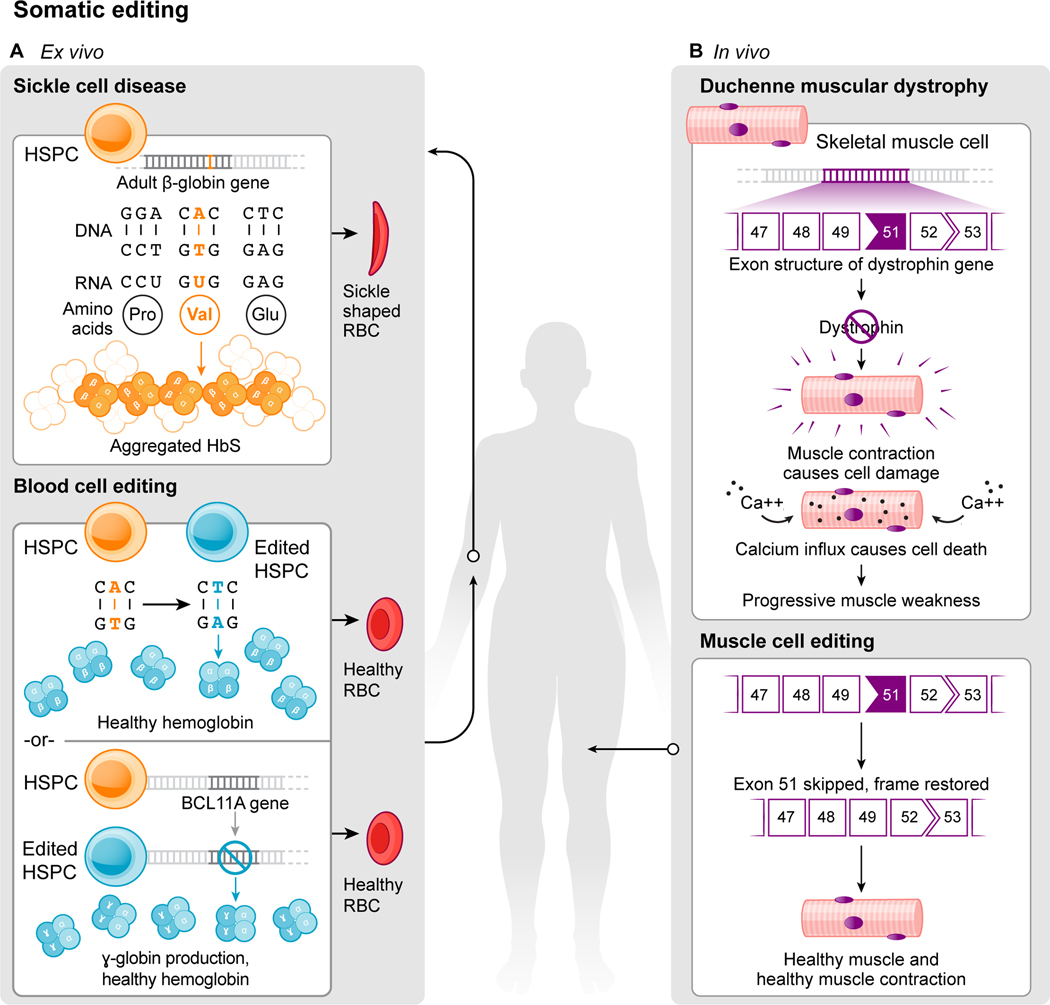
- Monogenic diseases are a major target: ~5,000 are known and affect at least 250 million individuals. Sickle cell disease, caused by a single A-to-T mutation in β-globin, could be treated ex vivo by correcting the mutation in hematopoietic stem/progenitor cells or reactivating γ-globin; ~100,000 US patients and millions more in African and Asian countries are potential candidates.
- Duchenne muscular dystrophy affects one in 5,000 males at birth and can involve >3,000 mutations, mostly at hotspots; restoring ~15% of normal dystrophin expression may provide clinical benefit. In animal studies, systemic AAV CRISPR delivery restored up to 90% dystrophin in ΔEx50 mice, and in dogs dystrophin levels were restored to 3–90% of normal with improved muscle appearance.
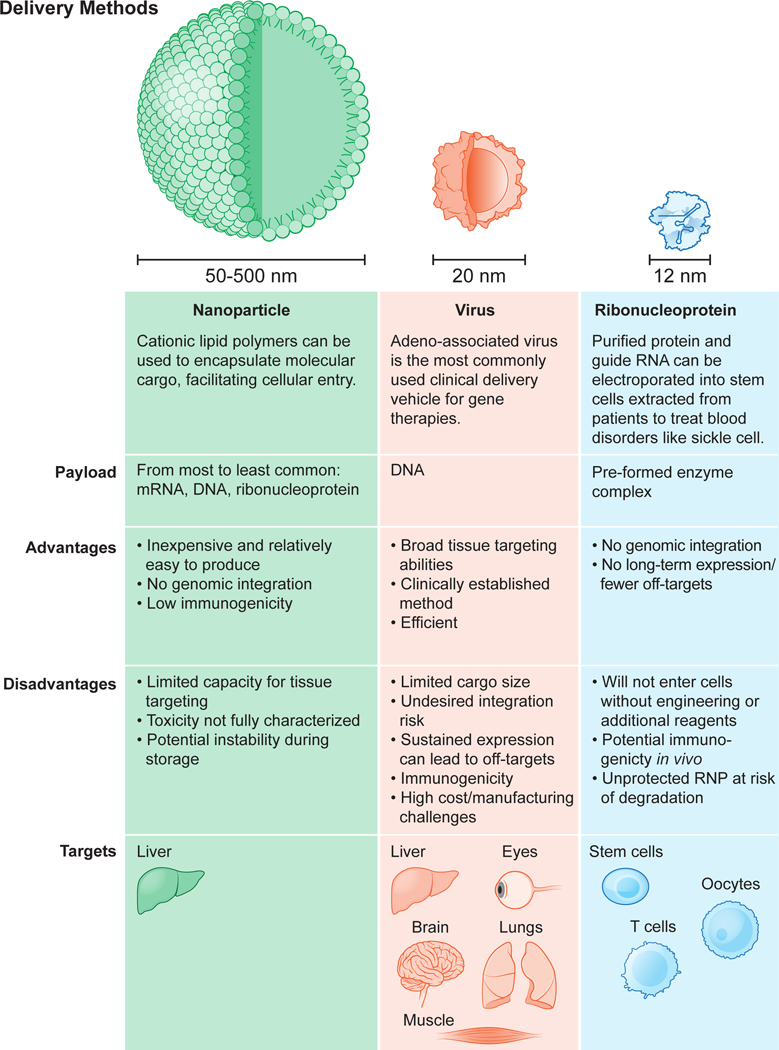
- Delivery is a central bottleneck: ex vivo editing favors electroporation of Cas9 ribonucleoprotein complexes, while in vivo delivery uses viral vectors such as AAV or lipid nanoparticles. AAV can carry only ~4.7 kb, not much larger than the 4.2 kb SpCas9 gene, so corrective insertion often requires two AAV vectors.
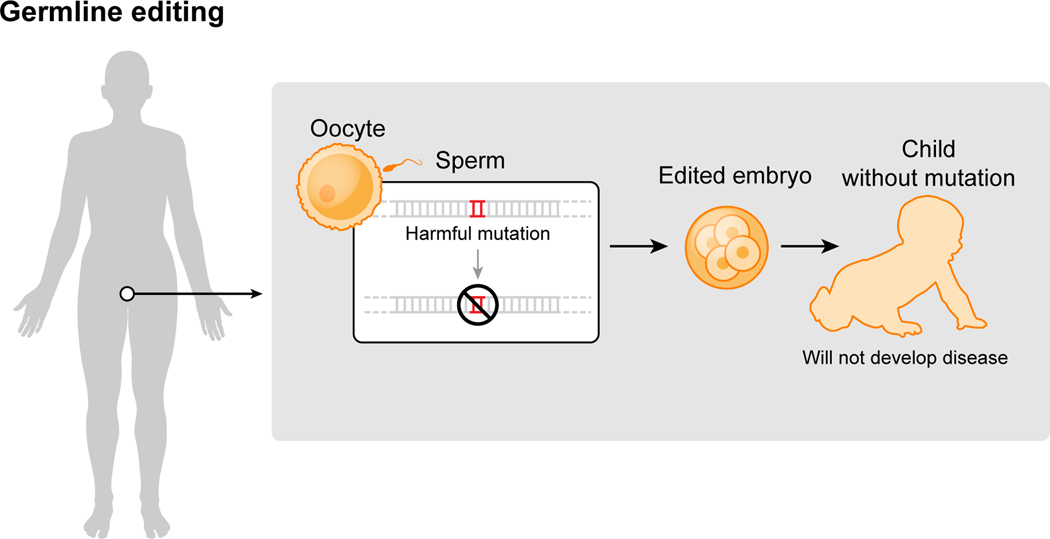
- Safety and governance concerns include off-target and imprecise editing, rare large deletions and complex rearrangements, possible immunogenicity from pre-existing Cas9 antibodies/T cells, and unresolved long-term safety. For germline editing, the paper states it is inappropriate to perform editing that culminates in human pregnancy at this time, while in vitro embryo/gamete research should be allowed with oversight.
Methods
- Narrative review by Jennifer A. Doudna; no systematic search strategy, primary dataset, or new experimental results are reported.
- Synthesizes CRISPR-Cas therapeutic genome editing, including sickle cell disease and DMD examples, delivery modalities, accuracy/safety issues, clinical development, and ethical/regulatory discussion of somatic versus germline editing.
- Draws on cited animal studies, early clinical trials, and international scientific/organizational positions; no sample size or formal analysis is stated in the paper.
Limitations
- Stated: delivery remains perhaps the biggest bottleneck to somatic genome editing; AAV has packaging, immunogenicity, and scalable GMP production/cost challenges, while lipid nanoparticles can be toxic and cell-type selective.
- Stated: off-target and imprecise editing, large deletions, and complex rearrangements occur at low frequency but could be clinically significant; immunogenicity and long-term safety/efficacy of edited cells in vivo remain largely unknown.
- Stated and evident: germline editing raises unresolved scientific questions about DNA repair in early human embryos and ethical/policy questions; as a review, the paper provides no new primary data and relies on cited studies and early-stage clinical information.
Model-written summary. Check it against the paper before relying on it.
Integrity signals
Registry
Cites
Statistics
Figures
Verification
Claims the paper makes
40 Valid · 10 Not valid · 12 Not checked · 36 Own results and interpretations
The cited sources support only part of this claim — read each source’s verdict below.
In the paper
“Engineered DNA-cleaving enzymes including zinc-finger nucleases (ZFNs) and transcription activator-like effector nucleases (TALENs) demonstrated the promise of therapeutic genome editing.”
What the sources say
- Not checked — no full text of the sourcecites [16] 16. Miller JC, Tan S, Qiao G, Barlow KA, Wang J, Xia DF, Meng X, Paschon DE, Leung E, Hinkley SJ, Dulay GP, Hua KL, Ankoudinova I, Cost GJ, Urnov FD, Zhang HS, Holmes MC, Zhang L, Gregory PD & Rebar EJ A TALE nuclease architecture for efficient genome editing. Nat. Biotechnol 29, 143-148 (2011). [PubMed: 21179091] source
- Not checked — no full text of the sourcecites [17] 17. Joglekar AV, Gray D, Kaufman ML, Urbinati F, Senadheera S, Cost G, Reik A, Holmes MC, Gregory PD, Hollis RP & Kohn DB Zinc Finger Nucleases Targeting The β -Globin Locus Drive Efficient Correction Of The Sickle Mutation In CD34+ Cells. Blood 122, 2904-2904 (2013). source
- Partly supportedcites [18] 18. Chang K-H, Smith SE, Sullivan T, Chen K, Zhou Q, West JA, Liu M, Liu Y, Vieira BF, Sun C, Hong VP, Zhang M, Yang X, Reik A, Urnov FD, Rebar EJ, Holmes MC, Danos O, Jiang H. & Tan S. Long-Term Engraftment and Fetal Globin Induction upon BCL11A Gene Editing in Bone-Marrow-Derived CD34+ Hematopoietic Stem and Progenitor Cells. Mol Ther Methods Clin Dev 4, 137-148 (2017). [PubMed: 28344999] sourceExperimental — accuracy not yet measured
The Results and Discussion describe ZFN-mediated BCL11A editing and call it a strong preclinical proof of concept for a potential sickle-cell therapy. The cited paper does not report a comparable demonstration using TALENs, so it supports the claim for ZFNs but not for both named enzyme types. (LLM, conf=0.88)
- Partly supportedcites [19] 19. Qasim W, Zhan H, Samarasinghe S, Adams S, Amrolia P, Stafford S, Butler K, Rivat C, Wright G, Somana K, Ghorashian S, Pinner D, Ahsan G, Gilmour K, Lucchini G, Inglott S, Mifsud W, Chiesa R, Peggs KS, Chan L, Farzeneh F, Thrasher AJ, Vora A, Pule M. & Veys P. Molecular remission of infant B-ALL after infusion of universal TALEN gene-edited CAR T cells. Sci. Transl. Med 9, 1-9 (2017). sourceExperimental — accuracy not yet measured
The Introduction reports first-in-human use of TALEN-edited T cells, and the Discussion says this application demonstrates the potential of gene-editing strategies for engineered cell therapies. The paper supports the claim about TALENs, but the passages do not establish the same point for ZFNs. (LLM, conf=0.88)
boostedstates a cause- Asserted: passes — The authors put it forward as true.
- Checkable: passes — It can be checked against evidence.
- Load-bearing: unclear — It is unclear whether the paper’s conclusions depend on it.
- Based: passes — The paper gives a reason why it holds.
The cited sources support only part of this claim — read each source’s verdict below.
In the paper
“Notably, restoration of a small percentage (~15%) of normal dystrophin expression levels can provide a clinical benefit 15 .”
What the sources say
- Partly supportedcites [15] 15. Long C, McAnally JR, Shelton JM, Mireault AA, Bassel-Duby R. & Olson EN Prevention of muscular dystrophy in mice by CRISPR/Cas9-mediated editing of germline DNA. Science 345, 1184-1188 (2014). [PubMed: 25123483] sourceExperimental — accuracy not yet measured
The supplied passages (labeled Abstract; page unavailable) report that correcting 17% of mutant Dmd alleles in mice restored dystrophin in many muscle fibers and reduced dystrophic features. They do not show that dystrophin expression was restored to ~15% of normal levels: 17% refers to gene correction, not protein expression. The reported benefits are in mice, not a demonstrated clinical benefit in patients. (LLM, conf=0.88)
plainstates a cause- Asserted: passes — The authors put it forward as true.
- Checkable: passes — It can be checked against evidence.
- Load-bearing: unclear — It is unclear whether the paper’s conclusions depend on it.
- Based: passes — The paper gives a reason why it holds.
- Partly supported
The cited sources support only part of this claim — read each source’s verdict below.
In the paper
“Cas9 protein-sgRNA complexes can be incorporated by assembly with DNA-linked particles 78,79 .”
What the sources say
- Partly supportedcites [78] 78. Glass Z, Li Y. & Xu Q. Nanoparticles for CRISPR-Cas9 delivery. Nat Biomed Eng 1, 854-855 (2017). [PubMed: 30147994] sourceExperimental — accuracy not yet measured
The formulation passage (Abstract; page not provided) describes a gold nanoparticle core surrounded by a Cas9–gRNA complex and a DNA repair template. This supports incorporating the complex into a particle, but the copy does not specify assembly with DNA-linked particles. (LLM, conf=0.80)
- Supportedcites [79] 80. Lee K, Conboy M, Park HM, Jiang F, Kim HJ, Dewitt MA, Mackley VA, Chang K, Rao A, Skinner C, Shobha T, Mehdipour M, Liu H, Huang W-C, Lan F, Bray NL, Li S, Corn JE, Kataoka K, Doudna JA, Conboy I. & Murthy N. Nanoparticle delivery of Cas9 ribonucleoprotein and donor DNA in vivo induces homology-directed DNA repair. Nat Biomed Eng 1, 889-901 (2017). [PubMed: 29805845] source
The Results and discussion section (‘Design and synthesis of CRISPR-Gold’; page unavailable) says donor DNA is attached to gold nanoparticles and Cas9 ribonucleoprotein is then adsorbed onto them. The Methods section (‘S5. Synthesis of CRISPR-Gold’; page unavailable) specifies that Cas9 and guide RNA are mixed before being added to the DNA-linked particles. (LLM, conf=0.94)
plainstates a cause- Asserted: passes — The authors put it forward as true.
- Checkable: passes — It can be checked against evidence.
- Load-bearing: unclear — It is unclear whether the paper’s conclusions depend on it.
- Based: passes — The paper gives a reason why it holds.
- Partly supported
The cited sources support only part of this claim — read each source’s verdict below.
In the paper
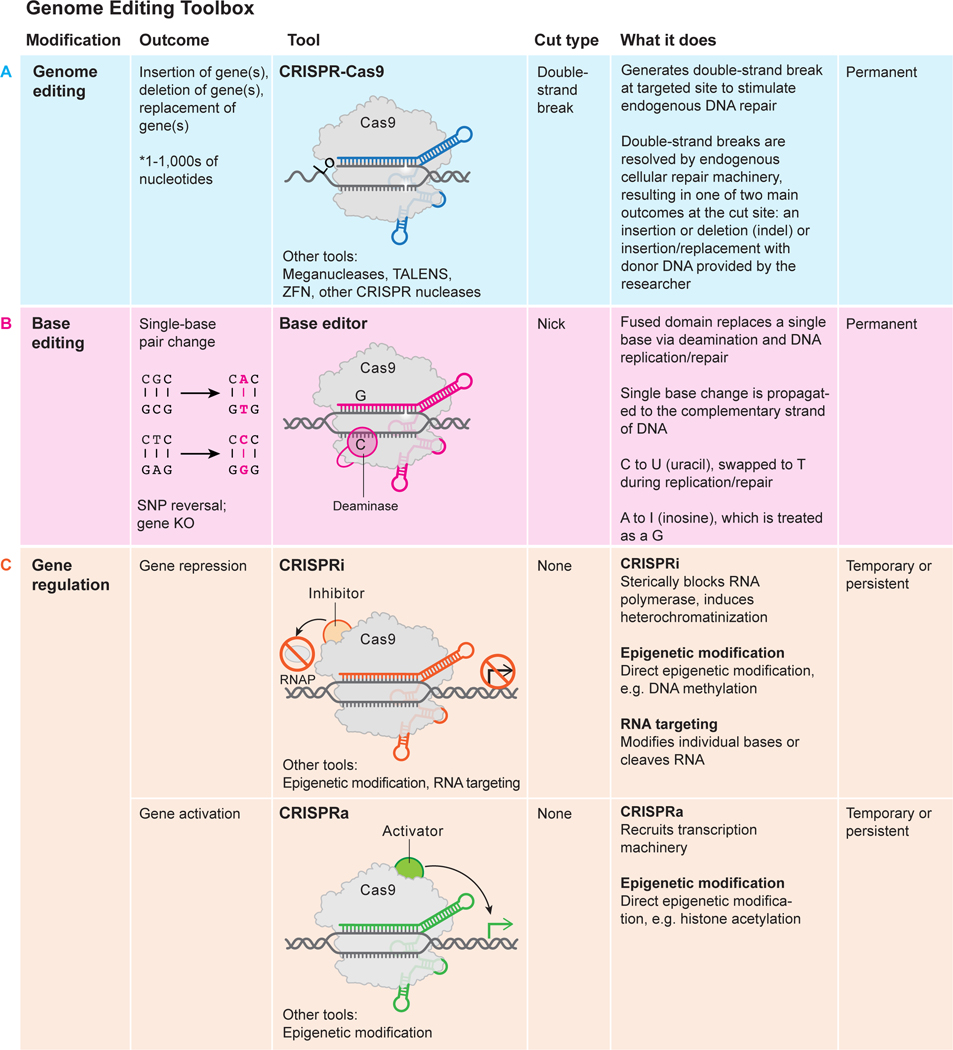
“In cells of all multicellular organisms, including humans, such double-stranded DNA breaks induce DNA repair by endogenous cellular pathways that can introduce alterations to the DNA sequence, including small sequence changes or genetic insertions 21,22 .”
What the sources say
- Not checked — no full text of the sourcecites [21] 21. Szostak JW, Orr-Weaver TL, Rothstein RJ & Stahl FW The double-strand-break repair model for recombination. Cell 33, 25-35 (1983). [PubMed: 6380756] *The authors proposed what was at the time a surprising mechanism for meiotic recombination, in which double-strand breaks that are enlarged to double-strand gaps initiate genetic recombination. This model has been proven largely correct, forming the basis for DNA repair-mediated genome editing. source
- Partly supportedcites [22] 22. Stark JM, Pierce AJ, Oh J, Pastink A. & Jasin M. Genetic steps of mammalian homologous repair with distinct mutagenic consequences. Mol. Cell. Biol 24, 9305-9316 (2004). [PubMed: 15485900] *This study demonstrated that double-strand DNA breaks in mammalian cells trigger - DNA repair that can introduce altered genomic sequences at the site of the repair. As a result, research focused increasingly on engineered enzymes capable of introducing targeted breaks in genomes, which would in turn produce site-specific genetic changes. sourceExperimental — accuracy not yet measured
The Abstract (page not provided) says that mammalian cells repair double-strand breaks through pathways that can cause deletions or insertions at the break site. It also discusses mutagenic repair associated with human disease. The paper does not establish that this applies to cells of all multicellular organisms, so the claim extends beyond its stated scope. (LLM, conf=0.87)
plainstates a cause- Asserted: passes — The authors put it forward as true.
- Checkable: passes — It can be checked against evidence.
- Load-bearing: passes — The paper’s conclusions depend on it.
- Based: passes — The paper gives a reason why it holds.
The sources with a verdict support this claim; the rest weren’t checked yet, have no full text we could read, or their verdicts aren’t rated yet.
In the paper
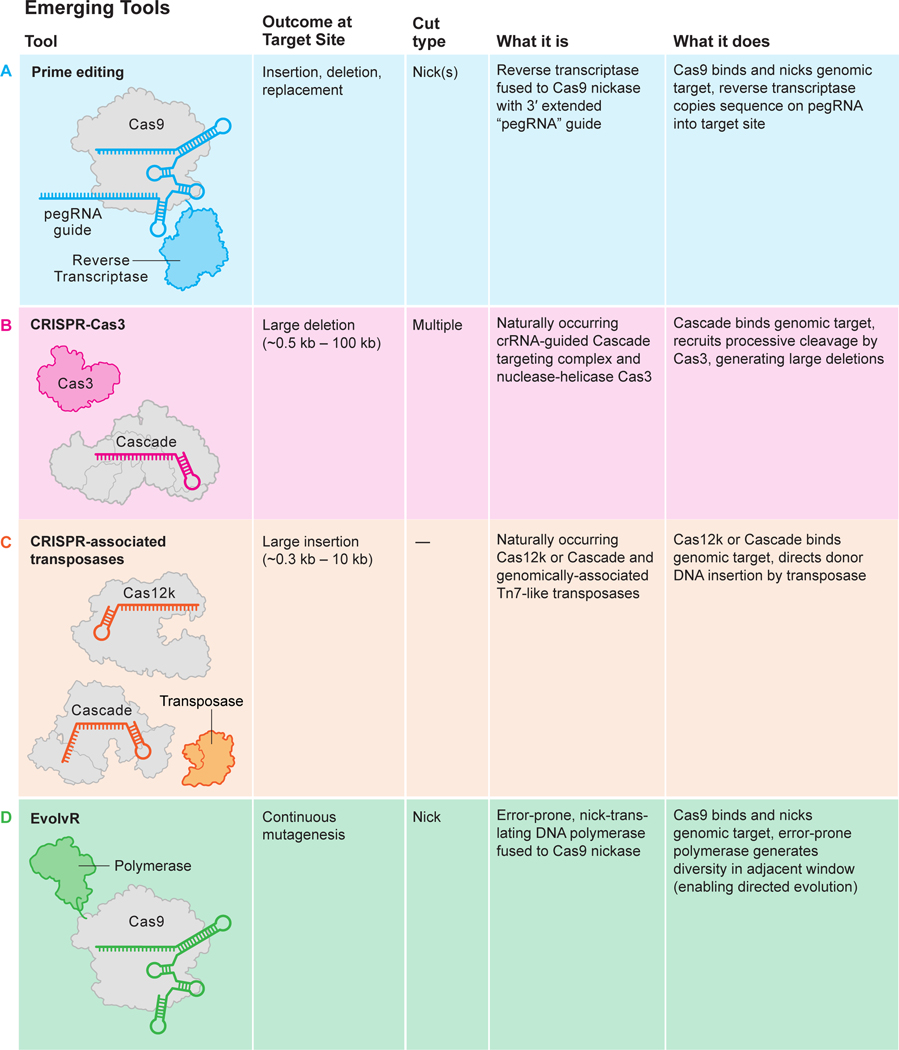
“Alternatives to DNA cleavage-induced editing include using CRISPR-Cas9 for direct chemical sequence alteration (base editing) 25,26 , providing RNA templates for gene alteration (prime editing) 27,28 , and for transcriptional control (CRISPR interference, CRISPRi; CRISPR activation, CRISPRa) 29,30 (Fig. 3).”
What the sources say
- Supportedcites [25] 25. Komor AC, Kim YB, Packer MS, Zuris JA & Liu DR Programmable editing of a target base in genomic DNA without double-stranded DNA cleavage. Nature 533, 420-424 (2016). [PubMed: 27096365] *In this study, CRISPR-Cas9 was fused to a DNA editing enzyme that enables targeted nucleotide editing at genomic locations recognized by Cas9. By avoiding double strand breaks in the DNA, the authors proposed that undesired DNA repair could be avoided. sourceExperimental — accuracy not yet measured
The Abstract describes a CRISPR/Cas9-based editor that directly converts a target DNA base without a double-stranded break or donor template. This supports the base-editing clause to which this citation is attached; the prime-editing and CRISPRi/CRISPRa clauses have separate citations. (LLM, conf=0.94)
- Not checked — no full text of the sourcecites [26] 26. Nishida K, Arazoe T, Yachie N, Banno S, Kakimoto M, Tabata M, Mochizuki M, Miyabe A, Araki M, Hara KY, Shimatani Z. & Kondo A. Targeted nucleotide editing using hybrid prokaryotic and vertebrate adaptive immune systems. Science 353, (2016). *In this study, CRISPR-Cas9 was fused to a DNA editing enzyme that enables targeted nucleotide editing at genomic locations recognized by Cas9. Instead of inducing double strand break repair, this editing form of Cas9 enables individual base pairs to be altered within cells. source
- Could not verifycites [27] 27. Sharon E, Chen S-AA, Khosla NM, Smith JD, Pritchard JK & Fraser HB Functional Genetic Variants Revealed by Massively Parallel Precise Genome Editing. Cell 175, 544-557.e16 (2018). [PubMed: 30245013] *This study was the first to show that an RNA template could be used together with a Cas9-reverse transcriptase fusion protein to introduce small targeted changes in cellular genomes. sourceExperimental — accuracy not yet measured
The citation is attached to the sentence’s claim about CRISPRi/CRISPRa for transcriptional control. The Introduction and Results describe Cas9 cleavage followed by donor-directed repair, not CRISPRi or CRISPRa; searches for those terms and transcriptional control found no passage addressing that claim. The References mention base editing, but do not establish the claim for which this citation is offered. (LLM, conf=0.75)
- Supportedcites [28] 28. Anzalone AV, Randolph PB, Davis JR, Sousa AA, Koblan LW, Levy JM, Chen PJ, Wilson C, Newby GA, Raguram A. & Liu DR Search-and-replace genome editing without double-strand breaks or donor DNA. Nature (2019). doi:10.1038/s41586-019-1711-4 *This study explored the use of a CRISPR-Cas9-reverse transcriptase fusion protein together with extended guide RNA templates to introduce small sequence changes within ~50 base pairs of the location of Cas9 binding. sourceExperimental — accuracy not yet measured
The citation is attached to the prime-editing part of the sentence, not the claims about base editing or CRISPRi/CRISPRa. The Abstract and “Prime editing strategy” section describe an edit-encoding RNA guide whose information is copied into target DNA without a double-strand break or donor DNA template. (LLM, conf=0.93)
- Supportedcites [29] 29. Qi LS, Larson MH, Gilbert LA, Doudna JA, Weissman JS, Arkin AP & Lim WA Repurposing CRISPR as an RNA-guided platform for sequence-specific control of gene expression. Cell 152, 1173-1183 (2013). [PubMed: 23452860] *This study demonstrated the use of a catalyticallydeactivated form of CRISPR-Cas9 for transcriptional control in cells. source
The citation is attached to the transcriptional-control portion of the sentence, not the base- or prime-editing examples. In “CRISPRi as a Platform for Engineering Transcriptional Regulatory Networks” (page not provided), the paper describes CRISPRi as a dCas9-based approach to targeted gene regulation, including transcriptional repression and potential activation, without altering the target sequence. (LLM, conf=0.92)
- Supportedcites [30] 30. Gilbert LA, Horlbeck MA, Adamson B, Villalta JE, Chen Y, Whitehead EH, Guimaraes C, Panning B, Ploegh HL, Bassik MC, Qi LS, Kampmann M. & Weissman JS Genome-Scale CRISPRMediated Control of Gene Repression and Activation. Cell 159, 647-661 (2014). [PubMed: 25307932] sourceExperimental — accuracy not yet measured
The citation is attached to the transcriptional-control part of the sentence, not to base or prime editing. The Introduction (page not supplied) describes the use of CRISPRi to repress and CRISPRa to activate transcription, and reports applying both methods to control gene expression. (LLM, conf=0.94)
plain- Asserted: passes — The authors put it forward as true.
- Checkable: passes — It can be checked against evidence.
- Load-bearing: unclear — It is unclear whether the paper’s conclusions depend on it.
- Based: passes — The paper gives a reason why it holds.
- Supported
45 more claims · 23 with their cited sources checked
Create a free account to see all 98 claims and to verify the 5 references still open.
- It may state two separate claims as one. 33
- Probably not a substantial claim. 23
Claims other papers make about this one
Each is checked against this paper’s own text: does it say what the citing paper says it does?
The source backs part of the claim, not all of it — or backs it for a different population, condition or comparison.
In the citing paper
“CRISPR-Cas dominates the field because of the ease of using guide RNAs directing the CRISPR complex to specific DNA sequences and the increasing ability to target most sites in the genome.121,122”
From Fetal hemoglobin in sickle cell anemia (2020) · cites this paper as [121]
Experimental — accuracy not yet measured
Citations
Cites
A Programmable Dual-RNA–Guided DNA Endonuclease in Adaptive Bacterial Immunity
Jinek, M., Chylinski, K., Fonfara, I., Hauer, M., Doudna, J. A., & Charpentier, E. (2012) · Science · doi:10.1126/science.1225829 · Cited by 17,116
Self-citationMultiplex Genome Engineering Using CRISPR/Cas Systems
Cong, L., Ran, F. A., Cox, D., Lin, S., Barretto, R., Habib, N., Hsu, P. D., Wu, X., Jiang, W., Marraffini, L. A., et al. (2013) · Science · doi:10.1126/science.1231143 · Cited by 15,339
RNA-Guided Human Genome Engineering via Cas9
Mali, P., Yang, L., Esvelt, K. M., Aach, J., Guell, M., DiCarlo, J. E., Norville, J. E., & Church, G. M. (2013) · Science · doi:10.1126/science.1232033 · Cited by 9,210
Programmable editing of a target base in genomic DNA without double-stranded DNA cleavage
Komor, A. C., Kim, Y. B., Packer, M. S., Zuris, J. A., & Liu, D. R. (2016) · Nature · doi:10.1038/nature17946 · Cited by 5,437
Repurposing CRISPR as an RNA-Guided Platform for Sequence-Specific Control of Gene Expression
Qi, L. S., Larson, M. H., Gilbert, L. A., Doudna, J. A., Weissman, J. S., Arkin, A. P., & Lim, W. A. (2013) · Cell · doi:10.1016/j.cell.2013.02.022 · Cited by 5,016
Self-citationSearch-and-replace genome editing without double-strand breaks or donor DNA
Anzalone, A. V., Randolph, P. B., Davis, J. R., Sousa, A. A., Koblan, L. W., Levy, J. M., Chen, P. J., Wilson, C., Newby, G. A., Raguram, A., et al. (2019) · Nature · doi:10.1038/s41586-019-1711-4 · Cited by 4,767
Programmable base editing of A•T to G•C in genomic DNA without DNA cleavage
Gaudelli, N. M., Komor, A. C., Rees, H. A., Packer, M. S., Badran, A. H., Bryson, D. I., & Liu, D. R. (2017) · Nature · doi:10.1038/nature24644 · Cited by 4,184
CRISPR-Mediated Modular RNA-Guided Regulation of Transcription in Eukaryotes
Gilbert, L. A., Larson, M. H., Morsut, L., Liu, Z., Brar, G. A., Torres, S. E., Stern-Ginossar, N., Brandman, O., Whitehead, E. H., Doudna, J. A., et al. (2013) · Cell · doi:10.1016/j.cell.2013.06.044 · Cited by 3,696
Self-citationGasiunas, G., Barrangou, R., Horvath, P., & Siksnys, V. (2012) · Proceedings of the National Academy of Sciences · doi:10.1073/pnas.1208507109 · Cited by 2,769
Genome-Scale CRISPR-Mediated Control of Gene Repression and Activation
Gilbert, L. A., Horlbeck, M. A., Adamson, B., Villalta, J. E., Chen, Y., Whitehead, E. H., Guimaraes, C., Panning, B., Ploegh, H. L., Bassik, M. C., et al. (2014) · Cell · doi:10.1016/j.cell.2014.09.029 · Cited by 2,728
Cited by
Items 701–800 of 1,131
Recent Progress in Biomedical Applications of Chitosan Derivatives as Gene Carrier
Zhao, P.-S., Wang, Y., Sun, W., Qi, L., Hu, L., Zhou, T., Xing, L., Cho, K., Li, C., Cho, C., et al. (2021) · Advances in polymer science · doi:10.1007/12_2021_106 · Cited by 5
Tailoring Cardiac Synthetic Transcriptional Modulation Towards Precision Medicine
Schoger, E., Lelek, S., Panáková, D., & Zelarayan, L. C. (2022) · Frontiers in Cardiovascular Medicine · doi:10.3389/fcvm.2021.783072 · Cited by 4
Yu, Y., Li, A., Li, S., Zheng, B., Ma, J., Liu, Y., Kou, X., & Xue, Z. (2022) · Food & Function · doi:10.1039/d1fo04312a · Cited by 3
Deciphering the QR Code of the CRISPR-Cas9 System: Synergy between Gln768 (Q) and Arg976 (R)
Daskalakis, V. (2022) · ACS Physical Chemistry Au · doi:10.1021/acsphyschemau.2c00041 · Cited by 4
A Review on CRISPR/Cas9 as a Novel Technique for Cancer Therapy
Saleem, A. A., & Al-Kelaby, K. K. A. (2022) · Cellular Therapy and Transplantation · doi:10.18620/ctt-1866-8836-2022-11-3-4-10-24 · Cited by 3
Li, Y., Cooper, B. H., Liu, Y., Wu, D., Zhang, X., Rohs, R., & Qin, P. Z. (2023) · Biochemistry · doi:10.1021/acs.biochem.3c00250 · Cited by 5
On the path to evidence-based therapy in neuromuscular disorders
Younger, D. S. (2023) · Handbook of clinical neurology · doi:10.1016/b978-0-323-98818-6.00007-8 · Cited by 3
Hiramoto, T., Inaba, H., Baatartsogt, N., Kashiwakura, Y., Hayakawa, M., Kamoshita, N., Nishimasu, H., Nureki, O., Kinai, E., & Ohmori, T. (2023) · Blood Advances · doi:10.1182/bloodadvances.2023010838 · Cited by 3
“4,5 Among them, techniques that speci fi cally normalize a patient ’ s genetic variant, including base editing or prime editing, are considered the ultimate personalized therapy for genetic diseases.”
MethodBarriga, F. M., & Lowe, S. W. (2024) · Nature Protocols · doi:10.1038/s41596-024-00953-9 · Cited by 4
Prime editing and its application in beta-hemoglobinopathies
Das, S. S. (2024) · The Nucleus · doi:10.1007/s13237-024-00470-w · Cited by 4
Pasch, T., Bäumer, N., Bäumer, S., Buchholz, F., & Mootz, H. D. (2024) · Journal of Peptide Science · doi:10.1002/psc.3592 · Cited by 3
“1,5 Delivery of the preformed RNP complex produces fewer off-target effects than the delivery via plasmids carrying the genetic information for Cas9 and the sgRNA.”
BackgroundConti, D. M., Backer, V., Kirsten, B., Bjermer, L. H., Chaker, A. M., Dramburg, S., Gaga, M., Gappa, M., Gevaert, P., Hamelmann, E. H., et al. (2024) · Pediatric Allergy and Immunology · doi:10.1111/pai.14183 · Cited by 3
Recent progress in CRISPR-Cas-system for neurological disorders
Mishra, S., Banerjee, S., Tiwari, B. S., & Tiwari, A. K. (2024) · Progress in molecular biology and translational science · doi:10.1016/bs.pmbts.2024.07.017 · Cited by 3
Wilson, G. N. (2024) · Elsevier eBooks · doi:10.1016/b978-0-443-19176-3.00053-4 · Cited by 3
Wei, S. C., Cantor, A. J., Walleshauser, J., Mepani, R. J., Melton, K., Bans, A., Khekare, P., Gupta, S., Wang, J., Soares, C., et al. (2025) · PLoS ONE · doi:10.1371/journal.pone.0317387 · Cited by 3
Evolutionary Timeline of Genetic Delivery and Gene Therapy
Holl, N. J., Lee, H., & Huang, Y. (2020) · Current Gene Therapy · doi:10.2174/1566523220666201208092517 · Cited by 3
How to Kinetically Dissect an RNA Machine
Das, R., & Russell, R. (2021) · Biochemistry · doi:10.1021/acs.biochem.1c00392 · Cited by 3
Genome editing approaches applied to microalgae-based fuels
Liu, K., Chen, R., Yang, R., Chen, Y. H., Zhu, C., Tang, Y. Z., & Kong, F. (2022) · Elsevier eBooks · doi:10.1016/b978-0-323-90971-6.00013-9 · Cited by 4
Fossicking for microbial defense system: novel antiviral immunity
Lin, P., Wu, Q., & Wu, M. (2020) · Signal Transduction and Targeted Therapy · doi:10.1038/s41392-020-00423-0 · Cited by 3
Bujakowska, K. M., & Dryja, T. P. (2022) · Springer eBooks · doi:10.1007/978-3-030-42634-7_146 · Cited by 3
Massively Targeted Evaluation of Therapeutic CRISPR Off-Targets in CellsPreprint
Pan, X., Qu, K., Yuan, H., Xiang, X., Anthon, C., Pashkova, L., Liang, X., Han, P., Corsi, G. I., Xu, F., et al. (2022) · Research Square · doi:10.21203/rs.3.rs-1427273/v1 · Cited by 3
Clinical Applications of “Omics” Technology as a Bioinformatic Tool
Chavda, V. P., Bezbaruah, R., Valu, D., Desai, S., Chauhan, N., Marwadi, S., Deka, G., & Ding, Z. (2023) · Wiley eBooks · doi:10.1002/9781119865728.ch7 · Cited by 9
High-Fidelity, Hyper-Accurate, and Evolved Mutants Rewire Atomic Level Communication in CRISPR-Cas9Preprint
Skeens, E., Sinha, S., Ahsan, M., et al. (2023) · bioRxiv (Cold Spring Harbor Laboratory) · doi:10.1101/2023.08.25.554853 · Cited by 3
Helalat, S. H., Kristinsdóttir, H. T., Petersen, A. D., Coronel‐Tellez, R. H., Boye, M. N., & Sun, Y. (2025) · International Journal of Biological Macromolecules · doi:10.1016/j.ijbiomac.2025.141583 · Cited by 2
Bacterial directed evolution of CRISPR base editors
Mach, R. Q., & Miller, S. M. (2025) · Methods in enzymology on CD-ROM/Methods in enzymology · doi:10.1016/bs.mie.2025.01.003 · Cited by 3
exoCasMINI: A T5 exonuclease fused CRISPR-Cas12f system with enhanced gene editing efficiency
Liao, K., Chen, K., Ma, S., Yang, X., Chen, P., Li, S., Li, M., Zhang, X., & Lin, Y. (2025) · iScience · doi:10.1016/j.isci.2025.113171 · Cited by 6
Cell Membrane Engineering for Advancing Cancer Immunotherapy
Li, T., Liu, B., Dong, C., & Chang, Y. (2025) · Springer eBooks · doi:10.1007/978-3-031-93425-4_11 · Cited by 3
Pioneering next-generation mRNA therapeutics through molecular engineering and delivery optimization
Qi, L., Li, Z., Feng, Z., Liu, J., & Chen, X. S. (2025) · Materials Today · doi:10.1016/j.mattod.2025.08.023 · Cited by 3
China’s biosafety/biosecurity governance: evolution, challenges, and architecture design
Min, K., Zhang, Y., Liu, J., Yang, J., Cao, F., Peng, Z., & Liu, D. (2025) · Frontiers of Medicine · doi:10.1007/s11684-025-1158-y · Cited by 4
Codon changes challenge PCR-based gene doping detection
Wu, D., Ding, S., Liu, N., Shi, Y. Y., Su, P., Shi, H., Shi, Y., Han, B., Cheng, S., Ren, X., et al. (2025) · Gene Therapy · doi:10.1038/s41434-025-00569-y · Cited by 3
“Recent advancements in genetic/genomic manipulation techniques (such as gene transfer/delivery, gene editing, etc .) have released their great application potentials in not only basic research but also clinical treatment [1 – 3].”
Neuronal FSTL4 negatively regulates BDNF-mediated neuron-glioma interaction
Sun, Y., Xiao, M., Wang, X., Xu, Y., Chen, A., Li, B., Feng, B., & Tao, B. (2025) · Neurochemistry International · doi:10.1016/j.neuint.2025.106072 · Cited by 4
CRISPR–Cas9 mediated gene therapy in inherited bone marrow failure syndromes
Hewa, N. J. S. M., Rajendra, K. C., Hewitt, A. W., & Fairfax, K. A. (2025) · Frontiers in Hematology · doi:10.3389/frhem.2025.1713610 · Cited by 2
Pham, N. N., Chien, C.-H., Chang, C.-W., & Hu, Y. (2025) · Journal of the Taiwan Institute of Chemical Engineers · doi:10.1016/j.jtice.2025.106548 · Cited by 4
Assembly/disassembly-based targeting protein degradation systems for cancer therapy
Yan, H., Liu, X., Xu, Y. J., Liang, G., & Wu, X. (2025) · EngMedicine · doi:10.1016/j.engmed.2025.100115 · Cited by 2
Bian, W., McQuarrie, D. W. J., Haussmann, I. U., Arnold, R. R., & Soller, M. (2025) · Functional & Integrative Genomics · doi:10.1007/s10142-025-01775-y · Cited by 2
“…9 (Cas9) that can induce RNA guided site-specific double-strand breaks in DNA to facilitate homolo - gous recombination by a template provided (Doudna 2020, Garcia-Doval and Jinek 2017, Hille et al. 2018, Jiang and In Drosophila , the X chromosome accounts for 20% of the Drosophila genome and…”
Towards societal alignment in the governance of human germline genome editing in the Netherlands
van der Weij, F., Bührman, E. A. M., van El, C. G., Arets, D., Timmis, J. K., & van Baalen, S. (2025) · Journal of Responsible Innovation · doi:10.1080/23299460.2025.2587982 · Cited by 4
Goswami, S. G., Gupta, P., Arvinden, V. R., Bhargava, N., Iyer, A. R., Saravanakumar, V., Yadav, P., Jha, S. K., Singh, S., Kumar, A., et al. (2025) · Stem Cell Research & Therapy · doi:10.1186/s13287-025-04582-1 · Cited by 3
“CRISPR-mediated double-strand break (DSB) repair via non-homologous end joining (NHEJ) has advantages over homology-directed repair (HDR) for β-globin gene editing in β-hemoglobinopathies [21, 22].”
Wang, B., Li, Y., Zhao, H., Yin, T., Xi, Z., Li, B., Chen, R., Xu, X., Qin, L., & Chu, X. (2025) · Applied Materials Today · doi:10.1016/j.apmt.2025.102914 · Cited by 6
Ethical and Regulatory Considerations for Developing Gene Therapies Involving Genome Editing
Gouda, P., Cohen, L. W., Berelowitz, K., Bollinger, J. M., Bruno, J., Cehelsky, J. E., Charo, R. A., Harrop, J., Kahn, J., McGuire, A., et al. (2026) · Human Gene Therapy · doi:10.1177/10430342261430765 · Cited by 2
“12 Similarly, there can be unintended editing effects in the vicinity of the on-target site, where large deletions, insertions, or chromosomal rearrangements may lead to reduced ef fi cacy or altered gene expression.”
Atopic dermatitis: Multi-omics insights into microbiota-driven modulation of the gut–skin axis
Xie, M., Kong, L., Hou, L., Chen, Y., & Hou, J. (2026) · Microbial Pathogenesis · doi:10.1016/j.micpath.2026.108504 · Cited by 3
Pavitra, E., Kumbhakar, M., Kim, B., Gupta, V. S., Gupta, P., Lee, J., Han, Y.-K., Bhaskar, L. V., Raju, G. S. R., & Huh, Y. S. (2026) · Cytokine & Growth Factor Reviews · doi:10.1016/j.cytogfr.2026.04.003 · Cited by 2
Lipid tail heterogeneity enables organ-selective mRNA delivery for in vivo CRISPR-Cas9 gene editing
Liao, J., Zeng, L., Zhang, Z., Tang, Y., Harmon, J. F., Liu, F., Ren, Y., Shen, Q., Liao, H., Jiang, M., et al. (2026) · Materials Today · doi:10.1016/j.mattod.2026.103373 · Cited by 3
Multicellular systems to translate somatic cell genome editors to human
Hernandez‐Gordillo, V., Casolaro, T. C., Ebrahimkhani, M. R., & Kiani, S. (2020) · Current Opinion in Biomedical Engineering · doi:10.1016/j.cobme.2020.100249 · Cited by 2
Using Genome Editing for Alzheimer’s Disease Therapy: from Experiment to Clinic
Stepanichev, M. Y. (2021) · Neurochemical Journal · doi:10.1134/s1819712421040139 · Cited by 2
Exploring the mysteries of reproductive health
Qiao, J. (2022) · Medical Review · doi:10.1515/mr-2022-0036 · Cited by 2
“In recent years, genome editing technology has advanced and been applied to treat inherited diseases [6].”
BackgroundGenome editing before CRISPR: The gnostic bible
Kmiec, E. B. (2023) · Molecular Therapy — Nucleic Acids · doi:10.1016/j.omtn.2023.02.006 · Cited by 2
“A brief literature search conjures up a series of reviews centered on recent advancements in gene editing of mammalian cells.(1,2) Cleverly, certain authors define that early-stage period, preceding the democratization of CRISPRCas, as.”
BackgroundDrug discovery: Chaos can be your friend or your enemy
Miller, S. M., Moos, W. H., Munk, B. H., Munk, S. A., Hart, C. P., & Spellmeyer, D. C. (2023) · Elsevier eBooks · doi:10.1016/b978-0-12-824304-6.00012-2 · Cited by 4
An, Y., Chen, X., He, J., Ge, Y., Liu, Q. L., Men, D., Xu, K., & Li, D. (2023) · Angewandte Chemie · doi:10.1002/ange.202303973 · Cited by 2
A critical view of the revolution of precision medicine: genetics, epigenetics, sex, and gender
Glezerman, M., Ciechanover, A. J., & Legato, M. J. (2023) · Elsevier eBooks · doi:10.1016/b978-0-12-823937-7.00004-3 · Cited by 3
A Primer on Gene Editing: What Does It Mean for Pathologists?
Cushman‐Vokoun, A. M., Schmidt, R. J., Hiemenz, M., Fung, M. K. Y., Zhang, B. M., Bradshaw, G., Gandhi, M. J., Yao, J., Yohe, S. L., Beckman, A. K., et al. (2023) · Archives of Pathology & Laboratory Medicine · doi:10.5858/arpa.2022-0410-cp · Cited by 2
Development, modeling, and control of a syringe-based picoliter-scale microinjection system
Hong, Y., Bi, H., Wei, J., et al. (2023) · Precision Engineering · doi:10.1016/j.precisioneng.2023.09.011 · Cited by 2
Strategies for HIV-1 suppression through key genes and cell therapy
Sorokina, A. V., Anchakova, E., & Dashinimaev, E. B. (2023) · Frontiers in Medicine · doi:10.3389/fmed.2023.1259995 · Cited by 7
“Most CRISPR-based tools have undergone intensive review (103–106).”
BackgroundLi, B., Li, Q., Qi, Z., Li, Z., Yan, X., Chen, Y., Xu, X., Pan, Q., Chen, Y., Huang, F., et al. (2024) · Angewandte Chemie · doi:10.1002/ange.202316323 · Cited by 2
Kang, W., Xiao, F., Zhu, X., Ling, X., Xie, S., Li, R., Yu, P., Cao, L., Lei, C., Qiu, Y., et al. (2024) · Angewandte Chemie · doi:10.1002/ange.202400599 · Cited by 3
Validation for the function of protein C in mouse models
Liu, Y., Cai, M., Chen, Y., et al. (2024) · PeerJ · doi:10.7717/peerj.17261 · Cited by 2
“The CRISPR/Cas9 system has been extensively used in various studies, including genome editing, base editing, transcriptional regulation, and epigenetic modification ( Doudna, 2020 ).”
MethodA comprehensive Review on Genomic Approaches for Insect Pest Management
Pujar, K., Pagire, K. S., Archana, B. R., Purushotham, P., Chakrabarty, S., Muwel, K., Saikia, R., & Kumar, A. (2024) · Journal of Agriculture and Ecology Research International · doi:10.9734/jaeri/2024/v25i3602 · Cited by 2
Structure and engineering of Brevibacillus laterosporus Cas9
Nakane, T., Nakagawa, R., Ishiguro, S., Okazaki, S., Mori, H., Shuto, Y., Yamashita, K., Yachie, N., Nishimasu, H., & Nureki, O. (2024) · Communications Biology · doi:10.1038/s42003-024-06422-z · Cited by 4
“Since SpCas9 with its ,ithasbeenwidelyusedfornumeroustechnologies,suchas genomeediting,transcriptionalregulation,andepigeneticmodulation 4 .”
The Emerging Field of In Vitro Gametogenesis: Perspectives in Social Science and Bioethics
Merleau‐Ponty, N., & Goff, A. L. (2024) · Current Sexual Health Reports · doi:10.1007/s11930-024-00401-5 · Cited by 2
Nanoparticles and the treatment of hepatocellular carcinoma
Zhang, Z., Cao, W., Li, X., Deng, W., Jiang, T., Wang, S., Liu, Y., Lin, Y., Bi, X., Yao, L., et al. (2024) · Nanotechnology Reviews · doi:10.1515/ntrev-2024-0134 · Cited by 2
“Among these, clustered, regularly interspaced short palindromic repeats (CRISPR) and CRISPR-associated nuclease protein 9 (Cas9) have been shown to be a powerful genome editing tool [211].”
Preclinical development of genome editing to treat Duchenne muscular dystrophy by exon skipping
Padmaswari, M. H., Agrawal, S., & Nelson, C. E. (2025) · Journal of Neuromuscular Diseases · doi:10.1177/22143602251326993 · Cited by 3
“18 A recent milestone includes the approval by the FDA of the fi rst CRISPR treatment for sickle cell disease, marking a signi fi cant breakthrough in the fi eld of genomic medicine.”
Polyvalent Nucleic Acid Nanoprobes for Cancer Diagnosis and Therapy
Ma, W., Li, J., Zhang, H., Quan, K., Lei, Y., Yang, L., Wu, L., & Qing, Z. (2025) · Chemistry - A European Journal · doi:10.1002/chem.202404760 · Cited by 2
In Vivo Genome Engineering for the Treatment of Muscular Dystrophies
Kustermann, M., Rok, M. J., Cohn, R. D., & Ivakine, E. A. (2020) · Current Stem Cell Reports · doi:10.1007/s40778-020-00173-3 · Cited by 2
Gene Editing: How Can You Ask “Whether” If You Don't Know “How”?
Cwik, B. (2021) · The Hastings Center Report · doi:10.1002/hast.1256 · Cited by 3
Rahman, M. L., Hyodo, T., Hasan, M. N., Mihara, Y., Karnan, S., Ota, A., Tsuzuki, S., Hosokawa, Y., & Konishi, H. (2021) · Bioscience Reports · doi:10.1042/bsr20212231 · Cited by 2
Newton, M. D., Taylor, B., Cuomo, M. E., & Rueda, D. (2022) · Methods in molecular biology · doi:10.1007/978-1-0716-2229-2_13 · Cited by 4
Gene Editing in Human Haematopoietic Stem Cells for the Treatment of Primary Immunodeficiencies
Bahal, S., Karaxhuku, K., & Santilli, G. (2022) · Molecular Diagnosis & Therapy · doi:10.1007/s40291-022-00618-x · Cited by 2
“In the last two decades, the discovery of DNA endonucleases that create breaks in a specific DNA locus have paved the way for precision medicine by gene editing [6].”
BackgroundThe development of SpCas9 variants with high specificity and efficiency based on the HH Theory
Wang, G., Wang, C. M., Wu, X., Chu, T., Huang, D., & Li, J. (2024) · Molecular Biology · doi:10.31857/s0026898424010158 · Cited by 2
Precision Cas9 Genome Editing in vivo with All-in-one, Self-targeting AAV VectorsPreprint
Ibraheim, R., Tai, P. W. L., Mir, A., Javeed, N., Wang, J., Rodríguez, T., Nelson, S. J., Khokhar, E. S., Mintzer, E., Maitland, S. A., et al. (2020) · bioRxiv (Cold Spring Harbor Laboratory) · doi:10.1101/2020.10.09.333997 · Cited by 3
A novel high-accuracy genome assembly method utilizing a high-throughput workflowPreprint
Zeng, Q., Cao, W., Xing, L., Qin, G., Wu, J., Nagle, M. F., Xiong, Q., Chen, J., Yang, L., Bajaj, P., et al. (2020) · bioRxiv (Cold Spring Harbor Laboratory) · doi:10.1101/2020.11.26.400507 · Cited by 3
Gene editing is suitable to treat GM1 Gangliosidosis: a proof-of-concept studyPreprint
Leclerc, D., Goujon, L., Jaillard, S., Nouyou, B., Cluzeau, L., Damaj, L., Dubourg, C., Etcheverry, A., Levade, T., Froissart, R., et al. (2022) · bioRxiv (Cold Spring Harbor Laboratory) · doi:10.1101/2022.04.17.488473 · Cited by 2
Intrinsic RNA targeting constrains the utility of CRISPR-Cas13 systemsPreprint
Li, Z., Li, Z., Cheng, X., Wang, X., Ma, S., Wang, S., Lu, Z., Zhang, H., Zhao, W., Chen, Z., et al. (2022) · bioRxiv (Cold Spring Harbor Laboratory) · doi:10.1101/2022.05.14.491940 · Cited by 2
“Among them, viral vector-based delivery represents one of the mainstream approaches (Doudna, 2020; Komor et al., 2017).”
BackgroundMultiplex Epigenome Editing of MECP2 to Rescue Rett Syndrome NeuronsPreprint
Qian, J., Guan, X., Xie, B., et al. (2022) · bioRxiv (Cold Spring Harbor Laboratory) · doi:10.1101/2022.11.30.518560 · Cited by 2
Functional mRNA delivery to hematopoietic stem and progenitor cells in vivoPreprint
Álvarez, D., Masse‐Ranson, G., Sedimbi, S. K., Wisti, P., Rodriguez, L., Santana, J., Manning, T., Towner, T., Geilich, B., Mihai, C., et al. (2022) · bioRxiv (Cold Spring Harbor Laboratory) · doi:10.1101/2022.12.15.520650 · Cited by 4
Wilson, G. N. (2023) · medRxiv · doi:10.1101/2023.03.24.23287706 · Cited by 4
SPLICER: A Highly Efficient Base Editing Toolbox That Enables In Vivo Therapeutic Exon SkippingPreprint
Miskalis, A., Shirguppe, S., Winter, J., et al. (2024) · bioRxiv (Cold Spring Harbor Laboratory) · doi:10.1101/2024.04.01.587650 · Cited by 2
First in man: gene editing for the treatment of transthyretin amyloidosis
Liuzzo, G., & Patrono, C. (2021) · European Heart Journal · doi:10.1093/eurheartj/ehab542 · Cited by 1
Human Genetic Engineering: Should Indonesia Regulate It?
Disemadi, H. S. (2022) · Padjadjaran · doi:10.22304/pjih.v9n3.a4 · Cited by 1
Genomic editing: From human health to the “perfect child”
Iancu, D. (2023) · Elsevier eBooks · doi:10.1016/b978-0-443-19045-2.00003-9 · Cited by 2
Desafios e oportunidades na incorporação de tecnologias biotecnológicas na agricultura
Naves, A. G. D. L., Menechini, W., Ortiz, T. A., et al. (2024) · DELOS Desarrollo Local Sostenible · doi:10.55905/rdelosv17.n55-013 · Cited by 1
Enhancing Maternal Health: A Soft Computing Approach to Pregnancy Risk Management
Shedge, P. P., Mehta, P. S., Vyavahare, S., & Rupnar, V. (2024) · Advances in medical technologies and clinical practice book series · doi:10.4018/979-8-3693-3711-0.ch004 · Cited by 1
Cuomo, R. G., Zhang, Z., YAMADA, K., Krosky, A. J., Shi, J., Kohli, R. M., & Parker, J. B. (2024) · Methods in enzymology on CD-ROM/Methods in enzymology · doi:10.1016/bs.mie.2024.07.009 · Cited by 2
Cell Therapy and the Skin: Great Potential but in Need of Optimization
Lee, S. S., Peña, E. G. M., Willis, A. A., Wang, C. C., Haddad, N. R., & Garza, L. A. (2024) · Journal of Investigative Dermatology · doi:10.1016/j.jid.2024.09.011 · Cited by 1
Emerging Biopharmaceutical Technologies and Trends
Wood, D. W., & Gierach, I. (2024) · Springer eBooks · doi:10.1007/978-3-031-62007-2_19 · Cited by 1
Die Zukunft der Medizin: ein informierter Blick in die „Glaskugel“
Grgic, I. (2024) · DMW - Deutsche Medizinische Wochenschrift · doi:10.1055/a-2410-9532 · Cited by 1
“Krankheiten, die heute noch als unheilbar gelten, könnten durch gezielte genetische Eingriffe heilbar werden bzw. gar nicht mehr zum Aus-bruch kommen [20].”
Purohit, S., Nayak, A., Rani, V., & Jain, C. K. (2025) · Advances in Science, Technology & Innovation/Advances in science, technology & innovation · doi:10.1007/978-3-031-80189-1_12 · Cited by 2
Novel Therapeutic Advances in β-Thalassemia
Srichairatanakool, S., & Tantiworawit, A. (2025) · Journal of Hematology and Transfusion Medicine (วารสารโลหิตวิทยาและเวชศาสตร์บริการโลหิต) · doi:10.69898/jhtm.35.2025.275741 · Cited by 1
Visualizing the conformational landscape of CRISPR-Cas9 through kinetics-informed structural studies
Hibshman, G. N., & Taylor, D. W. (2025) · Methods in enzymology on CD-ROM/Methods in enzymology · doi:10.1016/bs.mie.2025.01.004 · Cited by 1
Experimental strategy for characterization of novel TnpB orthologs
Druteika, G., Karvelis, T., & Šikšnys, V. (2025) · Methods in enzymology on CD-ROM/Methods in enzymology · doi:10.1016/bs.mie.2025.01.056 · Cited by 1
Genome Editing in Mouse Embryo Using the CRISPR/Cas12i3 System
He, J., Liu, J., Yue, Y., Wang, L., Liu, Z., Xi, G., An, L., Tian, J., & Wang, Y. (2025) · International Journal of Molecular Sciences · doi:10.3390/ijms26073036 · Cited by 1
“The Cas9 system is widely applied in biomedicine and agriculture due to its high efficiency, low cost, and ease of use [40].”
Belato, H. B., Knight, A. L., D’Ordine, A. M., Pindi, C., Fan, Z.-Q., Luo, J., Palermo, G., Jogl, G., & Lisi, G. P. (2025) · eLife · doi:10.7554/elife.99275.4 · Cited by 5
The silkworm: A promising invertebrate diabetes model for natural drug discovery
Ma, J., & Li, W. (2025) · Global Health & Medicine · doi:10.35772/ghm.2025.01067 · Cited by 2
Histone acetylation facilitates multidirectional pulp repair through Neuregulin-1 mobilization
Wu, Z., Yang, H., Duan, S., Su, Q., Cheng, R., & Hu, T. (2025) · Stem Cells Translational Medicine · doi:10.1093/stcltm/szaf022 · Cited by 1
Lv, S., Xu, X., Yang, S., Feng, M., Yuan, Z., Liu, X., Jiang, C., Song, J. W., & Mu, Y. (2025) · Biomolecules · doi:10.3390/biom15081132 · Cited by 2
“Therefore, in the absence of a donor template, NHEJ-mediated repair is commonly used to generate loss-of-function mutations, making CRISPR-Cas9 a powerful tool for gene function studies and disease modeling [11,12].”
Precision cardiology: Integrating gene therapy, genome editing, and single-cell genomics
Nishino, T., & Ono, K. (2025) · Journal of Cardiology · doi:10.1016/j.jjcc.2025.09.009 · Cited by 3
Chapman, C. R., Shaikh, M., Glazier, A., Creamer, A., & Bierer, B. E. (2025) · Human Gene Therapy · doi:10.1177/10430342251396061 · Cited by 1
Targeted gene transfer into developmentally defined cell populations of the primate brain
Gomes, A. R. R., Hamel, N. J., Mastwal, S. S., Wright, N., Ide, D. C., Richie, C. T., Usdin, T. B., Wang, K. H., & Leopold, D. A. (2025) · Cell Reports · doi:10.1016/j.celrep.2025.116756 · Cited by 2
“35,62 The transduction of not only neurons but also important cellular targets for gene therapy, such as cells in the choroid plexus, 63–65 suggests that the FIVI procedure can be a viable approach for therapeutic applications.”
Trần, C. L., & Nguyen, K. D. (2026) · Natural Resources for Human Health · doi:10.53365/nrfhh/213301 · Cited by 2
“A study by Doudna (2020) has shown that human gene editing can have far-reaching ethical and legal consequences, such as the potential for social discrimination or unintended effects on future generations (Doudna, 2020).”
Optical control of Cas9 activity through visible-light cleavable crRNAs
Hanff, V., Jerabek, S., Langer, K. A., Klimek, R., Kaufmann, J., Kim, J., Egli, D. M., & Heckel, A. (2026) · RSC Chemical Biology · doi:10.1039/d5cb00294j · Cited by 3
Non-coding RNAs in gene therapy: mechanisms, delivery strategies, and clinical translation
Abuhaliema, A., Gharaibeh, L., Jaradat, E., Hammad, M., & Alshaer, W. (2026) · Pharmacia · doi:10.3897/pharmacia.73.e173259 · Cited by 4
“In the past two decades, substantial advancements have occurred in delivery systems, genome-editing technologies, and therapeutic targets in this domain (Doudna 2020; Li et al. 2020).”
Advances in multiplex precision genome editing in eukaryotic and prokaryotic systems
Golla, D. A., Sun, C., Haugh, L., Straub, N., & Gao, X. (2026) · Current Opinion in Biotechnology · doi:10.1016/j.copbio.2026.103470 · Cited by 3
“These limitations pose substantial challenges for applications that demand high precision, predictable outcomes, or extensive combinatorial editing across many loci [17–19].”
Metadata
- Authors
- Doudna, J. A.
- Affiliations
- QB3 (US)
- Corresponding author
- Doudna, Jennifer A.
- ORCID
- Doudna, Jennifer A.
- Venue
- Nature
- Published
- 2020-02-12
- Volume
- 578
- Issue
- 7794
- Pages
- 229-236
- ISSN
- 0028-0836 (ISSN-L)
- 1476-4687
- PMC
- PMC8992613
- OpenAlex
- W3006116138
- Semantic Scholar
- 58b8496f86ab37bb66e32f96f5492f531b5ca37b
- Cited by
- 1,126
- References
- 160
- Citations by year
- 2026: 123 · 2025: 169 · 2024: 184 · 2023: 259 · 2022: 173 · 2021: 144 · 2020: 73
- FWCI
- 15.77
- Type
- journal article
- Language
- en
- Open access
- green
- www.ncbi.nlm.nih.gov
- Licence
- cc-by
- www.springer.com/tdm (tdm)
- www.springer.com/tdm (vor)
- Locations
- Nature (publishedVersion)
- PubMed (publishedVersion)
- PubMed Central (acceptedVersion, cc-by)
- OSTI OAI (U.S. Department of Energy Office of Scientific and Technical Information) (submittedVersion)
- RePEc: Research Papers in Economics (submittedVersion)
- eScholarship (California Digital Library) (submittedVersion, cc-by)
- Funders
- National Science Foundation (1817593)
- Howard Hughes Medical Institute
- W. M. Keck Foundation
- Innovative Genomics Institute
- Multiple Sclerosis Society
- National Institutes of Health
- Defense Advanced Research Projects Agency (HR0011- 17-2-0043)
- Advanced Research Projects Agency
- National Human Genome Research Institute (RM1HG009490)
- National Institute of Allergy and Infectious Diseases (U01AI142817)
- Common Fund
- Topics
- Life Sciences › Biochemistry, Genetics and Molecular Biology › Molecular Biology › CRISPR and Genetic Engineering
- Life Sciences › Biochemistry, Genetics and Molecular Biology › Molecular Biology › RNA regulation and disease
- Life Sciences › Biochemistry, Genetics and Molecular Biology › Genetics › Virus-based gene therapy research
- Keywords
- therapeutic genome editing, CRISPR, genetic disorders, gene therapy, ethics of gene editing, precision genome editing, clinical translation
- MeSH terms
- Gene Editing, Anemia, Sickle Cell, Humans, Organ Specificity, Genome, Human, Germ-Line Mutation, Muscular Dystrophy, Duchenne, beta-Globins, Patient Safety, CRISPR-Cas Systems
About these checks
Registry, retraction, Cites and statistics results are computed, not judged, with one exception: a printed reference that no index lists is read once by a model before it counts as a citation error. Claims are extracted by a model and kept only when their quote appears verbatim in the text; each cited source is then checked, with a model’s help, for whether it says what the claim relies on. Those verdicts can be wrong — read the claim’s quote and the cited source before relying on one.
The claim verdicts this report counts are experimental: their accuracy is not yet measured.
A language model drew the claims from the paper on 2026-09-27, under version 3 of the claim definition (prompt extract-v3).
A second model labelled each claim on 2026-09-27 (model jev-1.13-20260917, definition revision gold-guideline-v0.2).
Cited sources are checked with a language model’s help (gpt-6-sol).
Statistics and arithmetic are recomputed, not judged.
Confidence bands are shown only for fields calibrated on our annotated test set. None is calibrated yet, so no band is shown.
What counts as a claim ›How we measure confidence ›How we check this ›
Are you an author, or do you see a problem with this page? Request a review
Data sources
Bibliographic data: Semantic Scholar, OpenAlex, Crossref.
Contains information from the Semantic Scholar Academic Graph Datasets, made available under the ODC Attribution License (ODC-BY 1.0).
Semantic Scholar’s data is described in: Kinney, R., et al. (2023). The Semantic Scholar Open Data Platform. arXiv:2301.10140.
