

The promise and challenge of therapeutic genome editing
Open accessThe DOI matches its Crossref record; 162 of the 162 references it cites were found in a registry or an index; 81 of the 118 sources its claims cite were checked for support.
Abstract
Genome editing, which involves the precise manipulation of cellular DNA sequences to alter cell fates and organism traits, has the potential to both improve our understanding of human genetics and cure genetic disease. Here I discuss the scientific, technical and ethical aspects of using CRISPR (clustered regularly interspaced short palindromic repeats) technology for therapeutic applications in humans, focusing on specific examples that highlight both opportunities and challenges. Genome editing is—or will soon be—in the clinic for several diseases, with more applications under development. The rapid pace of the field demands active efforts to ensure that this breakthrough technology is used responsibly to treat, cure and prevent genetic disease. The scientific, technical and ethical aspects of using CRISPR technology for therapeutic applications in humans are discussed, highlighting both opportunities and challenges of this technology to treat, cure and prevent genetic disease.
Overview
CoChat Summary
TL;DR
This review argues that therapeutic genome editing, especially CRISPR-Cas9, is moving toward the clinic for some monogenic diseases but still faces major delivery, precision, safety, cost, and governance challenges. It contrasts somatic editing with heritable germline editing and calls for responsible, regulated use.
Key findings
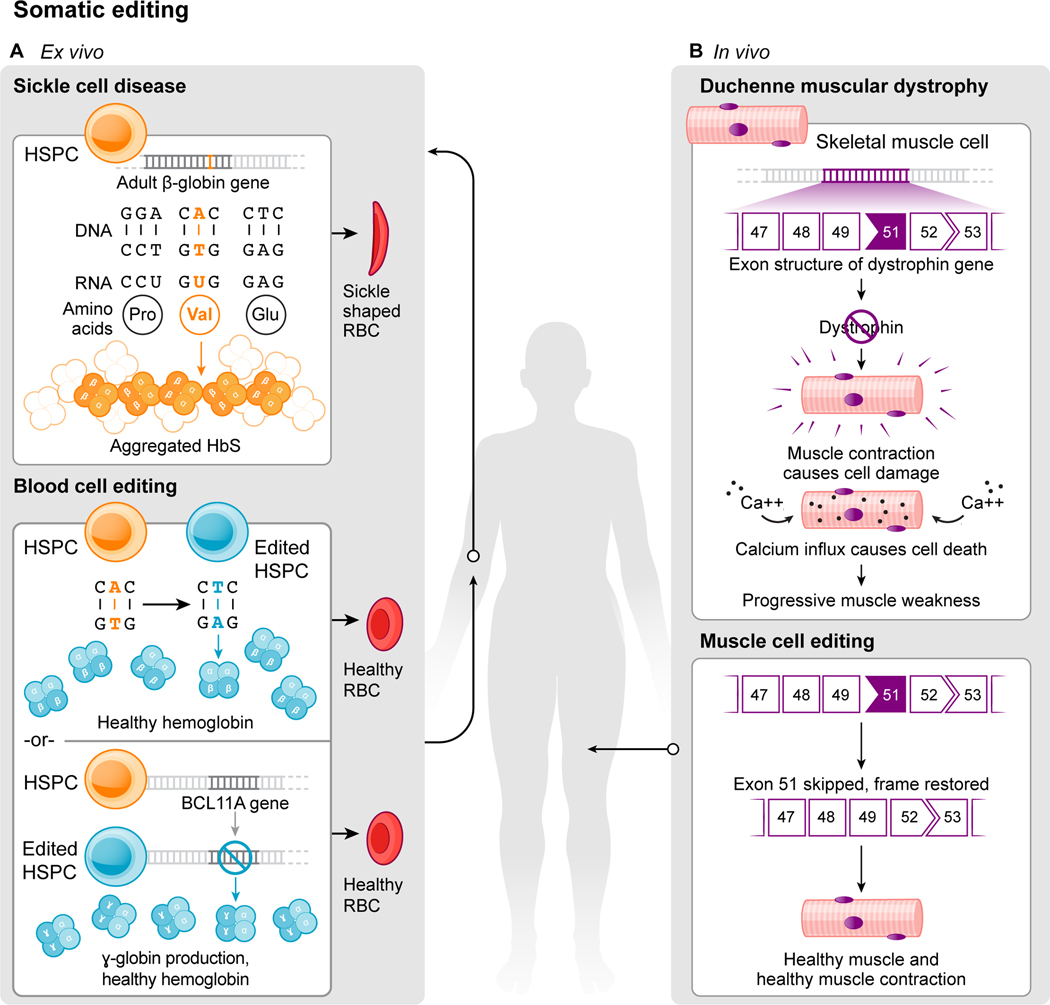
- Monogenic diseases are a major target: ~5,000 are known and affect at least 250 million individuals. Sickle cell disease, caused by a single A-to-T mutation in β-globin, could be treated ex vivo by correcting the mutation in hematopoietic stem/progenitor cells or reactivating γ-globin; ~100,000 US patients and millions more in African and Asian countries are potential candidates.
- Duchenne muscular dystrophy affects one in 5,000 males at birth and can involve >3,000 mutations, mostly at hotspots; restoring ~15% of normal dystrophin expression may provide clinical benefit. In animal studies, systemic AAV CRISPR delivery restored up to 90% dystrophin in ΔEx50 mice, and in dogs dystrophin levels were restored to 3–90% of normal with improved muscle appearance.
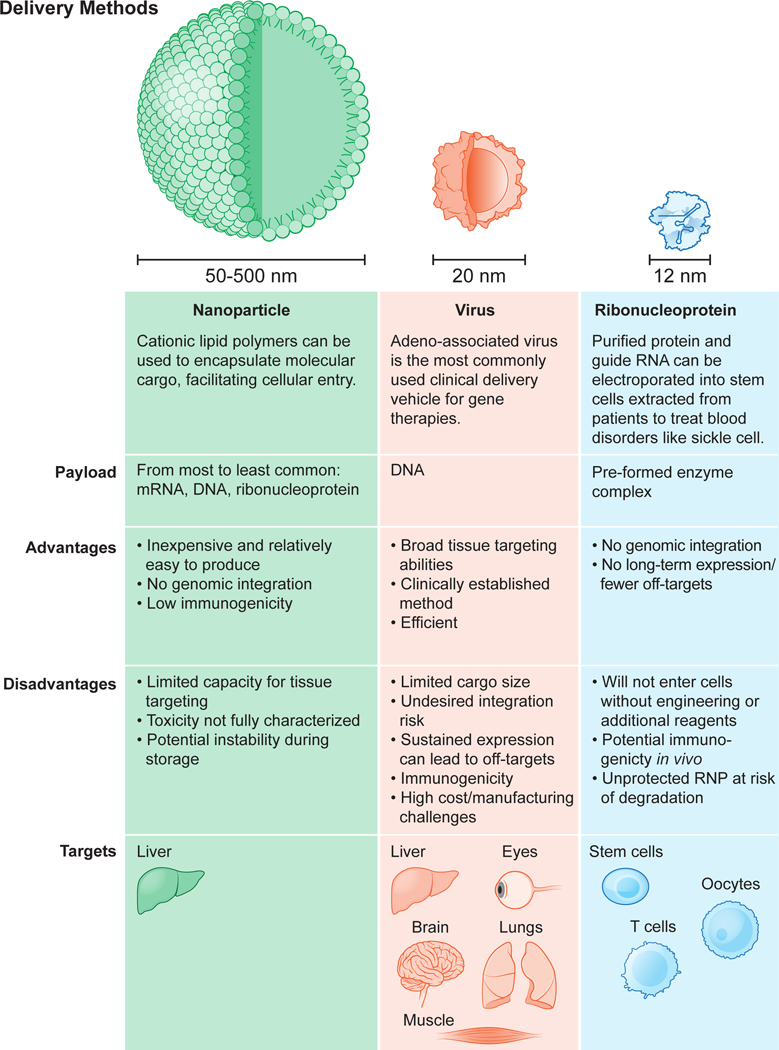
- Delivery is a central bottleneck: ex vivo editing favors electroporation of Cas9 ribonucleoprotein complexes, while in vivo delivery uses viral vectors such as AAV or lipid nanoparticles. AAV can carry only ~4.7 kb, not much larger than the 4.2 kb SpCas9 gene, so corrective insertion often requires two AAV vectors.
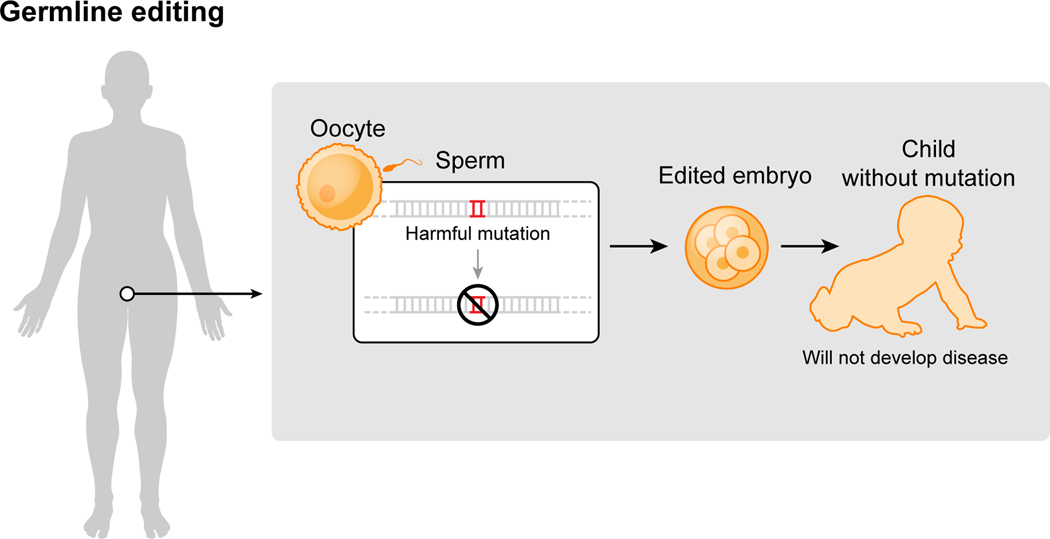
- Safety and governance concerns include off-target and imprecise editing, rare large deletions and complex rearrangements, possible immunogenicity from pre-existing Cas9 antibodies/T cells, and unresolved long-term safety. For germline editing, the paper states it is inappropriate to perform editing that culminates in human pregnancy at this time, while in vitro embryo/gamete research should be allowed with oversight.
Methods
- Narrative review by Jennifer A. Doudna; no systematic search strategy, primary dataset, or new experimental results are reported.
- Synthesizes CRISPR-Cas therapeutic genome editing, including sickle cell disease and DMD examples, delivery modalities, accuracy/safety issues, clinical development, and ethical/regulatory discussion of somatic versus germline editing.
- Draws on cited animal studies, early clinical trials, and international scientific/organizational positions; no sample size or formal analysis is stated in the paper.
Limitations
- Stated: delivery remains perhaps the biggest bottleneck to somatic genome editing; AAV has packaging, immunogenicity, and scalable GMP production/cost challenges, while lipid nanoparticles can be toxic and cell-type selective.
- Stated: off-target and imprecise editing, large deletions, and complex rearrangements occur at low frequency but could be clinically significant; immunogenicity and long-term safety/efficacy of edited cells in vivo remain largely unknown.
- Stated and evident: germline editing raises unresolved scientific questions about DNA repair in early human embryos and ethical/policy questions; as a review, the paper provides no new primary data and relies on cited studies and early-stage clinical information.
Model-written summary. Check it against the paper before relying on it.
Integrity signals
Registry
Cites
Statistics
Figures
Verification
Claims the paper makes
40 Valid · 10 Not valid · 12 Not checked · 36 Own results and interpretations
The cited sources support only part of this claim — read each source’s verdict below.
In the paper
“Engineered DNA-cleaving enzymes including zinc-finger nucleases (ZFNs) and transcription activator-like effector nucleases (TALENs) demonstrated the promise of therapeutic genome editing.”
What the sources say
- Not checked — no full text of the sourcecites [16] 16. Miller JC, Tan S, Qiao G, Barlow KA, Wang J, Xia DF, Meng X, Paschon DE, Leung E, Hinkley SJ, Dulay GP, Hua KL, Ankoudinova I, Cost GJ, Urnov FD, Zhang HS, Holmes MC, Zhang L, Gregory PD & Rebar EJ A TALE nuclease architecture for efficient genome editing. Nat. Biotechnol 29, 143-148 (2011). [PubMed: 21179091] source
- Not checked — no full text of the sourcecites [17] 17. Joglekar AV, Gray D, Kaufman ML, Urbinati F, Senadheera S, Cost G, Reik A, Holmes MC, Gregory PD, Hollis RP & Kohn DB Zinc Finger Nucleases Targeting The β -Globin Locus Drive Efficient Correction Of The Sickle Mutation In CD34+ Cells. Blood 122, 2904-2904 (2013). source
- Partly supportedcites [18] 18. Chang K-H, Smith SE, Sullivan T, Chen K, Zhou Q, West JA, Liu M, Liu Y, Vieira BF, Sun C, Hong VP, Zhang M, Yang X, Reik A, Urnov FD, Rebar EJ, Holmes MC, Danos O, Jiang H. & Tan S. Long-Term Engraftment and Fetal Globin Induction upon BCL11A Gene Editing in Bone-Marrow-Derived CD34+ Hematopoietic Stem and Progenitor Cells. Mol Ther Methods Clin Dev 4, 137-148 (2017). [PubMed: 28344999] sourceExperimental — accuracy not yet measured
The Results and Discussion describe ZFN-mediated BCL11A editing and call it a strong preclinical proof of concept for a potential sickle-cell therapy. The cited paper does not report a comparable demonstration using TALENs, so it supports the claim for ZFNs but not for both named enzyme types. (LLM, conf=0.88)
- Partly supportedcites [19] 19. Qasim W, Zhan H, Samarasinghe S, Adams S, Amrolia P, Stafford S, Butler K, Rivat C, Wright G, Somana K, Ghorashian S, Pinner D, Ahsan G, Gilmour K, Lucchini G, Inglott S, Mifsud W, Chiesa R, Peggs KS, Chan L, Farzeneh F, Thrasher AJ, Vora A, Pule M. & Veys P. Molecular remission of infant B-ALL after infusion of universal TALEN gene-edited CAR T cells. Sci. Transl. Med 9, 1-9 (2017). sourceExperimental — accuracy not yet measured
The Introduction reports first-in-human use of TALEN-edited T cells, and the Discussion says this application demonstrates the potential of gene-editing strategies for engineered cell therapies. The paper supports the claim about TALENs, but the passages do not establish the same point for ZFNs. (LLM, conf=0.88)
boostedstates a cause- Asserted: passes — The authors put it forward as true.
- Checkable: passes — It can be checked against evidence.
- Load-bearing: unclear — It is unclear whether the paper’s conclusions depend on it.
- Based: passes — The paper gives a reason why it holds.
The cited sources support only part of this claim — read each source’s verdict below.
In the paper
“Notably, restoration of a small percentage (~15%) of normal dystrophin expression levels can provide a clinical benefit 15 .”
What the sources say
- Partly supportedcites [15] 15. Long C, McAnally JR, Shelton JM, Mireault AA, Bassel-Duby R. & Olson EN Prevention of muscular dystrophy in mice by CRISPR/Cas9-mediated editing of germline DNA. Science 345, 1184-1188 (2014). [PubMed: 25123483] sourceExperimental — accuracy not yet measured
The supplied passages (labeled Abstract; page unavailable) report that correcting 17% of mutant Dmd alleles in mice restored dystrophin in many muscle fibers and reduced dystrophic features. They do not show that dystrophin expression was restored to ~15% of normal levels: 17% refers to gene correction, not protein expression. The reported benefits are in mice, not a demonstrated clinical benefit in patients. (LLM, conf=0.88)
plainstates a cause- Asserted: passes — The authors put it forward as true.
- Checkable: passes — It can be checked against evidence.
- Load-bearing: unclear — It is unclear whether the paper’s conclusions depend on it.
- Based: passes — The paper gives a reason why it holds.
- Partly supported
The cited sources support only part of this claim — read each source’s verdict below.
In the paper
“Cas9 protein-sgRNA complexes can be incorporated by assembly with DNA-linked particles 78,79 .”
What the sources say
- Partly supportedcites [78] 78. Glass Z, Li Y. & Xu Q. Nanoparticles for CRISPR-Cas9 delivery. Nat Biomed Eng 1, 854-855 (2017). [PubMed: 30147994] sourceExperimental — accuracy not yet measured
The formulation passage (Abstract; page not provided) describes a gold nanoparticle core surrounded by a Cas9–gRNA complex and a DNA repair template. This supports incorporating the complex into a particle, but the copy does not specify assembly with DNA-linked particles. (LLM, conf=0.80)
- Supportedcites [79] 80. Lee K, Conboy M, Park HM, Jiang F, Kim HJ, Dewitt MA, Mackley VA, Chang K, Rao A, Skinner C, Shobha T, Mehdipour M, Liu H, Huang W-C, Lan F, Bray NL, Li S, Corn JE, Kataoka K, Doudna JA, Conboy I. & Murthy N. Nanoparticle delivery of Cas9 ribonucleoprotein and donor DNA in vivo induces homology-directed DNA repair. Nat Biomed Eng 1, 889-901 (2017). [PubMed: 29805845] source
The Results and discussion section (‘Design and synthesis of CRISPR-Gold’; page unavailable) says donor DNA is attached to gold nanoparticles and Cas9 ribonucleoprotein is then adsorbed onto them. The Methods section (‘S5. Synthesis of CRISPR-Gold’; page unavailable) specifies that Cas9 and guide RNA are mixed before being added to the DNA-linked particles. (LLM, conf=0.94)
plainstates a cause- Asserted: passes — The authors put it forward as true.
- Checkable: passes — It can be checked against evidence.
- Load-bearing: unclear — It is unclear whether the paper’s conclusions depend on it.
- Based: passes — The paper gives a reason why it holds.
- Partly supported
The cited sources support only part of this claim — read each source’s verdict below.
In the paper
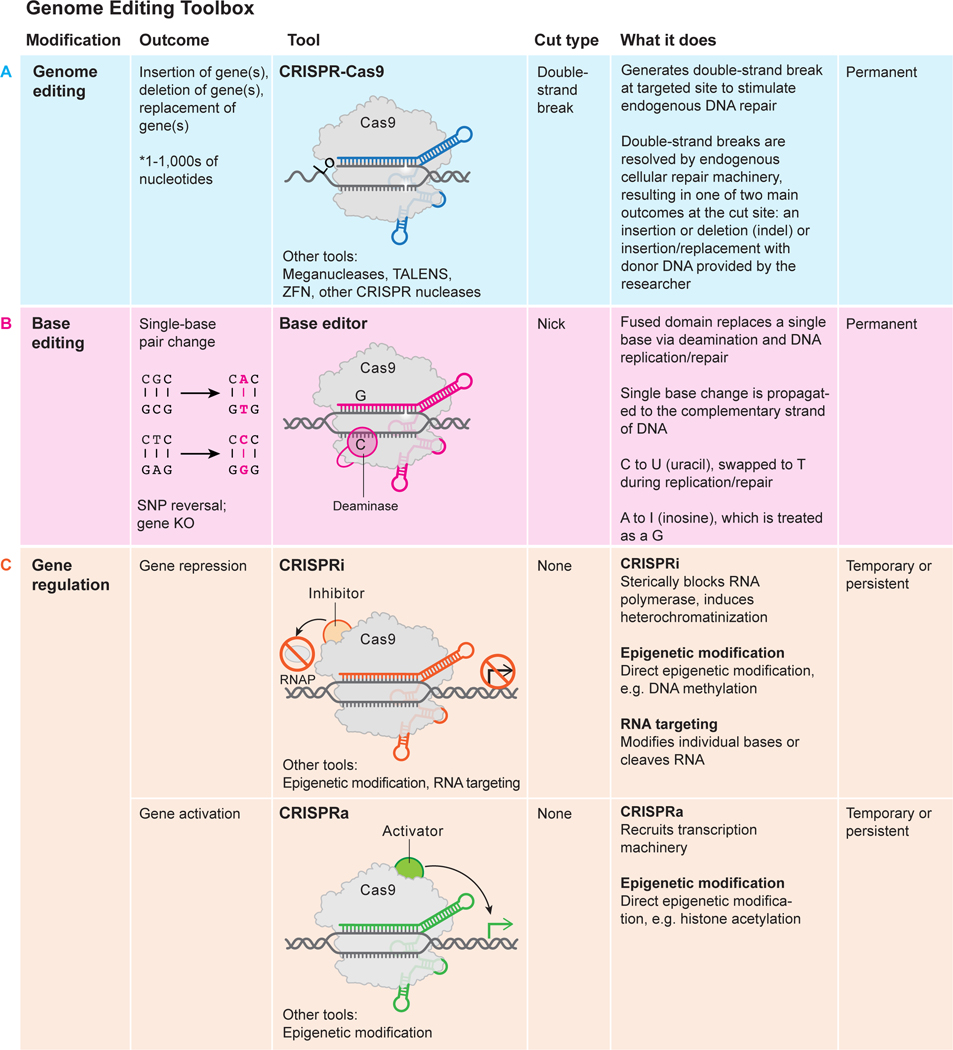
“In cells of all multicellular organisms, including humans, such double-stranded DNA breaks induce DNA repair by endogenous cellular pathways that can introduce alterations to the DNA sequence, including small sequence changes or genetic insertions 21,22 .”
What the sources say
- Not checked — no full text of the sourcecites [21] 21. Szostak JW, Orr-Weaver TL, Rothstein RJ & Stahl FW The double-strand-break repair model for recombination. Cell 33, 25-35 (1983). [PubMed: 6380756] *The authors proposed what was at the time a surprising mechanism for meiotic recombination, in which double-strand breaks that are enlarged to double-strand gaps initiate genetic recombination. This model has been proven largely correct, forming the basis for DNA repair-mediated genome editing. source
- Partly supportedcites [22] 22. Stark JM, Pierce AJ, Oh J, Pastink A. & Jasin M. Genetic steps of mammalian homologous repair with distinct mutagenic consequences. Mol. Cell. Biol 24, 9305-9316 (2004). [PubMed: 15485900] *This study demonstrated that double-strand DNA breaks in mammalian cells trigger - DNA repair that can introduce altered genomic sequences at the site of the repair. As a result, research focused increasingly on engineered enzymes capable of introducing targeted breaks in genomes, which would in turn produce site-specific genetic changes. sourceExperimental — accuracy not yet measured
The Abstract (page not provided) says that mammalian cells repair double-strand breaks through pathways that can cause deletions or insertions at the break site. It also discusses mutagenic repair associated with human disease. The paper does not establish that this applies to cells of all multicellular organisms, so the claim extends beyond its stated scope. (LLM, conf=0.87)
plainstates a cause- Asserted: passes — The authors put it forward as true.
- Checkable: passes — It can be checked against evidence.
- Load-bearing: passes — The paper’s conclusions depend on it.
- Based: passes — The paper gives a reason why it holds.
The sources with a verdict support this claim; the rest weren’t checked yet, have no full text we could read, or their verdicts aren’t rated yet.
In the paper
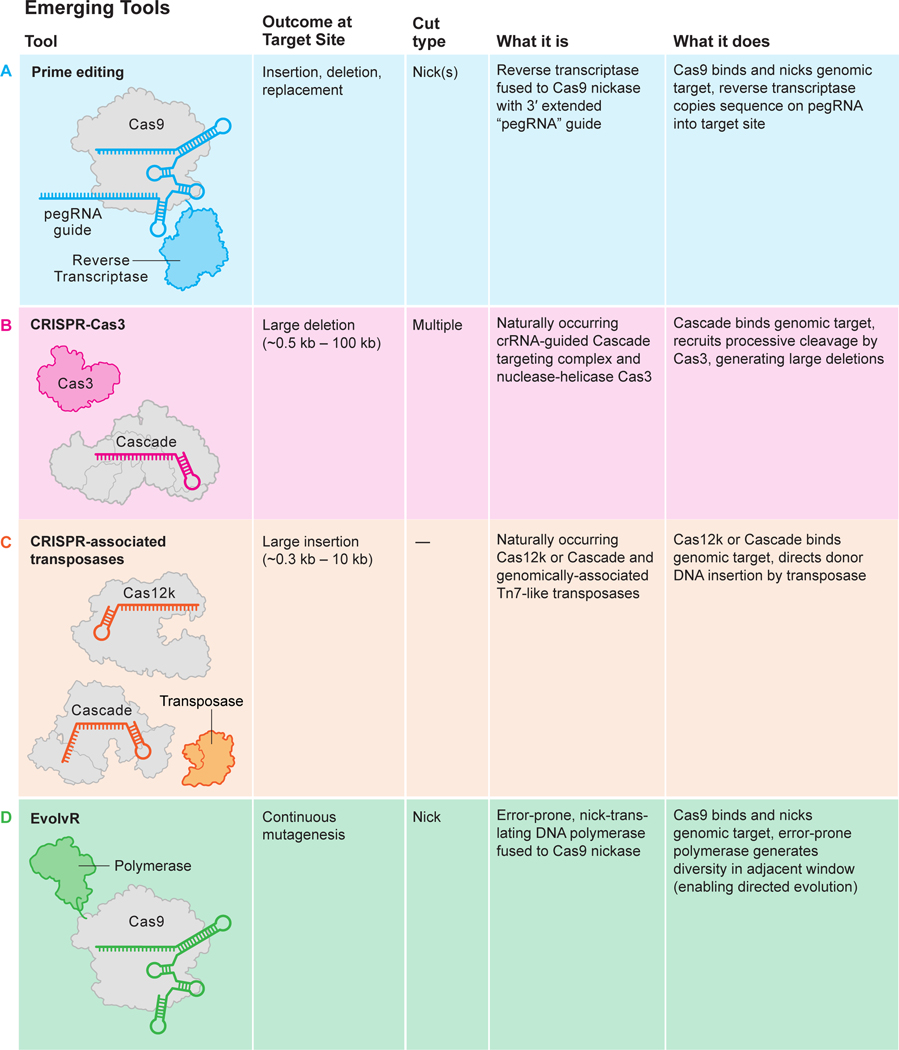
“Alternatives to DNA cleavage-induced editing include using CRISPR-Cas9 for direct chemical sequence alteration (base editing) 25,26 , providing RNA templates for gene alteration (prime editing) 27,28 , and for transcriptional control (CRISPR interference, CRISPRi; CRISPR activation, CRISPRa) 29,30 (Fig. 3).”
What the sources say
- Supportedcites [25] 25. Komor AC, Kim YB, Packer MS, Zuris JA & Liu DR Programmable editing of a target base in genomic DNA without double-stranded DNA cleavage. Nature 533, 420-424 (2016). [PubMed: 27096365] *In this study, CRISPR-Cas9 was fused to a DNA editing enzyme that enables targeted nucleotide editing at genomic locations recognized by Cas9. By avoiding double strand breaks in the DNA, the authors proposed that undesired DNA repair could be avoided. sourceExperimental — accuracy not yet measured
The Abstract describes a CRISPR/Cas9-based editor that directly converts a target DNA base without a double-stranded break or donor template. This supports the base-editing clause to which this citation is attached; the prime-editing and CRISPRi/CRISPRa clauses have separate citations. (LLM, conf=0.94)
- Not checked — no full text of the sourcecites [26] 26. Nishida K, Arazoe T, Yachie N, Banno S, Kakimoto M, Tabata M, Mochizuki M, Miyabe A, Araki M, Hara KY, Shimatani Z. & Kondo A. Targeted nucleotide editing using hybrid prokaryotic and vertebrate adaptive immune systems. Science 353, (2016). *In this study, CRISPR-Cas9 was fused to a DNA editing enzyme that enables targeted nucleotide editing at genomic locations recognized by Cas9. Instead of inducing double strand break repair, this editing form of Cas9 enables individual base pairs to be altered within cells. source
- Could not verifycites [27] 27. Sharon E, Chen S-AA, Khosla NM, Smith JD, Pritchard JK & Fraser HB Functional Genetic Variants Revealed by Massively Parallel Precise Genome Editing. Cell 175, 544-557.e16 (2018). [PubMed: 30245013] *This study was the first to show that an RNA template could be used together with a Cas9-reverse transcriptase fusion protein to introduce small targeted changes in cellular genomes. sourceExperimental — accuracy not yet measured
The citation is attached to the sentence’s claim about CRISPRi/CRISPRa for transcriptional control. The Introduction and Results describe Cas9 cleavage followed by donor-directed repair, not CRISPRi or CRISPRa; searches for those terms and transcriptional control found no passage addressing that claim. The References mention base editing, but do not establish the claim for which this citation is offered. (LLM, conf=0.75)
- Supportedcites [28] 28. Anzalone AV, Randolph PB, Davis JR, Sousa AA, Koblan LW, Levy JM, Chen PJ, Wilson C, Newby GA, Raguram A. & Liu DR Search-and-replace genome editing without double-strand breaks or donor DNA. Nature (2019). doi:10.1038/s41586-019-1711-4 *This study explored the use of a CRISPR-Cas9-reverse transcriptase fusion protein together with extended guide RNA templates to introduce small sequence changes within ~50 base pairs of the location of Cas9 binding. sourceExperimental — accuracy not yet measured
The citation is attached to the prime-editing part of the sentence, not the claims about base editing or CRISPRi/CRISPRa. The Abstract and “Prime editing strategy” section describe an edit-encoding RNA guide whose information is copied into target DNA without a double-strand break or donor DNA template. (LLM, conf=0.93)
- Supportedcites [29] 29. Qi LS, Larson MH, Gilbert LA, Doudna JA, Weissman JS, Arkin AP & Lim WA Repurposing CRISPR as an RNA-guided platform for sequence-specific control of gene expression. Cell 152, 1173-1183 (2013). [PubMed: 23452860] *This study demonstrated the use of a catalyticallydeactivated form of CRISPR-Cas9 for transcriptional control in cells. source
The citation is attached to the transcriptional-control portion of the sentence, not the base- or prime-editing examples. In “CRISPRi as a Platform for Engineering Transcriptional Regulatory Networks” (page not provided), the paper describes CRISPRi as a dCas9-based approach to targeted gene regulation, including transcriptional repression and potential activation, without altering the target sequence. (LLM, conf=0.92)
- Supportedcites [30] 30. Gilbert LA, Horlbeck MA, Adamson B, Villalta JE, Chen Y, Whitehead EH, Guimaraes C, Panning B, Ploegh HL, Bassik MC, Qi LS, Kampmann M. & Weissman JS Genome-Scale CRISPRMediated Control of Gene Repression and Activation. Cell 159, 647-661 (2014). [PubMed: 25307932] sourceExperimental — accuracy not yet measured
The citation is attached to the transcriptional-control part of the sentence, not to base or prime editing. The Introduction (page not supplied) describes the use of CRISPRi to repress and CRISPRa to activate transcription, and reports applying both methods to control gene expression. (LLM, conf=0.94)
plain- Asserted: passes — The authors put it forward as true.
- Checkable: passes — It can be checked against evidence.
- Load-bearing: unclear — It is unclear whether the paper’s conclusions depend on it.
- Based: passes — The paper gives a reason why it holds.
- Supported
45 more claims · 23 with their cited sources checked
Create a free account to see all 98 claims and to verify the 5 references still open.
- It may state two separate claims as one. 33
- Probably not a substantial claim. 23
Claims other papers make about this one
Each is checked against this paper’s own text: does it say what the citing paper says it does?
The source backs part of the claim, not all of it — or backs it for a different population, condition or comparison.
In the citing paper
“CRISPR-Cas dominates the field because of the ease of using guide RNAs directing the CRISPR complex to specific DNA sequences and the increasing ability to target most sites in the genome.121,122”
From Fetal hemoglobin in sickle cell anemia (2020) · cites this paper as [121]
Experimental — accuracy not yet measured
Citations
Cites
A Programmable Dual-RNA–Guided DNA Endonuclease in Adaptive Bacterial Immunity
Jinek, M., Chylinski, K., Fonfara, I., Hauer, M., Doudna, J. A., & Charpentier, E. (2012) · Science · doi:10.1126/science.1225829 · Cited by 17,116
Self-citationMultiplex Genome Engineering Using CRISPR/Cas Systems
Cong, L., Ran, F. A., Cox, D., Lin, S., Barretto, R., Habib, N., Hsu, P. D., Wu, X., Jiang, W., Marraffini, L. A., et al. (2013) · Science · doi:10.1126/science.1231143 · Cited by 15,339
RNA-Guided Human Genome Engineering via Cas9
Mali, P., Yang, L., Esvelt, K. M., Aach, J., Guell, M., DiCarlo, J. E., Norville, J. E., & Church, G. M. (2013) · Science · doi:10.1126/science.1232033 · Cited by 9,210
Programmable editing of a target base in genomic DNA without double-stranded DNA cleavage
Komor, A. C., Kim, Y. B., Packer, M. S., Zuris, J. A., & Liu, D. R. (2016) · Nature · doi:10.1038/nature17946 · Cited by 5,437
Repurposing CRISPR as an RNA-Guided Platform for Sequence-Specific Control of Gene Expression
Qi, L. S., Larson, M. H., Gilbert, L. A., Doudna, J. A., Weissman, J. S., Arkin, A. P., & Lim, W. A. (2013) · Cell · doi:10.1016/j.cell.2013.02.022 · Cited by 5,016
Self-citationSearch-and-replace genome editing without double-strand breaks or donor DNA
Anzalone, A. V., Randolph, P. B., Davis, J. R., Sousa, A. A., Koblan, L. W., Levy, J. M., Chen, P. J., Wilson, C., Newby, G. A., Raguram, A., et al. (2019) · Nature · doi:10.1038/s41586-019-1711-4 · Cited by 4,767
Programmable base editing of A•T to G•C in genomic DNA without DNA cleavage
Gaudelli, N. M., Komor, A. C., Rees, H. A., Packer, M. S., Badran, A. H., Bryson, D. I., & Liu, D. R. (2017) · Nature · doi:10.1038/nature24644 · Cited by 4,184
CRISPR-Mediated Modular RNA-Guided Regulation of Transcription in Eukaryotes
Gilbert, L. A., Larson, M. H., Morsut, L., Liu, Z., Brar, G. A., Torres, S. E., Stern-Ginossar, N., Brandman, O., Whitehead, E. H., Doudna, J. A., et al. (2013) · Cell · doi:10.1016/j.cell.2013.06.044 · Cited by 3,696
Self-citationGasiunas, G., Barrangou, R., Horvath, P., & Siksnys, V. (2012) · Proceedings of the National Academy of Sciences · doi:10.1073/pnas.1208507109 · Cited by 2,769
Genome-Scale CRISPR-Mediated Control of Gene Repression and Activation
Gilbert, L. A., Horlbeck, M. A., Adamson, B., Villalta, J. E., Chen, Y., Whitehead, E. H., Guimaraes, C., Panning, B., Ploegh, H. L., Bassik, M. C., et al. (2014) · Cell · doi:10.1016/j.cell.2014.09.029 · Cited by 2,728
Cited by
Items 101–200 of 1,131
Raguram, A., An, M., Chen, P., & Liu, D. R. (2024) · Nature Biotechnology · doi:10.1038/s41587-024-02467-x · Cited by 90
“Current gene editing technologies 1,2 , for example, are often constrained by the challenge of delivering gene editing agents into relevant cell types in vitro and in vivo 3–5 .”
Senescence-resistant human mesenchymal progenitor cells counter aging in primates
Lei, J., Xin, Z., Liu, N., Ning, T., Jing, Y., Qiao, Y., He, Z., Jiang, M., Yang, Y., Zhang, Z., et al. (2025) · Cell · doi:10.1016/j.cell.2025.05.021 · Cited by 82
Detect-seq reveals out-of-protospacer editing and target-strand editing by cytosine base editors
Lei, Z., Meng, H., Lv, Z., Liu, M., Zhao, H., Wu, H., Zhang, X., Liu, L., Zhuang, Y., Yin, K., et al. (2021) · Nature Methods · doi:10.1038/s41592-021-01172-w · Cited by 67
Advances in biological therapies for dyslipidemias and atherosclerosis
Valanti, E.-K., Dalakoura-Karagkouni, K., Siasos, G., Kardassis, D., Eliopoulos, A. G., & Sanoudou, D. (2020) · Metabolism · doi:10.1016/j.metabol.2020.154461 · Cited by 72
Enhanced specificity mutations perturb allosteric signaling in CRISPR-Cas9
Nierzwicki, Ł., East, K. W., Morzan, U. N., Arantes, P., Batista, V. S., Lisi, G. P., & Palermo, G. (2021) · eLife · doi:10.7554/elife.73601 · Cited by 71
Allemailem, K. S., Alsahli, M. A., Almatroudi, A., Alrumaihi, F., Alkhaleefah, F. K., Rahmani, A. H., & Khan, A. A. (2022) · 癌症:英文版 · doi:10.1002/cac2.12366 · Cited by 77
Click editing enables programmable genome writing using DNA polymerases and HUH endonucleases
Ferreira da Silva, J., Tou, C. J., King, E. M., Eller, M. L., Rufino-Ramos, D., Ma, L., Cromwell, C. R., Metovic, J., Benning, F. M. C., Chao, L. H., et al. (2025) · Nature Biotechnology · doi:10.1038/s41587-024-02324-x · Cited by 82
From pharmacogenetics to pharmaco-omics: Milestones and future directions
Auwerx, C., Sadler, M. C., Reymond, A., & Kutalik, Z. (2022) · Human Genetics and Genomics Advances · doi:10.1016/j.xhgg.2022.100100 · Cited by 91
“75 It is possible to generate whole-body or tissue-specific gene knockins and knockouts, combine both approaches to create humanized models by excising the endogenous gene and replacing it by its human version, or perform epigenetic editing.”
BackgroundLi, Z., Wang, J., Xu, J.-P., Wang, J., & Yang, X. F. (2023) · Military Medical Research · doi:10.1186/s40779-023-00447-x · Cited by 93
Chimeric CRISPR-CasX enzymes and guide RNAs for improved genome editing activity
Tsuchida, C. A., Zhang, S., Doost, M. S., Zhao, Y., Wang, J., O’Brien, E., Fang, H., Li, C., Li, D., Hai, Z.-Y., et al. (2022) · Molecular Cell · doi:10.1016/j.molcel.2022.02.002 · Cited by 70
“The programmability of CRISPR systems thus holds tremendous potential as transformative tools for genome editing (Doudna, 2020; Doudna and Charpentier, 2014; Hille et al., 2018; Wright et al., 2016).”
BackgroundSelf-citationCRISPR Spherical Nucleic Acids
Huang, C., Han, Z., Evangelopoulos, M., & Mirkin, C. A. (2022) · Journal of the American Chemical Society · doi:10.1021/jacs.2c07913 · Cited by 68
Suppression of Nonsense Mutations by New Emerging Technologies
Morais, P., Adachi, H., & Yu, Y. (2020) · International Journal of Molecular Sciences · doi:10.3390/ijms21124394 · Cited by 71
“The advent of genome editing technologies [91], particularly CRISPR gene editing, has opened an entirely new field with numerous opportunities for potential nonsense suppression therapies.”
BackgroundIn-depth assessment of the PAM compatibility and editing activities of Cas9 variants
Zhang, W., Yin, J., Zhang-Ding, Z., Xin, C., Liu, M., Wang, Y., Ai, C., & Hu, J. (2021) · Nucleic Acids Research · doi:10.1093/nar/gkab507 · Cited by 65
Cas9-directed immune tolerance in humans—a model to evaluate regulatory T cells in gene therapy?
Wagner, D. L., Peter, L., & Schmueck-Henneresse, M. (2021) · Gene Therapy · doi:10.1038/s41434-021-00232-2 · Cited by 63
Cideciyan, A. V., Jacobson, S. G., Ho, A. C., Garafalo, A. V., Roman, A. J., Sumaroka, A., Krishnan, A. K., Swider, M., Schwartz, M. R., & Girach, A. (2021) · Nature Medicine · doi:10.1038/s41591-021-01297-7 · Cited by 63
Mueller, K. P., Piscopo, N. J., Forsberg, M. H., Saraspe, L. A., Das, A., Russell, B., Smerchansky, M. E., Cappabianca, D., Shi, L., Shankar, K., et al. (2022) · Journal for ImmunoTherapy of Cancer · doi:10.1136/jitc-2021-004446 · Cited by 66
“Recent strategies employing CRISPR/Cas9 genome editing 7–9 have targeted the CAR transgene to a single genomic locus to more precisely control CAR expression.”
Nobel Prize 2020 in Chemistry honors CRISPR: a tool for rewriting the code of life
Westermann, L., Neubauer, B., & Köttgen, M. (2020) · Pflügers Archiv - European Journal of Physiology · doi:10.1007/s00424-020-02497-9 · Cited by 68
Core transcription regulatory circuitry orchestrates corneal epithelial homeostasis
Li, M., Huang, H., Li, L., He, C., Zhu, L., Guo, H., Wang, L., Liu, J., Wu, S., Liu, J., et al. (2021) · Nature Communications · doi:10.1038/s41467-020-20713-z · Cited by 64
Mobilization-based chemotherapy-free engraftment of gene-edited human hematopoietic stem cells
Omer, A., Pedrazzani, G., Albano, L., Ghaus, S., Latroche, C., Manzi, M., Ferrari, S., Fiumara, M., Jacob, A., Vavassori, V., et al. (2022) · Cell · doi:10.1016/j.cell.2022.04.039 · Cited by 61
“…and the targeted integration of a therapeutic transgene, allowing to suppress or, conversely, rescue the function and physiological expression of the targeted gene and offering the promise of more precise, versatile, and safer genetic manipulation (Doudna, 2020; Ferrari et al., 2021b).”
Wang, Y., Wang, Y., Pan, D., Yu, H., Zhang, Y., Chen, W., Li, F., Wu, Z., & Ji, Q. (2022) · Cell Reports · doi:10.1016/j.celrep.2022.111418 · Cited by 68
An alpha-helical lid guides the target DNA toward catalysis in CRISPR-Cas12a
Saha, A., Ahsan, M., Arantes, P. R., Schmitz, M., Chanez, C., Jínek, M., & Palermo, G. (2024) · Nature Communications · doi:10.1038/s41467-024-45762-6 · Cited by 70
Prospects and challenges of CAR-T cell therapy combined with ICIs
Lv, Y., Luo, X., Xie, Z., Qiu, J.-Y., Yang, J., Deng, Y., Long, R., Tang, G., Zhang, C., & Zuo, J. (2024) · Frontiers in Oncology · doi:10.3389/fonc.2024.1368732 · Cited by 66
“CRISPR-Cas9 is a common method to facilitate precise integration of target se quences (117, 118).”
MethodEffect of CRISPR/Cas9-Edited PD-1/PD-L1 on Tumor Immunity and Immunotherapy
Xu, Y., Chen, C., Guo, Y., Hu, S., & Sun, Z. (2022) · Frontiers in Immunology · doi:10.3389/fimmu.2022.848327 · Cited by 78
“Genome editing can modify the human genome and change biogenesis, which has the potential of targeted therapy to cure diseases (11).”
BackgroundCurrent insights into the bone marrow niche: From biology in vivo to bioengineering ex vivo
Xiao, Y., McGuinness, C. S., Doherty-Boyd, W. S., Salmerón‐Sánchez, M., Donnelly, H., & Dalby, M. J. (2022) · Biomaterials · doi:10.1016/j.biomaterials.2022.121568 · Cited by 72
“Further, despite the overall safety and efficacy of the CRISPR-Cas 9 system, risks of geno-toxicity and off-target effects do exist, limiting its clinical applications [307,312].”
The CRISPR/Cas9 System Delivered by Extracellular Vesicles
Zhu, X., Gao, M., Yang, Y., Li, W., Bao, J., & Li, Y. (2023) · Pharmaceutics · doi:10.3390/pharmaceutics15030984 · Cited by 65
“In the 1970s, with the development of genetic engineering, a breakthrough dawned upon genome editing technology, which was a powerful tool for implementing fixed-point editing DNA sequences [1].”
BackgroundTracking-seq reveals the heterogeneity of off-target effects in CRISPR–Cas9-mediated genome editing
Zhu, M., Xu, R., Yuan, J., Wang, J., Ren, X., Cong, T., You, Y., Ju, A., Xu, L., Wang, H., et al. (2024) · Nature Biotechnology · doi:10.1038/s41587-024-02307-y · Cited by 64
“CRISPR-mediated genome-editing tools hold tremendous promise for correcting disease-causing mutations within the genome 1–3 .”
Cas9 deactivation with photocleavable guide RNAs
Zou, R. S., Liu, Y., Wu, B., & Ha, T. (2021) · Molecular Cell · doi:10.1016/j.molcel.2021.02.007 · Cited by 64
“…for short) as a CRISPR-associated RNAguided endonuclease from S. pyogenes, engineering efforts have transformed the enzyme into a highly versatile genome editing platform for research, industrial, and therapeutic applications (Doudna, 2020, Hsu et al., 2014, Jinek et al., 2012, Knott et al., 2018).”
BackgroundEmerging Role of Long Non-Coding RNAs in Diabetic Vascular Complications
Tanwar, V. S., Reddy, M. A., & Natarajan, R. D. (2021) · Frontiers in Endocrinology · doi:10.3389/fendo.2021.665811 · Cited by 63
Hollow covalent organic framework-sheltering CRISPR/Cas12a as an in-vivo nanosensor for ATP imaging
Pan, Y., Luan, X., Zeng, F., Xu, Q. H., Li, Z., Gao, Y., Liu, X., Li, X., Han, X., Shen, J., et al. (2022) · Biosensors and Bioelectronics · doi:10.1016/j.bios.2022.114239 · Cited by 61
Advances of Epigenetic Biomarkers and Epigenome Editing for Early Diagnosis in Breast Cancer
Sarvari, P., Sarvari, P., Ramírez‐Díaz, I., Mahjoubi, F., & Rubio, K. (2022) · International Journal of Molecular Sciences · doi:10.3390/ijms23179521 · Cited by 74
Systematic decomposition of sequence determinants governing CRISPR/Cas9 specificity
Fu, R., He, W., Dou, J., Villarreal, O. D., Bedford, E., Wang, H., Hou, C., Zhang, L., Wang, Y., Ma, D., et al. (2022) · Nature Communications · doi:10.1038/s41467-022-28028-x · Cited by 54
“(8)–(10), and the above definition of δ12;3, we have:”
CRISPR/Cas9 Technology for Enhancing Desirable Traits of Fish Species in Aquaculture
Zhu, M., Sumana, S. L., Muhammad, A. M., Falayi, O. C., Shui, Y., Zhang, C., Zhu, J. X., & Su, S. (2024) · International Journal of Molecular Sciences · doi:10.3390/ijms25179299 · Cited by 78
“Open-source platforms, collaborative research initiatives, and affordable licensing models can facilitate broader utilization of genome editing tools among researchers and industry stakeholders [125].”
BackgroundGorsuch, C. L., Nemec, P. S., Mei, Y., Xu, S., Han, D., Smith, J., Lape, J., van Buuren, N. J., Ramírez, R., Muench, R. C., et al. (2022) · Molecular Therapy · doi:10.1016/j.ymthe.2022.05.013 · Cited by 60
Hsu, M., Yu, F.-J., Chang, Y., Huang, K.-L., Pham, N. N., Truong, V. A., Lin, M., Nguyen, N. T. K., Hwang, S., & Hu, Y. (2020) · Biomaterials · doi:10.1016/j.biomaterials.2020.120094 · Cited by 56
Advancing Organoid Engineering for Tissue Regeneration and Biofunctional Reconstruction
Jin, H., Xue, Z., Liu, J., Ma, B., Yang, J., & Lei, L. (2024) · Biomaterials Research · doi:10.34133/bmr.0016 · Cited by 60
Gene therapy for inborn errors of immunity: past, present and future
Fischer, A. (2022) · Nature reviews. Immunology · doi:10.1038/s41577-022-00800-6 · Cited by 60
Engineering self-deliverable ribonucleoproteins for genome editing in the brain
Chen, K., Stahl, E. C., Kang, M. H., Xu, B., Allen, R., Trinidad, M. I., & Doudna, J. A. (2024) · Nature Communications · doi:10.1038/s41467-024-45998-2 · Cited by 68
Self-citationHypercompact adenine base editors based on a Cas12f variant guided by engineered RNA
Kim, D. Y., Chung, Y., Lee, Y., Jeong, D., Park, K., Chin, H. J., Lee, J. M., Park, S., Ko, S., Ko, J., et al. (2022) · Nature Chemical Biology · doi:10.1038/s41589-022-01077-5 · Cited by 54
Intelligent nanotherapeutic strategies for the delivery of CRISPR system
Chen, C., Zhong, W., Du, S., Li, Y., Zeng, Y., Liu, K., Yang, J., Guan, X., & Han, X. (2022) · Acta Pharmaceutica Sinica B · doi:10.1016/j.apsb.2022.12.013 · Cited by 59
Improving the sensitivity of in vivo CRISPR off-target detection with DISCOVER-Seq+
Zou, R. S., Liu, Y., Gaido, O. E. R., Konig, M. F., Mog, B. J., Shen, L. L., Avilés-Vázquez, F. J., Marín-González, A., & Ha, T. (2023) · Nature Methods · doi:10.1038/s41592-023-01840-z · Cited by 58
“This is important for three reasons: (1) One study found that less than 15% of DSBs convert to indels in a single damage cycle(17); therefore, off-target sites that are not frequently damaged may not result in indels that can appear in amplicon sequencing-based queries.”
BackgroundActivatable CRISPR Transcriptional Circuits Generate Functional RNA for mRNA Sensing and Silencing
Ying, Z., Wang, F., Chu, X., Yu, R., & Jiang, J. (2020) · Angewandte Chemie International Edition · doi:10.1002/anie.202004751 · Cited by 55
Gene Therapy for Cardiovascular Disease: Basic Research and Clinical Prospects
Cao, G., Xuan, X., Zhang, R., Hu, J. H., & Dong, H. (2021) · Frontiers in Cardiovascular Medicine · doi:10.3389/fcvm.2021.760140 · Cited by 62
Majeau, N., Archambault, A. F., Gérard, C., Rousseau, J., Yaméogo, P., & Tremblay, J. P. (2022) · Molecular Therapy · doi:10.1016/j.ymthe.2022.05.023 · Cited by 55
Cui, C., Wang, D., Huang, B., Wang, F., Chen, Y., Lv, J., Zhang, L., Han, L., Liu, D., Chen, Z., et al. (2022) · Molecular Therapy — Nucleic Acids · doi:10.1016/j.omtn.2022.07.016 · Cited by 52
Chen, Z., Lin, W., Zhang, C., Xu, Y., Wei, C., Hu, H., Zhang, Y., & Chen, Z. (2023) · Advanced Fiber Materials · doi:10.1007/s42765-023-00350-z · Cited by 51
“Medical augmen-tations, such as implanting medical devices [4, 5], gene editing [6, 7], and ingesting chemicals inside the body [8], rely on invasive methods to improve or repair bodily functions.”
Gene Delivery to the Skin – How Far Have We Come?
Ain, Q. U., Campos, E. V. R., Huynh, A., Witzigmann, D., & Hedtrich, S. (2020) · Trends in biotechnology · doi:10.1016/j.tibtech.2020.07.012 · Cited by 56
The Medicinal Chemistry of Artificial Nucleic Acids and Therapeutic Oligonucleotides
Bege, M., & Borbás, A. (2022) · Pharmaceuticals · doi:10.3390/ph15080909 · Cited by 59
PCSK9 in metabolism and diseases
Ajoolabady, A., Pratico, D., Mazidi, M., Davies, I. G., Lip, G. Y. H., Seidah, N., Libby, P., Kroemer, G., & Ren, J. (2025) · Metabolism · doi:10.1016/j.metabol.2024.156064 · Cited by 49
Yang, A., Kantor, B., & Chiba-Falek, O. (2021) · International Journal of Molecular Sciences · doi:10.3390/ijms22031244 · Cited by 48
“The opportunities and challenges have been recently reviewed in detail elsewhere [100].”
BackgroundThe CRISPR-Cas system as a tool for diagnosing and treating infectious diseases
Lou, J., Wang, B., Li, J., Ni, P., Jin, Y., Chen, S., Xi, Y., Zhang, R., & Duan, G. (2022) · Molecular Biology Reports · doi:10.1007/s11033-022-07752-z · Cited by 59
Nucleic acid nanostructure for delivery of CRISPR/Cas9‐based gene editing system
Tang, W., Liu, J., & Ding, B. (2022) · Interdisciplinary medicine · doi:10.1002/inmd.20220014 · Cited by 52
High-fidelity, hyper-accurate, and evolved mutants rewire atomic-level communication in CRISPR-Cas9
Skeens, E., Sinha, S., Ahsan, M., D’Ordine, A. M., Jogl, G., Palermo, G., & Lisi, G. P. (2024) · Science Advances · doi:10.1126/sciadv.adl1045 · Cited by 57
Programmable epigenome editing by transient delivery of CRISPR epigenome editor ribonucleoproteins
Xu, D. Z., Besselink, S., Ramadoss, G. N., Dierks, P. H., Lubin, J. P., Pattali, R. K., Brim, J. I., Christenson, A. E., Colias, P. J., Ornelas, I. J., et al. (2025) · Nature Communications · doi:10.1038/s41467-025-63167-x · Cited by 68
Pathways and disease-causing alterations in visual chromophore production for vertebrate vision
Kiser, P. D., & Palczewski, K. (2020) · Journal of Biological Chemistry · doi:10.1074/jbc.rev120.014405 · Cited by 53
Gene Editing of Hematopoietic Stem Cells: Hopes and Hurdles Toward Clinical Translation
Ferrari, S., Vavassori, V., Canarutto, D., Jacob, A., Castiello, M. C., Omer, A., & Genovese, P. (2021) · Frontiers in Genome Editing · doi:10.3389/fgeed.2021.618378 · Cited by 58
“…of programmable molecules, such as nucleases, base editors and prime editors have opened the door to targeted genome editing, i.e., site-specific nucleotide(s) deletion, insertion and substitution, or integration of a therapeutic transgene cassette at a predetermined genomic locus (Doudna, 2020).”
BackgroundBest Practices in qPCR and dPCR Validation in Regulated Bioanalytical Laboratories
Hays, A. L., Islam, R., Matys, K., & Williams, D. W. (2022) · The AAPS Journal · doi:10.1208/s12248-022-00686-1 · Cited by 56
“The recent advances in CRISPR (Clustered Regularly Interspaced Short Palindromic Repeats) systems are generating encouraging results in animal models [5] and will continue to propel the field of cell and gene therapy for development of novel treatment options for previously intractable diseases.”
BackgroundStructure of the OMEGA nickase IsrB in complex with ωRNA and target DNA
Hirano, S., Kappel, K., Altae-Tran, H., Faure, G., Wilkinson, M. E., Kannan, S., Demircioglu, F. E., Yan, R., Shiozaki, M., Yu, Z., et al. (2022) · Nature · doi:10.1038/s41586-022-05324-6 · Cited by 49
Genome editing in the mouse brain with minimally immunogenic Cas9 RNPs
Stahl, E. C., Sabo, J. K., Kang, M. H., Allen, R., Applegate, E., Kim, S., Kwon, Y., Seth, A., Lemus, N., Salinas-Rios, V., et al. (2023) · Molecular Therapy · doi:10.1016/j.ymthe.2023.06.019 · Cited by 51
“1,2 5 To achieve gene disruption, the functional endonuclease, Cas9, is directed by a guide RNA to a target site in DNA to generate a double-strand break leading to insertions and deletions (indels).”
Self-citationHomology-based repair induced by CRISPR-Cas nucleases in mammalian embryo genome editing
Zhang, X., Li, T., Ou, J., Huang, J., & Liang, P. (2021) · Protein & Cell · doi:10.1007/s13238-021-00838-7 · Cited by 52
“, mice, rats, rabbits, pigs, and monkeys), which holds tremendous potential in disease modeling and precision medicine (Anzalone et al., 2020; Doudna, 2020).”
BackgroundCRISPR activation of long non-coding RNA DANCR promotes bone regeneration
Nguyen, N. T. K., Chang, Y., Truong, V. A., Hsu, M., Pham, N. N., Chang, C.-W., Wu, Y.-H., Chang, Y., Li, H., & Hu, Y. (2021) · Biomaterials · doi:10.1016/j.biomaterials.2021.120965 · Cited by 49
Precise genome editing without exogenous donor DNA via retron editing system in human cells
Kong, X., Wang, Z., Zhang, R., Wang, X., Zhou, Y., Shi, L., & Yang, H. (2021) · Protein & Cell · doi:10.1007/s13238-021-00862-7 · Cited by 42
AAV5 delivery of CRISPR-Cas9 supports effective genome editing in mouse lung airway
Liang, S., Walkey, C. J., Martinez, A. E., Su, Q., Dickinson, M. E., Wang, D., Lagor, W. R., Heaney, J. D., Gao, G., & Xue, W. (2021) · Molecular Therapy · doi:10.1016/j.ymthe.2021.10.023 · Cited by 46
Cas12a variants designed for lower genome-wide off-target effect through stringent PAM recognition
Zhou, J., Chen, P., Wang, H., Liu, H., Li, Y., Zhang, Y., Wu, Y., Paek, C., Sun, Z., Lei, J., et al. (2021) · Molecular Therapy · doi:10.1016/j.ymthe.2021.10.010 · Cited by 45
Efficient and safe single-cell cloning of human pluripotent stem cells using the CEPT cocktail
Tristan, C. A., Hong, H., Jethmalani, Y., Chen, Y., Weber, C., Chu, P.-H., Ryu, S., Jovanovic, V. M., Hur, I., Voss, T. C., et al. (2023) · Nature Protocols · doi:10.1038/s41596-022-00753-z · Cited by 44
An, Y., Chen, X., He, J., Ge, Y., Liu, Q. L., Men, D., Xu, K., & Li, D. (2023) · Angewandte Chemie International Edition · doi:10.1002/anie.202303973 · Cited by 47
Wang, T., Chen, G., Zhang, S., Li, D., Wei, G., Zhao, X., Liu, Y., Ding, D., & Zhang, X. (2023) · Nano Letters · doi:10.1021/acs.nanolett.3c01914 · Cited by 46
Tafech, B., Rokhforouz, M., Leung, J., Sung, M. M. H., Lin, P. J. C., Sin, D. D., Lauster, D. C., Block, S., Quon, B. S., Tam, Y. K., et al. (2024) · Advanced Healthcare Materials · doi:10.1002/adhm.202304525 · Cited by 57
Shimizu, Y., Ntege, E. H., Inoue, Y., Matsuura, N., Sunami, H., & Sowa, Y. (2024) · Regenerative Therapy · doi:10.1016/j.reth.2024.06.001 · Cited by 54
“Robust ethical guidelines and regulatory frameworks are necessary to address issues, such as informed consent, long-term effects, and the potential for unintended germline modi fi cations [115 e 118].”
BackgroundPhysics-based Modeling in the New Era of Enzyme Engineering
Jurich, C. P., Shao, Q.-Z., Ran, X.-C., & Yang, Z. (2025) · Nature Computational Science · doi:10.1038/s43588-025-00788-8 · Cited by 43
“The establishment of such miniaturization strategies will improve therapeutic efficacy 8,9 , as well as reduce production costs and resource consumption.”
Recent advances in aptamer applications for analytical biochemistry
Zon, G. (2020) · Analytical Biochemistry · doi:10.1016/j.ab.2020.113894 · Cited by 47
“In 2020, Xu et al. [140] reported the first example of the integration of dual aptamer technology and CRISPR-Cas12a [137]-assisted rolling circle amplification to obtain both accurate identification and highly-sensitive detection of methicillin-resistant Staphylococcus ureus (MRSA), detection of which is a global prio…”
InfluentialEfficient Peptide-Mediated In Vitro Delivery of Cas9 RNP
Gustafsson, O., Rädler, J., Roudi, S., Lehto, T., Hällbrink, M., Lehto, T., Gupta, D., Andaloussi, S. E., & Nordin, J. Z. (2021) · Pharmaceutics · doi:10.3390/pharmaceutics13060878 · Cited by 49
“However, this is a challenging task since the delivery of the endonuclease machinery needed for genome editing is difficult [7].”
BackgroundYou, Y., Liu, Y., Ma, C., Xu, J., Xie, L., Tong, S., Sun, Y., Ma, F., Huang, Y., Liu, J., et al. (2023) · Journal of Controlled Release · doi:10.1016/j.jconrel.2023.08.039 · Cited by 46
Mechanisms of hematopoietic clonal dominance in VEXAS syndrome
Molteni, R., Fiumara, M., Campochiaro, C., Alfieri, R. R., Pacini, G., Licari, E., Tomelleri, A., Diral, E., Varesi, A., Weber, A., et al. (2025) · Nature Medicine · doi:10.1038/s41591-025-03623-9 · Cited by 52
Massively targeted evaluation of therapeutic CRISPR off-targets in cells
Pan, X., Qu, K., Yuan, H., Xiang, X., Anthon, C., Pashkova, L., Liang, X., Han, P., Corsi, G. I., Xu, F., et al. (2022) · Nature Communications · doi:10.1038/s41467-022-31543-6 · Cited by 42
“Our method provides the following four methodological advantages: (1) Scalable.”
BackgroundMethodInfluentialUnveiling the RNA-mediated allosteric activation discloses functional hotspots in CRISPR-Cas13a
Sinha, S., Vargas, A. M. M., Arantes, P. R., Patel, A. C., O’Connell, M. R., & Palermo, G. (2023) · Nucleic Acids Research · doi:10.1093/nar/gkad1127 · Cited by 48
“The transformative use of CRISPR-Cas9 for genome editing ( 2 ) led to the ‘boom’ of the ‘CRISPR field’ and the discovery of novel CRISPR-Cas systems that remarkably expand applications in genome editing and beyond ( 3–5 ).”
An engineered Cas12i nuclease that is an efficient genome editing tool in animals and plants
Duan, Z., Liang, Y., Sun, J., Zheng, H., Lin, T., Luo, P., Wang, M., Liu, R., Chen, Y., Guo, S., et al. (2024) · The Innovation · doi:10.1016/j.xinn.2024.100564 · Cited by 44
Programmable RNA base editing via targeted modifications
Song, J., Zhuang, Y., & Yi, C. (2024) · Nature Chemical Biology · doi:10.1038/s41589-023-01531-y · Cited by 47
“…CRISPR–CRISPR-associated protein (Cas) have been engineered to manipulate the target site of a genome in a variety of organisms via a double-stranded DNA (dsDNA) break to simulate endogenous DNA repair but may cause undesired by-products, such as indels, translocations and rearrangements 3 .”
Yang, P., Chou, S., Li, J., Hui, W., Liu, W., Sun, N., Zhang, R. Y., Zhu, Y., Tsai, M., Lai, H. I. A. M., et al. (2020) · Science Advances · doi:10.1126/sciadv.abb7107 · Cited by 43
“However, notable challenges remain for developing highly efficient methods for step-by-step delivery of CRISPR-Cas9 genome editing components into diseased cells, such as limited cargo size, different charge properties of CRISPR cargos, low delivery and genome editing efficiencies, and manufacturing challenges (8).”
BackgroundAdvancing synthetic biology through cell-free protein synthesis
Yue, K., Chen, J., Li, Y., & Kai, L. (2023) · Computational and Structural Biotechnology Journal · doi:10.1016/j.csbj.2023.05.003 · Cited by 51
Development of CRISPR/Cas Delivery Systems for In Vivo Precision Genome Editing
Chen, Y., & Yuan, P. (2023) · Accounts of Chemical Research · doi:10.1021/acs.accounts.3c00279 · Cited by 54
Ultrasensitive ImmunoMag-CRISPR Lateral Flow Assay for Point-of-Care Testing of Urinary Biomarkers
Lee, I., Kwon, S., Heeger, P. S., & Dordick, J. S. (2023) · ACS Sensors · doi:10.1021/acssensors.3c01694 · Cited by 42
Enhancing cellular immunotherapies in cancer by engineering selective therapeutic resistance
Wellhausen, N., Baek, J. S., Gill, S. I., & June, C. H. (2024) · Nature reviews. Cancer · doi:10.1038/s41568-024-00723-5 · Cited by 50
“Amongst other applications for these technologies (reviewed elsewhere 19–24 ), genome editing allows editing of the molecular targets of therapeutics to endow cells with resistance, enabling their survival in combination with cancer drugs that would otherwise impair IEC survival or effector…”
Gene Therapy and Gene Editing for β-Thalassemia
Christakopoulos, G. E., Telange, R., Yen, J. S., & Weiss, M. J. (2023) · Hematology/Oncology Clinics of North America · doi:10.1016/j.hoc.2022.12.012 · Cited by 53
Većkalov, B., van Stekelenburg, A., van Harreveld, F., & Rutjens, B. T. (2023) · Science Communication · doi:10.1177/10755470231184203 · Cited by 46
“Novel biotechnologies such as CRISPR have made human gene editing (HGE)—that is, altering the DNA of human cells—possible (Doudna, 2020).”
BackgroundEnhancing pediatric access to cell and gene therapies
Mackall, C. L., Bollard, C. M., Goodman, N., Carr, C., Gardner, R., Rouce, R. H., Sotillo, E., Stoner, R., Urnov, F. D., Wayne, A. S., et al. (2024) · Nature Medicine · doi:10.1038/s41591-024-03035-1 · Cited by 44
“New approaches for targeted genome editing using the CRISPR platform continue to emerge 15–17 , and next-generation immune cell therapies for infectious disease, autoimmunity and potentially tissue regeneration, are poised to broaden the array of pediatric diseases amenable to treatment with this…”
Photocontrol of CRISPR/Cas9 function by site-specific chemical modification of guide RNA
Wang, Y., Liu, Y., Xie, F., Lin, J., & Xu, L. (2020) · Chemical Science · doi:10.1039/d0sc04343e · Cited by 41
Lee, B., Lozano, R. J., & Dunbar, C. E. (2021) · Molecular Therapy · doi:10.1016/j.ymthe.2021.09.001 · Cited by 42
Bioorthogonally Activatable Base Editing for On-Demand Pyroptosis
Ngai, W. S. C., Yang, S., Zeng, X., Liu, Y., Lin, F., Wang, X., Zhang, H., Fan, X., & Chen, P. R. (2022) · Journal of the American Chemical Society · doi:10.1021/jacs.1c12924 · Cited by 42
Dynamics and mechanisms of CRISPR-Cas9 through the lens of computational methods
Saha, A., Arantes, P. R., & Palermo, G. (2022) · Current Opinion in Structural Biology · doi:10.1016/j.sbi.2022.102400 · Cited by 41
Wang, Y., Tang, Y. X., Zhao, X., Huang, G., Gong, J., Yang, S.-D., Li, H. Z., Wan, W., Jia, C., Chen, G., et al. (2022) · Acta Biomaterialia · doi:10.1016/j.actbio.2022.09.046 · Cited by 44
Sickle Cell Disease: From Genetics to Curative Approaches
Hardouin, G., Magrin, E., Corsia, A., Cavazzana, M., Miccio, A., & Semeraro, M. (2023) · Annual Review of Genomics and Human Genetics · doi:10.1146/annurev-genom-120122-081037 · Cited by 40
Prime editing: Mechanism insight and recent applications in plants
Vu, T. V., Nguyen, N. T., Kim, J., Hong, J. C., & Kim, J. (2023) · Plant Biotechnology Journal · doi:10.1111/pbi.14188 · Cited by 53
“Future perspectives PE holds tremendous potential for therapeutic applications in human medicine (Anzalone et al ., 2019, 2020; Chen and Liu, 2023; Doudna, 2020).”
BackgroundInfluentialAutologous gene therapy for hemoglobinopathies: From bench to patient’s bedside
Locatelli, F., Cavazzana, M., Frangoul, H., de la Fuente, J., Algeri, M., & Meisel, R. (2024) · Molecular Therapy · doi:10.1016/j.ymthe.2024.03.005 · Cited by 48
“45,46 49 As with all gene editing approaches, the precision of editing is an essential consideration for the successful and safe implementation of any CRISPR-Cas9-based clinical therapy.”
Pathogenesis and Function of Interleukin-35 in Rheumatoid Arthritis
Xin, P. L., Jie, L. F., Cheng, Q., Bin, D. Y., & Dan, C. W. (2021) · Frontiers in Pharmacology · doi:10.3389/fphar.2021.655114 · Cited by 43
“Generally, for precisely manipulating cellular DNA sequences and altering cell fates and organism traits, the technique of using CRISPR will soon be in the clinic for several diseases (Doudna, 2020).”
MethodEngineered Campylobacter jejuni Cas9 variant with enhanced activity and broader targeting range
Nakagawa, R., Ishiguro, S., Okazaki, S., Mori, H., Tanaka, M., Aburatani, H., Yachie, N., Nishimasu, H., & Nureki, O. (2022) · Communications Biology · doi:10.1038/s42003-022-03149-7 · Cited by 44
Paving the way towards precise and safe CRISPR genome editing
Śledziński, P., Dabrowska, M., Nowaczyk, M., & Olejniczak, M. (2021) · Biotechnology Advances · doi:10.1016/j.biotechadv.2021.107737 · Cited by 45
Molecular basis and engineering of miniature Cas12f with C-rich PAM specificity
Su, M., Li, F., Wang, Y., Gao, Y., Lan, W., Shao, Z., Zhu, C., Tang, N., Gan, J., Wu, Z., et al. (2023) · Nature Chemical Biology · doi:10.1038/s41589-023-01420-4 · Cited by 47
Factors affecting the cleavage efficiency of the CRISPR-Cas9 system
Jung, W. J., Park, S.-J., Cha, S., & Kim, K. (2024) · Animal Cells and Systems · doi:10.1080/19768354.2024.2322054 · Cited by 45
“Given the rapid developments in genome editing, there is growing demand for more efficient and accurate genome editing tools (Doudna 2020).”
MethodGenetically engineered hypoimmunogenic cell therapy
Hotta, A., Schrepfer, S., & Nagy, A. (2024) · Nature Reviews Bioengineering · doi:10.1038/s44222-024-00219-9 · Cited by 48
“The advent of genome editing tools has made feasible complex genetic changes, including gene knockouts at multiple loci and targeted transgene insertions 55,56 .”
Engineered IscB–ωRNA system with expanded target range for base editing
Xiao, Q., Li, G., Han, D., Wang, H., Yao, M., Ma, T., Zhou, J., Zhang, Y., Zhang, X., He, B., et al. (2024) · Nature Chemical Biology · doi:10.1038/s41589-024-01706-1 · Cited by 44
“Clustered regularly interspaced short palindromic repeat (CRIPSR) Cas systems, such as type II Cas9 and type V Cas12 systems, serving as the prokaryotic adaptive immunity system against viruses, have been developed into genome-editing tools in basic research and gene therapy 1–3 .”
Metadata
- Authors
- Doudna, J. A.
- Affiliations
- QB3 (US)
- Corresponding author
- Doudna, Jennifer A.
- ORCID
- Doudna, Jennifer A.
- Venue
- Nature
- Published
- 2020-02-12
- Volume
- 578
- Issue
- 7794
- Pages
- 229-236
- ISSN
- 0028-0836 (ISSN-L)
- 1476-4687
- PMC
- PMC8992613
- OpenAlex
- W3006116138
- Semantic Scholar
- 58b8496f86ab37bb66e32f96f5492f531b5ca37b
- Cited by
- 1,126
- References
- 160
- Citations by year
- 2026: 123 · 2025: 169 · 2024: 184 · 2023: 259 · 2022: 173 · 2021: 144 · 2020: 73
- FWCI
- 15.77
- Type
- journal article
- Language
- en
- Open access
- green
- www.ncbi.nlm.nih.gov
- Licence
- cc-by
- www.springer.com/tdm (tdm)
- www.springer.com/tdm (vor)
- Locations
- Nature (publishedVersion)
- PubMed (publishedVersion)
- PubMed Central (acceptedVersion, cc-by)
- OSTI OAI (U.S. Department of Energy Office of Scientific and Technical Information) (submittedVersion)
- RePEc: Research Papers in Economics (submittedVersion)
- eScholarship (California Digital Library) (submittedVersion, cc-by)
- Funders
- National Science Foundation (1817593)
- Howard Hughes Medical Institute
- W. M. Keck Foundation
- Innovative Genomics Institute
- Multiple Sclerosis Society
- National Institutes of Health
- Defense Advanced Research Projects Agency (HR0011- 17-2-0043)
- Advanced Research Projects Agency
- National Human Genome Research Institute (RM1HG009490)
- National Institute of Allergy and Infectious Diseases (U01AI142817)
- Common Fund
- Topics
- Life Sciences › Biochemistry, Genetics and Molecular Biology › Molecular Biology › CRISPR and Genetic Engineering
- Life Sciences › Biochemistry, Genetics and Molecular Biology › Molecular Biology › RNA regulation and disease
- Life Sciences › Biochemistry, Genetics and Molecular Biology › Genetics › Virus-based gene therapy research
- Keywords
- therapeutic genome editing, CRISPR, genetic disorders, gene therapy, ethics of gene editing, precision genome editing, clinical translation
- MeSH terms
- Gene Editing, Anemia, Sickle Cell, Humans, Organ Specificity, Genome, Human, Germ-Line Mutation, Muscular Dystrophy, Duchenne, beta-Globins, Patient Safety, CRISPR-Cas Systems
About these checks
Registry, retraction, Cites and statistics results are computed, not judged, with one exception: a printed reference that no index lists is read once by a model before it counts as a citation error. Claims are extracted by a model and kept only when their quote appears verbatim in the text; each cited source is then checked, with a model’s help, for whether it says what the claim relies on. Those verdicts can be wrong — read the claim’s quote and the cited source before relying on one.
The claim verdicts this report counts are experimental: their accuracy is not yet measured.
A language model drew the claims from the paper on 2026-09-27, under version 3 of the claim definition (prompt extract-v3).
A second model labelled each claim on 2026-09-27 (model jev-1.13-20260917, definition revision gold-guideline-v0.2).
Cited sources are checked with a language model’s help (gpt-6-sol).
Statistics and arithmetic are recomputed, not judged.
Confidence bands are shown only for fields calibrated on our annotated test set. None is calibrated yet, so no band is shown.
What counts as a claim ›How we measure confidence ›How we check this ›
Are you an author, or do you see a problem with this page? Request a review
Data sources
Bibliographic data: Semantic Scholar, OpenAlex, Crossref.
Contains information from the Semantic Scholar Academic Graph Datasets, made available under the ODC Attribution License (ODC-BY 1.0).
Semantic Scholar’s data is described in: Kinney, R., et al. (2023). The Semantic Scholar Open Data Platform. arXiv:2301.10140.
