

The promise and challenge of therapeutic genome editing
Open accessThe DOI matches its Crossref record; 162 of the 162 references it cites were found in a registry or an index; 81 of the 118 sources its claims cite were checked for support.
Abstract
Genome editing, which involves the precise manipulation of cellular DNA sequences to alter cell fates and organism traits, has the potential to both improve our understanding of human genetics and cure genetic disease. Here I discuss the scientific, technical and ethical aspects of using CRISPR (clustered regularly interspaced short palindromic repeats) technology for therapeutic applications in humans, focusing on specific examples that highlight both opportunities and challenges. Genome editing is—or will soon be—in the clinic for several diseases, with more applications under development. The rapid pace of the field demands active efforts to ensure that this breakthrough technology is used responsibly to treat, cure and prevent genetic disease. The scientific, technical and ethical aspects of using CRISPR technology for therapeutic applications in humans are discussed, highlighting both opportunities and challenges of this technology to treat, cure and prevent genetic disease.
Overview
CoChat Summary
TL;DR
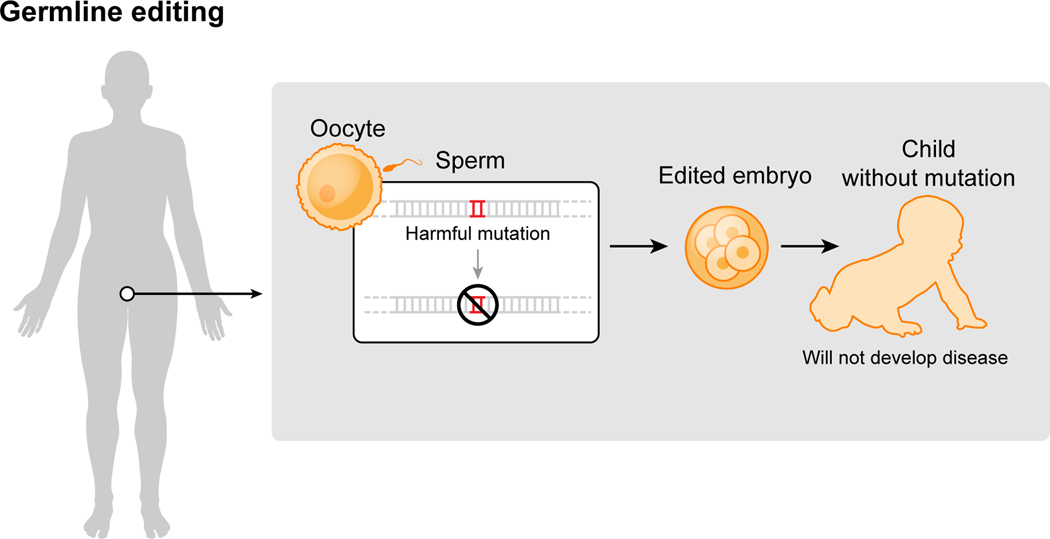
This review argues that therapeutic genome editing, especially CRISPR-Cas9, is moving toward the clinic for some monogenic diseases but still faces major delivery, precision, safety, cost, and governance challenges. It contrasts somatic editing with heritable germline editing and calls for responsible, regulated use.
Key findings
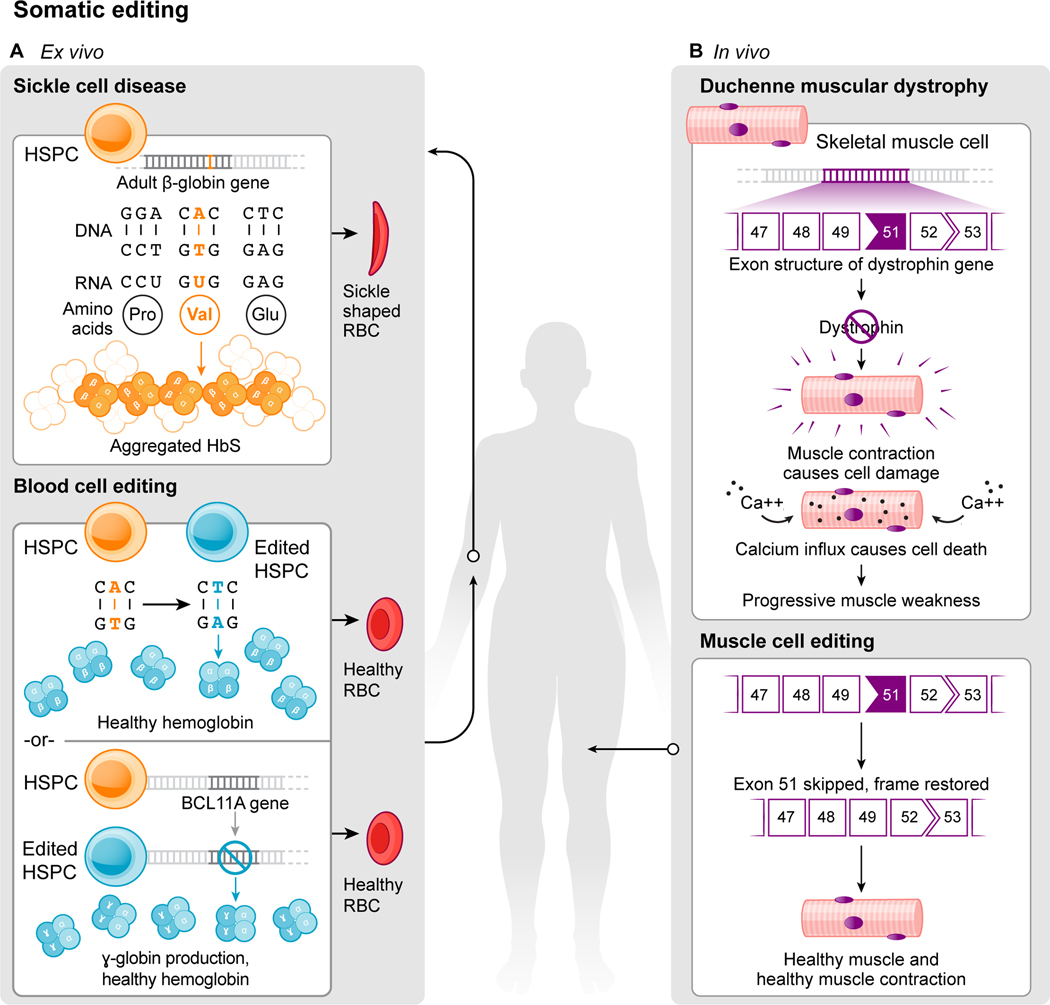
- Monogenic diseases are a major target: ~5,000 are known and affect at least 250 million individuals. Sickle cell disease, caused by a single A-to-T mutation in β-globin, could be treated ex vivo by correcting the mutation in hematopoietic stem/progenitor cells or reactivating γ-globin; ~100,000 US patients and millions more in African and Asian countries are potential candidates.
- Duchenne muscular dystrophy affects one in 5,000 males at birth and can involve >3,000 mutations, mostly at hotspots; restoring ~15% of normal dystrophin expression may provide clinical benefit. In animal studies, systemic AAV CRISPR delivery restored up to 90% dystrophin in ΔEx50 mice, and in dogs dystrophin levels were restored to 3–90% of normal with improved muscle appearance.
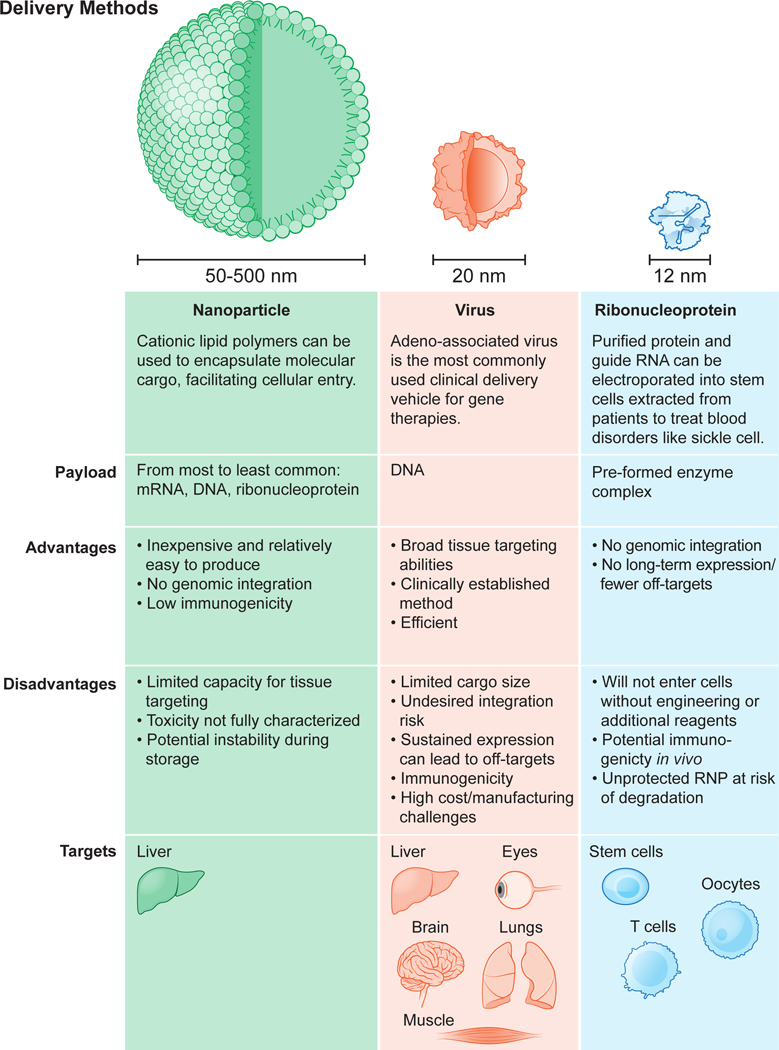
- Delivery is a central bottleneck: ex vivo editing favors electroporation of Cas9 ribonucleoprotein complexes, while in vivo delivery uses viral vectors such as AAV or lipid nanoparticles. AAV can carry only ~4.7 kb, not much larger than the 4.2 kb SpCas9 gene, so corrective insertion often requires two AAV vectors.
- Safety and governance concerns include off-target and imprecise editing, rare large deletions and complex rearrangements, possible immunogenicity from pre-existing Cas9 antibodies/T cells, and unresolved long-term safety. For germline editing, the paper states it is inappropriate to perform editing that culminates in human pregnancy at this time, while in vitro embryo/gamete research should be allowed with oversight.
Methods
- Narrative review by Jennifer A. Doudna; no systematic search strategy, primary dataset, or new experimental results are reported.
- Synthesizes CRISPR-Cas therapeutic genome editing, including sickle cell disease and DMD examples, delivery modalities, accuracy/safety issues, clinical development, and ethical/regulatory discussion of somatic versus germline editing.
- Draws on cited animal studies, early clinical trials, and international scientific/organizational positions; no sample size or formal analysis is stated in the paper.
Limitations
- Stated: delivery remains perhaps the biggest bottleneck to somatic genome editing; AAV has packaging, immunogenicity, and scalable GMP production/cost challenges, while lipid nanoparticles can be toxic and cell-type selective.
- Stated: off-target and imprecise editing, large deletions, and complex rearrangements occur at low frequency but could be clinically significant; immunogenicity and long-term safety/efficacy of edited cells in vivo remain largely unknown.
- Stated and evident: germline editing raises unresolved scientific questions about DNA repair in early human embryos and ethical/policy questions; as a review, the paper provides no new primary data and relies on cited studies and early-stage clinical information.
Model-written summary. Check it against the paper before relying on it.
Integrity signals
Registry
Cites
Statistics
Figures
Verification
Claims the paper makes
40 Valid · 10 Not valid · 12 Not checked · 36 Own results and interpretations
The cited sources support only part of this claim — read each source’s verdict below.
In the paper
“Engineered DNA-cleaving enzymes including zinc-finger nucleases (ZFNs) and transcription activator-like effector nucleases (TALENs) demonstrated the promise of therapeutic genome editing.”
What the sources say
- Not checked — no full text of the sourcecites [16] 16. Miller JC, Tan S, Qiao G, Barlow KA, Wang J, Xia DF, Meng X, Paschon DE, Leung E, Hinkley SJ, Dulay GP, Hua KL, Ankoudinova I, Cost GJ, Urnov FD, Zhang HS, Holmes MC, Zhang L, Gregory PD & Rebar EJ A TALE nuclease architecture for efficient genome editing. Nat. Biotechnol 29, 143-148 (2011). [PubMed: 21179091] source
- Not checked — no full text of the sourcecites [17] 17. Joglekar AV, Gray D, Kaufman ML, Urbinati F, Senadheera S, Cost G, Reik A, Holmes MC, Gregory PD, Hollis RP & Kohn DB Zinc Finger Nucleases Targeting The β -Globin Locus Drive Efficient Correction Of The Sickle Mutation In CD34+ Cells. Blood 122, 2904-2904 (2013). source
- Partly supportedcites [18] 18. Chang K-H, Smith SE, Sullivan T, Chen K, Zhou Q, West JA, Liu M, Liu Y, Vieira BF, Sun C, Hong VP, Zhang M, Yang X, Reik A, Urnov FD, Rebar EJ, Holmes MC, Danos O, Jiang H. & Tan S. Long-Term Engraftment and Fetal Globin Induction upon BCL11A Gene Editing in Bone-Marrow-Derived CD34+ Hematopoietic Stem and Progenitor Cells. Mol Ther Methods Clin Dev 4, 137-148 (2017). [PubMed: 28344999] sourceExperimental — accuracy not yet measured
The Results and Discussion describe ZFN-mediated BCL11A editing and call it a strong preclinical proof of concept for a potential sickle-cell therapy. The cited paper does not report a comparable demonstration using TALENs, so it supports the claim for ZFNs but not for both named enzyme types. (LLM, conf=0.88)
- Partly supportedcites [19] 19. Qasim W, Zhan H, Samarasinghe S, Adams S, Amrolia P, Stafford S, Butler K, Rivat C, Wright G, Somana K, Ghorashian S, Pinner D, Ahsan G, Gilmour K, Lucchini G, Inglott S, Mifsud W, Chiesa R, Peggs KS, Chan L, Farzeneh F, Thrasher AJ, Vora A, Pule M. & Veys P. Molecular remission of infant B-ALL after infusion of universal TALEN gene-edited CAR T cells. Sci. Transl. Med 9, 1-9 (2017). sourceExperimental — accuracy not yet measured
The Introduction reports first-in-human use of TALEN-edited T cells, and the Discussion says this application demonstrates the potential of gene-editing strategies for engineered cell therapies. The paper supports the claim about TALENs, but the passages do not establish the same point for ZFNs. (LLM, conf=0.88)
boostedstates a cause- Asserted: passes — The authors put it forward as true.
- Checkable: passes — It can be checked against evidence.
- Load-bearing: unclear — It is unclear whether the paper’s conclusions depend on it.
- Based: passes — The paper gives a reason why it holds.
The cited sources support only part of this claim — read each source’s verdict below.
In the paper
“Notably, restoration of a small percentage (~15%) of normal dystrophin expression levels can provide a clinical benefit 15 .”
What the sources say
- Partly supportedcites [15] 15. Long C, McAnally JR, Shelton JM, Mireault AA, Bassel-Duby R. & Olson EN Prevention of muscular dystrophy in mice by CRISPR/Cas9-mediated editing of germline DNA. Science 345, 1184-1188 (2014). [PubMed: 25123483] sourceExperimental — accuracy not yet measured
The supplied passages (labeled Abstract; page unavailable) report that correcting 17% of mutant Dmd alleles in mice restored dystrophin in many muscle fibers and reduced dystrophic features. They do not show that dystrophin expression was restored to ~15% of normal levels: 17% refers to gene correction, not protein expression. The reported benefits are in mice, not a demonstrated clinical benefit in patients. (LLM, conf=0.88)
plainstates a cause- Asserted: passes — The authors put it forward as true.
- Checkable: passes — It can be checked against evidence.
- Load-bearing: unclear — It is unclear whether the paper’s conclusions depend on it.
- Based: passes — The paper gives a reason why it holds.
- Partly supported
The cited sources support only part of this claim — read each source’s verdict below.
In the paper
“Cas9 protein-sgRNA complexes can be incorporated by assembly with DNA-linked particles 78,79 .”
What the sources say
- Partly supportedcites [78] 78. Glass Z, Li Y. & Xu Q. Nanoparticles for CRISPR-Cas9 delivery. Nat Biomed Eng 1, 854-855 (2017). [PubMed: 30147994] sourceExperimental — accuracy not yet measured
The formulation passage (Abstract; page not provided) describes a gold nanoparticle core surrounded by a Cas9–gRNA complex and a DNA repair template. This supports incorporating the complex into a particle, but the copy does not specify assembly with DNA-linked particles. (LLM, conf=0.80)
- Supportedcites [79] 80. Lee K, Conboy M, Park HM, Jiang F, Kim HJ, Dewitt MA, Mackley VA, Chang K, Rao A, Skinner C, Shobha T, Mehdipour M, Liu H, Huang W-C, Lan F, Bray NL, Li S, Corn JE, Kataoka K, Doudna JA, Conboy I. & Murthy N. Nanoparticle delivery of Cas9 ribonucleoprotein and donor DNA in vivo induces homology-directed DNA repair. Nat Biomed Eng 1, 889-901 (2017). [PubMed: 29805845] source
The Results and discussion section (‘Design and synthesis of CRISPR-Gold’; page unavailable) says donor DNA is attached to gold nanoparticles and Cas9 ribonucleoprotein is then adsorbed onto them. The Methods section (‘S5. Synthesis of CRISPR-Gold’; page unavailable) specifies that Cas9 and guide RNA are mixed before being added to the DNA-linked particles. (LLM, conf=0.94)
plainstates a cause- Asserted: passes — The authors put it forward as true.
- Checkable: passes — It can be checked against evidence.
- Load-bearing: unclear — It is unclear whether the paper’s conclusions depend on it.
- Based: passes — The paper gives a reason why it holds.
- Partly supported
The cited sources support only part of this claim — read each source’s verdict below.
In the paper
“In cells of all multicellular organisms, including humans, such double-stranded DNA breaks induce DNA repair by endogenous cellular pathways that can introduce alterations to the DNA sequence, including small sequence changes or genetic insertions 21,22 .”
What the sources say
- Not checked — no full text of the sourcecites [21] 21. Szostak JW, Orr-Weaver TL, Rothstein RJ & Stahl FW The double-strand-break repair model for recombination. Cell 33, 25-35 (1983). [PubMed: 6380756] *The authors proposed what was at the time a surprising mechanism for meiotic recombination, in which double-strand breaks that are enlarged to double-strand gaps initiate genetic recombination. This model has been proven largely correct, forming the basis for DNA repair-mediated genome editing. source
- Partly supportedcites [22] 22. Stark JM, Pierce AJ, Oh J, Pastink A. & Jasin M. Genetic steps of mammalian homologous repair with distinct mutagenic consequences. Mol. Cell. Biol 24, 9305-9316 (2004). [PubMed: 15485900] *This study demonstrated that double-strand DNA breaks in mammalian cells trigger - DNA repair that can introduce altered genomic sequences at the site of the repair. As a result, research focused increasingly on engineered enzymes capable of introducing targeted breaks in genomes, which would in turn produce site-specific genetic changes. sourceExperimental — accuracy not yet measured
The Abstract (page not provided) says that mammalian cells repair double-strand breaks through pathways that can cause deletions or insertions at the break site. It also discusses mutagenic repair associated with human disease. The paper does not establish that this applies to cells of all multicellular organisms, so the claim extends beyond its stated scope. (LLM, conf=0.87)
plainstates a cause- Asserted: passes — The authors put it forward as true.
- Checkable: passes — It can be checked against evidence.
- Load-bearing: passes — The paper’s conclusions depend on it.
- Based: passes — The paper gives a reason why it holds.
The sources with a verdict support this claim; the rest weren’t checked yet, have no full text we could read, or their verdicts aren’t rated yet.
In the paper
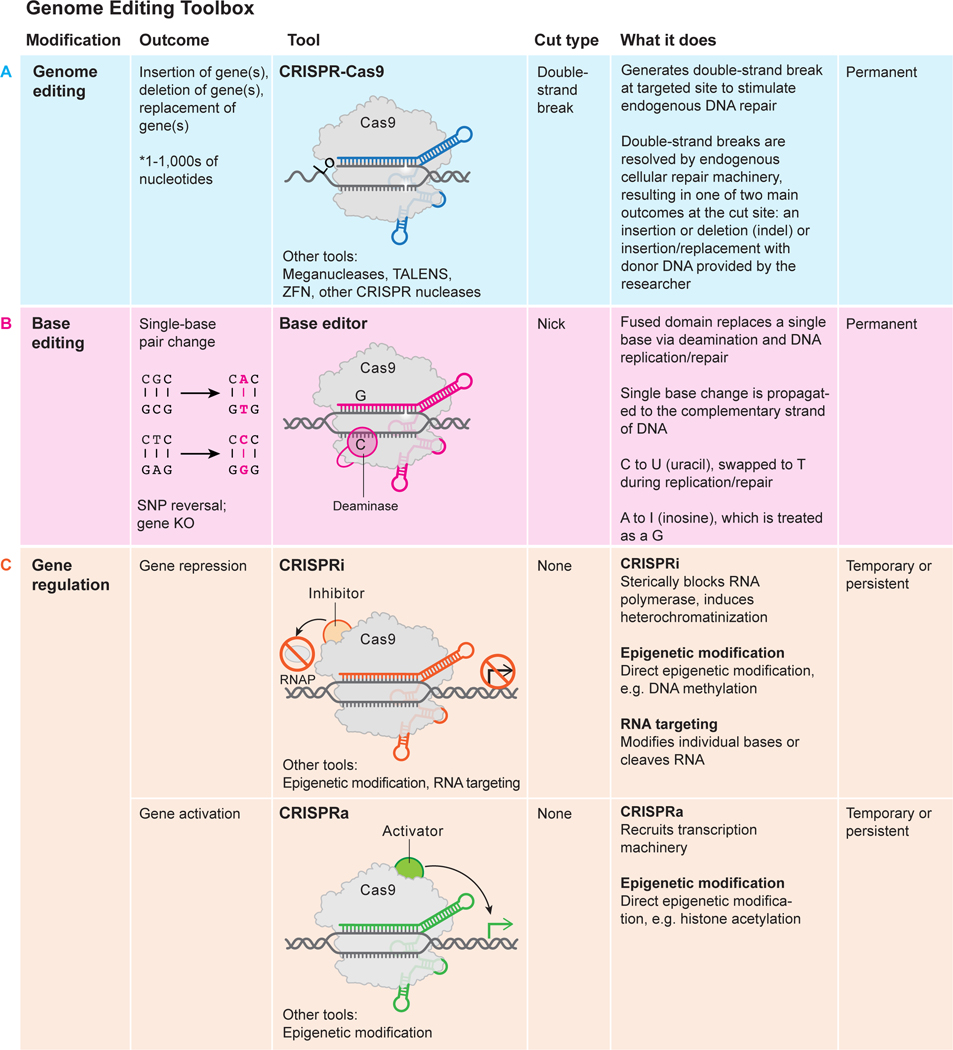
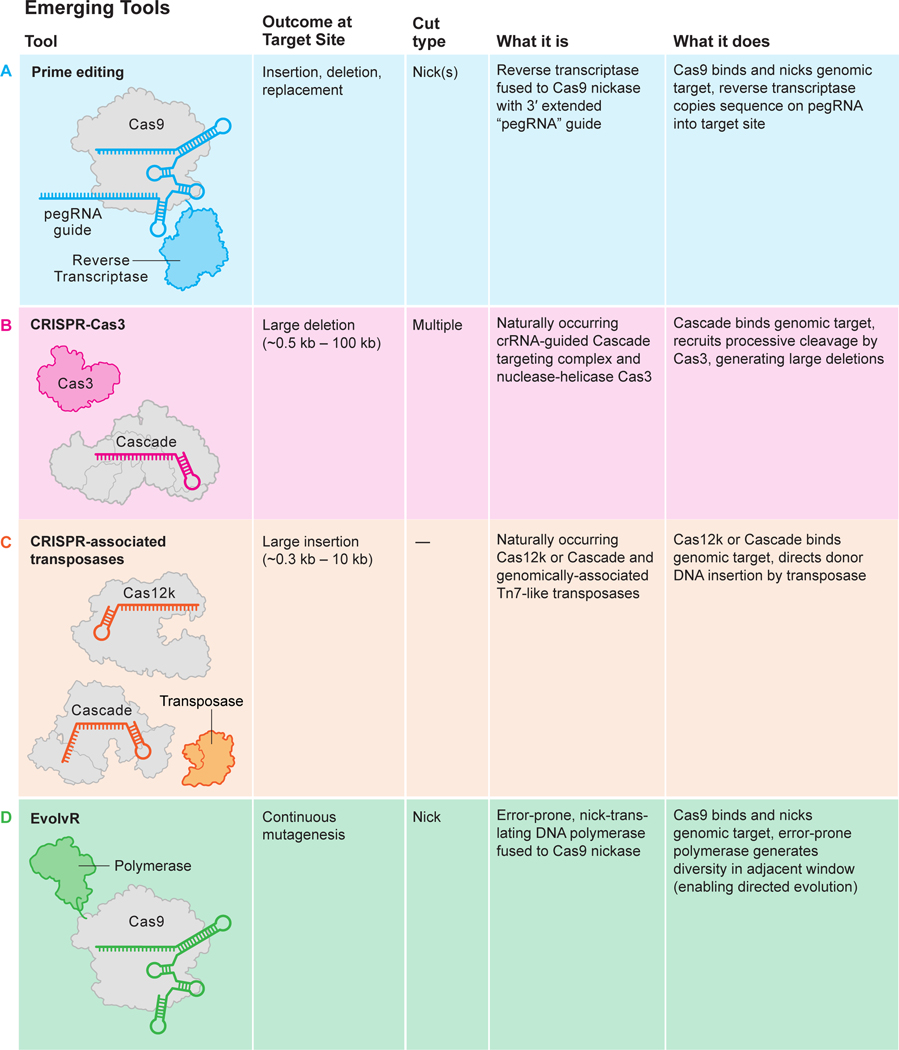
“Alternatives to DNA cleavage-induced editing include using CRISPR-Cas9 for direct chemical sequence alteration (base editing) 25,26 , providing RNA templates for gene alteration (prime editing) 27,28 , and for transcriptional control (CRISPR interference, CRISPRi; CRISPR activation, CRISPRa) 29,30 (Fig. 3).”
What the sources say
- Supportedcites [25] 25. Komor AC, Kim YB, Packer MS, Zuris JA & Liu DR Programmable editing of a target base in genomic DNA without double-stranded DNA cleavage. Nature 533, 420-424 (2016). [PubMed: 27096365] *In this study, CRISPR-Cas9 was fused to a DNA editing enzyme that enables targeted nucleotide editing at genomic locations recognized by Cas9. By avoiding double strand breaks in the DNA, the authors proposed that undesired DNA repair could be avoided. sourceExperimental — accuracy not yet measured
The Abstract describes a CRISPR/Cas9-based editor that directly converts a target DNA base without a double-stranded break or donor template. This supports the base-editing clause to which this citation is attached; the prime-editing and CRISPRi/CRISPRa clauses have separate citations. (LLM, conf=0.94)
- Not checked — no full text of the sourcecites [26] 26. Nishida K, Arazoe T, Yachie N, Banno S, Kakimoto M, Tabata M, Mochizuki M, Miyabe A, Araki M, Hara KY, Shimatani Z. & Kondo A. Targeted nucleotide editing using hybrid prokaryotic and vertebrate adaptive immune systems. Science 353, (2016). *In this study, CRISPR-Cas9 was fused to a DNA editing enzyme that enables targeted nucleotide editing at genomic locations recognized by Cas9. Instead of inducing double strand break repair, this editing form of Cas9 enables individual base pairs to be altered within cells. source
- Could not verifycites [27] 27. Sharon E, Chen S-AA, Khosla NM, Smith JD, Pritchard JK & Fraser HB Functional Genetic Variants Revealed by Massively Parallel Precise Genome Editing. Cell 175, 544-557.e16 (2018). [PubMed: 30245013] *This study was the first to show that an RNA template could be used together with a Cas9-reverse transcriptase fusion protein to introduce small targeted changes in cellular genomes. sourceExperimental — accuracy not yet measured
The citation is attached to the sentence’s claim about CRISPRi/CRISPRa for transcriptional control. The Introduction and Results describe Cas9 cleavage followed by donor-directed repair, not CRISPRi or CRISPRa; searches for those terms and transcriptional control found no passage addressing that claim. The References mention base editing, but do not establish the claim for which this citation is offered. (LLM, conf=0.75)
- Supportedcites [28] 28. Anzalone AV, Randolph PB, Davis JR, Sousa AA, Koblan LW, Levy JM, Chen PJ, Wilson C, Newby GA, Raguram A. & Liu DR Search-and-replace genome editing without double-strand breaks or donor DNA. Nature (2019). doi:10.1038/s41586-019-1711-4 *This study explored the use of a CRISPR-Cas9-reverse transcriptase fusion protein together with extended guide RNA templates to introduce small sequence changes within ~50 base pairs of the location of Cas9 binding. sourceExperimental — accuracy not yet measured
The citation is attached to the prime-editing part of the sentence, not the claims about base editing or CRISPRi/CRISPRa. The Abstract and “Prime editing strategy” section describe an edit-encoding RNA guide whose information is copied into target DNA without a double-strand break or donor DNA template. (LLM, conf=0.93)
- Supportedcites [29] 29. Qi LS, Larson MH, Gilbert LA, Doudna JA, Weissman JS, Arkin AP & Lim WA Repurposing CRISPR as an RNA-guided platform for sequence-specific control of gene expression. Cell 152, 1173-1183 (2013). [PubMed: 23452860] *This study demonstrated the use of a catalyticallydeactivated form of CRISPR-Cas9 for transcriptional control in cells. source
The citation is attached to the transcriptional-control portion of the sentence, not the base- or prime-editing examples. In “CRISPRi as a Platform for Engineering Transcriptional Regulatory Networks” (page not provided), the paper describes CRISPRi as a dCas9-based approach to targeted gene regulation, including transcriptional repression and potential activation, without altering the target sequence. (LLM, conf=0.92)
- Supportedcites [30] 30. Gilbert LA, Horlbeck MA, Adamson B, Villalta JE, Chen Y, Whitehead EH, Guimaraes C, Panning B, Ploegh HL, Bassik MC, Qi LS, Kampmann M. & Weissman JS Genome-Scale CRISPRMediated Control of Gene Repression and Activation. Cell 159, 647-661 (2014). [PubMed: 25307932] sourceExperimental — accuracy not yet measured
The citation is attached to the transcriptional-control part of the sentence, not to base or prime editing. The Introduction (page not supplied) describes the use of CRISPRi to repress and CRISPRa to activate transcription, and reports applying both methods to control gene expression. (LLM, conf=0.94)
plain- Asserted: passes — The authors put it forward as true.
- Checkable: passes — It can be checked against evidence.
- Load-bearing: unclear — It is unclear whether the paper’s conclusions depend on it.
- Based: passes — The paper gives a reason why it holds.
- Supported
45 more claims · 23 with their cited sources checked
Create a free account to see all 98 claims and to verify the 4 references still open.
- It may state two separate claims as one. 33
- Probably not a substantial claim. 23
Claims other papers make about this one
Each is checked against this paper’s own text: does it say what the citing paper says it does?
The source backs part of the claim, not all of it — or backs it for a different population, condition or comparison.
In the citing paper
“CRISPR-Cas dominates the field because of the ease of using guide RNAs directing the CRISPR complex to specific DNA sequences and the increasing ability to target most sites in the genome.121,122”
From Fetal hemoglobin in sickle cell anemia (2020) · cites this paper as [121]
Experimental — accuracy not yet measured
Citations
Cites
A Programmable Dual-RNA–Guided DNA Endonuclease in Adaptive Bacterial Immunity
Jinek, M., Chylinski, K., Fonfara, I., Hauer, M., Doudna, J. A., & Charpentier, E. (2012) · Science · doi:10.1126/science.1225829 · Cited by 17,116
Self-citationMultiplex Genome Engineering Using CRISPR/Cas Systems
Cong, L., Ran, F. A., Cox, D., Lin, S., Barretto, R., Habib, N., Hsu, P. D., Wu, X., Jiang, W., Marraffini, L. A., et al. (2013) · Science · doi:10.1126/science.1231143 · Cited by 15,339
RNA-Guided Human Genome Engineering via Cas9
Mali, P., Yang, L., Esvelt, K. M., Aach, J., Guell, M., DiCarlo, J. E., Norville, J. E., & Church, G. M. (2013) · Science · doi:10.1126/science.1232033 · Cited by 9,210
Programmable editing of a target base in genomic DNA without double-stranded DNA cleavage
Komor, A. C., Kim, Y. B., Packer, M. S., Zuris, J. A., & Liu, D. R. (2016) · Nature · doi:10.1038/nature17946 · Cited by 5,437
Repurposing CRISPR as an RNA-Guided Platform for Sequence-Specific Control of Gene Expression
Qi, L. S., Larson, M. H., Gilbert, L. A., Doudna, J. A., Weissman, J. S., Arkin, A. P., & Lim, W. A. (2013) · Cell · doi:10.1016/j.cell.2013.02.022 · Cited by 5,016
Self-citationSearch-and-replace genome editing without double-strand breaks or donor DNA
Anzalone, A. V., Randolph, P. B., Davis, J. R., Sousa, A. A., Koblan, L. W., Levy, J. M., Chen, P. J., Wilson, C., Newby, G. A., Raguram, A., et al. (2019) · Nature · doi:10.1038/s41586-019-1711-4 · Cited by 4,767
Programmable base editing of A•T to G•C in genomic DNA without DNA cleavage
Gaudelli, N. M., Komor, A. C., Rees, H. A., Packer, M. S., Badran, A. H., Bryson, D. I., & Liu, D. R. (2017) · Nature · doi:10.1038/nature24644 · Cited by 4,184
CRISPR-Mediated Modular RNA-Guided Regulation of Transcription in Eukaryotes
Gilbert, L. A., Larson, M. H., Morsut, L., Liu, Z., Brar, G. A., Torres, S. E., Stern-Ginossar, N., Brandman, O., Whitehead, E. H., Doudna, J. A., et al. (2013) · Cell · doi:10.1016/j.cell.2013.06.044 · Cited by 3,696
Self-citationGasiunas, G., Barrangou, R., Horvath, P., & Siksnys, V. (2012) · Proceedings of the National Academy of Sciences · doi:10.1073/pnas.1208507109 · Cited by 2,769
Genome-Scale CRISPR-Mediated Control of Gene Repression and Activation
Gilbert, L. A., Horlbeck, M. A., Adamson, B., Villalta, J. E., Chen, Y., Whitehead, E. H., Guimaraes, C., Panning, B., Ploegh, H. L., Bassik, M. C., et al. (2014) · Cell · doi:10.1016/j.cell.2014.09.029 · Cited by 2,728
Delivery technologies for cancer immunotherapy
Riley, R. S., June, C. H., Langer, R., & Mitchell, M. J. (2019) · Nature Reviews Drug Discovery · doi:10.1038/s41573-018-0006-z · Cited by 2,607
The double-strand-break repair model for recombination
Szostak, J. W., Orr-Weaver, T. L., Rothstein, R. J., & Stahl, F. W. (1983) · Cell · doi:10.1016/0092-8674(83)90331-8 · Cited by 2,437
Single-Dose Gene-Replacement Therapy for Spinal Muscular Atrophy
Mendell, J. R., Al-Zaidy, S., Shell, R., Arnold, W. D., Rodino-Klapac, L. R., Prior, T. W., Lowes, L., Alfano, L., Berry, K., Church, K., et al. (2017) · New England Journal of Medicine · doi:10.1056/nejmoa1706198 · Cited by 2,381
Sickle Cell Anemia, a Molecular Disease
Pauling, L., Itano, H. A., Singer, S. J., & Wells, I. C. (1949) · Science · doi:10.1126/science.110.2865.543 · Cited by 2,319
A TALE nuclease architecture for efficient genome editing
Miller, J. C., Tan, S., Qiao, G., Barlow, K. A., Wang, J., Xia, D. F., Meng, X., Paschon, D. E., Leung, E., Hinkley, S. J., et al. (2011) · Nature Biotechnology · doi:10.1038/nbt.1755 · Cited by 2,098
RNA-programmed genome editing in human cells
Jinek, M., East, A., Cheng, A., Lin, S., Ma, E., & Doudna, J. (2013) · eLife · doi:10.7554/elife.00471 · Cited by 2,098
Kosicki, M., Tomberg, K., & Bradley, A. (2018) · Nature Biotechnology · doi:10.1038/nbt.4192 · Cited by 1,883
Targeted genome engineering in human cells with the Cas9 RNA-guided endonuclease
Cho, S. W., Kim, S., Kim, J. M., & Kim, J.-S. (2013) · Nature Biotechnology · doi:10.1038/nbt.2507 · Cited by 1,863
Kim, S., Kim, D., Cho, S. W., Kim, J., & Kim, J.-S. (2014) · Genome Research · doi:10.1101/gr.171322.113 · Cited by 1,856
Zuris, J. A., Thompson, D. B., Shu, Y., Guilinger, J. P., Bessen, J. L., Hu, J. H., Maeder, M. L., Joung, J. K., Chen, Z.-Y., & Liu, D. R. (2015) · Nature Biotechnology · doi:10.1038/nbt.3081 · Cited by 1,460
The next generation of CRISPR–Cas technologies and applications
Pickar-Oliver, A., & Gersbach, C. A. (2019) · Nature Reviews Molecular Cell Biology · doi:10.1038/s41580-019-0131-5 · Cited by 1,459
CRISPR-Cas guides the future of genetic engineering
Knott, G. J., & Doudna, J. A. (2018) · Science · doi:10.1126/science.aat5011 · Cited by 1,410
Self-citationTargeted nucleotide editing using hybrid prokaryotic and vertebrate adaptive immune systems
Nishida, K., Arazoe, T., Yachie, N., Banno, S., Kakimoto, M., Tabata, M., Mochizuki, M., Miyabe, A., Araki, M., Hara, K. Y., et al. (2016) · Science · doi:10.1126/science.aaf8729 · Cited by 1,349
CRISPR–Cas9 genome editing induces a p53-mediated DNA damage response
Haapaniemi, E., Botla, S., Persson, J., Schmierer, B., & Taipale, J. (2018) · Nature Medicine · doi:10.1038/s41591-018-0049-z · Cited by 1,264
Editing DNA Methylation in the Mammalian Genome
Liu, X. S., Wu, H., Ji, X., Stelzer, Y., Wu, X., Czauderna, S., Shu, J., Dadon, D., Young, R. A., & Jaenisch, R. (2016) · Cell · doi:10.1016/j.cell.2016.08.056 · Cited by 1,224
Enhanced homology-directed human genome engineering by controlled timing of CRISPR/Cas9 delivery
Lin, S., Staahl, B. T., Alla, R. K., & Doudna, J. A. (2014) · eLife · doi:10.7554/elife.04766 · Cited by 1,189
Self-citationIn vivo genome editing improves muscle function in a mouse model of Duchenne muscular dystrophy
Nelson, C. E., Hakim, C. H., Ousterout, D. G., Thakore, P. I., Moreb, E. A., Rivera, R. M. C., Madhavan, S., Pan, X., Ran, F. A., Yan, W. X., et al. (2016) · Science · doi:10.1126/science.aad5143 · Cited by 1,144
CRISPR/Cas9-mediated gene editing in human tripronuclear zygotes
Liang, P., Xu, Y., Zhang, X., Ding, C., Huang, R., Zhang, Z., Lv, J., Xie, X., Chen, Y., Li, Y., et al. (2015) · Protein & Cell · doi:10.1007/s13238-015-0153-5 · Cited by 1,135
Identification of preexisting adaptive immunity to Cas9 proteins in humans
Charlesworth, C. T., Deshpande, P. S., Dever, D. P., Camarena, J., Lemgart, V. T., Cromer, M. K., Vakulskas, C. A., Collingwood, M. A., Zhang, L., Bode, N. M., et al. (2019) · Nature Medicine · doi:10.1038/s41591-018-0326-x · Cited by 1,093
In vivo gene editing in dystrophic mouse muscle and muscle stem cells
Tabebordbar, M., Zhu, K., Cheng, J. K. W., Chew, W. L., Widrick, J. J., Yan, W. X., Maesner, C., Wu, E. Y., Xiao, R., Ran, F. A., et al. (2016) · Science · doi:10.1126/science.aad5177 · Cited by 1,046
Correction of a pathogenic gene mutation in human embryos
Ma, H., Marti-Gutierrez, N., Park, S.-W., Wu, J., Lee, Y., Suzuki, K., Koski, A., Ji, D., Hayama, T., Ahmed, R., et al. (2017) · Nature · doi:10.1038/nature23305 · Cited by 992
INGRAM, V. M. (1957) · Nature · doi:10.1038/180326a0 · Cited by 978
p53 inhibits CRISPR–Cas9 engineering in human pluripotent stem cells
Ihry, R. J., Worringer, K. A., Salick, M. R., Frias, E., Ho, D., Theriault, K., Kommineni, S., Chen, J., Sondey, M., Ye, C., et al. (2018) · Nature Medicine · doi:10.1038/s41591-018-0050-6 · Cited by 978
Molecular remission of infant B-ALL after infusion of universal TALEN gene-edited CAR T cells
Qasim, W., Zhan, H., Samarasinghe, S., Adams, S., Amrolia, P., Stafford, S., Butler, K., Rivat, C., Wright, G., Somana, K., et al. (2017) · Science Translational Medicine · doi:10.1126/scitranslmed.aaj2013 · Cited by 902
Finn, J. D., Smith, A. R., Patel, M. C., Shaw, L., Youniss, M. R., van Heteren, J., Dirstine, T., Ciullo, C., Lescarbeau, R., Seitzer, J., et al. (2018) · Cell Reports · doi:10.1016/j.celrep.2018.02.014 · Cited by 878
CRISPR/Cas9 β-globin gene targeting in human haematopoietic stem cells
Dever, D. P., Bak, R. O., Reinisch, A., Camarena, J., Washington, G., Nicolas, C. E., Pavel-Dinu, M., Saxena, N., Wilkens, A. B., Mantri, S., et al. (2016) · Nature · doi:10.1038/nature20134 · Cited by 864
Cytosine base editor generates substantial off-target single-nucleotide variants in mouse embryos
Zuo, E., Sun, Y., Wei, W., Yuan, T., Ying, W., Sun, H., Yuan, L., Steinmetz, L. M., Li, Y., & Yang, H. (2019) · Science · doi:10.1126/science.aav9973 · Cited by 782
Lee, K., Conboy, M., Park, H. M., Jiang, F., Kim, H. J., Dewitt, M. A., Mackley, V. A., Chang, K., Rao, A., Skinner, C., et al. (2017) · Nature Biomedical Engineering · doi:10.1038/s41551-017-0137-2 · Cited by 755
Self-citationPrevention of muscular dystrophy in mice by CRISPR/Cas9–mediated editing of germline DNA
Long, C., McAnally, J. R., Shelton, J. M., Mireault, A. A., Bassel-Duby, R., & Olson, E. N. (2014) · Science · doi:10.1126/science.1254445 · Cited by 720
In vivo genome editing with a small Cas9 orthologue derived from Campylobacter jejuni
Kim, E., Koo, T., Park, S. W., Kim, D., Kim, K., Cho, H.-Y., Song, D. W., Lee, K. J., Jung, M. H., Kim, S., et al. (2017) · Nature Communications · doi:10.1038/ncomms14500 · Cited by 715
Development of a gene-editing approach to restore vision loss in Leber congenital amaurosis type 10
Maeder, M. L., Stefanidakis, M., Wilson, C. J., Baral, R., Barrera, L. A., Bounoutas, G. S., Bumcrot, D., Chao, H., Ciulla, D. M., DaSilva, J. A., et al. (2019) · Nature Medicine · doi:10.1038/s41591-018-0327-9 · Cited by 707
Generation of knock-in primary human T cells using Cas9 ribonucleoproteins
Schumann, K., Lin, S., Boyer, E., Simeonov, D. R., Subramaniam, M., Gate, R. E., Haliburton, G. E., Ye, C. J., Bluestone, J. A., Doudna, J. A., et al. (2015) · Proceedings of the National Academy of Sciences · doi:10.1073/pnas.1512503112 · Cited by 702
Self-citationTranscriptome-wide off-target RNA editing induced by CRISPR-guided DNA base editors
Grünewald, J., Zhou, R., Garcia, S. P., Iyer, S., Lareau, C. A., Aryee, M. J., & Joung, J. K. (2019) · Nature · doi:10.1038/s41586-019-1161-z · Cited by 663
In vivo engineering of oncogenic chromosomal rearrangements with the CRISPR/Cas9 system
Maddalo, D., Manchado, E., Concepcion, C. P., Bonetti, C., Vidigal, J. A., Han, Y.-C., Ogrodowski, P., Crippa, A., Rekhtman, N., de Stanchina, E., et al. (2014) · Nature · doi:10.1038/nature13902 · Cited by 640
Efficient delivery of genome-editing proteins using bioreducible lipid nanoparticles
Wang, M., Zuris, J. A., Meng, F., Rees, H., Sun, S., Deng, P., Han, Y., Gao, X., Pouli, D., Wu, Q., et al. (2016) · Proceedings of the National Academy of Sciences · doi:10.1073/pnas.1520244113 · Cited by 624
Poirot, L., Philip, B., Schiffer-Mannioui, C., Le Clerre, D., Chion-Sotinel, I., Derniame, S., Potrel, P., Bas, C., Lemaire, L., Galetto, R., et al. (2015) · Cancer Research · doi:10.1158/0008-5472.can-14-3321 · Cited by 605
A dual AAV system enables the Cas9-mediated correction of a metabolic liver disease in newborn mice
Yang, Y., Wang, L., Bell, P., McMenamin, D., He, Z., White, J., Yu, H., Xu, C., Morizono, H., Musunuru, K., et al. (2016) · Nature Biotechnology · doi:10.1038/nbt.3469 · Cited by 556
High, K. A., & Roncarolo, M. G. (2019) · New England Journal of Medicine · doi:10.1056/nejmra1706910 · Cited by 555
Gene editing restores dystrophin expression in a canine model of Duchenne muscular dystrophy
Amoasii, L., Hildyard, J. C. W., Li, H., Sanchez-Ortiz, E., Mireault, A., Caballero, D., Harron, R., Stathopoulou, T.-R., Massey, C., Shelton, J. M., et al. (2018) · Science · doi:10.1126/science.aau1549 · Cited by 546
Miller, J. B., Zhang, S., Kos, P., Xiong, H., Zhou, K., Perelman, S. S., Zhu, H., & Siegwart, D. J. (2017) · Angewandte Chemie International Edition · doi:10.1002/anie.201610209 · Cited by 540
Treatment of autosomal dominant hearing loss by in vivo delivery of genome editing agents
Gao, X., Tao, Y., Lamas, V., Huang, M., Yeh, W.-H., Pan, B., Hu, Y.-J., Hu, J. H., Thompson, D. B., Shu, Y., et al. (2018) · Nature · doi:10.1038/nature25164 · Cited by 536
Gold Nanoparticles for Nucleic Acid Delivery
Ding, Y., Jiang, Z., Saha, K., Kim, C. S., Kim, S. T., Landis, R. F., & Rotello, V. M. (2014) · Molecular Therapy · doi:10.1038/mt.2014.30 · Cited by 521
Highly efficient therapeutic gene editing of human hematopoietic stem cells
Wu, Y., Zeng, J., Roscoe, B. P., Liu, P., Yao, Q., Lazzarotto, C. R., Clement, K., Cole, M. A., Luk, K., Baricordi, C., et al. (2019) · Nature Medicine · doi:10.1038/s41591-019-0401-y · Cited by 515
Genetic Steps of Mammalian Homologous Repair with Distinct Mutagenic Consequences
Stark, J. M., Pierce, A. J., Oh, J., Pastink, A., & Jasin, M. (2004) · Molecular and Cellular Biology · doi:10.1128/mcb.24.21.9305-9316.2004 · Cited by 501
Off-target RNA mutation induced by DNA base editing and its elimination by mutagenesis
Zhou, C., Sun, Y., Yan, R., Liu, Y., Zuo, E., Gu, C., Han, L., Wei, Y., Hu, X., Zeng, R., et al. (2019) · Nature · doi:10.1038/s41586-019-1314-0 · Cited by 482
Direct promoter repression by BCL11A controls the fetal to adult hemoglobin switch
Liu, N., Hargreaves, V. V., Zhu, Q., Kurland, J. V., Hong, J., Kim, W., Sher, F., Macias-Trevino, C., Rogers, J. M., Kurita, R., et al. (2018) · Cell · doi:10.1016/j.cell.2018.03.016 · Cited by 478
DeWitt, M. A., Magis, W., Bray, N. L., Wang, T., Berman, J. R., Urbinati, F., Heo, S.-J., Mitros, T., Muñoz, D. P., Boffelli, D., et al. (2016) · Science Translational Medicine · doi:10.1126/scitranslmed.aaf9336 · Cited by 477
Yan, W. X., Chong, S., Zhang, H., Makarova, K. S., Koonin, E. V., Cheng, D. R., & Scott, D. A. (2018) · Molecular Cell · doi:10.1016/j.molcel.2018.02.028 · Cited by 462
CRISPR-Edited Stem Cells in a Patient with HIV and Acute Lymphocytic Leukemia
Xu, L., Wang, J., Liu, Y., Xie, L., Su, B., Mou, D., Wang, L., Liu, T., Wang, X., Zhang, B., et al. (2019) · New England Journal of Medicine · doi:10.1056/nejmoa1817426 · Cited by 454
CasX enzymes comprise a distinct family of RNA-guided genome editors
Liu, J.-J., Orlova, N., Oakes, B. L., Ma, E., Spinner, H. B., Baney, K. L. M., Chuck, J., Tan, D., Knott, G. J., Harrington, L. B., et al. (2019) · Nature · doi:10.1038/s41586-019-0908-x · Cited by 446
Self-citationHigh prevalence of Streptococcus pyogenes Cas9-reactive T cells within the adult human population
Wagner, D. L., Amini, L., Wendering, D. J., Burkhardt, L.-M., Akyüz, L., Reinke, P., Volk, H.-D., & Schmueck-Henneresse, M. (2019) · Nature Medicine · doi:10.1038/s41591-018-0204-6 · Cited by 399
Genome editing reveals a role for OCT4 in human embryogenesis
Fogarty, N. M. E., McCarthy, A., Snijders, K. E., Powell, B. E., Kubikova, N., Blakeley, P., Lea, R., Elder, K., Wamaitha, S. E., Kim, D., et al. (2017) · Nature · doi:10.1038/nature24033 · Cited by 392
Bengtsson, N. E., Hall, J. K., Odom, G. L., Phelps, M. P., Andrus, C. R., Hawkins, R. D., Hauschka, S. D., Chamberlain, J. R., & Chamberlain, J. S. (2017) · Nature Communications · doi:10.1038/ncomms14454 · Cited by 387
Staahl, B. T., Benekareddy, M., Coulon-Bainier, C., Banfal, A. A., Floor, S. N., Sabo, J. K., Urnes, C., Munares, G. A., Ghosh, A., & Doudna, J. A. (2017) · Nature Biotechnology · doi:10.1038/nbt.3806 · Cited by 355
Self-citationSchiroli, G., Conti, A., Ferrari, S., della Volpe, L., Jacob, A., Albano, L., Beretta, S., Calabria, A., Vavassori, V., Gasparini, P., et al. (2019) · Cell Stem Cell · doi:10.1016/j.stem.2019.02.019 · Cited by 342
Sago, C. D., Lokugamage, M. P., Paunovska, K., Vanover, D. A., Monaco, C. M., Shah, N. N., Gamboa Castro, M., Anderson, S. E., Rudoltz, T. G., Lando, G. N., et al. (2018) · Proceedings of the National Academy of Sciences · doi:10.1073/pnas.1811276115 · Cited by 313
Martyn, G. E., Wienert, B., Yang, L., Shah, M., Norton, L. J., Burdach, J., Kurita, R., Nakamura, Y., Pearson, R. C. M., Funnell, A. P. W., et al. (2018) · Nature Genetics · doi:10.1038/s41588-018-0085-0 · Cited by 300
In vivo genome editing of the albumin locus as a platform for protein replacement therapy
Sharma, R., Anguela, X. M., Doyon, Y., Wechsler, T., DeKelver, R. C., Sproul, S., Paschon, D. E., Miller, J. C., Davidson, R. J., Shivak, D., et al. (2015) · Blood · doi:10.1182/blood-2014-12-615492 · Cited by 297
A CRISPR–dCas Toolbox for Genetic Engineering and Synthetic Biology
Xu, X., & Qi, L. S. (2019) · Journal of Molecular Biology · doi:10.1016/j.jmb.2018.06.037 · Cited by 291
Ormond, K. E., Mortlock, D. P., Scholes, D. T., Bombard, Y., Brody, L. C., Faucett, W. A., Garrison, N. A., Hercher, L., Isasi, R., Middleton, A., et al. (2017) · The American Journal of Human Genetics · doi:10.1016/j.ajhg.2017.06.012 · Cited by 252
Single-cut genome editing restores dystrophin expression in a new mouse model of muscular dystrophy
Amoasii, L., Long, C., Li, H., Mireault, A. A., Shelton, J. M., Sanchez-Ortiz, E., McAnally, J. R., Bhattacharyya, S., Schmidt, F., Grimm, D., et al. (2017) · Science Translational Medicine · doi:10.1126/scitranslmed.aan8081 · Cited by 247
CRISPR-mediated Genome Editing Restores Dystrophin Expression and Function in mdx Mice
Xu, L., Park, K. H., Zhao, L., Xu, J., El Refaey, M., Gao, Y., Zhu, H., Ma, J., & Han, R. (2016) · Molecular Therapy · doi:10.1038/mt.2015.192 · Cited by 244
Prevalence of Pre-existing Antibodies to CRISPR-Associated Nuclease Cas9 in the USA Population
Simhadri, V. L., McGill, J., McMahon, S., Wang, J., Jiang, H., & Sauna, Z. E. (2018) · Molecular Therapy - Methods & Clinical Development · doi:10.1016/j.omtm.2018.06.006 · Cited by 241
Kosicki, M., Tomberg, K., & Bradley, A. (2018) · Nature Biotechnology · doi:10.1038/nbt0918-899c · Cited by 238
A New Class of Medicines through DNA Editing
Porteus, M. H. (2019) · New England Journal of Medicine · doi:10.1056/nejmra1800729 · Cited by 229
In vivo base editing of post-mitotic sensory cells
Yeh, W.-H., Chiang, H., Rees, H. A., Edge, A. S. B., & Liu, D. R. (2018) · Nature Communications · doi:10.1038/s41467-018-04580-3 · Cited by 225
Functional Genetic Variants Revealed by Massively Parallel Precise Genome Editing
Sharon, E., Chen, S.-A. A., Khosla, N. M., Smith, J. D., Pritchard, J. K., & Fraser, H. B. (2018) · Cell · doi:10.1016/j.cell.2018.08.057 · Cited by 225
CRISPR/Cas9-mediated gene editing in human zygotes using Cas9 protein
Tang, L., Zeng, Y., Du, H., Gong, M., Peng, J., Zhang, B., Lei, M., Zhao, F., Wang, W., Li, X., et al. (2017) · Molecular Genetics and Genomics · doi:10.1007/s00438-017-1299-z · Cited by 220
Induction of fetal hemoglobin synthesis by CRISPR/Cas9-mediated editing of the human β-globin locus
Antoniani, C., Meneghini, V., Lattanzi, A., Felix, T., Romano, O., Magrin, E., Weber, L., Pavani, G., El Hoss, S., Kurita, R., et al. (2018) · Blood · doi:10.1182/blood-2017-10-811505 · Cited by 194
The CRISPR/Cas9 system and its applications in crop genome editing
Bao, A., Burritt, D. J., Chen, H., Zhou, X., Cao, D., & Tran, L.-S. P. (2019) · Critical Reviews in Biotechnology · doi:10.1080/07388551.2018.1554621 · Cited by 185
CRISPR Correction of Duchenne Muscular Dystrophy
Min, Y.-L., Bassel-Duby, R., & Olson, E. N. (2019) · Annual Review of Medicine · doi:10.1146/annurev-med-081117-010451 · Cited by 183
Langer, S. Z. (1970) · The Journal of Physiology · doi:10.1113/jphysiol.1970.sp009135 · Cited by 180
Evaluating and enhancing target specificity of gene-editing nucleases and deaminases
Kim, D., Luk, K., Wolfe, S. A., & Kim, J.-S. (2019) · Annual Review of Biochemistry · doi:10.1146/annurev-biochem-013118-111730 · Cited by 171
Hultquist, J. F., Schumann, K., Woo, J. M., Manganaro, L., McGregor, M. J., Doudna, J., Simon, V., Krogan, N. J., & Marson, A. (2016) · Cell Reports · doi:10.1016/j.celrep.2016.09.080 · Cited by 170
Self-citationCRISPR-Based Technologies: Impact of RNA-Targeting Systems
Terns, M. P. (2018) · Molecular Cell · doi:10.1016/j.molcel.2018.09.018 · Cited by 168
Receptor-Mediated Delivery of CRISPR-Cas9 Endonuclease for Cell-Type-Specific Gene Editing
Rouet, R., Thuma, B. A., Roy, M. D., Lintner, N. G., Rubitski, D. M., Finley, J. E., Wisniewska, H. M., Mendonsa, R., Hirsh, A., de Oñate, L., et al. (2018) · Journal of the American Chemical Society · doi:10.1021/jacs.8b01551 · Cited by 163
Self-citationLau, C.-H., & Suh, Y. (2017) · F1000Research · doi:10.12688/f1000research.11243.1 · Cited by 161
Chang, K.-H., Smith, S. E., Sullivan, T., Chen, K., Zhou, Q., West, J. A., Liu, M., Liu, Y., Vieira, B. F., Sun, C., et al. (2017) · Molecular Therapy - Methods & Clinical Development · doi:10.1016/j.omtm.2016.12.009 · Cited by 155
Domain-focused CRISPR screen identifies HRI as a fetal hemoglobin regulator in human erythroid cells
Grevet, J. D., Lan, X., Hamagami, N., Edwards, C. R., Sankaranarayanan, L., Ji, X., Bhardwaj, S. K., Face, C. J., Posocco, D. F., Abdulmalik, O., et al. (2018) · Science · doi:10.1126/science.aao0932 · Cited by 153
Tichy, E. D., Pillai, R., Deng, L., Liang, L., Tischfield, J., Schwemberger, S. J., Babcock, G. F., & Stambrook, P. J. (2010) · Stem Cells and Development · doi:10.1089/scd.2010.0058 · Cited by 152
Bengtsson, N. E., Hall, J. K., Odom, G. L., Phelps, M. P., Andrus, C. R., Hawkins, R. D., Hauschka, S. D., Chamberlain, J. R., & Chamberlain, J. S. (2017) · Nature Communications · doi:10.1038/ncomms16007 · Cited by 137
Advances of blood cell-based drug delivery systems
Sun, Y., Su, J., Liu, G., Chen, J., Zhang, X., Zhang, R., Jiang, M., & Qiu, M. (2016) · European Journal of Pharmaceutical Sciences · doi:10.1016/j.ejps.2016.07.021 · Cited by 130
Laoharawee, K., DeKelver, R. C., Podetz-Pedersen, K. M., Rohde, M., Sproul, S., Nguyen, H.-O., Nguyen, T., St. Martin, S. J., Ou, L., Tom, S., et al. (2018) · Molecular Therapy · doi:10.1016/j.ymthe.2018.03.002 · Cited by 125
Bak, R. O., Dever, D. P., Reinisch, A., Cruz Hernandez, D., Majeti, R., & Porteus, M. H. (2017) · eLife · doi:10.7554/elife.27873 · Cited by 122
Emerging Strategies in the Treatment of Duchenne Muscular Dystrophy
Shieh, P. B. (2018) · Neurotherapeutics · doi:10.1007/s13311-018-00687-z · Cited by 118
Inter-homologue repair in fertilized human eggs?
Egli, D., Zuccaro, M. V., Kosicki, M., Church, G. M., Bradley, A., & Jasin, M. (2018) · Nature · doi:10.1038/s41586-018-0379-5 · Cited by 111
Lomova, A., Clark, D. N., Campo-Fernandez, B., Flores-Bjurström, C., Kaufman, M. L., Fitz-Gibbon, S., Wang, X., Miyahira, E. Y., Brown, D., DeWitt, M. A., et al. (2019) · Stem Cells · doi:10.1002/stem.2935 · Cited by 94
Gaj, T., Staahl, B. T., Rodrigues, G. M. C., Limsirichai, P., Ekman, F. K., Doudna, J. A., & Schaffer, D. V. (2017) · Nucleic Acids Research · doi:10.1093/nar/gkx154 · Cited by 89
Self-citationKuenzle, C. C. (1970) · Biochemical Journal · doi:10.1042/bj1190411 · Cited by 86
Martyn, G. E., Wienert, B., Kurita, R., Nakamura, Y., Quinlan, K. G. R., & Crossley, M. (2019) · Blood · doi:10.1182/blood-2018-07-863951 · Cited by 85
Miller, J. B., Zhang, S., Kós, P., Xiong, H., Zhou, K., Perelman, S. S., Zhu, H., & Siegwart, D. J. (2016) · Angewandte Chemie · doi:10.1002/ange.201610209 · Cited by 82
Characterization and applications of Type I CRISPR-Cas systems
Hidalgo-Cantabrana, C., & Barrangou, R. (2020) · Biochemical Society Transactions · doi:10.1042/bst20190119 · Cited by 79
Identification of Pre-Existing Adaptive Immunity to Cas9 Proteins in Humans
Charlesworth, C. T., Deshpande, P. S., Dever, D. P., Dejene, B., Gomez-Ospina, N., Mantri, S., Pavel-Dinu, M., Camarena, J., Weinberg, K. I., & Porteus, M. H. (2018) · doi:10.1101/243345 · Cited by 71
Nanoparticles for CRISPR–Cas9 delivery
Glass, Z., Li, Y., & Xu, Q. (2017) · Nature Biomedical Engineering · doi:10.1038/s41551-017-0158-x · Cited by 69
Potent Protein Delivery into Mammalian Cells via a Supercharged Polypeptide
Yin, J., Wang, Q., Hou, S., Bao, L., Yao, W., & Gao, X. (2018) · Journal of the American Chemical Society · doi:10.1021/jacs.8b10299 · Cited by 68
Characterization and Repurposing of Type I and Type II CRISPR–Cas Systems in Bacteria
Hidalgo-Cantabrana, C., Goh, Y. J., & Barrangou, R. (2019) · Journal of Molecular Biology · doi:10.1016/j.jmb.2018.09.013 · Cited by 63
Tanihara, F., Hirata, M., Nguyen, N. T., Le, Q. A., Hirano, T., Takemoto, T., Nakai, M., Fuchimoto, D.-I., & Otoi, T. (2018) · PLOS ONE · doi:10.1371/journal.pone.0206360 · Cited by 63
MLL leukemia induction by genome editing of human CD34+ hematopoietic cells
Buechele, C., Breese, E. H., Schneidawind, D., Lin, C.-H., Jeong, J., Duque-Afonso, J., Wong, S. H. K., Smith, K. S., Negrin, R. S., Porteus, M., et al. (2015) · Blood · doi:10.1182/blood-2015-05-646398 · Cited by 60
Inhibition of HBV Expression in HBV Transgenic Mice Using AAV-Delivered CRISPR-SaCas9
Li, H., Sheng, C., Liu, H., Wang, S., Zhao, J., Yang, L., Jia, L., Li, P., Wang, L., Xie, J., et al. (2018) · Frontiers in Immunology · doi:10.3389/fimmu.2018.02080 · Cited by 60
Strobel, B., Zuckschwerdt, K., Zimmermann, G., Mayer, C., Eytner, R., Rechtsteiner, P., Kreuz, S., & Lamla, T. (2019) · Human Gene Therapy Methods · doi:10.1089/hgtb.2018.228 · Cited by 58
Multifocal Pigmentation of Prostatic and Bladder Urothelium
Alroy, J., Ucci, A. A., Heaney, J. A., Mitcheson, H. D., Gavris, V. E., & Woods, W. (1986) · Journal of Urology · doi:10.1016/s0022-5347(17)44743-4 · Cited by 57
Publisher Correction: Programmable base editing of A•T to G•C in genomic DNA without DNA cleavage
Gaudelli, N. M., Komor, A. C., Rees, H. A., Packer, M. S., Badran, A. H., Bryson, D. I., & Liu, D. R. (2018) · Nature · doi:10.1038/s41586-018-0070-x · Cited by 56
Bjurström, C. F., Mojadidi, M., Phillips, J., Kuo, C., Lai, S., Lill, G. R., Cooper, A., Kaufman, M., Urbinati, F., Wang, X., et al. (2016) · Molecular Therapy - Nucleic Acids · doi:10.1038/mtna.2016.52 · Cited by 55
Griffith, B. P., Askenase, P. W., & Hsiung, G. D. (1982) · Cellular Immunology · doi:10.1016/0008-8749(82)90058-2 · Cited by 53
Cardiologists Send Up a Trial Balloon in New Efforts To Relieve Heart Failure
Goldsmith, M. F. (1987) · JAMA: The Journal of the American Medical Association · doi:10.1001/jama.1987.03390030015003 · Cited by 52
Genetic disruption of the KLF1 gene to overexpress the γ‐globin gene using the CRISPR/Cas9 system
Shariati, L., Khanahmad, H., Salehi, M., Hejazi, Z., Rahimmanesh, I., Tabatabaiefar, M. A., & Modarressi, M. H. (2016) · The Journal of Gene Medicine · doi:10.1002/jgm.2928 · Cited by 51
The AAV-mediated and RNA-guided CRISPR/Cas9 system for gene therapy of DMD and BMD
Wang, J.-Z., Wu, P., Shi, Z.-M., Xu, Y.-L., & Liu, Z.-J. (2017) · Brain and Development · doi:10.1016/j.braindev.2017.03.024 · Cited by 41
Mitogenic Activity of the Jack Bean (Canavalia ensiformis) with Rabbit Peripheral Blood Lymphocytes
Beckert, W. H., & Sharkey, M. M. (2009) · International Archives of Allergy and Applied Immunology · doi:10.1159/000230361 · Cited by 40
Activity of purified milk lipase in the presence of milk constituents
SHAHANI, K. M., & Chandan, R. C. (1965) · Archives of Biochemistry and Biophysics · doi:10.1016/0003-9861(65)90186-4 · Cited by 39
Single ventricle with truncus arteriosus in siblings
Shapiro, S. R., Ruckman, R. N., Kapur, S. P., et al. (1981) · American Heart Journal · doi:10.1016/0002-8703(81)90322-7 · Cited by 37
The Daunting Economics of Therapeutic Genome Editing
Wilson, R. C., & Carroll, D. (2019) · The CRISPR Journal · doi:10.1089/crispr.2019.0052 · Cited by 33
Multimodal Production of Adeno-Associated Virus
Sandoval, I. M., Kuhn, N. M., & Manfredsson, F. P. (2019) · Methods in Molecular Biology · doi:10.1007/978-1-4939-9065-8_6 · Cited by 32
Efficient intracellular delivery of biomacromolecules employing clusters of zinc oxide nanowires
Sharma, P., Cho, H. A., Lee, J., Ham, W. S., Park, B. C., Cho, N., & Kim, Y. K. (2017) · Nanoscale · doi:10.1039/c7nr05219g · Cited by 31
Delivery of CRISPR-Cas9 into Mouse Zygotes by Electroporation
Qin, W., & Wang, H. (2018) · Methods in molecular biology · doi:10.1007/978-1-4939-8831-0_10 · Cited by 27
CRISPR-Cas9 interrogation of a putative fetal globin repressor in human erythroid cells
Chung, J. E., Magis, W., Vu, J. T., Heo, S., Wartiovaara, K., Walters, M. C., Kurita, R., Nakamura, Y., Boffelli, D., Martin, D. I. K., et al. (2019) · PLoS ONE · doi:10.1371/journal.pone.0208237 · Cited by 27
Morphological mutants of Escherichia coli K12
Rodolakis, A., Casse, F., & Starka, J. (1974) · Molecular and General Genetics MGG · doi:10.1007/bf00269088 · Cited by 26
Demonstration of amyloid protein AA in old museum specimens.
Westermark, P., & Gt, N. (1984) · PubMed · Cited by 24
AAV Production Using Baculovirus Expression Vector System
Sandro, Q., Relizani, K., & Benchaouir, R. (2019) · Methods in Molecular Biology · doi:10.1007/978-1-4939-9065-8_5 · Cited by 24
Removal of Retained Urinary Catheters
Chin, P., Singh, R., & Athey, G. (1984) · British Journal of Urology · doi:10.1111/j.1464-410x.1984.tb05357.x · Cited by 23
Donaldson, L. E. (1968) · Australian Veterinary Journal · doi:10.1111/j.1751-0813.1968.tb08990.x · Cited by 22
In vivo effect of volume expansion on rectal gland function. II. Hemodynamic changes
Solomon, R., Taylor, M., Rosa, R. D., et al. (1984) · American Journal of Physiology-Regulatory, Integrative and Comparative Physiology · doi:10.1152/ajpregu.1984.246.1.r67 · Cited by 18
Similarities in the molecular weight of poly(ADPR) polymerase from different tissues and species
Jongstra‐Bilen, J., Ittel, M. E., Jongstra, J., et al. (1981) · Biochemical and Biophysical Research Communications · doi:10.1016/0006-291x(81)90464-2 · Cited by 17
MADDOX, C. L. (1971) · Medical Care · doi:10.1097/00005650-197109000-00007 · Cited by 17
Mißmahl, H. P. (1969) · DMW - Deutsche Medizinische Wochenschrift · doi:10.1055/s-0028-1110507 · Cited by 13
Base editing generates substantial off-target single nucleotide variantsPreprint
Zuo, E., Sun, Y., Wu, W., Yuan, T., Ying, W., Steinmetz, L. M., Li, Y., & Yang, H. (2018) · bioRxiv (Cold Spring Harbor Laboratory) · doi:10.1101/480145 · Cited by 12
Abadir, R. (1981) · Journal of Surgical Oncology · doi:10.1002/jso.2930160209 · Cited by 10
Radiation cancer in Japanese radiological workers.
Kitabatake, T., Watanabe, T., & Koga, S. (1973) · PubMed · Cited by 8
Ruoff, H. J., & Kf, S. (1970) · PubMed · Cited by 8
Rupture of Chordae Tendineae Associated Myxoma of the Left Atrium
Snir, E., Caspi, A., & Vidne, B. A. (1985) · Scandinavian Journal of Thoracic and Cardiovascular Surgery · doi:10.3109/14017438509102718 · Cited by 7
Impaired orthograde axonal transport in acute hypoglycaemia, an effect mediated via hypothermia.
Dr, T., & Pj, J. (1984) · PubMed · Cited by 6
Maddalo, D., Manchado, E., Concepcion, C. P., Bonetti, C., Vidigal, J. A., Han, Y.-C., Ogrodowski, P., Crippa, A., Rekhtman, N., de Stanchina, E., et al. (2015) · Nature · doi:10.1038/nature14571 · Cited by 6
Iwata, H., & Watanabe, K. (1971) · The Japanese Journal of Pharmacology · doi:10.1254/jjp.21.731 · Cited by 4
Computed tomography and myelography of the lumbar spine--community hospital experience.
Dj, H., & Buchanan, T. (1987) · PubMed · Cited by 4
CRISPR-Cas9 interrogation of a putative fetal globin repressor in human erythroid cellsPreprint
Chung, J. E., Magis, W., Vu, J. T., Heo, S., Wartiovaara, K., Walters, M. C., Kurita, R., Nakamura, Y., Boffelli, D., Martin, D. I. K., et al. (2018) · bioRxiv (Cold Spring Harbor Laboratory) · doi:10.1101/335729 · Cited by 4
The inhibition of palmitate oxidation by 2-deoxy-D-glucose in ascites tumor cells
Sauermann, G. (1968) · Biochimica et Biophysica Acta (BBA) - General Subjects · doi:10.1016/0304-4165(68)90163-3 · Cited by 3
Accident and fall prevention in the elderly.
Duthie, E. H., & Gambert, S. R. (1983) · PubMed · Cited by 3
Hatori, M., Hasegawa, A., Fuse, S., Shinohara, H., Nagumo, M., FUJINUMA, H., Yamamoto, Y., Sasaki, T., Takase, S., & Suga, H. (1985) · PubMed · Cited by 3
Hoban, M. D., Joglekar, A. V., Gray, D., Kaufman, M. L., Urbinati, F., Senadheera, S., Cost, G., Reik, A., Holmes, M. C., Gregory, P. D., et al. (2013) · Blood · doi:10.1182/blood.v122.21.2904.2904 · Cited by 2
Sarcomere Gene Mutation correction
Kaul, S., Heitner, S. B., & Mitalipov, S. (2018) · European Heart Journal · doi:10.1093/eurheartj/ehy179 · Cited by 2
Nm, S. (1973) · PubMed · Cited by 2
[Rectal resection with mechanical sutures using the KTs-28 apparatus].
Gureeva, K. F. (1966) · PubMed · Cited by 2
Lecomte, J. (1966) · PubMed · Cited by 2
Tabolin, V. A., Lukina, L. I., Zn, F., et al. (1983) · PubMed · Cited by 2
BERGER, G. M. B., & Jones, J. D. (1971) · Endocrinology · doi:10.1210/endo-89-3-722 · Cited by 1
[Frequency and correlational analysis of human alpha-rhythm changes induced by peripheral stimuli].
Grindel', O. M. (1966) · PubMed · Cited by 1
Surveillance of patient areas.
Rp, M. (1971) · PubMed · Cited by 1
[Acute myeloid leukemia secondary to chronic lymphoid leukemia].
Ifrah, N., Marie, J., & Zittoun, R. (1984) · PubMed · Cited by 1
Hemostatic failure during surgery.
Harbrecht, P. J. (1967) · PubMed · Cited by 1
[Pharmacology of nitrites and adrenergic beta blockaders in coronary circulation].
MÉNDEZ, R. (1980) · PubMed · Cited by 1
[Treatment of esophageal pulsion diverticula].
Bollerslev, J., & Sörensen, E. (1983) · PubMed · Cited by 1
[A newborn infant with anuria].
Cc, H., & MINJER, A. D. (1967) · PubMed · Cited by 1
Grevet, J. D., Hamagami, N., Lan, X.-J., Sankaranarayanan, L., Bhardwaj, S. K., Face, C. J., Posocco, D., Abdulmalik, O., Keller, C. A., Giardine, B., et al. (2017) · doi:10.1182/blood.v130.suppl_1.536.536
Cited by
In vivo CRISPR base editing of PCSK9 durably lowers cholesterol in primates
Musunuru, K., Chadwick, A. C., Mizoguchi, T., Garcia, S. P., DeNizio, J. E., Reiss, C. W., Wang, K., Iyer, S., Dutta, C., Clendaniel, V., et al. (2021) · Nature · doi:10.1038/s41586-021-03534-y · Cited by 793
Dilliard, S. A., & Siegwart, D. J. (2023) · Nature Reviews Materials · doi:10.1038/s41578-022-00529-7 · Cited by 671
Engineered Virus-like Particles for Efficient in Vivo Delivery of Therapeutic Proteins
Banskota, S., Raguram, A., Suh, S., Du, S. W., Davis, J. R., Choi, E. H., Wang, X., Nielsen, S. C., Newby, G. A., Randolph, P. B., et al. (2022) · Cell · doi:10.1016/j.cell.2021.12.021 · Cited by 668
“Recently developed gene editing agents enable the precise manipulation of genomic DNA in living organisms and raise the possibility of treating the root cause of many genetic diseases (Anzalone et al., 2020; Doudna, 2020; Newby and Liu, 2021).”
BackgroundAnzalone, A. V., Gao, X. D., Podracky, C. J., Nelson, A. T., Koblan, L. W., Raguram, A., Levy, J. M., Mercer, J. A. M., & Liu, D. R. (2022) · Nature Biotechnology · doi:10.1038/s41587-021-01133-w · Cited by 613
Past, present, and future of CRISPR genome editing technologies
Pacesa, M., Pelea, O., & Jinek, M. (2024) · Cell · doi:10.1016/j.cell.2024.01.042 · Cited by 609
“39,88,92 Cas9/Cas12a enzymes and their guide RNAs can be delivered in multiple formats, depending on the target cell type or organism.”
Metadata
- Authors
- Doudna, J. A.
- Affiliations
- QB3 (US)
- Corresponding author
- Doudna, Jennifer A.
- ORCID
- Doudna, Jennifer A.
- Venue
- Nature
- Published
- 2020-02-12
- Volume
- 578
- Issue
- 7794
- Pages
- 229-236
- ISSN
- 0028-0836 (ISSN-L)
- 1476-4687
- PMC
- PMC8992613
- OpenAlex
- W3006116138
- Semantic Scholar
- 58b8496f86ab37bb66e32f96f5492f531b5ca37b
- Cited by
- 1,126
- References
- 160
- Citations by year
- 2026: 123 · 2025: 169 · 2024: 184 · 2023: 259 · 2022: 173 · 2021: 144 · 2020: 73
- FWCI
- 15.77
- Type
- journal article
- Language
- en
- Open access
- green
- www.ncbi.nlm.nih.gov
- Licence
- cc-by
- www.springer.com/tdm (tdm)
- www.springer.com/tdm (vor)
- Locations
- Nature (publishedVersion)
- PubMed (publishedVersion)
- PubMed Central (acceptedVersion, cc-by)
- OSTI OAI (U.S. Department of Energy Office of Scientific and Technical Information) (submittedVersion)
- RePEc: Research Papers in Economics (submittedVersion)
- eScholarship (California Digital Library) (submittedVersion, cc-by)
- Funders
- National Science Foundation (1817593)
- Howard Hughes Medical Institute
- W. M. Keck Foundation
- Innovative Genomics Institute
- Multiple Sclerosis Society
- National Institutes of Health
- Defense Advanced Research Projects Agency (HR0011- 17-2-0043)
- Advanced Research Projects Agency
- National Human Genome Research Institute (RM1HG009490)
- National Institute of Allergy and Infectious Diseases (U01AI142817)
- Common Fund
- Topics
- Life Sciences › Biochemistry, Genetics and Molecular Biology › Molecular Biology › CRISPR and Genetic Engineering
- Life Sciences › Biochemistry, Genetics and Molecular Biology › Molecular Biology › RNA regulation and disease
- Life Sciences › Biochemistry, Genetics and Molecular Biology › Genetics › Virus-based gene therapy research
- Keywords
- therapeutic genome editing, CRISPR, genetic disorders, gene therapy, ethics of gene editing, precision genome editing, clinical translation
- MeSH terms
- Gene Editing, Anemia, Sickle Cell, Humans, Organ Specificity, Genome, Human, Germ-Line Mutation, Muscular Dystrophy, Duchenne, beta-Globins, Patient Safety, CRISPR-Cas Systems
About these checks
Registry, retraction, Cites and statistics results are computed, not judged, with one exception: a printed reference that no index lists is read once by a model before it counts as a citation error. Claims are extracted by a model and kept only when their quote appears verbatim in the text; each cited source is then checked, with a model’s help, for whether it says what the claim relies on. Those verdicts can be wrong — read the claim’s quote and the cited source before relying on one.
The claim verdicts this report counts are experimental: their accuracy is not yet measured.
A language model drew the claims from the paper on 2026-09-27, under version 3 of the claim definition (prompt extract-v3).
A second model labelled each claim on 2026-09-27 (model jev-1.13-20260917, definition revision gold-guideline-v0.2).
Cited sources are checked with a language model’s help (gpt-6-sol).
Statistics and arithmetic are recomputed, not judged.
Confidence bands are shown only for fields calibrated on our annotated test set. None is calibrated yet, so no band is shown.
What counts as a claim ›How we measure confidence ›How we check this ›
Are you an author, or do you see a problem with this page? Request a review
Data sources
Bibliographic data: Semantic Scholar, OpenAlex, Crossref.
Contains information from the Semantic Scholar Academic Graph Datasets, made available under the ODC Attribution License (ODC-BY 1.0).
Semantic Scholar’s data is described in: Kinney, R., et al. (2023). The Semantic Scholar Open Data Platform. arXiv:2301.10140.
