

The promise and challenge of therapeutic genome editing
Open accessThe DOI matches its Crossref record; 162 of the 162 references it cites were found in a registry or an index; 81 of the 118 sources its claims cite were checked for support.
Abstract
Genome editing, which involves the precise manipulation of cellular DNA sequences to alter cell fates and organism traits, has the potential to both improve our understanding of human genetics and cure genetic disease. Here I discuss the scientific, technical and ethical aspects of using CRISPR (clustered regularly interspaced short palindromic repeats) technology for therapeutic applications in humans, focusing on specific examples that highlight both opportunities and challenges. Genome editing is—or will soon be—in the clinic for several diseases, with more applications under development. The rapid pace of the field demands active efforts to ensure that this breakthrough technology is used responsibly to treat, cure and prevent genetic disease. The scientific, technical and ethical aspects of using CRISPR technology for therapeutic applications in humans are discussed, highlighting both opportunities and challenges of this technology to treat, cure and prevent genetic disease.
Overview
CoChat Summary
TL;DR
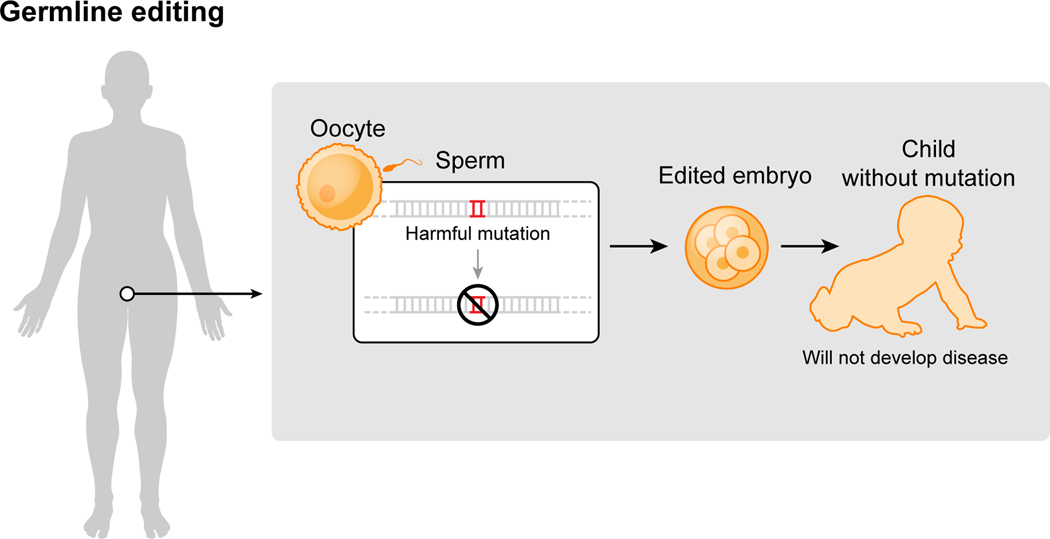
This review argues that therapeutic genome editing, especially CRISPR-Cas9, is moving toward the clinic for some monogenic diseases but still faces major delivery, precision, safety, cost, and governance challenges. It contrasts somatic editing with heritable germline editing and calls for responsible, regulated use.
Key findings
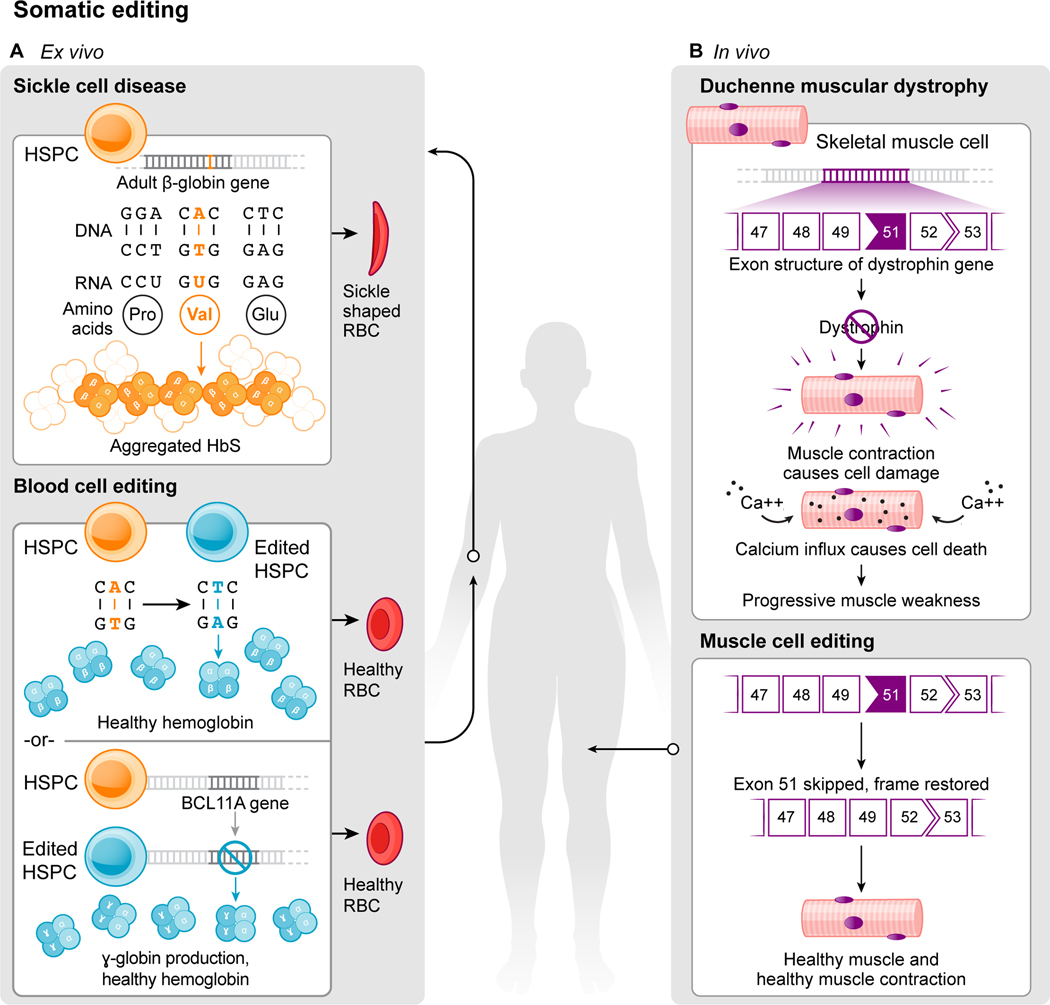
- Monogenic diseases are a major target: ~5,000 are known and affect at least 250 million individuals. Sickle cell disease, caused by a single A-to-T mutation in β-globin, could be treated ex vivo by correcting the mutation in hematopoietic stem/progenitor cells or reactivating γ-globin; ~100,000 US patients and millions more in African and Asian countries are potential candidates.
- Duchenne muscular dystrophy affects one in 5,000 males at birth and can involve >3,000 mutations, mostly at hotspots; restoring ~15% of normal dystrophin expression may provide clinical benefit. In animal studies, systemic AAV CRISPR delivery restored up to 90% dystrophin in ΔEx50 mice, and in dogs dystrophin levels were restored to 3–90% of normal with improved muscle appearance.
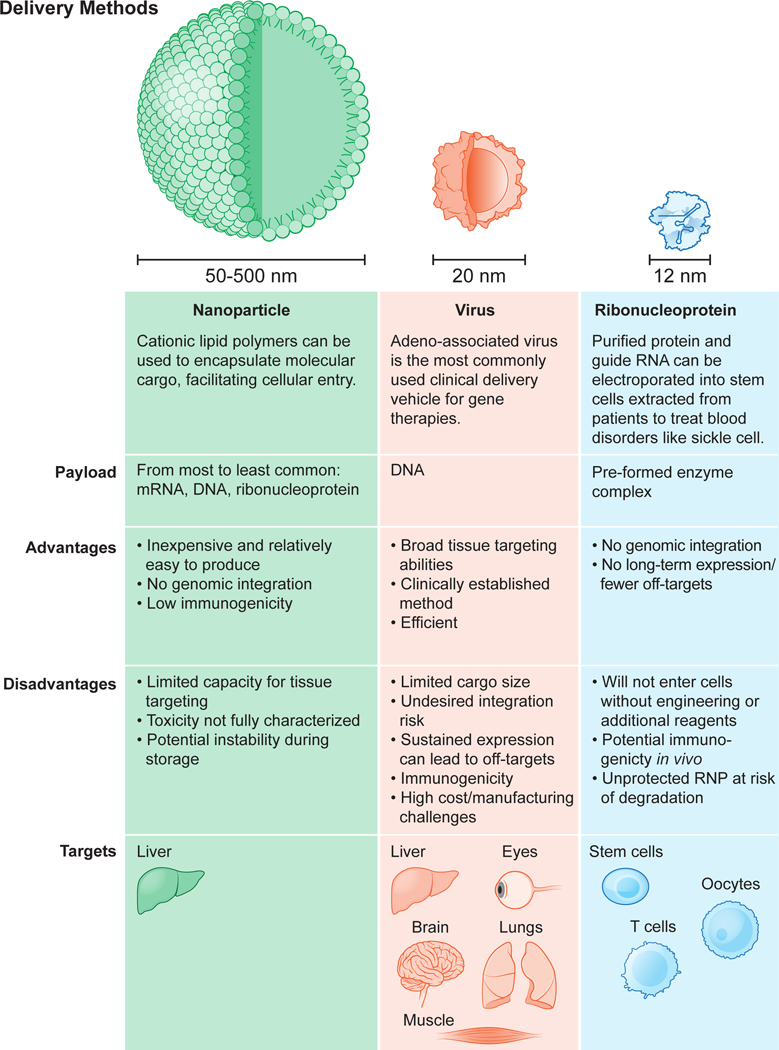
- Delivery is a central bottleneck: ex vivo editing favors electroporation of Cas9 ribonucleoprotein complexes, while in vivo delivery uses viral vectors such as AAV or lipid nanoparticles. AAV can carry only ~4.7 kb, not much larger than the 4.2 kb SpCas9 gene, so corrective insertion often requires two AAV vectors.
- Safety and governance concerns include off-target and imprecise editing, rare large deletions and complex rearrangements, possible immunogenicity from pre-existing Cas9 antibodies/T cells, and unresolved long-term safety. For germline editing, the paper states it is inappropriate to perform editing that culminates in human pregnancy at this time, while in vitro embryo/gamete research should be allowed with oversight.
Methods
- Narrative review by Jennifer A. Doudna; no systematic search strategy, primary dataset, or new experimental results are reported.
- Synthesizes CRISPR-Cas therapeutic genome editing, including sickle cell disease and DMD examples, delivery modalities, accuracy/safety issues, clinical development, and ethical/regulatory discussion of somatic versus germline editing.
- Draws on cited animal studies, early clinical trials, and international scientific/organizational positions; no sample size or formal analysis is stated in the paper.
Limitations
- Stated: delivery remains perhaps the biggest bottleneck to somatic genome editing; AAV has packaging, immunogenicity, and scalable GMP production/cost challenges, while lipid nanoparticles can be toxic and cell-type selective.
- Stated: off-target and imprecise editing, large deletions, and complex rearrangements occur at low frequency but could be clinically significant; immunogenicity and long-term safety/efficacy of edited cells in vivo remain largely unknown.
- Stated and evident: germline editing raises unresolved scientific questions about DNA repair in early human embryos and ethical/policy questions; as a review, the paper provides no new primary data and relies on cited studies and early-stage clinical information.
Model-written summary. Check it against the paper before relying on it.
Integrity signals
Registry
Cites
Statistics
Figures
Verification
Claims the paper makes
40 Valid · 10 Not valid · 12 Not checked · 36 Own results and interpretations
The cited sources support only part of this claim — read each source’s verdict below.
In the paper
“Engineered DNA-cleaving enzymes including zinc-finger nucleases (ZFNs) and transcription activator-like effector nucleases (TALENs) demonstrated the promise of therapeutic genome editing.”
What the sources say
- Not checked — no full text of the sourcecites [16] 16. Miller JC, Tan S, Qiao G, Barlow KA, Wang J, Xia DF, Meng X, Paschon DE, Leung E, Hinkley SJ, Dulay GP, Hua KL, Ankoudinova I, Cost GJ, Urnov FD, Zhang HS, Holmes MC, Zhang L, Gregory PD & Rebar EJ A TALE nuclease architecture for efficient genome editing. Nat. Biotechnol 29, 143-148 (2011). [PubMed: 21179091] source
- Not checked — no full text of the sourcecites [17] 17. Joglekar AV, Gray D, Kaufman ML, Urbinati F, Senadheera S, Cost G, Reik A, Holmes MC, Gregory PD, Hollis RP & Kohn DB Zinc Finger Nucleases Targeting The β -Globin Locus Drive Efficient Correction Of The Sickle Mutation In CD34+ Cells. Blood 122, 2904-2904 (2013). source
- Partly supportedcites [18] 18. Chang K-H, Smith SE, Sullivan T, Chen K, Zhou Q, West JA, Liu M, Liu Y, Vieira BF, Sun C, Hong VP, Zhang M, Yang X, Reik A, Urnov FD, Rebar EJ, Holmes MC, Danos O, Jiang H. & Tan S. Long-Term Engraftment and Fetal Globin Induction upon BCL11A Gene Editing in Bone-Marrow-Derived CD34+ Hematopoietic Stem and Progenitor Cells. Mol Ther Methods Clin Dev 4, 137-148 (2017). [PubMed: 28344999] sourceExperimental — accuracy not yet measured
The Results and Discussion describe ZFN-mediated BCL11A editing and call it a strong preclinical proof of concept for a potential sickle-cell therapy. The cited paper does not report a comparable demonstration using TALENs, so it supports the claim for ZFNs but not for both named enzyme types. (LLM, conf=0.88)
- Partly supportedcites [19] 19. Qasim W, Zhan H, Samarasinghe S, Adams S, Amrolia P, Stafford S, Butler K, Rivat C, Wright G, Somana K, Ghorashian S, Pinner D, Ahsan G, Gilmour K, Lucchini G, Inglott S, Mifsud W, Chiesa R, Peggs KS, Chan L, Farzeneh F, Thrasher AJ, Vora A, Pule M. & Veys P. Molecular remission of infant B-ALL after infusion of universal TALEN gene-edited CAR T cells. Sci. Transl. Med 9, 1-9 (2017). sourceExperimental — accuracy not yet measured
The Introduction reports first-in-human use of TALEN-edited T cells, and the Discussion says this application demonstrates the potential of gene-editing strategies for engineered cell therapies. The paper supports the claim about TALENs, but the passages do not establish the same point for ZFNs. (LLM, conf=0.88)
boostedstates a cause- Asserted: passes — The authors put it forward as true.
- Checkable: passes — It can be checked against evidence.
- Load-bearing: unclear — It is unclear whether the paper’s conclusions depend on it.
- Based: passes — The paper gives a reason why it holds.
The cited sources support only part of this claim — read each source’s verdict below.
In the paper
“Notably, restoration of a small percentage (~15%) of normal dystrophin expression levels can provide a clinical benefit 15 .”
What the sources say
- Partly supportedcites [15] 15. Long C, McAnally JR, Shelton JM, Mireault AA, Bassel-Duby R. & Olson EN Prevention of muscular dystrophy in mice by CRISPR/Cas9-mediated editing of germline DNA. Science 345, 1184-1188 (2014). [PubMed: 25123483] sourceExperimental — accuracy not yet measured
The supplied passages (labeled Abstract; page unavailable) report that correcting 17% of mutant Dmd alleles in mice restored dystrophin in many muscle fibers and reduced dystrophic features. They do not show that dystrophin expression was restored to ~15% of normal levels: 17% refers to gene correction, not protein expression. The reported benefits are in mice, not a demonstrated clinical benefit in patients. (LLM, conf=0.88)
plainstates a cause- Asserted: passes — The authors put it forward as true.
- Checkable: passes — It can be checked against evidence.
- Load-bearing: unclear — It is unclear whether the paper’s conclusions depend on it.
- Based: passes — The paper gives a reason why it holds.
- Partly supported
The cited sources support only part of this claim — read each source’s verdict below.
In the paper
“Cas9 protein-sgRNA complexes can be incorporated by assembly with DNA-linked particles 78,79 .”
What the sources say
- Partly supportedcites [78] 78. Glass Z, Li Y. & Xu Q. Nanoparticles for CRISPR-Cas9 delivery. Nat Biomed Eng 1, 854-855 (2017). [PubMed: 30147994] sourceExperimental — accuracy not yet measured
The formulation passage (Abstract; page not provided) describes a gold nanoparticle core surrounded by a Cas9–gRNA complex and a DNA repair template. This supports incorporating the complex into a particle, but the copy does not specify assembly with DNA-linked particles. (LLM, conf=0.80)
- Supportedcites [79] 80. Lee K, Conboy M, Park HM, Jiang F, Kim HJ, Dewitt MA, Mackley VA, Chang K, Rao A, Skinner C, Shobha T, Mehdipour M, Liu H, Huang W-C, Lan F, Bray NL, Li S, Corn JE, Kataoka K, Doudna JA, Conboy I. & Murthy N. Nanoparticle delivery of Cas9 ribonucleoprotein and donor DNA in vivo induces homology-directed DNA repair. Nat Biomed Eng 1, 889-901 (2017). [PubMed: 29805845] source
The Results and discussion section (‘Design and synthesis of CRISPR-Gold’; page unavailable) says donor DNA is attached to gold nanoparticles and Cas9 ribonucleoprotein is then adsorbed onto them. The Methods section (‘S5. Synthesis of CRISPR-Gold’; page unavailable) specifies that Cas9 and guide RNA are mixed before being added to the DNA-linked particles. (LLM, conf=0.94)
plainstates a cause- Asserted: passes — The authors put it forward as true.
- Checkable: passes — It can be checked against evidence.
- Load-bearing: unclear — It is unclear whether the paper’s conclusions depend on it.
- Based: passes — The paper gives a reason why it holds.
- Partly supported
The cited sources support only part of this claim — read each source’s verdict below.
In the paper
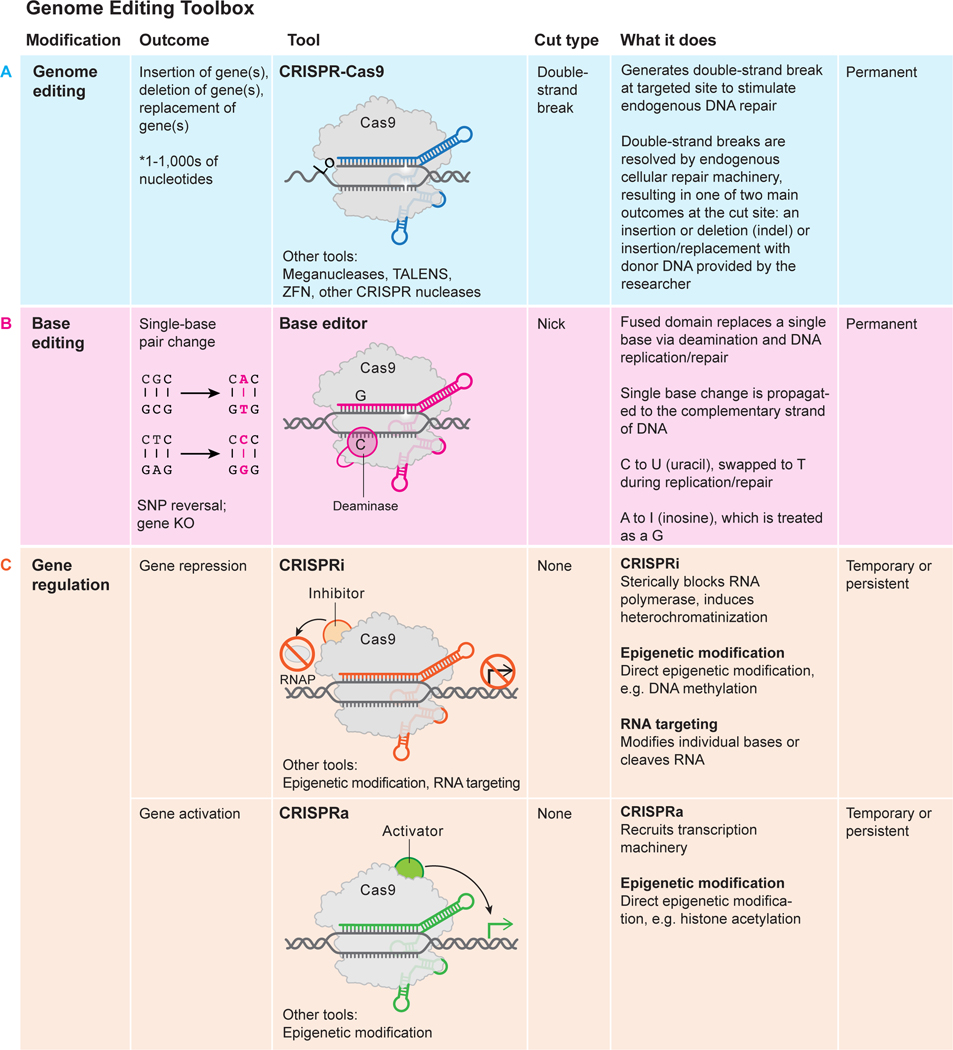
“In cells of all multicellular organisms, including humans, such double-stranded DNA breaks induce DNA repair by endogenous cellular pathways that can introduce alterations to the DNA sequence, including small sequence changes or genetic insertions 21,22 .”
What the sources say
- Not checked — no full text of the sourcecites [21] 21. Szostak JW, Orr-Weaver TL, Rothstein RJ & Stahl FW The double-strand-break repair model for recombination. Cell 33, 25-35 (1983). [PubMed: 6380756] *The authors proposed what was at the time a surprising mechanism for meiotic recombination, in which double-strand breaks that are enlarged to double-strand gaps initiate genetic recombination. This model has been proven largely correct, forming the basis for DNA repair-mediated genome editing. source
- Partly supportedcites [22] 22. Stark JM, Pierce AJ, Oh J, Pastink A. & Jasin M. Genetic steps of mammalian homologous repair with distinct mutagenic consequences. Mol. Cell. Biol 24, 9305-9316 (2004). [PubMed: 15485900] *This study demonstrated that double-strand DNA breaks in mammalian cells trigger - DNA repair that can introduce altered genomic sequences at the site of the repair. As a result, research focused increasingly on engineered enzymes capable of introducing targeted breaks in genomes, which would in turn produce site-specific genetic changes. sourceExperimental — accuracy not yet measured
The Abstract (page not provided) says that mammalian cells repair double-strand breaks through pathways that can cause deletions or insertions at the break site. It also discusses mutagenic repair associated with human disease. The paper does not establish that this applies to cells of all multicellular organisms, so the claim extends beyond its stated scope. (LLM, conf=0.87)
plainstates a cause- Asserted: passes — The authors put it forward as true.
- Checkable: passes — It can be checked against evidence.
- Load-bearing: passes — The paper’s conclusions depend on it.
- Based: passes — The paper gives a reason why it holds.
The sources with a verdict support this claim; the rest weren’t checked yet, have no full text we could read, or their verdicts aren’t rated yet.
In the paper
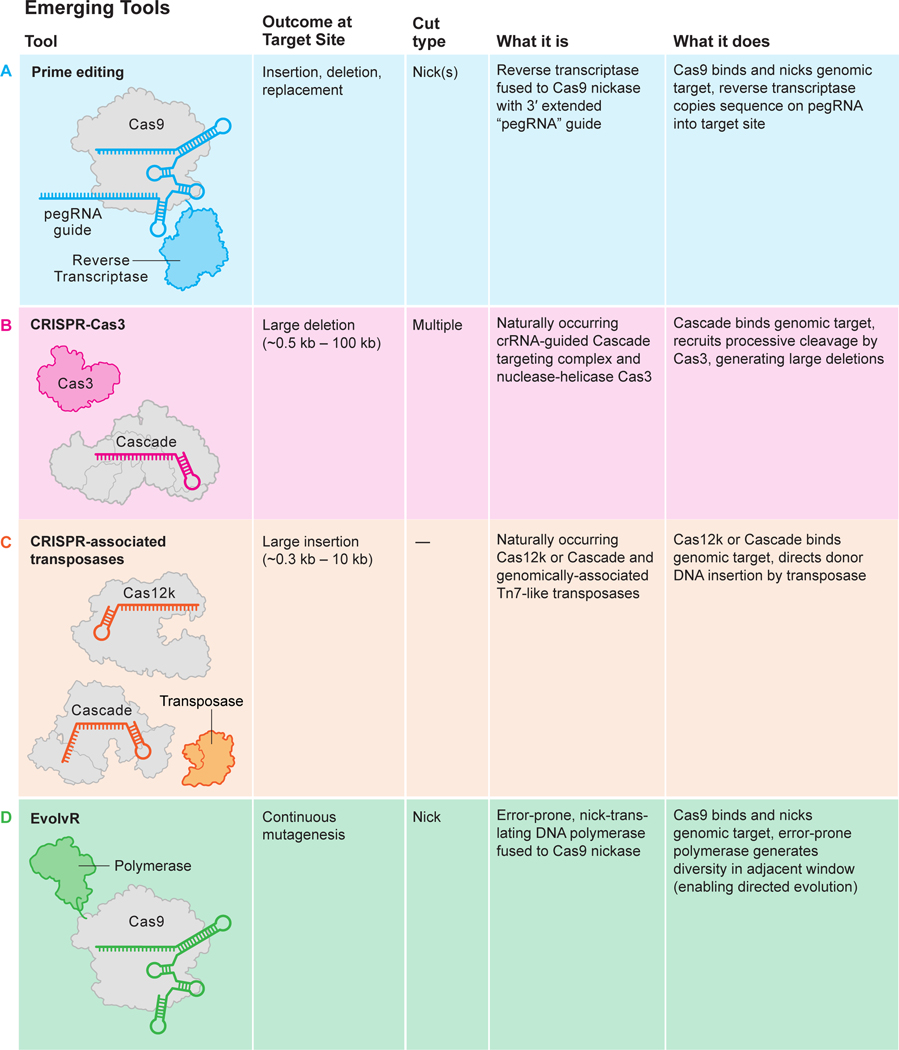
“Alternatives to DNA cleavage-induced editing include using CRISPR-Cas9 for direct chemical sequence alteration (base editing) 25,26 , providing RNA templates for gene alteration (prime editing) 27,28 , and for transcriptional control (CRISPR interference, CRISPRi; CRISPR activation, CRISPRa) 29,30 (Fig. 3).”
What the sources say
- Supportedcites [25] 25. Komor AC, Kim YB, Packer MS, Zuris JA & Liu DR Programmable editing of a target base in genomic DNA without double-stranded DNA cleavage. Nature 533, 420-424 (2016). [PubMed: 27096365] *In this study, CRISPR-Cas9 was fused to a DNA editing enzyme that enables targeted nucleotide editing at genomic locations recognized by Cas9. By avoiding double strand breaks in the DNA, the authors proposed that undesired DNA repair could be avoided. sourceExperimental — accuracy not yet measured
The Abstract describes a CRISPR/Cas9-based editor that directly converts a target DNA base without a double-stranded break or donor template. This supports the base-editing clause to which this citation is attached; the prime-editing and CRISPRi/CRISPRa clauses have separate citations. (LLM, conf=0.94)
- Not checked — no full text of the sourcecites [26] 26. Nishida K, Arazoe T, Yachie N, Banno S, Kakimoto M, Tabata M, Mochizuki M, Miyabe A, Araki M, Hara KY, Shimatani Z. & Kondo A. Targeted nucleotide editing using hybrid prokaryotic and vertebrate adaptive immune systems. Science 353, (2016). *In this study, CRISPR-Cas9 was fused to a DNA editing enzyme that enables targeted nucleotide editing at genomic locations recognized by Cas9. Instead of inducing double strand break repair, this editing form of Cas9 enables individual base pairs to be altered within cells. source
- Could not verifycites [27] 27. Sharon E, Chen S-AA, Khosla NM, Smith JD, Pritchard JK & Fraser HB Functional Genetic Variants Revealed by Massively Parallel Precise Genome Editing. Cell 175, 544-557.e16 (2018). [PubMed: 30245013] *This study was the first to show that an RNA template could be used together with a Cas9-reverse transcriptase fusion protein to introduce small targeted changes in cellular genomes. sourceExperimental — accuracy not yet measured
The citation is attached to the sentence’s claim about CRISPRi/CRISPRa for transcriptional control. The Introduction and Results describe Cas9 cleavage followed by donor-directed repair, not CRISPRi or CRISPRa; searches for those terms and transcriptional control found no passage addressing that claim. The References mention base editing, but do not establish the claim for which this citation is offered. (LLM, conf=0.75)
- Supportedcites [28] 28. Anzalone AV, Randolph PB, Davis JR, Sousa AA, Koblan LW, Levy JM, Chen PJ, Wilson C, Newby GA, Raguram A. & Liu DR Search-and-replace genome editing without double-strand breaks or donor DNA. Nature (2019). doi:10.1038/s41586-019-1711-4 *This study explored the use of a CRISPR-Cas9-reverse transcriptase fusion protein together with extended guide RNA templates to introduce small sequence changes within ~50 base pairs of the location of Cas9 binding. sourceExperimental — accuracy not yet measured
The citation is attached to the prime-editing part of the sentence, not the claims about base editing or CRISPRi/CRISPRa. The Abstract and “Prime editing strategy” section describe an edit-encoding RNA guide whose information is copied into target DNA without a double-strand break or donor DNA template. (LLM, conf=0.93)
- Supportedcites [29] 29. Qi LS, Larson MH, Gilbert LA, Doudna JA, Weissman JS, Arkin AP & Lim WA Repurposing CRISPR as an RNA-guided platform for sequence-specific control of gene expression. Cell 152, 1173-1183 (2013). [PubMed: 23452860] *This study demonstrated the use of a catalyticallydeactivated form of CRISPR-Cas9 for transcriptional control in cells. source
The citation is attached to the transcriptional-control portion of the sentence, not the base- or prime-editing examples. In “CRISPRi as a Platform for Engineering Transcriptional Regulatory Networks” (page not provided), the paper describes CRISPRi as a dCas9-based approach to targeted gene regulation, including transcriptional repression and potential activation, without altering the target sequence. (LLM, conf=0.92)
- Supportedcites [30] 30. Gilbert LA, Horlbeck MA, Adamson B, Villalta JE, Chen Y, Whitehead EH, Guimaraes C, Panning B, Ploegh HL, Bassik MC, Qi LS, Kampmann M. & Weissman JS Genome-Scale CRISPRMediated Control of Gene Repression and Activation. Cell 159, 647-661 (2014). [PubMed: 25307932] sourceExperimental — accuracy not yet measured
The citation is attached to the transcriptional-control part of the sentence, not to base or prime editing. The Introduction (page not supplied) describes the use of CRISPRi to repress and CRISPRa to activate transcription, and reports applying both methods to control gene expression. (LLM, conf=0.94)
plain- Asserted: passes — The authors put it forward as true.
- Checkable: passes — It can be checked against evidence.
- Load-bearing: unclear — It is unclear whether the paper’s conclusions depend on it.
- Based: passes — The paper gives a reason why it holds.
- Supported
45 more claims · 23 with their cited sources checked
Create a free account to see all 98 claims and to verify the 5 references still open.
- It may state two separate claims as one. 33
- Probably not a substantial claim. 23
Claims other papers make about this one
Each is checked against this paper’s own text: does it say what the citing paper says it does?
The source backs part of the claim, not all of it — or backs it for a different population, condition or comparison.
In the citing paper
“CRISPR-Cas dominates the field because of the ease of using guide RNAs directing the CRISPR complex to specific DNA sequences and the increasing ability to target most sites in the genome.121,122”
From Fetal hemoglobin in sickle cell anemia (2020) · cites this paper as [121]
Experimental — accuracy not yet measured
Citations
Cites
A Programmable Dual-RNA–Guided DNA Endonuclease in Adaptive Bacterial Immunity
Jinek, M., Chylinski, K., Fonfara, I., Hauer, M., Doudna, J. A., & Charpentier, E. (2012) · Science · doi:10.1126/science.1225829 · Cited by 17,116
Self-citationMultiplex Genome Engineering Using CRISPR/Cas Systems
Cong, L., Ran, F. A., Cox, D., Lin, S., Barretto, R., Habib, N., Hsu, P. D., Wu, X., Jiang, W., Marraffini, L. A., et al. (2013) · Science · doi:10.1126/science.1231143 · Cited by 15,339
RNA-Guided Human Genome Engineering via Cas9
Mali, P., Yang, L., Esvelt, K. M., Aach, J., Guell, M., DiCarlo, J. E., Norville, J. E., & Church, G. M. (2013) · Science · doi:10.1126/science.1232033 · Cited by 9,210
Programmable editing of a target base in genomic DNA without double-stranded DNA cleavage
Komor, A. C., Kim, Y. B., Packer, M. S., Zuris, J. A., & Liu, D. R. (2016) · Nature · doi:10.1038/nature17946 · Cited by 5,437
Repurposing CRISPR as an RNA-Guided Platform for Sequence-Specific Control of Gene Expression
Qi, L. S., Larson, M. H., Gilbert, L. A., Doudna, J. A., Weissman, J. S., Arkin, A. P., & Lim, W. A. (2013) · Cell · doi:10.1016/j.cell.2013.02.022 · Cited by 5,016
Self-citationSearch-and-replace genome editing without double-strand breaks or donor DNA
Anzalone, A. V., Randolph, P. B., Davis, J. R., Sousa, A. A., Koblan, L. W., Levy, J. M., Chen, P. J., Wilson, C., Newby, G. A., Raguram, A., et al. (2019) · Nature · doi:10.1038/s41586-019-1711-4 · Cited by 4,767
Programmable base editing of A•T to G•C in genomic DNA without DNA cleavage
Gaudelli, N. M., Komor, A. C., Rees, H. A., Packer, M. S., Badran, A. H., Bryson, D. I., & Liu, D. R. (2017) · Nature · doi:10.1038/nature24644 · Cited by 4,184
CRISPR-Mediated Modular RNA-Guided Regulation of Transcription in Eukaryotes
Gilbert, L. A., Larson, M. H., Morsut, L., Liu, Z., Brar, G. A., Torres, S. E., Stern-Ginossar, N., Brandman, O., Whitehead, E. H., Doudna, J. A., et al. (2013) · Cell · doi:10.1016/j.cell.2013.06.044 · Cited by 3,696
Self-citationGasiunas, G., Barrangou, R., Horvath, P., & Siksnys, V. (2012) · Proceedings of the National Academy of Sciences · doi:10.1073/pnas.1208507109 · Cited by 2,769
Genome-Scale CRISPR-Mediated Control of Gene Repression and Activation
Gilbert, L. A., Horlbeck, M. A., Adamson, B., Villalta, J. E., Chen, Y., Whitehead, E. H., Guimaraes, C., Panning, B., Ploegh, H. L., Bassik, M. C., et al. (2014) · Cell · doi:10.1016/j.cell.2014.09.029 · Cited by 2,728
Cited by
In vivo CRISPR base editing of PCSK9 durably lowers cholesterol in primates
Musunuru, K., Chadwick, A. C., Mizoguchi, T., Garcia, S. P., DeNizio, J. E., Reiss, C. W., Wang, K., Iyer, S., Dutta, C., Clendaniel, V., et al. (2021) · Nature · doi:10.1038/s41586-021-03534-y · Cited by 793
Dilliard, S. A., & Siegwart, D. J. (2023) · Nature Reviews Materials · doi:10.1038/s41578-022-00529-7 · Cited by 671
Engineered Virus-like Particles for Efficient in Vivo Delivery of Therapeutic Proteins
Banskota, S., Raguram, A., Suh, S., Du, S. W., Davis, J. R., Choi, E. H., Wang, X., Nielsen, S. C., Newby, G. A., Randolph, P. B., et al. (2022) · Cell · doi:10.1016/j.cell.2021.12.021 · Cited by 668
“Recently developed gene editing agents enable the precise manipulation of genomic DNA in living organisms and raise the possibility of treating the root cause of many genetic diseases (Anzalone et al., 2020; Doudna, 2020; Newby and Liu, 2021).”
BackgroundAnzalone, A. V., Gao, X. D., Podracky, C. J., Nelson, A. T., Koblan, L. W., Raguram, A., Levy, J. M., Mercer, J. A. M., & Liu, D. R. (2022) · Nature Biotechnology · doi:10.1038/s41587-021-01133-w · Cited by 613
Past, present, and future of CRISPR genome editing technologies
Pacesa, M., Pelea, O., & Jinek, M. (2024) · Cell · doi:10.1016/j.cell.2024.01.042 · Cited by 609
“39,88,92 Cas9/Cas12a enzymes and their guide RNAs can be delivered in multiple formats, depending on the target cell type or organism.”
Chromothripsis as an on-target consequence of CRISPR–Cas9 genome editing
Leibowitz, M. L., Papathanasiou, S., Doerfler, P. A., Blaine, L. J., Sun, L., Yao, Y., Zhang, C.-Z., Weiss, M. J., & Pellman, D. (2021) · Nature Genetics · doi:10.1038/s41588-021-00838-7 · Cited by 583
“CRISPR-Cas9 is directed to its target-site by a guide RNA (gRNA), creating specific DNA double-strand breaks (DSBs) almost anywhere in the genome 1,2 .”
CRISPR-Based Therapeutic Genome Editing: Strategies and In Vivo Delivery by AAV Vectors
Wang, D., Zhang, F., & Gao, G. (2020) · Cell · doi:10.1016/j.cell.2020.03.023 · Cited by 527
“, 2013), CRISPR-based technology has rapidly advanced, benefitting greatly from a collective endeavor to characterize, improve, expand, and share the CRISPR-based molecular toolbox (Doudna, 2020; Doudna and Charpentier, 2014; Zhang, 2019).”
Therapeutic in vivo delivery of gene editing agents
Raguram, A., Banskota, S., & Liu, D. R. (2022) · Cell · doi:10.1016/j.cell.2022.03.045 · Cited by 522
“Recent advances include the development of robust tools for gene editing in mammalian cells, including programmable nucleases, base editors, and prime editors (Anzalone et al., 2020; Doudna, 2020; Newby and Liu, 2021).”
BackgroundEngineering the next generation of cell-based therapeutics
Bashor, C. J., Hilton, I. B., Bandukwala, H., Smith, D. M., & Veiseh, O. (2022) · Nature Reviews Drug Discovery · doi:10.1038/s41573-022-00476-6 · Cited by 439
Engineered miniature CRISPR-Cas system for mammalian genome regulation and editing
Xu, X., Chemparathy, A., Zeng, L., Kempton, H. R., Shang, S., Nakamura, M., & Qi, L. S. (2021) · Molecular Cell · doi:10.1016/j.molcel.2021.08.008 · Cited by 417
Qiu, M., Glass, Z., Chen, J., Haas, M., Jin, X., Zhao, X., Rui, X., Ye, Z., Li, Y., Zhang, F., et al. (2021) · Proceedings of the National Academy of Sciences · doi:10.1073/pnas.2020401118 · Cited by 409
“The microbial CRISPR-Cas9 system has been developed as a genome editing tool (11, 12).”
MethodISSCR Guidelines for Stem Cell Research and Clinical Translation: The 2021 update
Lovell-Badge, R., Anthony, E., Barker, R. A., Bubela, T., Brivanlou, A. H., Carpenter, M., Charo, R. A., Clark, A., Clayton, E., Cong, Y., et al. (2021) · Stem Cell Reports · doi:10.1016/j.stemcr.2021.05.012 · Cited by 398
“…is conducted in vitro and/or in animal models, should not require specialized review and oversight and falls into Category 1A. Clinical research and applications of somatic genome editing should largely be covered by existing review and oversight mechanisms governing gene therapy (Doudna, 2020).”
BackgroundNon-viral, specifically targeted CAR-T cells achieve high safety and efficacy in B-NHL
Zhang, J., Hu, Y., Yang, J., Li, W., Zhang, M., Wang, Q., Zhang, L., Wei, G., Tian, Y., Zhao, K., et al. (2022) · Nature · doi:10.1038/s41586-022-05140-y · Cited by 371
Strategic vision for improving human health at The Forefront of Genomics
Green, E. D., Gunter, C., Biesecker, L. G., Di Francesco, V., Easter, C. L., Feingold, E. A., Felsenfeld, A. L., Kaufman, D. J., Ostrander, E. A., Pavan, W. J., et al. (2020) · Nature · doi:10.1038/s41586-020-2817-4 · Cited by 324
Wan, T., Zhong, J., Pan, Q., Zhou, T., Ping, Y., & Liu, X. (2022) · Science Advances · doi:10.1126/sciadv.abp9435 · Cited by 299
Combinatorial design of nanoparticles for pulmonary mRNA delivery and genome editing
Li, B., Manan, R. S., Liang, S.-Q., Gordon, A., Jiang, A., Varley, A., Gao, G., Langer, R., Xue, W., & Anderson, D. (2023) · Nature Biotechnology · doi:10.1038/s41587-023-01679-x · Cited by 295
Applications, challenges, and needs for employing synthetic biology beyond the lab
Brooks, S. M., & Alper, H. S. (2021) · Nature Communications · doi:10.1038/s41467-021-21740-0 · Cited by 286
Structural basis for mismatch surveillance by CRISPR–Cas9
Bravo, J. P. K., Liu, M.-S., Hibshman, G. N., Dangerfield, T. L., Jung, K., McCool, R. S., Johnson, K. A., & Taylor, D. W. (2022) · Nature · doi:10.1038/s41586-022-04470-1 · Cited by 272
Viral vector‐based gene therapies in the clinic
Zhao, Z., Anselmo, A. C., & Mitragotri, S. (2022) · Bioengineering & Translational Medicine · doi:10.1002/btm2.10258 · Cited by 269
Yang, H., Ren, S., Yu, S., Pan, H., Li, T., Ge, S., Zhang, J., & Xia, N. (2020) · International Journal of Molecular Sciences · doi:10.3390/ijms21186461 · Cited by 237
“Precise genomic editing based on programming nucleases is opening up the possibility of achieving desired genome editing outcome in vitro and in vivo, and ensure its safe and rapid adoption for genome engineering applications across biology [1,2].”
BackgroundDNA Damage: From Threat to Treatment
Carusillo, A., & Mussolino, C. (2020) · Cells · doi:10.3390/cells9071665 · Cited by 241
The CRISPR–Cas toolbox for analytical and diagnostic assay development
Tang, Y., Gao, L., Feng, W., Guo, C., Yang, Q., Li, F., & Le, X. C. (2021) · Chemical Society Reviews · doi:10.1039/d1cs00098e · Cited by 238
How can nanotechnology help to combat COVID-19? Opportunities and urgent need
Campos, E. V. R., Pereira, A. E. S., de Oliveira, J. L., Carvalho, L. B., Guilger-Casagrande, M., de Lima, R., & Fraceto, L. F. (2020) · Journal of Nanobiotechnology · doi:10.1186/s12951-020-00685-4 · Cited by 226
Genotoxic effects of base and prime editing in human hematopoietic stem cells
Fiumara, M., Ferrari, S., Omer-Javed, A., Beretta, S., Albano, L., Canarutto, D., Varesi, A., Gaddoni, C., Brombin, C., Cugnata, F., et al. (2024) · Nature Biotechnology · doi:10.1038/s41587-023-01915-4 · Cited by 220
“In the last decade, CRISPR–Cas-engineered nucleases coupled with a single guide RNA (gRNA) have been widely used to introduce site-specific DNA double-strand breaks (DSBs) 2,3 .”
Targeted delivery of CRISPR-Cas9 and transgenes enables complex immune cell engineering
Hamilton, J. R., Tsuchida, C. A., Nguyen, D. N., Shy, B. R., McGarrigle, E. R., Sandoval Espinoza, C. R., Carr, D., Blaeschke, F., Marson, A., & Doudna, J. A. (2021) · Cell Reports · doi:10.1016/j.celrep.2021.109207 · Cited by 208
“CRISPR-Cas9 genome editing enables the disruption of targeted genes but requires the effective delivery of genome editing tools into target cells (Doudna, 2020; van Haasteren et al., 2020; Jinek et al., 2012; Porteus, 2019; Wilson and Gilbert, 2018).”
BackgroundSelf-citationIn vivo delivery of CRISPR-Cas9 therapeutics: Progress and challenges
Behr, M., Zhou, J., Xu, B., & Zhang, H. (2021) · Acta Pharmaceutica Sinica B · doi:10.1016/j.apsb.2021.05.020 · Cited by 210
CRISPR-based genome editing through the lens of DNA repair
Nambiar, T. S., Baudrier, L., Billon, P., & Ciccia, A. (2022) · Molecular Cell · doi:10.1016/j.molcel.2021.12.026 · Cited by 208
Assessing and advancing the safety of CRISPR-Cas tools: from DNA to RNA editing
Tao, J., Bauer, D. E., & Chiarle, R. (2023) · Nature Communications · doi:10.1038/s41467-023-35886-6 · Cited by 207
CRISPR-Cas Tools and Their Application in Genetic Engineering of Human Stem Cells and Organoids
Hendriks, D., Clevers, H., & Artegiani, B. (2020) · Cell Stem Cell · doi:10.1016/j.stem.2020.10.014 · Cited by 192
Prime editing: advances and therapeutic applications
Zhao, Z., Shang, P., Mohanraju, P., & Geijsen, N. (2023) · Trends in Biotechnology · doi:10.1016/j.tibtech.2023.03.004 · Cited by 191
Gene-based therapies for neurodegenerative diseases
Sun, J., & Roy, S. (2021) · Nature Neuroscience · doi:10.1038/s41593-020-00778-1 · Cited by 187
Gene therapy for ALS: A review
Amado, D. A., & Davidson, B. L. (2021) · Molecular Therapy · doi:10.1016/j.ymthe.2021.04.008 · Cited by 184
Zhang, B. (2021) · Journal of Cellular Physiology · doi:10.1002/jcp.30064 · Cited by 179
“In 2013, a study suggests that CRISPR/Cas9 genome editing can be a useful tool for treating HIV infection (Ebina et al., 2013), in which they show that CRISPR/Cas9 system can be used to efficiently cleave and mutate LTR sequences in HIV genome and further affected HIV infection.”
BackgroundLi, C., Brant, E., Budak, H., & Zhang, B. (2021) · Journal of Zhejiang University-SCIENCE B · doi:10.1631/jzus.b2100009 · Cited by 177
“Many studies show that delivery of Cas-sgRNA ribonucleoprotein (RNP) complex into cells reduces off-target impacts mainly because the CRISPR/ Cas9 system is not inserted into the host genome and the RNA/protein has a short life time (Doudna, 2020).”
BackgroundHakim, C. H., Kumar, S. R. P., Pérez-López, D. O., Wasala, N. B., Zhang, D., Yue, Y., Teixeira, J., Pan, X., Zhang, K., Million, E. D., et al. (2021) · Nature Communications · doi:10.1038/s41467-021-26830-7 · Cited by 175
“Numbers (1, 2, 3, 4) in b–g are muscle block numbers.”
Artificial Intelligence in Regenerative Medicine: Applications and Implications
Nosrati, H., & Nosrati, M. (2023) · Biomimetics · doi:10.3390/biomimetics8050442 · Cited by 158
“This breakthrough offers the possibility of life-saving treatments for individuals suffering from genetic disorders [82].”
BackgroundAljabali, A. A. A., El‐Tanani, M., & Tambuwala, M. M. (2024) · Journal of Drug Delivery Science and Technology · doi:10.1016/j.jddst.2024.105338 · Cited by 232
Dilliard, S. A., Sun, Y., Brown, M. O., Sung, Y., Chatterjee, S., Farbiak, L., Vaidya, A., Lian, X., Wang, X., Lemoff, A. S., et al. (2023) · Journal of Controlled Release · doi:10.1016/j.jconrel.2023.07.058 · Cited by 167
Adeno-Associated Virus Toolkit to Target Diverse Brain Cells
Challis, R. C., Ravindra Kumar, S., Chen, X., Goertsen, D., Coughlin, G. M., Hori, A. M., Chuapoco, M. R., Otis, T. S., Miles, T. F., & Gradinaru, V. (2022) · Annual Review of Neuroscience · doi:10.1146/annurev-neuro-111020-100834 · Cited by 148
“Coupled with advances in AAV methodology, tools for editing and manipulating the genome offer new possibilities for understanding gene function in disease and identifying potential therapeutic targets (Doudna 2020, Porteus 2019, Zhang 2019).”
MethodLi, F., Song, N., Dong, Y., Li, S., Li, L., Liu, Y., Li, Z., & Yang, D. (2022) · Angewandte Chemie International Edition · doi:10.1002/anie.202116569 · Cited by 156
Fetal hemoglobin in sickle cell anemia
Steinberg, M. H. (2020) · Blood · doi:10.1182/blood.2020007645 · Cited by 136
RNA‐based medicine: from molecular mechanisms to therapy
Sparmann, A., & Vogel, J. (2023) · The EMBO Journal · doi:10.15252/embj.2023114760 · Cited by 159
“While proof of concept has been achieved confirming that genome editing can restore dystrophin levels in cells and animal models (Long et al , 2016; Min et al , 2019 , 2020), challenges have to be overcome to apply this approach systematically in humans.”
Ferrari, S., Jacob, A., Cesana, D., Laugel, M., Beretta, S., Varesi, A., Unali, G., Conti, A., Canarutto, D., Albano, L., et al. (2022) · Cell stem cell · doi:10.1016/j.stem.2022.09.001 · Cited by 133
“Overall, these analyses identified reproducible and significant occurrence of integration of AAV DNA at DSB induced by editing at nuclease on- and off-target sites, mainly involving a specific region of the AAV ITR, which might trigger or be prone to capture during DSB repair.”
InfluentialWimberger, S., Akrap, N., Firth, M. A., Brengdahl, J., Engberg, S., Schwinn, M. K., Slater, M. R., Lundin, A., Hsieh, P.-P., Li, S., et al. (2023) · Nature Communications · doi:10.1038/s41467-023-40344-4 · Cited by 149
Programmable RNA sensing for cell monitoring and manipulation
Qian, Y., Li, J., Zhao, S., Matthews, E. A., Adoff, M., Zhong, W., An, X., Yeo, M., Park, C., Yang, X., et al. (2022) · Nature · doi:10.1038/s41586-022-05280-1 · Cited by 143
Kumar, R., Le, N., Tan, Z., Brown, M. E., Jiang, S., & Reineke, T. M. (2020) · ACS Nano · doi:10.1021/acsnano.0c08549 · Cited by 142
CRISPR-GPT for agentic automation of gene-editing experiments
Qu, Y., Huang, K., Yin, M., Zhan, K., Liu, D., Yin, D., Cousins, H. C., Johnson, W. A., Wang, X., Shah, M., et al. (2025) · Nature Biomedical Engineering · doi:10.1038/s41551-025-01463-z · Cited by 140
“Technologies such as CRISPR-Cas9 pose potential ethical and safety risks, including potential misuse for dual purposes, which can be exemplified with AI tools 68 .”
The NIH Somatic Cell Genome Editing program
The SCGE Consortium, Saha, K., Sontheimer, E. J., Brooks, P. J., Dwinell, M. R., Gersbach, C. A., Liu, D. R., Murray, S. A., Tsai, S. Q., Wilson, R. C., et al. (2021) · Nature · doi:10.1038/s41586-021-03191-1 · Cited by 125
Self-citationLei, T., Wang, Y., Zhang, Y., Yang, Y., Cao, J., Huang, J., Chen, J., Chen, H., Zhang, J., wang, L., et al. (2024) · Leukemia · doi:10.1038/s41375-024-02444-y · Cited by 177
“…the Clustered Regularly Interspaced Short Palindromic Repeats (CRISPR) gene editing technology transformed gene editing from a complex protein engineering problem to an RNA coding problem, making CRISPR an attractive tool for both basic research and clinical applications immediately [11, 12] (Fig.”
Genome editing and its applications in genetic improvement in aquaculture
Yang, Z., Yu, Y., Tay, Y. X., & Yue, G. H. (2021) · Reviews in Aquaculture · doi:10.1111/raq.12591 · Cited by 125
Lu, Y., Cui, X., Zhang, L., Wang, X., Xu, Y., Qin, Z., Liu, G., Wang, Q., Tian, K., Lim, K. S., et al. (2022) · Aging and Disease · doi:10.14336/ad.2021.0929 · Cited by 132
Microfluidic fabrication of lipid nanoparticles for the delivery of nucleic acids
Prakash, G., Shokr, A., Willemen, N. G. A., Bashir, S. M., Shin, S. R., & Hassan, S. (2022) · Advanced Drug Delivery Reviews · doi:10.1016/j.addr.2022.114197 · Cited by 127
Increasing the efficiency and precision of prime editing with guide RNA pairs
Zhuang, Y., Liu, J., Wu, H., Zhu, Q., Yan, Y., Meng, H., Chen, P. R., & Yi, C. (2021) · Nature Chemical Biology · doi:10.1038/s41589-021-00889-1 · Cited by 120
Selvaraj, S., Feist, W. N., Viel, S., Vaidyanathan, S., Dudek, A. M., Gastou, M., Rockwood, S. J., Ekman, F. K., Oseghale, A., Xu, L., et al. (2023) · Nature Biotechnology · doi:10.1038/s41587-023-01888-4 · Cited by 110
“After providing an exogenous donor template, the HDR pathway can be harnessed for targeted integration of single-nucleotide changes or changes of several thousand base pairs 8,14 .”
Ibraheim, R., Tai, P. W. L., Mir, A., Javeed, N., Wang, J., Rodríguez, T., Namkung, S., Nelson, S. J., Khokhar, E. S., Mintzer, E., et al. (2021) · Nature Communications · doi:10.1038/s41467-021-26518-y · Cited by 121
Global detection of DNA repair outcomes induced by CRISPR–Cas9
Liu, M., Zhang, W., Xin, C., Yin, J., Shang, Y., Chen, A., Li, J., Meng, F., & Hu, J. (2021) · Nucleic Acids Research · doi:10.1093/nar/gkab686 · Cited by 127
“Genome editing technologies based on engineered nucleases not only greatly change the way we study life sciences but also cast light on the treatment of human genetic diseases (Doudna 2020; Wang et al. 2020).”
BackgroundTargeted DNA insertion in plants
Dong, O. X., & Ronald, P. C. (2021) · Proceedings of the National Academy of Sciences · doi:10.1073/pnas.2004834117 · Cited by 119
“The technology has been adopted in a wide range of applications (94, 95), including targeted gene insertion in many plant species (96).”
BackgroundKong, X., Zhang, H., Li, G., Wang, Z., Kong, X., Wang, L., Xue, M., Zhang, W., Wang, Y., Lin, J., et al. (2023) · Nature Communications · doi:10.1038/s41467-023-37829-7 · Cited by 121
Bioinspired oral delivery devices
Zhang, X., Chen, G., Zhang, H., Shang, L., & Zhao, Y. (2023) · Nature Reviews Bioengineering · doi:10.1038/s44222-022-00006-4 · Cited by 120
Efficient engineering of human and mouse primary cells using peptide-assisted genome editing
Zhang, Z., Baxter, A. E., Ren, D., Qin, K., Chen, Z., Collins, S. M., Huang, H., Komar, C. A., Bailer, P. F., Parker, J. B., et al. (2023) · Nature Biotechnology · doi:10.1038/s41587-023-01756-1 · Cited by 117
Clinical Trial Design for Lipoprotein(a)-Lowering Therapies
Malick, W. A., Goonewardena, S. N., Köenig, W., & Rosenson, R. S. (2023) · Journal of the American College of Cardiology · doi:10.1016/j.jacc.2023.02.033 · Cited by 117
Genetic glycoengineering in mammalian cells
Narimatsu, Y., Büll, C., Chen, Y., Wandall, H. H., Yang, Z., & Clausen, H. (2021) · Journal of Biological Chemistry · doi:10.1016/j.jbc.2021.100448 · Cited by 111
Abbasi, S., Uchida, S., Toh, K., Tockary, T. A., Dirisala, A., Hayashi, K., Fukushima, S., & Kataoka, K. (2021) · Journal of Controlled Release · doi:10.1016/j.jconrel.2021.02.026 · Cited by 98
Xiang, G., Li, Y., Sun, J., Huo, Y., Cao, S., Cao, Y., Guo, Y., Yang, L., Cai, Y., Zhang, Y. E., et al. (2023) · Nature Biotechnology · doi:10.1038/s41587-023-01857-x · Cited by 109
“With such a small size, once TnpB is fused with other protein domains, TnpB-derived tools could be delivered with cargo-limited vectors in therapeutics and agriculture 7,8,43 .”
InfluentialExtracellular vesicles in nanomedicine and regenerative medicine: A review over the last decade
Moghassemi, S., Dadashzadeh, A., Sousa, M. J., Vlieghe, H., Yang, J., León-Félix, C. M., & Amorim, C. A. (2024) · Bioactive Materials · doi:10.1016/j.bioactmat.2024.02.021 · Cited by 150
“…disorders are caused by mutations in a single gene, gene editing has emerged as a promising treatment strategy for liver diseases [224], and the CRISPR-associated nuclease protein 9 (Cas9)-based technologies have been established as an effective tool for therapeutic genome editing [225].”
BackgroundLi, Y., Ye, Z., Yang, H., & Xu, Q. (2022) · Acta Pharmaceutica Sinica B · doi:10.1016/j.apsb.2022.04.013 · Cited by 108
Comprehensive assessment of miniature CRISPR-Cas12f nucleases for gene disruption
Xin, C., Yin, J., Yuan, S., Ou, L., Liu, M., Zhang, W., & Hu, J. (2022) · Nature Communications · doi:10.1038/s41467-022-33346-1 · Cited by 110
Multiplex epigenome editing of MECP2 to rescue Rett syndrome neurons
Qian, J., Guan, X., Xie, B., Xu, C., Niu, J., Tang, X., Li, C. H., Colecraft, H. M., Jaenisch, R., & Liu, X. S. (2023) · Science Translational Medicine · doi:10.1126/scitranslmed.add4666 · Cited by 113
“These editing tools consist of a DNA targeting module such as a catalytically dead CRISPR-Cas protein (21, 22) and an epigenetic modifier module such as DNA methylation/demethylation enzymes Dnmt or Tet (23).”
MethodParums, D. V. (2024) · Medical Science Monitor · doi:10.12659/msm.944204 · Cited by 134
John van der, O. O. S. T., & Patinios, C. (2023) · Trends in biotechnology · doi:10.1016/j.tibtech.2022.12.022 · Cited by 117
An oncolytic virus–T cell chimera for cancer immunotherapy
Chen, Y., Chen, X., Bao, W., Liu, G., Wei, W., & Yuan, P. (2024) · Nature Biotechnology · doi:10.1038/s41587-023-02118-7 · Cited by 108
“Furthermore, due to the greater capacity of OAs to encapsulate transgenic elements (>8 kb), other emerging CRISPR genome or epigenome editing tools 49 for gene interference/activation, base editing, RNA editing, prime editing, etc., can be encoded into OAs to expand their therapeutic scope.”
Therapeutic Options in Hereditary Optic Neuropathies
Amore, G., Romagnoli, M., Carbonelli, M., Barboni, P., Carelli, V., & Morgia, C. L. (2020) · Drugs · doi:10.1007/s40265-020-01428-3 · Cited by 99
CRISPR-enhanced human adipocyte browning as cell therapy for metabolic disease
Tsagkaraki, E., Nicoloro, S. M. C., DeSouza, T., Solivan-Rivera, J., Desai, A., Lifshitz, L. M., Shen, Y., Kelly, M., Guilherme, A., Henriques, F. D. S., et al. (2021) · Nature Communications · doi:10.1038/s41467-021-27190-y · Cited by 101
Xia, L., Luo, H., Ma, Q., Xie, Y., Li, W., Hu, H., & Xu, Z. (2021) · Brain · doi:10.1093/brain/awab245 · Cited by 97
Yan, X., Pan, Q., Xin, H., Chen, Y., & Yuan, P. (2021) · Science Advances · doi:10.1126/sciadv.abj0624 · Cited by 90
“Furthermore, the delivery of mRNA encoding dsCas9, instead of the plasmid form, may also contribute to lowering the background activity by shortening the time of dsCas9 expression ( 44 ).”
Deliver the promise: RNAs as a new class of molecular entities for therapy and vaccination
Yu, A., & Tu, M. (2021) · Pharmacology & Therapeutics · doi:10.1016/j.pharmthera.2021.107967 · Cited by 95
“By contrast, intermolecular complementary base pairing is the foundation for RNA therapeutics (e.g., ASOs, miRNAs, siRNAs, and gRNAs) to selectively act on target transcripts to achieve the control of gene expression and disease progression (Doudna, 2020; Roberts et al., 2020; Yu et al., 2020b).”
BackgroundInfluentialChemical Modifications of CRISPR RNAs to Improve Gene-Editing Activity and Specificity
Rozners, E. (2022) · Journal of the American Chemical Society · doi:10.1021/jacs.2c02633 · Cited by 95
A DNA Origami‐Based Gene Editing System for Efficient Gene Therapy in Vivo
Tang, W., Tong, T., Wang, H., Lu, X., Yang, C., Wu, Y., Wang, Y., Liu, J., & Ding, B. (2023) · Angewandte Chemie International Edition · doi:10.1002/anie.202315093 · Cited by 93
Spatiotemporal Delivery of CRISPR/Cas9 Genome Editing Machinery Using Stimuli‐Responsive Vehicles
Cai, W., Luo, T., Mao, L., & Wang, M. (2020) · Angewandte Chemie International Edition · doi:10.1002/anie.202005644 · Cited by 88
Cardiomyocyte Proliferation and Maturation: Two Sides of the Same Coin for Heart Regeneration
Zhao, M., Ye, S., Su, J., & Garg, V. (2020) · Frontiers in Cell and Developmental Biology · doi:10.3389/fcell.2020.594226 · Cited by 92
“Pathogenic NOTCH1 mutations are linked to severe forms of CHDs such as hypoplastic left heart syndrome (HLHS) and tetralogy of Fallot (Garg et al., 2005; McBride et al., 2008; Durbin et al., 2017; Page et al., 2019).”
BackgroundToward the correction of muscular dystrophy by gene editing
Olson, E. N. (2021) · Proceedings of the National Academy of Sciences · doi:10.1073/pnas.2004840117 · Cited by 87
“The rapid advancement of gene editing technologies with the potential to safely and efficiently modify the genome has transformed this aspiration into a reality (2).”
BackgroundAdvanced Nanotheranostics of CRISPR/Cas for Viral Hepatitis and Hepatocellular Carcinoma
Kong, H., Ju, E., Yi, K., Xu, W., Lao, Y., Cheng, D., Zhang, Q., Tao, Y., Li, M., & Ding, J. (2021) · Advanced Science · doi:10.1002/advs.202102051 · Cited by 85
FATORES ESTRESSORES PARA A EQUIPE DE ENFERMAGEM DAS UNIDADES DE TERAPIA INTENSIVA
Vieira, K. V. D. O., Michelan, I. A., de Melo, A. A., & Adamczuk, C. (2023) · doi:10.55232/conmedsa.v2.27 · Cited by 77
Optogenetics for transcriptional programming and genetic engineering
Lan, T., He, L., Huang, Y., & Zhou, Y. (2022) · Trends in Genetics · doi:10.1016/j.tig.2022.05.014 · Cited by 87
Engineering approaches for RNA-based and cell-based osteoarthritis therapies
DeJulius, C. R., Walton, B. L., Colazo, J. M., d’Arcy, R., Francini, N., Brunger, J. M., & Duvall, C. L. (2024) · Nature Reviews Rheumatology · doi:10.1038/s41584-023-01067-4 · Cited by 93
“in synthetic delivery vehicles 127 .”
Diallo, I., & Provost, P. (2020) · International Journal of Molecular Sciences · doi:10.3390/ijms21051627 · Cited by 84
“Originally a natural system dedicated to genome editing, as part of the bacterial adaptive immune response system, CRISPR has become the swiss army knife [46] of genetics, with promises and challenges [47] in therapy and biotechnology.”
BackgroundStem Cells for Next Level Toxicity Testing in the 21st Century
Fritsche, E., Haarmann‐Stemmann, T., Kapr, J., Galanjuk, S., Hartmann, J., Mertens, P. R., Kämpfer, A. A. M., Schins, R. P. F., Tigges, J., & Koch, K. (2021) · Small · doi:10.1002/smll.202006252 · Cited by 75
Cas11 enables genome engineering in human cells with compact CRISPR-Cas3 systems
Tan, R., Krueger, R. K., Gramelspacher, M. J., Zhou, X., Xiao, Y., Ke, A., Hou, Z., & Zhang, Y. (2022) · Molecular Cell · doi:10.1016/j.molcel.2021.12.032 · Cited by 74
Gene therapy for liver diseases — progress and challenges
Zabaleta, N., Unzu, C., Weber, N. D., & González‐Aseguinolaza, G. (2023) · Nature Reviews Gastroenterology & Hepatology · doi:10.1038/s41575-022-00729-0 · Cited by 82
Tuning Lipid Nanoparticles for RNA Delivery to Extrahepatic Organs
Song, D., Zhao, Y., Wang, Z., & Xu, Q. (2024) · Advanced Materials · doi:10.1002/adma.202401445 · Cited by 96
Precise genome-editing in human diseases: mechanisms, strategies and applications
Zheng, Y., Li, Y., Zhou, K., Li, T., VanDusen, N. J., & Hua, Y. (2024) · Signal Transduction and Targeted Therapy · doi:10.1038/s41392-024-01750-2 · Cited by 107
“6 This emphasizes a pressing need for the development of effective treatments.”
BackgroundHaldrup, J., Andersen, S., Labial, A. R. L., Wolff, J. H., Frandsen, F. P., Skov, T. W., Rovsing, A. B., Nielsen, I. H., Jakobsen, T. S., Askou, A. L., et al. (2023) · Nucleic Acids Research · doi:10.1093/nar/gkad676 · Cited by 80
Recent advances in gene therapy for neurodevelopmental disorders with epilepsy
Turner, T. J., Zourray, C., Schorge, S., & Lignani, G. (2021) · Journal of Neurochemistry · doi:10.1111/jnc.15168 · Cited by 71
“The CRISPR/Cas genome editing system has been adapted for a wide range of new applications, creating new tools with increased utility and efficiency (Doudna 2020).”
BackgroundMethodAnalysis and Biomedical Applications of Functional Cargo in Extracellular Vesicles
Qian, F., Huang, Z., Zhong, H., Qi, L., Ai, Y., Xie, Z., Zhang, T., Jiang, B., Zhu, W., Sheng, Y., et al. (2022) · ACS Nano · doi:10.1021/acsnano.2c11298 · Cited by 78
Xue, K., & MacLaren, R. E. (2020) · Expert Opinion on Investigational Drugs · doi:10.1080/13543784.2020.1804853 · Cited by 69
Orthogonal Chemical Activation of Enzyme-Inducible CRISPR/Cas9 for Cell-Selective Genome Editing
Cai, W., Liu, J., Chen, X., Mao, L., & Wang, M. (2022) · Journal of the American Chemical Society · doi:10.1021/jacs.2c10545 · Cited by 73
Genetic engineering meets hematopoietic stem cell biology for next-generation gene therapy
Ferrari, S., Valeri, E., Conti, A., Scala, S., Aprile, A., Di Micco, R., Kajaste-Rudnitski, A., Montini, E., Ferrari, G., Aiuti, A., et al. (2023) · Cell Stem Cell · doi:10.1016/j.stem.2023.04.014 · Cited by 70
Feng, X., Li, Z. Y., Liu, Y., Chen, D., & Zhou, Z. (2024) · Experimental Hematology and Oncology · doi:10.1186/s40164-024-00570-y · Cited by 103
“This mechanism allows targeted inactivation of specific genes [30].”
BackgroundEditing GWAS: experimental approaches to dissect and exploit disease-associated genetic variation
Rao, S., Yao, Y., & Bauer, D. E. (2021) · Genome Medicine · doi:10.1186/s13073-021-00857-3 · Cited by 67
“Finally, there is potential for pre-existing immunity against CRIS PR components to limit the feasibility and safety of in vivo delivery, given the evidence that pre-existing Cas9 antibodies and reactive T cells have been detected in humans after exposure to pathogenic bacteria of CRIS PR systems [117, 143].”
Backgroundvan de Kooij, B., Kruswick, A., van Attikum, H., & Yaffe, M. B. (2022) · Nature Communications · doi:10.1038/s41467-022-32743-w · Cited by 73
“manipulation strategy, (3) quantification of the results in panel 2, and (4) themodel resulting from the data obtained with the reporter construct.”
Method
Metadata
- Authors
- Doudna, J. A.
- Affiliations
- QB3 (US)
- Corresponding author
- Doudna, Jennifer A.
- ORCID
- Doudna, Jennifer A.
- Venue
- Nature
- Published
- 2020-02-12
- Volume
- 578
- Issue
- 7794
- Pages
- 229-236
- ISSN
- 0028-0836 (ISSN-L)
- 1476-4687
- PMC
- PMC8992613
- OpenAlex
- W3006116138
- Semantic Scholar
- 58b8496f86ab37bb66e32f96f5492f531b5ca37b
- Cited by
- 1,126
- References
- 160
- Citations by year
- 2026: 123 · 2025: 169 · 2024: 184 · 2023: 259 · 2022: 173 · 2021: 144 · 2020: 73
- FWCI
- 15.77
- Type
- journal article
- Language
- en
- Open access
- green
- www.ncbi.nlm.nih.gov
- Licence
- cc-by
- www.springer.com/tdm (tdm)
- www.springer.com/tdm (vor)
- Locations
- Nature (publishedVersion)
- PubMed (publishedVersion)
- PubMed Central (acceptedVersion, cc-by)
- OSTI OAI (U.S. Department of Energy Office of Scientific and Technical Information) (submittedVersion)
- RePEc: Research Papers in Economics (submittedVersion)
- eScholarship (California Digital Library) (submittedVersion, cc-by)
- Funders
- National Science Foundation (1817593)
- Howard Hughes Medical Institute
- W. M. Keck Foundation
- Innovative Genomics Institute
- Multiple Sclerosis Society
- National Institutes of Health
- Defense Advanced Research Projects Agency (HR0011- 17-2-0043)
- Advanced Research Projects Agency
- National Human Genome Research Institute (RM1HG009490)
- National Institute of Allergy and Infectious Diseases (U01AI142817)
- Common Fund
- Topics
- Life Sciences › Biochemistry, Genetics and Molecular Biology › Molecular Biology › CRISPR and Genetic Engineering
- Life Sciences › Biochemistry, Genetics and Molecular Biology › Molecular Biology › RNA regulation and disease
- Life Sciences › Biochemistry, Genetics and Molecular Biology › Genetics › Virus-based gene therapy research
- Keywords
- therapeutic genome editing, CRISPR, genetic disorders, gene therapy, ethics of gene editing, precision genome editing, clinical translation
- MeSH terms
- Gene Editing, Anemia, Sickle Cell, Humans, Organ Specificity, Genome, Human, Germ-Line Mutation, Muscular Dystrophy, Duchenne, beta-Globins, Patient Safety, CRISPR-Cas Systems
About these checks
Registry, retraction, Cites and statistics results are computed, not judged, with one exception: a printed reference that no index lists is read once by a model before it counts as a citation error. Claims are extracted by a model and kept only when their quote appears verbatim in the text; each cited source is then checked, with a model’s help, for whether it says what the claim relies on. Those verdicts can be wrong — read the claim’s quote and the cited source before relying on one.
The claim verdicts this report counts are experimental: their accuracy is not yet measured.
A language model drew the claims from the paper on 2026-09-27, under version 3 of the claim definition (prompt extract-v3).
A second model labelled each claim on 2026-09-27 (model jev-1.13-20260917, definition revision gold-guideline-v0.2).
Cited sources are checked with a language model’s help (gpt-6-sol).
Statistics and arithmetic are recomputed, not judged.
Confidence bands are shown only for fields calibrated on our annotated test set. None is calibrated yet, so no band is shown.
What counts as a claim ›How we measure confidence ›How we check this ›
Are you an author, or do you see a problem with this page? Request a review
Data sources
Bibliographic data: Semantic Scholar, OpenAlex, Crossref.
Contains information from the Semantic Scholar Academic Graph Datasets, made available under the ODC Attribution License (ODC-BY 1.0).
Semantic Scholar’s data is described in: Kinney, R., et al. (2023). The Semantic Scholar Open Data Platform. arXiv:2301.10140.
