

The promise and challenge of therapeutic genome editing
Open accessThe DOI matches its Crossref record; 162 of the 162 references it cites were found in a registry or an index; 81 of the 118 sources its claims cite were checked for support.
Abstract
Genome editing, which involves the precise manipulation of cellular DNA sequences to alter cell fates and organism traits, has the potential to both improve our understanding of human genetics and cure genetic disease. Here I discuss the scientific, technical and ethical aspects of using CRISPR (clustered regularly interspaced short palindromic repeats) technology for therapeutic applications in humans, focusing on specific examples that highlight both opportunities and challenges. Genome editing is—or will soon be—in the clinic for several diseases, with more applications under development. The rapid pace of the field demands active efforts to ensure that this breakthrough technology is used responsibly to treat, cure and prevent genetic disease. The scientific, technical and ethical aspects of using CRISPR technology for therapeutic applications in humans are discussed, highlighting both opportunities and challenges of this technology to treat, cure and prevent genetic disease.
Overview
CoChat Summary
TL;DR
This review argues that therapeutic genome editing, especially CRISPR-Cas9, is moving toward the clinic for some monogenic diseases but still faces major delivery, precision, safety, cost, and governance challenges. It contrasts somatic editing with heritable germline editing and calls for responsible, regulated use.
Key findings
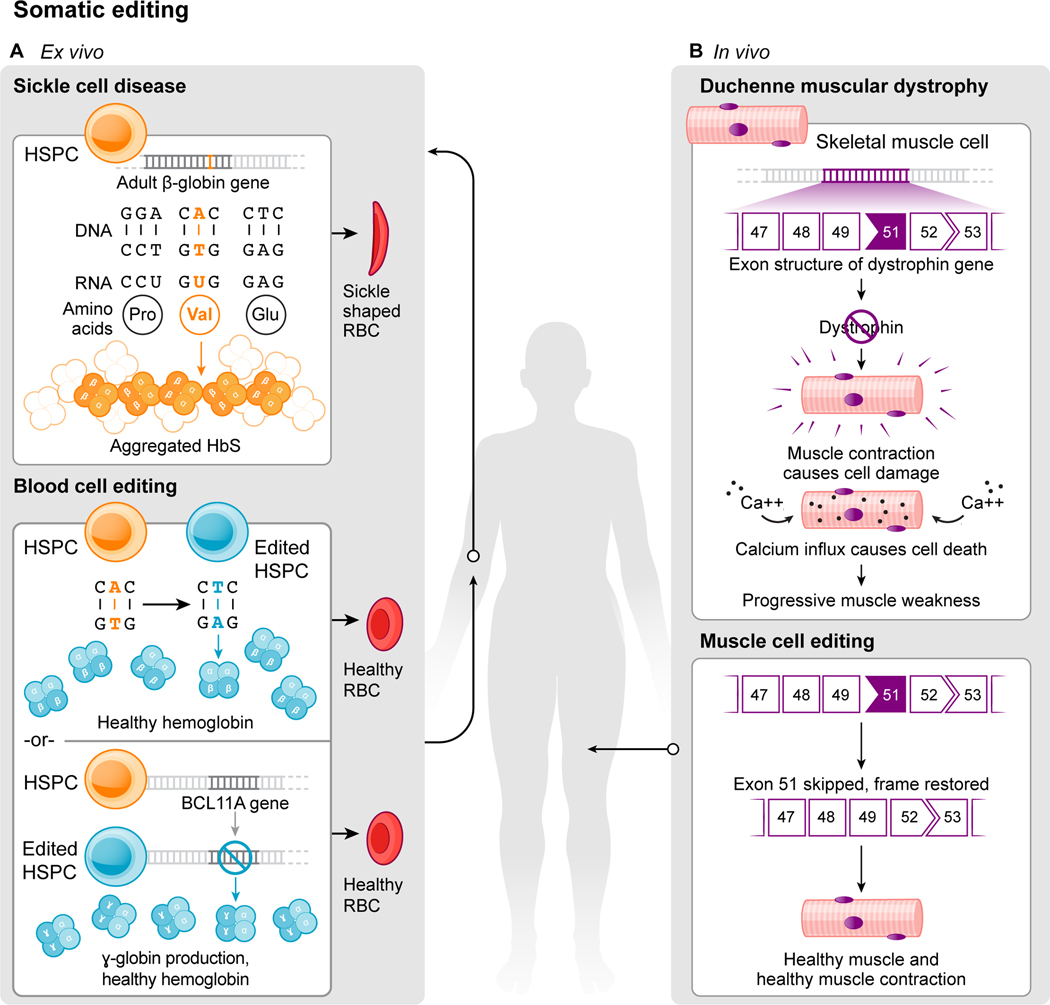
- Monogenic diseases are a major target: ~5,000 are known and affect at least 250 million individuals. Sickle cell disease, caused by a single A-to-T mutation in β-globin, could be treated ex vivo by correcting the mutation in hematopoietic stem/progenitor cells or reactivating γ-globin; ~100,000 US patients and millions more in African and Asian countries are potential candidates.
- Duchenne muscular dystrophy affects one in 5,000 males at birth and can involve >3,000 mutations, mostly at hotspots; restoring ~15% of normal dystrophin expression may provide clinical benefit. In animal studies, systemic AAV CRISPR delivery restored up to 90% dystrophin in ΔEx50 mice, and in dogs dystrophin levels were restored to 3–90% of normal with improved muscle appearance.
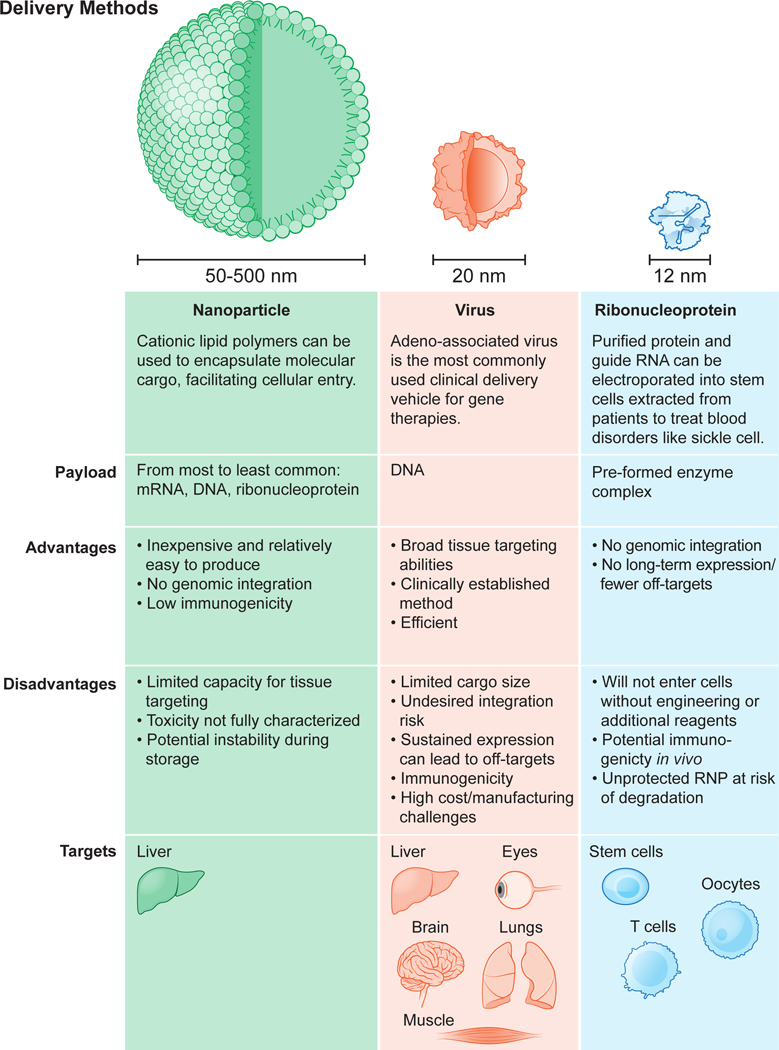
- Delivery is a central bottleneck: ex vivo editing favors electroporation of Cas9 ribonucleoprotein complexes, while in vivo delivery uses viral vectors such as AAV or lipid nanoparticles. AAV can carry only ~4.7 kb, not much larger than the 4.2 kb SpCas9 gene, so corrective insertion often requires two AAV vectors.
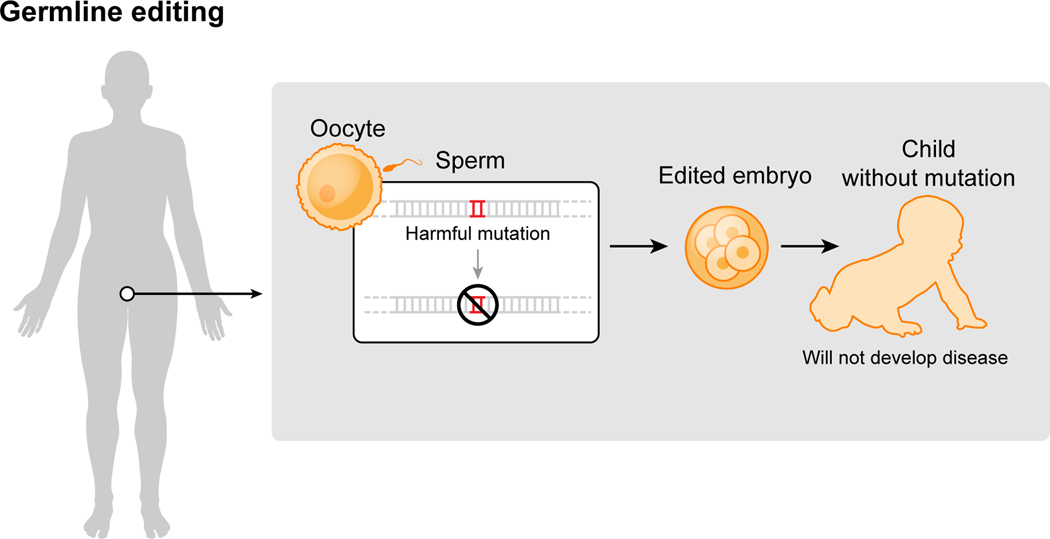
- Safety and governance concerns include off-target and imprecise editing, rare large deletions and complex rearrangements, possible immunogenicity from pre-existing Cas9 antibodies/T cells, and unresolved long-term safety. For germline editing, the paper states it is inappropriate to perform editing that culminates in human pregnancy at this time, while in vitro embryo/gamete research should be allowed with oversight.
Methods
- Narrative review by Jennifer A. Doudna; no systematic search strategy, primary dataset, or new experimental results are reported.
- Synthesizes CRISPR-Cas therapeutic genome editing, including sickle cell disease and DMD examples, delivery modalities, accuracy/safety issues, clinical development, and ethical/regulatory discussion of somatic versus germline editing.
- Draws on cited animal studies, early clinical trials, and international scientific/organizational positions; no sample size or formal analysis is stated in the paper.
Limitations
- Stated: delivery remains perhaps the biggest bottleneck to somatic genome editing; AAV has packaging, immunogenicity, and scalable GMP production/cost challenges, while lipid nanoparticles can be toxic and cell-type selective.
- Stated: off-target and imprecise editing, large deletions, and complex rearrangements occur at low frequency but could be clinically significant; immunogenicity and long-term safety/efficacy of edited cells in vivo remain largely unknown.
- Stated and evident: germline editing raises unresolved scientific questions about DNA repair in early human embryos and ethical/policy questions; as a review, the paper provides no new primary data and relies on cited studies and early-stage clinical information.
Model-written summary. Check it against the paper before relying on it.
Integrity signals
Registry
Cites
Statistics
Figures
Verification
Claims the paper makes
40 Valid · 10 Not valid · 12 Not checked · 36 Own results and interpretations
The cited sources support only part of this claim — read each source’s verdict below.
In the paper
“Engineered DNA-cleaving enzymes including zinc-finger nucleases (ZFNs) and transcription activator-like effector nucleases (TALENs) demonstrated the promise of therapeutic genome editing.”
What the sources say
- Not checked — no full text of the sourcecites [16] 16. Miller JC, Tan S, Qiao G, Barlow KA, Wang J, Xia DF, Meng X, Paschon DE, Leung E, Hinkley SJ, Dulay GP, Hua KL, Ankoudinova I, Cost GJ, Urnov FD, Zhang HS, Holmes MC, Zhang L, Gregory PD & Rebar EJ A TALE nuclease architecture for efficient genome editing. Nat. Biotechnol 29, 143-148 (2011). [PubMed: 21179091] source
- Not checked — no full text of the sourcecites [17] 17. Joglekar AV, Gray D, Kaufman ML, Urbinati F, Senadheera S, Cost G, Reik A, Holmes MC, Gregory PD, Hollis RP & Kohn DB Zinc Finger Nucleases Targeting The β -Globin Locus Drive Efficient Correction Of The Sickle Mutation In CD34+ Cells. Blood 122, 2904-2904 (2013). source
- Partly supportedcites [18] 18. Chang K-H, Smith SE, Sullivan T, Chen K, Zhou Q, West JA, Liu M, Liu Y, Vieira BF, Sun C, Hong VP, Zhang M, Yang X, Reik A, Urnov FD, Rebar EJ, Holmes MC, Danos O, Jiang H. & Tan S. Long-Term Engraftment and Fetal Globin Induction upon BCL11A Gene Editing in Bone-Marrow-Derived CD34+ Hematopoietic Stem and Progenitor Cells. Mol Ther Methods Clin Dev 4, 137-148 (2017). [PubMed: 28344999] sourceExperimental — accuracy not yet measured
The Results and Discussion describe ZFN-mediated BCL11A editing and call it a strong preclinical proof of concept for a potential sickle-cell therapy. The cited paper does not report a comparable demonstration using TALENs, so it supports the claim for ZFNs but not for both named enzyme types. (LLM, conf=0.88)
- Partly supportedcites [19] 19. Qasim W, Zhan H, Samarasinghe S, Adams S, Amrolia P, Stafford S, Butler K, Rivat C, Wright G, Somana K, Ghorashian S, Pinner D, Ahsan G, Gilmour K, Lucchini G, Inglott S, Mifsud W, Chiesa R, Peggs KS, Chan L, Farzeneh F, Thrasher AJ, Vora A, Pule M. & Veys P. Molecular remission of infant B-ALL after infusion of universal TALEN gene-edited CAR T cells. Sci. Transl. Med 9, 1-9 (2017). sourceExperimental — accuracy not yet measured
The Introduction reports first-in-human use of TALEN-edited T cells, and the Discussion says this application demonstrates the potential of gene-editing strategies for engineered cell therapies. The paper supports the claim about TALENs, but the passages do not establish the same point for ZFNs. (LLM, conf=0.88)
boostedstates a cause- Asserted: passes — The authors put it forward as true.
- Checkable: passes — It can be checked against evidence.
- Load-bearing: unclear — It is unclear whether the paper’s conclusions depend on it.
- Based: passes — The paper gives a reason why it holds.
The cited sources support only part of this claim — read each source’s verdict below.
In the paper
“Notably, restoration of a small percentage (~15%) of normal dystrophin expression levels can provide a clinical benefit 15 .”
What the sources say
- Partly supportedcites [15] 15. Long C, McAnally JR, Shelton JM, Mireault AA, Bassel-Duby R. & Olson EN Prevention of muscular dystrophy in mice by CRISPR/Cas9-mediated editing of germline DNA. Science 345, 1184-1188 (2014). [PubMed: 25123483] sourceExperimental — accuracy not yet measured
The supplied passages (labeled Abstract; page unavailable) report that correcting 17% of mutant Dmd alleles in mice restored dystrophin in many muscle fibers and reduced dystrophic features. They do not show that dystrophin expression was restored to ~15% of normal levels: 17% refers to gene correction, not protein expression. The reported benefits are in mice, not a demonstrated clinical benefit in patients. (LLM, conf=0.88)
plainstates a cause- Asserted: passes — The authors put it forward as true.
- Checkable: passes — It can be checked against evidence.
- Load-bearing: unclear — It is unclear whether the paper’s conclusions depend on it.
- Based: passes — The paper gives a reason why it holds.
- Partly supported
The cited sources support only part of this claim — read each source’s verdict below.
In the paper
“Cas9 protein-sgRNA complexes can be incorporated by assembly with DNA-linked particles 78,79 .”
What the sources say
- Partly supportedcites [78] 78. Glass Z, Li Y. & Xu Q. Nanoparticles for CRISPR-Cas9 delivery. Nat Biomed Eng 1, 854-855 (2017). [PubMed: 30147994] sourceExperimental — accuracy not yet measured
The formulation passage (Abstract; page not provided) describes a gold nanoparticle core surrounded by a Cas9–gRNA complex and a DNA repair template. This supports incorporating the complex into a particle, but the copy does not specify assembly with DNA-linked particles. (LLM, conf=0.80)
- Supportedcites [79] 80. Lee K, Conboy M, Park HM, Jiang F, Kim HJ, Dewitt MA, Mackley VA, Chang K, Rao A, Skinner C, Shobha T, Mehdipour M, Liu H, Huang W-C, Lan F, Bray NL, Li S, Corn JE, Kataoka K, Doudna JA, Conboy I. & Murthy N. Nanoparticle delivery of Cas9 ribonucleoprotein and donor DNA in vivo induces homology-directed DNA repair. Nat Biomed Eng 1, 889-901 (2017). [PubMed: 29805845] source
The Results and discussion section (‘Design and synthesis of CRISPR-Gold’; page unavailable) says donor DNA is attached to gold nanoparticles and Cas9 ribonucleoprotein is then adsorbed onto them. The Methods section (‘S5. Synthesis of CRISPR-Gold’; page unavailable) specifies that Cas9 and guide RNA are mixed before being added to the DNA-linked particles. (LLM, conf=0.94)
plainstates a cause- Asserted: passes — The authors put it forward as true.
- Checkable: passes — It can be checked against evidence.
- Load-bearing: unclear — It is unclear whether the paper’s conclusions depend on it.
- Based: passes — The paper gives a reason why it holds.
- Partly supported
The cited sources support only part of this claim — read each source’s verdict below.
In the paper
“In cells of all multicellular organisms, including humans, such double-stranded DNA breaks induce DNA repair by endogenous cellular pathways that can introduce alterations to the DNA sequence, including small sequence changes or genetic insertions 21,22 .”
What the sources say
- Not checked — no full text of the sourcecites [21] 21. Szostak JW, Orr-Weaver TL, Rothstein RJ & Stahl FW The double-strand-break repair model for recombination. Cell 33, 25-35 (1983). [PubMed: 6380756] *The authors proposed what was at the time a surprising mechanism for meiotic recombination, in which double-strand breaks that are enlarged to double-strand gaps initiate genetic recombination. This model has been proven largely correct, forming the basis for DNA repair-mediated genome editing. source
- Partly supportedcites [22] 22. Stark JM, Pierce AJ, Oh J, Pastink A. & Jasin M. Genetic steps of mammalian homologous repair with distinct mutagenic consequences. Mol. Cell. Biol 24, 9305-9316 (2004). [PubMed: 15485900] *This study demonstrated that double-strand DNA breaks in mammalian cells trigger - DNA repair that can introduce altered genomic sequences at the site of the repair. As a result, research focused increasingly on engineered enzymes capable of introducing targeted breaks in genomes, which would in turn produce site-specific genetic changes. sourceExperimental — accuracy not yet measured
The Abstract (page not provided) says that mammalian cells repair double-strand breaks through pathways that can cause deletions or insertions at the break site. It also discusses mutagenic repair associated with human disease. The paper does not establish that this applies to cells of all multicellular organisms, so the claim extends beyond its stated scope. (LLM, conf=0.87)
plainstates a cause- Asserted: passes — The authors put it forward as true.
- Checkable: passes — It can be checked against evidence.
- Load-bearing: passes — The paper’s conclusions depend on it.
- Based: passes — The paper gives a reason why it holds.
The sources with a verdict support this claim; the rest weren’t checked yet, have no full text we could read, or their verdicts aren’t rated yet.
In the paper
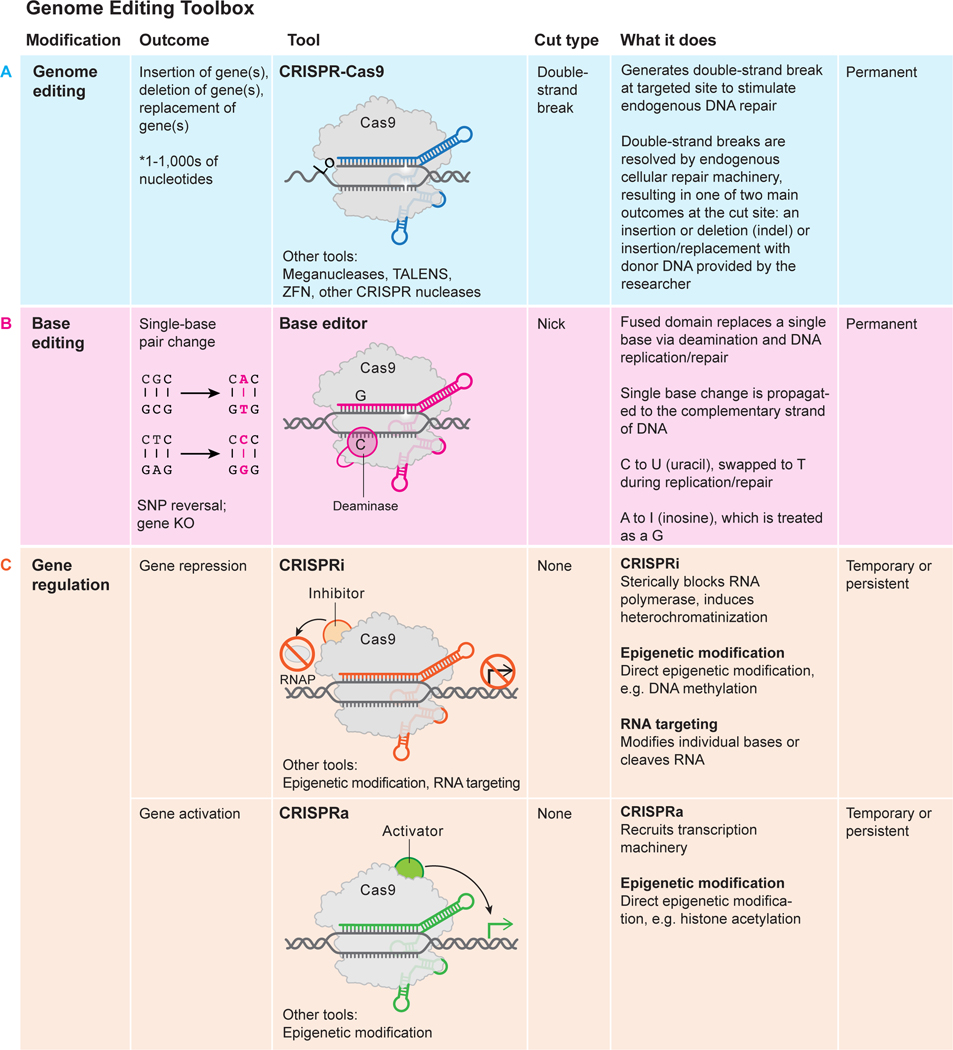
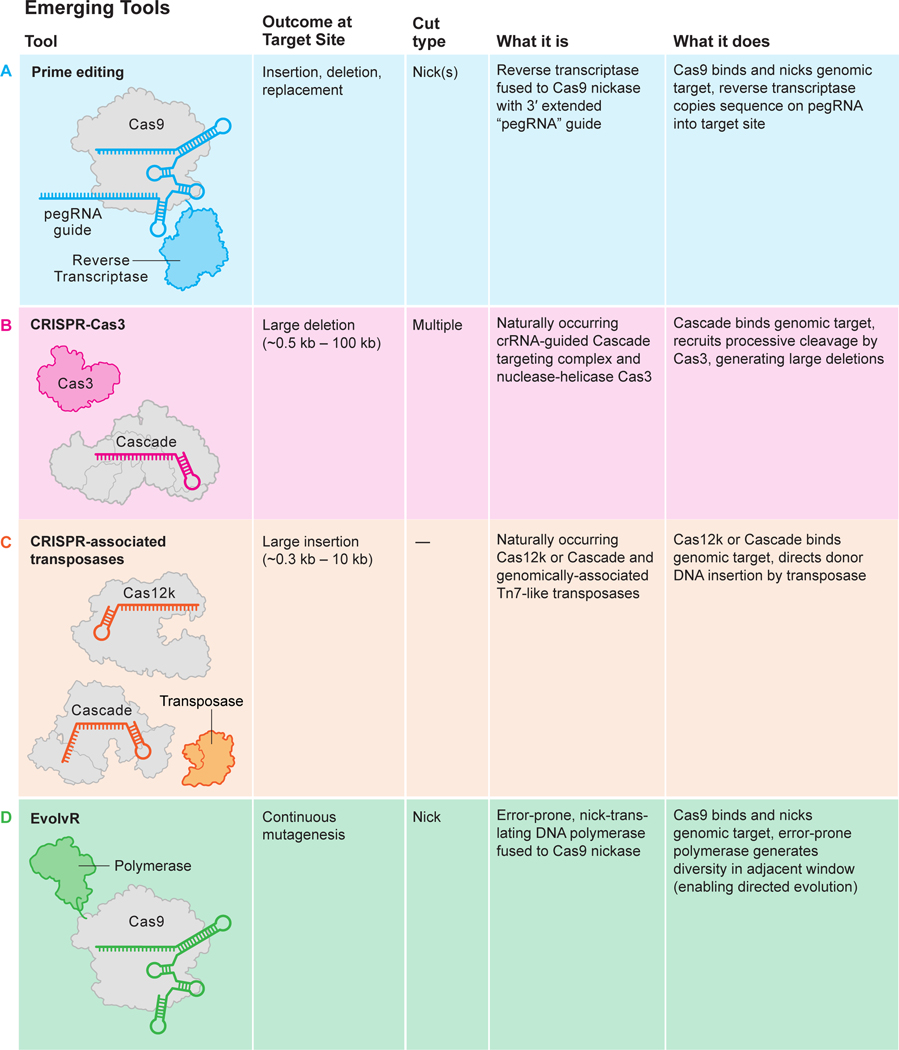
“Alternatives to DNA cleavage-induced editing include using CRISPR-Cas9 for direct chemical sequence alteration (base editing) 25,26 , providing RNA templates for gene alteration (prime editing) 27,28 , and for transcriptional control (CRISPR interference, CRISPRi; CRISPR activation, CRISPRa) 29,30 (Fig. 3).”
What the sources say
- Supportedcites [25] 25. Komor AC, Kim YB, Packer MS, Zuris JA & Liu DR Programmable editing of a target base in genomic DNA without double-stranded DNA cleavage. Nature 533, 420-424 (2016). [PubMed: 27096365] *In this study, CRISPR-Cas9 was fused to a DNA editing enzyme that enables targeted nucleotide editing at genomic locations recognized by Cas9. By avoiding double strand breaks in the DNA, the authors proposed that undesired DNA repair could be avoided. sourceExperimental — accuracy not yet measured
The Abstract describes a CRISPR/Cas9-based editor that directly converts a target DNA base without a double-stranded break or donor template. This supports the base-editing clause to which this citation is attached; the prime-editing and CRISPRi/CRISPRa clauses have separate citations. (LLM, conf=0.94)
- Not checked — no full text of the sourcecites [26] 26. Nishida K, Arazoe T, Yachie N, Banno S, Kakimoto M, Tabata M, Mochizuki M, Miyabe A, Araki M, Hara KY, Shimatani Z. & Kondo A. Targeted nucleotide editing using hybrid prokaryotic and vertebrate adaptive immune systems. Science 353, (2016). *In this study, CRISPR-Cas9 was fused to a DNA editing enzyme that enables targeted nucleotide editing at genomic locations recognized by Cas9. Instead of inducing double strand break repair, this editing form of Cas9 enables individual base pairs to be altered within cells. source
- Could not verifycites [27] 27. Sharon E, Chen S-AA, Khosla NM, Smith JD, Pritchard JK & Fraser HB Functional Genetic Variants Revealed by Massively Parallel Precise Genome Editing. Cell 175, 544-557.e16 (2018). [PubMed: 30245013] *This study was the first to show that an RNA template could be used together with a Cas9-reverse transcriptase fusion protein to introduce small targeted changes in cellular genomes. sourceExperimental — accuracy not yet measured
The citation is attached to the sentence’s claim about CRISPRi/CRISPRa for transcriptional control. The Introduction and Results describe Cas9 cleavage followed by donor-directed repair, not CRISPRi or CRISPRa; searches for those terms and transcriptional control found no passage addressing that claim. The References mention base editing, but do not establish the claim for which this citation is offered. (LLM, conf=0.75)
- Supportedcites [28] 28. Anzalone AV, Randolph PB, Davis JR, Sousa AA, Koblan LW, Levy JM, Chen PJ, Wilson C, Newby GA, Raguram A. & Liu DR Search-and-replace genome editing without double-strand breaks or donor DNA. Nature (2019). doi:10.1038/s41586-019-1711-4 *This study explored the use of a CRISPR-Cas9-reverse transcriptase fusion protein together with extended guide RNA templates to introduce small sequence changes within ~50 base pairs of the location of Cas9 binding. sourceExperimental — accuracy not yet measured
The citation is attached to the prime-editing part of the sentence, not the claims about base editing or CRISPRi/CRISPRa. The Abstract and “Prime editing strategy” section describe an edit-encoding RNA guide whose information is copied into target DNA without a double-strand break or donor DNA template. (LLM, conf=0.93)
- Supportedcites [29] 29. Qi LS, Larson MH, Gilbert LA, Doudna JA, Weissman JS, Arkin AP & Lim WA Repurposing CRISPR as an RNA-guided platform for sequence-specific control of gene expression. Cell 152, 1173-1183 (2013). [PubMed: 23452860] *This study demonstrated the use of a catalyticallydeactivated form of CRISPR-Cas9 for transcriptional control in cells. source
The citation is attached to the transcriptional-control portion of the sentence, not the base- or prime-editing examples. In “CRISPRi as a Platform for Engineering Transcriptional Regulatory Networks” (page not provided), the paper describes CRISPRi as a dCas9-based approach to targeted gene regulation, including transcriptional repression and potential activation, without altering the target sequence. (LLM, conf=0.92)
- Supportedcites [30] 30. Gilbert LA, Horlbeck MA, Adamson B, Villalta JE, Chen Y, Whitehead EH, Guimaraes C, Panning B, Ploegh HL, Bassik MC, Qi LS, Kampmann M. & Weissman JS Genome-Scale CRISPRMediated Control of Gene Repression and Activation. Cell 159, 647-661 (2014). [PubMed: 25307932] sourceExperimental — accuracy not yet measured
The citation is attached to the transcriptional-control part of the sentence, not to base or prime editing. The Introduction (page not supplied) describes the use of CRISPRi to repress and CRISPRa to activate transcription, and reports applying both methods to control gene expression. (LLM, conf=0.94)
plain- Asserted: passes — The authors put it forward as true.
- Checkable: passes — It can be checked against evidence.
- Load-bearing: unclear — It is unclear whether the paper’s conclusions depend on it.
- Based: passes — The paper gives a reason why it holds.
- Supported
45 more claims · 23 with their cited sources checked
Create a free account to see all 98 claims and to verify the 5 references still open.
- It may state two separate claims as one. 33
- Probably not a substantial claim. 23
Claims other papers make about this one
Each is checked against this paper’s own text: does it say what the citing paper says it does?
The source backs part of the claim, not all of it — or backs it for a different population, condition or comparison.
In the citing paper
“CRISPR-Cas dominates the field because of the ease of using guide RNAs directing the CRISPR complex to specific DNA sequences and the increasing ability to target most sites in the genome.121,122”
From Fetal hemoglobin in sickle cell anemia (2020) · cites this paper as [121]
Experimental — accuracy not yet measured
Citations
Cites
A Programmable Dual-RNA–Guided DNA Endonuclease in Adaptive Bacterial Immunity
Jinek, M., Chylinski, K., Fonfara, I., Hauer, M., Doudna, J. A., & Charpentier, E. (2012) · Science · doi:10.1126/science.1225829 · Cited by 17,116
Self-citationMultiplex Genome Engineering Using CRISPR/Cas Systems
Cong, L., Ran, F. A., Cox, D., Lin, S., Barretto, R., Habib, N., Hsu, P. D., Wu, X., Jiang, W., Marraffini, L. A., et al. (2013) · Science · doi:10.1126/science.1231143 · Cited by 15,339
RNA-Guided Human Genome Engineering via Cas9
Mali, P., Yang, L., Esvelt, K. M., Aach, J., Guell, M., DiCarlo, J. E., Norville, J. E., & Church, G. M. (2013) · Science · doi:10.1126/science.1232033 · Cited by 9,210
Programmable editing of a target base in genomic DNA without double-stranded DNA cleavage
Komor, A. C., Kim, Y. B., Packer, M. S., Zuris, J. A., & Liu, D. R. (2016) · Nature · doi:10.1038/nature17946 · Cited by 5,437
Repurposing CRISPR as an RNA-Guided Platform for Sequence-Specific Control of Gene Expression
Qi, L. S., Larson, M. H., Gilbert, L. A., Doudna, J. A., Weissman, J. S., Arkin, A. P., & Lim, W. A. (2013) · Cell · doi:10.1016/j.cell.2013.02.022 · Cited by 5,016
Self-citationSearch-and-replace genome editing without double-strand breaks or donor DNA
Anzalone, A. V., Randolph, P. B., Davis, J. R., Sousa, A. A., Koblan, L. W., Levy, J. M., Chen, P. J., Wilson, C., Newby, G. A., Raguram, A., et al. (2019) · Nature · doi:10.1038/s41586-019-1711-4 · Cited by 4,767
Programmable base editing of A•T to G•C in genomic DNA without DNA cleavage
Gaudelli, N. M., Komor, A. C., Rees, H. A., Packer, M. S., Badran, A. H., Bryson, D. I., & Liu, D. R. (2017) · Nature · doi:10.1038/nature24644 · Cited by 4,184
CRISPR-Mediated Modular RNA-Guided Regulation of Transcription in Eukaryotes
Gilbert, L. A., Larson, M. H., Morsut, L., Liu, Z., Brar, G. A., Torres, S. E., Stern-Ginossar, N., Brandman, O., Whitehead, E. H., Doudna, J. A., et al. (2013) · Cell · doi:10.1016/j.cell.2013.06.044 · Cited by 3,696
Self-citationGasiunas, G., Barrangou, R., Horvath, P., & Siksnys, V. (2012) · Proceedings of the National Academy of Sciences · doi:10.1073/pnas.1208507109 · Cited by 2,769
Genome-Scale CRISPR-Mediated Control of Gene Repression and Activation
Gilbert, L. A., Horlbeck, M. A., Adamson, B., Villalta, J. E., Chen, Y., Whitehead, E. H., Guimaraes, C., Panning, B., Ploegh, H. L., Bassik, M. C., et al. (2014) · Cell · doi:10.1016/j.cell.2014.09.029 · Cited by 2,728
Cited by
Items 401–500 of 1,131
Quan, Z.-J., Li, S.-A., Yang, Z.-X., Zhao, J.-J., Li, G., Zhang, F., Wen, W., Cheng, T., & Zhang, X. (2022) · Genomics Proteomics & Bioinformatics · doi:10.1016/j.gpb.2022.06.002 · Cited by 19
“Due to the potential clinical applications of CRISPR/Cas9, it is imperative to assess genome editing outcomes [11,12] comprehensively.”
BackgroundEngineered exosomes for future gene-editing therapy.
Guo, H., & Huang, X. (2022) · PubMed Central · doi:10.12336/biomatertransl.2022.04.003 · Cited by 20
RNAGenesis: A Generalist Foundation Model for Functional RNA TherapeuticsPreprint
Zhang, Z., Jin, R., Chao, L., Xu, G., Zhang, Y., Zhou, G., Yin, D., Guo, Y., Fu, Y., Yang, Y., et al. (2024) · bioRxiv (Cold Spring Harbor Laboratory) · doi:10.1101/2024.12.30.630826 · Cited by 30
Viral and nonviral nanocarriers for in vivo CRISPR-based gene editing
Guo, Z., Zhu, A. T., Fang, R. H., & Zhang, L. (2024) · Nano Research · doi:10.1007/s12274-024-6748-5 · Cited by 18
Site‐Selective Modification and Labeling of Native RNA
Kha, T., Zhao, Y., & Zhu, R. (2025) · Chemistry - A European Journal · doi:10.1002/chem.202404244 · Cited by 14
Innovative Chemical Strategies for Advanced CRISPR Modulation
Liu, X., Zhou, E., Qi, Q., Xiong, W., Tian, T., & Zhou, X. (2025) · Accounts of Chemical Research · doi:10.1021/acs.accounts.5c00052 · Cited by 17
The Fetal-to-Adult Hemoglobin Switch — Mechanism and Therapy
Orkin, S. H. (2025) · New England Journal of Medicine · doi:10.1056/nejmra2405260 · Cited by 21
Kobayashi, S., Miyoshi, T., Kobayashi, T., et al. (2022) · Journal of Human Genetics · doi:10.1038/s10038-022-01042-z · Cited by 14
“Thus, genome editing research is being conducted widely across many countries, including efforts to understand potential application in altering the genome of human embryos [1, 2].”
BackgroundRNA N6‐methyladenosine modifications and potential targeted therapeutic strategies in kidney disease
Ni, W., Lu, H., Ma, N., Hou, B., Zeng, J., Zhou, H., Shao, W., & Meng, X. (2022) · British Journal of Pharmacology · doi:10.1111/bph.15968 · Cited by 17
“…of suitable small molecule compounds, traditional medicines or natural products targeting m6A regulators seem to be more attractive for their use in translation to clinical applications, likely due to their safety, toxicity and long-term treatment risk profiles (Doudna, 2020; Naimi et al., 2022).”
BackgroundResponsive MXene nanovehicles deliver CRISPR/Cas12a for boolean logic-controlled gene editing
Wang, S., Zhang, Z., Tang, R., He, F., Huang, Y., Nie, Z., & Lei, C. (2022) · Science China Chemistry · doi:10.1007/s11426-022-1376-1 · Cited by 16
New Therapeutic Approaches to Inherited Metabolic Pediatric Epilepsies
Pearl, P. L., Latzer, I. T., Lee, H. H. C., & Rotenberg, A. (2023) · Neurology · doi:10.1212/wnl.0000000000207133 · Cited by 14
Thalassemia and Nanotheragnostics: Advanced Approaches for Diagnosis and Treatment
Tariq, Z., Qadeer, M. I., Anjum, I., Hano, C., & Anjum, S. (2023) · Biosensors · doi:10.3390/bios13040450 · Cited by 19
Innovations in RNA therapy for hemophilia
Ragni, M. V., & Chan, S. Y. (2023) · Blood · doi:10.1182/blood.2022018661 · Cited by 15
Xu, L., Lahiri, P., Skowronski, J., Bhatia, N., Lattanzi, A., & Porteus, M. H. (2023) · Molecular Therapy — Methods & Clinical Development · doi:10.1016/j.omtm.2023.07.009 · Cited by 17
Dual CRISPR-Cas3 system for inducing multi-exon skipping in DMD patient-derived iPSCs
Kita, Y., Okuzaki, Y., Naoe, Y., Lee, J., Bang, U., Okawa, N., Ichiki, A., Jonouchi, T., Sakurai, H., Kojima, Y., et al. (2023) · Stem Cell Reports · doi:10.1016/j.stemcr.2023.07.007 · Cited by 19
“Stem Cell Reports This is an open access arti the development of the CRISPR-Cas9 system has revolutionized the field of genome editing (Doudna, 2020).”
BackgroundBringing enzymes to the proximity party
Tender, G. S., & Bertozzi, C. R. (2023) · RSC Chemical Biology · doi:10.1039/d3cb00084b · Cited by 15
“117 CRISPR/Cas9 is inherently a proximity-induced enzymatic system, but it is also being used to target other enzymes to specific DNA sequences, including cytidine deaminase for base editing, 118,119 reverse transcriptase for gene alteration, 120 and DNA polymerase for mutagenesis.”
MethodKruglova, N. A., & Shepelev, M. V. (2024) · Biomedicines · doi:10.3390/biomedicines12010119 · Cited by 18
“Genome editing with programmable nucleases that can precisely correct genetic defects or add new functional properties to cells has the potential to cure many human diseases [1].”
BackgroundCui, T., Cai, B., Tian, Y., Liu, X., Chen, L., Gao, Q., Li, B., Ding, Y., Li, R., Zhou, Q., et al. (2024) · Advanced Science · doi:10.1002/advs.202308095 · Cited by 18
Gene editing in common cardiovascular diseases
Lauerer, A.-M., Caravia, X. M., Maier, L. S., Chemello, F., & Lebek, S. (2024) · Pharmacology & Therapeutics · doi:10.1016/j.pharmthera.2024.108720 · Cited by 15
“INDEL formation can disrupt the open reading frame with subsequent change of the amino acids and may potentially generate a premature stop-codon (Doudna, 2020; Liu & Olson, 2022; Olson, 2021).”
Researchers views about perceived harms and benefits of gene editing: A study from the MENA region
Abuhammad, S., Khabour, O. F., & Alzoubi, K. H. (2021) · Heliyon · doi:10.1016/j.heliyon.2021.e06860 · Cited by 17
Adenine base-editing-mediated exon skipping induces gene knockout in cultured pig cells
Zhu, X., Pan, J.-S., Lin, T., Yang, Y., Huang, Q., Yang, S.-P., Qu, Z.-X., Lin, Z.-S., Wen, J.-C., Yan, A., et al. (2022) · Biotechnology Letters · doi:10.1007/s10529-021-03214-x · Cited by 16
“4B, neither sgRNA-dependent A-toG conversion nor deletion/insertion mutations caused by DSB were detected at the four off-target sites.”
BackgroundInfluentialEffective therapies for sickle cell disease: are we there yet?
Crossley, M., Christakopoulos, G. E., & Weiss, M. J. (2022) · Trends in Genetics · doi:10.1016/j.tig.2022.07.003 · Cited by 23
Crespo‐García, T., Cámara‐Checa, A., Dago, M., Rubio‐Alarcón, M., Rapún, J., Tamargo, J. L., Delpón, E., & Caballero, R. (2022) · Biochemical Pharmacology · doi:10.1016/j.bcp.2022.115206 · Cited by 16
Progress in Intradermal and Transdermal Gene Therapy with Microneedles
Zhu, T., Zhang, W., Jiang, P., Zhou, S., Wang, C., Qiu, L., Shi, H., Cui, P., & Wang, J. (2022) · Pharmaceutical Research · doi:10.1007/s11095-022-03376-x · Cited by 17
Individual Genetic Heterogeneity
Vihinen, M. (2022) · Genes · doi:10.3390/genes13091626 · Cited by 17
Wang, X., Alshehri, F., Manzanares, D., Li, Y., He, Z., Qiu, B., Zeng, M., Sigen, A., Lara‐Sáez, I., & Wang, W. (2021) · International Journal of Molecular Sciences · doi:10.3390/ijms222312774 · Cited by 15
Engineering adeno-associated viral vectors for CRISPR/Cas based in vivo therapeutic genome editing
Moyo, B., Brown, L. B. C., Khondaker, I., & Bao, G. (2025) · Biomaterials · doi:10.1016/j.biomaterials.2025.123314 · Cited by 13
The evolving landscape of precise DNA insertion in plants
Vu, T. V., Nguyen, N. T., Kim, J., Sung, Y. W., Chung, W. S., & Kim, J. (2025) · Nature Communications · doi:10.1038/s41467-025-66715-7 · Cited by 24
“This simple, RNA-guided programmability opened the door to vast applications across biology and medicine 89,90 .”
Bharti, N., Modi, U., Bhatia, D. D., & Solanki, R. (2026) · Nanoscale Advances · doi:10.1039/d5na00535c · Cited by 17
Mishra, T. K., Bhardwaj, V., Ahuja, N., Gadgil, P., Ramdas, P., Shukla, S., & Chande, A. G. (2022) · Molecular Therapy — Nucleic Acids · doi:10.1016/j.omtn.2022.03.003 · Cited by 13
Next-generation biological vector platforms for in vivo delivery of genome editing agents
Leclerc, D., Siroky, M. D., & Miller, S. M. (2023) · Current Opinion in Biotechnology · doi:10.1016/j.copbio.2023.103040 · Cited by 17
Towards ethical drug pricing: the European Orphan Genomic Therapies Fund
Risse, J., Krzemien, M., Schnalke, J., & Heinemann, T. (2024) · Gene Therapy · doi:10.1038/s41434-024-00452-2 · Cited by 17
“The promise of these interventions is a lasting therapeutic bene fi t with a ‘ one-and-done ’ treatment instead of a lifetime of chronic disease management [4].”
BackgroundRajput, N., Younas, M. U., Qasim, M., Memon, S. P., Memon, S., El-Rahman, M. A., Aghayeva, S., Erċışlı, S., Iqbal, R., & Zuo, S. (2024) · Genetic Resources and Crop Evolution · doi:10.1007/s10722-024-02091-3 · Cited by 14
“Editing technologies have vastly improved these procedures, allowing for precise alteration of specific genomic sequences (Doudna 2020).”
RetractedSarno, F., Jacob, J., Eilers, R. E., Nebbioso, A., Altucci, L., & Rots, M. G. (2025) · Clinical Epigenetics · doi:10.1186/s13148-025-01913-0 · Cited by 15
“…dCas9 deactivate the nuclease activity of the Cas9 molecule without compromising its genome-selective binding capability when guided by a single-guide RNA (sgRNA) to the specific genomic locus of interest, avoiding the possible off-target genetic mutations associated with gene editing [46, 51, 52].”
Human Embryo Models and Drug Discovery
Rosner, M., Reithofer, M., Fink, D., & Hengstschläger, M. (2021) · International Journal of Molecular Sciences · doi:10.3390/ijms22020637 · Cited by 17
The Role of IL-35 in the Pathophysiological Processes of Liver Disease
Hu, S., Lian, P., Hu, Y., Zhu, X., Jiang, S., Ma, Q., Li, L., Yang, J., Li, Y., Guo, H.-Y., et al. (2021) · Frontiers in Pharmacology · doi:10.3389/fphar.2020.569575 · Cited by 16
“…genome editing strategies involve DNA modifications in living organisms, including “beneficial” deletions, corrections via gene replacement, and insertions, and related protocols have been established for introducing these modifications in stem cells during the last decades (Doudna, 2020).”
BackgroundSiva, N., Gupta, S., Gupta, A., Shukla, J. N., Malik, B., & Shukla, N. (2021) · 3 Biotech · doi:10.1007/s13205-021-02680-4 · Cited by 17
Kotikam, V., Gajula, P. K., Coyle, L., & Rozners, E. (2022) · ACS Chemical Biology · doi:10.1021/acschembio.1c00900 · Cited by 13
Lighting up Nobel Prize-winning studies with protein intrinsic disorder
Piersimoni, L., el Malek, M. A., Bhatia, T., Bender, J., Brankatschk, C., Sánchez, J. C., Dayhoff, G. W., Ianni, A. D., Parra, J. O. F., Martínez, D. G., et al. (2022) · Cellular and Molecular Life Sciences · doi:10.1007/s00018-022-04468-y · Cited by 13
“The discovery of the CRISPR-Cas9 (clustered regularly interspaced short palindromic repeats—CRISPRassociated protein 9) system hallmarked the start of a new era in gene-editing technology, with numerous applications in biotechnology, agriculture [241], and medicine [242].”
BackgroundGenome editing technology and applications with the type I CRISPR system
Yoshimi, K., & Mashimo, T. (2022) · Gene and Genome Editing · doi:10.1016/j.ggedit.2022.100013 · Cited by 24
Interstrand crosslinking of homologous repair template DNA enhances gene editing in human cells
Ghasemi, H. I., Bacal, J., Yoon, A. C., Tavasoli, K. U., Cruz, C., Vu, J. T., Gardner, B. M., & Richardson, C. D. (2023) · Nature Biotechnology · doi:10.1038/s41587-022-01654-y · Cited by 14
Cronin, J. M., & Yu, A. (2023) · Drug Metabolism and Disposition · doi:10.1124/dmd.122.001008 · Cited by 14
“With previous research limited to the use of liver microsomes or P450s puri fi ed from the tissues (Lu and Coon, 1968; Estabrook, 2003; Coon, 2005), the development of rDNA strategies propelled the fi eld forward by enabling the characterization of individual P450 enzymes in vitro (Fig.”
MethodLonser, R. R., Zipfel, G. J., & Chiocca, E. A. (2020) · Journal of neurosurgery · doi:10.3171/2020.4.jns201202 · Cited by 17
Epigenetic Targets for Oligonucleotide Therapies of Pulmonary Arterial Hypertension
Gerthoffer, W. T. (2020) · International Journal of Molecular Sciences · doi:10.3390/ijms21239222 · Cited by 13
“This is in sharp contrast to mutations in ge o ic and mitochondri l DNA, which re not routinely correctabl in a clinical setting, although r markable advances in gene editi g technology have created new opportunities tha are advanci g rapidly [11].”
ResultImproving the Delivery of Drugs and Nucleic Acids to T Cells Using Nanotechnology
Lou, J. W. H., Heater, A., & Zheng, G. (2021) · Small Structures · doi:10.1002/sstr.202100026 · Cited by 15
Vectors in CRISPR Gene Editing for Neurological Disorders: Challenges and Opportunities
Xiong, K., Wang, X., Feng, C., Zhang, K., Chen, D., & Yang, S. (2025) · Advanced Biology · doi:10.1002/adbi.202400374 · Cited by 12
Agboola, O. E., Agboola, S. S., Odeghe, O. B., Olaiya, O. E., Ayinla, Z. A., Akinsanya, P. O., Ilesanmi, O. S., Kehinde, I. O., Adegbuyi, A. T., Kolawole, O. A., et al. (2025) · Annales Pharmaceutiques Françaises · doi:10.1016/j.pharma.2025.08.001 · Cited by 15
Points to consider in the development of national human genome editing policy
Nicol, D., Niemeyer, S., Paxton, R., & Rudge, C. (2023) · Cambridge Prisms Precision Medicine · doi:10.1017/pcm.2023.11 · Cited by 13
“Yet progress has been slow, in no small part due to their uncertain safety and efficacy (Doudna, 2020).”
BackgroundKulcsár, P. I., Tálas, A., Ligeti, Z., Tóth, E., Rakvács, Z., Bartos, Z., Krausz, S. L., Welker, Á., Végi, V. L., Huszár, K., et al. (2023) · Nature Communications · doi:10.1038/s41467-023-41393-5 · Cited by 14
“Furthermore, the off-target cleavages by the nuclease even in innocuous positions can still pose a signi fi cant risk, as double-strand breaks at off-target positions increase the chance of chromosomal translocations that can also lead tocanceroustransformation 13,73 .”
BackgroundYu, X., Huo, G., Yu, J., Li, H., & Li, J. (2023) · International Journal of Biological Macromolecules · doi:10.1016/j.ijbiomac.2023.127025 · Cited by 16
Advancements of CRISPR-Mediated Base Editing in Crops and Potential Applications in Populus
Yang, X., Zhu, P., & Gui, J. (2024) · International Journal of Molecular Sciences · doi:10.3390/ijms25158314 · Cited by 14
“Genome editing is a powerful genetic engineering tool that can precisely modify target genome sites [1].”
BackgroundZheng, B., Yan, J., Li, T., et al. (2024) · Biosensors and Bioelectronics · doi:10.1016/j.bios.2024.116631 · Cited by 12
NF-κB-activated oncogene inhibition strategy for cancer gene therapy
Dai, W., Wu, J. Y., Shui, Y., Wu, Q., Wang, J., & Xia, X. (2024) · Cancer Gene Therapy · doi:10.1038/s41417-024-00828-x · Cited by 14
“These results elucidate the important role of the HOPE strategy in inhibiting cancer cell growth and provide a novel tool for cancer gene therapy.”
In vivo delivery systems for CRISPR genome editing: Viral and non-viral carriers
Lee, Y., Kim, B., Lee, D., Cheon, S. Y., Lim, S. G., Kim, Y., & Koo, H. (2025) · Applied Physics Reviews · doi:10.1063/5.0228874 · Cited by 13
hpCasMINI: An engineered hypercompact CRISPR-Cas12f system with boosted gene editing activity
Ma, S., Liao, K., Chen, K., Cheng, T., Yang, X., Chen, P., Li, S., Li, M., Zhang, X., Zhang, Y., et al. (2025) · Nature Communications · doi:10.1038/s41467-025-60124-6 · Cited by 25
“And the large size of the most widely used Cas9 and Cas12a (both about 3.6kb) is one of the major factors that limit delivery 3 .”
Deep Sequencing Reveals the Comprehensive CRISPR-Cas9 Editing Spectrum in Bombyx mori
Ma, S., Wang, A., Chen, X., Zhang, T., Xing, W., & Xia, Q. (2021) · The CRISPR Journal · doi:10.1089/crispr.2021.0003 · Cited by 16
Feng, C., Wang, J., & Chu, X. (2023) · Journal of Molecular Cell Biology · doi:10.1093/jmcb/mjad042 · Cited by 12
“…computational approaches for generating useful models to study molecular mechanisms of dynamical nuclear organizations are still in high demand and can help to develop new diagnostic and treatment methods, strategies, and tools for chromosome-related diseases( Doudna, 2020 ; Green et al., 2020 ) .”
Zhao, J.-J., Sun, X., Tian, S.-N., Zhao, Z.-Z., Yin, M., Zhao, M., Zhang, F., Li, S.-A., Yang, Z.-X., Wen, W., et al. (2024) · BMC Genomics · doi:10.1186/s12864-024-10050-6 · Cited by 15
“However, HDR events are usually less common than NHEJ [46].”
Responsible Translational Pathways for Germline Gene Editing?
Cwik, B. (2020) · Current Stem Cell Reports · doi:10.1007/s40778-020-00179-x · Cited by 17
Jeong, T. Y., Yoon, D. E., Kim, S. P., Yang, J., Lim, S., Ok, S. H., Ju, S., Park, J., Lee, S. B., Park, S.-J., et al. (2025) · Nature Communications · doi:10.1038/s41467-025-58364-7 · Cited by 15
“The primer sets used are listed in Supplementary Tables 1 and 2.”
Exploring the Potential and Advancements of Circular RNA Therapeutics
Wang, L., Wang, L., Dong, C., Liu, J., Cui, G., Gao, S., & Liu, Z. (2025) · Exploration · doi:10.1002/exp.20240044 · Cited by 21
Monitoring biological effects of somatic cell genome editing
Freedman, B., Bulte, J. W. M., Conklin, B. R., Judge, L. M., Dwinell, M. R., Geurts, A. M., Sitton, M. J., Mahajan, V., Kiani, S., Gersbach, C. A., et al. (2026) · Nature Reviews Genetics · doi:10.1038/s41576-025-00916-0 · Cited by 16
Segurado, O. G., Jiang, R., & Pipe, S. W. (2022) · Expert Opinion on Biological Therapy · doi:10.1080/14712598.2022.2090241 · Cited by 11
Logun, M. T., Colonna, M. B., Mueller, K. P., Ventarapragada, D., Rodier, R., Tondepu, C., Piscopo, N. J., Das, A., Chvatal, S. A., Hayes, H. B., et al. (2023) · Cytotherapy · doi:10.1016/j.jcyt.2023.01.008 · Cited by 15
Mesaki, K., Yamamoto, H., Juvet, S., Yeung, J. C., Guan, Z., Akhter, A., Yao, Y., Dickie, C., Mangat, H., Wang, A., et al. (2024) · Human Gene Therapy · doi:10.1089/hum.2023.223 · Cited by 18
“6 As a result, interspecies differences of the genome can more substantially impact editing ef fi ciency and the ensuing phenotypic changes compared with other interventions that don ’ t involve genome targeting.”
Íñiguez-Muñoz, S., Llinàs‐Arias, P., Ensenyat-Méndez, M., Bedoya-López, A. F., Orozco, J. I. J., Cortés, J., Roy, A., Forsberg‐Nilsson, K., DiNome, M. L., & Marzese, D. M. (2024) · Cellular and Molecular Life Sciences · doi:10.1007/s00018-024-05314-z · Cited by 13
“However, it is important to consider a series of potential limitations such as the presence of pre-existing immunity against CRISPR components restricting the safety and feasibility of in vivo delivery [182].”
BackgroundBeraza-Millor, M., Rodríguez-Castejón, J., del Pozo‐Rodríguez, A., Rodríguez‐Gascón, A., & Solinís, M. Á. (2024) · BioDrugs · doi:10.1007/s40259-024-00674-1 · Cited by 17
“Zinc-finger (ZFN), transcriptor-activator-like effector nuclease (TALEN), meganucleases, and clustered regularly interspaced short palindromic repeats (CRISPR) technology are the main gene-editing strategies [38, 39], the latter being the most employed technique.”
Engineering a photoactivatable A-to-I RNA base editor for gene therapy in vivo
Li, H., Qiu, Y., Song, B., Quan, X., Zhang, D., Li, X., Yang, J., Liu, X., Zeng, Z., Ji, J., et al. (2025) · Nature Biotechnology · doi:10.1038/s41587-025-02610-2 · Cited by 21
“Gene therapy has provided impressive therapeutic benefits and potential cures for a range of human diseases, including genetic disorders, cancers and others 1,2 .”
Shining light on CRISPR/Cas9 therapeutics for inherited retinal diseases
Geiger, A., Kennedy, J. G., Staker, L. G., Wensel, T. G., Casson, R. J., & Thomas, P. Q. (2025) · Progress in Retinal and Eye Research · doi:10.1016/j.preteyeres.2025.101376 · Cited by 11
Gene therapy for neuromuscular disorders: prospects and ethics
Ryan, M. M. (2021) · Archives of Disease in Childhood · doi:10.1136/archdischild-2020-320908 · Cited by 16
Therapies for RYR1-Related Myopathies: Where We Stand and the Perspectives
Beaufils, M., Travard, L., Rendu, J., & Marty, I. (2021) · Current Pharmaceutical Design · doi:10.2174/1389201022666210910102516 · Cited by 12
Defining and targeting patterns of T cell dysfunction in inborn errors of immunity
Campos, J. S., & Henrickson, S. E. (2022) · Frontiers in Immunology · doi:10.3389/fimmu.2022.932715 · Cited by 12
Promising therapeutic aspects in human genetic imprinting disorders
Chao, Y., Qin, Y., Zou, X., Wang, X., Hu, C., Xia, F., & Zou, C. (2022) · Clinical Epigenetics · doi:10.1186/s13148-022-01369-6 · Cited by 16
“Second, rigorous evaluations must be carried out on the issues of safety, tolerability, feasibility, and efficacy [80].”
BackgroundLongitudinal ctDNA profiling in precision oncology and immunο-oncology
Filis, P., Kyrochristos, I. D., Korakaki, E., Baltagiannis, E. G., Thanos, D., & Roukos, D. H. (2023) · Drug Discovery Today · doi:10.1016/j.drudis.2023.103540 · Cited by 13
Losing, preserving, and restoring vision from neurodegeneration in the eye
Kerschensteiner, D. (2023) · Current Biology · doi:10.1016/j.cub.2023.08.044 · Cited by 12
“Gene editing promises to expand the reach of gene therapy, allowing more mutations to be targeted and enabling permanent corrections and potential cures 164,165 .”
BackgroundSekar, R. P., Lawson, J. L., Wright, A. R. E., McGrath, C., Schadeck, C., Kumar, P., Tay, J. W., Dragavon, J. M., & Kumar, R. (2024) · RSC Applied Polymers · doi:10.1039/d4lp00085d · Cited by 11
The importance of genetic testing for dystonia patients and translational research
Pozojevic, J., Beetz, C., & Westenberger, A. (2021) · Journal of Neural Transmission · doi:10.1007/s00702-021-02329-9 · Cited by 16
Hu, K., Yin, E. T. S., Hu, Y., & Huang, H. (2021) · Current Medical Science · doi:10.1007/s11596-021-2391-5 · Cited by 13
Genetic correction strategies for Duchenne muscular dystrophy and their impact on the heart
Johnston, J. R., & McNally, E. M. (2021) · Progress in Pediatric Cardiology · doi:10.1016/j.ppedcard.2021.101460 · Cited by 11
Li, H., Pham, N. N., Shen, C. R., Chang, C.-W., Tu, Y., Chang, Y., Tu, J., Nguyen, M. T. T., & Hu, Y. (2022) · Frontiers in Bioengineering and Biotechnology · doi:10.3389/fbioe.2022.913820 · Cited by 17
“By changing the spacer sequence, one may harness the Cas9/sgRNA complex to specifically recognize the target gene for programmable gene editing (Hsu et al., 2019; Doudna, 2020).”
BackgroundNucleosides, Nucleotides and Nucleic Acids as Therapeutics: A Virtual Special Issue
Garner, A. L. (2021) · ACS Pharmacology & Translational Science · doi:10.1021/acsptsci.1c00231 · Cited by 12
A scalable, GMP-compatible, autologous organotypic cell therapy for Dystrophic Epidermolysis BullosaPreprint
Neumayer, G., Torkelson, J. L., Li, S., McCarthy, K., Zhen, H. H., Vangipuram, M., Jackow, J., Rami, A., Hansen, C. S., Guo, Z., et al. (2023) · bioRxiv (Cold Spring Harbor Laboratory) · doi:10.1101/2023.02.28.529447 · Cited by 11
Gene Editing Applications as Future Cardiovascular Therapies
Tadokoro, T., Olson, E. N., & Liu, N. (2025) · Annual Review of Genetics · doi:10.1146/annurev-genet-011725-094039 · Cited by 11
“Despite remarkable advances in DNA editing technology, unintended off-target editing remains a concern, presenting significant risks for therapeutic applications (32).”
N., P. V., Chowdareddy, S., Byalahunasishetter, B. I., & Raghavan, R. (2026) · IGI Global eBooks · doi:10.4018/979-8-3373-4857-5.ch002 · Cited by 11
Deciphering the regulatory landscape of enhancer RNAs in health and disease
Wang, Q., ten Dijke, P., & Fan, C. (2026) · Signal Transduction and Targeted Therapy · doi:10.1038/s41392-025-02436-z · Cited by 15
“195 We summarize the advantages and limitations of each method used for eRNA functional characterization in Table 2.”
Zhao, R., Wang, C., 李佳楣, Liao, Y., Huang, C., Hu, T., Zhang, H., & Zhang, W. (2026) · Molecular Biomedicine · doi:10.1186/s43556-026-00456-x · Cited by 18
“The expanding application of CRISPR systems and derived editing tools across diverse disease models and clinical trials indicates that genome editing has progressed from an experimental concept to a therapeutic modality with a well-defined medical rationale [27, 196].”
Comparative Analysis and Phylogenetic Insights of Cas14-Homology Proteins in Bacteria and Archaea
Ullah, N., Yang, N., Guan, Z., Xiang, K., Wang, Y., Diaby, M., Chen, C., Gao, B., & Song, C. (2023) · Genes · doi:10.3390/genes14101911 · Cited by 10
“The development of these smaller proteins holds significant importance for gene therapy applications as they can be encapsulated within FDA-approved adenoviral vectors (AVV) thanks to their smaller size [12].”
BackgroundNon-viral delivery of RNA for therapeutic T cell engineering
Berdecka, D., Smedt, S. C. D., Vos, W. H. D., & Braeckmans, K. (2024) · Advanced Drug Delivery Reviews · doi:10.1016/j.addr.2024.115215 · Cited by 15
Hu, Z., Liu, Q., Ouyang, B., Wang, G., Wei, C., & Zhao, X. (2024) · International Journal of Biological Macromolecules · doi:10.1016/j.ijbiomac.2024.134775 · Cited by 10
Somatic Gene Therapy: Ethics and Access
Bateman-House, A. (2024) · Annual Review of Genomics and Human Genetics · doi:10.1146/annurev-genom-021623-104458 · Cited by 18
Li, Z., Su, X., Lin, Y., Zhang, Y., Zhang, A., Wu, X. T., Xi, J., Li, Q., & Wei, Z. (2024) · Bioelectrochemistry · doi:10.1016/j.bioelechem.2024.108840 · Cited by 10
Hanlon, M. B., Shohet, J. M., & Wolfe, S. A. (2025) · Nature Communications · doi:10.1038/s41467-025-60160-2 · Cited by 14
Lyu, Y., Yin, M., Xi, F., & Hu, X. (2022) · Journal of Data and Information Science · doi:10.2478/jdis-2022-0004 · Cited by 11
“This simple and widely available technology can now be used to perform genome modification in eggs, sperm or embryos, thereby changing the genetic makeup of human germline, human beings are facing unknown risks in science, medicine, and ethics (Doudna, 2020; Baltimore et al., 2015).”
BackgroundMethodLi, Z.-F., & Wu, N. (2022) · Frontiers in Genetics · doi:10.3389/fgene.2022.911429 · Cited by 11
“Besides, off-target mutagenesis due to guide RNA lack of sufficient specificity would increase the therapeutic risks, thus hinder research and clinical application (Fu et al., 2013; Doudna, 2020).”
BackgroundFeng, Y.-L., Liu, S., Chen, R.-D., Sun, X., Xiao, J., Xiang, J.-F., & Xie, A. (2023) · Nucleic Acids Research · doi:10.1093/nar/gkad116 · Cited by 11
Wilson, G. N. (2023) · Current Issues in Molecular Biology · doi:10.3390/cimb45070379 · Cited by 12
“that could, as basic science distills cause from the present correlations, involve autologous transplants with variant-edited [96] stem cells [91,97].”
BackgroundNanoparticle-mediated delivery of non-viral gene editing technology to the brain
Williams, L., & Larsen, J. (2023) · Progress in Neurobiology · doi:10.1016/j.pneurobio.2023.102547 · Cited by 12
Wang, X., Cai, C., Lv, W., Chen, K., Li, J., Liao, K., Zhang, Y., Huang, H., Lin, Y., Rong, Z., et al. (2024) · Journal of Nanobiotechnology · doi:10.1186/s12951-024-02554-w · Cited by 10
Han, X., Han, J., Wang, N., Ji, G., Guo, R., Li, J., Wu, H., Ma, S., Fang, P., & Song, X. (2022) · Frontiers in Neuroscience · doi:10.3389/fnins.2022.891670 · Cited by 10
“Importantly, the clinical outcomes and therapeutic response of DMD are closely related to the infiltration of innate and adaptive immune cells (Lu et al., 2003; Park et al., 2008; Doudna, 2020; Hakim et al., 2021).”
BackgroundAdvances in gene therapy for hematologic disease and considerations for transfusion medicine
Reddy, O. L., Savani, B. N., Stroncek, D. F., & Panch, S. R. (2020) · Seminars in Hematology · doi:10.1053/j.seminhematol.2020.07.004 · Cited by 16
Metadata
- Authors
- Doudna, J. A.
- Affiliations
- QB3 (US)
- Corresponding author
- Doudna, Jennifer A.
- ORCID
- Doudna, Jennifer A.
- Venue
- Nature
- Published
- 2020-02-12
- Volume
- 578
- Issue
- 7794
- Pages
- 229-236
- ISSN
- 0028-0836 (ISSN-L)
- 1476-4687
- PMC
- PMC8992613
- OpenAlex
- W3006116138
- Semantic Scholar
- 58b8496f86ab37bb66e32f96f5492f531b5ca37b
- Cited by
- 1,126
- References
- 160
- Citations by year
- 2026: 123 · 2025: 169 · 2024: 184 · 2023: 259 · 2022: 173 · 2021: 144 · 2020: 73
- FWCI
- 15.77
- Type
- journal article
- Language
- en
- Open access
- green
- www.ncbi.nlm.nih.gov
- Licence
- cc-by
- www.springer.com/tdm (tdm)
- www.springer.com/tdm (vor)
- Locations
- Nature (publishedVersion)
- PubMed (publishedVersion)
- PubMed Central (acceptedVersion, cc-by)
- OSTI OAI (U.S. Department of Energy Office of Scientific and Technical Information) (submittedVersion)
- RePEc: Research Papers in Economics (submittedVersion)
- eScholarship (California Digital Library) (submittedVersion, cc-by)
- Funders
- National Science Foundation (1817593)
- Howard Hughes Medical Institute
- W. M. Keck Foundation
- Innovative Genomics Institute
- Multiple Sclerosis Society
- National Institutes of Health
- Defense Advanced Research Projects Agency (HR0011- 17-2-0043)
- Advanced Research Projects Agency
- National Human Genome Research Institute (RM1HG009490)
- National Institute of Allergy and Infectious Diseases (U01AI142817)
- Common Fund
- Topics
- Life Sciences › Biochemistry, Genetics and Molecular Biology › Molecular Biology › CRISPR and Genetic Engineering
- Life Sciences › Biochemistry, Genetics and Molecular Biology › Molecular Biology › RNA regulation and disease
- Life Sciences › Biochemistry, Genetics and Molecular Biology › Genetics › Virus-based gene therapy research
- Keywords
- therapeutic genome editing, CRISPR, genetic disorders, gene therapy, ethics of gene editing, precision genome editing, clinical translation
- MeSH terms
- Gene Editing, Anemia, Sickle Cell, Humans, Organ Specificity, Genome, Human, Germ-Line Mutation, Muscular Dystrophy, Duchenne, beta-Globins, Patient Safety, CRISPR-Cas Systems
About these checks
Registry, retraction, Cites and statistics results are computed, not judged, with one exception: a printed reference that no index lists is read once by a model before it counts as a citation error. Claims are extracted by a model and kept only when their quote appears verbatim in the text; each cited source is then checked, with a model’s help, for whether it says what the claim relies on. Those verdicts can be wrong — read the claim’s quote and the cited source before relying on one.
The claim verdicts this report counts are experimental: their accuracy is not yet measured.
A language model drew the claims from the paper on 2026-09-27, under version 3 of the claim definition (prompt extract-v3).
A second model labelled each claim on 2026-09-27 (model jev-1.13-20260917, definition revision gold-guideline-v0.2).
Cited sources are checked with a language model’s help (gpt-6-sol).
Statistics and arithmetic are recomputed, not judged.
Confidence bands are shown only for fields calibrated on our annotated test set. None is calibrated yet, so no band is shown.
What counts as a claim ›How we measure confidence ›How we check this ›
Are you an author, or do you see a problem with this page? Request a review
Data sources
Bibliographic data: Semantic Scholar, OpenAlex, Crossref.
Contains information from the Semantic Scholar Academic Graph Datasets, made available under the ODC Attribution License (ODC-BY 1.0).
Semantic Scholar’s data is described in: Kinney, R., et al. (2023). The Semantic Scholar Open Data Platform. arXiv:2301.10140.
