

The promise and challenge of therapeutic genome editing
Open accessThe DOI matches its Crossref record; 162 of the 162 references it cites were found in a registry or an index; 81 of the 118 sources its claims cite were checked for support.
Abstract
Genome editing, which involves the precise manipulation of cellular DNA sequences to alter cell fates and organism traits, has the potential to both improve our understanding of human genetics and cure genetic disease. Here I discuss the scientific, technical and ethical aspects of using CRISPR (clustered regularly interspaced short palindromic repeats) technology for therapeutic applications in humans, focusing on specific examples that highlight both opportunities and challenges. Genome editing is—or will soon be—in the clinic for several diseases, with more applications under development. The rapid pace of the field demands active efforts to ensure that this breakthrough technology is used responsibly to treat, cure and prevent genetic disease. The scientific, technical and ethical aspects of using CRISPR technology for therapeutic applications in humans are discussed, highlighting both opportunities and challenges of this technology to treat, cure and prevent genetic disease.
Overview
CoChat Summary
TL;DR
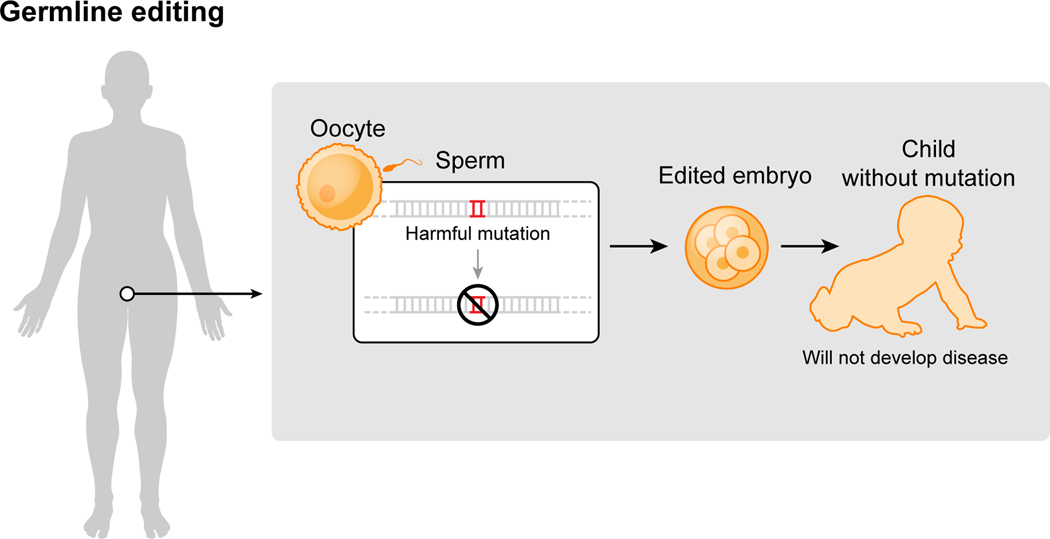
This review argues that therapeutic genome editing, especially CRISPR-Cas9, is moving toward the clinic for some monogenic diseases but still faces major delivery, precision, safety, cost, and governance challenges. It contrasts somatic editing with heritable germline editing and calls for responsible, regulated use.
Key findings
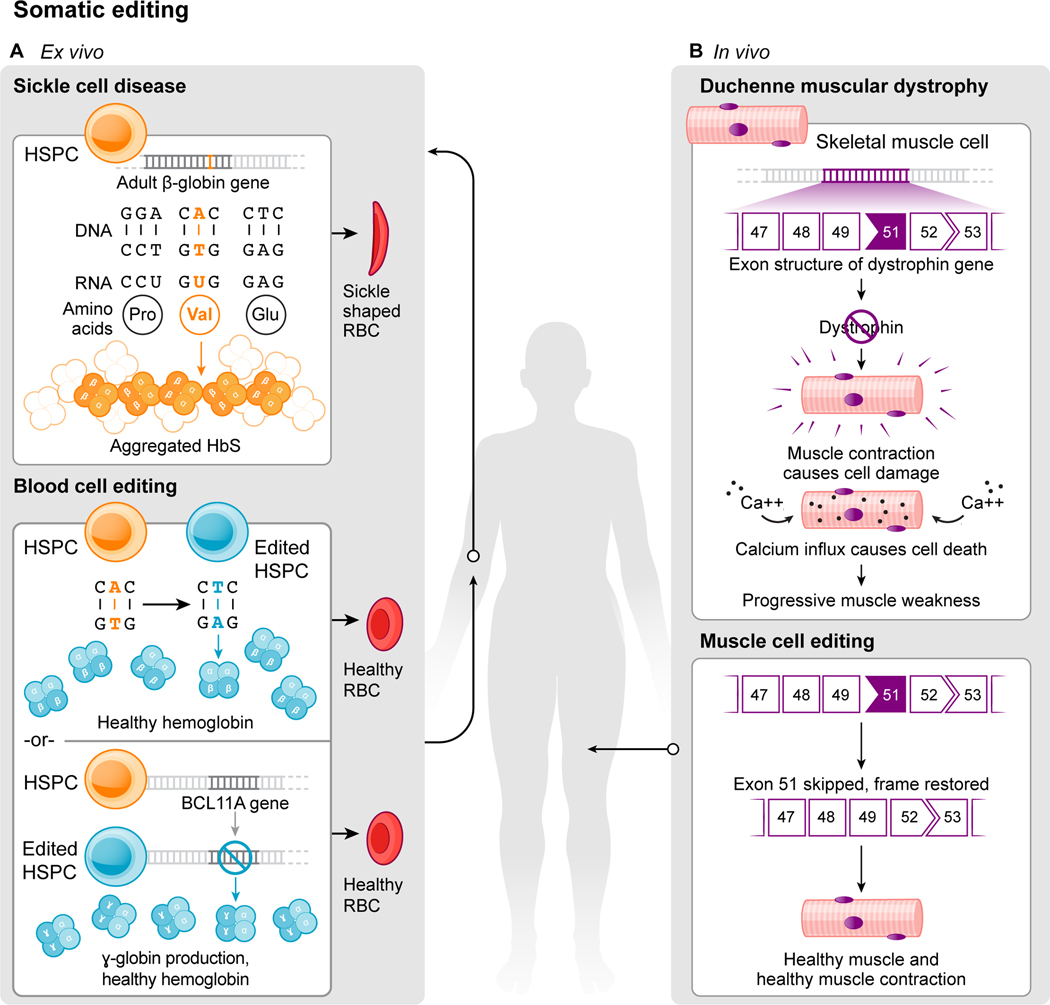
- Monogenic diseases are a major target: ~5,000 are known and affect at least 250 million individuals. Sickle cell disease, caused by a single A-to-T mutation in β-globin, could be treated ex vivo by correcting the mutation in hematopoietic stem/progenitor cells or reactivating γ-globin; ~100,000 US patients and millions more in African and Asian countries are potential candidates.
- Duchenne muscular dystrophy affects one in 5,000 males at birth and can involve >3,000 mutations, mostly at hotspots; restoring ~15% of normal dystrophin expression may provide clinical benefit. In animal studies, systemic AAV CRISPR delivery restored up to 90% dystrophin in ΔEx50 mice, and in dogs dystrophin levels were restored to 3–90% of normal with improved muscle appearance.
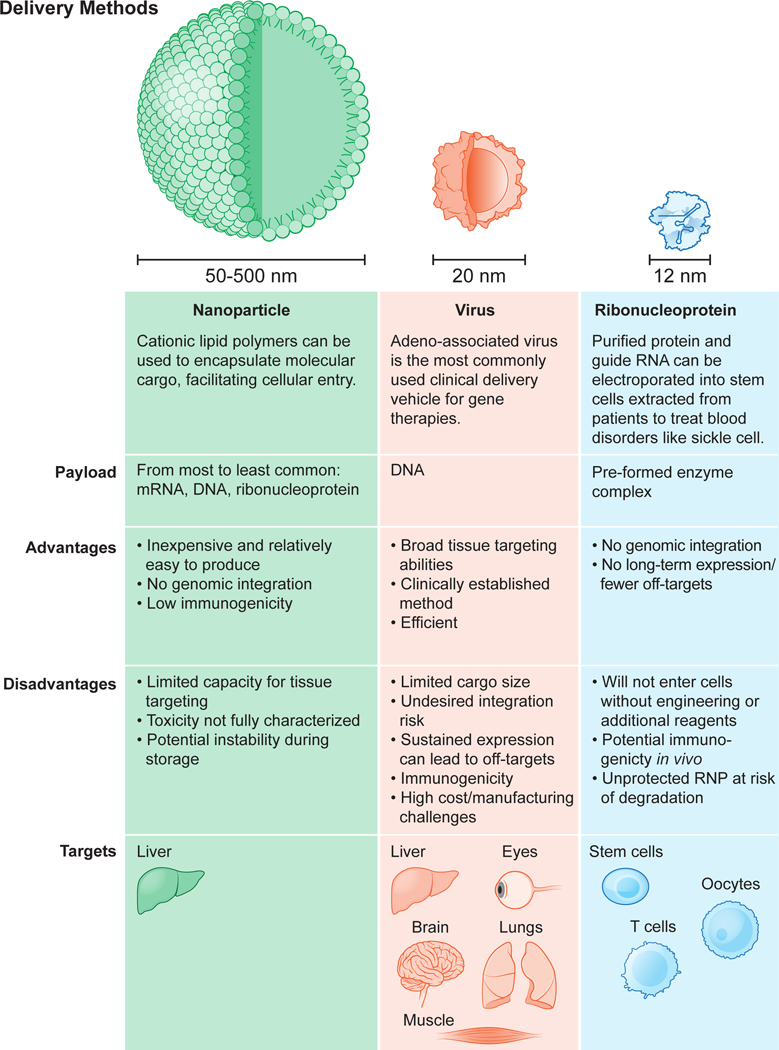
- Delivery is a central bottleneck: ex vivo editing favors electroporation of Cas9 ribonucleoprotein complexes, while in vivo delivery uses viral vectors such as AAV or lipid nanoparticles. AAV can carry only ~4.7 kb, not much larger than the 4.2 kb SpCas9 gene, so corrective insertion often requires two AAV vectors.
- Safety and governance concerns include off-target and imprecise editing, rare large deletions and complex rearrangements, possible immunogenicity from pre-existing Cas9 antibodies/T cells, and unresolved long-term safety. For germline editing, the paper states it is inappropriate to perform editing that culminates in human pregnancy at this time, while in vitro embryo/gamete research should be allowed with oversight.
Methods
- Narrative review by Jennifer A. Doudna; no systematic search strategy, primary dataset, or new experimental results are reported.
- Synthesizes CRISPR-Cas therapeutic genome editing, including sickle cell disease and DMD examples, delivery modalities, accuracy/safety issues, clinical development, and ethical/regulatory discussion of somatic versus germline editing.
- Draws on cited animal studies, early clinical trials, and international scientific/organizational positions; no sample size or formal analysis is stated in the paper.
Limitations
- Stated: delivery remains perhaps the biggest bottleneck to somatic genome editing; AAV has packaging, immunogenicity, and scalable GMP production/cost challenges, while lipid nanoparticles can be toxic and cell-type selective.
- Stated: off-target and imprecise editing, large deletions, and complex rearrangements occur at low frequency but could be clinically significant; immunogenicity and long-term safety/efficacy of edited cells in vivo remain largely unknown.
- Stated and evident: germline editing raises unresolved scientific questions about DNA repair in early human embryos and ethical/policy questions; as a review, the paper provides no new primary data and relies on cited studies and early-stage clinical information.
Model-written summary. Check it against the paper before relying on it.
Integrity signals
Registry
Cites
Statistics
Figures
Verification
Claims the paper makes
40 Valid · 10 Not valid · 12 Not checked · 36 Own results and interpretations
The cited sources support only part of this claim — read each source’s verdict below.
In the paper
“Engineered DNA-cleaving enzymes including zinc-finger nucleases (ZFNs) and transcription activator-like effector nucleases (TALENs) demonstrated the promise of therapeutic genome editing.”
What the sources say
- Not checked — no full text of the sourcecites [16] 16. Miller JC, Tan S, Qiao G, Barlow KA, Wang J, Xia DF, Meng X, Paschon DE, Leung E, Hinkley SJ, Dulay GP, Hua KL, Ankoudinova I, Cost GJ, Urnov FD, Zhang HS, Holmes MC, Zhang L, Gregory PD & Rebar EJ A TALE nuclease architecture for efficient genome editing. Nat. Biotechnol 29, 143-148 (2011). [PubMed: 21179091] source
- Not checked — no full text of the sourcecites [17] 17. Joglekar AV, Gray D, Kaufman ML, Urbinati F, Senadheera S, Cost G, Reik A, Holmes MC, Gregory PD, Hollis RP & Kohn DB Zinc Finger Nucleases Targeting The β -Globin Locus Drive Efficient Correction Of The Sickle Mutation In CD34+ Cells. Blood 122, 2904-2904 (2013). source
- Partly supportedcites [18] 18. Chang K-H, Smith SE, Sullivan T, Chen K, Zhou Q, West JA, Liu M, Liu Y, Vieira BF, Sun C, Hong VP, Zhang M, Yang X, Reik A, Urnov FD, Rebar EJ, Holmes MC, Danos O, Jiang H. & Tan S. Long-Term Engraftment and Fetal Globin Induction upon BCL11A Gene Editing in Bone-Marrow-Derived CD34+ Hematopoietic Stem and Progenitor Cells. Mol Ther Methods Clin Dev 4, 137-148 (2017). [PubMed: 28344999] sourceExperimental — accuracy not yet measured
The Results and Discussion describe ZFN-mediated BCL11A editing and call it a strong preclinical proof of concept for a potential sickle-cell therapy. The cited paper does not report a comparable demonstration using TALENs, so it supports the claim for ZFNs but not for both named enzyme types. (LLM, conf=0.88)
- Partly supportedcites [19] 19. Qasim W, Zhan H, Samarasinghe S, Adams S, Amrolia P, Stafford S, Butler K, Rivat C, Wright G, Somana K, Ghorashian S, Pinner D, Ahsan G, Gilmour K, Lucchini G, Inglott S, Mifsud W, Chiesa R, Peggs KS, Chan L, Farzeneh F, Thrasher AJ, Vora A, Pule M. & Veys P. Molecular remission of infant B-ALL after infusion of universal TALEN gene-edited CAR T cells. Sci. Transl. Med 9, 1-9 (2017). sourceExperimental — accuracy not yet measured
The Introduction reports first-in-human use of TALEN-edited T cells, and the Discussion says this application demonstrates the potential of gene-editing strategies for engineered cell therapies. The paper supports the claim about TALENs, but the passages do not establish the same point for ZFNs. (LLM, conf=0.88)
boostedstates a cause- Asserted: passes — The authors put it forward as true.
- Checkable: passes — It can be checked against evidence.
- Load-bearing: unclear — It is unclear whether the paper’s conclusions depend on it.
- Based: passes — The paper gives a reason why it holds.
The cited sources support only part of this claim — read each source’s verdict below.
In the paper
“Notably, restoration of a small percentage (~15%) of normal dystrophin expression levels can provide a clinical benefit 15 .”
What the sources say
- Partly supportedcites [15] 15. Long C, McAnally JR, Shelton JM, Mireault AA, Bassel-Duby R. & Olson EN Prevention of muscular dystrophy in mice by CRISPR/Cas9-mediated editing of germline DNA. Science 345, 1184-1188 (2014). [PubMed: 25123483] sourceExperimental — accuracy not yet measured
The supplied passages (labeled Abstract; page unavailable) report that correcting 17% of mutant Dmd alleles in mice restored dystrophin in many muscle fibers and reduced dystrophic features. They do not show that dystrophin expression was restored to ~15% of normal levels: 17% refers to gene correction, not protein expression. The reported benefits are in mice, not a demonstrated clinical benefit in patients. (LLM, conf=0.88)
plainstates a cause- Asserted: passes — The authors put it forward as true.
- Checkable: passes — It can be checked against evidence.
- Load-bearing: unclear — It is unclear whether the paper’s conclusions depend on it.
- Based: passes — The paper gives a reason why it holds.
- Partly supported
The cited sources support only part of this claim — read each source’s verdict below.
In the paper
“Cas9 protein-sgRNA complexes can be incorporated by assembly with DNA-linked particles 78,79 .”
What the sources say
- Partly supportedcites [78] 78. Glass Z, Li Y. & Xu Q. Nanoparticles for CRISPR-Cas9 delivery. Nat Biomed Eng 1, 854-855 (2017). [PubMed: 30147994] sourceExperimental — accuracy not yet measured
The formulation passage (Abstract; page not provided) describes a gold nanoparticle core surrounded by a Cas9–gRNA complex and a DNA repair template. This supports incorporating the complex into a particle, but the copy does not specify assembly with DNA-linked particles. (LLM, conf=0.80)
- Supportedcites [79] 80. Lee K, Conboy M, Park HM, Jiang F, Kim HJ, Dewitt MA, Mackley VA, Chang K, Rao A, Skinner C, Shobha T, Mehdipour M, Liu H, Huang W-C, Lan F, Bray NL, Li S, Corn JE, Kataoka K, Doudna JA, Conboy I. & Murthy N. Nanoparticle delivery of Cas9 ribonucleoprotein and donor DNA in vivo induces homology-directed DNA repair. Nat Biomed Eng 1, 889-901 (2017). [PubMed: 29805845] source
The Results and discussion section (‘Design and synthesis of CRISPR-Gold’; page unavailable) says donor DNA is attached to gold nanoparticles and Cas9 ribonucleoprotein is then adsorbed onto them. The Methods section (‘S5. Synthesis of CRISPR-Gold’; page unavailable) specifies that Cas9 and guide RNA are mixed before being added to the DNA-linked particles. (LLM, conf=0.94)
plainstates a cause- Asserted: passes — The authors put it forward as true.
- Checkable: passes — It can be checked against evidence.
- Load-bearing: unclear — It is unclear whether the paper’s conclusions depend on it.
- Based: passes — The paper gives a reason why it holds.
- Partly supported
The cited sources support only part of this claim — read each source’s verdict below.
In the paper
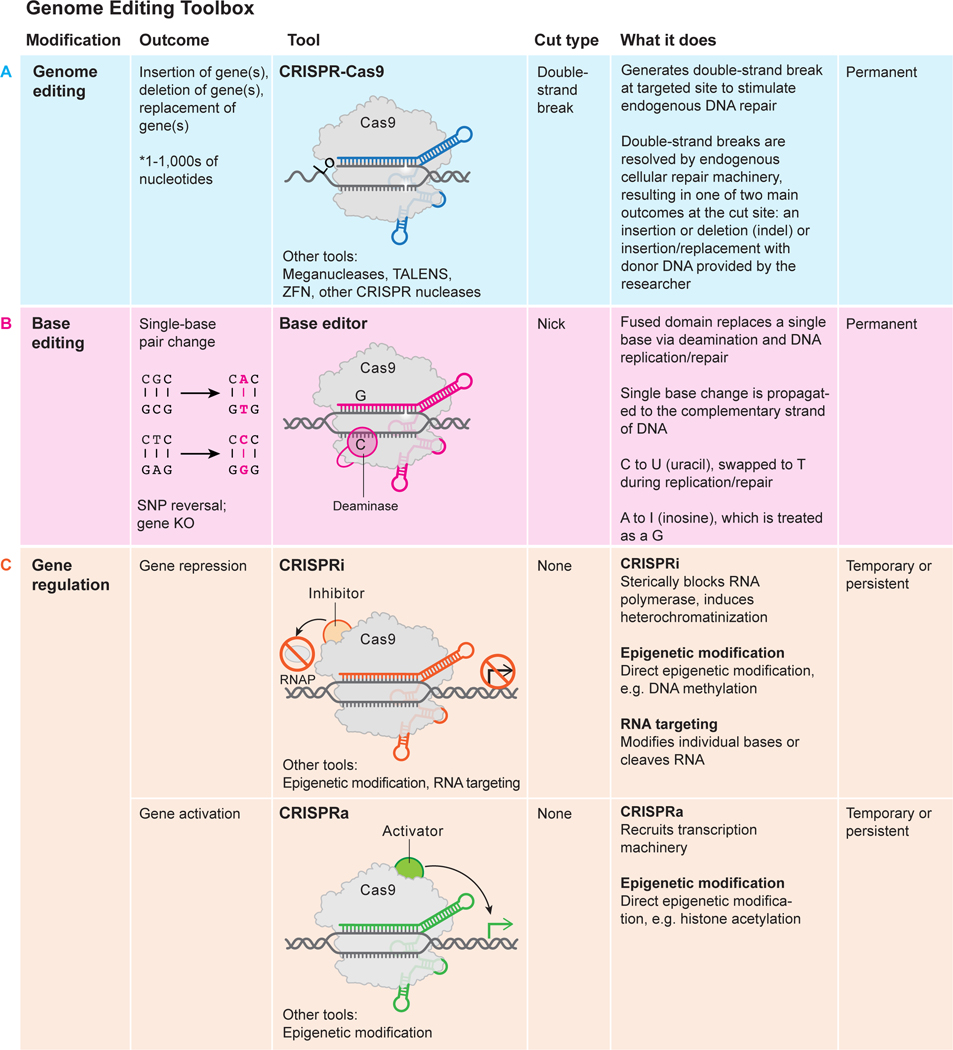
“In cells of all multicellular organisms, including humans, such double-stranded DNA breaks induce DNA repair by endogenous cellular pathways that can introduce alterations to the DNA sequence, including small sequence changes or genetic insertions 21,22 .”
What the sources say
- Not checked — no full text of the sourcecites [21] 21. Szostak JW, Orr-Weaver TL, Rothstein RJ & Stahl FW The double-strand-break repair model for recombination. Cell 33, 25-35 (1983). [PubMed: 6380756] *The authors proposed what was at the time a surprising mechanism for meiotic recombination, in which double-strand breaks that are enlarged to double-strand gaps initiate genetic recombination. This model has been proven largely correct, forming the basis for DNA repair-mediated genome editing. source
- Partly supportedcites [22] 22. Stark JM, Pierce AJ, Oh J, Pastink A. & Jasin M. Genetic steps of mammalian homologous repair with distinct mutagenic consequences. Mol. Cell. Biol 24, 9305-9316 (2004). [PubMed: 15485900] *This study demonstrated that double-strand DNA breaks in mammalian cells trigger - DNA repair that can introduce altered genomic sequences at the site of the repair. As a result, research focused increasingly on engineered enzymes capable of introducing targeted breaks in genomes, which would in turn produce site-specific genetic changes. sourceExperimental — accuracy not yet measured
The Abstract (page not provided) says that mammalian cells repair double-strand breaks through pathways that can cause deletions or insertions at the break site. It also discusses mutagenic repair associated with human disease. The paper does not establish that this applies to cells of all multicellular organisms, so the claim extends beyond its stated scope. (LLM, conf=0.87)
plainstates a cause- Asserted: passes — The authors put it forward as true.
- Checkable: passes — It can be checked against evidence.
- Load-bearing: passes — The paper’s conclusions depend on it.
- Based: passes — The paper gives a reason why it holds.
The sources with a verdict support this claim; the rest weren’t checked yet, have no full text we could read, or their verdicts aren’t rated yet.
In the paper
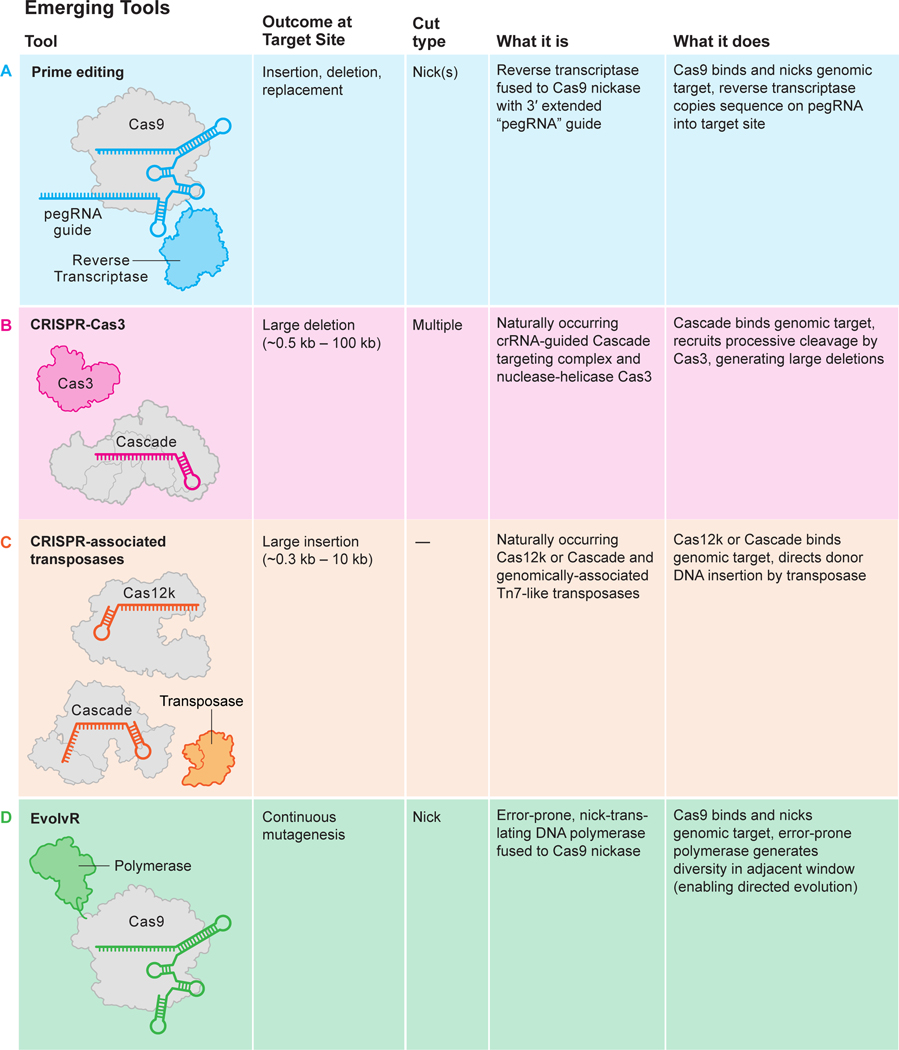
“Alternatives to DNA cleavage-induced editing include using CRISPR-Cas9 for direct chemical sequence alteration (base editing) 25,26 , providing RNA templates for gene alteration (prime editing) 27,28 , and for transcriptional control (CRISPR interference, CRISPRi; CRISPR activation, CRISPRa) 29,30 (Fig. 3).”
What the sources say
- Supportedcites [25] 25. Komor AC, Kim YB, Packer MS, Zuris JA & Liu DR Programmable editing of a target base in genomic DNA without double-stranded DNA cleavage. Nature 533, 420-424 (2016). [PubMed: 27096365] *In this study, CRISPR-Cas9 was fused to a DNA editing enzyme that enables targeted nucleotide editing at genomic locations recognized by Cas9. By avoiding double strand breaks in the DNA, the authors proposed that undesired DNA repair could be avoided. sourceExperimental — accuracy not yet measured
The Abstract describes a CRISPR/Cas9-based editor that directly converts a target DNA base without a double-stranded break or donor template. This supports the base-editing clause to which this citation is attached; the prime-editing and CRISPRi/CRISPRa clauses have separate citations. (LLM, conf=0.94)
- Not checked — no full text of the sourcecites [26] 26. Nishida K, Arazoe T, Yachie N, Banno S, Kakimoto M, Tabata M, Mochizuki M, Miyabe A, Araki M, Hara KY, Shimatani Z. & Kondo A. Targeted nucleotide editing using hybrid prokaryotic and vertebrate adaptive immune systems. Science 353, (2016). *In this study, CRISPR-Cas9 was fused to a DNA editing enzyme that enables targeted nucleotide editing at genomic locations recognized by Cas9. Instead of inducing double strand break repair, this editing form of Cas9 enables individual base pairs to be altered within cells. source
- Could not verifycites [27] 27. Sharon E, Chen S-AA, Khosla NM, Smith JD, Pritchard JK & Fraser HB Functional Genetic Variants Revealed by Massively Parallel Precise Genome Editing. Cell 175, 544-557.e16 (2018). [PubMed: 30245013] *This study was the first to show that an RNA template could be used together with a Cas9-reverse transcriptase fusion protein to introduce small targeted changes in cellular genomes. sourceExperimental — accuracy not yet measured
The citation is attached to the sentence’s claim about CRISPRi/CRISPRa for transcriptional control. The Introduction and Results describe Cas9 cleavage followed by donor-directed repair, not CRISPRi or CRISPRa; searches for those terms and transcriptional control found no passage addressing that claim. The References mention base editing, but do not establish the claim for which this citation is offered. (LLM, conf=0.75)
- Supportedcites [28] 28. Anzalone AV, Randolph PB, Davis JR, Sousa AA, Koblan LW, Levy JM, Chen PJ, Wilson C, Newby GA, Raguram A. & Liu DR Search-and-replace genome editing without double-strand breaks or donor DNA. Nature (2019). doi:10.1038/s41586-019-1711-4 *This study explored the use of a CRISPR-Cas9-reverse transcriptase fusion protein together with extended guide RNA templates to introduce small sequence changes within ~50 base pairs of the location of Cas9 binding. sourceExperimental — accuracy not yet measured
The citation is attached to the prime-editing part of the sentence, not the claims about base editing or CRISPRi/CRISPRa. The Abstract and “Prime editing strategy” section describe an edit-encoding RNA guide whose information is copied into target DNA without a double-strand break or donor DNA template. (LLM, conf=0.93)
- Supportedcites [29] 29. Qi LS, Larson MH, Gilbert LA, Doudna JA, Weissman JS, Arkin AP & Lim WA Repurposing CRISPR as an RNA-guided platform for sequence-specific control of gene expression. Cell 152, 1173-1183 (2013). [PubMed: 23452860] *This study demonstrated the use of a catalyticallydeactivated form of CRISPR-Cas9 for transcriptional control in cells. source
The citation is attached to the transcriptional-control portion of the sentence, not the base- or prime-editing examples. In “CRISPRi as a Platform for Engineering Transcriptional Regulatory Networks” (page not provided), the paper describes CRISPRi as a dCas9-based approach to targeted gene regulation, including transcriptional repression and potential activation, without altering the target sequence. (LLM, conf=0.92)
- Supportedcites [30] 30. Gilbert LA, Horlbeck MA, Adamson B, Villalta JE, Chen Y, Whitehead EH, Guimaraes C, Panning B, Ploegh HL, Bassik MC, Qi LS, Kampmann M. & Weissman JS Genome-Scale CRISPRMediated Control of Gene Repression and Activation. Cell 159, 647-661 (2014). [PubMed: 25307932] sourceExperimental — accuracy not yet measured
The citation is attached to the transcriptional-control part of the sentence, not to base or prime editing. The Introduction (page not supplied) describes the use of CRISPRi to repress and CRISPRa to activate transcription, and reports applying both methods to control gene expression. (LLM, conf=0.94)
plain- Asserted: passes — The authors put it forward as true.
- Checkable: passes — It can be checked against evidence.
- Load-bearing: unclear — It is unclear whether the paper’s conclusions depend on it.
- Based: passes — The paper gives a reason why it holds.
- Supported
45 more claims · 23 with their cited sources checked
Create a free account to see all 98 claims and to verify the 5 references still open.
- It may state two separate claims as one. 33
- Probably not a substantial claim. 23
Claims other papers make about this one
Each is checked against this paper’s own text: does it say what the citing paper says it does?
The source backs part of the claim, not all of it — or backs it for a different population, condition or comparison.
In the citing paper
“CRISPR-Cas dominates the field because of the ease of using guide RNAs directing the CRISPR complex to specific DNA sequences and the increasing ability to target most sites in the genome.121,122”
From Fetal hemoglobin in sickle cell anemia (2020) · cites this paper as [121]
Experimental — accuracy not yet measured
Citations
Cites
A Programmable Dual-RNA–Guided DNA Endonuclease in Adaptive Bacterial Immunity
Jinek, M., Chylinski, K., Fonfara, I., Hauer, M., Doudna, J. A., & Charpentier, E. (2012) · Science · doi:10.1126/science.1225829 · Cited by 17,116
Self-citationMultiplex Genome Engineering Using CRISPR/Cas Systems
Cong, L., Ran, F. A., Cox, D., Lin, S., Barretto, R., Habib, N., Hsu, P. D., Wu, X., Jiang, W., Marraffini, L. A., et al. (2013) · Science · doi:10.1126/science.1231143 · Cited by 15,339
RNA-Guided Human Genome Engineering via Cas9
Mali, P., Yang, L., Esvelt, K. M., Aach, J., Guell, M., DiCarlo, J. E., Norville, J. E., & Church, G. M. (2013) · Science · doi:10.1126/science.1232033 · Cited by 9,210
Programmable editing of a target base in genomic DNA without double-stranded DNA cleavage
Komor, A. C., Kim, Y. B., Packer, M. S., Zuris, J. A., & Liu, D. R. (2016) · Nature · doi:10.1038/nature17946 · Cited by 5,437
Repurposing CRISPR as an RNA-Guided Platform for Sequence-Specific Control of Gene Expression
Qi, L. S., Larson, M. H., Gilbert, L. A., Doudna, J. A., Weissman, J. S., Arkin, A. P., & Lim, W. A. (2013) · Cell · doi:10.1016/j.cell.2013.02.022 · Cited by 5,016
Self-citationSearch-and-replace genome editing without double-strand breaks or donor DNA
Anzalone, A. V., Randolph, P. B., Davis, J. R., Sousa, A. A., Koblan, L. W., Levy, J. M., Chen, P. J., Wilson, C., Newby, G. A., Raguram, A., et al. (2019) · Nature · doi:10.1038/s41586-019-1711-4 · Cited by 4,767
Programmable base editing of A•T to G•C in genomic DNA without DNA cleavage
Gaudelli, N. M., Komor, A. C., Rees, H. A., Packer, M. S., Badran, A. H., Bryson, D. I., & Liu, D. R. (2017) · Nature · doi:10.1038/nature24644 · Cited by 4,184
CRISPR-Mediated Modular RNA-Guided Regulation of Transcription in Eukaryotes
Gilbert, L. A., Larson, M. H., Morsut, L., Liu, Z., Brar, G. A., Torres, S. E., Stern-Ginossar, N., Brandman, O., Whitehead, E. H., Doudna, J. A., et al. (2013) · Cell · doi:10.1016/j.cell.2013.06.044 · Cited by 3,696
Self-citationGasiunas, G., Barrangou, R., Horvath, P., & Siksnys, V. (2012) · Proceedings of the National Academy of Sciences · doi:10.1073/pnas.1208507109 · Cited by 2,769
Genome-Scale CRISPR-Mediated Control of Gene Repression and Activation
Gilbert, L. A., Horlbeck, M. A., Adamson, B., Villalta, J. E., Chen, Y., Whitehead, E. H., Guimaraes, C., Panning, B., Ploegh, H. L., Bassik, M. C., et al. (2014) · Cell · doi:10.1016/j.cell.2014.09.029 · Cited by 2,728
Cited by
Items 601–700 of 1,131
Overcoming Multidrug Resistance by Base-Editing-Induced Codon Mutation
Zhang, H.-H., Xiang, J., Yin, B., & Ye, B. (2023) · ACS Pharmacology & Translational Science · doi:10.1021/acsptsci.3c00037 · Cited by 9
Lei, Z., Meng, H., Rao, X., Zhao, H., & Yi, C. (2023) · Nature Protocols · doi:10.1038/s41596-023-00837-4 · Cited by 6
Improvement of floricultural traits in ornamental crops using genome editing tools
Jadhav, P. R., Aglawe, S. B., Harish, D. K., Wagh, Y. S., Barbadikar, K. M., Kumar, P. N., Kawar, P. G., Prasad, K. V., & Kumar, S. P. J. (2023) · Journal of Plant Biochemistry and Biotechnology · doi:10.1007/s13562-023-00851-3 · Cited by 7
“Doudna (2020) recently identified 14a from archaea bacteria that has interesting features like non-requirement of PAM sequence for activation as it targets single-stranded (ss) DNA.”
Sindelar, R. D. (2024) · Springer eBooks · doi:10.1007/978-3-031-30023-3_9 · Cited by 19
Combined application of CRISPR-Cas and stem cells for clinical and basic research
Yan, M., & Li, J. (2020) · Cell Regeneration · doi:10.1186/s13619-020-00062-4 · Cited by 9
“Concerns over CRISPR technology have been risen alongside its ever-forwarding steps, focusing on safety, efficiency and ethical aspects of the new star (Doudna 2020).”
BackgroundGene and epigenetic editing in the treatment of primary ciliopathies
Molinari, E., & Sayer, J. A. (2021) · Progress in molecular biology and translational science · doi:10.1016/bs.pmbts.2021.01.027 · Cited by 7
CRISPR-SCReT (CRISPR-Stop Codon Read Through) method to control Cas9 expression for gene editing
Yaméogo, P., Duchêne, B. L., Majeau, N., & Tremblay, J. P. (2021) · Gene Therapy · doi:10.1038/s41434-021-00297-z · Cited by 7
Rapid clonal identification of biallelic CRISPR/Cas9 knock-ins using SNEAK PEEC
Singh, S. K., Banerjee, A., Broeck, A. V., & Klinge, S. (2023) · Scientific Reports · doi:10.1038/s41598-023-28732-8 · Cited by 6
Structure-optimized sgRNA selection with PlatinumCRISPr for efficient Cas9 generation of knockouts
Haussmann, I. U., Dix, T. C., McQuarrie, D. W. J., Dezi, V., Hans, A. I., Arnold, R. R., & Soller, M. (2024) · Genome Research · doi:10.1101/gr.279479.124 · Cited by 7
Correcting visual loss by genetics and prosthetics
Xue, K., & MacLaren, R. E. (2020) · Current Opinion in Physiology · doi:10.1016/j.cophys.2020.03.003 · Cited by 5
“…array of CRISPR genome editing molecular tools, many new therapeutic possibilities are emerging, including precise DNA base editing (to correct mutations or alter splicing), RNA editing (to correct errors within mRNA), and targeted DNA integration (to introduce large gene fragments) [Doudna 2020].”
BackgroundRoy, A. A., Pokale, R., Mukharya, A., Nikam, A. N., Dua, K., Rao, B. S. S., Seetharam, R. N., & Mutalik, S. (2025) · Current Gene Therapy · doi:10.2174/0115665232342293241120033251 · Cited by 8
Omura, S. N., & Nureki, O. (2025) · Methods in enzymology on CD-ROM/Methods in enzymology · doi:10.1016/bs.mie.2025.01.052 · Cited by 6
Induced Pluripotent Stem Cell-Based Cancer Immunotherapy: Strategies and Perspectives
Xun, X., Hao, J., Cheng, Q., & Gao, P. (2025) · Biomedicines · doi:10.3390/biomedicines13082012 · Cited by 5
“However, two TALEN and ZFN monomers are required to initiate the cleavage of DNA because the nuclease domain of the Fokl restriction enzyme functions as a dimer, which potentially increases both the specific and off-target effects due to the tendency for dimer mismatches [141].”
Yacoub, S., Kaipa, B. R., Li, L., Arguello, S. R., Kasetti, R. B., Maddineni, P., Clark, A. F., & Zode, G. S. (2025) · Molecular Therapy — Methods & Clinical Development · doi:10.1016/j.omtm.2025.101614 · Cited by 7
Guarding the genome: strategies for off-target detection and minimization in CRISPR/Cas9 system
Lotfi, M., Yazdi, Z. F., Hashemi, M. R., Abbaszadegan, M. R., & Sharif, S. (2025) · Expert Review of Molecular Diagnostics · doi:10.1080/14737159.2025.2581677 · Cited by 8
CRISPR Technology: Transforming the Future of Medicine and Diagnostics
Iyer, K. A., Tenchov, R., Diaz, L. M. L., Jain, P., Thite, T., Deng, Y., & Zhou, Q. A. (2025) · Biochemistry · doi:10.1021/acs.biochem.5c00480 · Cited by 13
Targeted Intracellular Delivery via Precision Programming of ARRDC1‐Mediated Microvesicles
Qiao, Z., Choi, S., Chen, Z., Rodriguez, R. M., Wang, Q., Yang, Z., Theuerkauf, S. A., Nabhan, J. F., Hensch, T. K., Buchholz, C. J., et al. (2025) · Journal of Extracellular Vesicles · doi:10.1002/jev2.70199 · Cited by 7
Gottimukkala, K. S. V., Lane, D. D., Cunningham, R. A., Malik, H. S., Jwa, Y., Cassidy, M. E., Castelli, J. M. P., Enstrom, M., Poljakov, K., Gastelum, G. M., et al. (2026) · Gene Therapy · doi:10.1038/s41434-025-00591-0 · Cited by 10
“The CRISPR/Cas system has revolutionized gene editing since the discovery of Cas9 in 2012, enabling programmable and ef fi cient genome manipulation for both research and therapeutic applications [1 – 3].”
Advances in Alzheimer’s disease: mechanistic insights and therapeutic targets
Jia, Y.-J., Ge, Y., Li, B., Yang, Y., Chen, H., Liu, J., Guo, J., Yu, J., Ye, K., Wang, J., et al. (2026) · Science China Life Sciences · doi:10.1007/s11427-025-2991-7 · Cited by 7
“Emerging technologies like CRISPR demand proactive ethical governance to ensure safety and equitable access (Doudna, 2020).”
Inadequate reporting quality of registered genome editing trials: an observational study
Jurić, D., Zlatin, M., & Marušić, A. (2022) · BMC Medical Research Methodology · doi:10.1186/s12874-022-01574-0 · Cited by 6
In vivo CRISPR base editing for treatment of Huntington’s disease
Shirguppe, S., Gapinske, M., Swami, D., Shenouda, K., Miskalis, A., Gosstola, N. C., Siller, D. D. B., Guerra, I., Acharya, P., Joulani, D., et al. (2026) · Nature Biomedical Engineering · doi:10.1038/s41551-026-01747-y · Cited by 11
Loret, C., Pauset, A., Faye, P.-A., Prouzet‐Mauleon, V., Pyromali, I., Nizou, A., Miressi, F., Sturtz, F. G., Favreau, F. D., Turcq, B., et al. (2024) · Biomedicines · doi:10.3390/biomedicines12071550 · Cited by 5
Biodegradable silica nanoparticles for efficient linear DNA gene delivery
Ramos‐Valle, A., Kirst, H., & Fanárraga, M. L. (2024) · Drug Delivery · doi:10.1080/10717544.2024.2385376 · Cited by 7
“…1996; cring & sheffield, 2020). this technology includes genome editing (Yeh et al., 2019), production of therapeutic proteins in damaged areas (Doudna, 2020), or boosting the body’s natural defense mechanisms against diseases (chen et al., 2016). these approaches can be used as therapies to…”
Shao, C., Liu, Q. F., Xu, J., Zhang, J.-X., Zhang, C., Ye, X., Ye, Y., Lin, B., Zhang, X., Cheng, L., et al. (2024) · Molecular Therapy — Nucleic Acids · doi:10.1016/j.omtn.2024.102371 · Cited by 6
“6,7 The revolutionary development of genome editing technologies has given rise to the possibility of creating and correcting various types of gene mutations.”
Recent Therapeutic Advancements for Gaucher Disease
Pradhan, L., Manna, S., Pragya, P., & Mukherjee, S. (2024) · Advanced Therapeutics · doi:10.1002/adtp.202400292 · Cited by 7
Investigation of epilepsy-related genes in a Drosophila model
Qu, X.-C., Lai, X., He, M., Zhang, J., Xiang, B., Liu, C., Huang, R., Shi, Y., & Qiao, J. (2024) · Neural Regeneration Research · doi:10.4103/nrr.nrr-d-24-00877 · Cited by 5
Mercurio, S., Pozzolini, G., Baldi, R., Barilà, S. E., Pitasi, M., Catona, O., D’Aurizio, R., & Nicolis, S. K. (2023) · International Journal of Molecular Sciences · doi:10.3390/ijms24021164 · Cited by 5
“Ultimately, the “knock-in” of the supposed pathogenic variants in the enhancers, now made possible by CRISPR-Cas9-mediated genome editing [40,41], will make it possible to clarify their role, in the context of an otherwise homogeneous genetic background.”
BackgroundProduction of MSTN knockout porcine cells using adenine base-editing-mediated exon skipping
Yang, S.-P., Zhu, X., Qu, Z.-X., Chen, C.-Y., Wu, Y.-B., Wu, Y., Luo, Z.-D., Wang, X., He, C.-Y., Fang, J.-W., et al. (2023) · In Vitro Cellular & Developmental Biology - Animal · doi:10.1007/s11626-023-00763-5 · Cited by 7
DPA‐Zinc around Polyplexes Acts Like PEG to Reduce Protein Binding While Targeting Cancer Cells
Nie, X., You, W., Zhang, Z., Gao, F., Zhou, X., Wang, H., Wang, L., Chen, G., Wang, C., Hong, C., et al. (2023) · Advanced Healthcare Materials · doi:10.1002/adhm.202203252 · Cited by 5
Duan, Y., Wu, W., Cui, J. Z., Matsubara, J. A., Kazlauskas, A., Ma, G., Li, X., & Lei, H. (2023) · BMC Ophthalmology · doi:10.1186/s12886-023-03089-8 · Cited by 5
“…to the advent of the technology of the clustered regularly interspaced short palindromic repeats (CRISPR)-associated endonuclease (Cas)9 [6, 30–32], we recent discovered that PDGFRβ is the predominant isoform among the PDG-FRs in RPEM cells, which were the RPE cells derived from ERMs from…”
MethodWang, J., Fan, D., Wang, R., Yu, C., Ji, X., Li, X., Zhang, Y., Liu, J., Wang, S., & Wang, J. (2024) · Microorganisms · doi:10.3390/microorganisms12061203 · Cited by 6
“Additionally, the high costs and limited success rates of gene editing, and the short shelf life and production costs of antibody therapy hinder their practical application [13,14].”
BackgroundCorrecting a patient-specific Rhodopsin mutation with adenine base editor in a mouse model
He, X., Yan, T., Song, Z., Xiang, L., Xiang, J., Yang, Y., Ren, K., Bu, J., Xu, X., Li, Z. Y., et al. (2025) · Molecular Therapy · doi:10.1016/j.ymthe.2025.03.021 · Cited by 6
Challenging Safety and Efficacy of Retinal Gene Therapies by Retinogenesis
Marrocco, E., Maritato, R., Botta, S., Esposito, M., & Surace, E. M. (2021) · International Journal of Molecular Sciences · doi:10.3390/ijms22115767 · Cited by 6
“The method used was described previously [12,13].”
BackgroundNanoscale delivery of phytochemicals targeting CRISPR/Cas9 for cancer therapy
Hussain, Y., Khan, H. Z., Ahmad, I. I., Efferth, T., & Alam, W. (2021) · Phytomedicine · doi:10.1016/j.phymed.2021.153830 · Cited by 6
Enabling Precision Medicine with CRISPR-Cas Genome Editing Technology: A Translational Perspective
Ilahibaks, N. F., Hulsbos, M. J., Lei, Z., Vader, P., & Sluijter, J. P. G. (2022) · Advances in experimental medicine and biology · doi:10.1007/978-981-19-5642-3_20 · Cited by 11
Geoffroy, M., Pili, L., Buffa, V., et al. (2023) · Cells · doi:10.3390/cells12202444 · Cited by 5
Characterization and Engineering of a Novel Miniature Eubacterium siraeum CRISPR-Cas12f System
Wang, Y., Wang, Y., Tang, N., Wang, Z., Pan, D., & Ji, Q. (2024) · ACS Synthetic Biology · doi:10.1021/acssynbio.4c00154 · Cited by 5
CRISPR-enhanced human adipocyte browning as cell therapy for metabolic disease
Tsagkaraki, E., Nicoloro, S. M. C., DeSouza, T., Solivan-Rivera, J., Desai, A., Lifshitz, L. M., Shen, Y., Kelly, M., Guilherme, A., Henriques, F. D. S., et al. (2021) · RePEc: Research Papers in Economics · Cited by 5
Structure of the TnsB transposase-DNA complex of type V-K CRISPR-associated transposonPreprint
Tenjo-Castaño, F., Sofos, N., Mendez, B. L., et al. (2022) · bioRxiv (Cold Spring Harbor Laboratory) · doi:10.1101/2022.08.05.502904 · Cited by 5
Genetically modified helminths as pharmaceutical biofactories
Walther, D., Smout, M. J., Giacomin, P., Brindley, P. J., Mitreva, M., Moyle, M., & Loukas, A. C. (2025) · Advances in Parasitology/Advances in parasitology · doi:10.1016/bs.apar.2025.08.001 · Cited by 7
Regenerative Engineering: Evolution and Its Modern Significance
Shi, Y., Zhang, L., Chen, M., Calle, E. A., & Langer, R. (2025) · Regenerative Engineering and Translational Medicine · doi:10.1007/s40883-025-00498-7 · Cited by 4
“…such as 3D bioprinting [30, 31], more complex organoids (organ-on-chips) [32, 33], cell differentiation and growth controls [32, 33], smart biomaterials [34, 35], and genome editing tools [36, 37] for the generation of ex vivo systems, functional tissues and organs in regenerative medicine.”
Martani, A., van der Weij, F., van Baalen, S., & van Beers, B. C. (2025) · New Genetics and Society · doi:10.1080/14636778.2025.2598071 · Cited by 4
“…a significant distinction between HGGE and the use of gene-editing on somatic cells in adults (e.g. muscle cells to treat muscular dystrophy; Doudna 2020): HGGE affects all cells of a future person, including reproductive cells, thus making genetic changes heritable, whereas somatic gene…”
CRISPR–Cas3-based editing for targeted deletions in a mouse model of transthyretin amyloidosis
Ishida, S., Sato, Y., Chosa, K., Ezawa, E., Yamauchi, Y., Oyama, M., Kozuka‐Hata, H., Ito, R., Sato, R., Maeki, M., et al. (2026) · Nature Biotechnology · doi:10.1038/s41587-025-02949-6 · Cited by 7
ANGPTL3 and residual atherosclerotic risk: from lipid metabolism to therapeutic targeting
Weng, S., Ding, C., Lin, J., & Chai, D. (2026) · Frontiers in Endocrinology · doi:10.3389/fendo.2025.1706091 · Cited by 7
“In ANGPTL3 research, editing within exons has yielded durable suppression of protein expression (93, 94).”
A compact and inducible dCas12f-based CRISPRa platform for programmable in vivo gene activation
Wan, H., Kong, D., Yan, T., Zhou, Y., Liu, M., Ma, X., Zhao, T., Zhou, W., Liu, X., Yin, J., et al. (2026) · Nature Communications · doi:10.1038/s41467-025-68183-5 · Cited by 9
Genetic–Epigenetic Interplay in Epilepsy: Pathways, Biomarkers, and Epigenome-Targeted Therapies
Zaruha, A.-G., Codreanu, P. C., Coman, M.-C., Novac, M. A., II, Duta-Ion, S. G., Juganaru, I. R., Hotinceanu, I. A., Dan, A., Burtavel, L. M., Eftenoiu, A.-E., et al. (2026) · Epigenomes · doi:10.3390/epigenomes10010010 · Cited by 7
“…in delivering to the central nervous system (due to immunological and physical reasons)—requires surpassing the blood–brain barrier; Human clinical trials using CRISPR/CAS technology currently address CAR-T receptors (chimeric antigen receptors), hematological diseases and eye pathology [94].”
Safety and efficacy of mRNA vaccines: a mechanistic and public health perspective
Blakney, A. K., Top, K. A., Cowling, B. J., Larson, H. J., Shattock, R. J., & Sadarangani, M. (2026) · The Lancet · doi:10.1016/s0140-6736(26)00512-x · Cited by 18
Precision chemical engineering of dendrimers for nucleic acid delivery
Ni, Q., Tomalia, D. A., Wu, J., Galanakou, C., & Peng, L. (2026) · Nature Reviews Chemistry · doi:10.1038/s41570-026-00855-2 · Cited by 7
“DNA therapeutics has been also used for gene-editing therapy by encoding genomic editing tools such as the clustered regularly interspaced short palindromic repeat (CRISPR) associated proteins (CRISPR–Cas) and guide RNA (gRNA) 121,122 .”
Precise DNA base editing using AlphaFold3-based contact modelling
Meng, H., Lei, Z., Yan, Y., Wang, L., Zhang, S., Rao, X., Shao, C., Zhang, X., Chen, K., Yang, L., et al. (2026) · Nature · doi:10.1038/s41586-026-10794-z · Cited by 8
Precision Medicine: Enabling Healthcare Progress in the Twenty-First Century
Carmo‐Fonseca, M. (2021) · Springer eBooks · doi:10.1007/978-3-030-70761-3_2 · Cited by 4
MiRNA-Responsive CRISPR-Cas System via a DNA Regulator
Yun, D., & Jung, C. (2023) · Biosensors · doi:10.3390/bios13110975 · Cited by 4
“Further, various Cas9 variants such as dCas9, base editors, and prime editors have contributed to enhancing the scope and precision of genome editing [5].”
BackgroundEmerging therapies for refractory hypercholesterolemia: a narrative review
Pawlos, A., Khoury, É., & Gaudet, D. (2024) · Future Cardiology · doi:10.1080/14796678.2024.2367860 · Cited by 5
Schmidt, T., Wiesbeck, M. F., Egert, L., Truong, T.-T., Danese, A., Voshagen, L., Imhof, S., Borgia, M. I., Deeksha, Neuner, A. M., et al. (2025) · Nucleic Acids Research · doi:10.1093/nar/gkaf235 · Cited by 4
“The high efficiency and specificity of CRISPR RNPs have made them invaluable tools for functional genomics studies, disease modeling, and therapeutic interventions aimed at correcting genetic mutations underlying various disorders [ 25–27 ].”
Chen, R.-D., Yang, Y., Liu, K.-M., Hu, J.-Z., Feng, Y.-L., Yang, C., Jiang, R.-R., Liu, S.-C., Wang, Y., Han, P.-A., et al. (2025) · Genome biology · doi:10.1186/s13059-025-03567-w · Cited by 4
“Targeted integration for precise gene correction and DNA insertion has demonstrated therapeutic potential in treating monogenic diseases and has also been used to engineer immune cells for cancer therapy [41].”
Wu, D., Shu, H., Zhang, M., Wei, X., Ji, J., Shen, H., Zhang, H., Xie, L., Zhou, L., Yang, L. F., et al. (2025) · Theranostics · doi:10.7150/thno.107791 · Cited by 5
“The clustered regularly interspaced short palindromic repeat (CRISPR)/CRISPR-associated nuclease 9 (Cas9) system offers a powerful and precise approach for site-specific genome editing [10].”
Integrating CRISPR/Cas technology with clinical trials: Principles, progress and challenges
Yang, P., Khoshandam, M., Bhia, I., Raji, S., Soltaninejad, H., Hosseinkhani, S., Sani, M., Hamidieh, A. A., & Sheykhhasan, M. (2025) · Asian Journal of Pharmaceutical Sciences · doi:10.1016/j.ajps.2025.101068 · Cited by 10
“This is crucial for therapeutic applications, where the system must deliver the edited stem cells back into the patient’s body [ 191,192 ].”
Emerging techniques for precision neuromodulation: A comparative framework from bench to bedside
Liu, Y., Sun, X., Liu, N., & Yang, Y. (2025) · The Innovation Life · doi:10.59717/j.xinn-life.2025.100150 · Cited by 10
A compact base editor rescues AATD-associated liver and lung disease in mouse models
Gao, J., Bamidele, N., Pires-Ferreira, D., Zheng, C., Destefano, A., Cheng, H., Tang, Q., Cao, Y., Xie, J., Gao, G., et al. (2025) · Molecular Therapy · doi:10.1016/j.ymthe.2025.08.040 · Cited by 6
Genome Editing in Dyslipidemia and Atherosclerosis
Chen, Z., Lehertshuber, C., & Schunkert, H. (2022) · Advances in experimental medicine and biology · doi:10.1007/978-981-19-5642-3_10 · Cited by 8
Gene Editing Corrects In Vitro a G > A GLB1 Transition from a GM1 Gangliosidosis Patient
Leclerc, D., Goujon, L., Jaillard, S., Nouyou, B., Cluzeau, L., Damaj, L., Dubourg, C., Etcheverry, A., Levade, T., Froissart, R., et al. (2023) · The CRISPR Journal · doi:10.1089/crispr.2022.0045 · Cited by 6
Lv, Z., Li, Z., Li, P., Yao, C., & Yang, D. (2023) · Small Structures · doi:10.1002/sstr.202300086 · Cited by 5
CRISPR/Cas9-mediated Genome Editing: In vivo Review
Lotfalizadeh, N., Sadr, S., Simab, P. A., Hajjafari, A., Borji, H., & Bayat, Z. (2022) · Journal of Lab Animal Research · doi:10.58803/jlar.v1i1.13 · Cited by 4
Gene Editing and Gene Therapy in Oncology
Wierson, W. A., Abel, A. M., Siegler, E. L., Ekker, S. C., Johannes, C. M., Kenderian, S. S., & Mochel, J. P. (2023) · CABI eBooks · doi:10.1079/9781789245820.0009 · Cited by 3
The Development of SpCas9 Variants with High Specificity and Efficiency Based on the HH Theory
Wang, G., Wang, C., Wu, X. J., Chu, T., Huang, D., & Li, J. (2023) · Molecular Biology · doi:10.1134/s0026893324010187 · Cited by 4
Nucleoside deaminases: the key players in base editing toolkit
Xiang, J., Xu, W., Wu, J., Luo, Y., Yang, B., & Chen, J. (2023) · Biophysics Reports · doi:10.52601/bpr.2023.230029 · Cited by 4
“Therefore, developing precise and efficient tools to achieve base conversion in DNA or RNA molecules has been a long-sought goal (Doudna 2020).”
BackgroundUnlocking the Power of Molecular Cloning: Revolutionizing Medical Microbiology Procedures
Datta, N. (2024) · University of Michigan Undergraduate Research Journal · doi:10.3998/umurj.5509 · Cited by 5
Chen, S., Lo, C., Liu, Z., Wang, Q. K., Ning, K., Li, T., & Sun, Y. (2024) · Human Molecular Genetics · doi:10.1093/hmg/ddae045 · Cited by 4
Li, W., Wang, C., & Lu, Y. (2024) · Nano Research · doi:10.1007/s12274-024-6729-8 · Cited by 7
Thirty years since the race to the BRCA1 gene
Ashworth, A. (2024) · Nature · doi:10.1038/d41586-024-03358-6 · Cited by 4
Let’s Talk About Sex…Cell Lineages
MacCord, K. (2025) · Biological Theory · doi:10.1007/s13752-024-00488-y · Cited by 4
“15 And while somatic cell genome editing is widely lauded for its therapeutic potential (Dzilic et al. 2018; Porteus 2019; Pranke et al. 2019; Doudna 2020; Khalil 2020; Frangoul et al. 2021), germ cell genome editing is the subject of frequent and heated debate amongst ethicists, scientists, and…”
The CRISPR Revolution in the Drug Discovery Workflow: An Industry Perspective
Lattanzi, A., & Maddalo, D. (2022) · The CRISPR Journal · doi:10.1089/crispr.2022.0002 · Cited by 4
“24,25 Particularly successful were the treatments targeting he-moglobinopathies (beta-thalassemia and sickle cell disease), 26–29 wherein two recent clinical trials showed very promising safety and relevant efficacy (NCT03655678 and NCT03745287) 30 (Table 1).”
Precise somatic genome editing for treatment of inborn errors of immunity
Meng, Q., Sun, H., & Liu, J. (2022) · Frontiers in Immunology · doi:10.3389/fimmu.2022.960348 · Cited by 4
“However, further investigations on the offtarget events based on sensitive and unbiased detections in clinically relevant models, as well as on the long-term safety profiles of edited cells are still highly warranted (9, 11).”
BackgroundInfluentialCRISPR: a tool with potential for genomic reprogramming in neurological disorders
Dhuriya, Y. K., & Naik, A. A. (2022) · Molecular Biology Reports · doi:10.1007/s11033-022-08136-z · Cited by 4
Translational biotechnology: A transition from basic biology to evidence-based research
Guin, D., Thakran, S., Singh, P., Ramachandran, S., Hasija, Y., & Kukreti, R. (2021) · Elsevier eBooks · doi:10.1016/b978-0-12-821972-0.00006-x · Cited by 4
An Alpha-helical Lid Guides the Target DNA toward Catalysis in CRISPR-Cas12aPreprint
Saha, A., Ahsan, M., Arantes, P. R., et al. (2022) · bioRxiv (Cold Spring Harbor Laboratory) · doi:10.1101/2022.09.05.506663 · Cited by 4
Pelea, O., Mayes, S., Ferry, Q. R. V., Fulga, T. A., & Sauka‐Spengler, T. (2025) · eLife · doi:10.1101/2023.05.08.539738 · Cited by 7
Discovery and engineering of hypercompact epigenetic modulators for durable gene activationPreprint
Carosso, G. A., Yeo, R. W., Gainous, T. B., Jawaid, M. Z., Yang, X., Cutillas, V., Daley, T., Hart, D. O., & Qi, L. S. (2023) · Research Square · doi:10.21203/rs.3.rs-3016082/v1 · Cited by 4
Rapid modeling of an ultra-rare epilepsy variant in wild-type mice by in utero prime editingPreprint
Robertson, C. D., Davis, P. W., Richardson, R. R., Iffland, P. H., Vieira, D. C. O., Steyert, M. R., McKeon, P. N., Romanowski, A. J., Crutcher, G. W., Jašarević, E., et al. (2023) · bioRxiv (Cold Spring Harbor Laboratory) · doi:10.1101/2023.12.06.570164 · Cited by 4
“Default CRISPResso2 parameters were applied (quantification window 10, nicking guide sequence defined, scaffold match length 1).”
Functional Information in the DNA: A 2x2 MatrixPreprint
Zanou, A. E. (2024) · SSRN Electronic Journal · doi:10.2139/ssrn.4774049 · Cited by 4
Structural basis for a dual-function type II-B CRISPR-Cas9
Hibshman, G. N., & Taylor, D. W. (2024) · doi:10.1101/2024.10.22.619592 · Cited by 4
Structural basis of a dual-function type II-B CRISPR–Cas9
Hibshman, G. N., & Taylor, D. W. (2025) · Nucleic Acids Research · doi:10.1093/nar/gkaf585 · Cited by 4
“Streptococcus pyogenes Cas9 (SpCas9) is the most used Cas9 ortholog, but suffers from off-target effects, which pose the risk of introducing unintended genomic modifications [ 5 , 6 ].”
High‐Risk HPV Oncoproteins and PD‐1/PD‐L1 Interplay
Zhen, S. (2025) · Journal of Medical Virology · doi:10.1002/jmv.70415 · Cited by 4
“Tem cells are bestowed with various effector functions [76].”
Off-target interactions in the CRISPR-Cas9 Machinery: mechanisms and outcomes
Kanazhevskaya, L. Y., Zhdanova, P. V., Chernonosov, A. А., & Koval, V. V. (2025) · Biochemistry and Biophysics Reports · doi:10.1016/j.bbrep.2025.102134 · Cited by 11
“Numerous studies have proven the efficacy of genomic DNA targeting using the Cas9-sgRNA complex, but the selectivity of this effect is highly variable, hampering the translation of CRISPR-Cas9 technology into a routine laboratory procedure [10 – 12].”
SLC1A5-dependent glutamine uptake in hepatocytes promotes liver regeneration
Duan, Y., Peng, S., Yue, J., Ding, F., Chen, X., Pan, W., Gao, X., Pang, P., Zhang, Y., Wu, W., et al. (2025) · Hepatology Communications · doi:10.1097/hc9.0000000000000742 · Cited by 5
Moroi, K., Yamamoto, T., & Kurita, T. (2025) · Scientific Reports · doi:10.1038/s41598-025-26657-y · Cited by 6
“To prevent such adverse effects, the development of a DSB-free mutagenesis approach with nuclease activity-restricted Cas9 combined with various effector proteins is required 24 .”
Engineering with care: safety assessment platforms for CRISPR-modified natural killer cells
Fazeli, A., Ullrich, E., Cathomen, T., & Bexte, T. (2025) · Frontiers in Immunology · doi:10.3389/fimmu.2025.1711414 · Cited by 7
“Today this system has undergone several cycles of optimization and been frequently adapted for precise editing in several human cells including therapies based on T and NK cells (3).”
Zheng, S. X., Tie, H., Chai, S., et al. (2026) · Journal of Plant Physiology · doi:10.1016/j.jplph.2026.154690 · Cited by 3
Structure‐Guided Engineering of a Cas12i Nuclease Unlocks Near‐PAMless Genome Editing
Chen, Q., Gou, H., Xu, C., Wang, S., Zhang, H., Song, M., Wang, M., Ji, X., Wei, X., Tan, Y., et al. (2026) · Advanced Science · doi:10.1002/advs.202516670 · Cited by 4
Non-viral delivery of genome-editing tools for treatment of genetic disorders
Yang, J., Chen, Y., Chen, X., & Ping, Y. (2026) · Acta Pharmaceutica Sinica B · doi:10.1016/j.apsb.2026.02.014 · Cited by 3
“These strategies, along with protocol optimization, help mitigate potential immune responses 244 .”
Fei, Y., Lin, Y., Liu, P., Zhong, K., Gao, Y., Ma, Q., Zhou, Z., Luo, S., Hu, R., & Cheng, Q. (2026) · ACS Nano · doi:10.1021/acsnano.6c03013 · Cited by 4
Choi, D.-K., Kim, Y.-K., HoonYu, J., Min, S., & Park, S.-W. (2021) · Progress in molecular biology and translational science · doi:10.1016/bs.pmbts.2021.01.020 · Cited by 5
Bax, B. D., Sutormin, D. A., McDonald, N. Q., Burley, G. A., & Shelkovnikova, T. A. (2022) · International Journal of Molecular Sciences · doi:10.3390/ijms231911541 · Cited by 3
“Although immensely useful in the research and for ex vivo gene editing [75], where the delivery can be achieved with relative ease, the use of CRISPR/Cas in the context of human patients is associated with a number of caveats.”
BackgroundSamson, C., du Rand, A., Hunt, J., Whitford, W., Jacobsen, J. C., & Sheppard, H. M. (2024) · Journal of the Royal Society of New Zealand · doi:10.1080/03036758.2024.2347968 · Cited by 5
“Recent advances in CRISPR/Cas based genome editing now o ff er hope of permanent cures and therapies for which traditional pharmaceutical treatments have been elusive (Doudna 2020; Uddin et al. 2020; Katti et al. 2022).”
Nakahara, T., Tabata, H., Kato, Y., Fuse, R., Nakamura, M., Yamaji, M., Hattori, N., Kiyono, T., Saito, I., & Nakanishi, T. (2024) · International Journal of Molecular Sciences · doi:10.3390/ijms25168783 · Cited by 3
Shao, Q., Shen, C. ‐. J., You, W., Nie, X., Huang, W., Gao, F., Zhou, X., Wang, L., Wang, L.-H., Chen, G., et al. (2024) · Chemical Engineering Journal · doi:10.1016/j.cej.2024.155596 · Cited by 4
Microbial production of 5- epi -jinkoheremol, a plant-derived antifungal sesquiterpene
Wang, G., Wu, Z., Li, M., Liang, X., Wen, Y., Zheng, Q., Li, D., & An, T. (2024) · Applied and Environmental Microbiology · doi:10.1128/aem.01191-24 · Cited by 5
“This revolutionary technology has been widely employed across various applications, such as engineered organisms, biomaterials, therapeutic genome editing, third-generation biorefineries, and living biotherapeutics (11–13).”
Zhao, W., Zhu, X., Huang, G., Gu, H., Bi, Y., Tang, D., & Ren, H. (2025) · Biotechnology and Bioengineering · doi:10.1002/bit.28931 · Cited by 4
“In addition to facilitating gene editing, CRISPR/Cas9 ‐ induced DSBs can cause chromosomal re-arrangements, trigger cell apoptosis, and may even induce cellular carcinogenesis (Doudna 2020; Wang and Doudna 2023; Pacesa, Pelea, and Jinek 2024).”
Advances in Gene Therapy with Oncolytic Viruses and CAR-T Cells and Therapy-Related Groups
Matsuzaka, Y., & Yashiro, R. (2025) · Current Issues in Molecular Biology · doi:10.3390/cimb47040268 · Cited by 5
“In addition, ex vivo genome editing has the advantage of being technically safer than in vivo genome editing because it uses cells taken from outside the living body and it is possible to select cells that have undergone precise genome editing [285,291,292].”
Brain organoids and genome editing: A new era in understanding human brain development and disorders
Zhou, M., Cao, Y., Yue, K., Wu, W., Xie, Y., Hu, D., Zhao, J., Xu, F., Guo, J., Li, Z., et al. (2025) · Neural Regeneration Research · doi:10.4103/nrr.nrr-d-24-01546 · Cited by 3
“It offers new exciting promise with broad utilities in basic research and clinical application (Doudna, 2020; Bhattacharjee et al., 2022).”
Delivery of biomacromolecules for therapeutic genome editing
Yuan, P., & Church, G. M. (2021) · Advanced Drug Delivery Reviews · doi:10.1016/j.addr.2020.12.013 · Cited by 3
Metadata
- Authors
- Doudna, J. A.
- Affiliations
- QB3 (US)
- Corresponding author
- Doudna, Jennifer A.
- ORCID
- Doudna, Jennifer A.
- Venue
- Nature
- Published
- 2020-02-12
- Volume
- 578
- Issue
- 7794
- Pages
- 229-236
- ISSN
- 0028-0836 (ISSN-L)
- 1476-4687
- PMC
- PMC8992613
- OpenAlex
- W3006116138
- Semantic Scholar
- 58b8496f86ab37bb66e32f96f5492f531b5ca37b
- Cited by
- 1,126
- References
- 160
- Citations by year
- 2026: 123 · 2025: 169 · 2024: 184 · 2023: 259 · 2022: 173 · 2021: 144 · 2020: 73
- FWCI
- 15.77
- Type
- journal article
- Language
- en
- Open access
- green
- www.ncbi.nlm.nih.gov
- Licence
- cc-by
- www.springer.com/tdm (tdm)
- www.springer.com/tdm (vor)
- Locations
- Nature (publishedVersion)
- PubMed (publishedVersion)
- PubMed Central (acceptedVersion, cc-by)
- OSTI OAI (U.S. Department of Energy Office of Scientific and Technical Information) (submittedVersion)
- RePEc: Research Papers in Economics (submittedVersion)
- eScholarship (California Digital Library) (submittedVersion, cc-by)
- Funders
- National Science Foundation (1817593)
- Howard Hughes Medical Institute
- W. M. Keck Foundation
- Innovative Genomics Institute
- Multiple Sclerosis Society
- National Institutes of Health
- Defense Advanced Research Projects Agency (HR0011- 17-2-0043)
- Advanced Research Projects Agency
- National Human Genome Research Institute (RM1HG009490)
- National Institute of Allergy and Infectious Diseases (U01AI142817)
- Common Fund
- Topics
- Life Sciences › Biochemistry, Genetics and Molecular Biology › Molecular Biology › CRISPR and Genetic Engineering
- Life Sciences › Biochemistry, Genetics and Molecular Biology › Molecular Biology › RNA regulation and disease
- Life Sciences › Biochemistry, Genetics and Molecular Biology › Genetics › Virus-based gene therapy research
- Keywords
- therapeutic genome editing, CRISPR, genetic disorders, gene therapy, ethics of gene editing, precision genome editing, clinical translation
- MeSH terms
- Gene Editing, Anemia, Sickle Cell, Humans, Organ Specificity, Genome, Human, Germ-Line Mutation, Muscular Dystrophy, Duchenne, beta-Globins, Patient Safety, CRISPR-Cas Systems
About these checks
Registry, retraction, Cites and statistics results are computed, not judged, with one exception: a printed reference that no index lists is read once by a model before it counts as a citation error. Claims are extracted by a model and kept only when their quote appears verbatim in the text; each cited source is then checked, with a model’s help, for whether it says what the claim relies on. Those verdicts can be wrong — read the claim’s quote and the cited source before relying on one.
The claim verdicts this report counts are experimental: their accuracy is not yet measured.
A language model drew the claims from the paper on 2026-09-27, under version 3 of the claim definition (prompt extract-v3).
A second model labelled each claim on 2026-09-27 (model jev-1.13-20260917, definition revision gold-guideline-v0.2).
Cited sources are checked with a language model’s help (gpt-6-sol).
Statistics and arithmetic are recomputed, not judged.
Confidence bands are shown only for fields calibrated on our annotated test set. None is calibrated yet, so no band is shown.
What counts as a claim ›How we measure confidence ›How we check this ›
Are you an author, or do you see a problem with this page? Request a review
Data sources
Bibliographic data: Semantic Scholar, OpenAlex, Crossref.
Contains information from the Semantic Scholar Academic Graph Datasets, made available under the ODC Attribution License (ODC-BY 1.0).
Semantic Scholar’s data is described in: Kinney, R., et al. (2023). The Semantic Scholar Open Data Platform. arXiv:2301.10140.
