

The promise and challenge of therapeutic genome editing
Open accessThe DOI matches its Crossref record; 162 of the 162 references it cites were found in a registry or an index; 81 of the 118 sources its claims cite were checked for support.
Abstract
Genome editing, which involves the precise manipulation of cellular DNA sequences to alter cell fates and organism traits, has the potential to both improve our understanding of human genetics and cure genetic disease. Here I discuss the scientific, technical and ethical aspects of using CRISPR (clustered regularly interspaced short palindromic repeats) technology for therapeutic applications in humans, focusing on specific examples that highlight both opportunities and challenges. Genome editing is—or will soon be—in the clinic for several diseases, with more applications under development. The rapid pace of the field demands active efforts to ensure that this breakthrough technology is used responsibly to treat, cure and prevent genetic disease. The scientific, technical and ethical aspects of using CRISPR technology for therapeutic applications in humans are discussed, highlighting both opportunities and challenges of this technology to treat, cure and prevent genetic disease.
Overview
CoChat Summary
TL;DR
This review argues that therapeutic genome editing, especially CRISPR-Cas9, is moving toward the clinic for some monogenic diseases but still faces major delivery, precision, safety, cost, and governance challenges. It contrasts somatic editing with heritable germline editing and calls for responsible, regulated use.
Key findings
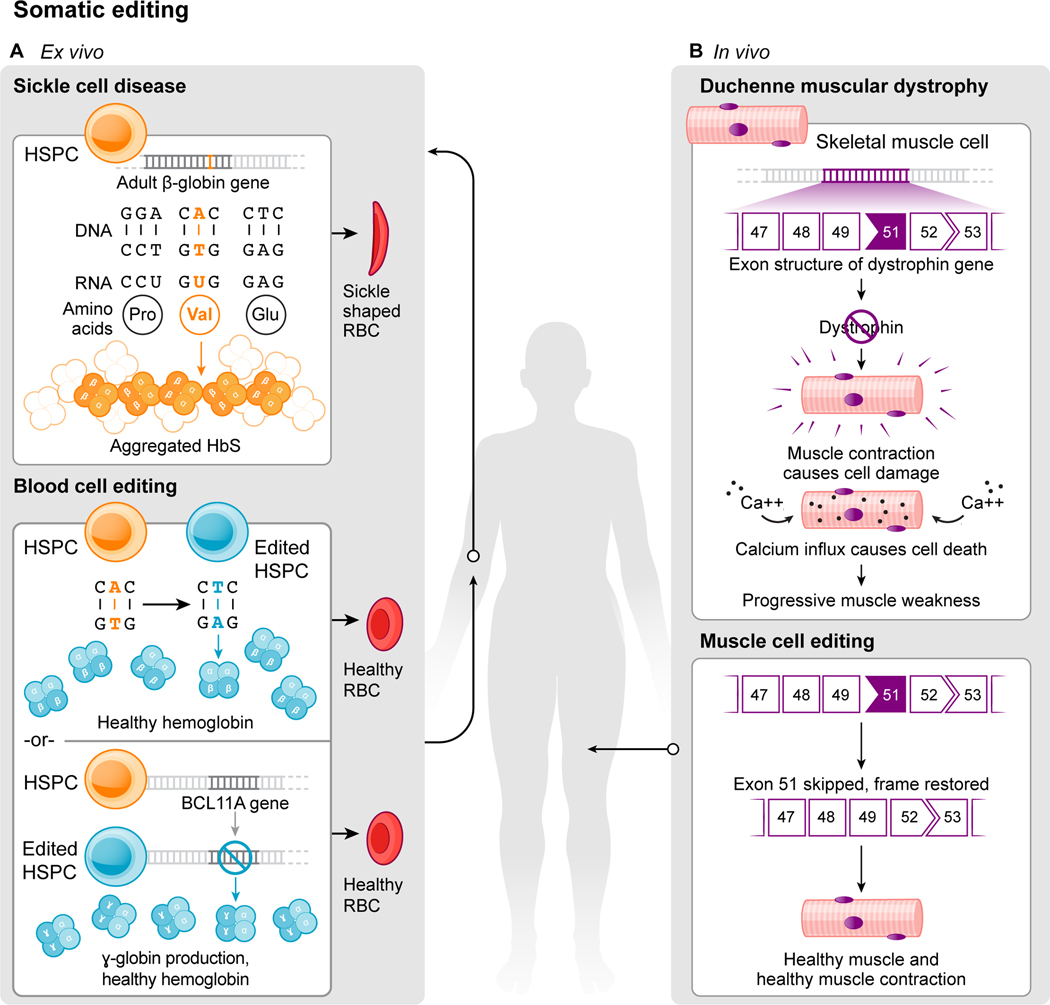
- Monogenic diseases are a major target: ~5,000 are known and affect at least 250 million individuals. Sickle cell disease, caused by a single A-to-T mutation in β-globin, could be treated ex vivo by correcting the mutation in hematopoietic stem/progenitor cells or reactivating γ-globin; ~100,000 US patients and millions more in African and Asian countries are potential candidates.
- Duchenne muscular dystrophy affects one in 5,000 males at birth and can involve >3,000 mutations, mostly at hotspots; restoring ~15% of normal dystrophin expression may provide clinical benefit. In animal studies, systemic AAV CRISPR delivery restored up to 90% dystrophin in ΔEx50 mice, and in dogs dystrophin levels were restored to 3–90% of normal with improved muscle appearance.
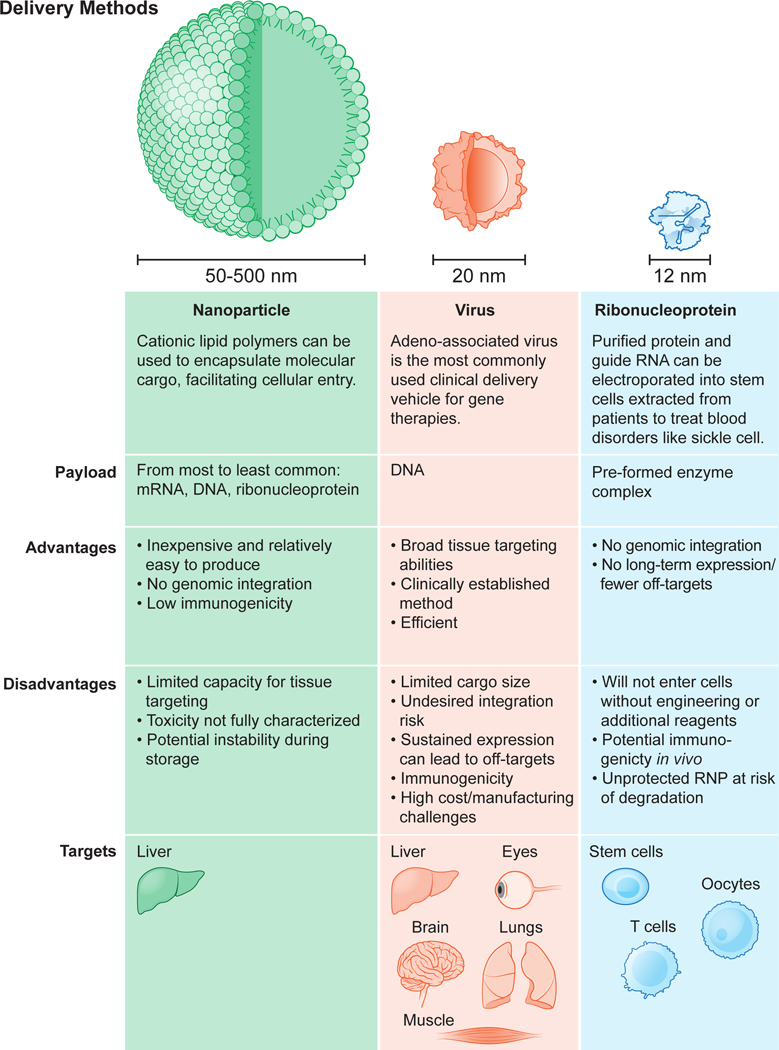
- Delivery is a central bottleneck: ex vivo editing favors electroporation of Cas9 ribonucleoprotein complexes, while in vivo delivery uses viral vectors such as AAV or lipid nanoparticles. AAV can carry only ~4.7 kb, not much larger than the 4.2 kb SpCas9 gene, so corrective insertion often requires two AAV vectors.
- Safety and governance concerns include off-target and imprecise editing, rare large deletions and complex rearrangements, possible immunogenicity from pre-existing Cas9 antibodies/T cells, and unresolved long-term safety. For germline editing, the paper states it is inappropriate to perform editing that culminates in human pregnancy at this time, while in vitro embryo/gamete research should be allowed with oversight.
Methods
- Narrative review by Jennifer A. Doudna; no systematic search strategy, primary dataset, or new experimental results are reported.
- Synthesizes CRISPR-Cas therapeutic genome editing, including sickle cell disease and DMD examples, delivery modalities, accuracy/safety issues, clinical development, and ethical/regulatory discussion of somatic versus germline editing.
- Draws on cited animal studies, early clinical trials, and international scientific/organizational positions; no sample size or formal analysis is stated in the paper.
Limitations
- Stated: delivery remains perhaps the biggest bottleneck to somatic genome editing; AAV has packaging, immunogenicity, and scalable GMP production/cost challenges, while lipid nanoparticles can be toxic and cell-type selective.
- Stated: off-target and imprecise editing, large deletions, and complex rearrangements occur at low frequency but could be clinically significant; immunogenicity and long-term safety/efficacy of edited cells in vivo remain largely unknown.
- Stated and evident: germline editing raises unresolved scientific questions about DNA repair in early human embryos and ethical/policy questions; as a review, the paper provides no new primary data and relies on cited studies and early-stage clinical information.
Model-written summary. Check it against the paper before relying on it.
Integrity signals
Registry
Cites
Statistics
Figures
Verification
Claims the paper makes
40 Valid · 10 Not valid · 12 Not checked · 36 Own results and interpretations
The cited sources support only part of this claim — read each source’s verdict below.
In the paper
“Engineered DNA-cleaving enzymes including zinc-finger nucleases (ZFNs) and transcription activator-like effector nucleases (TALENs) demonstrated the promise of therapeutic genome editing.”
What the sources say
- Not checked — no full text of the sourcecites [16] 16. Miller JC, Tan S, Qiao G, Barlow KA, Wang J, Xia DF, Meng X, Paschon DE, Leung E, Hinkley SJ, Dulay GP, Hua KL, Ankoudinova I, Cost GJ, Urnov FD, Zhang HS, Holmes MC, Zhang L, Gregory PD & Rebar EJ A TALE nuclease architecture for efficient genome editing. Nat. Biotechnol 29, 143-148 (2011). [PubMed: 21179091] source
- Not checked — no full text of the sourcecites [17] 17. Joglekar AV, Gray D, Kaufman ML, Urbinati F, Senadheera S, Cost G, Reik A, Holmes MC, Gregory PD, Hollis RP & Kohn DB Zinc Finger Nucleases Targeting The β -Globin Locus Drive Efficient Correction Of The Sickle Mutation In CD34+ Cells. Blood 122, 2904-2904 (2013). source
- Partly supportedcites [18] 18. Chang K-H, Smith SE, Sullivan T, Chen K, Zhou Q, West JA, Liu M, Liu Y, Vieira BF, Sun C, Hong VP, Zhang M, Yang X, Reik A, Urnov FD, Rebar EJ, Holmes MC, Danos O, Jiang H. & Tan S. Long-Term Engraftment and Fetal Globin Induction upon BCL11A Gene Editing in Bone-Marrow-Derived CD34+ Hematopoietic Stem and Progenitor Cells. Mol Ther Methods Clin Dev 4, 137-148 (2017). [PubMed: 28344999] sourceExperimental — accuracy not yet measured
The Results and Discussion describe ZFN-mediated BCL11A editing and call it a strong preclinical proof of concept for a potential sickle-cell therapy. The cited paper does not report a comparable demonstration using TALENs, so it supports the claim for ZFNs but not for both named enzyme types. (LLM, conf=0.88)
- Partly supportedcites [19] 19. Qasim W, Zhan H, Samarasinghe S, Adams S, Amrolia P, Stafford S, Butler K, Rivat C, Wright G, Somana K, Ghorashian S, Pinner D, Ahsan G, Gilmour K, Lucchini G, Inglott S, Mifsud W, Chiesa R, Peggs KS, Chan L, Farzeneh F, Thrasher AJ, Vora A, Pule M. & Veys P. Molecular remission of infant B-ALL after infusion of universal TALEN gene-edited CAR T cells. Sci. Transl. Med 9, 1-9 (2017). sourceExperimental — accuracy not yet measured
The Introduction reports first-in-human use of TALEN-edited T cells, and the Discussion says this application demonstrates the potential of gene-editing strategies for engineered cell therapies. The paper supports the claim about TALENs, but the passages do not establish the same point for ZFNs. (LLM, conf=0.88)
boostedstates a cause- Asserted: passes — The authors put it forward as true.
- Checkable: passes — It can be checked against evidence.
- Load-bearing: unclear — It is unclear whether the paper’s conclusions depend on it.
- Based: passes — The paper gives a reason why it holds.
The cited sources support only part of this claim — read each source’s verdict below.
In the paper
“Notably, restoration of a small percentage (~15%) of normal dystrophin expression levels can provide a clinical benefit 15 .”
What the sources say
- Partly supportedcites [15] 15. Long C, McAnally JR, Shelton JM, Mireault AA, Bassel-Duby R. & Olson EN Prevention of muscular dystrophy in mice by CRISPR/Cas9-mediated editing of germline DNA. Science 345, 1184-1188 (2014). [PubMed: 25123483] sourceExperimental — accuracy not yet measured
The supplied passages (labeled Abstract; page unavailable) report that correcting 17% of mutant Dmd alleles in mice restored dystrophin in many muscle fibers and reduced dystrophic features. They do not show that dystrophin expression was restored to ~15% of normal levels: 17% refers to gene correction, not protein expression. The reported benefits are in mice, not a demonstrated clinical benefit in patients. (LLM, conf=0.88)
plainstates a cause- Asserted: passes — The authors put it forward as true.
- Checkable: passes — It can be checked against evidence.
- Load-bearing: unclear — It is unclear whether the paper’s conclusions depend on it.
- Based: passes — The paper gives a reason why it holds.
- Partly supported
The cited sources support only part of this claim — read each source’s verdict below.
In the paper
“Cas9 protein-sgRNA complexes can be incorporated by assembly with DNA-linked particles 78,79 .”
What the sources say
- Partly supportedcites [78] 78. Glass Z, Li Y. & Xu Q. Nanoparticles for CRISPR-Cas9 delivery. Nat Biomed Eng 1, 854-855 (2017). [PubMed: 30147994] sourceExperimental — accuracy not yet measured
The formulation passage (Abstract; page not provided) describes a gold nanoparticle core surrounded by a Cas9–gRNA complex and a DNA repair template. This supports incorporating the complex into a particle, but the copy does not specify assembly with DNA-linked particles. (LLM, conf=0.80)
- Supportedcites [79] 80. Lee K, Conboy M, Park HM, Jiang F, Kim HJ, Dewitt MA, Mackley VA, Chang K, Rao A, Skinner C, Shobha T, Mehdipour M, Liu H, Huang W-C, Lan F, Bray NL, Li S, Corn JE, Kataoka K, Doudna JA, Conboy I. & Murthy N. Nanoparticle delivery of Cas9 ribonucleoprotein and donor DNA in vivo induces homology-directed DNA repair. Nat Biomed Eng 1, 889-901 (2017). [PubMed: 29805845] source
The Results and discussion section (‘Design and synthesis of CRISPR-Gold’; page unavailable) says donor DNA is attached to gold nanoparticles and Cas9 ribonucleoprotein is then adsorbed onto them. The Methods section (‘S5. Synthesis of CRISPR-Gold’; page unavailable) specifies that Cas9 and guide RNA are mixed before being added to the DNA-linked particles. (LLM, conf=0.94)
plainstates a cause- Asserted: passes — The authors put it forward as true.
- Checkable: passes — It can be checked against evidence.
- Load-bearing: unclear — It is unclear whether the paper’s conclusions depend on it.
- Based: passes — The paper gives a reason why it holds.
- Partly supported
The cited sources support only part of this claim — read each source’s verdict below.
In the paper
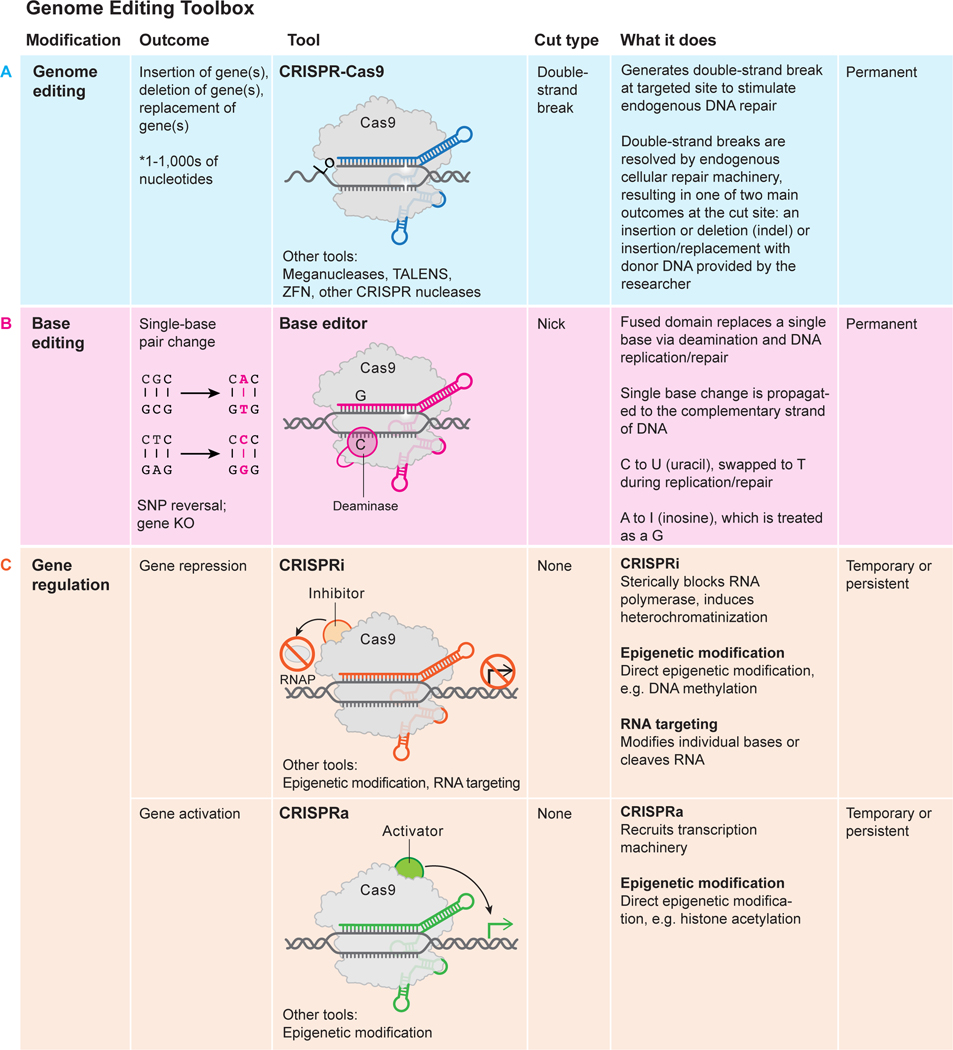
“In cells of all multicellular organisms, including humans, such double-stranded DNA breaks induce DNA repair by endogenous cellular pathways that can introduce alterations to the DNA sequence, including small sequence changes or genetic insertions 21,22 .”
What the sources say
- Not checked — no full text of the sourcecites [21] 21. Szostak JW, Orr-Weaver TL, Rothstein RJ & Stahl FW The double-strand-break repair model for recombination. Cell 33, 25-35 (1983). [PubMed: 6380756] *The authors proposed what was at the time a surprising mechanism for meiotic recombination, in which double-strand breaks that are enlarged to double-strand gaps initiate genetic recombination. This model has been proven largely correct, forming the basis for DNA repair-mediated genome editing. source
- Partly supportedcites [22] 22. Stark JM, Pierce AJ, Oh J, Pastink A. & Jasin M. Genetic steps of mammalian homologous repair with distinct mutagenic consequences. Mol. Cell. Biol 24, 9305-9316 (2004). [PubMed: 15485900] *This study demonstrated that double-strand DNA breaks in mammalian cells trigger - DNA repair that can introduce altered genomic sequences at the site of the repair. As a result, research focused increasingly on engineered enzymes capable of introducing targeted breaks in genomes, which would in turn produce site-specific genetic changes. sourceExperimental — accuracy not yet measured
The Abstract (page not provided) says that mammalian cells repair double-strand breaks through pathways that can cause deletions or insertions at the break site. It also discusses mutagenic repair associated with human disease. The paper does not establish that this applies to cells of all multicellular organisms, so the claim extends beyond its stated scope. (LLM, conf=0.87)
plainstates a cause- Asserted: passes — The authors put it forward as true.
- Checkable: passes — It can be checked against evidence.
- Load-bearing: passes — The paper’s conclusions depend on it.
- Based: passes — The paper gives a reason why it holds.
The sources with a verdict support this claim; the rest weren’t checked yet, have no full text we could read, or their verdicts aren’t rated yet.
In the paper
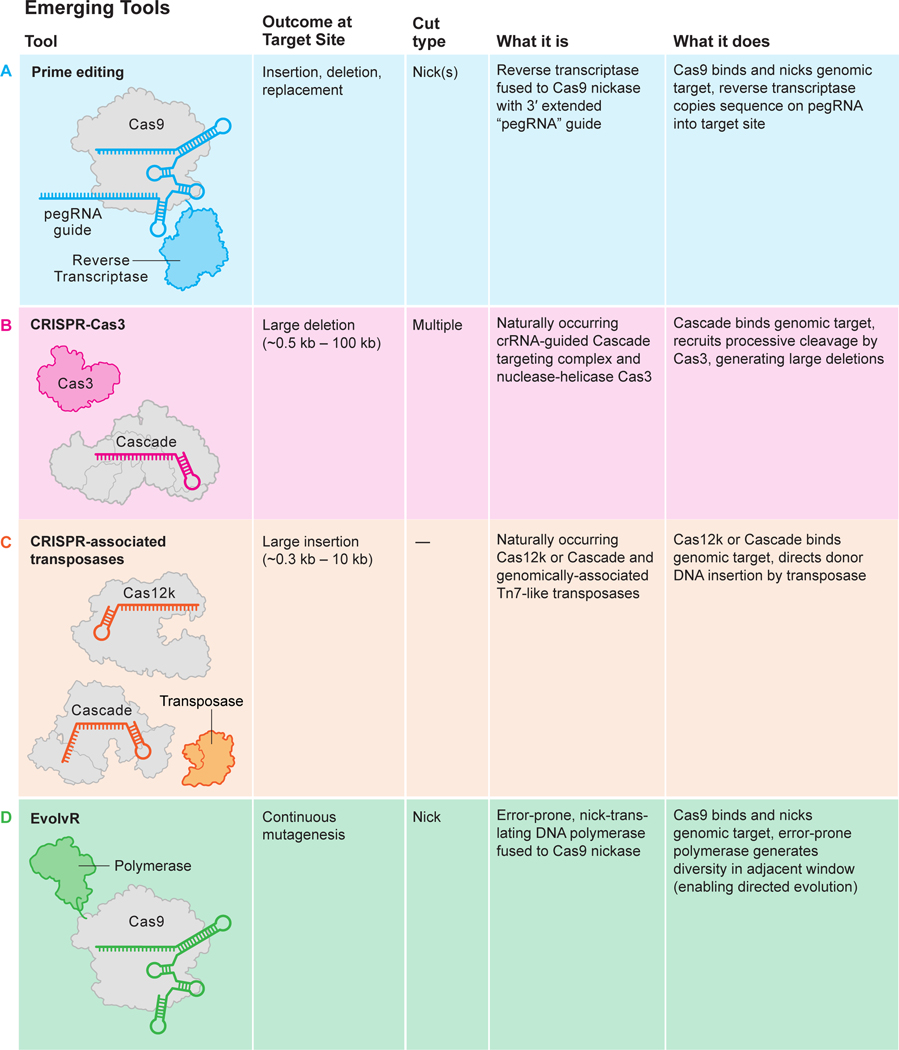
“Alternatives to DNA cleavage-induced editing include using CRISPR-Cas9 for direct chemical sequence alteration (base editing) 25,26 , providing RNA templates for gene alteration (prime editing) 27,28 , and for transcriptional control (CRISPR interference, CRISPRi; CRISPR activation, CRISPRa) 29,30 (Fig. 3).”
What the sources say
- Supportedcites [25] 25. Komor AC, Kim YB, Packer MS, Zuris JA & Liu DR Programmable editing of a target base in genomic DNA without double-stranded DNA cleavage. Nature 533, 420-424 (2016). [PubMed: 27096365] *In this study, CRISPR-Cas9 was fused to a DNA editing enzyme that enables targeted nucleotide editing at genomic locations recognized by Cas9. By avoiding double strand breaks in the DNA, the authors proposed that undesired DNA repair could be avoided. sourceExperimental — accuracy not yet measured
The Abstract describes a CRISPR/Cas9-based editor that directly converts a target DNA base without a double-stranded break or donor template. This supports the base-editing clause to which this citation is attached; the prime-editing and CRISPRi/CRISPRa clauses have separate citations. (LLM, conf=0.94)
- Not checked — no full text of the sourcecites [26] 26. Nishida K, Arazoe T, Yachie N, Banno S, Kakimoto M, Tabata M, Mochizuki M, Miyabe A, Araki M, Hara KY, Shimatani Z. & Kondo A. Targeted nucleotide editing using hybrid prokaryotic and vertebrate adaptive immune systems. Science 353, (2016). *In this study, CRISPR-Cas9 was fused to a DNA editing enzyme that enables targeted nucleotide editing at genomic locations recognized by Cas9. Instead of inducing double strand break repair, this editing form of Cas9 enables individual base pairs to be altered within cells. source
- Could not verifycites [27] 27. Sharon E, Chen S-AA, Khosla NM, Smith JD, Pritchard JK & Fraser HB Functional Genetic Variants Revealed by Massively Parallel Precise Genome Editing. Cell 175, 544-557.e16 (2018). [PubMed: 30245013] *This study was the first to show that an RNA template could be used together with a Cas9-reverse transcriptase fusion protein to introduce small targeted changes in cellular genomes. sourceExperimental — accuracy not yet measured
The citation is attached to the sentence’s claim about CRISPRi/CRISPRa for transcriptional control. The Introduction and Results describe Cas9 cleavage followed by donor-directed repair, not CRISPRi or CRISPRa; searches for those terms and transcriptional control found no passage addressing that claim. The References mention base editing, but do not establish the claim for which this citation is offered. (LLM, conf=0.75)
- Supportedcites [28] 28. Anzalone AV, Randolph PB, Davis JR, Sousa AA, Koblan LW, Levy JM, Chen PJ, Wilson C, Newby GA, Raguram A. & Liu DR Search-and-replace genome editing without double-strand breaks or donor DNA. Nature (2019). doi:10.1038/s41586-019-1711-4 *This study explored the use of a CRISPR-Cas9-reverse transcriptase fusion protein together with extended guide RNA templates to introduce small sequence changes within ~50 base pairs of the location of Cas9 binding. sourceExperimental — accuracy not yet measured
The citation is attached to the prime-editing part of the sentence, not the claims about base editing or CRISPRi/CRISPRa. The Abstract and “Prime editing strategy” section describe an edit-encoding RNA guide whose information is copied into target DNA without a double-strand break or donor DNA template. (LLM, conf=0.93)
- Supportedcites [29] 29. Qi LS, Larson MH, Gilbert LA, Doudna JA, Weissman JS, Arkin AP & Lim WA Repurposing CRISPR as an RNA-guided platform for sequence-specific control of gene expression. Cell 152, 1173-1183 (2013). [PubMed: 23452860] *This study demonstrated the use of a catalyticallydeactivated form of CRISPR-Cas9 for transcriptional control in cells. source
The citation is attached to the transcriptional-control portion of the sentence, not the base- or prime-editing examples. In “CRISPRi as a Platform for Engineering Transcriptional Regulatory Networks” (page not provided), the paper describes CRISPRi as a dCas9-based approach to targeted gene regulation, including transcriptional repression and potential activation, without altering the target sequence. (LLM, conf=0.92)
- Supportedcites [30] 30. Gilbert LA, Horlbeck MA, Adamson B, Villalta JE, Chen Y, Whitehead EH, Guimaraes C, Panning B, Ploegh HL, Bassik MC, Qi LS, Kampmann M. & Weissman JS Genome-Scale CRISPRMediated Control of Gene Repression and Activation. Cell 159, 647-661 (2014). [PubMed: 25307932] sourceExperimental — accuracy not yet measured
The citation is attached to the transcriptional-control part of the sentence, not to base or prime editing. The Introduction (page not supplied) describes the use of CRISPRi to repress and CRISPRa to activate transcription, and reports applying both methods to control gene expression. (LLM, conf=0.94)
plain- Asserted: passes — The authors put it forward as true.
- Checkable: passes — It can be checked against evidence.
- Load-bearing: unclear — It is unclear whether the paper’s conclusions depend on it.
- Based: passes — The paper gives a reason why it holds.
- Supported
45 more claims · 23 with their cited sources checked
Create a free account to see all 98 claims and to verify the 5 references still open.
- It may state two separate claims as one. 33
- Probably not a substantial claim. 23
Claims other papers make about this one
Each is checked against this paper’s own text: does it say what the citing paper says it does?
The source backs part of the claim, not all of it — or backs it for a different population, condition or comparison.
In the citing paper
“CRISPR-Cas dominates the field because of the ease of using guide RNAs directing the CRISPR complex to specific DNA sequences and the increasing ability to target most sites in the genome.121,122”
From Fetal hemoglobin in sickle cell anemia (2020) · cites this paper as [121]
Experimental — accuracy not yet measured
Citations
Cites
A Programmable Dual-RNA–Guided DNA Endonuclease in Adaptive Bacterial Immunity
Jinek, M., Chylinski, K., Fonfara, I., Hauer, M., Doudna, J. A., & Charpentier, E. (2012) · Science · doi:10.1126/science.1225829 · Cited by 17,116
Self-citationMultiplex Genome Engineering Using CRISPR/Cas Systems
Cong, L., Ran, F. A., Cox, D., Lin, S., Barretto, R., Habib, N., Hsu, P. D., Wu, X., Jiang, W., Marraffini, L. A., et al. (2013) · Science · doi:10.1126/science.1231143 · Cited by 15,339
RNA-Guided Human Genome Engineering via Cas9
Mali, P., Yang, L., Esvelt, K. M., Aach, J., Guell, M., DiCarlo, J. E., Norville, J. E., & Church, G. M. (2013) · Science · doi:10.1126/science.1232033 · Cited by 9,210
Programmable editing of a target base in genomic DNA without double-stranded DNA cleavage
Komor, A. C., Kim, Y. B., Packer, M. S., Zuris, J. A., & Liu, D. R. (2016) · Nature · doi:10.1038/nature17946 · Cited by 5,437
Repurposing CRISPR as an RNA-Guided Platform for Sequence-Specific Control of Gene Expression
Qi, L. S., Larson, M. H., Gilbert, L. A., Doudna, J. A., Weissman, J. S., Arkin, A. P., & Lim, W. A. (2013) · Cell · doi:10.1016/j.cell.2013.02.022 · Cited by 5,016
Self-citationSearch-and-replace genome editing without double-strand breaks or donor DNA
Anzalone, A. V., Randolph, P. B., Davis, J. R., Sousa, A. A., Koblan, L. W., Levy, J. M., Chen, P. J., Wilson, C., Newby, G. A., Raguram, A., et al. (2019) · Nature · doi:10.1038/s41586-019-1711-4 · Cited by 4,767
Programmable base editing of A•T to G•C in genomic DNA without DNA cleavage
Gaudelli, N. M., Komor, A. C., Rees, H. A., Packer, M. S., Badran, A. H., Bryson, D. I., & Liu, D. R. (2017) · Nature · doi:10.1038/nature24644 · Cited by 4,184
CRISPR-Mediated Modular RNA-Guided Regulation of Transcription in Eukaryotes
Gilbert, L. A., Larson, M. H., Morsut, L., Liu, Z., Brar, G. A., Torres, S. E., Stern-Ginossar, N., Brandman, O., Whitehead, E. H., Doudna, J. A., et al. (2013) · Cell · doi:10.1016/j.cell.2013.06.044 · Cited by 3,696
Self-citationGasiunas, G., Barrangou, R., Horvath, P., & Siksnys, V. (2012) · Proceedings of the National Academy of Sciences · doi:10.1073/pnas.1208507109 · Cited by 2,769
Genome-Scale CRISPR-Mediated Control of Gene Repression and Activation
Gilbert, L. A., Horlbeck, M. A., Adamson, B., Villalta, J. E., Chen, Y., Whitehead, E. H., Guimaraes, C., Panning, B., Ploegh, H. L., Bassik, M. C., et al. (2014) · Cell · doi:10.1016/j.cell.2014.09.029 · Cited by 2,728
Cited by
Items 301–400 of 1,131
The Interface of Gene Editing with Regenerative Medicine
Farag, V., Devey, E. A., & Leong, K. W. (2024) · Engineering · doi:10.1016/j.eng.2024.10.019 · Cited by 31
From bench to bedside: Developing CRISPR/Cas-based therapy for ocular diseases
Zhao, Q., Wei, L., & Chen, Y. (2025) · Pharmacological Research · doi:10.1016/j.phrs.2025.107638 · Cited by 24
Back to Basics: Application of the Principles of Bioethics to Heritable Genome Interventions
Getz, L. J., & Dellaire, G. (2020) · Science and Engineering Ethics · doi:10.1007/s11948-020-00226-0 · Cited by 26
“The social impacts of CRISPR/Cas9 gene editing technologies have gained significant attention in part due to the remarkable speed of the development of these technologies for use in humans (Doudna 2020; Salsman and Dellaire 2017).”
BackgroundA novel therapeutic modality using CRISPR-engineered dendritic cells to treat allergies
Kim, B., Lee, Y. E., Yeon, J. W., Go, G.-Y., Byun, J., Lee, K., Lee, H. K., Hur, J. K., Jang, M., & Kim, T. H. (2021) · Biomaterials · doi:10.1016/j.biomaterials.2021.120798 · Cited by 23
Genome edited B cells: a new frontier in immune cell therapies
Rogers, G. L., & Cannon, P. M. (2021) · Molecular Therapy · doi:10.1016/j.ymthe.2021.09.019 · Cited by 31
Zhou, W., Yang, J., Zhang, Y., Hu, X., & Wang, W. (2022) · MedComm · doi:10.1002/mco2.155 · Cited by 32
A proposed mathematical description of in vivo nanoparticle delivery
Wu, J. L. Y., Stordy, B. P., Nguyen, L. N. M., Deutschman, C. P., & Chan, W. C. W. (2022) · Advanced Drug Delivery Reviews · doi:10.1016/j.addr.2022.114520 · Cited by 25
Progress and Prospects of Gene Editing in Pluripotent Stem Cells
Zhang, Z., Bao, X., & Lin, C. (2023) · Biomedicines · doi:10.3390/biomedicines11082168 · Cited by 25
Yan, Z., Yao, Y., Li, L., Cai, L., Zhang, H., Zhang, S., Xiao, Q., Wang, X., Zuo, E., Xu, C., et al. (2023) · Molecular Therapy — Nucleic Acids · doi:10.1016/j.omtn.2023.08.002 · Cited by 28
CRISPR, CAR-T, and NK: Current applications and future perspectives
Khoshandam, M., Soltaninejad, H., Hamidieh, A. A., & Hosseinkhani, S. (2023) · Genes & Diseases · doi:10.1016/j.gendis.2023.101121 · Cited by 33
“19 CRISPR has performed better than the other two genome editing tools because (i) it is an easier tool with higher efficiency; (ii) CRISPR/Cas9 recognizes DNA sites through the RNA-DNA interaction; (iii) it provides a simple way to manipulate multiple target DNAs simultaneously (high-throughput…”
Palanki, R., Han, E. L., Murray, A. M., Maganti, R., Tang, S. N., Swingle, K. L., Kim, D., Yamagata, H. M., Safford, H. C., Mrksich, K., et al. (2024) · Lab on a Chip · doi:10.1039/d4lc00283k · Cited by 25
Ricci, R., & Colasante, G. (2021) · Developmental Neuroscience · doi:10.1159/000515845 · Cited by 23
Spatiotemporal Delivery of CRISPR/Cas9 Genome Editing Machinery Using Stimuli‐Responsive Vehicles
Cai, W., Luo, T., Mao, L., & Wang, M. (2020) · Angewandte Chemie · doi:10.1002/ange.202005644 · Cited by 28
CRISPR/Cas systems combined with DNA nanostructures for biomedical applications
Sun, S., Yang, H., Wu, Z., Zhang, S., Xu, J., & Shi, P. (2024) · Chemical Communications · doi:10.1039/d4cc00290c · Cited by 23
Yin, H., Hu, X., Xie, C., Li, Y., Gao, Y., Zeng, H., Zhu, W., Xie, D., & Wang, Q. (2024) · Advanced Materials · doi:10.1002/adma.202401384 · Cited by 26
Wu, J., Peng, H., Peng, C., Liu, H., Zhang, Y., & Gong, M. (2024) · Critical Reviews in Toxicology · doi:10.1080/10408444.2024.2433632 · Cited by 26
“Credit for CRISPR-Cas9 used in genome editing provides a much easier and more widely adopted technology for genome editing due to its easily programmable DNA binding and modification capabilities (Doudna 2020).”
Using RNA therapeutics to promote healthy aging
Chen, S., Chen, Q., You, X., Zhou, Z., Kong, N., Ambrosio, F., Cao, Y., Abdi, R., & Tao, W. (2025) · Nature Aging · doi:10.1038/s43587-025-00895-1 · Cited by 25
“https://doi.org/10.1038/s43587-025-00895-1 mechanisms help to improve accuracy 63,64 .”
InfluentialReview, analysis, and optimization of the CRISPR Streptococcus pyogenes Cas9 system
Wang, G., & Li, J. (2021) · Medicine in Drug Discovery · doi:10.1016/j.medidd.2021.100080 · Cited by 23
Gene Editing and Modulation: the Holy Grail for the Genetic Epilepsies?
Carpenter, J. C., & Lignani, G. (2021) · Neurotherapeutics · doi:10.1007/s13311-021-01081-y · Cited by 25
Surfaceome CRISPR screen identifies OLFML3 as a rhinovirus-inducible IFN antagonist
Mei, H., Zha, Z., Wang, W., Xie, Y., Huang, Y., Li, W., Wei, D., Zhang, X., Xie, J., Liu, J., et al. (2021) · Genome biology · doi:10.1186/s13059-021-02513-w · Cited by 22
“3 Background The emerging genome engineering technologies, including clustered regularly interspaced short palindromic repeats (CRISPR)-CRISPR-associated protein 9 (Cas9), have transformed basic and translational biomedical research [1].”
BackgroundYou can't keep a bad idea down: Dark history, death, and potential rebirth of eugenics
Liscum, M., & Garcia, M. L. (2021) · The Anatomical Record · doi:10.1002/ar.24849 · Cited by 34
Perspectives of gene editing for cattle farming in tropical and subtropical regions
Camargo, L. S. A., Saraiva, N. Z., Oliveira, C. S., Carmickle, A. T., de Lemos, D. R., Siqueira, L. G. B., & Denicol, A. C. (2022) · Animal Reproduction · doi:10.1590/1984-3143-ar2022-0108 · Cited by 32
“The applications of the CRISPR system in different fields of biology has been shown in several reports (Carroll, 2017; Doudna, 2020; Molla et al., 2021).”
MethodCRISPR/Cas9 for hepatitis B virus infection treatment
Cai, B., Chang, S., Tian, Y., & Zhen, S. (2023) · Immunity Inflammation and Disease · doi:10.1002/iid3.866 · Cited by 23
“This effect is achieved by the action of cellular ubiquitin ligase and leads to enhanced transcription of cccDNA.(59,60) It will be interesting to determine whether CRISPR/Cas9 activators targeting HBx have a special inhibitory effect on transcription from cccDNA.”
BackgroundTaharabaru, T., Kihara, T., Obata, A., Onodera, R., Wen, Y., Li, J., Motoyama, K., & Higashi, T. (2023) · Carbohydrate Polymers · doi:10.1016/j.carbpol.2023.121443 · Cited by 22
Yao, J., Atasheva, S., Wagner, N. J., Paolo, N. C. D., Stewart, P. L., & Shayakhmetov, D. M. (2023) · Molecular Therapy · doi:10.1016/j.ymthe.2023.10.023 · Cited by 23
Finding genes and pathways that underlie coral adaptation
Selmoni, O. M., Bay, L. K., Expósito‐Alonso, M., & Cleves, P. A. (2024) · Trends in Genetics · doi:10.1016/j.tig.2024.01.003 · Cited by 23
Neumayer, G., Torkelson, J. L., Li, S., McCarthy, K., Zhen, H. H., Vangipuram, M., Mader, M. M.-D., Gebeyehu, G., Jaouni, T. M., Jackow, J., et al. (2024) · Nature Communications · doi:10.1038/s41467-024-49400-z · Cited by 36
“• Figure S1: significances are missing • Figure S3: magnifcafions are missing • Figure S5: magnifcafions are missing”
What Has a Century of Quantitative Genetics Taught Us About Nature's Genetic Tool Kit?
Jakobson, C. M., & Jarosz, D. F. (2020) · Annual Review of Genetics · doi:10.1146/annurev-genet-021920-102037 · Cited by 19
Guragain, P., Tkachov, M., Båtnes, A. S., Ôlsen, Y., Winge, P., & Bones, A. M. (2021) · Frontiers in Marine Science · doi:10.3389/fmars.2021.701793 · Cited by 23
Diabetes and obesity: leveraging heterogeneity for precision medicine
Franks, P. W., & Sargent, J. L. (2024) · European Heart Journal · doi:10.1093/eurheartj/ehae746 · Cited by 28
Hierarchical metabolic engineering for rewiring cellular metabolism
Chai, T., Tao, Y., Zhao, C., & Chen, X. (2025) · FEMS Microbiology Reviews · doi:10.1093/femsre/fuaf047 · Cited by 26
“…to ZFNs and TAL-ENs, the CRISPR system offers simpler design, higher scalability, greater throughput, and higher editing efficiency, and has been broadly applied across organisms ranging from prokaryotes to mammals (Anzalone et al. 2020 , Doudna 2020 , Makarova et al. 2020 , Kaminski et al. 2021 ).”
Gene and RNA Editing: Revolutionary Approaches to Treating Diseases
Li, J., Huang, J., Liao, Y., Hu, T., Wang, C., Zhang, W., & Huang, C. (2025) · MedComm · doi:10.1002/mco2.70389 · Cited by 31
Moving somatic gene editing to the clinic: routes to market access and reimbursement in Europe
Rigter, T., Klein, D., Weinreich, S. S., et al. (2021) · European Journal of Human Genetics · doi:10.1038/s41431-021-00877-y · Cited by 20
“In order to realize safe, effective, and affordable therapies, scientists, clinicians, and bioethicists will need to collaborate with healthcare economists and regulators [1].”
BackgroundReverting TP53 Mutation in Breast Cancer Cells: Prime Editing Workflow and Technical Considerations
Abuhamad, A. Y., Zamberi, N. N. M., Ling, S., Naes, S. M., Yusuf, S. N. H. M., Tajudin, A. A., Mohtar, M. A., Syahir, A., & Syafruddin, S. E. (2022) · Cells · doi:10.3390/cells11101612 · Cited by 23
“Nonetheless, the efficacy and safety issues related to double-strand break (DSB) and the off-target effects have remained the major concerns, hence hindering the full exploitation of this gene editing technology for therapeutic uses [32].”
BackgroundDose-Dependent Nuclear Delivery and Transcriptional Repression with a Cell-Penetrant MeCP2
Zhang, X., Cattoglio, C., Zoltek, M., Vetralla, C., Mozumdar, D., & Schepartz, A. (2023) · ACS Central Science · doi:10.1021/acscentsci.2c01226 · Cited by 19
Park, J., Cui, G., Lee, H., Jeong, H., Kwak, J. J., Lee, J., & Byeon, S. H. (2023) · Scientific Reports · doi:10.1038/s41598-023-29014-z · Cited by 20
Efficient Adeno-associated Virus–mediated Transgenesis in Alveolar Stem Cells and Associated Niches
Konkimalla, A., Elmore, Z. C., Konishi, S., Macadlo, L., Katsura, H., Tata, A., Asokan, A., & Tata, P. R. (2023) · American Journal of Respiratory Cell and Molecular Biology · doi:10.1165/rcmb.2022-0424ma · Cited by 25
Corydon, T. J., & Bek, T. (2024) · Progress in Retinal and Eye Research · doi:10.1016/j.preteyeres.2024.101323 · Cited by 20
Engineering an optimized hypercompact CRISPR /Cas12j‐8 system for efficient genome editing in plants
Bai, S., Cao, X., Hu, L., Hu, D., Li, D., & Sun, Y. (2025) · Plant Biotechnology Journal · doi:10.1111/pbi.14574 · Cited by 24
“While these systems have demonstrated exceptional efficacy, the substantial molecular size of Cas proteins, such as SpCas9 ( ~ 190 kDa), presents significant challenges for their efficient delivery into cells, particularly via viral vectors (Doudna, 2020).”
Current Trends in Messenger RNA Technology for Cancer Therapeutics
Afzal, A., Abbasi, M. H., Ahmad, S., Sheikh, N., & Khawar, M. B. (2025) · Biomaterials Research · doi:10.34133/bmr.0178 · Cited by 25
Controlling CRISPR with small molecule regulation for somatic cell genome editing
Khajanchi, N., & Saha, K. (2021) · Molecular Therapy · doi:10.1016/j.ymthe.2021.06.014 · Cited by 22
Zheng, Q., Li, W., Mao, L., & Wang, M. (2021) · Biomaterials Science · doi:10.1039/d1bm00790d · Cited by 19
Yu, X., Liu, S., Cheng, Q., Lee, S. M., Wei, T., Zhang, D., Farbiak, L., Johnson, L. T., Wang, X., & Siegwart, D. J. (2021) · Pharmaceutics · doi:10.3390/pharmaceutics13111914 · Cited by 21
Regenerative medicine: prenatal approaches
Coppi, P. D., Loukogeorgakis, S., Gotherstrom, C. O. T., David, A. L., Almeida-Porada, G. D., Chan, J. K. Y., Deprest, J. A., Wong, K. K. Y., & Tam, P. K. H. (2022) · The Lancet Child & Adolescent Health · doi:10.1016/s2352-4642(22)00192-4 · Cited by 24
Mesenchymal stromal cells improve the transplantation outcome of CRISPR-Cas9 gene-edited human HSPCs
Crippa, S., Conti, A., Vavassori, V., Ferrari, S., Beretta, S., Rivis, S., Bosotti, R., Scala, S., Pirroni, S., Hernández, R. J., et al. (2022) · Molecular Therapy · doi:10.1016/j.ymthe.2022.08.011 · Cited by 23
“26 However, the ef-fi ciency of GE strategies based on homology-directed repair (HDR) remains limited in long-term (LT) repopulating HSPCs due to low pro fi ciency of homologous recombination, limited permissiveness to the delivery of the DNA-repair template, 27 – 34 and the induction of cellular…”
T Cell Nrf2/Keap1 Gene Editing Using CRISPR/Cas9 and Experimental Kidney Ischemia-Reperfusion Injury
Kurzhagen, J. T., Noel, S., Lee, K., Sadasivam, M., Gharaie, S., Ankireddy, A., Lee, S. A., Newman-Rivera, A. M., Gong, J., Arend, L. J., et al. (2023) · Antioxidants and Redox Signaling · doi:10.1089/ars.2022.0058 · Cited by 19
Schellens, R. T. W., Broekman, S., Peters, T. A., Graave, P., Malinar, L., Venselaar, H., Kremer, H., de Vrieze, E., & van Wijk, E. (2023) · Molecular Therapy — Nucleic Acids · doi:10.1016/j.omtn.2023.05.020 · Cited by 21
A Type II-B Cas9 nuclease with minimized off-targets and reduced chromosomal translocations in vivo
Bestas, B., Wimberger, S., Degtev, D., Madsen, A., Rottner, A. K., Karlsson, F. H., Naumenko, S., Callahan, M., Touza, J. L., Francescatto, M., et al. (2023) · Nature Communications · doi:10.1038/s41467-023-41240-7 · Cited by 21
“Sequences are provided in Supplementary Data 1.”
InfluentialLi, B., Li, Q., Qi, Z., Li, Z., Yan, X., Chen, Y., Xu, X., Pan, Q., Chen, Y., Huang, F., et al. (2024) · Angewandte Chemie International Edition · doi:10.1002/anie.202316323 · Cited by 21
Unlocking the potential of CRISPR-associated transposons: from structural to functional insights
Tenjo-Castaño, F., Rout, S. S., Dey, S., & Montoya, G. (2025) · Trends in Genetics · doi:10.1016/j.tig.2025.04.005 · Cited by 19
Molecular Mechanisms behind Inherited Neurodegeneration of the Optic Nerve
Maresca, A., & Carelli, V. (2021) · Biomolecules · doi:10.3390/biom11040496 · Cited by 23
Clinical trials and promising preclinical applications of CRISPR/Cas gene editing
Çerçi, B., Uzay, İ. A., Kara, M. K., & Dinçer, P. (2022) · Life Sciences · doi:10.1016/j.lfs.2022.121204 · Cited by 22
Zvintzou, E., Xepapadaki, E., Skroubis, G., Mparnia, V., Giannatou, K., Benabdellah, K., & Kypreos, K. E. (2023) · Pharmaceuticals · doi:10.3390/ph16060855 · Cited by 22
“Gene editing is a highly promising strategy with a great potential to transform medicine by providing precise and personalized therapies for a wide range of genetic disorders [91,92].”
BackgroundGenetic and Epigenetic Therapies for β-Thalassaemia by Altering the Expression of α-Globin Gene
Mettananda, S. (2021) · Frontiers in Genome Editing · doi:10.3389/fgeed.2021.752278 · Cited by 20
“Genome Editing Therapies for β-Thalassaemia β-Thalassaemia has several salient features for it to become a promising candidate disease for the development of genome editing therapies (Doudna, 2020).”
BackgroundApplying Spatiotemporal Modeling of Cell Dynamics to Accelerate Drug Development
Chen, X., Xu, S., Chu, B., Guo, J., Zhang, H.-K., Sun, S.-Y., Song, L., & Feng, X. (2024) · ACS Nano · doi:10.1021/acsnano.4c12599 · Cited by 18
Bridging the gap: From petri dish to patient - Advancements in translational drug discovery
El‐Tanani, M., Rabbani, S. A., El‐Tanani, Y., Matalka, I. I., & Khalil, I. A. (2024) · Heliyon · doi:10.1016/j.heliyon.2024.e41317 · Cited by 20
AI and omics technologies in biobanking: Applications and challenges for public health
Venturini, P., de Faria, P. L., & Cordeiro, J. V. (2025) · Public Health · doi:10.1016/j.puhe.2025.105726 · Cited by 23
Yashooa, R. K., Nabi, A. Q., Smail, S. W., Azeez, S. S., Nooh, W. A., Mustafa, S. A., Al-Farha, A. A.-B., Capitanio, N., & Shekha, M. S. (2026) · Frontiers in Neurology · doi:10.3389/fneur.2025.1737468 · Cited by 26
Belato, H. B., Norbrun, C., Luo, J., Pindi, C., Sinha, S., D’Ordine, A. M., Jogl, G., Palermo, G., & Lisi, G. P. (2022) · The Journal of Chemical Physics · doi:10.1063/5.0128815 · Cited by 16
CRISPR/Cas9-based genome editing for multimodal synergistic cancer nanotherapy
Pu, Y., Wu, W., Xiang, H., Chen, Y., & Xu, H. (2022) · Nano Today · doi:10.1016/j.nantod.2022.101734 · Cited by 19
Engineering CRISPR/Cas-based nanosystems for therapeutics, diagnosis and bioimaging
Song, N., Li, S., Lv, Z., Ding, X., Li, F., & Yang, D. (2023) · Chinese Chemical Letters · doi:10.1016/j.cclet.2023.108134 · Cited by 16
Mohr, M., Damas, N. D., Gudmand‐Hoeyer, J., Zeeberg, K., Jędrzejczyk, D., Vlassis, A., Morera-Gómez, M., Pereira, S., Puš, U., Oliver-Almirall, A., et al. (2023) · ACS Synthetic Biology · doi:10.1021/acssynbio.2c00179 · Cited by 18
Utilizing directed evolution to interrogate and optimize CRISPR/Cas guide RNA scaffolds
Bush, K. B., Corsi, G. I., Yan, A. C., Haynes, K., Layzer, J. M., Zhou, J. H., Llanga, T., Gorodkin, J., & Sullenger, B. A. (2023) · Cell chemical biology · doi:10.1016/j.chembiol.2023.06.007 · Cited by 19
Gene doping detection in the era of genomics
Li, R., Su, P., Shi, Y. Y., Shi, H., Ding, S., Su, X., Chen, P., & Wu, D. (2024) · Drug Testing and Analysis · doi:10.1002/dta.3664 · Cited by 23
Transdermal microarrayed electroporation for enhanced cancer immunotherapy based on DNA vaccination
Wang, Y., Jin, Q., Xiong, C., Chen, B., Xie, K., Wang, M., Liu, Z., Zhao, Y., Liang, Z., Wang, F., et al. (2024) · Proceedings of the National Academy of Sciences · doi:10.1073/pnas.2322264121 · Cited by 26
Application of Various Delivery Methods for CRISPR/dCas9
Liu, Z., Liao, Z., Chen, Y., Han, L., Yin, Q., & Xiao, H. (2020) · Molecular Biotechnology · doi:10.1007/s12033-020-00258-8 · Cited by 22
Chemical and optical control of CRISPR-associated nucleases
Modell, A. E., Siriwardena, S. U., Shoba, V. M., Li, X., & Choudhary, A. (2020) · Current Opinion in Chemical Biology · doi:10.1016/j.cbpa.2020.10.003 · Cited by 19
CRISPR, animals, and FDA oversight: Building a path to success
Epstein, L. R., Lee, S. S., Miller, M. F., & Lombardi, H. A. (2021) · Proceedings of the National Academy of Sciences · doi:10.1073/pnas.2004831117 · Cited by 18
A general genome editing strategy using CRISPR lipid nanoparticle spherical nucleic acids
Han, Z., Huang, C., Luo, T., & Mirkin, C. A. (2025) · Proceedings of the National Academy of Sciences · doi:10.1073/pnas.2426094122 · Cited by 17
Genome engineering in biodiversity conservation and restoration
van Oosterhout, C., Supple, M. A., Morales, H. E., Birley, T., Tatayah, V., Jones, C. G., Whitford, H. L., Tollington, S., Ruhomaun, K., Groombridge, J. J., et al. (2025) · Nature Reviews Biodiversity · doi:10.1038/s44358-025-00065-6 · Cited by 24
“Using genome engineering to replace harmful alleles has been successfully achieved in model systems 104,105 .”
Correcting inborn errors of immunity: From viral mediated gene addition to gene editing
Castiello, M. C., Ferrari, S., & VILLA, A. M. (2023) · Seminars in Immunology · doi:10.1016/j.smim.2023.101731 · Cited by 17
PRPF31-retinitis pigmentosa: Challenges and opportunities for clinical translation
Aweidah, H., Xi, Z., Sahel, J., & Byrne, L. C. (2023) · Vision Research · doi:10.1016/j.visres.2023.108315 · Cited by 21
“CRISPR-Cas systems use guide RNAs to direct a nuclease to a specific location in the DNA, allowing for the creation of a double strand break and the elimination of the mutation (Doudna, 2020; Gaj et al., 2013; Mali et al., 2013).”
Richardson, R. R., Steyert, M. R., Khim, S. N., Crutcher, G. W., Brandenburg, C., Robertson, C. D., Romanowski, A. J., Inen, J., Altas, B., & Poulopoulos, A. (2023) · The CRISPR Journal · doi:10.1089/crispr.2023.0036 · Cited by 14
Harisa, G. I., Faris, T. M., Sherif, A. Y., Alzhrani, R. F., Alanazi, S. A., Kohaf, N. A., & Alanazi, F. K. (2023) · International Journal of Biological Macromolecules · doi:10.1016/j.ijbiomac.2023.127055 · Cited by 18
Genome and transcriptome engineering by compact and versatile CRISPR-Cas systems
Aquino‐Jarquín, G. (2023) · Drug Discovery Today · doi:10.1016/j.drudis.2023.103793 · Cited by 16
Ding, H., Xia, Q., Shen, J., Zhu, C., Zhang, Y., & Feng, N. (2023) · Colloids and Surfaces B Biointerfaces · doi:10.1016/j.colsurfb.2023.113607 · Cited by 16
Recent advancements in gene therapy for sickle cell disease and β-thalassemia
Li, L., & Mandal, P. K. (2024) · Frontiers in Hematology · doi:10.3389/frhem.2024.1468952 · Cited by 31
“Gene therapy for blood disorders entails isolating the patient ’ s hematopoietic stem cells (HSCs), using vectors to introduce healthy genes ex vivo , and then reintroducing these modi fi ed cells into the bloodstream to produce healthy RBCs in the bone marrow (20).”
BackgroundMitochondrial base editing: from principle, optimization to application
Tang, J., & Du, K. (2025) · Cell & Bioscience · doi:10.1186/s13578-025-01351-8 · Cited by 18
“Gene therapy can directly correct pathogenic mutations in the nuclear genome in cells or tissues [74, 75].”
Development of Genome Editing Approaches against Herpes Simplex Virus Infections
Zhang, I., Hsiao, Z., & Liu, F. (2021) · Viruses · doi:10.3390/v13020338 · Cited by 17
“Moreover, much progress has recently been made in understanding the mechanism of how Cas9 and a gRNA recognize a DNA target and efficiently generate a cleavage at the target site [9,12].”
BackgroundInfluentialCurrent Applications and Future Perspectives of CRISPR-Cas9 for the Treatment of Lung Cancer
Medhin, M. T. G., Abebe, E. C., Sisay, T., Berhane, N., Bekele, T., & Dejenie, T. A. (2021) · Biologics · doi:10.2147/btt.s310312 · Cited by 22
Key regulators of sensitivity to immunomodulatory drugs in cancer treatment
Wang, S., Li, Z., & Gao, S. (2021) · Biomarker Research · doi:10.1186/s40364-021-00297-6 · Cited by 23
Anzalone, A. V., Gao, X. D., Podracky, C. J., Nelson, A. T., Koblan, L. W., Raguram, A., Levy, J. M., Mercer, J. A. M., & Liu, D. R. (2021) · bioRxiv (Cold Spring Harbor Laboratory) · doi:10.1101/2021.11.01.466790 · Cited by 16
Cellular and Molecular Mechanisms of Oxidative DNA Damage and Repair
Ayna, A., Çağlayan, C., & Tayşi, S. (2025) · Medicina · doi:10.3390/medicina61112013 · Cited by 26
“The CRISPR/Cas9 system enables the induction of precise DSBs or single-base damage at targeted genomic locations, thereby allowing direct visualization of repair protein recruitment and kinetics to damage sites [192,193].”
BAR-Seq clonal tracking of gene-edited cells
Ferrari, S., Beretta, S., Jacob, A., Cittaro, D., Albano, L., Merelli, I., Naldini, L., & Genovese, P. (2021) · Nature Protocols · doi:10.1038/s41596-021-00529-x · Cited by 15
Genetic therapies for neurological disorders
FitzPatrick, L., & Bird, A. P. (2021) · Human Genetics · doi:10.1007/s00439-021-02399-5 · Cited by 21
“Off-target editing is one of the primary safety concerns for the use of genome editors (nuclease-based or DNA base editors), since undesirable changes could be permanently introduced into the genome (reviewed in Doudna 2020).”
BackgroundNanoparticle-based non-viral CRISPR delivery for enhanced immunotherapy
Shin, H., & Kim, J. (2022) · Chemical Communications · doi:10.1039/d1cc05999h · Cited by 15
RNA – A choice of potential drug delivery system
Govindharaj, P., Harini, K., Pallavi, P., Gowtham, P., Girigoswami, K., & Girigoswami, A. (2022) · International Journal of Polymeric Materials · doi:10.1080/00914037.2022.2058946 · Cited by 17
“replace the missing and defective proteins and genes([51]).”
BackgroundHuang, C., Li, Q., & Li, J. (2022) · Medical Review · doi:10.1515/mr-2022-0029 · Cited by 20
“In size, nanoparticles are much bigger than viruses and RNPs, ranging from 50 to 500 nm [211].”
BackgroundThe electronic structure of genome editors from the first principles
Nierzwicki, Ł., Ahsan, M., & Palermo, G. (2023) · Electronic Structure · doi:10.1088/2516-1075/acb410 · Cited by 15
“Genome editing enables the modification of nucleic acids, by deleting, replacing, or inserting desired sequences, to improve biological function and correct diseases [1].”
Delivery challenges for CRISPR—Cas9 genome editing for Duchenne muscular dystrophy
Padmaswari, M. H., Agrawal, S., Jia, M. S., Ivy, A., Maxenberger, D. A., Burcham, L. A., & Nelson, C. E. (2023) · Biophysics Reviews · doi:10.1063/5.0131452 · Cited by 19
Advances in chimeric antigen receptor T cells therapy in the treatment of breast cancer
He, Q., Hu, H., Yang, F., Song, D. E., Zhang, X., & Dai, X. (2023) · Biomedicine & Pharmacotherapy · doi:10.1016/j.biopha.2023.114609 · Cited by 16
Familial Hypercholesterolemia: Challenges for a High-Risk Population
Choi, D., Malick, W. A., Köenig, W., Rader, D. J., & Rosenson, R. S. (2023) · Journal of the American College of Cardiology · doi:10.1016/j.jacc.2023.02.038 · Cited by 16
CLEAR Strategy Inhibited HSV Proliferation Using Viral Vectors Delivered CRISPR-Cas9
Ying, M., Wang, H., Liu, T., Han, Z., Lin, K., Shi, Q., Zheng, N., Tao, Y., Gong, H., & Xu, F. (2023) · Pathogens · doi:10.3390/pathogens12060814 · Cited by 16
A recombineering system for Bacillus subtilis based on the native phage recombinase pair YqaJ/YqaK
Liu, Q., Li, R., Shi, H., Yang, R., Shen, Q., Cui, Q., Wang, X., Li, A., Zhang, Y., & Fu, J. (2023) · Engineering Microbiology · doi:10.1016/j.engmic.2023.100099 · Cited by 18
“Since the CRISPR-Cas9 system was first reported as a eukaryotic genome editing tool in 2013, thousands of studies have successfully applied this system to edit the genomes of many different organisms [34] .”
Han, D., He, X., Huang, Y., Gao, M., Guo, T., Ren, X., Liao, X., Chen, X., Pang, X., & Cheng, S. (2023) · Advanced Science · doi:10.1002/advs.202303309 · Cited by 15
Little, S. R., Leung, Z., Quach, A. B. V., Hirukawa, A., Gholizadeh, F., Hajiaghayi, M., Darlington, P. J., & Shih, S. C. C. (2023) · Advanced Materials Technologies · doi:10.1002/admt.202300719 · Cited by 16
Eukaryotic-driven directed evolution of Cas9 nucleases
(2024) · doi:10.1186/s13059-024-03215-9 · Cited by 15
“The development of CRISPR-Cas tools [1, 2] and the emerging number of RNA-guided prokaryotic and eukaryotic nucleases [3–5] are giving a tremendous impulse to the development of advanced therapies based on genomic modifications [6].”
BackgroundUse of Customizable Nucleases for Gene Editing and Other Novel Applications
Reddy, P., Vilella, F., Belmonte, J. C. I., & Simón, C. (2020) · Genes · doi:10.3390/genes11090976 · Cited by 18
“Another factor that might affect the clinical use of CRISPR-Cas system is the pre-existing antibodies against Cas proteins due to their bacterial origin, which could lead to inflammation and lower stability of Cas proteins [31].”
BackgroundMethodInfluentialTowards physiologically relevant human pluripotent stem cell (hPSC) models of Parkinson’s disease
Coccia, E., & Ahfeldt, T. (2021) · Stem Cell Research & Therapy · doi:10.1186/s13287-021-02326-5 · Cited by 17
“of candidate genes and variants in isogenic models (reviewed in [20, 77, 78]).”
BackgroundFuture Perspectives of Oral Delivery of Next Generation Therapies for Treatment of Skin Diseases
Søgaard, P. P., Lind, M. L., Christiansen, C. R., Petersson, K., Clauss, A., & Caffarel–Salvador, E. (2021) · Pharmaceutics · doi:10.3390/pharmaceutics13101722 · Cited by 15
“With the advent of clustered regularly interspaced short palindromic repeats (CRISPR) technology for editing in mammalian cells, CRISPR-based methods have widely replaced the earlier and more labor-intensive methods for gene editing such as transcription activator-like effector nucleases (TALENs) and zinc-finger nucle…”
Method
Metadata
- Authors
- Doudna, J. A.
- Affiliations
- QB3 (US)
- Corresponding author
- Doudna, Jennifer A.
- ORCID
- Doudna, Jennifer A.
- Venue
- Nature
- Published
- 2020-02-12
- Volume
- 578
- Issue
- 7794
- Pages
- 229-236
- ISSN
- 0028-0836 (ISSN-L)
- 1476-4687
- PMC
- PMC8992613
- OpenAlex
- W3006116138
- Semantic Scholar
- 58b8496f86ab37bb66e32f96f5492f531b5ca37b
- Cited by
- 1,126
- References
- 160
- Citations by year
- 2026: 123 · 2025: 169 · 2024: 184 · 2023: 259 · 2022: 173 · 2021: 144 · 2020: 73
- FWCI
- 15.77
- Type
- journal article
- Language
- en
- Open access
- green
- www.ncbi.nlm.nih.gov
- Licence
- cc-by
- www.springer.com/tdm (tdm)
- www.springer.com/tdm (vor)
- Locations
- Nature (publishedVersion)
- PubMed (publishedVersion)
- PubMed Central (acceptedVersion, cc-by)
- OSTI OAI (U.S. Department of Energy Office of Scientific and Technical Information) (submittedVersion)
- RePEc: Research Papers in Economics (submittedVersion)
- eScholarship (California Digital Library) (submittedVersion, cc-by)
- Funders
- National Science Foundation (1817593)
- Howard Hughes Medical Institute
- W. M. Keck Foundation
- Innovative Genomics Institute
- Multiple Sclerosis Society
- National Institutes of Health
- Defense Advanced Research Projects Agency (HR0011- 17-2-0043)
- Advanced Research Projects Agency
- National Human Genome Research Institute (RM1HG009490)
- National Institute of Allergy and Infectious Diseases (U01AI142817)
- Common Fund
- Topics
- Life Sciences › Biochemistry, Genetics and Molecular Biology › Molecular Biology › CRISPR and Genetic Engineering
- Life Sciences › Biochemistry, Genetics and Molecular Biology › Molecular Biology › RNA regulation and disease
- Life Sciences › Biochemistry, Genetics and Molecular Biology › Genetics › Virus-based gene therapy research
- Keywords
- therapeutic genome editing, CRISPR, genetic disorders, gene therapy, ethics of gene editing, precision genome editing, clinical translation
- MeSH terms
- Gene Editing, Anemia, Sickle Cell, Humans, Organ Specificity, Genome, Human, Germ-Line Mutation, Muscular Dystrophy, Duchenne, beta-Globins, Patient Safety, CRISPR-Cas Systems
About these checks
Registry, retraction, Cites and statistics results are computed, not judged, with one exception: a printed reference that no index lists is read once by a model before it counts as a citation error. Claims are extracted by a model and kept only when their quote appears verbatim in the text; each cited source is then checked, with a model’s help, for whether it says what the claim relies on. Those verdicts can be wrong — read the claim’s quote and the cited source before relying on one.
The claim verdicts this report counts are experimental: their accuracy is not yet measured.
A language model drew the claims from the paper on 2026-09-27, under version 3 of the claim definition (prompt extract-v3).
A second model labelled each claim on 2026-09-27 (model jev-1.13-20260917, definition revision gold-guideline-v0.2).
Cited sources are checked with a language model’s help (gpt-6-sol).
Statistics and arithmetic are recomputed, not judged.
Confidence bands are shown only for fields calibrated on our annotated test set. None is calibrated yet, so no band is shown.
What counts as a claim ›How we measure confidence ›How we check this ›
Are you an author, or do you see a problem with this page? Request a review
Data sources
Bibliographic data: Semantic Scholar, OpenAlex, Crossref.
Contains information from the Semantic Scholar Academic Graph Datasets, made available under the ODC Attribution License (ODC-BY 1.0).
Semantic Scholar’s data is described in: Kinney, R., et al. (2023). The Semantic Scholar Open Data Platform. arXiv:2301.10140.
