

Highly accurate protein structure prediction for the human proteome
Open accessThe DOI matches its Crossref record; 77 of the 83 references it cites were found in a registry or an index; 18 of the 24 sources its claims cite were checked for support.
Abstract
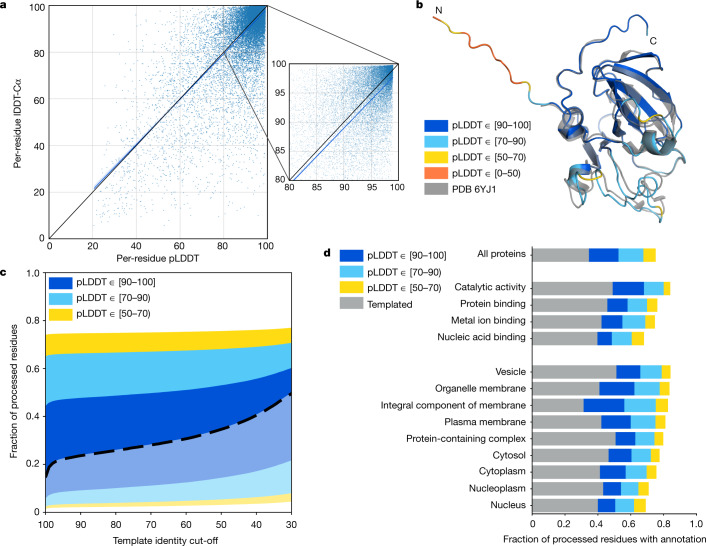
Protein structures can provide invaluable information, both for reasoning about biological processes and for enabling interventions such as structure-based drug development or targeted mutagenesis. After decades of effort, 17% of the total residues in human protein sequences are covered by an experimentally determined structure 1 . Here we markedly expand the structural coverage of the proteome by applying the state-of-the-art machine learning method, AlphaFold 2 , at a scale that covers almost the entire human proteome (98.5% of human proteins). The resulting dataset covers 58% of residues with a confident prediction, of which a subset (36% of all residues) have very high confidence. We introduce several metrics developed by building on the AlphaFold model and use them to interpret the dataset, identifying strong multi-domain predictions as well as regions that are likely to be disordered. Finally, we provide some case studies to illustrate how high-quality predictions could be used to generate biological hypotheses. We are making our predictions freely available to the community and anticipate that routine large-scale and high-accuracy structure prediction will become an important tool that will allow new questions to be addressed from a structural perspective.
Overview
CoChat Summary
TL;DR
AlphaFold2 was applied to 98.5% of human proteins, producing confident predictions for 58% of residues and very high confidence for 36% of all residues. The paper introduces pLDDT, pTM and an experimentally resolved head to interpret the dataset, presents case studies, and releases predictions freely.
Key findings
- The dataset covers 98.5% of human proteins with full-chain predictions, amounting to 10,537,122 residues (92.5% of residues); 58.0% of residues were predicted confidently (pLDDT > 70), and 35.7% of total residues fell in the highest accuracy band (pLDDT > 90), double the residues covered by experimental structures.
- At the per-protein level, 43.8% of proteins had a confident prediction on at least three quarters of their sequence, and 1,290 proteins contained a substantial region (>200 residues) with pLDDT ≥ 70 and no good template.
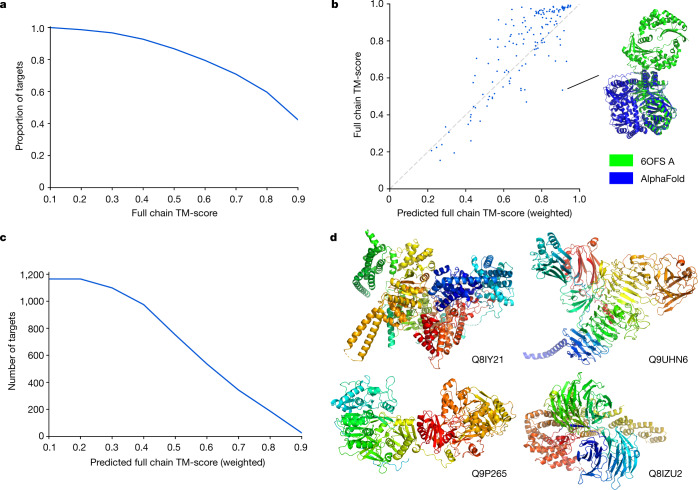
- On a held-out set of long PDB chains (n = 151), 70% of predictions had a TM-score > 0.7; pTM correlated with actual TM-score at Pearson’s r = 0.84, and among human proteins enriched for novel multidomain predictions, 187 had pTM > 0.8 and 343 had pTM > 0.7.
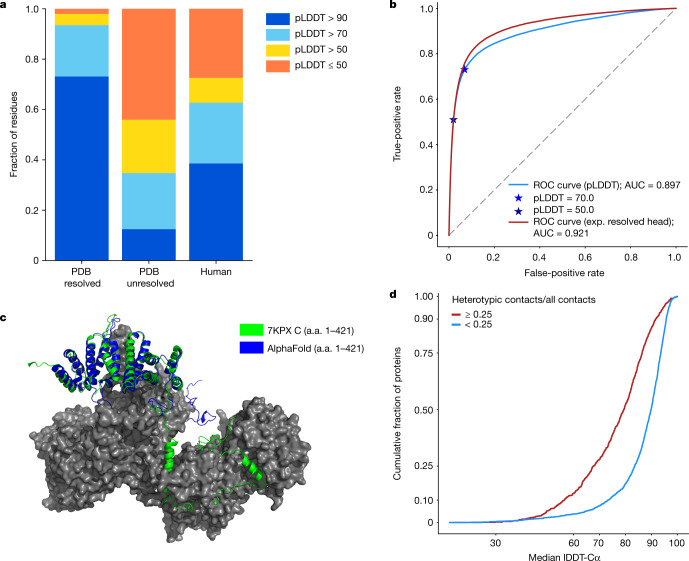
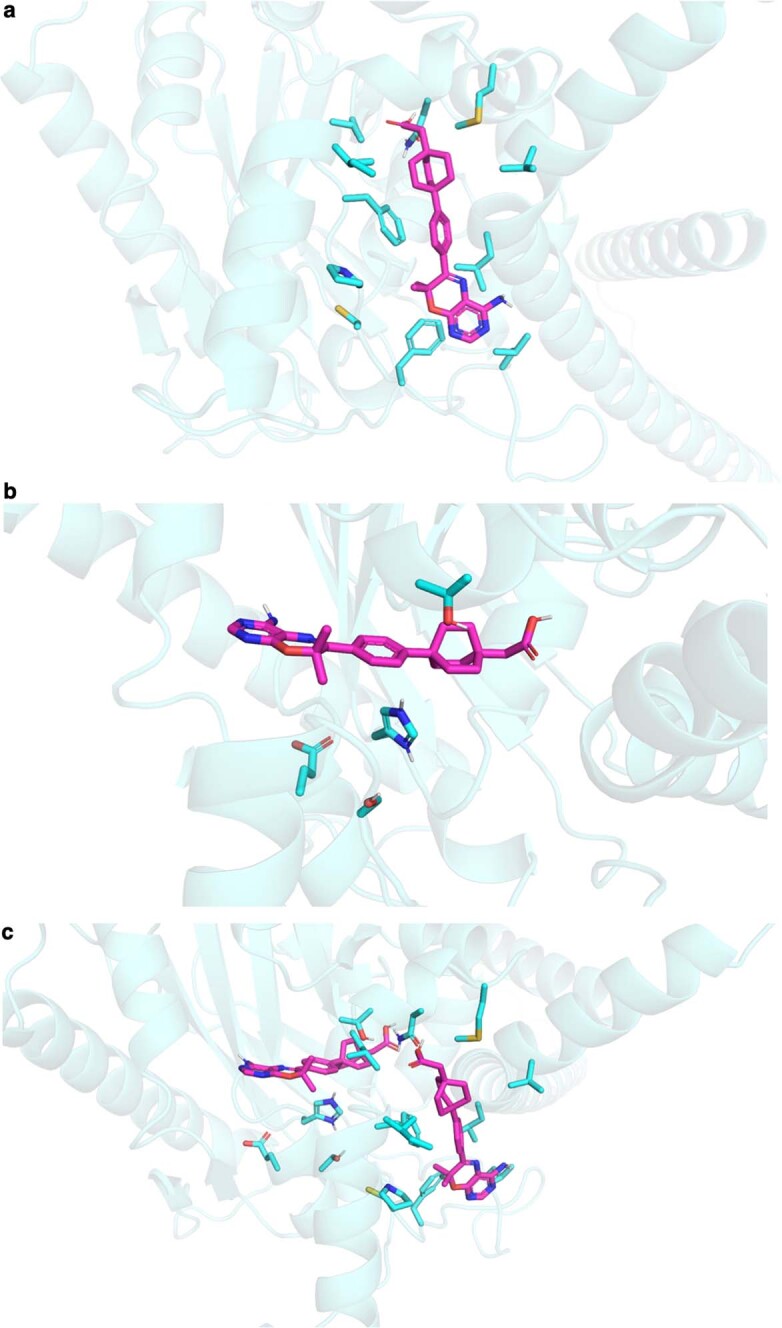
- pLDDT performed as a competitive disorder predictor on the CAID benchmark with AUC 0.897, while the experimentally resolved head achieved AUC 0.921; case studies proposed mechanistic hypotheses for G6Pase-α, DGAT2 and wolframin.
Methods
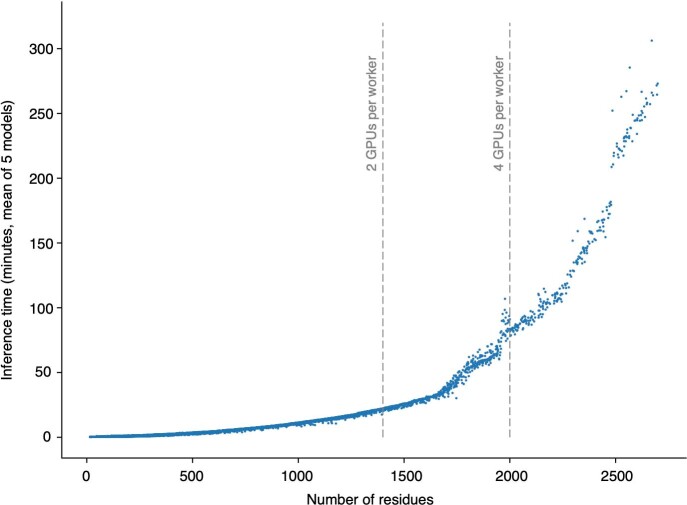
- AlphaFold2 was applied to the UniProt human reference proteome (release 2021_02), attempting all sequences of 16–2,700 amino acids and excluding residue codes B, J, O, U, Z or X; the pipeline used MSA construction, template search, inference with five models, model ranking by mean pLDDT, and constrained relaxation, with Reduced BFD and reduced ensembling.
- Evaluation used a recent PDB dataset of 12,494 chains, CAMEO targets from 21 March 2020 to 13 March 2021, and the CAID Disprot-PDB benchmark; metrics included pLDDT, pTM, the experimentally resolved head, TM-score, lDDT-Cα and AUC.
- Case-study analyses used PyMOL, P2Rank, AutoDockTools, AutoDock Vina and TM-align; inference for the human proteome used 930 GPU days, with an estimated 510 core days for other pipeline stages from scratch.
Limitations
- The paper states that low-confidence regions may reflect intrinsic disorder or regions structured only in complex, and that some proportion of proteins without confident predictions will be genuine failures where a fixed structure exists but AlphaFold does not predict it.
- The paper states that inter-domain accuracy is expected to be lower than within-domain accuracy, that some multidomain proteins may have mobile domains with no fixed packing, and that the case-study biological hypotheses require experimental confirmation.
- Evident from the text: predictions are single-chain and exclude sequences longer than 2,700 residues, so complex-dependent structure and larger proteins are not directly addressed.
Model-written summary. Check it against the paper before relying on it.
Integrity signals
Registry
Cites
Statistics
Figures
![Extended Data Fig. 7 Relationship between sequence length and run time for the non-inference stages of the pipeline. On the basis of 240 human protein sequences, chosen by stratified sampling from the length buckets: [16, 500), [500, 1,000), [1,000, 1,500), [1,500, 2,000), [2,000, 2,500) and [2,500, 2,700]. The relax plot shows five times more points, since five relaxed models are generated per protein. Coefficients for the quadratic lines of best fit were computed with Numpy polyfit.](https://figures.cochat.ai/paper-figures/c9bdcad64694429b95a292e248c7f05a/highly-accurate-protein-structure-prediction-for-the-human-proteome-figure-11.jpg)
Verification
Claims the paper makes
14 Valid · 1 Not valid · 5 Not checked · 44 Own results and interpretations
The cited sources support only part of this claim — read each source’s verdict below.
In the paper
“This system used a completely different model from our CASP13 entry31, and demonstrated a considerable improvement over previous methods in terms of providing routinely high accuracy29,30.”
§ Highly accurate protein structure prediction for the human proteome > Main
What the sources say
- Partly supportedcites [29] Kryshtafovych A Schwede T Topf M Fidelis K Moult J Critical assessment of methods of protein structure prediction (CASP)-round XIII Proteins 2019 87 1011 1020 10.1002/prot.25823 31589781 PMC6927249 sourceExperimental — accuracy not yet measured
The PROGRESS IN CASP13 section reports a dramatic improvement in model accuracy over earlier CASP rounds, and TEMPLATE FREE MODELING says DeepMind’s A7D group had the most accurate results overall. Those passages concern CASP13 methods, not the different system in the citing sentence; they do not establish that AlphaFold2 routinely achieved high accuracy. (LLM, conf=0.84)
- Supportedcites [30] Pereira, J. et al. High-accuracy protein structure prediction in CASP14. Proteins10.1002/prot.26171 (2021). 34218458 source
The Abstract reports a large leap in high accuracy due to AF2. The Conclusions say AF2 substantially outperformed its predecessor and produced the best models for 89 of 97 CASP14 targets, supporting both the improvement and its routine high accuracy. (LLM, conf=0.94)
boostedstates a cause- Asserted: passes — The authors put it forward as true.
- Checkable: passes — It can be checked against evidence.
- Load-bearing: passes — The paper’s conclusions depend on it.
- Based: passes — The paper gives a reason why it holds.
- Partly supported
Every source the paper cites for this claim was checked and supports it.
In the paper
“We note that the accuracy of AlphaFold was validated in CASP142, which focuses on challenging proteins that are dissimilar to structures already available in the PDB.”
§ Highly accurate protein structure prediction for the human proteome > Model confidence and added coverage
What the sources say
- Supportedcites [2] Jumper, J. et al. Highly accurate protein structure prediction with AlphaFold. Nature10.1038/s41586-021-03819-2 (2021). PMC8371605 34265844 source
The paper’s CASP14 assessment passage (section and page not provided in our copy) says AlphaFold was entered into CASP14, describes it as a blind accuracy assessment, and reports that AlphaFold’s structures were substantially more accurate than competing methods. This supports the attributed claim that its accuracy was validated in CASP14. (LLM, conf=0.94)
plain- Asserted: passes — The authors put it forward as true.
- Checkable: passes — It can be checked against evidence.
- Load-bearing: unclear — It is unclear whether the paper’s conclusions depend on it.
- Based: passes — The paper gives a reason why it holds.
- Supported
The cited sources support only part of this claim — read each source’s verdict below.
In the paper
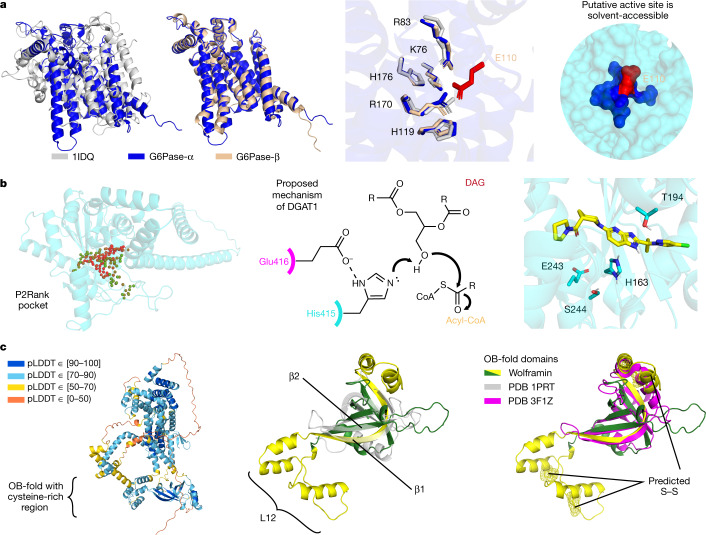
“Despite being the most similar chain, 3F1Z lacks the cysteines that are present in wolframin, which could form disulfide cross-links in the endoplasmic reticulum59.”
§ Highly accurate protein structure prediction for the human proteome > Highlighted predictions > Wolframin
What the sources say
- Partly supportedcites [59] Fass D Thorpe C Chemistry and enzymology of disulfide cross-linking in proteins Chem. Rev. 2018 118 1169 1198 10.1021/acs.chemrev.7b00123 28699750 PMC5808910 sourceExperimental — accuracy not yet measured
Section 2, “Which Proteins Contain Disulfides” (page unavailable), says that proteins in or passing through the ER can have cysteines positioned to form disulfide bonds. It does not address wolframin, 3F1Z, or whether their cysteine residues differ, so it supports only the general possibility of ER disulfide cross-linking. (LLM, conf=0.86)
hedged- Asserted: passes — The authors put it forward as true.
- Checkable: passes — It can be checked against evidence.
- Load-bearing: unclear — It is unclear whether the paper’s conclusions depend on it.
- Based: passes — The paper gives a reason why it holds.
- Partly supported
The sources with a verdict support this claim; the rest weren’t checked yet, have no full text we could read, or their verdicts aren’t rated yet.
In the paper
“Comparing our prediction for this region (median pLDDT of 86.0) to existing PDB chains using TM-align42,57 identified 3F1Z58 as the most similar known chain (TM-score of 0.472) (Fig. 3c, magenta).”
§ Highly accurate protein structure prediction for the human proteome > Highlighted predictions > Wolframin
What the sources say
- Not checked — no full text of the sourcecites [42] Zhang Y Skolnick J Scoring function for automated assessment of protein structure template quality Proteins 2004 57 702 710 10.1002/prot.20264 15476259 source
- Supportedcites [57] Zhang Y Skolnick J TM-align: a protein structure alignment algorithm based on the TM-score Nucleic Acids Res. 2005 33 2302 2309 10.1093/nar/gki524 15849316 PMC1084323 source
The citation is attached to “using TM-align,” identifying the method used by the citing authors, not attributing their 3F1Z match or TM-score to this source. The source’s Results (Benchmark test; page unavailable) describes TM-align as a tool for comparing protein structures and reporting TM-scores. (LLM, conf=0.93)
- Supportedcites [58] Das D The structure of KPN03535 (gi|152972051), a novel putative lipoprotein from Klebsiella pneumoniae, reveals an OB-fold Acta Crystallogr. F 2010 66 1254 1260 10.1107/S1744309109018168 PMC2954213 20944219 source
The citation is attached to 3F1Z, identifying the PDB chain used in the citing authors’ comparison. The source paper’s Materials and methods section states that its KPN03535 structure was deposited under accession code 3f1z; the pLDDT and TM-score describe the citing authors’ own analysis, not a result attributed to this source. (LLM, conf=0.93)
plainstates an association- Asserted: passes — The authors put it forward as true.
- Checkable: passes — It can be checked against evidence.
- Load-bearing: unclear — It is unclear whether the paper’s conclusions depend on it.
- Based: passes — The paper gives a reason why it holds.
Every source the paper cites for this claim was checked and supports it.
In the paper
“A recent evolutionary analysis suggested domains for wolframin, which our prediction largely supports55.”
§ Highly accurate protein structure prediction for the human proteome > Highlighted predictions > Wolframin
What the sources say
- Supportedcites [55] Schäffer DE Iyer LM Burroughs AM Aravind L Functional innovation in the evolution of the calcium-dependent system of the eukaryotic endoplasmic reticulum Front. Genet. 2020 11 34 10.3389/fgene.2020.00034 32117448 PMC7016017 source
The Results section, “Domain Architectural Anatomy and Functional Analysis of the Wolframin Protein,” reports the paper’s proposed domain assignments for wolframin, including Sel1-like repeats, an EF-hand region, and an OB-fold domain (Figure 4A). The citing authors’ statement that their own prediction largely supports those assignments is not a finding attributed to this source. (LLM, conf=0.93)
plainstates an association- Asserted: passes — The authors put it forward as true.
- Checkable: passes — It can be checked against evidence.
- Load-bearing: unclear — It is unclear whether the paper’s conclusions depend on it.
- Based: passes — The paper gives a reason why it holds.
- Supported
36 more claims · 4 with their cited sources checked
Create a free account to see all 64 claims and every source verdict.
- It may state two separate claims as one. 13
- Probably not a substantial claim. 12
Claims other papers make about this one
Each is checked against this paper’s own text: does it say what the citing paper says it does?
The source backs part of the claim, not all of it — or backs it for a different population, condition or comparison.
In the citing paper
“While AF2 performs exceptionally well on these types of folds on average”
From The power and pitfalls of AlphaFold2 for structure prediction beyond rigid globular proteins (2024) · cites this paper as [5]
Experimental — accuracy not yet measuredThe source backs part of the claim, not all of it — or backs it for a different population, condition or comparison.
In the citing paper
“For the majority of globular proteins, AF2 provides accurate, reliable models with high pLDDT (> 70) or low PAE values (< 5 Å) highlighting confidence in the prediction of the position of the atomic coordinates, which match experimentally determined native structures5,17,23,59”
From The power and pitfalls of AlphaFold2 for structure prediction beyond rigid globular proteins (2024) · cites this paper as [5]
Experimental — accuracy not yet measuredThe source backs part of the claim, not all of it — or backs it for a different population, condition or comparison.
In the citing paper
“The lower confidence bands appear to correlate well with backbone flexibility and intrinsic disorder (13) (Figure 2).”
From AlphaFold Protein Structure Database: massively expanding the structural coverage of protein-sequence space with high-accuracy models (2022) · cites this paper as [13]
Experimental — accuracy not yet measuredThe source backs part of the claim, not all of it — or backs it for a different population, condition or comparison.
In the citing paper
“One of the major insights leveraged by AlphaFold 1,2 comes from the use of evolutionary covariations that can be extracted from large-scale multiple sequence alignments.[49][50][51][52][53][54]”
From AlphaFold and Implications for Intrinsically Disordered Proteins (2021) · cites this paper as [2]
Experimental — accuracy not yet measuredThe source backs part of the claim, not all of it — or backs it for a different population, condition or comparison.
In the citing paper
“DeepMind’s AlphaFold2 success in sequence-based protein structure prediction,4 as well as the RoseTTAFold70 open-source counterpart, and the publicly available AlphaFold2 prediction of all human proteins203 are major steps that benefit the scientific community.”
From AlphaFold, Artificial Intelligence (AI), and Allostery (2022) · cites this paper as [203]
Experimental — accuracy not yet measured
16 more claims about this paper
Create a free account to see every claim other papers make about this one.
Citations
Cites
Highly accurate protein structure prediction with AlphaFold
Jumper, J., Evans, R., Pritzel, A., Green, T., Figurnov, M., Ronneberger, O., Tunyasuvunakool, K., Bates, R., Žídek, A., Potapenko, A., et al. (2021) · Nature · doi:10.1038/s41586-021-03819-2 · Cited by 43,764 · cited 1×
“[16, 500), [500, 1,000), [1,000, 1,500), [1,500, 2,000), [2,000, 2,500) and [2,500, 2,700].”
Self-citationGene Ontology: tool for the unification of biology
Ashburner, M., Ball, C. A., Blake, J. A., Botstein, D., Butler, H., Cherry, J. M., Davis, A. P., Dolinski, K., Dwight, S. S., Eppig, J. T., et al. (2000) · Nature Genetics · doi:10.1038/75556 · Cited by 43,206
Trott, O., & Olson, A. J. (2010) · Journal of Computational Chemistry · doi:10.1002/jcc.21334 · Cited by 38,412
AutoDock4 and AutoDockTools4: Automated docking with selective receptor flexibility
Morris, G. M., Huey, R., Lindstrom, W., Sanner, M. F., Belew, R. K., Goodsell, D. S., & Olson, A. J. (2009) · Journal of Computational Chemistry · doi:10.1002/jcc.21256 · Cited by 25,486
Initial sequencing and analysis of the human genome
International Human Genome Sequencing Consortium, Whitehead Institute for Biomedical Research, C. F. G. R., Lander, E. S., Linton, L. M., Birren, B., Nusbaum, C., Zody, M. C., Baldwin, J., Devon, K., Dewar, K., et al. (2001) · Nature · doi:10.1038/35057062 · Cited by 24,216
Self-citationThe sequence of the human genome
Venter, J. C., Adams, M. D., Myers, E. W., Li, P. W., Mural, R. J., Sutton, G. G., Smith, H. O., Yandell, M., Evans, C. A., Holt, R. A., et al. (2001) · Science · doi:10.1126/science.1058040 · Cited by 13,909
SWISS-MODEL: homology modelling of protein structures and complexes
Waterhouse, A., Bertoni, M., Bienert, S., Studer, G., Tauriello, G., Gumienny, R., Heer, F. T., de Beer, T. A. P., Rempfer, C., Bordoli, L., et al. (2018) · Nucleic Acids Research · doi:10.1093/nar/gky427 · Cited by 13,067
Pfam: The protein families database in 2021
Mistry, J., Chuguransky, S., Williams, L., Qureshi, M., Salazar, G. A., Sonnhammer, E. L. L., Tosatto, S. C. E., Paladin, L., Raj, S., Richardson, L. J., et al. (2021) · Nucleic Acids Research · doi:10.1093/nar/gkaa913 · Cited by 7,452
Self-citationUniProt: the universal protein knowledgebase in 2021
The UniProt Consortium, Bateman, A., Martin, M.-J., Orchard, S., Magrane, M., Agivetova, R., Ahmad, S., Alpi, E., Bowler-Barnett, E. H., Britto, R., et al. (2021) · Nucleic Acids Research · doi:10.1093/nar/gkaa1100 · Cited by 6,372
Self-citationThe Gene Ontology Resource: 20 years and still GOing strong
The Gene Ontology Consortium (2019) · Nucleic Acids Research · doi:10.1093/nar/gky1055 · Cited by 4,747
Cited by
Items 901–1,000 of 3,208
Assembly and recognition of keratins: A structural perspective
Yu, B., Kong, D., Cheng, C., Xiang, D., Cao, L., Liu, Y., & He, Y. (2021) · Seminars in Cell and Developmental Biology · doi:10.1016/j.semcdb.2021.09.018 · Cited by 20
Binding mode of brazzein to the taste receptor based on crystal structure and docking simulation
Kim, T.-Y., Woo, E., & Yoon, T.-S. (2022) · Biochemical and Biophysical Research Communications · doi:10.1016/j.bbrc.2022.01.004 · Cited by 22
Targeting GPCRs and Their Signaling as a Therapeutic Option in Melanoma
Raymond, J. H., Aktary, Z., Larue, L., & Delmas, V. (2022) · Cancers · doi:10.3390/cancers14030706 · Cited by 20
Missense Variants Reveal Functional Insights Into the Human ARID Family of Gene Regulators
Deák, G., & Cook, A. G. (2022) · Journal of Molecular Biology · doi:10.1016/j.jmb.2022.167529 · Cited by 20
“A cut-off of > 70 is considered a “generally correct backbone prediction” (52).”
BackgroundPRECOGx: e x ploring GPCR signaling mechanisms with deep protein representations
Matic, M., Singh, G., Carli, F., Rosa, N. D. O., Miglionico, P., Magni, L., Gutkind, J. S., Russell, R. B., Inoue, A., & Raimondi, F. (2022) · Nucleic Acids Research · doi:10.1093/nar/gkac426 · Cited by 24
“ESM was shown to outperform competing methods for protein embeddings (e.g. SeqVec (21) or Unirep (22)) and similar architectures, i.e. Evoformer, form the basis of the groundbreaking protein structure prediction algorithm AlphaFold2 (23).”
BackgroundChallenges in describing the conformation and dynamics of proteins with ambiguous behavior
Roca‐Martínez, J., Lázár, T., Gavaldá-García, J., Bickel, D., Pancsa, R., Dixit, B., Tzavella, K., Ramasamy, P., Sanchez-Fornaris, M., Grau, I., et al. (2022) · Frontiers in Molecular Biosciences · doi:10.3389/fmolb.2022.959956 · Cited by 23
“AlphaFold 2’s mmCIF files for the human proteome were downloaded on 2 September 2021, from the AlphaFold protein structure database (Tunyasuvunakool et al., 2021).”
MethodChinnam, N. B., Syed, A., Hura, G. L., Hammel, M., Tainer, J. A., & Tsutakawa, S. E. (2022) · Methods in enzymology on CD-ROM/Methods in enzymology · doi:10.1016/bs.mie.2022.09.023 · Cited by 21
Beeman, N., Sapre, T., Ong, S., & Yadav, S. (2023) · Science Signaling · doi:10.1126/scisignal.add3269 · Cited by 21
PAQR8 promotes breast cancer recurrence and confers resistance to multiple therapies
Chen, S., Paul, M. R., Sterner, C. J., Belka, G. K., Wang, D., Xu, P. J., Sreekumar, A., Pan, T.-C., Pant, D. K., Makhlin, I., et al. (2023) · Breast Cancer Research · doi:10.1186/s13058-022-01559-3 · Cited by 25
“In this regard, recent computational predictions suggest that PAQR8 may possess eight transmembrane domains [70, 71], unlike the 7-transmembrane structure of ceramidases and GPCRs, such that the additional C-terminal transmembrane domain could potentially couple to a Gi protein.”
BackgroundCadmium contamination in food crops: Risk assessment and control in smart age
Huili, Y., Hezifan, Z., Shuangnan, H., Wang, L., Xu, W., Ma, M., Yongming, L., & He, Z. (2023) · Critical Reviews in Environmental Science and Technology · doi:10.1080/10643389.2023.2174770 · Cited by 22
Characterization of a unique polysaccharide monooxygenase from the plant pathogen Magnaporthe oryzae
Martinez-D’Alto, A., Xia, Y., Detomasi, T. C., Sayler, R. I., Thomas, W. C., Talbot, N. J., & Marletta, M. A. (2023) · Proceedings of the National Academy of Sciences · doi:10.1073/pnas.2215426120 · Cited by 26
Wide and deep neural networks achieve consistency for classification
Radhakrishnan, A., Belkin, M., & Uhler, C. (2023) · Proceedings of the National Academy of Sciences · doi:10.1073/pnas.2208779120 · Cited by 38
“Deep learning has produced state-of-the-art results across several application domains including computer vision (1), natural language processing (2), and biology (3).”
Li, D., Ru, Y., Chen, Z., Dong, C., Dong, Y., & Liu, J. (2023) · APL Machine Learning · doi:10.1063/5.0131067 · Cited by 22
MIRO‐1 interacts with VDAC‐1 to regulate mitochondrial membrane potential in Caenorhabditis elegans
Ren, X., Zhou, H., Sun, Y., Fu, H., Ran, Y., Yang, B., Yang, F., Björklund, M., & Xu, S. (2023) · EMBO Reports · doi:10.15252/embr.202256297 · Cited by 21
Duan, P., Long, M., Zhang, X., Liu, Z., You, J., Pan, X., Fu, W., Xu, M., Yang, T., Shao, M., et al. (2023) · Bioresource Technology · doi:10.1016/j.biortech.2023.129399 · Cited by 23
Zhang, X., Weiß, T., Cheng, M. H., Chen, S., Ambrosius, C. K., Czerniak, A. S., Li, K., Feng, M., Bahar, İ., Beck‐Sickinger, A. G., et al. (2023) · PLoS Biology · doi:10.1371/journal.pbio.3002188 · Cited by 29
Zhao, L., An, Y., Zhao, N. J., Gao, H., Zhang, W., Gong, Z., Liu, X., Zhao, B., Liang, Z., Tang, C., et al. (2024) · Nature Communications · doi:10.1038/s41467-024-52558-1 · Cited by 23
“Then, we expanded the structural coverage by applying the recently reported highly accurate protein structure prediction tool AlphaFold2 (AF) (32).”
Missense variants reveal functional insights into the human ARID family of gene regulators
(2021) · doi:10.1101/2021.11.17.468850 · Cited by 20
Tollefson, M. R., Gogal, R. A., Weaver, A. M., Schaefer, A. M., Marini, R. J., Azaiez, H., Kolbe, D. L., Wang, D., Weaver, A. E., Casavant, T. L., et al. (2023) · doi:10.21203/rs.3.rs-2508462/v1 · Cited by 20
They all rock: A systematic comparison of conformational movements in LeuT-fold transporters
Licht, J. A., Berry, S. P., Gutierrez, M. A., & Gaudet, R. (2024) · Structure · doi:10.1016/j.str.2024.06.015 · Cited by 19
A comprehensive review of artificial intelligence for pharmacology research
Li, B., Tan, K., Lao, A. R., Wang, H., Zheng, H., & Zhang, L. (2024) · Frontiers in Genetics · doi:10.3389/fgene.2024.1450529 · Cited by 31
“A comparison that may be inappropriate but illustrates the signi fi cance is: Tunyasuvunakool et al. (Tunyasuvunakool et al., 2021) successfully predicted 98.5% of human proteins by AlphaFold, and 58% of the residues had con fi dent prediction results and 36% of all residues predictions had very high con fi dence.”
BackgroundInfluentialEngineering and structures of Crimean-Congo hemorrhagic fever virus glycoprotein complexes
McFadden, E., Monticelli, S. R., Wang, A., Ramamohan, A. R., Batchelor, T. G., Kuehne, A. I., Bakken, R. R., Tse, A. L., Chandran, K., Herbert, A. S., et al. (2024) · Cell · doi:10.1016/j.cell.2024.11.008 · Cited by 34
“21, 22 For example, hantavirus Gn contains three domains within the ‘‘head’’ of Gn that are predominantly composed of b -strands (domain A, b -ribbon domain, and domain B).”
InfluentialHu, W., & Ohue, M. (2025) · Computational and Structural Biotechnology Journal · doi:10.1016/j.csbj.2025.01.022 · Cited by 26
Enhancing clinical trial outcome prediction with artificial intelligence: a systematic review
Qian, L., Lu, X., Haris, P. I., Zhu, J., Li, S., & Yang, Y. (2025) · Drug Discovery Today · doi:10.1016/j.drudis.2025.104332 · Cited by 29
Jeyaraj, G., Rajendran, A. K., Sathishkumar, K., Almutairi, B. O., Vadivelu, A., Chokkakula, S., Tu, Y., & Xie, W. (2025) · Frontiers in Molecular Biosciences · doi:10.3389/fmolb.2025.1688455 · Cited by 25
“Quantitative benchmarks show that for well-ordered protein domains, AlphaFold2 achieves atomic-level accuracy (RMSD <1.5 Å), but for IDRs and flexible linkers, RMSD often exceeds 5–10 Å and structural predictions can be unreliable or misleading (Robin et al., 2021; Tunyasuvunakool et al., 2021).”
InfluentialGeneralizable and scalable protein stability prediction with rewired protein generative models
Li, Z., & Luo, Y. (2025) · Nature Communications · doi:10.1038/s41467-025-67609-4 · Cited by 37
“AlphaFold2 (AF2)-predicted structures of the mapped human proteins and their associated residue-level predicted Local Distance Difference Test (pLDDT) scores were retrieved from the AlphaFold Protein Structure Database 120 .”
Protein language models trained on biophysical dynamics inform mutation effects
Hou, C., Zhao, H., & Shen, Y. (2026) · Proceedings of the National Academy of Sciences · doi:10.1073/pnas.2530466123 · Cited by 30
Hayne, C. K., Lewis, T. A., & Stanley, R. E. (2022) · Wiley Interdisciplinary Reviews - RNA · doi:10.1002/wrna.1717 · Cited by 21
“Progress in 3D structure prediction (Jumper et al., 2021; Tunyasuvunakool et al., 2021) coupled with homology to the archaeal TSEN complex allowed us to build a 3D model for the human TSEN complex.”
BackgroundMethods for the directed evolution of biomolecular interactions
Xie, V. C., Styles, M. J., & Dickinson, B. C. (2022) · Trends in Biochemical Sciences · doi:10.1016/j.tibs.2022.01.001 · Cited by 20
Padmanabhan, S., Monera-Girona, A. J., Pajares-Martínez, E., Bastida‐Martínez, E., Navalón, I. D. R., Pérez‐Castaño, R., Galbis-Martínez, M., Fontes, M., & Arnanz, M. E. (2022) · Frontiers in Cell and Developmental Biology · doi:10.3389/fcell.2022.884689 · Cited by 22
“of human TMEM189 (Figure 6) publicly available for nearly a year now (Tunyasuvunakool et al., 2021), reveals the four transmembrane helix topology experimentally demonstrated for CarF (Galbis-Martínez et al.”
BackgroundAn ensemble 3D deep-learning model to predict protein metal-binding site
Mohamadi, A., Cheng, T., Jin, L., Wang, J., Sun, H., & Koohi‐Moghadam, M. (2022) · Cell Reports Physical Science · doi:10.1016/j.xcrp.2022.101046 · Cited by 22
Hiyamizu, S., Qiu, H., Vuolo, L., Stevenson, N. L., Shak, C., Heesom, K. J., Hamada, Y., Tsurumi, Y., Chiba, S., Katoh, Y., et al. (2023) · Journal of Cell Science · doi:10.1242/jcs.260462 · Cited by 21
Targeting in silico GPCR conformations with ultra-large library screening for hit discovery
Sala, D., Batebi, H., Ledwitch, K., Hildebrand, P. W., & Meiler, J. (2023) · Trends in Pharmacological Sciences · doi:10.1016/j.tips.2022.12.006 · Cited by 19
In silico design of a broad-spectrum multiepitope vaccine against influenza virus
Yuan, L., Li, X., Li, M., Bi, R., Li, Y., Song, J., Li, W., Yan, M., Luo, H., Sun, C., et al. (2023) · International Journal of Biological Macromolecules · doi:10.1016/j.ijbiomac.2023.128071 · Cited by 23
Trace gas oxidation sustains energy needs of a thermophilic archaeon at suboptimal temperatures
Leung, P. M., Grinter, R., Tudor-Matthew, E., Lingford, J. P., Jimenez, L., Lee, H.-C., Milton, M., Hanchapola, I., Tanuwidjaya, E., Kropp, A., et al. (2024) · Nature Communications · doi:10.1038/s41467-024-47324-2 · Cited by 22
“1.1 implemented on the MASSIVE M3 computing cluster 58,94 .”
MethodInfluentialUzoeto, H. O., Cosmas, S., Bakare, T. T., & Durojaye, O. A. (2024) · Beni-Suef University Journal of Basic and Applied Sciences · doi:10.1186/s43088-024-00503-y · Cited by 28
“Among these advancements stand the illustrious AlphaFold2, renowned for its uncanny ability to accurately predict protein structures solely from amino acid sequences, employing an attention-based transformer architecture [8].”
BackgroundAlphaFold2 structures template ligand discoveryPreprint
Lyu, J., Kapolka, N. J., Gumpper, R. H., Alon, A., Wang, L., Jain, M. K., Barros-Álvarez, X., Sakamoto, K., Kim, Y., DiBerto, J. F., et al. (2023) · bioRxiv (Cold Spring Harbor Laboratory) · doi:10.1101/2023.12.20.572662 · Cited by 18
ESM ‐scan—A tool to guide amino acid substitutions
Totaro, M. G., Vide, U., Zausinger, R., Winkler, A., & Oberdorfer, G. (2024) · Protein Science · doi:10.1002/pro.5221 · Cited by 19
“Arguably, the most well-known example of a deep learning model in biosciences is AlphaFold2, widely acknowledged as a transformative breakthrough in protein structural biology (Jumper et al. 2021, Tunyasuvunakool et al. 2021).”
Badonyi, M., & Marsh, J. A. (2025) · Nature Communications · doi:10.1038/s41467-025-63234-3 · Cited by 19
“We computed EDC and ΔΔ G rank based on the predicted human structures downloaded from the AlphaFold database 77,113 (AFDB).”
ESM-Scan - a tool to guide amino acid substitutions
(2023) · doi:10.1101/2023.12.12.571273 · Cited by 19
Badonyi, M., & Marsh, J. A. (2025) · doi:10.1101/2025.03.13.642984 · Cited by 19
They all rock: A systematic comparison of conformational movements in LeuT-fold transporters
Licht, J. A., Berry, S. P., Gutierrez, M. A., & Gaudet, R. (2024) · doi:10.1101/2024.01.24.577062 · Cited by 19
Cryo-EM structures of apo-APC/C and APC/CCDH1:EMI1 complexes provide insights into APC/C regulation
Höfler, A., Yu, J., Yang, J., Zhang, Z., Chang, L., McLaughlin, S. H., Grime, G. W., Garman, E. F., Boland, A., & Barford, D. (2024) · Nature Communications · doi:10.1038/s41467-024-54398-5 · Cited by 18
Rickgauer, J. P., Choi, H., Moore, A. S., Denk, W. T., & Lippincott‐Schwartz, J. (2024) · Molecular Cell · doi:10.1016/j.molcel.2024.11.003 · Cited by 24
García‐Barberán, V., del Pulgar, M. E. G., Guamán, H. M., & Benito‐Martín, A. (2025) · Extracellular Vesicles and Circulating Nucleic Acids · doi:10.20517/evcna.2024.51 · Cited by 26
Enhanced vitamin A production by engineering transporters, ATP and precursor supply
Zhang, Y., Hu, Q., Yu, H., & Ye, L. (2025) · BioDesign Research · doi:10.1016/j.bidere.2025.100023 · Cited by 20
“The crystal structure of the PDR transporter Pdr5p utilized for molecular docking was obtained from the PDB database (https://www.rcsb. org/) [39,40], while the rest were predicted structures from the Alpha-Fold protein structure database (https://alphafold.ebi.ac.uk/) [41].”
Molecular dynamics-driven drug discovery
Yan, D., Ma, Y., Chen, X., Shi, D., & Wang, Q. (2025) · Physical Chemistry Chemical Physics · doi:10.1039/d5cp00380f · Cited by 31
RBPseg: Toward a complete phage tail fiber structure atlas
Klein-Sousa, V., Roa-Eguiara, A., Kielkopf, C. S., Sofos, N., & Taylor, N. M. I. (2025) · Science Advances · doi:10.1126/sciadv.adv0870 · Cited by 26
“To test the general applicability of the RBPseg fractioning module core function (the sDp function), we used a dataset of a thousand randomly selected protein models from the AlphaFold database ( 33 ) for Escherichia coli (fig.”
AlphaFold: A Special Issue and A Special Time for Protein Science
Serpell, L. C., Radford, S. E., & Otzen, D. E. (2021) · Journal of Molecular Biology · doi:10.1016/j.jmb.2021.167231 · Cited by 23
Chitin deacetylase: from molecular structure to practical applications
Huang, Z., Lv, X., Sun, G., Mao, X., Lu, W., Liu, Y., Li, J., Du, G., & Liu, L. (2022) · Systems Microbiology and Biomanufacturing · doi:10.1007/s43393-022-00077-9 · Cited by 20
“Currently, the appearance of Alphafold 2 [85] greatly speeds up the analysis process of CDAs crystal structure.”
BackgroundErythropoietin Interacts with Specific S100 Proteins
Kazakov, A. S., Deryusheva, E. I., Sokolov, A. S., Permyakova, M. E., Андреевна, Л. Е., Rastrygina, V. A., Uversky, V. N., Permyakov, E. A., & Permyakov, S. E. (2022) · Biomolecules · doi:10.3390/biom12010120 · Cited by 19
“In fact, it was pointed out in the study reporting the application of AlphaFold for the highly accurate protein structure prediction for the human proteome, that a considerable percentage of low-confidence residues in structures generated by this algorithm may be explained by some form of disorder, including both cons…”
BackgroundA Multisensory Network Drives Nuclear Mechanoadaptation
Echarri, A. (2022) · Biomolecules · doi:10.3390/biom12030404 · Cited by 21
“Lamin A, C and B-type lamins, despite their sequence and structural similarities [76], form distinct filamentous networks within lamina [77].”
BackgroundSi, Y., & Yan, C. (2022) · Briefings in Bioinformatics · doi:10.1093/bib/bbac208 · Cited by 17
Powering morphogenesis: multiscale challenges at the interface of cell adhesion and the cytoskeleton
Fernández‐González, R., & Peifer, M. A. (2022) · Molecular Biology of the Cell · doi:10.1091/mbc.e21-09-0452 · Cited by 19
“…artificial intelligence (AI)-driven approaches have revolutionized the ability to predict protein structure de novo (Baek et al., 2021; Jumper et al., 2021), and delivered databases of predicted structures of all proteins in multiple model animals including humans (Tunyasuvunakool et al., 2021).”
BackgroundThe Use of AlphaFold for In Silico Exploration of Drug Targets in the Parasite Trypanosoma cruzi
Ros-Lucas, A., Martínez-Peinado, N., Bastida, J., Gascón, J., & Alonso-Padilla, J. (2022) · Frontiers in Cellular and Infection Microbiology · doi:10.3389/fcimb.2022.944748 · Cited by 25
“…the predicted Local Distance Difference Test (pLDDT) (Mariani et al., 2013) score of each a -carbon was extracted from the PDB fi les, and the proportion of residues with a pLDDT score above 70 (described as the threshold for good backbone prediction) (Tunyasuvunakool et al., 2021) was calculated.”
BackgroundMethodBruley, A., Bitard‐Feildel, T., Callebaut, I., & Duprat, É. (2022) · Proteins Structure Function and Bioinformatics · doi:10.1002/prot.26441 · Cited by 19
“this scoring scheme, we analyzed the per-residue confidence (pLDDT) scores of AF2 structural predictions in 21 reference proteomes, for species ranging from prokaryotes and archaea to unicellular and multicellular eukaryotes with different lifestyles.(29,47) Our analysis provides new elements to distinguish cases wher…”
MethodHinge region mediates signal transmission of luteinizing hormone and chorionic gonadotropin receptor
He, X., Duan, J., Ji, Y., Zhao, L., Jiang, H., Jiang, Y., Xu, H. E., & Cheng, X. (2022) · Computational and Structural Biotechnology Journal · doi:10.1016/j.csbj.2022.11.039 · Cited by 20
“Sectors are shown as sticks on the structure predicted by AlphaFold2 [35].”
BackgroundMethodComputational design of constitutively active cGAS
Dowling, Q. M., Volkman, H. E., Gray, E. E., Ovchinnikov, S., Cambier, S., Bera, A. K., Sankaran, B., Johnson, M. R., Bick, M. J., Kang, A., et al. (2023) · Nature Structural & Molecular Biology · doi:10.1038/s41594-022-00862-z · Cited by 22
“…that proteins with widely divergent sequences and functions can have strongly conserved structural features (as demonstrated here for cGAS and MiD51), coupled with recent breakthroughs in accurate structure prediction at the genomic scale 35,36 , should make our method widely applicable.”
Arranz-Solís, D., Warschkau, D., Fabian, B. T., Seeber, F., & Saeij, J. P. J. (2023) · mBio · doi:10.1128/mbio.02868-22 · Cited by 21
“We finally confirmed these assignments using other recently described algorithms, including flDPnn (62) and Metapredict, a consensus predictor of intrinsic disorder (63) and which also calculates pLDDT, another score of disorder based on AlphaFold2’s structure prediction algorithm (64) (Fig.”
MethodZhang, L., Yao, G., Mao, Z., Song, M., Zhao, R., Zhang, X., Chen, C., Zhang, H., Liu, Y., Wang, G., et al. (2023) · Journal of Hazardous Materials · doi:10.1016/j.jhazmat.2023.131155 · Cited by 20
Zhang, F., Wang, Y., Yue, J., et al. (2023) · Science Advances · doi:10.1126/sciadv.adh1418 · Cited by 18
From propensities to patterns to principles in protein folding
Rose, G. D. (2025) · Proteins: Structure, Function, and Bioinformatics · doi:10.1002/prot.26540 · Cited by 18
A ligand-receptor interactome atlas of the zebrafish
(2023) · doi:10.1016/j.isci.2023.107309 · Cited by 18
The net electrostatic potential and hydration of ABCG2 affect substrate transport
Gose, T., Aitken, H. M., Wang, Y., Lynch, J., Rampersaud, E., Fukuda, Y., Wills, M., Baril, S. A., Ford, R. C., Shelat, A. A., et al. (2023) · Nature Communications · doi:10.1038/s41467-023-40610-5 · Cited by 18
“The residues missing from the cryo-EM structure were modelled using the ABCG2 Alphafold structural prediction (AlphaFold Protein Structure Database entry: Q9UNQ0) 33 .”
Meelua, W., Thinkumrob, N., Saparpakorn, P., et al. (2023) · Chemico-Biological Interactions · doi:10.1016/j.cbi.2023.110717 · Cited by 18
Kim, N., Kim, T.-H., Kim, C., Lee, J., Kang, M., Shin, S., Jung, M., Kim, J., Mun, J. Y., Rhee, H., et al. (2023) · Developmental Cell · doi:10.1016/j.devcel.2023.08.030 · Cited by 20
Mechanistic insights into phosphoactivation of SLAC1 in guard cell signaling
Li, Q., Deng, Y., Zhang, X.-Y., Tang, L., Zhang, C., Xu, S.-M., Wang, K., Wang, M.-H., Zhang, X.-H., Su, M., et al. (2024) · Proceedings of the National Academy of Sciences · doi:10.1073/pnas.2323040121 · Cited by 25
“The top five AF models are highly similar, with large portions at high confidence as measured by per residue pre dicted local - distance deviation test (pLDDT) scores (45).”
Zhao, L., Wang, Z., Tan, Y., Ma, J., Huang, W., Zhang, X., Jin, C., Zhang, T., Liu, W., & Yang, Y. (2024) · Cell Reports · doi:10.1016/j.celrep.2024.115039 · Cited by 22
High-throughput discovery of inhibitory protein fragments with AlphaFold
Savinov, A., Swanson, S., Keating, A. E., & Li, G.-W. (2025) · Proceedings of the National Academy of Sciences · doi:10.1073/pnas.2322412122 · Cited by 18
“AlphaFold has already shown promise for predicting binding modes for peptides engaging proteins (24–27), importantly including peptides not present in the training set (24, 27), and has been fruitfully applied to the prediction of protein-protein interactions more broadly (28).”
The accuracy of protein structures in solution determined by AlphaFold and NMR
(2022) · doi:10.1101/2022.01.18.476751 · Cited by 18
Assessing variant effect predictors and disease mechanisms in intrinsically disordered proteins
Fawzy, M., & Marsh, J. A. (2025) · PLOS Computational Biology · doi:10.1371/journal.pcbi.1013400 · Cited by 18
Chau, T. C. Y., Keyser, M. S., Da Silva, J. A., Morris, E. K., Yordanov, T. E., Duscyz, K. P., Paterson, S., Yap, A. S., Hogan, B. M., & Lagendijk, A. K. (2022) · Development · doi:10.1242/dev.200454 · Cited by 18
Evolution of the ribbon-like organization of the Golgi apparatus in animal cells
(2024) · doi:10.1016/j.celrep.2024.113791 · Cited by 18
Kang, H., Han, A.-R., Zhang, A., Jeong, H., Koh, W., Lee, J. M., Lee, H., Jo, H. Y., Maria-Solano, M. A., Bhalla, M., et al. (2024) · Nature Communications · doi:10.1038/s41467-024-49297-8 · Cited by 18
“However, the results of structure prediction with AlphaFold2 32 indicated that the ELD structure of hTMEM87A and hTMEM87B were highly similar (Supplementary Fig.”
MethodA ligand-receptor interactome atlas of the zebrafish
Chodkowski, M., Zieleziński, A., & Anbalagan, S. (2022) · doi:10.1101/2022.12.15.520415 · Cited by 18
(2023) · doi:10.1101/2023.08.31.555674 · Cited by 18
Lee, C. J., Kang, H., Han, A.-R., Zhang, A., Jeong, H., Koh, W., Lee, J. M., Lee, H., Jo, H., Maria-Solano, M. A., et al. (2024) · doi:10.21203/rs.3.rs-4015466/v1 · Cited by 18
Assessing variant effect predictors and disease mechanisms in intrinsically disordered proteins
Fawzy, M., & Marsh, J. A. (2025) · doi:10.1101/2025.04.01.646619 · Cited by 18
High-throughput discovery of inhibitory protein fragments with AlphaFold
Savinov, A., Swanson, S., Keating, A. E., & Li, G.-W. (2023) · doi:10.1101/2023.12.19.572389 · Cited by 18
Chau, T. C., Yordanov, T. E., Silva, J. A. D., Paterson, S., Yap, A. S., Hogan, B. M., & Lagendijk, A. K. (2022) · doi:10.1101/2022.02.01.478747 · Cited by 18
Assessing AF2’s ability to predict structural ensembles of proteins
Riccabona, J. R., Spoendlin, F. C., Fischer, A.-L. M., Loeffler, J. R., Quoika, P. K., Jenkins, T. P., Ferguson, J. A., Smorodina, E., Laustsen, A. H., Greiff, V., et al. (2024) · Structure · doi:10.1016/j.str.2024.09.001 · Cited by 17
Fantini, J., Azzaz, F., Scala, C. D., Aulas, A., Chahinian, H., & Yahi, N. (2025) · Pharmacology & Therapeutics · doi:10.1016/j.pharmthera.2025.108797 · Cited by 22
Engineering Pichia pastoris for Efficient De Novo Synthesis of 2′-Fucosyllactose
Fang, H., Gao, J., Yu, L., Shi, P., & Zhao, C. (2025) · Journal of Agricultural and Food Chemistry · doi:10.1021/acs.jafc.5c00598 · Cited by 19
Zhao, Q., Zhao, H., Guo, L., Zheng, K., Li, Y., Ling, Q., Tang, J. P., Li, Y., & Wang, J. (2025) · Nature Communications · doi:10.1038/s41467-025-61745-7 · Cited by 27
“Furthermore, ColdstartCPI is a highly scalable framework that can further improve predictive performance by integrating pre-trained models of other modalities on compounds (i.e., the 2D graph structure 95 and the 3D geometry 96 ) and proteins (i.e., the 3D structure 19,97,98 ).”
Machine Learning Approaches for Metalloproteins
Yu, Y., Wang, R., & Teo, R. D. (2022) · Molecules · doi:10.3390/molecules27041277 · Cited by 17
Invernizzi, M., Hanemian, M., Keller, J., et al. (2022) · New Phytologist · doi:10.1111/nph.18166 · Cited by 17
A Survey of Biological Data in a Big Data Perspective
Dall’Alba, G., Casa, P. L., de Abreu, F. P., Notari, D. L., & Silva, S. D. Á. E. (2022) · Big Data · doi:10.1089/big.2020.0383 · Cited by 27
“117,118 SVM is a technique used in different biological domains as presented by Refs., 62,63,69,72,119–121 for instance.”
A database of calculated solution parameters for the AlphaFold predicted protein structures
(2022) · doi:10.1038/s41598-022-10607-z · Cited by 17
Santos, R., Ástvaldsson, Á., Pipaliya, S. V., Zumthor, J. P., Dacks, J. B., Svärd, S. G., Hehl, A. B., & Faso, C. (2022) · BMC Biology · doi:10.1186/s12915-022-01402-3 · Cited by 14
“To further investigate the structural analogy of GlACLC to canonical CLCs, we performed in silico modelling of its C-terminal domain using the new standard in ab initio protein structure modelling—AlphaFold—based on deep-learning neural networks [92, 93] (Fig.”
MethodTen quick tips for sequence-based prediction of protein properties using machine learning
Hou, Q., Waury, K., Gogishvili, D., & Feenstra, K. A. (2022) · PLoS Computational Biology · doi:10.1371/journal.pcbi.1010669 · Cited by 24
Artificial intelligence for template-free protein structure prediction: a comprehensive review
Mufassirin, M. M. M., Newton, M. A. H., & Sattar, A. (2022) · Artificial Intelligence Review · doi:10.1007/s10462-022-10350-x · Cited by 20
“2021) has demonstrated prediction accuracy competitive with experimental structures in a large number of cases and also has opened access to a much larger number of predicted protein structures (Tunyasuvunakool et al. 2021).”
BackgroundXu, M., Huang, W., Xu, M., Lei, J., & Chen, H. (2022) · Molecules · doi:10.3390/molecules28010321 · Cited by 18
“Different from a conformation prediction model like Alphafold2 [13], the main goal of a conformational generative model is to sample the low-energy structure around different thermostats or interested transition structures [14,15].”
MethodShatov, V. M., Muranova, L. K., Zamotina, M. A., Sluchanko, N. N., & Gusev, N. B. (2023) · International Journal of Molecular Sciences · doi:10.3390/ijms24021085 · Cited by 17
“In the case of B7ACD and B8ACD, the dimeric structures of which have not been reported yet but can be reliably modeled using AlphaFold 2 [38] (Figure 9B and Supplementary Material, Figure S4), the conservative Arg residue homologous to the Arg140 of HspB1 is replaced by His (HspB7) or Lys (HspB8), the conservative Arg…”
BackgroundThe Sec1–Munc18 protein VPS33B forms a uniquely bidirectional complex with VPS16B
Liu, R. J. Y., Al-Molieh, Y., Chen, S. Z., Drobac, M., Urban, D., Chen, C. H., Yao, H. H. Y., Geng, R. S. Q., Li, L., Pluthero, F. G., et al. (2023) · Journal of Biological Chemistry · doi:10.1016/j.jbc.2023.104718 · Cited by 18
Understanding Protein Functions in the Biological Context
Wang, T., & Zhang, W. (2023) · Protein and Peptide Letters · doi:10.2174/0929866530666230507212638 · Cited by 22
Gong, Y., Wei, C., Wang, J., Mu, N., Lu, Q., Wu, C., Yan, N., Yang, H., Zhao, Y., Yang, X., et al. (2023) · Proceedings of the National Academy of Sciences · doi:10.1073/pnas.2302858120 · Cited by 21
“The Alpha fold (46) model was first manually fitted into the 3.”
Modhiran, N., Lauer, S. M., Amarilla, A. A., Hewins, P., van den Broek, S. L., Low, Y. S., Thakur, N., Liang, B., Valenzuela, G., Jung, J., et al. (2023) · iScience · doi:10.1016/j.isci.2023.107085 · Cited by 20
AlphaFold2 Update and Perspectives
Tourlet, S., Radjasandirane, R., Diharce, J., & de Brevern, A. G. (2023) · BioMedInformatics · doi:10.3390/biomedinformatics3020025 · Cited by 19
“(i) The first work, coming directly from the EBI with the help of DeepMind, made available structural models of 220 million sequences (including proteomes of interest, UniProt, and other sequences) [46,47].”
MethodA deep learning solution for crystallographic structure determination
Pan, T., Jin, S., Miller, M. D., Kyrillidis, A., & Phillips, G. N., Jr. (2023) · IUCrJ · doi:10.1107/s2052252523004293 · Cited by 20
The splicing isoform Foxp3Δ2 differentially regulates tTreg and pTreg homeostasis
Gu, Q., Zhao, X., Guo, J. F., Jin, Q., Wang, T., Xu, W., Li, L., Zhang, J., Zhang, W., Hong, S., et al. (2023) · Cell Reports · doi:10.1016/j.celrep.2023.112877 · Cited by 21
Metadata
- Authors
- Tunyasuvunakool, K., Adler, J., Wu, Z., Green, T., Zielinski, M., Žídek, A., Bridgland, A., Cowie, A., Meyer, C., Laydon, A., Velankar, S., Kleywegt, G. J., Bateman, A., Evans, R., Pritzel, A., Figurnov, M., Ronneberger, O., Bates, R., Kohl, S. A. A., Potapenko, A., Ballard, A. J., Romera-Paredes, B., Nikolov, S., Jain, R., Clancy, E., Reiman, D., Petersen, S., Senior, A. W., Kavukcuoglu, K., Birney, E., Kohli, P., Jumper, J., & Hassabis, D.
- Affiliations
- Google DeepMind (United Kingdom) (GB)
- European Bioinformatics Institute (GB)
- Corresponding author
- Tunyasuvunakool, Kathryn
- Jumper, John
- Hassabis, Demis
- ORCID
- Tunyasuvunakool, Kathryn
- Adler, Jonas
- Wu, Zachary
- Green, Tim
- Žídek, Augustin
- Meyer, Clemens
- Laydon, Agata
- Velankar, Sameer
- Kleywegt, Gerard J.
- Bateman, Alex
- Evans, Richard
- Pritzel, Alexander
- Figurnov, Michael
- Ronneberger, Olaf
- Bates, Russ
- Kohl, Simon A. A.
- Potapenko, Anna
- Ballard, Andrew J.
- Nikolov, Stanislav
- Jain, Rishub
- Clancy, Ellen
- Reiman, David
- Petersen, Stig
- Senior, Andrew W.
- Birney, Ewan
- Kohli, Pushmeet
- Jumper, John
- Hassabis, Demis
- Venue
- Nature
- Published
- 2021-07-22
- Volume
- 596
- Issue
- 7873
- Pages
- 590-596
- ISSN
- 0028-0836 (ISSN-L)
- 1476-4687
- PMC
- PMC8387240
- OpenAlex
- W3183475563
- Semantic Scholar
- 1fb3ad9969245795f268636eff9a145337144718
- Cited by
- 3,025
- References
- 83
- Citations by year
- 2026: 346 · 2025: 517 · 2024: 580 · 2023: 701 · 2022: 692 · 2021: 181
- FWCI
- 169.53
- Type
- journal article
- Language
- en
- Open access
- hybrid
- doi.org
- Licence
- cc-by
- creativecommons.org/licenses/by/4.0 (tdm)
- creativecommons.org/licenses/by/4.0 (vor)
- Locations
- Nature (publishedVersion, cc-by)
- Europe PMC (PubMed Central) (publishedVersion, other-oa)
- PubMed Central (publishedVersion, cc-by)
- PubMed (publishedVersion)
- RePEc: Research Papers in Economics (submittedVersion)
- Funders
- European Bioinformatics Institute
- DeepMind
- Topics
- Life Sciences › Biochemistry, Genetics and Molecular Biology › Molecular Biology › Protein Structure and Dynamics
- Life Sciences › Biochemistry, Genetics and Molecular Biology › Molecular Biology › Machine Learning in Bioinformatics
- Life Sciences › Biochemistry, Genetics and Molecular Biology › Structural Biology › Enzyme Structure and Function
- Keywords
- protein structure prediction, human proteome, AlphaFold2, structural coverage, intrinsically disordered regions, multidomain proteins, protein structure database
- MeSH terms
- Deep Learning, Glucose-6-Phosphatase, Humans, Membrane Proteins, Models, Molecular, Protein Conformation, Reproducibility of Results, Protein Folding, Computational Biology, Proteome, Diacylglycerol O-Acyltransferase, Datasets as Topic
About these checks
Registry, retraction, Cites and statistics results are computed, not judged, with one exception: a printed reference that no index lists is read once by a model before it counts as a citation error. Claims are extracted by a model and kept only when their quote appears verbatim in the text; each cited source is then checked, with a model’s help, for whether it says what the claim relies on. Those verdicts can be wrong — read the claim’s quote and the cited source before relying on one.
The claim verdicts this report counts are experimental: their accuracy is not yet measured.
A language model drew the claims from the paper on 2026-10-10, under version 3 of the claim definition (model deepseek-v4.1-flash, prompt extract-v3).
A second model labelled each claim on 2026-10-10 (model jev-1.13-20260917, definition revision gold-guideline-v0.2).
Cited sources are checked with a language model’s help (gpt-6-sol).
Statistics and arithmetic are recomputed, not judged.
Confidence bands are shown only for fields calibrated on our annotated test set. None is calibrated yet, so no band is shown.
What counts as a claim ›How we measure confidence ›How we check this ›
Are you an author, or do you see a problem with this page? Request a review
Data sources
Bibliographic data: Semantic Scholar, OpenAlex, Crossref.
Contains information from the Semantic Scholar Academic Graph Datasets, made available under the ODC Attribution License (ODC-BY 1.0).
Semantic Scholar’s data is described in: Kinney, R., et al. (2023). The Semantic Scholar Open Data Platform. arXiv:2301.10140.
