

Highly accurate protein structure prediction for the human proteome
Open accessThe DOI matches its Crossref record; 77 of the 83 references it cites were found in a registry or an index; 18 of the 24 sources its claims cite were checked for support.
Abstract
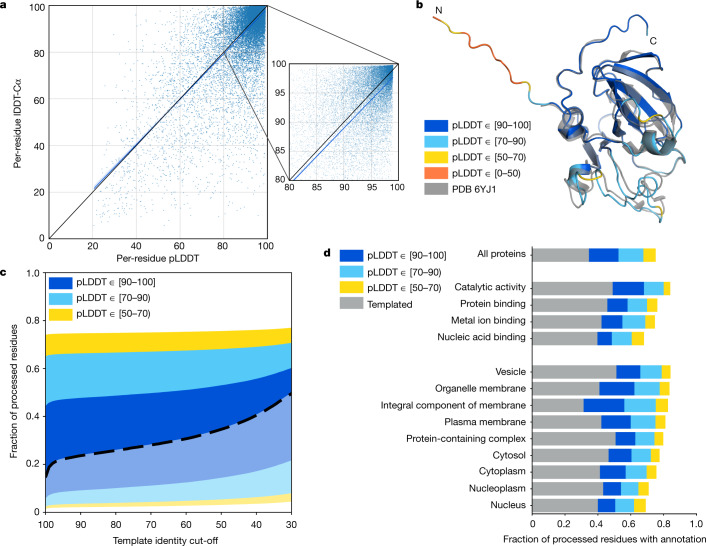
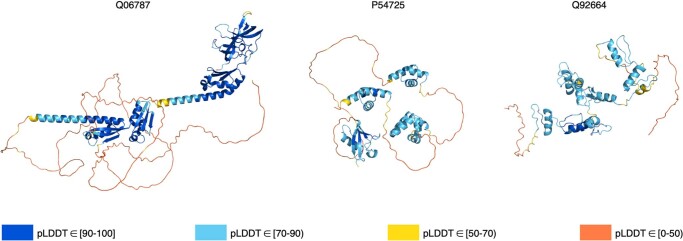
Protein structures can provide invaluable information, both for reasoning about biological processes and for enabling interventions such as structure-based drug development or targeted mutagenesis. After decades of effort, 17% of the total residues in human protein sequences are covered by an experimentally determined structure 1 . Here we markedly expand the structural coverage of the proteome by applying the state-of-the-art machine learning method, AlphaFold 2 , at a scale that covers almost the entire human proteome (98.5% of human proteins). The resulting dataset covers 58% of residues with a confident prediction, of which a subset (36% of all residues) have very high confidence. We introduce several metrics developed by building on the AlphaFold model and use them to interpret the dataset, identifying strong multi-domain predictions as well as regions that are likely to be disordered. Finally, we provide some case studies to illustrate how high-quality predictions could be used to generate biological hypotheses. We are making our predictions freely available to the community and anticipate that routine large-scale and high-accuracy structure prediction will become an important tool that will allow new questions to be addressed from a structural perspective.
Overview
CoChat Summary
TL;DR
AlphaFold2 was applied to 98.5% of human proteins, producing confident predictions for 58% of residues and very high confidence for 36% of all residues. The paper introduces pLDDT, pTM and an experimentally resolved head to interpret the dataset, presents case studies, and releases predictions freely.
Key findings
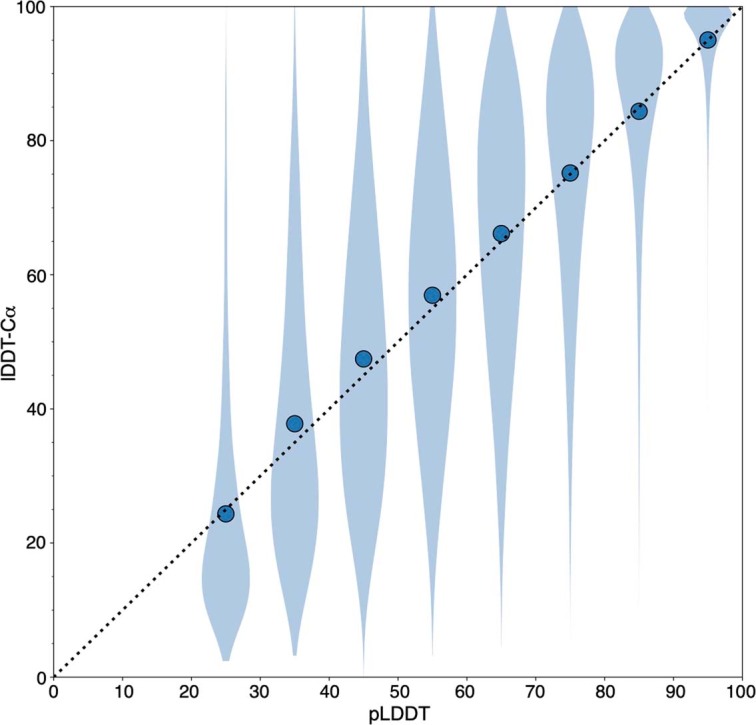
- The dataset covers 98.5% of human proteins with full-chain predictions, amounting to 10,537,122 residues (92.5% of residues); 58.0% of residues were predicted confidently (pLDDT > 70), and 35.7% of total residues fell in the highest accuracy band (pLDDT > 90), double the residues covered by experimental structures.
- At the per-protein level, 43.8% of proteins had a confident prediction on at least three quarters of their sequence, and 1,290 proteins contained a substantial region (>200 residues) with pLDDT ≥ 70 and no good template.
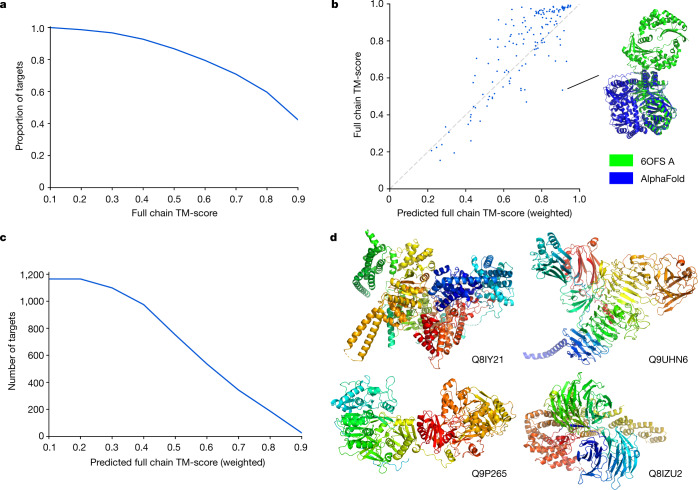
- On a held-out set of long PDB chains (n = 151), 70% of predictions had a TM-score > 0.7; pTM correlated with actual TM-score at Pearson’s r = 0.84, and among human proteins enriched for novel multidomain predictions, 187 had pTM > 0.8 and 343 had pTM > 0.7.
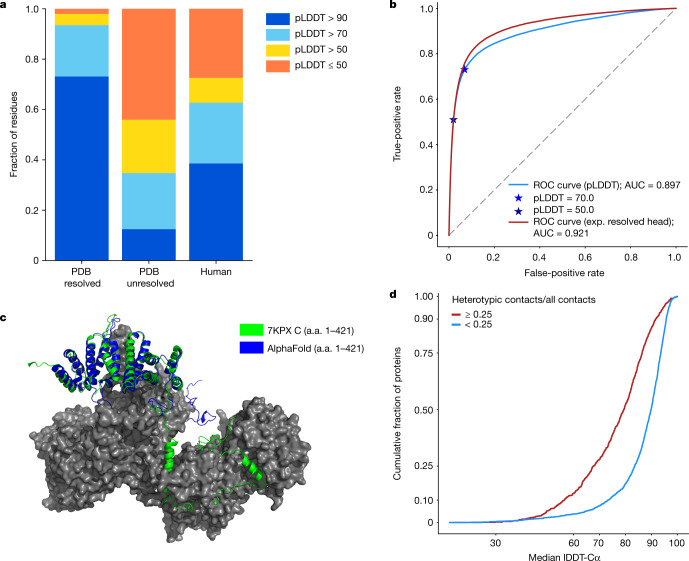
- pLDDT performed as a competitive disorder predictor on the CAID benchmark with AUC 0.897, while the experimentally resolved head achieved AUC 0.921; case studies proposed mechanistic hypotheses for G6Pase-α, DGAT2 and wolframin.
Methods
- AlphaFold2 was applied to the UniProt human reference proteome (release 2021_02), attempting all sequences of 16–2,700 amino acids and excluding residue codes B, J, O, U, Z or X; the pipeline used MSA construction, template search, inference with five models, model ranking by mean pLDDT, and constrained relaxation, with Reduced BFD and reduced ensembling.
- Evaluation used a recent PDB dataset of 12,494 chains, CAMEO targets from 21 March 2020 to 13 March 2021, and the CAID Disprot-PDB benchmark; metrics included pLDDT, pTM, the experimentally resolved head, TM-score, lDDT-Cα and AUC.
- Case-study analyses used PyMOL, P2Rank, AutoDockTools, AutoDock Vina and TM-align; inference for the human proteome used 930 GPU days, with an estimated 510 core days for other pipeline stages from scratch.
Limitations
- The paper states that low-confidence regions may reflect intrinsic disorder or regions structured only in complex, and that some proportion of proteins without confident predictions will be genuine failures where a fixed structure exists but AlphaFold does not predict it.
- The paper states that inter-domain accuracy is expected to be lower than within-domain accuracy, that some multidomain proteins may have mobile domains with no fixed packing, and that the case-study biological hypotheses require experimental confirmation.
- Evident from the text: predictions are single-chain and exclude sequences longer than 2,700 residues, so complex-dependent structure and larger proteins are not directly addressed.
Model-written summary. Check it against the paper before relying on it.
Integrity signals
Registry
Cites
Statistics
Figures
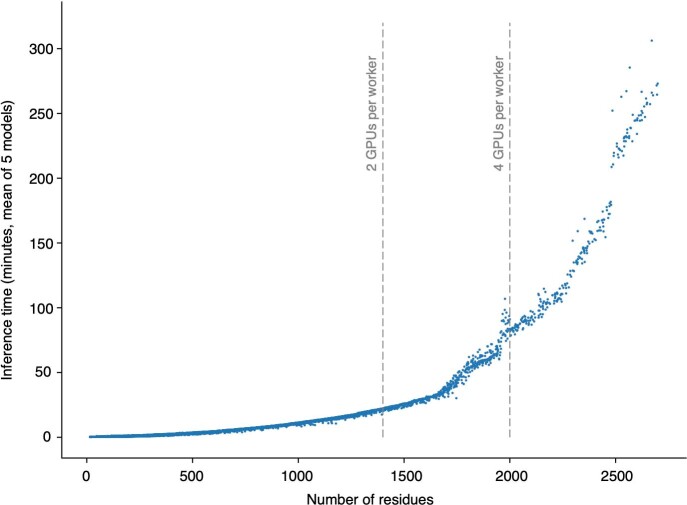
![Extended Data Fig. 7 Relationship between sequence length and run time for the non-inference stages of the pipeline. On the basis of 240 human protein sequences, chosen by stratified sampling from the length buckets: [16, 500), [500, 1,000), [1,000, 1,500), [1,500, 2,000), [2,000, 2,500) and [2,500, 2,700]. The relax plot shows five times more points, since five relaxed models are generated per protein. Coefficients for the quadratic lines of best fit were computed with Numpy polyfit.](https://figures.cochat.ai/paper-figures/c9bdcad64694429b95a292e248c7f05a/highly-accurate-protein-structure-prediction-for-the-human-proteome-figure-11.jpg)
Verification
Claims the paper makes
14 Valid · 1 Not valid · 5 Not checked · 44 Own results and interpretations
The cited sources support only part of this claim — read each source’s verdict below.
In the paper
“This system used a completely different model from our CASP13 entry31, and demonstrated a considerable improvement over previous methods in terms of providing routinely high accuracy29,30.”
§ Highly accurate protein structure prediction for the human proteome > Main
What the sources say
- Partly supportedcites [29] Kryshtafovych A Schwede T Topf M Fidelis K Moult J Critical assessment of methods of protein structure prediction (CASP)-round XIII Proteins 2019 87 1011 1020 10.1002/prot.25823 31589781 PMC6927249 sourceExperimental — accuracy not yet measured
The PROGRESS IN CASP13 section reports a dramatic improvement in model accuracy over earlier CASP rounds, and TEMPLATE FREE MODELING says DeepMind’s A7D group had the most accurate results overall. Those passages concern CASP13 methods, not the different system in the citing sentence; they do not establish that AlphaFold2 routinely achieved high accuracy. (LLM, conf=0.84)
- Supportedcites [30] Pereira, J. et al. High-accuracy protein structure prediction in CASP14. Proteins10.1002/prot.26171 (2021). 34218458 source
The Abstract reports a large leap in high accuracy due to AF2. The Conclusions say AF2 substantially outperformed its predecessor and produced the best models for 89 of 97 CASP14 targets, supporting both the improvement and its routine high accuracy. (LLM, conf=0.94)
boostedstates a cause- Asserted: passes — The authors put it forward as true.
- Checkable: passes — It can be checked against evidence.
- Load-bearing: passes — The paper’s conclusions depend on it.
- Based: passes — The paper gives a reason why it holds.
- Partly supported
Every source the paper cites for this claim was checked and supports it.
In the paper
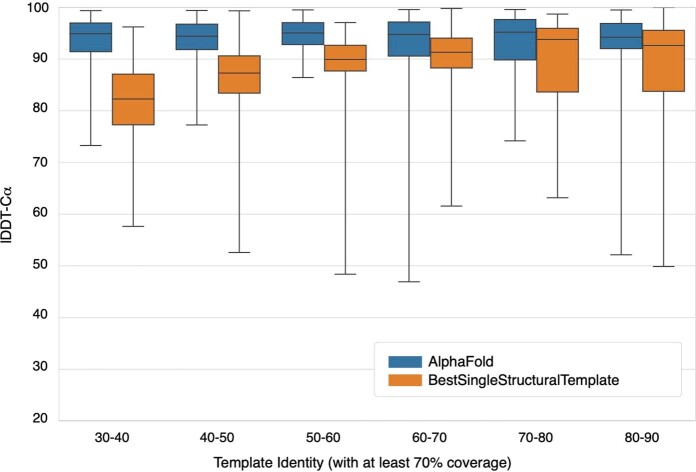
“We note that the accuracy of AlphaFold was validated in CASP142, which focuses on challenging proteins that are dissimilar to structures already available in the PDB.”
§ Highly accurate protein structure prediction for the human proteome > Model confidence and added coverage
What the sources say
- Supportedcites [2] Jumper, J. et al. Highly accurate protein structure prediction with AlphaFold. Nature10.1038/s41586-021-03819-2 (2021). PMC8371605 34265844 source
The paper’s CASP14 assessment passage (section and page not provided in our copy) says AlphaFold was entered into CASP14, describes it as a blind accuracy assessment, and reports that AlphaFold’s structures were substantially more accurate than competing methods. This supports the attributed claim that its accuracy was validated in CASP14. (LLM, conf=0.94)
plain- Asserted: passes — The authors put it forward as true.
- Checkable: passes — It can be checked against evidence.
- Load-bearing: unclear — It is unclear whether the paper’s conclusions depend on it.
- Based: passes — The paper gives a reason why it holds.
- Supported
The cited sources support only part of this claim — read each source’s verdict below.
In the paper
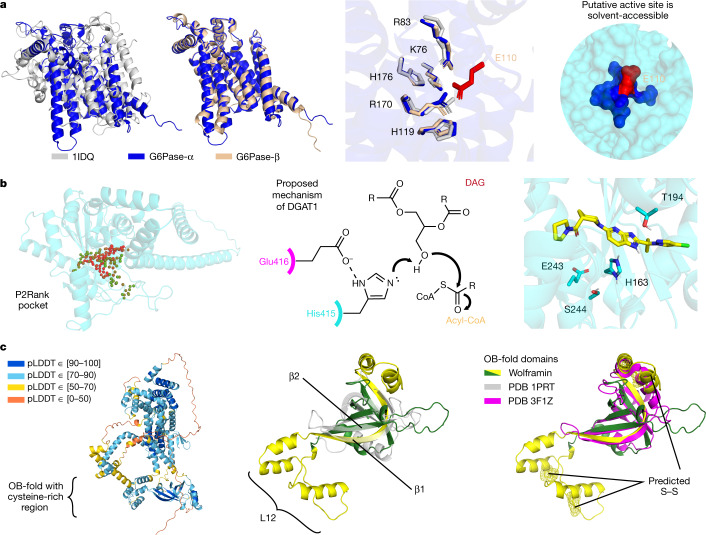
“Despite being the most similar chain, 3F1Z lacks the cysteines that are present in wolframin, which could form disulfide cross-links in the endoplasmic reticulum59.”
§ Highly accurate protein structure prediction for the human proteome > Highlighted predictions > Wolframin
What the sources say
- Partly supportedcites [59] Fass D Thorpe C Chemistry and enzymology of disulfide cross-linking in proteins Chem. Rev. 2018 118 1169 1198 10.1021/acs.chemrev.7b00123 28699750 PMC5808910 sourceExperimental — accuracy not yet measured
Section 2, “Which Proteins Contain Disulfides” (page unavailable), says that proteins in or passing through the ER can have cysteines positioned to form disulfide bonds. It does not address wolframin, 3F1Z, or whether their cysteine residues differ, so it supports only the general possibility of ER disulfide cross-linking. (LLM, conf=0.86)
hedged- Asserted: passes — The authors put it forward as true.
- Checkable: passes — It can be checked against evidence.
- Load-bearing: unclear — It is unclear whether the paper’s conclusions depend on it.
- Based: passes — The paper gives a reason why it holds.
- Partly supported
The sources with a verdict support this claim; the rest weren’t checked yet, have no full text we could read, or their verdicts aren’t rated yet.
In the paper
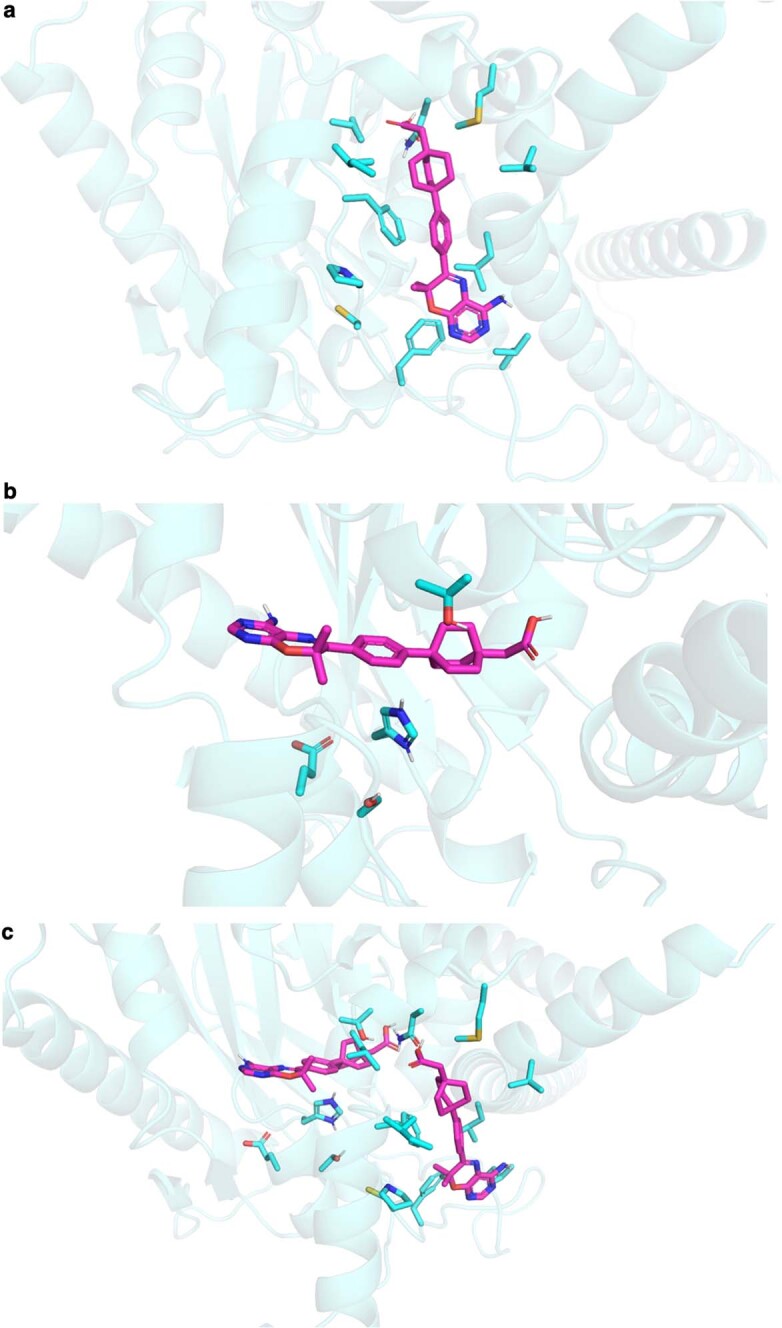
“Comparing our prediction for this region (median pLDDT of 86.0) to existing PDB chains using TM-align42,57 identified 3F1Z58 as the most similar known chain (TM-score of 0.472) (Fig. 3c, magenta).”
§ Highly accurate protein structure prediction for the human proteome > Highlighted predictions > Wolframin
What the sources say
- Not checked — no full text of the sourcecites [42] Zhang Y Skolnick J Scoring function for automated assessment of protein structure template quality Proteins 2004 57 702 710 10.1002/prot.20264 15476259 source
- Supportedcites [57] Zhang Y Skolnick J TM-align: a protein structure alignment algorithm based on the TM-score Nucleic Acids Res. 2005 33 2302 2309 10.1093/nar/gki524 15849316 PMC1084323 source
The citation is attached to “using TM-align,” identifying the method used by the citing authors, not attributing their 3F1Z match or TM-score to this source. The source’s Results (Benchmark test; page unavailable) describes TM-align as a tool for comparing protein structures and reporting TM-scores. (LLM, conf=0.93)
- Supportedcites [58] Das D The structure of KPN03535 (gi|152972051), a novel putative lipoprotein from Klebsiella pneumoniae, reveals an OB-fold Acta Crystallogr. F 2010 66 1254 1260 10.1107/S1744309109018168 PMC2954213 20944219 source
The citation is attached to 3F1Z, identifying the PDB chain used in the citing authors’ comparison. The source paper’s Materials and methods section states that its KPN03535 structure was deposited under accession code 3f1z; the pLDDT and TM-score describe the citing authors’ own analysis, not a result attributed to this source. (LLM, conf=0.93)
plainstates an association- Asserted: passes — The authors put it forward as true.
- Checkable: passes — It can be checked against evidence.
- Load-bearing: unclear — It is unclear whether the paper’s conclusions depend on it.
- Based: passes — The paper gives a reason why it holds.
Every source the paper cites for this claim was checked and supports it.
In the paper
“A recent evolutionary analysis suggested domains for wolframin, which our prediction largely supports55.”
§ Highly accurate protein structure prediction for the human proteome > Highlighted predictions > Wolframin
What the sources say
- Supportedcites [55] Schäffer DE Iyer LM Burroughs AM Aravind L Functional innovation in the evolution of the calcium-dependent system of the eukaryotic endoplasmic reticulum Front. Genet. 2020 11 34 10.3389/fgene.2020.00034 32117448 PMC7016017 source
The Results section, “Domain Architectural Anatomy and Functional Analysis of the Wolframin Protein,” reports the paper’s proposed domain assignments for wolframin, including Sel1-like repeats, an EF-hand region, and an OB-fold domain (Figure 4A). The citing authors’ statement that their own prediction largely supports those assignments is not a finding attributed to this source. (LLM, conf=0.93)
plainstates an association- Asserted: passes — The authors put it forward as true.
- Checkable: passes — It can be checked against evidence.
- Load-bearing: unclear — It is unclear whether the paper’s conclusions depend on it.
- Based: passes — The paper gives a reason why it holds.
- Supported
36 more claims · 4 with their cited sources checked
Create a free account to see all 64 claims and every source verdict.
- It may state two separate claims as one. 13
- Probably not a substantial claim. 12
Claims other papers make about this one
Each is checked against this paper’s own text: does it say what the citing paper says it does?
The source backs part of the claim, not all of it — or backs it for a different population, condition or comparison.
In the citing paper
“While AF2 performs exceptionally well on these types of folds on average”
From The power and pitfalls of AlphaFold2 for structure prediction beyond rigid globular proteins (2024) · cites this paper as [5]
Experimental — accuracy not yet measuredThe source backs part of the claim, not all of it — or backs it for a different population, condition or comparison.
In the citing paper
“For the majority of globular proteins, AF2 provides accurate, reliable models with high pLDDT (> 70) or low PAE values (< 5 Å) highlighting confidence in the prediction of the position of the atomic coordinates, which match experimentally determined native structures5,17,23,59”
From The power and pitfalls of AlphaFold2 for structure prediction beyond rigid globular proteins (2024) · cites this paper as [5]
Experimental — accuracy not yet measuredThe source backs part of the claim, not all of it — or backs it for a different population, condition or comparison.
In the citing paper
“The lower confidence bands appear to correlate well with backbone flexibility and intrinsic disorder (13) (Figure 2).”
From AlphaFold Protein Structure Database: massively expanding the structural coverage of protein-sequence space with high-accuracy models (2022) · cites this paper as [13]
Experimental — accuracy not yet measuredThe source backs part of the claim, not all of it — or backs it for a different population, condition or comparison.
In the citing paper
“One of the major insights leveraged by AlphaFold 1,2 comes from the use of evolutionary covariations that can be extracted from large-scale multiple sequence alignments.[49][50][51][52][53][54]”
From AlphaFold and Implications for Intrinsically Disordered Proteins (2021) · cites this paper as [2]
Experimental — accuracy not yet measuredThe source backs part of the claim, not all of it — or backs it for a different population, condition or comparison.
In the citing paper
“DeepMind’s AlphaFold2 success in sequence-based protein structure prediction,4 as well as the RoseTTAFold70 open-source counterpart, and the publicly available AlphaFold2 prediction of all human proteins203 are major steps that benefit the scientific community.”
From AlphaFold, Artificial Intelligence (AI), and Allostery (2022) · cites this paper as [203]
Experimental — accuracy not yet measured
16 more claims about this paper
Create a free account to see every claim other papers make about this one.
Citations
Cites
Highly accurate protein structure prediction with AlphaFold
Jumper, J., Evans, R., Pritzel, A., Green, T., Figurnov, M., Ronneberger, O., Tunyasuvunakool, K., Bates, R., Žídek, A., Potapenko, A., et al. (2021) · Nature · doi:10.1038/s41586-021-03819-2 · Cited by 43,764 · cited 1×
“[16, 500), [500, 1,000), [1,000, 1,500), [1,500, 2,000), [2,000, 2,500) and [2,500, 2,700].”
Self-citationGene Ontology: tool for the unification of biology
Ashburner, M., Ball, C. A., Blake, J. A., Botstein, D., Butler, H., Cherry, J. M., Davis, A. P., Dolinski, K., Dwight, S. S., Eppig, J. T., et al. (2000) · Nature Genetics · doi:10.1038/75556 · Cited by 43,206
Trott, O., & Olson, A. J. (2010) · Journal of Computational Chemistry · doi:10.1002/jcc.21334 · Cited by 38,412
AutoDock4 and AutoDockTools4: Automated docking with selective receptor flexibility
Morris, G. M., Huey, R., Lindstrom, W., Sanner, M. F., Belew, R. K., Goodsell, D. S., & Olson, A. J. (2009) · Journal of Computational Chemistry · doi:10.1002/jcc.21256 · Cited by 25,486
Initial sequencing and analysis of the human genome
International Human Genome Sequencing Consortium, Whitehead Institute for Biomedical Research, C. F. G. R., Lander, E. S., Linton, L. M., Birren, B., Nusbaum, C., Zody, M. C., Baldwin, J., Devon, K., Dewar, K., et al. (2001) · Nature · doi:10.1038/35057062 · Cited by 24,216
Self-citationThe sequence of the human genome
Venter, J. C., Adams, M. D., Myers, E. W., Li, P. W., Mural, R. J., Sutton, G. G., Smith, H. O., Yandell, M., Evans, C. A., Holt, R. A., et al. (2001) · Science · doi:10.1126/science.1058040 · Cited by 13,909
SWISS-MODEL: homology modelling of protein structures and complexes
Waterhouse, A., Bertoni, M., Bienert, S., Studer, G., Tauriello, G., Gumienny, R., Heer, F. T., de Beer, T. A. P., Rempfer, C., Bordoli, L., et al. (2018) · Nucleic Acids Research · doi:10.1093/nar/gky427 · Cited by 13,067
Pfam: The protein families database in 2021
Mistry, J., Chuguransky, S., Williams, L., Qureshi, M., Salazar, G. A., Sonnhammer, E. L. L., Tosatto, S. C. E., Paladin, L., Raj, S., Richardson, L. J., et al. (2021) · Nucleic Acids Research · doi:10.1093/nar/gkaa913 · Cited by 7,452
Self-citationUniProt: the universal protein knowledgebase in 2021
The UniProt Consortium, Bateman, A., Martin, M.-J., Orchard, S., Magrane, M., Agivetova, R., Ahmad, S., Alpi, E., Bowler-Barnett, E. H., Britto, R., et al. (2021) · Nucleic Acids Research · doi:10.1093/nar/gkaa1100 · Cited by 6,372
Self-citationThe Gene Ontology Resource: 20 years and still GOing strong
The Gene Ontology Consortium (2019) · Nucleic Acids Research · doi:10.1093/nar/gky1055 · Cited by 4,747
Cited by
Items 401–500 of 3,208
High-Speed Atomic Force Microscopy for Filming Protein Molecules in Dynamic Action
Ando, T., Fukuda, S., Ngo, K. X., & Flechsig, H. (2023) · Annual Review of Biophysics · doi:10.1146/annurev-biophys-030722-113353 · Cited by 55
Yang, K., Whitehouse, R. L., Dawson, S. L., Zhang, L., Martin, J. G., Johnson, D. S., Paulo, J. A., Gygi, S. P., & Yu, Q. (2023) · Cell chemical biology · doi:10.1016/j.chembiol.2023.11.015 · Cited by 52
Merizo: a rapid and accurate protein domain segmentation method using invariant point attention
Lau, A. M., Kandathil, S. M., & Jones, D. T. (2023) · Nature Communications · doi:10.1038/s41467-023-43934-4 · Cited by 48
“In this study, we have developed a fast and accurate domain segmentation method which can be applied to both experimentally-derived PDBs as well as in silico models such as those generated by AlphaFold2.”
BackgroundMethodInfluentialProtein-structure prediction revolutionized
AlQuraishi, M. (2021) · Nature · doi:10.1038/d41586-021-02265-4 · Cited by 51
Predicting RNA structures and functions by artificial intelligence.
Zhang, J., Lang, M., Zhou, Y., & Zhang, Y. (2024) · Trends in Genetics · doi:10.1016/j.tig.2023.10.001 · Cited by 48
NMR hawk‐eyed view of AlphaFold2 structures
Zweckstetter, M. (2021) · Protein Science · doi:10.1002/pro.4175 · Cited by 47
“The confidence levels predicted by AlphaFold2 promise to provide precise estimates of the reliability of the prediction,(1) suggesting that for a large number of human proteins, high-quality 3D structures are now available.(3) Because there are many more structures deposited in the Protein Data Bank (PDB), which were…”
BackgroundInfluentialDou, C. R., Long, Z., Li, S., Zhou, D., Jin, Y. L., Zhang, L., Zhang, X. K., Zheng, Y., Li, L., Zhu, X., et al. (2022) · Cell Research · doi:10.1038/s41422-022-00620-2 · Cited by 48
Liu, W., Zhao, C., Liu, L., Huang, D., Ma, C., Li, R., & Huang, L. (2022) · International Journal of Biological Macromolecules · doi:10.1016/j.ijbiomac.2022.09.154 · Cited by 51
Single Molecule Protein Segments Sequencing by a Plasmonic Nanopore
Zhou, J., Lan, Q., Li, W., Ji, L., Wang, K., & Xia, X. (2023) · Nano Letters · doi:10.1021/acs.nanolett.3c00086 · Cited by 44
Kurgan, L., Hu, G., Wang, K., Ghadermarzi, S., Zhao, B., Malhis, N., Erdős, G., Gsponer, J., Uversky, V. N., & Dosztányi, Z. (2023) · Nature Protocols · doi:10.1038/s41596-023-00876-x · Cited by 50
“…local distance difference test scores, which estimate reliability of the AlphaFold2’s structure predictions at the residue level, and window-based averaging of the predicted relative solvent accessible surface have been shown to predict IDRs relatively accurately on the DisProt datasets 82,83 .”
BackgroundSmith, Z., Strobel, M., Vani, B. P., & Tiwary, P. (2024) · Journal of Chemical Information and Modeling · doi:10.1021/acs.jcim.3c01698 · Cited by 47
Structure-Based Drug Design with a Deep Hierarchical Generative Model
Weller, J. A., & Rohs, R. (2024) · Journal of Chemical Information and Modeling · doi:10.1021/acs.jcim.4c01193 · Cited by 47
(2023) · doi:10.1101/2023.07.25.550565 · Cited by 47
Merizo: a rapid and accurate domain segmentation method using invariant point attention
Lau, A. M., Kandathil, S. M., & Jones, D. T. (2023) · doi:10.1101/2023.02.19.529114 · Cited by 47
DrugHIVE: Target-specific spatial drug design and optimization with a hierarchical generative model
(2023) · doi:10.1101/2023.12.22.573155 · Cited by 47
Rationally engineering santalene synthase to readjust the component ratio of sandalwood oil
Zha, W., Zhang, F., Shao, J., Ma, X., Zhu, J., Sun, P., Wu, R., & Zi, J. (2022) · Nature Communications · doi:10.1038/s41467-022-30294-8 · Cited by 47
Gorgulla, C., Jayaraj, A., Fackeldey, K., & Arthanari, H. (2022) · Current Opinion in Chemical Biology · doi:10.1016/j.cbpa.2022.102156 · Cited by 52
Mini-PCDH15 gene therapy rescues hearing in a mouse model of Usher syndrome type 1F
Ivanchenko, M. V., Hathaway, D. M., Klein, A. J., Pan, B., Strelkova, O. S., De‐la‐Torre, P., Wu, X., Peters, C. W., Mulhall, E. M., Booth, K. T. A., et al. (2023) · Nature Communications · doi:10.1038/s41467-023-38038-y · Cited by 52
“Next, we performed structural predictions of monomeric mini-PCDH15-V4, − V7, and − V8 extracellular domains (in the absence of MAD12) using the AlphaFold2 program developed by DeepMind 39,40 .”
MethodThe ClusPro AbEMap web server for the prediction of antibody epitopes
Desta, I. T., Kotelnikov, S., Jones, G., Ghani, U., Abyzov, M., Kholodov, Y., Standley, D. M., Beglov, D., Vajda, S., & Kozakov, D. (2023) · Nature Protocols · doi:10.1038/s41596-023-00826-7 · Cited by 44
Pro-phagocytic function and structural basis of GPR84 signaling
Zhang, X., Wang, Y., Supekar, S., Cao, X., Zhou, J., Dang, J., Chen, S., Jenkins, L., Marsango, S., Li, X., et al. (2023) · Nature Communications · doi:10.1038/s41467-023-41201-0 · Cited by 46
“Non-conserved structural motifs of GPR84 and receptor activation SincethereisnoexperimentallysolvedinactivestructureofGPR84,we used the Alphafold predicted structure of apo GPR84 54,55 in our structuralcomparison analysis.”
Wu, T., Zhao, Y., Zhang, X., Wang, Y., Chen, Q., Zhang, M., Sheng, H., Zhang, Y., Guo, J., Li, J., et al. (2025) · 癌症:英文版 · doi:10.1002/cac2.70048 · Cited by 60
“…dihydrolipoamide S-acetyltransferase; ENL, eleven-nineteen-leukemia; GAS41, glioma-amplified sequence 41; GCN5, general control non-depressible 5; Glu, glutaryl group; HAT1, histone acetyltransferase 1; HBO1, histone acetyltransferase binding to ORC1; HDAC, histone deacetylase; Hib,…”
Artificial intelligence (AI) in drug design and discovery: A comprehensive review
Bhat, A. R., & Ahmed, S. (2025) · In Silico Research in Biomedicine · doi:10.1016/j.insi.2025.100049 · Cited by 80
Pharmacological inhibition of KDM5A for cancer treatment
Yang, G., Wu, J., Miao, L., Zhu, M., Zhou, Q., Lu, X., Lu, J., Leung, C., Ma, D., & Chen, J. (2021) · European Journal of Medicinal Chemistry · doi:10.1016/j.ejmech.2021.113855 · Cited by 48
A unified evolutionary origin for the ubiquitous protein transporters SecY and YidC
Lewis, A. J. O., & Hegde, R. S. (2021) · BMC Biology · doi:10.1186/s12915-021-01171-5 · Cited by 45
McCorvie, T. J., Loria, P. M., Tu, M., Han, S., Shrestha, L., Froese, D. S., Ferreira, I. M., Berg, A. P., & Yue, W. W. (2022) · Nature Structural & Molecular Biology · doi:10.1038/s41594-022-00799-3 · Cited by 53
Langstein-Skora, I., Schmid, A., Huth, F., Shabani, D., Spechtenhauser, L., Likhodeeva, M., Kunert, F., Metzner, F. J., Emenecker, R. J., Richardson, M. O. G., et al. (2022) · bioRxiv (Cold Spring Harbor Laboratory) · doi:10.1101/2022.02.10.480018 · Cited by 45
Reciprocal best structure hits: using AlphaFold models to discover distant homologues
Monzon, V., Paysan-Lafosse, T., Wood, V., & Bateman, A. (2022) · Bioinformatics Advances · doi:10.1093/bioadv/vbac072 · Cited by 46
Self-citationReciprocal Best Structure Hits: Using AlphaFold models to discover distant homologues
Monzon, V., Paysan-Lafosse, T., Wood, V., & Bateman, A. (2022) · doi:10.1101/2022.07.04.498216 · Cited by 46
Self-citationIn-cell structural insight into the stability of sperm microtubule doublet
Tai, L., Yin, G., Huang, X., Zhu, Y., & Sun, F. (2023) · doi:10.1101/2023.05.30.542832 · Cited by 46
In-cell structural insight into the stability of sperm microtubule doublet
(2023) · doi:10.1038/s41421-023-00606-3 · Cited by 45
Discovery of archaeal fusexins homologous to eukaryotic HAP2/GCS1 gamete fusion proteins
(2022) · doi:10.1038/s41467-022-31564-1 · Cited by 45
Self-citationRoy, R. S., Quadir, F., Soltanikazemi, E., & Cheng, J. (2022) · Bioinformatics · doi:10.1093/bioinformatics/btac063 · Cited by 45
(2025) · doi:10.1186/s13059-025-03497-7 · Cited by 45
“We downloaded the structures predicted by AlphaFold2 [34] for the whole human proteome from the AlphaFold Protein Structure Database (https:// alpha fold. ebi. ac. uk/) [35].”
InfluentialWehrspan, Z. J., McDonnell, R. T., & Elcock, A. H. (2022) · Journal of Molecular Biology · doi:10.1016/j.jmb.2021.167377 · Cited by 45
PANDORA: A Fast, Anchor-Restrained Modelling Protocol for Peptide: MHC Complexes
Marzella, D. F., Parizi, F. M., Tilborg, D. V., Renaud, N., Sybrandi, D., Buzatu, R., Rademaker, D. T., ‘t Hoen, P. A. C., & Xue, L. C. (2022) · Frontiers in Immunology · doi:10.3389/fimmu.2022.878762 · Cited by 44
“…with the groundbreaking, general-purpose 3D-modelling software AlphaFold2 (41), that has recently been used to accurately model tens of thousands of protein structures (53) including MHCs. PANDORA outperforms AlphaFold2 on the pMHC modelling task in terms of accuracy and computational time.”
MethodMabanglo, M. F., Wong, K. S., Barghash, M. M., Leung, E., Chuang, S. H. W., Ardalan, A., Majaesic, E. M., Wong, C. J., Zhang, S., Lang, H., et al. (2022) · Structure · doi:10.1016/j.str.2022.12.002 · Cited by 60
Recent Developments in Ultralarge and Structure-Based Virtual Screening Approaches
Gorgulla, C. (2023) · Annual Review of Biomedical Data Science · doi:10.1146/annurev-biodatasci-020222-025013 · Cited by 66
Structural basis of ligand specificity and channel activation in an insect gustatory receptor
Frank, H. M., Walujkar, S., Walsh, R. M., Laursen, W. J., Theobald, D. L., Garrity, P., & Gaudet, R. (2024) · Cell Reports · doi:10.1016/j.celrep.2024.114035 · Cited by 57
“We created a profile HMM from structural alignment of 62 models of D. melanogaster ORs in the AlphaFold Protein Structure Database 26 and identified insect sequences of 300–600 amino acids in length.”
InfluentialThe Arabidopsis blue-light photoreceptor CRY2 is active in darkness to inhibit root growth
Zeng, D., Lv, J., Li, X., & Liu, H. (2024) · Cell · doi:10.1016/j.cell.2024.10.031 · Cited by 51
Could AlphaFold revolutionize chemical therapeutics?
Tong, A. B., Burch, J. D., McKay, D., Bustamante, C., Crackower, M. A., & Wu, H. (2021) · Nature Structural & Molecular Biology · doi:10.1038/s41594-021-00670-x · Cited by 44
An end-to-end framework for the prediction of protein structure and fitness from single sequence
Chen, Y., Xu, Y., Liu, D., Xing, Y., & Gong, H. (2024) · Nature Communications · doi:10.1038/s41467-024-51776-x · Cited by 45
“With the rapid development in the fi eld of protein structure prediction, vast structures predicted by AlphaFold and ESMFold allow the overcoming of previous challenges caused by the limited number of experimentally resolved protein structures 22 – 24 .”
Accurate Predictions of Liquid-Liquid Phase Separating Proteins at Single Amino Acid Resolution
Monti, M., Fiorentino, J., Miltiadis-Vrachnos, D., Bini, G., Cotrufo, T., de Groot, N. S., Armaos, A., & Tartaglia, G. G. (2024) · doi:10.1101/2024.07.19.602785 · Cited by 45
Roy, R. S., Quadir, F., Soltanikazemi, E., & Cheng, J. (2021) · doi:10.1101/2021.09.19.460941 · Cited by 45
Wehrspan, Z. J., McDonnell, R. T., & Elcock, A. H. (2021) · doi:10.1101/2021.10.08.463726 · Cited by 45
Best practices for time-resolved serial synchrotron crystallography
Schulz, E. C., Yorke, B. A., Pearson, A. R., & Mehrabi, P. (2022) · White Rose Research Online (University of Leeds, The University of Sheffield, University of York) · Cited by 44
Shelterin is a dimeric complex with extensive structural heterogeneity
Zinder, J. C., Olinares, P. D. B., Svetlov, V., Bush, M. W., Nudler, E., Chait, B. T., Walz, T., & de Lange, T. (2022) · Proceedings of the National Academy of Sciences · doi:10.1073/pnas.2201662119 · Cited by 44
“The predicted structures of individual polypeptides within the complex resembled their predicted structures in isolation (66), indicating that the presence of binding partners did not significantly alter the predicted models.”
BackgroundInfluentialThe Biogenesis of Multipass Membrane Proteins
Smalinskaitė, L., & Hegde, R. S. (2023) · Cold Spring Harbor Perspectives in Biology · doi:10.1101/cshperspect.a041251 · Cited by 43
“A comprehensive genome-wide analysis of translo- catedlooplengthwithaccuratetopologyinforma- tionderivedfromhigh-qualitystructurepredic-tions (Tunyasuvunakool et al. 2021) would un-doubtedly be informative.”
Bianco, S. D., Parca, L., Petrizzelli, F., Biagini, T., Giovannetti, A., Liorni, N., Napoli, A., Carella, M., Procaccio, V., Lott, M. T., et al. (2023) · Nature Communications · doi:10.1038/s41467-023-40797-7 · Cited by 44
Bianco, S. D., Parca, L., Petrizzelli, F., Biagini, T., Giovannetti, A., Liorni, N., Napoli, A., Carella, M., Procaccio, V., Lott, M., et al. (2023) · doi:10.1101/2023.06.18.545476 · Cited by 44
Chen, Y., Xu, Y., Liu, D., Xing, Y., & Gong, H. (2024) · doi:10.1101/2024.01.31.578102 · Cited by 44
The Viral Class II Membrane Fusion Machinery: Divergent Evolution from an Ancestral Heterodimer
Guardado‐Calvo, P., & Rey, F. A. (2021) · Viruses · doi:10.3390/v13122368 · Cited by 45
Chen, F., Weng, L., Wang, J., Wu, P. C., Ma, D., Pan, F., & Ding, P. (2022) · Composites Science and Technology · doi:10.1016/j.compscitech.2022.109818 · Cited by 44
Nearest neighbor search on embeddings rapidly identifies distant protein relations
Schütze, K., Heinzinger, M., Steinegger, M., & Rost, B. (2022) · Frontiers in Bioinformatics · doi:10.3389/fbinf.2022.1033775 · Cited by 42
Understanding and controlling the molecular mechanisms of protein aggregation in mAb therapeutics
Pang, K. T., Yang, Y., Zhang, W., Ho, Y. S., Sormanni, P., Michaels, T. C. T., Walsh, I., & Chia, S. (2023) · Biotechnology Advances · doi:10.1016/j.biotechadv.2023.108192 · Cited by 53
Tu, J., Li, W., Hansbro, P. M., Qi, Y., Bai, X., Donovan, C., Kim, R., Galvão, I., Das, A., Cao, Y., et al. (2023) · Molecular Therapy · doi:10.1016/j.ymthe.2023.06.010 · Cited by 47
The current role and evolution of X-ray crystallography in drug discovery and development
Bijak, V., Szczygiel, M., Lenkiewicz, J., Gucwa, M., Cooper, D. R., Murzyn, K., & Minor, W. (2023) · Expert Opinion on Drug Discovery · doi:10.1080/17460441.2023.2246881 · Cited by 56
A review of machine learning-based methods for predicting drug–target interactions
Shi, W., Yang, H. T., Xie, L., Yin, X.-X., & Zhang, Y. (2024) · Health Information Science and Systems · doi:10.1007/s13755-024-00287-6 · Cited by 61
“These advances in protein structure prediction, such as AlphaFold2 [96] and RoseTTA [97], may accelerate research at various stages of the drug discovery process.”
Hadarovich, A., Singh, H. R., Ghosh, S., Scheremetjew, M., Rostam, N., Hyman, A. A., & Tóth-Petróczy, Á. (2024) · Nature Communications · doi:10.1038/s41467-024-55089-x · Cited by 55
“…structures, AlphaFold provides the pLDDT score (predicted lDDT-C α ), that is a per-residue measure of local con fi dence on a scale from 0 to 100 64 . pLDDT scores were divided into four classes (according to DeepMind classi fi cation): [0, 50) - ‘ very low ’ , [(50,70)] - low ’ , [(70,90)] –‘…”
Precise modelling of mitochondrial diseases using optimized mitoBEs
Zhang, X., Zhang, X., Ren, J., Li, J., Wei, X., Yu, Y. F., Yi, Z., & Wei, W. (2025) · Nature · doi:10.1038/s41586-024-08469-8 · Cited by 52
Liu, Y., Yeung, W. S. B., Chiu, P. C. N., & Cao, D. (2022) · Frontiers in Genetics · doi:10.3389/fgene.2022.981005 · Cited by 41
“The development of AlphaFold2 (Tunyasuvunakool et al., 2021), to an extent increases the protein structure coverage; but its capability to predict the impact of single mutation is questionable (Pak et al.”
BackgroundInfluentialEmenecker, R. J., Griffith, D., & Holehouse, A. S. (2022) · bioRxiv (Cold Spring Harbor Laboratory) · doi:10.1101/2022.06.06.494887 · Cited by 42
AlphaBridge: tools for the analysis of predicted biomolecular complexesPreprint
Salmoral, D. Á., Borza, R., Maiella, C., et al. (2024) · bioRxiv (Cold Spring Harbor Laboratory) · doi:10.1101/2024.10.23.619601 · Cited by 43
Lambourne, L., Mattioli, K., Santoso, C., Sheynkman, G., Inukai, S., Kaundal, B., Berenson, A., Spirohn-Fitzgerald, K., Bhattacharjee, A., Rothman, E., et al. (2025) · Molecular Cell · doi:10.1016/j.molcel.2025.03.004 · Cited by 42
Effective Molecular Dynamics from Neural Network-Based Structure Prediction Models
Jussupow, A., & Kaila, V. R. I. (2023) · Journal of Chemical Theory and Computation · doi:10.1021/acs.jctc.2c01027 · Cited by 42
Kakade, P., Ojha, H., Raimi, O. G., Shaw, A., Waddell, A. D., Ault, J. R., Burel, S., Brockmann, K., Kumar, A., Ahangar, M. S., et al. (2022) · Open Biology · doi:10.1098/rsob.210264 · Cited by 42
“This structurally resembles the AlphaFold predicted interface in PINK1 which is mediated by the arrangement of hydrophobic residues on the surface of the NTE domain and αK-helix and the conservation of these hydrophobic residues in PhcPINK1 suggests a similar interaction of the NTE domain with the CTE domain (electron…”
BackgroundMethodInfluentialAer, L., Jiang, Q., Gul, I., Qi, Z., Feng, J., & Tang, L. (2022) · Environmental Research · doi:10.1016/j.envres.2022.113472 · Cited by 49
Protein conformation and biomolecular condensates
Vazquez, D. S., Toledo, P. L., Gianotti, A. R., & Ermácora, M. R. (2022) · Current Research in Structural Biology · doi:10.1016/j.crstbi.2022.09.004 · Cited by 47
Molecular Modeling Insights into the Structure and Behavior of Integrins: A Review
Tvaroška, I., Kozmon, S., & Kóňa, J. (2023) · Cells · doi:10.3390/cells12020324 · Cited by 49
ADOPT: intrinsic protein disorder prediction through deep bidirectional transformers
Redl, I., Fisicaro, C., Dutton, O., Hoffmann, F., Henderson, L., Owens, B. M. J., Heberling, M., Paci, E., & Tamiola, K. (2023) · NAR Genomics and Bioinformatics · doi:10.1093/nargab/lqad041 · Cited by 42
“Recent work has demonstrated that the pLDDT (61), a per-residue metric of local confidence of the prediction, is correlated with disorder, outperforming IUPred2 (62), SPOT-Disorder2 (63) and other disorder predictors (64,65).”
Deep Learning Empowers the Discovery of Self‐Assembling Peptides with Over 10 Trillion Sequences
Wang, J., Liu, Z., Zhao, S. Z., Xu, T., Wang, H., Li, S. Z., & Li, W. (2023) · Advanced Science · doi:10.1002/advs.202301544 · Cited by 57
Xiong, D., Qiu, Y., Zhao, J., Zhou, Y., Lee, D., Gupta, S., Torres, M., Lü, W., Liang, S., Kang, J. J., et al. (2024) · Nature Biotechnology · doi:10.1038/s41587-024-02428-4 · Cited by 61
Artificial intelligence powers protein-folding predictions
Eisenstein, M. S. (2021) · Nature · doi:10.1038/d41586-021-03499-y · Cited by 50
Morgan, R., Hunter, K. D., & Pandha, H. (2022) · International Journal of Cancer · doi:10.1002/ijc.33949 · Cited by 40
Effective Molecular Dynamics from Neural-Network Based Structure Prediction Models
Jussupow, A., & Kaila, V. R. I. (2022) · doi:10.1101/2022.10.17.512476 · Cited by 42
Molecular mechanism of S -adenosylmethionine sensing by SAMTOR in mTORC1 signaling
Tang, X. H., Zhang, Y., Wang, G., Zhang, C., Wang, F., Shi, J., Zhang, T., & Ding, J. (2022) · Science Advances · doi:10.1126/sciadv.abn3868 · Cited by 51
“Because of the lack of a full-length ligand-bound dSAMTOR structure, we retrieved the predicted dSAMTOR structure from the AlphaFold Protein Structure Database ( 33 ) and compared it with the dSAMTOR structures solved in this study.”
MethodPurushotham, P., Ho, R., Yu, L., Fincher, G. B., Bulone, V., & Zimmer, J. (2022) · Science Advances · doi:10.1126/sciadv.add1596 · Cited by 52
“Building the CslF6 model took advantage of its similarity with hybrid aspen CesA8 and a predicted AlphaFold2 model ( 28 , 29 ).”
Liu, J., Wang, X., Jin, K., Liu, Y., Li, J., Du, G., Lv, X., & Liu, L. (2023) · ACS Synthetic Biology · doi:10.1021/acssynbio.2c00673 · Cited by 42
Evolutionary selection of proteins with two folds
(2023) · doi:10.1038/s41467-023-41237-2 · Cited by 41
Harnessing Reversed Allosteric Communication: A Novel Strategy for Allosteric Drug Discovery
Fan, J., Liu, Y., Kong, R., Ni, D., Yu, Z., Lu, S., & Zhang, J. (2021) · Journal of Medicinal Chemistry · doi:10.1021/acs.jmedchem.1c01695 · Cited by 48
Membranome 3.0: Database of single‐pass membrane proteins with AlphaFold models
Lomize, A. L., Schnitzer, K. A., Todd, S. C., Cherepanov, S., Outeiral, C., Deane, C. M., & Pogozheva, I. D. (2022) · Protein Science · doi:10.1002/pro.4318 · Cited by 40
Yin, J., Liu, T., Fang, J., Fang, K., Zheng, L., & Wang, X. (2022) · Journal of Hazardous Materials · doi:10.1016/j.jhazmat.2022.130279 · Cited by 41
Giulini, M., Schneider, C., Cutting, D., Desai, N., Deane, C. M., & Bonvin, A. M. J. J. (2024) · Bioinformatics · doi:10.1093/bioinformatics/btae583 · Cited by 41
“We report results for three confidence metrics: the AlphaFold2 average predicted local distance difference test (pLDDT; Jumper et al. 2021, Tunyasuvunakool et al. 2021), averaged separately over paratope and epitope residues, and the ABodyBuilder2 root mean squared predicted error (RMSPE; Abanades…”
MethodAntagonistic interactions between odorants alter human odor perception
Fukutani, Y., Abe, M., Saito, H., Eguchi, R., Tazawa, T., de March, C. A., Yohda, M., & Matsunami, H. (2023) · Current Biology · doi:10.1016/j.cub.2023.04.072 · Cited by 41
Polonsky, K., Pupko, T., & Freund, N. T. (2023) · The Journal of Immunology · doi:10.4049/jimmunol.2300150 · Cited by 41
Antagonistic interactions between odorants alter human odor perception
Fukutani, Y., Abe, M., Saito, H., Eguchi, R., Tazawa, T., de March, C. A., Yohda, M., & Matsunami, H. (2022) · doi:10.1101/2022.08.02.502184 · Cited by 41
Giulini, M., Schneider, C., Cutting, D., Desai, N., Deane, C. M., & Bonvin, A. M. J. J. (2023) · doi:10.1101/2023.11.17.567543 · Cited by 41
Structure-guided isoform identification for the human transcriptome
Sommer, M. J., Cha, S., Varabyou, A., Rincon, N., Park, S., Minkin, I., Pertea, M., Steinegger, M., & Salzberg, S. L. (2022) · eLife · doi:10.7554/elife.82556 · Cited by 40
“In proteins where a substantial portion folds 38 into an ordered structure, estimated to be 68% of human proteins (13, 14), a well-folded structure 39 within an isoform argues in favor of its functionality.”
BackgroundMethodInfluential(2022) · doi:10.15252/embj.2021110411 · Cited by 40
Getting AI Right: Introductory Notes on AI & Society
Manyika, J. (2022) · Daedalus · doi:10.1162/daed_e_01897 · Cited by 79
Chen, T., Ren, C., Wong, N.-K., Yan, A., Sun, C., Fan, D., Luo, P., Jiang, X., Zhang, L., Ruan, Y., et al. (2023) · Proceedings of the National Academy of Sciences · doi:10.1073/pnas.2213512120 · Cited by 49
“S10), though with prediction confidence levels lower than that for proteins from the human proteome (36).”
Prediction of protein assemblies by structure sampling followed by interface‐focused scoring
Olechnovič, K., Valančauskas, L., Dapkūnas, J., & Venclovas, Č. (2023) · Proteins: Structure, Function, and Bioinformatics · doi:10.1002/prot.26569 · Cited by 40
“2B): (1) not paired (“checkerboard MSA”), (2) genome association pairing, and (3) genome association followed by similarity pairing.”
BackgroundAI-driven de novo enzyme design: Strategies, applications, and future prospects
Cui, X.-C., Zheng, Y., Liu, Y., Yuchi, Z., & Yuan, Y. (2025) · Biotechnology Advances · doi:10.1016/j.biotechadv.2025.108603 · Cited by 47
Drug-target interaction/affinity prediction: Deep learning models and advances review
Vefghi, A., Rahmati, Z., & Akbari, M. (2025) · Computers in Biology and Medicine · doi:10.1016/j.compbiomed.2025.110438 · Cited by 61
Predicting Adhesive Free Energies of Polymer–Surface Interactions with Machine Learning
Shi, J., Quevillon, M. J., Valença, P. H. A., & Whitmer, J. K. (2022) · ACS Applied Materials & Interfaces · doi:10.1021/acsami.2c08891 · Cited by 48
Cui, F., Zhang, Z., Cao, C., Zou, Q., Chen, D., & Su, X. (2022) · PROTEOMICS · doi:10.1002/pmic.202100197 · Cited by 40
“Recently, free access to the AlphaFold protein structure database [42] (developed by DeepMind and EMBL-EBI) has been provided.”
MethodSARS-CoV-2 spike E156G/Δ157-158 mutations contribute to increased infectivity and immune escape
Mishra, T. K., Joshi, G., Kumar, A., Dalavi, R., Pandey, P., Shukla, S., Mishra, R. K., & Chande, A. G. (2022) · Life Science Alliance · doi:10.26508/lsa.202201415 · Cited by 46
“PyMOL (version 2) and AlphaFold were used for protein structure visualization.”
MethodImaging biological macromolecules in thick specimens: The role of inelastic scattering in cryoEM
Dickerson, J. L., Lu, P., Hristov, D., Dunin‐Borkowski, R. E., & Russo, C. J. (2022) · Ultramicroscopy · doi:10.1016/j.ultramic.2022.113510 · Cited by 40
“As structural biology accumulates more and more atomic structures [3], and the ability to use previous structures to predict unknown structures related by evolution or denovo improves [4], an increasingly important frontier of electron cryomicroscopy is the imaging of biological molecules within their native environme…”
BackgroundMcCafferty, C. L., Papoulas, O., Jordan, M. A., Hoogerbrugge, G., Nichols, C., Pigino, G., Taylor, D. W., Wallingford, J. B., & Marcotte, E. M. (2022) · eLife · doi:10.7554/elife.81977 · Cited by 40
GALC variants affect galactosylceramidase enzymatic activity and risk of Parkinson’s disease
Senkevich, K., Zorca, C. E., Dworkind, A., Rudakou, U., Somerville, E., Yu, E., Ermolaev, A., Nikanorova, D., Ahmad, J., Ruskey, J. A., et al. (2023) · Brain · doi:10.1093/brain/awac413 · Cited by 40
“The structure of human GalCase, predicted using the AlphaFold server, 54 is highly similar to the experimental mouse GalCase structures (83% sequence similarity).”
Background
Metadata
- Authors
- Tunyasuvunakool, K., Adler, J., Wu, Z., Green, T., Zielinski, M., Žídek, A., Bridgland, A., Cowie, A., Meyer, C., Laydon, A., Velankar, S., Kleywegt, G. J., Bateman, A., Evans, R., Pritzel, A., Figurnov, M., Ronneberger, O., Bates, R., Kohl, S. A. A., Potapenko, A., Ballard, A. J., Romera-Paredes, B., Nikolov, S., Jain, R., Clancy, E., Reiman, D., Petersen, S., Senior, A. W., Kavukcuoglu, K., Birney, E., Kohli, P., Jumper, J., & Hassabis, D.
- Affiliations
- Google DeepMind (United Kingdom) (GB)
- European Bioinformatics Institute (GB)
- Corresponding author
- Tunyasuvunakool, Kathryn
- Jumper, John
- Hassabis, Demis
- ORCID
- Tunyasuvunakool, Kathryn
- Adler, Jonas
- Wu, Zachary
- Green, Tim
- Žídek, Augustin
- Meyer, Clemens
- Laydon, Agata
- Velankar, Sameer
- Kleywegt, Gerard J.
- Bateman, Alex
- Evans, Richard
- Pritzel, Alexander
- Figurnov, Michael
- Ronneberger, Olaf
- Bates, Russ
- Kohl, Simon A. A.
- Potapenko, Anna
- Ballard, Andrew J.
- Nikolov, Stanislav
- Jain, Rishub
- Clancy, Ellen
- Reiman, David
- Petersen, Stig
- Senior, Andrew W.
- Birney, Ewan
- Kohli, Pushmeet
- Jumper, John
- Hassabis, Demis
- Venue
- Nature
- Published
- 2021-07-22
- Volume
- 596
- Issue
- 7873
- Pages
- 590-596
- ISSN
- 0028-0836 (ISSN-L)
- 1476-4687
- PMC
- PMC8387240
- OpenAlex
- W3183475563
- Semantic Scholar
- 1fb3ad9969245795f268636eff9a145337144718
- Cited by
- 3,025
- References
- 83
- Citations by year
- 2026: 346 · 2025: 517 · 2024: 580 · 2023: 701 · 2022: 692 · 2021: 181
- FWCI
- 169.53
- Type
- journal article
- Language
- en
- Open access
- hybrid
- doi.org
- Licence
- cc-by
- creativecommons.org/licenses/by/4.0 (tdm)
- creativecommons.org/licenses/by/4.0 (vor)
- Locations
- Nature (publishedVersion, cc-by)
- Europe PMC (PubMed Central) (publishedVersion, other-oa)
- PubMed Central (publishedVersion, cc-by)
- PubMed (publishedVersion)
- RePEc: Research Papers in Economics (submittedVersion)
- Funders
- European Bioinformatics Institute
- DeepMind
- Topics
- Life Sciences › Biochemistry, Genetics and Molecular Biology › Molecular Biology › Protein Structure and Dynamics
- Life Sciences › Biochemistry, Genetics and Molecular Biology › Molecular Biology › Machine Learning in Bioinformatics
- Life Sciences › Biochemistry, Genetics and Molecular Biology › Structural Biology › Enzyme Structure and Function
- Keywords
- protein structure prediction, human proteome, AlphaFold2, structural coverage, intrinsically disordered regions, multidomain proteins, protein structure database
- MeSH terms
- Deep Learning, Glucose-6-Phosphatase, Humans, Membrane Proteins, Models, Molecular, Protein Conformation, Reproducibility of Results, Protein Folding, Computational Biology, Proteome, Diacylglycerol O-Acyltransferase, Datasets as Topic
About these checks
Registry, retraction, Cites and statistics results are computed, not judged, with one exception: a printed reference that no index lists is read once by a model before it counts as a citation error. Claims are extracted by a model and kept only when their quote appears verbatim in the text; each cited source is then checked, with a model’s help, for whether it says what the claim relies on. Those verdicts can be wrong — read the claim’s quote and the cited source before relying on one.
The claim verdicts this report counts are experimental: their accuracy is not yet measured.
A language model drew the claims from the paper on 2026-10-10, under version 3 of the claim definition (model deepseek-v4.1-flash, prompt extract-v3).
A second model labelled each claim on 2026-10-10 (model jev-1.13-20260917, definition revision gold-guideline-v0.2).
Cited sources are checked with a language model’s help (gpt-6-sol).
Statistics and arithmetic are recomputed, not judged.
Confidence bands are shown only for fields calibrated on our annotated test set. None is calibrated yet, so no band is shown.
What counts as a claim ›How we measure confidence ›How we check this ›
Are you an author, or do you see a problem with this page? Request a review
Data sources
Bibliographic data: Semantic Scholar, OpenAlex, Crossref.
Contains information from the Semantic Scholar Academic Graph Datasets, made available under the ODC Attribution License (ODC-BY 1.0).
Semantic Scholar’s data is described in: Kinney, R., et al. (2023). The Semantic Scholar Open Data Platform. arXiv:2301.10140.
