

Highly accurate protein structure prediction for the human proteome
Open accessThe DOI matches its Crossref record; 77 of the 83 references it cites were found in a registry or an index; 18 of the 24 sources its claims cite were checked for support.
Abstract
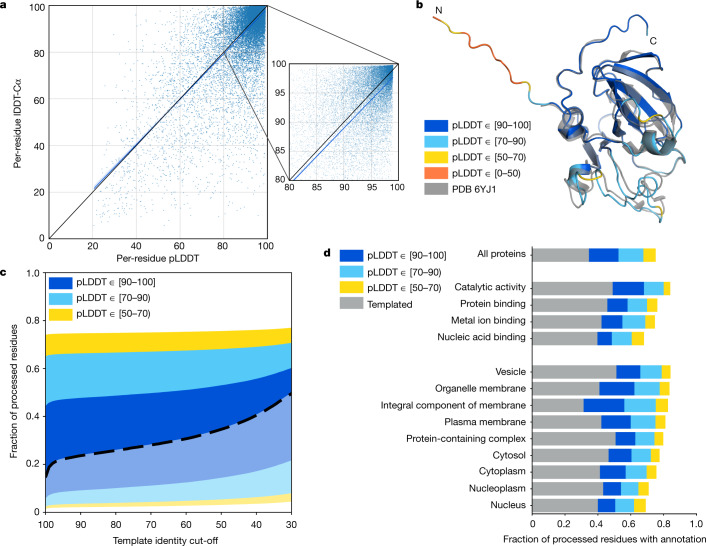
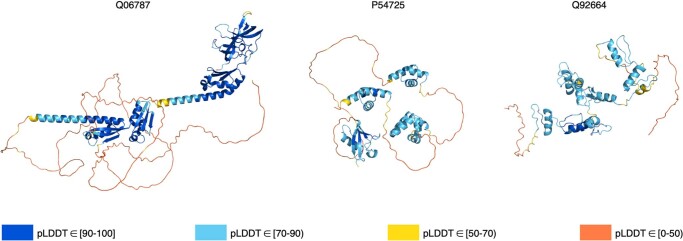
Protein structures can provide invaluable information, both for reasoning about biological processes and for enabling interventions such as structure-based drug development or targeted mutagenesis. After decades of effort, 17% of the total residues in human protein sequences are covered by an experimentally determined structure 1 . Here we markedly expand the structural coverage of the proteome by applying the state-of-the-art machine learning method, AlphaFold 2 , at a scale that covers almost the entire human proteome (98.5% of human proteins). The resulting dataset covers 58% of residues with a confident prediction, of which a subset (36% of all residues) have very high confidence. We introduce several metrics developed by building on the AlphaFold model and use them to interpret the dataset, identifying strong multi-domain predictions as well as regions that are likely to be disordered. Finally, we provide some case studies to illustrate how high-quality predictions could be used to generate biological hypotheses. We are making our predictions freely available to the community and anticipate that routine large-scale and high-accuracy structure prediction will become an important tool that will allow new questions to be addressed from a structural perspective.
Overview
CoChat Summary
TL;DR
AlphaFold2 was applied to 98.5% of human proteins, producing confident predictions for 58% of residues and very high confidence for 36% of all residues. The paper introduces pLDDT, pTM and an experimentally resolved head to interpret the dataset, presents case studies, and releases predictions freely.
Key findings
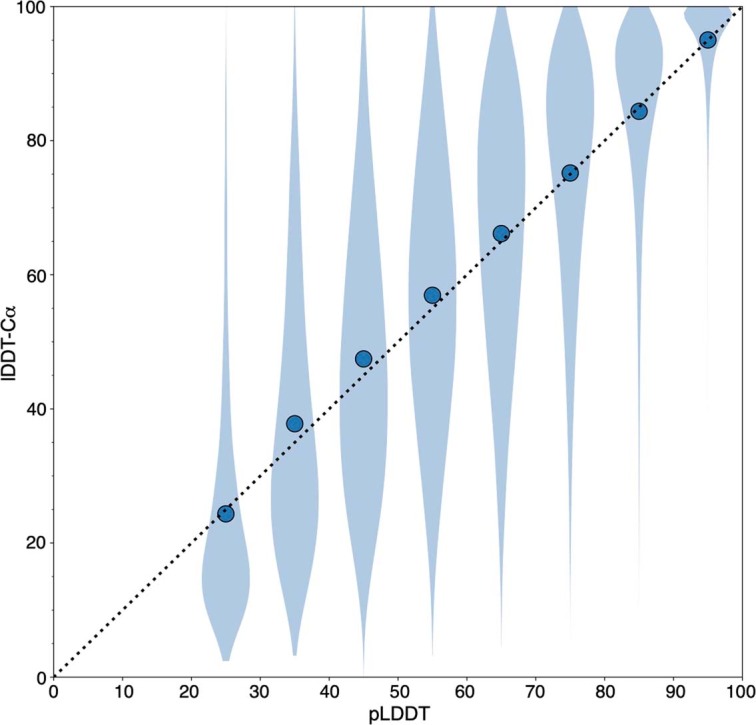
- The dataset covers 98.5% of human proteins with full-chain predictions, amounting to 10,537,122 residues (92.5% of residues); 58.0% of residues were predicted confidently (pLDDT > 70), and 35.7% of total residues fell in the highest accuracy band (pLDDT > 90), double the residues covered by experimental structures.
- At the per-protein level, 43.8% of proteins had a confident prediction on at least three quarters of their sequence, and 1,290 proteins contained a substantial region (>200 residues) with pLDDT ≥ 70 and no good template.
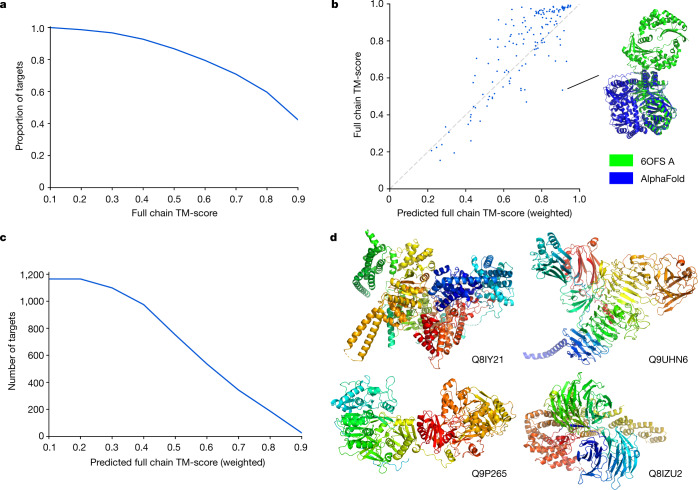
- On a held-out set of long PDB chains (n = 151), 70% of predictions had a TM-score > 0.7; pTM correlated with actual TM-score at Pearson’s r = 0.84, and among human proteins enriched for novel multidomain predictions, 187 had pTM > 0.8 and 343 had pTM > 0.7.
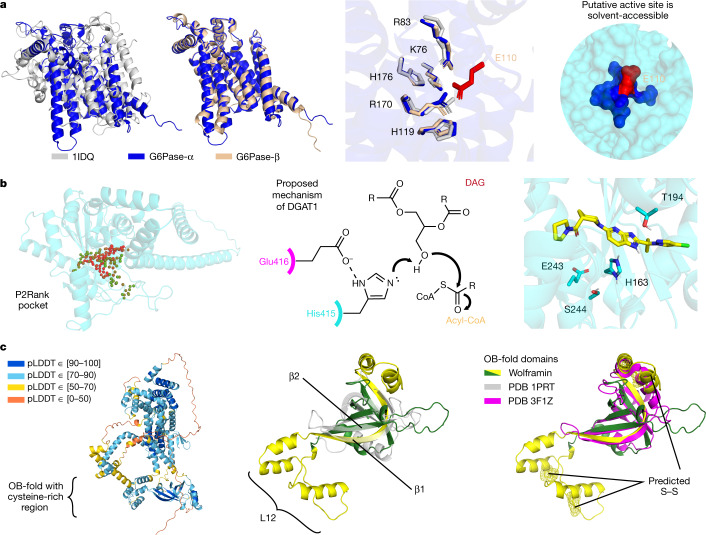
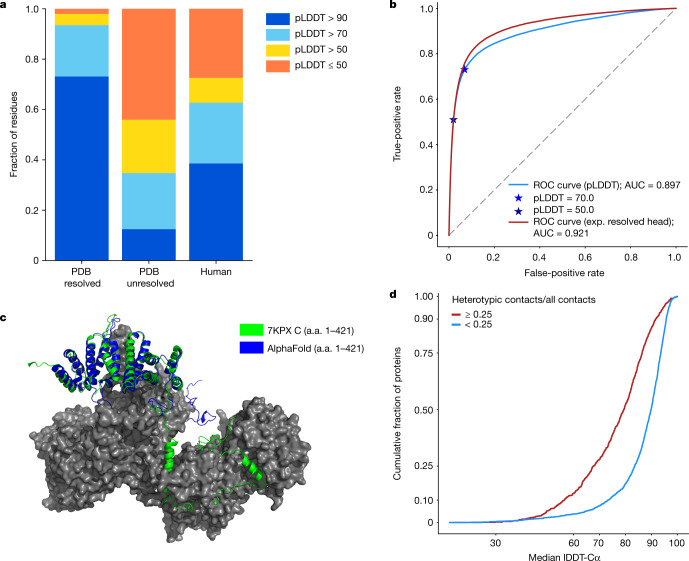
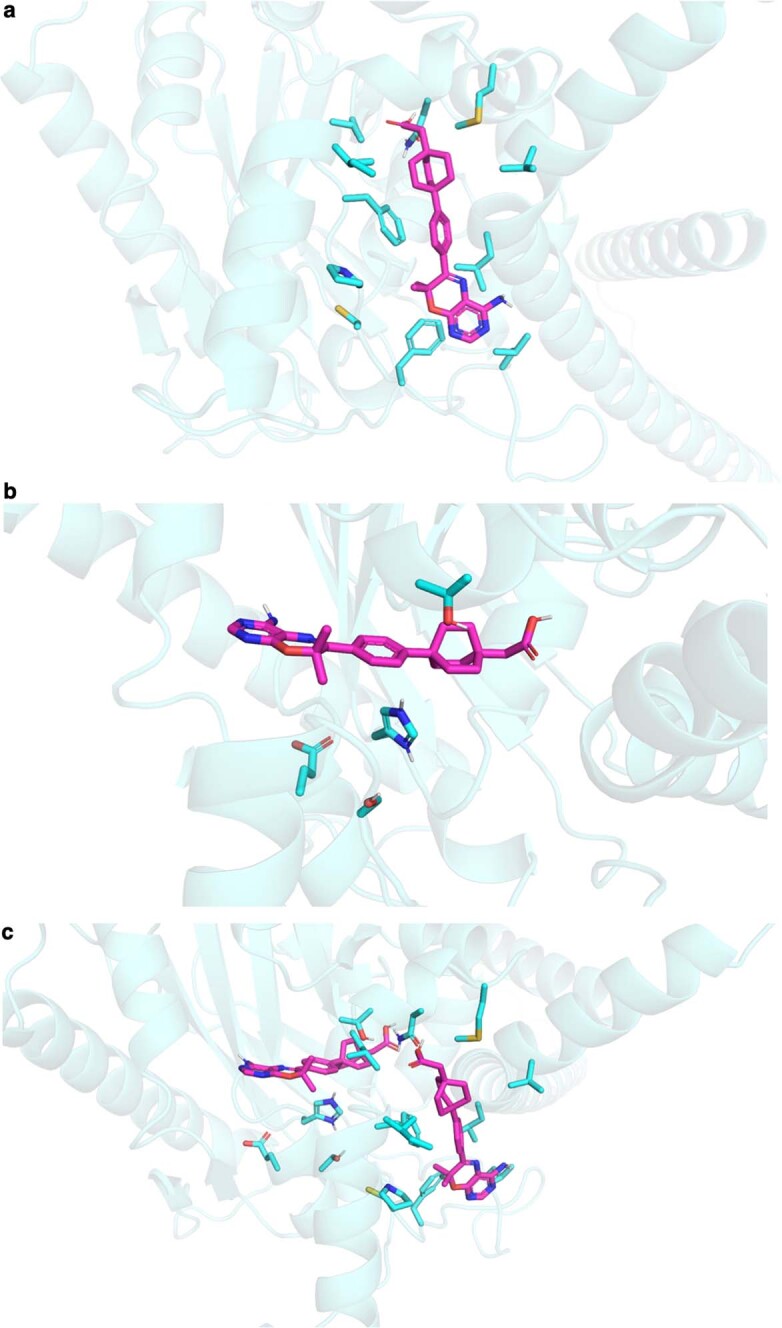
- pLDDT performed as a competitive disorder predictor on the CAID benchmark with AUC 0.897, while the experimentally resolved head achieved AUC 0.921; case studies proposed mechanistic hypotheses for G6Pase-α, DGAT2 and wolframin.
Methods
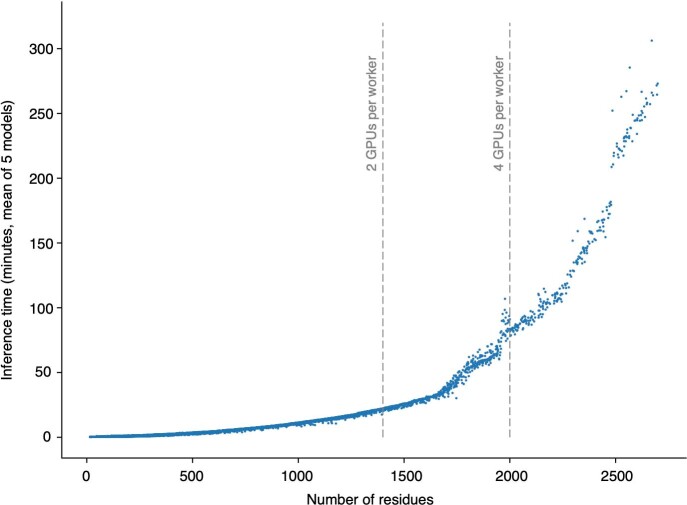
- AlphaFold2 was applied to the UniProt human reference proteome (release 2021_02), attempting all sequences of 16–2,700 amino acids and excluding residue codes B, J, O, U, Z or X; the pipeline used MSA construction, template search, inference with five models, model ranking by mean pLDDT, and constrained relaxation, with Reduced BFD and reduced ensembling.
- Evaluation used a recent PDB dataset of 12,494 chains, CAMEO targets from 21 March 2020 to 13 March 2021, and the CAID Disprot-PDB benchmark; metrics included pLDDT, pTM, the experimentally resolved head, TM-score, lDDT-Cα and AUC.
- Case-study analyses used PyMOL, P2Rank, AutoDockTools, AutoDock Vina and TM-align; inference for the human proteome used 930 GPU days, with an estimated 510 core days for other pipeline stages from scratch.
Limitations
- The paper states that low-confidence regions may reflect intrinsic disorder or regions structured only in complex, and that some proportion of proteins without confident predictions will be genuine failures where a fixed structure exists but AlphaFold does not predict it.
- The paper states that inter-domain accuracy is expected to be lower than within-domain accuracy, that some multidomain proteins may have mobile domains with no fixed packing, and that the case-study biological hypotheses require experimental confirmation.
- Evident from the text: predictions are single-chain and exclude sequences longer than 2,700 residues, so complex-dependent structure and larger proteins are not directly addressed.
Model-written summary. Check it against the paper before relying on it.
Integrity signals
Registry
Cites
Statistics
Figures
![Extended Data Fig. 7 Relationship between sequence length and run time for the non-inference stages of the pipeline. On the basis of 240 human protein sequences, chosen by stratified sampling from the length buckets: [16, 500), [500, 1,000), [1,000, 1,500), [1,500, 2,000), [2,000, 2,500) and [2,500, 2,700]. The relax plot shows five times more points, since five relaxed models are generated per protein. Coefficients for the quadratic lines of best fit were computed with Numpy polyfit.](https://figures.cochat.ai/paper-figures/c9bdcad64694429b95a292e248c7f05a/highly-accurate-protein-structure-prediction-for-the-human-proteome-figure-11.jpg)
Verification
Claims the paper makes
14 Valid · 1 Not valid · 5 Not checked · 44 Own results and interpretations
The cited sources support only part of this claim — read each source’s verdict below.
In the paper
“This system used a completely different model from our CASP13 entry31, and demonstrated a considerable improvement over previous methods in terms of providing routinely high accuracy29,30.”
§ Highly accurate protein structure prediction for the human proteome > Main
What the sources say
- Partly supportedcites [29] Kryshtafovych A Schwede T Topf M Fidelis K Moult J Critical assessment of methods of protein structure prediction (CASP)-round XIII Proteins 2019 87 1011 1020 10.1002/prot.25823 31589781 PMC6927249 sourceExperimental — accuracy not yet measured
The PROGRESS IN CASP13 section reports a dramatic improvement in model accuracy over earlier CASP rounds, and TEMPLATE FREE MODELING says DeepMind’s A7D group had the most accurate results overall. Those passages concern CASP13 methods, not the different system in the citing sentence; they do not establish that AlphaFold2 routinely achieved high accuracy. (LLM, conf=0.84)
- Supportedcites [30] Pereira, J. et al. High-accuracy protein structure prediction in CASP14. Proteins10.1002/prot.26171 (2021). 34218458 source
The Abstract reports a large leap in high accuracy due to AF2. The Conclusions say AF2 substantially outperformed its predecessor and produced the best models for 89 of 97 CASP14 targets, supporting both the improvement and its routine high accuracy. (LLM, conf=0.94)
boostedstates a cause- Asserted: passes — The authors put it forward as true.
- Checkable: passes — It can be checked against evidence.
- Load-bearing: passes — The paper’s conclusions depend on it.
- Based: passes — The paper gives a reason why it holds.
- Partly supported
Every source the paper cites for this claim was checked and supports it.
In the paper
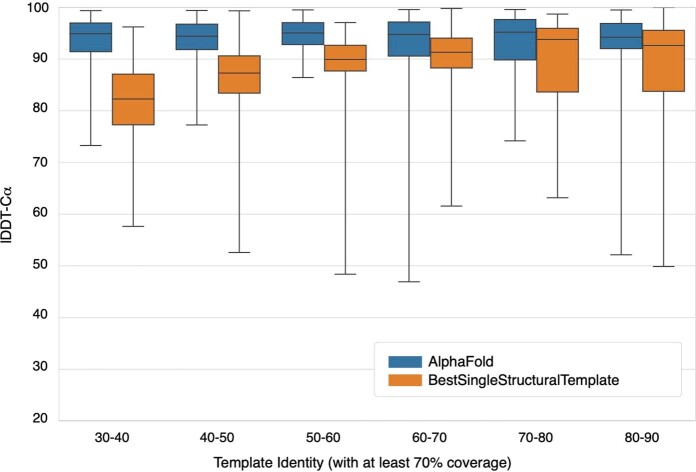
“We note that the accuracy of AlphaFold was validated in CASP142, which focuses on challenging proteins that are dissimilar to structures already available in the PDB.”
§ Highly accurate protein structure prediction for the human proteome > Model confidence and added coverage
What the sources say
- Supportedcites [2] Jumper, J. et al. Highly accurate protein structure prediction with AlphaFold. Nature10.1038/s41586-021-03819-2 (2021). PMC8371605 34265844 source
The paper’s CASP14 assessment passage (section and page not provided in our copy) says AlphaFold was entered into CASP14, describes it as a blind accuracy assessment, and reports that AlphaFold’s structures were substantially more accurate than competing methods. This supports the attributed claim that its accuracy was validated in CASP14. (LLM, conf=0.94)
plain- Asserted: passes — The authors put it forward as true.
- Checkable: passes — It can be checked against evidence.
- Load-bearing: unclear — It is unclear whether the paper’s conclusions depend on it.
- Based: passes — The paper gives a reason why it holds.
- Supported
The cited sources support only part of this claim — read each source’s verdict below.
In the paper
“Despite being the most similar chain, 3F1Z lacks the cysteines that are present in wolframin, which could form disulfide cross-links in the endoplasmic reticulum59.”
§ Highly accurate protein structure prediction for the human proteome > Highlighted predictions > Wolframin
What the sources say
- Partly supportedcites [59] Fass D Thorpe C Chemistry and enzymology of disulfide cross-linking in proteins Chem. Rev. 2018 118 1169 1198 10.1021/acs.chemrev.7b00123 28699750 PMC5808910 sourceExperimental — accuracy not yet measured
Section 2, “Which Proteins Contain Disulfides” (page unavailable), says that proteins in or passing through the ER can have cysteines positioned to form disulfide bonds. It does not address wolframin, 3F1Z, or whether their cysteine residues differ, so it supports only the general possibility of ER disulfide cross-linking. (LLM, conf=0.86)
hedged- Asserted: passes — The authors put it forward as true.
- Checkable: passes — It can be checked against evidence.
- Load-bearing: unclear — It is unclear whether the paper’s conclusions depend on it.
- Based: passes — The paper gives a reason why it holds.
- Partly supported
The sources with a verdict support this claim; the rest weren’t checked yet, have no full text we could read, or their verdicts aren’t rated yet.
In the paper
“Comparing our prediction for this region (median pLDDT of 86.0) to existing PDB chains using TM-align42,57 identified 3F1Z58 as the most similar known chain (TM-score of 0.472) (Fig. 3c, magenta).”
§ Highly accurate protein structure prediction for the human proteome > Highlighted predictions > Wolframin
What the sources say
- Not checked — no full text of the sourcecites [42] Zhang Y Skolnick J Scoring function for automated assessment of protein structure template quality Proteins 2004 57 702 710 10.1002/prot.20264 15476259 source
- Supportedcites [57] Zhang Y Skolnick J TM-align: a protein structure alignment algorithm based on the TM-score Nucleic Acids Res. 2005 33 2302 2309 10.1093/nar/gki524 15849316 PMC1084323 source
The citation is attached to “using TM-align,” identifying the method used by the citing authors, not attributing their 3F1Z match or TM-score to this source. The source’s Results (Benchmark test; page unavailable) describes TM-align as a tool for comparing protein structures and reporting TM-scores. (LLM, conf=0.93)
- Supportedcites [58] Das D The structure of KPN03535 (gi|152972051), a novel putative lipoprotein from Klebsiella pneumoniae, reveals an OB-fold Acta Crystallogr. F 2010 66 1254 1260 10.1107/S1744309109018168 PMC2954213 20944219 source
The citation is attached to 3F1Z, identifying the PDB chain used in the citing authors’ comparison. The source paper’s Materials and methods section states that its KPN03535 structure was deposited under accession code 3f1z; the pLDDT and TM-score describe the citing authors’ own analysis, not a result attributed to this source. (LLM, conf=0.93)
plainstates an association- Asserted: passes — The authors put it forward as true.
- Checkable: passes — It can be checked against evidence.
- Load-bearing: unclear — It is unclear whether the paper’s conclusions depend on it.
- Based: passes — The paper gives a reason why it holds.
Every source the paper cites for this claim was checked and supports it.
In the paper
“A recent evolutionary analysis suggested domains for wolframin, which our prediction largely supports55.”
§ Highly accurate protein structure prediction for the human proteome > Highlighted predictions > Wolframin
What the sources say
- Supportedcites [55] Schäffer DE Iyer LM Burroughs AM Aravind L Functional innovation in the evolution of the calcium-dependent system of the eukaryotic endoplasmic reticulum Front. Genet. 2020 11 34 10.3389/fgene.2020.00034 32117448 PMC7016017 source
The Results section, “Domain Architectural Anatomy and Functional Analysis of the Wolframin Protein,” reports the paper’s proposed domain assignments for wolframin, including Sel1-like repeats, an EF-hand region, and an OB-fold domain (Figure 4A). The citing authors’ statement that their own prediction largely supports those assignments is not a finding attributed to this source. (LLM, conf=0.93)
plainstates an association- Asserted: passes — The authors put it forward as true.
- Checkable: passes — It can be checked against evidence.
- Load-bearing: unclear — It is unclear whether the paper’s conclusions depend on it.
- Based: passes — The paper gives a reason why it holds.
- Supported
36 more claims · 4 with their cited sources checked
Create a free account to see all 64 claims and every source verdict.
- It may state two separate claims as one. 13
- Probably not a substantial claim. 12
Claims other papers make about this one
Each is checked against this paper’s own text: does it say what the citing paper says it does?
The source backs part of the claim, not all of it — or backs it for a different population, condition or comparison.
In the citing paper
“While AF2 performs exceptionally well on these types of folds on average”
From The power and pitfalls of AlphaFold2 for structure prediction beyond rigid globular proteins (2024) · cites this paper as [5]
Experimental — accuracy not yet measuredThe source backs part of the claim, not all of it — or backs it for a different population, condition or comparison.
In the citing paper
“For the majority of globular proteins, AF2 provides accurate, reliable models with high pLDDT (> 70) or low PAE values (< 5 Å) highlighting confidence in the prediction of the position of the atomic coordinates, which match experimentally determined native structures5,17,23,59”
From The power and pitfalls of AlphaFold2 for structure prediction beyond rigid globular proteins (2024) · cites this paper as [5]
Experimental — accuracy not yet measuredThe source backs part of the claim, not all of it — or backs it for a different population, condition or comparison.
In the citing paper
“The lower confidence bands appear to correlate well with backbone flexibility and intrinsic disorder (13) (Figure 2).”
From AlphaFold Protein Structure Database: massively expanding the structural coverage of protein-sequence space with high-accuracy models (2022) · cites this paper as [13]
Experimental — accuracy not yet measuredThe source backs part of the claim, not all of it — or backs it for a different population, condition or comparison.
In the citing paper
“One of the major insights leveraged by AlphaFold 1,2 comes from the use of evolutionary covariations that can be extracted from large-scale multiple sequence alignments.[49][50][51][52][53][54]”
From AlphaFold and Implications for Intrinsically Disordered Proteins (2021) · cites this paper as [2]
Experimental — accuracy not yet measuredThe source backs part of the claim, not all of it — or backs it for a different population, condition or comparison.
In the citing paper
“DeepMind’s AlphaFold2 success in sequence-based protein structure prediction,4 as well as the RoseTTAFold70 open-source counterpart, and the publicly available AlphaFold2 prediction of all human proteins203 are major steps that benefit the scientific community.”
From AlphaFold, Artificial Intelligence (AI), and Allostery (2022) · cites this paper as [203]
Experimental — accuracy not yet measured
16 more claims about this paper
Create a free account to see every claim other papers make about this one.
Citations
Cites
Highly accurate protein structure prediction with AlphaFold
Jumper, J., Evans, R., Pritzel, A., Green, T., Figurnov, M., Ronneberger, O., Tunyasuvunakool, K., Bates, R., Žídek, A., Potapenko, A., et al. (2021) · Nature · doi:10.1038/s41586-021-03819-2 · Cited by 43,764 · cited 1×
“[16, 500), [500, 1,000), [1,000, 1,500), [1,500, 2,000), [2,000, 2,500) and [2,500, 2,700].”
Self-citationGene Ontology: tool for the unification of biology
Ashburner, M., Ball, C. A., Blake, J. A., Botstein, D., Butler, H., Cherry, J. M., Davis, A. P., Dolinski, K., Dwight, S. S., Eppig, J. T., et al. (2000) · Nature Genetics · doi:10.1038/75556 · Cited by 43,206
Trott, O., & Olson, A. J. (2010) · Journal of Computational Chemistry · doi:10.1002/jcc.21334 · Cited by 38,412
AutoDock4 and AutoDockTools4: Automated docking with selective receptor flexibility
Morris, G. M., Huey, R., Lindstrom, W., Sanner, M. F., Belew, R. K., Goodsell, D. S., & Olson, A. J. (2009) · Journal of Computational Chemistry · doi:10.1002/jcc.21256 · Cited by 25,486
Initial sequencing and analysis of the human genome
International Human Genome Sequencing Consortium, Whitehead Institute for Biomedical Research, C. F. G. R., Lander, E. S., Linton, L. M., Birren, B., Nusbaum, C., Zody, M. C., Baldwin, J., Devon, K., Dewar, K., et al. (2001) · Nature · doi:10.1038/35057062 · Cited by 24,216
Self-citationThe sequence of the human genome
Venter, J. C., Adams, M. D., Myers, E. W., Li, P. W., Mural, R. J., Sutton, G. G., Smith, H. O., Yandell, M., Evans, C. A., Holt, R. A., et al. (2001) · Science · doi:10.1126/science.1058040 · Cited by 13,909
SWISS-MODEL: homology modelling of protein structures and complexes
Waterhouse, A., Bertoni, M., Bienert, S., Studer, G., Tauriello, G., Gumienny, R., Heer, F. T., de Beer, T. A. P., Rempfer, C., Bordoli, L., et al. (2018) · Nucleic Acids Research · doi:10.1093/nar/gky427 · Cited by 13,067
Pfam: The protein families database in 2021
Mistry, J., Chuguransky, S., Williams, L., Qureshi, M., Salazar, G. A., Sonnhammer, E. L. L., Tosatto, S. C. E., Paladin, L., Raj, S., Richardson, L. J., et al. (2021) · Nucleic Acids Research · doi:10.1093/nar/gkaa913 · Cited by 7,452
Self-citationUniProt: the universal protein knowledgebase in 2021
The UniProt Consortium, Bateman, A., Martin, M.-J., Orchard, S., Magrane, M., Agivetova, R., Ahmad, S., Alpi, E., Bowler-Barnett, E. H., Britto, R., et al. (2021) · Nucleic Acids Research · doi:10.1093/nar/gkaa1100 · Cited by 6,372
Self-citationThe Gene Ontology Resource: 20 years and still GOing strong
The Gene Ontology Consortium (2019) · Nucleic Acids Research · doi:10.1093/nar/gky1055 · Cited by 4,747
Cited by
Items 801–900 of 3,208
Breaking Bad Proteins—Discovery Approaches and the Road to Clinic for Degraders
Bouvier, C., Lawrence, R., Cavallo, F., Xolalpa, W., Jordan, A. M., Hjerpe, R., & Rodríguez, M. S. (2024) · Cells · doi:10.3390/cells13070578 · Cited by 32
“However, in the absence of such knowledge, two possibilities can be considered: generating the knowledge or using artificial intelligence (AI)-driven tertiary structure prediction models such as DeepMind [136] and RoseTTAFold [137].”
BackgroundEdmunds, N. S., Genc, A. G., & McGuffin, L. J. (2024) · Bioinformatics · doi:10.1093/bioinformatics/btae491 · Cited by 35
“Linear relationships between ASE and observed scores have also been described, suggesting that, despite a tendency for some minor over-prediction with plDDT (Jumper et al. 2021, Tunyasuvunakool et al. 2021), both scores are consistently applied across the scoring range.”
InfluentialJang, M., Cho, H. J., Park, Y.-S., Lee, H., Bae, E., Jung, S., Jin, H., Woo, J., Park, E., Kim, S.-J., et al. (2024) · Nature Genetics · doi:10.1038/s41588-024-01944-y · Cited by 35
“91), and visualization was accomplished using ChimeraX 92 .”
Yuan, W., Yu, G., Zhu, G., & Yi, F. (2024) · Food Research International · doi:10.1016/j.foodres.2024.115447 · Cited by 24
AlphaFold and what is next: bridging functional, systems and structural biology
Szczepski, K., & Jaremko, Ł. (2025) · Expert Review of Proteomics · doi:10.1080/14789450.2025.2456046 · Cited by 29
“One interesting conclusion that could be derived from previous studies [33,73,88,92] is the fact that low confidence score assigned by AF are likely to predict intrinsic disorder and flexibility [33,106].”
InfluentialFulcher, J. M., Ives, A. N., Tasaki, S., Kelly, S. S., Williams, S., Fillmore, T., Zhou, M., Moore, R., Qian, W., Paša‐Tolić, L., et al. (2025) · Molecular & Cellular Proteomics · doi:10.1016/j.mcpro.2025.100983 · Cited by 27
“We found a clear shift towards lower pLDDT scores for cleavage sites versus the reference data, indicating cleavage sites are enriched in regions predicted to be unstructured or potentially intrinsically disordered (regions with pLDDT <50) (63).”
Atomic resolution ensembles of intrinsically disordered proteins with Alphafold
Schnapka, V., Morozova, T. I., Sen, S., & Bonomi, M. (2026) · Nature Communications · doi:10.1038/s41467-026-69172-y · Cited by 23
Current status of PTMs structural databases: applications, limitations and prospects
de Brevern, A. G., & Rebehmed, J. (2022) · Amino Acids · doi:10.1007/s00726-021-03119-z · Cited by 24
“(Tunyasuvunakool et al. 2021), will be a great hub of information to assist scientists in studying and modeling PTMs in their three-dimensional context.”
BackgroundRethinking Protein Drug Design with Highly Accurate Structure Prediction of Anti-CRISPR Proteins
Park, H.-M., Park, Y., Vankerschaver, J., Messem, A. V., Neve, W. D., & Shim, H. (2022) · Pharmaceuticals · doi:10.3390/ph15030310 · Cited by 23
“The result with the highest per-residue confidence score (pLDDT: per residue estimate of confidence on a scale from 0 to 100 [29]) among the five results was determined as the final structure and saved in a protein data bank (PDB) format (Supplementary Figure S6).”
MethodRational exploration of fold atlas for human solute carrier proteins
Xie, T., Chi, X., Huang, B., Ye, F., Zhou, Q., & Huang, J. (2022) · Structure · doi:10.1016/j.str.2022.05.015 · Cited by 23
Ultrashort peptides induce biomineralization
Ding, Y., Cai, M., Niu, P., Zhang, H., Zhang, S., & Sun, Y. (2022) · Composites Part B Engineering · doi:10.1016/j.compositesb.2022.110196 · Cited by 23
Quercetin targets VCAM1 to prevent diabetic cerebrovascular endothelial cell injury
Huang, J., Lin, W., Sun, Y., Wang, Q., He, S., Han, Z., Lu, L., Kang, X., Chen, Y., Guo, H., et al. (2022) · Frontiers in Aging Neuroscience · doi:10.3389/fnagi.2022.944195 · Cited by 25
“The corresponding structure information of the protein was obtained from Uniport,3 get the entry of P19320 and download the corresponding Alphafold2 protein structure file as previous studies (Burley et al., 2019; Tunyasuvunakool et al., 2021; Kang et al., 2022; Lu et al., 2022; Tang G.-Y. et al., 2022).”
MethodVeit, M., Gadalla, M. R., & Zhang, M. (2022) · International Journal of Molecular Sciences · doi:10.3390/ijms232113209 · Cited by 24
Gao, M., An, D. N., & Skolnick, J. (2022) · eLife · doi:10.7554/elife.82885 · Cited by 27
“The input features of all monomers were derived using standard sequence libraries ( The Uniprot Consortium, 2019 ; Mitchell et al., 2020 ; Tunyasuvunakool et al., 2021 ) and a version of the Protein Data Bank ( Berman et al., 2000 ) released in November 2021.”
MethodFantacuzzi, M., D’Agostino, I., Carradori, S., Liguori, F., Carta, F., Agamennone, M., Angeli, A., Sannio, F., Docquier, J., Capasso, C., et al. (2023) · Journal of Enzyme Inhibition and Medicinal Chemistry · doi:10.1080/14756366.2023.2201402 · Cited by 28
“The 3D structure produced by homology modelling was compared with that predicted by AlphaFold2 48 and is available in the AlphaFold Protein Structure Database (https:// alphafold.ebi.ac.uk/).”
Protein structure dynamics by crosslinking mass spectrometry
Chen, Z. A., & Rappsilber, J. (2023) · Current Opinion in Structural Biology · doi:10.1016/j.sbi.2023.102599 · Cited by 24
Dowling, P., Swandulla, D., & Ohlendieck, K. (2023) · Cells · doi:10.3390/cells12212560 · Cited by 25
A model-agnostic, network theory-based framework for supporting XAI on classifiers
Bonifazi, G., Cauteruccio, F., Corradini, E., Marchetti, M., Terracina, G., Ursino, D., & Virgili, L. (2023) · Expert Systems with Applications · doi:10.1016/j.eswa.2023.122588 · Cited by 26
Wei, B., Kang, Y., Zhao, Y., et al. (2024) · ACS Catalysis · doi:10.1021/acscatal.4c00056 · Cited by 23
Jamasb, A. R., Viñas, R., Ma, E. J., Harris, C., Huang, K., Hall, D., Lió, P., & Blundell, T. L. (2020) · bioRxiv (Cold Spring Harbor Laboratory) · doi:10.1101/2020.07.15.204701 · Cited by 39
“Highly-accurate protein structure prediction 127 using AlphaFold2 has been applied at the proteome scale to humans and 20 key model organisms 128 [13, 43].”
MethodDiscovery of archaeal Fusexins homologous to eukaryotic HAP2/GCS1 gamete fusion proteins
Moi, D., Nishio, S., Li, X., Valansi, C., Langleib, M., Brukman, N. G., Flyak, K., Dessimoz, C., de Sanctis, D., Tunyasuvunakool, K., et al. (2021) · doi:10.1101/2021.10.13.464100 · Cited by 23
Self-citationDistinct structural bases for sequence-specific DNA binding by mammalian BEN domain proteins
Zheng, L., Liu, J., Niu, L., Kamran, M. Z., Yang, A. W. H., Jolma, A., Dai, Q., Hughes, T. R., Patel, D. J., Zhang, L., et al. (2022) · Genes & Development · doi:10.1101/gad.348993.121 · Cited by 24
“Recent monumental advances in protein structural prediction provide valuable tools to explore 3D structure with unprecedented efficacy (Baek et al. 2021; Tunyasuvunakool et al. 2021).”
Dwivedi, Y. K., Hughes, L., Bhadeshia, H. K. D. H., Ananiadou, S., Cohn, A. G., Cole, J. M., Conduit, G. J., Desarkar, M. S., & Wang, X. (2023) · International Journal of Information Management · doi:10.1016/j.ijinfomgt.2023.102725 · Cited by 29
Atomic resolution ensembles of intrinsically disordered proteins with Alphafold
Schnapka, V., Morozova, T. I., Sen, S., & Bonomi, M. (2025) · doi:10.1101/2025.06.18.660298 · Cited by 23
Sequence Coverage Visualizer: A web application for protein sequence coverage 3D visualization
Shao, X., Grams, C., & Gao, Y. (2022) · doi:10.1101/2022.01.12.476109 · Cited by 23
Kao, H.-W., Lu, W.-L., Ho, M., Lin, Y., Hsieh, Y.-J., Ko, T., Hsu, S. D., & Wu, K. (2023) · ACS Synthetic Biology · doi:10.1021/acssynbio.3c00042 · Cited by 22
Lysophospholipid acyltransferases orchestrate the compositional diversity of phospholipids
Valentine, W. J., Shimizu, T., & Shindou, H. (2023) · Biochimie · doi:10.1016/j.biochi.2023.08.012 · Cited by 30
ATG9B is a tissue-specific homotrimeric lipid scramblase that can compensate for ATG9A
Chiduza, G. N., Garza-García, A., Almacellas, E., Tito, S. D., Pye, V. E., van Vliet, A. R., Cherepanov, P., & Tooze, S. A. (2023) · Autophagy · doi:10.1080/15548627.2023.2275905 · Cited by 23
“Comparison of the globally refined consensus ATG9B structure with the models generated using AlphaFold (AF) [39] (predicted Local Distance Difference Test/pLDDT >50) was also insightful with respect to the conformational dynamics of the protein (Figure 4E and S2B).”
MethodDiscovery of antiphage systems in the lactococcal plasmidome
Grafakou, A., Mosterd, C., Beck, M. H., Kelleher, P., McDonnell, B., de Waal, P. P., van Rijswijck, I. M. H., van Peij, N. N. M. E., Cambillau, C., Mahony, J., et al. (2024) · Nucleic Acids Research · doi:10.1093/nar/gkae671 · Cited by 28
Structural basis for the transport and substrate selection of human urate transporter 1
He, J., Liu, G., Kong, F., Tan, Q., Wang, Z., Yang, M., He, Y., Jia, X., Yan, C., Wang, C., et al. (2024) · Cell Reports · doi:10.1016/j.celrep.2024.114628 · Cited by 23
In silico modeling of targeted protein degradation
Lv, W., Jia, X., Tang, B., Ma, C., Fan, X., Jin, X., Niu, Z., & Han, X. (2025) · European Journal of Medicinal Chemistry · doi:10.1016/j.ejmech.2025.117432 · Cited by 30
Liu, J., Liu, Y., Xu, X., Wu, Y., Liu, Y., Li, J., Du, G., Chen, J., Lv, X., & Liu, L. (2025) · Biotechnology Advances · doi:10.1016/j.biotechadv.2025.108560 · Cited by 25
Wu, L., Hwang, B., & Jiang, J. (2025) · Chemical Engineering Journal · doi:10.1016/j.cej.2025.163801 · Cited by 25
PAAR Proteins Are Versatile Clips That Enrich the Antimicrobial Weapon Arsenals of Prokaryotes
Zhang, Z., Liu, Y., Zhang, P., Wang, J., Li, D., & Li, Y. (2021) · mSystems · doi:10.1128/msystems.00953-21 · Cited by 27
“AlphaFold is an AI system that predicts a protein’s three-dimensional structure from its amino acid sequence (21, 22).”
BackgroundBiophysical and functional properties of purified glucose-6-phosphatase catalytic subunit 1
Claxton, D. P., Hawes, E. M., Oeser, J. K., O’Brien, R. M., & Mchaourab, H. S. (2021) · Journal of Biological Chemistry · doi:10.1016/j.jbc.2021.101520 · Cited by 26
“In combination with the recent computational model (26), the technical advancements showcased in this study set the stage for mechanistic interrogation of G6PC1 and known pathogenic mutations in unprecedented detail.”
BackgroundMethodStructural basis for catalyzed assembly of the Sonic hedgehog–Patched1 signaling complex
Huang, P., Wierbowski, B. M., Lian, T., Chan, C., García‐Linares, S., Jiang, J., & Salic, A. N. (2022) · Developmental Cell · doi:10.1016/j.devcel.2022.02.008 · Cited by 28
“We then used the AlphaFold-predicted structure to build the model for GAS1-G2.”
MethodResultInfluentialNing, K., Wang, Z., Cheng, F., Yan, Z., & Qiu, J. (2022) · PLoS Pathogens · doi:10.1371/journal.ppat.1010578 · Cited by 24
“AlphaFolder2 has been widely used for protein structure prediction [59,60].”
MethodBeaman, G. M., Lopes, F. M., Hofmann, A., Roesch, W., Promm, M., Bijlsma, E. K., Patel, C., Akıncı, A., Burgu, B., Knijnenburg, J., et al. (2022) · Frontiers in Genetics · doi:10.3389/fgene.2022.896125 · Cited by 20
“These hydrogen bonds are likely conserved in heparanase-2, as suggested by the Alphafold predicted model (Tunyasuvunakool et al., 2021) and the p.”
BackgroundAssessment of AlphaFold2 for Human Proteins via Residue Solvent Exposure
Bæk, K. T., & Kepp, K. P. (2022) · Journal of Chemical Information and Modeling · doi:10.1021/acs.jcim.2c00243 · Cited by 23
Carugo, O. (2022) · Journal of Biomolecular Structure and Dynamics · doi:10.1080/07391102.2022.2143427 · Cited by 24
“…electron or neutron diffraction or cryo-electron microscopy, will enter the Protein Data Bank in the near future, as most of the attention is currently focused on artificial intelligence predictions (Jumper et al., 2021; Kleywegt & Velankar, 2022; Tunyasuvunakool et al., 2021; Varadi et al., 2022).”
BackgroundWang, L., Li, F., Ma, X., Cang, Y., & Bai, F. (2022) · Journal of Chemical Information and Modeling · doi:10.1021/acs.jcim.2c01033 · Cited by 24
Kim, Y., Lee, S., Nong, L. K., Kim, J., Kim, S. B., & Kim, D. (2023) · Frontiers in Microbiology · doi:10.3389/fmicb.2022.990910 · Cited by 27
“However, a deep learning-based structure prediction algorithm termed AlphaFold which was recently released with its source code and model parameters (Jumper et al., 2021; Tunyasuvunakool et al., 2021), has facilitated protein structure prediction with remarkable accuracy using only the amino acid sequence of target pr…”
Rhodobacter capsulatus forms a compact crescent-shaped LH1–RC photocomplex
Tani, K., Kanno, R., Ji, X.-C., Satoh, I., Kobayashi, Y. O., Hall, M., Yu, L., Kimura, Y., Mizoguchi, A., Humbel, B. M., et al. (2023) · Nature Communications · doi:10.1038/s41467-023-36460-w · Cited by 21
Guo, H.-B., Varaljay, V. A., Kedziora, G., Taylor, K., Farajollahi, S., Lombardo, N., Harper, E., Hung, C., Gross, M., Perminov, A., et al. (2023) · Scientific Reports · doi:10.1038/s41598-023-30310-x · Cited by 22
Molecular Dynamics Simulations of Ion Permeation in Human Voltage-Gated Sodium Channels
Alberini, G., Paz, S. A., Corradi, B., Abrams, C. F., Benfenati, F., & Maragliano, L. (2023) · Journal of Chemical Theory and Computation · doi:10.1021/acs.jctc.2c00990 · Cited by 26
Wu, T., Guo, Z., & Cheng, J. (2023) · Bioinformatics · doi:10.1093/bioinformatics/btad298 · Cited by 35
“For the CASP14 refinement dataset, we use the initial models provided by CASP14 organizers as the start models, which were generated by traditional protein structure prediction methods other than AlphaFold2.”
MethodInfluentialLigand-induced activation and G protein coupling of prostaglandin F2α receptor
Wu, C., Xu, Y., He, Q., Li, D., Duan, J., Li, C., You, C., Chen, H., Fan, W., Jiang, Y., et al. (2023) · Nature Communications · doi:10.1038/s41467-023-38411-x · Cited by 29
Adiyaman, R., Edmunds, N. S., Genc, A. G., Alharbi, S. M. A., & McGuffin, L. J. (2023) · Bioinformatics Advances · doi:10.1093/bioadv/vbad078 · Cited by 25
Wang, K., Lee, C., Sui, X., Kim, S., Wang, S., Higgs, A., Baublis, A., Voth, G. A., Liao, M., Walther, T. C., et al. (2023) · Nature Communications · doi:10.1038/s41467-023-38932-5 · Cited by 31
“The AlphaFold 2 predicted MBOAT7 model was used as the initial model.”
InfluentialVales, S., Kryukova, J., Chandra, S., Smagurauskaite, G., Payne, M., Clark, C. J., Hafner, K., Mburu, P., Denisov, S. S., Davies, G., et al. (2023) · Nature Communications · doi:10.1038/s41467-023-41488-z · Cited by 26
“Models were generated using AlphaFold2-Multimer at the COSMIC 2 Science Gateway using default parameters and a full database search using UniProt mature protein sequences 50,75 .”
InfluentialÖsterlund, N., Frankel, R., Carlsson, A., Thacker, D., Karlsson, M., Matus, V., Gräslund, A., Emanuelsson, C. S., & Linse, S. S. (2023) · Journal of Biological Chemistry · doi:10.1016/j.jbc.2023.105317 · Cited by 25
“Low prediction scores in AlphaFold have been shown to be an indicator of disorder (38), and the prediction of an unfolded loop was con fi rmed using CD spectroscopy where the experimental spectrum agreed nicely with the predicted spectrum for the AlphaFold model (Fig.”
MethodThe mechanism of Atg15-mediated membrane disruption in autophagy
Kagohashi, Y., Sasaki, M., May, A. I., Kawamata, T., & Ohsumi, Y. (2023) · The Journal of Cell Biology · doi:10.1083/jcb.202306120 · Cited by 29
“Indeed, the structure of Atg15, as predicted by Alpha-Fold2 (Tunyasuvunakool et al., 2021), shows that Atg15 has several clusters of hydrophobic residues facing toward the exterior of the protein, some of which may become embedded in AB membranes.”
ECOD domain classification of 48 whole proteomes from AlphaFold Structure Database using DPAM2
Schaeffer, R. D., Zhang, J., Medvedev, K. E., Kinch, L. N., Cong, Q., & Grishin, N. V. (2024) · PLOS Computational Biology · doi:10.1371/journal.pcbi.1011586 · Cited by 22
Nguyen, B. D., Potapenko, P., Demirci, A., Govind, K., Bompas, S., & Sandfeld, S. (2024) · Machine Learning with Applications · doi:10.1016/j.mlwa.2024.100544 · Cited by 36
Analysis of AlphaFold and molecular dynamics structure predictions of mutations in serpins
Garrido, P., Carmena‐Bargueño, M., de la Morena‐Barrio, M. E., Bravo‐Pérez, C., de la Morena‐Barrio, B., Cifuentes‐Riquelme, R., Lozano, M. L., Pérez‐Sánchez, H., & Corral, J. (2024) · PLoS ONE · doi:10.1371/journal.pone.0304451 · Cited by 26
“The model, 41 now released to the community, is expected to ease the efforts needed to solve the 3D 42 structures of several proteins yet unknown [17].”
Yu, D., Wang, L., & Wang, Y. (2022) · International Journal of Molecular Sciences · doi:10.3390/ijms23094738 · Cited by 23
Quantitative Models of Lipid Transfer and Membrane Contact Formation
Zhang, Y., Ge, J., Bian, X., & Kumar, A. (2022) · Contact · doi:10.1177/25152564221096024 · Cited by 22
“To estimate the lipid flow properties of VPS13 and ATG2, we chose l = 20 nm (Valverde et al., 2019; Li et al., 2020; Tunyasuvunakool et al., 2021), D = 4 μm2/s (Wang et al., 2021b), N = 20 (Kumar et al., 2018; Valverde et al., 2019), and kBT = 4.1 pN×nm.”
BackgroundInfluentialApplications of AlphaFold beyond Protein Structure Prediction
Zhang, Y., Li, P., Pan, F., Liu, H., Hong, P., Liu, X., & Zhang, J. (2021) · bioRxiv (Cold Spring Harbor Laboratory) · doi:10.1101/2021.11.03.467194 · Cited by 22
Yao, T., Zhang, Z., Li, Q., Huang, R., Hong, Y., Li, C., Zhang, F., Huang, Y., Fang, Y., Cao, Q., et al. (2023) · Cancer Immunology Research · doi:10.1158/2326-6066.cir-23-0083 · Cited by 22
LeDesma, R., Heller, B., Biswas, A., Maya, S., Gili, S., Higgins, J., & Ploss, A. (2023) · eLife · doi:10.7554/elife.80529 · Cited by 22
ECOD domain classification of 48 whole proteomes from AlphaFold Structure Database using DPAM
(2023) · doi:10.1101/2023.10.10.561815 · Cited by 22
LeDesma, R., Biswas, A., Maya, S., Gili, S., Higgins, J., & Ploss, A. (2022) · doi:10.1101/2022.06.14.496061 · Cited by 22
Brookes, E., Rocco, M., Vachette, P., & Trewhella, J. (2023) · Journal of Applied Crystallography · doi:10.1107/s1600576723005344 · Cited by 21
Structural analogue-based protein structure domain assembly assisted by deep learning
Peng, C.-X., Zhou, X.-G., Xia, Y.-H., Liu, J., Hou, M.-H., & Zhang, G.-J. (2022) · Bioinformatics · doi:10.1093/bioinformatics/btac553 · Cited by 21
Protein structure and dynamics in the era of integrative structural biology
Grandori, R. (2023) · Frontiers in Biophysics · doi:10.3389/frbis.2023.1219843 · Cited by 27
Chi, P., Ou, G., Liu, S., Ma, Q., Lu, Y., Li, J., Li, J., Qi, Q., Han, Z., Zhang, Z., et al. (2024) · Nature Structural & Molecular Biology · doi:10.1038/s41594-024-01396-2 · Cited by 22
“The SCMC core model was generated by individually docking the Alpha-Fold2-predicted NLRP5, TLE6 and OOEP structures 48 into the density map using Chimera 49 .”
Bettanti, A., Beccari, A. R., & Biccarino, M. (2024) · Discover Artificial Intelligence · doi:10.1007/s44163-024-00188-3 · Cited by 36
Bian, S.-Q., Wang, Z., Gong, J., et al. (2025) · ACS Sustainable Chemistry & Engineering · doi:10.1021/acssuschemeng.5c00435 · Cited by 21
Wu, C., Zhang, C., Jin, S., Wang, J. J., Dai, A., Xu, J., Zhang, H., Yang, X., He, X., Yuan, Q., et al. (2025) · Cell Discovery · doi:10.1038/s41421-025-00779-z · Cited by 31
“A predicted URAT1 structure from AlphaFold2 was used as the starting reference model for receptor building 40 .”
Synthetic lethality in cancer drug discovery: challenges and opportunities
Gonçalves, E., Ryan, C. J., & Adams, D. J. (2025) · Nature Reviews Drug Discovery · doi:10.1038/s41573-025-01273-7 · Cited by 34
“The break-through structural biology tools AlphaFold 181,182 and RoseTTAFold 183,184 have revolutionized our ability to rapidly predict protein structures from sequences with high accuracy, facilitating structure-based drug design.”
PDBench: evaluating computational methods for protein-sequence design
Castorina, L. V., Petrenas, R., Subr, K., & Wood, C. W. (2023) · Bioinformatics · doi:10.1093/bioinformatics/btad027 · Cited by 21
Jabeen, A., de March, C. A., Matsunami, H., & Ranganathan, S. (2021) · International Journal of Molecular Sciences · doi:10.3390/ijms222111546 · Cited by 23
“Tunyasuvunakool et al., have reported highly accurate protein structure prediction for the entire human proteome, including ORs [29].”
BackgroundStructures and nucleic acid-binding preferences of the eukaryotic ARID domain
Korn, S. M., & Schlundt, A. (2022) · Biological Chemistry · doi:10.1515/hsz-2021-0404 · Cited by 26
“uk) (Jumper et al. 2021; Tunyasuvunakool et al. 2021) indicates the presence of an additional BAH domain; a motif that often occurs in chromatin-interacting proteins (Yang and Xu 2013).”
BackgroundThe epigenetic dimension of protein structure
Azzaz, F., & Fantini, J. (2022) · BioMolecular Concepts · doi:10.1515/bmc-2022-0006 · Cited by 26
The Evolution, Genomic Epidemiology, and Transmission Dynamics of Tembusu Virus
Cui, Y., Pan, Y., Guo, J., Wang, D., Tong, X., Wang, Y., Li, J., Zhao, J., Ji, Y., Wu, Z. Q., et al. (2022) · Viruses · doi:10.3390/v14061236 · Cited by 22
“As shown in Figure 5a and Supplementary Table S2, Malaysia was found to be the earliest location of the original TMUV, consistent with a previous study in Malaysia in which TMUV was first identified in mosquitoes in the 1960s [35,36].”
ResultSelf-citationA structural discovery journey of streptococcal phages adhesion devices by AlphaFold2
Goulet, A., Joos, R., Lavelle, K., van Sinderen, D., Mahony, J., & Cambillau, C. (2022) · Frontiers in Molecular Biosciences · doi:10.3389/fmolb.2022.960325 · Cited by 23
“The release of the powerful AlphaFold2 (AF2) software in mid-2021 revolutionised structural biology (Jumper et al., 2021a; Jumper et al., 2021b; Tunyasuvunakool et al., 2021).”
BackgroundThe druggable genome: Twenty years later
Radoux, C. J., Vianello, F., McGreig, J. E., Desai, N., & Bradley, A. R. (2022) · Frontiers in Bioinformatics · doi:10.3389/fbinf.2022.958378 · Cited by 28
“Open Targets Target-disease association data, with tractability data for small molecules, antibodies, and PROTACs User Interface JSON Parquet Apache Spark Google BigQuery GraphQL API canSAR Data and predictions for a range of areas applicable to drug discovery, including structure-based, ligand-based, and network-base…”
BackgroundMethodInfluentialHProteome-BSite: predicted binding sites and ligands in human 3D proteome
Sim, J., Kwon, S., & Seok, C. (2022) · Nucleic Acids Research · doi:10.1093/nar/gkac873 · Cited by 21
Defining the S-Glutathionylation Proteome by Biochemical and Mass Spectrometric Approaches
Li, X., Zhang, T., Day, N., Feng, S., Gaffrey, M. J., & Qian, W. (2022) · Antioxidants · doi:10.3390/antiox11112272 · Cited by 25
Wu, J., Wang, X., Liu, Q., et al. (2022) · Proceedings of the National Academy of Sciences · doi:10.1073/pnas.2211425120 · Cited by 21
E6AP AZUL interaction with UBQLN1/2 in cells, condensates, and an AlphaFold-NMR integrated structure
Buel, G. R., Chen, X., Myint, W., Kayode, O., Folimonova, V., Cruz, A. M., Skorupka, K. A., Matsuo, H., & Walters, K. J. (2023) · Structure · doi:10.1016/j.str.2023.01.012 · Cited by 22
Basso, M. F., Contaldi, F., Celso, F. L., Karalija, E., Paz-Carrasco, L. C., Barone, G., Ferrante, A., & Martinelli, F. (2023) · Plant Science · doi:10.1016/j.plantsci.2023.111817 · Cited by 25
QM/MM Modeling Aided Enzyme Engineering in Natural Products Biosynthesis
Zhang, F., Zeng, T., & Wu, R. (2023) · Journal of Chemical Information and Modeling · doi:10.1021/acs.jcim.3c00779 · Cited by 27
Serine-rich repeat proteins: well-known yet little-understood bacterial adhesins
Cinar, M. S., Niyas, A. M. M., & Avci, F. Y. (2023) · Journal of Bacteriology · doi:10.1128/jb.00241-23 · Cited by 27
“Model confidence falters at regions associated with the SRR domains with consistently low model confidence, interpreted as a prediction of disorder (96).”
BackgroundRao, B., Yu, X., Bai, J., & Hu, J. S. (2023) · Journal of Chemical Information and Modeling · doi:10.1021/acs.jcim.3c01298 · Cited by 20
Tu, G., Fu, T., Zheng, G., Xu, B., Gou, R., Luo, D., Wang, P., & Xue, W. (2024) · Journal of Chemical Information and Modeling · doi:10.1021/acs.jcim.3c01736 · Cited by 25
Exploring the Alternative Conformation of a Known Protein Structure Based on Contact Map Prediction
(2023) · doi:10.1021/acs.jcim.3c01381 · Cited by 21
Structural coverage of the human interactome
Kosoglu, K., Aydin, Z., Tuncbag, N., Gursoy, A., & Keskin, O. (2023) · Briefings in Bioinformatics · doi:10.1093/bib/bbad496 · Cited by 21
“These regions often pose challenges in structural modeling, making it difficult to obtain high-quality models [48,49].”
BackgroundExploring the alternative conformation of a known protein structure based on contact map prediction
Li, J., Wang, L., Zhu, Z., & Song, C. (2022) · doi:10.1101/2022.06.07.495232 · Cited by 21
Structural analogue-based protein structure domain assembly assisted by deep learning
Peng, C.-X., Zhou, X.-G., Xia, Y.-H., Liu, J., Hou, M.-H., & Zhang, G.-J. (2022) · doi:10.1101/2022.03.07.483151 · Cited by 21
Complementing machine learning-based structure predictions with native mass spectrometry
(2022) · doi:10.1101/2022.03.17.484776 · Cited by 21
Complementing machine learning‐based structure predictions with native mass spectrometry
Allison, T. M., Degiacomi, M. T., Marklund, E. G., Jovine, L., Elofsson, A., Benesch, J. L. P., & Landreh, M. (2022) · Protein Science · doi:10.1002/pro.4333 · Cited by 20
“Machine learning (ML)-based algorithms have been hailed as the solution to the protein structure prediction problem and are already being used to predict structures across entire proteomes.(1,2) For example, using protein sequence data as the only user input, AF2(3) can generate models of ordered, monomeric proteins t…”
MethodTollefson, M. R., Gogal, R. A., Weaver, A. M., Schaefer, A. M., Marini, R. J., Azaiez, H., Kolbe, D. L., Wang, D., Weaver, A. E., Casavant, T. L., et al. (2023) · Human Genetics · doi:10.1007/s00439-023-02559-9 · Cited by 20
Baltoumas, F. A., Karatzas, E., Páez-Espino, D., Venetsianou, N. K., Aplakidou, E., Oulas, A., Finn, R. D., Ovchinnikov, S., Pafilis, E., Kyrpides, N. C., et al. (2023) · Frontiers in Bioinformatics · doi:10.3389/fbinf.2023.1157956 · Cited by 25
“AlphaFold2 has been used to predict 3D structures for almost the entire human proteome, resulting in more than 20,000 3D models (Tunyasuvunakool et al., 2021).”
MethodStructural study of UFL1‐UFC1 interaction uncovers the role of UFL1 N‐terminal helix in ufmylation
Banerjee, S., Varga, J. K., Kumar, M., Zoltsman, G., Rotem‐Bamberger, S., Cohen‐Kfir, E., Isupov, M. N., Rosenzweig, R., Schueler‐Furman, O., & Wiener, R. (2023) · EMBO Reports · doi:10.15252/embr.202356920 · Cited by 22
“Deep learning of modeling of protein structures is revolutionizing the field of structural biology, spearheaded by AlphaFold2 developed by DeepMind (Jumper et al , 2021; Tunyasuvunakool et al , 2021; Varadi et al , 2022).”
Raisinghani, N., Alshahrani, M., Gupta, G., Tian, H., Xiao, S., Tao, P., & Verkhivker, G. M. (2024) · Journal of Chemical Theory and Computation · doi:10.1021/acs.jctc.4c00222 · Cited by 18
Benchmarking protein language models for protein crystallization
Mall, R., Kaushik, R., Martinez, Z. A., Thomson, M. W., & Castiglione, F. (2025) · Scientific Reports · doi:10.1038/s41598-025-86519-5 · Cited by 20
“ProstT5 exemplifies how language modeling techniques and transformers can be used to leverage the wealth of information from protein structure databases such as AFDB.”
InfluentialWei, Y., Liu, X., Mu, Y., Xu, C., Zhang, G., Li, T., Li, Z., Yuan, W., Ho, H., & Xu, M. (2025) · Biosensors and Bioelectronics · doi:10.1016/j.bios.2025.117741 · Cited by 23
Protein–ligand data at scale to support machine learning
Edwards, A. M., Owen, D. R., Zhang, L., Young, D. W., Willson, T. M., Wellnitz, J., Wang, Y., Walsh, J. J., Vernet, E., Tropsha, A., et al. (2025) · Nature Reviews Chemistry · doi:10.1038/s41570-025-00737-z · Cited by 42
“The value of benchmarking initiatives in computational biology was clearly established by CASP, which, for over 30 years, has driven and monitored progressive improvements in computational methods 63,64 .”
AF3Complex yields improved structural predictions of protein complexes
Feldman, J. D., & Skolnick, J. (2025) · Bioinformatics · doi:10.1093/bioinformatics/btaf432 · Cited by 26
“…upon the underlying processes and architecture of the model to enhance the accuracy of its structural predictions–advances that would prove to be immensely impactful in the model’s clinical applications, where precision is key (Tunyasuvunakool et al. 2021, Gao et al. 2022, Hekkelman et al. 2023).”
Metadata
- Authors
- Tunyasuvunakool, K., Adler, J., Wu, Z., Green, T., Zielinski, M., Žídek, A., Bridgland, A., Cowie, A., Meyer, C., Laydon, A., Velankar, S., Kleywegt, G. J., Bateman, A., Evans, R., Pritzel, A., Figurnov, M., Ronneberger, O., Bates, R., Kohl, S. A. A., Potapenko, A., Ballard, A. J., Romera-Paredes, B., Nikolov, S., Jain, R., Clancy, E., Reiman, D., Petersen, S., Senior, A. W., Kavukcuoglu, K., Birney, E., Kohli, P., Jumper, J., & Hassabis, D.
- Affiliations
- Google DeepMind (United Kingdom) (GB)
- European Bioinformatics Institute (GB)
- Corresponding author
- Tunyasuvunakool, Kathryn
- Jumper, John
- Hassabis, Demis
- ORCID
- Tunyasuvunakool, Kathryn
- Adler, Jonas
- Wu, Zachary
- Green, Tim
- Žídek, Augustin
- Meyer, Clemens
- Laydon, Agata
- Velankar, Sameer
- Kleywegt, Gerard J.
- Bateman, Alex
- Evans, Richard
- Pritzel, Alexander
- Figurnov, Michael
- Ronneberger, Olaf
- Bates, Russ
- Kohl, Simon A. A.
- Potapenko, Anna
- Ballard, Andrew J.
- Nikolov, Stanislav
- Jain, Rishub
- Clancy, Ellen
- Reiman, David
- Petersen, Stig
- Senior, Andrew W.
- Birney, Ewan
- Kohli, Pushmeet
- Jumper, John
- Hassabis, Demis
- Venue
- Nature
- Published
- 2021-07-22
- Volume
- 596
- Issue
- 7873
- Pages
- 590-596
- ISSN
- 0028-0836 (ISSN-L)
- 1476-4687
- PMC
- PMC8387240
- OpenAlex
- W3183475563
- Semantic Scholar
- 1fb3ad9969245795f268636eff9a145337144718
- Cited by
- 3,025
- References
- 83
- Citations by year
- 2026: 346 · 2025: 517 · 2024: 580 · 2023: 701 · 2022: 692 · 2021: 181
- FWCI
- 169.53
- Type
- journal article
- Language
- en
- Open access
- hybrid
- doi.org
- Licence
- cc-by
- creativecommons.org/licenses/by/4.0 (tdm)
- creativecommons.org/licenses/by/4.0 (vor)
- Locations
- Nature (publishedVersion, cc-by)
- Europe PMC (PubMed Central) (publishedVersion, other-oa)
- PubMed Central (publishedVersion, cc-by)
- PubMed (publishedVersion)
- RePEc: Research Papers in Economics (submittedVersion)
- Funders
- European Bioinformatics Institute
- DeepMind
- Topics
- Life Sciences › Biochemistry, Genetics and Molecular Biology › Molecular Biology › Protein Structure and Dynamics
- Life Sciences › Biochemistry, Genetics and Molecular Biology › Molecular Biology › Machine Learning in Bioinformatics
- Life Sciences › Biochemistry, Genetics and Molecular Biology › Structural Biology › Enzyme Structure and Function
- Keywords
- protein structure prediction, human proteome, AlphaFold2, structural coverage, intrinsically disordered regions, multidomain proteins, protein structure database
- MeSH terms
- Deep Learning, Glucose-6-Phosphatase, Humans, Membrane Proteins, Models, Molecular, Protein Conformation, Reproducibility of Results, Protein Folding, Computational Biology, Proteome, Diacylglycerol O-Acyltransferase, Datasets as Topic
About these checks
Registry, retraction, Cites and statistics results are computed, not judged, with one exception: a printed reference that no index lists is read once by a model before it counts as a citation error. Claims are extracted by a model and kept only when their quote appears verbatim in the text; each cited source is then checked, with a model’s help, for whether it says what the claim relies on. Those verdicts can be wrong — read the claim’s quote and the cited source before relying on one.
The claim verdicts this report counts are experimental: their accuracy is not yet measured.
A language model drew the claims from the paper on 2026-10-10, under version 3 of the claim definition (model deepseek-v4.1-flash, prompt extract-v3).
A second model labelled each claim on 2026-10-10 (model jev-1.13-20260917, definition revision gold-guideline-v0.2).
Cited sources are checked with a language model’s help (gpt-6-sol).
Statistics and arithmetic are recomputed, not judged.
Confidence bands are shown only for fields calibrated on our annotated test set. None is calibrated yet, so no band is shown.
What counts as a claim ›How we measure confidence ›How we check this ›
Are you an author, or do you see a problem with this page? Request a review
Data sources
Bibliographic data: Semantic Scholar, OpenAlex, Crossref.
Contains information from the Semantic Scholar Academic Graph Datasets, made available under the ODC Attribution License (ODC-BY 1.0).
Semantic Scholar’s data is described in: Kinney, R., et al. (2023). The Semantic Scholar Open Data Platform. arXiv:2301.10140.
