

Highly accurate protein structure prediction for the human proteome
Open accessThe DOI matches its Crossref record; 77 of the 83 references it cites were found in a registry or an index; 18 of the 24 sources its claims cite were checked for support.
Abstract
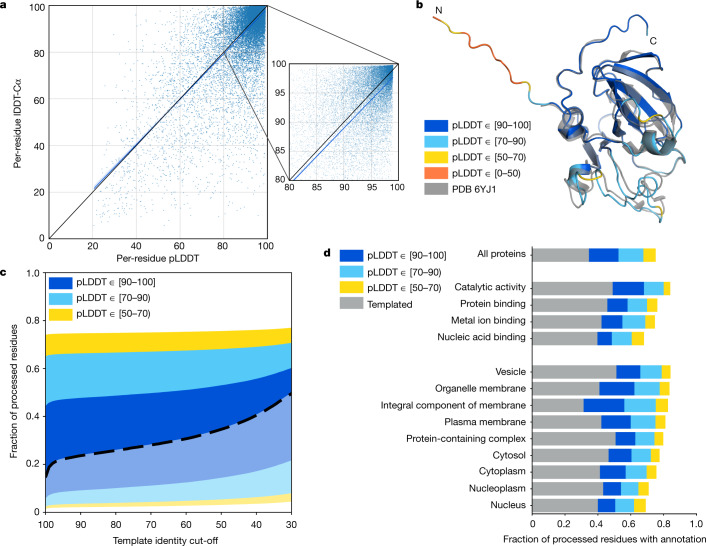
Protein structures can provide invaluable information, both for reasoning about biological processes and for enabling interventions such as structure-based drug development or targeted mutagenesis. After decades of effort, 17% of the total residues in human protein sequences are covered by an experimentally determined structure 1 . Here we markedly expand the structural coverage of the proteome by applying the state-of-the-art machine learning method, AlphaFold 2 , at a scale that covers almost the entire human proteome (98.5% of human proteins). The resulting dataset covers 58% of residues with a confident prediction, of which a subset (36% of all residues) have very high confidence. We introduce several metrics developed by building on the AlphaFold model and use them to interpret the dataset, identifying strong multi-domain predictions as well as regions that are likely to be disordered. Finally, we provide some case studies to illustrate how high-quality predictions could be used to generate biological hypotheses. We are making our predictions freely available to the community and anticipate that routine large-scale and high-accuracy structure prediction will become an important tool that will allow new questions to be addressed from a structural perspective.
Overview
CoChat Summary
TL;DR
AlphaFold2 was applied to 98.5% of human proteins, producing confident predictions for 58% of residues and very high confidence for 36% of all residues. The paper introduces pLDDT, pTM and an experimentally resolved head to interpret the dataset, presents case studies, and releases predictions freely.
Key findings
- The dataset covers 98.5% of human proteins with full-chain predictions, amounting to 10,537,122 residues (92.5% of residues); 58.0% of residues were predicted confidently (pLDDT > 70), and 35.7% of total residues fell in the highest accuracy band (pLDDT > 90), double the residues covered by experimental structures.
- At the per-protein level, 43.8% of proteins had a confident prediction on at least three quarters of their sequence, and 1,290 proteins contained a substantial region (>200 residues) with pLDDT ≥ 70 and no good template.
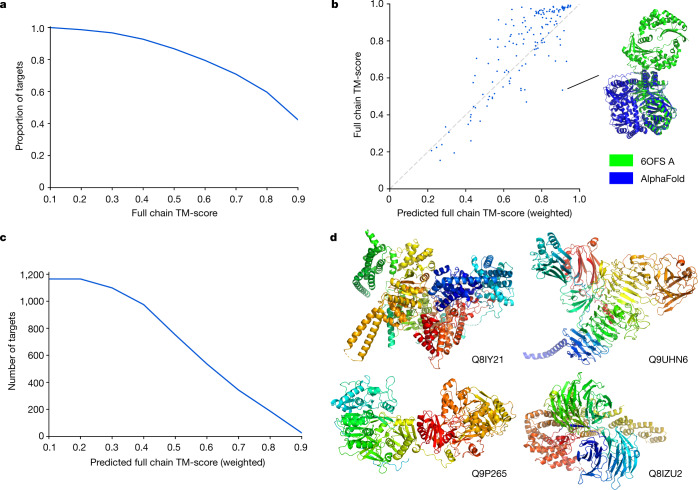
- On a held-out set of long PDB chains (n = 151), 70% of predictions had a TM-score > 0.7; pTM correlated with actual TM-score at Pearson’s r = 0.84, and among human proteins enriched for novel multidomain predictions, 187 had pTM > 0.8 and 343 had pTM > 0.7.
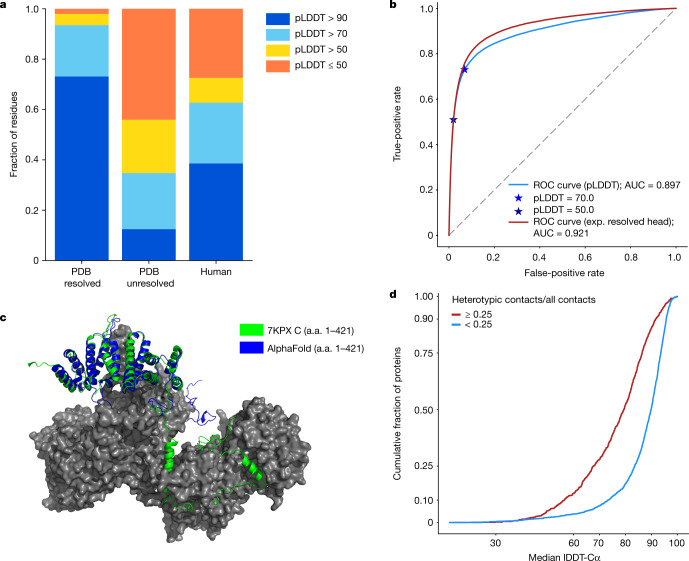
- pLDDT performed as a competitive disorder predictor on the CAID benchmark with AUC 0.897, while the experimentally resolved head achieved AUC 0.921; case studies proposed mechanistic hypotheses for G6Pase-α, DGAT2 and wolframin.
Methods
- AlphaFold2 was applied to the UniProt human reference proteome (release 2021_02), attempting all sequences of 16–2,700 amino acids and excluding residue codes B, J, O, U, Z or X; the pipeline used MSA construction, template search, inference with five models, model ranking by mean pLDDT, and constrained relaxation, with Reduced BFD and reduced ensembling.
- Evaluation used a recent PDB dataset of 12,494 chains, CAMEO targets from 21 March 2020 to 13 March 2021, and the CAID Disprot-PDB benchmark; metrics included pLDDT, pTM, the experimentally resolved head, TM-score, lDDT-Cα and AUC.
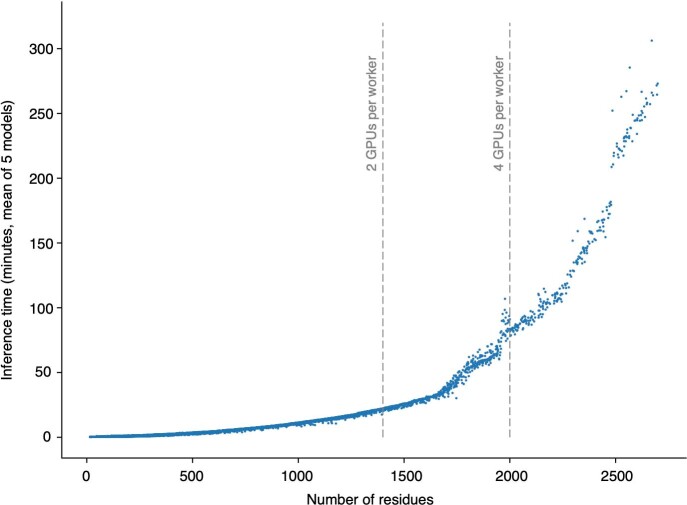
- Case-study analyses used PyMOL, P2Rank, AutoDockTools, AutoDock Vina and TM-align; inference for the human proteome used 930 GPU days, with an estimated 510 core days for other pipeline stages from scratch.
Limitations
- The paper states that low-confidence regions may reflect intrinsic disorder or regions structured only in complex, and that some proportion of proteins without confident predictions will be genuine failures where a fixed structure exists but AlphaFold does not predict it.
- The paper states that inter-domain accuracy is expected to be lower than within-domain accuracy, that some multidomain proteins may have mobile domains with no fixed packing, and that the case-study biological hypotheses require experimental confirmation.
- Evident from the text: predictions are single-chain and exclude sequences longer than 2,700 residues, so complex-dependent structure and larger proteins are not directly addressed.
Model-written summary. Check it against the paper before relying on it.
Integrity signals
Registry
Cites
Statistics
Figures
![Extended Data Fig. 7 Relationship between sequence length and run time for the non-inference stages of the pipeline. On the basis of 240 human protein sequences, chosen by stratified sampling from the length buckets: [16, 500), [500, 1,000), [1,000, 1,500), [1,500, 2,000), [2,000, 2,500) and [2,500, 2,700]. The relax plot shows five times more points, since five relaxed models are generated per protein. Coefficients for the quadratic lines of best fit were computed with Numpy polyfit.](https://figures.cochat.ai/paper-figures/c9bdcad64694429b95a292e248c7f05a/highly-accurate-protein-structure-prediction-for-the-human-proteome-figure-11.jpg)
Verification
Claims the paper makes
14 Valid · 1 Not valid · 5 Not checked · 44 Own results and interpretations
The cited sources support only part of this claim — read each source’s verdict below.
In the paper
“This system used a completely different model from our CASP13 entry31, and demonstrated a considerable improvement over previous methods in terms of providing routinely high accuracy29,30.”
§ Highly accurate protein structure prediction for the human proteome > Main
What the sources say
- Partly supportedcites [29] Kryshtafovych A Schwede T Topf M Fidelis K Moult J Critical assessment of methods of protein structure prediction (CASP)-round XIII Proteins 2019 87 1011 1020 10.1002/prot.25823 31589781 PMC6927249 sourceExperimental — accuracy not yet measured
The PROGRESS IN CASP13 section reports a dramatic improvement in model accuracy over earlier CASP rounds, and TEMPLATE FREE MODELING says DeepMind’s A7D group had the most accurate results overall. Those passages concern CASP13 methods, not the different system in the citing sentence; they do not establish that AlphaFold2 routinely achieved high accuracy. (LLM, conf=0.84)
- Supportedcites [30] Pereira, J. et al. High-accuracy protein structure prediction in CASP14. Proteins10.1002/prot.26171 (2021). 34218458 source
The Abstract reports a large leap in high accuracy due to AF2. The Conclusions say AF2 substantially outperformed its predecessor and produced the best models for 89 of 97 CASP14 targets, supporting both the improvement and its routine high accuracy. (LLM, conf=0.94)
boostedstates a cause- Asserted: passes — The authors put it forward as true.
- Checkable: passes — It can be checked against evidence.
- Load-bearing: passes — The paper’s conclusions depend on it.
- Based: passes — The paper gives a reason why it holds.
- Partly supported
Every source the paper cites for this claim was checked and supports it.
In the paper
“We note that the accuracy of AlphaFold was validated in CASP142, which focuses on challenging proteins that are dissimilar to structures already available in the PDB.”
§ Highly accurate protein structure prediction for the human proteome > Model confidence and added coverage
What the sources say
- Supportedcites [2] Jumper, J. et al. Highly accurate protein structure prediction with AlphaFold. Nature10.1038/s41586-021-03819-2 (2021). PMC8371605 34265844 source
The paper’s CASP14 assessment passage (section and page not provided in our copy) says AlphaFold was entered into CASP14, describes it as a blind accuracy assessment, and reports that AlphaFold’s structures were substantially more accurate than competing methods. This supports the attributed claim that its accuracy was validated in CASP14. (LLM, conf=0.94)
plain- Asserted: passes — The authors put it forward as true.
- Checkable: passes — It can be checked against evidence.
- Load-bearing: unclear — It is unclear whether the paper’s conclusions depend on it.
- Based: passes — The paper gives a reason why it holds.
- Supported
The cited sources support only part of this claim — read each source’s verdict below.
In the paper
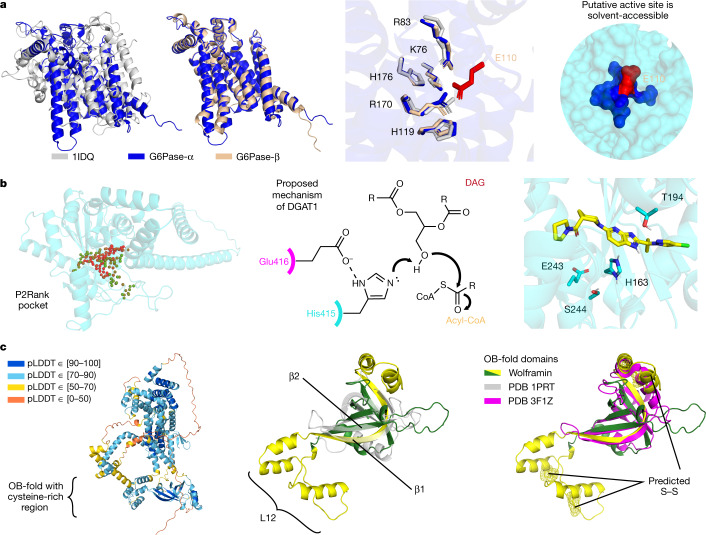
“Despite being the most similar chain, 3F1Z lacks the cysteines that are present in wolframin, which could form disulfide cross-links in the endoplasmic reticulum59.”
§ Highly accurate protein structure prediction for the human proteome > Highlighted predictions > Wolframin
What the sources say
- Partly supportedcites [59] Fass D Thorpe C Chemistry and enzymology of disulfide cross-linking in proteins Chem. Rev. 2018 118 1169 1198 10.1021/acs.chemrev.7b00123 28699750 PMC5808910 sourceExperimental — accuracy not yet measured
Section 2, “Which Proteins Contain Disulfides” (page unavailable), says that proteins in or passing through the ER can have cysteines positioned to form disulfide bonds. It does not address wolframin, 3F1Z, or whether their cysteine residues differ, so it supports only the general possibility of ER disulfide cross-linking. (LLM, conf=0.86)
hedged- Asserted: passes — The authors put it forward as true.
- Checkable: passes — It can be checked against evidence.
- Load-bearing: unclear — It is unclear whether the paper’s conclusions depend on it.
- Based: passes — The paper gives a reason why it holds.
- Partly supported
The sources with a verdict support this claim; the rest weren’t checked yet, have no full text we could read, or their verdicts aren’t rated yet.
In the paper
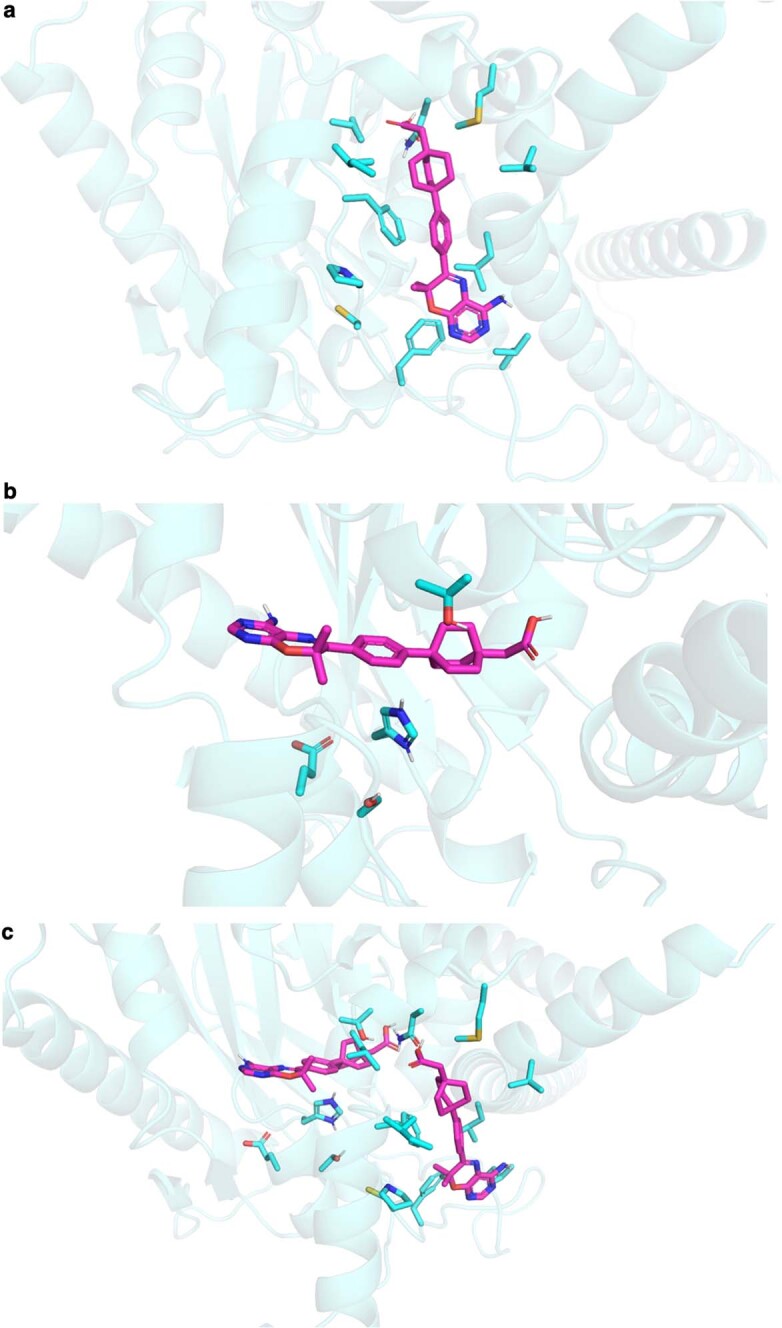
“Comparing our prediction for this region (median pLDDT of 86.0) to existing PDB chains using TM-align42,57 identified 3F1Z58 as the most similar known chain (TM-score of 0.472) (Fig. 3c, magenta).”
§ Highly accurate protein structure prediction for the human proteome > Highlighted predictions > Wolframin
What the sources say
- Not checked — no full text of the sourcecites [42] Zhang Y Skolnick J Scoring function for automated assessment of protein structure template quality Proteins 2004 57 702 710 10.1002/prot.20264 15476259 source
- Supportedcites [57] Zhang Y Skolnick J TM-align: a protein structure alignment algorithm based on the TM-score Nucleic Acids Res. 2005 33 2302 2309 10.1093/nar/gki524 15849316 PMC1084323 source
The citation is attached to “using TM-align,” identifying the method used by the citing authors, not attributing their 3F1Z match or TM-score to this source. The source’s Results (Benchmark test; page unavailable) describes TM-align as a tool for comparing protein structures and reporting TM-scores. (LLM, conf=0.93)
- Supportedcites [58] Das D The structure of KPN03535 (gi|152972051), a novel putative lipoprotein from Klebsiella pneumoniae, reveals an OB-fold Acta Crystallogr. F 2010 66 1254 1260 10.1107/S1744309109018168 PMC2954213 20944219 source
The citation is attached to 3F1Z, identifying the PDB chain used in the citing authors’ comparison. The source paper’s Materials and methods section states that its KPN03535 structure was deposited under accession code 3f1z; the pLDDT and TM-score describe the citing authors’ own analysis, not a result attributed to this source. (LLM, conf=0.93)
plainstates an association- Asserted: passes — The authors put it forward as true.
- Checkable: passes — It can be checked against evidence.
- Load-bearing: unclear — It is unclear whether the paper’s conclusions depend on it.
- Based: passes — The paper gives a reason why it holds.
Every source the paper cites for this claim was checked and supports it.
In the paper
“A recent evolutionary analysis suggested domains for wolframin, which our prediction largely supports55.”
§ Highly accurate protein structure prediction for the human proteome > Highlighted predictions > Wolframin
What the sources say
- Supportedcites [55] Schäffer DE Iyer LM Burroughs AM Aravind L Functional innovation in the evolution of the calcium-dependent system of the eukaryotic endoplasmic reticulum Front. Genet. 2020 11 34 10.3389/fgene.2020.00034 32117448 PMC7016017 source
The Results section, “Domain Architectural Anatomy and Functional Analysis of the Wolframin Protein,” reports the paper’s proposed domain assignments for wolframin, including Sel1-like repeats, an EF-hand region, and an OB-fold domain (Figure 4A). The citing authors’ statement that their own prediction largely supports those assignments is not a finding attributed to this source. (LLM, conf=0.93)
plainstates an association- Asserted: passes — The authors put it forward as true.
- Checkable: passes — It can be checked against evidence.
- Load-bearing: unclear — It is unclear whether the paper’s conclusions depend on it.
- Based: passes — The paper gives a reason why it holds.
- Supported
36 more claims · 4 with their cited sources checked
Create a free account to see all 64 claims and every source verdict.
- It may state two separate claims as one. 13
- Probably not a substantial claim. 12
Claims other papers make about this one
Each is checked against this paper’s own text: does it say what the citing paper says it does?
The source backs part of the claim, not all of it — or backs it for a different population, condition or comparison.
In the citing paper
“While AF2 performs exceptionally well on these types of folds on average”
From The power and pitfalls of AlphaFold2 for structure prediction beyond rigid globular proteins (2024) · cites this paper as [5]
Experimental — accuracy not yet measuredThe source backs part of the claim, not all of it — or backs it for a different population, condition or comparison.
In the citing paper
“For the majority of globular proteins, AF2 provides accurate, reliable models with high pLDDT (> 70) or low PAE values (< 5 Å) highlighting confidence in the prediction of the position of the atomic coordinates, which match experimentally determined native structures5,17,23,59”
From The power and pitfalls of AlphaFold2 for structure prediction beyond rigid globular proteins (2024) · cites this paper as [5]
Experimental — accuracy not yet measuredThe source backs part of the claim, not all of it — or backs it for a different population, condition or comparison.
In the citing paper
“The lower confidence bands appear to correlate well with backbone flexibility and intrinsic disorder (13) (Figure 2).”
From AlphaFold Protein Structure Database: massively expanding the structural coverage of protein-sequence space with high-accuracy models (2022) · cites this paper as [13]
Experimental — accuracy not yet measuredThe source backs part of the claim, not all of it — or backs it for a different population, condition or comparison.
In the citing paper
“One of the major insights leveraged by AlphaFold 1,2 comes from the use of evolutionary covariations that can be extracted from large-scale multiple sequence alignments.[49][50][51][52][53][54]”
From AlphaFold and Implications for Intrinsically Disordered Proteins (2021) · cites this paper as [2]
Experimental — accuracy not yet measuredThe source backs part of the claim, not all of it — or backs it for a different population, condition or comparison.
In the citing paper
“DeepMind’s AlphaFold2 success in sequence-based protein structure prediction,4 as well as the RoseTTAFold70 open-source counterpart, and the publicly available AlphaFold2 prediction of all human proteins203 are major steps that benefit the scientific community.”
From AlphaFold, Artificial Intelligence (AI), and Allostery (2022) · cites this paper as [203]
Experimental — accuracy not yet measured
16 more claims about this paper
Create a free account to see every claim other papers make about this one.
Citations
Cites
Highly accurate protein structure prediction with AlphaFold
Jumper, J., Evans, R., Pritzel, A., Green, T., Figurnov, M., Ronneberger, O., Tunyasuvunakool, K., Bates, R., Žídek, A., Potapenko, A., et al. (2021) · Nature · doi:10.1038/s41586-021-03819-2 · Cited by 43,764 · cited 1×
“[16, 500), [500, 1,000), [1,000, 1,500), [1,500, 2,000), [2,000, 2,500) and [2,500, 2,700].”
Self-citationGene Ontology: tool for the unification of biology
Ashburner, M., Ball, C. A., Blake, J. A., Botstein, D., Butler, H., Cherry, J. M., Davis, A. P., Dolinski, K., Dwight, S. S., Eppig, J. T., et al. (2000) · Nature Genetics · doi:10.1038/75556 · Cited by 43,206
Trott, O., & Olson, A. J. (2010) · Journal of Computational Chemistry · doi:10.1002/jcc.21334 · Cited by 38,412
AutoDock4 and AutoDockTools4: Automated docking with selective receptor flexibility
Morris, G. M., Huey, R., Lindstrom, W., Sanner, M. F., Belew, R. K., Goodsell, D. S., & Olson, A. J. (2009) · Journal of Computational Chemistry · doi:10.1002/jcc.21256 · Cited by 25,486
Initial sequencing and analysis of the human genome
International Human Genome Sequencing Consortium, Whitehead Institute for Biomedical Research, C. F. G. R., Lander, E. S., Linton, L. M., Birren, B., Nusbaum, C., Zody, M. C., Baldwin, J., Devon, K., Dewar, K., et al. (2001) · Nature · doi:10.1038/35057062 · Cited by 24,216
Self-citationThe sequence of the human genome
Venter, J. C., Adams, M. D., Myers, E. W., Li, P. W., Mural, R. J., Sutton, G. G., Smith, H. O., Yandell, M., Evans, C. A., Holt, R. A., et al. (2001) · Science · doi:10.1126/science.1058040 · Cited by 13,909
SWISS-MODEL: homology modelling of protein structures and complexes
Waterhouse, A., Bertoni, M., Bienert, S., Studer, G., Tauriello, G., Gumienny, R., Heer, F. T., de Beer, T. A. P., Rempfer, C., Bordoli, L., et al. (2018) · Nucleic Acids Research · doi:10.1093/nar/gky427 · Cited by 13,067
Pfam: The protein families database in 2021
Mistry, J., Chuguransky, S., Williams, L., Qureshi, M., Salazar, G. A., Sonnhammer, E. L. L., Tosatto, S. C. E., Paladin, L., Raj, S., Richardson, L. J., et al. (2021) · Nucleic Acids Research · doi:10.1093/nar/gkaa913 · Cited by 7,452
Self-citationUniProt: the universal protein knowledgebase in 2021
The UniProt Consortium, Bateman, A., Martin, M.-J., Orchard, S., Magrane, M., Agivetova, R., Ahmad, S., Alpi, E., Bowler-Barnett, E. H., Britto, R., et al. (2021) · Nucleic Acids Research · doi:10.1093/nar/gkaa1100 · Cited by 6,372
Self-citationThe Gene Ontology Resource: 20 years and still GOing strong
The Gene Ontology Consortium (2019) · Nucleic Acids Research · doi:10.1093/nar/gky1055 · Cited by 4,747
Cited by
Items 701–800 of 3,208
Applications of protein engineering in the microbial synthesis of plant triterpenoids
Luo, Y., Jiang, Y., Chen, L., Li, C., & Wang, Y. (2022) · Synthetic and Systems Biotechnology · doi:10.1016/j.synbio.2022.10.001 · Cited by 26
Mutz, P., Resch, W., Faure, G., Senkevich, T. G., Koonin, E. V., & Moss, B. (2023) · mBio · doi:10.1128/mbio.00408-23 · Cited by 27
“…were compared both to the PDB and to the large database of AlphaFold2 models that covers the complete proteomes of humans and other model organisms (51), the lack of similar structures strongly suggests that these proteins adopt unique folds that are missing or are extremely rare in cellular…”
MethodFrom GPUs to AI and quantum: three waves of acceleration in bioinformatics
Schmidt, B., & Hildebrandt, A. (2024) · Drug Discovery Today · doi:10.1016/j.drudis.2024.103990 · Cited by 36
Structural insights into the functional mechanism of the ubiquitin ligase E6AP
Wang, Z., Fan, F., Li, Z., Ye, F., Wang, Q., Gao, R., Qiu, J., Lv, Y., Lin, M., Xu, W., et al. (2024) · Nature Communications · doi:10.1038/s41467-024-47586-w · Cited by 33
Computational design of an efficient and thermostable esterase for polylactic acid depolymerization
Xie, B., Zhang, J., Sun, H., Bai, R., Lu, D., Zhu, Y., Dong, W., Zhou, J., & Jiang, M. (2024) · Green Chemistry · doi:10.1039/d3gc04888h · Cited by 31
The WDR11 complex is a receptor for acidic-cluster-containing cargo proteins
Deng, H., Jia, G., Li, P., Tang, Y., Zhao, L., Yang, Q., Zhao, J., Wang, J., Tu, Y., Yong, X., et al. (2024) · Cell · doi:10.1016/j.cell.2024.06.024 · Cited by 31
A human commensal-pathogenic fungus suppresses host immunity via targeting TBK1
Luo, G., Zhang, J., Wang, T., Cui, H., Bai, Y., Luo, J., Zhang, J., Zhang, M., Di, L., Yuan, Y., et al. (2024) · Cell Host & Microbe · doi:10.1016/j.chom.2024.07.003 · Cited by 30
Deep learning and its applications in nuclear magnetic resonance spectroscopy
Luo, Y., Zheng, X., Qiu, M., Gou, Y., Yang, Z., Qu, X., Chen, Z., & Lin, Y. (2025) · Progress in Nuclear Magnetic Resonance Spectroscopy · doi:10.1016/j.pnmrs.2024.101556 · Cited by 45
Evaluation of FRET X for single-molecule protein fingerprinting
de Lannoy, C. V., Filius, M., van Wee, R., Joo, C., & de Ridder, D. (2021) · iScience · doi:10.1016/j.isci.2021.103239 · Cited by 27
Deep Machine Learning for Computer-Aided Drug Design
Bajorath, J. (2022) · Frontiers in Drug Discovery · doi:10.3389/fddsv.2022.829043 · Cited by 32
“…CASP14, the AlphaFold DL methodology was also applied to generate protein domain models for nearly the entire human proteome at an overall high level of con fi dence (Tunyasuvunakool et al., 2021) and further extended to systematically predict protein-protein complexes (Humphreys et al., 2021).”
BackgroundMethodPaul, B., Weeratunga, S., Tillu, V. A., Hariri, H., Henne, W. M., & Collins, B. M. (2022) · Frontiers in Cell and Developmental Biology · doi:10.3389/fcell.2022.826688 · Cited by 27
Structural Comparison and Drug Screening of Spike Proteins of Ten SARS-CoV-2 Variants
Yang, Q., Jian, X., Syed, A. A. S., Fahira, A., Zheng, C., Zhu, Z., Wang, K., Zhang, J., Wen, Y., Li, Z., et al. (2022) · Research · doi:10.34133/2022/9781758 · Cited by 44
Evolution of Artificial Intelligence-Powered Technologies in Biomedical Research and Healthcare
Díaz-Flores, E., Meyer, T., & Giorkallos, A. (2022) · Advances in biochemical engineering, biotechnology · doi:10.1007/10_2021_189 · Cited by 37
Liang, M., Zhang, F., Xu, J., et al. (2022) · Proceedings of the National Academy of Sciences · doi:10.1073/pnas.2118709119 · Cited by 27
Dihydrouridine in the Transcriptome: New Life for This Ancient RNA Chemical Modification
Brégeon, D., Pecqueur, L., Toubdji, S., Sudol, C., Lombard, M., Fontecave, M., de Crécy‐Lagard, V., Motorin, Y., Helm, M., & Hamdane, D. (2022) · ACS Chemical Biology · doi:10.1021/acschembio.2c00307 · Cited by 28
Deciphering the Folding Mechanism of Proteins G and L and Their Mutants
Chang, L., & Pérez, A. (2022) · Journal of the American Chemical Society · doi:10.1021/jacs.2c04488 · Cited by 26
Baughman, H. E. R., Narang, D., Chen, W., Villagrán Suárez, A. C., Lee, J., Bachochin, M. J., Gunther, T. R., Wolynes, P. G., & Komives, E. A. (2022) · Journal of Biological Chemistry · doi:10.1016/j.jbc.2022.102349 · Cited by 27
“Low pLDDT scores have been shown to predict disordered regions with high accuracy (49) and provide a useful complement to traditional disorder predictors.”
BackgroundA family of unusual immunoglobulin superfamily genes in an invertebrate histocompatibility complex
Huene, A. L., Sanders, S. M., Ma, Z., Nguyen, A.-D., Koren, S., Michaca, M. H., Mullikin, J. C., Phillippy, A. M., Schnitzler, C. E., Baxevanis, A. D., et al. (2022) · Proceedings of the National Academy of Sciences · doi:10.1073/pnas.2207374119 · Cited by 27
“Residues with pLDDT >90 are considered highly accurate and have their side chains oriented correctly 80% of the time (41, 42).”
BackgroundStructural and evolutionary insights into astacin metallopeptidases
Gomis‐Rüth, F. X., & Stöcker, W. (2023) · Frontiers in Molecular Biosciences · doi:10.3389/fmolb.2022.1080836 · Cited by 32
“Values exceeding 90% are considered to originate in high-accuracy models, while those above 80% correspond to generally correct models for the backbone (Tunyasuvunakool et al., 2021).”
BackgroundMethodPhase separation is required for PML nuclear body biogenesis and function
Wu, W., Tan, Y., Yin, H., Jiang, M., Jiang, Y., Ma, X., Tong, Y., Li, Y., Zhang, H., Cai, X., et al. (2023) · The FASEB Journal · doi:10.1096/fj.202300216r · Cited by 32
Dracorhodin targeting CMPK2 attenuates inflammation: A novel approach to sepsis therapy
Zhang, W., Jiang, H., Huang, P., Wu, G., Wang, Q., Luan, X., Zhang, H., Yu, D., Wang, H., Lu, D., et al. (2023) · Clinical and Translational Medicine · doi:10.1002/ctm2.1449 · Cited by 29
“The structure of CMPK2 was predicted based on AlphaFold, 28,29,32,33 and molecular docking of compounds 73, 368, 400 and 792 with CMPK2 showed that compound 73 exhibited the lowest binding energy, − 8.2 kcal/mol, and the amino acids in CMPK2 that interacted with 73 were Lys282 and Lys265 (Figure 2K…”
BackgroundInfluentialA family of unusual immunoglobulin superfamily genes in an invertebrate histocompatibility complex
(2022) · doi:10.1101/2022.03.04.482883 · Cited by 27
Baughman, H. E. R., Narang, D., Chen, W., Villagrán Suárez, A. C., Lee, J., Bachochin, M., Gunther, T. R., Wolynes, P. G., & Komives, E. A. (2022) · doi:10.1101/2022.04.11.487922 · Cited by 27
(2021) · doi:10.1101/2021.11.30.470681 · Cited by 27
Architecture of the biofilm-associated archaic CupE pilus from Pseudomonas aeruginosa
Böhning, J., Dobbelstein, A., Sulkowski, N., Eilers, K., von Kügelgen, A., Tarafder, A. K., Alva, V., Filloux, A., & Bharat, T. A. M. (2022) · doi:10.1101/2022.04.14.488289 · Cited by 27
The role of metabolism in shaping enzyme structures over 400 million years
(2025) · doi:10.1038/s41586-025-09205-6 · Cited by 28
Influenza viruses and coronaviruses: Knowns, unknowns, and common research challenges
Terrier, O., Si‐Tahar, M., Ducatez, M., Chevalier, C., Pizzorno, A., Goffic, R. L., Crépin, T., Simon, G., & Naffakh, N. (2021) · PLoS Pathogens · doi:10.1371/journal.ppat.1010106 · Cited by 33
Tetraspanins as Potential Modulators of Glutamatergic Synaptic Function
Becic, A., Leifeld, J., Shaukat, J., & Hollmann, M. (2022) · Frontiers in Molecular Neuroscience · doi:10.3389/fnmol.2021.801882 · Cited by 30
A Perspective on the (Rise and Fall of) Protein β-Turns
de Brevern, A. G. (2022) · International Journal of Molecular Sciences · doi:10.3390/ijms232012314 · Cited by 32
“Analyses of the 3D predicted human proteome (thanks to the EBI database [98]) showed (submitted article) that (i) the percentages of β-turns are found as expected in the protein structural models, (ii) even the different types of β-turns are found with the correct occurrence and (iii) also with good confidence scores…”
BackgroundDynamics of the Artemis and DNA-PKcs Complex in the Repair of Double-Strand Breaks
Watanabe, G., & Lieber, M. R. (2022) · Journal of Molecular Biology · doi:10.1016/j.jmb.2022.167858 · Cited by 32
Acetylation of nuclear receptors in health and disease: an update
Ashton, A. W., Dhanjal, H. K., Rossner, B., Mahmood, H., Patel, V. I., Mohammad, N., Lota, M., Shahid, F., Li, Z., Joyce, D. A., et al. (2022) · FEBS Journal · doi:10.1111/febs.16695 · Cited by 27
“%) pLDDT scores of Alpahafold2 [165].”
MethodInfluentialLi, Y., Yao, P., Zhang, S., et al. (2022) · Chem Catalysis · doi:10.1016/j.checat.2022.11.006 · Cited by 26
Direct cell extraction of membrane proteins for structure–function analysis
Drulyte, I., Gutgsell, A. R., Lloris-Garcerá, P., Liss, M. A., Geschwindner, S., Radjainia, M., Frauenfeld, J., & Löving, R. (2023) · Scientific Reports · doi:10.1038/s41598-023-28455-w · Cited by 25
Transfer Learning Facilitates the Prediction of Polymer–Surface Adhesion Strength
Shi, J., Albreiki, F., Colón, Y. J., Srivastava, S., & Whitmer, J. K. (2023) · Journal of Chemical Theory and Computation · doi:10.1021/acs.jctc.2c01314 · Cited by 28
Sokol-Borrelli, S. L., Reilly, S. M., Holmes, M. J., Orchanian, S. B., Massmann, M. D., Sharp, K. G., Cabo, L. F., Alrubaye, H. S., Genova, B. M. D., Lodoen, M. B., et al. (2023) · Nature Communications · doi:10.1038/s41467-023-40948-w · Cited by 25
Limits and potential of combined folding and docking
Pozzati, G., Zhu, W., Bassot, C., Lamb, J., Kundrotas, P., & Elofsson, A. (2022) · Bioinformatics · doi:10.1093/bioinformatics/btab760 · Cited by 25
Structural basis of mRNA decay by the human exosome–ribosome supercomplex
Kögel, A., Keidel, A., Loukeri, M.-J., Kuhn, C. C., Langer, L. M., Schäfer, I. B., & Conti, E. (2024) · Nature · doi:10.1038/s41586-024-08015-6 · Cited by 25
(2022) · doi:10.1073/pnas.2203176119 · Cited by 25
“Single and Complex Structure Prediction Candidate VtrC-like sequences found in tandem with VtrA-like transmembrane transcription factors were submitted to AlphaFold2(32) structure prediction using the ColabFold(35)), which replaces the homology detection of AlphaFold2 with MMseqs2(69), or with a local adaptation of Al…”
MethodThe TRAPP complexes: oligomeric exchange factors that activate the small GTPases Rab1 and Rab11
Galindo, A., & Munro, S. (2022) · FEBS Letters · doi:10.1002/1873-3468.14553 · Cited by 31
Machine learning nominates the inositol pathway and novel genes in Parkinson’s disease
Yu, E., Larivière, R., Thomas, R. A., Liu, L., Senkevich, K. A., Rahayel, S., Trempe, J., Fon, E. A., & Gan‐Or, Z. (2023) · Brain · doi:10.1093/brain/awad345 · Cited by 33
“29 Leu512 is located in the un-structured C-terminus of this membrane-bound protein, on the lumenal side of the lysosomal membrane (Supplementary Fig.”
BackgroundCao, D., Zhang, P., & Wang, S. (2024) · Neuron · doi:10.1016/j.neuron.2024.01.004 · Cited by 33
Zhang, Y., Li, Y., Chen, Y., et al. (2024) · ACS Catalysis · doi:10.1021/acscatal.4c01804 · Cited by 25
Directed evolution of a highly efficient TNA polymerase achieved by homologous recombination
Maola, V. A., Yik, E. J., Hajjar, M., Lee, J. J., Holguin, M. J., Quijano, R. N., Nguyen, K. K., Ho, K. L., Medina, J. V., Chim, N., et al. (2024) · Nature Catalysis · doi:10.1038/s41929-024-01233-1 · Cited by 30
“Although computational methods have solved many problems in protein design 4,5 , attempts to create XNA polymerases by in silico prediction have thus far proven unsuccessful, presumably due to the complicated reaction pathway 6 and dynamic motion 7 that replicative DNA polymerases follow for each…”
Structure Prediction of Large RNAs with AlphaFold3 Highlights its Capabilities and Limitations
McDonnell, R. T., Henderson, A. N., & Elcock, A. H. (2024) · Journal of Molecular Biology · doi:10.1016/j.jmb.2024.168816 · Cited by 34
Structural bioinformatics for rational drug design
Mozaffari, S., Moen, A., Ng, C. Y., Nicolaes, G. A. F., & Wichapong, K. (2025) · Research and Practice in Thrombosis and Haemostasis · doi:10.1016/j.rpth.2025.102691 · Cited by 37
“A signi fi cant breakthrough in protein structure prediction occurred in 2020 when AlphaFold2, developed by DeepMind, dramatically outperformed other methods in the 14th Critical Assessment of Protein Structure Prediction (CASP14) [3,4].”
Artificial intelligence-guided design of lipid nanoparticles for mRNA delivery
Su, K., Qiu, J., Xu, T., & Liu, S. (2025) · Acta Pharmaceutica Sinica B · doi:10.1016/j.apsb.2025.11.029 · Cited by 50
“Currently, ML has become deeply embedded throughout biomedical research, playing indispensable roles in pivotal domains including drug target discovery, drug synergy prediction, and delivery system optimization 82 — 84 .”
Pathak, A., Theagarajan, R., Rizqi, M. M., Nugraha, A. S., Boruah, T., Pratiksha, Kumar, H., Naik, B., Yadav, S., Jha, A. K., et al. (2025) · Discover Molecules · doi:10.1007/s44345-025-00037-5 · Cited by 44
Predicting Proteome-Scale Protein Structure with Artificial Intelligence
Burley, S. K., Arap, W., & Pasqualini, R. (2021) · New England Journal of Medicine · doi:10.1056/nejmcibr2113027 · Cited by 26
PIPENN: protein interface prediction from sequence with an ensemble of neural nets
Stringer, B., de Ferrante, H. C., Abeln, S., Heringa, J., Feenstra, K. A., & Haydarlou, R. (2022) · Bioinformatics · doi:10.1093/bioinformatics/btac071 · Cited by 26
The prospects and opportunities of protein structure prediction with AI
Tunyasuvunakool, K. (2022) · Nature Reviews Molecular Cell Biology · doi:10.1038/s41580-022-00488-5 · Cited by 27
“In the AlphaFold Protein Structure Database, we choose to show the ribbon-like low-confidence regions of predictions in addition to any well-structured domains 6 .”
MethodSelf-citationNeuronal miR-29a protects from obesity in adult mice
Ma, Y., Murgia, N., Liu, Y., Li, Z., Sirakawin, C., Konovalov, R., Kovzel, N., Xu, Y., Kang, X., Tiwari, A., et al. (2022) · Molecular Metabolism · doi:10.1016/j.molmet.2022.101507 · Cited by 26
“S5B) [33] GTPase and a potent activator of the PI3K-Akt pathway [16,34], as a target of miR-29 family members in humans and mice (Figure 5C, Table S3).”
Sen, N., Anishchenko, I., Bordin, N., Sillitoe, I., Velankar, S., Baker, D., & Orengo, C. (2022) · Briefings in Bioinformatics · doi:10.1093/bib/bbac187 · Cited by 25
“…[41], we used meta-PPISP and P2Rank based on availability, ease of installation, ability to run the scripts on all the protein domains and usage in recent studies (for details about choice of tools, see Supplementary Text 4 available online at http://bib.oxfordjournals.org/) [24, 37, 78–82].”
Self-citationEssential Bromodomain Tc BDF2 as a Drug Target against Chagas Disease
Pezza, A., Tavernelli, L. E., Alonso, V. L., et al. (2022) · ACS Infectious Diseases · doi:10.1021/acsinfecdis.2c00057 · Cited by 25
Murthy, A. V., Sulu, R., Lebedev, A. A., Salo, A. M., Korhonen, K., Venkatesan, R., Tu, H., Bergmann, U., Jänis, J., Laitaoja, M., et al. (2022) · Journal of Biological Chemistry · doi:10.1016/j.jbc.2022.102614 · Cited by 22
“At this stage, the predicted models of the AlphaFold2 (38, 69) and Robetta (53) structure prediction machine learning software became available.”
MethodInfluentialThe human CNOT1-CNOT10-CNOT11 complex forms a structural platform for protein-protein interactions
Mauxion, F., Basquin, J., Ozgur, S., Rame, M., Albrecht, J., Schäfer, I. B., Séraphin, B., & Conti, E. (2022) · Cell Reports · doi:10.1016/j.celrep.2022.111902 · Cited by 34
LassoHTP: A High-Throughput Computational Tool for Lasso Peptide Structure Construction and Modeling
Juarez, R. J., Jiang, Y., Tremblay, M., Shao, Q., Link, A. J., & Yang, Z. J. (2023) · Journal of Chemical Information and Modeling · doi:10.1021/acs.jcim.2c00945 · Cited by 25
Yin, P., Zhang, Y., Yang, L., & Feng, Y. (2023) · Journal of Molecular Biology · doi:10.1016/j.jmb.2023.167996 · Cited by 25
Ameen, S. S., Griem‐Krey, N., Dufour, A., Hossain, M. I., Hoque, A., Sturgeon, S. A., Nandurkar, H. H., Draxler, D. F., Medcalf, R. L., Kamaruddin, M. A., et al. (2023) · Molecular & Cellular Proteomics · doi:10.1016/j.mcpro.2023.100543 · Cited by 25
Structural Preferences Shape the Entropic Force of Disordered Protein Ensembles
(2023) · doi:10.1021/acs.jpcb.3c00698 · Cited by 25
Design in the DARK: Learning Deep Generative Models for De Novo Protein Design
Moffat, L., Kandathil, S. M., & Jones, D. T. (2022) · doi:10.1101/2022.01.27.478087 · Cited by 25
“It was found that low scores (pLDDT 50 ) strongly suggest disorder and vice versa (Tunyasuvunakool et al., 2021).”
BackgroundA single mutation in dairy cow-associated H5N1 viruses increases receptor binding breadthPreprint
Good, M. R., Ji, W., Fernández‐Quintero, M. L., et al. (2024) · bioRxiv (Cold Spring Harbor Laboratory) · doi:10.1101/2024.06.22.600211 · Cited by 25
Zhang, H., Fan, H., Wang, J., Hou, T., Saravanan, K. M., Xia, W., Kan, H. W., Li, J., Zhang, J. Z. H., Liang, X., et al. (2024) · Briefings in Bioinformatics · doi:10.1093/bib/bbae281 · Cited by 25
“However, due to the unavailability of experimental 3D structures and binding pocket information for these GPCRs,we resorted to obtaining the AlphaFold-predicted 3D structures [33] and utilizing COFACTOR [34] to predict the ligand binding pocket (Fig.”
MethodFoundation Models in Healthcare: Opportunities, Risks & Strategies Forward
Thieme, A., Nori, A., Ghassemi, M., Bommasani, R., Andersen, T. O., & Luger, E. (2023) · Extended Abstracts of the 2023 CHI Conference on Human Factors in Computing Systems · doi:10.1145/3544549.3583177 · Cited by 25
“, AlphaFold [37]) to assist structurebased drug development; alongside efforts in genome sequencing to speed-up detection of variants that cause genetic disease [17], through to proposals for optimized clinical trial design [8].”
BackgroundStructural preferences shape the entropic force of disordered protein ensembles
Yu, F., & Sukenik, S. (2023) · doi:10.1101/2023.01.20.524980 · Cited by 25
Sen, N., Anishchenko, I., Bordin, N., Sillitoe, I., Velankar, S., Baker, D., & Orengo, C. (2021) · doi:10.1101/2021.11.17.468998 · Cited by 25
Self-citationKinch, L. N., Cong, Q., Jaishankar, J., & Orth, K. (2022) · doi:10.1101/2022.04.08.487670 · Cited by 25
(2024) · doi:10.1101/2024.02.25.581988 · Cited by 25
The PDLIM family of actin-associated proteins and their emerging role in membrane trafficking
Healy, M. D., & Collins, B. M. (2023) · Biochemical Society Transactions · doi:10.1042/bst20220804 · Cited by 34
SIGMA leverages protein structural information to predict the pathogenicity of missense variants
Zhao, H., Du, H., Zhao, S., Chen, Z., Li, Y., Xu, K., Liu, B., Cheng, X., Wen, W., Li, G., et al. (2024) · Cell Reports Methods · doi:10.1016/j.crmeth.2023.100687 · Cited by 24
“18,19 The extensive and accurate structural information has an unprecedented potential to aid variant effect prediction.”
BackgroundSelf-citationCross-prediction-powered inference
Zrnic, T., & Candès, E. J. (2024) · Proceedings of the National Academy of Sciences · doi:10.1073/pnas.2322083121 · Cited by 159
“For example, tools to predict protein structure are supporting wide-ranging research in biology [9, 22, 27, 45]; large language models are being used to generate difficult-to-aggregate information about materials that can be used to fight climate change [53]; predictions of socioeconomic and environmental conditions b…”
Architecture and regulation of filamentous human cystathionine beta-synthase
McCorvie, T. J., Adamóski, D., Machado, R. A. C., Tang, J., Bailey, H., Ferreira, D. S. M., Strain-Damerell, C. M., Baslé, A., Ambrosio, A. L. B., Dias, S. M. G., et al. (2024) · Nature Communications · doi:10.1038/s41467-024-46864-x · Cited by 25
“Beyond the S. cerevisiae and human enzymes, AlphaFold predictions 39 and sequence alignment of Bateman modules from various CBS orthologues suggest that fi lament formation is possibly conserved in chor-dates (Supplementary Figs.”
AlphaFold2 in biomedical research: facilitating the development of diagnostic strategies for disease
Zhang, H., Lan, J., Wang, H., Lu, R., Zhang, N., He, X., Yang, J., & Chen, L. (2024) · Frontiers in Molecular Biosciences · doi:10.3389/fmolb.2024.1414916 · Cited by 25
“ThecomprehensivearchitectureofAF2(Tunyasuvunakool et al., 2021; Yang et al., 2023), outlined in Figure 4, comprises three main modules: a feature extraction module, an encoder module, and a structure decoding module.”
BackgroundA Target Class Ligandability Evaluation of WD40 Repeat-Containing Proteins
(2024) · doi:10.1021/acs.jmedchem.4c02010 · Cited by 24
Su, L., Liu, P., Liu, W., Liu, Q., Gao, J. H., Zhao, Q., Jia, K., Sheng, X., Ma, H., Wang, Q., et al. (2024) · ACS Catalysis · doi:10.1021/acscatal.4c05863 · Cited by 25
Lu, Y., Qian, C., Huang, Y., Ren, T., Xie, W., Xia, N., & Li, S. (2025) · International Journal of Biological Macromolecules · doi:10.1016/j.ijbiomac.2025.145501 · Cited by 31
Zakrzewicz, D., & Geyer, J. (2022) · Biomedicines · doi:10.3390/biomedicines10010196 · Cited by 26
“Lately, a new three-dimensional structure of NTCP protein has been generated with the highly accurate protein structure prediction platform called AlphaFold [30,31].”
MethodUntangling the complexity of membrane protein folding
Hong, H., Choi, H.-K., & Yoon, T.-Y. (2022) · Current Opinion in Structural Biology · doi:10.1016/j.sbi.2021.11.013 · Cited by 25
Kelder, J., Pang, Y., Dong, J., Schaftenaar, G., & Thomas, P. (2022) · The Journal of Steroid Biochemistry and Molecular Biology · doi:10.1016/j.jsbmb.2022.106082 · Cited by 31
Diez, C., Juncos, M. J., Dujovne, M. V., & Capdevila, D. A. (2022) · International Journal of Molecular Sciences · doi:10.3390/ijms23042179 · Cited by 32
“This complication, currently present in the most recent models released by AlphaFold [7,91,92], will likely be solved once user selection of the appropriate ligand-bound template is allowed [93,94] or docking tools are incorporated into deep learning algorithm models [95].”
BackgroundLoss of Function Mutation in ELF4 Causes Autoinflammatory and Immunodeficiency Disease in Human
Sun, G., Qiu, L., Yu, L., An, Y., Ding, Y., Zhou, L., Wu, J., Yang, X., Zhang, Z., Tang, X., et al. (2022) · Journal of Clinical Immunology · doi:10.1007/s10875-022-01243-3 · Cited by 23
Simpkin, A. J., Thomas, J. M. H., Keegan, R. M., & Rigden, D. J. (2022) · Acta Crystallographica Section D Structural Biology · doi:10.1107/s2059798322003576 · Cited by 24
Hu, L., Salmen, W., Sankaran, B., Lasanajak, Y., Smith, D. F., Crawford, S. E., Estes, M. K., & Prasad, B. V. V. (2022) · Communications Biology · doi:10.1038/s42003-022-03357-1 · Cited by 29
“Instead of using the traditional single anomalous dispersion (SAD) phasing method with crystallization of the selenium-methionine substituted recombinant VP8 * B, we used the recently developed AlphaFold2 to generate a suitable search model 35,36 .”
MethodGoulet, A., Cambillau, C., Roussel, A., & Imbert, I. (2022) · Viruses · doi:10.3390/v14071537 · Cited by 28
Zhang, H., Zhang, T., Saravanan, K. M., Liao, L., Wu, H., Zhang, H., Zhang, H., Pan, Y. F., Wu, X., & Wei, Y. (2022) · Methods · doi:10.1016/j.ymeth.2022.07.009 · Cited by 26
Mapping of antibody epitopes based on docking and homology modeling
Desta, I. T., Kotelnikov, S., Jones, G., Ghani, U., Abyzov, M., Kholodov, Y., Standley, D. M., Sabitova, M., Beglov, D., Vajda, S., et al. (2023) · Proteins: Structure, Function, and Bioinformatics · doi:10.1002/prot.26420 · Cited by 24
“46 Furthermore, the table also shows that correct bound x-ray structures of the antibody increase epitope prediction accuracy by 11% and 6.5%, respectively, relative to having just the unbound antibody structures or only homology models.”
BackgroundMethodInfluentialCaught in the act—visualizing ribonucleases during eukaryotic ribosome assembly
Schneider, C., & Bohnsack, K. E. (2023) · WIREs RNA · doi:10.1002/wrna.1766 · Cited by 21
“The revolution in protein folding prediction (Jumper et al., 2021; Tunyasuvunakool et al., 2021) will likely facilitate future analyses, either by aiding density assignments during cryo-EM analyses or by driving (predicted) structure-based biochemical analyses of target recognition/specificity.”
BackgroundZhao, W., Zhong, B., Zheng, L., Tan, P., Wang, Y., Leng, H., de Souza, N. R., Liu, Z., Hong, L., & Xiao, X. (2022) · Nature Communications · doi:10.1038/s41467-022-35523-8 · Cited by 25
“However, the recent development of advanced deep learning meth-ods, such as AlphaFold2, can deliver the atomic structure of proteins based on its 1D sequence with a high degree of accuracy 14 .”
InfluentialAubel, M., Eicholt, L. A., & Bornberg‐Bauer, E. (2023) · F1000Research · doi:10.12688/f1000research.130443.1 · Cited by 30
Huang, T., & Li, Y. (2023) · The Innovation · doi:10.1016/j.xinn.2023.100446 · Cited by 24
“We do know that the famous software AlphaFold2 can accurately predict the protein structure based only on the protein sequence with attention and transformer architecture.(2) The attention mechanism proposed by Google in 2017 is a revolutionary innovation for natural language processing.”
MethodChen, Y., Zhou, W., Xia, Y., Zhang, W., Zhao, Q., Li, X., Gao, H., Liang, Z., Ma, G., Yang, K., et al. (2023) · Nature Communications · doi:10.1038/s41467-023-39485-3 · Cited by 29
Random, de novo, and conserved proteins: How structure and disorder predictors perform differently
Middendorf, L., & Eicholt, L. A. (2024) · Proteins Structure Function and Bioinformatics · doi:10.1002/prot.26652 · Cited by 27
Peptide-scFv antigen recognition domains effectively confer CAR T cell multiantigen specificity
Zoine, J. T., Immadisetty, K., Ibañez-Vega, J., Moore, S. E., Nevitt, C. D., Thanekar, U., Tian, L., Karouni, A., Chockley, P. J., Arthur, B., et al. (2024) · Cell Reports Medicine · doi:10.1016/j.xcrm.2024.101422 · Cited by 28
“33 The latter is indicative of confidence in the potential interaction between the protein domains and the relative orientation of neighboring domains.”
BackgroundPost-Translational Modifications and Diabetes
Sharma, C., Hamza, A., Boyle, E., Donu, D., & Cen, Y. (2024) · Biomolecules · doi:10.3390/biom14030310 · Cited by 30
EROS is a selective chaperone regulating the phagocyte NADPH oxidase and purinergic signalling
Randzavola, L. O., Mortimer, P. M., Garside, E., Dufficy, E. R., Schejtman, A., Roumelioti, G., Yu, L., Pardo, M., Spirohn, K., Tolley, C., et al. (2022) · eLife · doi:10.7554/elife.76387 · Cited by 24
“, 2021) is available through the AlphaFold Protein Structure Database (Tunyasuvunakool et al., 2021).”
MethodInfluentialSelf-citationEROS is a selective chaperone regulating the phagocyte NADPH oxidase and purinergic signalling
Randzavola, L. O., Mortimer, P. M., Garside, E., Dufficy, E. R., Schejtman, A., Roumelioti, G., Yu, L., Pardo, M., Spirohn, K., Tolley, C., et al. (2021) · doi:10.1101/2021.09.14.460103 · Cited by 24
Self-citationA resource to enable chemical biology and drug discovery of WDR Proteins
Ackloo, S., Li, F., Szewczyk, M., Seitova, A., Loppnau, P., Zeng, H., Xu, J., Ahmad, S., Arnautova, Y. A., Baghaie, A., et al. (2024) · doi:10.1101/2024.03.03.583197 · Cited by 24
(2024) · doi:10.1038/s41592-024-02409-0 · Cited by 29
Li, G., Shu, J., Jin, J., Shu, J., Feng, H., Chen, J., & He, Y. (2022) · International Journal of Molecular Sciences · doi:10.3390/ijms23147899 · Cited by 29
“On the other hand, molecular docking can validate the binding efficiency of designed vaccines to immune receptors (such as Toll-like receptors), and advances in protein structure prediction have made this approach more convenient [17].”
BackgroundMethodInfluentialSequence Coverage Visualizer: A Web Application for Protein Sequence Coverage 3D Visualization
Shao, X., Grams, C., & Gao, Y. (2023) · Journal of Proteome Research · doi:10.1021/acs.jproteome.2c00358 · Cited by 23
Wang, J. J., Jin, S., Zhang, H., Xu, Y., Hu, W., Jiang, Y., Chen, C., Wang, D. W., Xu, H. E., & Wu, C. (2024) · Science Advances · doi:10.1126/sciadv.adk5184 · Cited by 25
“We used an AlphaFold2-predicted model of IP as the initial model for building and refinement ( 38 ).”
Method
Metadata
- Authors
- Tunyasuvunakool, K., Adler, J., Wu, Z., Green, T., Zielinski, M., Žídek, A., Bridgland, A., Cowie, A., Meyer, C., Laydon, A., Velankar, S., Kleywegt, G. J., Bateman, A., Evans, R., Pritzel, A., Figurnov, M., Ronneberger, O., Bates, R., Kohl, S. A. A., Potapenko, A., Ballard, A. J., Romera-Paredes, B., Nikolov, S., Jain, R., Clancy, E., Reiman, D., Petersen, S., Senior, A. W., Kavukcuoglu, K., Birney, E., Kohli, P., Jumper, J., & Hassabis, D.
- Affiliations
- Google DeepMind (United Kingdom) (GB)
- European Bioinformatics Institute (GB)
- Corresponding author
- Tunyasuvunakool, Kathryn
- Jumper, John
- Hassabis, Demis
- ORCID
- Tunyasuvunakool, Kathryn
- Adler, Jonas
- Wu, Zachary
- Green, Tim
- Žídek, Augustin
- Meyer, Clemens
- Laydon, Agata
- Velankar, Sameer
- Kleywegt, Gerard J.
- Bateman, Alex
- Evans, Richard
- Pritzel, Alexander
- Figurnov, Michael
- Ronneberger, Olaf
- Bates, Russ
- Kohl, Simon A. A.
- Potapenko, Anna
- Ballard, Andrew J.
- Nikolov, Stanislav
- Jain, Rishub
- Clancy, Ellen
- Reiman, David
- Petersen, Stig
- Senior, Andrew W.
- Birney, Ewan
- Kohli, Pushmeet
- Jumper, John
- Hassabis, Demis
- Venue
- Nature
- Published
- 2021-07-22
- Volume
- 596
- Issue
- 7873
- Pages
- 590-596
- ISSN
- 0028-0836 (ISSN-L)
- 1476-4687
- PMC
- PMC8387240
- OpenAlex
- W3183475563
- Semantic Scholar
- 1fb3ad9969245795f268636eff9a145337144718
- Cited by
- 3,025
- References
- 83
- Citations by year
- 2026: 346 · 2025: 517 · 2024: 580 · 2023: 701 · 2022: 692 · 2021: 181
- FWCI
- 169.53
- Type
- journal article
- Language
- en
- Open access
- hybrid
- doi.org
- Licence
- cc-by
- creativecommons.org/licenses/by/4.0 (tdm)
- creativecommons.org/licenses/by/4.0 (vor)
- Locations
- Nature (publishedVersion, cc-by)
- Europe PMC (PubMed Central) (publishedVersion, other-oa)
- PubMed Central (publishedVersion, cc-by)
- PubMed (publishedVersion)
- RePEc: Research Papers in Economics (submittedVersion)
- Funders
- European Bioinformatics Institute
- DeepMind
- Topics
- Life Sciences › Biochemistry, Genetics and Molecular Biology › Molecular Biology › Protein Structure and Dynamics
- Life Sciences › Biochemistry, Genetics and Molecular Biology › Molecular Biology › Machine Learning in Bioinformatics
- Life Sciences › Biochemistry, Genetics and Molecular Biology › Structural Biology › Enzyme Structure and Function
- Keywords
- protein structure prediction, human proteome, AlphaFold2, structural coverage, intrinsically disordered regions, multidomain proteins, protein structure database
- MeSH terms
- Deep Learning, Glucose-6-Phosphatase, Humans, Membrane Proteins, Models, Molecular, Protein Conformation, Reproducibility of Results, Protein Folding, Computational Biology, Proteome, Diacylglycerol O-Acyltransferase, Datasets as Topic
About these checks
Registry, retraction, Cites and statistics results are computed, not judged, with one exception: a printed reference that no index lists is read once by a model before it counts as a citation error. Claims are extracted by a model and kept only when their quote appears verbatim in the text; each cited source is then checked, with a model’s help, for whether it says what the claim relies on. Those verdicts can be wrong — read the claim’s quote and the cited source before relying on one.
The claim verdicts this report counts are experimental: their accuracy is not yet measured.
A language model drew the claims from the paper on 2026-10-10, under version 3 of the claim definition (model deepseek-v4.1-flash, prompt extract-v3).
A second model labelled each claim on 2026-10-10 (model jev-1.13-20260917, definition revision gold-guideline-v0.2).
Cited sources are checked with a language model’s help (gpt-6-sol).
Statistics and arithmetic are recomputed, not judged.
Confidence bands are shown only for fields calibrated on our annotated test set. None is calibrated yet, so no band is shown.
What counts as a claim ›How we measure confidence ›How we check this ›
Are you an author, or do you see a problem with this page? Request a review
Data sources
Bibliographic data: Semantic Scholar, OpenAlex, Crossref.
Contains information from the Semantic Scholar Academic Graph Datasets, made available under the ODC Attribution License (ODC-BY 1.0).
Semantic Scholar’s data is described in: Kinney, R., et al. (2023). The Semantic Scholar Open Data Platform. arXiv:2301.10140.
