

Maturation and circuit integration of transplanted human cortical organoids
Open accessThe DOI matches its Crossref record; 44 of the 44 references it cites were found in a registry or an index.
Abstract
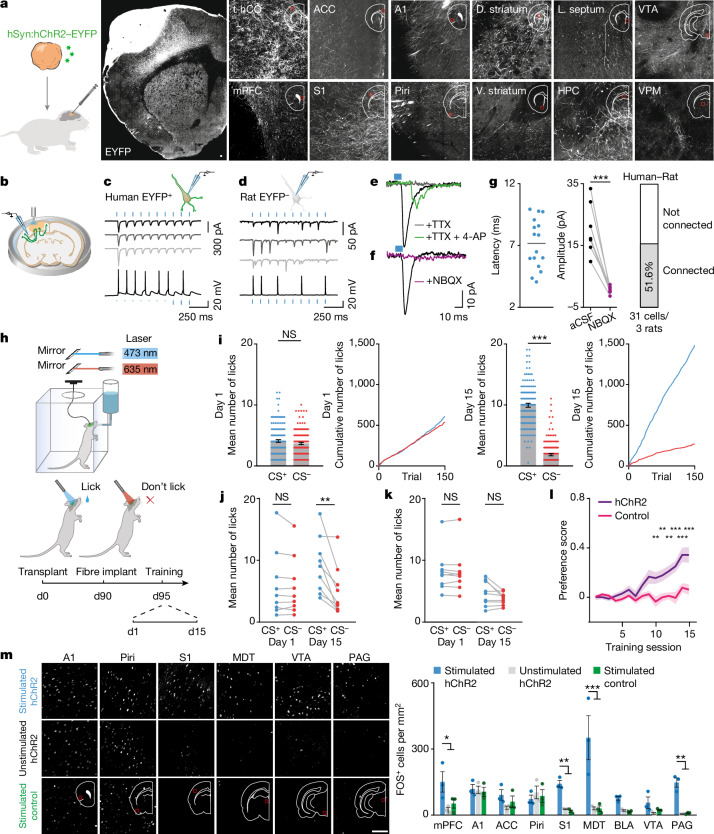
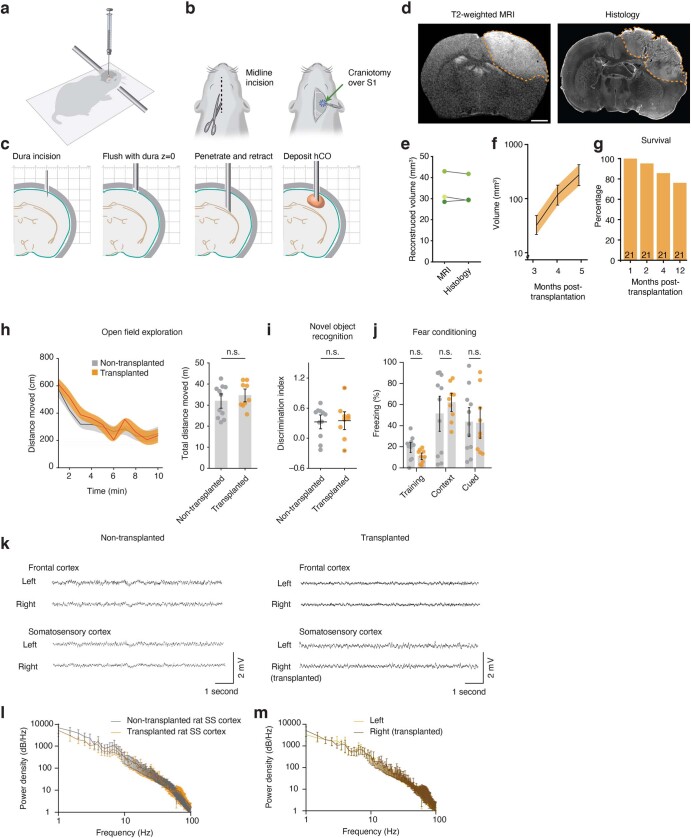
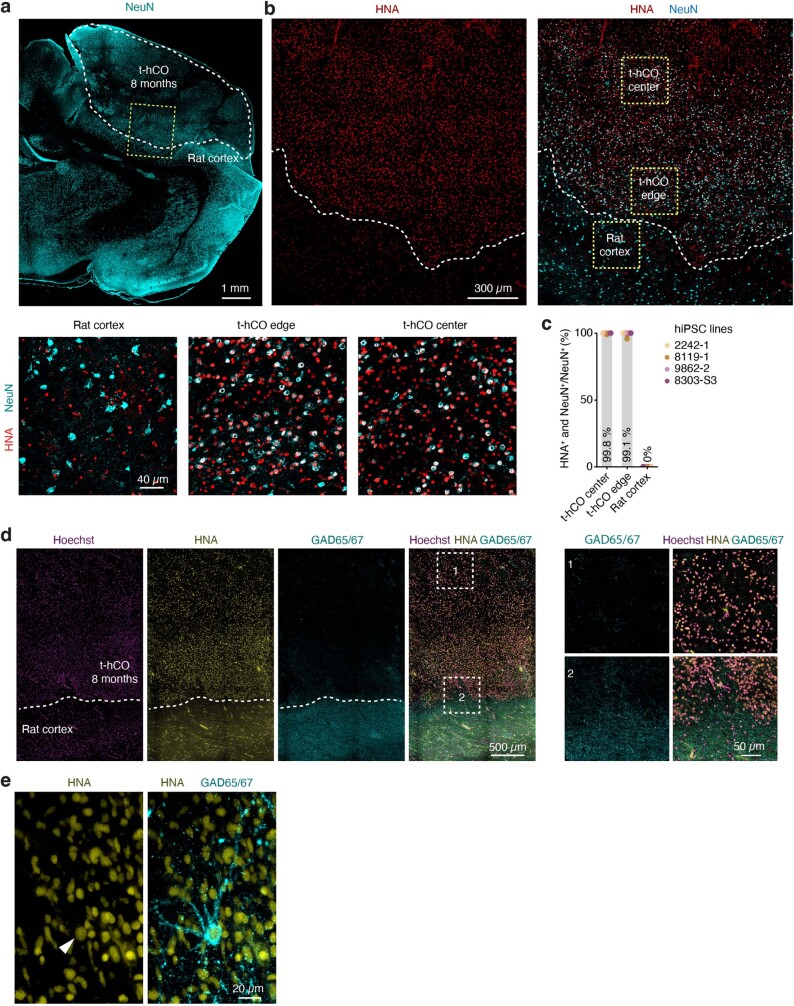
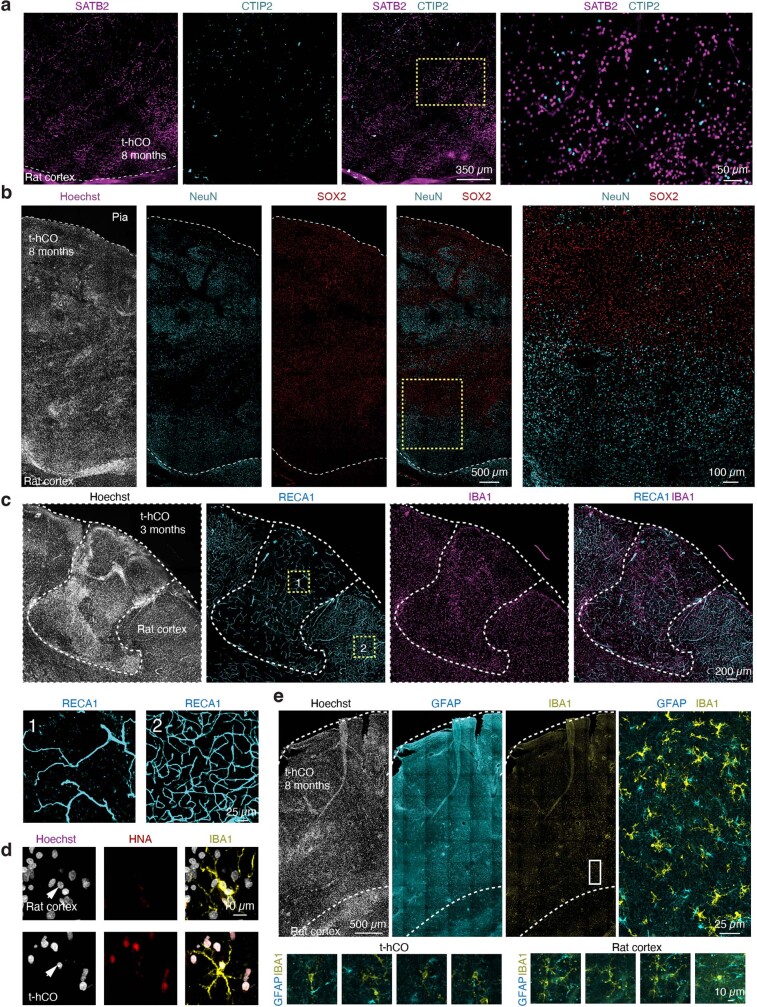
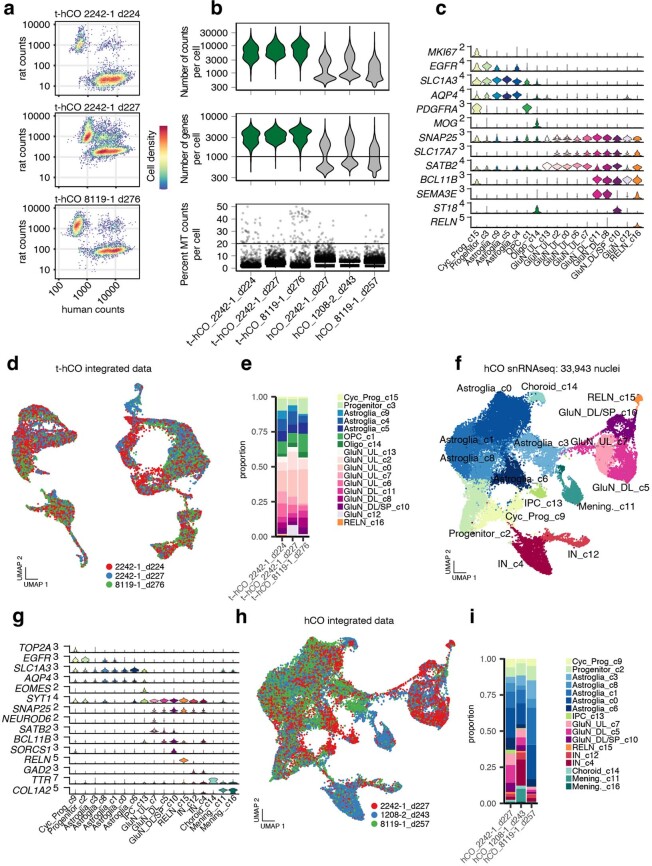
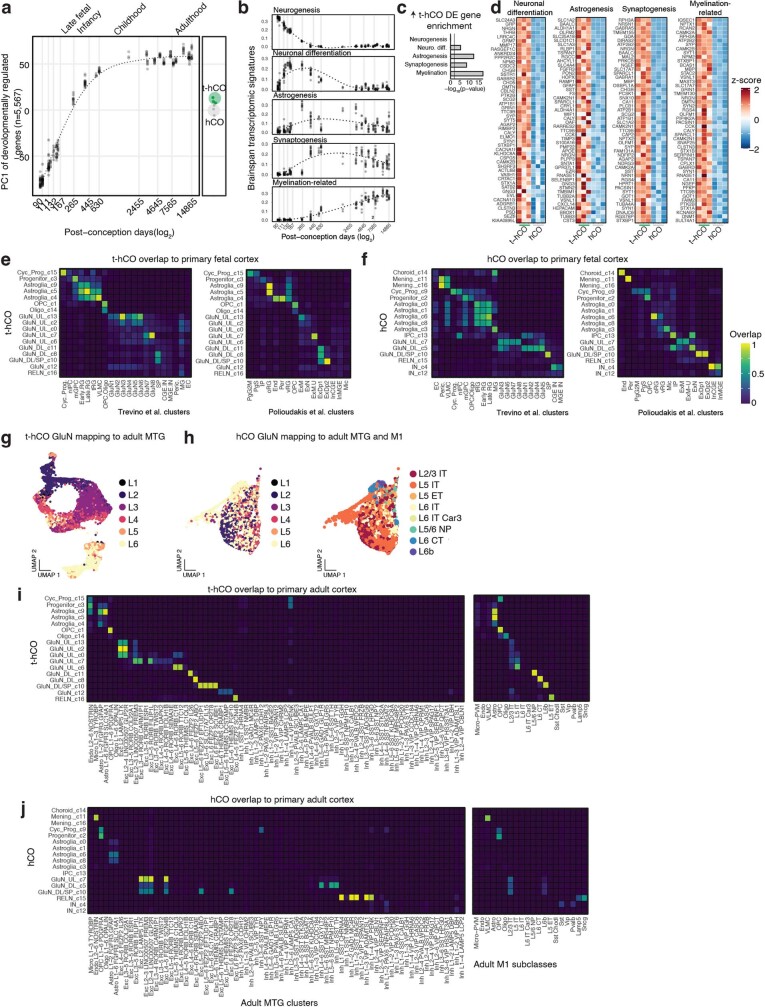
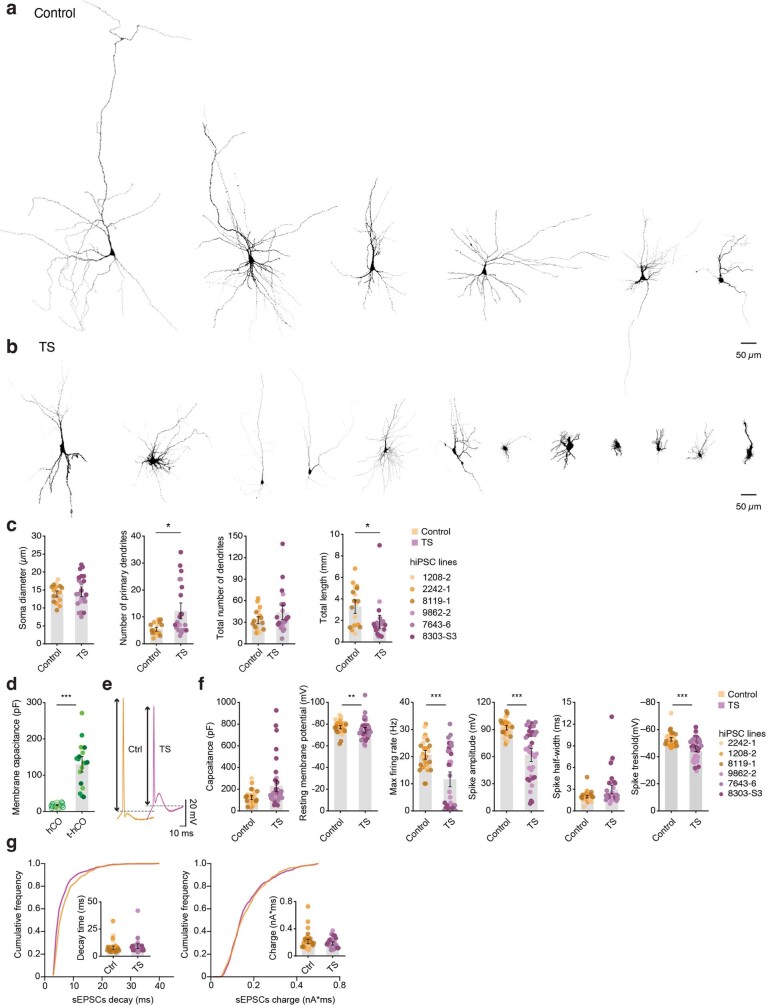
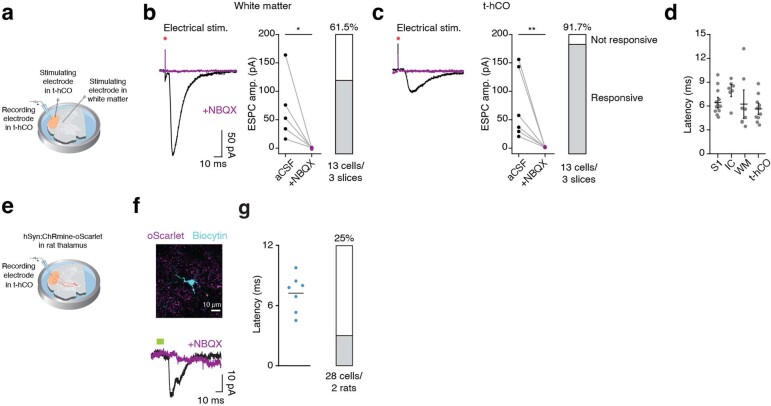
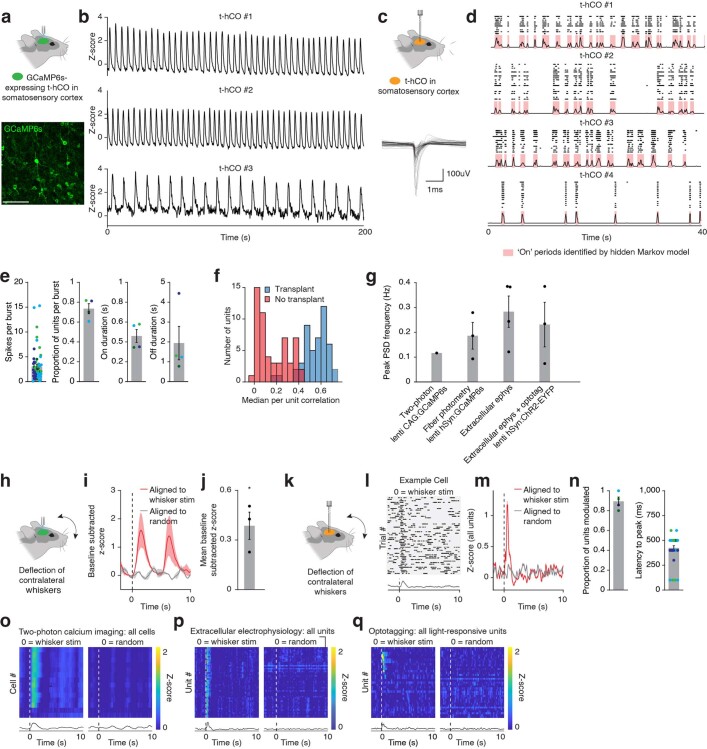
Self-organizing neural organoids represent a promising in vitro platform with which to model human development and disease 1–5 . However, organoids lack the connectivity that exists in vivo, which limits maturation and makes integration with other circuits that control behaviour impossible. Here we show that human stem cell-derived cortical organoids transplanted into the somatosensory cortex of newborn athymic rats develop mature cell types that integrate into sensory and motivation-related circuits. MRI reveals post-transplantation organoid growth across multiple stem cell lines and animals, whereas single-nucleus profiling shows progression of corticogenesis and the emergence of activity-dependent transcriptional programs. Indeed, transplanted cortical neurons display more complex morphological, synaptic and intrinsic membrane properties than their in vitro counterparts, which enables the discovery of defects in neurons derived from individuals with Timothy syndrome. Anatomical and functional tracings show that transplanted organoids receive thalamocortical and corticocortical inputs, and in vivo recordings of neural activity demonstrate that these inputs can produce sensory responses in human cells. Finally, cortical organoids extend axons throughout the rat brain and their optogenetic activation can drive reward-seeking behaviour. Thus, transplanted human cortical neurons mature and engage host circuits that control behaviour. We anticipate that this approach will be useful for detecting circuit-level phenotypes in patient-derived cells that cannot otherwise be uncovered.
Overview
The claims and statistics of this paper haven’t been checked yet.
Free: it reads the open-access text and checks the first 5 claims that cite a source we can check. Create a free account to check every claim.
Integrity signals
Registry
Cites
Statistics
Figures
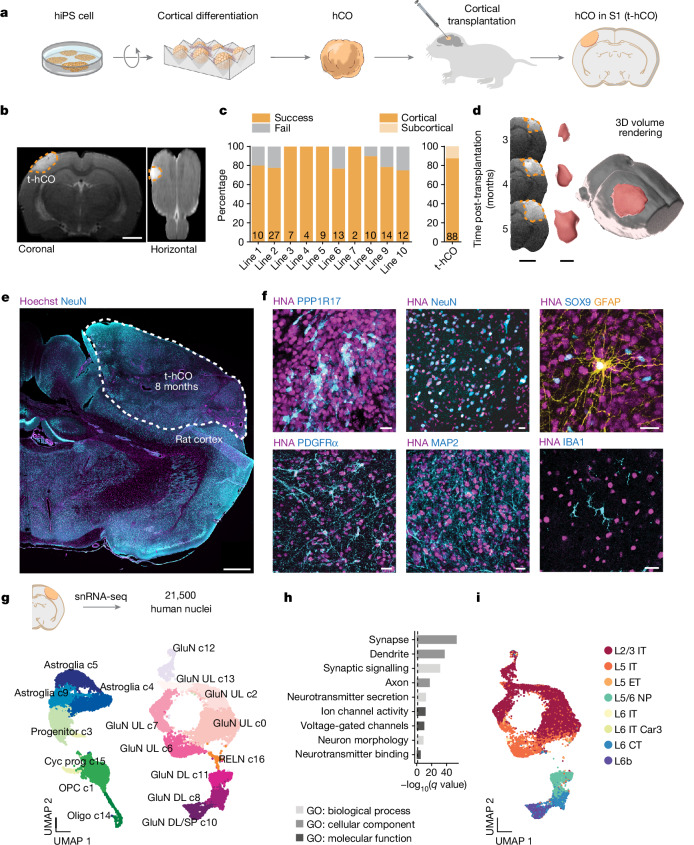
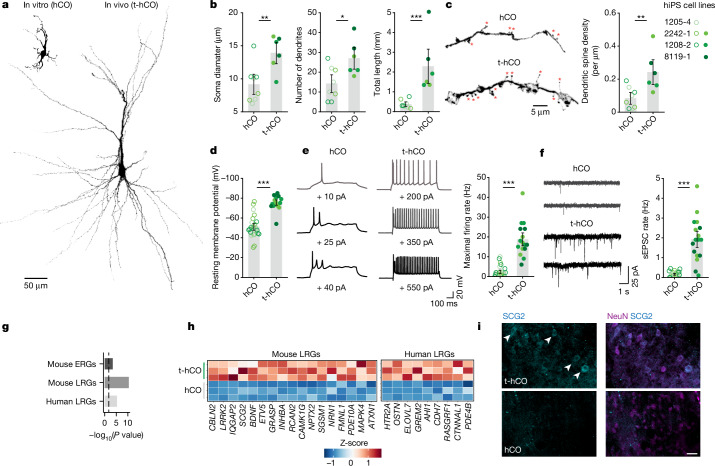
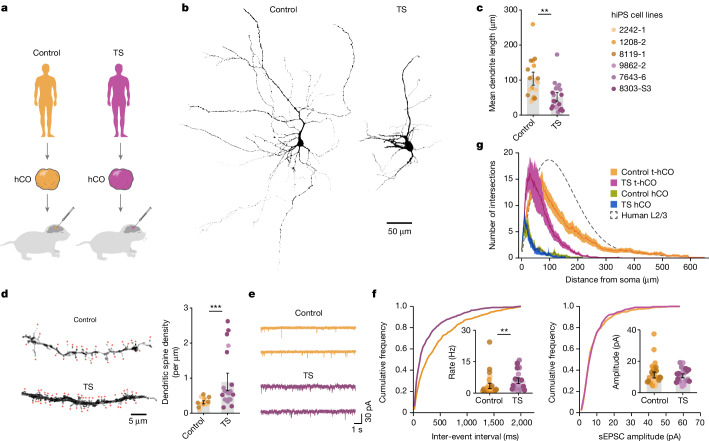
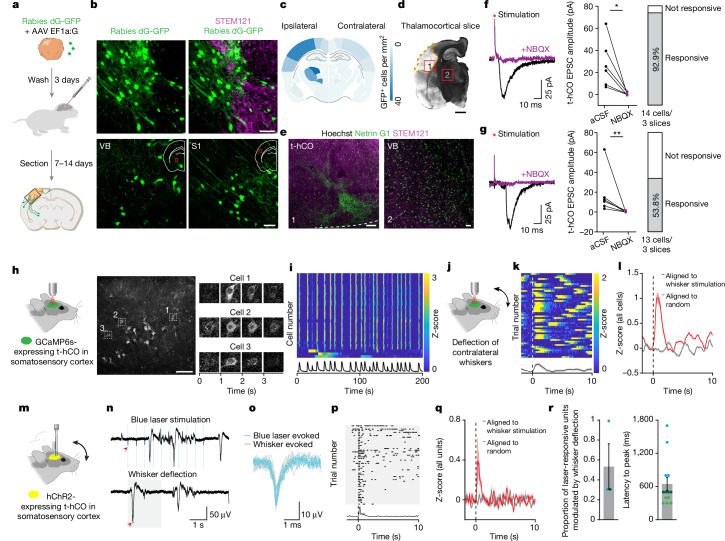
Verification
Claims the paper makes
The claims and statistics of this paper haven’t been checked yet.
Free: it reads the open-access text and checks the first 5 claims that cite a source we can check. Create a free account to check every claim.
Claims other papers make about this one
Each is checked against this paper’s own text: does it say what the citing paper says it does?
The source backs part of the claim, not all of it — or backs it for a different population, condition or comparison.
In the citing paper
“iPS cell-derived organoids fail to mature beyond the fetal phenotype unless they are grafted into living organisms36,37.”
From Human disease models in drug development (2023) · cites this paper as [37]
Experimental — accuracy not yet measured
Self-check
Percentages, sums and reported differences re-computed from the paper’s own numbers.
The self-check needs the paper’s full text.
Citations
Cites
Comprehensive Integration of Single-Cell Data
Stuart, T., Butler, A., Hoffman, P., Hafemeister, C., Papalexi, E., Mauck, W. M., Hao, Y., Stoeckius, M., Smibert, P., & Satija, R. (2019) · Cell · doi:10.1016/j.cell.2019.05.031 · Cited by 15,453
Dimensionality reduction for visualizing single-cell data using UMAP
Becht, E., McInnes, L., Healy, J., Dutertre, C.-A., Kwok, I. W. H., Ng, L. G., Ginhoux, F., & Newell, E. W. (2019) · Nature Biotechnology · doi:10.1038/nbt.4314 · Cited by 5,358 · cited 3×
“Following low-quality nuclei removal, integrated datasets were clustered (resolution = 0.5) and embedded for visualization purposes with UMAP 34 .”
InfluentialMcGinnis, C. S., Murrow, L. M., & Gartner, Z. J. (2019) · Cell Systems · doi:10.1016/j.cels.2019.03.003 · Cited by 4,521
ToppGene Suite for gene list enrichment analysis and candidate gene prioritization
Chen, J., Bardes, E. E., Aronow, B. J., & Jegga, A. G. (2009) · Nucleic Acids Research · doi:10.1093/nar/gkp427 · Cited by 2,952 · cited 1×
“…Ontology (GO) enrichment analyses among significantly upregulated t-hCO GluN genes (Benjamini–Hochberg-adjusted P values less than 0.05, expressed in at least 10% of t-hCO GluN cells, and fold change increase of at least 2) were performed using the ToppGene Suite (https://top-pgene.cchmc.org/) 37 .”
InfluentialBrain-Region-Specific Organoids Using Mini-bioreactors for Modeling ZIKV Exposure
Qian, X., Nguyen, H. N., Song, M. M., Hadiono, C., Ogden, S. C., Hammack, C., Yao, B., Hamersky, G. R., Jacob, F., Zhong, C., et al. (2016) · Cell · doi:10.1016/j.cell.2016.04.032 · Cited by 2,127
Conserved cell types with divergent features in human versus mouse cortex
Hodge, R. D., Bakken, T. E., Miller, J. A., Smith, K. A., Barkan, E. R., Graybuck, L. T., Close, J. L., Long, B., Johansen, N., Penn, O., et al. (2019) · Nature · doi:10.1038/s41586-019-1506-7 · Cited by 1,775 · cited 2×
“We identified and categorized major cell classes through a combination of marker 19–21 , 35 gene expression expression and annotation via integration with reference Differential gene expression analysis between t-hCO and hCO subclasses was performed using a recently developed pseudobulk approach 36…”
Functional cortical neurons and astrocytes from human pluripotent stem cells in 3D culture
Paşca, A. M., Sloan, S. A., Clarke, L. E., Tian, Y., Makinson, C. D., Huber, N., Kim, C. H., Park, J.-Y., O'Rourke, N. A., Nguyen, K. D., et al. (2015) · Nature Methods · doi:10.1038/nmeth.3415 · Cited by 1,609 · cited 1×
“…applying instructive signals to human induced pluripotent stem (hiPS) cells grown in three-dimensional (3D) cultures, self-organizing organoids resembling specific regions of the nervous system, including human cortical organoids (hCO; also known as human cortical spheroids) can be generated 2–6 .”
Self-citationAssembly of functionally integrated human forebrain spheroids
Birey, F., Andersen, J., Makinson, C. D., Islam, S., Wei, W., Huber, N., Fan, H. C., Metzler, K. R. C., Panagiotakos, G., Thom, N., et al. (2017) · Nature · doi:10.1038/nature22330 · Cited by 1,365 · cited 2×
“…applying instructive signals to human induced pluripotent stem (hiPS) cells grown in three-dimensional (3D) cultures, self-organizing organoids resembling specific regions of the nervous system, including human cortical organoids (hCO; also known as human cortical spheroids) can be generated 2–6 .”
Self-citationAn in vivo model of functional and vascularized human brain organoids
Mansour, A. A., Gonçalves, J. T., Bloyd, C. W., Li, H., Fernandes, S., Quang, D., Johnston, S., Parylak, S. L., Jin, X., & Gage, F. H. (2018) · Nature Biotechnology · doi:10.1038/nbt.4127 · Cited by 1,211
Individual brain organoids reproducibly form cell diversity of the human cerebral cortex
Velasco, S., Kedaigle, A. J., Simmons, S. K., Nash, A., Rocha, M., Quadrato, G., Paulsen, B., Nguyen, L., Adiconis, X., Regev, A., et al. (2019) · Nature · doi:10.1038/s41586-019-1289-x · Cited by 1,094
Cited by
Items 101–200 of 547
Deciphering the physiopathology of neurodevelopmental disorders using brain organoids
Dionne, O., Sabatié, S., & Laurent, B. (2024) · Brain · doi:10.1093/brain/awae281 · Cited by 24
Werner, J. M., & Gillis, J. (2024) · PLoS Biology · doi:10.1371/journal.pbio.3002912 · Cited by 24
An Implantable Biohybrid Neural Interface Toward Synaptic Deep Brain Stimulation
Sifringer, L., Fratzl, A., Clément, B., Chansoria, P., Mönkemöller, L. S., Duru, J., Ihle, S. J., Steffens, S., Beltraminelli, A., Ceylan, E., et al. (2025) · Advanced Functional Materials · doi:10.1002/adfm.202416557 · Cited by 24
Vascularizing organoids-on-chip for perfused and personalized models
Menzani, B., Gea, P. D., Gidrol, X., & Tubbs, E. (2026) · Lab on a Chip · doi:10.1039/d5lc00890e · Cited by 23
Engineered organoids in oral and maxillofacial regeneration
Wang, Y., & Sun, Y. (2022) · iScience · doi:10.1016/j.isci.2022.105757 · Cited by 24
“Besides, with the combination of gene editing, optogenetic technology may also become another effective approach to precisely regulate the selforganization of stem cells in a spatiotemporal manner.(128) It was reported that optogenetics combined with CRISPR-Cas9 could precisely control the activation of WNT/b-catenin…”
BackgroundVillanueva, R. (2023) · Frontiers in Psychiatry · doi:10.3389/fpsyt.2023.1178494 · Cited by 22
“Organoids have been shown to integrate into the cerebral cortex of host animals and have a specific influence on functional aspects of the selected brain area (48, 49).”
BackgroundKataoka, M., Gyngell, C., Savulescu, J., & Sawai, T. (2024) · Science and Engineering Ethics · doi:10.1007/s11948-024-00471-7 · Cited by 24
“Human brain organoids have already been successfully transplanted into the brains of mice, rats, and rhesus macaques (Chen et al., 2019 ; Kitahara et al., 2020 ; Revah et al., 2022).”
BackgroundBoylin, K., Aquino, G. V., Purdon, M., Abedi, K., Kasendra, M. J., & Barrile, R. (2024) · Biofabrication · doi:10.1088/1758-5090/ad4c08 · Cited by 23
“…research group has made notable advancements in leveraging transplantation experiments to explore the development and function of human neural organoids in vivo by successfully implanting human cortical organoids into the developing cerebral cortex of early-postnatal immunocompromised rats [38].”
BackgroundHarary, P. M., Rajaram, S., Chen, M. S., Hori, Y. S., Park, D. J., & Chang, S. D. (2024) · Cell Death Discovery · doi:10.1038/s41420-024-02270-2 · Cited by 22
“Furthermore, signi fi cant progress in the transplantation of cortical organoids into small animal hosts has enabled the in vivo vascularization of these models, as well as providing a degree of functional integrations with host brain [165 – 167].”
Ene, J., Liu, C., Syed, F., Sun, L. J., Berry, D., Durairaj, P., Liu, Z. L., Zeng, C., Jung, S., & Li, Y. (2025) · Stem Cell Research & Therapy · doi:10.1186/s13287-025-04317-2 · Cited by 20
Lavazza, A., & Chinaia, A. A. (2023) · EMBO Reports · doi:10.1038/s44319-023-00007-3 · Cited by 21
“…from transplanted hCO (t-hCO) undergo substantial maturation, receive thalamocortical and corticocortical inputs that are capable of evoking sensory responses and extend axonal projections into the rat brain that can drive reward-seeking behaviors (through optogenetics) ” (Revah et al, 2022).”
Oxygen-induced stress reveals context-specific gene regulatory effects in human brain organoids
Umans, B. D., & Gilad, Y. (2025) · Genome Research · doi:10.1101/gr.280219.124 · Cited by 20
Decoding polygenic diseases: advances in noncoding variant prioritization and validation
Chin, I. M., Gardell, Z. A., & Corces, M. R. (2024) · Trends in Cell Biology · doi:10.1016/j.tcb.2024.03.005 · Cited by 21
Fiorenzano, A., Sozzi, E., Kästli, R., Iazzetta, M. R., Bruzelius, A., Arlotta, P., & Parmar, M. (2025) · The EMBO Journal · doi:10.1038/s44318-025-00494-1 · Cited by 19
“In this context, transplanted human neurons mature, activate, and regulate host circuits governing behavior and motor functions (Revah et al, 2022).”
InfluentialLiu, N., Shiravi, S., Jin, T., Liu, J., Zhu, Z., Li, J., Cheung, I., Zhang, H., Wang, Y., Li, Q., et al. (2026) · Nature Biomedical Engineering · doi:10.1038/s41551-026-01620-y · Cited by 21
“2 and Supplementary Note 1), distributed uniformly to offer an interface with spatial resolution beyond 100 μm for a millimetre-sized neural organoid (Fig.”
InfluentialModular 3D printed platform for fluidically connected human brain organoid culture
Rezaei, B., Giacomoni, J., Nilsson, F., Sozzi, E., Fiorenzano, A., Parmar, M., Keller, S. S., & Kajtez, J. (2023) · Biofabrication · doi:10.1088/1758-5090/ad0c2c · Cited by 21
“Coupled with gene editing tools [7], multiomics analysis [8], electrophysiological investigation [9], or transplantation procedures [10, 11], organoid-based studies have yielded new important insights into evolutionary questions [12], developmental processes [13], and disease states [14] of the…”
MethodHuman Brain Organoid Research and Applications: Where and How to Meet Legal Challenges?
Kataoka, M., Lee, T.-L., & Sawai, T. (2024) · Journal of Bioethical Inquiry · doi:10.1007/s11673-024-10349-9 · Cited by 22
“(1234567890) No health problems were reported in host rats in one of the most recent animal transplants (Revah et al. 2022; Hyun 2022).”
Host circuit engagement of human cortical organoids transplanted in rodents
Kelley, K. W., Revah, O., Gore, F., Kaganovsky, K., Chen, X., Deisseroth, K. A., & Pașca, S. P. (2024) · Nature Protocols · doi:10.1038/s41596-024-01029-4 · Cited by 20
Self-citationPapetti, A. V., Jin, M., Ma, Z., Stillitano, A. C., & Jiang, P. (2025) · Neuron · doi:10.1016/j.neuron.2025.03.036 · Cited by 20
Bioengineering innovations for neural organoids with enhanced fidelity and function
Sun, Y., Ikeuchi, Y., Guo, F., Hyun, I., Ming, G., & Fu, J. (2025) · Cell stem cell · doi:10.1016/j.stem.2025.03.014 · Cited by 18
Gao, Y., Guo, X., Wang, S., Huang, Z., Zhang, B., Hong, J., Zhong, Y., Weng, C., Wang, H., Zha, Y., et al. (2023) · Journal of Affective Disorders · doi:10.1016/j.jad.2023.07.033 · Cited by 18
Bioengineering toolkits for potentiating organoid therapeutics
Park, S., & Cho, S. (2024) · Advanced Drug Delivery Reviews · doi:10.1016/j.addr.2024.115238 · Cited by 19
Identity and Maturity of iPSC-Derived Oligodendrocytes in 2D and Organoid Systems
Zeldich, E., & Rajkumar, S. (2024) · Cells · doi:10.3390/cells13080674 · Cited by 18
“…recent studies evaluating the effect of the xenotransplantation of human organoids into rodent brains reported an extensive maturation of neuronal networks accompanied by the presence of oligodendrocyte population within the xerographs, but not within the age-matched control organoids [81,82].”
BackgroundThe ethical landscape of human brain organoids and a mindful innovation framework
Shlobin, N. A., Savulescu, J., & Baum, M. L. (2024) · Nature Reviews Bioengineering · doi:10.1038/s44222-024-00211-3 · Cited by 18
“For example, human brain organoid tissue has been transplanted into the developing cortex of a rat 29 ; here, the transplanted human brain organoid tissue received thalamocortical and corticocortical inputs, leading to sensory responses in the human cells and the extension of axons throughout the…”
InfluentialIzrael, M., Chebath, J., Molakandov, K., & Revel, M. (2025) · Advanced Drug Delivery Reviews · doi:10.1016/j.addr.2025.115525 · Cited by 19
The emergence of electrical activity in human brain organoids
Mancinelli, S., Bariselli, S., & Lodato, S. (2025) · Stem Cell Reports · doi:10.1016/j.stemcr.2025.102632 · Cited by 17
Maria Jose Perez, J., Lam, A., Weissleder, C., Bertoli, F., Raji, H., Bosch, M., Nemazanyy, I., Kalb, S., Kehili, M., Hirschberg, I., et al. (2026) · Nature Neuroscience · doi:10.1038/s41593-026-02320-1 · Cited by 20
“Cortical organoids were generated 84 and later integrated with predif-ferentiated iPSC-derived microglia to produce microglia-containing brain (MgBr) assembloids.”
Human brain organoid: trends, evolution, and remaining challenges
Li, M., Yuan, Y., Hou, Z., Hao, S., Jin, L., & Wang, B. (2023) · Neural Regeneration Research · doi:10.4103/1673-5374.390972 · Cited by 18
“Similarly, Revah et al. (2022) engrafted intact human cortical organoids into the S1 of early-postnatal immunocompromised rats.”
Self-citationConstructing human neural circuits in living systems by transplantation
Pașca, S. P. (2024) · Cell · doi:10.1016/j.cell.2023.12.008 · Cited by 17
Self-citationXu, S., Li, X., Fan, P., Li, X., Hong, Y., Han, X. W., Wu, S., Chu, C., Chen, Y., Xu, M., et al. (2024) · Advanced Science · doi:10.1002/advs.202402287 · Cited by 19
Modeling of the brain-lung axis using organoids in traumatic brain injury: an updated review
Kim, J.-T., Song, K., Han, S. W., Youn, D. H., Jung, H., Kim, K., Lee, H., Hong, J. Y., Cho, Y.-J., Kang, S., et al. (2024) · Cell & Bioscience · doi:10.1186/s13578-024-01252-2 · Cited by 17
DDX3X syndrome: From clinical phenotypes to biological insights
von Mueffling, A., García-Forn, M., & Rubeis, S. D. (2024) · Journal of Neurochemistry · doi:10.1111/jnc.16174 · Cited by 18
“This includes models derived from human pluripotent stem cells (hiPSC), including brain organoids, whose development has made tremendous progress (Jourdon et al., 2023; Paulsen et al., 2022; Revah et al., 2022).”
Evans, J. H. (2024) · doi:10.1093/oso/9780197750704.001.0001 · Cited by 36
Ramesan, S. P., Poonacha, J. B., Pathirana, D., Merkt, S. J., Maaß, C., Hasenauer, J., & Reckzeh, E. S. (2026) · Trends in biotechnology · doi:10.1016/j.tibtech.2026.01.009 · Cited by 22
Present and Future Modeling of Human Psychiatric Connectopathies With Brain Organoids
Urenda, J., Dosso, A. D., Birtele, M., & Quadrato, G. (2022) · Biological Psychiatry · doi:10.1016/j.biopsych.2022.12.017 · Cited by 16
Coronel, R., García-Moreno, E., Siendones, E., Barrero, M. J., Martínez–Delgado, B., Santos‐Ocaña, C., Liste, I., & Cascajo-Almenara, M. V. (2024) · Frontiers in Cellular Neuroscience · doi:10.3389/fncel.2024.1403734 · Cited by 16
Human brain organoid code of conduct
Hoppe, M., Habib, A., Desai, R., Edwards, L., Kodavali, C. V., Sherry, N. S., & Zinn, P. O. (2023) · Frontiers in Molecular Medicine · doi:10.3389/fmmed.2023.1143298 · Cited by 18
Multiscale Construction, Evaluation, and Application of Organoids
Ma, W., Dong, Z., Zheng, Z., Bai, L., Zhang, X., & Su, J. (2025) · Advanced Science · doi:10.1002/advs.202508534 · Cited by 19
Sun, S., Xue, X., & Fu, J. (2023) · Current Opinion in Genetics & Development · doi:10.1016/j.gde.2023.102097 · Cited by 15
Towards a consensus roadmap for a new diagnostic framework for mental disorders
Kas, M. J., Hyman, S. E., Williams, L. M., Hidalgo‐Mazzei, D., Huys, Q. J. M., Hotopf, M. H., Cuthbert, B. N., Lewis, C. M., Picker, L. D., Lalousis, P. A., et al. (2024) · European Neuropsychopharmacology · doi:10.1016/j.euroneuro.2024.08.515 · Cited by 17
Evolution of organoid genetics
Klompstra, T. M., Yoon, K., & Koo, B. (2025) · European Journal of Cell Biology · doi:10.1016/j.ejcb.2025.151481 · Cited by 16
Ullah, H. M. A., Huang, Q., Chiola, S., Wang, Y., & Shcheglovitov, A. (2025) · Nature Protocols · doi:10.1038/s41596-025-01197-x · Cited by 15
Advanced Praise for The Sentient Cell: The Cellular Foundations of Consciousness
Reber, A. S., Baluška, F., & Miller, W. B. (2023) · Oxford University Press eBooks · doi:10.1093/oso/9780198873211.002.0008 · Cited by 13
Organoid models for Chinese herbal medicine studies
Mou, X., Zhang, A., He, T., Chen, R., Zhou, F., Yeung, T. C., Wang, C. C., Tang, C., Lu, X., Li, L., et al. (2023) · Acta Materia Medica · doi:10.15212/amm-2022-0047 · Cited by 14
Midbrain organoids—development and applications in Parkinson’s disease
Toh, H. S. Y., Choo, X. Y., & Sun, A. X. (2023) · Oxford Open Neuroscience · doi:10.1093/oons/kvad009 · Cited by 15
Multiscale engineering of brain organoids for disease modeling
Xu, C., Alameri, A., Leong, W., Johnson, E., Chen, Z., Xu, B., & Leong, K. W. (2024) · Advanced Drug Delivery Reviews · doi:10.1016/j.addr.2024.115344 · Cited by 16
Bioengineering Tooth and Periodontal Organoids from Stem and Progenitor Cells
Torizal, F. G., Noorintan, S. T., & Gania, Z. (2024) · Organoids · doi:10.3390/organoids3040015 · Cited by 15
Emerging brain organoids: 3D models to decipher, identify and revolutionize brain
Zhao, Y., Wang, T., Liu, J., Wang, Z., & Lu, Y. (2025) · Bioactive Materials · doi:10.1016/j.bioactmat.2025.01.025 · Cited by 22
“Pasca ’ s team constructed transplanted human cortical brain organoids that mature normally in rats and integrate into neural circuits, providing a new platform for neuro-developmental and disease research [32].”
Zhang, X.-P., Wang, X., Wang, S.-N., & Miao, C. (2023) · Neural Regeneration Research · doi:10.4103/1673-5374.369100 · Cited by 15
“In addition to these interactions among brain organoids, one recent study has reported functional interactions between post-transplanted hCOs and the somatosensory cortex of rats (Revah et al., 2022).”
BackgroundMao, W., Bui, H. D., Cho, W., & Yoo, H. S. (2023) · Advanced Drug Delivery Reviews · doi:10.1016/j.addr.2023.115074 · Cited by 16
Application of colloidal photonic crystals in study of organoids
Huang, K., Li, Q., Xue, Y., Wang, Q., Chen, Z., & Gu, Z. (2023) · Advanced Drug Delivery Reviews · doi:10.1016/j.addr.2023.115075 · Cited by 14
Functional genomics and systems biology in human neuroscience
Konopka, G., & Bhaduri, A. (2023) · Nature · doi:10.1038/s41586-023-06686-1 · Cited by 16
“…of directly assessing these properties in human explant cultures, progress in the ability to use xenotransplantation of developing neurons derived from human pluripotent stem cells into mouse brains is an exciting approach to explore the development of human neuronal morphology and circuits 66,67 .”
BackgroundA modular platform to generate functional sympathetic neuron-innervated heart assembloidsPreprint
Zeltner, N., Wu, H., Saito‐Diaz, K., Sun, X., Song, M., Saini, T., Grant, C., James, C., Thomas, K. S., Abate, Y., et al. (2024) · Research Square · doi:10.21203/rs.3.rs-3894397/v1 · Cited by 16
Modeling neurodegenerative diseases with brain organoids: from development to disease applications
Larriba-González, T., García-Martín, M., Ojeda-Hernández, D. D., Rincón-Cerrada, P., Martín-Blanco, L., Benito‐Martín, M. S., Selma-Calvo, B., de la Fuente-Martín, S., Matías‐Guiu, J. A., Matías‐Guiu, J., et al. (2025) · Frontiers in Cell and Developmental Biology · doi:10.3389/fcell.2025.1663286 · Cited by 13
Organoids and chimeras: the hopeful fusion transforming traumatic brain injury research
Bellotti, C., Samudyata, S., Thams, S., Sellgren, C. M., & Rostami, E. (2024) · Acta Neuropathologica Communications · doi:10.1186/s40478-024-01845-5 · Cited by 13
“Several transplantation studies found that Iba1 + cells in the grafted organoids were exclusively of host origin, independently from the differentiation protocol used before transplant [42, 68, 86].”
BackgroundInfluentialProtein design accelerates the development and application of optogenetic tools
Zhu, L., Wang, Y., Wu, X., Wu, G., Zhang, G., Liu, C., & Zhang, S. (2025) · Computational and Structural Biotechnology Journal · doi:10.1016/j.csbj.2025.02.014 · Cited by 13
“…of integrated devices that can simultaneously stimulate and record [115, 116] and allow multaneously visualizing the resulting changes in brain activity, and the precise visualization of signal regulation [117], have enhanced the ability to study neural dynamics in real-time [103, 118 – 123] (Fig.”
Shen, Y., & Kokaia, Z. (2025) · Cells · doi:10.3390/cells14141074 · Cited by 13
Neural Circuit Mapping and Neurotherapy-Based Strategies
Marei, H. E. S. (2025) · Cellular and Molecular Neurobiology · doi:10.1007/s10571-025-01595-5 · Cited by 15
“Furthermore, Revah et al. (2022) showed that human cortical organoids can reach significant maturity, integrate into current host circuits, and create functional synaptic connections when transplanted into the mouse brain.”
Khodve, G., Banerjee, S., Kumari, M., Ravichandiran, V., Banerjee, S., & Roy, S. (2025) · Journal of Translational Medicine · doi:10.1186/s12967-025-07266-9 · Cited by 13
“These findings underscore the potential of organoids and assembloids to contribute to circuit-level repair and cognitive function restoration after injury or degeneration [164].”
Watson, L. A., & Meharena, H. S. (2023) · Frontiers in Genetics · doi:10.3389/fgene.2023.1198129 · Cited by 14
“Transplanted organoids showed evidence of vascularization with rat endothelial cells and exhibited more mature properties than in vitro organoids such as increased growth, higher synaptic density, elevated neuronal activity, and a slightly more advanced transcriptional signature (Revah et al., 2022).”
BackgroundAmirbekyan, M., Adhikarla, V., B, J. P. C. A., Moschonas, E. H., Bondi, C. O., Rockne, R. C., Kline, A. E., & Gutova, M. (2023) · Scientific Reports · doi:10.1038/s41598-023-44426-7 · Cited by 15
Moral considerability of brain organoids from the perspective of computational architecture
Boyd, J. L. (2024) · Oxford Open Neuroscience · doi:10.1093/oons/kvae004 · Cited by 15
“Sharf et al claimed that theta oscillations in brain organoids are similar, partly, to activity patterns that have been observed in the primate neocortex [42], despite lacking evidence of a classic six-layered laminar organization [24, 43].”
BackgroundWan, Y., Ding, J., Jia, Z., Hong, Y., Tian, G., Zheng, S., Pan, P., Wang, J., & Liang, H. (2024) · Heliyon · doi:10.1016/j.heliyon.2024.e32965 · Cited by 13
“This work also showed that implanted human neurons may affect animal behavior [140].”
BackgroundTherapeutic Transplantation of Human Central Nervous System Organoids for Neural Reconstruction
Hong, S. J., Bock, M., Zhang, S., An, S. B., & Han, I. (2024) · International Journal of Molecular Sciences · doi:10.3390/ijms25158540 · Cited by 12
“The therapeutic potential of CNS organoids extends to direct applications in regenerative medicine for irremediable neural diseases [21–23].”
BackgroundMethodInfluentialIkeda, M., Doi, D., Ebise, H., Ozaki, Y., Fujii, M., Kikuchi, T., Yoshida, K., & Takahashi, J. B. (2024) · Stem Cell Reports · doi:10.1016/j.stemcr.2024.09.005 · Cited by 14
Human brain organoids: an innovative model for neurological disorder research and therapy
Li, H., Zhu, J., Li, J., Wu, Y., Luo, C., Huang, Y., Wu, J., Liu, W., Wang, H., & Mo, Z. (2025) · Frontiers in Cellular Neuroscience · doi:10.3389/fncel.2025.1658074 · Cited by 15
Precision medicine for sodium channelopathy-related autism and epilepsy
Robinson, M. J., Wettschurack, K. W., Halurkar, M. S., Chen, X., Zhang, Z., Zhang, J., & Yang, Y. (2025) · Trends in Molecular Medicine · doi:10.1016/j.molmed.2025.09.007 · Cited by 14
“…of an entire organoid into the rodent brain; this has been performed for cortical organoids carrying a CACNA1C epilepsy-ass ociated variant, where the transplant received blood supply, differentiated into multiple cortical neuronal layers, and even responded to environmental stimuli [83].”
Self-citationLi, M., Sun, H., Hou, Z., Hao, S., Jin, L., & Wang, B. (2023) · Small · doi:10.1002/smll.202306451 · Cited by 14
Self-citationLi, J., Li, Y., Song, G., Wang, H., Zhang, Q., Wang, M., Zhao, M., Wang, B., Zhu, H., Ranzhi, L., et al. (2024) · Materials Today Bio · doi:10.1016/j.mtbio.2024.101396 · Cited by 13
Studying human neural function in vivo at the cellular level: Chasing chimeras?
Vermaercke, B., Bonin, V., & Vanderhaeghen, P. (2022) · Cell · doi:10.1016/j.cell.2022.11.020 · Cited by 11
Advances and Challenges in Cerebral Organoids Research
Luo, D., Xu, J., Liu, F., & Gu, Z. (2024) · Advanced NanoBiomed Research · doi:10.1002/anbr.202300126 · Cited by 11
The power of human stem cell-based systems in the study of neurodevelopmental disorders
Jhanji, M., York, E. M., & Lizarraga, S. B. (2024) · Current Opinion in Neurobiology · doi:10.1016/j.conb.2024.102916 · Cited by 12
“Finally, 3D cultures can be transplanted into animal models to generate grafted organoids or grafted assembloids, also defined as xenografts [29], and provide a more in vivo-like environment.”
Approaches for studying neuroimmune interactions in Alzheimer’s disease
Lin, C., Tian, Y., Tanzi, R. E., & Jorfi, M. (2024) · Trends in Immunology · doi:10.1016/j.it.2024.10.002 · Cited by 11
Brain organoids: a new paradigm for studying human neuropsychiatric disorders
Sun, Y. E., & Pan, W. (2025) · Frontiers in Neuroscience · doi:10.3389/fnins.2025.1699814 · Cited by 11
Stem cell-mediated recovery in stroke: partnering with the immune system
McMillan, N., McMillan, A., Kiliaan, P. C. J., Yahya, T., Thakkar, R., Weiner, H. L., Smirnakis, S. M., Yavagal, D. R., & Izzy, S. (2025) · Nature reviews. Neuroscience · doi:10.1038/s41583-025-00985-4 · Cited by 12
“…with 3K3A-activated protein C 215 or trophic factors 216 , genetic modification 217,218 and structural optimization — such as MSC-derived 3D aggregates and stem cell-derived organoids — to improve cell–cell communication, extracellular matrix production and trophic factor secretion 219,220 .”
Nutritional assessment models for Alzheimer's disease: Advances and perspectives
Wen, Y., Zhang, L., Li, N., Tong, A., & Zhao, C. (2023) · Food Frontiers · doi:10.1002/fft2.216 · Cited by 11
Context matters: hPSC-derived microglia thrive in a humanized brain environment in vivo
Cerneckis, J., & Shi, Y. (2023) · Cell stem cell · doi:10.1016/j.stem.2023.05.013 · Cited by 11
Theoretical Neurobiology of Consciousness Applied to Human Cerebral Organoids
Owen, M., Huang, Z., Duclos, C., Lavazza, A., Grasso, M., & Hudetz, A. G. (2023) · Cambridge Quarterly of Healthcare Ethics · doi:10.1017/s0963180123000543 · Cited by 13
“” 142 Applying neurobiological theories of consciousness to such novel issues can lead to their development not only when the theories are shown to be useful but also if they are shown to have limitations.”
Human Brain Organoid Transplantation: Testing the Foundations of Animal Research Ethics
Erler, A. (2024) · Neuroethics · doi:10.1007/s12152-024-09556-3 · Cited by 11
Zhao, Y., Liu, P., Wang, Y., Ma, Y., Guo, W., & Shi, C. (2024) · Experimental Neurology · doi:10.1016/j.expneurol.2024.114848 · Cited by 11
Monitoring of Electrophysiological Functions in Brain‐on‐a‐Chip and Brain Organoids
Song, J., Jeong, H. E., Choi, A. H., & Kim, H. N. (2024) · Advanced NanoBiomed Research · doi:10.1002/anbr.202400052 · Cited by 11
Role and limitation of cell therapy in treating neurological diseases
Li, Y., Li, P., Tao, Q., AbuQeis, I., & Xiyang, Y. (2024) · Ibrain · doi:10.1002/ibra.12152 · Cited by 10
“132 Nota-bly, the neurons within these organoids successfully established functional connections with the existing neural circuitry, leading to the activation of these transplanted neural components and subsequent restoration of specific functionalities within the corresponding brain regions.”
BackgroundMa, Y., Qian, J., Xu, X. P., Wei, C., Wang, M., Zhang, P., Chen, S., Zhang, L., Zhang, Y., Wang, Y., et al. (2024) · Frontiers in Bioengineering and Biotechnology · doi:10.3389/fbioe.2024.1449955 · Cited by 11
Exploring organoid and assembloid technologies: a focus on retina and brain
Ouaidat, S., Bellapianta, A., Ammer-Pickhardt, F., Taghipour, T., Bolz, M., & Salti, A. (2025) · Expert Reviews in Molecular Medicine · doi:10.1017/erm.2025.9 · Cited by 11
“82).”
How radial glia progenitor lineages generate cell-type diversity in the developing cerebral cortex
Pipicelli, F., Villalba, A., & Hippenmeyer, S. (2025) · Current Opinion in Neurobiology · doi:10.1016/j.conb.2025.103046 · Cited by 12
“…while in vitro model systems recapitulate many aspects of RGP lineage progression, certain alterations in the relative RGP output fractions of defined cortical projection neurons have been also observed [84,85], implying the essence of critical niche-derived and/or global tissue-wide factors.”
Generation of human pineal gland organoids with melatonin production for disease modeling
Kiral, F. R., Yang, W. S., İyilikci, O., Lu, X., Kim, J., Choe, M. S., Lo, C., Zhong, M., Kim, K.-Y., Jiang, Y., et al. (2025) · Cell stem cell · doi:10.1016/j.stem.2025.12.004 · Cited by 12
NeMO Analytics: a compendium of transcriptomic data for the exploration of neocortical development
Sonthalia, S., Herb, B. R., Adkins, R. S., Orvis, J., Liu, J., Liao, X., Yu, Q., Mato-Blanco, X., Casella, A. M., Liu, J., et al. (2026) · Nature Neuroscience · doi:10.1038/s41593-026-02204-4 · Cited by 10
Brain organoids restore cortical damage
Altinisik, N., Rathinam, D., Tran, M., & Gopalakrishnan, J. (2023) · Cell stem cell · doi:10.1016/j.stem.2023.01.012 · Cited by 10
Pomeshchik, Y., Velásquez, E., Gil, J., Klementieva, O. L., Gidlöf, R., Sydoff, M., Bagnoli, S., Nacmias, B., Sorbi, S., Westergren‐Thorsson, G., et al. (2023) · Acta Neuropathologica Communications · doi:10.1186/s40478-023-01649-z · Cited by 11
“Alternatively, we could graft whole brain spheroids by cranial window surgery, as performed for organoids [74, 75] and providing these would not increase in size over time.”
MethodWhy brain organoids are not conscious yet
Kosik, K. S. (2024) · Patterns · doi:10.1016/j.patter.2024.101011 · Cited by 11
Gai, K., Yang, M., Chen, W., Hu, C., Luo, X., Smith, A. G., Xu, C., Zhang, H., Li, X., Shi, W., et al. (2024) · Advanced Healthcare Materials · doi:10.1002/adhm.202401419 · Cited by 10
Malformations-related neocortical circuits in focal seizures
Luhmann, H. J. (2023) · Neurobiology of Disease · doi:10.1016/j.nbd.2023.106018 · Cited by 10
“Human neocortical organoids transplanted into the somatosensory cortex of newborn rats receive thalamocortical and corticocortical synaptic inputs and can be activated by sensory stimulation (Revah et al., 2022).”
BackgroundHarary, P. M., Jgamadze, D., Kim, J., Wolf, J. A., Song, H., Ming, G., Cullen, D. K., & Chen, H.-C. I. (2023) · Brain Sciences · doi:10.3390/brainsci13121654 · Cited by 11
“There is also evidence that stimulation of grafts can affect animal behavior, although not in a brain region-specific manner [150].”
BackgroundHuman Brain Organoids: Development and Applications
Hongxi, W., Ruting, W., Yiyang, L., Qinglian, H., Jibing, C., & Feng, J. (2025) · Journal of Microbiology and Biotechnology · doi:10.4014/jmb.2411.11040 · Cited by 9
“A study using newborn athymic rats found that transplanted organoids can develop into mature cell types and integrate into sensory and motivation-related circuits [30].”
Shiravi, S., Yufa, A., Papavasileiou, P., Lotz, S., Murphy, D., Bertucci, T. B., Temple, S., & Finan, J. D. (2025) · Journal of Neurotrauma · doi:10.1177/08977151251374286 · Cited by 9
“71 Following organoid grafting into a rodent brain, it would be relatively straightforward to add TBI using the well-established controlled cortical impact 72 or fl uid percussion 73 models.”
Usman, M., Ashebir, S. E., Okey-Mbata, C., Yun, Y., & Kim, S. (2025) · Applied Sciences · doi:10.3390/app152111316 · Cited by 9
“The organoids demonstrate their ability to join existing neural networks when scientists place them into sensory, motor, or visual cortex areas of host animals because they survive and develop while sending their axons throughout the surrounding neural tissue [87–90].”
Wang, D., Zhang, X., Tang, X.-Y., Gan, Y., Yu, H., Wu, S., Hong, Y., Tao, M., Chu, C., Qi, X., et al. (2025) · Cell stem cell · doi:10.1016/j.stem.2025.10.004 · Cited by 10
Developmental xenocortication using human-derived organoids in mice
Kaganovsky, K., Kelley, K. W., Gschwind, T., Harary, P. M., Kochalka, J., White, A. D., Lerma‐Usabiaga, G., Chen, X., Revah, O., Gore, F., et al. (2026) · Nature · doi:10.1038/s41586-026-11032-2 · Cited by 10
“Human nuclei were identified based on a conservative requirement of at least 95% of total mapped reads aligning to the human genome, as we have described previously 3,13 .”
InfluentialSelf-citationXiao, Q., Geng, M., Sun, Y., Pi, Y., & Xiong, L. (2023) · Molecular Neurobiology · doi:10.1007/s12035-023-03848-0 · Cited by 9
“This integration allowed them to establish connections with other neurons, enabling them to influence certain behaviors exhibited by the rats [87].”
Progress and perspective of organoid technology in breast cancer research
Huang, C., & Jin, H. (2024) · Chinese Medical Journal · doi:10.1097/cm9.0000000000002889 · Cited by 9
“…Lancaster et al [39] Takebe et al [57] McCracken et al [58] Dye et al [59] Nie and Hashino [56] Silva et al [63] Uzquiano et al [64] Revah et al [62] Huch et al [60] Wang et al [65] 2D: Two-dimension; 3D: Three-dimension; COVID-19: Corona virus disease 2019; hPSCs: Human pluripotent stem cells;…”
Background
Metadata
- Authors
- Revah, O., Gore, F., Kelley, K. W., Andersen, J., Sakai, N., Chen, X., Li, M.-Y., Birey, F., Yang, X., Saw, N. L., Baker, S. W., Amin, N. D., Kulkarni, S., Mudipalli, R., Cui, B., Nishino, S., Grant, G. A., Knowles, J. K., Shamloo, M., Huguenard, J. R., Deisseroth, K., & Pașca, S. P.
- Affiliations
- Stanford Medicine (US)
- Stanford University (US)
- Howard Hughes Medical Institute (US)
- Corresponding author
- Pașca, Sergiu P.
- ORCID
- Revah, Omer
- Gore, Felicity
- Kelley, Kevin W.
- Andersen, Jimena
- Sakai, Noriaki
- Chen, Xiaoyu
- Li, Min-Yin
- Birey, Fikri
- Yang, Xiao
- Saw, Nay L.
- Baker, Samuel W.
- Amin, Neal D.
- Mudipalli, Rachana
- Cui, Bianxiao
- Nishino, Seiji
- Grant, Gerald A.
- Knowles, Juliet K.
- Shamloo, Mehrdad
- Huguenard, John R.
- Deisseroth, Karl
- Pașca, Sergiu P.
- Venue
- Nature
- Published
- 2022-10-12
- Volume
- 610
- Issue
- 7931
- Pages
- 319-326
- ISSN
- 0028-0836 (ISSN-L)
- 1476-4687
- PMC
- PMC9556304
- OpenAlex
- W4304698283
- Semantic Scholar
- 57e751de615d9e154922d135c67398d19d35a757
- Cited by
- 504
- References
- 44
- Citations by year
- 2026: 85 · 2025: 128 · 2024: 151 · 2023: 124 · 2022: 16
- FWCI
- 38.90
- Type
- journal article
- Language
- en
- Update notices
- correction (2026-08-03)
- Open access
- hybrid
- doi.org
- Licence
- cc-by
- creativecommons.org/licenses/by/4.0 (tdm)
- creativecommons.org/licenses/by/4.0 (vor)
- Locations
- Nature (publishedVersion, cc-by)
- PubMed Central (publishedVersion, cc-by)
- PubMed (publishedVersion)
- RePEc: Research Papers in Economics (submittedVersion)
- Funders
- New York Stem Cell Foundation
- National Alliance for Research on Schizophrenia and Depression
- Ludwig Family Foundation
- National Institutes of Health (1s10od030452-01, K99-R00)
- National Institute of Mental Health (K99/R00, R01MH115012, T32MH019938)
- National Institute on Drug Abuse (DA050662, K99DA050662)
- National Institute of Neurological Disorders and Stroke (K08NS123544)
- National Center for Research Resources (S10RR026917)
- Stanford Maternal and Child Health Research Institute
- Topics
- Life Sciences › Neuroscience › Developmental Neuroscience › Neurogenesis and neuroplasticity mechanisms
- Life Sciences › Biochemistry, Genetics and Molecular Biology › Molecular Biology › Pluripotent Stem Cells Research
- Life Sciences › Neuroscience › Cellular and Molecular Neuroscience › Neuroscience and Neural Engineering
- Keywords
- cortical organoids, transplantation, somatosensory cortex, athymic rats, cortical development, neuronal maturation, thalamocortical input, corticocortical connections, axon growth, optogenetic stimulation, reward-seeking behavior, Timothy syndrome, single-nucleus RNA sequencing, circuit integration
- MeSH terms
- Animals, Animals, Newborn, Autistic Disorder, Humans, Long QT Syndrome, Motivation, Neural Pathways, Neurons, Organoids, Reward, Somatosensory Cortex, Stem Cells, Syndactyly, Rats, Optogenetics
About these checks
Registry, retraction, Cites and statistics results are computed, not judged, with one exception: a printed reference that no index lists is read once by a model before it counts as a citation error. Claims are extracted by a model and kept only when their quote appears verbatim in the text; each cited source is then checked, with a model’s help, for whether it says what the claim relies on. Those verdicts can be wrong — read the claim’s quote and the cited source before relying on one.
Statistics and arithmetic are recomputed, not judged.
Confidence bands are shown only for fields calibrated on our annotated test set. None is calibrated yet, so no band is shown.
What counts as a claim ›How we measure confidence ›How we check this ›
Are you an author, or do you see a problem with this page? Request a review
Data sources
Bibliographic data: Semantic Scholar, OpenAlex, Crossref.
Contains information from the Semantic Scholar Academic Graph Datasets, made available under the ODC Attribution License (ODC-BY 1.0).
Semantic Scholar’s data is described in: Kinney, R., et al. (2023). The Semantic Scholar Open Data Platform. arXiv:2301.10140.
