

Maturation and circuit integration of transplanted human cortical organoids
Open accessThe DOI matches its Crossref record; 44 of the 44 references it cites were found in a registry or an index.
Abstract
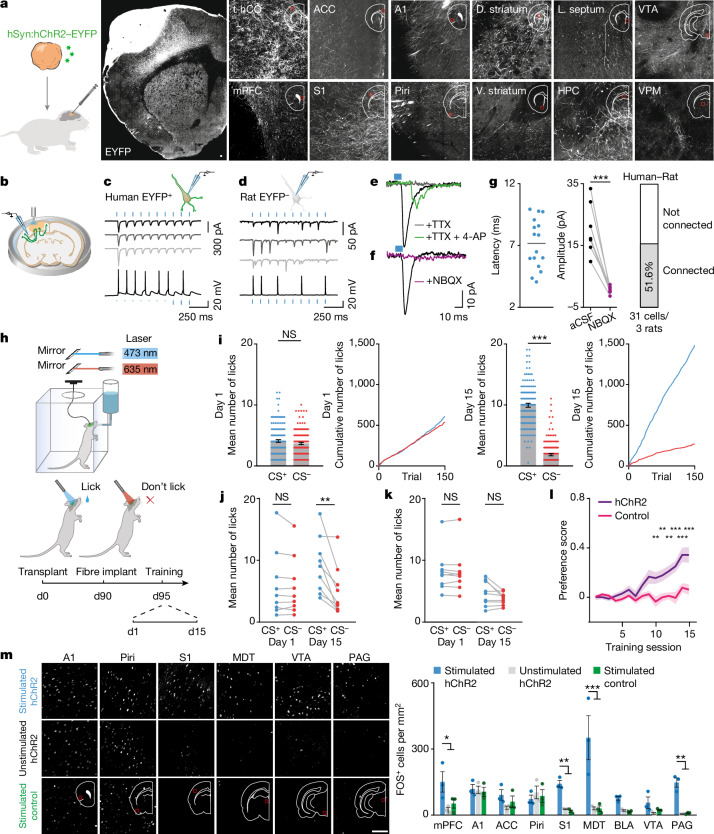
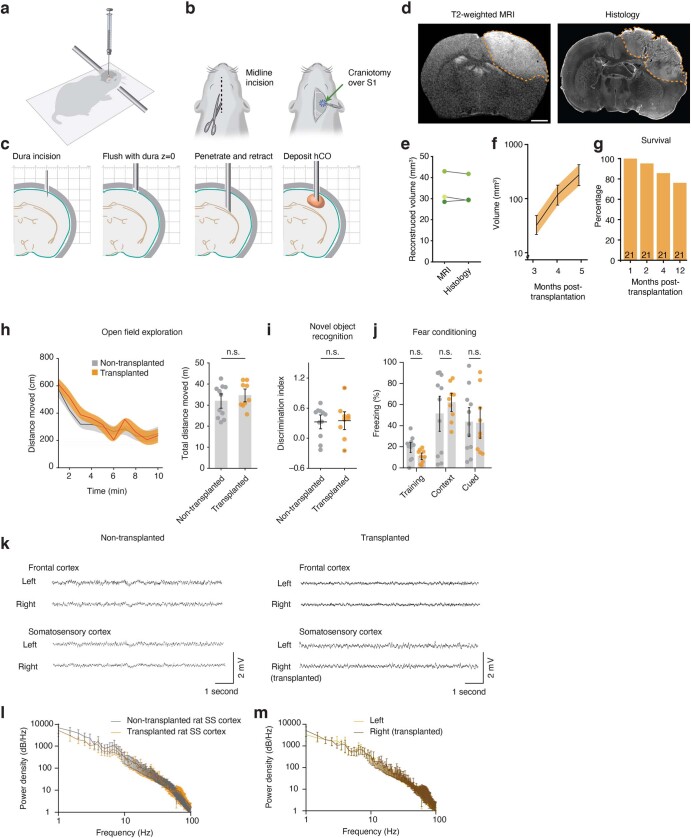
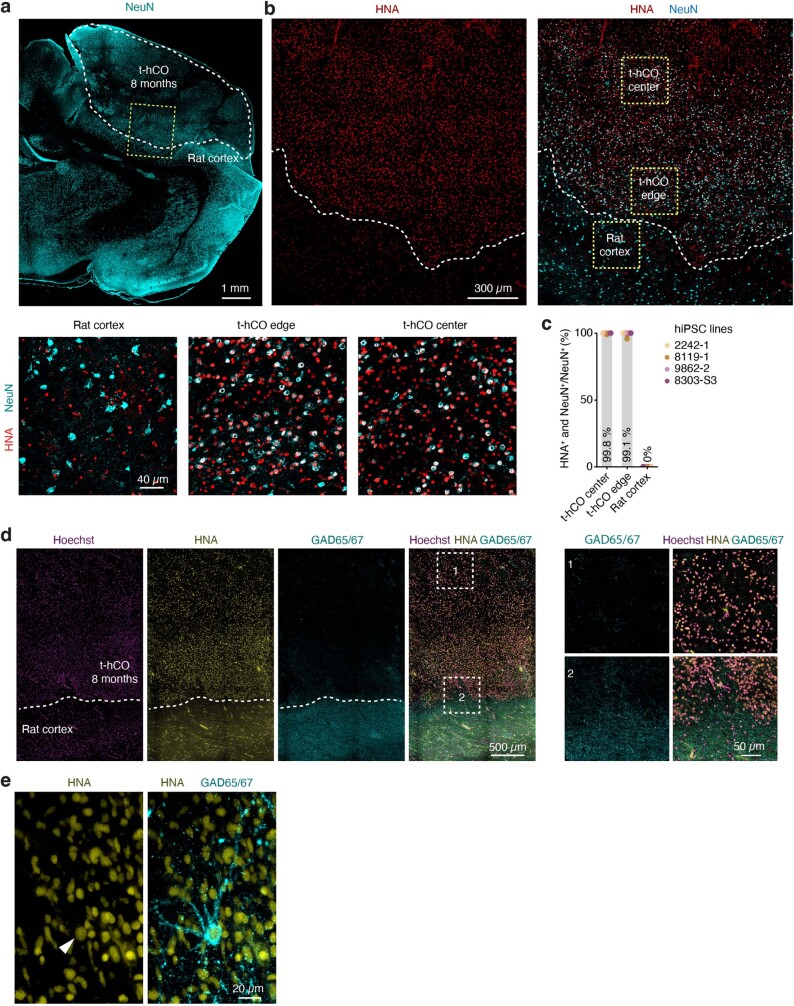
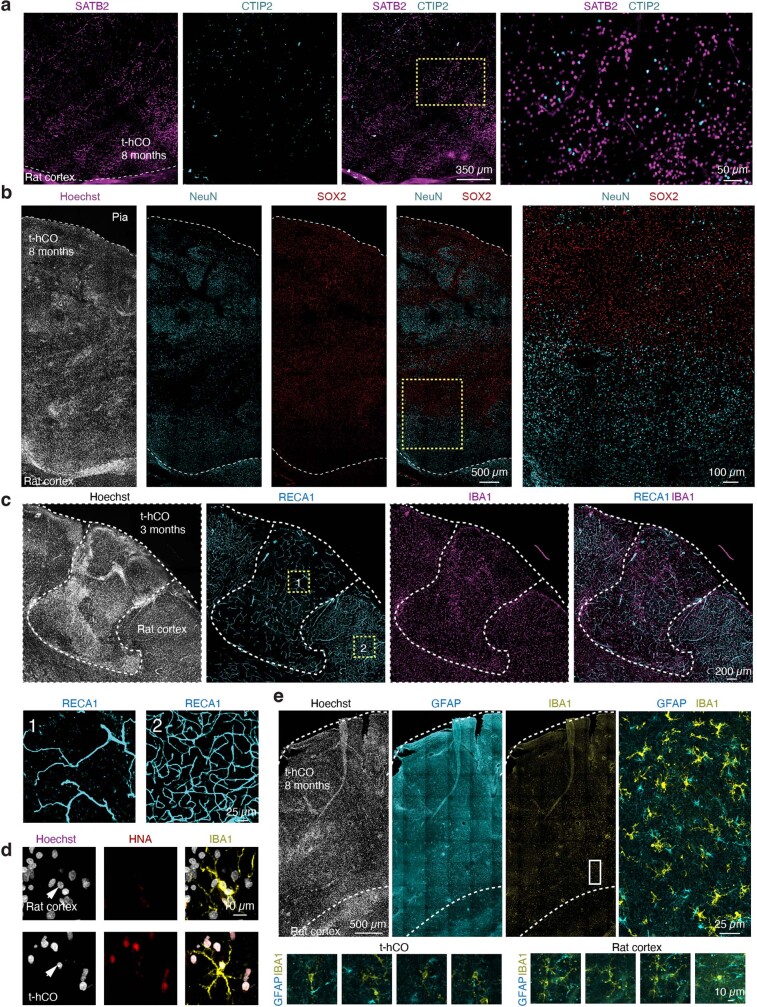
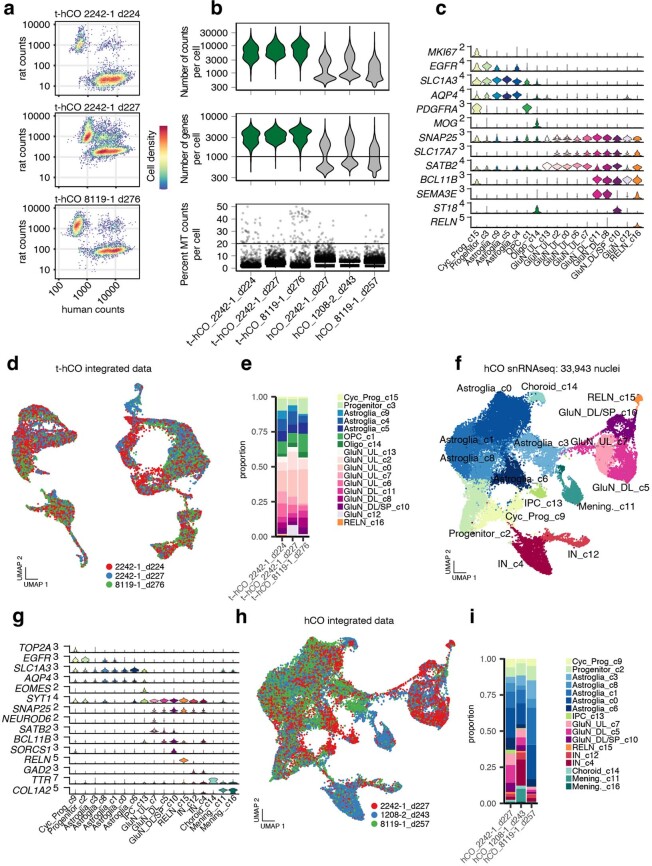
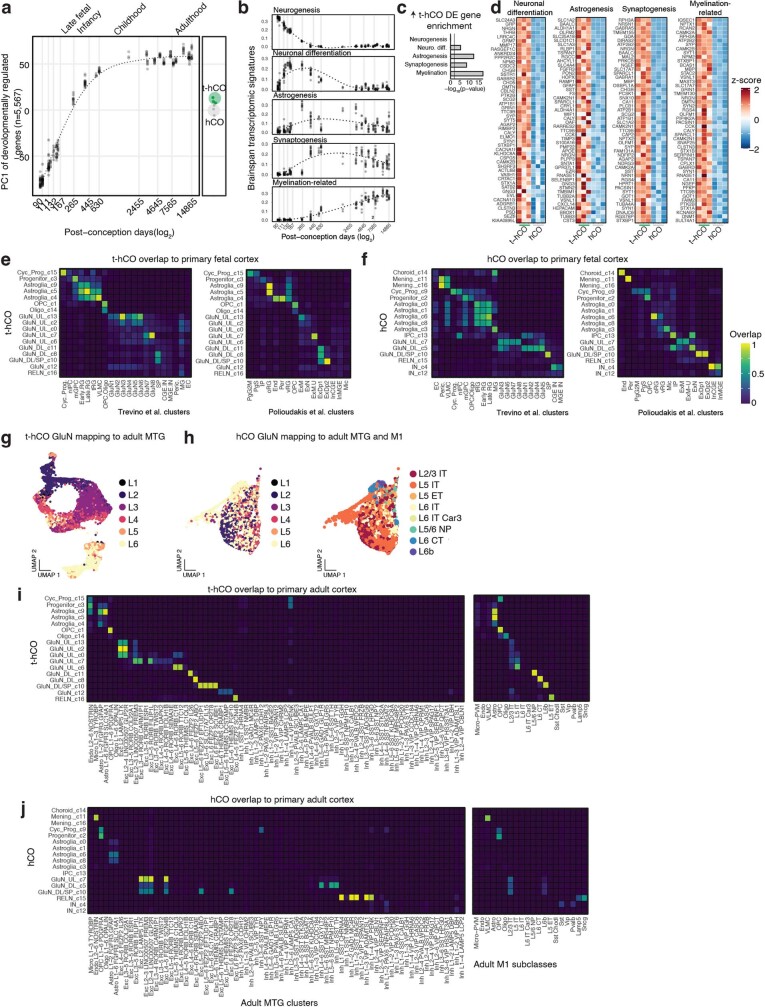
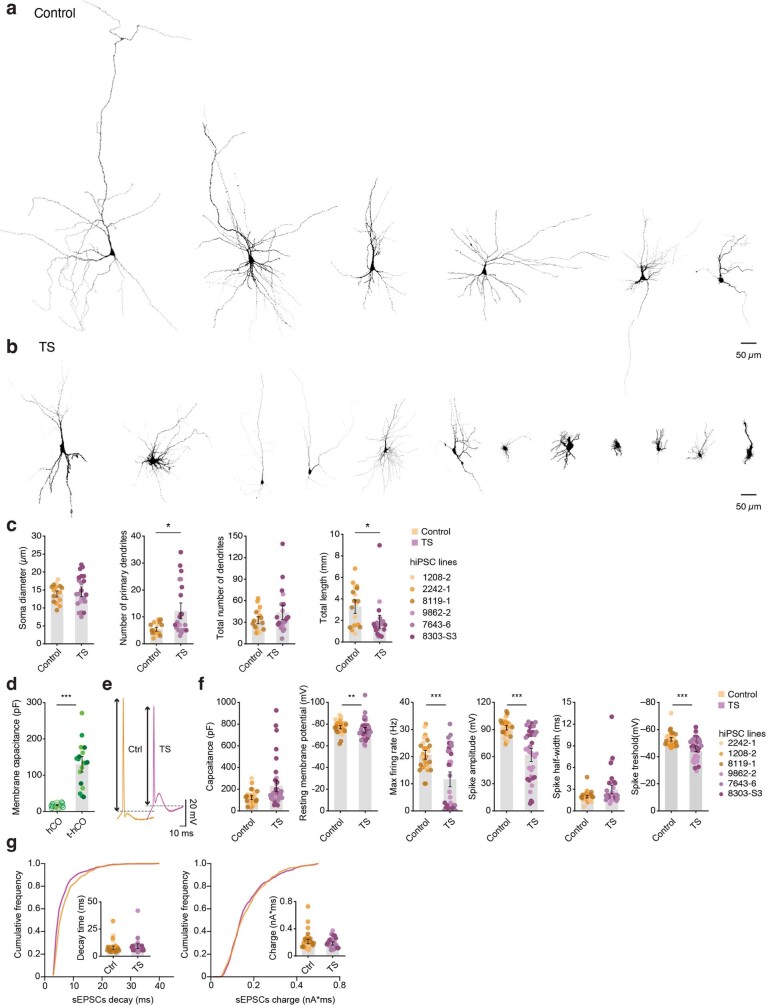
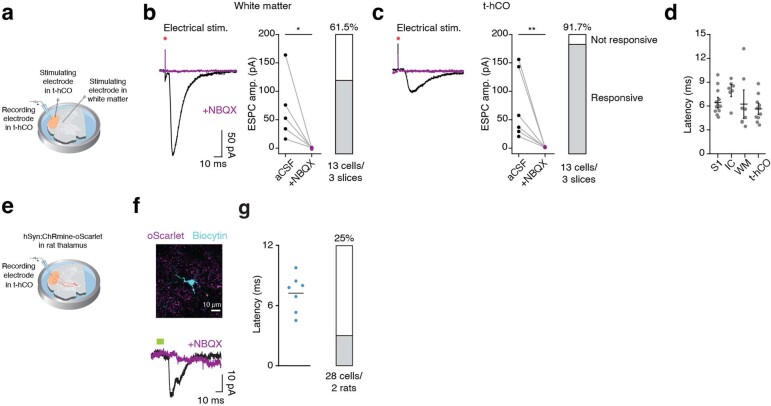
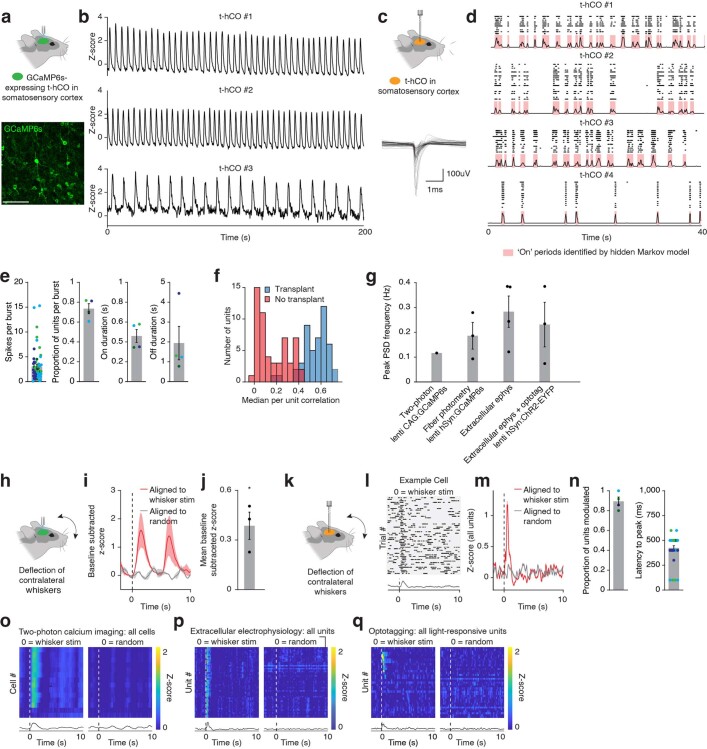
Self-organizing neural organoids represent a promising in vitro platform with which to model human development and disease 1–5 . However, organoids lack the connectivity that exists in vivo, which limits maturation and makes integration with other circuits that control behaviour impossible. Here we show that human stem cell-derived cortical organoids transplanted into the somatosensory cortex of newborn athymic rats develop mature cell types that integrate into sensory and motivation-related circuits. MRI reveals post-transplantation organoid growth across multiple stem cell lines and animals, whereas single-nucleus profiling shows progression of corticogenesis and the emergence of activity-dependent transcriptional programs. Indeed, transplanted cortical neurons display more complex morphological, synaptic and intrinsic membrane properties than their in vitro counterparts, which enables the discovery of defects in neurons derived from individuals with Timothy syndrome. Anatomical and functional tracings show that transplanted organoids receive thalamocortical and corticocortical inputs, and in vivo recordings of neural activity demonstrate that these inputs can produce sensory responses in human cells. Finally, cortical organoids extend axons throughout the rat brain and their optogenetic activation can drive reward-seeking behaviour. Thus, transplanted human cortical neurons mature and engage host circuits that control behaviour. We anticipate that this approach will be useful for detecting circuit-level phenotypes in patient-derived cells that cannot otherwise be uncovered.
Overview
The claims and statistics of this paper haven’t been checked yet.
Free: it reads the open-access text and checks the first 5 claims that cite a source we can check. Create a free account to check every claim.
Integrity signals
Registry
Cites
Statistics
Figures
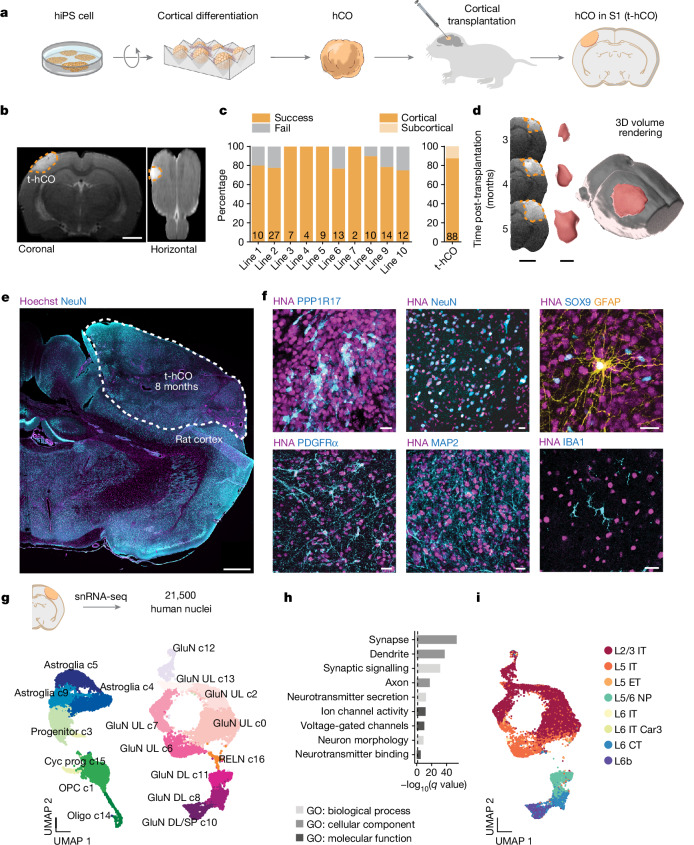
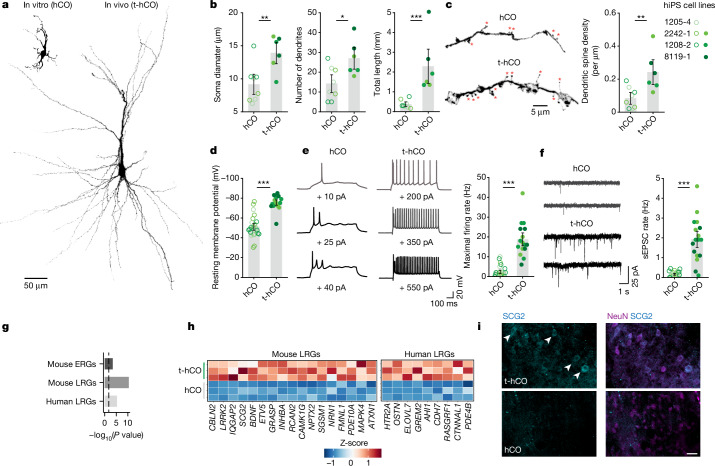
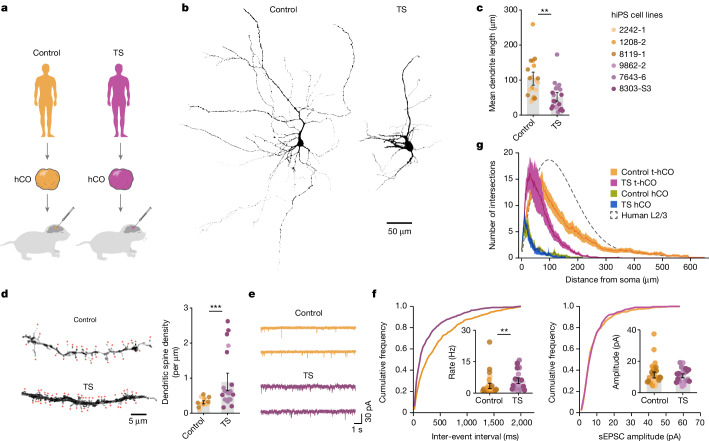
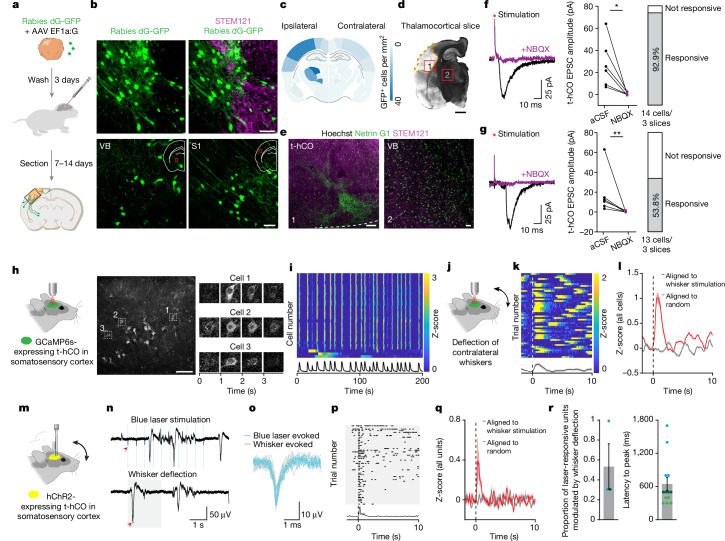
Verification
Claims the paper makes
The claims and statistics of this paper haven’t been checked yet.
Free: it reads the open-access text and checks the first 5 claims that cite a source we can check. Create a free account to check every claim.
Claims other papers make about this one
Each is checked against this paper’s own text: does it say what the citing paper says it does?
The source backs part of the claim, not all of it — or backs it for a different population, condition or comparison.
In the citing paper
“iPS cell-derived organoids fail to mature beyond the fetal phenotype unless they are grafted into living organisms36,37.”
From Human disease models in drug development (2023) · cites this paper as [37]
Experimental — accuracy not yet measured
Self-check
Percentages, sums and reported differences re-computed from the paper’s own numbers.
The self-check needs the paper’s full text.
Citations
Cites
Comprehensive Integration of Single-Cell Data
Stuart, T., Butler, A., Hoffman, P., Hafemeister, C., Papalexi, E., Mauck, W. M., Hao, Y., Stoeckius, M., Smibert, P., & Satija, R. (2019) · Cell · doi:10.1016/j.cell.2019.05.031 · Cited by 15,453
Dimensionality reduction for visualizing single-cell data using UMAP
Becht, E., McInnes, L., Healy, J., Dutertre, C.-A., Kwok, I. W. H., Ng, L. G., Ginhoux, F., & Newell, E. W. (2019) · Nature Biotechnology · doi:10.1038/nbt.4314 · Cited by 5,358 · cited 3×
“Following low-quality nuclei removal, integrated datasets were clustered (resolution = 0.5) and embedded for visualization purposes with UMAP 34 .”
InfluentialMcGinnis, C. S., Murrow, L. M., & Gartner, Z. J. (2019) · Cell Systems · doi:10.1016/j.cels.2019.03.003 · Cited by 4,521
ToppGene Suite for gene list enrichment analysis and candidate gene prioritization
Chen, J., Bardes, E. E., Aronow, B. J., & Jegga, A. G. (2009) · Nucleic Acids Research · doi:10.1093/nar/gkp427 · Cited by 2,952 · cited 1×
“…Ontology (GO) enrichment analyses among significantly upregulated t-hCO GluN genes (Benjamini–Hochberg-adjusted P values less than 0.05, expressed in at least 10% of t-hCO GluN cells, and fold change increase of at least 2) were performed using the ToppGene Suite (https://top-pgene.cchmc.org/) 37 .”
InfluentialBrain-Region-Specific Organoids Using Mini-bioreactors for Modeling ZIKV Exposure
Qian, X., Nguyen, H. N., Song, M. M., Hadiono, C., Ogden, S. C., Hammack, C., Yao, B., Hamersky, G. R., Jacob, F., Zhong, C., et al. (2016) · Cell · doi:10.1016/j.cell.2016.04.032 · Cited by 2,127
Conserved cell types with divergent features in human versus mouse cortex
Hodge, R. D., Bakken, T. E., Miller, J. A., Smith, K. A., Barkan, E. R., Graybuck, L. T., Close, J. L., Long, B., Johansen, N., Penn, O., et al. (2019) · Nature · doi:10.1038/s41586-019-1506-7 · Cited by 1,775 · cited 2×
“We identified and categorized major cell classes through a combination of marker 19–21 , 35 gene expression expression and annotation via integration with reference Differential gene expression analysis between t-hCO and hCO subclasses was performed using a recently developed pseudobulk approach 36…”
Functional cortical neurons and astrocytes from human pluripotent stem cells in 3D culture
Paşca, A. M., Sloan, S. A., Clarke, L. E., Tian, Y., Makinson, C. D., Huber, N., Kim, C. H., Park, J.-Y., O'Rourke, N. A., Nguyen, K. D., et al. (2015) · Nature Methods · doi:10.1038/nmeth.3415 · Cited by 1,609 · cited 1×
“…applying instructive signals to human induced pluripotent stem (hiPS) cells grown in three-dimensional (3D) cultures, self-organizing organoids resembling specific regions of the nervous system, including human cortical organoids (hCO; also known as human cortical spheroids) can be generated 2–6 .”
Self-citationAssembly of functionally integrated human forebrain spheroids
Birey, F., Andersen, J., Makinson, C. D., Islam, S., Wei, W., Huber, N., Fan, H. C., Metzler, K. R. C., Panagiotakos, G., Thom, N., et al. (2017) · Nature · doi:10.1038/nature22330 · Cited by 1,365 · cited 2×
“…applying instructive signals to human induced pluripotent stem (hiPS) cells grown in three-dimensional (3D) cultures, self-organizing organoids resembling specific regions of the nervous system, including human cortical organoids (hCO; also known as human cortical spheroids) can be generated 2–6 .”
Self-citationAn in vivo model of functional and vascularized human brain organoids
Mansour, A. A., Gonçalves, J. T., Bloyd, C. W., Li, H., Fernandes, S., Quang, D., Johnston, S., Parylak, S. L., Jin, X., & Gage, F. H. (2018) · Nature Biotechnology · doi:10.1038/nbt.4127 · Cited by 1,211
Individual brain organoids reproducibly form cell diversity of the human cerebral cortex
Velasco, S., Kedaigle, A. J., Simmons, S. K., Nash, A., Rocha, M., Quadrato, G., Paulsen, B., Nguyen, L., Adiconis, X., Regev, A., et al. (2019) · Nature · doi:10.1038/s41586-019-1289-x · Cited by 1,094
Cited by
Items 201–300 of 547
Sawai, T., & Kataoka, M. (2024) · EMBO Reports · doi:10.1038/s44319-024-00099-5 · Cited by 9
“Recent fi ndings indicate that BOs, when transplanted into animals, tend to mature further within the host brain (Revah et al, 2022).”
BackgroundUnraveling the Neural Circuits: Techniques, Opportunities and Challenges in Epilepsy Research
Xiao, W., Li, P., Kong, F., Kong, J., Pan, A., Long, L., Yan, X., Xiao, B., Gong, J., & Wan, L. (2024) · Cellular and Molecular Neurobiology · doi:10.1007/s10571-024-01458-5 · Cited by 9
“Given the absence of in vivo connectivity, which hinders the integration with other circuits controlling behaviors, Revah et al. transplanted human stem cell-derived cortical organoids into the somatosensory cortex of newborn athymic rats (Revah et al. 2022).”
BackgroundBiofabrication of Neural Organoids: An Experiential Learning Approach for Instructional Laboratories
Cvetkovic, C., Lindley, S., Golecki, H. M., & Krencik, R. (2024) · Biomedical Engineering Education · doi:10.1007/s43683-024-00145-7 · Cited by 9
Silva, A. L. T. E., Yokota-Moreno, B. Y., Branquinho, M. S., Salles, G. N., de Souza, T. C., de Carvalho, R. A., Batista, G., Branco, E. V., Griesi‐Oliveira, K., Passos‐Bueno, M. R., et al. (2024) · Neurochemistry International · doi:10.1016/j.neuint.2024.105854 · Cited by 9
Examining the NEUROG2 lineage and associated gene expression in human cortical organoids
Vasan, L., Chinchalongporn, V., Saleh, F., Zinyk, D. L., Ke, C., Suresh, H., Ghazale, H., Belfiore, L., Touahri, Y., Oproescu, A.-M., et al. (2025) · Development · doi:10.1242/dev.202703 · Cited by 9
Akkouh, I. A., Osete, J. R., Szabó, A., Andreassen, O. A., & Djurovic, S. (2025) · Biological Psychiatry · doi:10.1016/j.biopsych.2025.02.012 · Cited by 9
“…advancements have already proven successful in pushing these systems toward a more mature state, including long-term maturation in optimized medium conditions (9), co-culturing of brain organoids with non-neuronal cell types (16), and transplantation of human organoids into rodent brains (17,18).”
Myelin organoids for the study of Alzheimer's disease
Cerneckis, J., & Shi, Y. (2023) · Frontiers in Neuroscience · doi:10.3389/fnins.2023.1283742 · Cited by 9
Advanced strategies in organoid/organ-on-a-chip for food safety and nutrition
Zhou, Y., Wang, F., Zhao, R., Huang, T., Su, W., Wen, Y., He, Z., & Li, D. (2025) · Food Research International · doi:10.1016/j.foodres.2025.117011 · Cited by 8
Recapitulation and investigation of human brain development with neural organoids
Tamada, A., & Muguruma, K. (2023) · IBRO Neuroscience Reports · doi:10.1016/j.ibneur.2023.12.006 · Cited by 10
Ji, Y., McLean, J. L., & Xu, R. (2024) · Neuroscience Bulletin · doi:10.1007/s12264-024-01189-z · Cited by 8
“The third method involves transplanting hPSC-or fetal/adult human brain cell-derived NSCs/NPCs or other neural cells, or hPSC-derived cerebral organoids, into the brains of neonatal (P0) to P3 animals [12, 24–28].”
InfluentialPereira, M. F., Shyti, R., & Testa, G. (2024) · Stem Cell Reports · doi:10.1016/j.stemcr.2024.05.004 · Cited by 8
Beyond skin deep: Revealing the essence of iPS cell-generated skin organoids in regeneration
Zhang, Y.-X., Zhou, Y., Xiong, Y., & Li, Y. (2024) · Burns · doi:10.1016/j.burns.2024.06.011 · Cited by 9
Hajimirzaei, P., Tabatabaei, F. S. A., Nasibi-Sis, H., Razavian, R. S., & Nasirinezhad, F. (2024) · Experimental Neurology · doi:10.1016/j.expneurol.2024.115062 · Cited by 8
Circuit integration by transplanted human neurons
Yuan, Q., & Zhang, S. (2024) · Current Opinion in Genetics & Development · doi:10.1016/j.gde.2024.102225 · Cited by 8
Jin-hong, X., Kong, Y., Wang, N., Li, H., Li, Y., Liu, Z., Yang, Y., Yu, X., Liu, H., Ding, J., et al. (2024) · Advanced Science · doi:10.1002/advs.202409774 · Cited by 8
Stem cell ethics and policy: What’s old is new again
Hyun, I. (2022) · Med · doi:10.1016/j.medj.2022.11.008 · Cited by 8
A comparative view of human and mouse telencephalon inhibitory neuron development
Chung, C., Girgiss, J., & Gleeson, J. G. (2025) · Development · doi:10.1242/dev.204306 · Cited by 7
Tissue-specific extracellular matrix for the larger-scaled expansion of spinal cord organoids
Guan, Y., Jia, Z., Xiong, X., He, R., Ouyang, Y., Liu, H., Liang, L., Meng, X., Zhang, R., Guan, C., et al. (2025) · Materials Today Bio · doi:10.1016/j.mtbio.2025.101561 · Cited by 9
“Additionally, in the scenario of nervous system injury, considering the gradually emerging potential of neural organoids as an alternative therapy [28 – 30], S - gel has great application potential as a protective carrier for neural sphere transplants.”
Quezada, M. J., & Franz, C. K. (2025) · Neural Regeneration Research · doi:10.4103/nrr.nrr-d-25-00111 · Cited by 7
“To address this, xenotransplantation of human organoids into animals has shown potential in facilitating neuronal maturation, organoid vascularization, and development of more complex synaptic and intrinsic membrane properties (Revah et al., 2022).”
Replacement as an aging intervention
Lore, S., Poganik, J. R., Atala, A., Church, G. M., Gladyshev, V. N., Scheibye‐Knudsen, M., & Verdin, E. M. (2025) · Nature Aging · doi:10.1038/s43587-025-00858-6 · Cited by 7
“Additionally, stem cell-derived cortical organoids transplanted into the somatosensory cortex of newborn rats integrated into circuits controlling sensory processing and behavior 110 .”
Coronel, R., González-Sastre, R., Mateos-Martínez, P., Maeso, L., Llorente-Beneyto, E., Martín-Benito, S., Gagosian, V. S. C., Foti, L., González, M. D. C., López-Alonso, V., et al. (2025) · Neural Regeneration Research · doi:10.4103/nrr.nrr-d-24-01639 · Cited by 10
“However, this strategy is difficult to scale up and can cause differences in hCO development (Mansour et al., 2018; Revah et al., 2022).”
Fang, C., Wang, Q., Xiao, Q., Cai, X.-X., Du, R., Xue, L., Tian, X., & Xiong, L. (2025) · Neural Regeneration Research · doi:10.4103/nrr.nrr-d-24-01490 · Cited by 7
“While rodent models serve as irreplaceable models for neuroscience, their limitations are particularly pronounced in psychiatric disorders.”
Beyond Structure: Next-Generation Electrophysiological Platforms for Functional Brain Organoids
Cha, J.-H., Kim, K., & Cho, I. (2025) · International Journal of Stem Cells · doi:10.15283/ijsc25056 · Cited by 9
“Taking this a step further, Revah et al. 2022 (80) performed two-photon calcium imaging on human organoids transplanted into the rat brain, demonstrating that the human graft could be functionally activated by sensory stimuli delivered to the host animal, providing powerful evidence of true in-vivo…”
Position-independent emergence of neocortical neuron molecular identity, connectivity and function
Roig‐Puiggros, S., Guyoton, M., Suchkov, D., Fortoul, A., Matteucci, G., Fièvre, S., Panzeri, A., Molochidis, N., Barcellini, F., Maino, E., et al. (2025) · Nature Neuroscience · doi:10.1038/s41593-025-02142-7 · Cited by 8
“Our findings on sensory information processing by Ht neurons extend previous neuroanatomical perturbation studies where transplanted organoids partially integrate cortical circuits and exhibit functional sensory responses 42 .”
Wu, H., Hamilton, C., Porritt, H., Winbo, A., & Zeltner, N. (2024) · The Journal of Physiology · doi:10.1113/jp286416 · Cited by 7
Emergence of task-related spatiotemporal population dynamics in transplanted neurons
Ghuman, H., Kim, K. S., Barati, S., & Ganguly, K. (2023) · Nature Communications · doi:10.1038/s41467-023-43081-w · Cited by 7
“While transplanted neurons and orga-noids can survive long periods and even demonstrate evoked sensory responses 20,35 – 39 , they have been reported to demonstrate activity patterns more consistent with immature networks (i.e., highly synchronized bursting activity) for prolonged periods 38,40,41 .”
From Promise to Practice: Recent Growth in 30 Years of Tissue Engineering Commercialization
Felix, R. B., Shabazz, A., Holeman, W. P., Han, S., Wyble, M., Uzoukwu, M., Gomes, L. A., Nho, L., Litman, M. Z., Hu, P., et al. (2025) · Tissue Engineering Part A · doi:10.1089/ten.tea.2024.0112 · Cited by 9
“48 Similarly, organ-on-a-chip models are becoming more advanced to mimic the function of tissues and provide another source to study the drug response of tissues in vitro .”
Shukla, S., Comerci, C. J., Süel, G. M., & Jahed, Z. (2024) · Biosensors and Bioelectronics · doi:10.1016/j.bios.2024.116843 · Cited by 7
Human brain organoids influence rat behaviour
Camp, J. G., & Treutlein, B. (2022) · Nature · doi:10.1038/d41586-022-02977-1 · Cited by 7
Optogenetic stimulation of a cortical biohybrid implant guides goal directed behaviorPreprint
Brown, J., Zappitelli, K. M., Dawson, P. M., Yoon, E., Shiraga, S., Rochford, A. E., Eltaeb, M., Rodriguez, A., Kong, Y., Hodak, M., et al. (2024) · bioRxiv (Cold Spring Harbor Laboratory) · doi:10.1101/2024.11.22.624907 · Cited by 8
Lai, J. F., Demirbas, D., Phillips, K., Zhao, B., Wallace, H., Seferian, M., Nakayama, T., Harris, H. K., Chatzipli, A., Lee, E. A., et al. (2025) · bioRxiv (Cold Spring Harbor Laboratory) · doi:10.1101/2025.02.27.640588 · Cited by 7
Chimeric brain models to study human glial-neuronal and macroglial-microglial interactions
Jin, M., Ma, Z., Zhang, H., Dang, R., Papetti, A. V., Stillitano, A. C., Zou, L., Goldman, S. A., & Jiang, P. (2026) · Cell Reports · doi:10.1016/j.celrep.2025.116794 · Cited by 6
Expanding the neuroimmune research toolkit with in vivo brain organoid technologies
Tian, A., Bhattacharya, A., Muffat, J., & Li, Y. (2025) · Disease Models & Mechanisms · doi:10.1242/dmm.052200 · Cited by 6
“Given that xenotransplanted neural organoids can integrate into host neural circuits and influence behavior, extending this research to neuroimmune organoids will provide unique opportunities to explore how microglia shape behavioral outcomes (Revah et al., 2022).”
Established and emerging new approach methodologies in neuroscience
Imberechts, D., Ny, A., & Copmans, D. (2025) · Frontiers in Neuroscience · doi:10.3389/fnins.2025.1696937 · Cited by 7
“…exploratory technique aimed at addressing the limitations of in vitro 2D neuronal and 3D organoid models by providing a more physiologically relevant in vivo context (Mansour et al., 2018; Revah et al., 2022; Xiang et al., 2017; Wilson et al., 2022; Mancuso et al., 2024; Linaro et al., 2019).”
Tenreiro, M. F., & Muotri, A. R. (2026) · Developmental Cell · doi:10.1016/j.devcel.2026.02.018 · Cited by 6
Precision medicine in mental health: applications, challenges, and recommendations
Arango, C., Vieta, E., Fañanás, L., Courtet, P., Picker, L. D., Kas, M. J., Kéri, P., Mohr, P., Myin‐Germeys, I., Penninx, B. W. J. H., et al. (2026) · European Psychiatry · doi:10.1192/j.eurpsy.2026.12210 · Cited by 7
“…mice expressing human proteins, allow study of pathophysiological processes and treat-ment responses in systems closer to human biology [21, 22]. of Mental Health studies disorders through shared symptoms, processes, and mechanisms, supporting the identification of transdiagnostic…”
Zheng, X., Liu, Z., He, Z., Xu, J., Wang, Y., Gong, C.-Z., Zhang, R., Zhang, S., Chen, H., & Wang, W. (2023) · iScience · doi:10.1016/j.isci.2023.108306 · Cited by 6
“51 Importantly, when the CNS is injured, adult neurons regress to an embryonic growth state 52, and neural plasticity occurs.”
BackgroundMencattini, A., Daprati, E., Della‐Morte, D., Guadagni, F., Sangiuolo, F. C., & Martinelli, E. (2024) · Frontiers in Artificial Intelligence · doi:10.3389/frai.2024.1385871 · Cited by 6
“Despite the success of various protocols (Miura et al., 2020; Revah et al., 2022), organoids still suffer from low reproducibility, high heterogeneity, low generation throughput and necrosis/hypoxia.”
BackgroundMeCP2 dysregulation inhibits mitophagy and impairs neural development in cortical organoids
Zhou, J., Liu, Y., Jing, X., Peng, H., Li, F., Cao, L., Li, W., Li, R., Zhang, J., Wang, X., et al. (2025) · Journal of Advanced Research · doi:10.1016/j.jare.2025.07.035 · Cited by 8
“Notably, recent research has demonstrated that cortical organoids can be successfully transplanted into rat brains, allowing for vascularized growth [55].”
Will Human-Animal Chimeras Cause Moral Confusion? Exploring Public Attitudes
Devolder, K., Rottman, J., Xiao, Q., Kahane, G., Caviola, L., Yip, L. J., & Faber, N. S. (2025) · Journal of Bioethical Inquiry · doi:10.1007/s11673-024-10413-4 · Cited by 6
“First, human brain organoids have been successfully transplanted into rat brains (Revah et al. 2022).”
Cell-extrinsic controls over neocortical neuron fate and diversity
Baumann, N., Morassut, I., Roig‐Puiggros, S., Klingler, E., Bartolini, G., Fièvre, S., & Jabaudon, D. (2025) · Science Advances · doi:10.1126/sciadv.adw0218 · Cited by 7
Chimeric human organoid and mouse brain slice co-cultures to study microglial function
Panagiotakopoulou, V., Welzer, M., Ormaechea, O. R., Werner, D., Erlebach, L., Bühler, A., Obermüller, U., Neher, J. J., Jucker, M., & Kronenberg‐Versteeg, D. (2025) · Cell Reports · doi:10.1016/j.celrep.2025.116656 · Cited by 6
Chew, L. H., Mercier, E., Rogalski, J. C., Pippard, S., & Knock, E. (2024) · Frontiers in Molecular Neuroscience · doi:10.3389/fnmol.2023.1243499 · Cited by 7
Human pluripotent stem cells as a translational toolkit in psychedelic research in vitro
Salerno, J. A., & Rehen, S. K. (2024) · iScience · doi:10.1016/j.isci.2024.109631 · Cited by 7
“170 Remarkably, their studyalso high-lighted integration with host thalamic connections with impact on host behavior.”
BackgroundA comprehensive review of electrophysiological techniques in amyotrophic lateral sclerosis research
Ren, K., Wang, Q., Jiang, D., Liu, E., Alsmaan, J., Jiang, R., Rutkove, S. B., & Tian, F. (2024) · Frontiers in Cellular Neuroscience · doi:10.3389/fncel.2024.1435619 · Cited by 8
Modeling Alzheimer's disease using cerebral organoids: Current challenges and prospects
Abijo, A. Z., Olatunji, S., Adelodun, S. T., Asamu, M. O., & Omeiza, N. A. (2024) · Brain Organoid and Systems Neuroscience Journal · doi:10.1016/j.bosn.2024.09.001 · Cited by 6
A Political and ethical landscape of brain organoid research
Schneider, E., Samsa, L. A., & Dubljević, V. (2023) · Molecular Psychology Brain Behavior and Society · doi:10.12688/molpsychol.17521.1 · Cited by 6
The Biological Information Cycle: The Terms of Consciousness
Reber, A. S., Baluška, F., & Miller, W. B. (2023) · Oxford University Press eBooks · doi:10.1093/oso/9780198873211.003.0007 · Cited by 5
Su, J., Yan, Z., Tang, X., Wu, T., Ling, J., & Qian, Y. (2025) · Engineering · doi:10.1016/j.eng.2025.05.011 · Cited by 6
Yamashita, H., Kikuchi, T., Kodaka, Y., Doi, D., Ikeda, M., & Takahashi, J. A. (2025) · Stem Cell Reviews and Reports · doi:10.1007/s12015-025-10981-x · Cited by 6
Patel, M. D., Lavekar, S. S., Jaisalmeria, R., Oji, S., Jayasi, J., Cvetkovic, C., & Krencik, R. (2025) · Advanced Healthcare Materials · doi:10.1002/adhm.202502081 · Cited by 4
“Thus, there is a clear need to understand the influence of cells that arise during the onset of neural networks, such as astrocytes, and to optimize the approaches to generate biological neural networksforapplicationsrangingfrominvitrostudiesandinvivo engraftments [21–23].”
Sawai, T., Kobayashi, C., & Ishida, S. (2025) · AJOB Neuroscience · doi:10.1080/21507740.2025.2601353 · Cited by 5
“Again, true human-like consciousness in host animals remains unlikely at present, but researchers note that even partial cognitive enhancement raises questions about species boundaries and animal welfare (Revah et al. 2022).”
iPSCs-Derived Neurons and Brain Organoids from Patients
Zhu, W., Xu, L., Li, X., Hu, H., Lou, S.-N., & Liu, Y. (2023) · Handbook of experimental pharmacology · doi:10.1007/164_2023_657 · Cited by 5
Terada, E., Bamba, Y., Takagaki, M., Kawabata, S., Tachi, T., Nakamura, H., Nishida, T., & Kishima, H. (2023) · Stem Cells Translational Medicine · doi:10.1093/stcltm/szad066 · Cited by 5
“48,49 Our COSFs were larger than cCOs and had a sheet-like configuration, which would be suitable for human cerebral cortex regeneration.”
BackgroundAsteroid impact: the potential of astrocytes to modulate human neural networks within organoids
Lavekar, S. S., Patel, M. D., Parra, M. D. M., & Krencik, R. (2023) · Frontiers in Neuroscience · doi:10.3389/fnins.2023.1305921 · Cited by 5
Genetic control of MRI contrast using the manganese transporter Zip14
Rallapalli, H., McCall, E. C., & Koretsky, A. P. (2024) · Magnetic Resonance in Medicine · doi:10.1002/mrm.29993 · Cited by 5
“70,71 The extent to which host brains and organoids connect with each other, share cell populations, or change in gene expression profiles will need to be studied in individual subjects.”
BackgroundRecent advances and applications of human brain models
Nishimura, K., Osaki, H., Tezuka, K., Nakashima, D., Numata, S., & Masamizu, Y. (2024) · Frontiers in Neural Circuits · doi:10.3389/fncir.2024.1453958 · Cited by 5
“Furthermore, recording technologies such as fiber photometry and two-photon calcium imaging have revealed synchronous neural activities of brain organoids following implantation into the animal brain (Revah et al., 2022).”
BackgroundYang, Z., Teaney, N. A., Buttermore, E. D., Şahin, M., & Saber, W. A. (2025) · Frontiers in Neuroscience · doi:10.3389/fnins.2024.1524577 · Cited by 6
Berto, G., Pravatà, V. M., & Cappello, S. (2025) · Current Opinion in Neurobiology · doi:10.1016/j.conb.2025.103018 · Cited by 5
“However, it is important to recognize the limitations of these models - such as variability due to iPSC reprogramming and limited neuronal connectivity and maturation, particularly when cultured in vitro rather than transplanted [52].”
Neurodevelopmental disorders: 2023 update
Carriba, P., Lorenzón, N., & Dierssen, M. (2023) · Free Neuropathology · doi:10.17879/freeneuropathology-2023-4701 · Cited by 6
Developing advanced organoids: challenges, progress, and outlook
Abilez, O. J. (2024) · BioTechniques · doi:10.1080/07366205.2024.2442825 · Cited by 5
Wang, C., Chen, Q., Yang, Z., Zhang, C., Song, M., Xing, X., Ma, W., Chen, C., Zhang, L., Gong, M., et al. (2025) · Advanced Functional Materials · doi:10.1002/adfm.202422870 · Cited by 4
Functional recovery through the plastic adaptation of organoid grafts in cortical tissue
Ondriš, J., Schwamborn, J. C., & Olcese, U. (2025) · Cellular and Molecular Life Sciences · doi:10.1007/s00018-025-05767-w · Cited by 4
“Focusing specifically on neurons, one study detected glutamatergic neurons with both superficial and deep-layer identity, while there was an absence of GABAergic neurons [ 37 ].”
InfluentialAdvances in three-dimensional modeling of ischemic injury
Halkoluoto, A., Dhungana, H., & Keuters, M. H. (2026) · Journal of Cerebral Blood Flow & Metabolism · doi:10.1177/0271678x251409022 · Cited by 4
“32 The latter method is also relevant for the vascularization of organoids.”
Focal cortical dysplasias: modeling pediatric drug-resistant epilepsy using human brain organoids
Petralla, S., Crocco, E., Giustizieri, M., Palma, L. D., Cremisi, F., Cherubini, E., Specchio, N., Cattaneo, A., & Marinelli, S. (2026) · Frontiers in Cellular Neuroscience · doi:10.3389/fncel.2026.1794559 · Cited by 4
Diversity and complexity in neural organoids
Chiaradia, I., & Lancaster, M. A. (2026) · FEBS Letters · doi:10.1002/1873-3468.70329 · Cited by 4
Enhancing Maturation of Human Neuromuscular Organoids via Electrical Stimulation
Moysidou, C., Martins, I. B., El‐Shimy, I. A., Bicci, I., Cea, D., Bukas, C., Mekki, I., Rusu, M.-C., Nebol, A., Lahmann, I., et al. (2026) · Advanced Science · doi:10.1002/advs.202522762 · Cited by 4
Updated Toolbox for Assessing Neuronal Network Reconstruction after Cell Therapy
Gonzalez‐Ramos, A., Pastor, C. P., Arcas-Marquez, A., & Tornero, D. (2024) · Bioengineering · doi:10.3390/bioengineering11050487 · Cited by 5
“By combining both technologies, authors studied both spontaneous and sensory-evoked activity in freely moving and anesthetized rats via fiber photometry and two-photon microscopy in head-fixed conditions, respectively [119].”
BackgroundNervous system contributions to small cell lung cancer: Lessons from diverse oncological studies
Liao, S., Kang, K., Yao, Z., & Lü, Y. (2024) · Biochimica et Biophysica Acta (BBA) - Reviews on Cancer · doi:10.1016/j.bbcan.2024.189252 · Cited by 8
Untangling the Molecular Mechanisms Contributing to Autism Spectrum Disorder Using Stem Cells
Mattingly, Z. A., & Chetty, S. (2025) · Autism Research · doi:10.1002/aur.70005 · Cited by 4
“…a more realistic environment for neurons to grow, interact, and form functional neural networks, allowing researchers to observe complex cellular processes and disease pathologies in a way that was not previously possible (Di Lullo and Kriegstein 2017; Revah et al. 2022; Velasco et al. 2020).”
Arta, R. K., Watanabe, Y., Egawa, J., Lemmon, V., & Someya, T. (2025) · Psychiatry and Clinical Neurosciences · doi:10.1111/pcn.13847 · Cited by 4
Olivero-Acosta, M. I., Robinson, M. J., Que, Z., Zhang, Z., Salazar‐Salazar, K. V., Harlow, H., Shankar, V., Hong, S., Wang, M., Otterbacher, C. M., et al. (2026) · Epilepsia · doi:10.1002/epi.70392 · Cited by 4
Self-citationPou, M. L., Thiberge, C., der Zwan, M. V., Govindan, A. D., Pons, S., Maskos, U., & Cloëz-Tayarani, I. (2023) · Cells · doi:10.3390/cells12071067 · Cited by 4
“The spine densities were very similar to those we reported previously in neonatal grafting [9], as well as those reported in a recent study using human-transplanted organoids [13].”
ResultLi, G., Huang, L.-J., Zhang, B., Liu, S., Liang, J.-H., Ding, Y., Zeng, X., Lai, B., Ma, Y.-H., Wang, Y.-Q., et al. (2024) · Chemical Engineering Journal · doi:10.1016/j.cej.2024.155032 · Cited by 4
Glia in tissue engineering: From biomaterial tools to transplantation
Dill-Macky, A., Lee, E., Wertheim, J. A., & Koss, K. M. (2024) · Acta Biomaterialia · doi:10.1016/j.actbio.2024.10.017 · Cited by 5
Genetically Engineered Mouse Models for Alzheimer Disease and Frontotemporal Dementia
Chiu, Y., Xia, S., Qiao, H., & Zhao, Z. (2024) · American Journal Of Pathology · doi:10.1016/j.ajpath.2024.11.006 · Cited by 6
Farahani, N. I., Lin, L. D., Nazir, S., Naderi, A., Rokos, L., McIntosh, A. R., & Julian, L. M. (2025) · Frontiers in Cellular Neuroscience · doi:10.3389/fncel.2024.1478572 · Cited by 4
“…advances with organoid transplantation into mouse brain tissues to permit more advanced human neuronal cell and electrophysiological development (Revah et al., 2022; Kelley et al., 2024) researchers can study the development and maturation of neural circuit network dynamics over time (Fair et…”
Gabashvili, A. N., Znoyko, S. L., Ryabova, A. V., Mochalova, E. N., Griaznova, O. Y., Tortunova, T. A., Шевелева, О. Н., Butorina, N. N., Kuziaeva, V. I., Lyadova, I. V., et al. (2025) · Molecules · doi:10.3390/molecules30183726 · Cited by 4
“The potential of cell therapy approaches for the treatment of various diseases, including neoplastic [1–4], neurodegenerative [5–7], cardiovascular [8–10], and other conditions, is significant.”
Modeling brain disorders using transplanted organoids: Beyond the short circuit
Velasco, S. (2022) · Cell stem cell · doi:10.1016/j.stem.2022.11.002 · Cited by 4
Arioka, Y., Okumura, H., Sakaguchi, H., & Ozaki, N. (2023) · Psychiatry and Clinical Neurosciences · doi:10.1111/pcn.13545 · Cited by 5
“For example, it is known that transplantation of cerebral organoids into the animal brain promotes vascularization from the host brain and results in better differentiation of neurons,(90,91) better proliferation,(92) axonal extension along with host neural circuit,(93,94) and modulation of the behaviors of transplant…”
BackgroundHarary, P. M., Blue, R., Castellanos, M., Dedhia, M., Hamimi, S. A., Jgamadze, D., Rees, B., Seshadri, N., Singh, S., Moreno, J. D., et al. (2023) · Molecular Psychology Brain Behavior and Society · doi:10.12688/molpsychol.17544.1 · Cited by 6
Animus: human-embodied animals
Savulescu, J., & Sawai, T. (2023) · Journal of Medical Ethics · doi:10.1136/jme-2022-108817 · Cited by 4
Ni, P., Fan, L., Jiang, Y., Zhou, C., & Chung, S. (2023) · Frontiers in Psychiatry · doi:10.3389/fpsyt.2023.1336085 · Cited by 4
Developing hippocampal spheroids model ictogenesis and epileptogenesisPreprint
Ephraim, J. W., Caron, D., Canal-Alonso, Á., Corchado, J. M., Palazzolo, G., & Panuccio, G. (2023) · bioRxiv (Cold Spring Harbor Laboratory) · doi:10.1101/2023.01.06.523024 · Cited by 4
Neocortical neurogenesis: a proneural gene perspective
Vasan, L., Moffat, A., Mattar, P. A., & Schuurmans, C. (2025) · FEBS Journal · doi:10.1111/febs.70158 · Cited by 3
“…into the murine cortex continue with their protracted developmental period, although they acquire more elaborate neuronal morphologies than endogenous mouse neurons or neurons that develop in COs in vitro , suggesting that environmental cues can impact the differentiation trajectories [260,261].”
Application of brain organoids in neurodevelopmental disorders
Zhao, C., Qi, Y., Xia, L., Zhu, T., & Xia, K. (2025) · Biochemical and Biophysical Research Communications · doi:10.1016/j.bbrc.2025.152405 · Cited by 3
A novel paradigm for single-cell annotation in stem cell research
Atkeson, T., Wilson, S. B., Ruiz-Morales, E. R., Little, M. H., Vento‐Tormo, R., Neavin, D. R., & Powell, J. E. (2025) · Stem Cell Reports · doi:10.1016/j.stemcr.2025.102707 · Cited by 3
Sensory abnormalities in autism spectrum disorder and their in vitro modeling
Kim, T., Lee, J., Lee, J., Jo, H., Oh, Y., Kim, Y. J., & Seo, J. (2025) · Translational Psychiatry · doi:10.1038/s41398-025-03778-6 · Cited by 3
“To this end, xenotransplantation approaches, where human brain orga-noids are implanted into the brains of animal models, are emerging as a powerful strategy [89, 90].”
Delbono, O., Wang, Z., & Messi, M. L. (2025) · Ageing Research Reviews · doi:10.1016/j.arr.2025.102999 · Cited by 7
Pluripotent stem cells-based neural organoids for modelling human brain development and diseases
Tong, L., Tian, P., Wang, R., Niu, S., Wang, R., Ye, Y., Wu, Y., Zhang, W., Wang, Y., Foggetti, A., et al. (2025) · Cell & Bioscience · doi:10.1186/s13578-025-01515-6 · Cited by 3
“…into the somatosensory cortex of newborn athymic rats, results in various mature cell types integrating into sensory and motivation-related circuits [163], while another study demonstrates feasibility, effectiveness, more neurogenesis, and more cell survival after transplantation into rats [164].”
Transcriptional code for circuit integration in the injured brain by transplanted human neurons
Wang, Z., Zheng, D., Chou, S.-M., Kang, P. J., Ye, F., & Zhang, S. (2026) · Cell stem cell · doi:10.1016/j.stem.2025.12.008 · Cited by 3
A programmable peptide interface for on-demand neural culturing platforms
Zhang, H., Song, X., Huang, N., Xiong, K., Shao, N., Su, Y., Bian, S., & Sawan, M. (2026) · Journal of Nanobiotechnology · doi:10.1186/s12951-026-04032-x · Cited by 3
“The study of neural cells, encompassing neurons and glial cells, is fundamental to advancing our understanding of the brain and its neural circuits’ function, as well as the pathogenesis of neurological disorders [1, 2].”
Neuromechanobiology: Bridging Mechanobiology and Neuroscience Through Evidence and Open Questions
Zimkowska, K., Riu-Villanueva, M., & del Río, J. A. (2026) · Cells · doi:10.3390/cells15020178 · Cited by 4
Wang, J., Sun, Z., Zhou, Y., Wang, L., & Liu, J. (2026) · Stem Cell Research & Therapy · doi:10.1186/s13287-025-04885-3 · Cited by 3
“For instance, optogenetic activation of organoids transplanted into the somatosensory cortex of rodents evoked sensory responses and reward-seeking behaviors [66].”
Astrocyte Enrichment of 3D Cortical Constructs Enhances Brain Repair
Cruz, E. M. [., Soares, L. C., Greene, G., Messore, F., Abuelem, M., Li, M., Andersen, C., Domocos, M., Vitiello, E., Razak, R. A., et al. (2026) · Advanced Science · doi:10.1002/advs.202507423 · Cited by 5
“Previous studies have documented successful axonal outgrowth and connectivity in both cell suspension and organoid implants [ 5, 7, 10, 17 , 62, 63 ].”
Self-citationTowards learning and memory risk assessment with human brain organoids: barriers and opportunities
Mohapatra, R., Din, D. A. E., Zhao, H., Härtung, T., & Smirnova, L. (2026) · Frontiers in Toxicology · doi:10.3389/ftox.2026.1783893 · Cited by 3
Cell type-agnostic transcriptomic signatures enable uniform comparisons of neural maturation
Venkatesan, S., Werner, J. M., Li, Y., & Gillis, J. (2026) · PLOS Biology · doi:10.1371/journal.pbio.3003757 · Cited by 3
“Furthermore, in a dataset where cultured organoids were transplanted into the rat brain [67], our model accurately predicts accelerated maturation in transplanted organoids (mean age = 32 weeks) compared to nontransplanted organoids (mean age = 24 weeks, P 2.2 × 10 −16 ).”
InfluentialHuman retinal organoids functionally bridge a transected optic nerve in a rat model
Gong, Y., Zhu, H., Ge, L., Wan, L., Huang, S., Su, Z. J., Elmahdi, M. M., Xiong, Z. S., Ji, M., Gou, Q., et al. (2026) · Cell stem cell · doi:10.1016/j.stem.2026.04.020 · Cited by 3
Thalamic NRXN1-mediated input to human cortical progenitors drives excitatory neurogenesis
Nguyen, C. V., Martija, A. A., Jaklic, D. C., White, R., Yang, M. G., Nano, P. R., Soto, J., Mil, J., Rana, D., Martín, J. M., et al. (2026) · Science · doi:10.1126/science.ady5180 · Cited by 3
Human-specific genetic modifiers of cortical architecture and function
Zhao, H., & Schmidt, E. R. E. (2024) · Current Opinion in Genetics & Development · doi:10.1016/j.gde.2024.102241 · Cited by 5
Metadata
- Authors
- Revah, O., Gore, F., Kelley, K. W., Andersen, J., Sakai, N., Chen, X., Li, M.-Y., Birey, F., Yang, X., Saw, N. L., Baker, S. W., Amin, N. D., Kulkarni, S., Mudipalli, R., Cui, B., Nishino, S., Grant, G. A., Knowles, J. K., Shamloo, M., Huguenard, J. R., Deisseroth, K., & Pașca, S. P.
- Affiliations
- Stanford Medicine (US)
- Stanford University (US)
- Howard Hughes Medical Institute (US)
- Corresponding author
- Pașca, Sergiu P.
- ORCID
- Revah, Omer
- Gore, Felicity
- Kelley, Kevin W.
- Andersen, Jimena
- Sakai, Noriaki
- Chen, Xiaoyu
- Li, Min-Yin
- Birey, Fikri
- Yang, Xiao
- Saw, Nay L.
- Baker, Samuel W.
- Amin, Neal D.
- Mudipalli, Rachana
- Cui, Bianxiao
- Nishino, Seiji
- Grant, Gerald A.
- Knowles, Juliet K.
- Shamloo, Mehrdad
- Huguenard, John R.
- Deisseroth, Karl
- Pașca, Sergiu P.
- Venue
- Nature
- Published
- 2022-10-12
- Volume
- 610
- Issue
- 7931
- Pages
- 319-326
- ISSN
- 0028-0836 (ISSN-L)
- 1476-4687
- PMC
- PMC9556304
- OpenAlex
- W4304698283
- Semantic Scholar
- 57e751de615d9e154922d135c67398d19d35a757
- Cited by
- 504
- References
- 44
- Citations by year
- 2026: 85 · 2025: 128 · 2024: 151 · 2023: 124 · 2022: 16
- FWCI
- 38.90
- Type
- journal article
- Language
- en
- Update notices
- correction (2026-08-03)
- Open access
- hybrid
- doi.org
- Licence
- cc-by
- creativecommons.org/licenses/by/4.0 (tdm)
- creativecommons.org/licenses/by/4.0 (vor)
- Locations
- Nature (publishedVersion, cc-by)
- PubMed Central (publishedVersion, cc-by)
- PubMed (publishedVersion)
- RePEc: Research Papers in Economics (submittedVersion)
- Funders
- New York Stem Cell Foundation
- National Alliance for Research on Schizophrenia and Depression
- Ludwig Family Foundation
- National Institutes of Health (1s10od030452-01, K99-R00)
- National Institute of Mental Health (K99/R00, R01MH115012, T32MH019938)
- National Institute on Drug Abuse (DA050662, K99DA050662)
- National Institute of Neurological Disorders and Stroke (K08NS123544)
- National Center for Research Resources (S10RR026917)
- Stanford Maternal and Child Health Research Institute
- Topics
- Life Sciences › Neuroscience › Developmental Neuroscience › Neurogenesis and neuroplasticity mechanisms
- Life Sciences › Biochemistry, Genetics and Molecular Biology › Molecular Biology › Pluripotent Stem Cells Research
- Life Sciences › Neuroscience › Cellular and Molecular Neuroscience › Neuroscience and Neural Engineering
- Keywords
- cortical organoids, transplantation, somatosensory cortex, athymic rats, cortical development, neuronal maturation, thalamocortical input, corticocortical connections, axon growth, optogenetic stimulation, reward-seeking behavior, Timothy syndrome, single-nucleus RNA sequencing, circuit integration
- MeSH terms
- Animals, Animals, Newborn, Autistic Disorder, Humans, Long QT Syndrome, Motivation, Neural Pathways, Neurons, Organoids, Reward, Somatosensory Cortex, Stem Cells, Syndactyly, Rats, Optogenetics
About these checks
Registry, retraction, Cites and statistics results are computed, not judged, with one exception: a printed reference that no index lists is read once by a model before it counts as a citation error. Claims are extracted by a model and kept only when their quote appears verbatim in the text; each cited source is then checked, with a model’s help, for whether it says what the claim relies on. Those verdicts can be wrong — read the claim’s quote and the cited source before relying on one.
Statistics and arithmetic are recomputed, not judged.
Confidence bands are shown only for fields calibrated on our annotated test set. None is calibrated yet, so no band is shown.
What counts as a claim ›How we measure confidence ›How we check this ›
Are you an author, or do you see a problem with this page? Request a review
Data sources
Bibliographic data: Semantic Scholar, OpenAlex, Crossref.
Contains information from the Semantic Scholar Academic Graph Datasets, made available under the ODC Attribution License (ODC-BY 1.0).
Semantic Scholar’s data is described in: Kinney, R., et al. (2023). The Semantic Scholar Open Data Platform. arXiv:2301.10140.
