

Pan-KRAS inhibitor disables oncogenic signalling and tumour growth
Open accessThe DOI matches its Crossref record; 41 of the 42 references it cites were found in a registry or an index.
Abstract
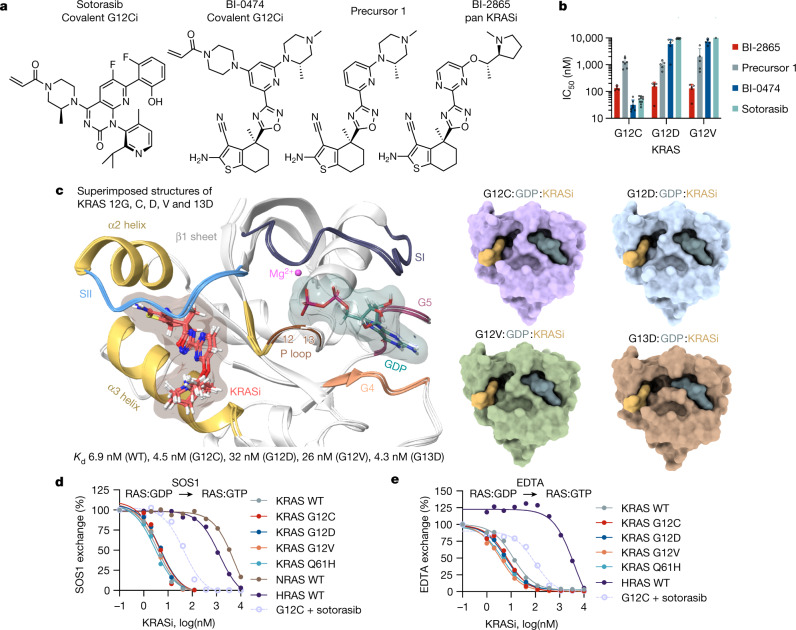
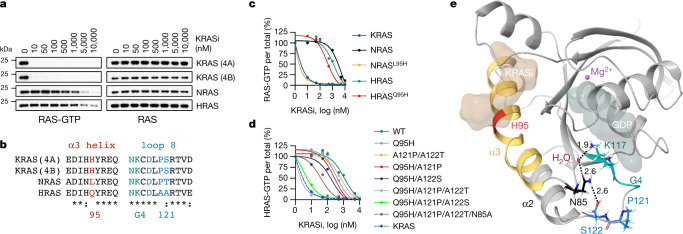
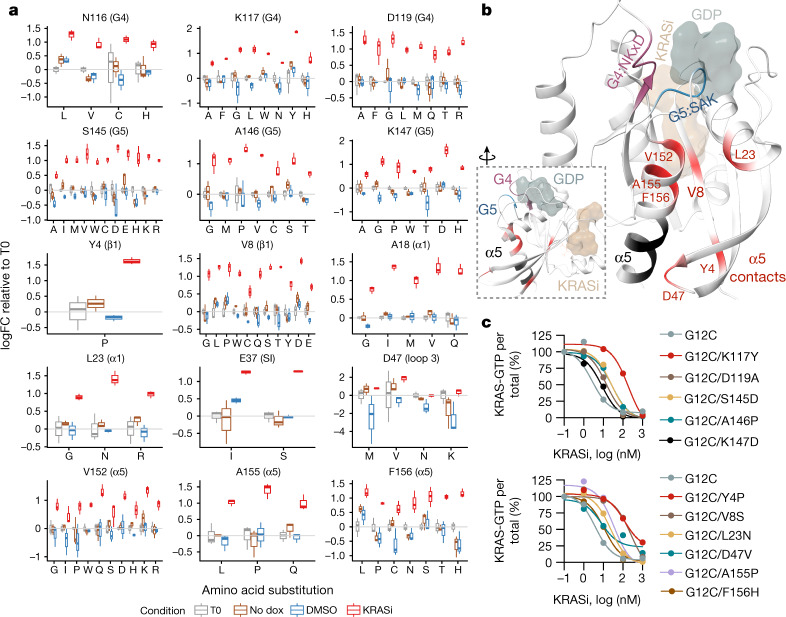
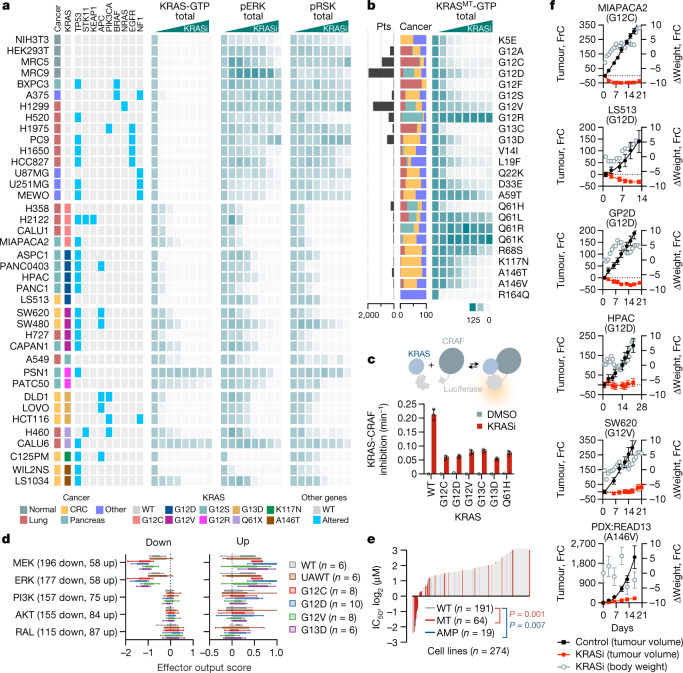
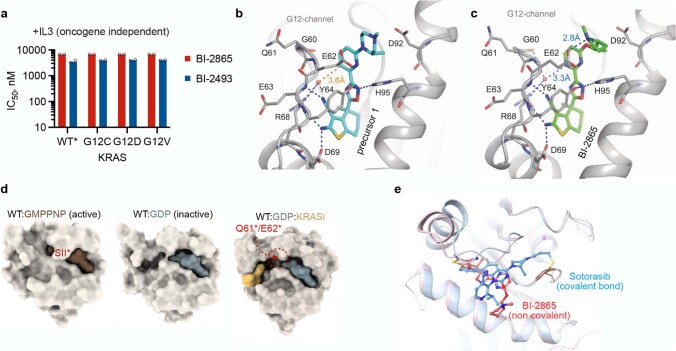
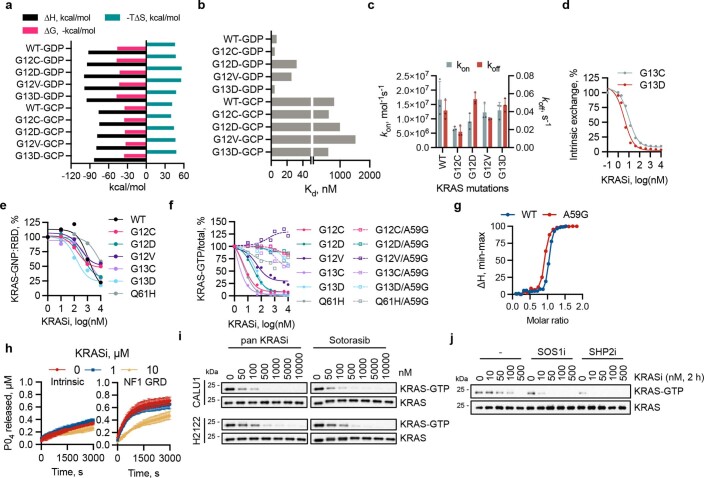
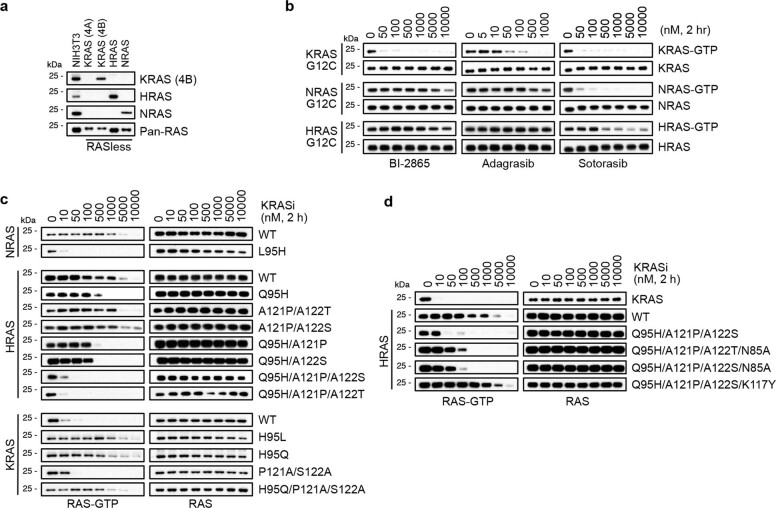
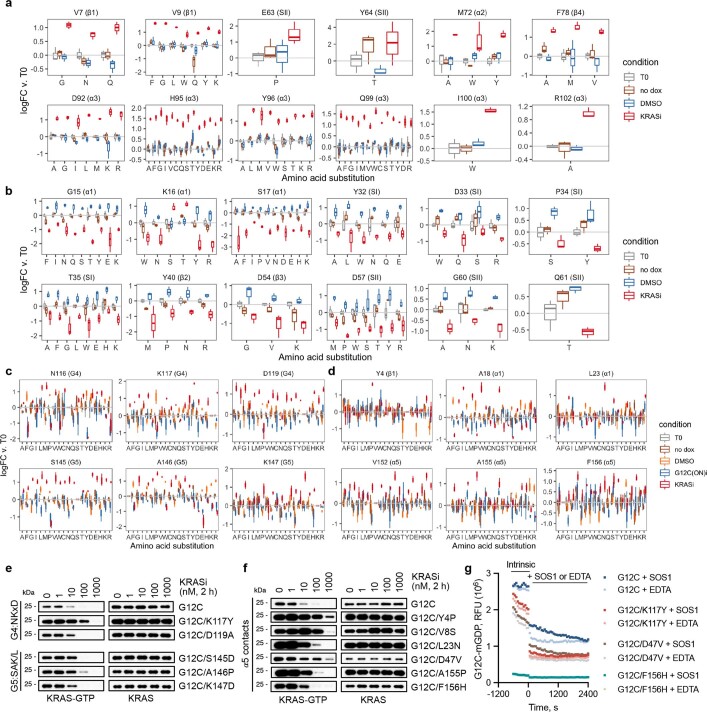
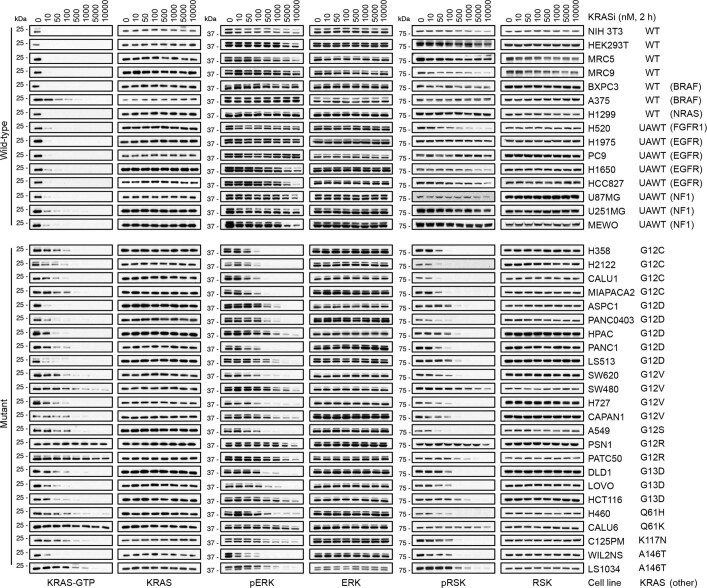
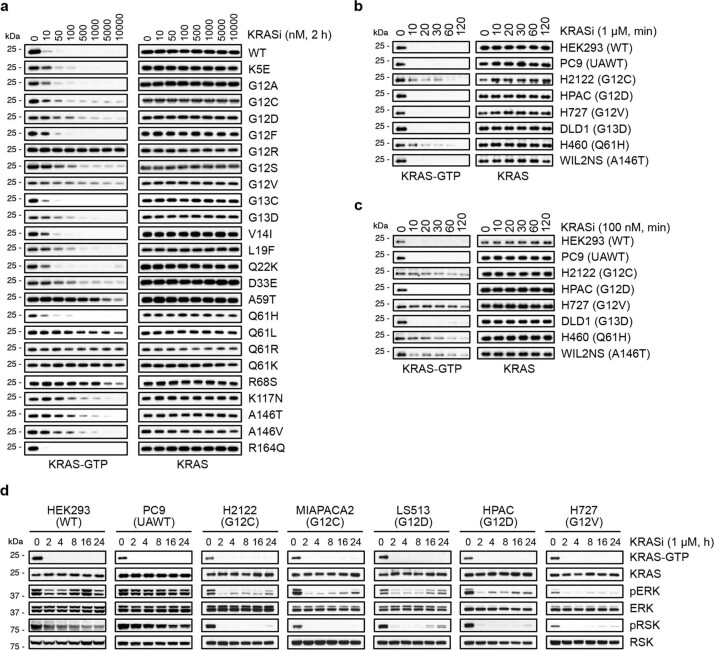
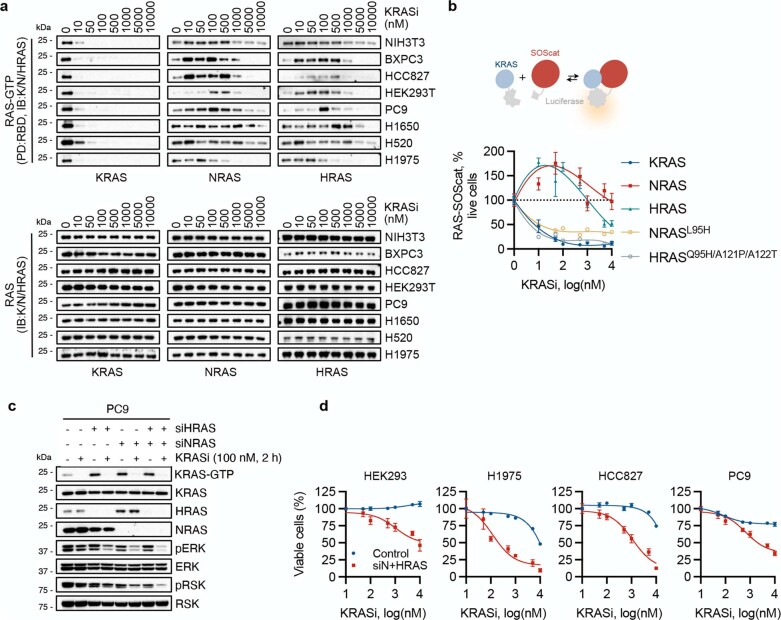
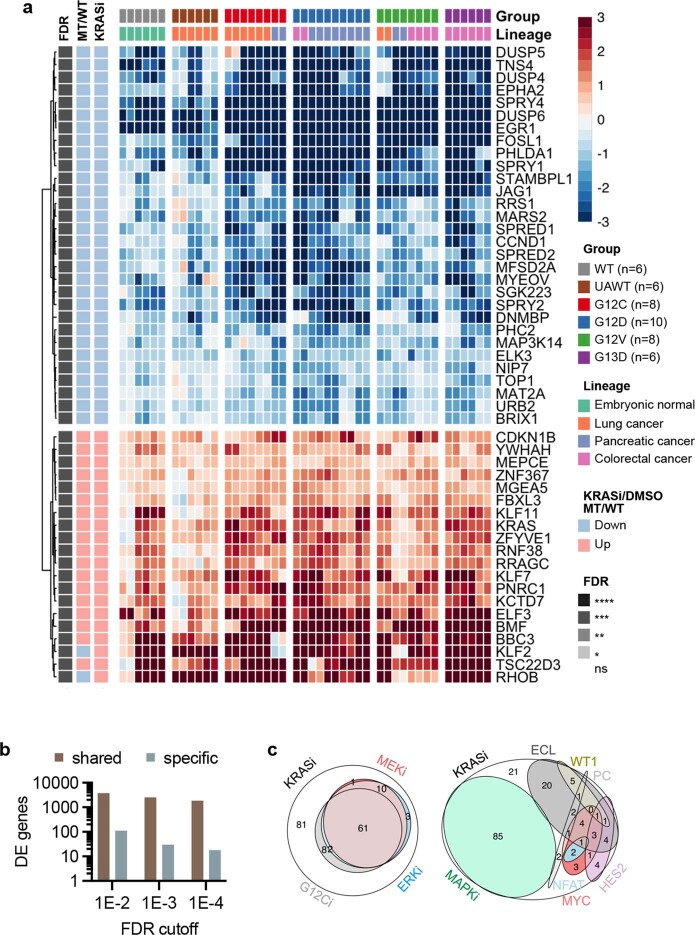
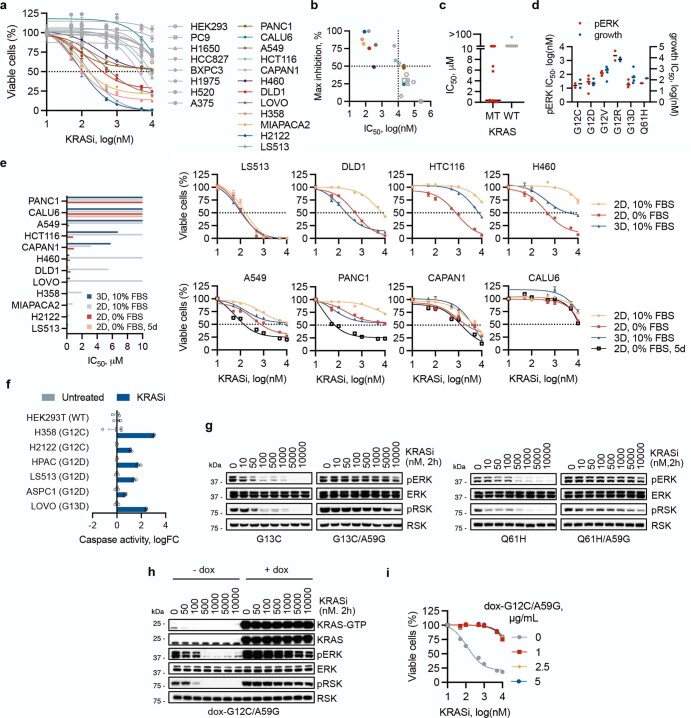
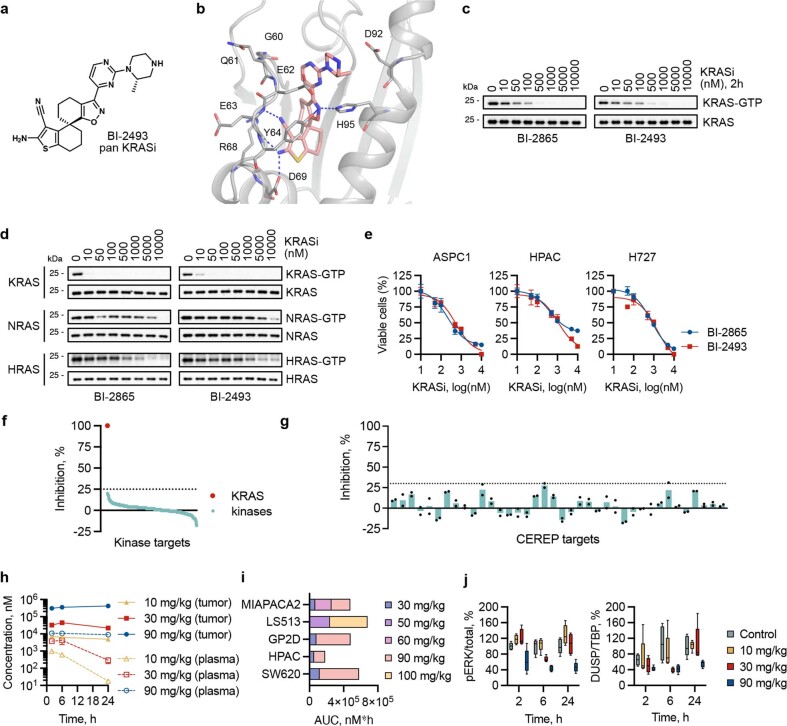
KRAS is one of the most commonly mutated proteins in cancer, and efforts to directly inhibit its function have been continuing for decades. The most successful of these has been the development of covalent allele-specific inhibitors that trap KRAS G12C in its inactive conformation and suppress tumour growth in patients 1–7 . Whether inactive-state selective inhibition can be used to therapeutically target non-G12C KRAS mutants remains under investigation. Here we report the discovery and characterization of a non-covalent inhibitor that binds preferentially and with high affinity to the inactive state of KRAS while sparing NRAS and HRAS. Although limited to only a few amino acids, the evolutionary divergence in the GTPase domain of RAS isoforms was sufficient to impart orthosteric and allosteric constraints for KRAS selectivity. The inhibitor blocked nucleotide exchange to prevent the activation of wild-type KRAS and a broad range of KRAS mutants, including G12A/C/D/F/V/S, G13C/D, V14I, L19F, Q22K, D33E, Q61H, K117N and A146V/T. Inhibition of downstream signalling and proliferation was restricted to cancer cells harbouring mutant KRAS, and drug treatment suppressed KRAS mutant tumour growth in mice, without having a detrimental effect on animal weight. Our study suggests that most KRAS oncoproteins cycle between an active state and an inactive state in cancer cells and are dependent on nucleotide exchange for activation. Pan-KRAS inhibitors, such as the one described here, have broad therapeutic implications and merit clinical investigation in patients with KRAS-driven cancers.
Overview
The claims and statistics of this paper haven’t been checked yet.
Free: it reads the open-access text and checks the first 5 claims that cite a source we can check. Create a free account to check every claim.
Integrity signals
Registry
Cites
Statistics
Figures
Verification
Claims the paper makes
The claims and statistics of this paper haven’t been checked yet.
Free: it reads the open-access text and checks the first 5 claims that cite a source we can check. Create a free account to check every claim.
Claims other papers make about this one
Each is checked against this paper’s own text: does it say what the citing paper says it does?
The source backs part of the claim, not all of it — or backs it for a different population, condition or comparison.
In the citing paper
“Murine xenograft experiments demonstrated efficacy against grafted cell lines and a PDX driven by KRAS G12C, G12D, G12V, and A146V without causing significant body weight loss.”
From KRAS: Biology, Inhibition, and Mechanisms of Inhibitor Resistance (2024) · cites this paper as [62]
Experimental — accuracy not yet measuredThe source backs part of the claim, not all of it — or backs it for a different population, condition or comparison.
In the citing paper
“This inhibitor functions by blocking the GDP/GTP nucleotide exchange of wildtype KRAS and other KRAS mutants, including G12A, G12C, G12D, G12F, G12V, G12S, G13C, G13D, V14I, L19F, Q22K, D33E, Q61H, K117N, A146V, and A146T.”
From KRAS: Biology, Inhibition, and Mechanisms of Inhibitor Resistance (2024) · cites this paper as [62]
Experimental — accuracy not yet measuredThe source backs part of the claim, not all of it — or backs it for a different population, condition or comparison.
In the citing paper
“BI-2865 inhibits oncogenic signaling through the RAF cascade, regardless of the specific KRAS driver mutation [62].”
From KRAS: Biology, Inhibition, and Mechanisms of Inhibitor Resistance (2024) · cites this paper as [62]
Experimental — accuracy not yet measuredThe source backs part of the claim, not all of it — or backs it for a different population, condition or comparison.
In the citing paper
“BI-2865 effectively blocked the interaction between KRAS and RAF in most cell lines, though it displayed weaker activity against cell lines harboring the KRAS G12R mutation.”
From KRAS: Biology, Inhibition, and Mechanisms of Inhibitor Resistance (2024) · cites this paper as [62]
Experimental — accuracy not yet measuredThe source backs part of the claim, not all of it — or backs it for a different population, condition or comparison.
In the citing paper
“Point mutations in the KRAS gene included G12D/F/R/V/W, which prevent covalent interactions with mutant cysteine, as well as V8L, G13D, V14I, Q61H, H95D/Q/R, Y96C, and Y96D [62,97,102,103].”
From KRAS: Biology, Inhibition, and Mechanisms of Inhibitor Resistance (2024) · cites this paper as [62]
Experimental — accuracy not yet measured
12 more claims about this paper
Create a free account to see every claim other papers make about this one.
Self-check
Percentages, sums and reported differences re-computed from the paper’s own numbers.
The self-check needs the paper’s full text.
Citations
Cites
Features and development of Coot
Emsley, P., Lohkamp, B., Scott, W. G., & Cowtan, K. (2010) · Acta Crystallographica Section D Biological Crystallography · doi:10.1107/s0907444910007493 · Cited by 29,915
The CCP4 suite: programs for protein crystallography
Collaborative Computational Project, N. 4. (1994) · Acta Crystallographica Section D Biological Crystallography · doi:10.1107/s0907444994003112 · Cited by 17,270
K-Ras(G12C) inhibitors allosterically control GTP affinity and effector interactions
Ostrem, J. M., Peters, U., Sos, M. L., Wells, J. A., & Shokat, K. M. (2013) · Nature · doi:10.1038/nature12796 · Cited by 2,557
The Clinical KRAS(G12C) Inhibitor AMG 510 Drives Anti-Tumour Immunity
Canon, J., Rex, K., Saiki, A. Y., Mohr, C., Cooke, K., Bagal, D., Gaida, K., Holt, T., Knutson, C. G., Koppada, N., et al. (2019) · Nature · doi:10.1038/s41586-019-1694-1 · Cited by 2,277
Data processing and analysis with the autoPROC toolbox
Vonrhein, C., Flensburg, C., Keller, P., Sharff, A., Smart, O., Paciorek, W., Womack, T., & Bricogne, G. (2011) · Acta Crystallographica Section D Biological Crystallography · doi:10.1107/s0907444911007773 · Cited by 2,029
RAS Proteins and Their Regulators in Human Disease
Simanshu, D. K., Nissley, D. V., & McCormick, F. (2017) · Cell · doi:10.1016/j.cell.2017.06.009 · Cited by 1,943
RAS oncogenes: the first 30 years
Malumbres, M., & Barbacid, M. (2003) · Nature Reviews Cancer · doi:10.1038/nrc1097 · Cited by 1,902
Sotorasib for Lung Cancers with KRAS p.G12C Mutation
Skoulidis, F., Li, B. T., Dy, G. K., Price, T. J., Falchook, G. S., Wolf, J., Italiano, A., Schuler, M., Borghaei, H., Barlesi, F., et al. (2021) · New England Journal of Medicine · doi:10.1056/nejmoa2103695 · Cited by 1,849
RAS oncogenes: weaving a tumorigenic web
Pylayeva-Gupta, Y., Grabocka, E., & Bar-Sagi, D. (2011) · Nature Reviews Cancer · doi:10.1038/nrc3106 · Cited by 1,789
KRAS G12C Inhibition with Sotorasib in Advanced Solid Tumors
Hong, D. S., Fakih, M. G., Strickler, J. H., Desai, J., Durm, G. A., Shapiro, G. I., Falchook, G. S., Price, T. J., Sacher, A., Denlinger, C. S., et al. (2020) · New England Journal of Medicine · doi:10.1056/nejmoa1917239 · Cited by 1,733
Self-citation
Cited by
Items 101–200 of 567
Type I interferon signaling pathway enhances immune-checkpoint inhibition in KRAS mutant lung tumors
Fernández-García, F., Fernández-Rodríguez, A., Torre, C. F., Piñeiro-Yáñez, E., Wang, H., Lechuga, C. G., Callejas, S., Álvarez, R., López-García, A., Esteban-Burgos, L., et al. (2024) · Proceedings of the National Academy of Sciences · doi:10.1073/pnas.2402913121 · Cited by 23
Montserrat‐Canals, M., Cordara, G., & Krengel, U. (2025) · Quarterly Reviews of Biophysics · doi:10.1017/s0033583524000209 · Cited by 22
“Recently, an allosteric pan-K-ras inhibitor has been developed that shows broad therapeutic potential (Kim et al., 2023) – in this context, it is interesting to note that both activating mutations and treatment may modulate signaling pathway and strength (Nussinov et al., 2022b).”
Past, Present, and Future Therapeutic Strategies for NF-1-Associated Tumors
Na, B. S., Shah, S. R., & Vasudevan, H. N. (2024) · Current Oncology Reports · doi:10.1007/s11912-024-01527-4 · Cited by 21
Genetically Encoded Epoxide Warhead for Precise and Versatile Covalent Targeting of Proteins
Zhang, J., Wang, X., Huang, Q., Ye, J., & Wang, J. (2024) · Journal of the American Chemical Society · doi:10.1021/jacs.4c03974 · Cited by 20
Targeted degradation of oncogenic KRASG12V triggers antitumor immunity in lung cancer models
Li, D., Geng, K., Yuan, H., Gu, J., Kumar, S., Olson, A. T., Kuismi, C. C., Kim, H. M., Pan, Y., Sherman, F., et al. (2024) · Journal of Clinical Investigation · doi:10.1172/jci174249 · Cited by 21
Peanlikhit, T., Aryal, U. K., Welsh, J. S., Shroyer, K. R., & Rithidech, K. N. (2025) · International Journal of Molecular Sciences · doi:10.3390/ijms26062548 · Cited by 21
Attili, I., Corvaja, C., Aliaga, P. T., Signore, E. D., Spitaleri, G., Passaro, A., & de Marinis, F. (2025) · Cancer Treatment Reviews · doi:10.1016/j.ctrv.2025.102957 · Cited by 20
Ma, J., Fu, S., Tan, J., Han, Y., Chen, Y., Deng, X., Shen, H., Zeng, S., Peng, Y., & Cai, C. (2025) · Advanced Science · doi:10.1002/advs.202502714 · Cited by 23
Discovery of BI-2493, a Pan-KRAS Inhibitor Showing In Vivo Efficacy
Bröeker, J., Waterson, A. G., Hodges, T. R., Abbott, J. R., Arnold, A. L., Böttcher, J., Braun, N., Cui, J., Fuchs, J. E., Gerstberger, T., et al. (2025) · Journal of Medicinal Chemistry · doi:10.1021/acs.jmedchem.5c00576 · Cited by 21
Self-citationBorovská, I., Zhang, C., Dülk, S.-L., Morandi, E., Cardoso, M. F. S., Bourkia, B. M., van den Homberg, D. A. L., Wolfinger, M. T., Velema, W. A., & Incarnato, D. (2025) · Nature Biotechnology · doi:10.1038/s41587-025-02739-0 · Cited by 22
“Combined XML files were then passed to RNA Framework’s rf-fold to compute base-paring https://doi.org/10.1038/s41587-025-02739-0 probabilities and Shannon entropies (parameters: -sl 4.8 -in -0.8 -md 600 -dp -sh for E. coli or - sl 4.6 -in -2 -md 600 -dp -sh for HEK293).”
InfluentialRecent advances in the development of inhibitors targeting KRAS-G12C and its related pathways
Zhao, D., Liu, Y., Yi, F., Zhao, X., & Lu, K. (2023) · European Journal of Medicinal Chemistry · doi:10.1016/j.ejmech.2023.115698 · Cited by 21
Stuart, D. D., Guzman-Perez, A., Brooijmans, N., Jackson, E. L., Kryukov, G. V., Friedman, A. A., & Hoos, A. (2023) · Cancer Discovery · doi:10.1158/2159-8290.cd-23-0280 · Cited by 22
Choi, J., Shin, J. H., Kim, T. K., Kim, K., Kim, J.-Y., Jeon, E., Park, J., Han, Y. D., Kim, K., Sim, T., et al. (2024) · Cancer Letters · doi:10.1016/j.canlet.2024.216904 · Cited by 21
Early-stage lung cancer is driven by a transitional cell state dependent on a KRAS-ITGA3-SRC axis
Moye, A. L., Dost, A. F. M., Ietswaart, R., Sengupta, S., Ya, V., Aluya, C., Fahey, C. G., Louie, S. M., Paschini, M., & Kim, C. F. (2024) · The EMBO Journal · doi:10.1038/s44318-024-00113-5 · Cited by 22
“Small molecule inhibitors directly targeting oncogenic KRAS G12C , such as adagrasib and sotorasib, MRTX113 targeting KRAS G12D , and numerous other pan or variant-speci fi c KRAS-targeting drugs are entering the clinic (Punekar et al, 2022; Kim et al, 2023).”
McAndrews, K. M., Paradiso, F., Stalnecker, C. A., Selvanesan, B. C., Thege, F. I., Peng, D. H., Diaz, B. A. M., Sugimoto, H., Patel, S. I., Mahadevan, K. K., et al. (2025) · Science Translational Medicine · doi:10.1126/scitranslmed.adt5511 · Cited by 19
Self-citationChen, J., Wang, J., Wang, W., Zhao, L., Jin, H., & Hu, G. (2026) · The Journal of Physical Chemistry B · doi:10.1021/acs.jpcb.5c07583 · Cited by 19
Targeting RAF dimers in RAS mutant tumors: From biology to clinic
Yin, H., Tang, Q., Xia, H., & Bi, F. (2024) · Acta Pharmaceutica Sinica B · doi:10.1016/j.apsb.2024.02.018 · Cited by 21
“However, the tri-complex active-state KRAS G12Ci RM-018 can still bind and inhibit KRAS G12C/Y96D mutant and overcome resistance 186 . ii) Pan-KRASi with broader targets 31 .”
BackgroundInfluentialCui, X., Huang, T., Jiang, T., & Wang, H. (2025) · Cancer Letters · doi:10.1016/j.canlet.2025.217540 · Cited by 19
Shahnam, A., Davis, A. P., Brown, L. J., Sullivan, I., Lin, K., Ng, C. S., Yeo, N., Kong, B. Y., Khoo, T., Warburton, L., et al. (2025) · Lung Cancer · doi:10.1016/j.lungcan.2025.108421 · Cited by 22
Discovery of Carbodiimide Warheads to Selectively and Covalently Target Aspartic Acid in KRASG12D
Sirocchi, L. S., Scharnweber, M., Oberndorfer, S., Siszler, G., Żak, K. M., Rumpel, K., Neumüller, R. A., & Wilding, B. (2025) · Journal of the American Chemical Society · doi:10.1021/jacs.5c03562 · Cited by 18
Identification of a Highly Cooperative PROTAC Degrader Targeting GTP-Loaded KRAS(On) Alleles
Vetma, V., Puoti, I., Karolak, N. K., Chakraborti, S., Diers, E., Girardi, E., Khan, S., Kidd, G., Kropatsch, K., McLennan, R., et al. (2025) · Journal of the American Chemical Society · doi:10.1021/jacs.5c10354 · Cited by 21
Self-citationMultiple medicinal chemistry strategies of targeting KRAS: State-of-the art and future directions
Shang, Y., Fu, S., Hao, Q., Ying, H., Wang, J., & Shen, T. (2024) · Bioorganic Chemistry · doi:10.1016/j.bioorg.2023.107092 · Cited by 18
Guided diffusion for molecular generation with interaction prompt
Wu, P., Du, H., Yan, Y., Lee, T.-Y., Bai, C., & Wu, S. (2024) · Briefings in Bioinformatics · doi:10.1093/bib/bbae174 · Cited by 21
“The results are exhibited in Figure 3.”
Development of PROTACS degrading KRAS and SOS1
Hamilton, G., Eggerstorfer, M.-T., & Stickler, S. (2024) · Oncology Research Featuring Preclinical and Clinical Cancer Therapeutics · doi:10.32604/or.2024.051653 · Cited by 18
“Compound BI-2865 inhibited the proliferation of isogenic G12C, G12D, or G12V mutant KRAS cells with a mean IC50 of approximately 140 nM [23].”
BackgroundYang, Q., To, K. K. W., Hu, G., Fu, K., Yang, C. H., Zhu, S., Pan, C., Wang, F., Luo, K.-W., & Fu, L. (2024) · Cell Communication and Signaling · doi:10.1186/s12964-024-01698-4 · Cited by 18
“BI-2865 BI-2865 is a recently demonstrated novel pan-KRAS inhibitor significantly blocking a broad range of mutant KRAS with a promising development prospect [28].”
BackgroundCurrent perspectives of KRAS in non-small cell lung cancer
Harris, E., & Thawani, R. (2024) · Current Problems in Cancer · doi:10.1016/j.currproblcancer.2024.101106 · Cited by 18
Unveiling the Promise: Navigating Clinical Trials 1978–2024 for PDAC
Dominguez, A. A., Perz, M., Xu, Y., Cedillo, L. G., Huang, O. L., McIntyre, C. A., Vudatha, V., Trevino, J. G., Liu, J., & Wang, P. (2024) · Cancers · doi:10.3390/cancers16213564 · Cited by 17
“Ongoing PDAC Trials (C: Combination, I: Immune, U: Unique, M: Method, G: Gemcitabine, F: FOLFIRINOX or components of FOLFIRINOX, P: Paclitaxel).”
Discovery of INCB159020, an Orally Bioavailable KRAS G12D Inhibitor
Ye, Q., Shvartsbart, A., Li, Z., Gan, P., Policarpo, R. L., Qi, C., Roach, J. J., Zhu, W., McCammant, M. S., Hu, B., et al. (2025) · Journal of Medicinal Chemistry · doi:10.1021/acs.jmedchem.4c02662 · Cited by 20
Maruyama, K., Shimizu, Y., Nomura, Y., Oh-hara, T., Takahashi, Y., Nagayama, S., Fujita, N., & Katayama, R. (2025) · npj Precision Oncology · doi:10.1038/s41698-024-00793-6 · Cited by 16
Advances in Targeted Therapy for Non-Small-Cell Lung Cancer: Current Progress and Future Directions
Peshin, S., Takrori, E., Yazji, J. H., Haque, J., Dharia, A. A., Mithani, M. S., Anum, F., Asfeen, U. Z., Couch, J. K., Donovan, M., et al. (2025) · International Journal of Molecular Sciences · doi:10.3390/ijms262311517 · Cited by 17
“Targeted mutations include G12A/C/D/F/V/S, G13C/D, V14I, L19F, Q22K, D33E, Q61H, K117N, and A146V/T [152].”
Caughey, B. A., & Strickler, J. H. (2023) · Drugs · doi:10.1007/s40265-023-01980-8 · Cited by 18
“BI-2865 is a pan-KRAS inhibitor that reportedly spares HRAS and NRAS, potentially partially mitigating off-target toxicity [139].”
Li, M., Dai, L.-T., Gao, Z.-Y., Yan, J.-T., Xu, S., Tan, J., Huang, Z., Chen, S.-B., & Chen, X. (2024) · Journal of Medicinal Chemistry · doi:10.1021/acs.jmedchem.3c01773 · Cited by 17
Jamalzadeh, S., Dai, J., Lavikka, K., Li, Y., Jiang, J., Huhtinen, K., Virtanen, A., Oikkonen, J., Hietanen, S., Hynninen, J., et al. (2024) · BMC Cancer · doi:10.1186/s12885-024-11895-6 · Cited by 18
“The current success in developing effective inhibitors for wt KRAS amp tumors [55] underscores the substantial translational value of the role for wt KRAS amp in HGSC. Identification of a specific subgroup of HGSC patients who might exhibit resistance to existing standard-of-care treatments but…”
BackgroundBaltanás, F. C., Kramer‐Drauberg, M., García‐Navas, R., Patrucco, E., Petrini, E., Arnhof, H., Juan, A. O.-S., Rodríguez-Ramos, P., Borrajo-Sánchez, J., Calzada, N., et al. (2025) · Proceedings of the National Academy of Sciences · doi:10.1073/pnas.2422943122 · Cited by 17
Breaking down KRAS: Small-molecule degraders for cancer therapy
Kos, T., & Saur, D. (2025) · Signal Transduction and Targeted Therapy · doi:10.1038/s41392-025-02172-4 · Cited by 15
Lu, J. G., Hu, M., Zhao, Y., Chu, T., Zhang, W., Zhou, Y., Cai, X., Wu, J., Hu, L., Shi, C., et al. (2025) · Signal Transduction and Targeted Therapy · doi:10.1038/s41392-025-02382-w · Cited by 16
“In 37 – 39 However, developing therapeutic approaches for pan-KRAS-mutant NSCLC via MEK-based combined strategies remains a challenge.”
Self-citationCombining EGFR and KRAS G12C Inhibitors for KRAS G12C Mutated Advanced Colorectal Cancer
Miyashita, H., & Hong, D. S. (2024) · Journal of Cancer Immunology · doi:10.33696/cancerimmunol.6.086 · Cited by 16
“( NCT05382559) Beyond KRAS G12C or G12D, pan-RAS inhibitors, such as RMC6236 and RMC7977, are being developed [28-30].”
BackgroundSHANK3 depletion leads to ERK signalling overdose and cell death in KRAS-mutant cancers
Lilja, J., Kaivola, J., Conway, J. R. W., Vuorio, J., Parkkola, H., Roivas, P., Dibus, M., Chastney, M. R., Varila, T., Jacquemet, G., et al. (2024) · Nature Communications · doi:10.1038/s41467-024-52326-1 · Cited by 15
Advances and Challenges in RAS Signaling Targeted Therapy in Leukemia
Chen, Y., Yin, Z., Westover, K. D., Zhou, Z., & Shu, L. (2024) · Molecular Cancer Therapeutics · doi:10.1158/1535-7163.mct-24-0504 · Cited by 18
“These two pan-KRAS inhibitors exhibit a similar binding mode to mutant KRAS, have broad therapeutic implications, and merit clinical investigation in patients with KRAS-driven cancers (50).”
RAS Pathway Mutations and Therapeutics in Vascular Anomalies
Alharbi, S., Merkle, S., Hammill, A. M., Waters, A. M., & Cras, T. D. L. (2025) · Pediatric Blood & Cancer · doi:10.1002/pbc.31605 · Cited by 15
“As many of the mutations identified in VA patients are also found in cancers, it has been possible to utilize oncology drugs for their treatment [78– 80].”
Recent advances in therapeutic targeting of the KRAS pathway in cancer
Hitchen, N., Williams, S., & Desai, J. (2025) · Pharmacology & Therapeutics · doi:10.1016/j.pharmthera.2025.108889 · Cited by 15
Facts and Hopes in Immunotherapy Strategies Targeting Antigens Derived from KRAS Mutations
Linette, G. P., Bear, A. S., & Carreno, B. M. (2024) · Clinical Cancer Research · doi:10.1158/1078-0432.ccr-23-1212 · Cited by 14
“New compounds targeting additional KRAS variants, including pan-Ras inhibitors have been discovered andshowinitialpromise(37).”
BackgroundKnoll, N., Masser, S., Bordas, B., Ebright, R. Y., Li, G., Kesar, D., Destefanis, E., Kania, N., Rodriguez, D. J., Jen, J., et al. (2025) · Cancer Research · doi:10.1158/0008-5472.can-25-1464 · Cited by 15
Wu, R., Zhu, H., He, Q., Yuan, T., & Yang, B. (2024) · Drug Discovery Today · doi:10.1016/j.drudis.2024.104220 · Cited by 15
Guo, Y., Hu, C., Cai, K., Long, G., Cai, D., Yu, Z., Huang, X., Cai, Z., Hu, P., Chen, Y., et al. (2024) · Molecular Medicine Reports · doi:10.3892/mmr.2024.13389 · Cited by 14
“A recent study developed a pan‑KraS inhibitor, Bi2865, which binds to a residue in the switch ii binding pocket (His95) present only in KraS, sparing other raS family proteins, which showed satisfactory results in a pre‑clinical trial (16).”
InfluentialKwon, J. J., Dilly, J., Liu, S., Kim, E., Bian, Y., Dharmaiah, S., Tran, T. H., Kapner, K. S., Ly, S. H., Yang, X., et al. (2024) · bioRxiv (Cold Spring Harbor Laboratory) · doi:10.1101/2024.10.22.618529 · Cited by 15
“Additionally, pan-RAS inhibitors that target classical RAS isoforms, H, N, and KRAS, have also been developed and have entered clinical trials 11,16,17 .”
BackgroundKRAS-targeted therapies in cancer: novel approaches and overcoming resistance
Tang, D., Kroemer, G., & Kang, R. (2025) · BMJ Oncology · doi:10.1136/bmjonc-2025-000946 · Cited by 16
“64 These agents also inhibited tumour growth in patient-derived xenografts (PDXs), and BI-2865 further reversed ATP binding cassette subfamily B member 1-mediated drug resistance.”
Chasing Red Herrings: Palladium Metal Salt Impurities Feigning KRAS Activity in Biochemical Assays
Gerstberger, T., Berger, H., Büttner, F. H., Gmachl, M., Kessler, D., Koegl, M., Lucas, S., Martin, L. J., Mayer, M., McConnell, D. B., et al. (2024) · Journal of Medicinal Chemistry · doi:10.1021/acs.jmedchem.3c02381 · Cited by 14
Self-citationTargeting KRAS Oncogene for Patients With Colorectal Cancer: A New Step Toward Precision Medicine
Şahin, İ. H., Saridogan, T., Ayasun, R., Syed, M. P., Gorantla, V. C., Malhotra, M. K., Thomas, R. A., Rhee, J. C., Zhang, J. Y., Hsu, D. J., et al. (2024) · JCO Oncology Practice · doi:10.1200/op.23.00787 · Cited by 15
Extrahepatic Cholangiocarcinoma: Genomic Variables Associated With Anatomic Location and Outcome
Preston, W. A., Drill, E. N., Boerner, T., Gelfer, R., Harding, J. J., O'Reilly, E. M., Cercek, A., Abou‐Alfa, G. K., Park, W., Balachandran, V. P., et al. (2024) · JCO Precision Oncology · doi:10.1200/po.24.00206 · Cited by 14
Oncogenic mutations of KRAS modulate its turnover by the CUL3/LZTR1 E3 ligase complex
Damianou, A., Liang, Z., Lassen, F. H., Vendrell, I., Vere, G., Hester, S., Charles, P. D., Pinto-Fernández, A., Santos, A., Fischer, R., et al. (2024) · Life Science Alliance · doi:10.26508/lsa.202302245 · Cited by 12
“Small-molecule KRAS inhibitors (KRASi) may perturb this effect (Kim et al, 2023).”
BackgroundSaito, S., Nakamura, Y., Miyashita, S., Sato, T., Hoshina, K., Okada, M., Hasegawa, H., Oishi, M., Fujii, Y., Körbelin, J., et al. (2024) · JCI Insight · doi:10.1172/jci.insight.179729 · Cited by 13
Recent Anti-KRASG12D Therapies: A “Possible Impossibility” for Pancreatic Ductal Adenocarcinoma
Sobhani, N., Pittacolo, M., D’Angelo, A., & Marchegiani, G. (2025) · Cancers · doi:10.3390/cancers17040704 · Cited by 14
“The antitumor effect of BI-2493 was associated with the inhibition of phospho-ERK, and DUSP6 expression, in addition to favorable pharmacokinetics [110].”
Parry, C., Pellicano, F., Schüttelkopf, A. W., Beyer, K. S., Bower, J. F., Bryson, A., Cameron, K., Cerutti, N. M., Clark, J. P., Davidson, S. C., et al. (2025) · Journal of Medicinal Chemistry · doi:10.1021/acs.jmedchem.4c02929 · Cited by 12
Precision immune regulation in KRAS-mutated cancers: the final piece of the puzzle?
Fu, S., Ma, J., Cai, C., Tan, J., Deng, X., Shen, H., Zeng, S., Chen, Y., & Han, Y. (2025) · Journal of Experimental & Clinical Cancer Research · doi:10.1186/s13046-025-03444-1 · Cited by 14
ZJK-807: A Selective PROTAC Degrader of KRASG12D Overcoming Resistance in Pancreatic Cancer
Liu, Z., Zheng, H., Tian, Y., Li, Z., Zhang, S., Zhang, S., Ma, S., Wang, X., & Qin, C. (2025) · Journal of Medicinal Chemistry · doi:10.1021/acs.jmedchem.5c01034 · Cited by 14
Stahlhut, C. E., Maciag, A. E., Sullivan, K. A., Singh, K., Gitego, N., Zhang, Z., Chan, A. H., Sharma, A. K., Alexander, P., Shu, J., et al. (2026) · Cancer Discovery · doi:10.1158/2159-8290.cd-25-1280 · Cited by 12
Mahadevan, K. K., Maldonado, A. S., Li, B., Bickert, A. A., Perdyan, A., Kumbhar, S. V., Piya, S., Sockwell, A. M., Morse, S. J., Arian, K. A., et al. (2026) · Nature Communications · doi:10.1038/s41467-026-75960-3 · Cited by 12
RAS-MAPK Pathway Mutations in Congenital Pulmonary Airway Malformations
Windrich, J., Braubach, P., Länger, F. P., Dingemann, J., Schwerk, N., Wetzke, M., Renz, D. M., Zenker, M., Schanze, D., & Kratz, C. P. (2024) · American Journal of Respiratory and Critical Care Medicine · doi:10.1164/rccm.202311-2163le · Cited by 12
“The RAS-MAPK pathway can be targeted by a variety of drugs (10).”
BackgroundKRAS, a New Target for Precision Medicine in Colorectal Cancer?
Boilève, A., Smolenschi, C., Lambert, A., Boige, V., Delaye, M., Camilleri, G. M., Tarabay, A., Valéry, M., Fuerea, A., Pudlarz, T., et al. (2024) · Cancers · doi:10.3390/cancers16203455 · Cited by 11
Zhao, D., Zhao, Y., Xu, E., Liu, W., Ayers, P. W., Liu, S., & Chen, D. (2024) · Journal of Chemical Theory and Computation · doi:10.1021/acs.jctc.3c01415 · Cited by 13
Self-citationKinase activities in pancreatic ductal adenocarcinoma with prognostic and therapeutic avenues
Vallés‐Martí, A., Haas, R. R. D. G., Henneman, A. A., Piersma, S. R., Pham, T. V., Knol, J. C., Verheij, J., Dijk, F., Halfwerk, H., Giovannetti, E., et al. (2024) · Molecular Oncology · doi:10.1002/1878-0261.13625 · Cited by 12
“Pancreatic ductal adenocarcinoma is characterized by the lack of druggable drivers, e.g. KRAS, although emerging studies are showing promising results by more selective KRAS inhibitors [97].”
ResultWang, S., Diao, S., Kim, H., Zou, J. Y., Li, K., & Koromilas, A. E. (2025) · Communications Biology · doi:10.1038/s42003-025-08740-2 · Cited by 12
“Fluvastatin, cerivastatin, afatinib and BI-2865 were purchased from MedChemExpress, VT104 was acquired from DC Chemicals, Y-27632 was sourced from Selleckhem and 4 ’ ,6-diamidino-2-phenylindole (DAPI) was obtained from Roche.”
InfluentialSaturation mutagenesis identifies activating and resistance-inducing FGFR kinase domain mutations
Tangermann, C., Ghosh, A., Ziegler, M., Facchinetti, F., Stappenbeck, J., Sahin, Y. O. C., Riester, M., Viardot, L. C., Zundel, T., Friboulet, L., et al. (2025) · Nature Genetics · doi:10.1038/s41588-025-02431-8 · Cited by 14
“Most FGFR4 mutations were not targetable with the inhibitors tested in this study, which is consistent with studies showing that pemigatinib efficiently inhibits FGFR1 – 3 but has lower potency against FGFR4 73 .”
Hafner, P., Keller, S. J., Chen, X., Alrawashdeh, A. Y., Jumaa, H., Nollmann, F. I., Besson, S., Kemming, J., Gorka, O., Das, T., et al. (2026) · Signal Transduction and Targeted Therapy · doi:10.1038/s41392-025-02563-7 · Cited by 12
“28 – 32 However, as with MEK or ERK inhibitors, quickly evolving therapy resistance needs to be anticipated, and combination strategies will likely be required to achieve durable responses.”
New insights into RAS in head and neck cancer
Jagadeeshan, S., Novoplansky, O., Cohen, O. M., Kurth, I., Heß, J., Rosenberg, A. J., Grandis, J. R., & Elkabets, M. (2023) · Biochimica et Biophysica Acta (BBA) - Reviews on Cancer · doi:10.1016/j.bbcan.2023.188963 · Cited by 14
Assessment of KRASG12C inhibitors for colorectal cancer
Piazza, G. A., Chandrasekaran, P., Maxuitenko, Y. Y., & Budhwani, K. I. (2024) · Frontiers in Oncology · doi:10.3389/fonc.2024.1412435 · Cited by 11
Inhibition and degradation of NRAS with a pan-NRAS monobody
Whaby, M., Ketavarapu, G., Koide, A., Mazzei, M., Mintoo, M. J., Glasser, E., Patel, U. R., Nasarre, C., Sale, M. J., McCormick, F. P., et al. (2024) · Oncogene · doi:10.1038/s41388-024-03186-y · Cited by 11
Chen, Z., Ou, Y., Ye, F., Li, W., Jiang, H., & Liu, S. (2024) · Journal of Cancer Research and Clinical Oncology · doi:10.1007/s00432-024-05798-z · Cited by 10
“Furthermore, we observed upregulation of the TNFα-NFκB and Kras signaling pathways in the C1 subtype, which have been implicated in the progression and drug resistance of various cancers (Girouard et al. 2020; Timar and Kashofer 2020; Kim et al. 2023).”
BackgroundŠvec, J., Onhajzer, J., & Kořínek, V. (2024) · Critical Reviews in Oncology/Hematology · doi:10.1016/j.critrevonc.2024.104544 · Cited by 10
Targeting the MAP Kinase Pathway in Colorectal Cancer: A Journey in Personalized Medicine
Appleyard, J. W., Williams, C. J. M., Manca, P., Pietrantonio, F., & Seligmann, J. F. (2025) · Clinical Cancer Research · doi:10.1158/1078-0432.ccr-25-0107 · Cited by 11
Zhu, Z., Chen, H., Feng, C., Chen, L., Ma, C., Liu, Z., Qu, Z., Bartlett, D. L., Lu, B., Li, K., et al. (2025) · Journal for ImmunoTherapy of Cancer · doi:10.1136/jitc-2024-010514 · Cited by 10
Posttranslational modifications remodel proteome-wide ligandability
Li, W., Wei, Q., Llanos, M. A., Gathmann, C., Governa, P., Chiu, T.-Y., Wozniak, J. M., Jadhav, A. M., Holcomb, M., Cravatt, J. B., et al. (2026) · Nature Chemical Biology · doi:10.1038/s41589-026-02216-y · Cited by 16
Lu, X., Xu, S., Deng, Z., Wang, M., & Chen, F. (2025) · Precision Clinical Medicine · doi:10.1093/pcmedi/pbaf021 · Cited by 10
“Another compound with similar characteristics, BI-3700674, is planned to enter a phase I clinical trial (NCT06056024) [ 159 ].”
Colombino, M., Palomba, G., Casula, M., Pisano, M., Tore, S., Serra, R., Putzu, C., Fadda, G. M., Maestrale, G. B., Casula, S., et al. (2025) · Critical Reviews in Oncology/Hematology · doi:10.1016/j.critrevonc.2025.104925 · Cited by 11
Gene expression silencing therapy in tumors, focus on gastrointestinal and genitourinary tumors
El-Ghazzi, N., Italiano, A., & Angeli, E. (2025) · Frontiers in Immunology · doi:10.3389/fimmu.2025.1657040 · Cited by 10
Solanki, H. S., Shah, H., Imbody, D. J., Desai, B., Kato, R., Miroshnychenko, D., Stern, Y. E., Majumder, A., Sarcar, B., Xieraili, A., et al. (2025) · Cancer Research · doi:10.1158/0008-5472.can-25-0600 · Cited by 12
Molecular Profiling Across 80,000 Patients With Lung Cancer
Russo, A., Javey, M., Huang, R. S. P., Yaung, S. J., Kaplan, B., Hiemenz, M., Arcila, M. E., López‐Ríos, F., & Rolfo, C. D. (2026) · Journal of Thoracic Oncology · doi:10.1016/j.jtho.2026.103695 · Cited by 11
Concurrent genetic and non-genetic resistance mechanisms to KRAS inhibition in colorectal cancer
Alonso, S., Chu, K., Granowsky, E., Saraiba-Rabanales, V., Parsons, M. J., Gunasinghe, H. I., Shia, J., Yaeger, R., & Dow, L. E. (2026) · Cancer Cell · doi:10.1016/j.ccell.2026.04.009 · Cited by 14
A Top-Down Proteomic Assay to Evaluate KRAS4B-Compound Engagement
D’Ippolito, R. A., Rabara, D., Blanco, M. A., Alberico, E. O., Drew, M. R., Ramakrishnan, N., Sontan, D., Widmeyer, S. R. T., Scheidemantle, G. M., Messing, S. A. J., et al. (2024) · Analytical Chemistry · doi:10.1021/acs.analchem.3c05626 · Cited by 10
Crystal structure of NRAS Q61K with a ligand-induced pocket near switch II
Gebregiworgis, T., Chan, J. Y.-L., Kuntz, D. A., Privé, G. G., Marshall, C. B., & Ikura, M. (2024) · European Journal of Cell Biology · doi:10.1016/j.ejcb.2024.151414 · Cited by 10
Zhang, J., Kang, F., Wang, X., Chen, X., Yang, X., Yang, Z., & Wang, J. (2024) · Journal of Nuclear Medicine · doi:10.2967/jnumed.123.266314 · Cited by 10
Balega, B., Beer, M., SPENCER, J. M., Colombo, G., Serapian, S. A., Oliveira, S. A., & Mulholland, A. J. (2024) · Molecular Physics · doi:10.1080/00268976.2024.2428350 · Cited by 12
Wang, X.-D., Lin, J.-H., & Hu, M.-H. (2025) · Journal of Biological Chemistry · doi:10.1016/j.jbc.2025.108164 · Cited by 13
Ye, G., Ye, M., & Jin, C. (2024) · American Journal of Cancer Research · doi:10.62347/ujvp4361 · Cited by 9
Gupta, M., Choi, H., Kemp, S. B., Furth, E. E., Pickup, S., Clendenin, C., Orlen, M., Rosen, M., Liu, F., Cao, Q., et al. (2025) · Clinical Cancer Research · doi:10.1158/1078-0432.ccr-24-4049 · Cited by 10
Denitrogenative Alkylation of K-Ras(G12D) Inhibits Oncogenic Signaling in Cancer Cells
Zheng, Q., & Shokat, K. M. (2025) · Journal of the American Chemical Society · doi:10.1021/jacs.5c06745 · Cited by 9
Leini, R., Kapp, J. N., Kopra, K., & Pantsar, T. (2025) · Scientific Reports · doi:10.1038/s41598-025-07532-2 · Cited by 10
“Boehringer-Ingelheim published their first structures in 2022.”
InfluentialIntegrative genomic identification of therapeutic targets for pancreatic cancer
Guo, J. A., Gong, D. H., Evans, K. E., Takahashi, K., Jambhale, A. D., Shiau, C., Yu, P. Z., Wang, S., Wu, W., Chugh, S., et al. (2025) · Cell Reports · doi:10.1016/j.celrep.2025.116191 · Cited by 9
Optimizing KRAS Therapeutics for Non–Small Cell Lung Cancer
Lim, J. U., Negrao, M. V., & Hong, D. S. (2025) · Annual Review of Medicine · doi:10.1146/annurev-med-043024-115849 · Cited by 9
Vascular malformations: from genetics to therapeutics
Morin, G., Galasso, I., & Canaud, G. (2025) · EMBO Molecular Medicine · doi:10.1038/s44321-025-00344-x · Cited by 10
“Additionally, the fi rst pan-(K)RAS inhibitors are currently assessed in oncology clinical trials (Kim et al, 2023; Jiang et al, 2024; Holder fi eld et al, 2024; Cox and Der, 2024).”
Erhart, C.-C., Cefalì, M., Mangan, D., Kasenda, B., & Wannesson, L. (2024) · Swiss Medical Weekly · doi:10.57187/s.3695 · Cited by 10
“Moreover, new pan-KRAS inhibitors are under investigation and may offer broader therapeutic options because they do not distinguish between different KRAS mutants [42].”
BackgroundSabt, A., Tawfik, H. O., Khaleel, E. F., Badi, R. M., Ibrahim, H. A. A., Elkaeed, E. B., & Eldehna, W. M. (2024) · Molecular Diversity · doi:10.1007/s11030-023-10777-6 · Cited by 9
KRAS takes the road to destruction
Cox, A. D., & Der, C. J. (2024) · Science · doi:10.1126/science.ads2150 · Cited by 9
Proteomic analyses identify targets, pathways, and cellular consequences of oncogenic KRAS signaling
Kabella, N., Bayer, F. P., Stamatiou, K., Abele, M., Sakhteman, A., Chang, Y.-C., Wagner, V., Gabriel, A., Krumm, J., Reinecke, M., et al. (2025) · Science Signaling · doi:10.1126/scisignal.adt6552 · Cited by 8
Ex vivo drug responses and molecular profiles of 597 pediatric acute lymphoblastic leukemia patients
Enblad, A. P., Krali, O., Gezelius, H., Lundmark, A., Blom, K., Andersson, C. R., Palle, J., Frost, B., Ryhänen, S. J., Flægstad, T., et al. (2025) · HemaSphere · doi:10.1002/hem3.70176 · Cited by 10
“67,68 Heme biosynthesis plays an important role in cellular processes involving oxygen utilization and energy metabolism.”
Liquid Biopsy in Lung Cancer: Tracking Resistance to Targeted Therapies
Urtecho, S. B., Munárriz, B., Rabey, M. R., & Leighl, N. B. (2025) · Cancers · doi:10.3390/cancers17213474 · Cited by 9
Wu, C., Liu, W., Hu, X., Xie, Y., Li, S., Liu, X., Sun, Z., Li, X., Yu, X., Yuan, Y., et al. (2025) · Nature Communications · doi:10.1038/s41467-025-67197-3 · Cited by 9
KRAS Inhibition in Pancreatic Ductal Adenocarcinoma
Pradeep, R., Isbeih, N. J., Abraham, F. F., Noori, E., Yeung, Z. P., & Kundranda, M. N. (2026) · Journal of Clinical Medicine · doi:10.3390/jcm15020873 · Cited by 9
“Active-state (RAS(ON)) tri-complex inhibitors (e.g., RMC-6236, RMC-7977) demonstrate pronounced, tumor-selective activity in PDAC by sterically blocking RAS–effector interactions—spanning mutant and wild-type RAS isoforms—offering a route to fore-stall WT-RAS–mediated rebound [48,108,168,175–177].”
Nicolle, R., Canivet, C., Palazzo, L., Napoléon, B., Ayadi, M., Pignolet, C., Cros, J. F., Gourgou, S., Sèlves, J., Torrisani, J., et al. (2024) · EBioMedicine · doi:10.1016/j.ebiom.2024.105373 · Cited by 12
Metadata
- Authors
- Kim, D., Herdeis, L., Rudolph, D., Zhao, Y., Böttcher, J., Vides, A., Ayala-Santos, C. I., Pourfarjam, Y., Cuevas-Navarro, A., Xue, J. Y., Mantoulidis, A., Bröker, J., Wunberg, T., Schaaf, O., Popow, J., Wolkerstorfer, B., Kropatsch, K. G., Qu, R., de Stanchina, E., Sang, B., Li, C., McConnell, D. B., Kraut, N., & Lito, P.
- Affiliations
- Boehringer Ingelheim (Austria) (AT)
- Memorial Sloan Kettering Cancer Center (US)
- Corresponding author
- Lito, Piro
- ORCID
- Venue
- Nature
- Published
- 2023-05-31
- Volume
- 619
- Issue
- 7968
- Pages
- 160-166
- ISSN
- 0028-0836 (ISSN-L)
- 1476-4687
- PMC
- PMC10322706
- OpenAlex
- W4378901135
- Semantic Scholar
- adbdedfc9643df9a77eda1538b6370ab04be09d1
- Cited by
- 534
- References
- 42
- Citations by year
- 2026: 129 · 2025: 190 · 2024: 176 · 2023: 39
- FWCI
- 47.67
- Type
- journal article
- Language
- en
- Open access
- hybrid
- doi.org
- Licence
- cc-by
- creativecommons.org/licenses/by/4.0 (tdm)
- creativecommons.org/licenses/by/4.0 (vor)
- Locations
- Nature (publishedVersion, cc-by)
- PubMed Central (publishedVersion, cc-by)
- PubMed (publishedVersion)
- RePEc: Research Papers in Economics (submittedVersion)
- DORA PSI (Paul Scherrer Institute) (submittedVersion, cc-by)
- Funders
- Pew Charitable Trusts
- Damon Runyon Cancer Research Foundation (P30 CA008748)
- Memorial Sloan-Kettering Cancer Center (CA008748, P30 CA008748)
- Pershing Square Sohn Cancer Research Alliance (P30 CA008748)
- National Institutes of Health (CA008748)
- National Cancer Institute (R01CA230267, CA008748, P30CA008748, R01CA279264, R01CA230745)
- Topics
- Life Sciences › Biochemistry, Genetics and Molecular Biology › Molecular Biology › Protein Kinase Regulation and GTPase Signaling
- Life Sciences › Biochemistry, Genetics and Molecular Biology › Molecular Biology › Protein Tyrosine Phosphatases
- Life Sciences › Biochemistry, Genetics and Molecular Biology › Molecular Biology › Melanoma and MAPK Pathways
- Keywords
- KRAS, pan-KRAS inhibitors, non-covalent inhibitors, KRAS mutation, oncogenic signaling, tumor growth inhibition, allosteric inhibition, KRAS-driven cancers
- MeSH terms
- Animals, Body Weight, Cell Division, Enzyme Activation, Mutation, Neoplasms, Nucleotides, Substrate Specificity, Signal Transduction, Proto-Oncogene Proteins p21(ras), Monomeric GTP-Binding Proteins, Mice
About these checks
Registry, retraction, Cites and statistics results are computed, not judged, with one exception: a printed reference that no index lists is read once by a model before it counts as a citation error. Claims are extracted by a model and kept only when their quote appears verbatim in the text; each cited source is then checked, with a model’s help, for whether it says what the claim relies on. Those verdicts can be wrong — read the claim’s quote and the cited source before relying on one.
Statistics and arithmetic are recomputed, not judged.
Confidence bands are shown only for fields calibrated on our annotated test set. None is calibrated yet, so no band is shown.
What counts as a claim ›How we measure confidence ›How we check this ›
Are you an author, or do you see a problem with this page? Request a review
Data sources
Bibliographic data: Semantic Scholar, OpenAlex, Crossref.
Contains information from the Semantic Scholar Academic Graph Datasets, made available under the ODC Attribution License (ODC-BY 1.0).
Semantic Scholar’s data is described in: Kinney, R., et al. (2023). The Semantic Scholar Open Data Platform. arXiv:2301.10140.
