

Pan-KRAS inhibitor disables oncogenic signalling and tumour growth
Open accessThe DOI matches its Crossref record; 41 of the 42 references it cites were found in a registry or an index.
Abstract
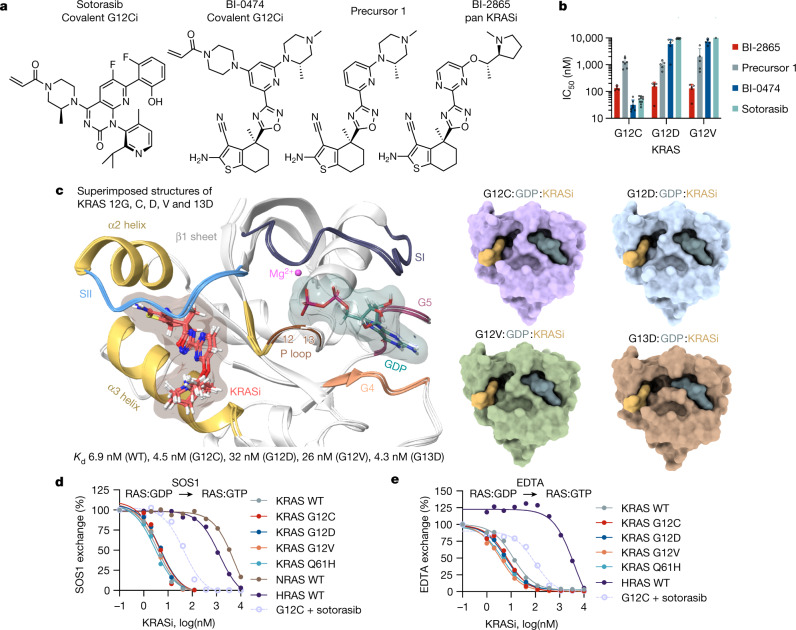
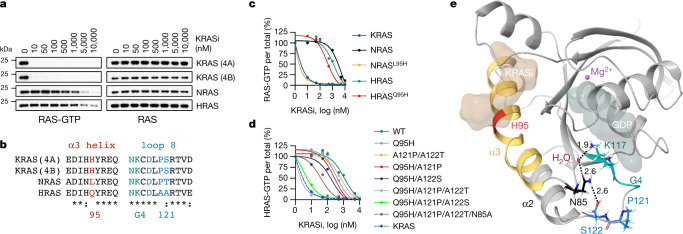
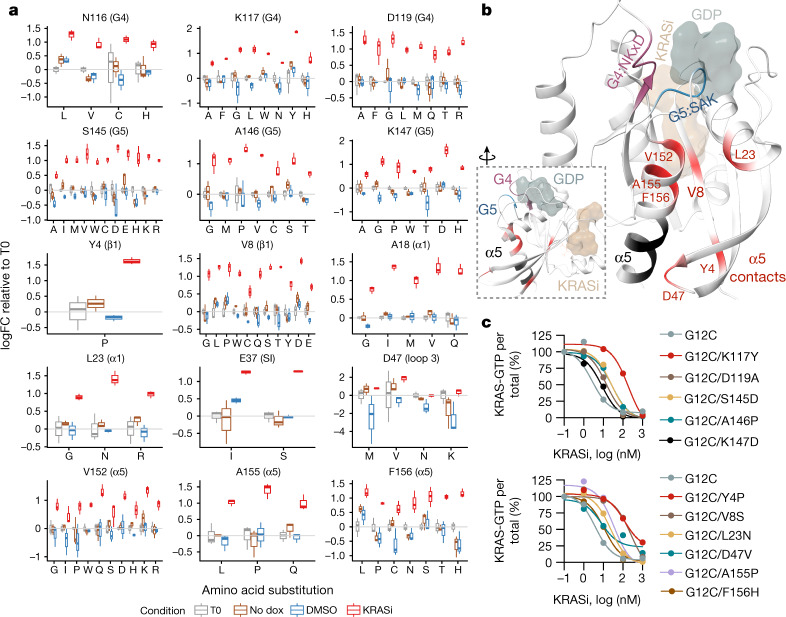
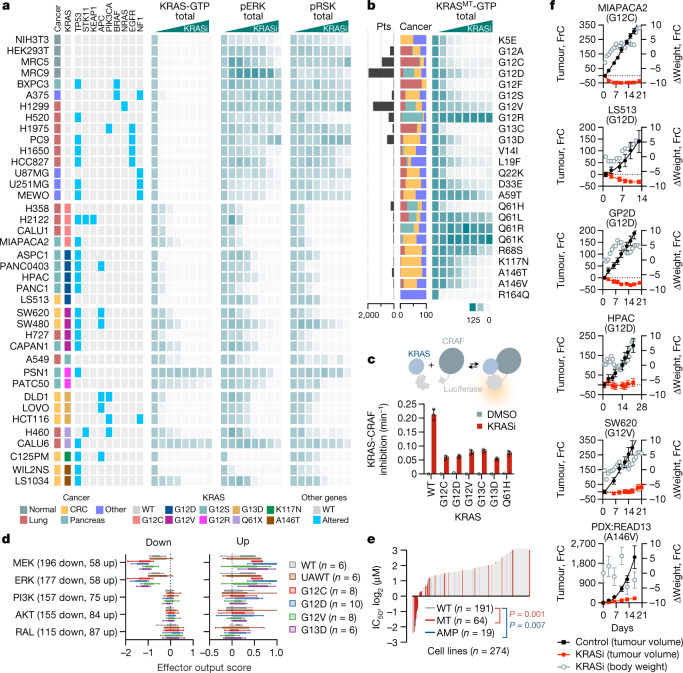
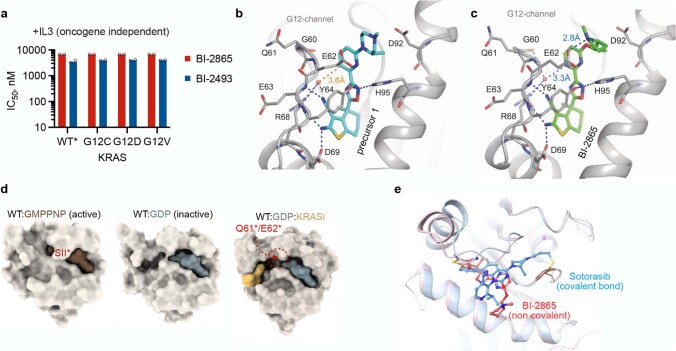
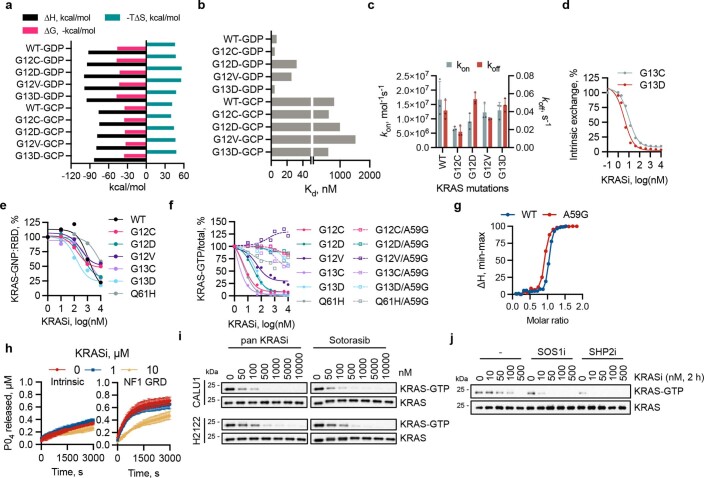
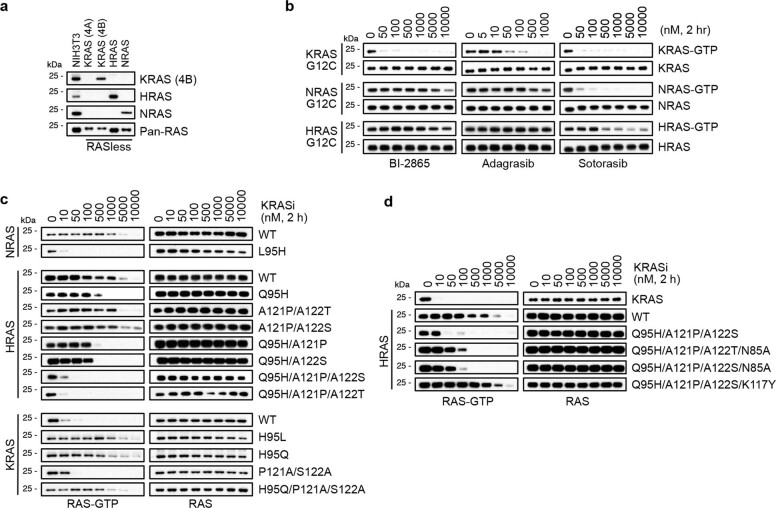
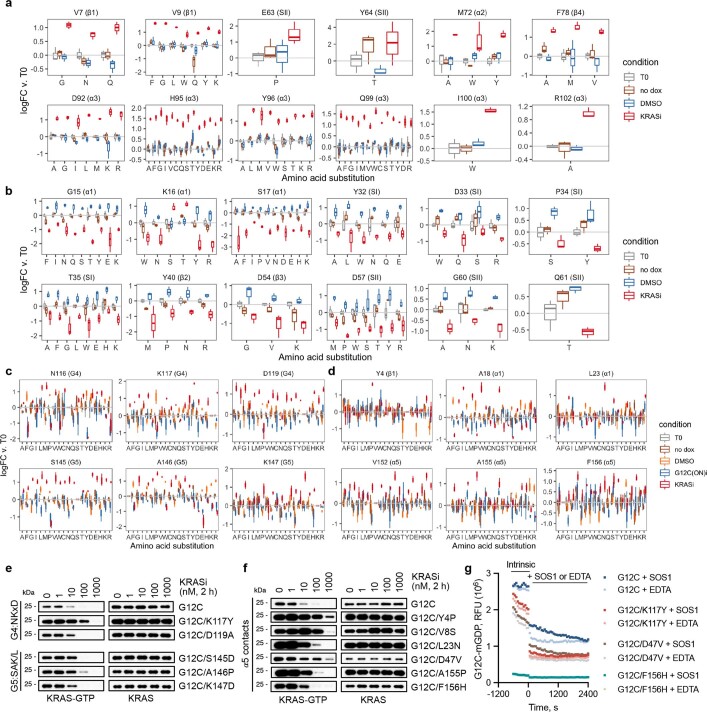
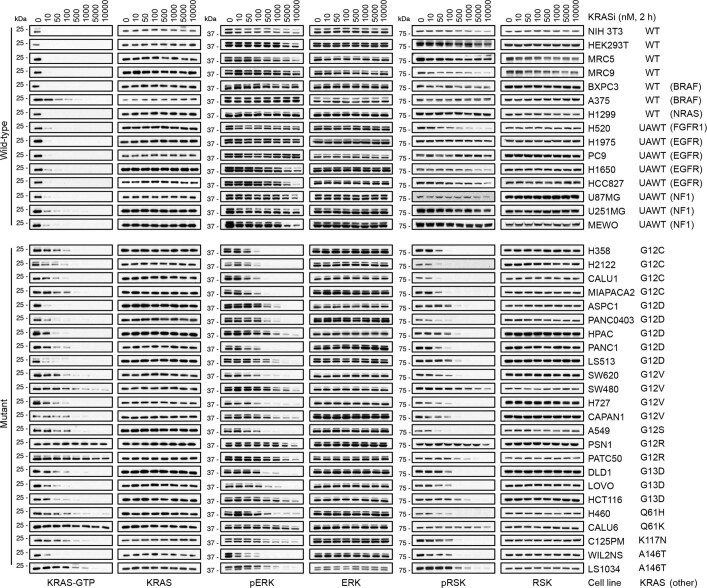
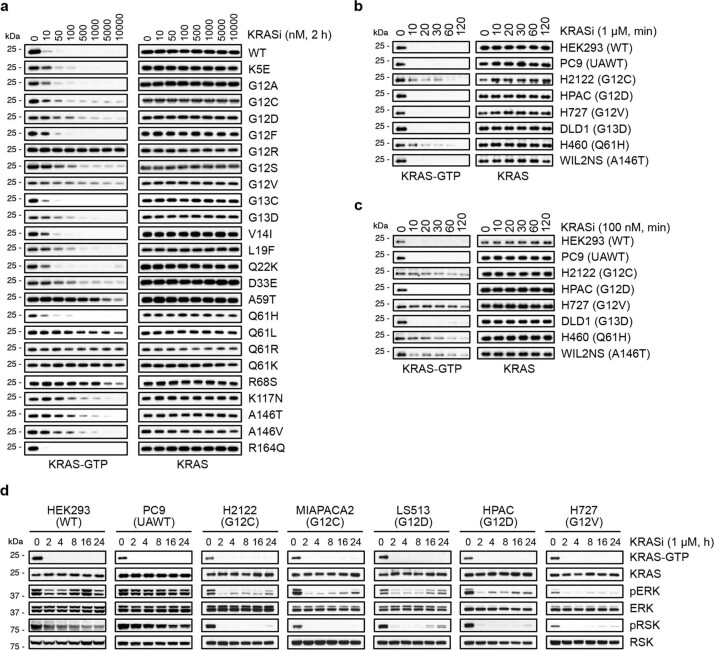
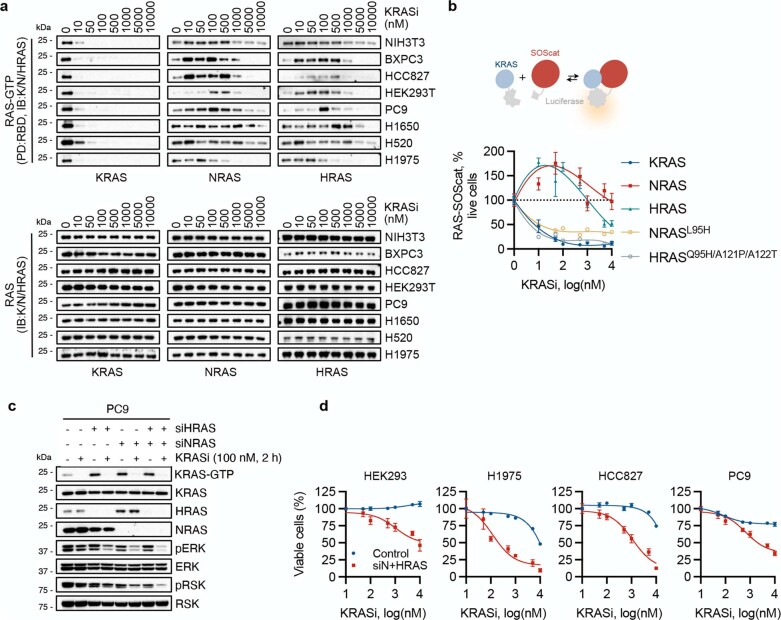
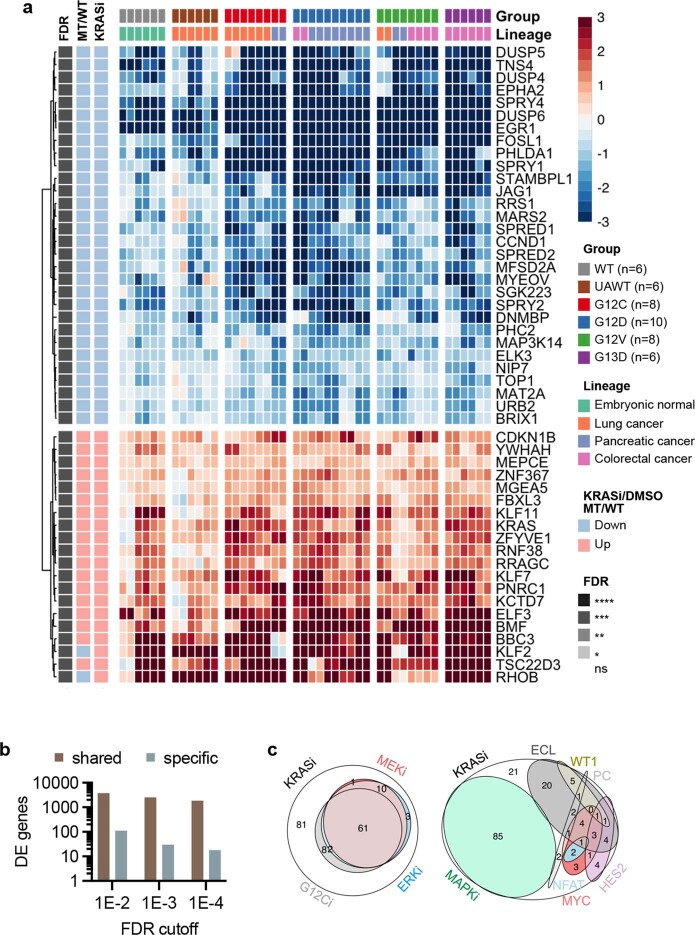
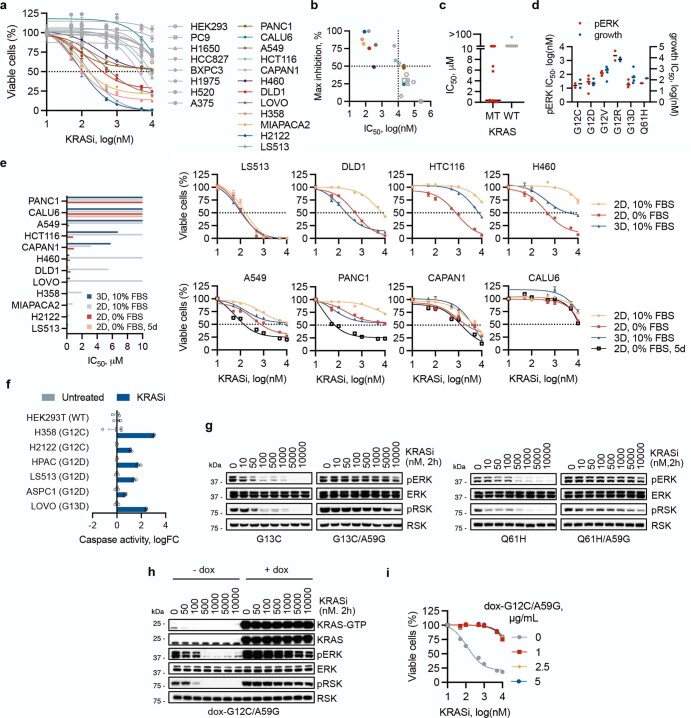
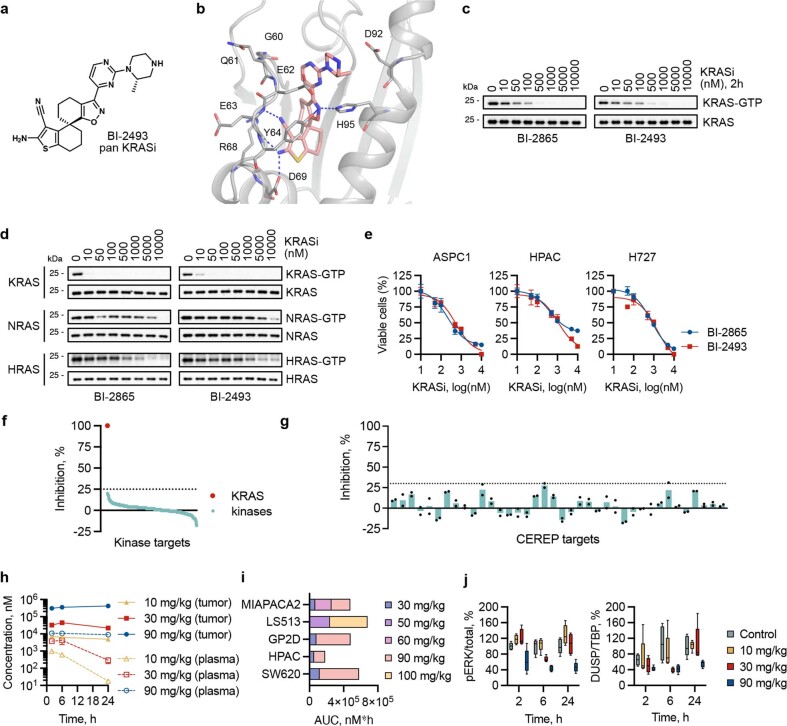
KRAS is one of the most commonly mutated proteins in cancer, and efforts to directly inhibit its function have been continuing for decades. The most successful of these has been the development of covalent allele-specific inhibitors that trap KRAS G12C in its inactive conformation and suppress tumour growth in patients 1–7 . Whether inactive-state selective inhibition can be used to therapeutically target non-G12C KRAS mutants remains under investigation. Here we report the discovery and characterization of a non-covalent inhibitor that binds preferentially and with high affinity to the inactive state of KRAS while sparing NRAS and HRAS. Although limited to only a few amino acids, the evolutionary divergence in the GTPase domain of RAS isoforms was sufficient to impart orthosteric and allosteric constraints for KRAS selectivity. The inhibitor blocked nucleotide exchange to prevent the activation of wild-type KRAS and a broad range of KRAS mutants, including G12A/C/D/F/V/S, G13C/D, V14I, L19F, Q22K, D33E, Q61H, K117N and A146V/T. Inhibition of downstream signalling and proliferation was restricted to cancer cells harbouring mutant KRAS, and drug treatment suppressed KRAS mutant tumour growth in mice, without having a detrimental effect on animal weight. Our study suggests that most KRAS oncoproteins cycle between an active state and an inactive state in cancer cells and are dependent on nucleotide exchange for activation. Pan-KRAS inhibitors, such as the one described here, have broad therapeutic implications and merit clinical investigation in patients with KRAS-driven cancers.
Overview
The claims and statistics of this paper haven’t been checked yet.
Free: it reads the open-access text and checks the first 5 claims that cite a source we can check. Create a free account to check every claim.
Integrity signals
Registry
Cites
Statistics
Figures
Verification
Claims the paper makes
The claims and statistics of this paper haven’t been checked yet.
Free: it reads the open-access text and checks the first 5 claims that cite a source we can check. Create a free account to check every claim.
Claims other papers make about this one
Each is checked against this paper’s own text: does it say what the citing paper says it does?
The source backs part of the claim, not all of it — or backs it for a different population, condition or comparison.
In the citing paper
“Murine xenograft experiments demonstrated efficacy against grafted cell lines and a PDX driven by KRAS G12C, G12D, G12V, and A146V without causing significant body weight loss.”
From KRAS: Biology, Inhibition, and Mechanisms of Inhibitor Resistance (2024) · cites this paper as [62]
Experimental — accuracy not yet measuredThe source backs part of the claim, not all of it — or backs it for a different population, condition or comparison.
In the citing paper
“This inhibitor functions by blocking the GDP/GTP nucleotide exchange of wildtype KRAS and other KRAS mutants, including G12A, G12C, G12D, G12F, G12V, G12S, G13C, G13D, V14I, L19F, Q22K, D33E, Q61H, K117N, A146V, and A146T.”
From KRAS: Biology, Inhibition, and Mechanisms of Inhibitor Resistance (2024) · cites this paper as [62]
Experimental — accuracy not yet measuredThe source backs part of the claim, not all of it — or backs it for a different population, condition or comparison.
In the citing paper
“BI-2865 inhibits oncogenic signaling through the RAF cascade, regardless of the specific KRAS driver mutation [62].”
From KRAS: Biology, Inhibition, and Mechanisms of Inhibitor Resistance (2024) · cites this paper as [62]
Experimental — accuracy not yet measuredThe source backs part of the claim, not all of it — or backs it for a different population, condition or comparison.
In the citing paper
“BI-2865 effectively blocked the interaction between KRAS and RAF in most cell lines, though it displayed weaker activity against cell lines harboring the KRAS G12R mutation.”
From KRAS: Biology, Inhibition, and Mechanisms of Inhibitor Resistance (2024) · cites this paper as [62]
Experimental — accuracy not yet measuredThe source backs part of the claim, not all of it — or backs it for a different population, condition or comparison.
In the citing paper
“Point mutations in the KRAS gene included G12D/F/R/V/W, which prevent covalent interactions with mutant cysteine, as well as V8L, G13D, V14I, Q61H, H95D/Q/R, Y96C, and Y96D [62,97,102,103].”
From KRAS: Biology, Inhibition, and Mechanisms of Inhibitor Resistance (2024) · cites this paper as [62]
Experimental — accuracy not yet measured
12 more claims about this paper
Create a free account to see every claim other papers make about this one.
Self-check
Percentages, sums and reported differences re-computed from the paper’s own numbers.
The self-check needs the paper’s full text.
Citations
Cites
Features and development of Coot
Emsley, P., Lohkamp, B., Scott, W. G., & Cowtan, K. (2010) · Acta Crystallographica Section D Biological Crystallography · doi:10.1107/s0907444910007493 · Cited by 29,915
The CCP4 suite: programs for protein crystallography
Collaborative Computational Project, N. 4. (1994) · Acta Crystallographica Section D Biological Crystallography · doi:10.1107/s0907444994003112 · Cited by 17,270
K-Ras(G12C) inhibitors allosterically control GTP affinity and effector interactions
Ostrem, J. M., Peters, U., Sos, M. L., Wells, J. A., & Shokat, K. M. (2013) · Nature · doi:10.1038/nature12796 · Cited by 2,557
The Clinical KRAS(G12C) Inhibitor AMG 510 Drives Anti-Tumour Immunity
Canon, J., Rex, K., Saiki, A. Y., Mohr, C., Cooke, K., Bagal, D., Gaida, K., Holt, T., Knutson, C. G., Koppada, N., et al. (2019) · Nature · doi:10.1038/s41586-019-1694-1 · Cited by 2,277
Data processing and analysis with the autoPROC toolbox
Vonrhein, C., Flensburg, C., Keller, P., Sharff, A., Smart, O., Paciorek, W., Womack, T., & Bricogne, G. (2011) · Acta Crystallographica Section D Biological Crystallography · doi:10.1107/s0907444911007773 · Cited by 2,029
RAS Proteins and Their Regulators in Human Disease
Simanshu, D. K., Nissley, D. V., & McCormick, F. (2017) · Cell · doi:10.1016/j.cell.2017.06.009 · Cited by 1,943
RAS oncogenes: the first 30 years
Malumbres, M., & Barbacid, M. (2003) · Nature Reviews Cancer · doi:10.1038/nrc1097 · Cited by 1,902
Sotorasib for Lung Cancers with KRAS p.G12C Mutation
Skoulidis, F., Li, B. T., Dy, G. K., Price, T. J., Falchook, G. S., Wolf, J., Italiano, A., Schuler, M., Borghaei, H., Barlesi, F., et al. (2021) · New England Journal of Medicine · doi:10.1056/nejmoa2103695 · Cited by 1,849
RAS oncogenes: weaving a tumorigenic web
Pylayeva-Gupta, Y., Grabocka, E., & Bar-Sagi, D. (2011) · Nature Reviews Cancer · doi:10.1038/nrc3106 · Cited by 1,789
KRAS G12C Inhibition with Sotorasib in Advanced Solid Tumors
Hong, D. S., Fakih, M. G., Strickler, J. H., Desai, J., Durm, G. A., Shapiro, G. I., Falchook, G. S., Price, T. J., Sacher, A., Denlinger, C. S., et al. (2020) · New England Journal of Medicine · doi:10.1056/nejmoa1917239 · Cited by 1,733
Self-citation
Cited by
Items 401–500 of 567
KRAS and MYC synergistic inhibition: a powerful strategy targeting KRAS-mutant cancers
Yan, M., Liu, K., Xu, J., Liu, Y., Ji, L., & Zhang, S. (2026) · Molecular Cancer · doi:10.1186/s12943-026-02659-w · Cited by 1
Ras promotes macropinocytic nutrient uptake by suppressing the albumin recycling receptor FcRn
de Campos, R. P., Wu, X., Inal, A., Liu, Z., Thompson, C. B., & Palm, W. (2026) · EMBO Reports · doi:10.1038/s44319-026-00787-4 · Cited by 1
Fibroblast-mediated KRAS activation in double-negative prostate cancer
Kamijima, T., Izumi, K., Hiratsuka, K., Inaba, T., Koketsu, Y., Nakagawa, R., Toriumi, R., Aoyama, S., Kano, H., Makino, T., et al. (2026) · Cell Death and Disease · doi:10.1038/s41419-026-08800-3 · Cited by 1
“KRAS signaling can be suppressed by pan-KRAS inhibitors, which target both KRAS mutations and activated wild-type KRAS, potentially playing a key role in DNPC development [59 – 62].”
Artificial intelligence: Catalyzing a new era in pancreatic cancer cure
Wang, J., Luo, W., Zhang, M., Wang, Y., Ye, L., Qiu, J. U. N. T. A. O., Liu, Y., Weng, G., Liu, T., Cao, Z., et al. (2026) · Cancer Letters · doi:10.1016/j.canlet.2026.218558 · Cited by 1
Chiyoda, A., Matsuo, A., Yamano, T., & Tanada, M. (2026) · ACS Medicinal Chemistry Letters · doi:10.1021/acsmedchemlett.6c00122 · Cited by 1
Guo, Y., Zhong, Y., Hu, P., Chen, Y., Guo, W., Chen, J., Guan, P., Zhou, Z., Zhu, F., Zeng, X., et al. (2026) · Nature Communications · doi:10.1038/s41467-026-73805-7 · Cited by 2
“To expand the therapeutic options, pan-KRAS (pan-KRASi), such as BI-2865 and BI-2493, have emerged as promising therapeutic alternatives, targeting a broader spectrum of KRAS variants, including somatic mutations in G12D/V, G13D, and Q61H 11 and thereby potentially bene fi ting >90% of KRAS-mutant CRC cases.”
InfluentialDiscovery of TCR-like antibodies to the KRAS G12D neoantigen via in silico-in vitro workflow
Ahn, S., Oh, T.-S., Suh, S., Jeon, J. H., Lah, S., Ryu, K., Choi, S., Kim, H., Lee, E. G., Lee, H., et al. (2026) · Molecular Therapy · doi:10.1016/j.ymthe.2026.05.032 · Cited by 1
Self-citationLiu, X., Xiao, Y., Zhou, Y., Teng, Y., Zou, J., Zhou, Y., Fan, X., Zhao, J., Qiu, J., Tang, L., et al. (2026) · Journal of Medicinal Chemistry · doi:10.1021/acs.jmedchem.6c00196 · Cited by 2
Self-citationMolecular mechanism of allosteric modulation of opioid receptors
Wang, H., Miao, Z., Zhao, C., Fu, H., Tian, X., Liu, X., Wang, L., Liu, Y., Liu, X., Yong, X., et al. (2026) · Signal Transduction and Targeted Therapy · doi:10.1038/s41392-026-02759-5 · Cited by 1
Pancreatic Cancer: Translating Tumor Biology into Actionability
Balogun, F. O., Sherman, M. H., Park, W., Soares, K. C., Reyngold, M., Schoenfeld, J. D., Singhal, A., Iacobuzio–Donahue, C. A., & O'Reilly, E. M. (2026) · Cancer Discovery · doi:10.1158/2159-8290.cd-25-2014 · Cited by 3
“A pan-KRAS strategy utilized in BI-2865 binds to the inactive form of WT and mutant KRAS, blocking nucleotide exchange and thereby inhibiting downstream signaling (87).”
Lu, D., Osgood, T., Ma, S., Zhang, H., Kanke, M., Tan, J. A., Paudel, S. N., Zhou, H., Estrada, J., Yamawaki, T., et al. (2026) · Cancer Immunology Research · doi:10.1158/2326-6066.cir-25-0794 · Cited by 1
“Currently, additional strategies involving combination therapies, pan-KRAS inhibitors, and allele-specific inhibitors are being explored to improve upon these initial successes by prolonging responses and overcoming resistance (5–8).”
Self-citationXiao, X.-Z., Wang, Y.-J., Pang, X.-F., & Zhang, A. (2026) · Acta Pharmacologica Sinica · doi:10.1038/s41401-026-01866-x · Cited by 2
“To target a broader range of KRAS mutants, non-covalent pan-KRAS inhibitors BI-2865 and BI-2493 [9] have been developed for the treatment of KRAS -driven tumors by selectively binding KRAS (OFF).”
Sun, Y., Zhao, Y., Yang, Y., Li, Z., Bai, M., Sheng, Q., Fu, Z., Yan, S., Wang, Q., Tu, W., et al. (2026) · Journal of Controlled Release · doi:10.1016/j.jconrel.2026.115256 · Cited by 1
Self-citationRAS Inhibitor RMC ‐7977 Blocks Vascular Overgrowth of NRAS Q61R Mutant Endothelial Cells
Alharbi, S., Merkle, S., Pastura, P. A., McDaniel, C. G., Zaky, G. S., Waters, A. M., & Cras, T. D. L. (2026) · Journal of Cellular and Molecular Medicine · doi:10.1111/jcmm.71316 · Cited by 1
Selenium Nanoparticles Selectively Target KRAS G13D to Inhibit Colorectal Cancer
Liu, X., Wu, C., Song, S., Ma, L., Huang, S., He, Y., Li, Q., Chang, Y., Jiang, D., Mei, Y., et al. (2026) · Advanced Science · doi:10.1002/advs.202523795 · Cited by 1
“…inhibitors, such as BI-2865, and RAS(ON) multi-selective inhibitors, such as daraxonrasib, have extended direct pharmacological coverage toward G13D [ 37–39 ], their translation to KRAS G13D-mutant CRC remains constrained, as parallel inhibition of WT RAS narrows the therapeutic window.”
InfluentialZacharias, N. M., Rupe, E. S., Chen, X., Kotecha, R. R., Rieke, D. T., McGregor, B. A., Pesquera, P. I., Yu, Z., Grover, A., Daw, N. C., et al. (2026) · Clinical Cancer Research · doi:10.1158/1078-0432.ccr-26-0392 · Cited by 2
Small-molecule RAS/RAF inhibitors target RAS-driven cancers via allosteric RAF disruption
Yoshikawa, Y., Kubota, H., Matsumoto, S., Makino, Y., Kawamura, T., Yuki, H., Sakai, N., Shibaike, A., Okamura, M., Fujimoto-Sakisaka, W., et al. (2026) · Nature Communications · doi:10.1038/s41467-026-76337-2 · Cited by 1
Lee, Y., Hwang, S., Shin, H. Y., Choi, K., Seo, S., Kim, H., Yang, J. S., Kim, Y. J., Kim, Y.-M., & Song, E. J. (2026) · Experimental & Molecular Medicine · doi:10.1038/s12276-026-01837-6 · Cited by 1
Considerations Around Structure-Based Drug Discovery for KRAS Using DOCK
Chakrabarti, M., Tan, Y. S., & Balius, T. E. (2024) · Methods in molecular biology · doi:10.1007/978-1-0716-3822-4_6 · Cited by 1
Discovery and development of MRTX1133, a potent, selective, noncovalent inhibitor of KRASG12D
Gill, A. L., & Wang, X. (2024) · Elsevier eBooks · doi:10.1016/b978-0-443-21861-3.00016-4 · Cited by 1
The evolution of RAS structural biology
Simanshu, D. K., & Knox, J. E. (2024) · Elsevier eBooks · doi:10.1016/b978-0-443-21861-3.00012-7 · Cited by 1
Chang, H., Saoud, C., Torrence, D. E., Tap, W., Chi, P., & Antonescu, C. R. (2025) · The Journal of Pathology · doi:10.1002/path.6391 · Cited by 1
The Potential of Pan-KRAS Inhibitors in the Treatment of KRAS-Mutant Leukemias
Boston, M., & Bondarenko, O. (2025) · The American Journal of Applied Sciences · doi:10.37547/tajas/volume07issue06-03 · Cited by 1
Wang, Y., Zhang, Y., Chen, H., Zhang, X., Wang, C., & Sun, F. (2025) · Journal of Chemical Information and Modeling · doi:10.1021/acs.jcim.5c00643 · Cited by 1
Data from Facts and Hopes on RAS Inhibitors and Cancer Immunotherapy
Boumelha, J., Molina‐Arcas, M., & Downward, J. (2023) · doi:10.1158/1078-0432.c.6982714 · Cited by 1
Extended role of p21 during the exit from p21-induced G0/G1 arrestPreprint
Zheng, D., Ai, Z., Qiu, S., Song, Y. H., Ma, C., Meng, W., 张润驹, He, F., Liang, H., & Ma, J. (2024) · bioRxiv (Cold Spring Harbor Laboratory) · doi:10.1101/2024.12.23.630045 · Cited by 1
“KRAS, a proto-oncogene and small GTPase, plays a crucial role in regulating signaling pathways that determine the G0/G1 arrest-proliferation decision 35 .”
Papadimitropoulou, A., Charalampous, C., Kogionou, P., Reinhardt, D., Sonntag, J., Gavalas, A., Hofmann, M. H., Erlmann, P., Franti, M., Doerr, J., et al. (2025) · bioRxiv (Cold Spring Harbor Laboratory) · doi:10.1101/2025.06.03.657628 · Cited by 1
Yalçın, G. D., Yilmaz, K. C., Klima, R., Kurtulan, O., Türkay, D. Ö., Aktepe, O. H., Dogrul, A. B., Sökmensüer, C., Öter, V., Bostanci, E. B., et al. (2026) · bioRxiv (Cold Spring Harbor Laboratory) · doi:10.64898/2026.01.14.699345 · Cited by 1
“…PDO models, harboring KRAS WT and KRAS G13D genotypes, from our biobank and exposed them to the novel pan-KRAS inhibitor BI-2865, a selective, non-covalent small-molecule inhibitor that binds to the inactive GDP-bound form of KRAS thereby preventing its activation and downstream signaling 22 .”
Chu, B., He, Y., Chen, Y., Toth, E. A., & Orban, J. P. (2026) · bioRxiv (Cold Spring Harbor Laboratory) · doi:10.64898/2026.01.15.699477 · Cited by 1
Yeung, S. F., Chen, J. X., Law, C. T., Law, A. C. H., Lee, C., Leung, A. M. F., Chau, M. P. K., Chi-Bun, B. K., Yue, W., Tong, M., et al. (2026) · bioRxiv (Cold Spring Harbor Laboratory) · doi:10.64898/2026.02.18.706707 · Cited by 1
Gazi, M. Y., Ye, Y., Okoko, O. D., Wang, X., Simon, S. E., Alimadadi, A., Suryawanshi, N., Brandle, C., Zheng, M., Pei, L., et al. (2026) · bioRxiv (Cold Spring Harbor Laboratory) · doi:10.64898/2026.02.26.708383 · Cited by 1
“To address these challenges, there is growing interest in developing broader-spectrum pan-KRAS and pan-RAS inhibitors capable of achieving more durable suppression of aberrant RAS signaling and overcoming resistance mechanisms 16-18 .”
Goldstein, M. E., Chu, B., Carillo, K. J., Orban, J. P., Toth, E. A., & Fuerst, T. R. (2026) · bioRxiv (Cold Spring Harbor Laboratory) · doi:10.64898/2026.03.04.709402 · Cited by 1
Selective Pyroptosis in NF1-Deficient Cells through PKCδ AgonismPreprint
Hu, L., Tang, Y., Lin, Y., Pundavela, J., Scheffer, K. C., Schaeper, A., Rizvi, T. A., Wu, J., Zheng, Y., & Ratner, N. (2026) · bioRxiv (Cold Spring Harbor Laboratory) · doi:10.64898/2026.05.19.726276 · Cited by 1
Kano, Y. (2026) · International Journal of Molecular Sciences · doi:10.3390/ijms27135796
“BI-2865 is a representative direct pan-KRAS inhibitor that illustrates the feasibility of broad KRAS targeting beyond single-allele inhibition [57].”
Keats, M. A., Han, J. J. W., Lee, Y., Lee, C.-S., & Luo, J. (2023) · doi:10.1158/0008-5472.24071339
Keats, M. A., Han, J. J. W., Lee, Y., Lee, C.-S., & Luo, J. (2023) · doi:10.1158/0008-5472.24071339.v1
Adaptation to ARF6-depletion in KRAS-driven PDAC is abolished by targeting TLR2Preprint
Ghose, R., Das, S., Urgel-Solas, J., Pezzano, F., Datta, D., Ghose, U., Zapater, A. G., Lorente, N. P., Espinar, L., Garcia, L., et al. (2023) · bioRxiv (Cold Spring Harbor Laboratory) · doi:10.1101/2023.11.30.569405
Data from Facts and Hopes on RAS Inhibitors and Cancer Immunotherapy
Boumelha, J., Molina‐Arcas, M., & Downward, J. (2023) · doi:10.1158/1078-0432.c.6982714.v1
Martins, F., Machado, A. L., Ribeiro, A., Oliveira, S. M., Carvalho, J., Matthiesen, R., & Velho, S. (2023) · Research Square · doi:10.21203/rs.3.rs-3752760/v1
La médecine de précision dans le cancer du pancréas
Boilève, A. (2024) · theses.fr (ABES) · doi:10.70675/457b96a4z1192z4f54zbfd1z6e7250b130e3
CasRx-Based Kras G12D Silencing for In Vivo Tumor Inhibition in Spontaneous Lung AdenocarcinomaPreprint
Wang, X., Liu, F., Xu, L., Shi, Y., Zhang, L., Chen, F., Gu, S., Jin, Z., Zhou, H., Li, T., et al. (2024) · Research Square · doi:10.21203/rs.3.rs-4041534/v1
Martins, F., Machado, A. L., Ribeiro, A., Oliveira, S. M., Carvalho, J., Matthiesen, R., Backman, V., & Velho, S. (2024) · Research Square · doi:10.21203/rs.3.rs-3752760/v3
Advances in fundafmental and translational oncology: the year 2023 update
Имянитов, Е. Н. (2024) · Practical oncology · doi:10.31917/2501001
Kaczmarczyk, J. A., Whiteley, G., & Blonder, J. (2024) · Methods in molecular biology · doi:10.1007/978-1-0716-3922-1_17
Mediating kinase activity in Ras-mutant cancer: potential for an individualised approach?
Healy, F. M., Turner, A. L., Marensi, V., & MacEwan, D. J. (2024) · Frontiers in Pharmacology · doi:10.3389/fphar.2024.1441938 · Cited by 1
Treatments that Target Cell Communication
Vickers, E. (2024) · Wiley eBooks · doi:10.1002/9781119834090.ch3
The emergence of pan-KRAS drugs
McConnell, D. B., & Kraut, N. (2024) · Elsevier eBooks · doi:10.1016/b978-0-443-21861-3.00019-x
Self-citationMalek, S., & McCormick, F. P. (2024) · Elsevier eBooks · doi:10.1016/b978-0-443-21861-3.02001-5
Immune-oncology potential of KRAS inhibitors
Molina‐Arcas, M., Boumelha, J., & Downward, J. (2024) · Elsevier eBooks · doi:10.1016/b978-0-443-21861-3.00013-9
Der, C. J., & McCormick, F. P. (2024) · Elsevier eBooks · doi:10.1016/b978-0-443-21861-3.00003-6
KRAS-driven cancer models for in vivo pharmacology and drug discovery
Chugh, S., Dow, L. E., Singh, M., & Aguirre, A. J. (2024) · Elsevier eBooks · doi:10.1016/b978-0-443-21861-3.00004-8
First molecules to reactivate RASG12V GTPase activity
Włodarczyk, A., Tręda, C., Pacholczyk, M., Rutkowska, A., Węgierska, M., Kierasińska, A., Wasiak, K., Ciunowicz, D., Grot, D., Głowacki, P., et al. (2025) · BMC Cancer · doi:10.1186/s12885-025-13580-8
Editorial: KRAS in stage IV non-small cell lung cancer
Noordhof, A. L., Blum, T. G., Hardavella, G. F., Hendriks, L. E. L., & van Geffen, W. H. (2025) · Frontiers in Oncology · doi:10.3389/fonc.2024.1517049
Treatment options for KRAS G12C mutated metastatic colorectal cancer
Liberko, M. (2025) · Onkologie · doi:10.36290/xon.2025.008
Targeting RAS and associated proteins
Müller, M. P., Goody, R. S., & Rauh, D. (2025) · Elsevier eBooks · doi:10.1016/b978-0-443-29808-0.00008-x
Diagnostik und Therapiekonzepte für das Pankreaskarzinom – Update 2024
Kestler, A. M. R., & Seufferlein, T. T. W. (2025) · Gastroenterologie up2date · doi:10.1055/a-2267-4079
Diagnostik und Therapiekonzepte für das Pankreaskarzinom – Update 2024
Kestler, A. M. R., & Seufferlein, T. T. W. (2025) · TumorDiagnostik & Therapie · doi:10.1055/a-2555-9348
Targeted Therapy for Pancreatic Cancer: Focus on KRAS
Keum, J., & Lee, S. H. (2025) · Journal of Digestive Cancer Research · doi:10.52927/jdcr.2025.13.1.52
Metabolic stress–mediated cell death and autophagy in human lung cancer cells
Joshi, H., Huang, Y., & Sheikh, M. S. (2025) · Journal of Pharmacology and Experimental Therapeutics · doi:10.1016/j.jpet.2025.103598
Hu, Y., Lin, X., Zhu, J., Lin, Y., Zhang, Y., Liu, C., & Jiang, F. (2025) · SSRN Electronic Journal · doi:10.2139/ssrn.5281075
刘, 伟., 兰, 姝., & 陈, 铭. (2025) · BIO-PROTOCOL · doi:10.21769/bioprotoc.1011026
Wang, W., Song, Y., Liu, S., Xiong, X., & Yang, X. (2025) · BMC Cancer · doi:10.1186/s12885-025-14358-8 · Cited by 1
“Pan KRAS inhibitor, which targets KRAS, may exert therapeutic effects on KRAS-driven cancer, such as EC, lung cancer, colorectal cancer, and pancreatic cancer [31, 48, 49].”
Zeng, J., Li, Q., Li, K., Yang, L., Xu, L., Wang, W., Yang, K., Wei, Q., Wang, J., Zhu, C., et al. (2025) · Frontiers in Immunology · doi:10.3389/fimmu.2025.1605227
Ahn, S., Oh, T.-S., Suh, S., Jeon, J. H., Lah, S., Ryu, K., Kim, H., Lee, E. G., Lee, H., Lee, J. Y., et al. (2025) · bioRxiv (Cold Spring Harbor Laboratory) · doi:10.1101/2025.08.31.673313
Self-citationChen, X., Keller, S. J., Das, T., Hafner, P., Alrawashdeh, A. Y., Jumaa, H., Chen, T., Besson, S., Norona, J., Schneider, M., et al. (2025) · medRxiv · doi:10.1101/2025.09.09.25335395
A bibliometric analysis on KRAS, a targeted marker for blockbuster clinical drugs
Guo, Z., Zhao, S., Sun, Y., & Shi, Y. (2025) · Cancer Treatment and Research Communications · doi:10.1016/j.ctarc.2025.101001 · Cited by 1
Computational Tools for Identifying Cancer Driver Genes and Mutations: A Comprehensive Review
Alsulami, A. F. (2025) · Current Bioinformatics · doi:10.2174/0115748936405959250911064633
Pietra, F. (2025) · Medicinal Chemistry Research · doi:10.1007/s00044-025-03500-7
“Inhibitor BI-2865 was developed, in a conjoint effort, at Memorial Sloan Kettering Cancer Center, Boehringer Ingelheim and the Weill Cornell Medical College [8].”
InfluentialZhang, J., Huang, H. F., Tang, B., Hu, X., Ming, Z., Wan, D., & Qu, Q. (2025) · World Journal of Surgical Oncology · doi:10.1186/s12957-025-04106-4 · Cited by 1
“Beyond inhibitors targeting KRAS G12C, novel agents against KRAS G12D and pan-KRAS are under development with active clinical investigation [57, 58].”
FragmentScope - exploring the fragment space with learned surface representationsPreprint
Elizarova, E., Morozova, I., Igashov, I., Gampp, O., Iosub, D. R. P., Schneuing, A., Lau, K., Ferraris, D. M., Pojer, F., Riek, R., et al. (2025) · bioRxiv (Cold Spring Harbor Laboratory) · doi:10.64898/2025.12.16.694391
Bio-Distribution of Pancreas-Derived Exosomes
Alves, S. R. S. (2024) · Portuguese National Funding Agency for Science, Research and Technology (RCAAP Project by FCT) · doi:10.34626/0yvv-8d06
Jamalzadeh, S., Dai, J., Lavikka, K., Li, Y., Jiang, J., Huhtinen, K., Virtanen, A., Oikkonen, J., Hietanen, S., Hynninen, J., et al. (2024) · Figshare · doi:10.6084/m9.figshare.26676929
Dreikhausen, L., Klupsch, A., Wiest, I., Xiao, Q., Schulte, N., Betge, J., Boch, T., Brochhausen, C., Gaiser, T., Hofheinz, R.-D., et al. (2024) · Figshare · doi:10.6084/m9.figshare.26712305
Yang, Q., To, K. K. W., Hu, G., Fu, K., Yang, C., Zhu, S., Pan, C., Wang, F., Kewang, L., & Fu, L. (2024) · Figshare · doi:10.6084/m9.figshare.26733367
Torgunrud, A., Lund-Andersen, C., Davidson, B., Marcussen, I. K. N., Larsen, S. G., Dagenborg, V., & Flatmark, K. (2025) · Pleura and Peritoneum · doi:10.1515/pp-2025-0034 · Cited by 1
Barua, A., Kundu, S. T., Garza, S. G., Fradette, J. J., Choudhary, B. S., Peng, D. H., Diao, L., Wang, J., & Gibbons, D. L. (2025) · bioRxiv (Cold Spring Harbor Laboratory) · doi:10.64898/2025.12.22.696060 · Cited by 1
Sun, H., Chen, Q., Li, G., Chen, M., Dai, J., & Yan, M. (2026) · Journal of the Chinese Medical Association · doi:10.1097/jcma.0000000000001334 · Cited by 2
“23,37 Thus, we herein used the KRAS inhibitor BI-2865 to treat ATC cells and designed rescue experiments.”
Htoo, A., Malenie, R., & Xing, J. (2026) · Journal of the American Society of Cytopathology · doi:10.1016/j.jasc.2026.01.002
朱, 含. (2026) · Advances in Clinical Medicine · doi:10.12677/acm.2026.161317
Ovarian Cancer Susceptibility and Chemosensitivity to KRAS Modulation
Psaras, A. M., McKay, S. J., Vilela, J. V., Sanchez, E. O., Cintrón, M. G., Elder, K. K., & Brooks, T. A. (2026) · International Journal of Molecular Sciences · doi:10.3390/ijms27031571
Design, synthesis and biological evaluation of novel KRAS-G12D inhibitors
Baig, M. H., Jo, Y. S., Nale, S. D., Kim, C. J., Park, J., Ha, J., Moon, B., Ryu, S., & Dong, J.-J. (2026) · Journal of Enzyme Inhibition and Medicinal Chemistry · doi:10.1080/14756366.2025.2609342
“…to conventional anticancer therapies 24,25 . this mutation is a crucial oncogenic driver, influencing downstream signalling and leading to uncontrolled cell growth. consequently, KRas-G12D is increasingly recognised as an essential target for developing effective cancer treatments 9,24,26,27 .”
Wei, Y., Gao, Y., Li, R., Chen, Y., Bai, W., Zhao, P., Hu, J., Li, L., Wang, X. Y., Yin, G., et al. (2026) · Acta Pharmaceutica Sinica B · doi:10.1016/j.apsb.2026.02.008
“…G12C -expressing cells, a variety of KRAS-targeting ligands, including adagrasib (a specific KRAS G12C inhibitor), BI2865 (a pan-KRAS inhibitor) 30 , and MRTX1133 (a specific KRAS G12D inhibitor) 31 , stabilized the DD-KRAS G12C protein alongside sotorasib at relatively high concentrations,…”
Luo, G., Li, D., Peng, J., Liu, R., Meng, Y., Ward, R., Zhang, Y., Zhang, X., Cui, F., Wang, J., et al. (2026) · Cell Communication and Signaling · doi:10.1186/s12964-026-02798-z · Cited by 1
“BI-2865, a novel pan-KRAS inhibitor, selectively targets a range of KRAS mutant variants as well as wild-type KRAS, while sparing other RAS family members [27].”
Kwok, G. W., Lo, J., & Fung, T. H. W. (2026) · Journal of Gastroenterology and Hepatology · doi:10.1111/jgh.70353
Innovative targeted therapies for mosaic RAS-related vascular malformations
Morin, G. (2024) · theses.fr (ABES) · doi:10.70675/88882e5fz1bf9z4dbezae13zba4200ee9598
MAPK pathway modulation and its implications in KRAS mutant lung adenocarcinoma
Román, S. D. H. (2023) · theses.fr (ABES) · doi:10.70675/8eaccae1ze96bz4279zb69fzaafa5e50c341
PrimO-3D : a pancreatic carcinogenesis model for translational research and drug testing
Miri, J. (2024) · theses.fr (ABES) · doi:10.70675/e86d07bbza1f0z4ebazacafz78d9b1ac2654
Nicolini, V. J. (2024) · theses.fr (ABES) · doi:10.70675/859a8db7z2ed8z48ebzb9e8z52ee0a4ba0d4 · Cited by 1
Unlocking drug sensitivity in KRAS
MingCong, L. I., YueSong, Z. H. O. U., Qiao, T. D., QingLin, B. A. I., & Li, C. (2026) · Scientia Sinica Vitae · doi:10.1360/ssv-2025-0279
“广谱 KRAS 抑制剂 , 如 BI-2865 和 BI-2493 可靶向多种 KRAS 突变体及野生型 KRAS [49] , 初步疗效 [70] .”
Self-citationModulation of Oncogenic KRAS Signaling by Branched Actin-driven Cell Membrane ProtrusionsPreprint
Gihana, G. M., Bhatt, K., Chang, B.-J., Murali, V. S., Zhou, F., Noh, J., Ravishankar, R., Borges, H., Lin, J., Oceguera, J., et al. (2026) · bioRxiv (Cold Spring Harbor Laboratory) · doi:10.64898/2026.04.09.717047
“As expected, in SU.86.86 cells, inhibition of KRAS G12D with the pan-KRAS inhibitor BI-2865 36 led to a significant decrease in cell proliferation and MAPK signaling, as indicated by the reduction of ERK1/2 phosphorylation (Extended Data Fig.”
InfluentialTiriac, H., & Engle, D. D. (2026) · Cancer Research · doi:10.1158/0008-5472.can-25-5676
Samudrala, R., Bruggemann, L., Falls, Z., & Mahajan, S. D. (2026) · Expert Opinion on Drug Discovery · doi:10.1080/17460441.2026.2654614
“Within NSCLC rational drug design has demonstrated success in developing effective covalent drug therapies such as KRAS G12C inhibitors adagrasib and sotorasib [32].”
Design and functions of phospholipid polymer cell shuttles for modern pharmaceutical formulations
Yoshizaki, Y., & Konno, T. (2026) · Polymer Journal · doi:10.1038/s41428-026-01174-5
Emerging concepts, hot topics, and open questions in today’s pancreatic cancer research
Keber, C. U., Schmitt, M., Visekruna, A., Brichkina, A. I., von Strandmann, E. P., Bartsch, J. W., Huber, M., Bauer, U., Gress, T. M., & Lauth, M. (2026) · Biochimica et Biophysica Acta (BBA) - Reviews on Cancer · doi:10.1016/j.bbcan.2026.189614
Diacylglycerol Kinase Eta as a Novel Target in NRAS Mutant Melanoma
Wilson, H. P., Stefanski, C. D., Caksa, S., Mersky, G. L., Varney, S. D., Haj, J. I., Erkes, D. A., Purwin, T. J., Chua, V., & Aplin, A. E. (2026) · Pigment Cell & Melanoma Research · doi:10.1111/pcmr.70090
“There are currently no FDA-approved targeted therapies for patients with NRAS mutant melanoma, and developing RAS inhibitors that target NRAS , specifically, has remained a challenge (Kim et al. 2023; Moore et al. 2020).”
Nematzadeh, S., & Karaul, A. (2026) · Pharmaceuticals · doi:10.3390/ph19050748
“Lessons from allele-specific and emerging pan-KRAS approaches inform drug-resistance management and combination design in LUAD [47,49].”
Malasani, S., & Wang, Z. (2026) · FEBS Journal · doi:10.1111/febs.70780 · Cited by 1
Accurate Identification of Functional Residues Across the Human Proteome with TAMALEPreprint
Riper, J. M. V., Corsaro, B. J., & Pillon, M. C. (2026) · bioRxiv (Cold Spring Harbor Laboratory) · doi:10.64898/2026.05.28.728550
“We then assessed the model’s performance on KRAS, a GTPase molecular switch, and a high-value therapeutic target ( 32 ).”
SAIMSARA (2026) · SAIMSARA Journal · doi:10.62487/saimsaradc4d1e0f
Perihilar Cholangiocarcinoma in Primary Sclerosing Cholangitis
Abdulhamid, A., Gores, G. J., Heimbach, J. K., & Eaton, J. E. (2026) · Clinics in Liver Disease · doi:10.1016/j.cld.2026.04.011
Metadata
- Authors
- Kim, D., Herdeis, L., Rudolph, D., Zhao, Y., Böttcher, J., Vides, A., Ayala-Santos, C. I., Pourfarjam, Y., Cuevas-Navarro, A., Xue, J. Y., Mantoulidis, A., Bröker, J., Wunberg, T., Schaaf, O., Popow, J., Wolkerstorfer, B., Kropatsch, K. G., Qu, R., de Stanchina, E., Sang, B., Li, C., McConnell, D. B., Kraut, N., & Lito, P.
- Affiliations
- Boehringer Ingelheim (Austria) (AT)
- Memorial Sloan Kettering Cancer Center (US)
- Corresponding author
- Lito, Piro
- ORCID
- Venue
- Nature
- Published
- 2023-05-31
- Volume
- 619
- Issue
- 7968
- Pages
- 160-166
- ISSN
- 0028-0836 (ISSN-L)
- 1476-4687
- PMC
- PMC10322706
- OpenAlex
- W4378901135
- Semantic Scholar
- adbdedfc9643df9a77eda1538b6370ab04be09d1
- Cited by
- 534
- References
- 42
- Citations by year
- 2026: 129 · 2025: 190 · 2024: 176 · 2023: 39
- FWCI
- 47.67
- Type
- journal article
- Language
- en
- Open access
- hybrid
- doi.org
- Licence
- cc-by
- creativecommons.org/licenses/by/4.0 (tdm)
- creativecommons.org/licenses/by/4.0 (vor)
- Locations
- Nature (publishedVersion, cc-by)
- PubMed Central (publishedVersion, cc-by)
- PubMed (publishedVersion)
- RePEc: Research Papers in Economics (submittedVersion)
- DORA PSI (Paul Scherrer Institute) (submittedVersion, cc-by)
- Funders
- Pew Charitable Trusts
- Damon Runyon Cancer Research Foundation (P30 CA008748)
- Memorial Sloan-Kettering Cancer Center (CA008748, P30 CA008748)
- Pershing Square Sohn Cancer Research Alliance (P30 CA008748)
- National Institutes of Health (CA008748)
- National Cancer Institute (R01CA230267, CA008748, P30CA008748, R01CA279264, R01CA230745)
- Topics
- Life Sciences › Biochemistry, Genetics and Molecular Biology › Molecular Biology › Protein Kinase Regulation and GTPase Signaling
- Life Sciences › Biochemistry, Genetics and Molecular Biology › Molecular Biology › Protein Tyrosine Phosphatases
- Life Sciences › Biochemistry, Genetics and Molecular Biology › Molecular Biology › Melanoma and MAPK Pathways
- Keywords
- KRAS, pan-KRAS inhibitors, non-covalent inhibitors, KRAS mutation, oncogenic signaling, tumor growth inhibition, allosteric inhibition, KRAS-driven cancers
- MeSH terms
- Animals, Body Weight, Cell Division, Enzyme Activation, Mutation, Neoplasms, Nucleotides, Substrate Specificity, Signal Transduction, Proto-Oncogene Proteins p21(ras), Monomeric GTP-Binding Proteins, Mice
About these checks
Registry, retraction, Cites and statistics results are computed, not judged, with one exception: a printed reference that no index lists is read once by a model before it counts as a citation error. Claims are extracted by a model and kept only when their quote appears verbatim in the text; each cited source is then checked, with a model’s help, for whether it says what the claim relies on. Those verdicts can be wrong — read the claim’s quote and the cited source before relying on one.
Statistics and arithmetic are recomputed, not judged.
Confidence bands are shown only for fields calibrated on our annotated test set. None is calibrated yet, so no band is shown.
What counts as a claim ›How we measure confidence ›How we check this ›
Are you an author, or do you see a problem with this page? Request a review
Data sources
Bibliographic data: Semantic Scholar, OpenAlex, Crossref.
Contains information from the Semantic Scholar Academic Graph Datasets, made available under the ODC Attribution License (ODC-BY 1.0).
Semantic Scholar’s data is described in: Kinney, R., et al. (2023). The Semantic Scholar Open Data Platform. arXiv:2301.10140.
