

Pan-KRAS inhibitor disables oncogenic signalling and tumour growth
Open accessThe DOI matches its Crossref record; 41 of the 42 references it cites were found in a registry or an index.
Abstract
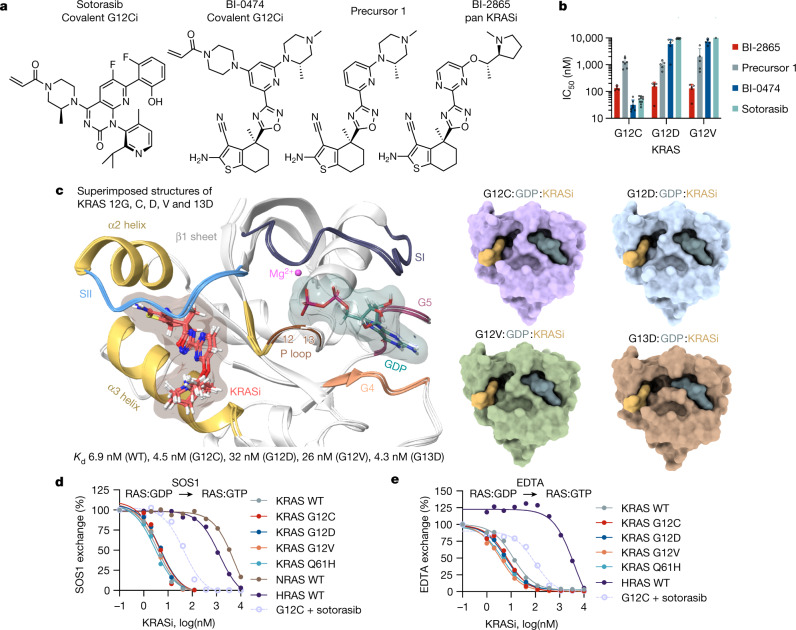
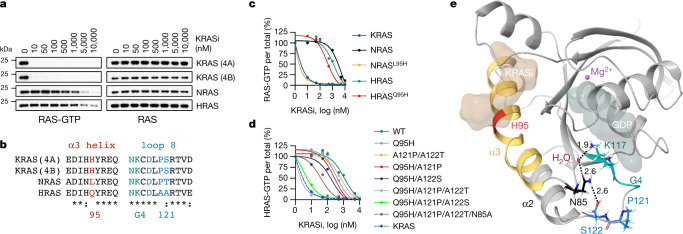
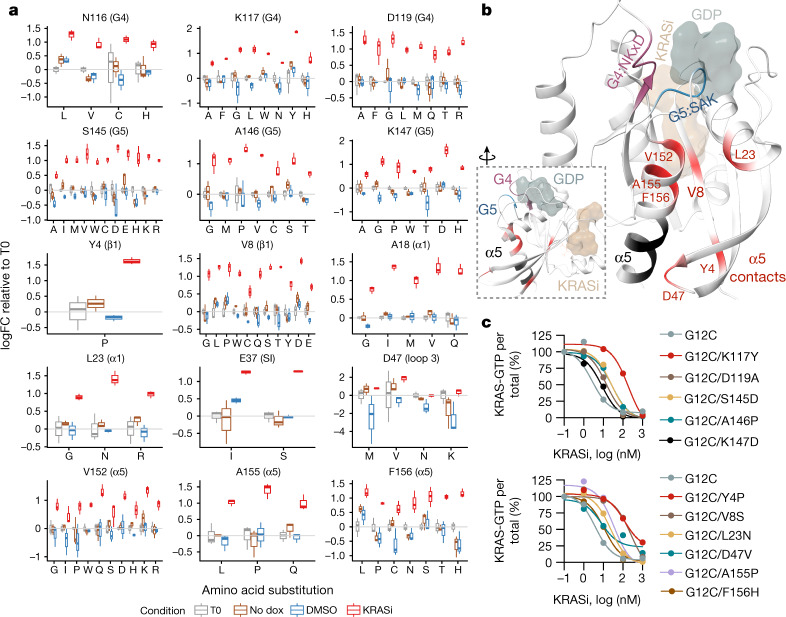
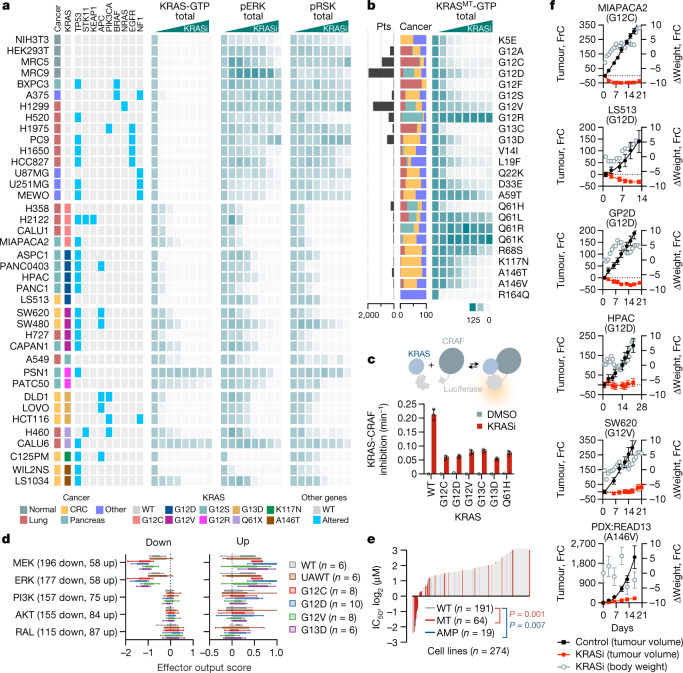
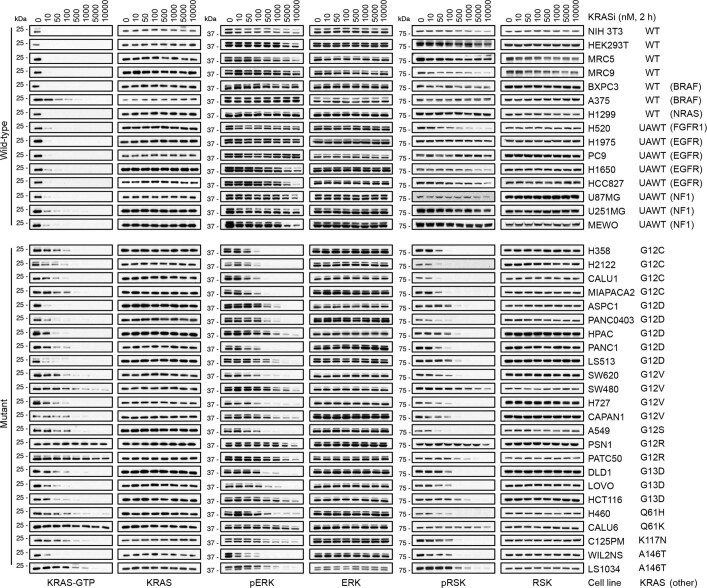
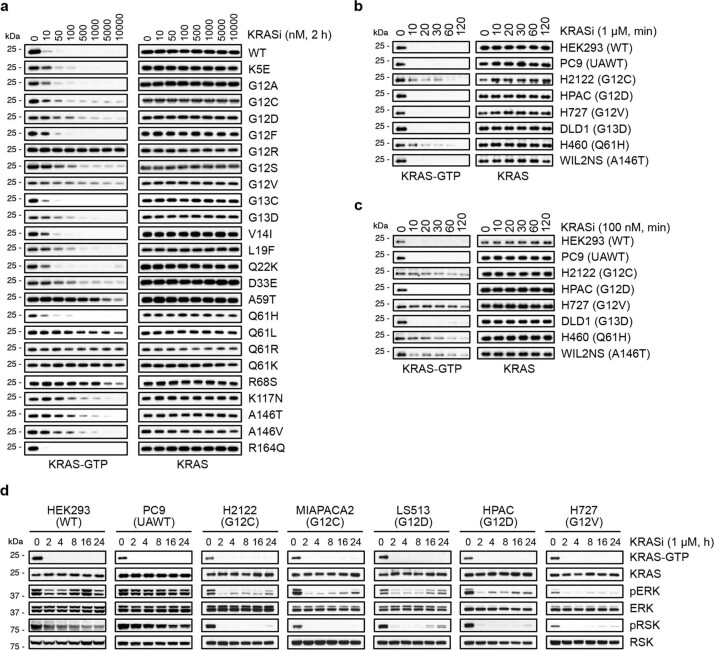
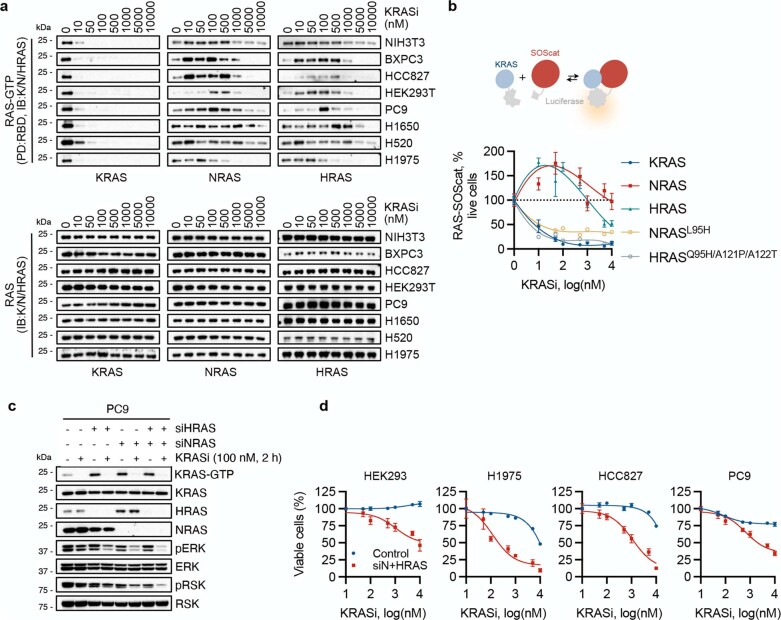
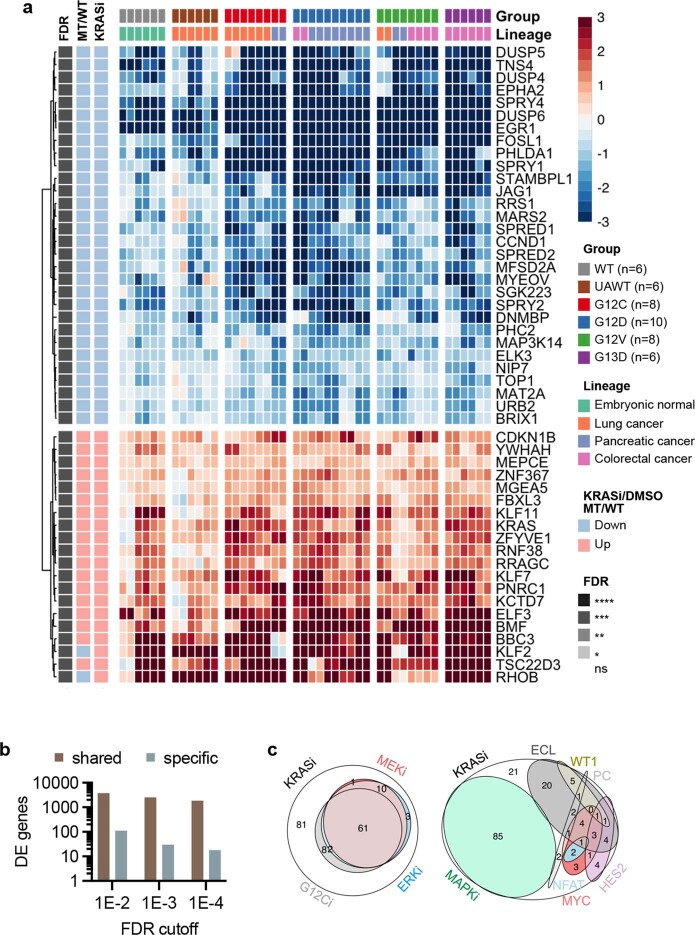
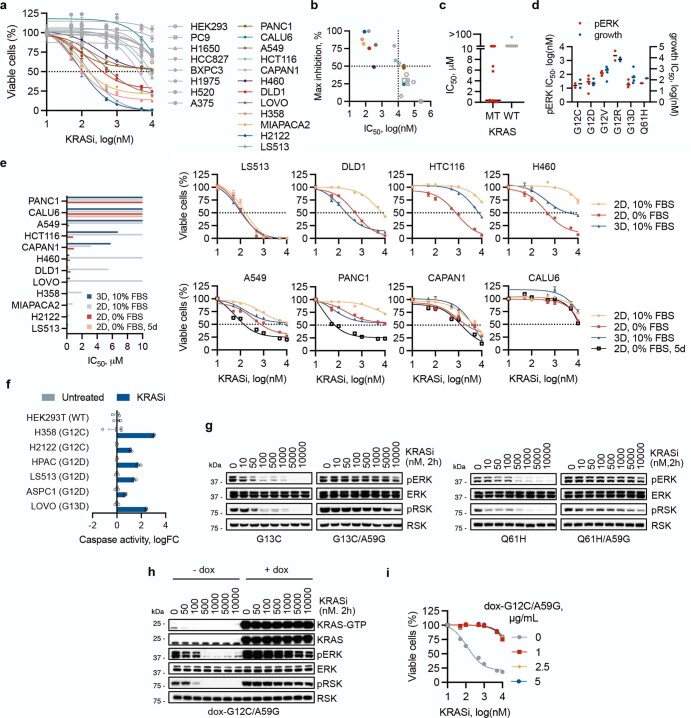
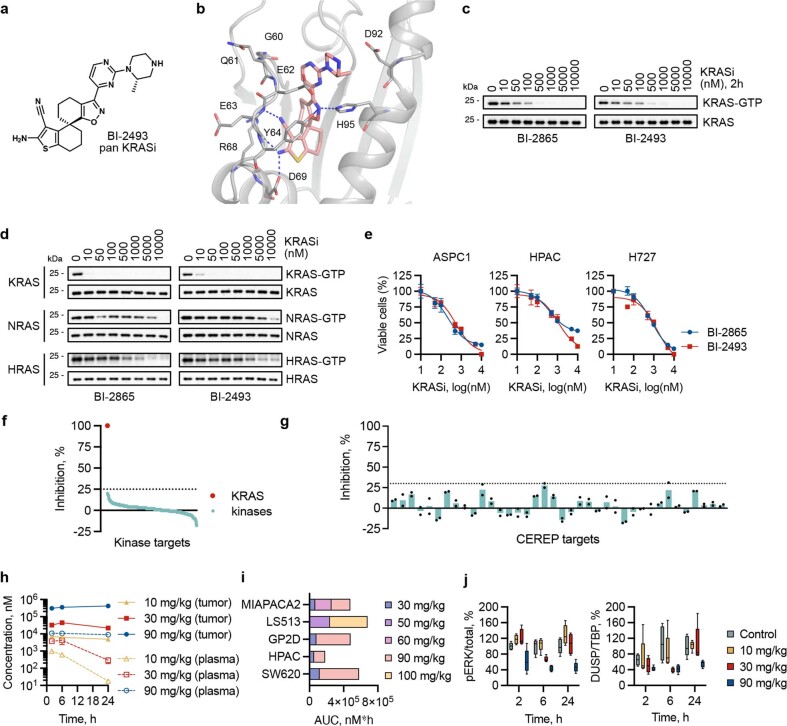
KRAS is one of the most commonly mutated proteins in cancer, and efforts to directly inhibit its function have been continuing for decades. The most successful of these has been the development of covalent allele-specific inhibitors that trap KRAS G12C in its inactive conformation and suppress tumour growth in patients 1–7 . Whether inactive-state selective inhibition can be used to therapeutically target non-G12C KRAS mutants remains under investigation. Here we report the discovery and characterization of a non-covalent inhibitor that binds preferentially and with high affinity to the inactive state of KRAS while sparing NRAS and HRAS. Although limited to only a few amino acids, the evolutionary divergence in the GTPase domain of RAS isoforms was sufficient to impart orthosteric and allosteric constraints for KRAS selectivity. The inhibitor blocked nucleotide exchange to prevent the activation of wild-type KRAS and a broad range of KRAS mutants, including G12A/C/D/F/V/S, G13C/D, V14I, L19F, Q22K, D33E, Q61H, K117N and A146V/T. Inhibition of downstream signalling and proliferation was restricted to cancer cells harbouring mutant KRAS, and drug treatment suppressed KRAS mutant tumour growth in mice, without having a detrimental effect on animal weight. Our study suggests that most KRAS oncoproteins cycle between an active state and an inactive state in cancer cells and are dependent on nucleotide exchange for activation. Pan-KRAS inhibitors, such as the one described here, have broad therapeutic implications and merit clinical investigation in patients with KRAS-driven cancers.
Overview
The claims and statistics of this paper haven’t been checked yet.
Free: it reads the open-access text and checks the first 5 claims that cite a source we can check. Create a free account to check every claim.
Integrity signals
Registry
Cites
Statistics
Figures
Verification
Claims the paper makes
The claims and statistics of this paper haven’t been checked yet.
Free: it reads the open-access text and checks the first 5 claims that cite a source we can check. Create a free account to check every claim.
Claims other papers make about this one
Each is checked against this paper’s own text: does it say what the citing paper says it does?
The source backs part of the claim, not all of it — or backs it for a different population, condition or comparison.
In the citing paper
“Murine xenograft experiments demonstrated efficacy against grafted cell lines and a PDX driven by KRAS G12C, G12D, G12V, and A146V without causing significant body weight loss.”
From KRAS: Biology, Inhibition, and Mechanisms of Inhibitor Resistance (2024) · cites this paper as [62]
Experimental — accuracy not yet measuredThe source backs part of the claim, not all of it — or backs it for a different population, condition or comparison.
In the citing paper
“This inhibitor functions by blocking the GDP/GTP nucleotide exchange of wildtype KRAS and other KRAS mutants, including G12A, G12C, G12D, G12F, G12V, G12S, G13C, G13D, V14I, L19F, Q22K, D33E, Q61H, K117N, A146V, and A146T.”
From KRAS: Biology, Inhibition, and Mechanisms of Inhibitor Resistance (2024) · cites this paper as [62]
Experimental — accuracy not yet measuredThe source backs part of the claim, not all of it — or backs it for a different population, condition or comparison.
In the citing paper
“BI-2865 inhibits oncogenic signaling through the RAF cascade, regardless of the specific KRAS driver mutation [62].”
From KRAS: Biology, Inhibition, and Mechanisms of Inhibitor Resistance (2024) · cites this paper as [62]
Experimental — accuracy not yet measuredThe source backs part of the claim, not all of it — or backs it for a different population, condition or comparison.
In the citing paper
“BI-2865 effectively blocked the interaction between KRAS and RAF in most cell lines, though it displayed weaker activity against cell lines harboring the KRAS G12R mutation.”
From KRAS: Biology, Inhibition, and Mechanisms of Inhibitor Resistance (2024) · cites this paper as [62]
Experimental — accuracy not yet measuredThe source backs part of the claim, not all of it — or backs it for a different population, condition or comparison.
In the citing paper
“Point mutations in the KRAS gene included G12D/F/R/V/W, which prevent covalent interactions with mutant cysteine, as well as V8L, G13D, V14I, Q61H, H95D/Q/R, Y96C, and Y96D [62,97,102,103].”
From KRAS: Biology, Inhibition, and Mechanisms of Inhibitor Resistance (2024) · cites this paper as [62]
Experimental — accuracy not yet measured
12 more claims about this paper
Create a free account to see every claim other papers make about this one.
Self-check
Percentages, sums and reported differences re-computed from the paper’s own numbers.
The self-check needs the paper’s full text.
Citations
Cites
Features and development of Coot
Emsley, P., Lohkamp, B., Scott, W. G., & Cowtan, K. (2010) · Acta Crystallographica Section D Biological Crystallography · doi:10.1107/s0907444910007493 · Cited by 29,915
The CCP4 suite: programs for protein crystallography
Collaborative Computational Project, N. 4. (1994) · Acta Crystallographica Section D Biological Crystallography · doi:10.1107/s0907444994003112 · Cited by 17,270
K-Ras(G12C) inhibitors allosterically control GTP affinity and effector interactions
Ostrem, J. M., Peters, U., Sos, M. L., Wells, J. A., & Shokat, K. M. (2013) · Nature · doi:10.1038/nature12796 · Cited by 2,557
The Clinical KRAS(G12C) Inhibitor AMG 510 Drives Anti-Tumour Immunity
Canon, J., Rex, K., Saiki, A. Y., Mohr, C., Cooke, K., Bagal, D., Gaida, K., Holt, T., Knutson, C. G., Koppada, N., et al. (2019) · Nature · doi:10.1038/s41586-019-1694-1 · Cited by 2,277
Data processing and analysis with the autoPROC toolbox
Vonrhein, C., Flensburg, C., Keller, P., Sharff, A., Smart, O., Paciorek, W., Womack, T., & Bricogne, G. (2011) · Acta Crystallographica Section D Biological Crystallography · doi:10.1107/s0907444911007773 · Cited by 2,029
RAS Proteins and Their Regulators in Human Disease
Simanshu, D. K., Nissley, D. V., & McCormick, F. (2017) · Cell · doi:10.1016/j.cell.2017.06.009 · Cited by 1,943
RAS oncogenes: the first 30 years
Malumbres, M., & Barbacid, M. (2003) · Nature Reviews Cancer · doi:10.1038/nrc1097 · Cited by 1,902
Sotorasib for Lung Cancers with KRAS p.G12C Mutation
Skoulidis, F., Li, B. T., Dy, G. K., Price, T. J., Falchook, G. S., Wolf, J., Italiano, A., Schuler, M., Borghaei, H., Barlesi, F., et al. (2021) · New England Journal of Medicine · doi:10.1056/nejmoa2103695 · Cited by 1,849
RAS oncogenes: weaving a tumorigenic web
Pylayeva-Gupta, Y., Grabocka, E., & Bar-Sagi, D. (2011) · Nature Reviews Cancer · doi:10.1038/nrc3106 · Cited by 1,789
KRAS G12C Inhibition with Sotorasib in Advanced Solid Tumors
Hong, D. S., Fakih, M. G., Strickler, J. H., Desai, J., Durm, G. A., Shapiro, G. I., Falchook, G. S., Price, T. J., Sacher, A., Denlinger, C. S., et al. (2020) · New England Journal of Medicine · doi:10.1056/nejmoa1917239 · Cited by 1,733
Self-citation
Cited by
Items 201–300 of 567
Molecular markers for pediatric low-grade glioma
Levine, A., & Hawkins, C. E. (2024) · Child s Nervous System · doi:10.1007/s00381-024-06639-7 · Cited by 10
Dual inhibition of HERs and PD-1 counteract resistance in KRASG12C-mutant head and neck cancer
Novoplansky, O., Jagadeeshan, S., Prasad, M., Yegodayev, K. M., Marripati, D., Shareb, R. A., Greenshpan, Y., Mathukkada, S., Lulu, T. B., Bhattacharya, B., et al. (2024) · Journal of Experimental & Clinical Cancer Research · doi:10.1186/s13046-024-03227-0 · Cited by 8
“…mutation are eligible for basket trials with specific KRAS inhibitors, specifically small molecules that block KRAS with G12D or G12C mutations [62–65] Indeed, basket clinical trials (including NCT03785249, NCT04380753, NCT04449874, NCT05737706, and NCT05382559) have therefore targeted KRAS…”
Zhou, X., Gu, C., Xiao, L., Hu, L., Chen, G., Zuo, F., Shao, H., & Fei, B. (2024) · Biology Direct · doi:10.1186/s13062-024-00582-y · Cited by 9
“The production of CDKN1A, namely p21, is considered as an important part of the p53 pathway and can be involved in tumor development by regulating processes such as the cell cycle, which may be the down-stream molecule of LINC01094 [28, 29].”
Lasota, J. P., Kaczorowski, M., Chłopek, M., Miłek-Krupa, J., Szczepaniak, M., Ylaya, K., Chodyna, M., Iżycka‐Świeszewska, E., Scherping, A. K., Czapiewski, P., et al. (2025) · Human Pathology · doi:10.1016/j.humpath.2025.105717 · Cited by 8
“Recently developed non-covalent pan-KRAS inhibitor which suppresses a broad range of KRAS mutants including all reported in this study, might be a breakthrough in the treatment of metastatic CRC driven by KRAS mutations [16].”
Drugging Challenging Cancer Targets Using Fragment-Based Methods
Fesik, S. W. (2025) · Chemical Reviews · doi:10.1021/acs.chemrev.4c00892 · Cited by 9
Ras-MAPK pathway in patients with lupus nephritis
Zhang, C., Jing, X., Zhang, Y., Jin, Y., Gao, X., Yu, J., Liang, D., Zhang, J., Zhong, Q., Zhang, H., et al. (2025) · Lupus Science & Medicine · doi:10.1136/lupus-2024-001345 · Cited by 9
Campbell, B. A., Solinas, D., Blackford, A. L., Molin, M. D., Purchla, J., McPhaul, T. J., Chidambaram, S., Cameron, J. L., Lin, M., Hruban, R. H., et al. (2025) · Annals of Surgery · doi:10.1097/sla.0000000000006794 · Cited by 8
Illuminating oncogenic KRAS signaling by multi-dimensional chemical proteomics
Kabella, N., Bayer, F. P., Stamatiou, K., Abele, M., Sakhteman, A., Chang, Y.-C., Wagner, V., Gabriel, A., Krumm, J., Reinecke, M., et al. (2025) · doi:10.1101/2025.01.30.635627 · Cited by 8
Differential Response and Resistance to KRAS-Targeted Therapy
Liu, Z., Lenz, H., Yu, J., & Zhang, L. (2025) · Molecular Carcinogenesis · doi:10.1002/mc.23908 · Cited by 7
SRC at the Crossroads of KRAS Inhibitor Resistance: Mechanisms and Therapeutic Opportunities
Tian, H., Zhao, D., Zhou, Z., Kim, A., Huang, H., Lee, Y. J., Qu, Z., Kang, R., Zeh, H. J., Westover, K. D., et al. (2026) · Cancer Letters · doi:10.1016/j.canlet.2025.218194 · Cited by 7
Zeng, J., Jiang, W., & Wu, L. (2025) · Journal of Translational Research · doi:10.1080/29947448.2024.2427647 · Cited by 9
The ubiquitin code of RAS proteins: Decoding its role in cancer progression
Shi, Y., Shen, Y., Zhang, X., Zhu, N. W., Ding, Y., Yuan, Y., & Wang, J. (2025) · iScience · doi:10.1016/j.isci.2025.113029 · Cited by 8
Emerging Roles of Ferroptosis in Skin Pathophysiology
Reznik, A. S., Vats, K., Singh, K., Mizes, A., Jaklitsch, E. L., Bayır, H., Kagan, V. E., & Bunimovich, Y. L. (2025) · Journal of Investigative Dermatology · doi:10.1016/j.jid.2025.06.1289 · Cited by 8
Wild-type RAS signaling is an essential therapeutic target in RAS -mutated cancers
Sealover, N. E., Finniff, B. A., Hughes, J. M., Sheffels, E., Lee, H., LaMorte, J. P., Gambhir, V., Beckley, Z., Linke, A. J., Wilkerson, M. D., et al. (2025) · Science Signaling · doi:10.1126/scisignal.adx5186 · Cited by 7
Clinical Actionability of Genes in Gastrointestinal Tumors
Gonzalez, N. S., Patelli, G., & Crisafulli, G. (2025) · Genes · doi:10.3390/genes16101130 · Cited by 7
“BI 2865, a newly developed non-covalent, selective inhibitor targeting the inactive state of KRAS, shows broad preclinical efficacy against diverse KRAS mutants, supporting the potential of pan-KRAS inhibition as a therapeutic strategy in KRAS-driven cancers [167].”
Advances in biomarkers of resistance to KRAS mutation-targeted inhibitors
Wang, L., Wei, D., Li, S., & Jiang, S. (2025) · Discover Oncology · doi:10.1007/s12672-025-03569-x · Cited by 8
How KRAS Mutations Impair Intrinsic GTP Hydrolysis: Experimental and Computational Investigations
Song, L. F., Rabara, D., Bali, S. K., Pei, J., Lau, E. Y., Kirshner, D. A., Lightstone, F. C., McCormick, F. P., Stephen, A. G., & Yang, Y. (2025) · Journal of Chemical Information and Modeling · doi:10.1021/acs.jcim.5c02061 · Cited by 7
Mulero‐Sánchez, A., Bosma, A. R., Visuvasam, B., Pouliopoulou, N., van de Ven, M., Proost, N., Boeije, M., Lieftink, C., Beijersbergen, R. L., Bernards, R., et al. (2026) · Journal of Experimental & Clinical Cancer Research · doi:10.1186/s13046-025-03616-z · Cited by 8
“Pan-RAS or mutation-agnostic inhibitors, as well as RAS degraders, are also being explored as broader strategies, but none have yet received clinical approval [5, 13–16].”
Huang, H.-C., Deng, Q., Guo, L., Gorría, T., Pecci, F., Yang, D., Rodig, S. J., Casas, L. E. D. L., Hallin, J. F., Christensen, J. G., et al. (2026) · Science Translational Medicine · doi:10.1126/scitranslmed.adq6647 · Cited by 8
Xu, X., Chen, X., Xu, R., Huo, Z., Li, C., Nowsheen, S., Aziz, K., Yao, F., Lou, Z., & Deng, M. (2026) · Nature Communications · doi:10.1038/s41467-026-69695-4 · Cited by 9
“However, as with other targeted therapies, the rapid development of resistance limits the long-term ef fi cacy of KRAS G12D inhibitors 20 – 24 .”
Self-citationRetractedBasket Trials: Past, Present, and Future
Murciano‐Goroff, Y. R., Uppal, M., Chen, M. F., Harada, G., & Schram, A. M. (2023) · Annual Review of Cancer Biology · doi:10.1146/annurev-cancerbio-061421-012927 · Cited by 9
Zhang, Y., Shen, Y., Wu, J., Zhang, J., Cao, C., Mo, J., & Bao, Y. (2024) · OncoTargets and Therapy · doi:10.2147/ott.s468352 · Cited by 9
“25 Although Pan-KRAS inhibitors that block a broad range of KRAS mutants, including G12A/C/D/F/V/S, G13C/D, etc have been investigated in patients with KRAS-driven cancers, 26 they are still in early clinical trials.”
BackgroundKRAS Oncoprotein Signaling in Cancer
Lito, P. (2025) · New England Journal of Medicine · doi:10.1056/nejmcibr2408099 · Cited by 9
Self-citationZhu, Y., An, N., Zhang, Q., Liu, Y., Gu, P., Zhao, J., Pan, W., Pu, Q., & Zhu, W. (2025) · Cancer Gene Therapy · doi:10.1038/s41417-025-00928-2 · Cited by 7
“Particularly, the LUAD cells utilized in this study were all characterized by the presence of RAS mutations, such as KRAS G12S mutation in A549 cells and NRAS Q61K mutation in NCI-H1299 cells [66].”
Systemic Kras ablation disrupts myeloid cell homeostasis in adult mice
Zamorano-Domínguez, E., Morales-Cacho, L., Barrero, R., Jiménez-Parrado, S., Dhawahir, A., Hernández-Porras, I., Simón-Carrasco, L., Barrambana, S., Sun, P., Galván-del-Rey, A., et al. (2025) · Proceedings of the National Academy of Sciences · doi:10.1073/pnas.2512404122 · Cited by 8
“Inhibitors selective for other mutations such as KRAS G12D (5) or panKRAS inhibitors capable of blocking all KRAS isoforms, including the wild - type KRAS protein, are being actively explored in the clinic (5, 6).”
Gómez‐Gutierrez, P., Rubio, J., & Pérez, J. J. (2023) · Journal of Chemical Information and Modeling · doi:10.1021/acs.jcim.3c01212 · Cited by 7
Codon-specific KRAS mutations predict survival in advanced pancreatic cancer
Boilève, A., Rousseau, A., Hilmi, M., Tarabay, A., Mathieu, J. R. R., Cartry, J., Bedja, S., Goudarzi, N., Nicotra, C., Ngo‐Camus, M., et al. (2024) · ESMO Gastrointestinal Oncology · doi:10.1016/j.esmogo.2023.100030 · Cited by 9
“15,16 Therefore, codon-speci fi c KRAS mutations are becoming predictive treatment biomarkers.”
Germani, M. M., Vetere, G., Giordano, M., Ciracì, P., Capone, I., Tamborini, E., Conca, E., Busico, A., Pietrantonio, F., Piva, V. M., et al. (2024) · Frontiers in Oncology · doi:10.3389/fonc.2023.1307545 · Cited by 8
“These considerations may be relevant in the current and future research efforts toward mutation-speci fi c and pan-KRAS inhibitors (21, 22).”
BackgroundInhibition of GTPase KRAS G12D : a review of patent literature
Li, Y., Yang, L., Li, X., & Zhang, X. (2024) · Expert Opinion on Therapeutic Patents · doi:10.1080/13543776.2024.2369630 · Cited by 9
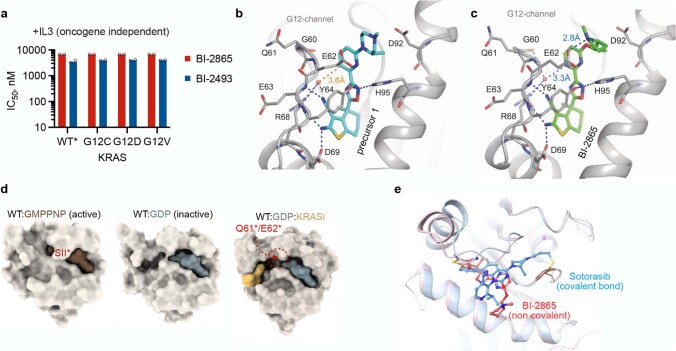
“Crystallographic studies revealed the existence of a cavity between the C4 site of the pyrimidine ring of BI-2865 and the 12 th amino acid of KRAS, predominantly comprising non-polar amino acids like glycine and alanine (Figure 3c, PDBID: 8AZY [74]).”
InfluentialSilverman, I., Gerber, M. A., Shaykevich, A., Stein, Y. F., Siegman, A., Goel, S., & Maitra, R. (2024) · Frontiers in Molecular Biosciences · doi:10.3389/fmolb.2024.1436976 · Cited by 7
“Efforts have also been made to produce pan-KRAS inhibitors to offer a broader range of therapeutic effectiveness (Corcoran, 2023; Kim et al., 2023).”
BackgroundA split intein and split luciferase-coupled system for detecting protein-protein interactions
Yao, Z., Kim, J., Geng, B., Chen, J., Wong, V., Lyakisheva, A., Snider, J., Dimlić, M. R., Raić, S., & Štagljar, I. (2024) · Molecular Systems Biology · doi:10.1038/s44320-024-00081-2 · Cited by 9
“( A ) Comparison of SIMPL2 and NanoBiT in evaluating the KRAS inhibitor BI2865.”
InfluentialUnlocking the promise of RAS inhibition in pancreatic cancer
Haldar, S. D., & Azad, N. S. (2024) · Nature Reviews Gastroenterology & Hepatology · doi:10.1038/s41575-024-00951-y · Cited by 7
“BI-2865, the first non-covalent pan-KRAS inhibitor, demonstrated preclinical efficacy against tumours harbouring common KRAS alterations with a first-in-human phase I trial currently evaluating a related structural analogue in patients with metastatic KRAS -amplified gastroesophageal cancer (NCT06056024) 3 .”
Ismail, M., Davies, G., Sproat, G., Monteverde, T., Tart, J., Acebrón-García-de-Eulate, M., Gohlke, A., Hancock, D., Adhikari, S., Stefanovic-Barrett, S., et al. (2024) · SLAS Discovery · doi:10.1016/j.slasd.2024.100197 · Cited by 6
Vasudevan, H. N., Arang, N., Nunez, M. S., Kennedy, P., Payne, E., Mohabeer, S., Chien, J., Wright, A., Sale, M. J., Krogan, N. J., et al. (2025) · Proceedings of the National Academy of Sciences · doi:10.1073/pnas.2506823122 · Cited by 6
“Pan - KRAS inhibition (BI - 2865) ( 16 ) demonstrated robust biochemical suppression of pERK in NF1 mutant NF9511b pNF cells at 30 min, with an effect on pAKT observed only at higher doses ( Fig.”
Zhou, C., Liu, Y., Liu, H., Lü, J., Zhang, B., Zhu, L., Wang, S., Lei, H.-M., & Han, B. (2025) · Cell Death and Disease · doi:10.1038/s41419-025-07992-4 · Cited by 6
“In addition to the increasing number of KRAS G12C inhibitors, G12D inhibitors [47, 48] and pan-KRAS inhibitors [49, 50] are also under development or entering clinical trials.”
Mechanisms and current advances in treating KRAS-mutated lung cancer
Chao, C. H.-Y., & Di, Y. P. (2025) · Chinese Medical Journal - Pulmonary and Critical Care Medicine · doi:10.1016/j.pccm.2025.08.001 · Cited by 10
Burge, R. A., Roux, Ö. L., Popow, O., Spadafora, V. K., Rajesh, C., Adair, S. J., Bialousow, L., Murphy, C., Saberi, S., Vaena, S. G., et al. (2026) · Cancer Research · doi:10.1158/0008-5472.can-25-2630 · Cited by 7
“Finally, unlike all other G12 mutations evaluated, KRAS G12R is insensitive to recently developed GDP-se-lective pan-KRAS inhibitors (16).”
Progress in Targeting KRAS Directly
Nissley, D. V., Stephen, A. G., Yi, M., & McCormick, F. P. (2024) · Methods in molecular biology · doi:10.1007/978-1-0716-3822-4_1 · Cited by 7
Cornilescu, G., Bindu, L. K., Sternicki, L. M., Chao, F.-A., Gillette, W., Fer, N. D., Colombus, J., Castillo, J., Bonilla, P. A., Van, Q. N., et al. (2024) · ACS Pharmacology & Translational Science · doi:10.1021/acsptsci.4c00075 · Cited by 6
Artschwager, R., Kalidindi, T. M., Johnson, D. S., Brennan, C., Samuels, Z. V., Lito, P., & Pillarsetty, N. (2024) · ACS Pharmacology & Translational Science · doi:10.1021/acsptsci.4c00425 · Cited by 6
Self-citationRecent advances in targeted degradation in the RAS pathway
Ge, Z., Fan, Z., He, W., Zhou, G., Zhou, Y., Zheng, M., & Zhang, S. (2025) · Future Medicinal Chemistry · doi:10.1080/17568919.2025.2476387 · Cited by 7
Li, R., Huang, X., Wang, R., Ren, Z., Zhu, Y. L., Lu, T., Sun, Y., & Hao, C. (2025) · European Journal of Medicinal Chemistry · doi:10.1016/j.ejmech.2025.117718 · Cited by 6
Abuelafia, A. M., Santofimia‐Castaño, P., Estarás, M., Grasso, D., Chuluyán, E., Lomberk, G. A., Urrutia, R. A., Dusetti, N., Fraunhoffer, N. A., & Iovanna, J. (2025) · Translational Oncology · doi:10.1016/j.tranon.2025.102421 · Cited by 7
“Remark-ably, treatment with the drug significantly inhibited the growth of KRAS mutant tumors in mice, without eliciting any obvious adverse effects on animals [42].”
Targeting oncogenic K-RAS mutants with small-molecule degrader XMU-MP-9 through NEDD4-1
Zeng, T., Jiang, T., Zhang, B., Zhang, T., Dai, W., Yin, X., Li, Y., Yu, Z., Wu, C., Wu, Y., et al. (2025) · Acta Pharmaceutica Sinica B · doi:10.1016/j.apsb.2025.07.031 · Cited by 8
Ji, Y., Yang, W., Ma, J., Du, H., Yang, X., Liu, Z., Liang, S., Liu, L., Hu, L., & Liang, X. M. (2025) · Electrochimica Acta · doi:10.1016/j.electacta.2025.147194 · Cited by 6
ELOVL6 activity attenuation induces mutant KRAS degradation
Hu, X., Atwal, R. S., Xiao, S., Ahmed, S. U., Wang, Z., Zhao, C., Wang, H., & Kelley, S. O. (2025) · Nature Chemical Biology · doi:10.1038/s41589-025-01998-x · Cited by 6
Pan‐ERBB Inhibitors Synergize With KRAS Inhibitors in Rectal Cancer
Buchloh, J., Spitzner, M., Zimmermann, H., Fang, X., Contreras, C. T., Schneider, C., de Oliveria, T., Küffer, S., Linnebacher, M., Rühlmann, F., et al. (2025) · United European Gastroenterology Journal · doi:10.1002/ueg2.70086 · Cited by 6
A non-covalent inhibitor with pan-KRAS potential
Kingwell, K. (2023) · Nature Reviews Drug Discovery · doi:10.1038/d41573-023-00115-8 · Cited by 6
McIntyre, S. M. H., Preston, W. A., Walch, H. S., Sharib, J. M., Kundra, R., Sigel, C., Lidsky, M. E., Allen, P. J., Morse, M. A., Chen, W., et al. (2024) · JCO Precision Oncology · doi:10.1200/po.23.00534 · Cited by 6
“31,32 33-35 Inter-estingly, although KRAS mutations have been described as truncal mutations in CCA, the concordance for alterations in this gene was 58%.”
Precision medicine in AML: overcoming resistance
Urrutia, S., & Takahashi, K. (2024) · International Journal of Hematology · doi:10.1007/s12185-024-03827-8 · Cited by 7
“C IDH1 R132H with ivosidenib and key residues necessary for drug binding [82].”
The Potential Treatment Options and Combination Strategies of KRAS-Mutated Lung Cancer
Zhao, X., Zheng, Y., Wang, Y., Zhang, M., Dong, Z., Liu, Y., & Sun, M. (2024) · OncoTargets and Therapy · doi:10.2147/ott.s484209 · Cited by 6
Establishment and genomic profiling of cholangiocarcinoma cells with functional characterization
Jaidee, R., Jusakul, A., Pocasap, P., Kukongviriyapan, V., Senggunprai, L., Prawan, A., Loilome, W., Titapun, A., Jareanrat, A., Thanasukarn, V., et al. (2025) · Scientific Reports · doi:10.1038/s41598-025-93192-1 · Cited by 6
“KRAS is one of the most common oncogenic genes in cancer, and many efforts have been made to develop covalent allele-specific inhibitors that trap KRAS G12C in its inactive conformation 36 and effectively in suppressing tumor growth in cancer patients 37,38 .”
Synthetic approaches and clinical application of KRAS inhibitors for cancer therapy
Jiang, M., Ma, S., Xuan, Y., & Chen, K. (2025) · European Journal of Medicinal Chemistry · doi:10.1016/j.ejmech.2025.117626 · Cited by 6
Unconventional strategy could be the future: From target to KRAS broad range treatment
Fancelli, S., Petroni, G., Pillozzi, S., & Antonuzzo, L. (2024) · Heliyon · doi:10.1016/j.heliyon.2024.e29739 · Cited by 6
“On the other hand, many strategies are being developed for other targets than G12C, such as G12V and G12D inhibitors [10,11], and, pan-target agents [12].”
Ovarian carcinosarcomas: p53 status defines two distinct patterns of oncogenesis and outcomes
Dhillon, G., Llauradó, M., Tessier‐Cloutier, B., Sy, K., Bassiouny, D., Han, G., Wong, N. K. Y., McRae, K., Kinloch, M. A., Pors, J., et al. (2024) · Frontiers in Oncology · doi:10.3389/fonc.2024.1408196 · Cited by 7
“Alternate therapies for these patients represent an urgent unmet need, and novel agents targeting KRAS or PIK3CA mutations should be evaluated (38).”
BackgroundPhotonanozyme–Kras–ribosome combination treatment of non-small cell lung cancer after COVID-19
Si, Q., Bai, M., Wang, X., Wang, T., & Qin, Y. (2024) · Frontiers in Immunology · doi:10.3389/fimmu.2024.1420463 · Cited by 5
“At the same time, the discovery of pan-KRAS inhibitors also provides another treatment for NSCLC (73) (Table 2).”
BackgroundAn overview of PROTACs targeting KRAS and SOS1 as antitumor agents
Han, Z., Wu, Q., Rao, H., Xu, T., & Zhou, C. (2025) · Bioorganic & Medicinal Chemistry Letters · doi:10.1016/j.bmcl.2025.130283 · Cited by 5
Research progress of direct and indirect KRAS-targeting protein degraders in KRAS-mutant cancers
Jiang, L., Chen, Y., Zhao, J., Zhou, L., Zhou, Q., Jiang, H., Lou, D., Huang, W., & Zhang, Y. (2025) · Bioorganic Chemistry · doi:10.1016/j.bioorg.2025.109161 · Cited by 8
Clinical and molecular landscape of paediatric cerebral and spinal cavernous malformations
Benichi, S., Balducci, E., Benzakoun, J., Ghannam, B., Attieh, C., Métais, A., Bourgeois, M., Guida, L., Kaltenbach, S., Tauziède‐Espariat, A., et al. (2025) · Brain Communications · doi:10.1093/braincomms/fcaf408 · Cited by 5
“57 Interestingly, KRAS is associated with distinct vascular malformations, suggesting that intra-axial vascular malformations have overlapping phenotypes, a hypothesis supported by overlapping transcriptomic profiles in single-cell analysis.”
Smolenschi, C., Sisoudiya, S. D., Hollebecque, A., Sivakumar, S., Montesion, M., Euzen, V., Boige, V., Boilève, A., Valéry, M., Sourouille, I., et al. (2025) · npj Precision Oncology · doi:10.1038/s41698-025-01181-4 · Cited by 5
“Additionally, new pan-KRAS inhibitors are currently in development, and aSCC should be included in clinical trials assessing these novel therapies 49 .”
John, F., Ruge, L., Verheyen, M., Scharpenseel, H., Michels, S. Y. F., Riedel, R. F., Fischer, R. N., Jakob, C. E. M., Siemanowski, J., Fassunke, J., et al. (2025) · Clinical Cancer Research · doi:10.1158/1078-0432.ccr-25-2581 · Cited by 6
Emerging and Established Targets in Colorectal Cancer: Translating Biology Into Therapeutics
Grochot, R. M., Bartolini, M., Algaze, S. D., Reimann, P., Winder, T., Lenz, H., & Fontana, E. (2026) · American Society of Clinical Oncology Educational Book · doi:10.1200/edbk-26-516576 · Cited by 5
Rosas, D., Barad, P., Wright, J., & Raez, L. E. (2026) · International Journal of Molecular Sciences · doi:10.3390/ijms27146455 · Cited by 5
“…polyclonal pattern, and their differential distribution across sotorasib-and adagrasib-treated patients has informed the rationale for sequential KRAS G12C inhibitor use and the development of next-generation inhibitors, including RMC-6291, that target the active GTP-bound conformation [36,46,48].”
Targeting active RAS with molecular glue
Su, W., & Hou, X. (2024) · Pharmaceutical Science Advances · doi:10.1016/j.pscia.2024.100047 · Cited by 5
“Among these efforts, the pan-KRAS inhibitor BI-2865 was devised to impede nucleotide exchange and prevent the activation of wild-type KRAS and a broad spectrum of KRAS mutants [5].”
HRAS Induces Ferroptosis through Upregulating HSPB1 in Hepatocellular Carcinoma
Chen, W., Zhang, X., Zhang, B., Chi, M., & Zheng, Q. (2024) · Combinatorial Chemistry & High Throughput Screening · doi:10.2174/0113862073306462240710174817 · Cited by 5
Jungholm, O., Trkulja, C. L., Moche, M., Srinivasa, S. P., Christakopoulou, M.-N., Davidson, M., Reymer, A., Jardemark, K. E., Fogaça, R. L., Ashok, A., et al. (2024) · Scientific Reports · doi:10.1038/s41598-024-70217-9 · Cited by 6
“Additionally, the data provided herein suggests that a monoclonal antibody, in a similar sense as other anti-KRAS mAbs and pAbs 29,35–37 , is taken up by KRAS-mutated cancer cells by macropinocytosis 24,46–51 .”
BackgroundMethodInfluentialAdorisio, R., Ciardiello, D., Rappa, A., Gervaso, L., Pelizzari, G., Marinucci, L., Fusco, N., Zampino, M. G., Fazio, N., Venetis, K., et al. (2024) · Journal of Molecular Diagnostics · doi:10.1016/j.jmoldx.2024.11.007 · Cited by 5
Aroldi, F., Élez, E., André, T., Perkins, G., Prenen, H., Popovici, V. C., Gallagher, P. F., Houlden, J., Collins, L., Roberts, C., et al. (2025) · BMC Cancer · doi:10.1186/s12885-025-14068-1 · Cited by 5
“BI-2865 BI-2865, RMC-6236 [50, 51]) and inhibitors for the RAS guanine nucleotide exchange factor SOS1 [52] are investigated at preclinical/first-in-human stages in pan-cancer models.”
Drugging Ras trafficking—are there new roads to travel?
Schaffner‐Reckinger, E., Gómez‐Mulas, A., & Abankwa, D. (2025) · npj Drug Discovery. · doi:10.1038/s44386-025-00012-7 · Cited by 6
RAS Mutation–Specific Responses to Paralog- and State-Selective RAS Inhibitors
Baars, B., Orive-Ramos, A., Emmett, M. J., Gaire, B., Desaunay, M., Kou, Z., Li, G., Adamopoulos, C., Aaronson, S. A., Wang, S., et al. (2025) · Molecular Cancer Research · doi:10.1158/1541-7786.mcr-25-0319 · Cited by 5
Clinical Advances and Challenges in Targeting KRAS Mutations in Non-Small Cell Lung Cancer
Dekker, S. E., & Deng, L. (2024) · Cancers · doi:10.3390/cancers16223885 · Cited by 7
“Thus, to fully drug KRAS mutations, strategies are urgently needed to expand to non-G12C [55].”
Engineered protein circuits for cancer therapyPreprint
Lu, A. C., Moeller, L., Moore, S., Ho, K., Tobin, V., Qiang, A., Zhang, E., Li, Z., Wang, M., Xia, S., et al. (2025) · bioRxiv (Cold Spring Harbor Laboratory) · doi:10.1101/2025.04.16.647665 · Cited by 8
“Pan-RAS inhibitors cause on-target, off-tumor toxicity in RAS-dependent tissues 95,96 .”
Molecular and functional profiling unravels targetable vulnerabilities in colorectal cancer
Vlachavas, E., Voutetakis, K., Kosmidou, V., Tsikalakis, S., Roditis, S., Pateas, K., Kim, R., Pagel, K. A., Wolf, S., Warsow, G., et al. (2025) · Molecular Oncology · doi:10.1002/1878-0261.13814 · Cited by 4
“However, also non-specific Pan-KRAS inhibitors are in development [84], which might be applied once having proven efficacious.”
Impact of Protein Conformational Diversity on Structure-Based Prediction of Druggability
Bekar-Cesaretli, A. A., Vats, S., Whitty, A., Kozakov, D., Joseph‐McCarthy, D., & Vajda, S. (2025) · Journal of Chemical Information and Modeling · doi:10.1021/acs.jcim.5c01576 · Cited by 4
Zeng, J., Li, L., Sun, C., Shen, S., Tan, Y., Chen, J., Xia, F., Deng, X., & Xu, X. (2025) · The Journal of Physical Chemistry B · doi:10.1021/acs.jpcb.5c01781 · Cited by 4
Functional Analysis of Rare RAS Variants of Unknown Significance
Park, S., Ikegami, M., Kitada, R., Takamochi, K., Suzuki, K., Mano, H., & Kohsaka, S. (2025) · Cancer Research Communications · doi:10.1158/2767-9764.crc-25-0188 · Cited by 4
“Recently, BI-2865, a noncovalent pan-KRAS inhibitor capable of engaging in a broader range of KRAS alleles, was developed (30).”
InfluentialClinicogenomic Characterization of Primary Sclerosing Cholangitis–Associated Biliary Tract Cancers
Wang, X., Haro-Silerio, J. I., Beaudry, F. E. G., Borgida, A., Aghababazadeh, F. A., Sahebi, N. B., Wang, M., Fox, D. P., Nuh, M., Hsiang, M., et al. (2025) · Clinical Cancer Research · doi:10.1158/1078-0432.ccr-25-1834 · Cited by 4
Design of conditional and tumor-activated PROTACs for selective degradation in lung cancer
Lin, L., Zheng, F., Wei, H., Wu, X., Yan, H., & Ding, Y. (2025) · European Journal of Medicinal Chemistry · doi:10.1016/j.ejmech.2025.118432 · Cited by 5
Ribosome biogenesis as a potential therapeutic target in KRAS mutant colorectal cancer
Tanaka, Y., Sakahara, M., Yamanaka, H., Natsume, Y., Kusama, D., Kumegawa, K., Yoshikawa, H., Abe, Y., Okabayashi, K., Matui, S., et al. (2025) · Nature Communications · doi:10.1038/s41467-025-67979-9 · Cited by 4
Covalent chemistry in targeted protein degradation
Tan, J., Liang, Y., Shao, S., & Shen, Y. (2026) · Advanced Drug Delivery Reviews · doi:10.1016/j.addr.2026.115777 · Cited by 5
Jia, A., Zhang, X., Zhou, J., Ma, Y., Wang, J., Gong, Y., Song, W., Hu, H., Yu, Y., Yang, H., et al. (2026) · Cell Metabolism · doi:10.1016/j.cmet.2026.01.001 · Cited by 5
Covalent modification of a glutamic acid inspired by HaloTag technology
Zhang, R., Liu, J., Gasper, R., Unger, A., Kaschani, F., Kaiser, M., Janning, P., & Waldmann, H. (2026) · Nature Communications · doi:10.1038/s41467-026-68999-9 · Cited by 5
Systematic and precise interventions for KRAS-mutant cancers
Liang, J., Wu, J., Zhang, Y., Wang, H., Zheng, Y., & He, Q. (2026) · Experimental Hematology and Oncology · doi:10.1186/s40164-026-00763-7 · Cited by 4
“Together with their dependence on the GDP-bound state, these limitations provide a rationale for the development of non-covalent G12D/V inhibitors, RAS(ON) ternary complexes and pan-KRAS inhibitors that expand allelic and conformational coverage [12, 17, 121, 122].”
Targeting cancer signaling pathways and their therapeutic strategies
Salem, M. M., & Mohamed, T. M. (2026) · Discover Oncology · doi:10.1007/s12672-026-04708-8 · Cited by 4
“BI-2865 is a new pan-KRAS inhibitor [134].”
Ligand trapping as a key mechanism governing drug residence time, binding affinity, and potency
Spassov, D. S. (2026) · Drug Discovery Today · doi:10.1016/j.drudis.2026.104694 · Cited by 4
Martín, A., García-Pérez, I. M., José, S. S., Rojo, P., Riego‐Mejías, C., Teodósio, C., Barbosa, B. M. G., Sánchez, C., Folch-I-Casanovas, I., Odena, M. A., et al. (2026) · Cancer Research · doi:10.1158/0008-5472.can-25-5172 · Cited by 4
“When compared to the panKRAS inhibitor BI-2493 (17), KRAS G12V degradation resulted in a more profound signaling inhibition, increased immune infiltration, and overall enhanced tumor regression (Supplementary Fig.”
InfluentialHallmarks and correlates of effective adoptive cell immunotherapy for cancer
Krishna, S., Robbins, P. F., Lowery, F. J., & Rosenberg, S. A. (2026) · Nature reviews. Immunology · doi:10.1038/s41577-026-01312-3 · Cited by 5
“Finally, the pharmacologic targeting of unique cancer driver mutations has accelerated in the past decade and is currently being explored in combination with immunotherapies 252 , leading to exciting new therapeutic strategies 253 .”
Dreikhausen, L., Klupsch, A., Wiest, I., Xiao, Q., Schulte, N., Betge, J., Boch, T., Brochhausen, C., Gaiser, T., Hofheinz, R., et al. (2024) · BMC Cancer · doi:10.1186/s12885-024-12261-2 · Cited by 4
“However, as other genotype-specific or pan-KRAS inhibitors are currently undergoing (pre-)clinical testing [28], the importance of KRAS mutations as an actionable target will steadily increase.”
BackgroundCombined HRAS and NRAS ablation induces a RASopathy phenotype in mice
Fuentes‐Mateos, R., García‐Navas, R., Fernández‐Infante, C., Hernández-Cano, L., Calzada, N., Juan, A. O.-S., Guerrero, C., Santos, E., & Fernández‐Medarde, A. (2024) · Cell Communication and Signaling · doi:10.1186/s12964-024-01717-4 · Cited by 4
“Future studies using some of the specific inhibitors of KRAS isoforms recently developed [61, 62], as well as additional experimental assays and sequencing analyses of DKO biological samples at the level of individual tissues or cell types may be instrumental to confirm this hypothesis.”
BackgroundThe Target Therapy Hyperbole: “KRAS (p.G12C)”—The Simplification of a Complex Biological Problem
Chetta, M., Basile, A., Tarsitano, M., Rivieccio, M., Oro, M., Capitanio, N., Bukvić, N., Priolo, M., & Rosati, A. (2024) · Cancers · doi:10.3390/cancers16132389 · Cited by 4
Nadee, P., Prompat, N., Yamabhai, M., Sangkhathat, S., Benjakul, S., Tipmanee, V., & Saetang, J. (2024) · Advanced Theory and Simulations · doi:10.1002/adts.202400489 · Cited by 4
Gandini, A., Gallois, C., Blons, H., Mulot, C., Agueeff, N., Lepage, C., Guimbaud, R., Mineur, L., Desrame, J., Chibaudel, B., et al. (2024) · ESMO Gastrointestinal Oncology · doi:10.1016/j.esmogo.2024.100106 · Cited by 4
“28,29 It is interesting to notice that KRAS G12C mutation was more prevalent in EOCC (14% versus 9% in pMMR patients), as previously reported in a retrospective cohort of metastatic CRC. 30 ERBB2 was three times more often mutated in EOCC than LOCC, and, since evidences on its targetable nature are…”
The RAS Signaling Network and Cancer
Hibshman, P. S., & Der, C. J. (2024) · Springer eBooks · doi:10.1007/978-3-031-62945-7_17 · Cited by 4
Distal Covalent Targeting Suppresses Signaling of Oncogenic K-Ras(G13C) in Cancer Cells
Zheng, Q., Shen, T., Pampel, J., & Shokat, K. M. (2025) · ACS Chemical Biology · doi:10.1021/acschembio.5c00249 · Cited by 4
Jung, O., Soto, A., Wolfe, A. L., & Mahajan, S. S. (2025) · PLoS ONE · doi:10.1371/journal.pone.0329946 · Cited by 5
“KRAS inhibition leads to decreased binding to its effector RAF1, typically leading to decreased p-ERK and cell proliferation [13].”
Raji, S., Zaribafzadeh, H., Jones, T., Kanu, E. N., Tong, K., Fletcher, A. A., Howell, T. C., McCall, S. J., Marks, J., Rogers, B., et al. (2026) · JCO Precision Oncology · doi:10.1200/po-25-00115 · Cited by 4
Ghosh, S., Fan, F., Powell, R. T., Park, Y. S., STEPHAN, C. C., Kopetz, S., Ellis, L. M., & Bhattacharya, R. (2024) · Therapeutic Advances in Medical Oncology · doi:10.1177/17588359241303302 · Cited by 4
“5,6 Inhibitors targeting other specific mutations of KRAS including agents targeting G12D 7 and G12S 8 and pan-KRAS inhibitors targeting both wild-type and mutated KRAS 9,10 are under development.”
Gene mutation, clinical characteristics and pathology in resectable lung adenocarcinoma
Zou, J. P., Han, W., Hu, Y. T., Zeng, C., Li, J., Lei, W., Cao, J., Fei, Q., Shao, M., Yi, J., et al. (2025) · World Journal of Surgical Oncology · doi:10.1186/s12957-025-03680-x · Cited by 4
Teuter, M., Hu, Y., Roß, T. L., Lolatte, K., Ott, M., Bengel, F. M., Balakrishnan, A., & Bankstahl, J. P. (2025) · Nuclear Medicine and Biology · doi:10.1016/j.nucmedbio.2025.109000 · Cited by 4
In the literature: September 2023
Lamarca, Á., Moreno, V., Gambardella, V., & Cervantes, A. M. R. (2023) · ESMO Open · doi:10.1016/j.esmoop.2023.102032 · Cited by 4
Metadata
- Authors
- Kim, D., Herdeis, L., Rudolph, D., Zhao, Y., Böttcher, J., Vides, A., Ayala-Santos, C. I., Pourfarjam, Y., Cuevas-Navarro, A., Xue, J. Y., Mantoulidis, A., Bröker, J., Wunberg, T., Schaaf, O., Popow, J., Wolkerstorfer, B., Kropatsch, K. G., Qu, R., de Stanchina, E., Sang, B., Li, C., McConnell, D. B., Kraut, N., & Lito, P.
- Affiliations
- Boehringer Ingelheim (Austria) (AT)
- Memorial Sloan Kettering Cancer Center (US)
- Corresponding author
- Lito, Piro
- ORCID
- Venue
- Nature
- Published
- 2023-05-31
- Volume
- 619
- Issue
- 7968
- Pages
- 160-166
- ISSN
- 0028-0836 (ISSN-L)
- 1476-4687
- PMC
- PMC10322706
- OpenAlex
- W4378901135
- Semantic Scholar
- adbdedfc9643df9a77eda1538b6370ab04be09d1
- Cited by
- 534
- References
- 42
- Citations by year
- 2026: 129 · 2025: 190 · 2024: 176 · 2023: 39
- FWCI
- 47.67
- Type
- journal article
- Language
- en
- Open access
- hybrid
- doi.org
- Licence
- cc-by
- creativecommons.org/licenses/by/4.0 (tdm)
- creativecommons.org/licenses/by/4.0 (vor)
- Locations
- Nature (publishedVersion, cc-by)
- PubMed Central (publishedVersion, cc-by)
- PubMed (publishedVersion)
- RePEc: Research Papers in Economics (submittedVersion)
- DORA PSI (Paul Scherrer Institute) (submittedVersion, cc-by)
- Funders
- Pew Charitable Trusts
- Damon Runyon Cancer Research Foundation (P30 CA008748)
- Memorial Sloan-Kettering Cancer Center (CA008748, P30 CA008748)
- Pershing Square Sohn Cancer Research Alliance (P30 CA008748)
- National Institutes of Health (CA008748)
- National Cancer Institute (R01CA230267, CA008748, P30CA008748, R01CA279264, R01CA230745)
- Topics
- Life Sciences › Biochemistry, Genetics and Molecular Biology › Molecular Biology › Protein Kinase Regulation and GTPase Signaling
- Life Sciences › Biochemistry, Genetics and Molecular Biology › Molecular Biology › Protein Tyrosine Phosphatases
- Life Sciences › Biochemistry, Genetics and Molecular Biology › Molecular Biology › Melanoma and MAPK Pathways
- Keywords
- KRAS, pan-KRAS inhibitors, non-covalent inhibitors, KRAS mutation, oncogenic signaling, tumor growth inhibition, allosteric inhibition, KRAS-driven cancers
- MeSH terms
- Animals, Body Weight, Cell Division, Enzyme Activation, Mutation, Neoplasms, Nucleotides, Substrate Specificity, Signal Transduction, Proto-Oncogene Proteins p21(ras), Monomeric GTP-Binding Proteins, Mice
About these checks
Registry, retraction, Cites and statistics results are computed, not judged, with one exception: a printed reference that no index lists is read once by a model before it counts as a citation error. Claims are extracted by a model and kept only when their quote appears verbatim in the text; each cited source is then checked, with a model’s help, for whether it says what the claim relies on. Those verdicts can be wrong — read the claim’s quote and the cited source before relying on one.
Statistics and arithmetic are recomputed, not judged.
Confidence bands are shown only for fields calibrated on our annotated test set. None is calibrated yet, so no band is shown.
What counts as a claim ›How we measure confidence ›How we check this ›
Are you an author, or do you see a problem with this page? Request a review
Data sources
Bibliographic data: Semantic Scholar, OpenAlex, Crossref.
Contains information from the Semantic Scholar Academic Graph Datasets, made available under the ODC Attribution License (ODC-BY 1.0).
Semantic Scholar’s data is described in: Kinney, R., et al. (2023). The Semantic Scholar Open Data Platform. arXiv:2301.10140.
