

Pan-KRAS inhibitor disables oncogenic signalling and tumour growth
Open accessThe DOI matches its Crossref record; 41 of the 42 references it cites were found in a registry or an index.
Abstract
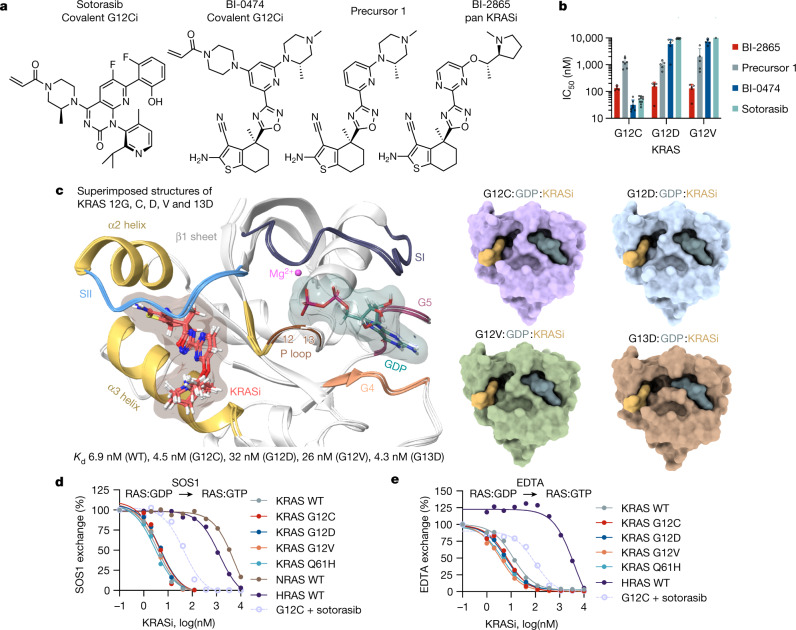
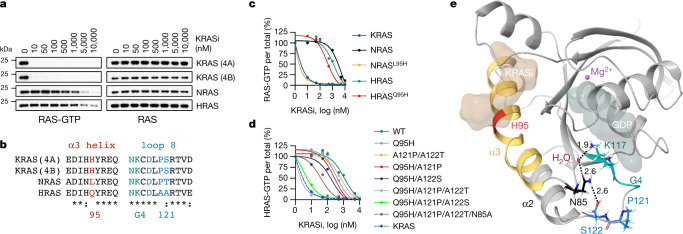
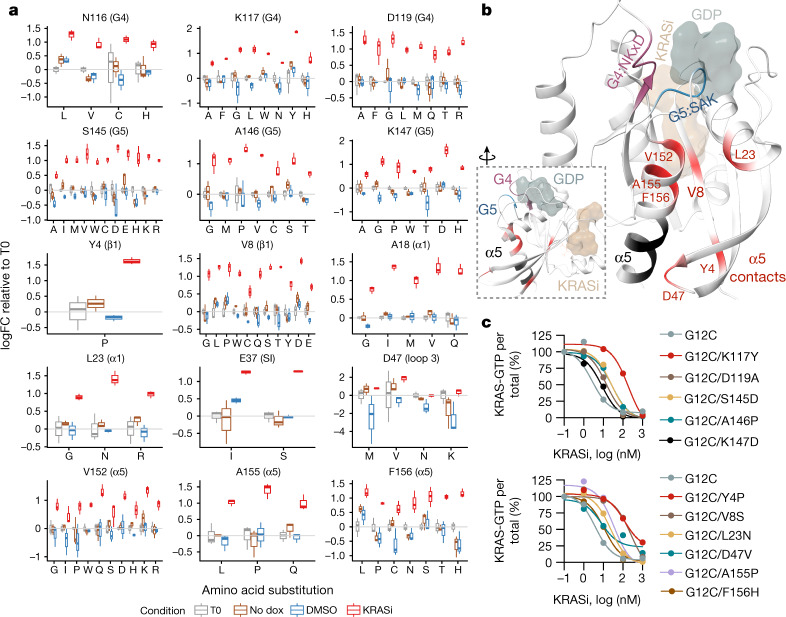
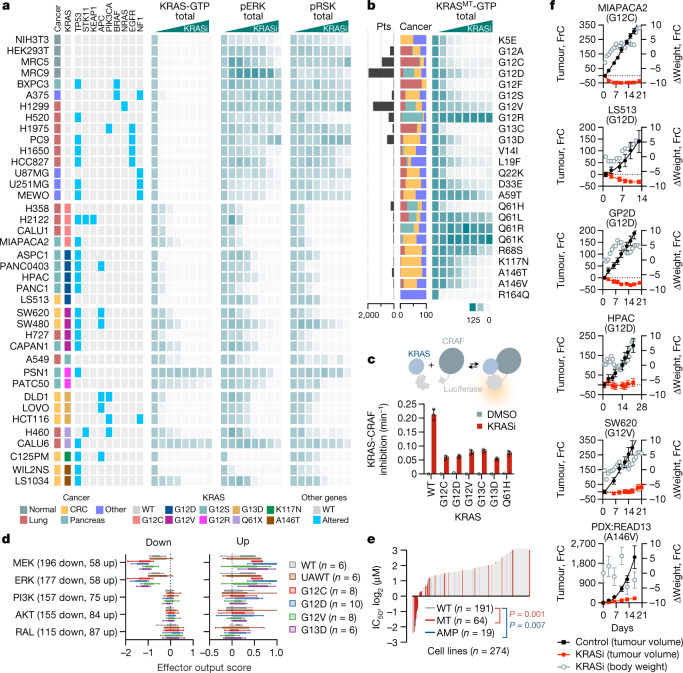
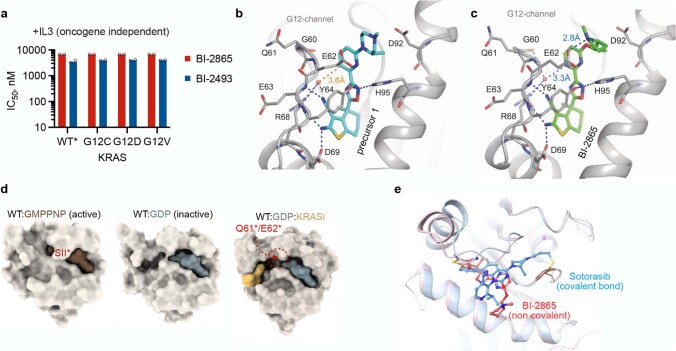
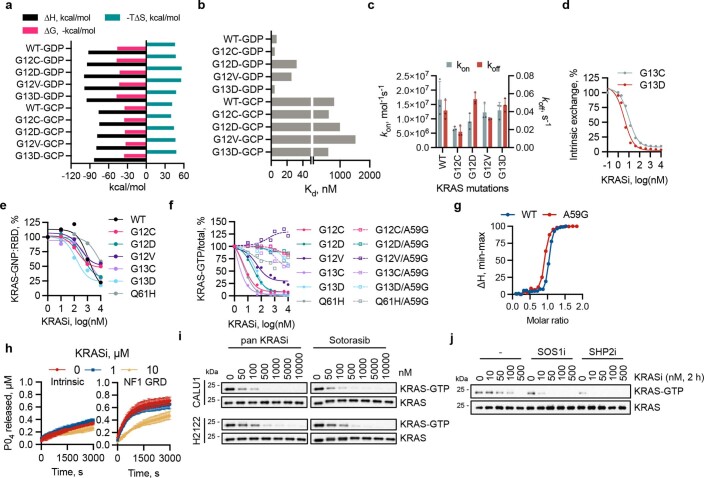
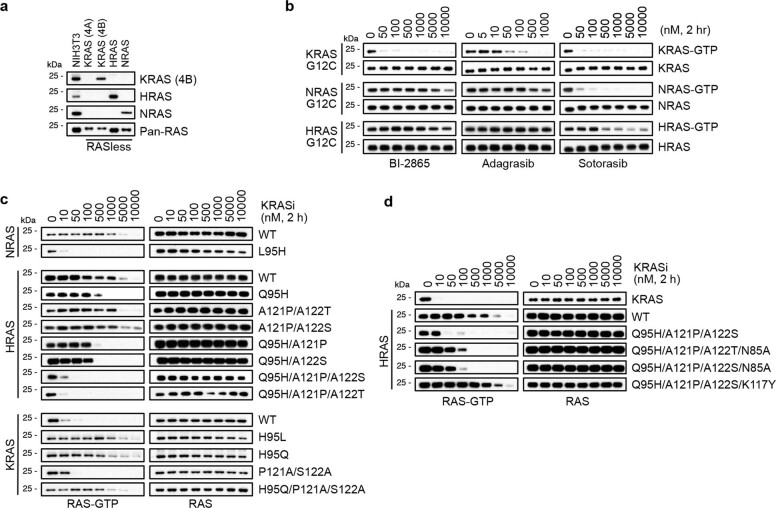
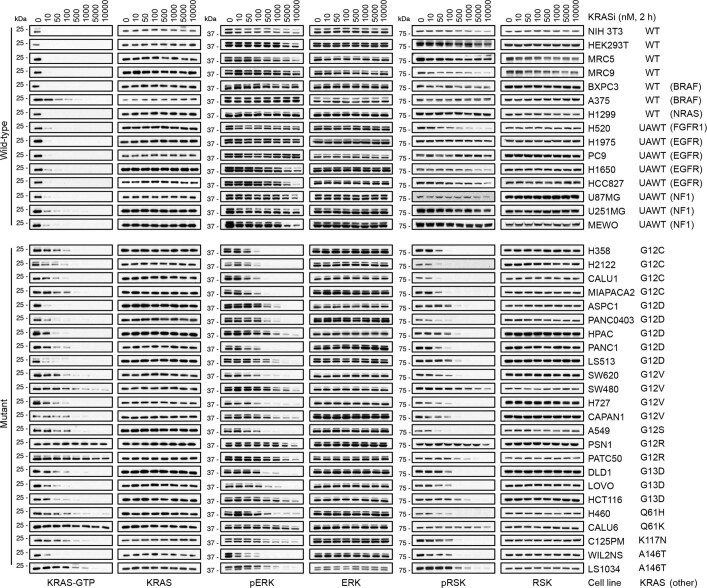
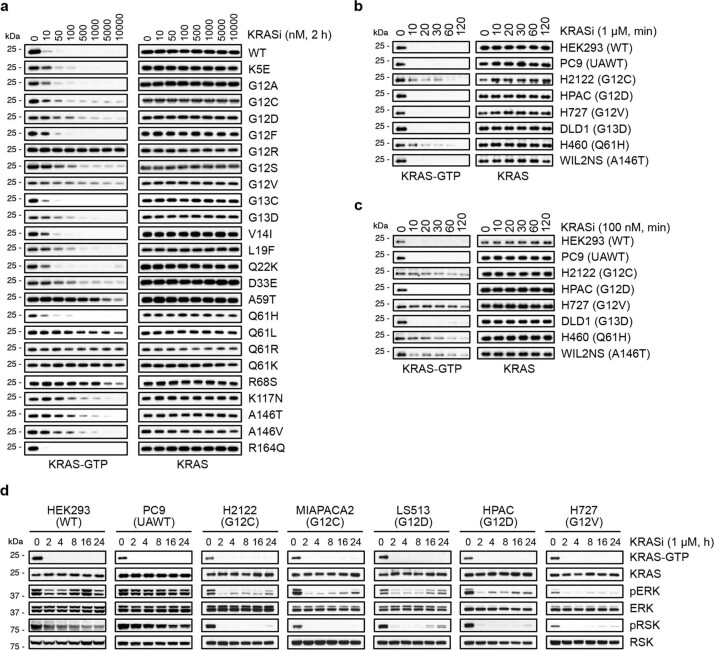
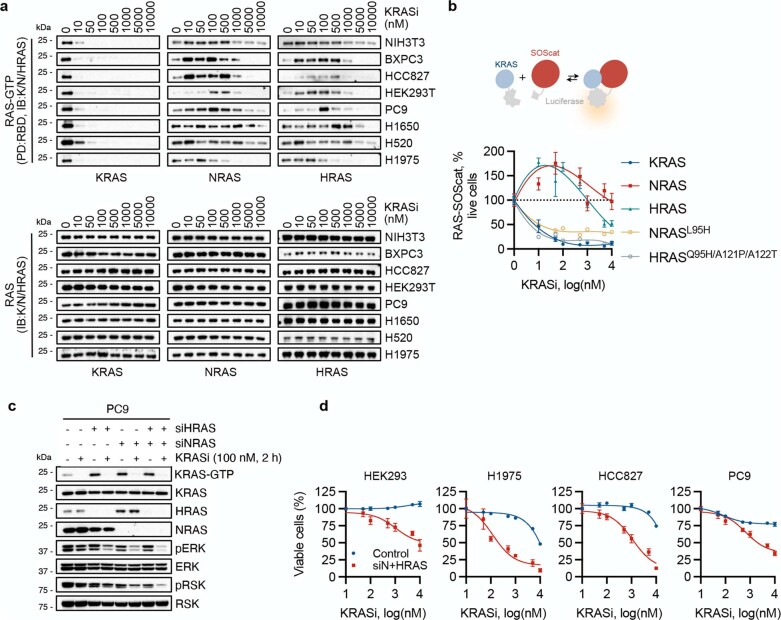
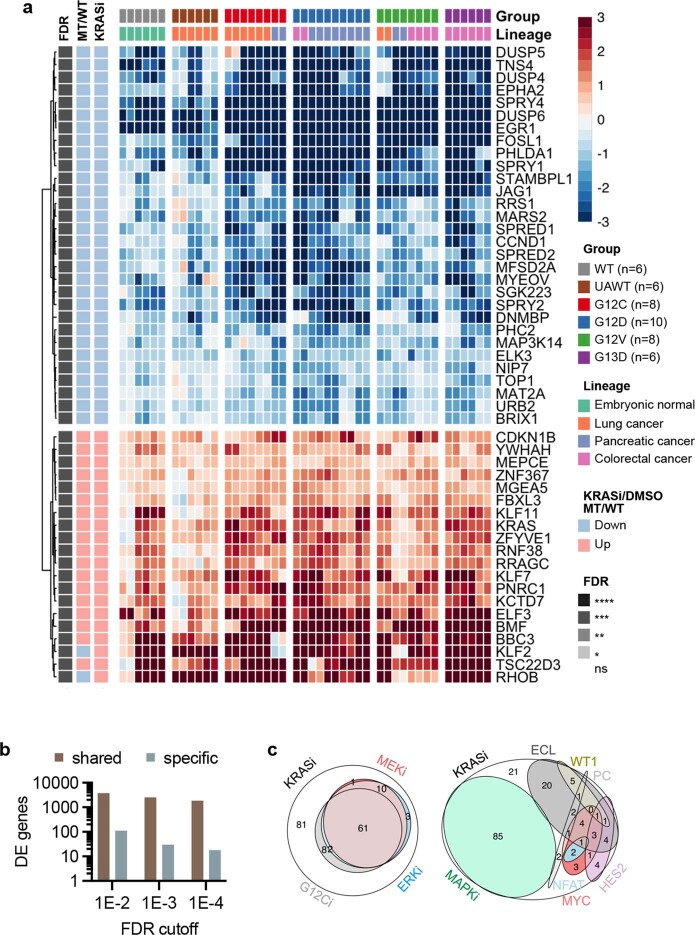
KRAS is one of the most commonly mutated proteins in cancer, and efforts to directly inhibit its function have been continuing for decades. The most successful of these has been the development of covalent allele-specific inhibitors that trap KRAS G12C in its inactive conformation and suppress tumour growth in patients 1–7 . Whether inactive-state selective inhibition can be used to therapeutically target non-G12C KRAS mutants remains under investigation. Here we report the discovery and characterization of a non-covalent inhibitor that binds preferentially and with high affinity to the inactive state of KRAS while sparing NRAS and HRAS. Although limited to only a few amino acids, the evolutionary divergence in the GTPase domain of RAS isoforms was sufficient to impart orthosteric and allosteric constraints for KRAS selectivity. The inhibitor blocked nucleotide exchange to prevent the activation of wild-type KRAS and a broad range of KRAS mutants, including G12A/C/D/F/V/S, G13C/D, V14I, L19F, Q22K, D33E, Q61H, K117N and A146V/T. Inhibition of downstream signalling and proliferation was restricted to cancer cells harbouring mutant KRAS, and drug treatment suppressed KRAS mutant tumour growth in mice, without having a detrimental effect on animal weight. Our study suggests that most KRAS oncoproteins cycle between an active state and an inactive state in cancer cells and are dependent on nucleotide exchange for activation. Pan-KRAS inhibitors, such as the one described here, have broad therapeutic implications and merit clinical investigation in patients with KRAS-driven cancers.
Overview
The claims and statistics of this paper haven’t been checked yet.
Free: it reads the open-access text and checks the first 5 claims that cite a source we can check. Create a free account to check every claim.
Integrity signals
Registry
Cites
Statistics
Figures
Verification
Claims the paper makes
The claims and statistics of this paper haven’t been checked yet.
Free: it reads the open-access text and checks the first 5 claims that cite a source we can check. Create a free account to check every claim.
Claims other papers make about this one
Each is checked against this paper’s own text: does it say what the citing paper says it does?
The source backs part of the claim, not all of it — or backs it for a different population, condition or comparison.
In the citing paper
“Murine xenograft experiments demonstrated efficacy against grafted cell lines and a PDX driven by KRAS G12C, G12D, G12V, and A146V without causing significant body weight loss.”
From KRAS: Biology, Inhibition, and Mechanisms of Inhibitor Resistance (2024) · cites this paper as [62]
Experimental — accuracy not yet measuredThe source backs part of the claim, not all of it — or backs it for a different population, condition or comparison.
In the citing paper
“This inhibitor functions by blocking the GDP/GTP nucleotide exchange of wildtype KRAS and other KRAS mutants, including G12A, G12C, G12D, G12F, G12V, G12S, G13C, G13D, V14I, L19F, Q22K, D33E, Q61H, K117N, A146V, and A146T.”
From KRAS: Biology, Inhibition, and Mechanisms of Inhibitor Resistance (2024) · cites this paper as [62]
Experimental — accuracy not yet measuredThe source backs part of the claim, not all of it — or backs it for a different population, condition or comparison.
In the citing paper
“BI-2865 inhibits oncogenic signaling through the RAF cascade, regardless of the specific KRAS driver mutation [62].”
From KRAS: Biology, Inhibition, and Mechanisms of Inhibitor Resistance (2024) · cites this paper as [62]
Experimental — accuracy not yet measuredThe source backs part of the claim, not all of it — or backs it for a different population, condition or comparison.
In the citing paper
“BI-2865 effectively blocked the interaction between KRAS and RAF in most cell lines, though it displayed weaker activity against cell lines harboring the KRAS G12R mutation.”
From KRAS: Biology, Inhibition, and Mechanisms of Inhibitor Resistance (2024) · cites this paper as [62]
Experimental — accuracy not yet measuredThe source backs part of the claim, not all of it — or backs it for a different population, condition or comparison.
In the citing paper
“Point mutations in the KRAS gene included G12D/F/R/V/W, which prevent covalent interactions with mutant cysteine, as well as V8L, G13D, V14I, Q61H, H95D/Q/R, Y96C, and Y96D [62,97,102,103].”
From KRAS: Biology, Inhibition, and Mechanisms of Inhibitor Resistance (2024) · cites this paper as [62]
Experimental — accuracy not yet measured
12 more claims about this paper
Create a free account to see every claim other papers make about this one.
Self-check
Percentages, sums and reported differences re-computed from the paper’s own numbers.
The self-check needs the paper’s full text.
Citations
Cites
Features and development of Coot
Emsley, P., Lohkamp, B., Scott, W. G., & Cowtan, K. (2010) · Acta Crystallographica Section D Biological Crystallography · doi:10.1107/s0907444910007493 · Cited by 29,915
The CCP4 suite: programs for protein crystallography
Collaborative Computational Project, N. 4. (1994) · Acta Crystallographica Section D Biological Crystallography · doi:10.1107/s0907444994003112 · Cited by 17,270
K-Ras(G12C) inhibitors allosterically control GTP affinity and effector interactions
Ostrem, J. M., Peters, U., Sos, M. L., Wells, J. A., & Shokat, K. M. (2013) · Nature · doi:10.1038/nature12796 · Cited by 2,557
The Clinical KRAS(G12C) Inhibitor AMG 510 Drives Anti-Tumour Immunity
Canon, J., Rex, K., Saiki, A. Y., Mohr, C., Cooke, K., Bagal, D., Gaida, K., Holt, T., Knutson, C. G., Koppada, N., et al. (2019) · Nature · doi:10.1038/s41586-019-1694-1 · Cited by 2,277
Data processing and analysis with the autoPROC toolbox
Vonrhein, C., Flensburg, C., Keller, P., Sharff, A., Smart, O., Paciorek, W., Womack, T., & Bricogne, G. (2011) · Acta Crystallographica Section D Biological Crystallography · doi:10.1107/s0907444911007773 · Cited by 2,029
RAS Proteins and Their Regulators in Human Disease
Simanshu, D. K., Nissley, D. V., & McCormick, F. (2017) · Cell · doi:10.1016/j.cell.2017.06.009 · Cited by 1,943
RAS oncogenes: the first 30 years
Malumbres, M., & Barbacid, M. (2003) · Nature Reviews Cancer · doi:10.1038/nrc1097 · Cited by 1,902
Sotorasib for Lung Cancers with KRAS p.G12C Mutation
Skoulidis, F., Li, B. T., Dy, G. K., Price, T. J., Falchook, G. S., Wolf, J., Italiano, A., Schuler, M., Borghaei, H., Barlesi, F., et al. (2021) · New England Journal of Medicine · doi:10.1056/nejmoa2103695 · Cited by 1,849
RAS oncogenes: weaving a tumorigenic web
Pylayeva-Gupta, Y., Grabocka, E., & Bar-Sagi, D. (2011) · Nature Reviews Cancer · doi:10.1038/nrc3106 · Cited by 1,789
KRAS G12C Inhibition with Sotorasib in Advanced Solid Tumors
Hong, D. S., Fakih, M. G., Strickler, J. H., Desai, J., Durm, G. A., Shapiro, G. I., Falchook, G. S., Price, T. J., Sacher, A., Denlinger, C. S., et al. (2020) · New England Journal of Medicine · doi:10.1056/nejmoa1917239 · Cited by 1,733
Self-citation
Cited by
Items 501–567 of 567
Liao, Y., Li, X., Liu, M., Fernandes, V. C., Duckett, D., Haura, E. B., Monastyrskyi, A., & Rix, U. (2026) · Cancer Research Communications · doi:10.1158/2767-9764.crc-25-0698
Zhang, L., Han, K., Wang, X., Yu, X., Zhang, Y., He, S., Han, Z., Liu, Y., Su, J., Zhou, J., et al. (2026) · Angewandte Chemie · doi:10.1002/ange.8271527
Zhang, L., Han, K., Wang, X., Yu, X., Zhang, Y., He, S., Han, Z., Liu, Y., Su, J., Zhou, J., et al. (2026) · Angewandte Chemie International Edition · doi:10.1002/anie.8271527
The NanoBridge system for targeted post-translational modification of challenging proteinsPreprint
Shen, F., Merino-Chavez, O. D., Dai, S., Alfonso, S. A., & Dassama, L. M. K. (2026) · bioRxiv (Cold Spring Harbor Laboratory) · doi:10.64898/2026.06.08.730974
Somatic Alterations in TP53 and KRAS and Their Functional Impact in Epithelial Ovarian Cancer
Meyer, L., Schmid, A., & Braun, S. (2025) · Asian journal of Current Research in Clinical Cancer · doi:10.51847/wmtwatdftw
Targeting conventionally intractable cancer-driving proteins: What has been achieved recently?
Xie, Q., Xu, W., Wang, Y., & Ma, X. (2026) · European Journal of Medicinal Chemistry · doi:10.1016/j.ejmech.2026.119102
Valencia-Sama, I., Kee, L., Weiss, A., Hayes, M. N., Ohh, M., & Irwin, M. S. (2026) · bioRxiv (Cold Spring Harbor Laboratory) · doi:10.64898/2026.06.24.734371
Addis, A. G., Jakubec, J. L., Sanchez, J., Pagba, C. V., Sianoya, A. C., & Gorfe, A. A. (2026) · Journal of Chemical Information and Modeling · doi:10.1021/acs.jcim.6c01372
Tumor-targeted pan-RAS inhibition as a novel biologic therapy for diffuse midline glioma
Sbergio, S.-G., Liang, H., Chen, L., Canty, L., Carette, S., Pajovic, S., Sabha, N. S., Vadivel, A. K. A., Beilhartz, G. L., Melnyk, R. A., et al. (2026) · Neuro-Oncology · doi:10.1093/neuonc/noag148
Therapeutic inhibition of RAS in non-small cell lung cancer
Nichols, K. B., & Herzberg, B. O. (2026) · Frontiers in Oncology · doi:10.3389/fonc.2026.1817943
“Earlier generations of similar molecules, such as BI-2865 or BI-3706674, lacked binding to the on state of the protein, but shared the pan-KRAS inhibition and strong preclinical results (133, 134).”
Hsiao, Y.-C., Bai, L., Chen, Y.-J., Wu, Y., Wang, W., Chuang, Y.-L., Chang, H., Zeshan, M., Wu, H., Yang, H.-J., et al. (2026) · medRxiv · doi:10.64898/2026.07.01.26356985
Luo, M., Shen, F., Xu, W., Corpe, C. P., & Wang, J. (2026) · Cancer Biology & Therapy · doi:10.1080/15384047.2026.2699508
Wurz, R. P., Allen, J. R., Allen, J. G., Amegadzie, A. K., Chen, N., Eshon, J., Li, K., Li, X., Li, Y., Manoni, F., et al. (2026) · Journal of Medicinal Chemistry · doi:10.1021/acs.jmedchem.6c01325
KRAS-mutated Non–Small Cell Lung Cancer: Drugging the Undruggable
Saadany, T. E., Aeschlimann, N., & Sacher, A. (2026) · The Cancer Journal · doi:10.1097/ppo.0000000000000842
Advances in Immunological Combination Therapy for Colorectal Cancer
Wu, J., Wen, R., Zhang, T., Cao, F., Zhu, X., Hao, L., Zhang, W., & Yu, G. (2026) · iMetaMed · doi:10.1002/imm3.70053
INVESTIGATING MONO-DRIVER VERSUS MULTI-DRIVER ONCOGENESIS VIA ALTERATIONS TO CELL SIGNALING PATHWAYS
Chapdelaine, A. G. (2025) · Digital Commons - URI (University of Rhode Island) · doi:10.23860/diss-4446
Sun, Y., Song, M., Ding, W., Liu, Q., Lu, W., Luo, B., Chen, P., Yang, J., Hu, Y., Wen, S., et al. (2026) · Cancer Letters · doi:10.1016/j.canlet.2026.218773
Daraxonrasib and Beyond: Pan‐ RAS Inhibition, Resistance, and Next‐Generation Strategies
Honda, R. P. (2026) · Cancer Science · doi:10.1111/cas.70497
Lalumière, M.-P. (2025) · Knowledge UdeS (Institutional Deposit of the University of Sherbrooke)
Jin, S., Zhang, Z., Liang, F., Yang, Y., Lü, A., & Liang, C. (2026) · Biomarker Research · doi:10.1186/s40364-026-00981-5
“GDP (OFF)-state pan-KRAS inhibitors, represented by BI-2865 and BI-2493, bind preferentially to inactive KRAS and inhibit multiple KRAS mutant alleles while sparing NRAS and HRAS [215, 216].”
Callegarin, M., Angerilli, V., Gasparello, J., Bergamo, F., Cuestas, R. H. G., Parente, P., Lonardi, S., & Fassan, M. (2026) · Cancers · doi:10.3390/cancers18162602
“In addition, Pan-KRAS inhibitors are currently under investigation [51].”
Kim, D., Lee, J. H., & Kim, D.-S. (2026) · Nature Chemical Biology · doi:10.1038/s41589-026-02283-1
Self-citationLi, M., Li, W., Fu, W.-L., He, Y.-C., Tang, G.-X., Tan, J., Huang, Z., & Chen, S.-B. (2026) · Journal of Medicinal Chemistry · doi:10.1021/acs.jmedchem.6c01557
Ashrafizadeh, M., Nabavi, N., & Xu, Y. (2026) · Cancer Biome and Targeted Therapy · doi:10.66505/cbtt.v1i3.36
Arioka, M., & Takahashi‐Yanaga, F. (2026) · Biochemical Pharmacology · doi:10.1016/j.bcp.2026.118380
Chen, K., Qi, Z., Ramos, O. L., Li, H., Ma, M., Gannarapu, M. R., Bi, F., Li, A., Li, H., & Xiong, R. (2026) · bioRxiv (Cold Spring Harbor Laboratory) · doi:10.64898/2026.08.24.746785
Mariano, M. P., Sgarilli, E., Mijnlieff, D., Visuvasam, B., Blesio, A., Digiacomo, G., Cavazzoni, A., Ferracin, M., & Giovannetti, E. (2026) · Cancer Drug Resistance · doi:10.20517/cdr.2026.52 · Cited by 1
Kage, M., Kawada, H., Takano, K., Matsuo, A., Murata, Y., Hashimoto, S., Tamiya, M., Kotake, T., Kuramoto, S., Yamano, T., et al. (2026) · Journal of the American Chemical Society · doi:10.1021/jacs.6c14212
Zhang, H., Zhang, L., & Liu, C. (2026) · Current Molecular Pharmacology · doi:10.1016/j.cmp.2026.09.002
A High-Throughput Assay to Identify Specific Nascent Chain InhibitorsPreprint
Fischer, P. D., & Hiller, S. (2026) · bioRxiv (Cold Spring Harbor Laboratory) · doi:10.64898/2026.09.03.749102
“Although progress is being made towards identifying specific non-covalent KRAS inhibitors [25] and pan-KRAS inhibitors [26], there is still an urgent need to identify small molecules targeting this oncogenic protein.”
Grzes, M., Jaiswar, A., Kaźmierczak, W., Olesiński, T., Nowak-Niezgoda, M., & Walerych, D. (2026) · bioRxiv (Cold Spring Harbor Laboratory) · doi:10.64898/2026.09.04.749381
Fuerst, T. R., Goldstein, M., Chu, B., Carillo, K. J., Orban, J. P., & Toth, E. (2026) · Research Square · doi:10.21203/rs.3.rs-10438702/v1
“…or as a research tool, is an important goal that has been sought via a variety of approaches that include small molecule inhibitors 8, 15–19, 21, 22, 29–31, 34, 35, 41 , PROteolysis TArgeting Chimeras (PROTACs) that stimulate RAS degradation 28 , monobodies that inhibit RAS signaling 40 , and…”
A Unified 3D Generative Model for Synthesizable Structure-Based Drug DesignPreprint
Igashov, I., Schneuing, A., Dobbelstein, A. W., Morozova, I., Neeser, R. M., Zielinski, K., Abriata, L. A., Petruzzella, A. S., Iosub, D. R. P., Gampp, O., et al. (2026) · bioRxiv (Cold Spring Harbor Laboratory) · doi:10.64898/2026.09.15.751537
Porse, A. (2026) · In Silico Research in Biomedicine · doi:10.1016/j.insi.2026.100611
Cancer‐associated mutations in endometriosis reframe a benign disease through molecular oncology
Mujacic, C., Vitale, M. C., Siino, R., Giovanni, E. D., Bannera, C. F., Marco, E. D., Gottardo, A., Russo, T. D. B., Barraco, N., Perez, A., et al. (2026) · Molecular Oncology · doi:10.1002/1878-0261.70295
“Other pan-KRAS therapies are currently being studied and can inactivate KRAS mutated cells by blocking the nucleotide exchange of its activation, independent of the mutation, both in vitro and in vivo models [33].”
Debien, V., Cremieux, A. G., Grand, M. L., Carbone, D., Garajová, I., Pecoraro, C., Pasquier, E., Peters, G. J., Giovannetti, E., Centanni, M., et al. (2026) · ESMO Open · doi:10.1016/j.esmoop.2026.108576
“37 Recently, the multiselective active-state RAS (GTP-bound RAS) [RAS(ON)] inhibitor, daraxonrasib, showed efficacy both as a first-line treatment (in combination with gemcitabine — nab-paclitaxel) and as a single agent in previously treated metastatic pancreatic ductal adenocarcinoma, with a…”
Zeng, S., Zhao, Y., Liu, Y., shen, Y., Zhu, Z., Chen, B., Li, X., Zhang, L., Zhang, J., Zhu, Y., et al. (2026) · European Journal of Medicinal Chemistry · doi:10.1016/j.ejmech.2026.119362
Self-citationLou, J., & Zhang, D. (2026) · Experimental Hematology and Oncology · doi:10.1186/s40164-026-00833-w · Cited by 2
“This consideration is central to positioning daraxonrasib among emerging RAS-targeted strategies and supports the focus of this review on the active-state-selective modality [1, 3, 14, 36].”
Pathway-wide base editing charts chemical-genetic interactions in MAPK signalingPreprint
Woods, J., Hu, C. X. Y., Jang, D. M., Freedman, C., Canarelli, S., Kwok, H. S., Iram, I., Eck, M. J., & Liau, B. B. (2026) · bioRxiv (Cold Spring Harbor Laboratory) · doi:10.64898/2026.09.25.753639
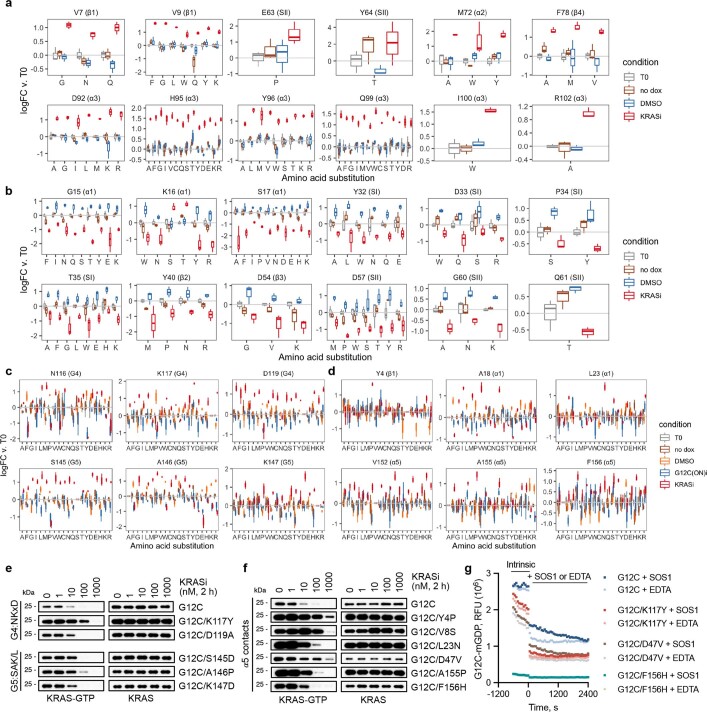
“15,22,39,40 Mutations at Y4 and K5 are associated with activation or drug resistance but only in combination with G12C. f, Ba/F3 transformation assay as in d with single mutations in KRAS in cis with G12C, expressed from a weak promoter, hPGK. g, Ba/F3 transformation assay as in c with single…”
Harnessing novel agents to target KRAS-driven pathways in pancreatic cancer
Kreidi, J., Hoyek, C., Eslinger, C. R., & Bekaii-Saab, T. (2026) · Expert Opinion on Biological Therapy · doi:10.1080/14712598.2026.2738708
“The preclinical compounds BI-2865 and BI-2493 bind to a wide range of GDP-bound mutant KRAS proteins and wild-type KRAS, while sparing wild-type HRAS and NRAS [56].”
Structural mechanisms underlying resistance to Switch-II pocket inhibitors in KRAS
Whitley, M. J., Dyba, M. D., Chakrabarti, M., Smith, B. P., Chan, A. H., Denson, J.-P., Messing, S. A. J., Lin, K., Cornilescu, G., Balius, T. E., et al. (2026) · Nature Communications · doi:10.1038/s41467-026-78133-4
“BI-2865 is a pan-KRAS inhibitor selective for the inactive GDP-bound state 19 , while BBO-11818 is a pan-KRAS inhibitor capable of binding both nucleotide states 26 .”
Berlinska, E. (n.d.) · Institutional Research Information System University of Turin (University of Turin)
Shukla, N. (2025) · International journal of engineering science & humanities.
KRAS Mutations in Cancers: From Undruggable Dilemma to Precision Medicine
Cai, J., Wu, Y., Jia, X., Yang, L., Yang, W., Lu, W., Huang, Z., Pan, Y., Fei, Z., Ru, J., et al. (2026) · MedComm · doi:10.1002/mco2.71050 · Cited by 1
“…broad coverage introduces a different set of challenges, including inhibition of wild-type KRAS, toxicity in normal tissues, uneven potency across mutant alleles, and the possibility that nominally pan-KRAS agents may still leave clinically important variants insufficiently suppressed [ 188 ].”
Targeting RAS in pancreatic cancer
Petrelli, F., Dottorini, L., & Zaniboni, A. (2026) · Cancer · doi:10.1002/cncr.70640 · Cited by 1
Advances in KRASG12D-targeted therapy: from small-molecule inhibitors to PROTACs and molecular glues
Hao, S., Niu, T., Wu, X., Mu, C., Wang, M., Liu, H., & 路海滨 (2026) · Bioorganic Chemistry · doi:10.1016/j.bioorg.2026.110633
Xia, R., Lei, H., 乡蝉, Tang, Y., Zou, P., Guo, X., Li, J., Han, Y., Hongzhuan, C. H. E. N., & Zhu, L. (2026) · bioRxiv (Cold Spring Harbor Laboratory) · doi:10.64898/2026.10.13.758812
Kuo, C. S., Umemura, S., Wang, C.-C., Matsumoto, S., Ko, H., Chung, F.-T., Hsu, P., Izumi, H., Shibata, Y., Udagawa, H., et al. (2026) · Lung Cancer Targets and Therapy · doi:10.2147/lctt.s631512
王海英, Chen, H., Li, S., & Zhao, J. (2026) · Cancer Innovation · doi:10.1002/cai2.70082
“BI‐2865 and BI‐2493 are preclinical pan‐KRAS inhibitors, while daraxonrasib/RMC‐6236 is a multi‐selective RAS(ON) inhibitor with emerging clinical data in RAS‐mutant cancers [116–120].”
Acinar‐Derived Organoids Reveal Stage‐Specific Control of Acinar Plasticity
Hou, Y., Li, S., Li, C., Lin, Z., He, D., Yang, L., Fu, L., Zhang, Q., Zhou, T., Yao, Y., et al. (2026) · Advanced Science · doi:10.1002/advs.78350
“During expansion, the Kras G12D -selective inhibitor MRTX1133 [ 42 ] and the pan-Kras inhibitor BI-2865 [ 43 ] each reduced cystic organoid formation in the KPC cultures, and both were associated with smaller organoid diameters across the three culture models (Figure 6E–G ).”
Self-citationMeng, F., Fernandez, A., Luan, C., Attiyeh, M. A., Feng, Q., Lee, A., Feng, H., Li, T., Zhou, T., Li, Y., et al. (2026) · bioRxiv (Cold Spring Harbor Laboratory) · doi:10.64898/2026.10.19.760262
A Pan-KRAS-Targeted PET Probe for Noninvasive Quantitative Imaging of KRAS Expression
Guo, Q., Wang, D., Du, J., 刘金剑, Yang, L., & Liu, J. (2026) · Molecular Pharmaceutics · doi:10.1021/acs.molpharmaceut.6c01137
Zhao, P., Wang, A., Fahy, I., Yan, S., Lay, R., Nguyen, P., Shi, L., & Gomez‐Godinez, V. (2026) · Journal of Biomedical Engineering and Biosciences · doi:10.11159/jbeb.2026.014
Bildik, G., Yang, H., Mao, W., Gannaban, R. B., Bhardwaj, V. K., Uddin, M. N., Jung, S.-Y., Pierobon, M., Gomeiz, A., Gorfe, A. A., et al. (2026) · bioRxiv (Cold Spring Harbor Laboratory) · doi:10.64898/2026.10.21.760748
BindingDB Entry 50022936: Discovery of INCB159020, an Orally Bioavailable KRAS G12D Inhibitor.
BindingDB (2026) · UC San Diego · doi:10.7270/q2tq66df
BindingDB (2026) · UC San Diego · doi:10.7270/q27p94b7
Uncovering KRAS -mutant allele-specific biology and vulnerabilities in non-small cell lung cancer
d’Arienzo, P. D., McDaid, W. J., Tinsley, K. L., Chen, T., Gasson, E. J., Lindsay, C. R., & Malliri, A. (2026) · Biochemical Journal · doi:10.1042/bcj20250138
Tang, J., Cheng, Z., Xie, T., Zhuang, Y., Hu, H., Li, C., Wang, H., Feng, C., & Tu, C. (2026) · Biomarker Research · doi:10.1186/s40364-026-01032-9
Self-citationIgnatious, S. V., Jose, J., Velayudhan, S. T., & Anoop, T. M. (2026) · Lung India · doi:10.4103/lungindia.lungindia_158_26
Emerging Strategies for KRAS Inhibition in Cancer: From G12C to Pan-RAS and Beyond
Flynn, C. R., Matallanas, D., Kölch, W., Cowzer, D., & Duffy, A. G. (2026) · Journal of Molecular and Clinical Medicine · doi:10.31083/jmcm51252
Xie, H., Wang, G., 原志庆, Li, Y., & Liu, Y. (2026) · Cancer Letters · doi:10.1016/j.canlet.2026.218931
Thompson, S. K., Yang, Y. C., Quiñones, A. J. L., Chang, S., McKinley, J. L., Tomlinson, A. C. A., Tooley, A. S., Wei, X., Flagella, M., Buckl, A., et al. (2026) · Journal of Medicinal Chemistry · doi:10.1021/acs.jmedchem.6c02019
Alamdarifar, A., & Kia, S. (2026) · Gene Cell and Tissue · doi:10.5812/gct-172151
Ras signaling in cancer: From molecular mechanisms to next-generation therapeutic inhibitors
Hossain, J., Choudhury, D., Bhattacharyya, S., Vedeshachaitanya, B., & Malakar, P. (2026) · Biochimica et Biophysica Acta (BBA) - Reviews on Cancer · doi:10.1016/j.bbcan.2026.189751
Metadata
- Authors
- Kim, D., Herdeis, L., Rudolph, D., Zhao, Y., Böttcher, J., Vides, A., Ayala-Santos, C. I., Pourfarjam, Y., Cuevas-Navarro, A., Xue, J. Y., Mantoulidis, A., Bröker, J., Wunberg, T., Schaaf, O., Popow, J., Wolkerstorfer, B., Kropatsch, K. G., Qu, R., de Stanchina, E., Sang, B., Li, C., McConnell, D. B., Kraut, N., & Lito, P.
- Affiliations
- Boehringer Ingelheim (Austria) (AT)
- Memorial Sloan Kettering Cancer Center (US)
- Corresponding author
- Lito, Piro
- ORCID
- Venue
- Nature
- Published
- 2023-05-31
- Volume
- 619
- Issue
- 7968
- Pages
- 160-166
- ISSN
- 0028-0836 (ISSN-L)
- 1476-4687
- PMC
- PMC10322706
- OpenAlex
- W4378901135
- Semantic Scholar
- adbdedfc9643df9a77eda1538b6370ab04be09d1
- Cited by
- 534
- References
- 42
- Citations by year
- 2026: 129 · 2025: 190 · 2024: 176 · 2023: 39
- FWCI
- 47.67
- Type
- journal article
- Language
- en
- Open access
- hybrid
- doi.org
- Licence
- cc-by
- creativecommons.org/licenses/by/4.0 (tdm)
- creativecommons.org/licenses/by/4.0 (vor)
- Locations
- Nature (publishedVersion, cc-by)
- PubMed Central (publishedVersion, cc-by)
- PubMed (publishedVersion)
- RePEc: Research Papers in Economics (submittedVersion)
- DORA PSI (Paul Scherrer Institute) (submittedVersion, cc-by)
- Funders
- Pew Charitable Trusts
- Damon Runyon Cancer Research Foundation (P30 CA008748)
- Memorial Sloan-Kettering Cancer Center (CA008748, P30 CA008748)
- Pershing Square Sohn Cancer Research Alliance (P30 CA008748)
- National Institutes of Health (CA008748)
- National Cancer Institute (R01CA230267, CA008748, P30CA008748, R01CA279264, R01CA230745)
- Topics
- Life Sciences › Biochemistry, Genetics and Molecular Biology › Molecular Biology › Protein Kinase Regulation and GTPase Signaling
- Life Sciences › Biochemistry, Genetics and Molecular Biology › Molecular Biology › Protein Tyrosine Phosphatases
- Life Sciences › Biochemistry, Genetics and Molecular Biology › Molecular Biology › Melanoma and MAPK Pathways
- Keywords
- KRAS, pan-KRAS inhibitors, non-covalent inhibitors, KRAS mutation, oncogenic signaling, tumor growth inhibition, allosteric inhibition, KRAS-driven cancers
- MeSH terms
- Animals, Body Weight, Cell Division, Enzyme Activation, Mutation, Neoplasms, Nucleotides, Substrate Specificity, Signal Transduction, Proto-Oncogene Proteins p21(ras), Monomeric GTP-Binding Proteins, Mice
About these checks
Registry, retraction, Cites and statistics results are computed, not judged, with one exception: a printed reference that no index lists is read once by a model before it counts as a citation error. Claims are extracted by a model and kept only when their quote appears verbatim in the text; each cited source is then checked, with a model’s help, for whether it says what the claim relies on. Those verdicts can be wrong — read the claim’s quote and the cited source before relying on one.
Statistics and arithmetic are recomputed, not judged.
Confidence bands are shown only for fields calibrated on our annotated test set. None is calibrated yet, so no band is shown.
What counts as a claim ›How we measure confidence ›How we check this ›
Are you an author, or do you see a problem with this page? Request a review
Data sources
Bibliographic data: Semantic Scholar, OpenAlex, Crossref.
Contains information from the Semantic Scholar Academic Graph Datasets, made available under the ODC Attribution License (ODC-BY 1.0).
Semantic Scholar’s data is described in: Kinney, R., et al. (2023). The Semantic Scholar Open Data Platform. arXiv:2301.10140.
