

Pan-KRAS inhibitor disables oncogenic signalling and tumour growth
Open accessThe DOI matches its Crossref record; 41 of the 42 references it cites were found in a registry or an index.
Abstract
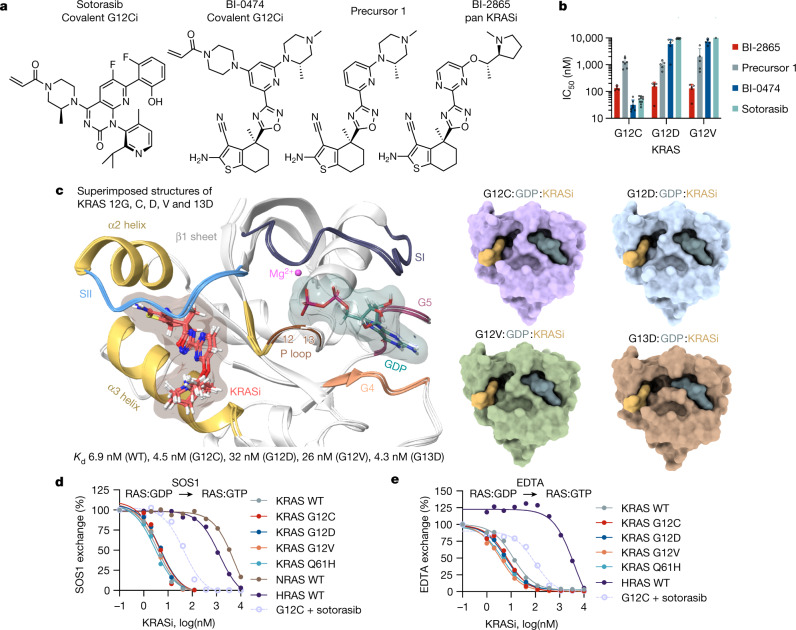
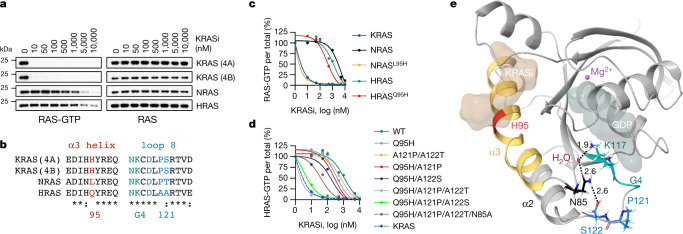
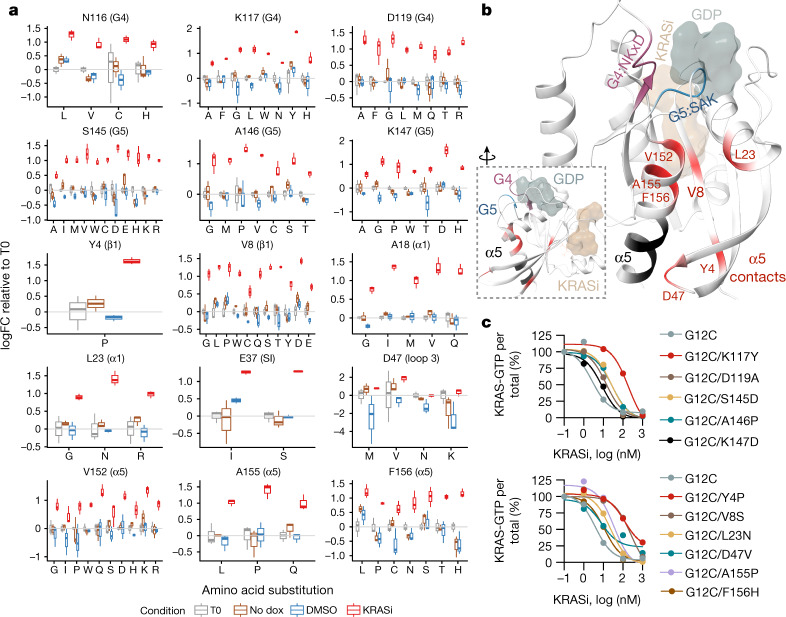
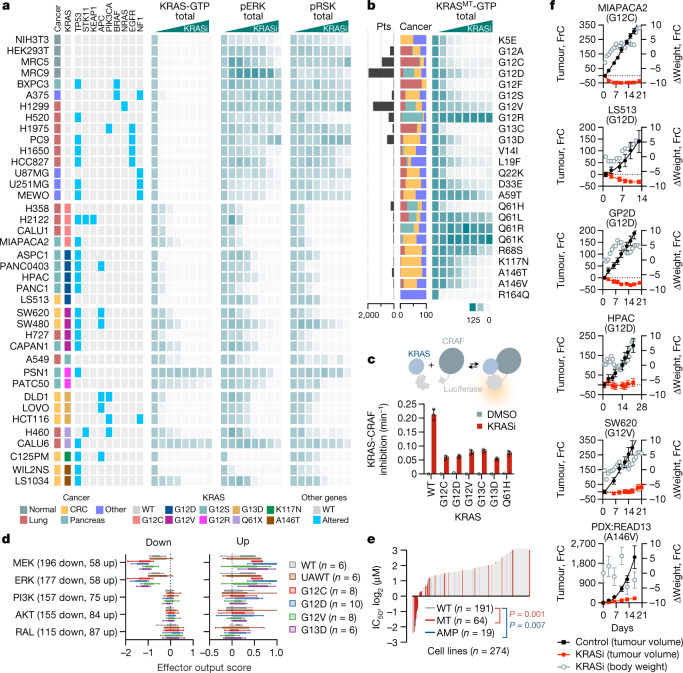
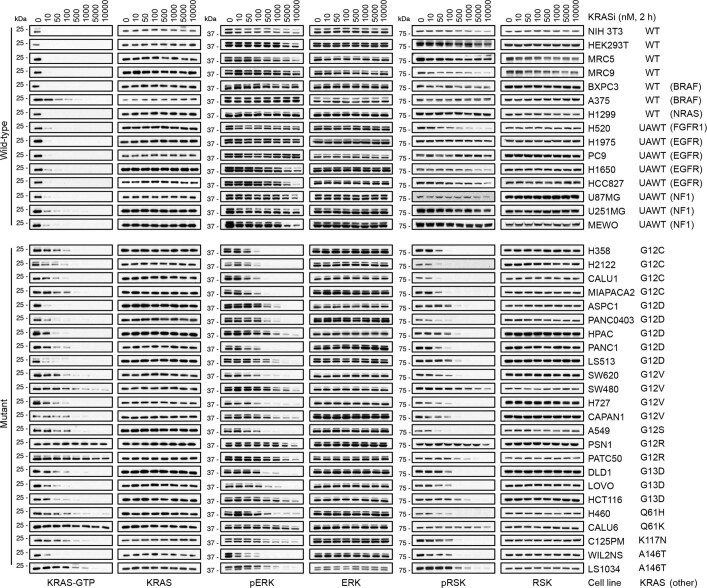
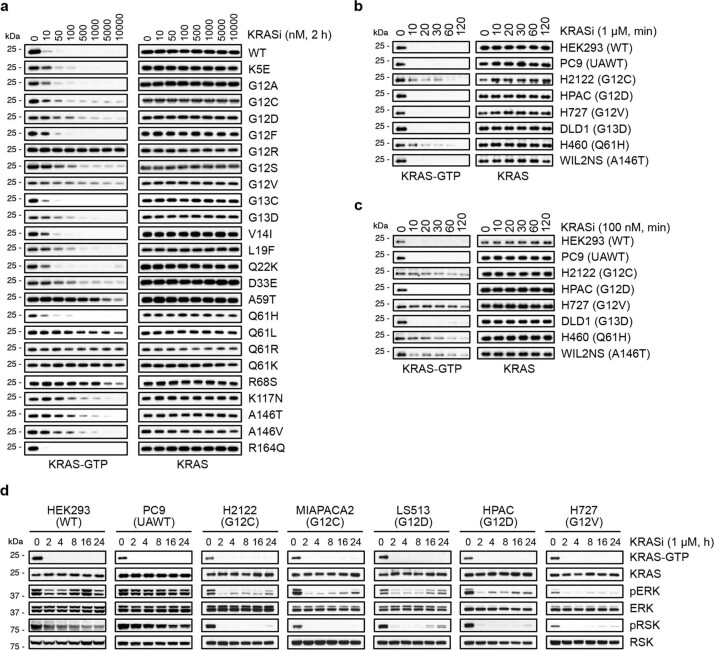
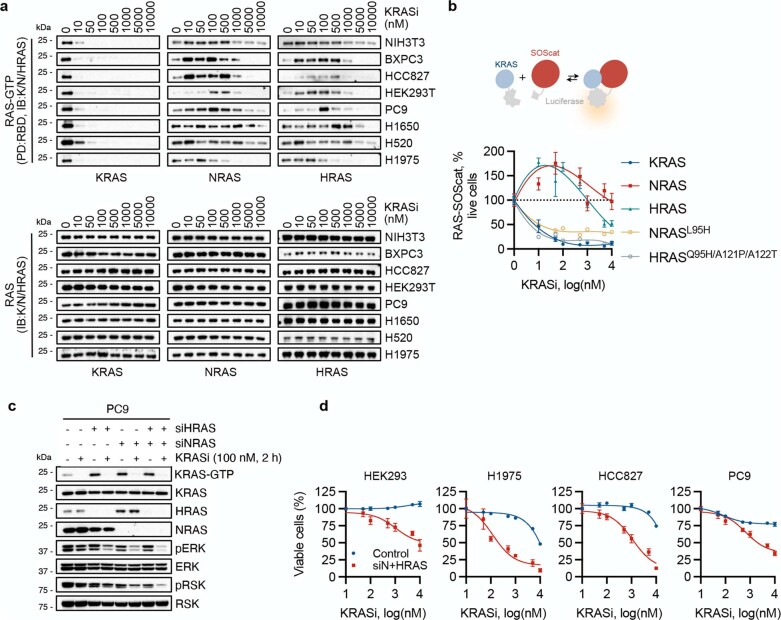
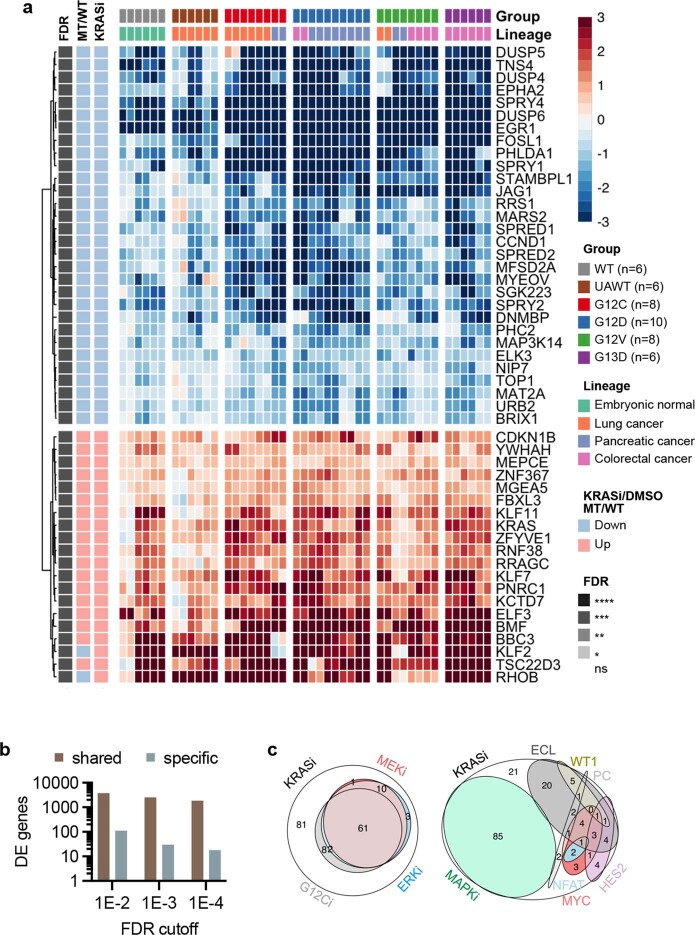
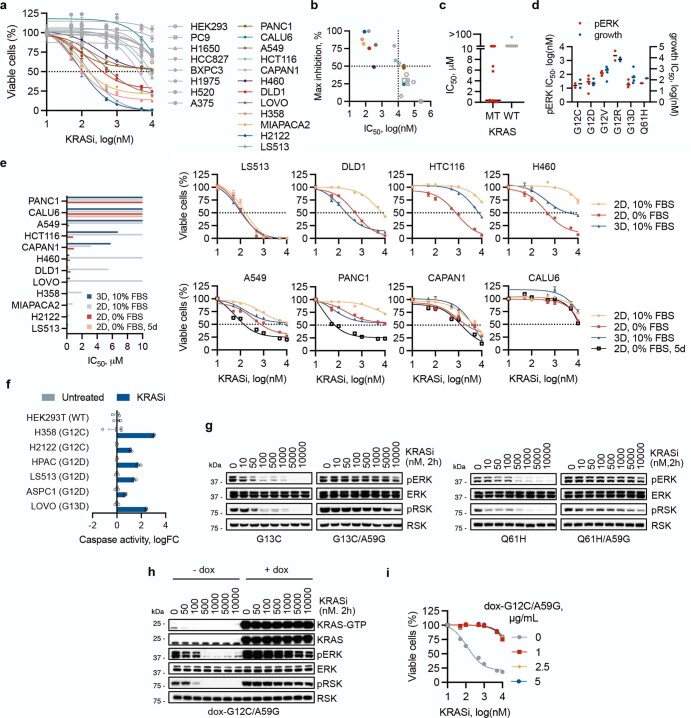
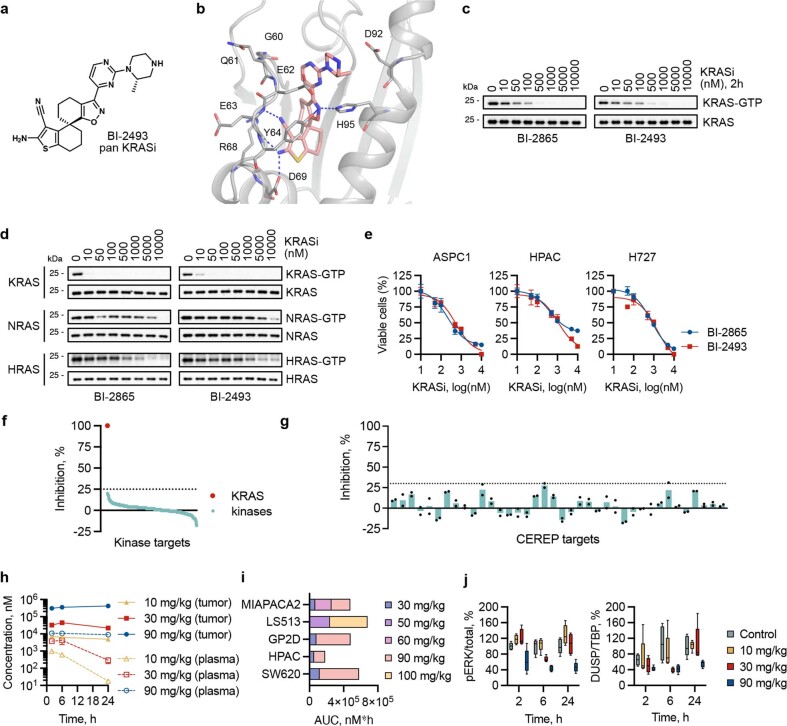
KRAS is one of the most commonly mutated proteins in cancer, and efforts to directly inhibit its function have been continuing for decades. The most successful of these has been the development of covalent allele-specific inhibitors that trap KRAS G12C in its inactive conformation and suppress tumour growth in patients 1–7 . Whether inactive-state selective inhibition can be used to therapeutically target non-G12C KRAS mutants remains under investigation. Here we report the discovery and characterization of a non-covalent inhibitor that binds preferentially and with high affinity to the inactive state of KRAS while sparing NRAS and HRAS. Although limited to only a few amino acids, the evolutionary divergence in the GTPase domain of RAS isoforms was sufficient to impart orthosteric and allosteric constraints for KRAS selectivity. The inhibitor blocked nucleotide exchange to prevent the activation of wild-type KRAS and a broad range of KRAS mutants, including G12A/C/D/F/V/S, G13C/D, V14I, L19F, Q22K, D33E, Q61H, K117N and A146V/T. Inhibition of downstream signalling and proliferation was restricted to cancer cells harbouring mutant KRAS, and drug treatment suppressed KRAS mutant tumour growth in mice, without having a detrimental effect on animal weight. Our study suggests that most KRAS oncoproteins cycle between an active state and an inactive state in cancer cells and are dependent on nucleotide exchange for activation. Pan-KRAS inhibitors, such as the one described here, have broad therapeutic implications and merit clinical investigation in patients with KRAS-driven cancers.
Overview
The claims and statistics of this paper haven’t been checked yet.
Free: it reads the open-access text and checks the first 5 claims that cite a source we can check. Create a free account to check every claim.
Integrity signals
Registry
Cites
Statistics
Figures
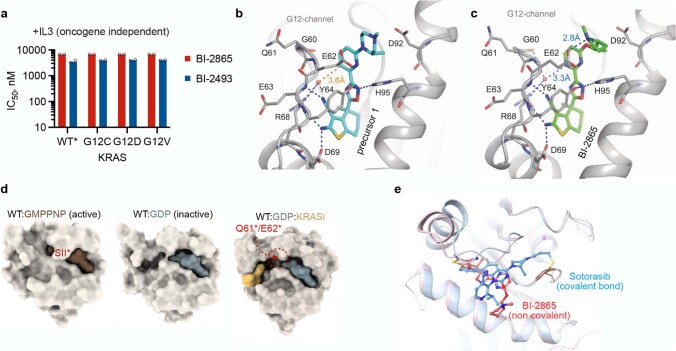
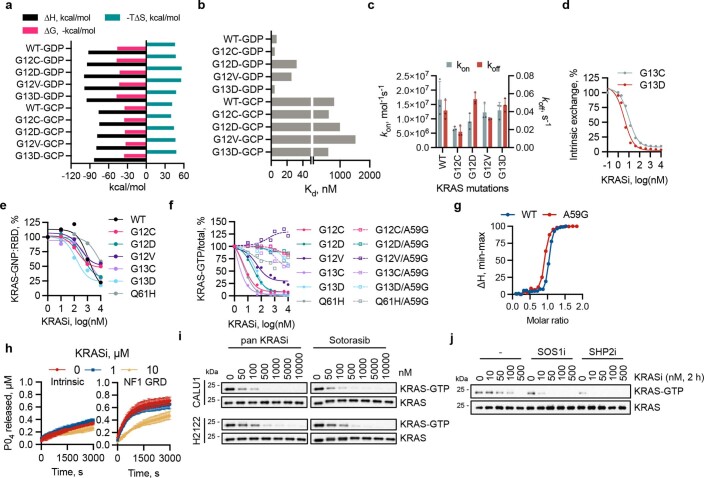
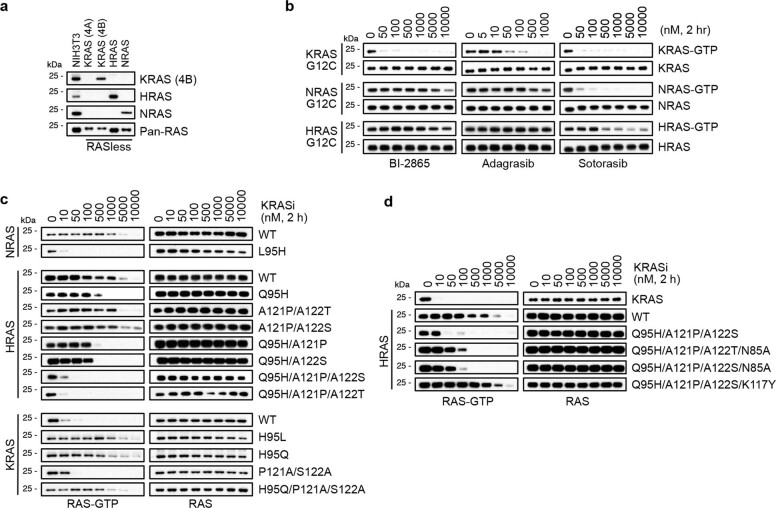
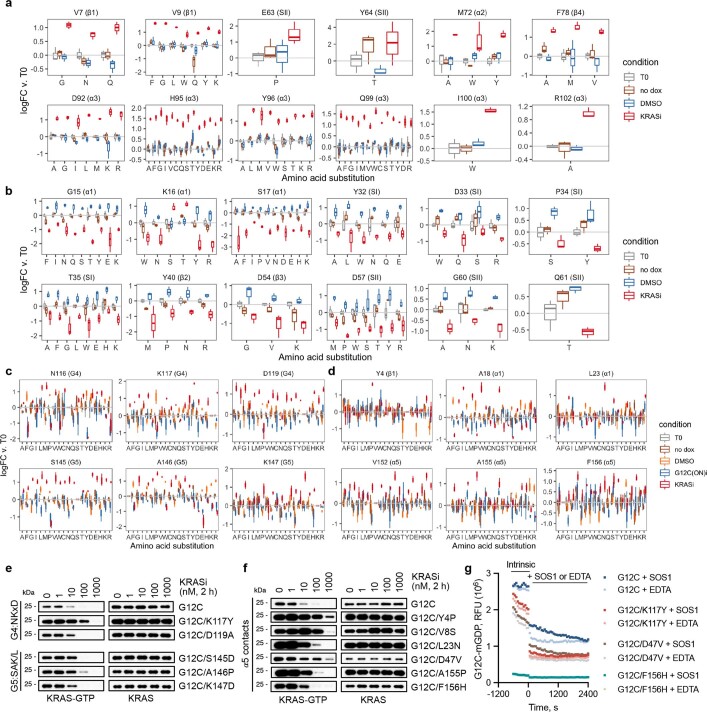
Verification
Claims the paper makes
The claims and statistics of this paper haven’t been checked yet.
Free: it reads the open-access text and checks the first 5 claims that cite a source we can check. Create a free account to check every claim.
Claims other papers make about this one
Each is checked against this paper’s own text: does it say what the citing paper says it does?
The source backs part of the claim, not all of it — or backs it for a different population, condition or comparison.
In the citing paper
“Murine xenograft experiments demonstrated efficacy against grafted cell lines and a PDX driven by KRAS G12C, G12D, G12V, and A146V without causing significant body weight loss.”
From KRAS: Biology, Inhibition, and Mechanisms of Inhibitor Resistance (2024) · cites this paper as [62]
Experimental — accuracy not yet measuredThe source backs part of the claim, not all of it — or backs it for a different population, condition or comparison.
In the citing paper
“This inhibitor functions by blocking the GDP/GTP nucleotide exchange of wildtype KRAS and other KRAS mutants, including G12A, G12C, G12D, G12F, G12V, G12S, G13C, G13D, V14I, L19F, Q22K, D33E, Q61H, K117N, A146V, and A146T.”
From KRAS: Biology, Inhibition, and Mechanisms of Inhibitor Resistance (2024) · cites this paper as [62]
Experimental — accuracy not yet measuredThe source backs part of the claim, not all of it — or backs it for a different population, condition or comparison.
In the citing paper
“BI-2865 inhibits oncogenic signaling through the RAF cascade, regardless of the specific KRAS driver mutation [62].”
From KRAS: Biology, Inhibition, and Mechanisms of Inhibitor Resistance (2024) · cites this paper as [62]
Experimental — accuracy not yet measuredThe source backs part of the claim, not all of it — or backs it for a different population, condition or comparison.
In the citing paper
“BI-2865 effectively blocked the interaction between KRAS and RAF in most cell lines, though it displayed weaker activity against cell lines harboring the KRAS G12R mutation.”
From KRAS: Biology, Inhibition, and Mechanisms of Inhibitor Resistance (2024) · cites this paper as [62]
Experimental — accuracy not yet measuredThe source backs part of the claim, not all of it — or backs it for a different population, condition or comparison.
In the citing paper
“Point mutations in the KRAS gene included G12D/F/R/V/W, which prevent covalent interactions with mutant cysteine, as well as V8L, G13D, V14I, Q61H, H95D/Q/R, Y96C, and Y96D [62,97,102,103].”
From KRAS: Biology, Inhibition, and Mechanisms of Inhibitor Resistance (2024) · cites this paper as [62]
Experimental — accuracy not yet measured
12 more claims about this paper
Create a free account to see every claim other papers make about this one.
Self-check
Percentages, sums and reported differences re-computed from the paper’s own numbers.
The self-check needs the paper’s full text.
Citations
Cites
Features and development of Coot
Emsley, P., Lohkamp, B., Scott, W. G., & Cowtan, K. (2010) · Acta Crystallographica Section D Biological Crystallography · doi:10.1107/s0907444910007493 · Cited by 29,915
The CCP4 suite: programs for protein crystallography
Collaborative Computational Project, N. 4. (1994) · Acta Crystallographica Section D Biological Crystallography · doi:10.1107/s0907444994003112 · Cited by 17,270
K-Ras(G12C) inhibitors allosterically control GTP affinity and effector interactions
Ostrem, J. M., Peters, U., Sos, M. L., Wells, J. A., & Shokat, K. M. (2013) · Nature · doi:10.1038/nature12796 · Cited by 2,557
The Clinical KRAS(G12C) Inhibitor AMG 510 Drives Anti-Tumour Immunity
Canon, J., Rex, K., Saiki, A. Y., Mohr, C., Cooke, K., Bagal, D., Gaida, K., Holt, T., Knutson, C. G., Koppada, N., et al. (2019) · Nature · doi:10.1038/s41586-019-1694-1 · Cited by 2,277
Data processing and analysis with the autoPROC toolbox
Vonrhein, C., Flensburg, C., Keller, P., Sharff, A., Smart, O., Paciorek, W., Womack, T., & Bricogne, G. (2011) · Acta Crystallographica Section D Biological Crystallography · doi:10.1107/s0907444911007773 · Cited by 2,029
RAS Proteins and Their Regulators in Human Disease
Simanshu, D. K., Nissley, D. V., & McCormick, F. (2017) · Cell · doi:10.1016/j.cell.2017.06.009 · Cited by 1,943
RAS oncogenes: the first 30 years
Malumbres, M., & Barbacid, M. (2003) · Nature Reviews Cancer · doi:10.1038/nrc1097 · Cited by 1,902
Sotorasib for Lung Cancers with KRAS p.G12C Mutation
Skoulidis, F., Li, B. T., Dy, G. K., Price, T. J., Falchook, G. S., Wolf, J., Italiano, A., Schuler, M., Borghaei, H., Barlesi, F., et al. (2021) · New England Journal of Medicine · doi:10.1056/nejmoa2103695 · Cited by 1,849
RAS oncogenes: weaving a tumorigenic web
Pylayeva-Gupta, Y., Grabocka, E., & Bar-Sagi, D. (2011) · Nature Reviews Cancer · doi:10.1038/nrc3106 · Cited by 1,789
KRAS G12C Inhibition with Sotorasib in Advanced Solid Tumors
Hong, D. S., Fakih, M. G., Strickler, J. H., Desai, J., Durm, G. A., Shapiro, G. I., Falchook, G. S., Price, T. J., Sacher, A., Denlinger, C. S., et al. (2020) · New England Journal of Medicine · doi:10.1056/nejmoa1917239 · Cited by 1,733
Self-citation
Cited by
Items 301–400 of 567
Botrugno, O. A., Bianchi, E., Bruno, J. M., Gallo, G. F. M., Felici, C., Sommella, E., Stefano, P. D., Giansanti, V., Rossella, V., Merciai, F., et al. (2024) · bioRxiv (Cold Spring Harbor Laboratory) · doi:10.1101/2024.12.28.630600 · Cited by 5
Switching It up with New KRAS Inhibitors
Waterson, A. G. (2025) · Journal of Medicinal Chemistry · doi:10.1021/acs.jmedchem.5c00998 · Cited by 4
AHAMED, T., RAMASAMY, K., & Ramya, S. (2024) · International Journal of Applied Pharmaceutics · doi:10.22159/ijap.2024v16i4.50855 · Cited by 4
“The protein data store provided the three-dimensional protein framework of EGFR and KRAS, with IDs 1M17 and 8AZV, respectively [33, 34].”
BackgroundKasper, S., & Sebastian, M. (2025) · Deutsches Ärzteblatt international · doi:10.3238/arztebl.m2025.0002 · Cited by 4
Analysis of Pan-Specific Inhibitors of Oncogenic Mutant Forms of KRAS GTPase
Eliseev, I. A., Shkil, D. O., Shumakova, V. S., Chernyshov, V. V., Balakin, K. V., & Ivanov, R. A. (2025) · Current Medicinal Chemistry · doi:10.2174/0109298673372217250515031136 · Cited by 3
EFTX-G12V: a novel KRASG12V-selective RNAi therapeutic
Papavassiliou, K. A., Vassiliou, A. G., & Papavassiliou, A. G. (2025) · Trends in Pharmacological Sciences · doi:10.1016/j.tips.2025.07.004 · Cited by 3
Burge, R. A., Bialousow, L., McFall, T. B., Bamonte, L., Johnson, G., Smith, M., Vaena, S. G., Comte‐Walters, S., Ball, L. E., Berto, S., et al. (2025) · Cancer Research Communications · doi:10.1158/2767-9764.crc-25-0281 · Cited by 3
“Biochemically, these mutants are GTP-locked in cells, which is supported by their resistance to KRAS(off) inhibitors (53).”
Proteomic Perspectives on KRAS-Driven Cancers and Emerging Therapeutic Approaches
Karki, R., Chen, R., & Pan, S. (2025) · Current Oncology · doi:10.3390/curroncol32110614 · Cited by 3
“BI-2865 inhibitory activity in cells was primarily due to targeting GDP-bound KRAS, and the binding of the inhibitor reduced the SOS1-promoted nucleotide exchange required for KRAS activation [104].”
Shen, T., Fei, W., Hu, Z., Pang, M., Ma, J., Zhou, T., & Shang, Y. (2025) · Bioorganic Chemistry · doi:10.1016/j.bioorg.2025.109345 · Cited by 4
Bhattarai, N., & Buck, M. (2025) · Current Opinion in Structural Biology · doi:10.1016/j.sbi.2025.103183 · Cited by 3
van Horik, C., Benthem, F., Kempen, M. B., Munck, A. B., van IJcken, W. F. J., Wijnen, R. M. H., Schnater, J. M., & Rottier, R. J. (2026) · Respiratory Research · doi:10.1186/s12931-025-03491-4 · Cited by 3
“Therefore, the cystic-derived organoids were cultured with the BI-2865 pan-KRAS inhibitor in order to investigate the effect of the mutated KRAS on the organoids [35].”
InfluentialLi, L., Li, B., Hao, Y., Pang, B., Li, P., Li, C., & Tang, Y. (2026) · Advanced Science · doi:10.1002/advs.202518455 · Cited by 3
“Recent developments in pan-KRAS degraders offer a potential strategy to target a range of oncogenic KRAS variants [ 23–25 ].”
Self-citationWaldron, N., Silva, D. J., Westaby, D., Jiménez-Vacas, J., Taylor, J., & Sharp, A. (2026) · British Journal of Cancer · doi:10.1038/s41416-026-03441-x · Cited by 5
“Early-phase clinical trials are assessing their ef fi cacy and safety pro fi les, potentially expanding the therapeutic landscape to include cancers currently resistant to speci fi c KRAS inhibitors [126].”
Nomura, T. K., Heishima, K., Mukai, H., Arai, K., Elhelaly, A. E., Fuchigami, H., Warashina, S., Tahara, T., Hyodo, F., Matsuo, M., et al. (2026) · Nature Communications · doi:10.1038/s41467-026-73300-z · Cited by 3
“Similar to other pan-RAS inhibitors 4,5 , some RAS-wild type cancers also showed vulnerability to RRSP-RBD-DTB, implying the presence of RAS addiction driven by mechanisms independent of RAS mutations.”
Pan-RAS Inhibitors: Expanding Therapeutic Potential and Evading Resistance
Ramesh, S., Wang, J. W., Huang, C.-H., Moore, A. M., Fadlalla, K., Berry, K. L., Maxuitenko, Y. Y., Chen, X., Keeton, A. B., El‐Rayes, B. F., et al. (2026) · Cancers · doi:10.3390/cancers18111844 · Cited by 3
“In KRAS-mutant cancer cell lines, BI-2865 significantly suppressed downstream MAPK signaling as evidenced by a reduction in ERK phosphorylation, while showing limited effects on MAPK signaling in WT KRAS cancer cell lines [66].”
Targeting KRAS Codon 13 Mutations Using Direct Combination Approaches in Non–Small Cell Lung Cancer
McDaid, W. J., Adderley, H., d’Arienzo, P. D., Parreira, A. S. D. F. M., Woodhouse, L. C., Zhuang, Y., Castillo‐Lluva, S., Tinsley, K. L., Cooksedge, J., Baker, M. J., et al. (2026) · Cancer Discovery · doi:10.1158/2159-8290.cd-25-0884 · Cited by 3
Seamon, K. J., Zhuang, Y., Yang, Y. C., Chakraborty, S., Cregg, J., Tomlinson, A. C. A., Gould, A., Ahler, E., Maldonato, B. J., Spradlin, J. N., et al. (2026) · Cancer Discovery · doi:10.1158/2159-8290.cd-25-0886 · Cited by 4
Copper-catalyzed nitration of electron-deficient BN-naphthalene
Fang, X. (2023) · Chemical Communications · doi:10.1039/d3cc04359b · Cited by 3
Cregg, J., Edwards, A. V., Tomlinson, A. C. A., Gill, A. L., & Koltun, E. S. (2024) · Elsevier eBooks · doi:10.1016/b978-0-443-21861-3.00011-5 · Cited by 3
Notbohm, J., & Perica, T. (2024) · Current Opinion in Structural Biology · doi:10.1016/j.sbi.2024.102952 · Cited by 4
Unraveling (K)RAS in pancreatic ductal adenocarcinoma
Doleschal, B. (2024) · memo - Magazine of European Medical Oncology · doi:10.1007/s12254-024-01003-6 · Cited by 5
Kidane, M., Hoffman, R. M., Wolfe-Demarco, J. K., Huang, T.-Y., Teng, C.-L., Samanta, S., Lira, L. M. G., Lin‐Jones, J., Pallares, G., Lamerdin, J. E., et al. (2024) · ACS Pharmacology & Translational Science · doi:10.1021/acsptsci.4c00450 · Cited by 3
Kato, R., Solanki, H. S., Özakıncı, H., Desai, B., Gundlapalli, H., Yang, Y. C., Aronchik, I., Singh, M., Johnson, J., Marusyk, A., et al. (2025) · Clinical Cancer Research · doi:10.1158/1078-0432.ccr-24-3714 · Cited by 4
A tunable stimuli-responsive module based on an α-hydroxymethyl-α,β-unsaturated carbonyl scaffold
Shen, R., Zhang, B., Zhao, L., Chang, B., Zhang, F., Chen, Y., & Fang, J. (2025) · Journal of Materials Chemistry B · doi:10.1039/d4tb02818j · Cited by 3
Primary urethral adenocarcinoma harbors recurrent KRAS and EGFR alterations
Zhao, T., Iafrate, A. J., & Wu, C. (2025) · Human Pathology · doi:10.1016/j.humpath.2025.105771 · Cited by 4
Saetang, J., Yamabhai, M., Rangnoi, K., Prompat, N., Haewphet, T., Sangkhathat, S., Tipmanee, V., & Benjakul, S. (2025) · Computers in Biology and Medicine · doi:10.1016/j.compbiomed.2025.110272 · Cited by 3
Miyan, J., Vudatha, V., Cao, L., Zhang, P., Zheng, G., Zheng, L., Trevino, J., Zhou, D., & Khan, S. (2026) · Cancers · doi:10.3390/cancers18060920 · Cited by 3
“Among these inhibitors, G12Di MRTX1133 is a promising treatment for many PDAC patients [2–6].”
Drugging the undruggable: Advances in targeting KRAS signaling in solid tumors
Tripathi, P., Kumari, R., & Pathak, R. (2024) · International review of cytology · doi:10.1016/bs.ircmb.2023.11.004 · Cited by 4
Functional distinction in oncogenic Ras variant activity in Caenorhabditis elegans
Lyu, H., & Chamberlin, H. (2024) · Disease Models & Mechanisms · doi:10.1242/dmm.050577 · Cited by 3
“…a number of important new research directions, including sub-classifying cancers on the basis of sensitivity to established, network-targeting therapeutics (McFall and Stites, 2021) and design of variant-or protein-specific inhibitors (Kim et al., 2023; Ostrem et al., 2013; Wang et al., 2022).”
Comprehensive molecular characterization of collecting duct carcinoma for therapeutic vulnerability
Guan, P., Chen, J., Mo, C., Fukawa, T., Zhang, C., Cai, X., Li, M., Hong, J. H., Chan, J. Y., Ng, C. C. Y., et al. (2024) · EMBO Molecular Medicine · doi:10.1038/s44321-024-00102-5 · Cited by 3
“Therefore, the recently developed KRAS hotspot mutation inhibitor, such as sotorasib (AMG 510) could potentially be used in treating these KRAS-mutant CDC patients (Canon et al, 2019; Kim et al, 2023; Zhang et al, 2022b).”
BackgroundInsights into direct KRAS inhibition strategies for cancer treatment
Li, T., Gu, C., Zhou, C., Mao, C., Yang, K., Xu, J., Lu, T., & Chen, J. (2024) · Future Medicinal Chemistry · doi:10.1080/17568919.2024.2424149 · Cited by 3
Ivanišević, T., Magits, W., Ma, Y., Zhao, P., Boxel, E. V., Lechat, B., Stites, E. C., Velde, G. V., Sewduth, R. N., & Sablina, A. A. (2024) · bioRxiv (Cold Spring Harbor Laboratory) · doi:10.1101/2024.02.27.582346 · Cited by 3
Lin, G., Peniche, P. Z., Zhou, X., Santiago, U., Kurnikov, I. V., Russi, S., Chagas, B. C. A., Sharpe, M. E., Stegmann, D. P., Heinig, S. A., et al. (2025) · bioRxiv (Cold Spring Harbor Laboratory) · doi:10.1101/2025.08.21.670574 · Cited by 3
Shen, H., & Li, C. (2024) · Frontiers in Oncology · doi:10.3389/fonc.2024.1385761 · Cited by 4
“Recently, the pan KRAS inhibitor BI-2865, reported by the Memorial Sloan Kettering Cancer Center and Boehringer Ingelheim (BI), has been shown to effectively inhibit the growth of various tumor cells (14).”
BackgroundSelf-citationMair, T., König, P., Mijović, M., Kalla, J., Baskan, A., Tran, L., Draganić, K., Saldaña, P. M., Malla, C. U. P., Pfneissl, J., et al. (2025) · Molecular Oncology · doi:10.1002/1878-0261.70014 · Cited by 2
“To test whether the insensitivity of PDT1 towards TGF-b 1 was dependent on KRAS signaling, we used the panKRAS inhibitor BI-2865 [43] and the KRAS degrader ACBI3 [44], which both showed high efficacy against PDT1 (Fig.”
Kapp, J. N., Verdurmen, W. P. R., Schaefer, J. V., Kopra, K., Nagy‐Davidescu, G., Richard, É., Nokin, M., Erñst, P., Tamaskovic, R., Schwill, M., et al. (2025) · Molecular Oncology · doi:10.1002/1878-0261.70061 · Cited by 3
“Moreover, the development of a pan-KRAS and a multi-RAS(ON) inhibitor represents additional innovative approaches in the RAS-targeting landscape [15,16].”
Allah, M. A. O., Ali, E., Krus, I., Holý, P., Haničinec, V., Ambrozkiewicz, F., Rob, L., Hruda, M., Mrhalová, M., Kopečková, K., et al. (2025) · Cancer Biology & Therapy · doi:10.1080/15384047.2025.2543105 · Cited by 2
“Studies with KRAS -G12D (MRTX1133) 24 or pan-KRAS 25 inhibitors show promising results and the KRAS -G12C mutation inhibitors have already been approved for the personalization of therapy.”
Novel paradigms in KRAS targeting: Unveiling strategies to combat drug resistance
Luo, X., Zhou, F., Tang, Y., Liu, X., Xiao, R., Gu, M., Bai, J., Jiang, D., Yang, G., You, L., et al. (2025) · Chinese Medical Journal · doi:10.1097/cm9.0000000000003776 · Cited by 2
“[141] Similarly, BI-3706674, a pan-KRAS OFF-state inhibitor, is currently in phase I clinical trials involving patients with advanced solid tumors (No.”
Self-citationTargeting RAS-mutant cancer cells using a synthetic RAS-activated cancer killing system
Teng, F., Gao, Q., Li, Z., Cui, T., Tan, X., Ding, Y., Li, R., Li, B., Zhong, B., Miao, M., et al. (2025) · Trends in biotechnology · doi:10.1016/j.tibtech.2025.07.031 · Cited by 2
Davoudi, Z., Dexheimer, T. S., Coussens, N. P., Silvers, T. E., Fox, R. G., Kemp, S. B., Juneja, P., Morris, J., Hollingshead, M. G., Takebe, N., et al. (2025) · Cancer Research Communications · doi:10.1158/2767-9764.crc-24-0582 · Cited by 2
“Beyond directly targeting specific KRAS variants, the development of pan-KRAS(ON) inhibitors that target the full spectrum of KRAS variants shows promise for effectively treating a range of cancers (56–58).”
Shi, Y., Qin, R., & Li, Y. (2025) · Biomedicines · doi:10.3390/biomedicines13123013 · Cited by 3
Motta, L., Epistolio, S., Pankovics, J., Molinari, F., Pedrazzini, B., Valera, A., Giudici, L., Freguia, S., Patella, M., Imbimbo, M., et al. (2025) · Cancers · doi:10.3390/cancers17243980 · Cited by 2
“While target therapies have been developed and approved for KRAS p.G12C mutations, such as Sotorasib and Adagra-sib, therapies for KRAS p.G12D remain in the early stages of clinical development [7–9], including selective KRAS p.G12D inhibitors (MRTX113) and Pan-KRAS inhibitors [10–12].”
Intrinsic resistance to RAS inhibitors is driven by dysregulation of KRAS degradation
Ivanišević, T., Ma, Y., Boxel, E. V., Magits, W., Lechat, B., Koçberber, Z., Willnow, P., Fendt, S., Velde, G. V., Sewduth, R. N., et al. (2025) · Nature Communications · doi:10.1038/s41467-025-67109-5 · Cited by 4
Liu, X., Gao, X., Ma, R., Wang, J., Zha, T., & Huang, Y. (2025) · Biochemical and Biophysical Research Communications · doi:10.1016/j.bbrc.2025.153099 · Cited by 2
Deprivation of EGFR signal causes senolysis in PDAC with CDK4/6 inhibition
Zhang, Y., Kohno, S., Gao, K., Hasan, M., Baba, T., Zhang, Z., Sankoda, N., Yu, H., Pan, J., Gotoh, N., et al. (2025) · Cell Death and Differentiation · doi:10.1038/s41418-025-01634-0 · Cited by 3
“Clinical approval of inhibitors for other KRAS mutations or of non-covalent pan-KRAS inhibitors is still pending [22 – 24].”
Lin, Y. (2025) · American Journal of Cancer Research · doi:10.62347/zzuw3272 · Cited by 3
Wang, X.-D., Lin, J.-H., & Hu, M.-H. (2026) · Journal of Biological Chemistry · doi:10.1016/j.jbc.2026.111181 · Cited by 4
Systematic cysteine scanning identifies a druggable pocket in oncogenic KRAS
van Tienen, L. M., Bayoumi, S., Muneeruddin, K., Leymarie, N., Popa, A., Shekhar, M., Mueller, M. A., Li, R., Żak, K. M., Chilukuri, H., et al. (2026) · Cell chemical biology · doi:10.1016/j.chembiol.2026.01.007 · Cited by 2
Galvão, J. M. S., Bezerra, A. F. S. P., Garcia, F. A. D. O., Vieira, A. G. S., da Silva, E. C. A., Lengert, A. V. H., Reis, R. M., Lopes, L. F., Evangelista, A. F., & Pinto, M. T. (2026) · Frontiers in Oncology · doi:10.3389/fonc.2026.1689022 · Cited by 2
“Other mutations are also being studied with pan-KRAS inhibitors that will have broader therapeutic implications (46).”
Shao, H., Xu, F., Xu, J., Zhou, L., Wu, Y., He, L., Qian, X., He, W., Jiao, N., Xia, Y., et al. (2026) · Science Advances · doi:10.1126/sciadv.aea2511 · Cited by 3
RetractedPastor, P. G., Gonzalez, N. S., Salvà, F., Ros, J., Baraibar, I., Rodríguez-Castells, M., de Torres, C. S., García, A., Alcaráz, A., Vaghi, C., et al. (2026) · Genes · doi:10.3390/genes17040460 · Cited by 4
Mechanistic insights on spatiotemporal control of Ras-signaling
Charrier, C., Mrachacz, S., Schulze, S., & Lammers, M. (2026) · Biological Chemistry · doi:10.1515/hsz-2025-0243 · Cited by 2
“(E) The small molecule BI-2865 is a compound targeting multiple K-Ras mutants.”
InfluentialPhillips, D. P., Alper, P. B., Cho, C. Y., Borkin, D., Han, D., Kochanek, S. E., Vidal-Biggart, A., Herath, A., Gurjar, J., Lu, W., et al. (2026) · Journal of Medicinal Chemistry · doi:10.1021/acs.jmedchem.6c00127 · Cited by 2
Scaparone, P., Mira, A., Cheong, T.-C., Patrucco, E., Ricciuti, B., Gribaudo, R., Garbo, E., Scardaci, R., Savinelli, I., Michelina, S. V., et al. (2026) · Cancer Discovery · doi:10.1158/2159-8290.cd-25-0477 · Cited by 2
“New compounds targeting pan-KRAS(OFF) (32) and multi-selective RAS(ON) (33,34) alone or in combination with SOS1 or SHP2 inhibitors are currently under evaluation in different preclinical and clinical stages (21,35).”
Divergent CRD ‐dependent mechanisms govern RAS isoform‐selective recruitment of CRAF and ARAF
Banerjee, S., Malasani, S., Banerjee, S., Vasquez, M. C. L., McSorley, S., & Wang, Z. (2026) · Protein Science · doi:10.1002/pro.70687 · Cited by 2
“By stabilizing KRAS in an inactive conformation, BI 2865 acts by disrupting effector interactions (Kim et al., 2023; Tedeschi et al., 2025).”
Brønsted-basic small molecules activate GTP hydrolysis in KRAS-Q61 mutants
Wang, Y., Chen, S., Cao, Y., Wu, Y., 施仲达, Wang, C. D., Norinskiy, M. A., Celik, H., & Zhang, Z. (2026) · Nature Chemical Biology · doi:10.1038/s41589-026-02291-1 · Cited by 2
Hu, L., Ahmari, N., Schaeper, A., Pundavela, J., Kim, M., Dombi, E., Wu, J., Brunmair, J., Petronczki, Ö. Y., & Ratner, N. (2026) · Science Advances · doi:10.1126/sciadv.aeg3475 · Cited by 2
“The recent development of KRAS-selective inhibitors that block nucleotide exchange on both WT and mutant KRAS, but spare HRAS and NRAS, presents an in-triguing therapeutic opportunity ( 31 ).”
Protein kinase D1 — A targetable mediator of pancreatic cancer development
Martinez, A. K. F., & Störz, P. (2023) · Biochimica et Biophysica Acta (BBA) - Molecular Cell Research · doi:10.1016/j.bbamcr.2023.119646 · Cited by 2
Targeting the Undruggable KRAS Mutation in Lung Cancer – A Review
Jones, C. A. (2024) · Premier journal of science. · doi:10.70389/pjs.100001 · Cited by 2
TClC effectively suppresses the growth and metastasis of NSCLC via polypharmacology
Lu, J., Zhang, Y., Yan, C., Liu, J., Qi, D., Zhou, Y., Wang, Q., Yang, J., Jiang, J. T., Wu, B., et al. (2024) · Bioactive Materials · doi:10.1016/j.bioactmat.2024.11.019 · Cited by 4
Self-citationShen, S., Zhang, Q., Wang, Y., Chen, H., Gong, S., Liu, Y., Gai, C., Chen, H., Zhu, E., Yang, B. H., et al. (2025) · Journal of Clinical Investigation · doi:10.1172/jci185278 · Cited by 2
“Additionally, inhibitors of other KRAS mutants, such as MRTX1133 (targeting KRAS G12D ) and pan-KRAS inhibitors, are being developed (10, 11).”
Tang, Z., Ye, J., & Chen, D. (2025) · Journal of Biochemical and Molecular Toxicology · doi:10.1002/jbt.70271 · Cited by 2
“When KRAS is mutated, the GAP ‐ mediated hydrolysis of GTP is disrupted, and KRAS remains bound to GTP in a continuously activated state, affecting downstream signaling pathways and leading to uncontrolled cell proliferation and aberrant cell differentiation [12].”
Jiang, X., Chen, L., Xu, Z., Sun, H., Ye, J., Guo, Z., & Xiao, M. (2025) · Discover Oncology · doi:10.1007/s12672-025-03372-8 · Cited by 2
“Because it is closely related to the proliferation, survival and migration of tumor cells, it is a target of many cancer treatment strategies [59, 60].”
Glucose-6-phosphate dehydrogenase deficiency accelerates pancreatic acinar-to-ductal metaplasiaPreprint
Radyk, M. D., Nelson, B. S., Halbrook, C. J., Wood, A., Lavoie, B. L., Salvatore, L., Corfas, G., Colacino, J. A., Shah, Y. M., Crawford, H. C., et al. (2023) · bioRxiv (Cold Spring Harbor Laboratory) · doi:10.1101/2023.11.06.565895 · Cited by 2
“Additionally, the development of a pan-KRAS selective inhibitor may have broad therapeutic implications in PDAC and other KRAS-driven cancers 62 .”
Martins, F., Machado, A. L., Ribeiro, A., Oliveira, S. M., Carvalho, J., Matthiesen, R., Backman, V., & Velho, S. (2024) · Research Square · doi:10.21203/rs.3.rs-3752760/v2 · Cited by 2
Mutant KRAS inhibitors enter the scene of precision therapeutics for pancreatic cancer
Pollin, G., Lomberk, G. A., Mathison, A., Zimmermann, M. T., & Urrutia, R. A. (2024) · Journal of Gastrointestinal Oncology · doi:10.21037/jgo-24-326 · Cited by 2
“BI-2865 BI-2865 has been found to broadly target several KRAS mutants, and to a lesser extent WT KRAS, by blocking nucleotide exchange and preventing activation (23).”
Orthogonal resistance mechanisms of classical- and induced-proximity inhibitorsPreprint
Merz, M. L., Kailass, K., Pergu, R., Tran, K., Gupta, K., Severance, Z. C., Singh, S., Sreekanth, V., Law, B. K., Rosenblatt, G., et al. (2025) · bioRxiv (Cold Spring Harbor Laboratory) · doi:10.1101/2025.05.10.652755 · Cited by 3
“Genomic DNA sequences corresponding to the four exons of KRAS were used and sgRNAs with specificity scores below 20 were excluded.”
Sagawa, T., Hirakawa, M., Nagashima, H., & Fujikawa, K. (2026) · Journal of Gastrointestinal Cancer · doi:10.1007/s12029-026-01579-8 · Cited by 1
“Kim and colleagues (2023) reported a non-covalent pan-KRAS inhibitor binding to the GDP-loaded state of wild-type and mutant KRAS (G12C, G12D, G12V, G13D, and others) with high affinity (Kd, 10–40 nM), blocking nucleotide exchange to prevent activation [36].”
Determining KRAS4B-Targeting Compound Specificity by Top–Down Mass Spectrometry
D’Ippolito, R. A., Scheidemantle, G. M., Rabara, D., Blanco, M. A., Ramakrishnan, N., Widmeyer, S. R. T., Messing, S., Turner, D., Maciag, A. E., Stephen, A. G., et al. (2024) · Methods in molecular biology · doi:10.1007/978-1-0716-3922-1_18 · Cited by 1
Liu, Y., Li, Y., Li, G., Wang, A., & Chu, H. (2024) · Archives of Biochemistry and Biophysics · doi:10.1016/j.abb.2024.110137 · Cited by 1
Covalent inhibitors of K-Ras G12S, G12R, and G12D
Zhang, Z., & Shokat, K. M. (2024) · Elsevier eBooks · doi:10.1016/b978-0-443-21861-3.00024-3 · Cited by 3
Jean-Francois, F. L. (2024) · Elsevier eBooks · doi:10.1016/b978-0-443-21861-3.00010-3 · Cited by 1
Hong, C., Lee, J., Kim, D., Hong, S.-J., Park, J., Hong, S., An, K. M., Lee, M., & Han, G. (2024) · Bioorganic & Medicinal Chemistry Letters · doi:10.1016/j.bmcl.2024.130087 · Cited by 1
Self-citationHrčkulák, D., Onhajzer, J., Krausová, M., Šťastná, M., Kříž, V., Janečková, L., & Kořínek, V. (2025) · Transgenic Research · doi:10.1007/s11248-024-00429-2 · Cited by 1
KRAS in Stage IV Non-Small Cell Lung Cancer
(2025) · Frontiers research topics · doi:10.3389/978-2-8325-6151-5 · Cited by 1
Karoonkiani, F., Tabrizi, M. H., Goodarzi, M. T., & Jalali, A. (2025) · Scientific Reports · doi:10.1038/s41598-025-02344-w · Cited by 1
Rathod, D., Vats, M., Gawali, P., Otagho, O., Dholariya, B. M., & Patel, K. R. (2025) · Nanomedicine · doi:10.1080/17435889.2025.2524312 · Cited by 2
Bergsma, P., Porazinski, S. R., Istadi, A., Fajardo, D. C., Mahmood, Y., Lombardi, S., Schuhmacher, D., Barraclough-Franks, H., Strbenac, D., Dennis, C. V., et al. (2025) · Molecular Cancer Therapeutics · doi:10.1158/1535-7163.mct-24-0704 · Cited by 1
“…personalized treatments for patients, comparable with targeting EGFR gene mutations in lung cancer with EGFR inhibitors (89), and most recently KRAS -directed breakthrough therapies for diverse solid malignancies (90, 91), thus broadening the precision medicine paradigm for cancer treatment (92).”
The impact of thyroid hormone concentration fluctuations on colon cancer proliferation and growth
Ren, F., Zhang, Y., Hui, C., Li, Z., & Deng, D. (2025) · Frontiers in Endocrinology · doi:10.3389/fendo.2025.1576665 · Cited by 1
Tantawi, H. N., Mochirian, P., Truong, M., Beauregard, J., Collins, L., Kanaan, G. N., Komati, H., Leblanc, L., Maharsy, W. M., Manchoju, A., et al. (2025) · ACS Medicinal Chemistry Letters · doi:10.1021/acsmedchemlett.5c00378 · Cited by 1
A Comprehensive Molecular and Clinical Study of Patients with Young-Onset Colorectal Cancer
Nasrollahi, E., Wang, S., Yanes, R. B., Gomez, C. G., Magge, T., Overacre-Delgoffe, A. E., Hsieh, R. W., McFarquhar, A., Tatsuoka, C. M., Singhi, A. D., et al. (2025) · Cancers · doi:10.3390/cancers17172763 · Cited by 2
“Notably, further research is ongoing with allele-specific inhibitors such as KRAS G12D as well as panKRAS and panRAS inhibitors [18,32,36,37].”
Modelling and optimizing combination therapeutic strategies for KRAS- and EGFR-mutant lung cancer
Wu, L.-H., Yu, R., Yao, M., Rahaman, M. M., & Fang, Z. (2025) · Journal of Bioinformatics and Computational Biology · doi:10.1142/s0219720025500179 · Cited by 1
Jakopec, S., Prompat, N., Hamzić, L. F., Bočkor, L., Sedić, M., Kirin, S. I., Jadreško, D., & Raić‐Malić, S. (2025) · Inorganic Chemistry Communications · doi:10.1016/j.inoche.2025.115627 · Cited by 1
RALGEF inhibitors suppress RAS-driven pancreatic cancer and metastasis
Donninger, H., Ferrill, R., Baby, B. V., Hobbing, K. R., Dean, W. L., Miriyala, N., Jigo, R., Burlison, J. A., Trent, J. O., Monsen, R., et al. (2025) · Journal of Biological Chemistry · doi:10.1016/j.jbc.2025.110809 · Cited by 1
Li, W., Hung, M.-Y., Kuo, Y., Tey, S., Liu, R. Y.-C., Hung, C. P.-S., Chen, C. L.-H., Simón, I., & Li, C. (2025) · JCO Global Oncology · doi:10.1200/go-25-00144 · Cited by 1
Self-citationHeads or tails? In-depth analysis of pancreatic cancer outcome according to tumor location
Fernandes, A., Lambert, A., Tarabay, A., Hollebecque, A., Smolenschi, C., Valéry, M., Pudlarz, T., Fuerea, A. C., Camilleri, G. M., Delaye, M., et al. (2025) · ESMO Gastrointestinal Oncology · doi:10.1016/j.esmogo.2025.100245 · Cited by 2
Pavic, K., Hood, F. E., Duval, C. J., Manoharan, G. B., Laurini, C., Siddiqui, F. A., Mo, S., Prior, I. A., & Abankwa, D. (2025) · iScience · doi:10.1016/j.isci.2025.113974 · Cited by 1
Erman, B. (2025) · Physical Biology · doi:10.1088/1478-3975/ae1dc1 · Cited by 2
You, T., Zhao, J., Xia, X., Xiong, Y., Lv, X., Jing, J., & Li, X. (2025) · Microchemical Journal · doi:10.1016/j.microc.2025.116295 · Cited by 1
Targeting RAS for Cancer Treatment: What a Long, Strange Trip It's Been
Cox, A. D., & Der, C. J. (2025) · Annual Review of Cancer Biology · doi:10.1146/annurev-cancerbio-071024-082459 · Cited by 1
KRAS Withdrawal in Cholangiocarcinoma Leads to Immune Infiltration and Tumor Regression
Qiao, Y., Yee, M. F., Parikh, C. N., Ma, B., Cao, Y., Shih, Y., Wu, J. Q., Ruscetti, M. A., Liang, S., & Xue, W. (2025) · Advanced Science · doi:10.1002/advs.202511312 · Cited by 3
KRAS mutated lung adenocarcinoma responds to pan-ERBB and Aurora kinase inhibitors
Uras, I. Z., Trkulja, M. V., Salama, A. K. A. A., Horvath, J., Asnani, K., Trenk, C., Kubicek, S., Bilban, M., Moll, H. P., & Casanova, E. (2026) · npj Precision Oncology · doi:10.1038/s41698-025-01242-8 · Cited by 1
Cyclized Peptide Inhibitors of the Small G Protein Cdc42 Mimic Binding of Effector Proteins
Murphy, N. P., Tetley, G. J. N., Revell, J. D., Mott, H. R., & Owen, D. (2026) · Biochemistry · doi:10.1021/acs.biochem.5c00616 · Cited by 1
Hammer, P. M., Kingsley, L. G., Sasse, S. A., & Howitt, B. E. (2026) · Modern Pathology · doi:10.1016/j.modpat.2026.100971 · Cited by 1
A Comprehensive Review of Marketed KRAS Inhibitors and Degraders: Challenges and Opportunities
Xu, Y.-X., Bai, Y.-R., Rui-fang, L., Peng, Y., Liu, T., Yang, X., Chen, K., Jin, Z., Liu, H., & Yuan, S. (2026) · Medicinal Research Reviews · doi:10.1002/med.70035 · Cited by 2
Brügel, M., RIVIERE, V., Hubert, A., Langanay, L., Bouché, O., Génin, M., GAUTHIER, V., & Oudart, J. (2026) · Pancreatology · doi:10.1016/j.pan.2026.03.002 · Cited by 1
Hamada, T., Yokoyama, S., Nakabayashi, R., Suzuki, Y., Morishita, S., Akahane, T., Matsuo, K., Kitazono, I., Furukawa, T., & Tanimoto, A. (2026) · Current Issues in Molecular Biology · doi:10.3390/cimb48040341 · Cited by 1
“To evaluate KRAS functional alterations, edited HCT 116 cells were monitored for SNV populations and KRAS G12C inhibitor effects [13] to develop a potential system for SGE-based VUS assessment in non-HAP1 carcinoma cells.”
Zhang, P., Kong, L., Meng, X., Chen, Y., Jiao, Y., Su, Z., Song, X., Ding, K., & Xia, G. (2026) · European Journal of Medicinal Chemistry · doi:10.1016/j.ejmech.2026.118807 · Cited by 1
Shkil, D. O., Eliseev, I. A., Ivanov, R. A., & Balakin, K. V. (2026) · Russian Chemical Bulletin · doi:10.1007/s11172-026-4863-z · Cited by 1
The impact of K-Ras Gly12 mutants on homeostasis and tumorigenesis in the colonic epithelium
Yang, M. H., Sheth, S., Shui, B., Grabski, I. N., Park, S. S., Galán‐Cobo, A., Irizarry, R. A., Heymach, J. V., Dow, L. E., & Haigis, K. M. (2026) · Oncogene · doi:10.1038/s41388-026-03771-3 · Cited by 1
“Ras activity is increased in the tumors expressing K-Ras Gly12 mutant alleles compared to those expressing Kras wild type, although tumors expressing Kras G12C shows a modest increase compared to other Kras Gly12 mutants.”
Metadata
- Authors
- Kim, D., Herdeis, L., Rudolph, D., Zhao, Y., Böttcher, J., Vides, A., Ayala-Santos, C. I., Pourfarjam, Y., Cuevas-Navarro, A., Xue, J. Y., Mantoulidis, A., Bröker, J., Wunberg, T., Schaaf, O., Popow, J., Wolkerstorfer, B., Kropatsch, K. G., Qu, R., de Stanchina, E., Sang, B., Li, C., McConnell, D. B., Kraut, N., & Lito, P.
- Affiliations
- Boehringer Ingelheim (Austria) (AT)
- Memorial Sloan Kettering Cancer Center (US)
- Corresponding author
- Lito, Piro
- ORCID
- Venue
- Nature
- Published
- 2023-05-31
- Volume
- 619
- Issue
- 7968
- Pages
- 160-166
- ISSN
- 0028-0836 (ISSN-L)
- 1476-4687
- PMC
- PMC10322706
- OpenAlex
- W4378901135
- Semantic Scholar
- adbdedfc9643df9a77eda1538b6370ab04be09d1
- Cited by
- 534
- References
- 42
- Citations by year
- 2026: 129 · 2025: 190 · 2024: 176 · 2023: 39
- FWCI
- 47.67
- Type
- journal article
- Language
- en
- Open access
- hybrid
- doi.org
- Licence
- cc-by
- creativecommons.org/licenses/by/4.0 (tdm)
- creativecommons.org/licenses/by/4.0 (vor)
- Locations
- Nature (publishedVersion, cc-by)
- PubMed Central (publishedVersion, cc-by)
- PubMed (publishedVersion)
- RePEc: Research Papers in Economics (submittedVersion)
- DORA PSI (Paul Scherrer Institute) (submittedVersion, cc-by)
- Funders
- Pew Charitable Trusts
- Damon Runyon Cancer Research Foundation (P30 CA008748)
- Memorial Sloan-Kettering Cancer Center (CA008748, P30 CA008748)
- Pershing Square Sohn Cancer Research Alliance (P30 CA008748)
- National Institutes of Health (CA008748)
- National Cancer Institute (R01CA230267, CA008748, P30CA008748, R01CA279264, R01CA230745)
- Topics
- Life Sciences › Biochemistry, Genetics and Molecular Biology › Molecular Biology › Protein Kinase Regulation and GTPase Signaling
- Life Sciences › Biochemistry, Genetics and Molecular Biology › Molecular Biology › Protein Tyrosine Phosphatases
- Life Sciences › Biochemistry, Genetics and Molecular Biology › Molecular Biology › Melanoma and MAPK Pathways
- Keywords
- KRAS, pan-KRAS inhibitors, non-covalent inhibitors, KRAS mutation, oncogenic signaling, tumor growth inhibition, allosteric inhibition, KRAS-driven cancers
- MeSH terms
- Animals, Body Weight, Cell Division, Enzyme Activation, Mutation, Neoplasms, Nucleotides, Substrate Specificity, Signal Transduction, Proto-Oncogene Proteins p21(ras), Monomeric GTP-Binding Proteins, Mice
About these checks
Registry, retraction, Cites and statistics results are computed, not judged, with one exception: a printed reference that no index lists is read once by a model before it counts as a citation error. Claims are extracted by a model and kept only when their quote appears verbatim in the text; each cited source is then checked, with a model’s help, for whether it says what the claim relies on. Those verdicts can be wrong — read the claim’s quote and the cited source before relying on one.
Statistics and arithmetic are recomputed, not judged.
Confidence bands are shown only for fields calibrated on our annotated test set. None is calibrated yet, so no band is shown.
What counts as a claim ›How we measure confidence ›How we check this ›
Are you an author, or do you see a problem with this page? Request a review
Data sources
Bibliographic data: Semantic Scholar, OpenAlex, Crossref.
Contains information from the Semantic Scholar Academic Graph Datasets, made available under the ODC Attribution License (ODC-BY 1.0).
Semantic Scholar’s data is described in: Kinney, R., et al. (2023). The Semantic Scholar Open Data Platform. arXiv:2301.10140.
